Article

Chloride Intracellular Channel Protein 1 (CLIC1) Is a Critical Host Cellular Factor for Influenza A Virus Replication

by
Mahamud-ur Rashid
1,2 and
Kevin M. Coombs
1,2,3,*
1
Department of Medical Microbiology and Infectious Diseases, University of Manitoba, Room 543 Basic Medical Sciences Building, 745 Bannatyne Avenue, Winnipeg, MB R3E OJ9, Canada
2
Manitoba Centre for Proteomics and Systems Biology, Room 799, 715 McDermot Avenue, Winnipeg, MB R3E 3P4, Canada
3
Children’s Hospital Research Institute of Manitoba, Room 513, John Buhler Research Centre, 715 McDermot Avenue, Winnipeg, MB R3E 3P4, Canada
*
Author to whom correspondence should be addressed.
Viruses 2024, 16(1), 129; https://doi.org/10.3390/v16010129
Submission received: 25 November 2023 / Revised: 10 January 2024 / Accepted: 13 January 2024 / Published: 16 January 2024
(This article belongs to the Special Issue Omics of Virus-Host Interactions)

Abstract

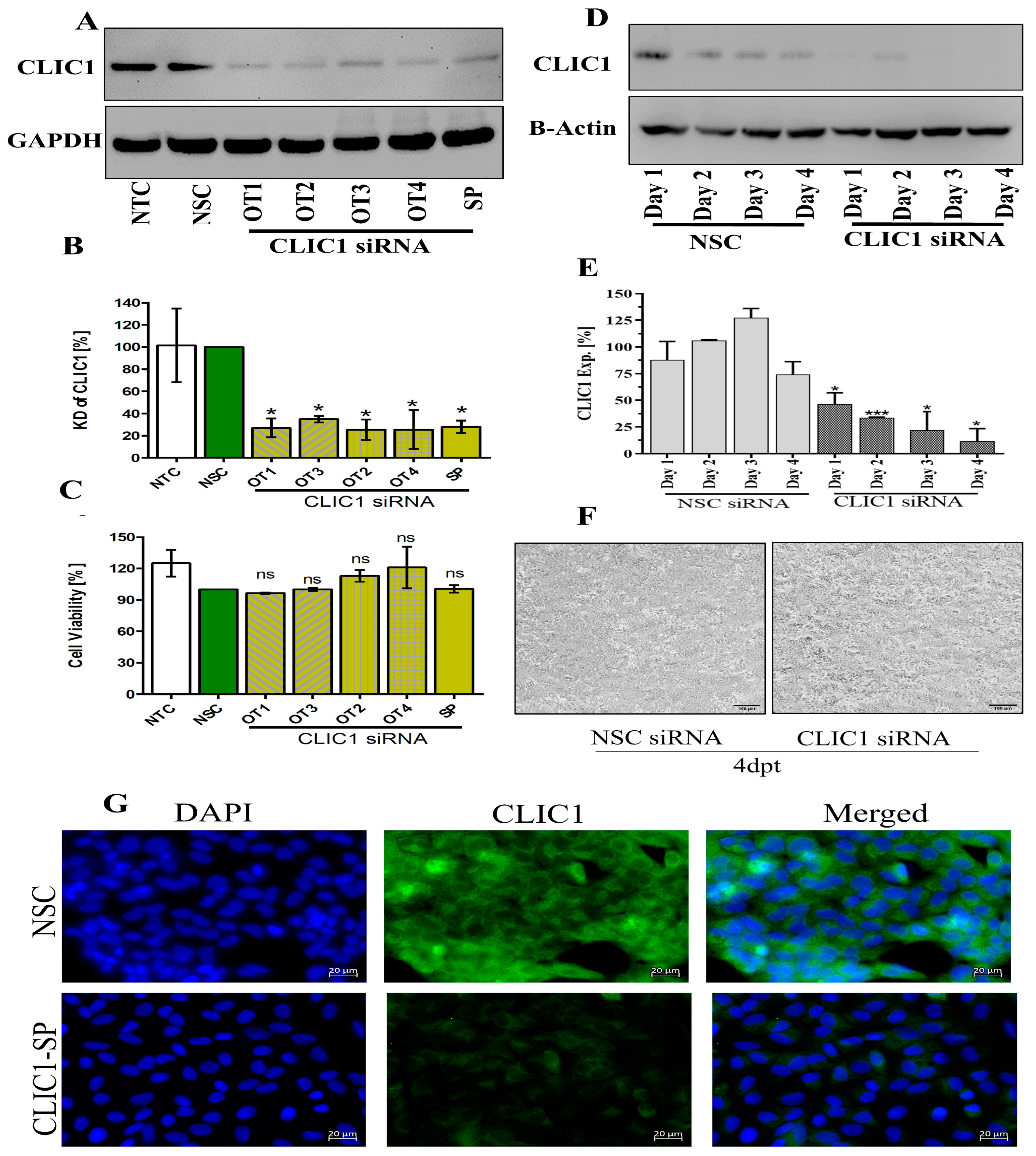
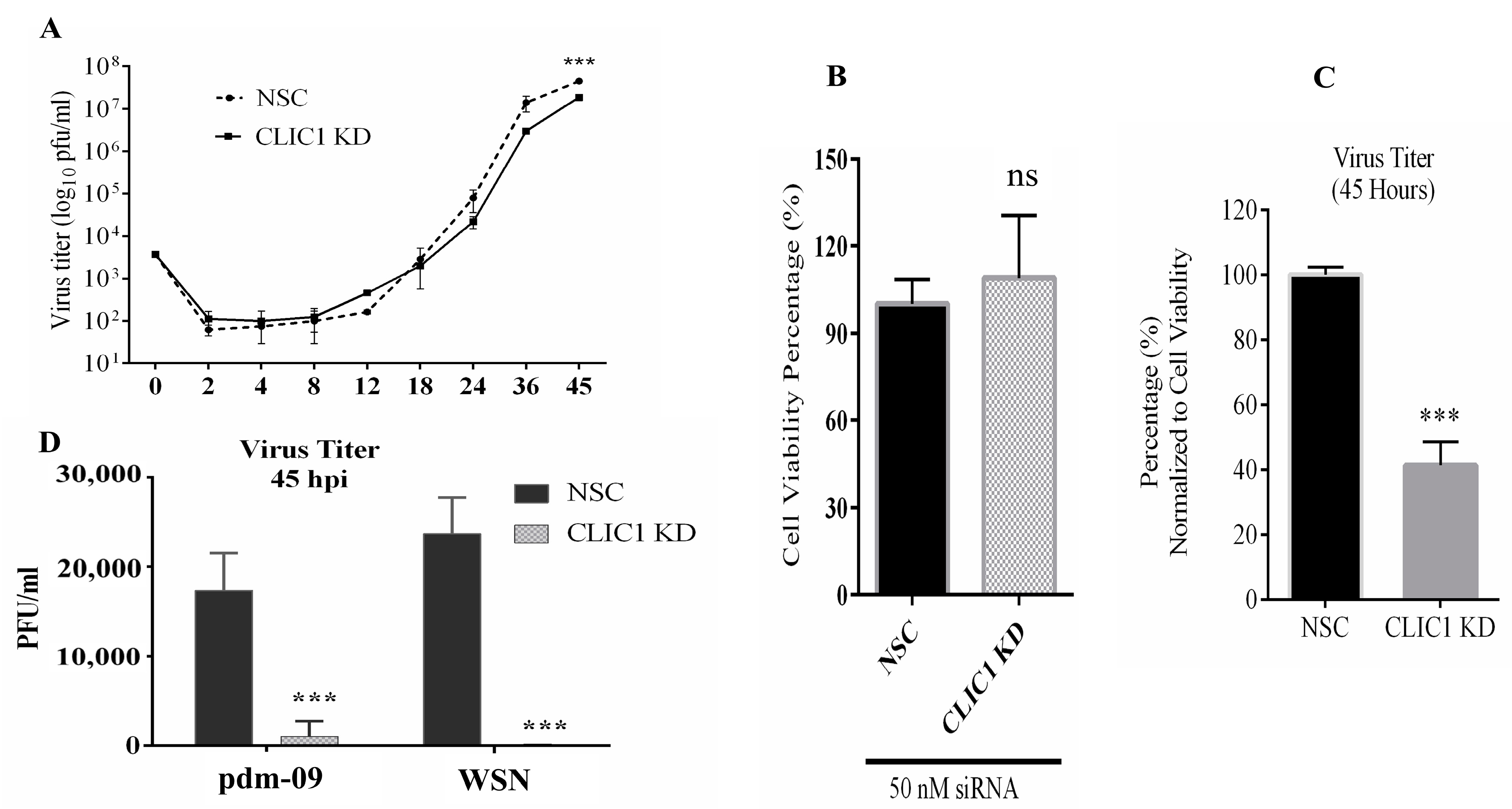
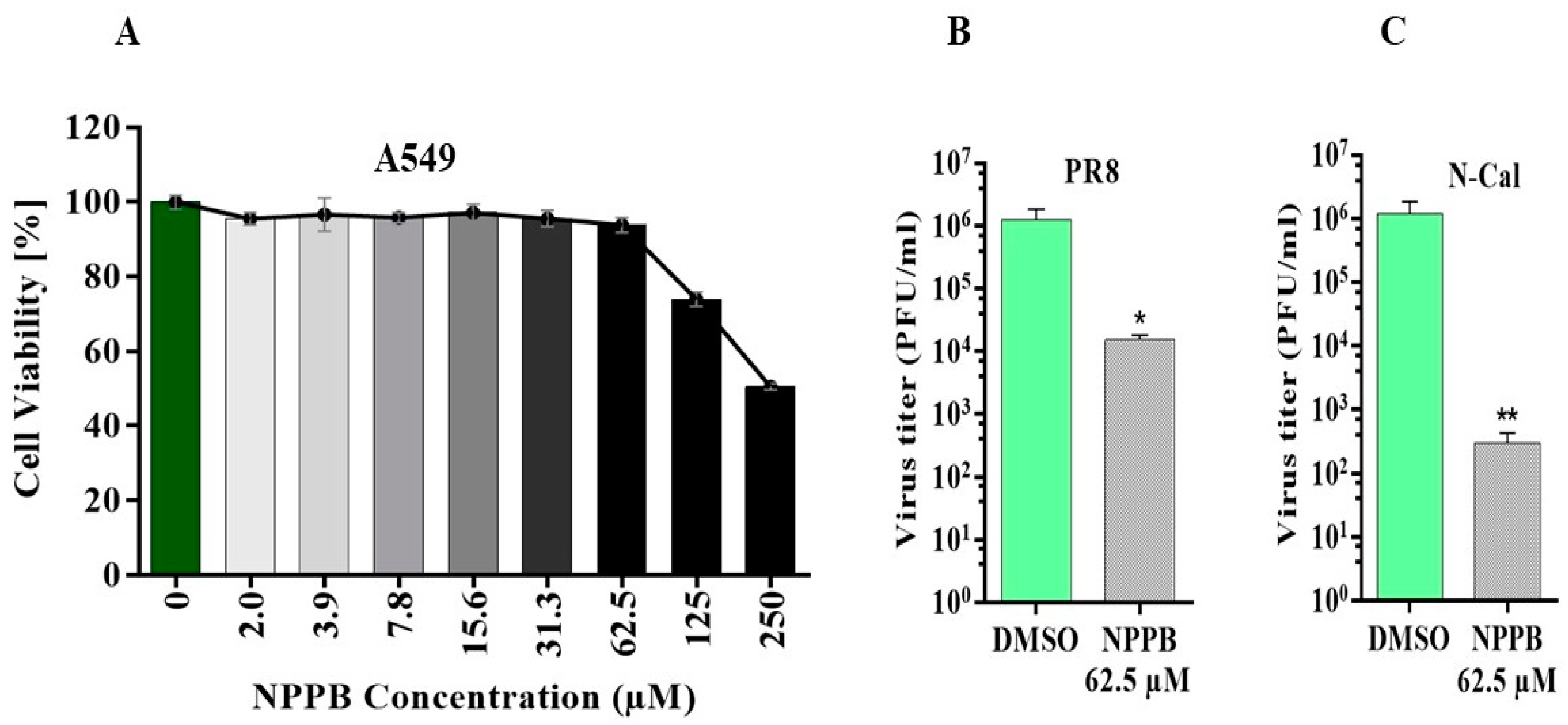
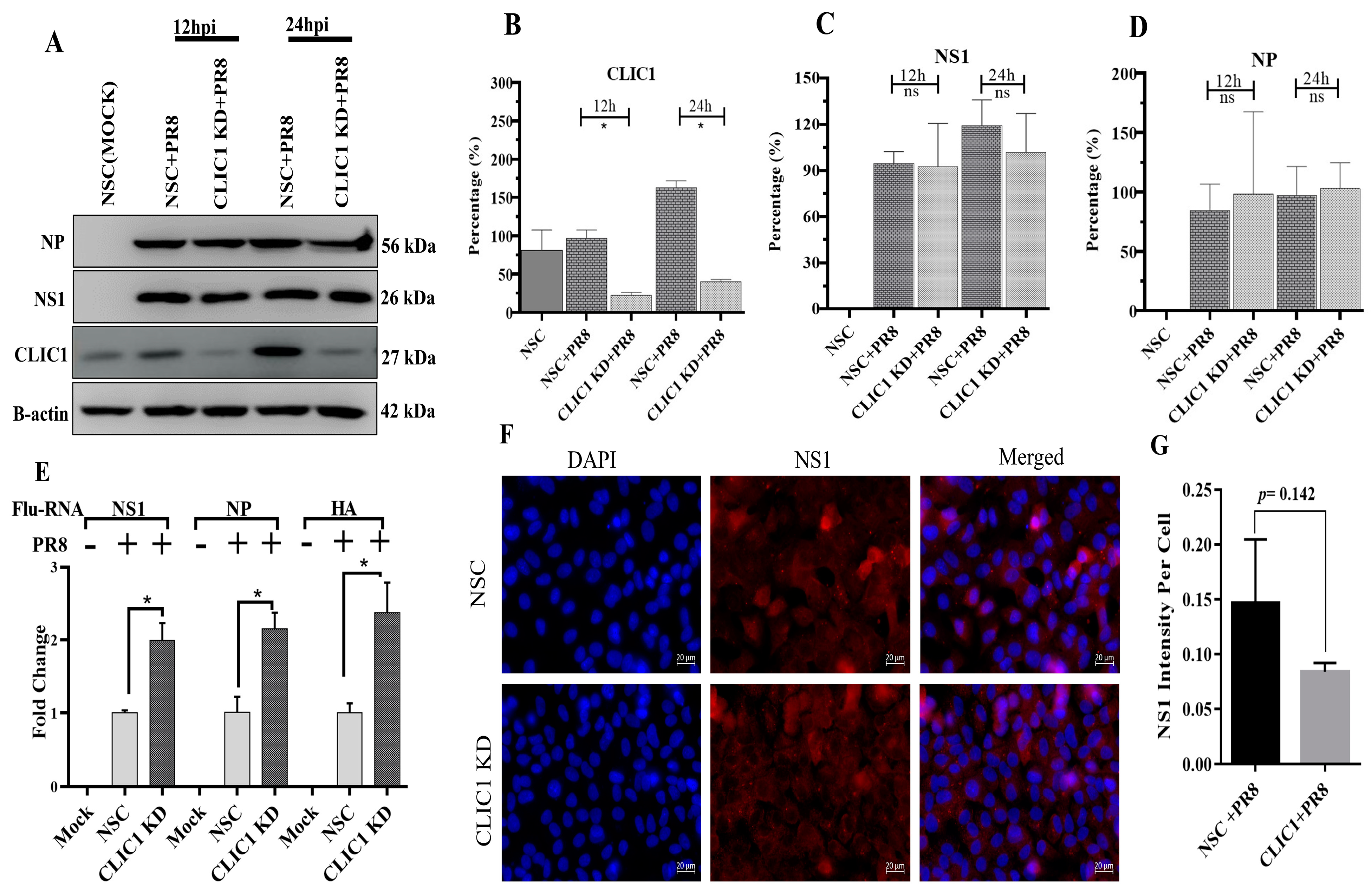
(1) Background: Influenza A Virus (IAV) uses host cellular proteins during replication in host cells. IAV infection causes elevated expression of chloride intracellular channel protein 1 (CLIC1) in lung epithelial cells, but the importance of this protein in IAV replication is unknown. (2) In this study, we determined the role of CLIC1 in IAV replication by investigating the effects of CLIC1 knockdown (KD) on IAV viral protein translation, genomic RNA transcription, and host cellular proteome dysregulation. (3) Results: CLIC1 KD in A549 human lung epithelial cells resulted in a significant decrease in progeny supernatant IAV, but virus protein expression was unaffected. However, a significantly larger number of viral RNAs accumulated in CLIC1 KD cells. Treatment with a CLIC1 inhibitor also caused a significant reduction in IAV replication, suggesting that CLIC1 is an important host factor in IAV replication. SomaScan®, which measures 1322 proteins, identified IAV-induced dysregulated proteins in wild-type cells and in CLIC1 KD cells. The expression of 116 and 149 proteins was significantly altered in wild-type and in CLIC1 KD cells, respectively. A large number of the dysregulated proteins in CLIC1 KD cells were associated with cellular transcription and predicted to be inhibited during IAV replication. (4) Conclusions: This study suggests that CLIC1 is involved in later stages of IAV replication. Further investigation should clarify mechanism(s) for the development of anti-IAV drugs targeting CLIC1 protein.
Keywords: influenza A virus; CLIC1; host factor; transcription; NPPB; replication cycle influenza A virus; CLIC1; host factor; transcription; NPPB; replication cycle