


Abstract
This paper aimed to evaluate the Portuguese scientific production within Tourism, Leisure and Hospitality Management (TLHM). To this end, 572 papers from 51 peer-reviewed Scopus journals were mapped through a mixed bibliometric analysis method. The results indicated that Portugal has a significant TLHM research production, with an outstanding performance in terms of topic prominence percentile. Additionally, Portuguese TLHM research collaboration has increased significantly in recent years. It should be pointed out, however, that this production is significantly skewed towards tourism-specific studies rather than hospitality. This study presents a new bibliometric contribution by bringing the SciVal topic prominence and prominence percentile to the TLHM field and presenting a new country research performance model, indicating a new way to evaluate a country’s research performance. Additionally, this investigation featuring the overall structure of Portuguese TLHM research provides clear outlines to concerned bodies regarding researcher and institution performance and gives helpful and timely information to researchers, scholars, government managers, industry managers, and tourism and hospitality consultants.
1. Introduction
Merigó et al.’s [1] study revealed that tourism research has 50 years of scientific publications. However, bibliometric research concerning institution, author, or journal performance applied to TLHM is only 21 years old. The first known study dedicated to this domain was carried out by Howey et al. [2]. Existing studies focus on the institution performance [3,4,5], author performance [1,6,7,8] or journal performance [2,9].
If we consider bibliometrics applied to the sustainability of TLHM, a great diversity of variables and topics arise, from sports tourism [10] to cultural and natural tourism [11], sustainability perceptions [12], among many other topics. However, the country’s performance, in turn, has received no academic attention and, thus, represents a research gap.
Research on productivity depends on metrics that measure variables, which are supposed to define academic excellence. This academic excellence is normally called performance and this term is associated with many programs and departments of institutions recognized as possessing high-quality research outputs [13]. The bibliometric methods to assess performance are generally divided into three types: review studies, evaluative approaches, and relational approaches [14,15]. The techniques of all approaches have the same goal: to classify the research performance/productivity of authors, institutions, or journals [16]. Therefore, a country’s performance in each area of knowledge is measured through rankings of institution productivity in that area. This, in turn, depends on the productivity of authors and leads to a final ranking of a country’s performance [5,16].
Within the extant literature on TLHM, bibliometric studies on a country’s performance focusing on research collaboration are nonexistent. Besides, despite the existence of some bibliometric studies applied to TLHM (i.e., those cited in the previous paragraph), none has cross-referenced content analysis of variables such as SciVal topic prominence and prominence percentile. The latter is an indicator that predicts whether a topic will grow or decline in the future, besides pointing to emerging research topics [17]. Therefore, analyzing it and cross-referencing it with other variables is of utmost importance.
Considering this scenario, the following research question emerged: How to analyze a country’s research performance in a certain area? Aiming to address this question, the present study’s main objective is to design an assessment model to measure a country’s performance on TLHM research. To operationalize this objective, Portugal was chosen as the study’s setting, first considering that, in the SCImago country ranking, in the subject domain Business, Management and Accounting and in the subject category Tourism, Leisure and Hospitality Management, Portugal is ranked 17th out of 183 countries [18], which reveals that this field of research has some relevance. Second, the Portuguese tourism sector, namely, the hospitality industry, reached a significant growth due to the impact it has on employment and on Gross Domestic Product (GDP) [19]. This is associated with the increase in the number of players and the consequent need for hoteliers to base their decisions on innovative academic studies, namely, tourism, leisure and hospitality research studies.
The literature review did not find studies that measured the performance of a country in TLHM in the Scopus database, just as it did not find studies that use SciVal topic prominence as a performance indicator. In this context, the following specific objectives were adopted:
- Mapping Portuguese scientific production in TLHM;
- Including the research domain and topic prominence to map scientific production in TLHM and to characterize the country’s overall performance, in addition to the number of articles and author indicators;
- Assuming that the SCImago Journal & Country Rank (SJR) score is the most relevant indicator of the journal’s productivity to define a country’s performance;
- Improving the country’s institution research performance, including new performance indicators: number of first authors, number of authors by SJR, SciVal topic prominence in authorship productivity, and collaboration (for author and institution collaborations);
- Proposing a methodological bibliometric analysis model to analyze the country’s performance in TLHM research based on three analysis dimensions (country’s overall performance, country’s journal performance and country’s institution performance), each measured by several indicators;
- Establishing a concept for the country’s research performance model in TLHM.
The methodological bibliometric analysis model to analyze the country’s TLHM performance proposed and employed in this paper encompassed a total of 23 variables, which were grouped in three country performance dimensions: overall performance, journal performance and institution performance. The analysis was based on a set of 572 papers published in the Scopus database until April 2020. The collected data were first harmonized with DB Gnosis version 3v3 and R Studio version 1.2.5042 software programs (Boston, MA, USA) and, subsequently, a content analysis was carried out. The analysis of the data was made by mixing two bibliometric methods.
The results revealed that there were fluctuations in the ranking of authors and institutions, depending on the type of variable analyzed, which suggests that a sustainable bibliometric model should include analyses of different dimensions of variables to characterize the performance of a country, and which justifies the TLHM country research performance model that we present in this work. The proposed model is justified, for example, because the findings revealed that, when the Portuguese average collaboration over time improved, the production of papers increased and the scientific production in the 99th–100th percentile rose. This demonstrated that research collaboration improves productivity and is therefore a clear indicator of a country’s performance. In addition, the production in tourism and hospitality is different, as well as the topic prominence, which indicated that research domain, topic prominence, and prominence percentile to map scientific production in TLHM are needed variables to characterize the country’s overall performance.
This study revealed that three Portuguese institutions stood out: ISCTE-IUL (Lisbon), University of Algarve, and University of Aveiro have been leading TLHM research, both in publication numbers and collaboration networks. This could be possibly related to the fact that these universities are the ones in Portugal that have doctoral programs in tourism. This result will support the arguments of the Portuguese Polytechnic Institutes, who have been trying to implement doctoral programs since 2018, which, through collaboration among researchers from various countries, will increase the productivity of an institution and, consequently, encourage the financing of projects. Precisely through the increase of research funding, the Polytechnic Institutes expect to grant the Doctor’s degree, which will open an opportunity for greater and better research co-authorships.
For TLHM researchers and universities, this study reveals the overall structure of the topic as well as research gaps and emerging research areas by identifying the SciVal research topics that are growing or declining. Moreover, for Portuguese authors, this study identifies: where they are on TLHM, how they can identify new collaborations, and what research topics does a journal cover. For bibliometric researchers, the study brings a new indicator to map science and to qualify the research performance of a country, institution, or author: the SciVal Topic prominence and prominence percentile. Even more, this study proposes a new country research performance model that indicates the best way of evaluating a country’s research output. For journals, this study provides information on who are the top experts and potential reviewers. Finally, since tourism and hospitality touch the industrial sector, this work offers managers information that can be useful in designing new management strategies.
2. Literature Review
As argued by Merigó et al. [1], in recent years research on tourism, leisure and hospitality has increased considerably. Bibliometric studies on these areas have also significantly increased in number. Moreover, as shown in Table 1, there is a great variety of approaches and variables employed to analyze research production in TLHM.

Table 1.
Prior bibliometric studies in TLHM.
Focusing on the studies in Table 1, the first bibliometric study on TLHM [2] analyzed keyword and main topics. Six years later, Jogaratnam et al. [4] analyzed university performance, to which the number of papers, authors, and cross-citations were used as indicators. In the same study, the bibliometric analysis focused on author affiliation, repeat authorship, and research contributions. Subsequently, McKercher [6] and Law et al. [20] analyzed author performance based on the number of papers, citations, and most popular topics. To this end, the authors employed quantitative variables, such as papers per journal, and categorical ones, such as institutional affiliations of authors.
Two years later, the focus shifted to journal performance. Park et al. [5] analyzed journals by topic domain and authorship affiliation, cross-checking authors and number of journal publications per year. Tsang and Hsu [7], in turn, also analyzed again the number of journal publications per year. In addition, the authors introduced the analysis of publications by disciplines. Author citations gained relevance in TLHM bibliometric research in 2013, as Benckendorff and Zehrer [3] employed self-citation, h-index, g-index, keywords, and main topics as performance indicators. The number of publications in high-impact journals emerged as an indicator in the study carried out by Mulet-Forteza et al. [9], who also analyzed citation and author rankings.
In 2019, keywords, citations, and publication in high-impact journals were employed again by Vishwakarma and Mukherjee [8], who also introduced the bibliometric output of the top 100 most cited documents. In the same year, Mulet-Forteza et al. [21,22] analyzed journal impact factors and total citations between 2010 and 2016, using the number of journals in TLHM, h-index, the number of citations per paper ratio, and keywords as indicators. More recently, Merigó et al. [1] focused on citations, using author and year as analysis variables. To this end, the authors employed four main variables: most cited papers, paper views (on the Scopus platform) by author, journal ranking, and most prominent authors. The review of bibliometric studies in TLHM revealed that many different variables were used to measure the performance of authors, universities, and journals.
A further analysis of more recent bibliometric studies focusing on sustainability applied to tourism and hospitality revealed that the studies mostly focus on the sustainability of tourism topics. Some examples include the concepts of sustainable tourism [23], sustainability and competitiveness in tourism and destinations [24], the Airbnb phenomenon [25], golf tourism [26], and tourism management [27], among other topics. However, during the literature review carried out as part of the present investigation, no study measuring a country’s performance in THLM research was found. Moreover, studies employing topic prominence as a performance indicator were also nonexistent.
Topic prominence provided by Scopus can be analyzed on the SciVal platform and combines three metrics to indicate the momentum of the topic: (1) Citation count in year n of papers published in n and n − 1; (2) Scopus view count in year n to papers published in n and n − 1; and (3) Average CiteScore for year n. The topic prominence indicator is useful to identify whether a research topic is growing or declining. Therefore, it is normally used to support research funding [28]. Topic prominence is expressed as percentiles by Scopus and, as argued by Wang and Shapira [29], high-impact articles (i.e., articles positioned in the 90th and 95th percentiles) are much more likely to be associated with acknowledged funding, compared with low-impact articles. To assess the percentile indicator of the most prominent topics, Bornmann et al. [30] applied the assessment of prominence percentiles by percentile rank classes (e.g., grouping topics), and Boyack [31] used the mean of percentile citations. Among other variables, it is precisely the performance in a given country and the importance of considering the topic prominence that guide this study.
3. Methodology
3.1. Data Collection and Systematization Procedures
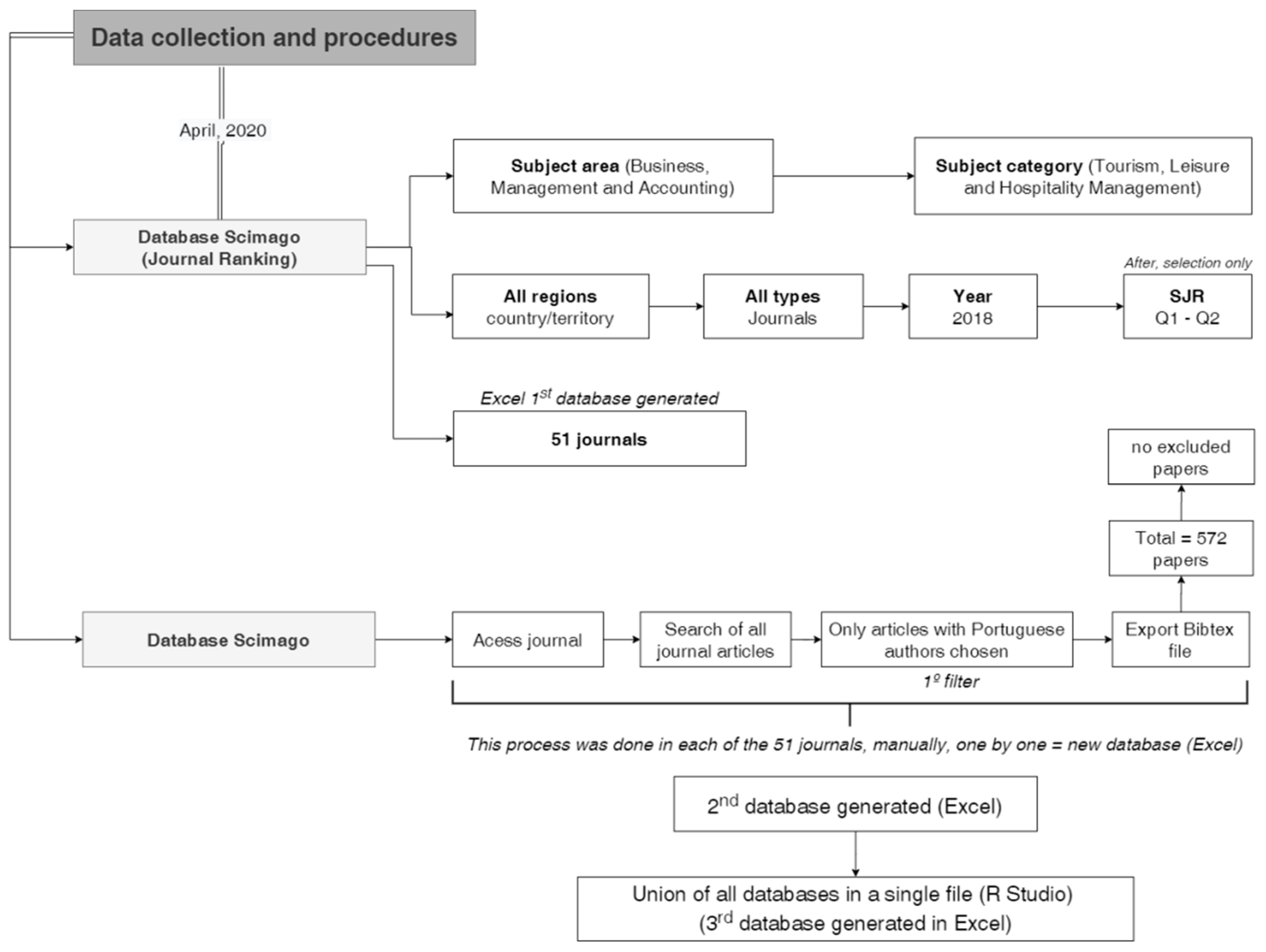
The data collection procedures took place in April 2020. The quartile classification that guided the selection of journals and articles, however, refers to 2018. This is because SCImago only releases the journals’ quartile classification for each year in June of the following year. Therefore, in April 2020, the latest classification had been released in June 2019 and concerned the year 2018. In this context, the current study analyzed articles on TLHM published up to 2018 by Portuguese scholars in journals indexed in the Scopus database. Among these, the research focused on journals ranked in the two best quartiles (Q1 and Q2) by the SCImago Journal & Country Rank in 2018 (Scientific Journal Rankings, SJR 2018). These quartiles included journals that have a stable impact factor, that is, that are considered the most appropriate journals to delineate scientific performance, and their content is accepted as endorsed knowledge. For this reason, several previous studies (e.g., Koseoglu et al. [14]; Mardanov et al. [32]) employed the same approach. Articles were retrieved from each journal according to the following search criteria: country/territory (Portugal) and document type (article). The final database included 572 papers by 639 authors (co-authorship mean = 2.84), and published in 51 different high-impact journals, as summarized in Figure 1.
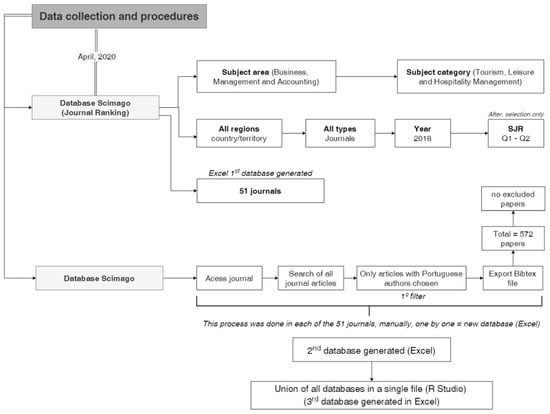
Figure 1.
Data collection process.
A more detailed description of the database is presented in Table 2.
Table 2.
Database description.
The collected data were downloaded in BibTeX format from Scopus. Subsequently, R Studio software (version 1.2.5042, Boston, MA, USA) was used to eliminate duplicates and create a unified database. Then, following the example of Aria and Cuccurullo [33], the data were subjected to a network analysis, which was carried out with R Bibliometrix 3.0 (Naples, Italy). The next step was a categorical content analysis. However, before carrying out this analysis, the data had to be homogenized, as there are differences in data presentation among journals (including details such as full stops, commas, spaces between words, numerations in authors’ affiliations, etc.). Moreover, the SciVal topic prominence, topic prominence percentile, SCImago SJR 2018 and first authorship information were retrieved manually from the Scopus and SCImago databases, as Scopus does not provide this data in the output. Homogenizing the data prior to content analysis is also advised by reference authors for qualitative analysis in general (i.e., Bardin [34]) and as specifically applied to tourism research (i.e., Camprubí and Coromina [35]). Once homogenized, the data were finally subjected to the categorical content analysis with the aid of DB Gnosis 3v3 software (see http://favouritedestinations.com/en/dbgnosis/).
3.2. Data Analysis Procedures
Within the present study, Portuguese research performance on THLM was analyzed through a set of quantitative and qualitative variables, which were based on previous bibliometric studies (e.g., Hanssen et al. [36]; Harris and Brander Brown [37]; Ye et al. [16]). A first deductive content analysis was applied for the enrichment of the exploratory attempt since, as suggested by Marshall and Rossman [38], this approach is useful for a global view of data. The content analysis approach used was variable-oriented, which typically examines relatively few variables across a large number of cases, following similar analyses in content analysis (e.g., Miles and Hauberman’s [39] research). This first exploratory analysis was useful to understand the data behavior and was necessary to classify the articles into specific tourism research areas, which became the first variable of the model. To this end, the articles were grouped into two research domains based on Wilson et al. [40]: tourism and hospitality.
The SciVal topic prominence was distributed in 11 portions or percentiles. Then, the frequency in each percentile was used as a criterion to rank the articles. Topic prominence distribution presents a number of advantages over standard bibliometric variables that are used in similar studies. The higher the percentile, the greater the impact of the article [28,31]. While analyzing the data quantitatively, the authors asked questions, took notes, and made analysis decisions [41]. To answer these questions, all analyses were performed through an inductive content analysis approach, taking theory as support, asking questions, and hypothesizing to generate a solid analysis and theory [42,43].
To create the network of collaboration among themes, institutions, and authors, we used the R Bibliometrix 3.0 (Naples, Italy) through biblioshiny (a shiny app providing a web interface for R Bibliometrix). The network analysis was made for the top 10 of the most frequent publications. We used specific and previously tested criteria for the elaboration of the outputs, namely, the number of nodes and Min edges. The scientific collaboration network is a network where nodes are authors and links are co-authorships, as the latter is one of the most well-documented forms of scientific collaboration [33,44]. Min edges, in turn, are the longest distance (length of the shortest path between two nodes) in the network. For the network analysis carried out in the present investigation, 50 nodes and five Min edges were adopted as network parameters. Using the networkStat function, several summary statistics were calculated. These included a bibliographic matrix (or a graph object), where two groups of descriptive measures were computed as the summary statistics of the network and the main indices of centrality and prestige of vertices.
To obtain the network among authors, the command line “NetMatrix <- biblioNetwork (M, analysis = “collaboration”, network = “authors”, sep = “ was used. To get the network collaboration among countries, we used the command line “NetMatrix <- biblioNetwork(M, analysis = “collaboration”, network = “countries”, sep = “. The keywords network was achieved through the command “NetMatrix <- biblioNetwork (M, analysis = “co-occurrences”, network = “keywords”, sep = “;”) netstat <- networkStat(NetMatrix”. To create the keyword co-occurrences network, “NetMatrix <- biblioNetwork (M, analysis = “co-occurrences”, network = “keywords”, sep = “ was employed. To draw the network, “net = networkPlot (NetMatrix, normalize = “association”, weighted = T, n = 30, Title = “Keyword Co-occurrences”, type = “fruchterman”, size = T, edgesize = 5, labelsize = 0.7” was used. Finally, to perform a conceptual structure using keywords, “CS <- conceptual Structure (M, field = “ID”, method = “CA”, minDegree = 4, clust = 5, stemming = FALSE, labelsize = 10, documents = 10” was entered. In graphical parameters, we used proposed criteria of R Bibliometrix, which defines opacity as 0.7, label size as 6, and 50 as the number of labels, to which the command “net = networkPlot(NetMatrix, normalize = “salton”, weighted = NULL, n = 100, Title = “AuthorsCoupling”, type = “fruchterman, size = 5, size.cex = T, remove.multiple = TRUE, labelsize = 6, label.n = 50, label.cex = F” was employed.
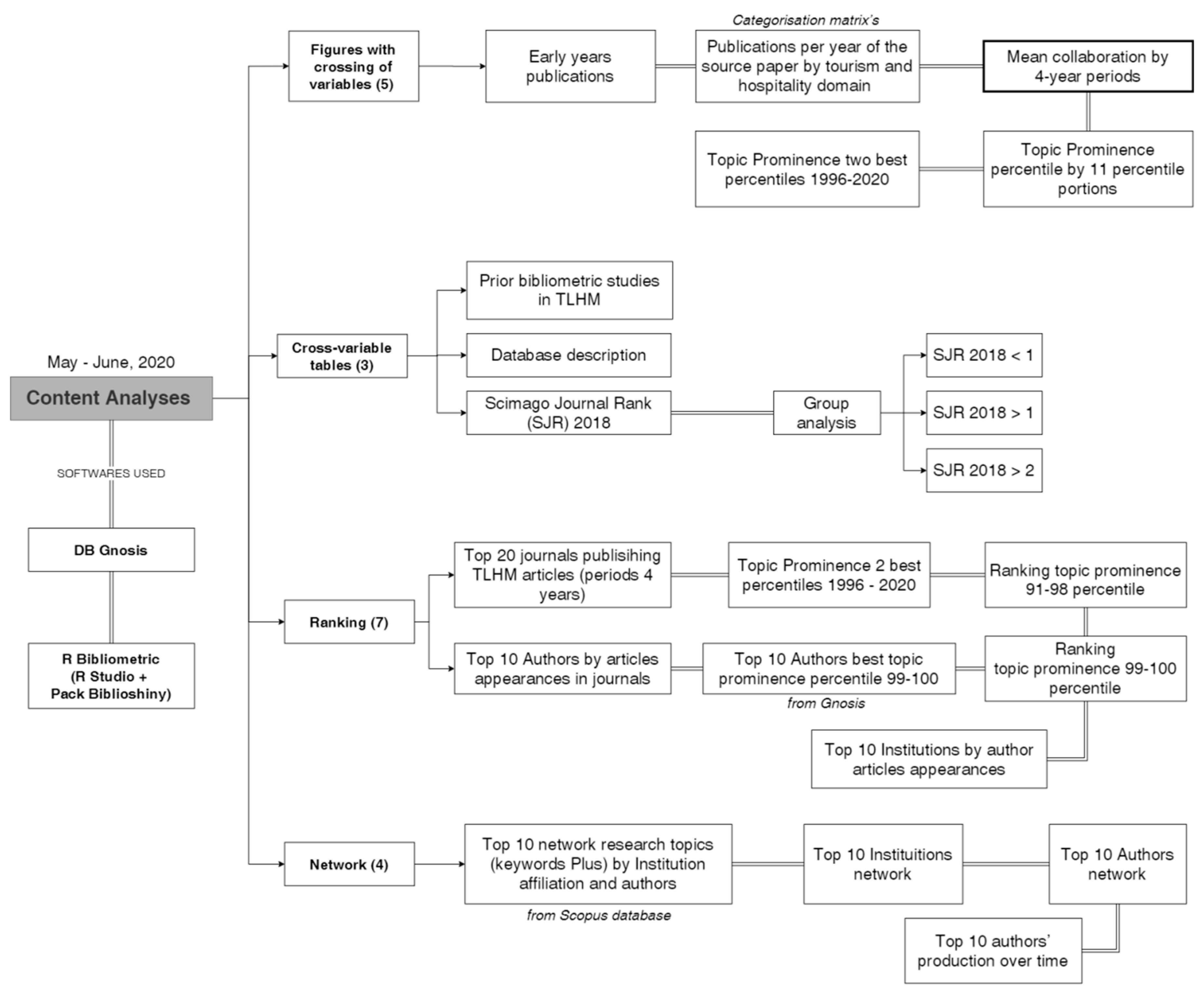
The crossing of variables and grouping analysis generated the proposed model (Figure 2).
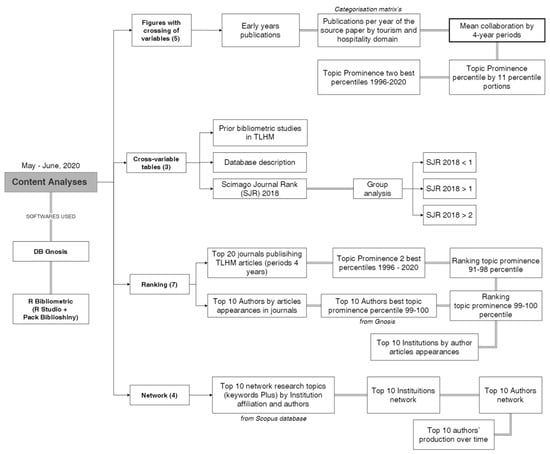
Figure 2.
Analysis procedures.
Content analysis was also employed to help understand the relationships among the figures, tables, rankings, and networks.
4. Results: The Structure of Portuguese TLHM Research Performance
4.1. Overall Portuguese TLHM Academic Research
4.1.1. Overall Performance
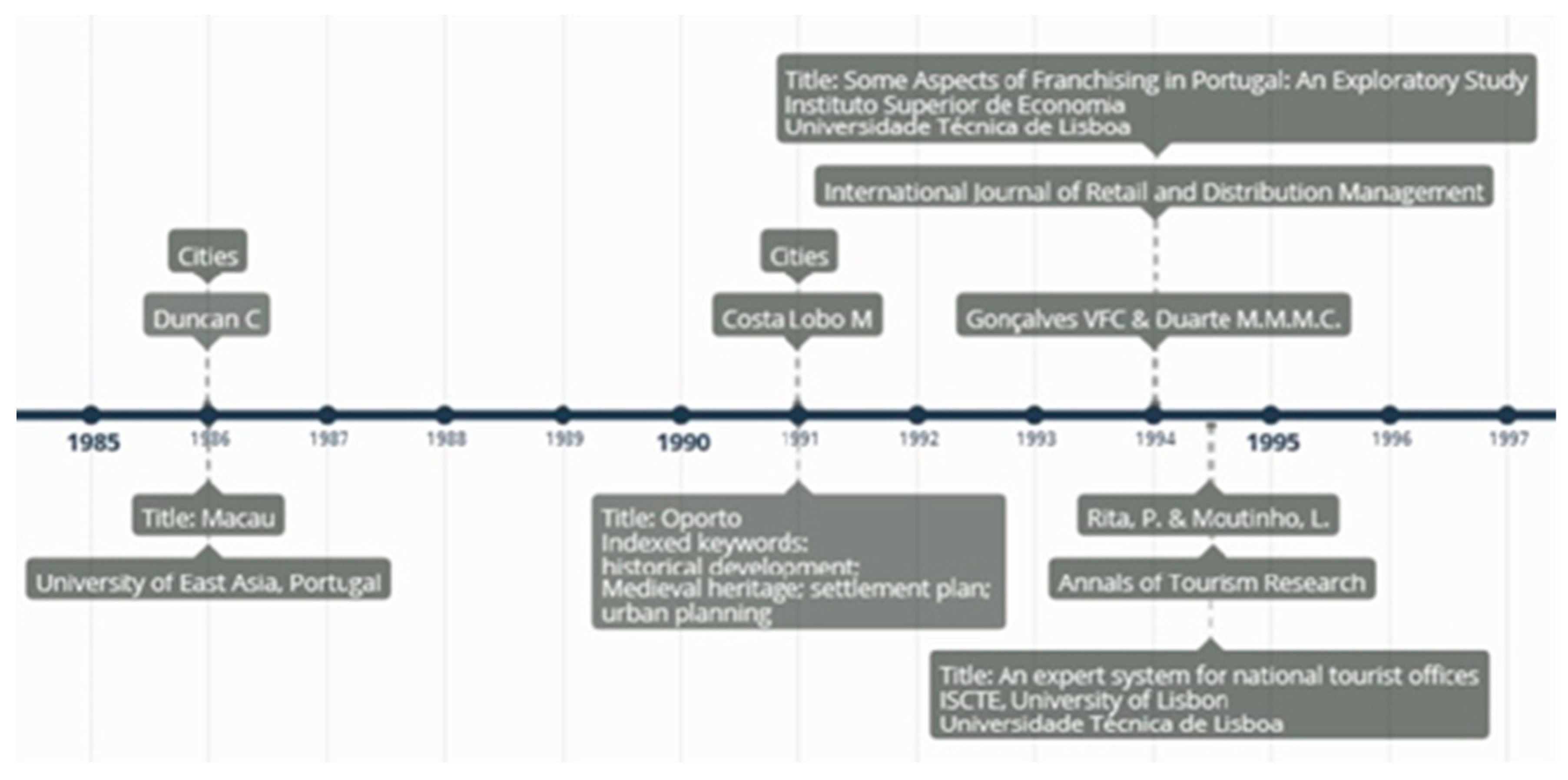
TLHM research in Portugal started in 1986, with the publication of the paper entitled “Macau”, by Duncan [45], in Cities. Within the next decade, only three more papers were published: one in 1991, in the same journal, and two in 1994, in the International Journal of Retail and Distribution Management and in the Annals of Tourism Research. This first decade of TLHM publications is summarized in Figure 3.
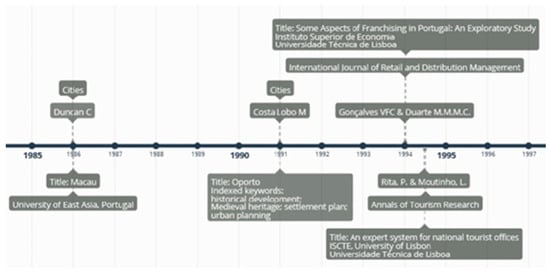
Figure 3.
Early years publications.
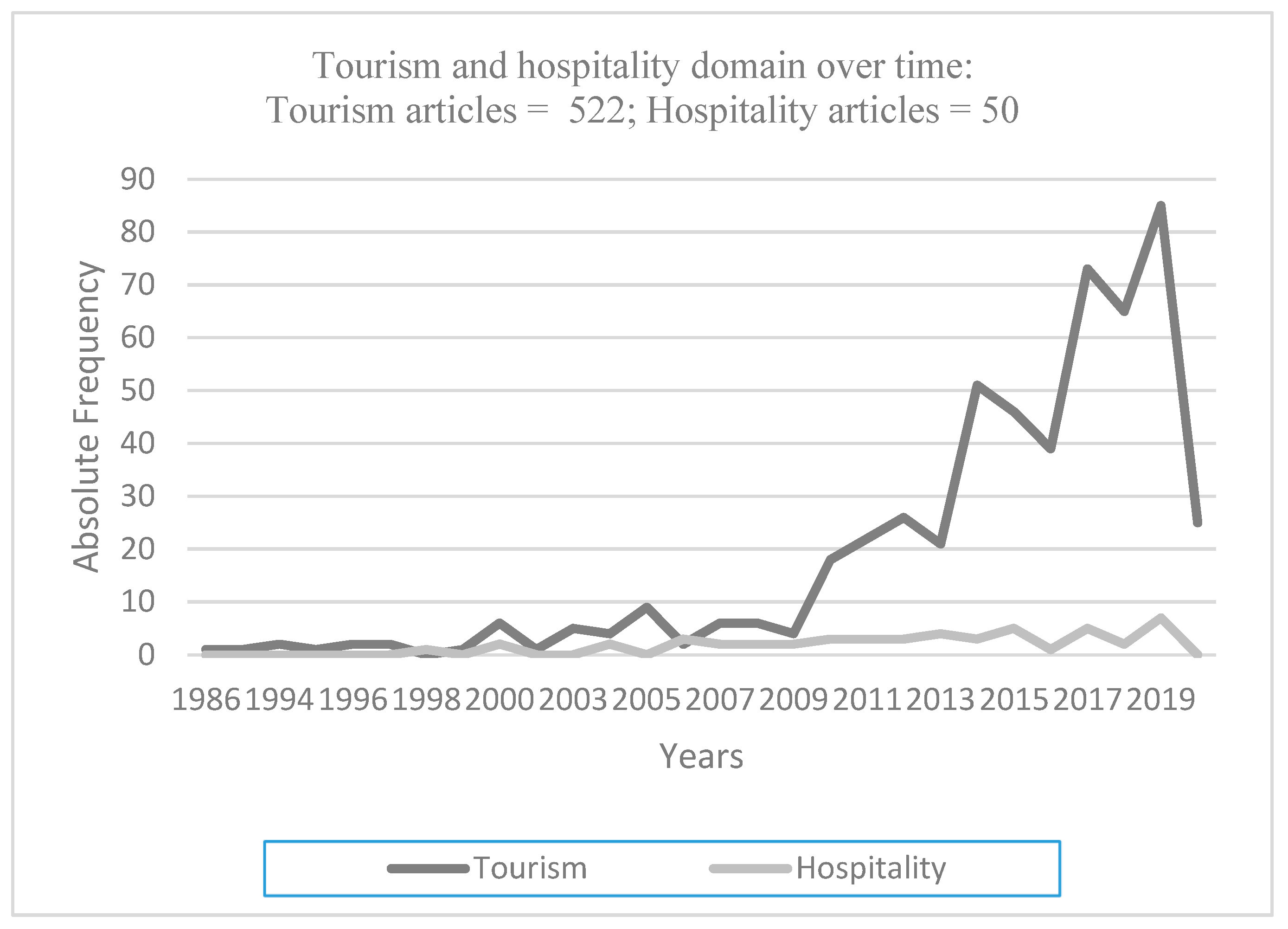
Regarding the research domain, Figure 4 reveals that, as of 2010, when publications started to ramp up, TLHM research in Portugal became increasingly skewed towards tourism studies, which accounted for nearly all the growth in publications. Tourism studies in Portugal emerged in 1986 (with Duncan’s article [45]) and reached their peak in publications in 2019, showing a relatively stable and significant growth in the last decade. Regarding the hospitality domain, the first article was published in 1998. Moreover, publication numbers have been consistently low. The peak was in 2015, and even then, only five papers were published.
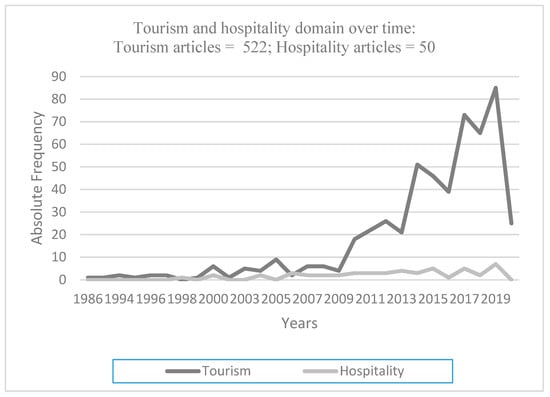
Figure 4.
Publications per year of the source paper by tourism and hospitality domain.
Regarding journal productivity, Table 3 reveals that 54% of the Portuguese TLHM research was published in journals with SJR > 1. Regarding journal quartile classification (Table 4), 405 articles were published in Q1 journals, while 167 were published in Q2 journals.
Table 3.
SCImago Journal Rank (SJR) 2018.
Table 4.
Top 20 journals publishing TLHM articles.
Moreover, as shown in Table 4, Tourism Economics and Tourism Management journals are those preferred by Portuguese TLHM scholars.
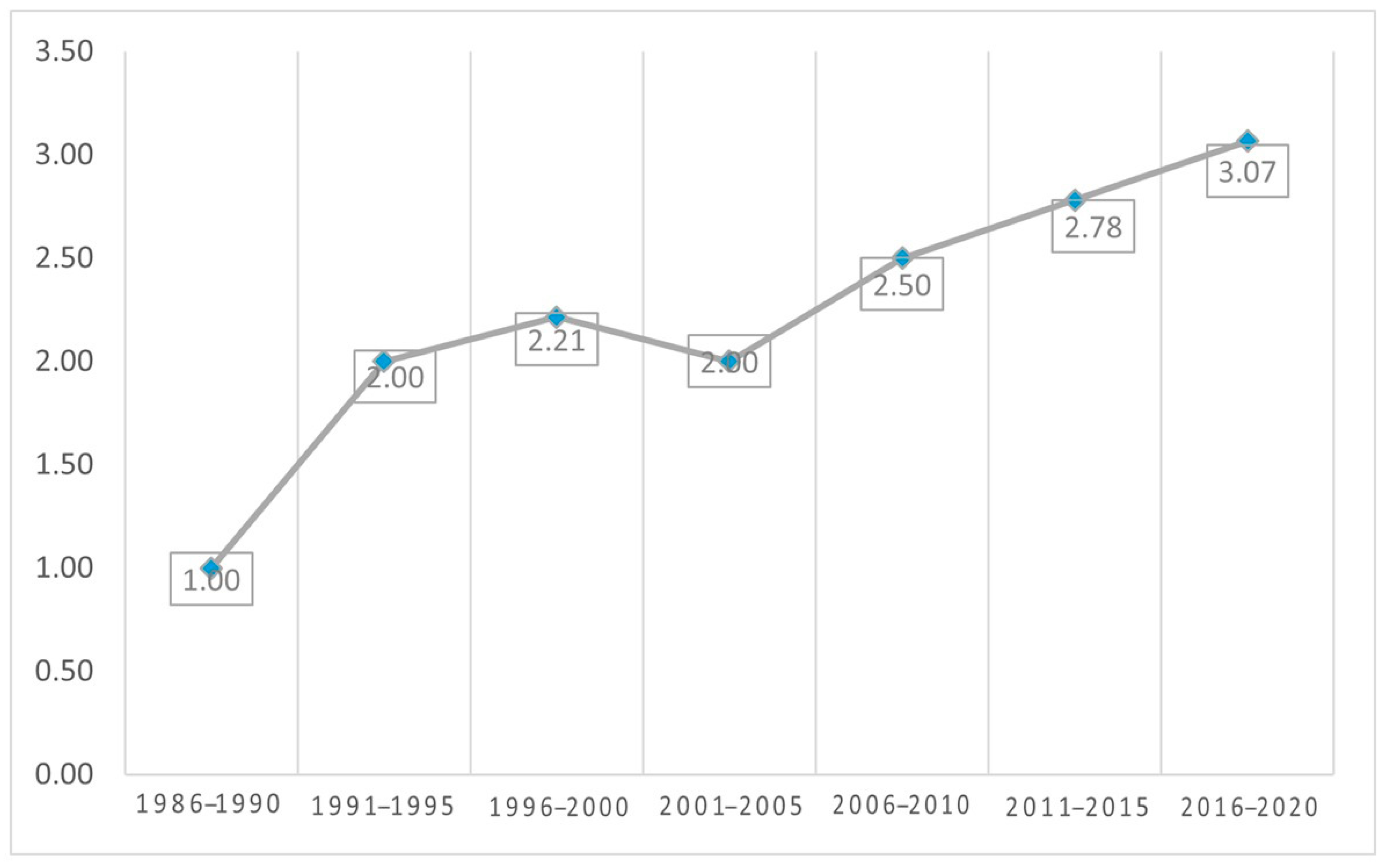
Regarding research collaboration, as shown previously (see Table 2), Portuguese TLHM articles presented a collaboration index of 1.68. However, as more clearly illustrated in Figure 5, this index has been constantly increasing, so that, within the last four years, the average is significantly higher than that of the overall analysis period: 3.
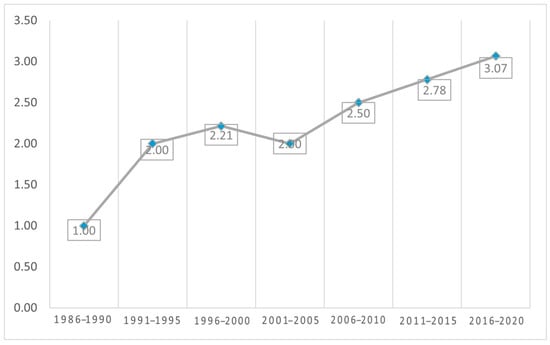
Figure 5.
Mean of collaboration by four-year periods.
4.1.2. Topic Prominence
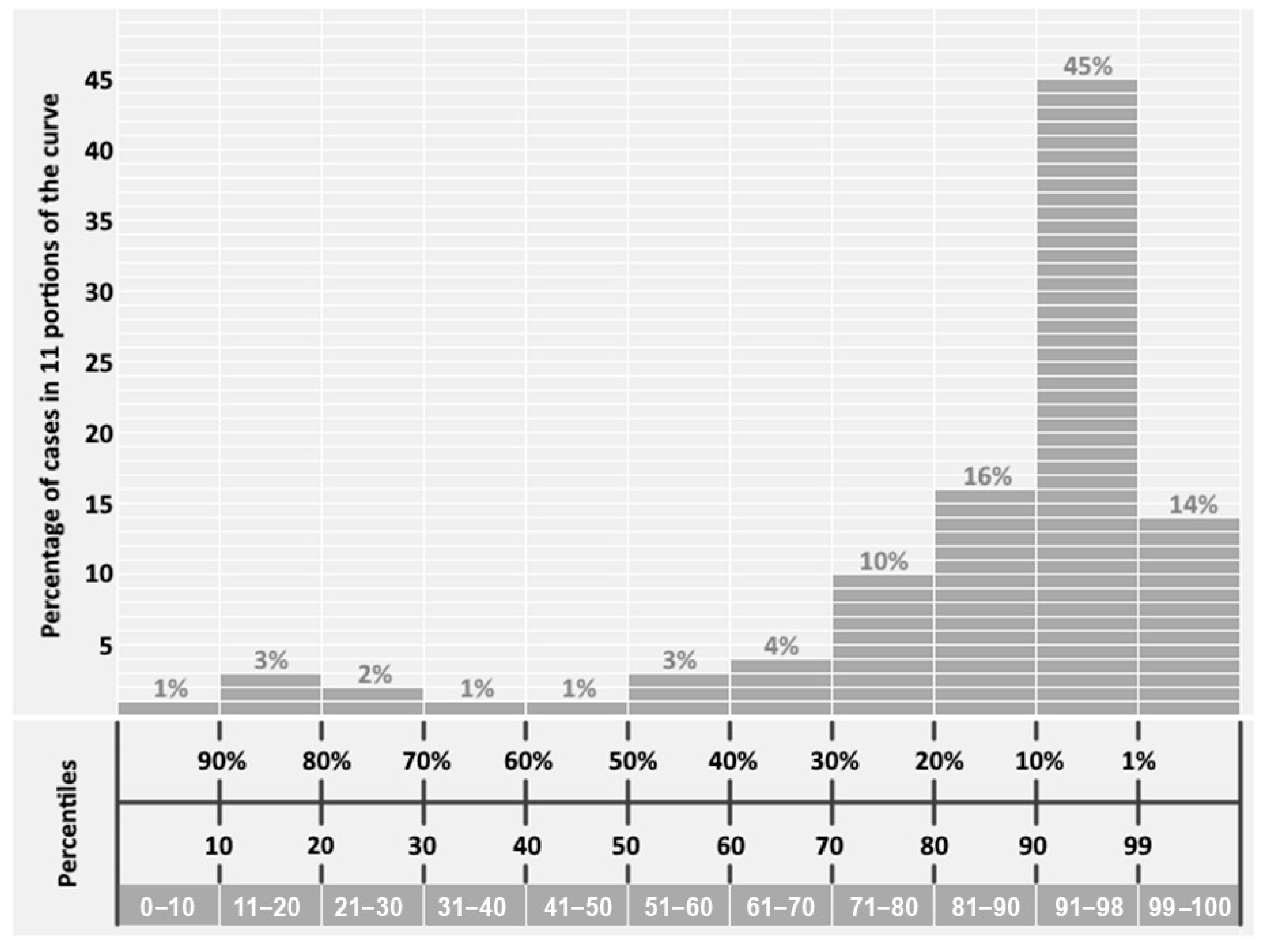
The last analyzed variables regarding Portugal’s general performance on TLHM research are related to SciVal topic prominence. In this regard, Figure 6 reveals that 92% of the country’s research production in this area was above the 50th percentile. Moreover, 59% of all Q1 and Q2 journals publishing Portuguese papers were within the 90th percentile.
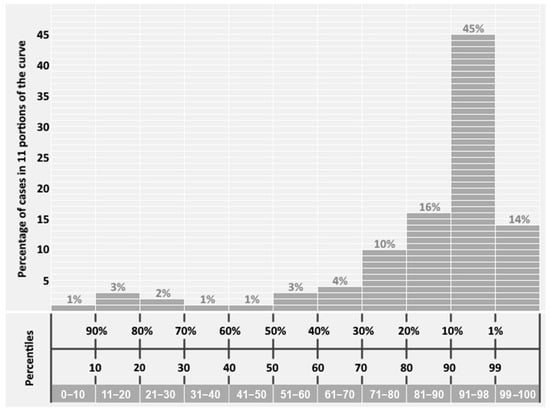
Figure 6.
Topic prominence percentile by percentile portions.
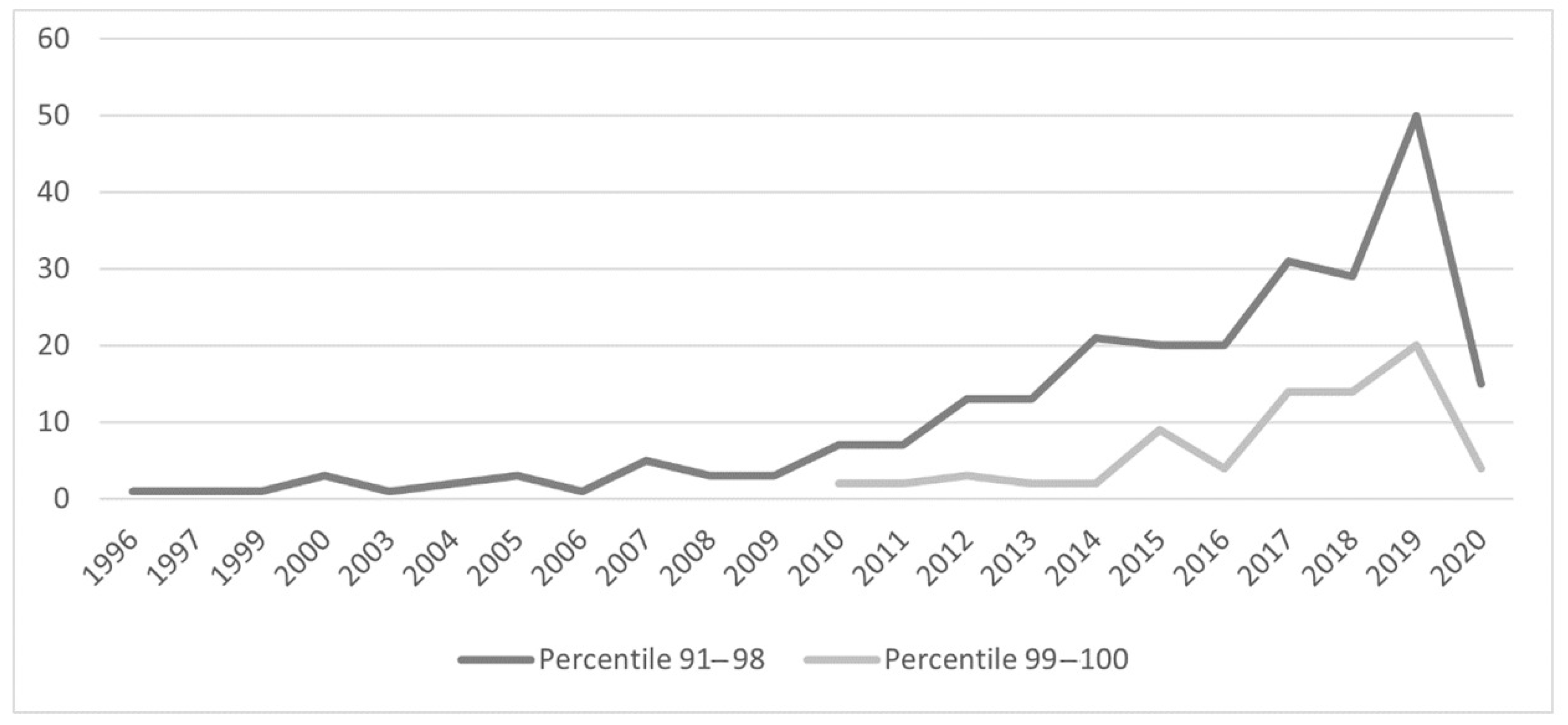
Focusing on the two best percentiles, Figure 7 shows that the number of papers published in journals from the 91st–98th percentile has continuously increased since 1996, reaching its peak—50 articles—in 2019. Regarding the 99th–100th percentile, Portuguese papers only started to be published in this level of journals in 2010. However, since then, the number of published papers has also continuously increased, reaching a maximum of 20 in 2019. In fact, this growth trend occurred on a global level and can be confirmed at the Scopus database.
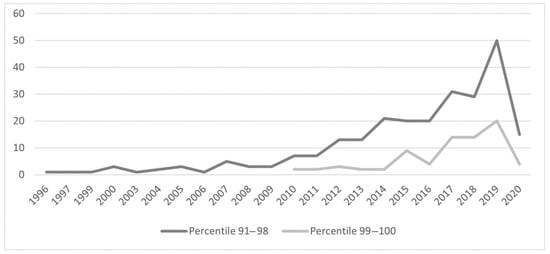
Figure 7.
Topic prominence two best percentiles 1996–2020.
The topics on the two most prominent percentiles (91st–98th and 99th–100th) were analyzed, both quantitatively and qualitatively, in terms of topic prominence, number of publications by year, number of authors studying the topic, and first author and affiliation. As shown in Table 5 and Table 6, the most prominent topics within the 91st–98th percentile all refer to tourism studies. In this context, “Festival|Festivals|Music Festival” was by far the most popular topic, with 36 papers, followed by “Destination Image|Destination|Destination Images” (19) and “Tourism Demand|Tourism|Tourism Flows” (12). These topics emerged between the late 1990s and the early 2000s and have slowly grown in popularity since then. Regarding Festivals, in particular, there was a spike in popularity in the last two years (2018 and 2019), when five and 12 papers, respectively, were published in this percentile. Regarding the first author affiliation, these topics were mainly researched by scholars from the University of Algarve, the University of Aveiro, the Centre for Tourism Research, Development and Innovation (CiTUR)-Polytechnic of Leiria, the University of Massachusetts-Amherst, USA, and the Polytechnic Institute of Viana do Castelo.
Table 5.
Topic prominence ranking in the 91st–98th percentile.
Table 6.
Topic prominence ranking in the 99th–100th percentile.
The best-placed hospitality topics were “Food|Tourism|Culinary Tourism” and “Wine|Wines|Wine Consumers.” With six papers each, these two topics were tied in 6th place, along with “Shopping Tourism.” The only other hospitality topic within the top 10 of this percentile was “Hotels” (10th place—five papers). The topics emerged around 2013 and were mainly studied by scholars affiliated with the Universidade Nova de Lisboa and the University Institute of Lisbon (ISCTE-IUL).
Regarding the 99th–100th percentile, that is, the 1% best percentile on topic momentum and visibility worldwide, two topics clearly stood out: “Tourism|Tourism Development|Community-based Tourism” and “Social Media|Reviews|Electronic Word-of-Mouth,” with 27 and 22 articles, respectively. For comparison, the third best-placed topic in this percentile was “Industry|Manufacture|Service Ecosystems,” with only four papers. All the other topics in the top 10 had one or two papers.
The first article by a Portuguese scholar on “Tourism|Tourism Development|Community-based Tourism” to be published in a paper of this percentile came out in 1997. However, the next publication would only take place 13 years later, in 2010, when Portuguese studies on the topic started to be relatively frequent in this percentile. The topic was mostly researched by scholars from the University of Algarve. Papers on “Social Media|Reviews|Electronic Word-of-Mouth,” naturally, emerged much later. The first study by a Portuguese scholar in this percentile was published in 2012. Since then, about one paper per year was published until 2017, when a more prominent growth started to take place. In 2019, nine papers on the topic were published in this percentile by Portuguese scholars. The topic was mostly researched by scholars from the ISCTE-IUL.
4.2. Portuguese Institutions’ TLHM Research Performance
Top 10 Institutions by Author Appearances
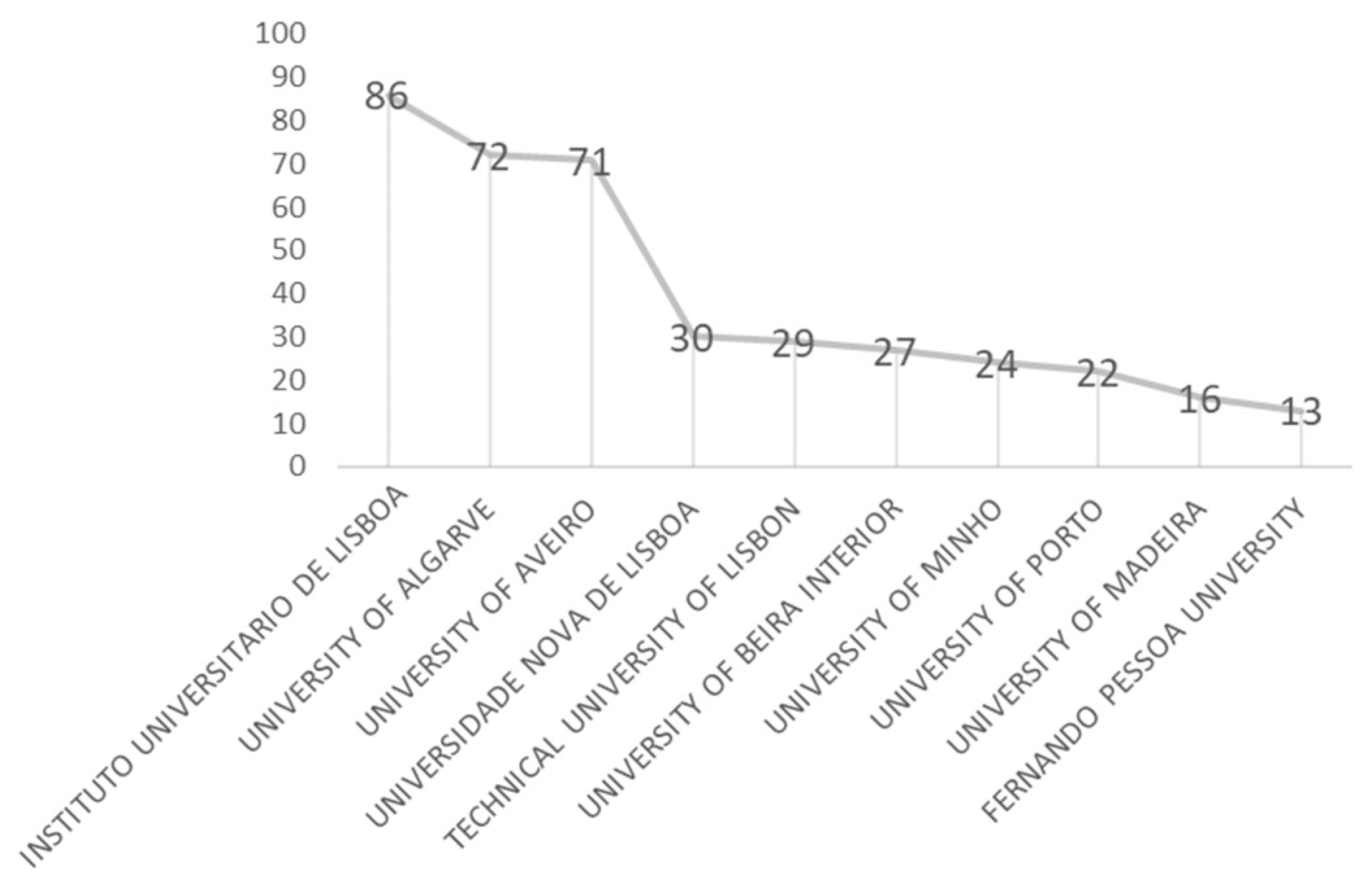
Three Portuguese institutions clearly stood out in terms of TLHM research production, as illustrated in Figure 8: ISCTE-IUL, University of Algarve, and University of Aveiro. Among the first authors of the analyzed papers, 86, 72 and 71, respectively, were affiliated with these institutions.
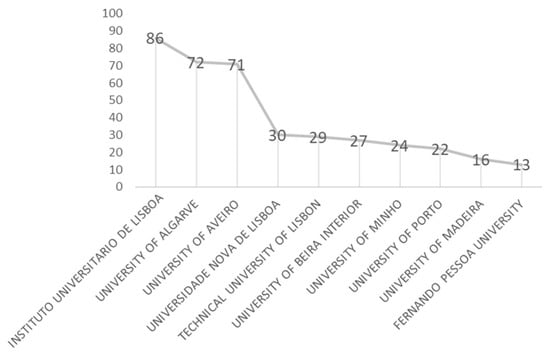
Figure 8.
Top 10 institutions by author appearances in articles.
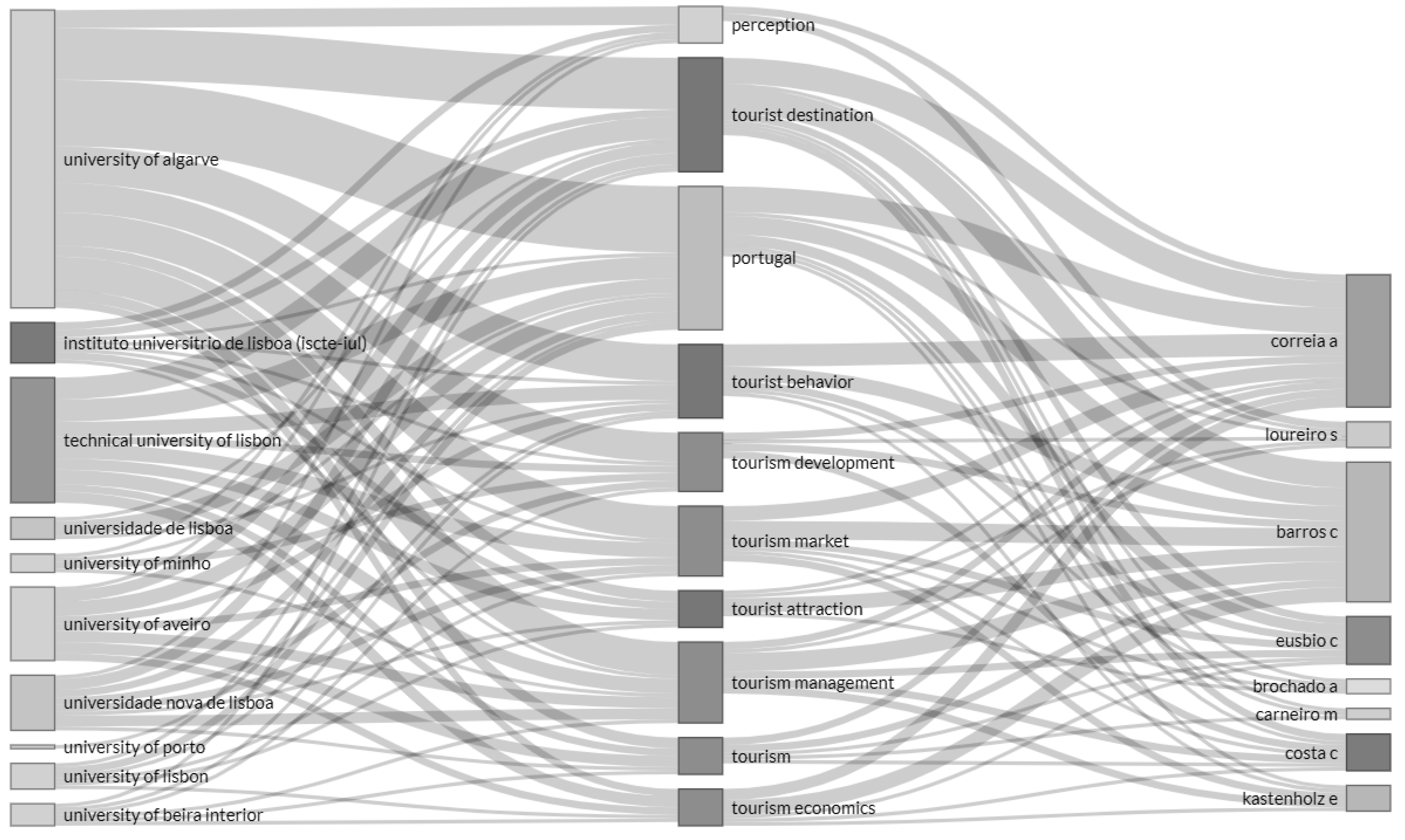
Regarding collaboration among scholars from different institutions, the University of Algarve, the Technical University of Lisbon, and the University of Aveiro were those with the highest degree of collaboration, and, consequently, with the largest network of co-authored publications. These data are graphically represented in a Sankey diagram (Figure 9), which allows visualizing the most relevant institutions, topics (keywords), and authors in terms of inter-institution collaboration. Within this graph, the larger the size of the colored rectangles, the higher the frequency of a certain institution, keyword, or author within the collaboration network. Moreover, the connection nodes (the lines connecting institutions, keywords, and authors) vary in thickness, depending on the number of connections. In this context, the graph shows that topics like “tourist destination,” “tourist behavior,” “tourism market,” and “tourist management” are those that mostly gathered scholars from different institutions.
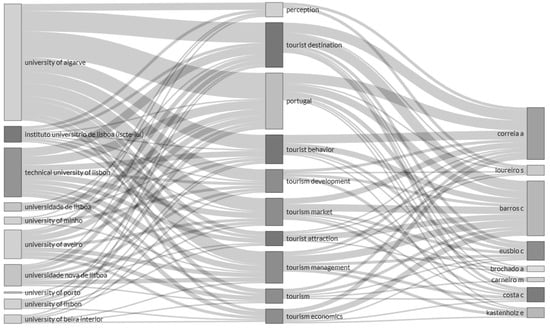
Figure 9.
Top 10 research topics network (keywords Plus) by institution affiliation and author.
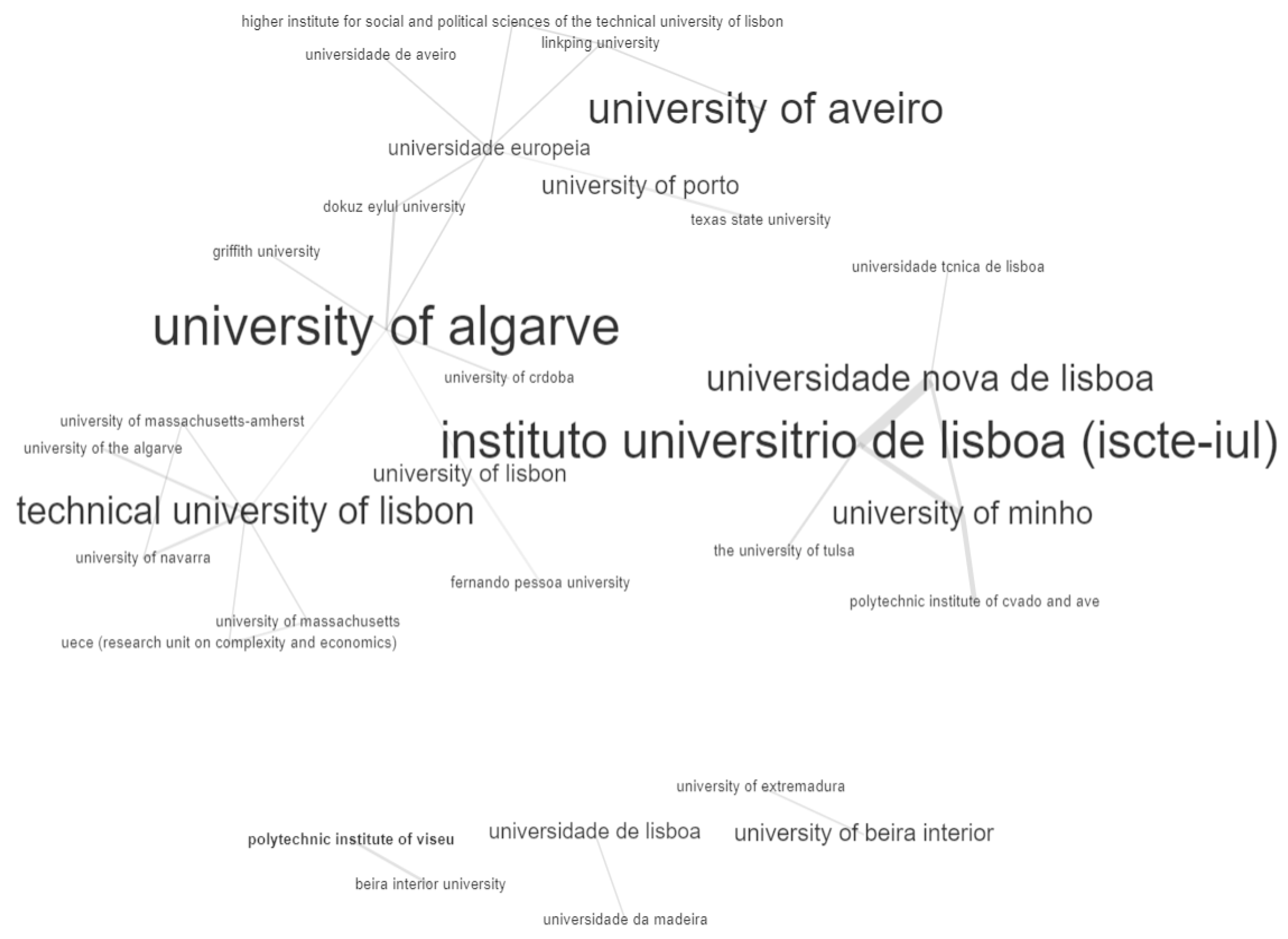
Figure 10 shows the collaborative networks among the institutions with which the most prominent authors were affiliated. Within the graph, these relationships are represented by nodes (the points representing institutions) and edges (the links connecting nodes). In this context, the graph allows visualizing the most direct collaborative networks among institutions. The results reiterated the robustness of the University of Algarve, the Technical University of Lisbon, and the University of Aveiro, in terms of cooperation. They also showed that cooperation among scholars from these three universities was strong and that those scholars also carried out a significant volume of collaborative work with those affiliated with less prominent institutions.
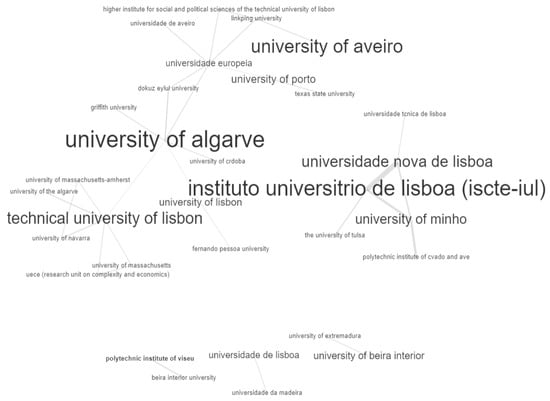
Figure 10.
Top 10 institutions network.
4.3. Portuguese TLHM Authors’ Performance
4.3.1. Authors’ General Performance
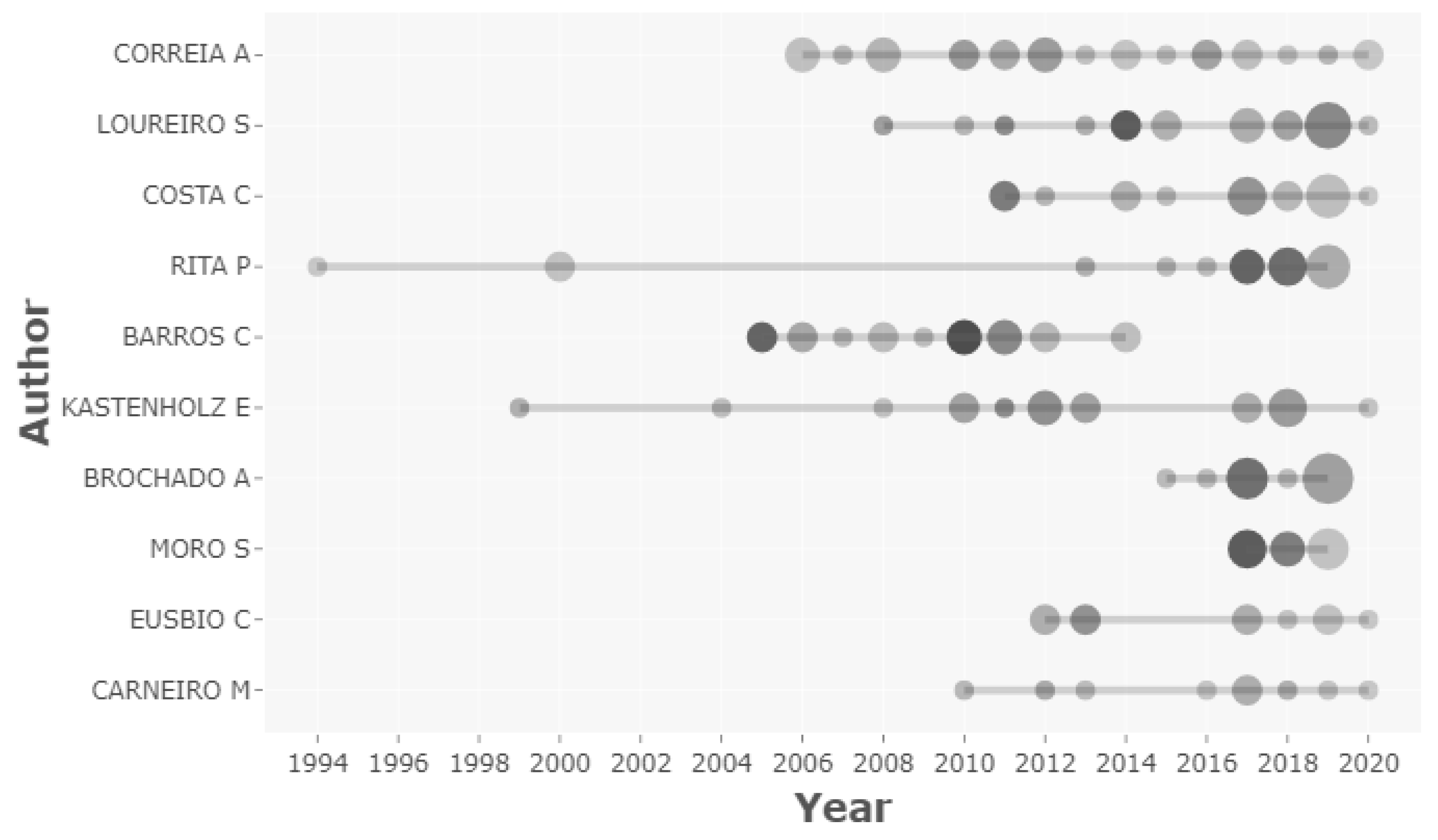
Two Portuguese TLHM authors stood out in terms of longevity, as shown in Figure 11: Rita, P., from ISCTE-IUL and Kastenholz, E., from the University of Aveiro. Rita, P., published his first paper in 1994 and was not very prolific during his early career, with the following publications appearing only six years later, followed by a 13 year hiatus. As of 2013, the author’s publications became more numerous and frequent, so that, in 2019, he published six papers in high-impact journals. Kastenholz, in turn, published her first paper in 1999 and started ramping up production in 2010 (from 2000–2009, only two other papers were published). After a three-year hiatus, the author regained momentum in 2016, reaching a peak of six papers in 2018.
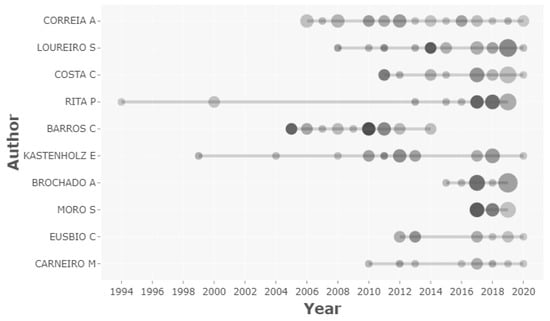
Figure 11.
Top 10 authors’ production over time.
The transition from the 2000s to the 2010s also marked the blossoming of the research careers of other prolific authors, who have maintained a superior level of publications since then. This was the case of Costa, C., from the University of Aveiro, whose first high-impact paper was published in 2011; Correia, A., from the University of Algarve, who started publishing in 2006; and Barros, C.P., from the Technical University of Lisbon, who started one year before.
In terms of article appearances, as shown in Table 7, a total of 639 Portuguese authors have published TLHM research in Q1 and Q2 journals since 1986, and the list of first authors included 273 scholars.
Table 7.
Top 10 authors by article appearances in journals.
4.3.2. Authors’ Topic Prominence
Regarding the authors’ topic prominence, as previously addressed, the most prominent TLHM topics researched by Portuguese scholars were “Tourism|Tourism Development|Community-based Tourism,” with a 99.914 prominence percentile, and “Social Media|Reviews|Electronic Word-of-Mouth” (99.377 prominence percentile). The leading Portuguese authors on “Tourism|Tourism Development|Community-based Tourism” were Costa, C., from the University of Aveiro, and Silva, J.A., from the University of Algarve, both with four papers. Regarding “Social Media|Reviews|Electronic Word-of-Mouth,” the rank was led by Moro, S., with six papers; followed by Rita, P., with five. Both scholars were affiliated with ISCTE-IUL. The rank of authors’ best topic prominence is detailed in Table 8.
Table 8.
Top 10 authors’ best topic prominence percentile 99–100.
4.3.3. Authors’ Collaboration Network
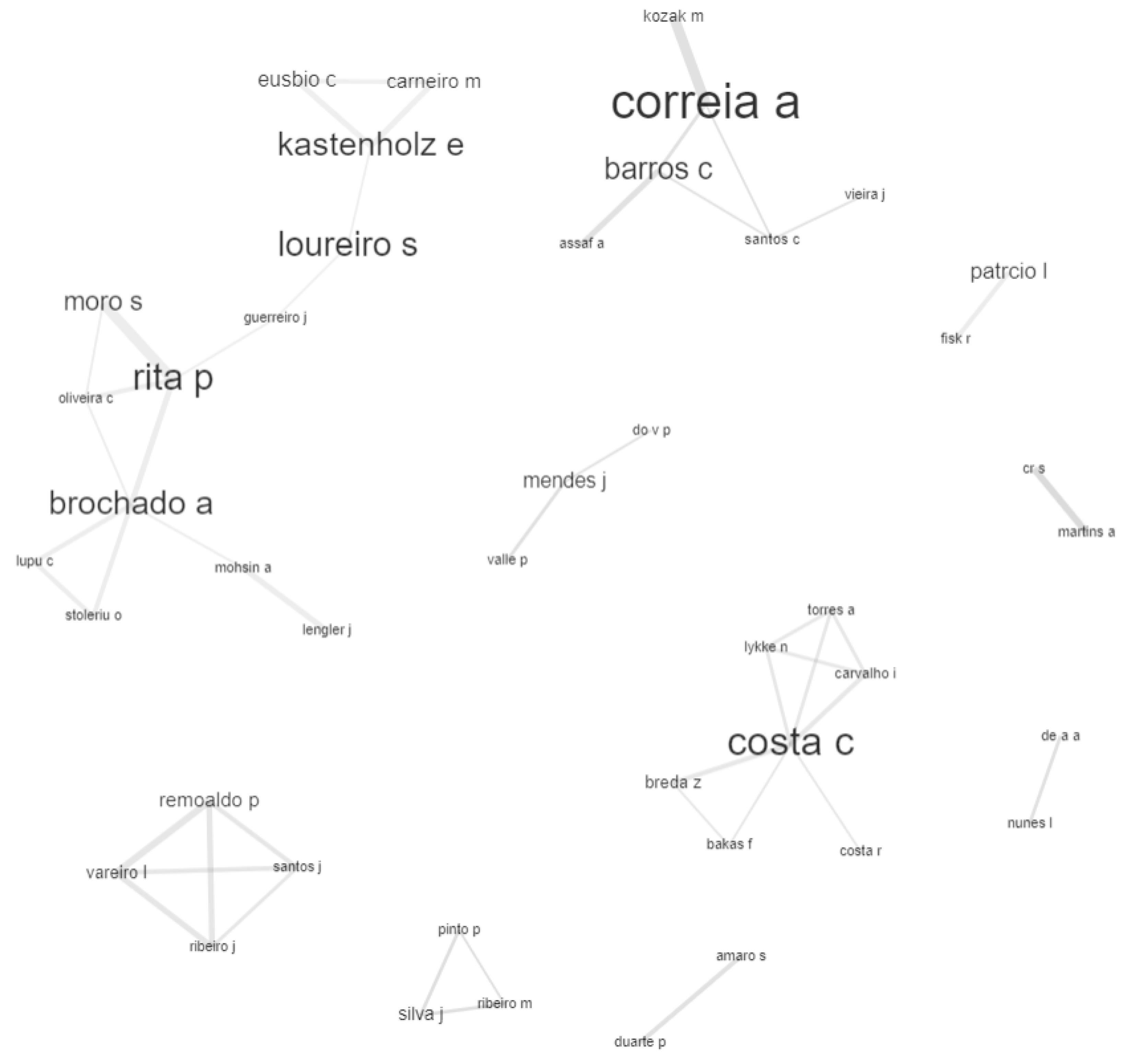
The analysis of the Portuguese TLHM authors’ collaboration network, which is graphically represented in Figure 12, revealed that the most prominent author in this regard was Correia, A. The author’s network is concentrated in three direct edges (links). Amongst these, the link with Kozac, M., from Mugla University, Turkey, is the most expressive connection. The two other edges are with Barros, C., from the Technical University of Lisbon, and Santos, C., from University of Illinois at Urbana, United States. Moreover, a direct edge (link) with Assaf, A.G., from the University of Massachusetts, United States, stems from the node between Correia, A., and Barros, C.A., similar link emerges from Correia, A.’s, connection with Santos, C. This edge connects the authors to Vieira, J., from the University of Azores, Portugal.
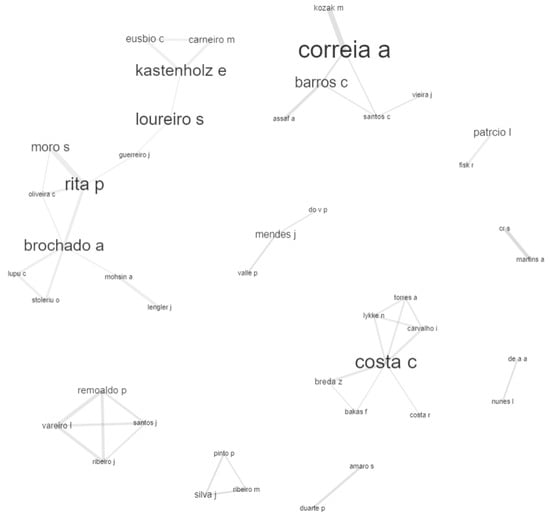
Figure 12.
Top 10 authors’ network.
The second most prominent author was Kastenholz, E., from the University of Aveiro. Analogous to Correia, A., this author’s network is concentrated in three direct edges (links). The most expressive connection is with Loureiro, S., from ISCTE-IUL. The other two edges connect the author to Eusébio, C., and Carneiro, M., both from the University of Aveiro. A direct edge (link) with Guerreiro, J., from ISCTE-IUL, stems from Kastenholz, E.’s, connection with Loureiro S.
The third most prominent author in terms of collaborations was Rita, P. The author’s network is concentrated in four direct edges (links). In order of expressiveness, those edges connect the author to Moro, S., Brochado, A., Oliveira, C., and Guerreiro, J., all from Portuguese institutions. Three of these connected authors were from ISCTE-IUL. The only exception was Oliveira, C., who was affiliated with the Nova Information Management School. From the node between Rita, P., and Brochado, A., stems a direct link with two scholars from foreign universities: Stoleriu, O., from Alexandru Ioan Cuza University, Romania; and Mohsin, A., from the University of Waikato, New Zealand. Moreover, two more links stem from this node, connecting the authors to two more scholars from ISCTE-IUL: Lupu, C., and Lengler, J.
The fourth most prominent author in terms of collaboration was Costa, C., from the University of Aveiro. The author had the largest collaboration network, concentrated in six direct edges (links). The edges link Costa, C., to Carvalho, I., (University of Aveiro)—the strongest connection—Breda, Z., (European University), Torres, A., (University of Porto), Lykke, N., (Technical University of Lisbon), Bakas, F., (University of Aveiro), and Costa, R., (University of Évora).
5. Discussion
5.1. TLHM Country Performance Model
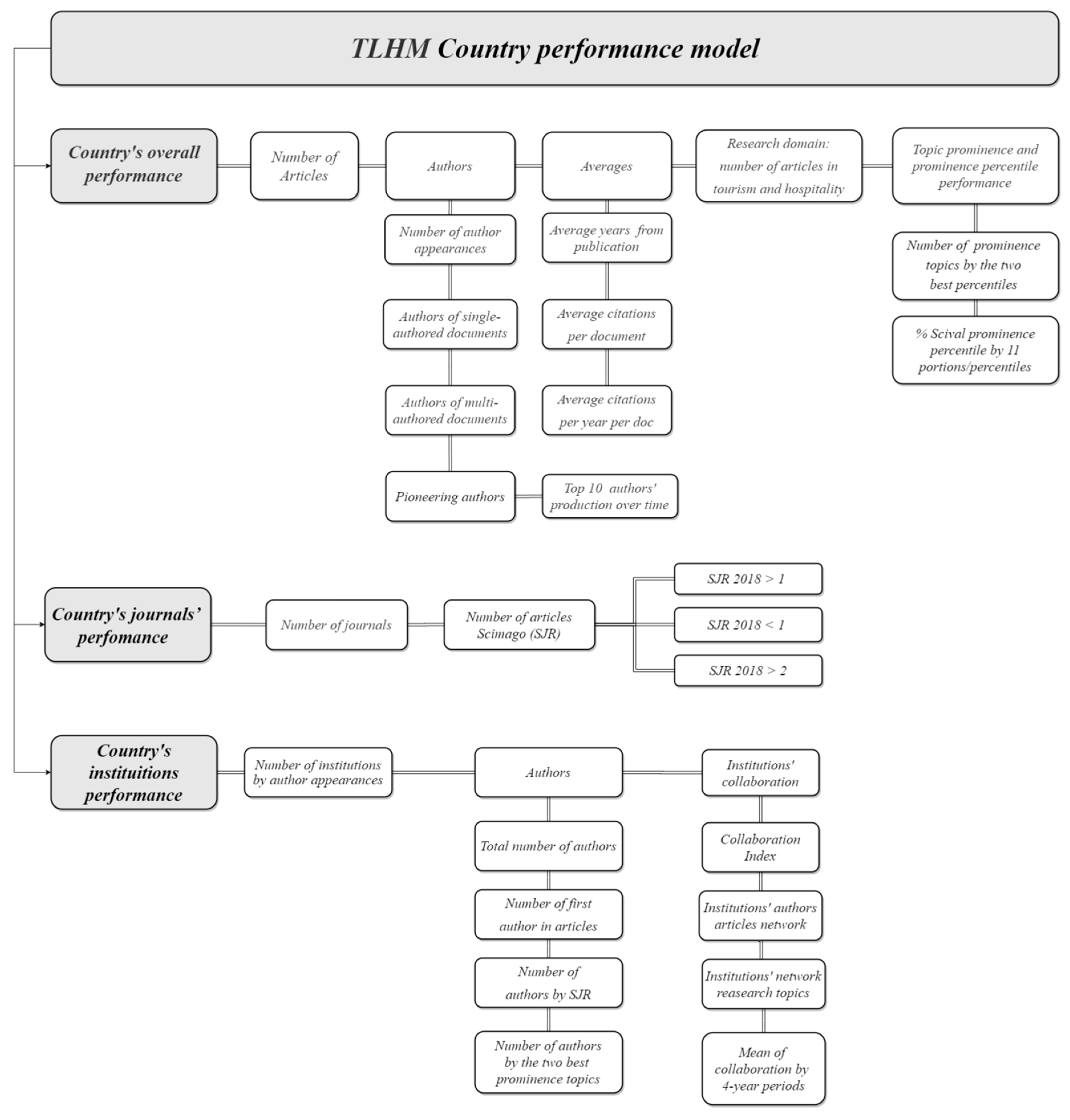
The SciVal platform measures a country’s overall research performance through five indicators: scholar output (number of publications), authors (number of authors), field-weighted citation impact (the ratio of citations received relative to the expected world average for the subject field), citations count (total citations received by publication), and citations per publication (average number of citations). However, the analysis carried out in the present study revealed that assessing a country’s performance on a specific research topic goes beyond the number of publications and authors or citation averages, as it requires a more in-depth analytical assessment. In this context, to assess a country’s research performance on TLHM, the present investigation proposed a model based on three analysis dimensions, each measured by several indicators (see Figure 13).
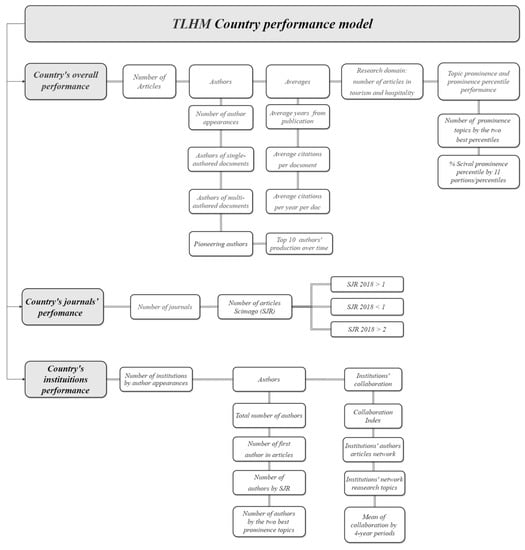
Figure 13.
Sustainable TLHM country performance model.
5.2. Country’s Overall Performance in TLHM
The first dimension was called country’s overall performance. It included five indicators, each comprising a set of outputs: number of articles, number of authors, averages—of four different outputs—research domain, and topic prominence.
The first indicator, number of articles, was a useful output to make comparisons among countries but it was not enough. The author’s indicator showed that, depending on the output, the results varied. For example, the number of Portuguese authors publishing in TLHM was 639. However, the number of author appearances was 1167. These two indicators showed that there were authors with several publications (there were exactly 603 authors of multi-authored documents). The same was true for the different averages.
In the authors’ outputs, the model considered two qualitative variables: pioneering authorship and top 10 authors’ production over time. In the case of pioneering authorship, the indicator framed Portuguese research historically and geographically in TLHM and four Portuguese papers stood out. The first was a paper by Duncan, C., the first Portuguese paper on TLHM registered at Scopus. The author was affiliated with the University of East Asia, Macau, which at the time was a Portuguese territory. The article discussed the conflict between historic preservation and development and was published in Cities. The second was published by Costa Lobo, M., in the same journal, and addressed the planning of the City of Porto. The third paper is an exploratory study on franchising published by Gonçalves, V.F.C., and Duarte, M.M.C., from the Technical University of Lisbon, in 1994. The fourth paper, by Rita, P., and Moutinho, L., was the first Portuguese paper published in Annals of Tourism Research. The study is an expert system proposal for tourist offices. In sum, the fact that an author was pioneering in a knowledge area is historically relevant and reveals the excellence of his/her performance. The top 10 authors’ production over time indicator revealed the uniformity of the authors’ scientific production, i.e., those who kept investigating the scientific area. Two Portuguese TLHM authors stood out in terms of uniformity over time, Rita, P., from ISCTE-IUL, and Kastenholz, E., from the University of Aveiro.
Concerning the research domain indicator, the results of the analysis demonstrated that hospitality studies represented only 8.7% of the scientific production in Portugal. This value was quite low considering that, as the definition of tourist implies accommodation, the lodging industry is a core tourism activity that leverages the importance of hospitality for the country’s economy; indeed, tourism activity is very important for the Portuguese economy as in 2017 it was directly responsible for 17.3% of the overall GDP and 20.4% of total employment, with growth prospects in the following years for both indicators [46]. Moreover, considering the number of Portuguese schools offering hospitality training, it is of vital importance that scientific production in this area in high-impact journals is increased. The dichotomy of knowledge creation was widely discussed by several authors like Cooper [47], Horng and Lee [48], and Tribe [49,50]. There is a consensus that knowledge transfer should include tacit and explicit knowledge. Chen et al. [51], reflecting on Swiss hospitality training, concluded that “vocational education exposes its limitations as it plays up knowledge transfer in a narrowly defined area while playing down knowledge creation in areas that may have enormous potential in the future” (p. 21). Thus, considering that tourism is a systematic area, it was of extreme importance to introduce this output in the two domains, tourism and hospitality, in order to describe a country’s overall performance.
The topic prominence indicator, the results of the SciVal prominence percentile by 11 percentile portions, revealed that 92% of Portuguese research topics were above the 50th percentile, and 59% of topics were in the 90th percentile, i.e., in the 10% best in the world in terms of momentum and visibility. Moreover, 14% of Portuguese publications in TLHM were positioned in the highest SciVal prominence percentile, 99–100, i.e., the 1% of the best in the world. Outside the area of TLHM, particularly in science and technology, bibliometric studies feature prominence percentile to characterize research performance. As argued by Waltman and Schreiber [52], this indicator reflects the proportion of frequently cited publications, for instance, the proportion of publications that belong to the top 10% most frequently cited in their field. It was, therefore, justified to introduce it in the bibliometric studies in the tourism and hospitality fields.
5.3. Country’s Journal Performance in TLHM
The number of papers published in leading journals was a relevant indicator. As stated by Park et al. [5], in this new millennium, “the number of research articles published in quality journals is one way to rate productivity and determine which institutions and countries should be recognized as leaders in the field” (p. 382). Even more so, as advised by Horng and Lee [48] and Chen et al. [51], hotel schools should bring to their educational programs solid theoretical models that enable students to adopt broader skills and abandon their vocational ethos.
Considering journal productivity, bibliometric analyses in tourism generally focus only on journal ranking (e.g., Jogaratnam et al. [4]) or the most cited papers in journals (Merigó et al. [1]). However, a more in-depth analysis was needed, considering that SJR journals are scored differently. Within the present investigation, results revealed that 53% of the overall Portuguese TLHM research was published in journals with SJR > 1 and the remaining articles (47%) in journals with SJR < 1. Even more, 16% of Portuguese articles were in SJR > 2. This was a valuable indicator to qualify a country’s performance in comparison to other countries in the future.
5.4. Country’s Institution Performance in TLHM
Within the proposed model, a country’s institution performance was measured through three indicators: number of institutions by author appearances, authors (with four indicators) and institutions’ collaboration. “Authors” included four outputs, as results revealed significant differences between them (rankings changed, depending on the type of analysis, see Table 7 and Table 8), e.g., in the output number of articles per author the rank was led by Correia, A., from the University of Algarve and Kastenholz, E., from the University of Aveiro, with 35 and 27 papers, respectively. However, the results showed that the ranking changed when the analysis focused on authors of single-authored papers; in this case, the ranking was led by Barros, C.P., with 18 first authorships, followed by Correia, A., and Loureiro, S.M.C., from the University of Aveiro, both with 16. Kastenholz, E., comes in fifth, with 10 first authorships. When considering only SJR Q1 journals, that is, those with the highest impact factor, the general authorship rank was, once again, led by Correia, A., with 25 appearances, followed by Kastenholz, E., with 20 articles, and Loureiro, S.M.C., with 18. When considering first authorships in Q1 journals, Correia, A., dropped to third place, with 11 first authorships, and the rank was led by Loureiro, S.M.C., with 14 articles of first authorship, followed by Barros, C.P., with 12. Thus, the detailed analysis of first authorship in SJR journals revealed that the rankings of appearance in papers (which included both first authorship or co-authorship in general) and first authorship were different, in both Q1 and Q2 journals. It is ethically accepted in academia that, in some areas of scientific knowledge, the first author assumes the responsibility for the research, and therefore, his/her output is superior to that of the other co-authors. Therefore, first authorship was adopted as a complementary output within authors.
Concerning institutions’ collaboration output, collaboration among authors was pointed out as a way of knowledge creation and dissemination [51], which leads to competitive advantages in the tourism industry [53]. The results of the analyses of the network connections revealed that the most prolific institutions in numbers of articles were also those that had the most network connections (see Figure 10 and Figure 12), as the ranking of both was led by ISCTE-IUL, Lisboa, the University of Algarve, and the University of Aveiro.
6. Conclusions
The present study aimed to assess a sustainable methodological bibliometric analysis model to analyze a country’s research performance in a certain area, in this case, to design an assessment model to measure a country’s performance on TLHM research. To this end, Portugal was adopted as the study setting, and a representative portion of the country’s scientific production on TLHM was gathered through a search of Q1 and Q2 journals on Scopus. More specifically, the final database encompassed 572 papers published by 639 authors in 51 different high-impact journals (Q1 and Q2), over 26 years. The data were analyzed adopting a balance between qualitative and quantitative analysis and including an innovative approach by crossing two bibliometric methods: relational and evaluative techniques. These analyses led to the proposition of the assessment model, which included 23 variables grouped in three dimensions: overall country performance, country’s journal performance, country’s institution performance.
6.1. Implications of Mapping Portuguese Scientific Production in TLHM
Data showed that, from 572 papers considered within the analysis, 405 were Q1 and 166 were Q2. Regarding Portuguese institutions, three clearly stood out in terms of TLHM research performance: ISCTE-IUL (Lisbon), University of Algarve, and University of Aveiro. These institutions were not only those with the highest publication numbers but also with the best collaboration performance, in terms of network and keywords plus network. Moreover, the authors with the highest performance indices were also affiliated with those institutions. It should also be noted that these institutions were the ones in Portugal that had doctoral programs in tourism. However, by increasing the polytechnic research funding program, it is expected that they will grant the Doctor’s degree in accordance with the recent change in the Portuguese law (Decree-Law 65/2018 of 16 August 2020). Even polytechnics already teach in doctoral programs, in partnership with the universities, and this window will open an opportunity for greater and better research co-authorships.
Such a result corroborated Ye et al.’s [19] view on collaborative research activity, according to which it is highly associated with research productivity. The result was also in line with Park et al.’s [5] conclusions, which indicate that the development of knowledge can be mainly based on co-authorships.
Results also showed that Portuguese TLHM research collaboration has grown over time, mainly from 2010 onwards, when 99th–100th percentile topics emerged. Moreover, the collaboration mean has grown over time, especially as of 2006, reaching over three authors from 2016 to 2020. This coincided with the period in which the overall number of published papers was the highest, which strengthens the link between collaboration and research production. Still regarding collaboration, results also corroborated the arguments of Xiao and Smith [54], according to which collaboration helps capture new research topics in a certain research area. The analysis of Portuguese topic prominence over time revealed that, as of 2010, when collaboration intensified, a significant portion of topics emerged at the highest percentiles. Regarding the specific topics with the highest prominence, two clearly stood out: Tourism Development/Community-based Tourism and Social Media. Thus, it is obvious that research collaboration improves productivity and is therefore a clear indicator of a country’s performance.
6.2. Implications of Including the Research Domain and Topic Prominence to Map Scientific Production in TLHM and to Characterize the Country’s Overall Performance
Given that tourism is an interdisciplinary [55] and complex area [56], this study concluded that the performance of a country’s research is different, depending on whether the focus is on the tourism or hospitality research domain. In the case of the Portuguese TLHM research in high-impact journals, hospitality research represented only 8.7%. This is a very small value for the weight that the hospitality sector has in a country’s economy, considering that, in Portugal, the tourism sector represents 17.3% of the overall GDP and 20.4% of total employment [46].
This study concluded that two more variables are needed to evaluate a country’s research performance, the SciVal topic prominence and percentile. In the case of the Portuguese TLHM research, 45% of scientific production was published in the 90th percentile. For bibliometric researchers, the study brings a new indicator to map science and to qualify the research performance of a country, institution, or author. For TLHM authors, the study reveals gaps in research and emerging research areas by identifying research topics that are growing or declining. Moreover, for Portuguese authors, this study identifies where they are on TLHM, how they can identify new collaborations and what research topics does a journal cover. For journal managers, this study identifies expert reviewers on a topic. For Portuguese universities, this research contributed to understanding the impact of TLHM research in Portugal. For worldwide institution managers, this research identifies the most prolific Portuguese authors and institutions on several TLHM subjects. Finally, for destination managers, this research identifies the trends and dynamics in TLHM and the areas with the greatest financing potential (the emerging topics and those positioned in the best percentiles).
6.3. Why Is the SCImago Journal Ranking (SJR) Score the Most Relevant Indicator of a Journal’s Productivity to Define a Country’s Performance?
This study concluded that, of the 572 articles published by Portuguese researchers in high-impact TLHM journals, only 16% of papers were positioned in SJR > 2. This indicated that a bibliometric analysis of journal scores is necessary to assess journal performance. Thus, a first practical implication of this study is that future bibliometric researchers adopt the journal scores analysis to assess country performance as it proves to be a useful indicator that can be used for comparative performance analysis among countries. The second practical implication concerns universities: they should encourage their researchers to publish in journals with higher scores, as advocated by Wang and Shapira [29], since high-impact articles are associated with acknowledged funding, compared with low-impact articles.
6.4. Why Use a Methodological Bibliometric Analysis Model to Analyze Country Performance in TLHM?
The present study provides an original methodological contribution, as it is the first bibliometric attempt to bring the topic prominence analysis to map TLHM research performance. Moreover, the proposed methodological bibliometric analysis model can be employed by further studies to assess the performance of other countries in terms of TLHM research performance, and even in other research areas. The study also brings about a clear practical, contextual contribution, as it provides a clear picture of the Portuguese research structure and performance on TLHM, which might serve as a benchmark for evaluating other countries’ performance. In addition, the proposed model did the mapping of country research on three analysis dimensions (country’s overall performance, country’s journal performance and country’s institution performance), each measured by several indicators and through two bibliometric methods—relational and evaluative techniques—which give it a systematic and therefore sustainable bibliometric view. This approach to sustainable bibliometric analysis is in line with the one advocated by Garrigos-Simon et al. [57] and Serrano et al. [23], that multi-disciplinarity applied to bibliometric analysis presents itself as an enabling methodology. Thus, the proposed model may also serve as a general orientation for scholars selecting future bibliometric analysis of country performance and as an answer the following question: What is the best way to evaluate a country’s research performance output?
6.5. Concept for Country Research Rerformance in TLHM
Country research performance in TLHM is a sustainable systemic bibliometric analysis model with an integrated vision that adopts multiple bibliometric indicators inserted into three dimensions of performance. It is not possible to talk about a country’s TLHM research performance only through isolated metrics. The approach must go much further than that. In the overall performance dimension of a country, this study revealed that pioneering research in TLHM is a variable to be considered. An author or institution being a pioneer in a particular scientific area gives them predominance, prestige, and visibility. In the case of this study applied to Portugal, the pioneering study in TLHM emerged in Macao at the hands of Ducan, C., of the University of East Asia, an outcome that was related to the history of the country. Furthermore, the results of the top 10 authors over time revealed that there are consistent authors over time and others who are sporadically dedicated to the study of TLHM. Although this variable has a qualitative character, it reveals that the performance of a researcher cannot be measured solely by the number of papers produced. In addition, different author productivity analyses reveal different outputs, the ranks vary whether the author is first author or co-author, the ranks vary whether the analysis is done in journals with different SJR scores, and the ranks vary whether the analysis is done on the topic prominence of higher quartiles.
6.6. Limitations and Future Research Lines
Despite the clear methodological and practical contributions, this investigation also has its limitations. The study is not necessarily cross-sectional, as the database included research documents published only in TLHM journals and all articles published in other indexing areas were excluded from this work. In addition, it was limited to a single country. Therefore, there is no definitive evidence that the variables selected for the theoretical model can reliably measure the performance of other countries. Moreover, the study only adopted the Scopus database of Q1 and Q2 journals. Future research may test the bibliometric analysis model in other databases, as well as extend it to Q3 and Q4 Scopus journals.
To overcome such a limitation, future studies should test the proposed methodological bibliometric model with a database comprising the TLHM production of other countries. Finally, the present study corroborated some previous authors’ statements regarding the relationship between collaboration and research performance. In this context, exploring this relationship further is another fertile avenue for future studies.
Author Contributions
Conceptualization, L.C., G.G.F.d.A., R.S. and L.L.S.; methodology, L.C. and G.G.F.d.A.; software, L.C. and R.S.; validation, L.C., G.G.F.d.A. and L.L.S.; formal analysis, L.C., R.S. and L.L.S.; investigation, L.C., R.S., G.G.F.d.A. and L.L.S.; writing—original draft preparation, L.C., R.S. and L.L.S.; writing—review and editing, L.C., R.S., G.G.F.d.A. and L.L.S.; visualization, L.C.; supervision, L.C. and L.L.S.; project administration, L.C. and L.L.S.; funding acquisition, L.C., G.G.F.d.A., R.S. and L.L.S. All authors have read and agreed to the published version of the manuscript.
Funding
This research is financed by national funds through FCT-Foundation for Science and Technology, I.P., within the scope of the UIDB/04470/2020 project.
Conflicts of Interest
The authors declare no conflict of interest.
References
- Merigó, J.M.; Mulet-Forteza, C.; Martorell, O.; Merigó-Lindahl, C. Scientific research in the tourism, leisure and hospitality field: A bibliometric analysis. Anatolia 2020, 31, 494–508. [Google Scholar] [CrossRef]
- Howey, R.M.; Savage, K.S.; Verbeeten, M.J.; Van Hoof, H.B. Tourism and hospitality research journals: Cross-citations among research communities. Tour. Manag. 1999, 20, 133–139. [Google Scholar] [CrossRef]
- Benckendorff, P.; Zehrer, A. A network analysis of tourism research. Ann. Tour. Res. 2013, 43, 121–149. [Google Scholar] [CrossRef]
- Jogaratnam, G.; McCleary, K.W.; Mena, M.M.; Yoo, J. An analysis of hospitality and tourism research: Institutional contributions. J. Hosp. Tour. Res. 2005, 29, 356–371. [Google Scholar] [CrossRef]
- Park, K.; Phillips, W.J.; Canter, D.D.; Abbott, J. Hospitality and tourism research rankings by author, university, and country using six major journals: The first decade of the new millennium. J. Hosp. Tour. Res. 2011, 35, 381–416. [Google Scholar] [CrossRef]
- McKercher, B. A citation analysis of tourism scholars. Tour. Manag. 2008, 29, 1226–1232. [Google Scholar] [CrossRef]
- Tsang, N.; Hsu, C. Thirty years of research on tourism and hospitality management in China: A review and analysis of journal publications. Int J. Hosp. Manag. 2011, 30, 886–896. [Google Scholar] [CrossRef]
- Vishwakarma, P.; Mukherjee, S. Forty-three years journey of tourism recreation research: A bibliometric analysis. Tour. Recreat. Res. 2019, 44, 403–418. [Google Scholar] [CrossRef]
- Mulet-Forteza, C.; Martorell-Cunill, O.; Merigó, J.M.; Genovart-Balaguer, J.; Mauleon-Mendez, E. Twenty five years of the Journal of Travel & Tourism Marketing: A bibliometric ranking. J. Travel Tour. Mark. 2018, 35, 1201–1221. [Google Scholar]
- González-Serrano, M.H.; Añó Sanz, V.; González-García, R.J. Sustainable Sport Entrepreneurship and Innovation: A Bibliometric Analysis of This Emerging Field of Research. Sustainability 2020, 12, 5209. [Google Scholar] [CrossRef]
- De La Cruz Del Rio-Rama, M.; Maldonado-Erazo, P.; Álvarez-García, J.; Duran-Sanchez, A. Cultural and Natural Resources in Tourism Island: Bibliometric Mapping. Sustainability 2020, 12, 724. [Google Scholar] [CrossRef]
- Lima Santos, L.; Cardoso, L.; Araújo-Vila, N.; Fraiz-Brea, J.A. Sustainability Perceptions in Tourism and Hospitality: A Mixed-Method Bibliometric Approach. Sustainability 2020, 12, 8852. [Google Scholar] [CrossRef]
- Severt, D.E.; Tesone, D.V.; Bottorff, T.J.; Carpenter, M.L. A world ranking of the top 100 hospitality and tourism programs. J. Hosp. Tour. Res. 2009, 33, 451–470. [Google Scholar] [CrossRef]
- Koseoglu, M.A.; Rahimi, R.; Okumus, F.; Liu, J. Bibliometric studies in tourism. Ann. Tour. Res. 2016, 61, 180–198. [Google Scholar] [CrossRef]
- Hall, C.M. Publish and perish? Bibliometric analysis, journal ranking and the assessment of research quality in tourism. Tour. Manag. 2011, 32, 16–27. [Google Scholar] [CrossRef]
- Ye, Q.; Song, H.; Li, T. Cross-institutional collaboration networks in tourism and hospitality research. Tour. Manag. Perspect. 2012, 2, 55–64. [Google Scholar] [CrossRef]
- Small, H.; Boyack, K.W.; Klavans, R. Identifying emerging topics in science and technology. Res. Policy 2014, 43, 1450–1467. [Google Scholar] [CrossRef]
- Scimago Journal and Country Rank. Available online: https://www.scimagojr.com/countryrank.php?category = 1409&area = 1400&fbclid = IwAR2BCLJGrBKirx-yRTZczBfM8cUb7z0DA2gD3oYWtzy_1PZqOiuHfSRUUzc (accessed on 5 April 2020).
- Instituto Nacional de Estatística. Estatísticas do Turismo. 2019. Available online: https://www.ine.pt/xportal/xmain?xpid = INE&xpgid = ine_publicacoes&PUBLICACOESpub_boui = 133574&PUBLICACOESmodo = 2 (accessed on 6 October 2020).
- Law, R.; Ye, Q.; Chen, W.; Leung, R. Analyzing the most influential articles in tourism journals that were published in 2000 to 2007: A Google Scholar Approach. J. Travel Tour. Mark. 2009, 26, 735–746. [Google Scholar] [CrossRef]
- Mulet-Forteza, C.; Genovart-Balaguer, J.; Mauleon-Mendez, E.; Merigó, J.M. A bibliometric research in the tourism, leisure and hospitality fields. J. Bus. Res. 2019, 101, 819–827. [Google Scholar] [CrossRef]
- Mulet-Forteza, C.; Genovart-Balaguer, J.; Merigó, J.M.; Mauleon-Mendez, E. Bibliometric structure of IJCHM in its 30 years. Int. J. Contemp. Hosp. Manag. 2019, 31, 4574–4604. [Google Scholar] [CrossRef]
- Serrano, L.; Sianes, A.; Ariza-Montes, A. Using Bibliometric Methods to Shed Light on the Concept of Sustainable Tourism. Sustainability 2019, 11, 6964. [Google Scholar] [CrossRef]
- Seguí-Amortegui, L.; Clemente-Almendros, J.A.; Medina, R.; Grueso Gala, M. Sustainability and Competitiveness in the Tourism Industry and Tourist Destinations: A Bibliometric Study. Sustainability 2019, 11, 6351. [Google Scholar] [CrossRef]
- Núñez-Tabales, J.M.; Solano-Sánchez, M.Á.; Caridad-y-López-del-Río, L. Ten Years of Airbnb Phenomenon Research: A Bibliometric Approach (2010–2019). Sustainability 2020, 12, 6205. [Google Scholar] [CrossRef]
- López-Bonilla, J.M.; Reyes-Rodríguez, M.C.; López-Bonilla, L.M. Interactions and Relationships between Personal Factors in Pro-Environmental Golf Tourist Behaviour: A Gender Analysis. Sustainability 2020, 12, 332. [Google Scholar] [CrossRef]
- Estêvão, C.; Garcia, A.R.; Filipe, S.B.; Fernandes, C. Convergence in tourism management research: A bibliometric analysis. Tour. Manag. Stud. 2017, 13, 30–42. [Google Scholar] [CrossRef]
- Klavans, R.; Boyack, K.W. Research portfolio analysis and topic prominence. J. Informetr. 2017, 11, 1158–1174. [Google Scholar] [CrossRef]
- Wang, J.; Shapira, P. Is there a relationship between research sponsorship and publication impact? An analysis of funding acknowledgments in nanotechnology papers. PLoS ONE 2015, 10, e0117727. [Google Scholar] [CrossRef]
- Bornmann, L.; Leydesdorff, L.; Mutz, R. The use of percentiles and percentile rank classes in the analysis of bibliometric data: Opportunities and limits. J. Informetr. 2013, 7, 158–165. [Google Scholar] [CrossRef]
- Boyack, K.W. Mapping knowledge domains: Characterizing. Proc. Natl. Acad. Sci. USA 2004, 101, 5192–5199. [Google Scholar] [CrossRef]
- Mardanov, M.; Rzayev, R.; Jamalov, Z.; Khudatova, A. Integrated assessment and ranking of universities by fuzzy inference. Procedia Comput. Sci. 2017, 120, 213–220. [Google Scholar] [CrossRef]
- Aria, M.; Cuccurullo, C. Bibliometrix: An R-tool for comprehensive science mapping analysis. J. Informetr. 2017, 11, 959–975. [Google Scholar] [CrossRef]
- Bardin, L. Análise de Conteúdo; Edições 70: Lisbon, Portugal, 2000. [Google Scholar]
- Camprubí, R.; Coromina, L. Content analysis in tourism research. Tour. Manag. Perspect. 2016, 18, 134–140. [Google Scholar] [CrossRef]
- Hanssen, T.S.; Jørgensen, F.; Larsen, B. The relation between the quality of research, researchers’ experience, and their academic environment. Scientometrics 2018, 114, 933–950. [Google Scholar] [CrossRef]
- Harris, P.J.; Brander Brown, J. Research and development in hospitality accounting and financial management. Int. J. Hosp. Manag. 1998, 17, 161–182. [Google Scholar] [CrossRef]
- Marshall, C.; Rossman, G. Recording, managing and analyzing data. In Designing Qualitative Research; Marshall, C., Rossman, G., Eds.; Sage: Thousand Oaks, CA, USA, 1995; pp. 108–113. [Google Scholar]
- Miles, M.B.; Huberman, A.M. An Expanded Sourcebook: Qualitative Data Analysis; Sage: Thousand Oaks, CA, USA, 1994. [Google Scholar]
- Wilson, E.; Mura, P.; Sharif, S.P.; Wijesinghe, S.N.R. Beyond the third moment? Mapping the state of qualitative tourism research. Curr. Issues Tour. 2019, 23, 795–810. [Google Scholar] [CrossRef]
- Mehometoglu, M. Quantitative or Qualitative? A Content Analysis of Nordic Research in Tourism and Hospitality. Scand. J. Hosp. Tour. 2004, 4, 176–190. [Google Scholar] [CrossRef]
- Krippendorff, K. Content Analysis: An Introduction to Its Methodology, 2nd ed.; Sage: Thousand Oaks, CA, USA, 2004. [Google Scholar]
- Westbrook, L. Qualitative research methods: A review of major stages, data analysis techniques, and quality controls. Libr. Inf. Sci. Res. 1994, 16, 241–254. [Google Scholar] [CrossRef]
- Glänzel, W.; Schubert, A. Analysing scientific networks through co-authorship. In Handbook of Quantitative Science and Technology Research; Glänzel, W., Schmoch, U., Moed, H.F., Eds.; Springer: Dordrecht, The Netherlands, 2004; pp. 257–276. [Google Scholar]
- Duncan, C. Macau. Cities 1986, 3, 2–11. [Google Scholar] [CrossRef]
- WTTC—World Tourism Organization. Travel and Tourism Economic Impact, 2018, Portugal. Available online: https://wttc.org/Research/Economic-Impact (accessed on 7 October 2020).
- Cooper, C. Knowledge management and tourism. Ann. Tour. Res. 2006, 33, 47–64. [Google Scholar] [CrossRef]
- Horng, J.-S.; Lee, M.H. Tourism and Hospitality Higher Education in Taiwan. J. Teach. Travel Tour. 2005, 5, 167–196. [Google Scholar] [CrossRef]
- Tribe, J. The indiscipline of tourism. Ann. Tour. Res. 1997, 24, 638–657. [Google Scholar] [CrossRef]
- Tribe, J. Tribes, territories and networks in the tourism academy. Ann. Tour. Res. 2010, 37, 7–33. [Google Scholar] [CrossRef]
- Chen, Y.; Dellea, D.; Bianchi, G. Knowledge creation and research production in Swiss hotel schools: A case study of the Ecole Hôtelière de Lausanne. J. Hosp. Leis. Sports Tour. Educ. 2019, 31, 10–22. [Google Scholar] [CrossRef]
- Waltman, L.; Schreiber, M. On the calculation of percentile-based bibliometric indicators. J. Am. Soc. Inf. Sci. Technol. 2013, 64, 372–379. [Google Scholar] [CrossRef]
- Weiermair, K.; Bieger, T. Tourism education in Austria and Switzerland. J. Teach. Travel Tour. 2005, 5, 39–60. [Google Scholar] [CrossRef]
- Xiao, H.; Smith, S.L.J. The maturation of tourism research: Evidence from a content analysis. Tour. Anal. 2006, 10, 335–348. [Google Scholar] [CrossRef]
- Wiesław, A. Present status and perspectives of tourism research development. In Tourism in Scientific Research; Wieslaw, A., Winiarski, R., Eds.; University of Physical Education in Krakow, WSIZ Rzeszow: Krakow, Poland, 2005; pp. 257–278. [Google Scholar]
- Frédéric, D.; Mathis, S. Tourism as complex interdisciplinary research object. Ann. Tour. Res. 2012, 39, 441–458. [Google Scholar]
- Garrigos-Simon, F.J.; Narangajavana-Kaosiri, Y.; Lengua-Lengua, I. Tourism and Sustainability: A Bibliometric and Visualization Analysis. Sustainability 2018, 10, 1976. [Google Scholar] [CrossRef]
Publisher’s Note: MDPI stays neutral with regard to jurisdictional claims in published maps and institutional affiliations. |
© 2020 by the authors. Licensee MDPI, Basel, Switzerland. This article is an open access article distributed under the terms and conditions of the Creative Commons Attribution (CC BY) license (http://creativecommons.org/licenses/by/4.0/).