


Abstract
This study focuses on how technology transfer offices’ (TTO) maturity level influences sustainable development in developing countries. A method for defining the maturity level of technology transfer offices was developed based on criteria, dimensions and variables from a comprehensive literature review. Technology transfer specialists were responsible for attaching weight to elements using the multicriteria method, fuzzy simple additive weighting. Results provided an important overview of 105 Brazilian TTOs, their maturity level and the impact on sustainable development.
1. Introduction
With globalization, economic scenarios have been rapidly changing through technological innovations, due to short product life cycles [1]. Therefore, innovating has become a matter of survival in the business world and, linked to that, the university–industry–government interaction fosters technology transfer for sustainable development [2]. In practice, university starts to perform a role that reinforces the innovation process in a knowledge-based society [3,4].
The phenomenon of enterprising universities has received considerable attention over the last decades, with business-oriented academia putting regions and nations in advantageous positions in intensive areas of emerging economic knowledge, reconciling entrepreneurship with the university’s scientific missions [5].
Universities have taken on a more active role in technology transfer (TT) processes, drawing more attention to the interaction between public and private research. University patenting and licensing have increased overall, given the awareness of opportunities to commercialize university research [6,7]. Thus, technology transfer offices (TTOs) have emerged in research universities as a new organizational entity. They were established to facilitate the knowledge and technology transfer from the university to the industry.
Even though TT is crucial for innovation to occur [8] and TTOs can potentially contribute to the university-industry interaction, spreading technology and generating revenue for the university, there are limited systemic analyses of the attributions of the organizational practices in this process [9] and many of these analyses are focused on evaluating monetary indicators. But a TTO is much more than numbers. TTOs must know how to identify the technology absorption capability of the technical users and align it with the inventor’s technical service capability, establishing an extensive, long-term cooperation mechanism with the companies through technical services [10]. In order to consider TTO’s whole capability, a maturity level analysis is applied to process improvement achievement specifying advanced characteristics for processes. A maturity level analysis provides a set of variables which specifies the path that a process follow towards achieving the next level. It also presents a set of goals which, when satisfied, takes the organization to a highly mature process. Hence, a maturity level is a well-defined plateau which establishes a level of capacity for improving organizational capability.
In fact, the purposes of TTOs are also aligned with the ninth sustainable development goal—innovation and industrial infrastructure, which establishes that investments in infrastructure and innovation are basic conditions for the economic growth and development of nations, seeing that achieving equality in access to technology is crucial to promote information and knowledge for all. Thus, developing countries, being responsible for large environmental impacts, must design construction mechanisms of modern and resilient structures, efficiently strengthen their industry, encourage innovation, value their small and medium enterprises, and include the most vulnerable into their production and financial systems [11]. Successful innovations demand specific requirements such as research and development, knowledge capital, and other resources.
In order to better understand the potential of contribution toward sustainable development, it is thought that the more mature a TTO is, the more prepared it will be to transfer innovative technologies and knowledge. Therefore, this study presents the following research problem: How does TTO’s level of maturity effectively contribute to sustainable development?
In order to answer this question, this study has, as its purpose, to determine how TTO’s maturity level influences sustainable development in developing countries.
The relevance of this study lies in the importance of the TTOs for the economic and social development of the regions in which they act. Brazil is a country lacking in innovation, obtaining a score of 33.82 points in the Global Innovation Index report, which ranked it 66th globally. Brazil is ranked fifth considering countries in the Caribbean and Latin América. However when considering BRICS (acronym coined for the association of five major emerging national economies: Brazil, Russia, India, China and South Africa), Brazil is in the last place [12]. Therefore, the proposed maturity model may be a key tool to solve problems in determining the status quo of a TTO and its ability to define enhancement measures, identifying gaps that might be filled through improvement actions, even though that is challenging [13].
From this point, the study is divided as follows: Section 2 presents university technology transfer offices and maturity models, the data from Section 3 details the construction method of the maturity model applied to TTOs described in Section 4. Finally, Section 5 presents the limitations and proposals for future studies in the paper’s final considerations.
2. Theoretical Background
This paper presents a new method to determine technology transfer maturity level, applied to university technology transfer offices. The method proposed in this study is based on the following theoretical foundation: university technology transfer offices and maturity models. This section will approach each topic.
2.1. University Technology Transfer Offices
An often-neglected point in academic entrepreneurship activities concerns the transfer of knowledge and technology involving research contracts, disclosure activities, and student mobility between the university and the industry [7]. Even though universities act as creators and consumers of new knowledge, its social role in value creation has become a crucial political matter. Therefore, patenting policies seek to encourage innovation by granting temporary and exclusive property rights to inventors and their sponsor universities [14].
Some university administrators in industrialized countries have stated that university technology transfer has the potential to generate substantial revenue for universities. Their main mechanisms of TT commercialization are licensing agreements between the university and private companies, joint research ventures, and university start-ups [15]. Intellectual property has become an indispensable element for the sustainable growth of a corporation and it must be fostered for the development of new technologies [16].
For years, developed countries like the United States (USA) and the United Kingdom have had laws of incentive to science and technology, which enable social and economic development through university research. In the USA, the Bayh–Dole Act of 1980 helped to accelerate the pace of diffusion of new technologies, from universities and federal laboratories to companies [4]. Through this legislation, numerous universities established technology transfer offices to manage and protect their intellectual property. TTO’s role, according to the act, is to facilitate the transfer of commercial knowledge through the licensing of research for industry or other manners of intellectual property resulting from university research [9].
Organizational structure and creation of a specialized TTO within a university may be essential for developing relations with the industry [17]. TTOs have a strategic value for universities committed to the commercialization of academic knowledge [18].
Because of that reason, organizing a unit dedicated to technology transfer acting as a “technological mediator” allows for specialization in support services, especially in partnered research, intellectual property management, and sustainable business development [19]. As allies to universities, TTOs are highly important in the commercialization process of university technology [20].
Given the TTOs’ significance in facing these challenges in the university–industry–government interaction, it is vital to assess and measure their levels of success in TT. Thus, maturity models are perfectly suited to the function of presenting the current reality of TTO management and how it can influence sustainable development.
2.2. Maturity Model in Developing Countries
The systematic literature review revealed countless maturity models for different areas, such as information technology, projects, among others, each with a rather specific focus [21]. Up to 2016, no works had measured the maturity levels of TTOs in terms of their efficiency in technology transfer. Secundo et al. [22] initiated the studies about the theme, aiming to discover non-monetary indicators that could be employed to measure the efficiency of TTOs according to different maturity levels in developing countries. Their objective was to develop a maturity model to measure TTO efficiency employing non-monetary indicators.
In their study, Secundo et al. [22] prioritized non-monetary indicators, weighted through the Fuzzy Analytic Hierarchy Process (FAHP) method. The FAHP is a well-known method to determine these weights [23]. The model’s efficiency areas, ordered by their weights after the application of the Fuzzy AHP, are (1) human resources (100%), (2) intellectual property (IP) strategy and policy (80%), (3) networking (60%), (4) industry links (60%), (5) technology (40%) and (6) organization structure and design (20%). To determine the maturity level, the TTO manager fills out a self-assessment questionnaire containing 24 questions distributed across the model’s components, employing a Likert scale that ranges from 1 to 5 in which 1 corresponds to strongly disagree and 5 to strongly agree. With self-assessment, it is possible to calculate maturity levels, which are: Awareness Stage (1), Defined Stage (2), Managed Stage (3), Integrated Stage (4) and Sustained Stage (5).
Afterward, De Beer et al. [24] applied their maturity model to 54 TTOs in the United Kingdom and Europe seeking to validate it and perfect it, in order to formalize it as a mechanism able to identify and share the best practices in TTOs. The results obtained comprised improvements in intangible indicators and the model’s maturity levels, which were, however, altered from 5 to 8 levels in the improved maturity model (IMM).
Therefore, this maturity model enables the assessment of TTO efficiency employing intangible indicators. Thus, universities can measure the efficiency of their TTOs, which indirectly contributes to their competitiveness and regional development [25].
However, the method proposed in this paper differs from how Secundo et al. [22] determine the TT maturity level of TTOs. The number of dimensions and variables examined, the self-assessment method for TTO managers and the calculation of the maturity level are presented in the following sections.
3. Materials and Methods
In order to establish the theoretical background, searches were conducted on the journal databases Web of Science, Scopus and Science Direct, in addition to a bibliometric analysis, comprised of papers from journals, books and theses. The methodology employed in the systematic literature review was the Methodi Ordinatio, which is a multi-criteria decision aid (MCDA) methodology to select the scientific papers that composed the bibliographic portfolio [26,27].
This paper considered the use of questionnaires as a data collection tool in two different phases. Firstly, an e-questionnaire was applied to a committee of six experts who are familiar and experienced with TT. The respondents were targeted carefully as the value of their contribution to the project was essential. They were responsible for setting importance degrees to dimensions and variables selected from the literature review. Secondly, an e-questionnaire was applied to 261 out of 305 existing Brazilian TTOs listed on the FORMICT 2018 report [28]. FORMICT is the Form for Information on Intellectual Property Policy of Scientific, Technological and Innovation Institutions in Brazil created by the Ministry of Science, Technology, Innovation and Communication. The 44 TTOs were excluded as they have no link to a university. The response rate was 40.22%, 105 TTOs from 24 (88.89%) out of 27 Brazilian states.
3.1. Proposal of the Method for Determination of Maturity Levels (MDML)
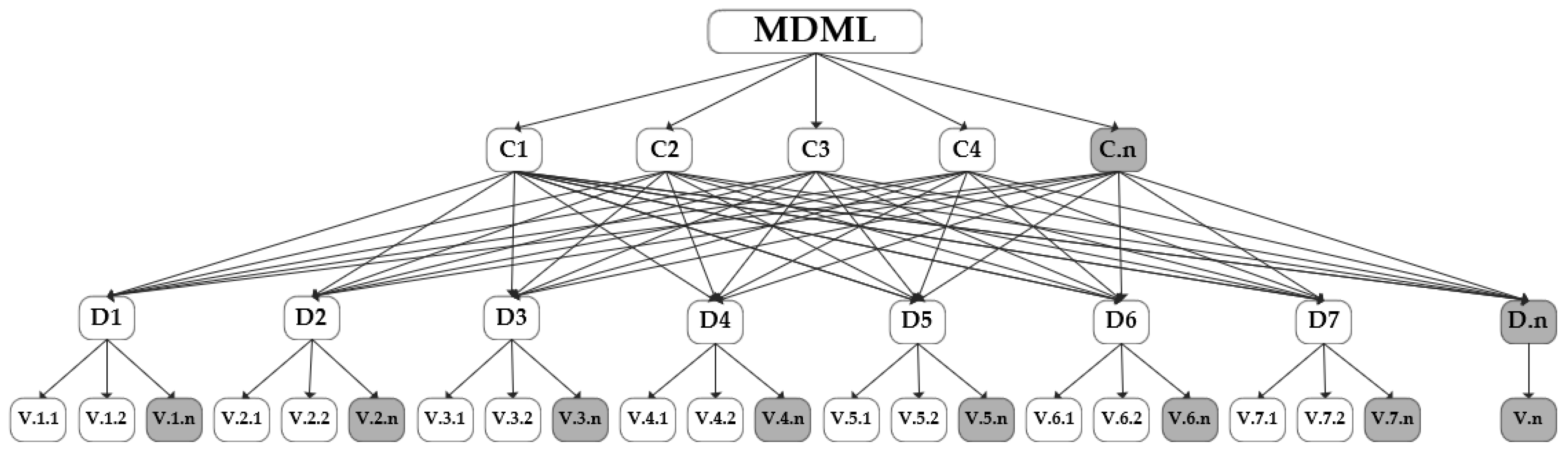
In order to better understand and resolve the research problem, as well as to present the structure of the method for determining TT maturity levels of Brazilian TTOs, six phases were established (Figure 1).

Figure 1.
Method for determination of maturity levels (MDML).
3.1.1. Phase 1—Definition of the Criteria for Technology Transfer
The Method requires the definition of five criteria (technology promotion, identification of the TT vehicle, technology protection, commercialization and result management) necessary for the technology transfer to occur.
- Criterion 1—Technology promotion: this criterion refers to marketing strategies, including but not limited to advertisements and paid articles in technical magazines, printed leaflets for distribution at events, promoting and attending symposiums/technical conferences, participating in professional expositions and working in joint projects with local and federal government [29].
- Criterion 2—Identification of the TT vehicle: its purpose is to identify the transfer agreement that best suits the needs of the interested parties in the process (external partners, researchers and the university). The knowledge concerning the technology is centered on the researchers, whereas the knowledge of the legislation and TT process management lies on TTO, as the support organ that best identifies the transfer vehicle [29].
- Criterion 3—Technology protection: patenting is a way to attract private resources so as to foster innovation, reducing above all the risks involved in the technology maturation period until it is made available to society [30].
- Criterion 4—Commercialization: TTOs require a wide array of abilities for the commercial exploration of the results of academic research [31]. It is also worth mentioning that the universities that optimize their technology transfer efforts and improve their research reputation through supporting basic research will attain long-term success in technology commercialization [32,33]. Finally, in order to improve the academic and commercial bonds with industry, in many universities there is a TTO as a vehicle to support the creation of new companies with their origin at the university [34].
- Criterion 5—Result management: research results must be managed in a way so as to ensure that the contracting parties have the IP and their share of the results, by means of financial or non-financial remuneration. Therefore, commercialization of academic research has become an increasingly more crucial matter, given the concern with licensing and the universities’ wish to maximize the returns from the IP [35].
3.1.2. Phase 2—Definition of the Dimensions and Variables
This method adapts its dimensions and variables from the Technology Transfer Octagon, developed by Gaia et al. [36] and defined through the literature and empirical data. The dimensions were divided according to their variables, reaching eight dimensions with seven variables each, for a total of 56 variables (Table 1). Even though they are adequate for the research, other variables were disregarded due to the adaptation to the reality of a developing country.

Table 1.
Dimensions and variables: Technology Transfer Octagon.
The dimensions and variables defined in phase 2, as well as the criteria previously described, are part of the framework, which employs the Fuzzy Simple Additive Weighting (FSAW) method to establish their weights.
3.1.3. Phase 3—Definition of the Weights through the FSAW Method
This phase of the research requires the use of a multi-criteria method to grant more robustness to the proposed method. In order to attribute weights only to the dimensions and variables defined in the previous phases, the multi-criteria method selected was the Fuzzy Simple Additive Weighting (FSAW). The FSAW method meets the needs of this study, seeing that it was employed to assess the degree of importance of the dimensions and variables relative to the method’s criteria. The Triangular Fuzzy Number (TFN) was applied to model the uncertainty in the process with a fuzzy linguistic approach to assess the degree of importance of the dimensions and variables in the point of view of the decision-maker/TT expert [37].
Because it is a weighted fuzzy application, the FSAW method approaches the experts’ preferences. Even if its use is successful in several applications, in many practical cases, it is rather challenging for experts to express their preferences employing a fuzzy association function. Most of the existing FSAW methods are comprised of linguistic terms, especially given that certain decisions cannot be measured in an exact and accurate scale. The scale of linguistic intervals can be employed instead so as to reduce the degree of uncertainty of the decision-makers/experts, as displayed in Table 2 [38].
Table 2.
Fuzzy numbers and corresponding linguistic variables.
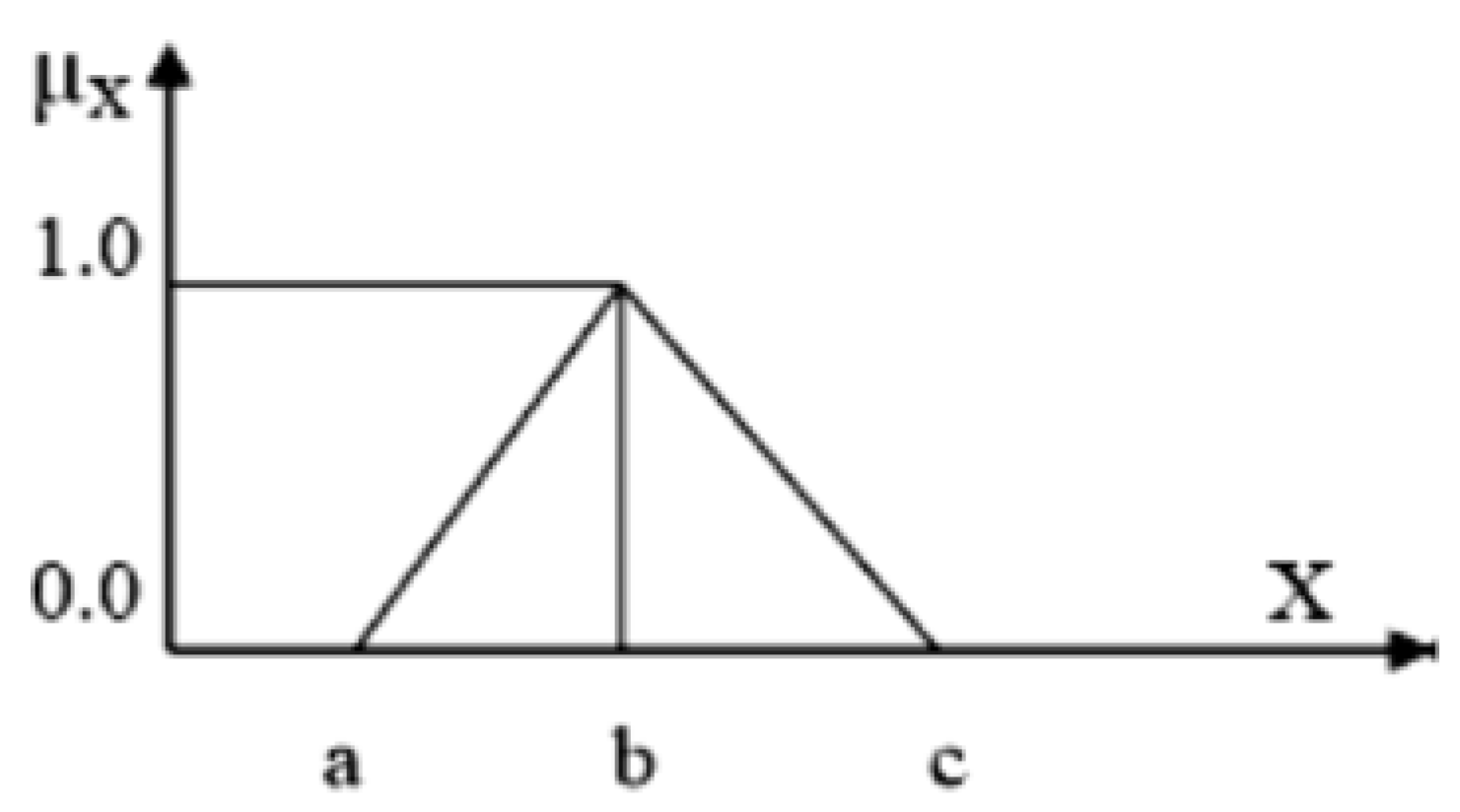
In Figure 2, triangular fuzzy numbers can be defined as a triplet (a, b, c). The patterns a, b and c indicate, respectively, the lowest value, the most promising value and the highest possible value that characterizes a fuzzy event [37].
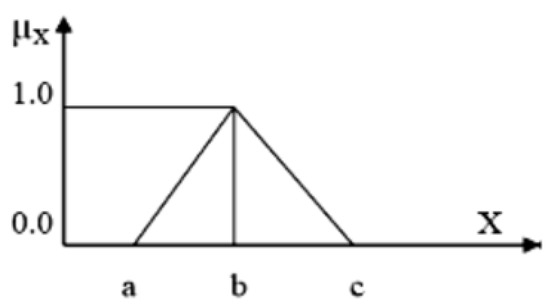
Figure 2.
Triangular fuzzy number X. Source: Sagar, Jayaswal and Kushwah [37].
The steps for applying the FSAW method were presented by Sagar, Jayaswal and Kushwah [37], as follows:
First Step: Selecting the criteria that will be employed as reference in the decision-making, namely (Cj; j = 1, 2… m), and form a group of experts (Ek; k = 1, 2… n) for the decision-making. A committee of experts has been identified and was invited to provide a qualitative evaluation pertaining to TT. This committee was formed by six experts (E1, E2, E3, E4, E5 and E6), who meet the following prerequisites: active work with TT, solid knowledge of intellectual property and management experience of a TTO. The experts in this case are full professors of public Universities in Brazil, they have been TTO managers for over eight years and all of them earnt a doctorate degree on Innovation and Technology. According to FSAW methodology, six is a reliable measure because a large number of experts may cause negligible mixing ratios in the final results.
It is worth mentioning that the decisions made by these experts concern Brazilian TTOs and that the same method would yield different results if applied in a different country, due to the consultation with local experts.
The research structure includes five evaluation criteria: Technology promotion (C1), Identification of the TT vehicle (C2), Technology protection (C3), Commercialization (C4), and Result management (C5). It also includes eight dimensions: Structure (D1), Relationship (D2), Vision (D3), Processes (D4), Financial resources (D5), Ecosystem (D6), Strategy (D7) and People (D8), in addition to seven variables in each dimension.
Second Step: the experts attribute the adequate rating for each criterion employing linguistic variables.
Third Step: The Fuzzy Decision Matrix DMjk is determined for all of the criteria in terms of triangular fuzzy numbers.
Fourth Step: The fuzzy average scores (Ajk), the difuzzified values (e), and the normalized weight (Wj) of each criterion are determined.
(Ajk) = (fkj1 + fkj2 +… + fkjn)/n; j = 1, 2… m; k = 1, 2… n
(e) = (a + b + c)/3
The normalized weight (Wj) of each criterion is obtained by dividing the fuzzy scores of each criterion by the total of fuzzy scores of the whole criterion.
Fifth Step: The experts attribute the adequate rating, employing linguistic variables, for each dimension (Di; i = 1, 2… n) and variable (Vi; i = 1, 2… n) of all TT criteria.
Sixth Step: the average fuzzy scores and the difuzzified scores of each dimension and variable of all TT criteria are determined.
Seventh Step: The decision matrix for all of the criteria, dimensions and variables is determined [Xij].
Eighth Step: The normalized matrix for all of the criteria, dimensions and variables is determined [Rij].
Rij = Xij/max(X1j, X2j, X3j, X4j, X5j, X6j, X7j, X8j); i = 1, 2… 8
Total scores (TS) for each dimension and variable are determined through the Simple Additive Weighting (SAW) method.
TS = [Rij] [Wj]
Ninth Step: Final results are obtained from the ranking of the sum of the multiplication of the normalized matrix [Xij] with the normalized weight (Wj), leading to the ranking of the dimensions (Di) and the ranking of the variables (Vi).
Tenth Step: This step is related to the next phase of the proposed method—the consolidation of the weights of the dimensions and variables for their utilization in the framework.
3.1.4. Phase 4—Consolidation of the Weights of the Dimensions and Variables
This phase of the research compiles the weights of the dimensions and variables so as to allow the visualization and verification of the weights obtained in phase 3, which need to be normalized.
3.1.5. Phase 5—Application of the Framework—Binary Scale
This phase of the research generates a file containing all of the dimensions and variables, with a difference in the statements. For instance, while before the experts were asked how important a variable was relative to the criteria (Phase 2), now the TTO managers are asked (Phase 5) whether the TTO does not present (0) or presents (1) a variable, as displayed in Table 3.
Table 3.
Difference between the questions for the experts and the TTO managers.
Thus, it is possible to ascertain whether the TTO presents (or not) those variables. Then, according to the normalized weights of the SAW ranking of the dimensions and variables, Phase 6 can attain an index that will determine the TT maturity level of the TTOs.
3.1.6. Phase 6—Determination of the TT Maturity Level
A few steps are required to determine the TT maturity level. After the TTO manager answers the statements (variables) for each dimension, it is possible to calculate the general and the dimension maturity levels.
First, the general maturity index (GMI) is obtained as follows: if the answer to the variable is (1), it receives the weight attributed in the SAW ranking of the variables in its dimension. For instance: GMI = (0.1543 × 0.1305) + (0 × 0.1305) + (0.1655 × 0.1305) + (0.1083 × 0.1305) + (0.1536 × 0.1305) + (0 × 0.1305) + (0.1583 × 0.1305) … = 0.5748. That is explained by the fact that not all of the statements were answered with (1); if that was the case, the GMI would be 1, corresponding to an index of 100%.
The dimension maturity index (DMI) is attained as follows: the DMI of the structure dimension = (0.0201 × 0.1305) + (0 × 0.1305) + (0.0216 × 0.1305) + (0.0141 × 0.1305) + (0.0201 × 0.1305) + (0 × 0.1305) + (0.0207 × 0.1305) = 0.7401.
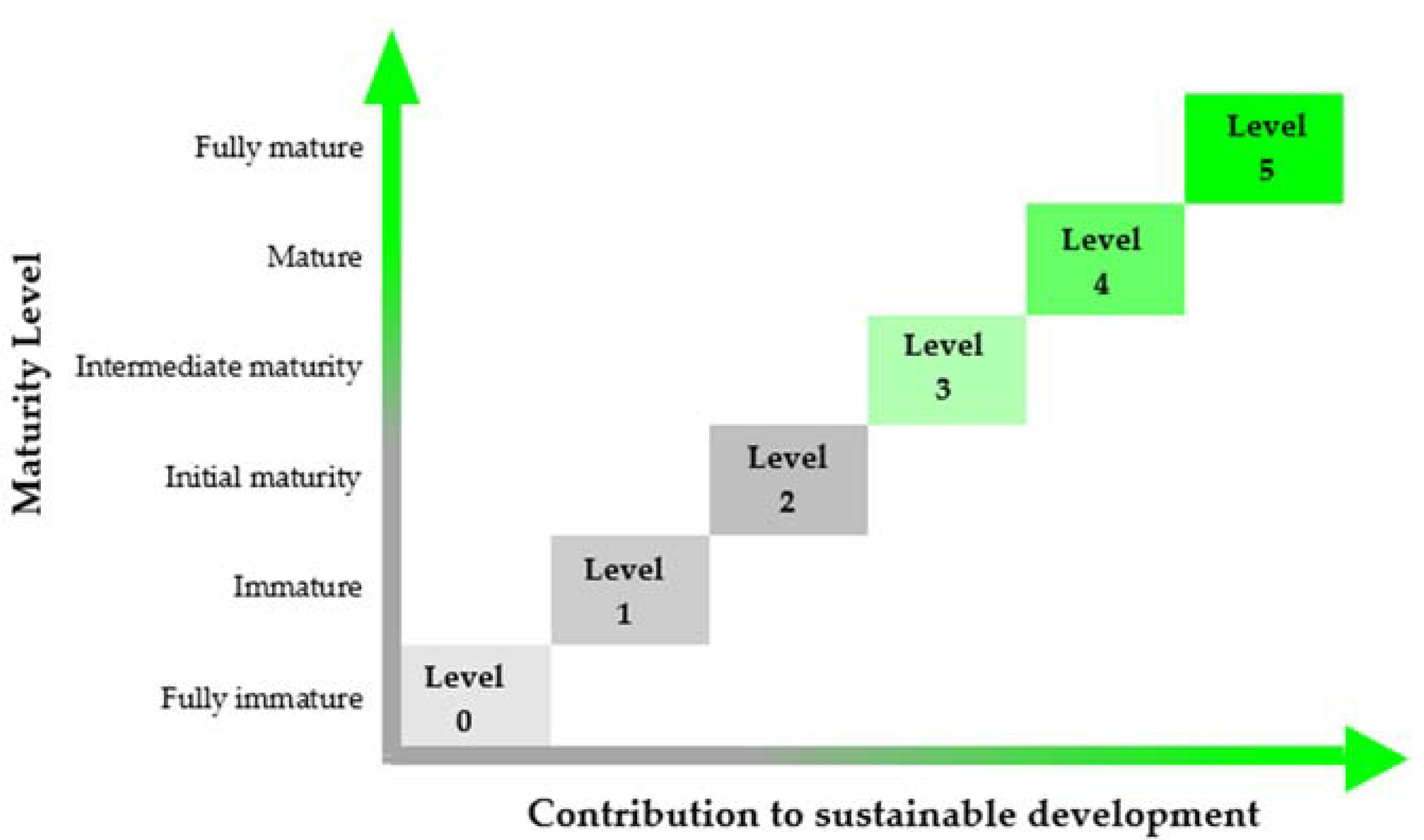
As a part of the proposed method, it is necessary to multiply the GMI and the DMI by five to attain the TT Maturity Level. For the general maturity level, GMI = 0.5748 × 5 = 2.87, and for the dimension maturity level, DMI = 0.7401 × 5 = 3.70, in a scale that goes from 0 to 5 as displayed in Figure 3.
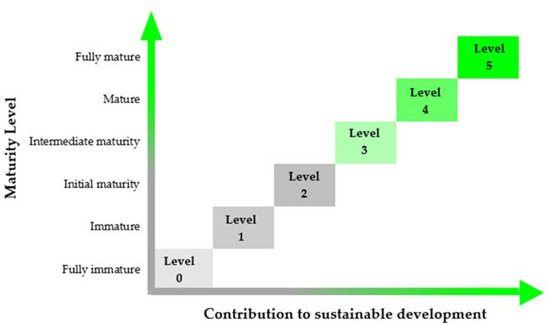
Figure 3.
Maturity levels proposed by the method.
MDML provides an understanding of TTOs’ status quo considering their technology transfer capacity. From Level 3 (intermediate maturity), TTOs may start to positively developing sustainable development goals. At levels 4 (mature) and 5 (fully mature), TTOs are able to fulfill their technology transfer role which is the main focus of sustainable development gols (SDGs), as TT is considered the main means of sustainable development [39]. In this case, TT is understood as a mechanism to promote sustainable development. However, in order to be considered a tool for promoting sustainability, both flow and transferred technologies should be aligned with SDGs [40].
4. Results and Discussion
4.1. Method for the Determination of Maturity Levels: An Application in Technology Transfer Offices in a Developing Country
After the definition of the technology transfer criteria: Technology Promotion (C1), Identification of the TT vehicle (C2), Technology Protection (C3), Commercialization (C4), and Result Management (C5), its dimensions: Structure (D1), Relationship (D2), Vision (D3), Processes (D4), Financial Resources (D5), Ecosystem (D6), Strategy (D7) and People (D8), and seven variables for each dimension, which comprise the method’s premise, with the option of having more or fewer criteria, dimensions and variables, the method continues with the application of the FSAW method for determining the weights.
A committee of six experts responded to an e-questionnaire (Table 4). Such experts were selected by effective experience with technology transfer, intellectual property and management of TTOs. Results show the reality of TTOs in a developing country. The application of the same method in a developed country would yield different results.
Table 4.
Rating of each criteria by the experts.
Determination of the decision matrix DMjk for all of the criteria in terms of triangular fuzzy numbers is shown in Table 5.
Table 5.
Decision matrix DMjk of the criteria.
Determination of the average fuzzy scores (Ajk), the difuzzified values (e) and the normalized weights (Wj) of each criterion are shown in Table 6.
Table 6.
Average fuzzy scores, difuzzified values, and normalized weights of the criteria.
Determining the ranking and the weight of each criteria according to Brazilian TT experts, displayed in Table 7, highlights the focus on technology protection (C3), followed by the identification of the transfer vehicle (C2), technology promotion (C1), result management (C5), and, finally, technology commercialization (C4). While developed countries are able to go much further than technology protection, bringing investments to the universities and fostering innovation and technological development, in Brazil, the thought directed at intellectual property, partnerships and marketing remains.
Table 7.
Importance ranking of the criteria for technology transfer.
Like the criteria, the experts rated each dimension in the technology transfer criteria, namely structure (D1), relationship (D2), vision (D3), processes (D4), financial resources (D5), ecosystem (D6), strategy (D7) and people (D8), according to the terms of linguistic variables, as shown in Table 8.
Table 8.
Rating of each dimension by the experts.
Afterwards, Table 9 shows the average diffuse scores with the difuzzified values and the normalized weights of the dimensions.
Table 9.
Average fuzzy scores, difuzzified values, and normalized weights of the dimensions.
The next steps consist of determining the decision matrix for all criteria and dimensions, as presented in Table 10.
Table 10.
Determination of the decision matrix for all of the criteria and dimensions [Xij].
Table 11 shows the decision matrix for all criteria and dimensions, normalizing the scores by the maximum score for each criterion.
Table 11.
Determination of the normalized matrix for all of the criteria and dimensions [Rij].
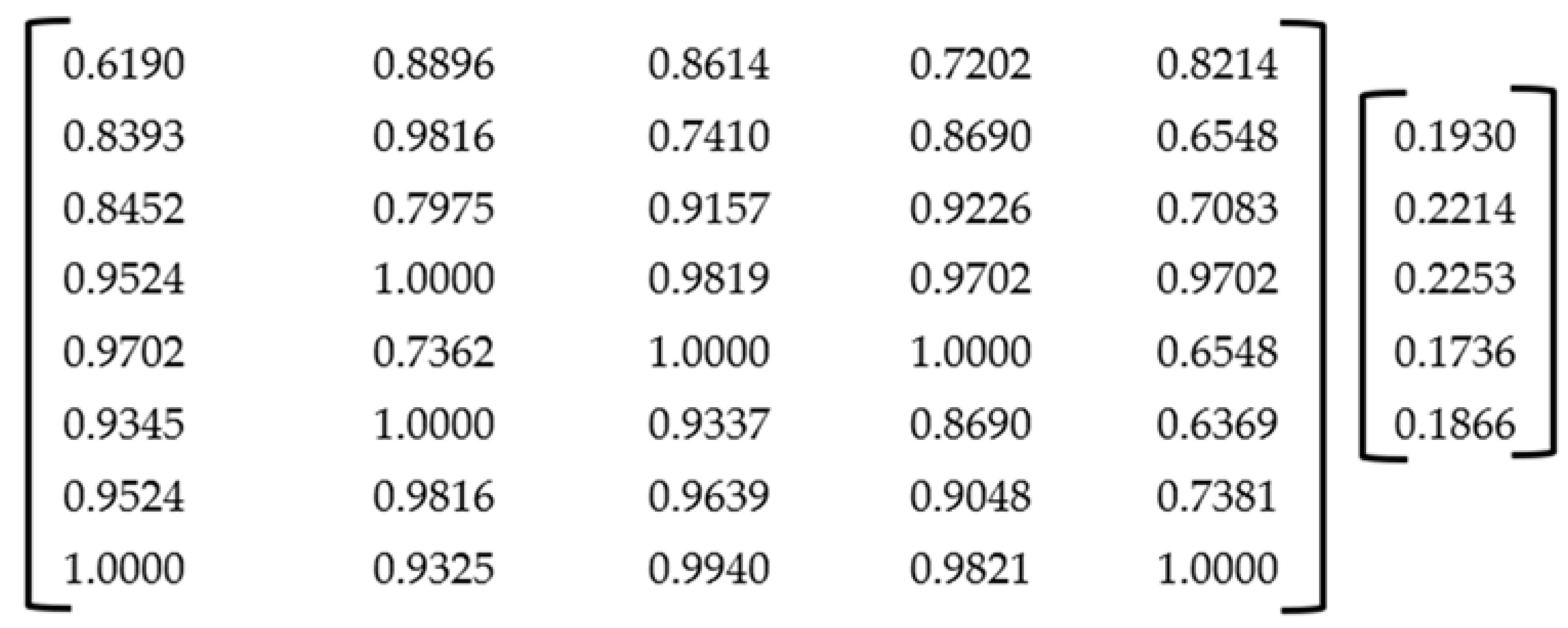
The total score of the dimension structure (D1) compared to the criteria is attained as follows: (0.6190 × 0.1930) + (0.8896 × 0.2214) + (0.7202 × 0.2253) + (0.7202 × 0.1736) + (0.8214 × 0.1866) = 0.7889. The total score of the dimensions (D2), (D3), (D4), (D5), (D6), (D7), and (D8) is determined likewise, as displayed in Figure 4.
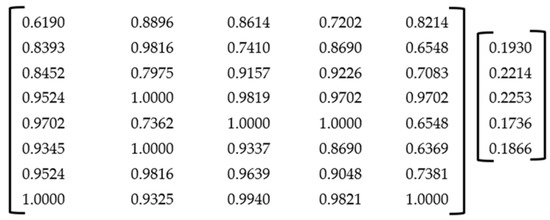
Figure 4.
Determination of the total score (TS) of each dimension through the simple additive weighting (SAW) method. TS = (Rij) (Wj).
As displayed in Table 12, the dimension people (D8) attained the highest score, followed by the dimension processes (D4), strategy (D7), ecosystem (D6), financial resources (D5), vision (D3), relationship (D2) and structure (D1).
Table 12.
Importance ranking of the dimensions.
Each of the method’s dimensions has seven variables, which require rating in terms of linguistic variables employing the FSAW method in the same way as the dimensions. After the method’s application, a weight for each variable is attained. It is worth observing in Figure 5 that the method allows alterations in the number of criteria (C.n), dimensions (D.n) and variables (V.n). Modifying those elements enables the method to be employed in other knowledge areas.
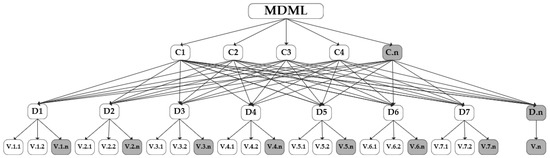
Figure 5.
The variables’ relationship with the dimensions and criteria.
After conducting all of the calculations, the weights of all the variables and dimensions, which will be employed in the application of the framework for the TTO managers, are consolidated (Table 13).
Table 13.
Consolidation of the weights of the dimensions and variables.
4.2. Application of the Framework to Determine the Maturity Level of Technology Transfer Offices: The Brazilian Case
Analysis of the TT maturity level results provided an overview of 105 Brazilian TTOs focusing on how their TT maturity level influences sustainable development. To get a potential contribution, e-questionnaires were responded to by TTOs’ managers/directors.
According to the MDML metric, TTOs start positively influencing sustainable development as they reach Level 3 (intermediate maturity). TTOs reaching Levels 4 (mature) and 5 (fully mature) are really capable of transferring technology, contributing to innovation and generating new sustainable businesses in a systemic way, using a strategic relationship between the academic and business community.
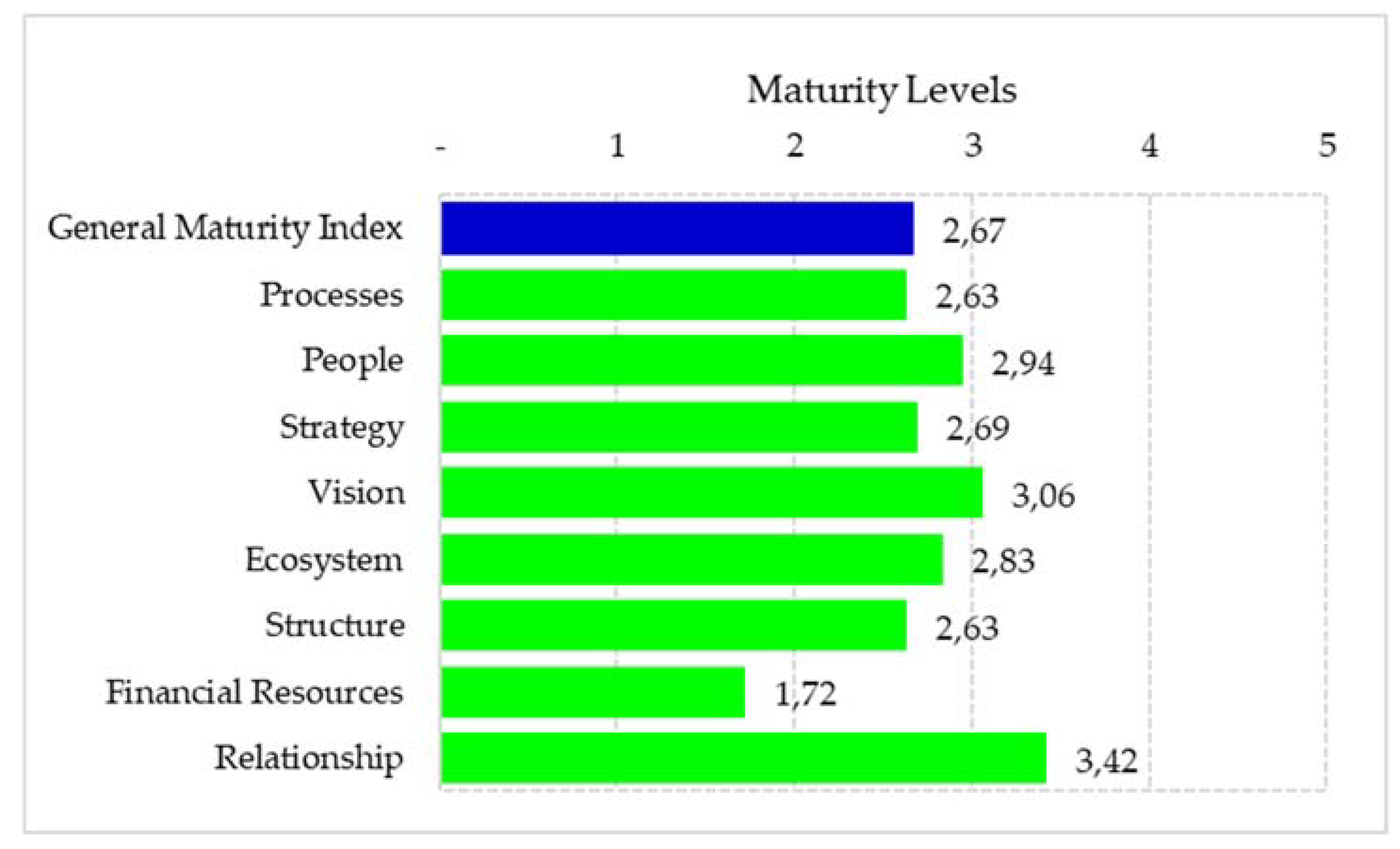
When analyzing TT maturity level (Table 14), considering this sample, there were no TTOs with a maximum score (Level 5—Fully mature). Only about 5.71% of Brazilian TTOs obtained level 4 (Mature). Difficulties with financial resources, processes, ecosystem and strategy were obstacles to reach Level 5. It is key to point out that 50% of Level 4 TTOs have financial resources difficulties. Analyzing Level 3 TTOs, even though they also mention problems with processes, vision and ecosystem, financial resources are again referred as the main problem (89.2%).
Table 14.
Application of the framework to determine the maturity levels of Brazilian TTOs.
According to this study, a rate of 59.05% Brazilian TTOs were under level 3 and all of them (100%) bring up financial resources as their main issue, followed by processes (90.3%), structure and people (85.5%).
Data indicates that financial resources dimension play an important role on maturity level and some of the variables to be considered are:
- Not getting venture capital funds for startups (96.19%);
- No extra resources allocated by the university specially to TT activities (82.86%);
- Not having own budget for research and development (R&D) (81.9%);
- No financial resources allocated to academic entrepreneurship (70.48%);
- Not enough budget to guarantee TT activities (66.67%);
- Nor collaboration or partnership with R&D departments of private companies (62.86%), and
- No partnerships with development agencies (38.1%).
Considering TT maturity levels’ average of Brazilian TTOs, the overall maturity level was 2.67, resulting on a rate of 59.05% Brazilian TTOs under level 3, meaning low maturity level, consequently low or none influence on sustainable development. Therefore, Brazilian TTOs still have a long way to go in order to accomplish positive technology transfer as well as sustainable development. Results shown in Figure 6 indicate that the average is above 3 when analyzing relationship and vision dimensions, indicating that TTOs have a clear vision of where they need to go and what they should do. However, the lack of financial resources proved to be a serious obstacle while other dimensions play a secondary role but they still have to be considered, such as structure, people and processes.
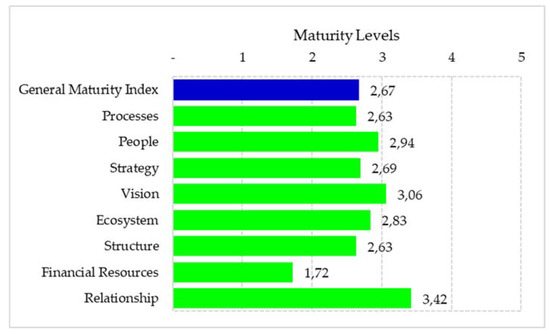
Figure 6.
Maturity level averages: general and by dimensions.
4.3. Discussion about the Maturity Models
Maturity models act as a support for TTO managers to improve university’s technology transfer processes, contributing to circumstantial changes in any TTO. However, there is a scarcity of studies about maturity models for TTOs. This paper proposed to determine how TTOs’ maturity level influences sustainable development in developing countries. For this purpose, the method for determining TT maturity levels was developed and applied, employing a multi-criteria method to define the weight of each dimension and variable, applying a framework containing a binary scale. It is relevant to indicate that the method does not intend to ascertain how much, but rather, if each variable is present. Considering that, questions were adapted from Gaia et al. [36] and answered by TTO managers.
Taking into account that MDML was proposed for TTOs in developing countries, the experts who defined the weights employed in the method are Brazilian, thus reflecting the reality in Brazil. If the method is applied in another country, local experts should be consulted, ideally. Moreover, the method was designed to allow alterations in its criteria, dimensions and variables, focusing on the country’s cultural, social, economic and political needs. Additionally, in fact, this paper applies the MDML to TTOs, but it could be adapted for other areas as well.
Table 15 displays a comparison between the MM and the MDML, regarding their characteristics and purposes. Both models fulfill their purposes, and the comparison does not aim to ascertain which one is better. However, differences exist and should be taken into account and adapted to the reality of the TTO.
Table 15.
Comparison between the maturity models.
This paper makes several contributions to the literature. First, this study adds to the relatively small amount of accounting research that investigates methods for defining maturity level whether TTOs become more and more important means of development. Whereas previous research does not provide an analysis based on TT, this study contemplates dimensions and variables directly related to TT with bias with the ninth SDG. Second, the results of this study help provide a better understanding of the situation of Brazilian TTOs according to their maturity level providing an overview of TTOs in developing countries. Finally, this approach is distinct from similar studies as it places TT as the main resource for achieving the SDGs limiting the role of science and innovation towards sustainable development. It is therefore essential to recognize that there are different issues for different regions and countries that go beyond aspects of TT [39].
5. Final Consideration
This study demonstrated how TTOs’ maturity level influences sustainable development in developing countries by proposing a new method for determining maturity level of TT. This method uses FSAW, and it is based on 5 requirements, 8 dimensions and 56 proposed variables which were weighted by carefully targeted respondents. Out of 305 existing TTOs in Brazil according to the FORMICT 2018 report [28] from the Ministry of Science, Technology Innovations and Communications, 44 TTOs were excluded as they had no link to a university. The response rate was 40.22%, as 105 TTOs from 24 (88.89%) out of 27 Brazilian states participated in the research.
Results show that Brazilian TTOs achieved low levels of maturity and highlighted critical factors for such outcome: financial resources (pointed out as the main problem), structure, processes, strategy, ecosystem and people. On the other hand, relationship and vision Dimensions got better evaluation and higher scores. Understanding that financial resources dimension is directly linked to the performance of other dimensions, allocation of more resources to TT and R&D activities plays an important role in strengthening TTOs.
This method for determining TTOs’ maturity level has proven to be an extensive way to provide meaningful information for TTOs’ managers, especially in developing countries. By highlighting main dimensions and specific variables affecting technology transfer processes, this model contributes to performance improvement as it points out specific issues to be addressed by each organization creating a supportive benchmark. It also provides important insights on sustainable development since technology transfer is not the only one but a relevant mechanism for sustainability.
This method certainly merits further research investigation in other developing countries, encouraging proper comparative work. This study provides insights for practical recommendations on TTOs’ performance and its implications for sustainable development.
Author Contributions
All the authors contributed to this work. Conceptualization, A.M.S.; Formal analysis, D.M.d.G.C.; Funding acquisition, J.L.K.; Investigation, A.M.S.; Methodology, A.M.S.; Project administration, S.G.; Supervision, S.G.; Validation, D.M.d.G.C.; Writing—original draft, A.M.S.; Writing—review and editing, D.M.d.G.C. All authors have read and agreed to the published version of the manuscript.
Funding
We thank the Fundação Araucaria and CAPES (Agreement CAPES/FA CP20/2015), and UTFPR for the support received for the development of this research.
Conflicts of Interest
The authors declare no conflict of interest.
References
- Lee, S.; Shvetsova, O.A. Optimization of the Technology Transfer Process Using Gantt Charts and Critical Path Analysis Flow Diagrams: Case Study of the Korean Automobile Industry. Processes 2019, 7, 917. [Google Scholar] [CrossRef]
- Etzkowitz, H.; Zhou, C. Triple Helix twins: Innovation and sustainability. Sci. Public Policy 2006, 33, 77–83. [Google Scholar] [CrossRef]
- Etzkowitz, H.; Leydesdorff, L. The dynamics of innovation: From National Systems and “Mode 2” to a Triple Helix of university–industry–government relations. Res. Policy 2000, 29, 109–123. [Google Scholar] [CrossRef]
- Paniccia, P.M.A.; Baiocco, S. Co-Evolution of the University Technology Transfer: Towards a Sustainability-Oriented Industry: Evidence from Italy. Sustainability 2018, 10, 4675. [Google Scholar] [CrossRef]
- Van Looy, B.; Landoni, P.; Callaert, J.; van Pottelsberghe, B.; Sapsalis, E.; Debackere, K. Entrepreneurial effectiveness of European universities: An empirical assessment of antecedents and trade-offs. Res. Policy 2011, 40, 553–564. [Google Scholar] [CrossRef]
- Perkmann, M.; Tartari, V.; McKelvey, M.; Autio, E.; Broström, A.; D’Este, P.; Fini, R.; Geuna, A.; Grimaldi, R.; Hughes, A.; et al. Academic engagement and commercialisation: A review of the literature on university–industry relations. Res. Policy 2013, 42, 423–442. [Google Scholar] [CrossRef]
- Grimaldi, R.; Kenney, M.; Siegel, D.S.; Wright, M. 30 years after Bayh–Dole: Reassessing academic entrepreneurship. Res. Policy 2011, 40, 1045–1057. [Google Scholar] [CrossRef]
- Pinto, M.M.A.; Kovaleski, J.L.; Yoshino, R.T.; Pagani, R.N. Knowledge and technology transfer influencing the process of innovation in green supply chain management: A multicriteria model based on the DEMATEL Method. Sustainability 2019, 11, 3485. [Google Scholar] [CrossRef]
- Siegel, D.S.; Waldman, D.A.; Atwater, L.E.; Link, A.N. Toward a model of the effective transfer of scientific knowledge from academicians to practitioners: Qualitative evidence from the commercialization of university technologies. J. Eng. Technol. Manag. 2004, 21, 115–142. [Google Scholar] [CrossRef]
- Li, F.; Zhang, S.; Jin, Y. Sustainability of university technology transfer: Mediating effect of inventor’s technology service. Sustainability 2018, 10, 2085. [Google Scholar] [CrossRef]
- Sustainable Development Goals. Available online: https://www.undp.org/content/undp/en/home/sustainable-development-goals.html (accessed on 10 January 2020).
- The Global Innovation Index (GII) 2019: Creating Healthy Lives—The Future of Medical Innovation. Available online: https://www.globalinnovationindex.org/Home (accessed on 20 January 2020).
- Becker, J.; Knackstedt, R.; Poppelbuss, J. Developing Maturity Models for IT Management—A Procedure Model and its Application. Bus. Inf. Syst. Eng. 2009, 1, 213–222. [Google Scholar] [CrossRef]
- Markman, G.D.; Gianiodis, P.T.; Phan, P.H.; Balkin, D.B. Innovation speed: Transferring university technology to market. Res. Policy 2005, 34, 1058–1075. [Google Scholar] [CrossRef]
- Phan, P.H.; Siegel, D.S. The effectiveness of university technology transfer. Found. Trends Entrep. 2006, 2, 77–144. [Google Scholar] [CrossRef]
- Lee, J.; Kang, J.-H.; Jun, S.; Lim, H.; Jang, D.; Park, S. Ensemble modeling for sustainable technology transfer. Sustainability 2018, 10, 2278. [Google Scholar] [CrossRef]
- Macho-Stadler, I.; Pérez-Castrillo, D.; Veugelers, R. Licensing of university inventions: The role of a technology transfer office. Int. J. Ind. Organ. 2007, 25, 483–510. [Google Scholar] [CrossRef]
- O’Kane, C.; Mangematin, V.; Geoghegan, W.; Fitzgerald, C. University technology transfer offices: The search for identity to build legitimacy. Res. Policy 2015, 44, 421–437. [Google Scholar] [CrossRef]
- Markman, G.D.; Phan, P.H.; Balkin, D.B.; Gianiodis, P.T. Entrepreneurship and university-based technology transfer. J. Bus. Ventur. 2005, 20, 241–263. [Google Scholar] [CrossRef]
- Siegel, D.S.; Veugelers, R.; Wright, M. Technology transfer offices and commercialization of university intellectual property: Performance and policy implications. Oxf. Rev. Econ. Policy 2007, 23, 640–660. [Google Scholar] [CrossRef]
- Carvalho, J.V.; Rocha, Á.; Van de Wetering, R.; Abreu, A. A Maturity model for hospital information systems. J. Bus. Res. 2019, 94, 388–399. [Google Scholar] [CrossRef]
- Secundo, G.; De Beer, C.; Passiante, G. Measuring university technology transfer efficiency: A maturity level approach. Measur. Bus. Excell. 2016, 20, 42–54. [Google Scholar] [CrossRef]
- Wang, C.-N.; Tsai, T.-T.; Huang, Y.-F. A Model for Optimizing Location Selection for Biomass Energy Power Plants. Processes 2019, 7, 353. [Google Scholar] [CrossRef]
- De Beer, C.; Secundo, G.; Passiante, G.; Schutte, C.S.L. A mechanism for sharing best practices between university technology transfer offices. Knowl. Manag. Res. Pract. 2017, 15, 523–532. [Google Scholar] [CrossRef]
- Secundo, G.; De Beer, C.; Schutte, C.S.L.; Passiante, G. Mobilising intellectual capital to improve European universities’ competitiveness the technology transfer offices’ role. J. Intellect. Cap. 2017, 18, 607–624. [Google Scholar] [CrossRef]
- Pagani, R.N.; Kovaleski, J.L.; Resende, L.M. Methodi Ordinatio: A proposed methodology to select and rank relevant scientific papers encompassing the impact factor, number of citation, and year of publication. Scientometrics 2015, 105, 2109–2135. [Google Scholar] [CrossRef]
- Pagani, R.N.; Kovaleski, J.L.; Resende, L.M.M. Avanços na composição da Methodi Ordinatio para revisão sistemática de literatura. Ciência da Informação 2017, 46, 161–187. [Google Scholar]
- Relatório FORMICT Ano-Base 2018. Available online: http://fortec.org.br/wp-content/uploads/2019/12/Relat%C3%B3rio-Formict-2019_Ano-Base-2018.pdf (accessed on 4 January 2020).
- Resende, D.N. Transferência de Tecnologia: As práticas Actuais e Uma Metodologia Para Análise Subjectiva das Instituições. Ph.D. Thesis, Universidade de Aveiro—DEGEI, Aveiro, Portugal, 2010. [Google Scholar]
- Lotufo, R.A. A institucionalização de Núcleos de Inovação Tecnológica e a experiência da Inova Unicamp. In Transferência de Tecnologia: Estratégias Para Estruturação e Gestão dos Núcleos de Inovação Tecnológica; Komedi: Campinas, Brazil, 2009; pp. 41–74. [Google Scholar]
- Weckowska, D.M. Learning in university technology transfer offices: Transactions-focused and relations-focused approaches to commercialization of academic research. Technovation 2015, 41–42, 62–74. [Google Scholar] [CrossRef]
- Lee, J.; Stuen, E. University reputation and technology commercialization: Evidence from nanoscale science. J. Technol. Transf. 2016, 41, 586–609. [Google Scholar] [CrossRef]
- Rasmussen, E. Government instruments to support the commercialization of university research: Lessons from Canada. Technovation 2008, 28, 506–517. [Google Scholar] [CrossRef]
- Vac, C.S.; Fitiu, A. Building Sustainable Development through Technology Transfer in a Romanian University. Sustainability 2017, 9, 2042. [Google Scholar] [CrossRef]
- Lockett, A.; Wright, M. Resources, capabilities, risk capital and the creation of university spin-out companies. Res. Policy 2005, 34, 1043–1057. [Google Scholar] [CrossRef]
- Gaia, S.R.D.; Gibson, D.; Silva, L. Technology Transfer Octagon: A qualitative tool to analyze TTO’s performance. In Proceedings of the 26th International Association for Management of Technology—IAMOT, Vienna, Austria, 14–18 May 2017. [Google Scholar]
- Sagar, M.; Jayaswal, P.; Kushwah, K. Exploring fuzzy SAW method for maintenance strategy selection problem of material handling equipment. Int. J. Curr. Eng. Technol. 2013, 3, 600–605. [Google Scholar]
- Abdullah, L.; Adawiyah, C.W.R.; Kamal, C.W. A decision making method based on interval type-2 fuzzy sets: An approach for ambulance location preference. Appl. Comput. Inf. 2018, 14, 65–72. [Google Scholar] [CrossRef]
- Imaz, M.; Sheinbaum, C. Science and technology in the framework of the sustainable development goals. World J. Sci. Technol. Sustain. Dev. 2017, 14, 2–17. [Google Scholar] [CrossRef]
- Corsi, A.; Pagani, R.N.; Kovaleski, J.L.; da Silva, V.L. Technology transfer for sustainable development: Social impacts depicted and some other answers to a few questions. J. Clean. Prod. 2019, 245, 118522. [Google Scholar] [CrossRef]
- Yimen, N.; Dagbasi, M. Multi-Attribute Decision-Making: Applying a Modified Brown–Gibson Model and RETScreen Software to the Optimal Location Process of Utility-Scale Photovoltaic Plants. Processes 2019, 7, 505. [Google Scholar] [CrossRef]

© 2020 by the authors. Licensee MDPI, Basel, Switzerland. This article is an open access article distributed under the terms and conditions of the Creative Commons Attribution (CC BY) license (http://creativecommons.org/licenses/by/4.0/).