


Abstract
Industry 4.0 is a new era of industrial revolution in which textile and apparel (T&A) companies are adopting and integrating advanced technologies to achieve sustainability and a competitive edge. Previous studies have just focused on the perspective of big data utilization in Industry 4.0 and neglected the role of business intelligence systems (BIS), especially in the T&A industry. The current study is one of the first to investigate the determinants of BIS adoption with an eye towards understanding how BIS can resolve sustainability issues in T&A companies with Industry 4.0 technologies. Methodology: A qualitative research approach is applied with 14 semi-structured in-depth interviews from 12 of the world’s high-end T&A companies. The snowball and purposeful sampling strategy is used to select the participants. The qualitative content analysis technique is used to analyze the interview data. Results: The findings revealed various themes, such as sustainability issues in T&A companies, improved value creation processes with leading BI solutions, and perceived difficulties in the adoption of BIS. Major improvements are perceived in the apparel retail business because apparel companies are more prone to adopt the Industry 4.0 technologies with advanced business intelligence (BI) solutions. The results prove the pivotal role of economic sustainability in the adoption of BIS and Industry 4.0 technologies in T&A companies.
1. Introduction
In today’s smart manufacturing environment, the textile and apparel (T&A) industry faces challenges such as efficiency, sustainability, and quick response to clients’ dynamic requirements as well as product quality and regulatory compliance which ascertain its survival [1,2]. In addition, the industrial ecosystem, global sustainable business trends, and consumer-driven economy put pressure on industries to become more sustainable, innovative, and agile [3] because consumers, especially generation Z consumers, are more eco-aware and willing to pay for eco-friendly products [4]. To date, much research on corporate sustainability has focused on consumers’ willingness to support and buy sustainable products, which are identified by service, quality, and price [5]. In order to meet stakeholders’ growing demands for eco-friendly and sustainable T&A products, enterprises are adopting the best technological solutions [6,7]. Therefore, the T&A industry needs to perform smarter in the fourth industrial revolution or “Industry 4.0” by focusing on the triple bottom line approach [8]. Moreover, it becomes critical for T&A companies not only to deliver the best products and services on time but also to maintain long-term sustainability [9]. The concept of sustainability must be addressed in terms of the T&A industry’s main managerial processes (e.g., production, manufacturing, retail, delivery, purchasing, and customers), as well as its relationship with suppliers, distributors, and customers [10]. The role of technology in industrial adaptation for specific services and goods in the perspective of sustainability is well known [3]. It is confirmed by some empirical results which indicate that marginal return is higher from technological investments rather than investment in other industrial equipment [11]. According to Trieu [12], the race towards Industry 4.0 persuades industries to integrate digital technologies, such as Internet of Things (IoT), radio-frequency identification (RFID), robots, augmented reality, additive manufacturing, and cloud technology [13]. Despite investing in advanced and high-cost technologies, industries are unable to harness true sustainability with these technologies and systems [2,14]. The high level of automation, connectivity, and digitization in the Industry 4.0 produces large volumes of unstructured and structured data sets on a daily basis and it is impossible to obtain true value and sustainability without converting these large data sets into useful information. It is essential to analyze and access such huge amounts of data to design T&A manufacturing/production plans, forecasting sales and demands, supply chain management, fast merchandising, and inventory management, to compete with international sustainability challenges in the global market [15]. One innovation that has the capability of structured data integration and analytics to support all industrial stakeholders with valuable information for decision-making is business intelligence systems (BIS) [16]. BIS is an umbrella term for technologies’ techniques, tools strategies, and software systems integrated by companies to extract various and large data, according to the value processes and relevant knowledge to support a broad array of strategic, tactical, and operational business decisions [17]. BIS produce more informative and intelligent reports for decision makers and enhance organizational efficiency [18]. The application and integration of BIS have the ability to provide a 360 degree business view by supplementing not only the internal, but also the external, data from the web and markets [19]. Entrepreneurs can easily interpret and understand ongoing challenges, opportunities, strengths, and weaknesses of their firms by reviewing regional and global analyses [20]. In previous studies, the positive influence of information on decision-making is recognized by BIS, especially when organizations are operating in a highly competitive environment [17,21]. Although big data analytics are widely used under the Industry 4.0, for a decade BIS have remained the top priority for decision makers [21]. Efficient decision-making based on BIS is essential to ensure competitiveness for sustainable growth [22]. The crux of the matter is that the adoption of BIS is important to compliment big data by decision-making approaches that lead companies to accomplish their business goals for sustainable growth [23]. Previous studies also confirm that the capability to utilize and mobilize both unstructured and structured data with big data and BIS techniques together can enable companies to survive and sustain in competitive markets [24]. Earlier studies reveal that scholarly investigation about BIS for sustainable T&A industry is inconsistent [25]. Many researchers have addressed this issue partially [26], but the adoption of BIS as a separate entity is scarce [27]. It is important to note that some T&A companies are using advanced BIS, not yet broadly investigated by the researchers [28,29], especially under the Industry 4.0 concept. In addition, Industry 4.0 sparked the interest of researchers for application in cyber-physical systems [30], but the value creation processes for sustainability from the utilization of structured and historical data have not attained the same attention [15]. In short, research gaps in existing studies limit comprehension of the role of BIS under the Industry 4.0 concept to maintain sustainability in the T&A industry. Consequently, this study aims to narrow these gaps and answer the following research questions:
- How do companies reach their decisions to adopt BIS? What are the sustainability issues in the T&A industry that lead to the adoption of BIS in the era of Industry 4.0?
- How can T&A companies improve value creation processes to maintain their sustainability through the integration of BIS under the Industry 4.0 concept?
- What are the barriers in the adoption of BIS under the Industry 4.0 concept in T&A industry?
The results of this exploratory study are expected to lead future empirical research by addressing the above-mentioned questions. The study findings will guide industry experts and academicians to attain better insights with the help of BIS for enhancing the sustainability in T&A industry under the Industry 4.0 concept. It is pertinent to know how the industry might hinder or facilitate the process. Further, knowledge about the Industry 4.0 technologies will attract the non-users of technologies to integrate these technologies in their business with BIS and gain broader benefits through the lens of financial, economic, and environmental sustainability. The structure of the paper is organized as follows: Section 2 presents a literature review. The research design is provided in Section 3. Section 4 presents the results of some real-world cases about the successful adoption of BIS in the T&A industry. The sustainability issues and value creation processes in T&A industry are also discussed in this section. The conclusion, research limitations, implications and future research direction are presented in Section 5.
2. Literature Review
2.1. Sustainability Issues in T&A Industry
In recent decades, T&A companies have faced fierce competition in the era of Industry 4.0. All players of the industry are facing the same challenges, such as shortened order lead time and rising material and labor costs with reduced profit margins [10]. The advent of fast fashion interrupted the industry by demands for quick production and frequent changes in product orders [31,32]. T&A industry tried hard to harmonize with logistics warehouses, inventories of stores, and supply chains according to customer demand as well as with manufacturing/production plans. However, in practice, customers’ demands often depart from production plans. Sometimes, companies face a shortage of products or surplus because of unexpected differences between sales periods and lead times. As a result, T&A products are manufactured in a broad range of sizes, colors, and designs according to the customers’ preferences and needs [9]. In addition, T&A manufactures are prone to sell other accessories such as matching bags, shoes, cosmetics, and jewelry with apparel products. Due to these trends, design modifications of T&A products are needed frequently to accommodate season. Demand and availability are a great issue in the T&A industry compared to other manufacturing industries with more stable products, such as home and office appliances. Along these lines, T&A companies can bear a notable loss in revenues because of outdated apparel stocks due to rapid, seasonal changes [33]. In other words, the life cycle of new T&A products is very short for every season [9]. This is why sales forecasting of products is very difficult in any given period [11]. The shipment of products from the production point to consumption point is another important issue in terms of quantity and timing, which should be determined in advance. Product quantity and timing needs to be decided according to customers’ demands by considering actual sale information. To avoid excessive stock or shortage of inventory, the logistics of shipping products to warehouses and outlets is an important factor for effective sustainability in T&A industry. To cope with these challenges, traditional T&A companies are prone to integrating advanced technologies for manufacturing/production, management, and operational processes. These advanced technologies are part of the Industry 4.0, such as big data, cloud technology, IoT, RFID, and mobile computing. Industry 4.0 concept is comprised of intelligent networks such as human resource communication (HRC) and cyber-physical systems over the Internet of Services (IOS) and the IoT. Such developments have significance in order to meet modern business trends in achieving a sustainable competitive edge in the international market. Everyone is using various advanced technologies in the era of Industry 4.0, such as smart working, smart manufacturing, smart products, and smart supply chain [34]. These digital solutions/systems raised new challenges as well as opportunities for T&A industry. Thus, Industry 4.0 continues to integrate modern manufacturing techniques with digital infrastructure that empowers industries to generate, capture, and disseminate intelligence through advanced simulation, modeling, monitoring, and analytics. All these advanced developments discard not only conventional production, manufacturing, and management paradigms by restructuring business processes, but also generate huge volumes of data, which are known as big data [35]. The utilization of big data for decision-making, supply chain management, inventory management at stores and warehouses, shipments to customers, and logistics is a major challenge in T&A industry. BIS with Industry 4.0 concept have a positive role in resolving sustainability issues in organizations [36].
2.2. Industry 4.0
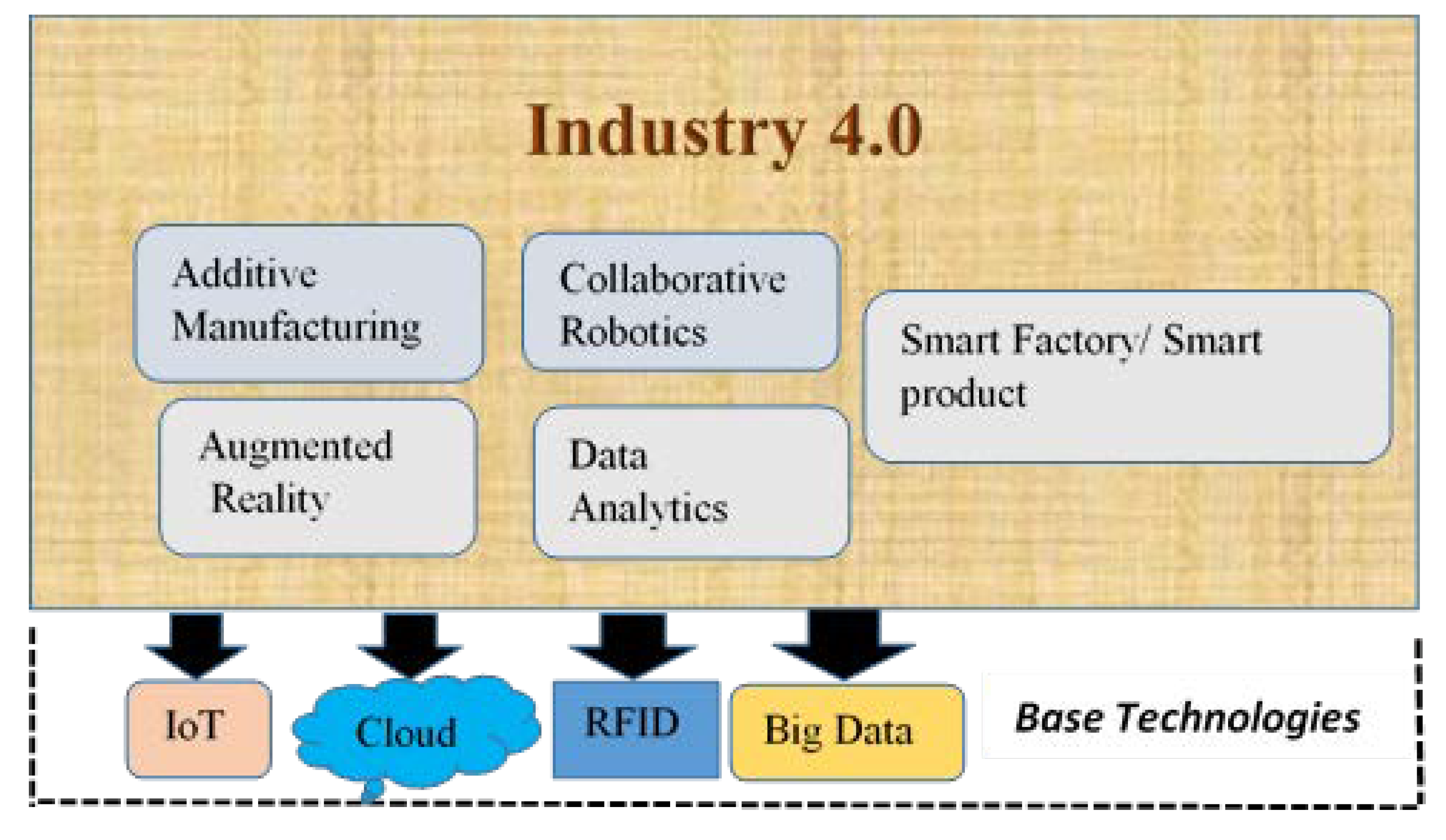
The modern industrial revolution lasted several hundred years, and now the era of Industry 4.0 has started. The idea of Industry 4.0 was originally proposed for the development of the German economy in 2011 [37]. The ongoing Industry 4.0, with production characteristics of cyber-physical systems (CPS), includes knowledge integrity with usage of heterogeneous data. The key roles of CPS are to meet the active and dynamic production challenges. The CPS of Industry 4.0 are based on key technologies (Figure 1) to enhance the efficiency and effectiveness of the entire industry. Industry 4.0 includes many technologies and associated systems, including enterprise resource planning (ERP), radio-frequency identification (RFID), Internet of Things (IoT), cloud computing, additive manufacturing, augmented reality, and collaborative robotics with machine learning and big data [38]. Posada et al. [39] revealed potential characteristics of Industry 4.0: automation, digitization, allocation, production, optimization, and human–machine interaction adaptation as well a corporate value-added processes and communication, which are based on automatic data exchange.
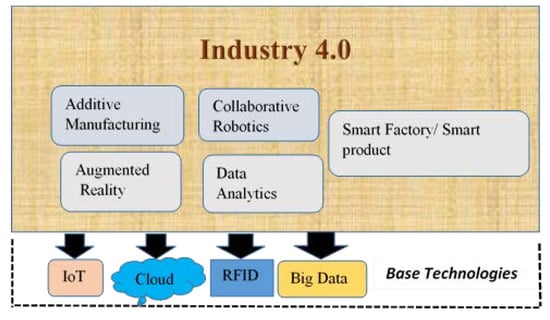
Figure 1.
Industry 4.0 framework with base technologies.
Enabling Role of Industry 4.0 Technologies for BIS adoption
The introduction of smart factories and smart clothing in Industry 4.0 is marked by extensive developed digitization and automation with the application of information technologies (IT) and electronic devices in services and manufacturing [26]. Big data, cloud computing, IoT, mobile computing, and RFID play a significant role in Industry 4.0 [28,29]; its characteristics with base technologies are shown in Table 1. The integration of BIS can optimize the performance of these technologies by analyzing massive malicious data that are generated on a daily basis by Industry 4.0 technologies and will achieve better performance in industry processes.

Table 1.
Industry 4.0 technologies’ characteristics.
2.3. Business Intelligence Systems
BIS is a combination of technical tools and techniques that provide historical information to its users for analysis, query, and reporting that support management and significant decision-making for enhancing the efficiency of business processes. BIS enable organizations not only to secure competitiveness, but also escalate revenue by improving decision-making [61]. Researchers and practitioners endorse that BI technologies have attained remarkable consideration from both organizations and industry [16,62]. Gartner Group surveys confirmed that almost 80% of USA companies and 50% of European companies have integrated BIS [63]. A broad array of benefits for an enterprise are visible with the adoption of BIS. BIS have some especially prominent characteristics that attract the attention of decision makers to adopt this innovation in contemporary businesses. BIS make analytical processes about market positions, capabilities, operations, and goals of the company easy by transforming the internal and external data into meaningful information that guides the company in order to stay sustainable and competitive. BIS are used in multiple departments of industry (manufacturing, production, supply chain management, inventory management sale, marketing, retailing, finance, etc.) to support effective marketing campaigns, monitor the behaviors of customers, and analyze profitability of different products. The most frequently utilized BI analysis reflects the value of BIS: (1) forecasting of strategic business processes development; (2) credit scoring; (3) web and text mining; (4) logistics optimizations; (5) analysis of customer loyalty; (6) upselling and cross selling analysis; (7) profiling and customer segmentation; (8) fraud detection; (9) survival time analysis and parameters importance analysis [64]. A survey of large industries by Hannula and Pirttimäki [65] and Olexov [63] confirmed the perceived benefits of BIS adoption. The most important advantages achieved by BIS adoption were the following:
- ○
- Obtained quality information for decision-making (95%)
- ○
- Enhanced ability to analyze the expected opportunities and threats (83%)
- ○
- Improved organizational knowledge (76%)
- ○
- Improved information sharing (73%)
- ○
- Better analysis and information retrieval (58%)
- ○
- Improved efficiency (65%)
- ○
- Faster decision-making (54%)
- ○
- More accurate and quick reporting (82%)
- ○
- Enhanced quality of decision-making (78%)
- ○
- Improved customer services (58%)
- ○
- Escalate revenues (49%)
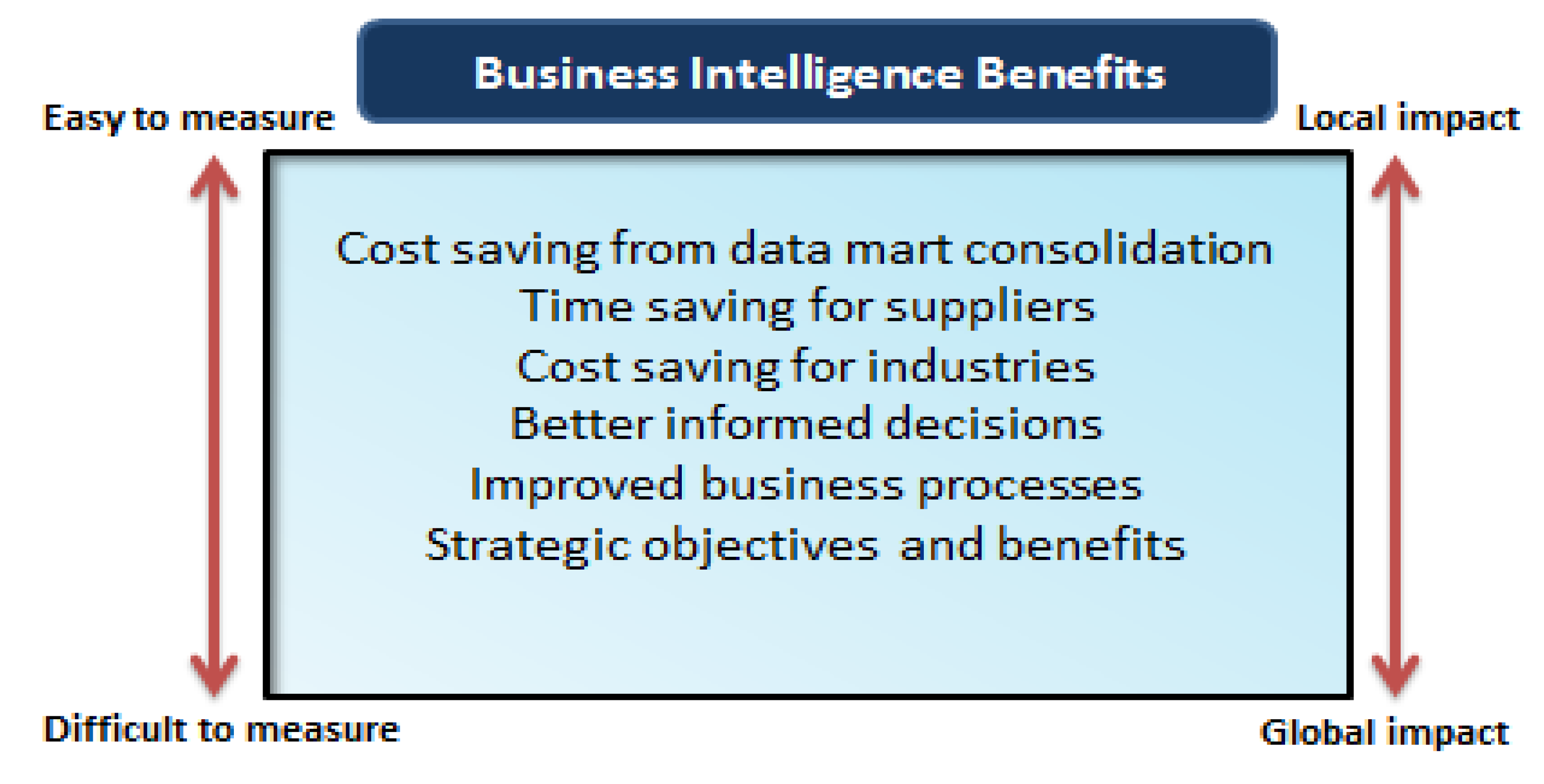
Wixom and Watson revealed [14] that most of the perceived benefits are intangible because they are difficult to measure. A broad array of possible benefits attained by the integration of BIS are shown in Figure 2.
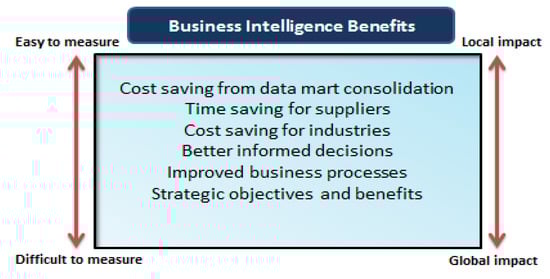
Figure 2.
Benefits of business intelligence [63].
BI Solutions for Textile and Apparel Industry
An empirical investigation about BI solutions showed that industry is overwhelmed by proprietary BI solutions [66]. According to the research by Dresner Advisory Services, Gartner and other studies endorsed, that appropriate vendor selection is very important in order to achieve the great success of BIS adoption. Some BI solutions with vendor details and functionalities are summarized in Table 2.
Table 2.
Business intelligence (BI) solutions for textile and apparel (T&A) companies.
3. Research Design
The T&A industry is the subject of current case study. Only those T&A companies that have already adopted the BIS under the Industry 4.0 concept or are ready to adopt them were selected. The case companies are high-end brands and top T&A companies with rich technology adoption.. The combination of a snowball sampling strategy and purposeful sampling strategy was adopted for this exploratory research because it was very difficult to find and approach the potential participants with information-rich cases for the most effective use of limited resources. Both these strategies are helpful in selecting, identifying, and approaching the experienced and knowledgeable participants with the phenomenon of interest [67]. A qualitative research approach was chosen for this paper because the interpretive nature of this approach has the potential to illustrate complex topics in a detailed way and enable informants to think about the topic and its core contents in an innovative way to map their experience and perception [68]. The selection of informants was based on following criteria: (1) occupy position/designation as chief executive officer, IT manager, or strategic managers/owner, etc.; (2) have proper awareness about BIS and advanced technologies. A total of 26 potential informants were identified by using three sources: (1) Internet searches; (2) researchers’ professional networks in industry; and (3) professional social networks, such as LinkedIn. All informants’ profiles were stored in a database. Only 17 informant’s profiles met the inclusion criteria after rigorous screening of the informant’s profiles. Thus, a formal request was sent to the target respondents by email to participate in this research along with a brief description of the research. Overall 13 responses were received. Two were unable to commit to the research due to time constraints and another two informants withdrew after reviewing the questions due to company policies. More requests were sent to the seven companies with revised interview questions. Five of them agreed to participate in this research. In total, 14 informants from 12 T&A companies participated in this research. The study consisted of heterogeneous cases, increasing reliability, robustness, accuracy, and generalizability of results [69,70]. Maintaining heterogeneity by multiple perspectives in the sample allowed us to better generalize the results and counteract potential negative effects of chain sampling biases [70]. Additionally, community biasness and non-random sample issues were addressed by selection of informants from entirely different regions of the world with different positions, different business structures, and scenarios whilst ensuring expertise in the field and assuring all interviewees of full anonymity. The number of participants was considered sufficient at the initial stage and saturation level was checked at a later stage, as case studies are considered the most difficult kinds of qualitative research to accomplish. Creswell [71] prescribed not more than four or five cases and Yin [70] suggested at least six sources of evidence. The informants’ data are shown in Table 3. The current case study is based on interviews that considered the most popular way to explore the desired facts in the field of Information Systems (IS) [72]. Open-ended questions were used in the interviews because the open nature of the questions makes it possible to elaborate the objective of the study in an appropriate way [72]. A total of 14 semi-structured interviews were conducted from twelve T&A companies to understand the adoption of BIS with Industry 4.0 technologies for sustainability in T&A industry. The detail of each company’s profile is presented in Table 4. The interviews’ structure was comprised of the following main objectives: the T&A company’s sustainability issues that led them to adopt BIS; how BIS integration improved the value creation processes under the Industry 4.0 concept with best-adopted BI solutions including vendor details and informants’ opinions about perceived difficulties for the BIS adoption. The main points were discussed in detail as much as possible. The questions and answers were asked in an open-ended manner. The duration of the interviews lasted approximately forty minutes to one hour on average. The same interview guide was used for all informants in order to facilitate comparative analysis [73].
Table 3.
Informants’ data
Table 4.
Companies’ profiles.
However, two informants did not allow recording of their interviews because of their company’s policies. Therefore, interview data were complemented with immediate detailed notes. To ensure the appropriateness of our interpretations, the interview notes were confirmed by the informants at the end of the interview and a few minor suggested corrections were implemented. The data of the case study were analyzed and systemized carefully. The sample and key informant biases were handled by using secondary data, such as company websites and annual reports. A complete systematic analysis was taken into account for each interview. Further, secondary data were used to increase the reliability of results for triangulation purposes [69,70]. The analysis of interviews was done by utilizing a content analysis approach. Special attention was given to determine a comprehensive set of questions that could be potentially linked to BIS adoption in T&A companies with the Industry 4.0 concept. All perspectives of interview data were analyzed rigorously by each author independently. A detailed case study was written by mutual consent of all the authors.
4. Discussion and Results
The main themes were designed from the interpretation of the interviews. Each research question addressed why T&A companies need to integrate BIS to cope with sustainability issues in global markets; and how T&A companies have enhanced their sustainability with value creation processes with the adoption of BIS under the Industry 4.0 concept and perceived difficulties for the adoption of BIS.
4.1. How do Companies Reach Their Decisions to Adopt BIS? What are the Sustainability Issues in T&A Industry that Lead to the Adoption of BIS in the Era of Industry 4.0?
Prior researchers have just discussed the sustainability issues in T&A industry [4] without explaining how companies reached their decision to adopt technology solutions to resolve these issues. Prior studies have not proposed BIS for decision-making processes to overcome these challenges in T&A industry. Major sustainability challenges emerged as a theme from the qualitative analysis of interview data.
- Major sustainability challenges in T&A case companies
Generally, the major problems faced by T&A companies were long product lead time for fashion items, short product cycle, and forecasting issues for fashion articles. Another issue was the elimination of a quota to international markets in 2005, which created a critical challenge for effective sustainability in T&A companies [74]. For example, it was pointed out by the IT executive of Company A: “my company has approved the BIS project to integrate with existing systems, as company exports the apparels to European countries and USA and this international trade demands short supply lead time and efficient supply chain”. The IT executive of the Company A also stated: “The company has already adopted Enterprise Resource Planning (ERP), Supply Chain Management (SCM), Customer Relationship Management (CRM), and Human Resource Management (HRM) systems to strengthen the supply chain, marketing and international customer’s satisfaction. However, these systems do not meet the company’s analytical and decision-making requirements. Now, the company is ready to adopt BIS to aggregate and analyze data from internal systems such as ERP, CRM, HRM and SCM as well as external sources from market and web, etc.”.
Whereas the informant of Company B was retail manager who revealed that: “dynamic business of apparels created lot of challenges relating to the ambivalent production yield rate of T&A products for the company in terms of inventory management that headed to the unpredictable production ratio and also facing the demand for shorter lead time by company franchisers. Highly volatile requirements caused many operational and delivery problems”.
To deal with these issues, Company B integrated SAP-based versatile business objects (BOBJ) for retail processes. The BOBJ is provided by one of the leading software vendors. On the other hand, to deal with dynamic market challenges, companies need to stay in step with evolving business trends [8].
The interviewee of Company C stated: “my company adopted the Oracle solutions to meet the challenges of ever-changing market by shortening delivery lead time, raw material price fluctuation, quality of product inconsistency, inventory management and supply chain management”.
In order to meet the continuously fluctuating customer demands, it is very important for companies to equip with faster customer insight strategies, with increasing uncertainties and issues [22]. This is revealed by a statement from the manager of Company D: “we adopted BIS for fast customer insights because my company wanted to improve supplier and customer relationships and ultimate objective was to gain great customer experience. Whether online or in-store shopping experience, customers always demand the seamless experience and same products to be available in short time”.
Centralized customers data enable retail companies to build a smooth and seamless information system. Advanced marketing techniques create challenges for businesses to involve with their customers across the distributed channels [22]. This is shown by a statement from the CEO of Company E: “my company needs financial analyses and integration of internal as well as external data for supplying and retailing operations. As my company business and manufacturing units are in multiple countries”.
The managers of Company F and G stated: “we were facing the challenges of inventory management, supply chain management, size/colour management, distribution management, replenishment control, and designing replenishment plans according to the requirement of individual stores or online shelves. It is important to cope with the merchandising challenges and improving the company revenues”. Company F and G integrated the BIS to overcome the above-mentioned challenges.
In response to questions regarding Company H’s issues and challenges, the CEO stated: “my company had issues with inventory management, demand forecasts with retailers having limited visibility over inventory. It resulted in stock losses, excess inventory and costly supply chain. For multi-channels brand, the problem becomes more complicated, because company always needs coordination with fragmented vendors and suppliers”.
Company J was facing limited functionality with legacy solutions for disparate data sources. The area manager of Company J added: “It was difficult to use a cumbersome process that slowed down decision-making and decreased the employees’ productivity. As a result, company decided to deploy self-service BI solution”.
Head of business information and customer insight at Company I, Company K, and Company L stated: “we required scalable data-driven decisions across the business for better customer insights, loyalty and engagement that can be helpful in evaluating robust strategic potential business partners”.
4.2. How can T&A Companies Improve the Value Creation Processes for their Sustainability through the Integration of BIS under the Industry 4.0 Concept?
How can BIS overcome sustainability issues in T&A industry? In response the following theme emerged:
- The improved value creation processes with the adoption of BIS under the Industry 4.0
The era of Industry 4.0 directed the industries to adopt and integrate digital technologies such as IoT, RFID, robots, BIS, augmented reality, additive manufacturing, big data, and cloud technology to maintain its sustainability [12]. The ultimate objective is to improve the supply chain, inventory warehouses, production and manufacturing processes with useful information [13,75]. The major operation of a global business network is international export trade while marketing and distribution are the regional business operations. It is very important to manage the T&A industry processes efficiently and establish a strong relationship with supply chain partners, retailers, and customers for value creation [76].
Significant value creation processes are short lead time, efficient supply chain, fast delivery of products, fast merchandising, fast customer insights, quick order fulfilment, customer loyalty, and inventory management. This is shown in a statement from the retail manager of Company B: “The adoption of BOBJ solution not only improved the company’s production forecasting, retailing, and financial processes but also enhanced the company relationships with suppliers and customers. As a result, company is expanding and growing across the world at great pace”.
The lead time reduction can be possible through fast product delivery and product inventory with the help of RFID [77]. Company C adopted the RFID for employee attendance and Oracle BI solutions to overcome challenges such as delays in production and delivery orders. The Oracle BI solutions also improved the company’s synchronization with its clients. Company C is already using cloud-based retail solutions to better facilitate in simplifying retail operations and customer demands. The manager of Company C stated: “we integrated Oracle BI solutions with RFID, cloud-based retail solutions and other value-based software to optimize the production output, inventory operation and supply chain processes”. As a result, Company C dealt successfully with the problems of delay in delivery orders, production output, inventory, price, and retails across the entire industry.
On the other hand, Company D made the production process digitized with robotics and 3D printing technology. The company is capable of producing high-quality virtual samples at a remarkable speed. It also integrated touch screen virtual walls at their retail stores. Many advantages can be achieved by 3D printing, for example, material waste reduction at a significant level [78]. The IT executive of Company D described in this way: “my company has reduced the production cost and material wastage by implementing 3D virtualization technology”. Company D also uses RFID technology for tracking its products from manufacturing processes to store racks, since RFID technology can resolve issues of tracking and sorting items at a high speed while decreasing the lead time during distribution [48].
An informant from Company D revealed: “we are using MicroStrategy analytics as the front end of BIS to extract a huge amount of data”. The informant of Company D also added: “we implemented the MicroStrategy tools with the SAP HANA based BIS to support the staff. It provides quick customer insights with customer and industrial data. It enabled the company to consolidate four independent data warehouses into single platform running on the HANA in-memory database. It empowers the company to analyse the financial reports for accurate prediction of market situation and observes the customers’ experience about their likings and dislikings that affect their buying decisions”.
Conventional databases and systems are also interlinked with new platforms to access consumer- and client-related data from CRM and information from its Hadoop systems. A manager also described a scenario in this way: “As a part of big data analytics strategy, it introduced advanced techniques to optimize the customer engagement, experience, acquisition and loyalty. This data is utilized to enhance the understanding of the customer behaviour within company. Company staff is granted the access to valuable data on personal gadgets through self-service. As a result, dashboards can be created by staff members to respond quickly against the dynamic markets”. The ultimate objective is to deliver a great brand experience.
Company E is expanding its business across the world and extending its production base to other countries. Company E integrated BIS with various legacy systems for analyzing large data sets to get access to its target markets. The informant said: “The BIS improved company’s partnership with suppliers, retailers and customers. As a result, company attained better control on global business by reducing overhead costs. BIS enabled the company to make good decisions with vertical and horizontal analysis, financial analysis, market analysis, profit and loss ratio analysis, environmental analysis and competitor analysis. These BIS techniques empower the firm to improve its strategical policies”.
The manager of Company E also admired the benefits of BIS in the following statement: “Our company has approached and established its manufacturing units in many countries such as United Kingdom, United States of America, China and the Middle East due to good decision making”.
The informants of Company F and Company K claimed: “Company always led the market with advanced technologies such as robotics in inventory stock, Intel chips to gauge the volume of apparels in boxes quickly and also integrate mini chips in security tags loaded with garment information that can locate supply chain. Company F is also using click and collect, and augmented reality apps. The fitting rooms are equipped with RFID technology for tracking the items”. As previous studies have claimed, products can be suggested to consumers or customers according to their choices and help them make the best purchasing decisions by providing details using a real-time responsive system with the installation of RFID tags [79,80].
The regional manager of Company F also stated: “The company integrated the BIS for aggregating, analysing and converting the data into meaningful information for business decisions to improve various business areas of the company such as replenishment control, distribution management, inventory management and supply chain management. The company has reduced the delivery lead time successfully with the help of BI solutions in inventory management, across its international stores that helped to reduce the logistics cost of supply chain”. Company F also deployed some other cloud solutions with BIS that brought a great shift in speed and quality of the processes.
The senior manager of Company G explained that: “our company has adopted Tableau BI solutions to cope with fast merchandising and customer insights challenges. The company replaced its spreadsheet analysis with BIS analysis for quick products and customers insights. As a result, we identified the customers’ buying decisions very quickly at multiple locations with better clarity and visibility”. BIS enabled the merchandise teams to analyze the demand and sale with historical data that was previously almost impossible to visualize properly [22]. The informant also described: “Tableau BI solutions provide the true picture of customers’ demands and shipments. Now company is able to make sure the products availability before its order and ship by identifying key matrices”. In summary, the company is able to achieve quick products and customer insights for instant response by providing a seamless experience with the best customer service to customers during their in-store or online shopping. In addition, the company is planning to implement 3D technology to overcome the material wastage issue.
The senior manager of product facing solutions at Company G and CEO of Company H also explained: “we integrated RFID tags in clothing for solving the tracking and display issues in warehouse and in stores”. The informant of Company H explained: “my company executed artificial intelligence (AI)-powered sales-tech platform successfully for marketing channel, supplier partners, dealers and sales teams. The platform integrated DMS/ERP seamlessly and incorporated as a part of the Hybrid SaaS model. It enabled the company to automate order taking and enhanced the focus on merchandising, collection and business development. It empowers the retailers to offer best choices to customers with best services and with minimum inventory”.
On the other hand, Company I implemented Hadoop-based data analytics to analyze data from various sources for customer insights into a multichannel environment. The manager stated, “my company improved e-commerce, finance and marketing processes by leveraging analytics with Cloudera and Qlik view”.
Company J selected Birst’s network BI solutions after evaluating various solutions. Birst is cloud-based BI built with machine learning and patented automation technologies. The area manager of Company J revealed: “Birst BI solutions enabled the company to optimize and understand complicated procedures in less time. Birst BI solutions empowered the company to improve customer service and satisfaction, production quality, reduction in lead time and also enabled the company to make better informed and fast decisions by real-time access to information with self-service analytics and pixel-perfect reporting”.
It is clarified by previous studies that the adoption of BIS is important to compliment the big data by decision-making approaches that can guide the companies to accomplishing their sustainable business goals [23]. The informant of Company K claimed: “our company is using big data and AI to customize the merchandising mix of individual stores to gain competitive edge in the complex retail business by analysing the receipt, and loyalty-card data. The AI algorithms are used to reduce the products markdowns and make sure the things are designed as shoppers want”. In addition, informants of Company K and Company L stated: “we have invested a lot in emerging technologies to cope with business challenges in complicated marketplace. We have equipped our staff with multiple BI tools, such as analytics and reporting and enable them to take the right operational and strategic decisions. As a result, company is doing better than it has ever done before”. Company K uses Informatica PowerCenter to extract and process the data from multiple data warehouses that are built on a Netezza database from International Business Machines (IBM). Whereas, Company L analyzes and develops reports in Cognos, SAS Tableau, Power BI, and Qlik view for fashion-trend forecasters.
An overview of all scenarios is depicted in Table 5. The results of the current study are consistent with Bordeleau and colleagues [15] in that decision-making by structured data with the adoption of BIS has a positive effect on industry processes. Therefore, the adoption of BIS can overcome many sustainability issues in the era of Industry 4.0. In short, decision-making with analytical techniques improved the resource utilization in terms of business processes, energy consumption, and material usage with better alignment of processes across the T&A industry that lead to improved financial, social, and environmental sustainability in the era of Industry 4.0.
Table 5.
Overview of business intelligence systems (BIS) adoption with the Industry 4.0 technologies in T&A companies.
4.3. What are the barriers in the adoption of BIS under the Industry 4.0 concept in T&A industry?
It is a fact that T&A companies are enjoying the benefits of BIS and Industry 4.0, but the informants also observed some barriers that might affect their adoption decisions. The main barriers are:
- Cost and complexity
The five informants confirmed: “The BIS and the Industry 4.0 technologies are complex and costly in terms of implementation, maintenance and updating. They would directly affect the merchandising cost at article level”.
- Vendor support
Another concern is the vendors’ support. All interviewees confirmed: “Most of the vendors are not supportive and are unable to demonstrate the exact time and budget for costly project of modern technologies. Consequently, technologies take unexpected duration of implementation and directly increase the cost and chances of technology failure”. The informants of Company A and Company B stated in this way: “our companies have all resources to adopt modern technologies in perspective of Industry 4.0 but the unavailability of software vendors in our country is major barrier, because continues vendor support is essential for proper implementation of any innovation”.
- Top management support
Six interviewees stated: “Top management support is very necessary for innovation adoption such as expensive BI solutions and Industry 4.0 technologies in terms of funding, rewards and trainings, etc. The attitude of the top management was a challenge for them to convince top management for modern technologies integration. Therefore, it is imperative to get support from top management for project investment and encouraging the staff to use newly implemented systems”.
Four informants revealed: “The top management is generally not aware that how critical it is to modernize the businesses to compete the global markets”.
- Technical skills and expertise
Another important concern of all the informants was technical skills and expertise. Technology implementation always needs well-skilled experts for proper adoption. Good human capital is very important for adoption of the latest technologies in companies [36]. This is also evident from this statement from eight informants: “our companies integrated appropriate technologies with sound strategy and business requirements but lagged in harnessing the true benefits from the technologies in 1st year because of non-technical staff and expertise”.
- Integration with existing systems
The most important concern of the seven informants was about the integration of BIS and Industry 4.0 technologies with other corporate systems and technologies as it is very important for companies to operate in multiple locations. Three informants stated in this way: “The BIS and emerging technologies’ integration with existing systems and technologies is another significant obstacle because the BIS with single database provides only restricted advantages to the companies”. Four informants stated: “the integration of gadgets from various hardware suppliers, diversity in components‘ openness, multiple communication protocols and distinctive intelligent standards are major barriers for the implementation of Industry 4.0 concepts in companies”.
- Change management
The last concern raised by the informant of Company D, H, and K stated: “the change management is very important factor for the adoption of new complicated system. When we integrated the BI solutions and 3D technology in our company, the employees showed hesitation to use the systems, they might be rigid in their manual practices or comfortable with old systems. It was a great challenge for the company to compel them to use new systems. The company had overcome this issue with change management strategies in terms of trainings and rewards”. Another three informants stated: “the employees are rather reluctant to use new innovation or new techniques. So, they would expect the proper training and support by company, and continue support from vendors companies as well”.
In summary, it was identified after deep analysis of the interviews that there are several barriers linked with the adoption of BIS under the Industry 4.0 which must be considered before adoption decisions.
5. Conclusion
The current exploratory study is one of the first studies conducted to explore the sustainability issues of T&A in the era of Industry 4.0, companies’ integration of BIS with emerging technologies such as RFID, big data, robotics, cloud technology, augmented reality, virtual mirrors, artificial intelligence, machine learning, and 3D printing technology, and how BIS resolve the sustainability issues with Industry 4.0 technologies. All technologies make significant contributions to enhancing the sustainability in T&A by improving supply chain management, inventory management, marketing, fast merchandising, quick shipments, retailing, and distribution processes which result in optimization of a company’s business, customer satisfaction, cost saving, and generating high revenues. A major improvement was observed in retail business with fast insights and well-informed decision-making. The main objective of all case companies was customer satisfaction. Another important finding was that high-end apparel companies from advanced countries are more prone to adopt the Industry 4.0 technologies. As a result, they are enjoying market leadership with less employees and investments, rather than those companies that belong to developing countries, despite having a complete value chain of textiles and apparels with huge investments and a large number of employees. All companies integrated advanced proprietary BI solutions such as BOBJ on SAP, Oracle BI solutions, MicroStrategy BI solutions based on SAP HANNA, Birst BI solutions, Informatica Powerceter, Cognos, SAS, Oracle, SAP BI solutions, TradeGecko BI solutions, AI powered sales-tech platform, and Tableau BI solutions. No case company adopted any non-proprietary or open source software/technology. Eight case companies are using BIS with big data techniques for decision-making and they are benefiting more compared to the other four companies that are just using a single analytical system. Company C, Company D, Company F, Company G, and Company H are equipped with RFID technology for manufacturing, production, and tracking items in inventory management across international stores which has resulted in a reduction of energy material waste logistics and cost of supply chain. Company D and Company F integrated robotics and augmented reality only. Company F also uses click and collect, and augmented reality apps. Only Company H is using BIS with artificial intelligence techniques and company J built BIS on machine learning. Results of this study show that retail companies are more ready to enter the fourth industrial revolution rather than only textile companies. Furthermore, major barriers such as cost and complexity, vendor support, top management support, technical skills and expertise, integration with existing systems, and change management also emerged. All perspectives of the current study should be considered seriously by policymakers and strategic managers of manufacturing companies before entering in the fourth industrial revolution.
5.1. Managerial and Theoretical Implications
The current study can be helpful not only for decision makers of T&A companies but also for vendors to improve adoption processes and technologies in terms of budget, time, and business requirements. In a contemporary competitive business scenario, it is very important to understand the relationship between the industry and business conditions with technological solutions in companies that will enhance their sustainability by converting data into actionable intelligence [81]. It urges the industry to examine all possible ways before implementation of any innovation. If organizations integrate technology solutions according to their requirements, then they can harness great benefits from technology and maintain their sustainability in competitive markets. In this way, this study has great importance to guide policymakers and decision makers to overcome the return on investment (ROI) and sustainability-related issues with the help of current case companies. This study is also beneficial for industry experts to use structured data for decision-making that is generated everyday by the implementation of Industry 4.0 technologies. As a result, they can not only plan a better way for manufacturing, production, retailing, marketing, and selling strategies to sustain in the fourth industrial revolution, but also can handle different financial, social, and environmental sustainability issues in terms of saving time, money, energy consumption, and material waste with the best BI solutions. Additionally, results are also helpful to guide the software vendors to identify their target markets and customers and make technology solutions with attractive offerings available, especially in developing countries which are facing more sustainability challenges because of mass shifting of manufacturing units from developed countries to less developed countries due to easy availability of labor and material at low costs. Notably, this study is beneficial for T&A industry. Theoretically, this study is one of the first studies to examine the role of BIS under the Industry 4.0 concept in T&A industry and has contributed in the current body of knowledge. It is believed that these cases will attract other T&A companies to apply modern technologies in the era of Industry 4.0. The industry experts can gain desired results without trial and error by mapping this study’s results with the adoption of big data and BIS techniques together in order to maintain the industry’s sustainability in international markets. Other companies with same domain and businesses can also be directed to the successful integration of Industry 4.0 concepts with BIS. In short, the present study adds to the empirical literature by utilizing the BIS and big data techniques together for resolving sustainability issues in T&A industry under the Industry 4.0 concept which is more effective to lead future research in the field of the fourth industrial revolution by using the triple bottom line approach.
5.2. Study Limitation and Future Research Directions
This study provides valuable guidelines for researchers and industry practitioners with some limitations. Firstly, this study is limited to T&A industry; therefore, the findings cannot be generalized. Although this study provides deep insights into 14 face-to-face interviews with 12 companies from all over the world, it is also a significant limitation of this study, because the current cases only covered a small portion of T&A industry. A survey with questionnaires may help to attain better insights with data that will cover a larger number of T&A companies. Secondly, every case company is different in terms of infrastructure and business situation. Thirdly, T&A industry of developing countries are unable to integrate the advanced BI solutions and Industry 4.0 technologies despite having all the resources; therefore, further studies are required to explore the reasons by using more qualitative and mixed method research approaches. Fourthly, all case companies are from the world’s top high-end T&A companies with rich resources; meanwhile, a significant portion of T&A industry is comprised of small and medium-sized companies with limited resources. Thus, researchers should investigate small and medium-sized T&A companies in the perspective of BIS adoption under the Industry 4.0 concept. Researchers are also guided with the help of the current study’s results in order to map their current research directions and should pay particular attention to the related research areas especially from the perspective of BIS adoption with Industry 4.0 technologies for resolving sustainability challenges. The application of robotics, 3D technology, artificial intelligence, machine learning, and augmented reality in T&A industry is still in its infancy, as depicted by the results of this study. More research is required to investigate how advanced technologies perform in processes with 3D technology and augmented reality and contribute to the triple bottom line framework for sustainability in T&A industry in the era of Industry 4.0. Furthermore, the results of this research revealed that T&A industry of developing countries is lagging towards the Industry 4.0 concept because of barriers such as unavailability of vendor support and integration with existing systems. Therefore, the researchers and vendor companies should focus on virtual technology solutions by using cloud technology and IoT. Additionally, future research should consider other elements of Industry 4.0 such as interoperability, sustainability, and cyber-physical systems. The current study also emphasizes that more investigation has to be done in the application of Industry 4.0 in T&A industry, the feasibility of implementing smart factories, and how developed countries can play a key role in this context by supporting the T&A industry of less-developed countries. Researchers should propose a collective mechanism among the developed countries and the developing countries for resolving triple bottom line sustainability issues before entering the fourth industrial revolution.
Author Contributions
S.A. and S.M. developed the design strategy and design the interview questions. S.A. collected the data and S.A., and S.M. analyzed the data. The results were finalized by S.A., S.M., and S.T. S.A. formulated the paper draft and wrote the manuscript with the help of S.M. I.T. and R.A. helped to review and finalize the manuscript. All authors have read and agreed to the published version of the manuscript.
Funding
This research received no external funding.
Conflicts of Interest
The authors declare no conflicts of interest.
References
- Balogun, A.-L.; Tyler, D.; Han, S.; Moora, H.; Paco, A.; Boiten, V.J.; Ellams, D.; Leal Filho, W. A review of the socio-economic advantages of textile recycling. J. Clean. Prod. 2019, 218, 10–20. [Google Scholar]
- Fatorachian, H.; Kazemi, H. The management of operations a critical investigation of Industry 4.0 in manufacturing: Theoretical operationalisation framework. Prod. Plan. Control 2018, 29, 633–644. [Google Scholar] [CrossRef]
- Denuwara, N.; Maijala, J.; Hakovirta, M. Sustainability benefits of RFID technology in the apparel industry. Sustainability 2019, 11, 6477. [Google Scholar] [CrossRef]
- Shen, B.; Li, Q.; Dong, C.; Perry, P. Sustainability issues in textile and apparel supply chains. Sustainability 2017, 9, 1592. [Google Scholar] [CrossRef]
- LoMonaco-Benzing, R.; Ha-Brookshire, J. Sustainability as social contract: Textile and apparel professionals’ value conflicts within the corporate moral responsibility spectrum. Sustainability 2016, 8, 1278. [Google Scholar] [CrossRef]
- Shen, B. Sustainable fashion supply chain: Lessons from H&M. Sustainability 2014, 6, 6236–6249. [Google Scholar]
- Wang, L.; Shen, B. A product line analysis for eco-designed fashion products: Evidence from an outdoor sportswear brand. Sustainability 2017, 9, 1136. [Google Scholar] [CrossRef]
- Arrigo, E. Global sourcing in fast fashion retailers: Sourcing locations and sustainability considerations. Sustainability 2020, 12, 508. [Google Scholar] [CrossRef]
- Ceptureanu, S.I.; Ceptureanu, E.G.; Luchian, C.E.; Luchian, I. Community based programs sustainability. A multidimensional analysis of sustainability factors. Sustainability 2018, 10, 870. [Google Scholar] [CrossRef]
- Köksal, D.; Strähle, J.; Müller, M.; Freise, M. Social sustainable supply chain management in the textile and apparel industry-a literature review. Sustainability 2017, 9, 100. [Google Scholar] [CrossRef]
- Andersen, T.J.; Segars, A.H. The impact of IT on decision structure and firm performance: Evidence from the textile and apparel industry. Inf. Manag. 2001, 39, 85–100. [Google Scholar] [CrossRef]
- Trieu, V. Getting value from business intelligence systems: A review and research agenda. Decis. Support Syst. 2017, 93, 111–124. [Google Scholar] [CrossRef]
- Lu, H.P.; Weng, C.I. Smart manufacturing technology, market maturity analysis and technology roadmap in the computer and electronic product manufacturing industry. Technol. Forecast. Soc. Chang. 2018, 133, 85–94. [Google Scholar] [CrossRef]
- Xu, L. Da Enterprise systems: State-of-the-art and future trends. IEEE Trans. Ind. Inform. 2011, 7, 630–640. [Google Scholar] [CrossRef]
- Bordeleau, F.-È.; Mosconi, E.; Santa-Eulalia, L.A. Business intelligence in industry 40: State of the art and research opportunities. In Proceedings of the 51st Hawaii International Conference on System Sciences, Waikoloa Village, HI, USA, 2–6 January 2018. [Google Scholar]
- Yeoh, W.; Popovič, A. Extending the understanding of critical success factors for implementing business intelligence systems. J. Assoc. Inf. Sci. Technol. 2016, 67, 134–147. [Google Scholar] [CrossRef]
- Muntean, M. Business intelligence issues for sustainability projects. Sustainability 2018, 10, 335. [Google Scholar] [CrossRef]
- Richards, G.; Yeoh, W.; Chong, A.Y.L.; Popovič, A. Business intelligence effectiveness and corporate performance management: An empirical analysis. J. Comput. Inf. Syst. 2017, 59, 188–196. [Google Scholar] [CrossRef]
- Aydiner, A.S.; Tatoglu, E.; Bayraktar, E.; Zaim, S.; Delen, D. Business analytics and firm performance: The mediating role of business process performance. J. Bus. Res. 2019, 96, 228–237. [Google Scholar] [CrossRef]
- Ceptureanu, S.I.; Ceptureanu, E.G.; Visileanu, E. Comparative analysis of small and medium enterprises organizational performance in clothing industry. Ind. Textila 2017, 68, 156–162. [Google Scholar]
- Grublješič, T.; Jaklič, J. Conceptualization of the business intelligence extended use model. J. Comput. Inf. Syst. 2015, 55, 72–82. [Google Scholar] [CrossRef]
- Jin, D.H.; Kim, H.J. Integrated understanding of big data, big data analysis, and business intelligence: A case study of logistics. Sustainability 2018, 10, 3778. [Google Scholar] [CrossRef]
- Jayakrishnan, M.A.L.; Bin Mohamad, A.K.; Yusof, M.B.M. The holistic view of business intelligence (BI) and big data analytics (BDA) towards designing strategic performance management framework: A case study. J. Theor. Appl. Inf. Technol. 2018, 96, 2025–2045. [Google Scholar]
- Amankwah-Amoah, J.; Adomako, S. Big data analytics and business failures in data-Rich environments: An organizing framework. Comput. Ind. 2019, 105, 204–212. [Google Scholar] [CrossRef]
- Ngai, E.W.T.; Peng, S.; Alexander, P.; Moon, K.K.L. Decision support and intelligent systems in the textile and apparel supply chain: An academic review of research articles. Expert Syst. Appl. 2014, 41, 81–91. [Google Scholar] [CrossRef]
- Popovič, A.; Puklavec, B.; Oliveira, T. Justifying business intelligence systems adoption in SMEs. Ind. Manag. Data Syst. 2018, 119, 210–228. [Google Scholar] [CrossRef]
- Puklavec, B.; Oliveira, T.; Popovič, A. Understanding the determinants of business intelligence system adoption stages an empirical study of SMEs. Ind. Manag. Data Syst. 2018, 118, 236–261. [Google Scholar] [CrossRef]
- Carvalho, S.; Portela, F.; Santos, M.F.; Abelha, A.; Machado, J. Step towards of a homemade business intelligence solution—A case study in textile industry. In New Contributions in Information Systems and Technologies; Springer: Berlin/Heidelberg, Germany, 2015. [Google Scholar]
- Istrat, V.; Lalić, N. Association rules as a decision making model in the textile industry. Fibres Text. East. Eur. 2017, 25, 8–14. [Google Scholar] [CrossRef]
- Lee, J.; Bagheri, B.; Kao, H.A. A cyber-physical systems architecture for industry 4.0-based manufacturing systems. Manuf. Lett. 2015, 3, 18–23. [Google Scholar] [CrossRef]
- Choi, T.M. Launching the right new product among multiple product candidates in fashion: Optimal choice and coordination with risk consideration. Int. J. Prod. Econ. 2018, 202, 162–171. [Google Scholar] [CrossRef]
- Safra, I.; Jebali, A.; Jemai, Z.; Bouchriha, H.; Ghaffari, A. Capacity planning in textile and apparel supply chains. IMA J. Manag. Math. 2018, 30, 209–233. [Google Scholar] [CrossRef]
- Jain, S.; Bruniaux, J.; Zeng, X.; Bruniaux, P. Big data in fashion industry. In Proceedings of the IOP Conference Series: Materials Science and Engineering, Melaka, Malaysia, 6–7 May 2017; Volume 254. [Google Scholar]
- Longo, F.; Nicoletti, L.; Padovano, A. Smart operators in industry 4.0: A human-centered approach to enhance operators’ capabilities and competencies within the new smart factory context. Comput. Ind. Eng. 2017, 113, 144–159. [Google Scholar] [CrossRef]
- Iqbal, M.; Soomrani, A.R.; Butt, S.H. A study of big data for business growth in SMEs: Opportunities & challenges. In Proceedings of the International Conference on Computing, Mathematics and Engineering Technologies (iCoMET), Sukkur, Pakistan, 3–4 May 2018. [Google Scholar]
- Haseeb, M.; Hussain, H.I.; Ślusarczyk, B.; Jermsittiparsert, K. Industry 4.0: A solution towards technology challenges of sustainable business performance. Soc. Sci. 2019, 8, 154. [Google Scholar] [CrossRef]
- Roblek, V.; Meško, M.; Krapež, A. A complex view of industry 4.0. Sage Open 2016, 6, 2158244016653987. [Google Scholar] [CrossRef]
- Lu, Y. Industry 4.0: A survey on technologies, applications and open research issues. J. Ind. Inf. Integr. 2017, 6, 1–10. [Google Scholar] [CrossRef]
- Posada, J.; Toro, C.; Barandiaran, I.; Oyarzun, D.; Stricker, D.; De Amicis, R.; Pinto, E.B.; Eisert, P.; Döllner, J.; Vallarino, I. Visual computing as a key enabling technology for industrie 4.0 and industrial internet. IEEE Comput. Graph. Appl. 2015, 35, 26–40. [Google Scholar] [CrossRef] [PubMed]
- Oztemel, E.; Gursev, S.; Oztemel, E.; Gursev, S. Literature review of industry 4.0 and related technologies. J. Intell. Manuf. 2018, 31, 127–182. [Google Scholar] [CrossRef]
- Zhong, R.Y.; Xu, C.; Chen, C.; Huang, G.Q. Big data analytics for physical internet-based intelligent manufacturing shop floors. Int. J. Prod. Res. 2017, 55, 2610–2621. [Google Scholar] [CrossRef]
- Zare Mehrjerdi, Y. RFID-enabled systems: A brief review. Assem. Autom. 2008, 28, 235–245. [Google Scholar] [CrossRef]
- Saygin, C.; Tamma, S. RFID-enabled shared resource management for aerospace maintenance operations: A dynamic resource allocation model. Int. J. Comput. Integr. Manuf. 2012, 25, 100–111. [Google Scholar] [CrossRef]
- Trappey, A.J.C.; Lu, T.H.; Fu, L.D. Development of an intelligent agent system for collaborative mold production with RFID technology. Robot. Comput. Integr. Manuf. 2009, 25, 42–56. [Google Scholar] [CrossRef]
- Guo, Z.X.; Ngai, E.W.T.; Yang, C.; Liang, X. An RFID-based intelligent decision support system architecture for production monitoring and scheduling in a distributed manufacturing environment. Int. J. Prod. Econ. 2015, 159, 16–28. [Google Scholar] [CrossRef]
- Legnani, E.; Cavalieri, S.; Pinto, R.; Dotti, S. The potential of RFID technology in the textile and clothing industry: Opportunities, requirements and challenges. In Unique Radio Innovation for the 21st Century: Building Scalable and Global RFID Networks; Springer: Berlin/Heidelberg, Germany, 2011; pp. 309–329. ISBN 9783642034619. [Google Scholar]
- Liu, J.H.; Gao, W.D.; Wang, H.B.; Jiang, H.X.; Li, Z.X. Development of bobbin tracing system based on RFID technology. J. Text. Inst. 2010, 101, 925–930. [Google Scholar] [CrossRef]
- Moon, K.L.; Ngai, E.W.T. The adoption of RFID in fashion retailing: A business value-added framework. Ind. Manag. Data Syst. 2008, 108, 596–612. [Google Scholar] [CrossRef]
- Veeramani, D.; Tang, J.; Gutierrez, A. A framework for assessing the value of RFID implementation by tier-one suppliers to major retailers. J. Theor. Appl. Electron. Commer. Res. 2008, 3, 55–70. [Google Scholar]
- Chen, Y. Integrated and intelligent manufacturing: Perspectives and enablers. Engineering 2017, 3, 588–595. [Google Scholar] [CrossRef]
- Ooi, K.B.; Lee, V.H.; Tan, G.W.H.; Hew, T.S.; Hew, J.J. Cloud computing in manufacturing: The next industrial revolution in Malaysia? Expert Syst. Appl. 2018, 93, 376–394. [Google Scholar] [CrossRef]
- Li, B.-H.; Zhang, L.; Wang, S.-L.; Tao, F.; Cao, J.-W.; Jiang, X.-D.; Song, X.; Chai, X.-D. Cloud manufacturing: A new service-oriented networked manufacturing model. Comput. Integr. Manuf. Syst. 2010, 16, 1–7. [Google Scholar]
- Khorram, M.; Torabi, S.A.; Nonino, F. Why manufacturers adopt additive manufacturing technologies: The role of sustainability. J. Clean. Prod. 2019, 222, 381–392. [Google Scholar]
- Tay, S.I.; Lee, T.C.; Hamid, N.Z.A.; Ahmad, A.N.A. An overview of industry 4.0: Definition, components, and government initiatives. J. Adv. Res. Dyn. Control Syst. 2018, 10, 1379–1387. [Google Scholar]
- Porter, M.E.; Heppelmann, J.E. How smart, connected products are transforming companies. Harv. Bus. Rev. 2015, 93, 96–114. [Google Scholar]
- Kerpen, D.; Lohrer, M.; Saggiomo, M.; Kemper, M.; Lemm, J.; Gloy, Y.S. Effects of cyber-physical production systems on human factors in a weaving mill: Implementation of digital working environments based on augmented reality. In Proceedings of the IEEE International Conference on Industrial Technology, Taipei, Taiwan, 14–17 March 2016. [Google Scholar]
- Molano, J.I.R.; Lovelle, J.M.C.; Montenegro, C.E.; Granados, J.J.R.; Crespo, R.G. Metamodel for integration of Internet of Things, Social Networks, the Cloud and Industry 4.0. J. Ambient Intell. Humaniz. Comput. 2018, 9, 709–723. [Google Scholar] [CrossRef]
- Papahristou, E.; Kyratsis, P.; Priniotakis, G.; Bilalis, N. The interconnected fashion industry—An integrated vision. In Proceedings of the IOP Conference Series: Materials Science and Engineering, Melaka, Malaysia, 6–7 May 2017; Volume 254. [Google Scholar]
- Jouriles, N. IoT and the Fashion Industry, Personal Interview. 10 May 2016.
- Canito, J.; Ramos, P.; Moro, S.; Rita, P. Computers in industry unfolding the relations between companies and technologies under the big data umbrella. Comput. Ind. 2018, 99, 1–8. [Google Scholar] [CrossRef]
- Moreno Saavedra, M.S.; Bach, C. Factors to determine business intelligence implementation in organizations. Eur. J. Eng. Res. Sci. 2018, 2, 1–7. [Google Scholar] [CrossRef][Green Version]
- Chen, H.; Chiang, R.H.L.; Storey, V.C. Business intelligence and analytics: From big data to big impact. MIS Q. 2012, 36, 1165–1188. [Google Scholar] [CrossRef]
- Olexov, C. Business intelligence adoption: A case study in the retail chain. WSEAS Trans. Bus. Econ. 2014, 11, 95–106. [Google Scholar]
- Olszak, C.M. Toward better understanding and use of business intelligence in organizations. Inf. Syst. Manag. 2016, 33, 105–123. [Google Scholar] [CrossRef]
- Hannula, M.; Pirttimäki, V. Business intelligence empirical study on the top 50 Finnish companies. J. Am. Acad. Bus. 2003, 2, 593–599. [Google Scholar]
- Poba-Nzaou, P.; Uwizeyemungu, S.; Saada, M. Critical barriers to business intelligence open source software adoption. Int. J. Bus. Intell. Res. 2018, 10, 59–79. [Google Scholar] [CrossRef]
- Meissner, H.; Creswell, J.; Klassen, A.C.; Plano, V.; Smith, K.C. Best practices for mixed methods research in the health sciences. Methods 2011, 29, 1–39. [Google Scholar]
- Webster, L. Using Narrative Inquiry as a Research Method; Routledge: Abingdon, UK, 2014. [Google Scholar]
- Eisenhardt, K.; Graebner, M. Theory building from cases: Opportunities and challenges. Acad. Manag. J. 2007, 50, 25–32. [Google Scholar] [CrossRef]
- Yin, R.K. Case Study Research Design and Methods Fourth Edition; SAGE: Thousand Oaks, CA, USA, 2009; ISBN 9781412960991. [Google Scholar]
- Creswell, J.W. Qualitative Enquiry & Research Design, Choosing among Five Approaches; SAGE: Thousand Oaks, CA, USA, 2007; ISBN 1412916062. [Google Scholar]
- Yusof, A.F.; Miskon, S.; Ahmad, N.; Alias, R.A.; Hashim, H.; Abdullah, N.S.; Ali, N.M.; Maarof, M.A. Implementation issues affecting the business intelligence adoption in public university. ARPN J. Eng. Appl. Sci. 2015, 10, 18061–18069. [Google Scholar]
- Tracy, S.J. Chapter 8 interview practice. In Qualitative Research Methods: Collecting Evidence, Crafting Analysis, Communicating Impact; Wiley-Blackwell: Oxford, UK, 2013; ISBN 9781405192033. [Google Scholar]
- Lam, J.K.C.; Postle, R. Textile and apparel supply chain management in Hong Kong. Int. J. Cloth. Sci. Technol. 2006, 18, 265–277. [Google Scholar] [CrossRef]
- Wang, S.; Wan, J.; Li, D.; Zhang, C. Implementing smart factory of industrie 4.0: An outlook. Int. J. Distrib. Sens. Netw. 2016, 12, 3159805. [Google Scholar] [CrossRef]
- Chen, C.L. Value creation by SMEs participating in global value chains under industry 4.0 trend: Case study of textile industry in Taiwan. J. Glob. Inf. Technol. Manag. 2019, 22, 120–145. [Google Scholar] [CrossRef]
- Keung Kwok, S.; Wu, K.K.W. RFID-based intra-supply chain in textile industry. Ind. Manag. Data Syst. 2009, 109, 1166–1178. [Google Scholar] [CrossRef]
- Wang, Q.; Sun, J.; Yao, Q.; Ji, C.; Liu, J.; Zhu, Q. 3D printing with cellulose materials. Cellulose 2018, 25, 4275–4301. [Google Scholar] [CrossRef]
- Nayak, R.; Padhye, R. Introduction: The apparel industry. In Garment Manufacturing Technology; Woodhead Publishing: Cambridge, UK, 2015; pp. 1–17. ISBN 978-1-78242-232-7. [Google Scholar]
- Kwon, K.; Kang, D.; Yoon, Y.; Sohn, J.-S.; Chung, I.-J. A real time process management system using RFID data mining. Comput. Ind. 2014, 65, 721–732. [Google Scholar] [CrossRef]
- Lukić, J.; Radenković, M.; Despotović-Zrakić, M.; Labus, A.; Bogdanović, Z. A hybrid approach to building a multi-dimensional business intelligence system for electricity grid operators. Util. Policy 2016, 41, 95–106. [Google Scholar] [CrossRef]
© 2020 by the authors. Licensee MDPI, Basel, Switzerland. This article is an open access article distributed under the terms and conditions of the Creative Commons Attribution (CC BY) license (http://creativecommons.org/licenses/by/4.0/).