


Abstract
The economic assessment of advanced nuclear power reactors is very important, specifically during the early stages of concept design. Therefore, a study was performed to calculate the total cost estimation of fuel cycle supply for a system modular advanced reactor (SMART) by using the Generation-IV economic program called G4-ECONS (Generation 4 Excel-based Calculation of Nuclear Systems). In this study, the detailed description of each model and methodology are presented including facility, operations, construction matrix, post-production model, and fuel cycle cost estimation model. Based on these models, six Generation-III+ and Generation-IV nuclear reactors were simulated, namely System 80+ with benchmark data, System 80+ with uranium oxide (UOx) and mixed oxide (MOx) fuel assemblies, fast reactor, PBMR (Pebble Bed Modular Reactor), and PWR (Pressurized Water Reactor), with partially closed and benchmarked cases. The total levelized costs of these reactors were obtained, and it was observed that PBMR showed the lowest cost. The research was extended to work on the SMART reactor to calculate the total levelized fuel cycle cost, capital cost, capital component cost, fraction of capital spent, and sine curve spent pattern. To date, no work is being reported to calculate these parameters for the SMART reactor. It was observed that SMART is the most cost-effective reactor system among other proven and advanced pressurized water-based reactor systems. The main objective of the research is to verify and validate the G4-ECONS model to be used for other innovative nuclear reactors.
1. Introduction
Today, Generation-III, III+, and IV nuclear power reactors, due to their unique and novel features, are struggling to increase continuous improvement in the areas of sustainability, reliability, safety and proliferation resistance, protection, and economics [1]. With these criteria, advanced reactors have turned out to be a revolution in the nuclear industry, in which highly sophisticated and novel methods and concepts are being implemented. These incremental technologies are considered to significantly improve the safety, reliability, and economics of nuclear power reactors along with other safety features. In this way, economic assessment is an important factor in the development of Generation-IV nuclear systems because the decision on funding is based on the economic assessment report [2]. The main goal of the research is to include the proliferation, protection, safety, reliability, and economics of the plant. This way, it substantially upgrades safety and enhances public confidence by adding inherent safety features and reducing core damage frequency, which is governed by offsite emergency response. These standards develop a methodology that would allow for safety performance and evaluation of various nuclear power plant concepts. Over the last couple of years, the safety performance of nuclear power plants has been increased by using the best estimate deterministic approach in conjunction with the probabilistic approach, despite using conservative assumptions and approaches. Probabilistic safety assessment (PSA) identifies potential accident scenarios and helps in the design and licensing assessment of any nuclear power plant by using a deterministic approach and defense-in-depth analysis [1]. The Generation-IV economic program includes both deterministic and probabilistic approaches, along with the defense-in-depth principle. Economics is an important parameter that is considered and defined in two terms, (1) total capital investment capital cost, which is used to determine the comparison between advanced energy systems and other associated systems, and (2) levelized energy cost unit, which is used to determine the comparison between life cycle cost of advanced and other energy systems [3]. To counter such issues, the International Atomic Energy Agency (IAEA), in collaboration with an international project on innovative nuclear reactors and fuel cycles (INPRO) and Generation-IV international forum through an economic modeling working group, has developed an economic analysis program to assess the economic sector of advanced nuclear reactor systems [4]. Various other computational tools have been developed to perform the economic assessment of different types of nuclear energy systems, and among them is Economic Modeling Working Group (EMWG). This best estimate economical assessment tool identifies the methodology and provides support for the analysis of the wide variety of reactor technologies. This working group, after reviewing the existing economic methodologies, developed a Generation-IV Excel-based Calculation of Nuclear Systems (G4-ECONS). Megan et al. [5] conducted the benchmark analysis of G4-ECONS, and the nuclear energy support tool (NEST) was used for the high-performance light water reactor and fast reactor to calculate the levelized unit cost of electricity and capital investment cost. The group also conducted an economic analysis of a Canadian-based supercritical water-cooled reactor [6]. Both technical and economic analyses were performed by M. Jaskolski et al. [7] for the cogeneration of nuclear power plant producing electricity and heat. The specific cost of heat was calculated to be 10.3–12.7 EUR/GJ. Various simulation techniques have been developed and are practiced in many countries to find the economic assessment of any nuclear or thermal plant [8,9,10,11]. Among them is the WASP model, which was designed by the Tennessee Valley Authority (TVA) and the Oak Ridge National Laboratory (ORNL) to find the economic competitiveness of nuclear power reactors. Several studies were performed using the WASP tool, particularly in South Korea [12]. Similar work was performed by B. Ali and S. Omid [12] to determine the energy demand, generation-wise, of nuclear power plants, as well as combined nuclear power plants. They concluded that Generation-IV nuclear power plants are considered as cost effective as any other nuclear power plants, generation-wise. A very important and clear demonstration tool for the cost analysis decision, in case of the continuation of the construction of nuclear power plants, was developed by S. Jain et al. [13]. Another study is reported to assess the economic feasibility of a nuclear-powered hydrogen plant by using discounted cash flow analysis [14]. The cost estimation scenario of nuclear power reactors in the context of Europe, particularly for Gen-IV nuclear reactor designs, was conducted by R.F and colleagues [15].
These studies show that there are many existing simulation techniques for cost analysis of nuclear power plants and for analyzing generation wise nuclear power plant [16]. However, no study has reported on the assessment of fuel supply cost or has concluded the optimal generation for a specific plant. Therefore, the current study was conducted to discover the most economic and optimal reactor type.
2. Research Methodology
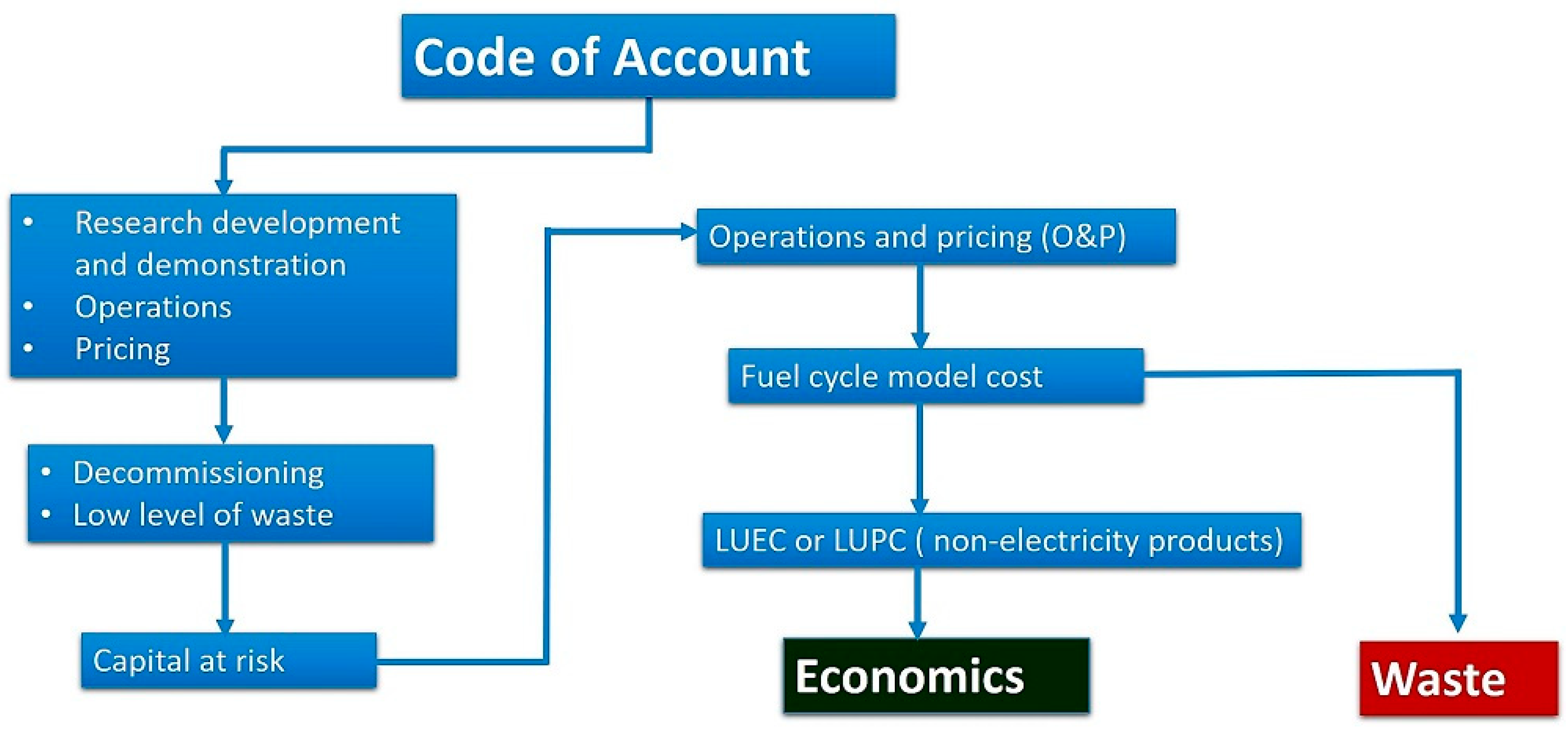
In the current research, the G4-ECONS program was used, which is a Microsoft Excel-based program used to conduct an economic analysis of an advanced nuclear reactor system [17]. The tool covers four main pillars of the economic model development, which are simplicity, transparency, universality, and adaptability. This dictates that the tool has the ability to accept projected and actual plant input data, open and closed fuel cycles, and can also govern international laws as well. In this tool, different cases were provided that included both Generation-III and IV nuclear reactor systems. The program consisted of five parts, which are construction, production, fuel cycle, energy products, and modularization. The life cycle of any nuclear reactor system includes many categories such as research development and demonstration, commercial design, commissioning, operations, fueling, and decommissioning, as presented in Figure 1. The economic model of G4-ECONS is particularly generic, in that it can calculate the levelized unit production cost of the facility as same as the levelized cost of electrical energy from the reactor plant, as given in Figure 1. IAEA has concluded a comprehensive account model for addressing the capital, operation, maintenance, and fuel cycle cost from nuclear power to individual systems. The model can be used for all types of plans, either single or dual-purpose, along with various contract and deployment approaches. This guideline helps in the bidding process for the construction from the vendors.
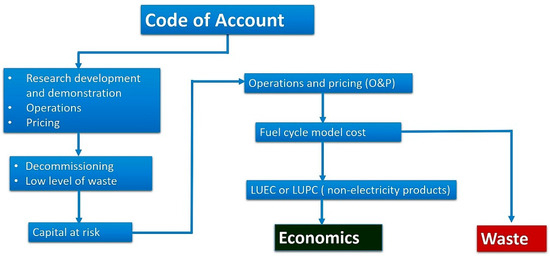
Figure 1.
Flow diagram of the G4-ECONS model.
The G4-ECONS model is based on three models, namely reactor model, fuel cycle model, and non-electricity production model, as illustrated in Figure 1.
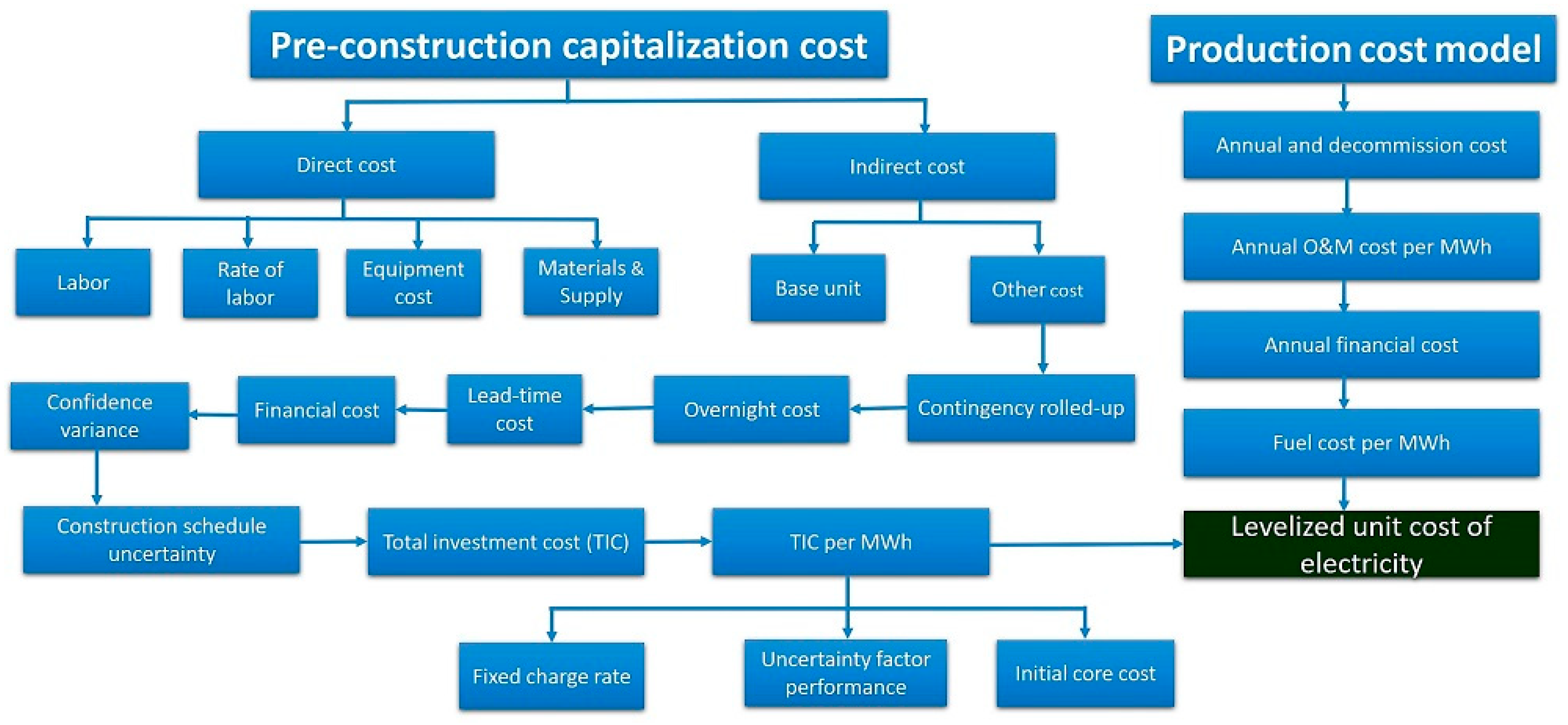
The investment cost of a nuclear power plant, or part of it, includes engineering, construction, commissioning, and testing commercial operation. While the basic cost covers design, installation, equipment, structure, material, and supply, other costs include supervision, indirect costs, initial cost, spare part cost, financial cost, owner’s cost, contingency cost, and other financial costs. The total capital investment cost (TCIC) represents the cost of the building and bringing it into commercial operation. Figure 2 presents the structure and model used to calculate the construction and production cost.
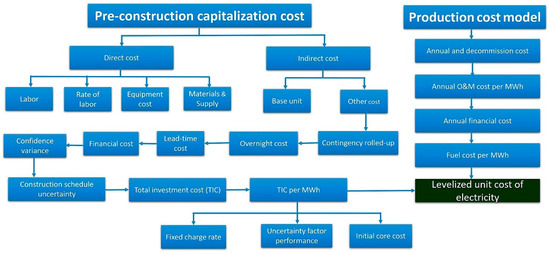
Figure 2.
Flow chart of construction and production model.
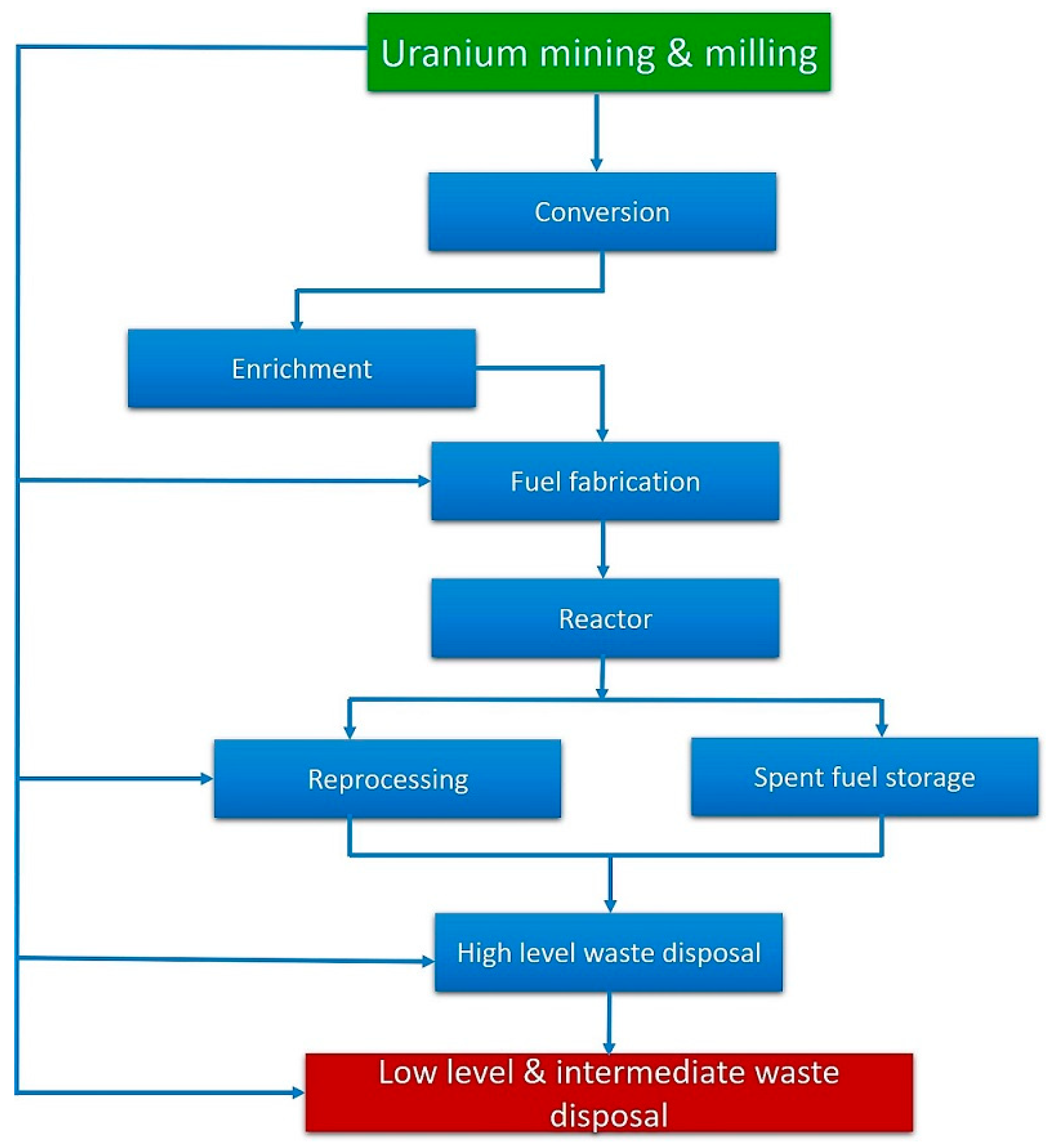
The fuel cycle model of G4-ECONS includes fuel material, project burnup cycle, enrichment, total fuel mass, and full reactor core model, as illustrated in Figure 3. The model requires an input that includes fuel needed for the initial core, along with fissile enrichment of uranium or plutonium. Some reactors, such as very high temperature reactors, require a higher temperature particle fuel, and fast reactors may require innovative pyrometallurgical and pyrochemical facilities for fabrication/re-fabrication and processing/re-processing. In such reactor systems, the fuel cost data are not available, and the unit cost of fuel cycle, such as $/kg, needs to be calculated by using a methodology similar to the calculation of levelized cost of electricity for any reactor system.
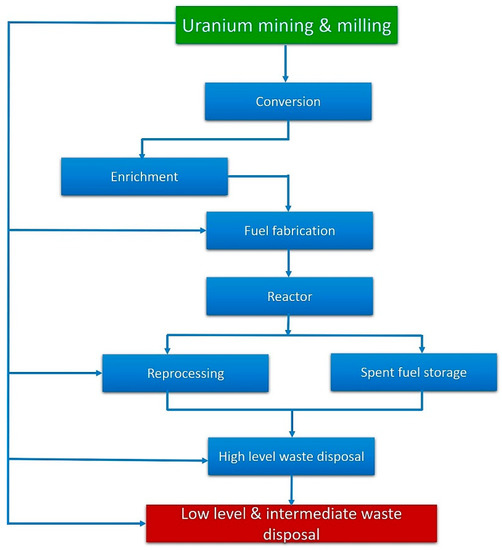
Figure 3.
Flow diagram of spent fuel model.
The levelized fuel cycle cost can be estimated by the following equation:
where ‘Fi’ is the fuel cost of each component, ‘L’ is the lifetime of reactor, ‘T1 and T2’ are the maximum lag and lead time (front and back end), ‘r’ is the discount rate, and ‘t0’ is the reference date. The quantities and specifications of the fuel were derived from the reactor characteristics. The cost of each component can be calculated by simply multiplying the quantity of material by the unit price.
The two applications of G4-ECONS tools were to demonstrate its suitability for SCWR (supercritical water reactor). In this way, an economic analysis was first performed for a benchmark case of six Generation-IV reactor systems against light water reactors of Generation-III types. It is based on the guidelines provided by the Generation-IV international forum (GIF) to use the G4-ECONS model to conduct a comparison of various technologies. However, some concerns still exist regarding the capital cost estimation methodology. The applicability of this model is to compare a diversified set of various nuclear energy systems that are at different stages of development. These results were presented in the annual report of the 2012 GIF symposium [6]. For the second application of the G4-ECONS model, economic analysis of the European high-performance pressurized water reactor (HPPWR) was considered, and the report was published in 2012 [18]. The analysis showed that sensitivity analysis is considered a major input parameter. The analysis was later confirmed by other simulation programs [19].
3. Results and Discussion
To help assess the cost calculation for the Generation- IV nuclear power systems, the consortium of Gen-IV reactor systems created guidelines that provide standardized cost-estimating protocol for such reactor systems in comparison to future energy systems. It provides a code of accounts, assumptions, cost estimation guidelines, set of equations, and a Generation-IV excel-based calculation model for nuclear energy systems. It is a user-friendly program, which employs simple and relatively fundamental economic algorithms. The program is independent of the country, which allows the user to ignore cost accounting, depreciation, interest rate, discount rate, taxation, and capital cost recovery issues. The prime assumption of the program includes constant dollar levelized annual cost, capital and financing costs, levelized cash flow, operation of the plant, and the annual electricity production over the entire life of the plant. One of the main parameters denoted by Levelized Unit Electricity Cost (LUEC) and Levelized non-Electricity Unit Product Cost (LUPC) calculates the levelized unit product cost of other energy products, such as the recovery of capital cost including financing, non-fuel operation and maintenance costs, decontamination and decommissioning cost, and fuel cycle cost, as presented above in Figure 3.
The total capital cost consists of two main components, which are overnight cost (direct and indirect cost) and interest (part of total cost, duration and other activities, and discount rate) during construction. The program utilizes a simple sine-wave quarter function (S-Curve) to approximate the cumulative expenditures. Further, the model converts total capital cost into annual amortization ($M/year). In Table 1, it can be observed that the system 80+ PWR based reactor, with the benchmark data and the cycle of reprocessing uranium into uranium dioxide and mixed oxide fuel assemblies, gives approximately comparable results and even lower results than the already published work [20]. This demonstrates that selection of the G4-ECONS model used in this study gives accurate results. For other reactors, as listed in Table 1, namely fast reactors with plutonium mixed oxide fuel, MIT-based high-temperature reactor (PBMR), and PWR partially closed (based on EMWG analysis), there was no study reported. However, we have already confirmed our model by carrying out the comparative study with the System 80+ reactor, as presented in Table 1.

Table 1.
Comparison between total investment cost of various nuclear reactors.
The direct cost includes structural components, reactor, turbine, and electrical equipment in addition to miscellaneous components and main condenser heat rejection system.
Indirect cost covers engineering services, construction labor cost, field trip, and supervision. Supporting cost includes total capital cost and owners cost, or some percentage of total capital cost.
Korean Atomic Energy Institute (KAIST) developed a dual-purpose nuclear reactor system called SMART (System integrated modular advanced reactor) in 1997 with an electricity production of 100 Mwe and a water production that corresponds to 40,000 m3/day [21]. The reactor consists of many active and safety features to achieve higher safety and reduce construction time. Various parameters of this reactor are presented in Table 2 that have been used to perform a cost analysis of the reactor.
Table 2.
Summary of the SMART [21] reactor.
The capital pre- and post-construction cost, direct cost, and fuel cost with other parameters are presented in Table 3. In the historical context, the cost of fuel has been accounted for as a very small portion of the levelized cost of electricity from nuclear power. However, this is not inconsistent with advanced nuclear reactor concepts because fuel prices are becoming higher in such reactor technology. For the economic viability of advanced reactors, total capital investment cost (TCIC) is one of the main factors to consider. This factor measures the financial risk that involves the overnight capital cost, construction time, and interest rate [19]. The total TCIC as calculated by G4-ECONS is 7833.96 $/k. We included the interest rate of 5% during the construction to set up a stable operating environment for financing. However, for other proven and operational reactors such as SCWR and ABWR, the TCIC is estimated to be 3863 $/kWe and 3591 $/kWe, respectively (as of 2003) [22].
Table 3.
Parameters of the total capitalized cost (TCIC) for SMART reactor.
However, these reactors do not cover new regulations and safety requirements as inferred by the post-Fukushima accident. Therefore, the costs calculated for SCWR and ABWR will be underestimated of the present-day calculations [23].
LUEC is the factor initiated by the Generation-IV consortium to measure the economic viability of advanced reactors (precisely Gen-IV). This factor calculates the life cycle cost of the reactor in $/MWh, as shown in Table 4 and Table 5. The comparison among various nuclear reactor systems was performed to calculate total LEUC. It was observed that Gen-IV nuclear reactor systems show the lowest cost while Gen-III+ nuclear power plants show higher cost. For instance, different power ranges of integral molten salt reactor (IMSR), which is a Gen-IV nuclear reactor, were compared with AP1000 and SMART, which are Gen-III+ reactor systems, and concluded that AP1000 gives the lowest levelized cost of electricity, equivalent to 39.38 $/MWh, while the highest value is obtained from IMSR80. This trend dictates that there is an exponential decline trend observed for the LUEC in generation-wise nuclear power plants due to advancement in the technologies and vice versa.
Table 4.
Amortization of capital cost for SMART reactor.
Table 5.
Total levelized unit of various reactors with fuel cycle systems.
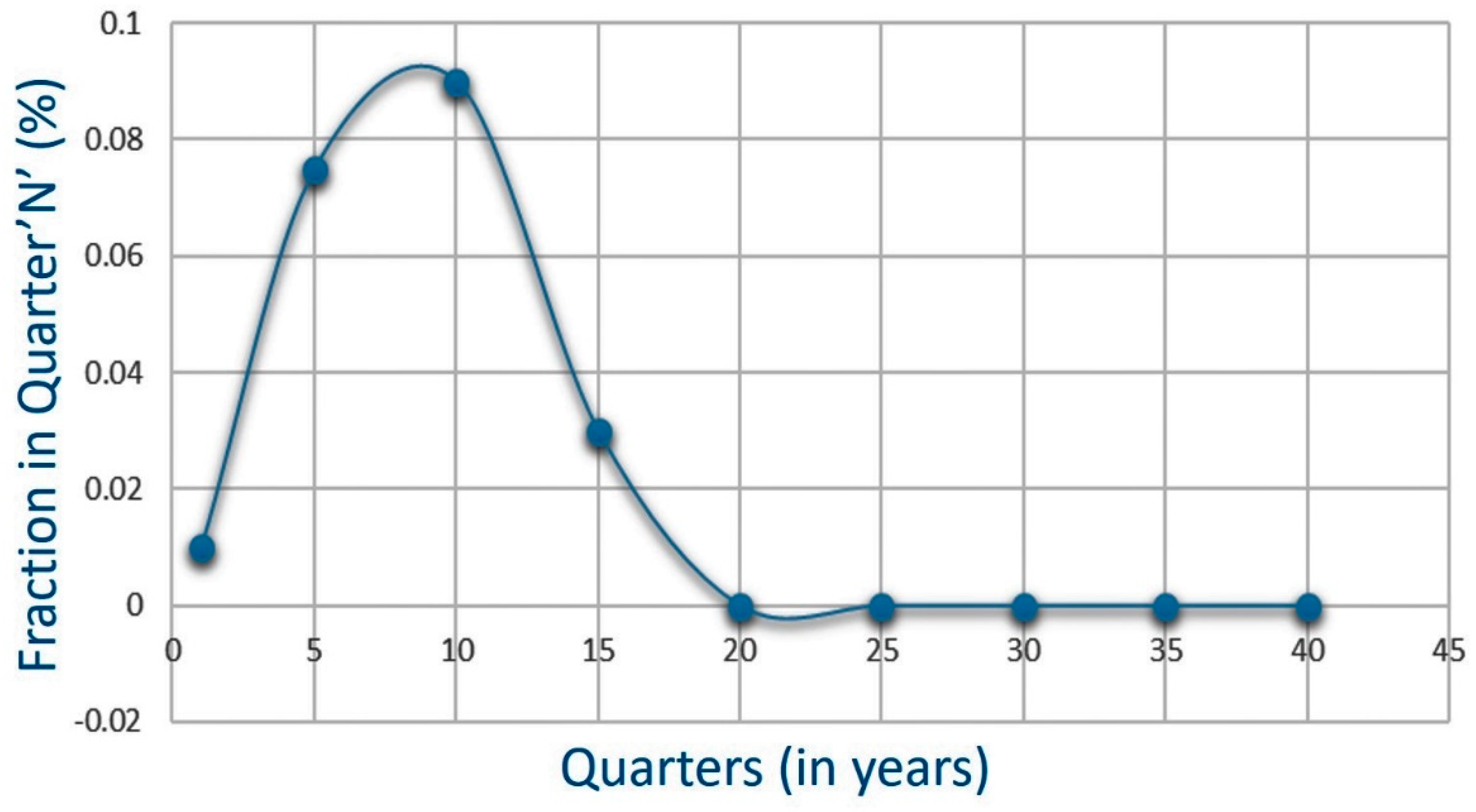
During construction, the interest rate of the total capital cost depends upon the front-end activities, time span, and other discount options. To make the model simpler, the peak in the middle of the project capital campaign and sine wave function that covers the total front-end project duration gives an acceptable mathematical estimation, as presented in Figure 4.
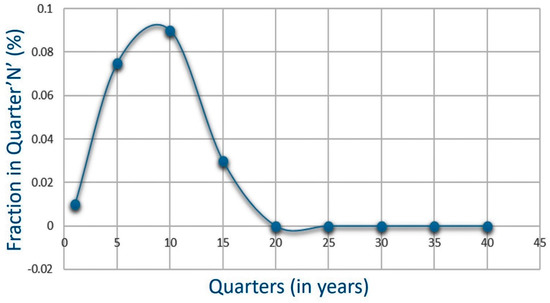
Figure 4.
Quarter by quarter fraction of capital spent.
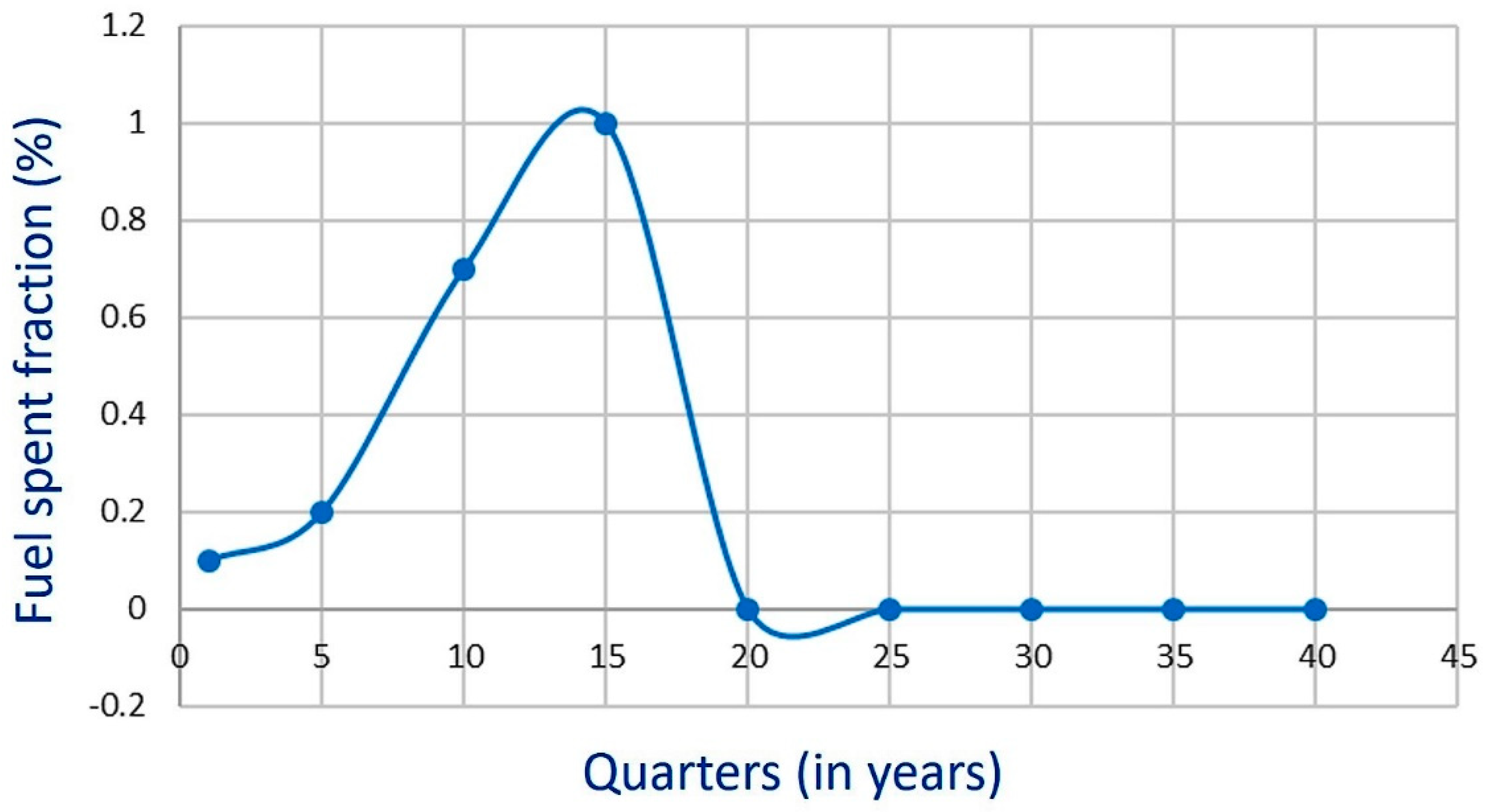
Interest rate calculations can be performed by using cumulative expenditures, which are represented by an S-shaped curve. To provide modeling and fidelity, the payments related to the interest rate can be estimated on a quarterly basis, as shown in Figure 5. Generally, the interest rate is started from the mid-point of each quarter up to the beginning of commercial electricity generation. Hence, the sum of all interest payments is the total interest during the construction. Therefore, an S-curve is typically used for many projects, thus avoiding entering capital cash flow data manually.
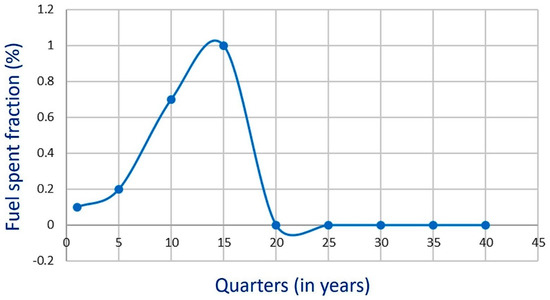
Figure 5.
S-curve cumulative spend pattern.
4. Conclusions
Research has concluded that uncertainty lies in the future cost of advanced nuclear reactor concepts. It has been concluded that among proven and design phase reactors, Gen-III+ reactor systems are the most cost-effective design reactors, which validates the investigation. Therefore, the SMART reactor was tested for the cost performance analysis, and it was observed that total LUEC and TCIC are calculated as 53.7 $/MWh and 2585.20$, respectively, which is less than other design reactor concepts. The S-curve calculations give other associated cost parameters as well, and it is important to understand that the input variable needs to be identified as deterministic so as to present the great impact on the total capital and fuel cost. Therefore, it is recommended that uncertainty should be rectified for future research and development of any other advanced nuclear power plant.
Author Contributions
Conceptualization, S.U.-D.K. and Z.A.; methodology, S.U.-D.K. and M.A.; software, M.A.; validation, S.U.-D.K. and M.A.; formal analysis, Z.A.; investigation, S.U.-D.K. and Z.A.; resources, Z.A.; data curation, S.U.-D.K. and M.A.; writing—original draft preparation, S.U.-D.K. and Z.A.; writing—review and editing, S.U.-D.K., Z.A. and M.A.; visualization, M.A.; supervision, Z.A.; project administration, S.U.-D.K.; funding acquisition, S.U.-D.K. and M.A. All authors have read and agreed to the published version of the manuscript.
Funding
This research was funded by Deanship of Scientific Research, grant number RGP-255.
Acknowledgments
The authors sincerely appreciate the deanship of scientific research at King Saud University for its funding of this research through the research group project no. RGP-255. Further, Meshari wants to thank scholarship program of King Abdullah City for Atomic and Renewable Energy (K.A.CARE).
Conflicts of Interest
The authors declare no conflict of interest.
Nomenclature
| SMART | System Modular Advanced Reactor |
| G4-ECONS | Generation 4 Excel-based Calculation of Nuclear Systems (G4-ECONS) |
| Gen-III+/IV | Generation-III+ and Generation-IV |
| UOx | Uranium oxide |
| MOx | Mixed oxide |
| PBMR | Pebble Bed Modular Reactor |
| PWR | Pressurized Water Reactor |
| PSA | Probabilistic safety assessment |
| IAEA | International Atomic Energy Agency |
| INPRO | innovative nuclear reactors and fuel cycles |
| EMWG | Economic Modeling Working Group |
| NEST | Nuclear energy support tool |
| TCIC | Total capital investment cost |
| SCWR | Supercritical water reactor |
| LWR | Light water reactor |
| GIF | Generation IV International Forum |
| HPLWR | High-Performance light-water reactor |
| LUPC | Levelized non-Electricity Unit Product Cost |
| LUEC | Levelized Unit Electricity Cost |
| Sys 80+ | System 80+ reactor system |
| RepU | Reprocessing uranium |
| Pu | Plutonium |
| FA | Fuel assembly |
| HTR | High temperature reactor |
| O&M | Operation and Maintenance |
| D&D | Dismantling and Disposal |
| ABWR | Advanced boiling water reactor |
| PM/CM | Project management/construction management |
References
- Salah Ud-Din Khan, S.; Nakhabov, A. (Eds.) Nuclear Reactor Technology Development and Utilization, 1st ed.; Woodhead Publishing: Sawston, UK, 2020; ISBN 9780128189436. [Google Scholar]
- IAEA Report, Global Development of Advanced Nuclear Power Plants, and Related IAEA Activities. 2006. Available online: https://inis.iaea.org/collection/NCLCollectionStore/_Public/38/050/38050730.pdf?r=1&r=1 (accessed on 3 August 2021).
- Di Maio, F.; Zio, E.; Smith, C.; Rychkov, V. Integrated Deterministic and Probabilistic Safety Analysis for Safety Assessment of Nuclear Power Plants. Sci. Technol. Nucl. Install. 2015, 2015, 136940. [Google Scholar] [CrossRef]
- International Atomic Energy Agency. Approaches for Assessing the Economic Competitiveness of Small and Medium Sized Reactors; Nuclear Energy Series No. NP-T-3.7; International Atomic Energy Agency: Vienna, Austria, 2013. [Google Scholar]
- Moore, M.; Korinny, A.; Shropshire, D.; Sadhankar, R. Benchmarking of nuclear economic tools. Ann. Nucl. Energy 2017, 103, 122–129. [Google Scholar] [CrossRef]
- Moore, M.; Leung, L.; Sadhankar, R. An economic analysis of the Canadian SCWR concept using G4-ECONS. CNL Nucl. Rev. 2016, 5, 363–372. [Google Scholar] [CrossRef] [Green Version]
- Jaskolski, M.; Renski, A.; Minkiewicz, T. Thermodynamic and economic analysis of nuclear power unit operating in partial cogeneration mode to produce electricity and district heat. Energy 2017, 141, 2470–2483. [Google Scholar] [CrossRef]
- Nawaz, U.; Malik, T.N.; Ashraf, M.M. Least-cost generation expansion planning using whale optimization algorithm incorporating emission reduction and renewable energy sources. Int. Trans. Electr. Energ. Syst. 2019, 30, e12238. [Google Scholar] [CrossRef]
- Bhuvanesh, A.; Christa, S.J.; Kannan, S.; Pandiyan, M.K. Aiming towards pollution free future by high penetration of renewable energy sources in electricity generation expansion planning. Futures 2018, 104, 25e36. [Google Scholar] [CrossRef]
- Chen, S.; Liu, P.; Li, Z. Multi-regional power generation expansion planning with air pollutants emission constraints. Renew. Sustain. Energy Rev. 2019, 112, 382e394. [Google Scholar] [CrossRef]
- Alhelou, H.H.; Mirjalili, S.J.; Zamani, R.; Siano, P. Assessing the optimal generation technology mix determination considering demand response and EVs. Int. J. Electr. Power Energy Syst. 2020, 119, 105871. [Google Scholar] [CrossRef]
- Ali, B.; Omid, S. Effects of the move towards Gen IV reactors in capacity expansion planning by total generation cost and environmental impact optimization. Nucl. Eng. Technol. 2021, 53, 1369–1377. [Google Scholar]
- Jain, S.; Roelofs, F.; Oosterlee, C.W. Decision-support tool for assessing future nuclear reactor generation portfolios. Energy Econ. 2014, 44, 99–112. [Google Scholar] [CrossRef] [Green Version]
- Antony, A.; Maheshwari, N.K.; RamaRao, A. A generic methodology to evaluate economics of hydrogen production using energy from nuclear power plants. Int. J. Hydrog. Energy 2017, 42, 25813–25823. [Google Scholar] [CrossRef]
- Roelofs, F.; Van Heek, A. Nuclear technology cost assessments using G4Econs and its cost accounting system. In Proceedings of the ICAPP 2011: Performance and Flexibility—The Power of Innovation, Nice, France, 2–5 May 2011. [Google Scholar]
- International Atomic Energy Agency. Small and Medium Sized Reactors; International Atomic Energy Agency: Vienna, Austria, 2013; ISBN 978-92-0-144210-9. [Google Scholar]
- Tech Doc. GIF/EMWG/2007/004. Cost Estimating Guidelines for Generation IV Nuclear Energy Systems, Revision 4.2. 2007. Available online: https://www.gen-4.org/gif/upload/docs/application/pdf/2013-09/emwg_guidelines.pdf (accessed on 26 September 2007).
- van Heek, A.I.; Roelofs, F.; Ehlert, A. Cost Estimation with G4-ECONS for Generation IV Reactor Designs. In Proceedings of the GIF Symposium Proceedings 2012 Annual Report, San Diego, CA, USA, 14–15 November 2012; NEA No. 7141. pp. 29–33. [Google Scholar]
- Schulenberg, T.; Starflinger, J. High Performance Light Water Reactor—Design and Analyses; KIT Scientific Publishing: Hamburg, Germany, 2012; Available online: https://www.ksp.kit.edu/site/books/e/10.5445/KSP/1000025989/ (accessed on 12 June 2012).
- Samalova, L.; Chvala, O.; Maldonado, G.I. Comparative economic analysis of the Integral Molten Salt Reactor and an advanced PWR using the G4-ECONS methodology. Ann. Nucl. Energy 2017, 99, 258–265. [Google Scholar] [CrossRef]
- Ud-Din Khan, S.; Almutairi, Z.; Alanizi, M.; Khan, S. Safety analysis of pool-type double containment of system-integrated modular advanced reactor: A case study for Saudi Arabia. Int. J. Energy Res. 2020, 45, 12047–12058. [Google Scholar] [CrossRef]
- MMoore, M.; Pencer, J.; Leung, L.K.H.; Sadhankar, R. Knowledge Gaps in Economic Analyses of Advanced Reactor Concepts. In Proceedings of the 19th Pacific Basin Nuclear Conference (PBNC2014), Vancouver, BC, Canada, 24–28 August 2014. Paper PBNC2014-419. [Google Scholar]
- Salah Ud-Din Khan, S. Economic assessment of ABWR, SCWR and SMART by using G4-ECONS code. Trans. Am. Nucl. Soc. 2020, 123, 1043–1044. [Google Scholar]
Publisher’s Note: MDPI stays neutral with regard to jurisdictional claims in published maps and institutional affiliations. |
© 2021 by the authors. Licensee MDPI, Basel, Switzerland. This article is an open access article distributed under the terms and conditions of the Creative Commons Attribution (CC BY) license (https://creativecommons.org/licenses/by/4.0/).