


Abstract
The present paper aimed to propose a new support approach to choosing the optimal structural system in accordance with sustainable materials in mass-housing projects. To this end, an integrated fuzzy multi-criteria-decision-making (fuzzy MCDM) method was used to identify the criteria affecting sustainable material selection. The proposed approach consists of a three-phase protocol: In phase I, the literature was used to create a database encompassing 42 factors affecting the selection of materials. These factors were classified as four indicators (economic, environmental, socio-cultural, technical-executive) in accordance with the sustainable development aspects. In phase II, the fuzzy Delphi method (FDM) was used to screen the key factors. In phase III, an integrated fuzzy SWARA–ARAS method was used to prioritize the optimal structural system for a case project: evidence from Iran. The results of selecting the structural systems based on 14 efficient key factors showed that the Light Steel Frame (LSF), Insulation Concrete framework (ICF), and the Prefabricated Reinforced Concrete System (PRC) systems have the highest priority to achieve the goals of sustainable material selection, respectively.
1. Introduction
The evolution of construction operations and the advancement of materials technology have devastating effects on the environment and pose a serious threat to humans and other organisms [1,2]. Conscious selection of materials, correct consumption, and material recycling and reuse can effectively contribute to environmental protection and the mitigation of their negative effects. Therefore, knowledge of useful and effective decision-making methods in material selection is of vital importance [3,4].
Materials determine the nature of a building [5]. Therefore, material selection has always been known as one of the key factors contributing to achieving sustainable development goals in the construction industry [6]. How the material selection can help achieve sustainable development goals and what key indicators affect this selection are questions that can be answered in different ways, depending on the goals and needs of a project [1,7,8]. Decision making for selecting materials that can contribute to achieving sustainable development goals in the construction industry depends on various indicators. Identification and evaluation of these indicators not only helps with making conscious material choices, but also helps with improving the quality of buildings, increasing their service life, and even guaranteeing their optimal operation [9]. This process follows an interactive procedure that requires the compatibility of selected materials with the main aspects of sustainable development (economic, social, and environmental) [4,7,10]. Fulfillment of this interactive process is very complicated due to the mainly high uncertainties associated with the decision–making process. Moreover, in some cases, this selection can be very controversial [1]. This is of vital importance in construction projects, especially in mass-housing projects that require large volumes of consumer products, and the slightest negligence in this field can incur additional costs and lead to a waste of time and distraction from the sustainable development goals in the construction industry [3].
Sustainable development actually seeks to propose architectural solutions for the well-being and coexistence of solid elements, organisms, and humans [8,9]. In other words, in sustainable design, efforts should be made to deal with the needs of building residents, improve the quality of human life, and reduce adverse effects on the natural environment at the same time. During their lifetime, buildings impact the local and global environment through various human activities and inter-related mechanical processes [7]. This change starts from the regional microclimate and finally triggers transformations in the global ecosystem. Thus, it can be argued that consideration of different aspects of sustainability in the optimal material selection and application is one of the most important things in sustainable design [2,11,12,13,14].
Material selection planning coupled with consideration of the different dimensions of sustainable development can lead to a breakthrough in the construction industry [15]. This planning provides a broad outlook on the social, economic, and environmental impacts of material production or use in the construction industry [13,14,15,16,17]. Material selection planning is feasible only when a decision–making support system for the selection of sustainable materials in the construction industry is developed. This system is affected by many factors and insufficient information and description of them based on different semantic variables related to those factors will give rise to uncertainties in the results [8]. In addition, since expert opinions based on verbal expressions are involved in the development of these systems, their results are mostly ambiguous with faulty mentalities [18,19,20,21,22,23,24]. The integrated fuzzy multi-criteria-decision-making approaches are able to solve these ambiguities. In addition, by taking into account the effect of uncertainties in the decision–making process, these approaches can serve as a perfect tool for the collection of accurate information [16,17].
The present study aimed to propose a decision-making support system for evaluating the factors affecting sustainable material selection in the construction industry. Considering the extensive uncertainties associated with the decision-making process for selecting the sustainable material in mass-housing projects, a combination of different fuzzy multi-criteria-decision-making approaches was utilized to create a local support system. Therefore, first, the most important factors affecting the material selection were identified through the literature studies and collection of experts’ opinions. Then, the identified factors were screened, and key factors were extracted using statistical methods. At the next step, fuzzy multi-criteria-decision-making approaches were integrated to prioritize the screened factors and to select a sustainable structural system for mass-housing projects. The proposed support system was implemented in order to apply a realistic scenario to select an optimal structural system for a mass-housing project in a residential area in Iran. In this scenario, an executive company needed to make a decision to choose building materials in accordance with the principles of sustainable development in a mass-housing project. This company was required to consider all possible important criteria that determine the sustainability in buildings from the point of choosing the type of proposed structural system. Although the issue of sustainable materials selection in construction projects has been investigated in many studies in the past, the main difference and innovation of our research compared to others is that it considered a large number of criteria for selecting sustainable materials on the one hand. On the other hand, presenting a hybrid support model based on MCDM methods in a fuzzy environment to implement these criteria for choosing an optimal structural system in mass-housing projects is a significant innovation.
2. Review of the Literature
Identification and prioritization of the key factors affecting the selection of sustainable materials in the construction industry can increase the ability of famous construction triangle sides (cost, time and quality) to develop a decision-making support system [14,18,25]. The available literature could provide effective results concerning the development of decision-making support systems in the material selection process [17,20,22,26,27,28,29,30,31]. Despite the fact that extensive studies have been carried out in this respect (some of which are listed in Table 1), some gaps have made it necessary to conduct further studies on the identification and prioritization of the factors affecting the development of decision-making support systems in the process of sustainable material selection and employing coherent methods. These include methods such as the new hybrid fuzzy multi-criteria-decision-making approaches in the prioritization process in order to fulfill the different dimensions of sustainable development. On the other hand, the relevant literature indicates a lack of decision-making information required for the prioritization of materials in the presence of uncertainties. These shortcomings, coupled with the nonintegrated literature which is not capable of identifying the uncertainties involved in the development of a decision-making support system, have given the present researchers sufficient motivation to conduct the current study.

Table 1.
Quick summary of the literature review.
3. Materials and Methods
The methodology in the present study can be classified according to two main factors: the research objectives and the data collection method. In other words, the present study falls within the category of applied developmental studies in terms of objectives, which seek to develop a decision-making support tool to evaluate the effective criteria involved in sustainable material selection in construction projects. This research falls within the category of descriptive field studies (in terms of data collection method) being conducted through the objective inspection and examination of material selection procedures in construction projects carried out by contracting companies in Iran. The hybrid approach used in the present study falls within the category of heuristic studies. In heuristic integrated design, first, the qualitative data, and then, the quantitative data are collected. Qualitative data are collected to scrutinize the phenomenon under study. Then, the researcher draws on the findings derived from the qualitative data to collect the quantitative data, and in this way, could generalize the findings [32,33]. The difference between this method and other methods in the present article is the lack of consensus among researchers over selection of sustainable materials for construction projects in Iran.
3.1. Instruments and Techniques
3.1.1. Sample of the Study
The target population of the study includes a 12-member team of civil engineers and senior project managers with specialties and skills in different fields such as construction materials and sustainable development in the construction industry. Experts were selected using the snowball sampling method based on the researcher’s personal experience. This type of sampling is often used when access to all members of the population is difficult to obtain or the population size is limited. Among the advantages of this method, one could mention simplicity and no need for extensive planning and physical work compared to other sampling methods [34]. These experts were selected considering the following four main characteristics: 1. Knowledge and experience in the field under discussion. 2. Willingness to participate in the discussion. 3. Sufficient time to participate in the survey. 4. Effective communication skills. The demographic information of the selected individuals as a panel of experts is given in Table 2.
Table 2.
Detailed information of experts.
3.1.2. Questionnaire and Validation
Experts use their mental abilities to provide feedback in a poll program. Human judgment is generally associated with a degree of uncertainty because the human mind does not fully quantify opinions. In the presence of data uncertainty, fuzzy approaches must be used to ensure the results’ accuracy to make real-world decisions [35]. The nature of fuzzy logic in such a situation is decision-making based on existing relative differences between the effects of opinions in achieving the answer, and ambiguity in some qualitative and quantitative views is included in the answers [36]. The impact of the decision makers’ judgments can be reduced using this approach, which generally limits fuzzy events and objects in unknown circumstances by using inaccurate and nonquantitative words [37].
Zadeh [38] developed the theory of fuzzy sets to deal with the uncertainties caused by inaccuracies and ambiguities in decision making. In uncertain situations, this theory can mathematically express many ambiguous concepts, variables, and systems. In uncertain conditions, this theory provides the foundation for reasoning, inference, control, and decision making [39]. A fuzzy set is a collection of objects with a continuous degree of membership. A membership function, which assigns each object a membership rating between 0 and 1, characterizes such a set [40]. In fuzzy sets, the definition of a membership function is context-dependent. A fuzzy number, according to this theory, is a specific fuzzy set defined by Equation (1), in which x accepts the real values of the members of the set R with a membership function .
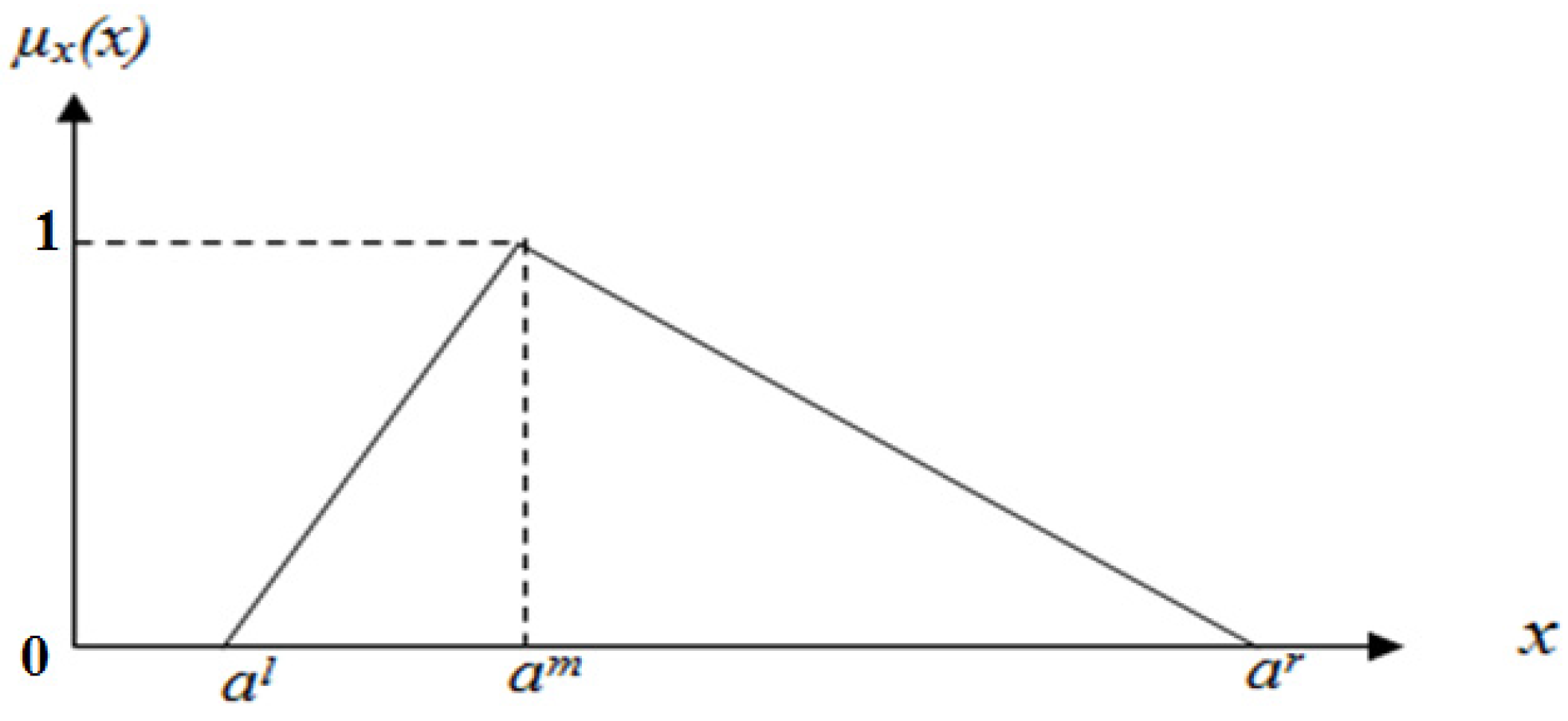
Several standard membership functions have been introduced in the literature on fuzzy set theory. One of the most widely used is the triangular membership function [41]. A triangular fuzzy number (TFN), A (al, am, au), is a number with the membership function of linear fractions A (Equation (2)), as shown in Figure 1.
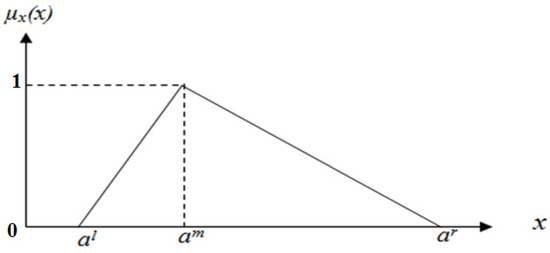
Figure 1.
Triangular and fuzzy membership functions (adapted with permission from [41]).
The parameters al, am, and au, respectively, represent the lowest, most likely (most promising), and highest values of a possible value that describes a fuzzy event. When al = am = au, then A is a nonfuzzy number, according to the contract. References can be found for algebraic operations on two fuzzy triangular numbers [40]. It is easy to express the value of an object using fuzzy numbers to express the decision makers’ qualitative evaluations. As a result, the use of fuzzy numbers in decision-making methods has grown in popularity [42].
The answers to the questionnaires were divided into three categories in the decision-making problem of the present study: closed-ended, fuzzy-form, and open-ended. The present study used the five-point Likert scale to measure the identified critical factors in the first section questionnaires. The importance of the items was determined using a range of ambiguous linguistic expressions of very low, low, medium, high, and very high importance, the details of which are explained below. The degrees of preference for efficient critical factors were compared to each other using verbal expressions in the second part of the questionnaires. The third section of the questionnaires compared the current states of the selected projects in terms of final, efficient, critical factors.
The main criteria were used to determine the validity and reliability of the items identified in the questionnaires. The term “validity” refers to the goal that the test is supposed to achieve. The validity of a questionnaire is based on two principles: clarity and simplicity [32]. This study used the content validity ratio (CVR) indicator developed by Lawshe [43] (based on Equation (3)) to determine the validity of the questionnaires.
The total number of specialists is denoted by n, and ne denotes the number of specialists chosen as the necessary option. The number of specialists at this phase is 12, and the acceptable validity is equal to 0.57, as determined by the minimum CVR and scoring specialists [44].
Coder, parallel, bisection, test-retest, and Cronbach’s alpha are methods for determining the reliability of any questionnaire [45]. This study used the Cronbach’s alpha method and determined the reliability coefficient Rα (according to Equation (4)) for the main criteria after collecting the results of the first part of the questionnaires.
where k represents the total number of test questions. σj2 denotes variance of the j-th question scores, and σ2 denotes variance of the total questions scores. The Cronbach’s alpha coefficient must be, at minimum, equal to 0.7 to be considered reliable [44].
3.2. Problem-Solving Process
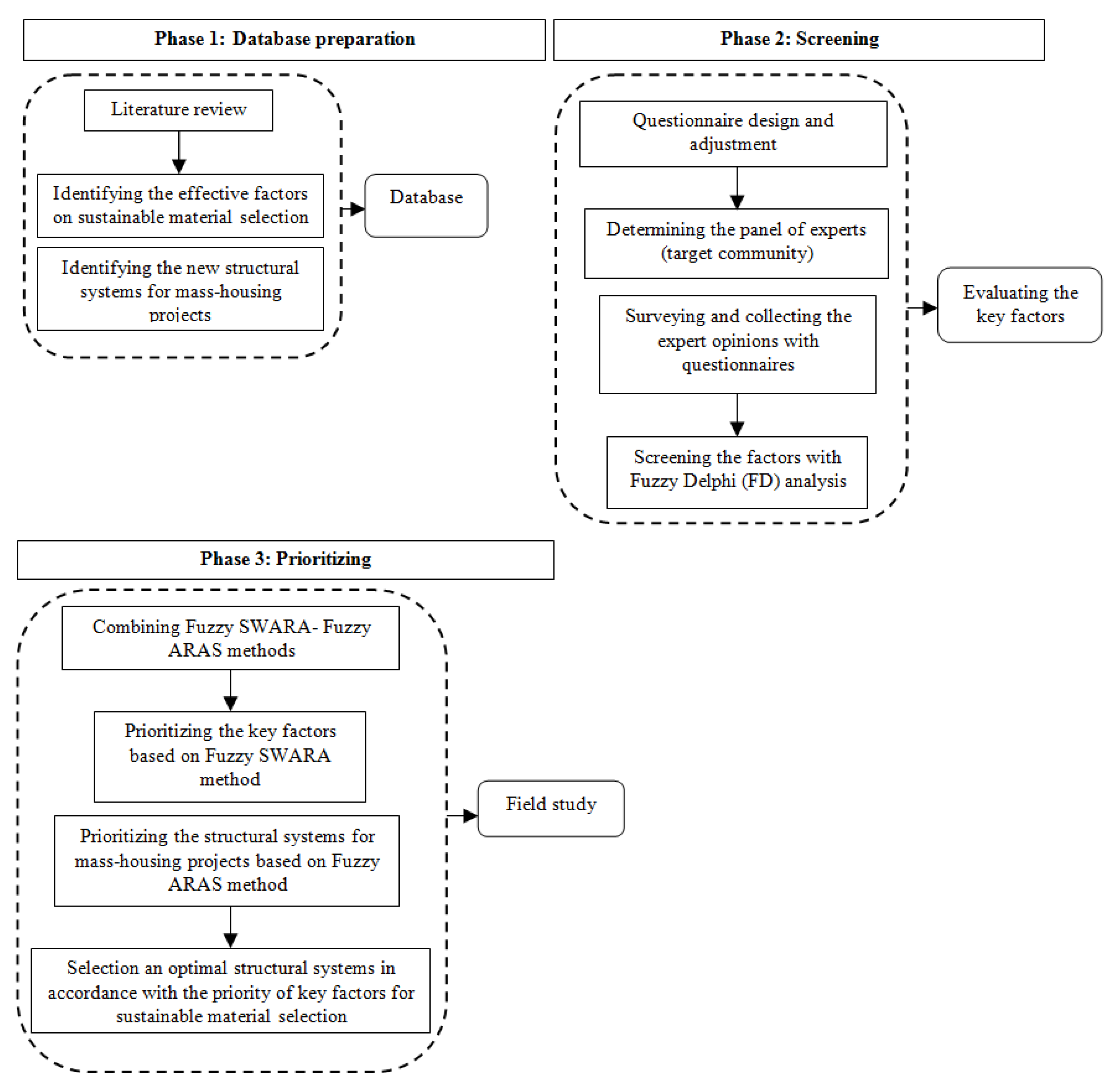
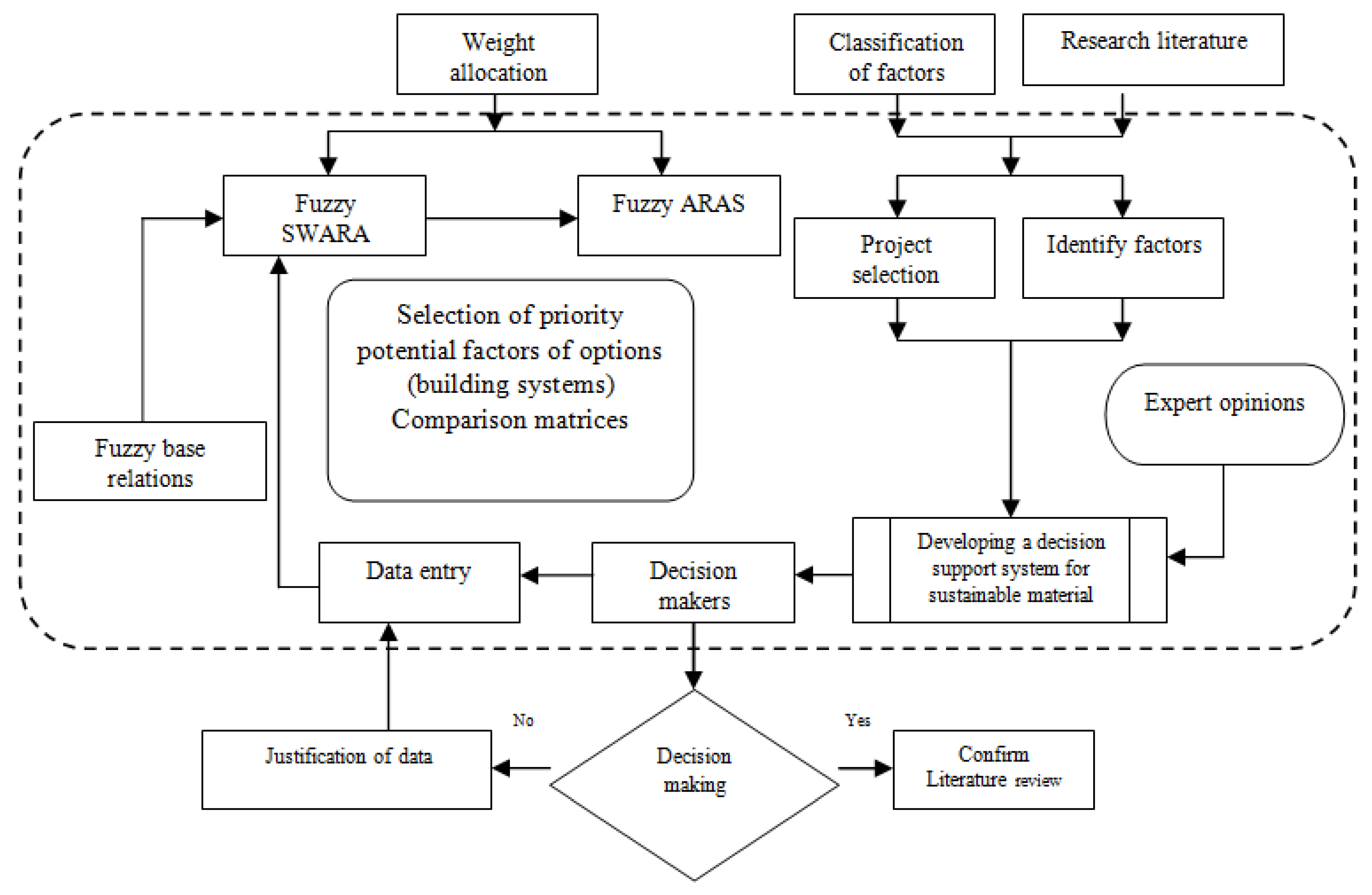
According to the flowchart shown in Figure 2, the problem-solving process in the current study, which is developing a model for the selection of sustainable materials in mass-housing projects, necessitates maintenance. The maintenance process consists of three main parts and a three-phase protocol. In continuation, each of these phases is explained with more details.
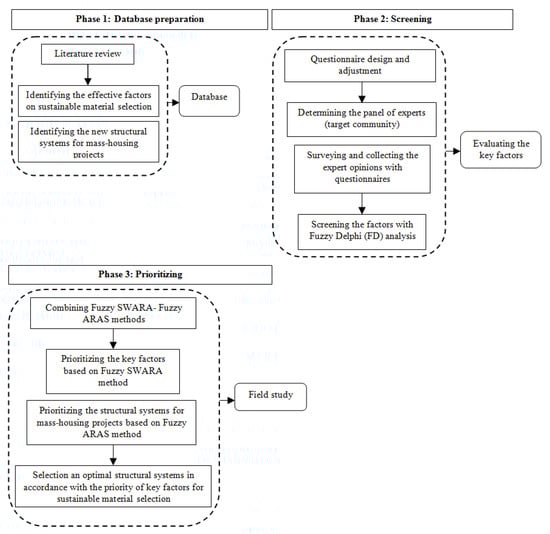
Figure 2.
Flowchart of problem-solving process.
3.2.1. Phase I: Preparing a Database
In phase I, a database encompassing factors affecting the selection of sustainable materials in construction projects was developed and the optimal construction systems are identified. This was performed to help the contracting companies achieve sustainability in Iranian construction projects. Literature findings, intuitions, as well as expert experiences and judgments are among the most commonly used techniques for identifying and differentiating the factors. Therefore, in the present study, the foreign and domestic literature, global information network, and sustainable material regulations and guidelines were reviewed, and a field survey was conducted. Finally, communication, interviews, questionnaire analysis, and inquiries made by experts were used to identify the effective factors.
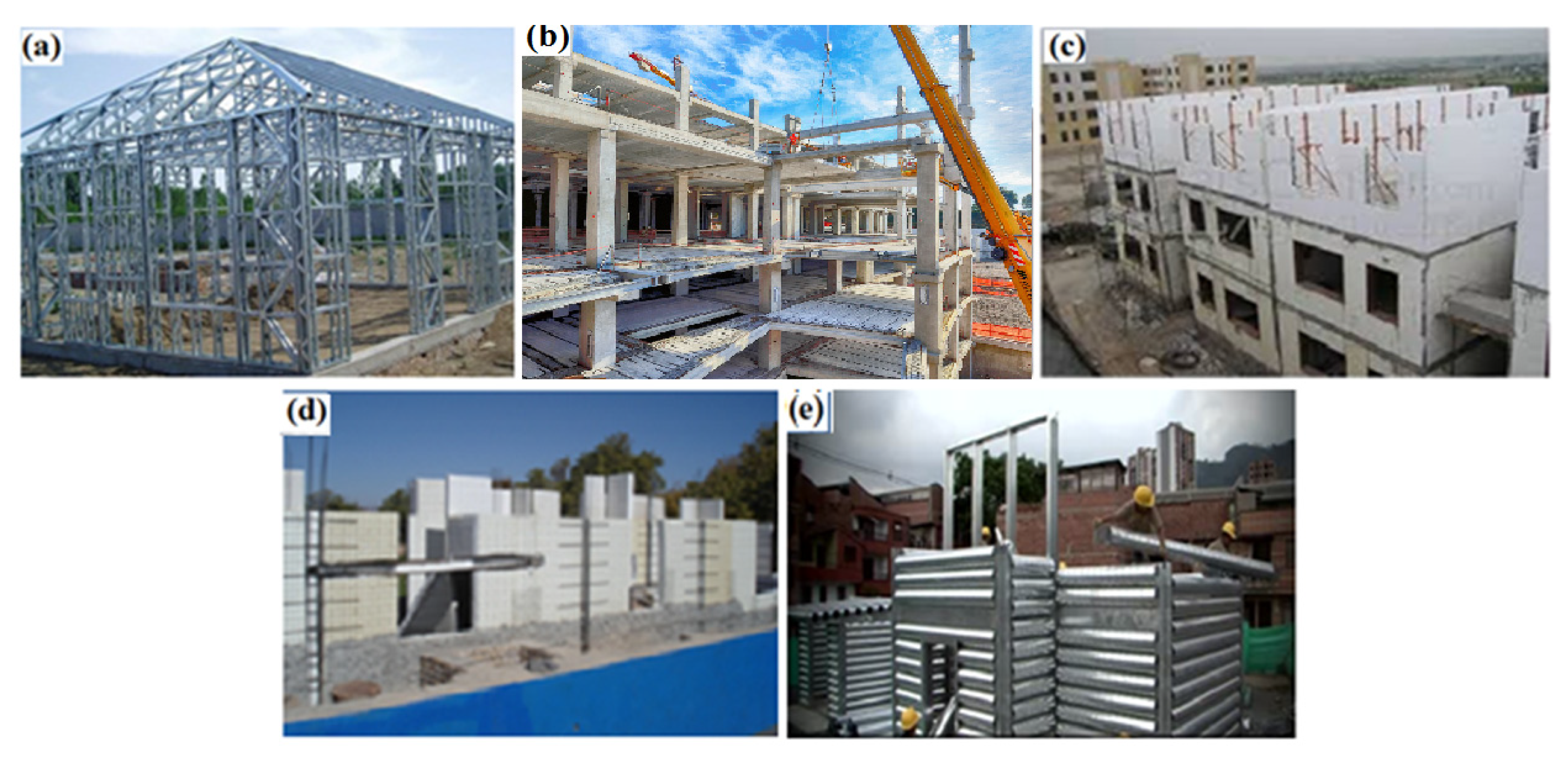
As mentioned before, the present study is an executive attempt to develop a decision-making support model for selecting the optimal structural system. Next, the selected structural system was utilized to execute the structural frames used in mass-housing projects, while taking into account compatibility with the sustainable material selection procedures. Several structural systems with specific advantages and disadvantages were proposed for this purpose. According to the initial opinion of the employer of a mass construction project, five types of new structural systems known as the Light Steel Frame (LSF), Prefabricated Reinforced Concrete System (PRC), Insulation Concrete framework (ICF), 3D Sandwich Panels (3DP), and the Tronco System (TRC) were proposed to the project contractor for constructing the building. The basic specifications and the executive form of the proposed structural systems are presented in Figure 3 and Table 3, respectively.
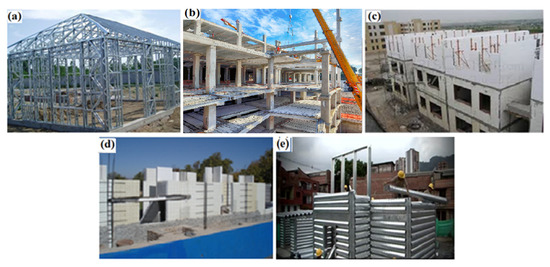
Figure 3.
Proposed options for building skeletons in mass construction projects, (a) LSF, (b) PRC, (c) ICF, (d) 3DP, and (e) TRC.
Table 3.
Basic information of the structural systems.
3.2.2. Phase II: Screening of Factors Identified by Fuzzy Delphi Method (FDM)
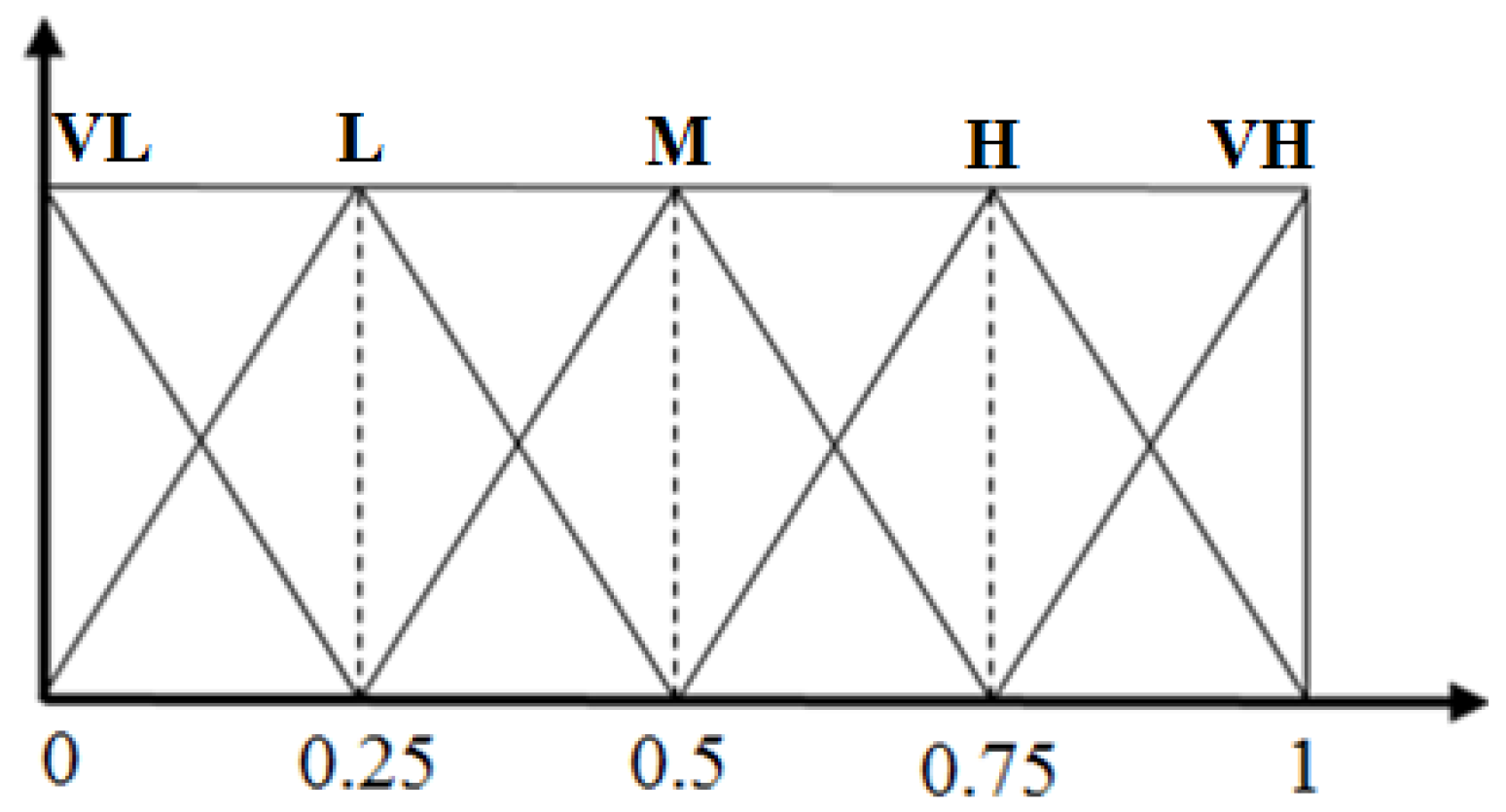
The factors were refined and screened using the fuzzy Delphi method (FDM), and considering the opinions of the 12-member experts in phase II, after identifying and classifying them in phase I. The aim of this phase was screening and finalizing the most important factors. The Delphi technique is an efficient method in terms of utilizing a questionnaire to collect the experts’ opinions, insights, experiences, and perceptions [46]. In most cases, the Delphi method is used in multiple rounds. The collected data are analyzed at the end of each round. The new data and questions are presented to the experts in the next round [47]. The FDM was used in three rounds in the current study. During the first and second rounds of removing and merging factors with repetitive content and conceptual overlap from the initial list, some new and remaining factors were added, based on the experts’ opinions. The invoices were finally sorted and separated in the second round after they had received final approval. Based on the experts’ opinions and verbal expressions of the Likert spectrum, the importance of the final factors was determined in the third round, when the first questionnaire was distributed. The verbal expressions were fuzzified to determine the importance of the factors using the triangular fuzzy numbers (TFNs) shown in Figure 4 and Table 4.
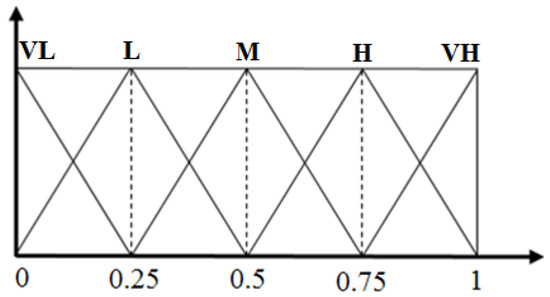
Figure 4.
Triangular fuzzy membership function (Reprinted with permission from [41]).
Table 4.
Triangular fuzzy numbers based on 5-point Likert spectrum [41].
After collecting the experts’ opinions from n questionnaires, the fuzzy average of opinions for each factor (Equation (5)) was calculated. Then, a crisp number for the importance of each of the critical factors was determined using the center of gravity method (Equation (6)) for defuzzification.
Finally, any factor with a crisp value greater than 0.5 was considered an efficient critical factor, while factors with a crisp value less than 0.5 were counted as inefficient.
3.2.3. Phase III: Prioritization with Hybrid Fuzzy Method (Fuzzy SWARA–Fuzzy ARAS)
Due to the large number of factors affecting the selection of sustainable materials (which were extracted in the previous phase), the possibility of errors in the quantitative analyses related to evaluating these factors and the studied building systems were very high. Therefore, using hybrid fuzzy multi-criteria-decision-making methods to develop a decision support system would lead to good results. This phase identified and prioritized the more significant factors in the selection of sustainable materials, on the one hand, and the selection of preferred building systems for implementation of mass-housing projects, on the other hand. The used hybrid multi-criteria-decision-making method was based on fuzzy SWARA (Fuzzy Stepwise Weight Assessment Ratio Analysis) and fuzzy ARAS (Fuzzy Additive Ratio Assessment) methods. The flowchart shown in Figure 5 summarizes this process. The details of these methods are introduced in the next section.
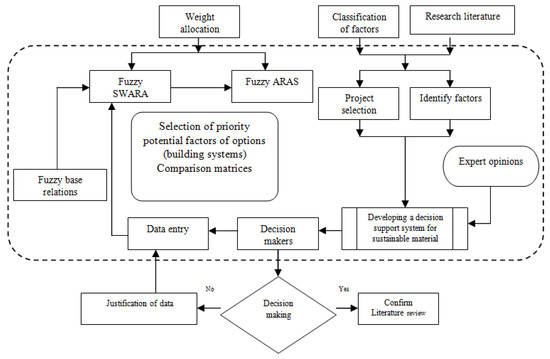
Figure 5.
Structure of the hybrid fuzzy decision-making model.
In order to implement the aforementioned method, first, the questionnaires related to phase II were distributed among the experts, and they were asked to comparatively prioritize the efficient key factors using the expressions. In the next step, a workshop on the characteristics of each building system was organized, and the third-phase questionnaires were distributed among the experts. They were asked to comparatively prioritize building systems in terms of final efficient key factors using the expressions presented in Table 4. The SWARA (Stepwise Weight Assessment Ratio Analysis) method is an expert-centered method which was introduced by Keršuliene et al. [48]. It is an alternative to the AHP and ANP methods for prioritization analysis of decision-making issues. When compared to the older MCDM methods, this technique has a number of advantages as it requires a smaller number of comparisons; is more effective in terms of using the expert knowledge, experience, tacit information, and free evaluation of criteria without using scales; simple formulation; and time saving [49,50]. Furthermore, because the SWARA method ranks criteria in a descending order, there is no need to check for consistency in judgments [51]. A new additive ratio assessment (ARAS) method, which was introduced by Zavadskas and Turskis (2010) [52], selects the best option for a given strategic decision-making problem.
The performance of this method is comparable to that of the older methods such as the ideal solution (TOPSIS), VIKOR, and ELECTRE. It determines the ideal option by calculating the performance level of each option and its corresponding ratio [53,54]. Simple computational steps, separation of positive (benefit) and negative (cost) criteria, and evaluation and prioritization of different options based on a large number of criteria identified independently (without the need for many pairwise comparisons) are some of the primary advantages of the ARAS method over other decision-making methods [54,55]. This method is based on the idea that the phenomena of the complex world can be understood with reasonable accuracy using relatively simple comparisons [52].
The SWARA and ARAS methods, like the AHP method, are insufficient for determining parameter uncertainty, especially when explicit verbal expressions are used [56]. Due to the existing ambiguity concerning information in fuzzy numbers, Stanujkic [57] developed these methods. There are six main steps for the SWARA and ARAS fuzzy methods. Table 5 and Table 6 present the details of the calculations required to implement the above mentioned methods, step by step.
Table 5.
Stepwise description of decision-making using fuzzy SWARA method.
Table 6.
Stepwise description of decision-making using fuzzy ARAS method.
4. Findings
4.1. Results of Phase I: Identification and Classification of Factors
The results obtained from phase I as well as the FDM (1st and 2nd rounds) were used to create the database. This database consists of factors affecting the sustainable material selection, the main factor differentiation indicators, and the basic information on the five structural systems considered for execution of the building structural frames in the mass-housing projects. After final differentiation, a total number of 45 factors were classified based on the three main indicators of sustainable development (economic indicator (C2), environmental indicator (C3), socio-cultural indicator (C4)), and an additional indicator known as technical-executive indicator (C1). Since the present study was an attempt to apply the proposed support system to a real mass-housing project, the C1 indicator was also taken into account in the study. The main indicators and subfactors associated with each indicator, as well as their codes and references, are listed in Table 7. The reliability and validity of the main indicators are presented in this table. Since Rα and CVR values exceed the allowable limits considered for the main indicators, the designed questionnaire can be considered reliable and valid in terms of internal consistency of items.
Table 7.
The effective main indicators and subfactors in the sustainable material selection process.
4.2. Results of Phase II: Factor Monitoring and Screening
In phase II, the key factors affecting the screening results, which were obtained by FDM (the 3rd round), were presented. The fuzzy and deterministic mean values for significance, class (efficient/inefficient), and type (cost/benefit) of each key factor are presented in Table 8. According to the results, 14 factors had deterministic mean values exceeding 0.5. These were identified as efficient factors in the selection of stable structural systems. In addition, the initial ranking of factors by the FDM showed that factors C1-11, C2-8, C3-7, C4-8, C3-11, C2-5, C2-2, C4-3, C3-9, C1-8, C1-5, C4-1, C1-2, and C3-4 were given higher comparative priority (respectively) in the process of sustainable material selection. In order to implement phase III, the extracted efficient factors were arranged in descending order and their type (benefit or cost) was specified.
Table 8.
Fuzzy mean, deterministic number, class, and type of factors affecting the sustainable material selection.
4.3. Results of Phase III: Prioritization of Factors and Selection of Alternatives
The results obtained in phase III were divided into two sections. In the first section, the efficient factors extracted from phase II were prioritized to identify the final factors affecting the sustainable material selection. In this section, prior to starting the fuzzy SWARA calculations, 14 identified critical factors were ranked in terms of significance and in descending order based on the scores obtained from the FDM. In the next step, the relative fuzzy significance () computed based on the expressions chosen by the experts, as well as fuzzy coefficient (), initial fuzzy weight () relative fuzzy weight (), and defuzzification values obtained from the center of area (CoA) method, were used to determine the final key factors and their ranking. Computational details of the fuzzy SWARA method are presented in Table 9.
Table 9.
Fuzzy SWARA computation results used to determine the ranking of efficient key factors.
Based on the results of this section, the researchers managed to select the three high–ranking factors (final factors) associated with each of the main indicators. According to the results, operational flexibility (C1-5), life-cycle cost (C2-5), compatibility with sustainable certifications (C3-9), and human health and safety (C4-1) are ranked as first by C1, C2, C3, and C4 indicators, respectively. The results also show that, adaptation with technical standards (C1-11), energy cost (C2-8), reusability (C3-7), and compatibility with identity (C4-3) are ranked as second by each of the mentioned indicators, respectively.
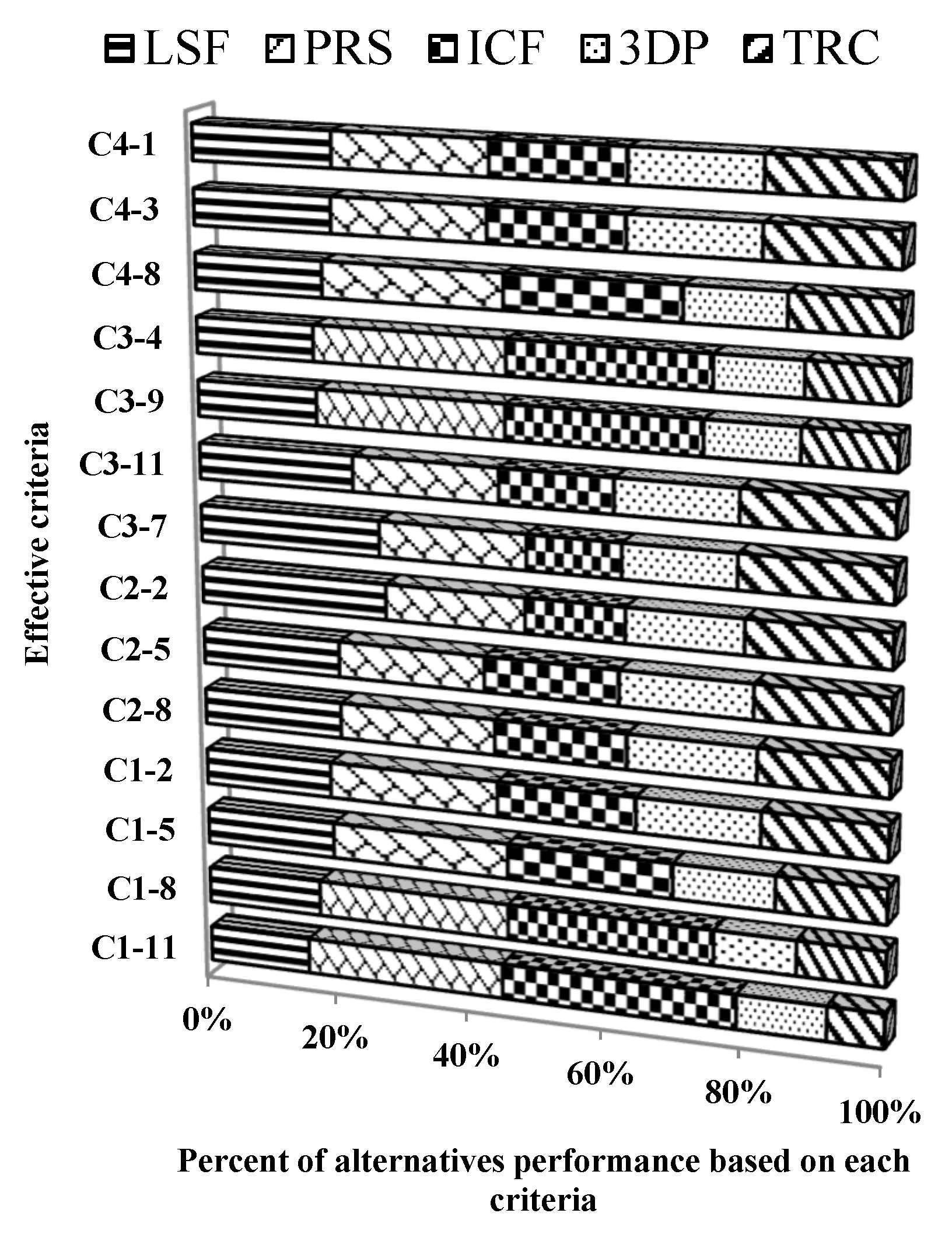
In the second section of this phase, the Fuzzy ARAS method was used to rank the structural systems in terms of accessibility of factors affecting the sustainable material selection in mass-housing projects. In the structural system ranking process, the fuzzy ARAS method was used to determine the frequency of key factors and the fuzzy decision-making matrix corresponding to each factor based on the opinions of experts. This matrix consisted of 17 final factors (criteria) and 5 building systems (alternatives). The computational process as well as the fuzzy decision-making matrix development process for the different structural factors and systems are briefly presented in Table 10. The first row of this matrix encompasses the hypothetical ideal value for the criteria (A0). The weight obtained from the fuzzy SWARA method (the method used to rank factors in the previous section) was taken as the initial weight of the criteria in the decision matrix. The benefit–cost criteria were also specified for each of the alternatives. Once the fuzzy decision matrix was normalized and a weighted normalized matrix was derived from it, the utility (degree of utility) fuzzy function () was calculated (Table 10 and Table 11) with respect to Siα, Siβ, and Siγ which represent the most pessimistic, probable, and optimistic values of the triangular fuzzy number, respectively. Finally, the obtained value was defuzzified using the COD method in order to obtain the relative degree of utility (Qi) of each alternative (structural system) with respect to each of the key factors. The final rank of the alternatives was determined as shown in Figure 6. The results could be used to evaluate different alternatives in terms of key factors affecting the sustainable material selection. For instance, in this case, the comparative priority of the alternatives was examined based on the most important key factors obtained from the previous phase (C1-5, C2-5, C3-9, and C4-1). The results showed that PRC, ICF, and LSF systems had respectively higher comparative priorities in terms of factor C1-5. However, when it came to factor C2-5, LSF, PRC, and ICF systems were more preferable, respectively. PRC, ICF, and 3DP systems were found to be among the top ranking priorities in terms of factor C3-9. LSF, ICF, and PRC systems were found to be most desirable (respectively) with respect to factor C4-1. Finally, the overall alternative ranking results showed that LSF, ICF, and PRC systems with utility degrees of 1.800, 1.614, and 1.536, could be identified as the most preferred systems in terms of meeting sustainable material selection goals in mass-housing projects.
Table 10.
Summary of the fuzzy ARAS computations and decision-matrix development process for each key factor and structural system.
Table 11.
Results of structural system ranking based on utility function (degree of desirability) in fuzzy ARAS method.
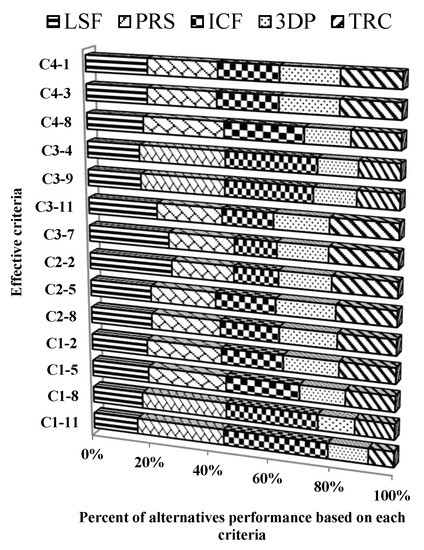
Figure 6.
Degree of utility and ranking of the structural systems according to each of the key factors.
5. Conclusions
The construction industry in Iran is recognized as one of the most important industries involving the national economy and people’s livelihoods. It is a long-term and complex task of implementing sustainable development in Iran, where opportunities and challenges coexist. Since selection of the sustainable materials and structural systems involves many affecting factors, identifying the core drivers of this selection can help governments, industry organizations, and enterprise management achieve the sustainable development goals faster and better.
In the present paper, a decision-making support model was proposed for evaluating the factors affecting the selection of sustainable materials, as well as choosing the optimal structural system in building projects. The methodology of the proposed decision-making support model consists of a three-phase protocol with integrated Delphi–SWARA–ARAS methods in a fuzzy environment.
In phase I, an in-depth review of the literature was used to identify the most important factors affecting the sustainable materials selection in construction projects. These drivers included 42 main factors. At the next step, the identified factors were assigned to groups of main indicators, and the content validity of the indicators was determined based on the experts’ opinions. In phase II, Likert scale-based structured questionnaires were designed to elicit the experts’ opinions on the significance of the factors. Afterwards, taking into account the uncertainties associated with the opinions of experts, the researchers used the fuzzy Delphi method (FDM) to determine the relative significance of the factors. In phase III, taking into account the uncertainties related to the decision-making process, the researchers used hybrid fuzzy SWARA–fuzzy ARAS methods to screen and prioritize the efficient key factors in the process of sustainable material selection. Finally, the preferred structural systems for mass-housing projects were selected. The 42 identified factors in phase I, using the FDM, were classified into four main indicators (technical-executive (C1), economic (C2), environmental (C3), socio-cultural (C4)) in accordance with sustainable development aspects. The results of the fuzzy SWARA method were used to determine the key factors affecting the sustainable material selection. Based on the FDM implementation in phase II, the 14 identified factors were extracted as sufficient factors. These factors include: implementation (C1-2); operational flexibility (C1-5); resistance to weathering, humidity, water, and fire (C1-8); adaptation with technical standards (C1-11); updated technology (C2-2); life-cycle cost (C2-5); energy cost (C2-8); energy consumption (C3-4); reusability (C3-7); compatibility with sustainable certifications (C3-9); water savings (C3-11); human health and safety (C4-1); compatibility with identity (C4-3); and human satisfaction (C4-8). The results showed that operational flexibility, life-cycle cost, compatibility with sustainable certifications, and human health and safety were the most important four factors affecting to sustainable material selection in the related C1, C2, C3, and C4 indicators. The results also showed that adaptation with technical standards, energy cost, reusability, and compatibility with identity were ranked as second by each of the mentioned indicators, respectively. The results of phase II based on the fuzzy SWARA method implementation were used to determine the key factors affecting the sustainable material selection. The results of this phase indicated that the factors associated with each main indicator can be comparatively prioritized as follows: indicator C1 (C1-4 > C1-2 > C1-5), indicator C2 (C2-5 > C2-3 > C2-1), indicator C3 (C3-8 > C3-4 > C3-6), and indicator C4 (C4-4 > C4-10 > C4-5). Finally, the results of the fuzzy ARAS method in phase III (during the process of ranking optimal structural systems based on 14 efficient key factors) indicated that the LSF, ICF, and PRC systems can be prioritized as the most preferred systems, respectively (in terms of fulfillment of sustainable development goals) in mass-housing projects. In other words, the aforementioned systems can play a more effective role (as compared to the identified subcriteria) in the implementation of the new building system in terms of sustainable material selection.
The proposed support model in the present paper can be used as a valuable benchmark by mass-housing construction beneficiaries seeking to increase the sustainability of construction projects. The framework solved the problem that experts cannot give accurate quantitative judgments on real and complicated problems and used the fuzzy hybrid approaches and triangular fuzzy numbers in real-life methods. The analysis indicated that the adopted hybrid approach had good stability and robustness. Under different mutual weights, the sorting trend was basically the same. This paper sheds light on the key factors of sustainable material selection and the optimal structural system in mass-housing projects, filling the gap between the existing literature and sustainable material selection research. The analysis provides employer, contractor, and consultant companies at all levels, enterprise managers, engineers, technicians, and related researchers with a deeper understanding of sustainable material selection and its implementation to choose the optimal structural system in mass-housing projects.
Differences in research results may exist when this study method is applied to other regions of Iran. Although our proposed framework is a pioneering study using new hybrid methods in fuzzy environment on the implementation of sustainable material selection and optimal structural system, the empirical analysis and the fuzzy MCDM approach used in this research can still be used for evaluating the implementation of sustainable material selection in other countries. Additionally, the main difference and innovation of this research is the consideration of a large number of material selection criteria, and the presentation of a hybrid system with decision-making methods which have been used less in past research on this issue is one of the other innovations of this article. However, the approach proposed in the present study can utilize a larger number of criteria and alternatives to evaluate other construction projects, especially in cases where decision-making goals are contradictory.
Author Contributions
Conceptualization, E.A. and H.Y.; methodology, E.A.; software, E.A.; validation, E.A.; formal analysis, E.A.; investigation, E.A. and H.Y.; data curation, E.A. and H.Y.; writing—original draft preparation, H.Y. and M.K.; writing—review and editing, E.A., H.Y. and M.K.; visualization, E.A.; supervision, H.Y.; project administration, E.A., H.Y. and M.K. All authors have read and agreed to the published version of the manuscript.
Funding
This research received no external funding.
Institutional Review Board Statement
Not applicable.
Informed Consent Statement
Not applicable.
Data Availability Statement
Data available on request due to restrictions.
Acknowledgments
The authors are grateful for the valuable comments and suggestions of the respected reviewers. These comments enhanced the strength and significance of our paper.
Conflicts of Interest
Authors declare no conflict of interest.
References
- Jahan, A.; Ismaeil, M.Y.; Sapuan, S.M.; Mustapha, F. Material screening and choosing methods—A review. Mater. Des. 2010, 312, 696–705. [Google Scholar] [CrossRef]
- Sahlol, D.G.; Elbeltagi, E.; Elzoughiby, M.; Elrahman, M.A. Sustainable building materials assessment and selection using system dynamics. J. Build. Eng. 2021, 35, 101978. [Google Scholar] [CrossRef]
- Bakhoum, E.S.; Brown, D.C. Developed sustainable scoring system for structural materials evaluation. J. Constr. Eng. Manag. 2012, 1381, 110–119. [Google Scholar] [CrossRef]
- Singh, A.K.; Avikal, S.; Kumar, K.C.N.; Kumar, N.; Thakura, P. A fuzzy–AHP and M − TOPSIS based approach for selection of composite materials used in structural applications. Mater. Today 2020, 262, 3119–3123. [Google Scholar] [CrossRef]
- Agrawal, R. Sustainable material selection for additive manufacturing technologies: A critical analysis of rank reversal approach. J. Clean. Prod. 2021, 296, 126500. [Google Scholar] [CrossRef]
- Akadiri, P.O.; Olomolaiye, P. Development of sustainable assessment criteria for building materials selection. Eng. Constr. Archit. Manag. 2012, 196, 666–687. [Google Scholar] [CrossRef]
- Emovon, I.; Oghenenyerovwho, O.S. Application of MCDM method in material selection for optimal design: A review. Results Mater. 2020, 7, 100115. [Google Scholar] [CrossRef]
- Mahmoudkelaye, S.; Taghizade Azari, K.; Pourvaziri, M.; Asadian, E. Sustainable material selection for building enclosure through ANP method. Case Stud. Constr. Mater. 2019, 9, e00200. [Google Scholar] [CrossRef]
- Vilutiene, T.; Kumetaitis, G.; Kiaulakis, A.; Kalibatas, D. Assessing the Sustainability of Alternative Structural Solutions of a Building: A Case Study. Buildings 2020, 10, 36. [Google Scholar] [CrossRef]
- Akadiri, P.O.; Olomolaiye, P.O.; Chinyio, E.A. Multi–criteria evaluation model for the selection of sustainable materials for building projects. Autom. Constr. 2013, 304, 12–24. [Google Scholar] [CrossRef]
- Onut, S.; Kara, S.S.; Mert, S. Selecting the suitable material handling equipment in the presence of vagueness. Int. J. Adv. Manuf. Technol. 2009, 44, 818–828. [Google Scholar] [CrossRef]
- Mohamed, A.; Celik, T. An integrated knowledge–based system for alternative design and materials selection and cost estimating. Expert Syst. Appl. 1998, 143, 329–339. [Google Scholar] [CrossRef]
- Tuzkaya, G.; GuÈlsuÈn, B.; Kahraman, C.; Ozgen, D. An integrated fuzzy multi–criteria decision making methodology for material handling equipment selection problem and an application. Expert Syst. Appl. 2010, 374, 2853–2863. [Google Scholar] [CrossRef]
- Govindan, K.; Shankar, K.M.; Kannan, D. Sustainable material selection for construction industry: A hybrid multi criteria decision making approach. Renew. Sustain. Energy Rev. 2016, 55, 1274–1288. [Google Scholar] [CrossRef]
- Hatefi, S.M.; Asadi, H.; Shams, G.; Tamošaitienė, J.; Turskis, Z. Model for the sustainable material selection by applying integrated dempster-shafer Evidence theory and additive ratio assessment (ARAS) method. Sustainability 2021, 13, 10438. [Google Scholar] [CrossRef]
- Zhou, C.-C.; Yin, G.-F.; Hu, X.-B. Multi-objective optimization of material selection for sustainable products: Artificial neural networks and genetic algorithm approach. Mater. Des. 2009, 304, 1209–1215. [Google Scholar] [CrossRef]
- Chatterjee, P.; Athawale, V.M.; Chakraborty, S. Selection of materials using compromise ranking and outranking methods. Mater. Des. 2009, 30, 4043–4053. [Google Scholar] [CrossRef]
- Rao, R.V.; Davim, J.P. A decision-making framework model for material selection using a combined multiple attribute decision-making method. Int. J. Adv. Manuf. Technol. 2006, 35, 751–760. [Google Scholar] [CrossRef]
- Rahman, S.; Odeyinka, H.; Perera, S.; Bi, Y. Product-cost modelling approach for the development of a decision support system for optimal roofing material selection. Expert Syst. Appl. 2012, 398, 6857–6871. [Google Scholar] [CrossRef]
- Liu, H.C.; You, J.X.; Zhen, L.; Fan, X.J. A novel hybrid multiple criteria decision making model for material selection with target-based criteria. Mater. Des. 2014, 60, 380–390. [Google Scholar] [CrossRef]
- Zhao, R.; Su, H.; Chen, X.; Yu, Y. Commercially available materials selection in sustainable design: An integrated multi-attribute decision making approach. Sustainability 2016, 81, 79. [Google Scholar] [CrossRef]
- Afrasiabi, A.; Tavana, M.; Di Caprio, D. An extended hybrid fuzzy multi-criteria decision model for sustainable and resilient supplier selection. Environ. Sci. Pollut. Res. 2022, 29, 37291–37314. [Google Scholar] [CrossRef] [PubMed]
- Gul, M.; Celik, E.; Gumus, A.T.; Guneri, A.F. A fuzzy logic based PROMETHEE method for material selection problems. Beni–Suef Univ. J. Basic Appl. Sci. 2018, 71, 68–79. [Google Scholar] [CrossRef]
- Khoshnava, S.M.; Rostami, R.; Valipour, A.; Ismail, M.; Rahmat, A.R. Rank of green building material criteria based on the three pillars of sustainability using the hybrid multi criteria decision making method. J. Clean. Prod. 2018, 173, 82–99. [Google Scholar] [CrossRef]
- Kiani, B.; Lianga, R.Y.; Gross, J. Material selection for repair of structural concrete using VIKOR method. Case Stud. Constr. Mater. 2018, 8, 489–497. [Google Scholar] [CrossRef]
- Mousavi-Nasab, S.H.; Sotoudeh-Anvari, A. A new multi-criteria decision making approach for sustainable material selection problem: A critical study on rank reversal problem. J. Clean. Prod. 2018, 182, 466–484. [Google Scholar] [CrossRef]
- Chen, Z.S.; Martínez, L.; Chang, J.P.; Wang, X.J.; Xionge, S.H.; Chin, K.S. Sustainable building material selection: A QFD- and ELECTRE III-embedded hybrid MCGDM approach with consensus building. Eng. Appl. Artif. Intell. 2019, 85, 783–807. [Google Scholar] [CrossRef]
- Rajeshkumar, V.; Anandaraj, S.; Kavinkumar, V.; Elango, K.S. Analysis of factors influencing formwork material selection in construction buildings. Mater. Today Proc. 2021, 372, 880–885. [Google Scholar] [CrossRef]
- Mayhoub, M.M.G.; El Sayad, Z.M.T.; Ali, A.A.M.; Ibrahim, M.G. Assessment of Green Building Materials’ Attributes to Achieve Sustainable Building Façades Using AHP. Buildings 2021, 11, 474. [Google Scholar] [CrossRef]
- Chen, Z.S.; Yang, L.L.; Chin, K.S.; Yang, Y.; Pedrycz, W.; Chang, J.P.; Martínez, L.; Skibniewski, M.J. Sustainable building material selection: An integrated multi-criteria large group decision making framework. Appl. Soft Comput. 2021, 113, 107903. [Google Scholar] [CrossRef]
- Majer, J.; Vavřínová, N.; Stejskalová, K.; Pentková, L. Software for the Multi-Criteria Design of the External Walls Based on User Priority. Buildings 2022, 12, 647. [Google Scholar] [CrossRef]
- Sekaran, U.; Bougie, R. Research Methods for Business, 5th ed.; John Wiley Sons Ltd.: Chichester, UK, 2009. [Google Scholar]
- Chan, C.M.R.; Harris, F.C. A database/spreadsheet application for equipment selection. Constr. Manag. Econ. 2006, 73, 235–247. [Google Scholar] [CrossRef]
- Cohen, N.; Arieli, T. Field research in conflict environments: Methodological challenges and snowball sampling. J. Peace Res. 2011, 484, 423–435. [Google Scholar] [CrossRef]
- Ferrante, A.; Mihalakakou, G. The influence of water, green and selected passive techniques on the rehabilitation of historical industrial buildings in urban areas. Sol. Energy 2001, 703, 245–253. [Google Scholar]
- Zadeh, L.A. The concept of a linguistic variable and its application to approximate reasoning. Inf. Sci. 1975, 8, 199–249. [Google Scholar] [CrossRef]
- Pelletier, F.J. Review of metamathematics of fuzzy logics. Bull. Symb. Log. 2020, 63, 342–346. [Google Scholar]
- Zadeh, L.A. Fuzzy Sets. Inf. Control 1965, 8, 338–353. [Google Scholar] [CrossRef]
- Atanasov, K. Intuitionistic fuzzy sets. Int. J. Bioautom. 2016, 20, S1–S6. [Google Scholar]
- Zimmermann, H.-J. Fuzzy Set Theory-and Its Applications; Springer: Dordrecht, The Netherlands, 2001. [Google Scholar] [CrossRef]
- Deschrijver, G.; Kerre, E.E. On the relationship between some extensions of fuzzy set theory. Fuzzy Sets Syst. 2003, 1332, 227–235. [Google Scholar] [CrossRef]
- Kwong, C.K.; Bai, H. Determining the importance weights for the customer requirements in QFD using a fuzzy AHP with an extent analysis approach. IIE Trans. 2003, 357, 619–626. [Google Scholar] [CrossRef]
- Lawshe, C.H. A quantitative approach to content validity. Pers. Psychol. 1975, 28, 563–575. [Google Scholar] [CrossRef]
- Blaikie, N. Analyzing Quantitative Data: From Description to Explanation; SAGE Publications Ltd.: London, UK, 2003. [Google Scholar]
- Sekaran, U. Research Methods for Business; John Wiley Sons: Hoboken, NJ, USA, 2003. [Google Scholar]
- Dalkey, N.; Helmer, O. An experimental application of the Delphi method to the use of experts. Manag. Sci. 1963, 93, 458–467. [Google Scholar] [CrossRef]
- Rowe, G.; Wright, G. The Delphi technique as a forecasting tool: Issues and analysis. Int. J. Forecast. 1999, 154, 353–375. [Google Scholar] [CrossRef]
- Keršuliene, V.; Zavadskas, E.K.; Turskis, Z. Selection of rational dispute resolution method by applying new step-wise weight assessment ratio analysis SWARA. J. Bus. Econ. Manag. 2010, 112, 243–258. [Google Scholar] [CrossRef]
- Zolfani, S.H.; Saparauskas, J. New application of SWARA method in prioritizing sustainability assessment indicators of energy system. Econ. Eng. Decis. 2013, 245, 408–414. [Google Scholar] [CrossRef]
- Mardani, A.; Nilashi, M.; Zakuan, N.; Loganathan, N.; Soheilirad, S.; Saman, M.Z.M.; Ibrahim, O. A systematic review and meta-Analysis of SWARA and WASPAS methods: Theory and applications with recent fuzzy developments. Appl. Soft Comput. 2017, 57, 265–292. [Google Scholar] [CrossRef]
- Kou, G.; Ergu, D.; Lin, C.; Chen, Y. Pairwise comparison matrix in multiple criteria decision making. Technol. Econ. Dev. Econ. 2016, 225, 738–765. [Google Scholar] [CrossRef]
- Zavadskas, E.K.; Turskis, Z. A new additiveratio assessment ARAS method in multicriteria decision–making. Technol. Econ. Dev. Econ. 2010, 162, 159–172. [Google Scholar] [CrossRef]
- Zavadskas, E.K.; Turskis, Z. Multiple criteria decision making MCDM methods in economics: An overview. Technol. Econ. Dev. Econ. 2011, 172, 397–427. [Google Scholar] [CrossRef]
- Zavadskas, E.K.; Turskis, Z.; Vilutienė, T.; Lepkova, N. Integrated group fuzzy multi-criteria model: Case of facilities management strategy selection. Expert Syst. Appl. 2017, 82, 317–331. [Google Scholar] [CrossRef]
- Mavi, R.K.; Goh, M.; Zarbakhshnia, N. Sustainable third-party reverse logistic provider selection with fuzzy SWARA and fuzzy MOORA in plastic industry. Int. J. Adv. Manuf. Technol. 2017, 91, 2401–2418. [Google Scholar] [CrossRef]
- Ayyildiz, E. Fermatean fuzzy step-wise Weight Assessment Ratio Analysis (SWARA) and its application to prioritizing indicators to achieve sustainable development goal-7. Renew. Energy 2022, 193, 136–148. [Google Scholar] [CrossRef]
- Stanujkic, D. Extension of the ARAS method for decision–making problems with interval–valued triangular fuzzy numbers. Informatica 2015, 26, 335–355. [Google Scholar] [CrossRef]
Publisher’s Note: MDPI stays neutral with regard to jurisdictional claims in published maps and institutional affiliations. |
© 2022 by the authors. Licensee MDPI, Basel, Switzerland. This article is an open access article distributed under the terms and conditions of the Creative Commons Attribution (CC BY) license (https://creativecommons.org/licenses/by/4.0/).