


Abstract
The current study aims to enhance the efficiency of lead-free glass as a shielding material against radiation, solve the problem of the dark brown of bismuth glass, and reduce the accumulation of waste glass disposed in landfills by using soda-lime-silica SLS glass waste. The melt-quenching method was utilized to fabricate (WO [(BiO) (ZnO) (BO) (SLS)] at 1200 °C, where x = (0, 0.01, 0.02, 0.03, 0.04, and 0.05 mol). Soda lime silica SLS glass waste, which is mostly composed of 74.1 % SiO, was used to obtain SiO. Radiation Attenuation parameters were investigated using narrow-beam geometry and X-ray fluorescence (XRF). Furthermore, the parameters related to radiation shielding were calculated. The results showed that when WO concentration was increased, the half-value layer was reduced, whereas the increased. It could be concluded that WBiBZn-SLS glass is a good shielding material against radiation, nontoxic, and transparent to visible light.
1. Introduction
Radiation is defined as the energy that is emitted from a source and passes through space penetrating a variety of materials. It may also be utilized in a variety of applications, such as radiation therapy, agriculture, industry, radioisotope projects, and particle accelerators. However, the several advantages of radiation may be quite hazardous when exposed to large doses that are above the safe limits. To manage the radiation dose at a safe level, researchers are focused on radiation shielding materials [1,2,3]. Radiation shielding depends on the attenuation principle, which is the ability to absorb or attenuate radiation. Radiation shielding materials can be defined as protective materials to reduce exposure to radiation by placing material between the radiation source and a person. Concrete is considered to be a conventional and economical technique used for shielding purposes. Concrete is efficient and cheap, and can be easily shaped into any desired design [4]. However, there are some limitations related to concrete, such as its opacity, preventing visible light from passing through, and its mechanical strength being reduced when exposed to radiation for a longer period of time [5,6,7,8]. Glass is a type of radiation shielding material that can be an alternative to concrete for protection from radiation risks due to its remarkable chemical and physical properties, such as excellent optical transparency to visible light, simplicity of manufacturing, nontoxicity, low cost, and its physical characteristics, such as density and effective atomic number, can be changed by inserting heavy metal oxides into the glass network for use as radiation shielding material [9,10,11].
Recently, researchers have focused on the preparation of heavy metal oxide glass such as PbO, BaO, and BiO for use as radiation shielding material because they possess desirable features such as high density, strong nonlinear optical susceptibility, and excellent -ray shielding [12,13,14,15]. PbO-based glasses have high density and are favorable in many applications [16,17]. However, PbO glass is limited due to its toxicity to human health and the environment. Consequently, researchers have focused ecofriendly alternatives such as BiO instead of lead’s environmental toxicity [18,19,20]. BiO glass is considered to be a suitable alternative to PbO glasses to use in radiation shielding implementations due to its unique characteristics such as high radiation protection, high density, high refractive index, and nontoxicity [21]. Glass containing BiO is a good option for radiation protection. This result is consistent with a number of studies [21,22,23,24]. High concentrations of BiO in glass modify the colour of the glass, turning it dark brown or black, and raise the melting temperature [25]. Material scientists and glass developers are facing technical challenges in developing high-transmission BiO glass.
Manufacturing industries play a significant role in economic growth. This industrialization produces an enormous amount of solid waste that causes environmental problems due to the accumulation of waste and limited landfill sites. To solve these problems, researchers are focused on treating and converting solid waste into more valuable and environmentally friendly materials [26,27,28]. Glass is an example of solid waste that needs long periods of time to decompose. For this reason, there is much interest in using glass as an alternative source of SiO, and in reusing silica-rich waste such as clamshells, eggshells, fly ash, and soda–lime–silica (SLS) to reduce high-cost chemical materials and dispose of waste [28,29,30]. SLS glass is widely used as windowpanes glass containers and flat glass or container wares. SLS glass is preferred when compared to conventional glass because it has a good glass-forming nature and is composed of SiO, NaO, CaO, MgO, and AlO; so, much research uses SLS as an alternative source of silicon [31,32,33,34,35].
The current work aims to use soda–lime–silica waste glass SLS in order to prepare a lead-free glass radiation shield, it is necessary to decrease the buildup of SLS glass waste and manufacturing expenses, and improve its efficiency to attenuate photon intensity, which can be used as radiation protection in addition to increasing the optical characteristics of glass samples by decreasing their dark brown or black color. The linear, mass attenuation coefficients, and other parameters related to attenuation studies were investigated.
2. Materials and Methods
2.1. Glass Preparation
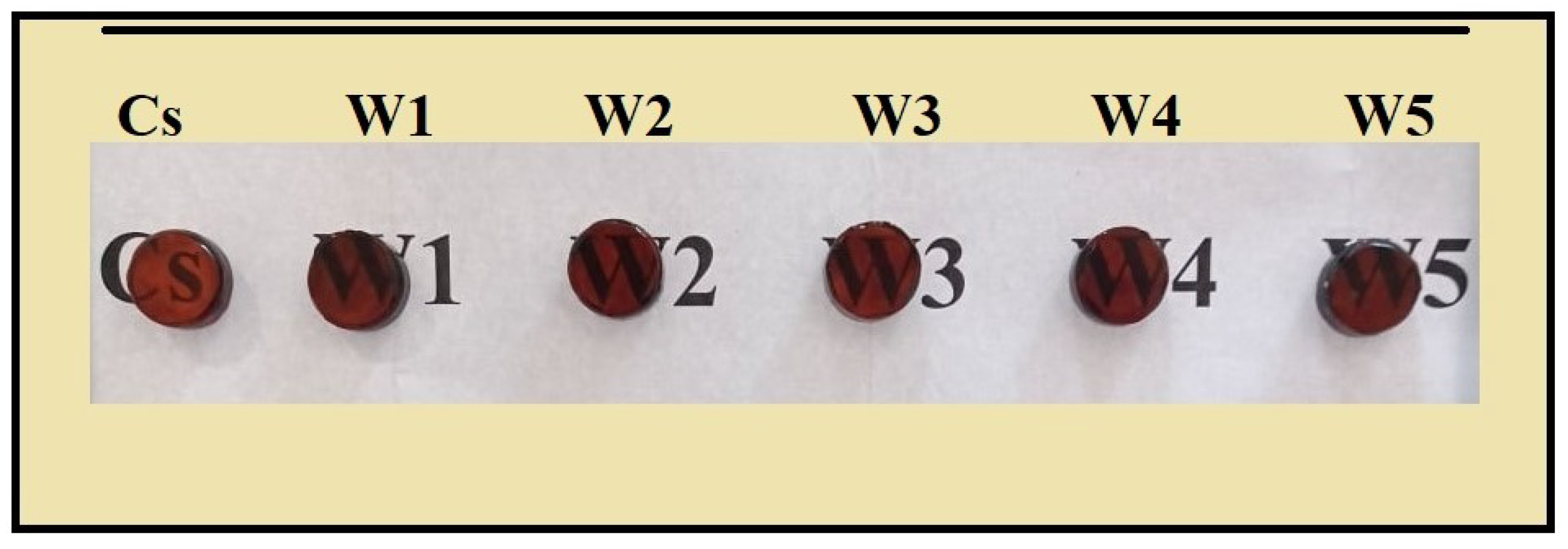
In this work, SLS glass waste was used as an alternative source of silicon SiO by crushing it into powder using a mortar and pestle. Chemical powders such as BiO, ZnO, BO, and WO were used to prepare glass samples with composition (WO)[(BiO) (ZnO) (BO) (SLS)], where x = (0, 0.01, 0.02, 0.03, 0.04 and 0.05 mol). The melt-quenching method was utilized to fabricate the glass samples. The chemical powders were blended, thoroughly crushed for 10 min in a mortar and pestle, and transported to an alumina crucible. After that, the crucible was placed in the electric furnace where the temperature of the furnace progressively rose to 1200 °C at a rate of 10 °C/min and was held for 1.5 h for melting. After that, the molten mixture was poured into a preheated cylinder brass plate and annealed for about 1 hour at approximately 350 °C in order to avoid strains and internal mechanical stress. Lastly, samples were polished to evaluate the characteristics of the glass after cooling to room temperature. These glass types have a thickness of 6 mm, and were labeled CS, W1, W2, W3, W4, and W5, which correspond to doping levels of 0, 0.01, 0.02, 0.03, 0.04 and 0.05 mol WO, respectively (as shown in Figure 1).
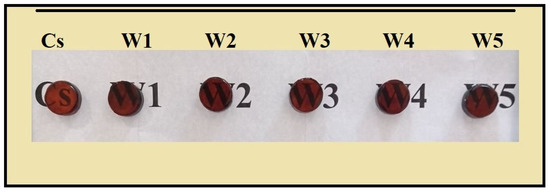
Figure 1.
Glass samples of W doped in BiO-ZnO-BO SLS glass.
2.2. Physical Properties
Density is one of the physical characteristics that may be used to investigate changes in glass structure. It is influenced by structural rigidity and variations in geometric configuration. Density was measured according to the Archimedes principle using the following formula [36]:
where is distilled water density, a is the weight of the glass sample in air, and b is the weight of the glass sample in distilled water. The molar volume is and oxygen packing density is OPD. was calculated using the following equation [37].
Oxygen packing density OPD provides information about the glass network’s tightness. The OPD is measured utilizing the following equation:
where c is the total number of oxygen atoms. Additional physical characteristics, including the ion concentration (N), polaron radius (), internuclear separation (), and field strength (F) were measured for all the fabricated glass samples using the following formulas [38].
2.3. Radiation Attenuation
The radiation parameters were calculated theoretically depending on the formulas explained in previous literature [18,39].
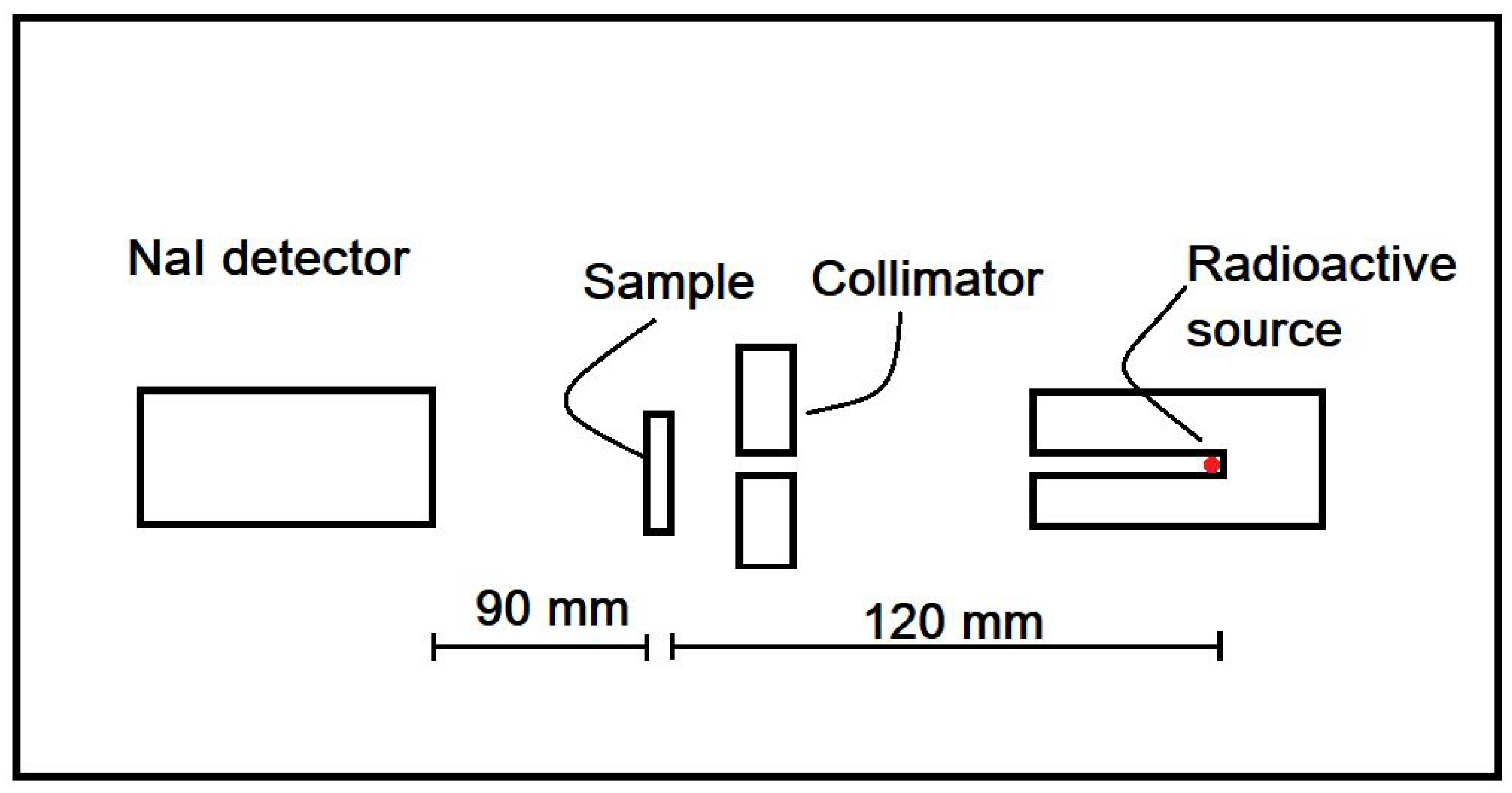
The experimental linear attenuation coefficient , mass attenuation coefficient values of the prepared glass were measured using (XRF) and narrow-beam gamma-ray transmission geometry.
Figure 2 illustrates the experimental setup of prepared glass attenuation using narrow-beam gamma-ray transmission geometry [39].
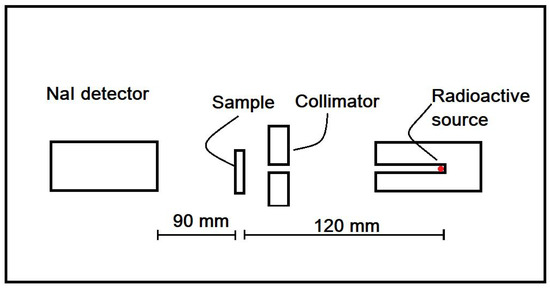
Figure 2.
Experimental setup for determining the attenuation coefficient of WBiZnB-SLS glass samples [39].
The source activity of Am-241 was 45 Ci, while the Cs-137 and Co-60 source activities were 5 Ci. Gamma rays from Am-241, Cs-137, and Co-60 of were used as point sources to emit photons with different energies.
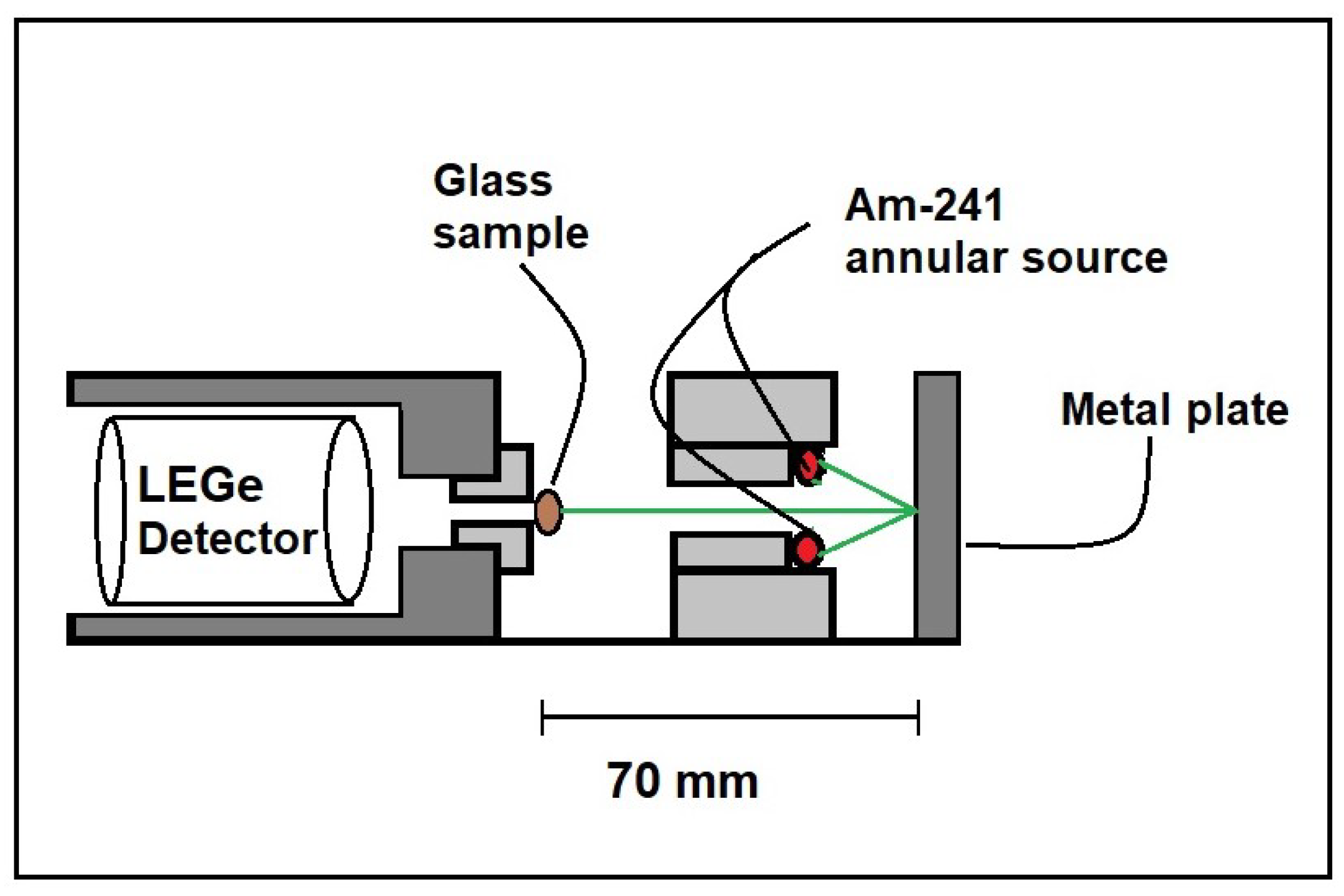
The of glass samples was determined employing X-ray fluorescent equipment (XRF). The high-purity metal plates were composed of the following elements: Nb, Mo, Sn and Pd (see Figure 3). The metal plates are detailed in Table 1.
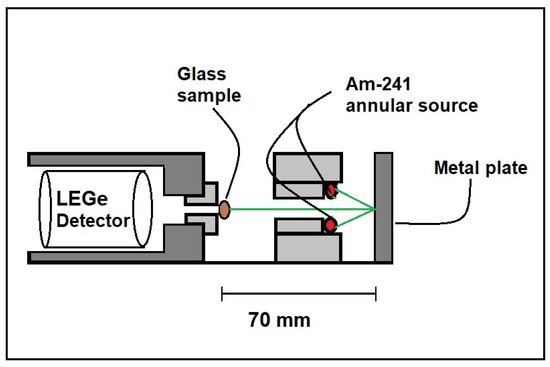
Figure 3.
Setup for X-ray fluorescence (XRF) [39].

Table 1.
The plates used in X-ray fluorescence (XRF) experiment.
3. Result and Discussion
3.1. Structural Properties
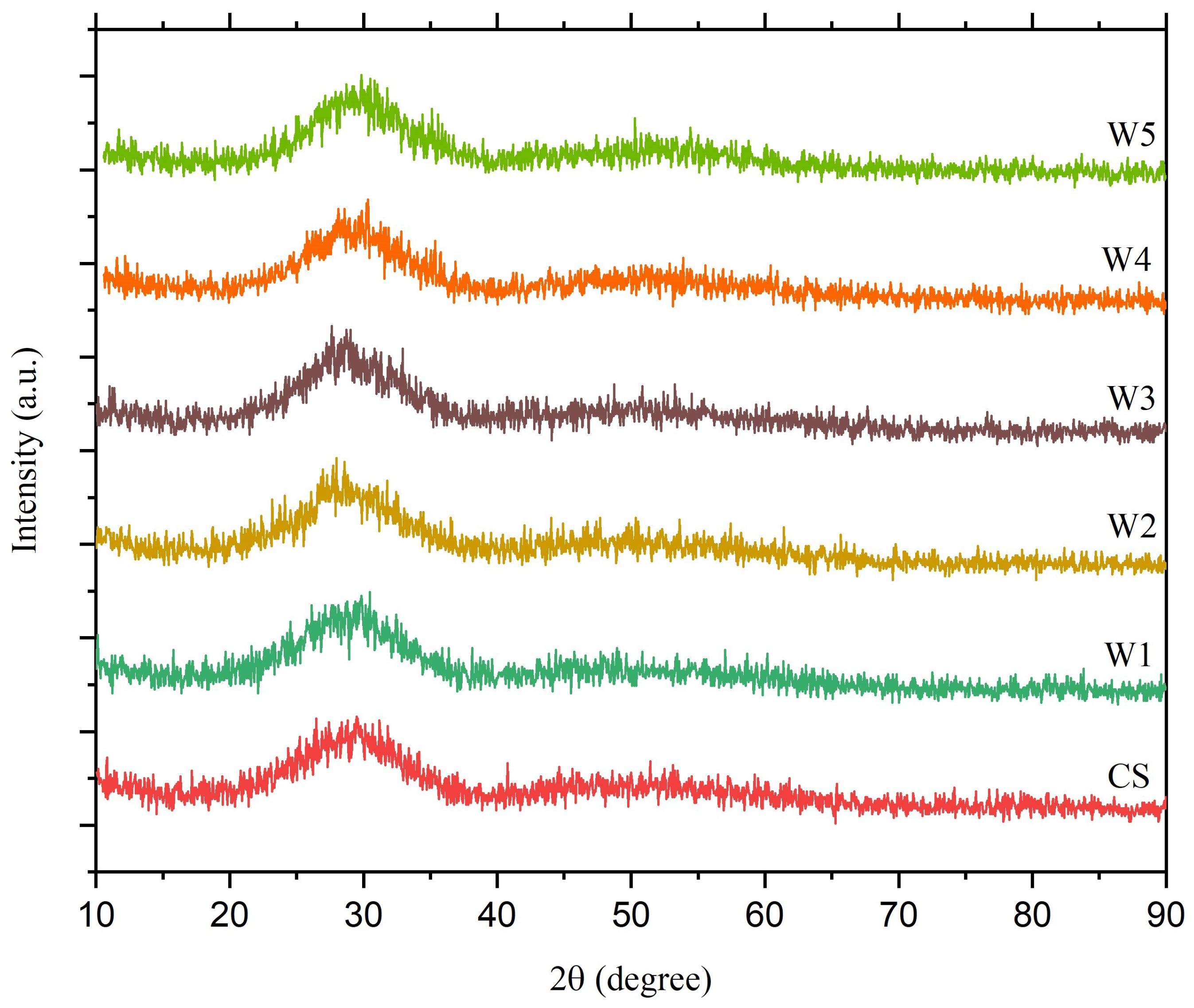
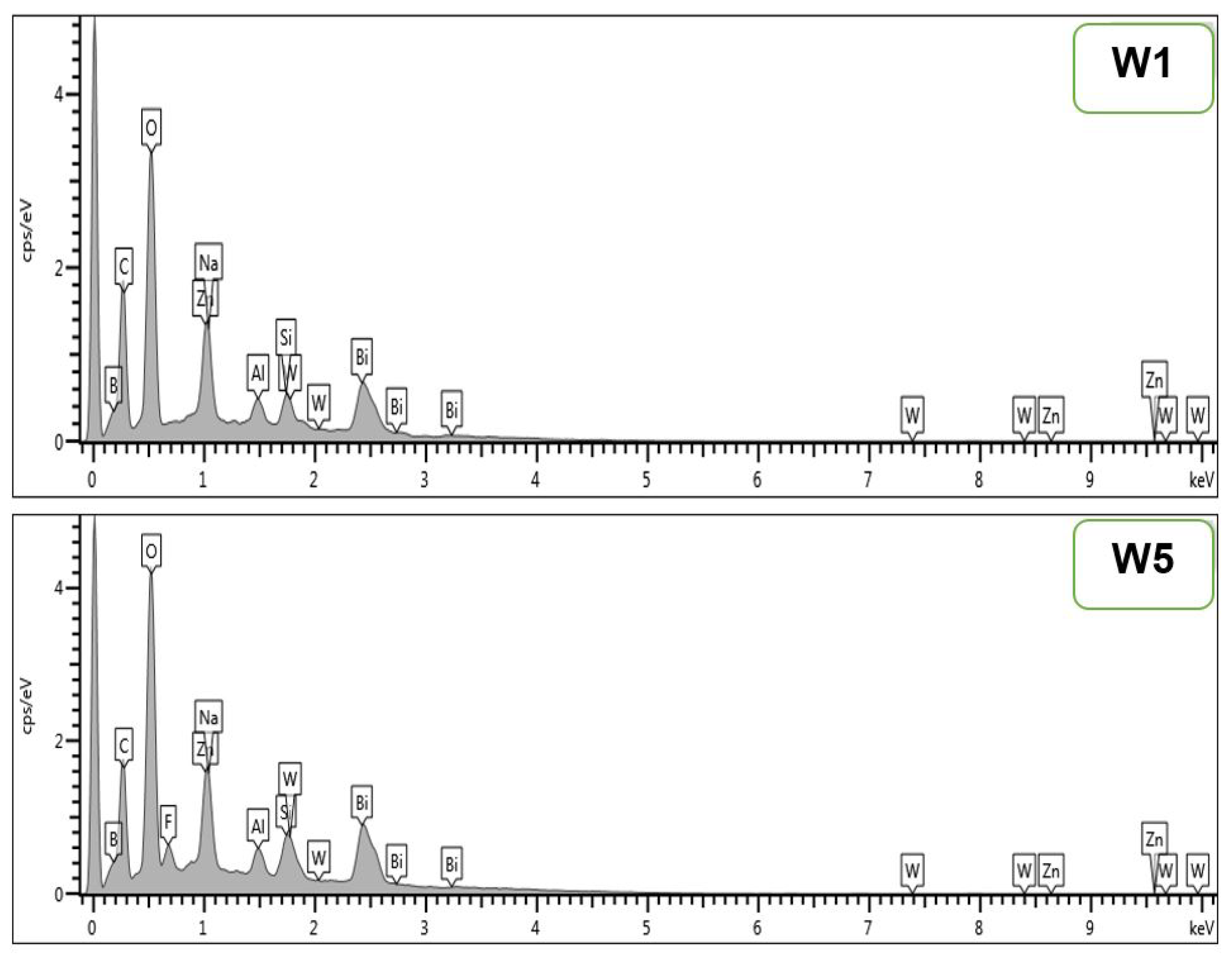
X-ray fluorescence (XRF) is an effective analytical method for characterizing SLS glass. The chemical compositions of SLS glass samples were determined through XRF analysis and are summarized in Table 2. Elements such as SiO, NaO, CaO, and other minor elements were discovered in the sample. The nature of the WBiZnB-SLS glass samples was determined using their XRD spectra, as seen in Figure 4. All samples had an obvious wide hump and lacked distinct peaks. This demonstrated that all samples were amorphous in nature [40]. EDX analysis results of the WBiZnB-SLS glass samples indicated the existence of tungsten, bismuth, oxygen, zinc, silicon, and boron components, which are shown in Figure 5.
Table 2.
Elements included in soda–lime–silica (SLS).
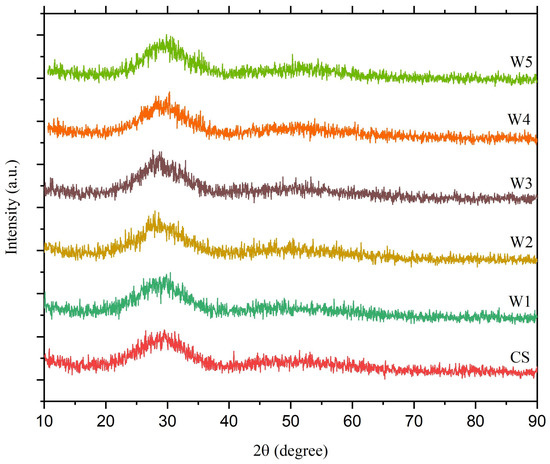
Figure 4.
XRD results of current glass samples.
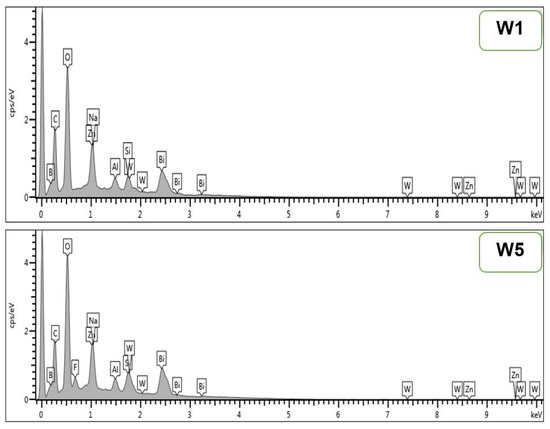
Figure 5.
EDX analysis results of WBiZnB-SLS glass samples.
3.2. Physical Properties
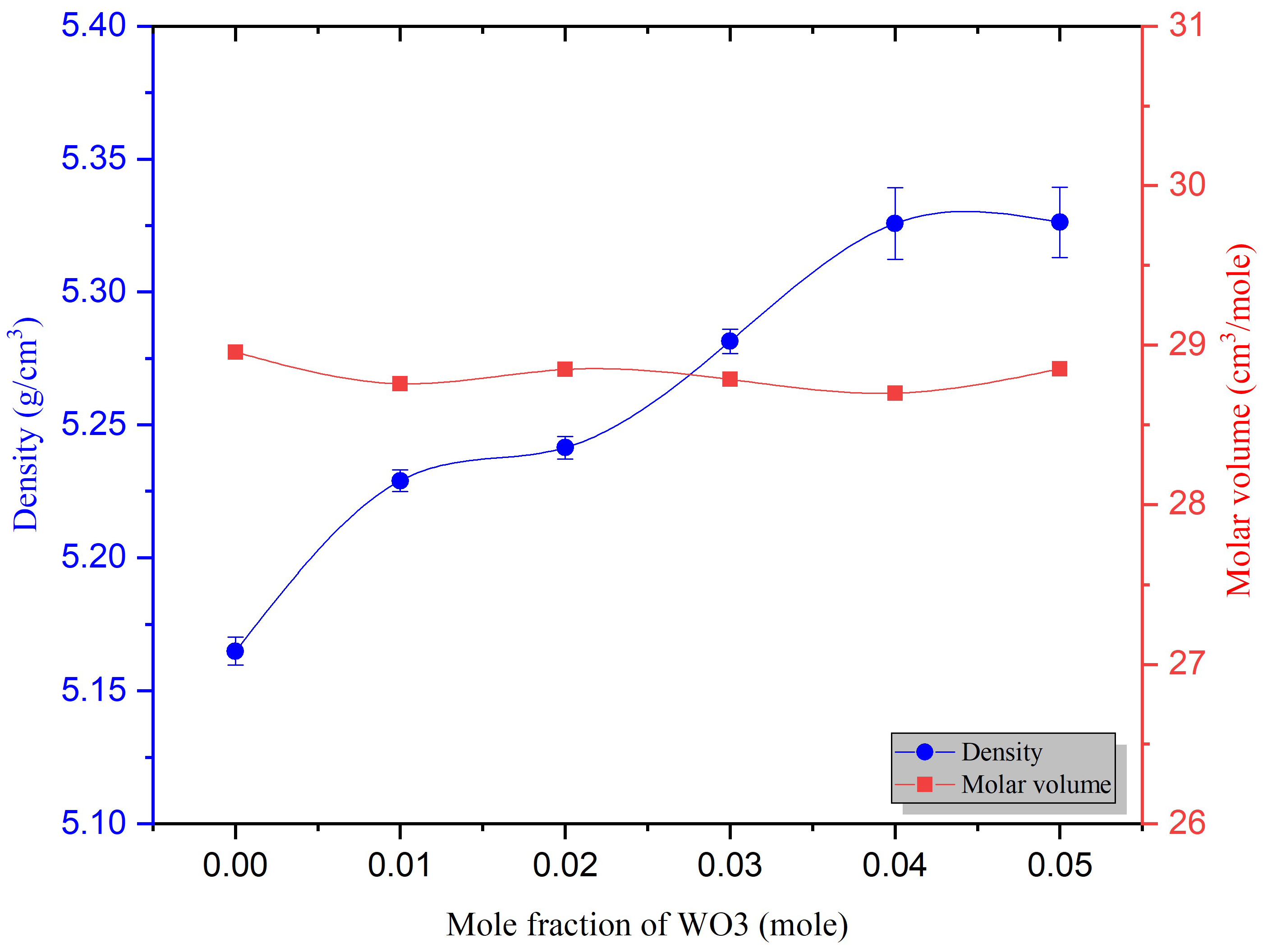
The influence of WO on the physical features was evaluated in the present study. Table 3 shows the various physical parameters of the glass samples. Differences in and with WO concentration are illustrated in Figure 6, which shows that the of the glass samples rose gradually from 5.16 to 5.31 g/cm with the increase in WO content in the glass network. The molar volume also clearly remained approximately constant with increasing WO content. These results can be explained by the dopant of WO (with a molecular weight of 231.84 gmol) in BiO-ZnO-BO-SlS glass (with a molecular weight of 149.66 gmol). The molar volume was nearly constant. This can be explained by the atomic radius of the W ion (139 pm), which is lower than that of Bi ion (156 pm). WO creates a glass structure that is more compact [41,42,43].
Table 3.
Physical properties of WBiZnB-SLS glass.
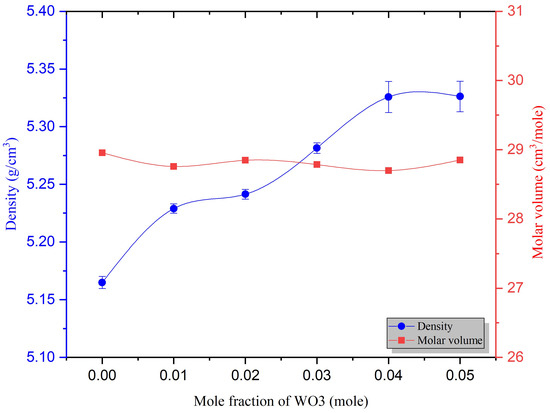
Figure 6.
WBiZnB-SLS glass density and molar volume in comparison to WO mole fraction.
The OPD of the glass samples was determined using Equation (3). According to Table 3, OPD results increased from 72.53 to 74.13 g-atom/mole. This phenomenon could be explained by increasing the amount of nonbridging oxygen in the glass network, leading to an increase in oxygen atoms per unit composition in the glass network. Due to the conversion of [BO] structural units into [BO] structural units, this resulted in a more compact glass structure, and consequently an increase in glass density [44].
Table 3 display that, when the concentration of W ions in the glass structure increased, the Polaron radius () and internuclear distance () decreased, indicating that the glass network became more compact or stiff owing to the increasing field strength (F) between W ions.
3.3. Attenuation of Gamma Rays
The experimental linear attenuation coefficients for WBiZnB-SLS samples were measured via X-ray fluorescence equipment XRF at photon energies ranging from 16.61 to 25.27 keV, as well as narrow-beam geometry at photon energies ranging from 59.54, 662, and 1333 keV. The and values are summarized in Table 4. XRF results indicate that the prepared glass samples prevented all photons from reaching the detector. In other words, the glass samples absorbed all photons when the photon energy was less than 25.27 keV.
Table 4.
Linear and mass attenuation coefficients of the current SLS glass system.
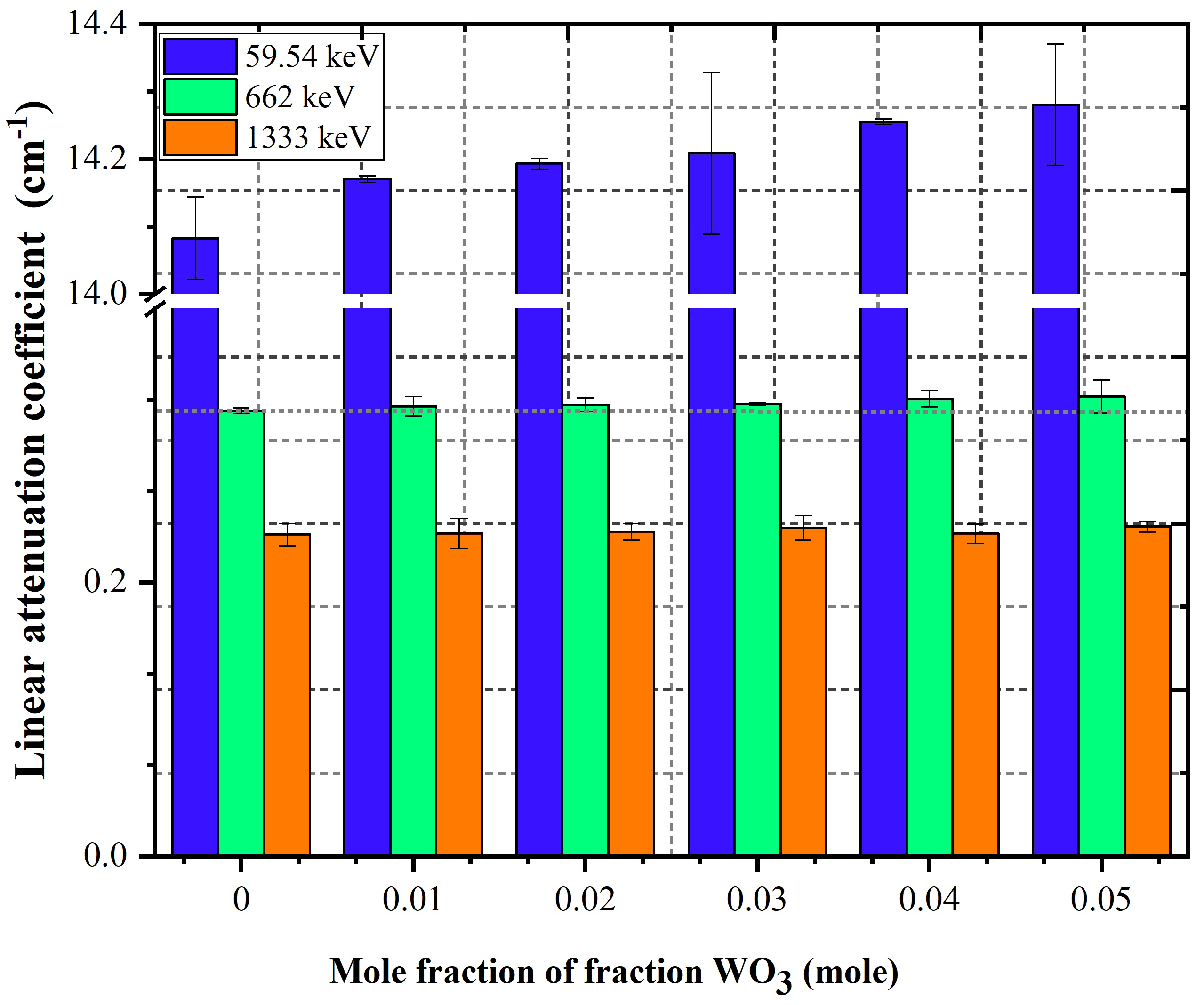
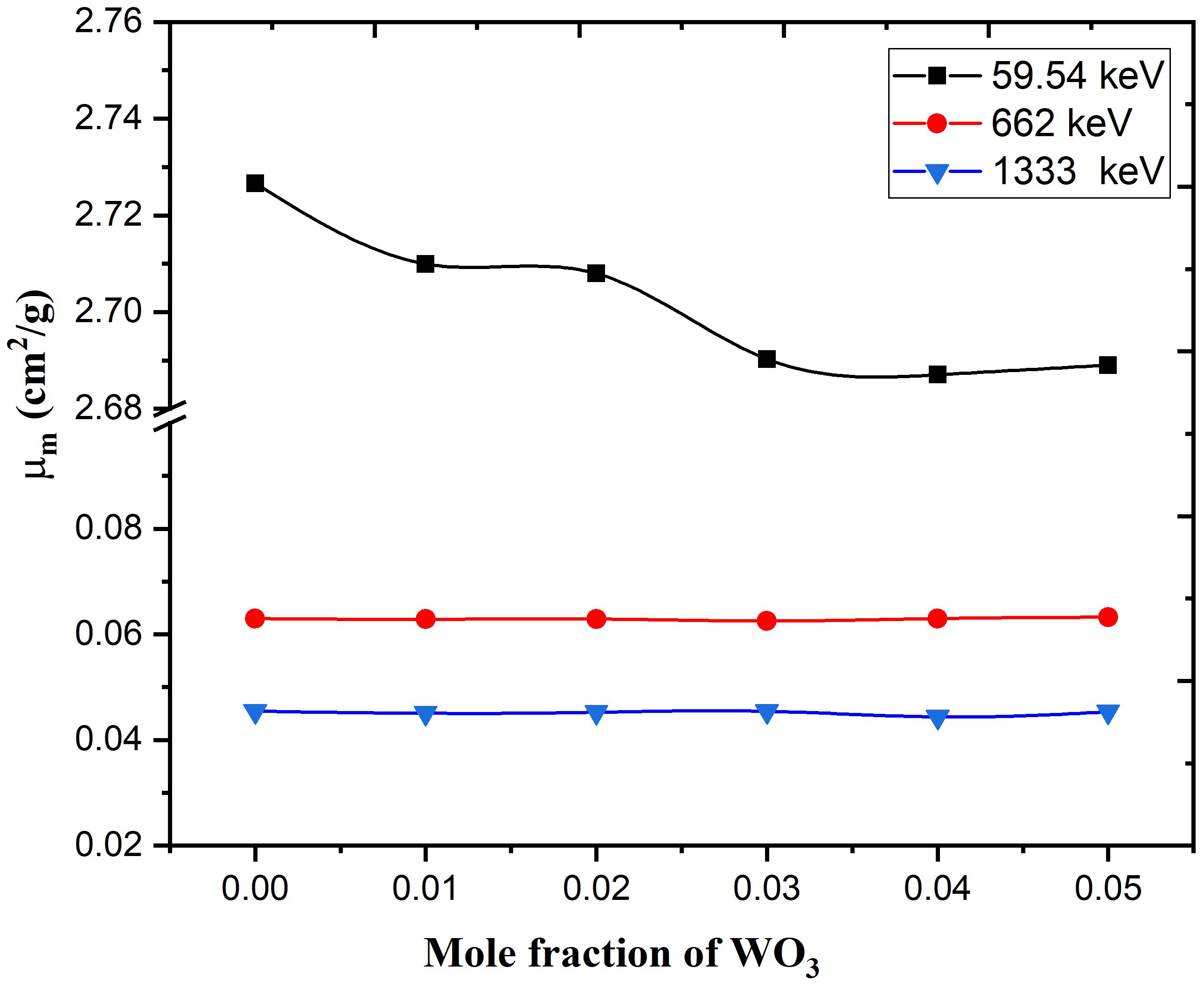
Table 4 and Figure 7 and Figure 8 show that and values were reduced as gamma-ray energy increased. and sharply decreased as gamma-ray energy increased in the low energy range, as the photoelectric effect was responsible for the prominent response between the tested glass samples and gamma rays. The linear and mass attenuation coefficients decreased slightly with increasing gamma-ray energy. This phenomenon can be attributed to the Compton scattering effect. Furthermore, linear values increased with increasing WO content in the glass network. This was due to the increasing glass sample density from 5.16 to 5.31 g/cm, and was proportional to the medium density [45,46]. values declined as the WO content increased, which might be related to the weight fraction of the higher atomic number component (BiO) being reduced at the expense of WO [16].
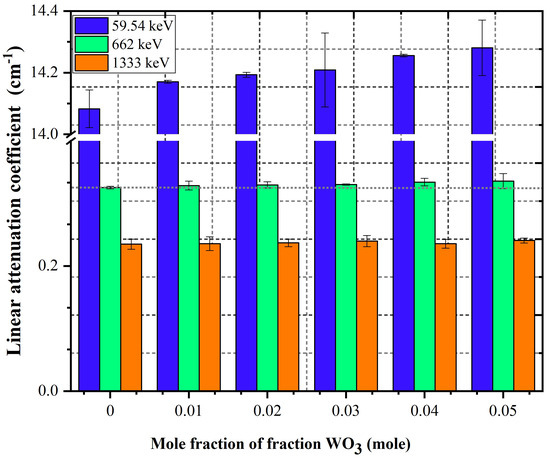
Figure 7.
Linear attenuation coefficient of prepared glass against concentrations.
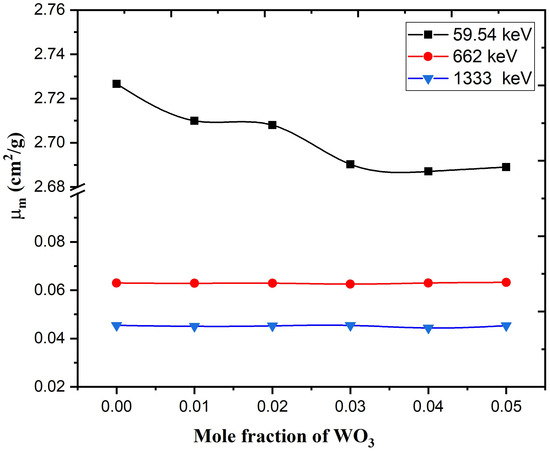
Figure 8.
The mass attenuation coefficient of WBiZnB-SLS glass samples.
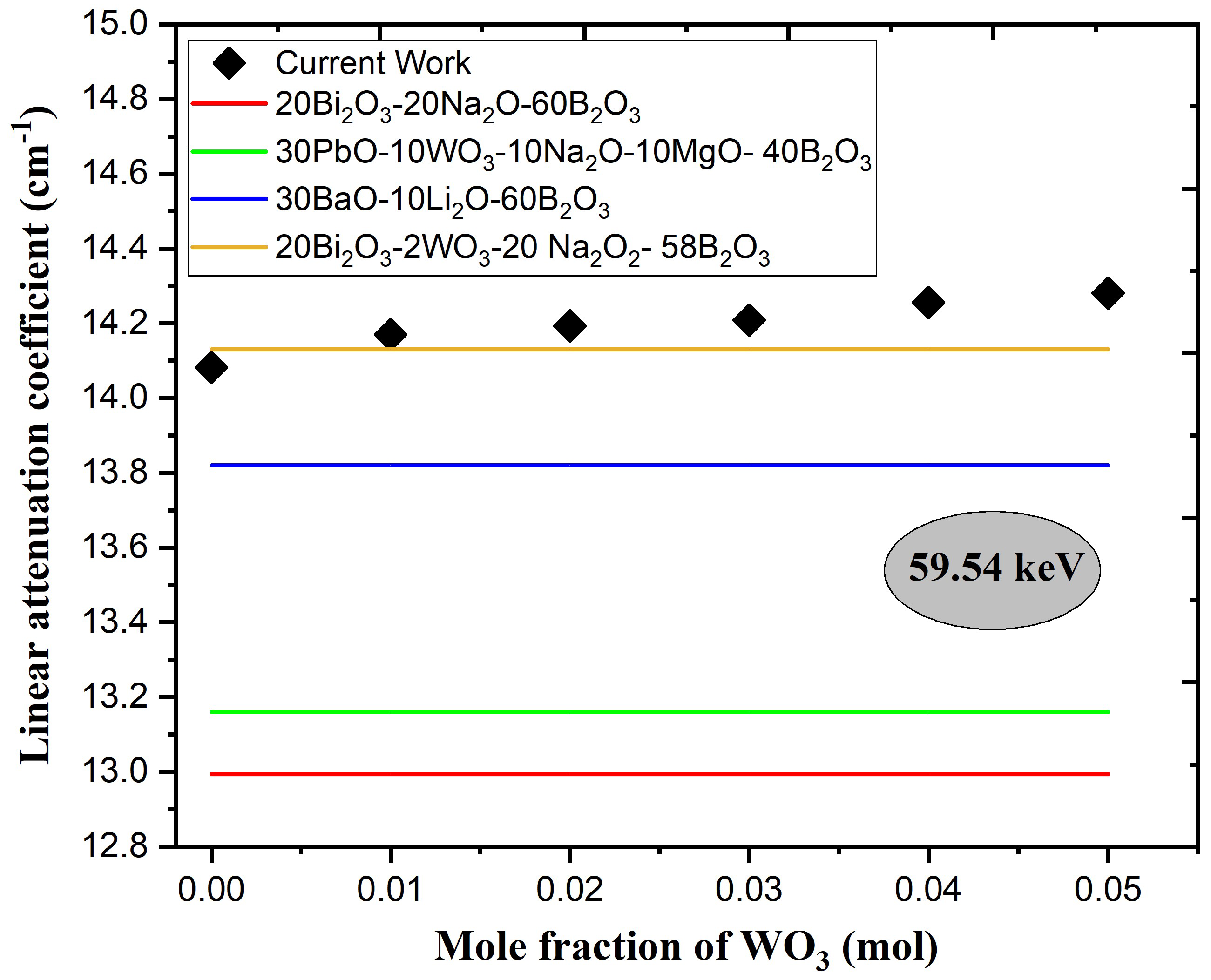
The authors selected various compositions of glass containing heavy metals from previous work, such as 20 BiO-20 NaO-60 BO [47], 30 PbO-10 WO-10 NaO-10 MgO-40 BO, [48], 30 BaO-10 Li-60 BO [49], and 20 BiO-2 WO-20 NO-58 BO glass [50]. The at 59.54 keV was estimated using the Phy-X/PSD software in order to compare the of the present glass to that of other glass samples, as seen in Figure 9. The results indicated that the values in the current work were higher than the values in the previously mentioned studies at an energy of 59.54 keV, and the value of the first glass sample that did not contain WO was less than that of the 20 BiO-2 WO-20 NO-58 BO glass.
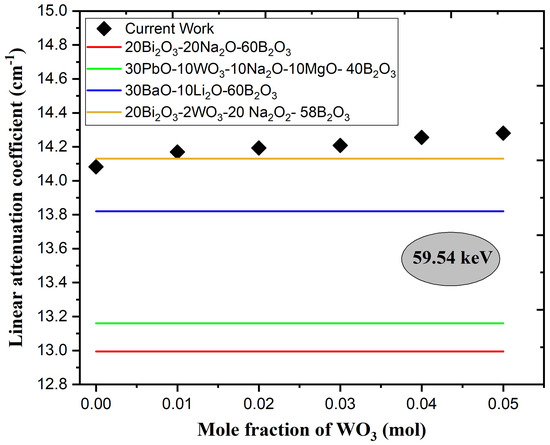
Figure 9.
Comparison of linear attenuation coefficient of current glass samples with glass system at 59.54 keV.
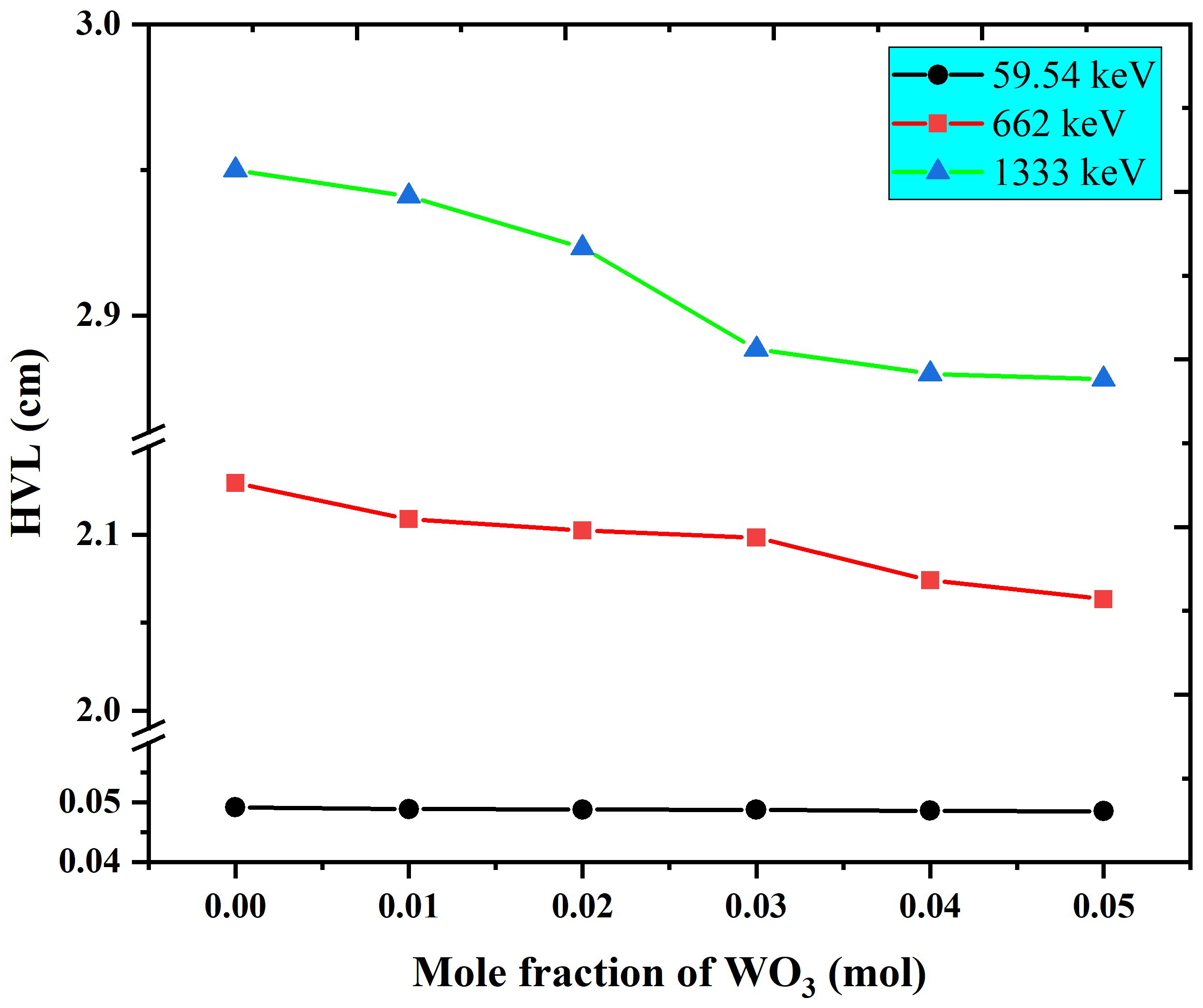
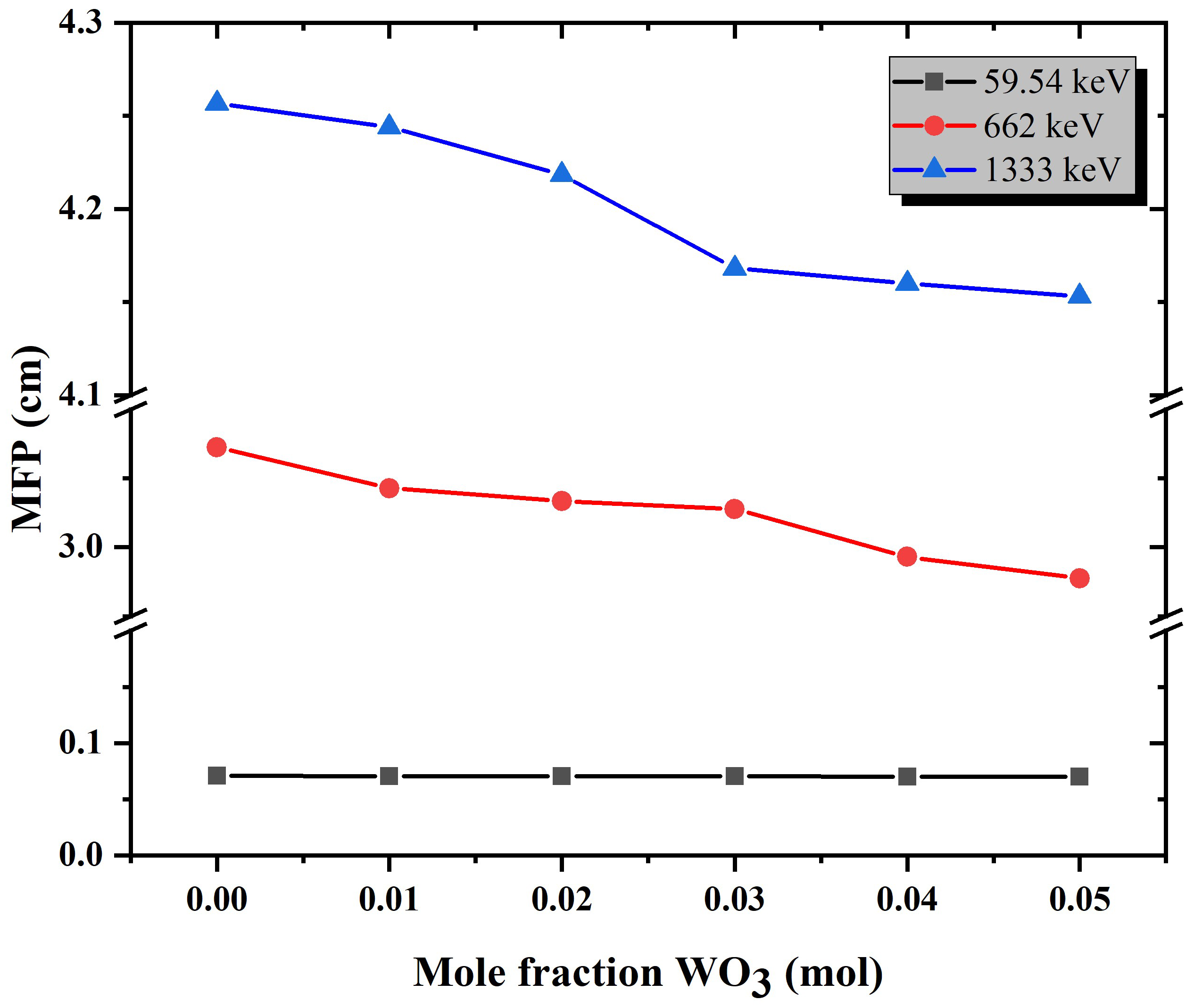
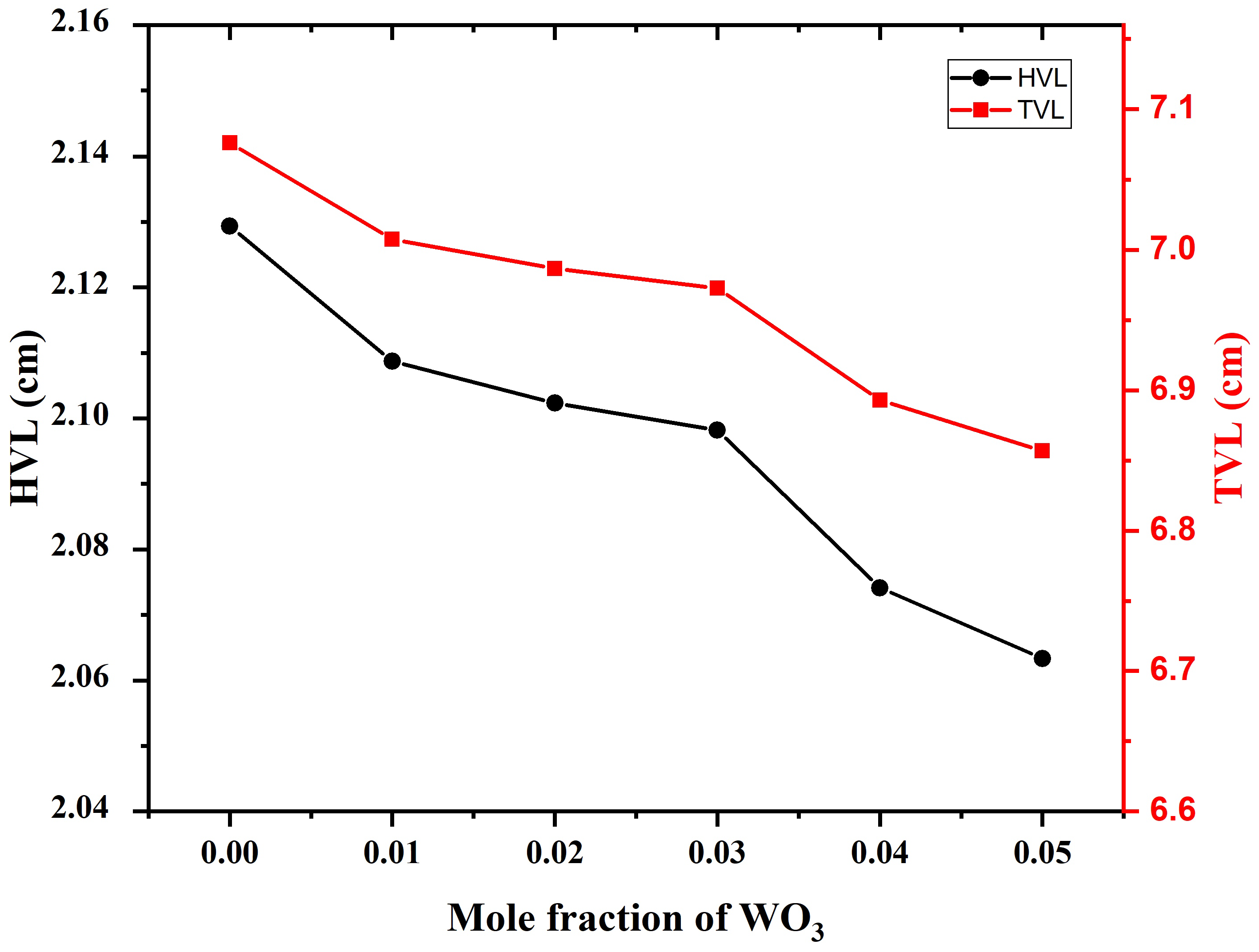
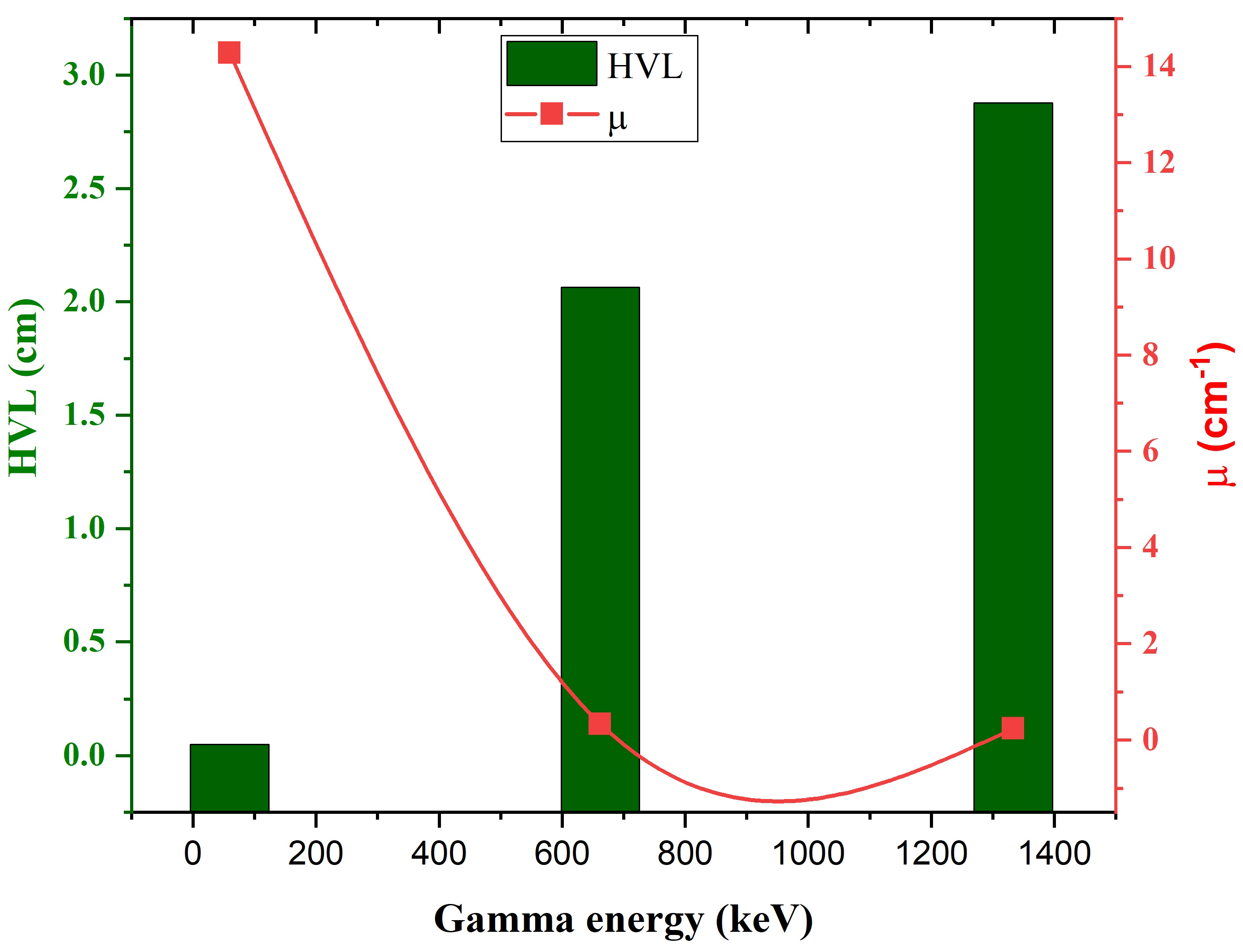
The HVL, MFP, and TVL parameters were considered to be significant in terms of thickness to describe the effectiveness of glass shielding. Figure 10, Figure 11 and Figure 12 illustrate the HVL, TVL, and MFP parameters as a function of WO mole fraction. HVL, TVL, and MFP were reduced when the concentration of WO was raised. This is related to the addition of WO creating a glass structure that was more compact, and increases in both density and values. Despite that, HVL, TVL, and MFP increased as incident photon energy increased. This indicates that the WBiZnB-SLS glass samples were more successful in attenuating gamma radiation at lower energy levels than they were at higher energies. Figure 13 indicates that the relationship between and HVL is inverse, where values decreased as photon energy increased, while HVL values increased.
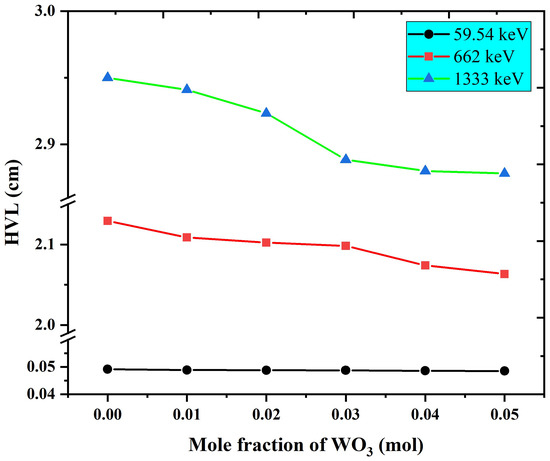
Figure 10.
HVL of WBiZnB-SLS glass against WO content.
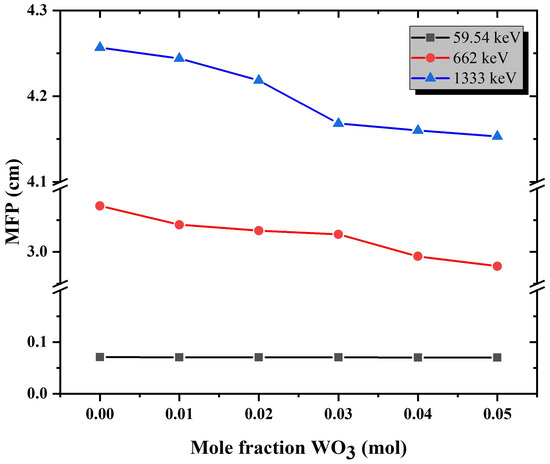
Figure 11.
MFP of WBiZnB-SLS glass against WO content.
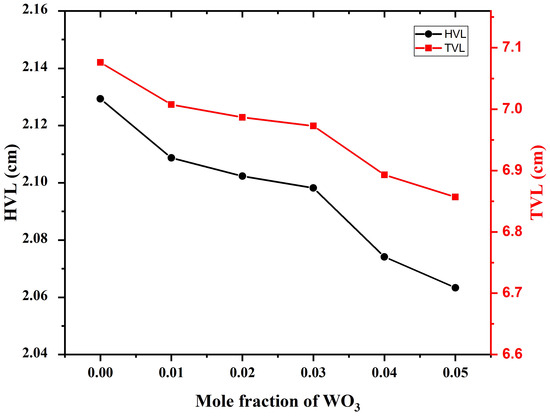
Figure 12.
HVL, TVL of WBiZnB-SLS glass against WO content at 662 keV.
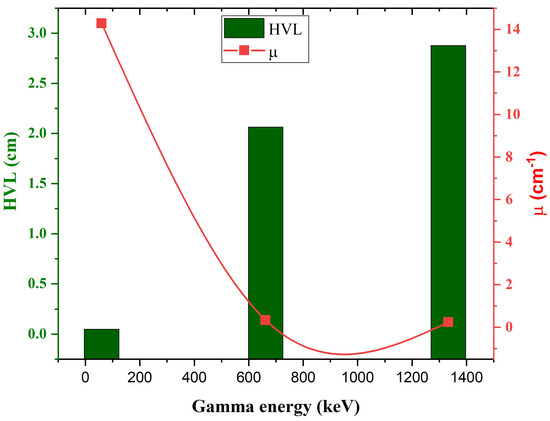
Figure 13.
Relationship between (cm) and HVL (cm) for W5 glass sample against photon energy.
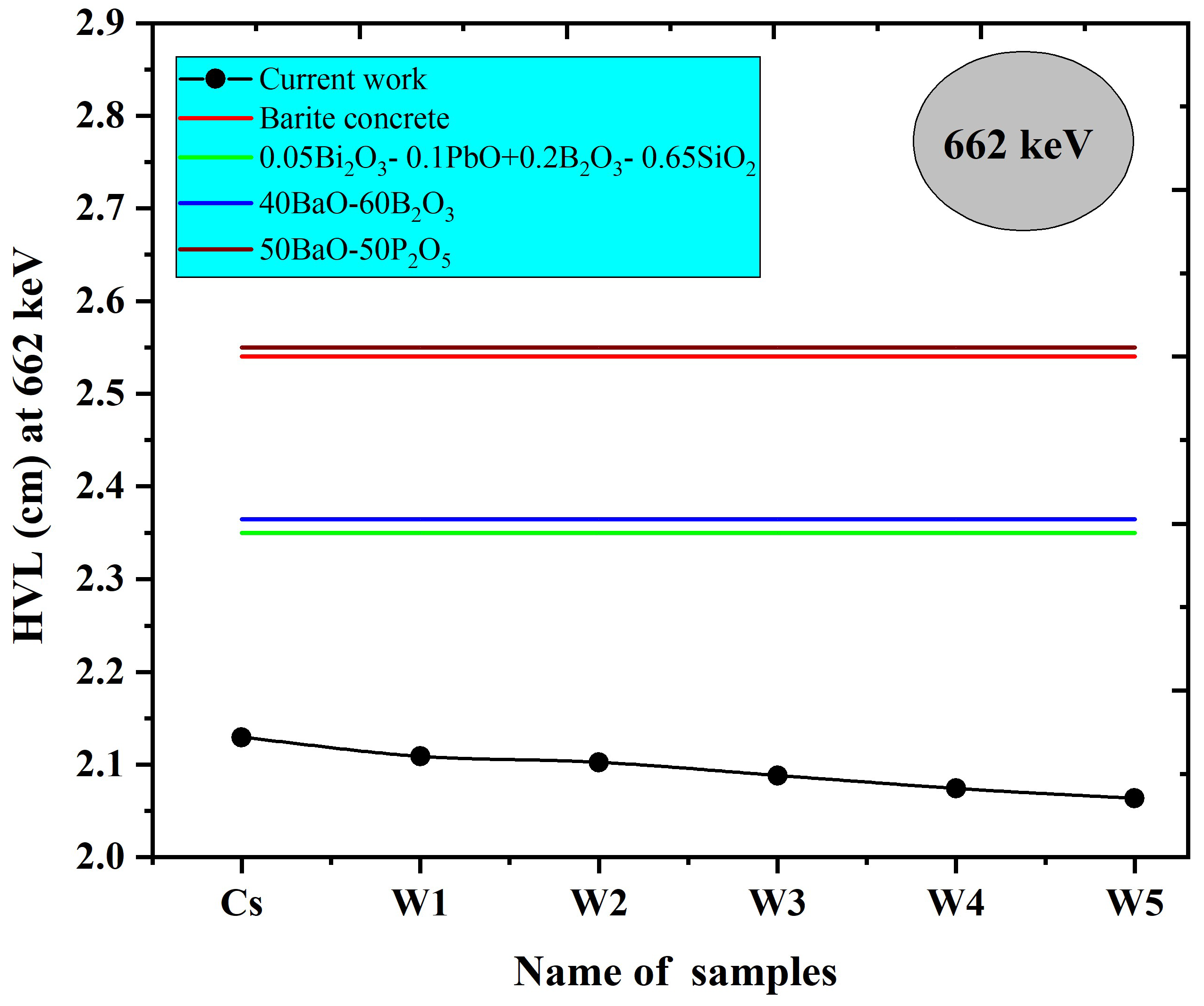
Moreover, HVL values in the present study were compared with HVL of barite concrete and other glass types at 662 keV. Results indicate that HVL values were smaller than the HVL of barite concrete and other glass types. The HVL values for radiation shielding concrete and glass were previously published [49,51,52,53]. The lower the HVL, TVL, and MFP values of the material were, the more effective the shielding characteristics. This indicates that WBiZnB-SLS glass has better shielding properties and can be used as radiation shielding (see Figure 14).
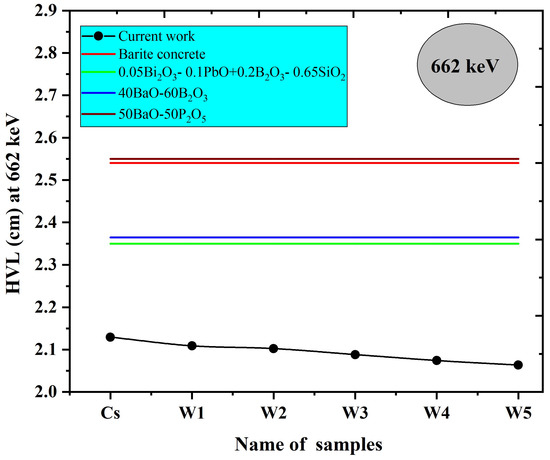
Figure 14.
Comparison of HVL values of the present study with the HVL of barite concrete and other glass samples at 662 keV.
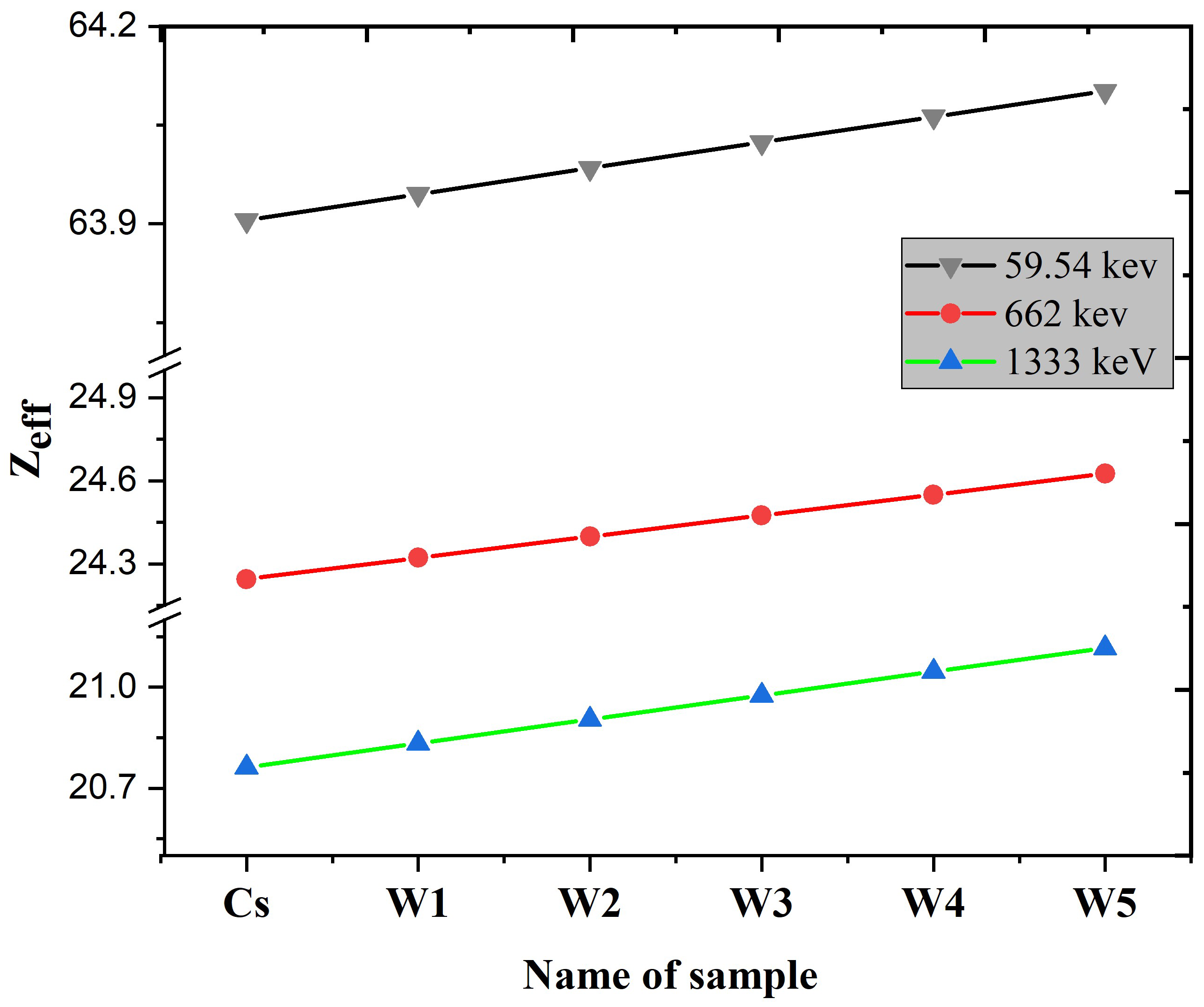
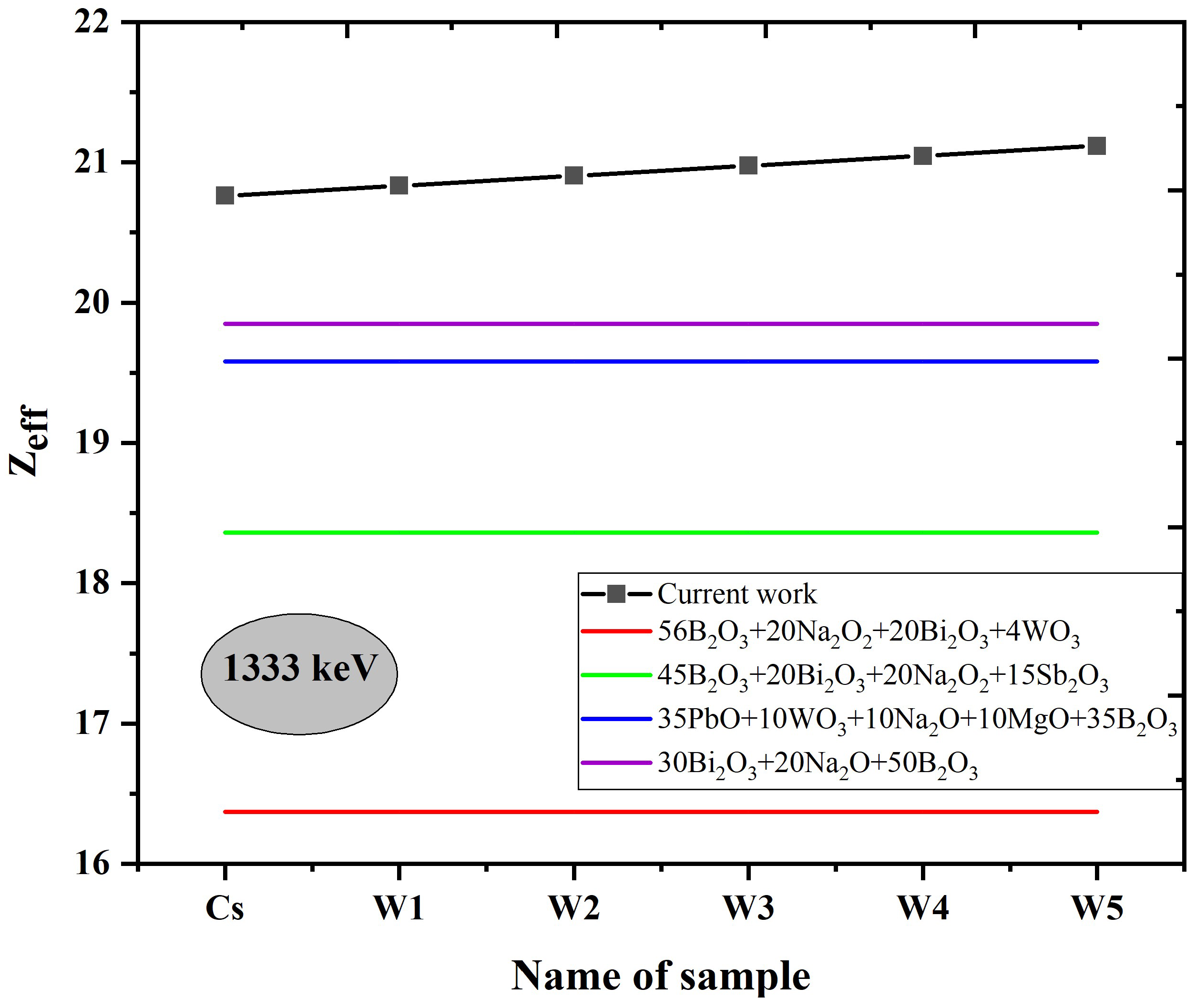
Gamma radiation interactions, such as scattering and absorption, are related to the materials’ effective atomic number. As shown in Table 5 and Figure 15, the concentration increased as the WO content increased for all the samples. The atomic number dependency reveals that materials with a high value attenuate strongly with incoming photons. Moreover, the result indicated a reduction in as the photon energy increased. At low energies, photoelectric absorption dominated, resulting in a large value. The values in the current study were compared to other glass samples at 1333 keV that had been published, as seen in Figure 16 [47,48,50,54]. Research results showed the larger value of to be more efficient and useful in shielding radiation, as the probability of photon interaction increases with increasing concentration, contributing to decreased radiation transmission. Lastly, the effective electron number of the glass samples was calculated and is given in Table 5 at 59.54, 662, and 1333 keV. was nearly constant within the range of 2.89–9.07 electrons/g and reduced as photon energy increased [55].
Table 5.
HVL (cm), MFP (cm), , and () (electrons/g) of glass samples.
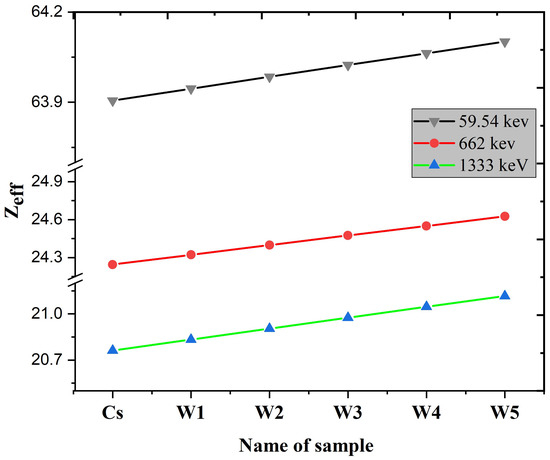
Figure 15.
of present glass against WO content at 59.54,662, and 1333 keV.
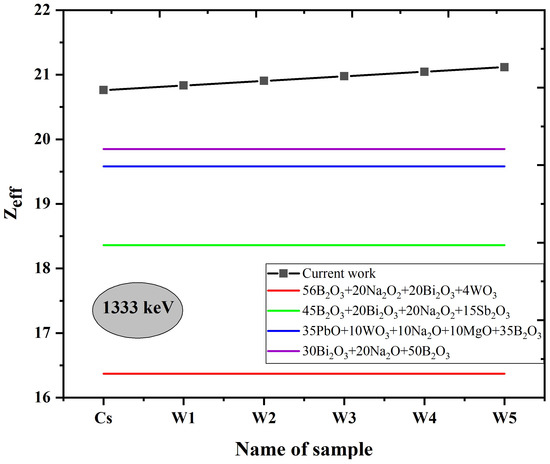
Figure 16.
Comparison of values of the present study with the of other glass samples at 1333 keV.
4. Conclusions
Glass systems (WO)[(BiO) (ZnO) (BO) (SLS)], where x = (0, 0.01, 0.02, 0.03, 0.04 and 0.05 mol), were prepared in order to attenuate gamma radiation intensity. As a result of the XRF analysis, the SLS glass waste contains 74.1 % SiO. The amorphous nature of the WBiZnB-SLS glass samples was verified by the XRD data. The results show that when the concentration of WO in the glass increased, glass density increased and both HVL and MFP reduced. Moreover, As gamma-ray energy increased, the , Z and N values decreased. On the other hand, WBiZnB-SLS glass could absorb gamma rays within lower than 25.27 keV. According to current results, WBiZnB-SLS glass is effective at attenuating gamma radiation intensity within the specified energy range and may be used to develop transparent radiation shielding glass.
Author Contributions
T.H.K.: Conception of study, Data curation, Formal analysis, Methodology, Investigation, writing—review and editing. I.S.M.: Conception of study, investigation, Funding acquisition, Project administration, Investigation, Supervision. H.A.-G.: Visualization, Funding acquisition. M.I.S.: Formal analysis, Investigation, Software. A.A.R.: Funding acquisition, Formal analysis. A.H.A.: formal analysis, data curation, resources. R.H.: Software, Validation. M.H.M.Z.: Formal analysis, Data curation, Resources. M.F.I.A.M.: Resources, Investigation, N.S.E.: Methodology, Software. H.M.S.: Visualization. All authors have read and agreed to the published version of the manuscript.
Funding
The authors appreciate Universiti Sains Malaysia (USM) for the research facilities. Appreciation also goes to the Ministry of Higher Education, Malaysia, for the financial support towards this research under the Fundamental Research Grant Scheme with project code FRGS/1/2019/STG07/USM/ 02/19 and project ID 17443 (203/PFIZIK/6711769). The authors express their gratitude to Princess Nourah bint Abdulrahman University Researchers Supporting Project number (PNURSP2022R28), Princess Nourah bint Abdulrahman University, Riyadh, Saudi Arabia.
Institutional Review Board Statement
Not applicable.
Informed Consent Statement
Not applicable.
Data Availability Statement
Not applicable.
Conflicts of Interest
The authors declare no conflict of interest.
References
- Dong, M.; Zhou, S.; Xue, X.; Feng, X.; Sayyed, M.; Khandaker, M.U.; Bradley, D. The potential use of boron containing resources for protection against nuclear radiation. Radiat. Phys. Chem. 2021, 188, 109601. [Google Scholar] [CrossRef]
- Mirzayev, M.N. High-flux neutron irradiation of boron trioxide analyzed with Raman and FTIR spectroscopy. Int. J. Mod. Phys. B 2020, 34, 2050160. [Google Scholar] [CrossRef]
- Dong, M.; Xue, X.; Yang, H.; Liu, D.; Wang, C.; Li, Z. A novel comprehensive utilization of vanadium slag: As gamma ray shielding material. J. Hazard. Mater. 2016, 318, 751–757. [Google Scholar] [CrossRef] [PubMed]
- Gökçe, H.S.; Öztürk, B.C.; Çam, N.F.; Andiç-Çakır, Ö. Gamma-ray attenuation coefficients and transmission thickness of high consistency heavyweight concrete containing mineral admixture. Cem. Concr. Compos. 2018, 92, 56–69. [Google Scholar] [CrossRef]
- Yasmin, S.; Rozaila, Z.S.; Khandaker, M.U.; Barua, B.S.; Chowdhury, F.U.Z.; Rashid, M.A.; Bradley, D.A. The radiation shielding offered by the commercial glass installed in Bangladeshi dwellings. Radiat. Eff. Defects Solids 2018, 173, 657–672. [Google Scholar] [CrossRef]
- Kaundal, R.S. Comparative study of radiation shielding parameters for bismuth borate glasses. Mater. Res. 2016, 19, 776–780. [Google Scholar] [CrossRef] [Green Version]
- Mirzayev, M.N. Simultaneous measurements of heat flow rate and thermal properties of nano boron trioxide under neutron irradiation at the low and high temperature. Vacuum 2020, 173, 109162. [Google Scholar] [CrossRef]
- Mirzayev, M.N. Heat transfer of hexagonal boron nitride (h-BN) compound up to 1 MeV neutron energy: Kinetics of the release of wigner energy. Radiat. Phys. Chem. 2021, 180, 109244. [Google Scholar] [CrossRef]
- Rammah, Y.; Sayyed, M.; Abohaswa, A.; Tekin, H. FTIR, electronic polarizability and shielding parameters of B2O3 glasses doped with SnO2. Appl. Phys. A 2018, 124, 1–9. [Google Scholar] [CrossRef]
- Marzouk, M.A.; Abo-Naf, S.M.; Zayed, H.A.; Hassan, N.S. Integration between optical and structural behavior of heavy metal oxide glasses doped with multiple glass formers. Silicon 2018, 10, 21–28. [Google Scholar] [CrossRef]
- Al-Hadeethi, Y.; Sayyed, M. Analysis of borosilicate glasses doped with heavy metal oxides for gamma radiation shielding application using Geant4 simulation code. Ceram. Int. 2019, 45, 24858–24864. [Google Scholar] [CrossRef]
- Yasaka, P.; Pattanaboonmee, N.; Kim, H.; Limkitjaroenporn, P.; Kaewkhao, J. Gamma radiation shielding and optical properties measurements of zinc bismuth borate glasses. Ann. Nucl. Energy 2014, 68, 4–9. [Google Scholar] [CrossRef]
- Almuqrin, A.H.; Kumar, A.; Jecong, J.; Al-Harbi, N.; Hannachi, E.; Sayyed, M. Li2O-K2O-B2O3-PbO glass system: Optical and gamma-ray shielding investigations. Optik 2021, 247, 167792. [Google Scholar] [CrossRef]
- Mirzayev, M.N. Oxidation kinetics of boron carbide ceramic under high gamma irradiation dose in the high temperature. Ceram. Int. 2020, 46, 2816–2822. [Google Scholar] [CrossRef]
- Mirzayev, M.N.; Popov, E.; Demir, E.; Abdurakhimov, B.; Mirzayeva, D.; Sukratov, V.; Mutali, A.; Tiep, V.; Biira, S.; Tashmetov, M.Y.; et al. Thermophysical behavior of boron nitride and boron trioxide ceramics compounds with high energy electron fluence and swift heavy ion irradiated. J. Alloy. Compd. 2020, 834, 155119. [Google Scholar] [CrossRef]
- Almuqrin, A.H.; Sayyed, M. Radiation shielding characterizations and investigation of TeO2–WO3–Bi2O3 and TeO2–WO3–PbO glasses. Appl. Phys. A 2021, 127, 1–11. [Google Scholar] [CrossRef]
- Sayyed, M.; Issa, S.A.; Tekin, H.; Saddeek, Y.B. Comparative study of gamma-ray shielding and elastic properties of BaO–Bi2O3–B2O3 and ZnO–Bi2O3–B2O3 glass systems. Mater. Chem. Phys. 2018, 217, 11–22. [Google Scholar] [CrossRef]
- Cheewasukhanont, W.; Limkitjaroenporn, P.; Kothan, S.; Kedkaew, C.; Kaewkhao, J. The effect of particle size on radiation shielding properties for bismuth borosilicate glass. Radiat. Phys. Chem. 2020, 172, 108791. [Google Scholar] [CrossRef]
- Dong, M.; Sayyed, M.; Lakshminarayana, G.; Ersundu, M.Ç.; Ersundu, A.; Nayar, P.; Mahdi, M. Investigation of gamma radiation shielding properties of lithium zinc bismuth borate glasses using XCOM program and MCNP5 code. J. Non-Cryst. Solids 2017, 468, 12–16. [Google Scholar] [CrossRef]
- Tishkevich, D.; Grabchikov, S.; Zubar, T.; Vasin, D.; Trukhanov, S.; Vorobjova, A.; Yakimchuk, D.; Kozlovskiy, A.; Zdorovets, M.; Giniyatova, S.; et al. Early-stage growth mechanism and synthesis conditions-dependent morphology of nanocrystalline Bi films electrodeposited from perchlorate electrolyte. Nanomaterials 2020, 10, 1245. [Google Scholar] [CrossRef]
- Bagheri, R.; Moghaddam, A.K.; Yousefnia, H. Gamma ray shielding study of barium–bismuth–borosilicate glasses as transparent shielding materials using MCNP-4C code, XCOM program, and available experimental data. Nucl. Eng. Technol. 2017, 49, 216–223. [Google Scholar] [CrossRef]
- Bagheri, R.; Shirmardi, S.P. Gamma-ray shielding studies on borate glasses containing BaO, Bi2O3, and PbO in different concentrations. Radiat. Phys. Chem. 2021, 184, 109434. [Google Scholar] [CrossRef]
- Kamislioglu, M. Research on the effects of bismuth borate glass system on nuclear radiation shielding parameters. Results Phys. 2021, 22, 103844. [Google Scholar] [CrossRef]
- Kirdsiri, K.; Kaewkhao, J.; Chanthima, N.; Limsuwan, P. Comparative study of silicate glasses containing Bi2O3, PbO and BaO: Radiation shielding and optical properties. Ann. Nucl. Energy 2011, 38, 1438–1441. [Google Scholar] [CrossRef]
- Sanz, O.; Haro-Poniatowski, E.; Gonzalo, J.; Navarro, J.F. Influence of the melting conditions of heavy metal oxide glasses containing bismuth oxide on their optical absorption. J. Non-Cryst. Solids 2006, 352, 761–768. [Google Scholar] [CrossRef]
- Malkapur, S.M.; Ghodke, S.S.; Sujatha, P.; Singh, Y.; Shivakumar, K.; Sen, M.; Narasimhan, M.C.; Pulgur, A.V. Waste-polymer incorporated concrete mixes for neutron and gamma radiation shielding. Prog. Nucl. Energy 2021, 135, 103694. [Google Scholar] [CrossRef]
- Qurix, W.; Edomwonyi-Otu, L.; Aremu, J.; Ibeh, G.; Bawa, S.; Jise, D. The application of waste brass cartridges for gamma radiation shields and bullet proofing. J. Mater. Res. Technol. 2020, 9, 9831–9837. [Google Scholar] [CrossRef]
- Tyagi, G.; Singhal, A.; Routroy, S.; Bhunia, D.; Lahoti, M. A review on sustainable utilization of industrial wastes in radiation shielding concrete. Mater. Today Proc. 2020, 32, 746–751. [Google Scholar] [CrossRef]
- Jusoh, W.N.W.; Matori, K.A.; Zaid, M.H.M.; Zainuddin, N.; Khiri, M.Z.A.; Rahman, N.A.A.; Jalil, R.A.; Kul, E. Effect of sintering temperature on physical and structural properties of Alumino-Silicate-Fluoride glass ceramics fabricated from clam shell and soda lime silicate glass. Results Phys. 2019, 12, 1909–1914. [Google Scholar] [CrossRef]
- Kilinc, E.; Hand, R.J. Mechanical properties of soda–lime–silica glasses with varying alkaline earth contents. J. Non-Cryst. Solids 2015, 429, 190–197. [Google Scholar] [CrossRef]
- Zaid, M.H.M.; Matori, K.A.; Ab, A.S.H.; Wahab, Z.A.; Rashid, S.S.A. Effect of sintering on crystallization and structural properties of soda lime silica glass. Sci. Sinter. 2017, 49, 409–417. [Google Scholar] [CrossRef] [Green Version]
- Sayyed, M.; Elmahroug, Y.; Elbashir, B.; Issa, S.A. Gamma-ray shielding properties of zinc oxide soda lime silica glasses. J. Mater. Sci. Mater. Electron. 2017, 28, 4064–4074. [Google Scholar] [CrossRef]
- Bateni, N.H.; Hamidon, M.N.; Matori, K.A. Effect of soda-lime-silica glass addition on the physical properties of ceramic obtained from white rice husk ash. J. Ceram. Soc. Jpn. 2014, 122, 161–165. [Google Scholar] [CrossRef] [Green Version]
- Pipes, R.S.; Shelby, J.E. Formation and properties of soda lime germanate glasses. J. Non-Cryst. Solids 2021, 553, 120506. [Google Scholar] [CrossRef]
- Bernasconi, A.; Dapiaggi, M.; Milanese, C.; Alloni, M.; Pavese, A. Structure of soda-lime-aluminosilicate glasses as revealed by in-situ synchrotron powder diffraction experiments. J. Non-Cryst. Solids 2021, 568, 120932. [Google Scholar] [CrossRef]
- Mhareb, M.; Alajerami, Y.; Sayyed, M.; Dwaikat, N.; Alqahtani, M.; Alshahri, F.; Saleh, N.; Alonizan, N.; Ghrib, T.; Al-Dhafar, S.I. Radiation shielding, structural, physical, and optical properties for a series of borosilicate glass. J. Non-Cryst. Solids 2020, 550, 120360. [Google Scholar] [CrossRef]
- Ahmad, N.S.; Mustafa, I.S.; Mansor, I.; bin Abdul Malik, M.F.I.; Razali, N.A.N.; Nordin, S. Gamma ray shielding characteristic of BiZnBo-SLS and PbZnBo-SLS glass. Mater. Res. Express 2018, 5, 055203. [Google Scholar] [CrossRef]
- Ichoja, A.; Hashim, S.; Ghoshal, S.; Hashim, I.; Omar, R. Physical, structural and optical studies on magnesium borate glasses doped with dysprosium ion. J. Rare Earths 2018, 36, 1264–1271. [Google Scholar] [CrossRef]
- Khazaalah, T.H.; Mustafa, I.S.; Sayyed, M.; Abdul Rahman, A.; Mohd Zaid, M.H.; Hisam, R.; Izwan Abdul Malik, M.F.; Seth Ezra, N.; Salah Naeem, H.; Che Khalib, N. Development of Novel Transparent Radiation Shielding Glasses by BaO Doping in Waste Soda Lime Silica (SLS) Glass. Sustainability 2022, 14, 937. [Google Scholar] [CrossRef]
- Mahmoud, I.; Issa, S.A.; Zakaly, H.M.; Saudi, H.; Ali, A.S.; Saddeek, Y.B.; Alharbi, T.; Tekin, H. Material characterization of WO3/Bi2O3 substituted calcium-borosilicate glasses: Structural, physical, mechanical properties and gamma-ray resistance competencies. J. Alloy. Compd. 2021, 888, 161419. [Google Scholar] [CrossRef]
- Ravangave, L.; Devde, G. Structure and physical properties of 59B2O3–10Na2O–(30–x) CdO–xZnO–1CuO (0≤ x≤ 30) glass system. Adv. Glass Sci. Technol. 2018, 1, 21–38. [Google Scholar]
- Narayanan, M.K.; Shashikala, H. Physical, mechanical and structural properties of BaO–CaF2–P2O5 glasses. J. Non-Cryst. Solids 2015, 430, 79–86. [Google Scholar] [CrossRef]
- Tylkowski, M.; Brauer, D. Mixed alkali effects in Bioglass® 45S5. J. Non-Cryst. Solids 2013, 376, 175–181. [Google Scholar] [CrossRef]
- Jerroudi, M.; Bih, L.; Azrour, M.; Manoun, B.; Saadoune, I.; Lazor, P. Investigation of novel low melting phosphate glasses inside the Na2O–K2O–ZnO–P2O5 system. J. Inorg. Organomet. Polym. Mater. 2020, 30, 532–542. [Google Scholar] [CrossRef]
- Al-Hadeethi, Y.; Sayyed, M.; Mohammed, H.; Rimondini, L. X-ray photons attenuation characteristics for two tellurite based glass systems at dental diagnostic energies. Ceram. Int. 2020, 46, 251–257. [Google Scholar] [CrossRef]
- Al-Hadeethi, Y.; Sayyed, M. The influence of PbO on the radiation attenuation features of tellurite glass. Ceram. Int. 2019, 45, 24230–24235. [Google Scholar] [CrossRef]
- Cheewasukhanont, W.; Limkitjaroenporn, P.; Kaewjaeng, S.; Chaiphaksa, W.; Hongtong, W.; Kaewkhao, J. Development of bismuth sodium borate glasses for radiation shielding material. Mater. Today Proc. 2021, 43, 2508–2515. [Google Scholar] [CrossRef]
- Kumar, A.; Gaikwad, D.; Obaid, S.S.; Tekin, H.; Agar, O.; Sayyed, M. Experimental studies and Monte Carlo simulations on gamma ray shielding competence of (30+ x) PbO10WO3 10Na2O- 10MgO–(40-x) B2O3 glasses. Prog. Nucl. Energy 2020, 119, 103047. [Google Scholar] [CrossRef]
- Al-Hadeethi, Y.; Sayyed, M. BaO–Li2O–B2O3 glass systems: Potential utilization in gamma radiation protection. Prog. Nucl. Energy 2020, 129, 103511. [Google Scholar] [CrossRef]
- Abouhaswa, A.; Sayyed, M.; Altowyan, A.S.; Al-Hadeethi, Y.; Mahmoud, K. Synthesis, structural, optical and radiation shielding features of tungsten trioxides doped borate glasses using Monte Carlo simulation and phy-X program. J. Non-Cryst. Solids 2020, 543, 120134. [Google Scholar] [CrossRef]
- Kaur, K.; Singh, K.; Anand, V. Correlation of gamma ray shielding and structural properties of PbO–BaO–P2O5 glass system. Nucl. Eng. Des. 2015, 285, 31–38. [Google Scholar] [CrossRef]
- Al-Hadeethi, Y.; Sayyed, M. Evaluation of gamma ray shielding characteristics of CaF2–BaO–P2O5 glass system using Phy-X/PSD computer program. Prog. Nucl. Energy 2020, 126, 103397. [Google Scholar] [CrossRef]
- Sayyed, M.; Zaid, M.H.M.; Effendy, N.; Matori, K.A.; Lacomme, E.; Mahmoud, K.; AlShammari, M.M.; Abu Al Sayyed, M. The influence of PbO and Bi2O3 on the radiation shielding and elastic features for different glasses. J. Mater. Res. Technol. 2020, 9, 8429–8438. [Google Scholar] [CrossRef]
- Abouhaswa, A.; Mhareb, M.; Alalawi, A.; Al-Buriahi, M. Physical, structural, optical, and radiation shielding properties of B2O3-20Bi2O3-20Na2O2-Sb2O3 glasses: Role of Sb2O3. J. Non-Cryst. Solids 2020, 543, 120130. [Google Scholar] [CrossRef]
- Saddeek, Y.; Shaaban, K.; Elsaman, R.; El-Taher, A.; Amer, T. Attenuation-density anomalous relationship of lead alkali borosilicate glasses. Radiat. Phys. Chem. 2018, 150, 182–188. [Google Scholar] [CrossRef]
Publisher’s Note: MDPI stays neutral with regard to jurisdictional claims in published maps and institutional affiliations. |
© 2022 by the authors. Licensee MDPI, Basel, Switzerland. This article is an open access article distributed under the terms and conditions of the Creative Commons Attribution (CC BY) license (https://creativecommons.org/licenses/by/4.0/).