


Abstract
The global food production for the worldwide population mainly depends on the huge contributions of the agricultural sector. The cultivated crops of foods need various elements or nutrients to complete their growth, and these are indirectly consumed by humans. During this production, several environmental constraints or stresses may cause losses in the global agricultural production. These obstacles may include abiotic and biotic stresses, which have already been studied in both individual and combined cases. However, there are very few studies on multiple stresses. On the basis of the myriad benefits of nanotechnology in agriculture, nanofertilizers (or nanonutrients) have become promising tools for agricultural sustainability. Nanofertilizers are also the proper solution to overcoming the environmental and health problems that can result from conventional fertilizers. The role of nanofertilizers has increased, especially under different environmental stresses, which can include individual, combined, and multiple stresses. The stresses are most commonly the result of nature; however, studies are still needed on the different stress levels. Nanofertilizers can play a crucial role in supporting cultivated plants under stress and in improving the plant yield, both quantitatively and qualitatively. Similar to other biological issues, many open-ended questions still require further investigation: Is the right time and era for nanofertilizers in agriculture? Will the nanofertilizers be the dominant source of nutrients in modern agriculture? Are nanofertilizers, and particularly biological synthesized ones, the magic solution for sustainable agriculture? What are the expected damages of multiple stresses on plants?
1. Introduction
Nowadays, food security faces a great challenge, which is persistently represented in the rapid increase in the global population and the drastic changes in the climate [1]. This food security mainly depends on the agricultural sector, and particularly on crop production, which supplies the human diet with the major sources of the bioactive compounds for human nutrition [2,3]. This productivity faces different stresses, which may produce losses of up to 50–70% in the case of abiotic stresses, and of up to 40–60% in the case of biotic stresses [4]. The most common abiotic stresses include salinity, drought, flooding, and heat stress, whereas bacteria, viruses, and fungi are the key biotic stresses. These stresses can be mitigated in cultivated plants through the application of a variety of antistressors, such as nitric oxide [5]; pyraclostrobin [6]; rhizobia, or plant-growth-promoting rhizobacteria (PGPR) [7,8]; melatonin [4]; strigolactones [9]; phytohormones [10]; and nutrients such as silicon [11,12] and selenium [13], as well as their nanoforms [9,14]. Several studies have already been published on the individual stresses [6,9,15], but there are only a few publications on combined stress (e.g., [1,14,16,17,18]), and very few articles on multiple stresses [19].
Nanofertilizers are considered to be promising candidates for the fertilizer industry, and they have the considerable potential to improve the retention of different nutrients for optimal crop production [20]. Nanofertilizers may be crucial for plant nutrition and human health [2], particularly the current nanofertilizers, which are highly efficient (50–70%) compared to traditional fertilizers (40–50%) in terms of the controlled release of the nutrients [21]. These nanofertilizers can solve the main problem of traditional fertilizers (i.e., the high nutrient losses in the soil) by allowing the slow and sustained release of nutrients over an extended period. They also have high reactivities because of their small sizes, high surface areas, and increased productivity [22]. Several nutrients have been used through soil and/or foliar application in cultivated plants (e.g., Cu, Mn, and Zn, which support crop productivity [20]), as has been reported for the following studied crops: wheat [23], maize [24], tomato [25], sweet basil [26], lettuce [27], cabbage [28], and strawberry [29].
Therefore, this review attempts to highlight nanofertilizers and their impacts on crop production. The effects of the application of nanofertilizers on plants under stressful conditions (i.e., individual, combined, and multiple stresses) are also investigated.
2. Nanofertilizers and Agriculture
2.1. Nanofertilizers for Crop Production
Nanotechnology can be defined as the science of the production of nanoparticles through the modification and/or self-assembly of individual atoms, molecules, or molecular clusters, which are endowed with new or drastically different properties [30]. Nanotechnology has several applications in all sectors, including agriculture, industry, medicine, pharmacology, etc. In the agriculture sector, nanotechnology applications can be broadly classified into the following main sectors: (1) Crop production through the use of nanoherbicides/nanopesticides and nanomaterials to control the viral and fungal diseases of plants; (2) Precision farming; and (3) Crop improvement using nanofertilizers and nanobiosensors for soil/plant systems, and for the nanoremediation of soils, water, and the food sector [31,32,33]. Although agro-nanotechnology has several benefits, nanomaterials may also be associated with many risks, which include: (1) Safety issues that are due to the penetration of the cells, which are small sizes; (2) The degradation of the nanomaterials and/or nanocomposites under environmental conditions, with the release of the inserted nanomaterials into the environment; (3) A significant amount of leaching of the nanoparticles into the agro-environment, which may cause nanotoxicity; and (4) The integration of many nanoparticles into the human body via inhalation, ingestion, or cutaneous contact [33].
2.2. Nanofertilizers vs. Traditional Fertilizers
There are many problems that result from the intensive use of traditional or chemical fertilizers that have led to many negative impacts on the agroecosystem, such as the low efficiency of the nutrient use by crops, and the high losses of nutrients to groundwater, especially NPK (by 40–70%, 80–90%, and 50–90%, respectively [34,35]). Thus, nanotechnology has become an emerging approach in the revolution of agricultural systems through its controlled-release manner of delivering nutrients to cultivated plants [36]. Nanofertilizers are a type of fertilizer, and they are synthesized using physical, chemical, or biological methods that are based on nanotechnology. The physical methods induce rapid synthesis, but they produce many impurities; the chemical methods are precise in terms of the size of the nanoparticles, but they may produce toxicity; and the biological methods are eco-friendly and low toxic, but they induce slow synthesis [34]. These nanofertilizers can enhance crop production by supplying one or more nutrients to the cultivated plants via smart delivery, which results in sustained nutrient release, improved plant growth, high nutrient uptake efficiency, and improved soil quality [37,38]. Compared to conventional fertilizers, nanofertilizers have many distinguished attributes, such as high nutrient uptake efficiency, controlled-release modes, effective durations of the nutrient release, and a reduced loss rate of the fertilizer nutrients (Figure 1) [30]. These benefits of nanofertilizers may support their role in the production of higher crop yields of high quality. The benefits also include the lower-cost production and eco-friendly synthesis of nanofertilizers, which may reduce the use of traditional fertilizers [39,40,41]. In addition, the management of crop nutrition could be achieved by using nanofertilizers, which can improve the crop productivity, and enhance the tolerance of these crops to biotic/abiotic stresses [42].
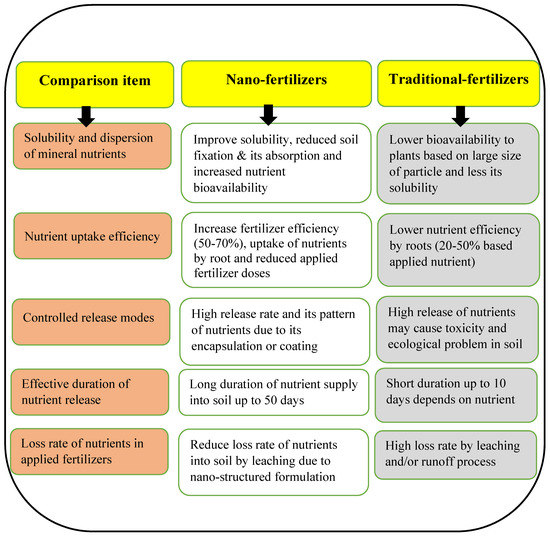
Figure 1.
A comparison between traditional fertilizers and nanofertilizers. Sources: from Seleiman et al. [22], Kalwani et al. [42], Belal and El-Ramady [43], and Rizwan et al. [44].
2.3. The Nanofertilizer Industry and Its Obstacles
However, the nanofertilizer industry faces many challenges, which represent important and real obstacles. These risks include the release and reactivity of nanofertilizers, which depend on the environmental factors and that can cause phytotoxicity effects, depending on their doses and the durations of long-term exposure. This may lead to chronic effects on health of consumers [30]. The physical and chemical methods of nanofertilizer synthesis have recorded higher toxicities compared to the biological methods, which are still under intensive investigations [39]. The studies that have recently been published on nanofertilizers include different points of view, such as: the crucial impacts on the soil, the crop yield, and the entire environment [45]; the risks and benefits on the soil rhizospheric and plant-associated microbial communities [42]; and the use of nanofertilizers for sustainable agriculture, in addition to crop production enhancement under abiotic/biotic stresses [34,35,36,38,41].
2.4. Nanofertilizers for the Mitigation of Stress on Plants
Nanofertilizers have a great ability to mitigate the abiotic/biotic stresses on cultivated plants through many mechanisms because of their vast surface areas and their nanoscale size. Nanofertilizers can improve the morphological, biochemical, and physiological indices of cultivated plants, such as the photosynthetic rate and its efficiency, the nutrient uptake efficiency, the regulation of phytohormones, and the enhancement of the plant defense system (Figure 2) [41]. Therefore, the mechanisms of nanofertilizers on the crop productivity under stress may include: a reduction in the oxidative stress, which leads to an increase in the stress tolerance of the plants; the enhancement of several biochemical activities in stressed plants (e.g., by increasing the contents of the proline, chlorophyll, and relative water); the regulation of the salt toxicity; a reduction in the accumulation of malondialdehyde and H2O2; and the maintenance of the ionic equilibrium, depending on the type of stress [46]. The mechanisms of nanofertilizers mainly depend on the nanoactive ingredients (the large specific surface areas), which could result in an acceptable reactivity, which could increase the effective uptake of nutrient elements for the growth of cultivated plants and their metabolisms. Nanofertilizers allow for the encapsulation of the nutrients by nanomaterials, for the delivery of them as nanoparticles or emulsions, or for the release of the nutrients in a controlled manner, as “smart” nanofertilizers [47].
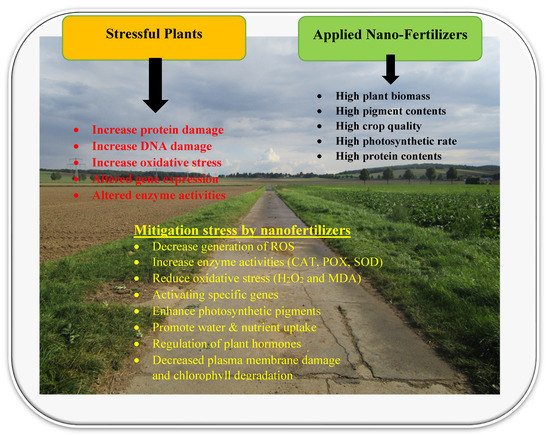
Figure 2.
The main problems that result from stresses on plants, the expected roles of applied nanofertilizers, and the different mechanisms of the mitigation of stress on cultivated plants by nanofertilizers. ROS: reactive oxygen species; CAT: catalase; POX: peroxidase; SOD: superoxide dismutase; MDA: malondialdehyde.
2.5. Nanofertilizers and Their Research Gap
It is well known that cultivated plants need many essential and beneficial nutrients for their growth, which can be classified on the basis of their relative essentiality, their function, and their mobility in plants and soils [40]. There are three groups of essential mineral nutrients that uptake in ionic form from the soil solution. These groups include (1) Essential and beneficial nutrients (based on their relative essentiality); (2) A group of basic, accessary, regulatory, and catalyst nutrients (based on their physiological function); and (3) A group of mobile, intermediate, or immobile nutrients (based on their mobility in plants or soils). Further basic information about these essential nutrients is presented in Table 1. These nutrients may exist as nanosized and as nanonutrients (i.e., in sizes that range from 1 to 100 nm), and they can be naturally occurring or engineered. A “fertilizer” can be defined as any natural or synthetic material that is applied through the soil (root application) or the plant (foliar application) in order to supply the plant with nutrients. The application of nanofertilizers to crops has been gaining immense attention worldwide. It is worth mentioning that the sizes of the ions can be expressed from angstroms (10−10 m) to picometers (10−12 m), whereas nanonutrients can be expressed on the nanometer scale (10−9 m). Nanonutrients are 100 to 1000 times larger than their bulk ions, which protects them from being lost by leaching or runoff, or from becoming fixed in the spaces in clay lattices, which makes them more available to cultivated plants [40].

Table 1.
List of basic information on essential nutrients, including their mobilities in soil and plants, and their hydrated and crystal ionic radii.
Nanofertilizers can be classified into the following groups:
- Nanoscale input fertilizers, or nanoscale fertilizers: this category includes the nutrients that already exist in nanofertilizers (nanoparticles, which contain nutrients), alone, or in combination with other constituents;
- Nanoscale additive fertilizers, or nanoscale additives, which are traditional fertilizers with nanoscale additives. This category includes the application of nanoscale materials or formulations to the existing traditional macroscale fertilizers; and
- Nanoscale host fertilizers, or nanoscale coating, which is formed from traditional fertilizers that have been coated or loaded with nanoparticles. This category includes nutrient or fertilizer supplements, which could be entrapped, adsorbed, or encapsulated into any type of nanospace of the host material [40].
2.6. Nanofertilizers and Phytotoxicity
There are research gaps that are related to nanofertilizer production, including with regard to the energy use and the technology expense, as well as with regard to their unknown interactions in the environment and their toxicities. There are several reports that are based on the phytotoxicities of nanoparticles in crops, which are common, and which result from the induction of the synthesis of reactive oxygen species (ROS) and the oxidative damage from the use of many metal-oxide nanoparticles, such as AgO, CeO2, CuO, NiO, TiO2, and ZnO (e.g., [41,46,48]). Most of the toxicity studies report on pesticides or many salts, which are not conventionally used as fertilizers for the production of crops [40]. In general, there are many features of the phytotoxicity and genotoxicity from the excessive use of nanoparticles on plants that could be mentioned, such as chromosome fragmentation, genetic mutation, ROS production, biomass reduction, and retarded growth (Figure 3) [48].
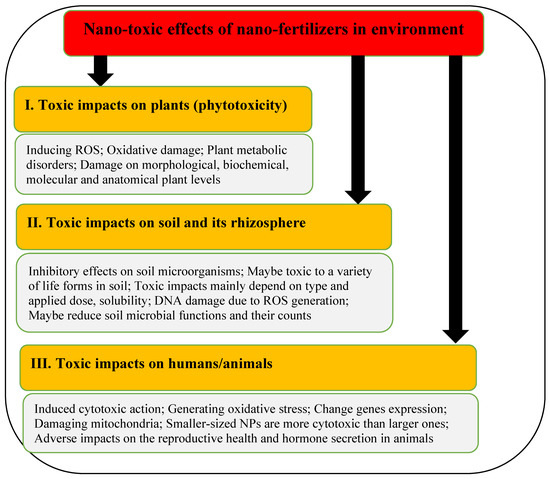
Figure 3.
Different suggested mechanisms of toxic impacts of nanofertilizers/nanoparticles on plants, soil, and human or animals, which, in general, focus on the cytotoxicity and genotoxicity. ROS: reactive oxygen species. Sources for Part I: Verma et al. [41] and Zhang et al. [49]; source for Part II: Kalwani et al. [42]; and source for Part III: Bhardwaj et al. [40].
Recently, several studies have been published that report on the nano-phytotoxicities of different plants, such as Capsicum annuum [50], Lycium barbarum L. [51], Solanum lycopersicum L. [52], Oryza sativa L. [53], Pisum sativum L. [54], and Hordeum vulgare L. [55], whereas there are only a few studies that focus on this phenomenon with regard to the use of nanofertilizers, such as Bhardwaj et al. [40], Kalwani et al. [42], and Zhang et al. [49]. The ecotoxicological implications of nanofertilizers on other agro-ecosystems besides plants has been investigated in detail, such as the soil and its rhizosphere [42]. The expected toxic effects of nanofertilizers on the food chain and, subsequently, on human health, especially under higher doses, still requires more studies, which should use different crops and different kinds of nanofertilizers. However, many published works report on the accumulation of nanoparticles in soil/plant systems and their potential effects on human health, such as Rajput et al. [56], Toksha et al. [45], and Babu et al. [38].
2.7. Nanofertilizers and Climate Change
It is well known that nutrients can be lost from agricultural fields through the leaching process and/or through gaseous emissions, which may lead to environmental pollution and climate change. These environmental issues may be mitigated by applying nanofertilizers, even under stress [57]. There are a few studies that have been published on the impact of applied nanofertilizers on reducing gas emissions to the atmosphere (such as [58,59]). Nanoparticles are the most important adsorbents in soil, and they can affect the nutrient transportation, the organic matter fixation, and the precipitation of the new mineral phase. In the future, the presence of nanoparticles in intact soil formations will be crucial. Furthermore, nanoparticles have direct effects on plants, which include increased enzyme activity, better seed germination, increased plant tolerance to adverse conditions, increased carbon sequestration and nitrogen fixation, and increased photosynthetic and respiratory activities [60]. Therefore, the role of nanofertilizers in mitigating climate change is an urgent global concern. Further studies are needed to answer many questions with regard to the role of nanofertilizers in the promotion of crop production under stress and climate change, such as: What is the role of nanofertilizers in increasing the plant’s ability to tolerant climate change? What is the expected scenario of increasing the temperature, which leads to heat stress, on this role of nanofertilizers? Is there a certain scenario that belongs to each kind of nanofertilizer for each climatic zone?
3. Application of Nanofertilizers
The intensive global production of foods requires the correct and proper amount of applied nutrients. However, the primary sources of nutrients were, for a long time, the chemical forms of the nutrients, which caused an environmental crisis. Nowadays, the organic, bio-, and nanoforms of these nutrients are applied at an ascent rate to replace the chemical forms of the nutrients [61]. Nanofertilizers may achieve sustainability in agriculture through their high use efficiency and by minimizing the pollution of the environment [62]. These nanofertilizers, as nanofertilizers, may also improve the crop productivity by increasing the bioavailability of these nutrients in the soil, as well as their uptake by cultivated plants. The advantage is the self-regulated, time-controlled, and spatially targeted delivery of the active ingredients [63]. Nanofertilizers can be defined as a type of fertilizer that contains nutrients in the nanoscale form, and/or nutrients in encapsulation, which can systematically release different nutrients to targeted plants [27]. Nanofertilizers represent any applied nanomaterials for which the nutrients are converted into the nanoscale, and that act as plant nutritional mediators that mainly provide nutrients to the plant in order to support its growth [63,64]. These nanofertilizers can be encapsulated through nanocoating nanoporous polymeric materials, which are supplied in the nanoforms of emulsions, or as slow-release fertilizer particles [63]. Recently, many studies have focused on nanofertilizers from different perspectives, such as: nanofertilizers and their role as plant-growth-promoters in agriculture [62]; plant nanonutrients and their transport in soils [65]; the application of nanomaterials as fertilizers [66]; reducing the dispersion rate of nano-ZnO fertilizer in the environment by entrapping it in the biodegradable polymer beads of alginate and polyvinyl alcohol [67]; coating potassium ferrite nanoparticles on di-ammonium phosphate fertilizer to improve the nutrient use efficiency of this fertilizer [68]; and using zero-valent iron (Fe3O4) and Fe2O3 nanoparticles as Fe fertilizers on rice [69]. These studies confirm the potential for using these nanofertilizers for different cases of crop production under various environmental stresses, as is presented in Table 2.
Table 2.
A survey on the recently published studies on some nanofertilizers for crop production.
Recently, several products that are based on nanotechnology have been developed for utilization in the agricultural sector. These agro-nanotechnological products may include: nanofertilizers; biofertilizers; nano-biofertilizers; nano-pesticides; agricultural nano-sensors; nanomaterials for storage grains; harvested agricultural product protection; and food packaging [84]. There are several applications of nanotechnology in the fertilizer sector, which may include slow-release [20,85] or controlled-release fertilizers [86] (e.g., polymer-coated fertilizers [87] and hydroxyapatite nanoparticle-coated urea [24]), and the coating technology in fertilizers that use biopolymers [88] (e.g., chitosan and thermoplastic starch [84]). Nanofertilizers can be classified into different types, such as nutrient-based nanofertilizers (i.e., macro- and micro-nanofertilizers, nutrient-loaded nanofertilizers, and plant growth stimulators [34]); action-based nanofertilizers (e.g., controlled-release fertilizers and magnetic or nanocomposite fertilizers); and nanofertilizers that are based on the quantity that is applied (e.g., nanoscale fertilizers, nanoscale coating fertilizers, and nanocarriers) [84]. Many methods can be used for the delivery of nanofertilizers to plants, which include: in vitro methods, which include in vitro culture media [89]; aeroponics and hydroponics [90]; and in vivo methods, which include soil and foliar applications [19,61]. There is a promising race in the production of different nanofertilizers globally that includes many nutrients, such as phosphate [24], copper [91], magnesium [92], iron [26], zinc [23], silicon [23], selenium [14,93], and sulfur [94].
4. Crop Response to Applied Nanofertilizers under Individual Stress
In nature, plants may be exposed to one or more stresses (i.e., biotic and abiotic stresses), either individually or in combination, which ultimately cause losses in the crop yields. These stresses include abiotic stresses, such as drought, salinity, flooding, water deficits, and low and high temperatures (cold and heat stress), as well as biotic stresses, such as diseases or the pathogens of viruses, bacteria, and fungi [95]. These plants can face individual or multiple stresses during their lifecycles, as is reported by several studies [96]. Many antistressors, such as nanofertilizers, have been applied in order to support plant growth under stress, particularly nanoselenium for salinity stress [97], nano-silicon for drought [98], and nano-copper for salinity stress [99], which can increase the plant tolerance against abiotic and biotic stresses (Figure 4; [22]). Plant nutrients have a prominent role in ameliorating several stresses, as is cited by many researchers, such as Ahmed et al. [100]. Several reports confirm the significant role of plant nutrients under different stress conditions, such as salinity stress [33], heat stress [101], heat and drought [102], and drought [103]. Several studies have been published on the individual stresses on cultivated plants and their different applied antistressors, as drought and heat stress are prevalent nowadays in different parts of our globe. Because of climate change, heat stress has become a very important stress nowadays, and it is becoming an increasing concern worldwide [104]. Table 3 compares the role of nanofertilizers in mitigating plant growth under some of the individual stresses, such as water deficits, drought, and heat stress. The main biological activities of plants generally depend on the temperature that surrounds them, which affects the germination of the seeds, the growth and development, as well as photosynthesis and the reproduction process [105]. In terms of the individual stresses on plants, the following recommended recent reviews investigate heat stress [104]; salinity stress [105]; drought stress [103]; the interplay between plants and nanoparticles [106]; nanoparticle-induced stress and toxicity in plants [107]; and the role of miRNA in the regulation and adaptation of the stress in plants [108].
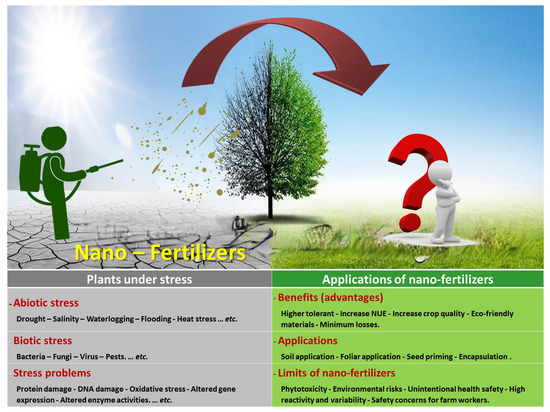
Figure 4.
The impact of applied nanofertilizers might be crucial in the mitigation of several stresses, especially salinity, drought, and heat stress, among others. The role of nanofertilizers under stress needs much effort on the part of researchers for novel approaches, especially under multiple stresses, which represent the typical environmental conditions under which we seek global food security. There are several open-ended questions with regard to nanofertilizers and their applications that still need to be answered.
Table 3.
Role of nanofertilizers on cultivated plants under different individual abiotic stresses.
Several researchers have already discussed the individual stresses on plants, which are, specifically, a high temperature (heat stress), soil salinity, and drought, and which are associated with oxidative stress. The crop loss due to abiotic stresses is about 50%, where the crop loss due to drought is 10%, the crop loss due to heat stress is 20%, and the crop loss due to other abiotic stresses is 20% [103]. The main effects of drought stress may represent damage to the soil biota and to the cultivated plants, which creates osmotic stress, which limits the mobility of the nutrients because of the soil heterogeneity, and reduces the access of the nutrients to the plant roots [103]. The main features of cultivated plants under drought may include molecular, morphological, and physiological effects, which reduce nearly all of the biological processes and the yields of the plants (for more details, kindly read [103]). The primary responses of cultivated plants under drought stress may include drought avoidance, drought escape, and drought tolerance. Drought stress could be mitigated by using PGPR and nanofertilizers. Recently, researchers have looked to next-generation sequencing for the genetic improvement of the production of crops, such as potatoes under drought conditions [119]. The production of crops under stress, such as drought, salinity, heat stress, and others, still requires more studies on the adaptive responses.
5. Combined Stress and Applied Nanofertilizers
After several studies on the effects of individual stresses on cultivated plants, many studies have begun to investigate combined stress, which is more representative of the reality of nature [120,121]. This combined stress may include abiotic stress, such as drought; biotic stress, such as bacterial infection (Pseudomonas syringae) [122]; or two different abiotic stresses, such as salinity and heat stress [14]. The damage of this combined stress depends on the duration and the type of stress, the type of plant and its growing stages, the soil and its amendments, and the type of growth medium [123]. The most common case studies of combined stress include soil salinity and heat stress [14;18], salinity and drought [124,125,126,127,128,129]; drought and heat stress [57,130,131]; and soil salinity and heavy metal stress [132,133]. Nanofertilizers have already been applied to stressed plants, such as nano-Se to cucumber under salinity and heat stress [14,18], and SiO2 NPs to common beans under soil salinity and heavy metal stress [133]. More applied amendments for the support of cultivated plants under combined stresses are presented in Table 4.
Table 4.
Some published studies on combined stresses that have been issued during recent years.
A distinguished shift in the molecular responses of plants could be noticed under combined stresses, compared with plants that had already been exposed to the same stresses independently. These responses to the individual and combined stressors have been identified at the gene expression level for several genes, with intersecting responses to these stressors [122]. However, several plant responses to the individual or combined stresses are still not known. Thus, the simultaneous occurrence of combined stresses (e.g., bacterial pathogen and drought stress) could reduce the plant growth to a greater degree compared to the impact of these stresses individually [16,121]. Transcriptomic and physiological studies on combating these combined stresses show increasing evidence that plants can merge both of the overlapping responses to the individual stresses, as well as the certain specific responses to the combined stresses [120,122]. In terms of the application of two or more nanofertilizers to cultivated plants, there has recently been an increase in concern about the combined application of nanofertilizers; however, this strategy still needs more investigations in order to emphasize the economic and environmental benefits of this application, such as combining nano-CuO and nano-ZnO [138], or selium and copper nanofertilizers [139,140].
6. Applied Nanofertilizers under Multiple Stresses
Recently, there has been an urgent need for studies on environmentally stressed plants that closely imitate the field conditions (i.e., combinations of stresses instead of individual stresses), as there are serious challenges facing the global crop productivity [141]. This requires the development of different strategies for making agriculture more resilient while reducing the negative impacts of the combination of drought and heat stress on crop productivity. These strategies may include many practices and superior crop varieties, and they may include the application of biofertilizers, which have the potential to improve the plant tolerance to the combined stresses [130]. The effects of multiple stresses largely depend on the plant age; on the inherent stress-resistance of the plant, or the susceptibility of its nature; as well as on the severity of the stresses. The plant responses under combined stress comprise the morphophysiological, generic, and molecular features that result from these stresses [141]. Under salinity, drought, and chilling stresses, osmo-protectants may accumulate, which is due to the induction of the osmotic effect on stressed plants. In general, ROS production may occur under almost all abiotic stress conditions. Moreover, it is well known that salt and heat stress commonly impact the transport and compartmentation of the ions in plants, whereas a physiological water deficit in plants is created because of drought and salinity stress, as well as a decrease in the CO2 diffusion in the chloroplast because of the reduction in the stomatal opening, which leads to a reduction in the metabolism of the carbon [141]. Under drought and heat stress, tea plants have resistance to these stresses through the accumulation of metabolites, such as caffeine, catechins, and theanine [142].
Day by day, there is an increase in the number of investigations into the different stresses on plants and their resilience, such as their responses to drought, submergence and flooding [143], and to chilling, freezing, and heat stress [144]. Recently, more themes have been discussed with regard to the multiple stresses on plants, such as the role of plant natriuretic peptides in maintaining the salt and water balance in the plant [145]. Multiple stresses occur during the deficiency and toxicity of boron in plants [19]: in the natural variations in the multiple abiotic stresses in a hyper-seasonal edaphic savanna [146]; and in the potential of a transcriptomic analysis under various stresses [142]. Aside from the nanofertilizers, several materials have been confirmed in their roles in mitigating the combined stresses for higher plant productivity, as is reported by many researchers, such as Lamaoui et al. [147] and Ashraf et al. [148]. The use of nanofertilizers under multiple stresses is still in the infancy period, as far as we know, and its management is very difficult in the agricultural sector because it depends on several soil and environmental factors. A comparison of the different kinds of stresses on cultivated plants under the application of nanofertilizers is briefly presented in Figure 5. In this figure, the stresses could be classified into main 3 categories: individual, combined and multiple stresses. Concerning the individual stresses, they include many stresses like salinity [112], drought [91], heavy metals [117], water stress [111], nutrient deficiency [115], which could mitigate this stress through applying following nanonutrients such as nano Cu/CuO [82], nano Se [14], nano Zn/ZnO [114], nano Si/SiO2 [149], nano Fe2O3/FeO [55], and nano S [113]. Regarding the combined stresses, it may include drought and heat stress [136], drought and salinity [134], salinity and heat stress [18], salinity and heavy metals (HMs) [133], also drought and HMs [137]. The second category could be ameliorated using nanonutrients such as applied nano-Si for drought and salinity [150], nSe for salinity and heat stress [14], nSi for salinity and drought [125], nSi for salinity and HMs [133], nZn for drought and heat stress [151], nZn for drought and HMs [152]. Concerning the multiple stresses, no published materials are available on using nanofertilizers for such cases.
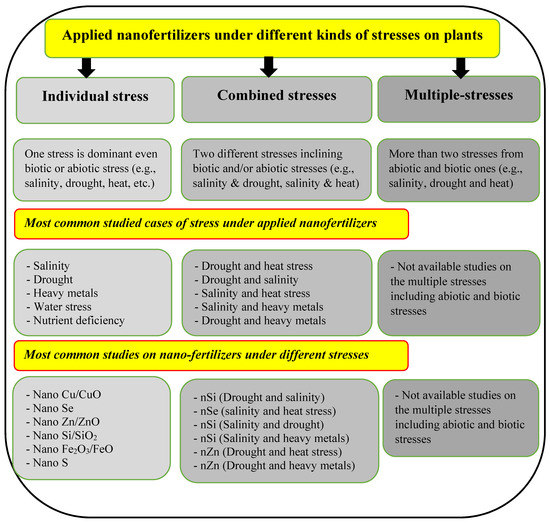
Figure 5.
A comparison of the common stresses on cultivated plants, including individual, combined, and multiple stresses, and the role of applied nanofertilizers under such conditions. Numbers refer to the citations in the reference list.
The study of multiple stresses can be noticed on the model plant of Arabidopsis thaliana, as reported by Wang et al. [153], whereas there are few studies that have been published that remark on the higher plants, one being [19] by García-Sánchez et al. In order to study multiple stresses, it is essential to conduct experiments in the field or at commercial levels, and novel agronomic strategies are needed to manage the growth of crops under simultaneous combined stresses in order to increase their resilience to climate change, which may exacerbate the incidences of several abiotic stresses [19].
7. Conclusions
This review focuses on nanofertilizers, their potential, and their role for plants under different kinds of stresses. Nanofertilizers are an essential source of fertilizers, which can improve the crop production, compared to traditional chemical fertilizers. Nanofertilizers have many advantages, which include their slow/controlled delivery of nutrients, and their abilities to reduce the loss of nutrients in soils by adsorption or fixation, increase the bioavailability of nutrients, extend the effective duration of the nutrient release in the soil, and increase the efficient use of nutrients. On the other hand, nanofertilizers have some problems because of their high reactivity and variability, and their phytotoxicity to plants. There are also human health risks, such as safety concerns for agricultural workers and consumers. Nanofertilizers should definitely be evaluated very carefully before marketing in order to examine not only their advantages for plant growth, but also their potential limitations in terms of the environment and human health. A genuine relationship between nanofertilizers and the plant stresses, in their individual or combined states, has been reported in the published literature; however, there are only a few studies that have been published on multiple stresses. The cited studies confirm the positive role of nanofertilizers on crop production under single and/or combined stress; however, their role under multiple stresses requires more effort and investigation. These investigations may answer some of the following open-ended questions, such as when can the farmer use the nanofertilizers as a direct potential alternative strategy to traditional chemical fertilizers at the field level? What are the negative impacts of these different types of nanofertilizers on the living organisms in the soil, as well as on humans and livestock, particularly under higher applied doses? What is the fate and the accumulation of nanofertilizers under higher applied doses in the food chain under different levels of stress? What is the expected role of nanofertilizers under climate change on the basis of different scenarios, and what is the expected adaptive behavior of the cultivated crops under such stresses? All of these open-ended questions should be considered for future research.
Author Contributions
Conceptualization, H.E.-R.; preparation of the outlines, writing, and reviewing, T.A.S., Y.B., J.P. and H.E.; writing and reviewing, F.E.; final writing and reviewing by Y.E. and W.L. All authors have read and agreed to the published version of the manuscript.
Funding
This research received no external funding.
Data Availability Statement
All of the data in this review are available upon reasonable request.
Acknowledgments
This work was financially supported by the National Natural Science Foundation of China (42177016, 41977121), and the Central Department of Mission, the Egyptian Ministry of Higher Education (Mission 19/2020), for El-Ramady.
Conflicts of Interest
The authors declare that they have no conflict of interest.
References
- Fahad, S.; Bajwa, A.A.; Nazir, U.; Anjum, S.A.; Farooq, A.; Zohaib, A.; Sadia, S.; Nasim, W.; Adkins, S.; Saud, S.; et al. Crop Production under Drought and Heat Stress: Plant Responses and Management Options. Front. Plant Sci. 2017, 8, 1147. [Google Scholar] [CrossRef] [PubMed] [Green Version]
- El-Ramady, H.; Faizy, S.E.-D.; Abdalla, N.; Taha, H.; Domokos-Szabolcsy, É.; Fari, M.; Elsakhawy, T.; Omara, A.E.-D.; Shalaby, T.; Bayoumi, Y.; et al. Selenium and Nano-Selenium Biofortification for Human Health: Opportunities and Challenges. Soil Syst. 2020, 4, 57. [Google Scholar] [CrossRef]
- El-Ramady, H.; Singh, A.; Rajput, V.D.; Amer, M.; Omara, A.E.-D.; Elsakhawy, T.; Elbehiry, F.; Elbasiouny, H.; Abdalla, N. Environment, Biodiversity and Soil Security: A New Dimension in the Era of COVID-19. Environ. Biodiv. Soil Secur. 2021, 5, 1–14. [Google Scholar] [CrossRef]
- Tiwari, R.K.; Lal, M.K.; Naga, K.C.; Kumar, R.; Chourasia, K.N.; Subhash, S.; Kumar, D.; Sharma, S. Emerging roles of melatonin in mitigating abiotic and biotic stresses of horticultural crops. Sci. Hortic. 2020, 272, 109592. [Google Scholar] [CrossRef]
- Nabi, R.B.S.; Tayade, R.; Hussain, A.; Kulkarni, K.P.; Imran, Q.M.; Mun, B.-G.; Yun, B.-W. Nitric oxide regulates plant responses to drought, salinity, and heavy metal stress. Environ. Exp. Bot. 2019, 161, 120–133. [Google Scholar] [CrossRef]
- Boari, F.; Cantore, V.; Di Venere, D.; Sergio, L.; Candido, V.; Schiattone, M.I. Pyraclostrobin can mitigate salinity stress in tomato crop. Agric. Water Manag. 2019, 222, 254–264. [Google Scholar] [CrossRef]
- Khan, M.A.; Asaf, S.; Khan, A.L.; Jan, R.; Kang, S.-M.; Kim, K.-M.; Lee, I.-J. Thermotolerance effect of plant growth-promoting Bacillus cereus SA1 on soybean during heat stress. BMC Microbiol. 2020, 20, 175. [Google Scholar] [CrossRef]
- Sindhu, S.; Dahiya, A.; Gera, R.; Sindhu, S.S. Mitigation of Abiotic Stress in Legume-Nodulating Rhizobia for Sustainable Crop Production. Agric. Res. 2020, 9, 444–459. [Google Scholar] [CrossRef]
- Hossain, A.; Raza, A.; Maitra, S.; Asaduzzaman, M.; Islam, M.R.; Hossain, M.J.; Sabagh, A.E.L.; Garai, S.; Mondal, M.; Abdel Latef, A.A.H.; et al. Strigolactones: A Novel Carotenoid Derived Phytohormone—Biosynthesis, Transporters, Signalling, and Mechanisms in Abiotic Stress. In Plant Growth Regulators; Aftab, T., Hakeem, K.R., Eds.; Springer Nature Switzerland AG: Cham, Switzerland, 2021; pp. 275–303. [Google Scholar] [CrossRef]
- Alhaithloul, H.A.S.; Soliman, M.H. Methyl Jasmonate and Brassinosteroids: Emerging Plant Growth Regulators in Plant Abiotic Stress Tolerance and Environmental Changes. In Plant Growth Regulators; Aftab, T., Hakeem, K.R., Eds.; Springer Nature Switzerland AG: Cham, Switzerland, 2021; pp. 173–195. [Google Scholar] [CrossRef]
- Khan, M.I.R.; Ashfaque, F.; Chhillar, H.; Irfan, M.; Khan, N.A. The intricacy of silicon, plant growth regulators and other signaling molecules for abiotic stress tolerance: An entrancing crosstalk between stress alleviators. Plant Physiol. Biochem. 2021, 36–47. [Google Scholar] [CrossRef]
- Ranjan, A.; Sinha, R.; Bala, M.; Pareek, A.; Singla-Pareek, S.L.; Singh, A.K. Silicon-mediated abiotic and biotic stress mitigation in plants: Underlying mechanisms and potential for stress resilient agriculture. Plant Physiol. Biochem. 2021, 163, 15–25. [Google Scholar] [CrossRef]
- Riaz, M.; Kamran, M.; Rizwan, M.; Ali, S.; Parveen, A.; Malik, Z.; Wang, X. Cadmium uptake and translocation: Selenium and silicon roles in Cd detoxification for the production of low Cd crops: A critical review. Chemosphere 2021, 273, 129690. [Google Scholar] [CrossRef]
- Shalaby, T.A.; Abd-Alkarim, E.; El-Aidy, F.; Hamed, E.; Sharaf-Eldin, S.; Taha, N.; El-Ramady, H.; Bayoumi, Y.; dos Reis, A.R. Nano-selenium, silicon and H2O2 boost growth and productivity of cucumber under combined salinity and heat stress. Ecotoxicol. Environ. Saf. 2021, 212, 111962. [Google Scholar] [CrossRef] [PubMed]
- Seleiman, M.F.; Al-Suhaibani, N.; Ali, N.; Akmal, M.; Alotaibi, M.; Refay, Y.; Dindaroglu, T.; Abdul-Wajid, H.H.; Battaglia, M.L. Drought Stress Impacts on Plants and Different Approaches to Alleviate Its Adverse Effects. Plants 2021, 10, 259. [Google Scholar] [CrossRef] [PubMed]
- Pandey, A.; Hakki, K.E.; Gezgin, S.; Hamurcu, M. Combined Boron Toxicity and Salinity Stress—An Insight into Its Interaction in Plants. Plants 2019, 8, 364. [Google Scholar] [CrossRef] [PubMed] [Green Version]
- Liaqat, S.; Umar, S.; Safeullah, P.; Iqbal, N.; Siddiqi, T.O.; Khan, M.I.R. Protective Effect of 24-Epibrassinolide on Barley Plants Growing Under Combined Stress of Salinity and Potassium Deficiency. J. Plant Growth Regul. 2020, 39, 1543–1558. [Google Scholar] [CrossRef]
- Bayoumi, Y.; Abd-Alkarim, E.; El-Ramady, H.; El-Aidy, F.; Hamed, E.-S.; Taha, N.; Prohens, J.; Rakha, M. Grafting Improves Fruit Yield of Cucumber Plants Grown under Combined Heat and Soil Salinity Stresses. Horticulturae 2021, 7, 61. [Google Scholar] [CrossRef]
- García-Sánchez, F.; Simón-Grao, S.; Martínez-Nicolás, J.J.; Alfosea-Simón, M.; Liu, C.; Chatzissavvidis, C.; Pérez-Pérez, J.G.; Cámara-Zapata, J.M. Multiple stresses occurring with boron toxicity and deficiency in plants. J. Hazard. Mater. 2020, 397, 122713. [Google Scholar] [CrossRef] [PubMed]
- Madzokere, T.C.; Murombo, L.T.; Chiririwa, H. Nano-based slow releasing fertilizers for enhanced agricultural productivity. Mater. Today Proc. 2021, 45, 3709–3715. [Google Scholar] [CrossRef]
- Guo, H.; White, J.C.; Wang, Z.; Xing, B. Nano-enabled fertilizers to control the release and use efficiency of nutrients. Curr. Opin. Environ. Sci. 2018, 6, 77–83. [Google Scholar] [CrossRef]
- Seleiman, M.F.; Almutairi, K.F.; Alotaibi, M.; Shami, A.; Alhammad, B.A.; Battaglia, M.L. Nano-Fertilization as an Emerging Fertilization Technique: Why Can Modern Agriculture Benefit from Its Use? Plants 2021, 10, 2. [Google Scholar] [CrossRef]
- Ahmadian, K.; Jalilian, J.; Pirzad, A. Nano-fertilizers improved drought tolerance in wheat under deficit irrigation. Agric. Water Manag. 2021, 244, 106544. [Google Scholar] [CrossRef]
- Sajadinia, H.; Ghazanfari, D.; Naghavii, K.; Naghavi, H.; Tahamipur, B. A comparison of microwave and ultrasound routes to prepare nano-hydroxyapatite fertilizer improving morphological and physiological properties of maize (Zea mays L.). Heliyon 2021, 7, e06094. [Google Scholar] [CrossRef] [PubMed]
- Ahanger, M.A.; Qi, M.; Huang, Z.; Xu, X.; Begum, N.; Qin, C.; Zhang, C.; Ahmad, N.; Mustafa, N.S.; Ashraf, M.; et al. Improving growth and photosynthetic performance of drought stressed tomato by application of nano-organic fertilizer involves up-regulation of nitrogen, antioxidant and osmolyte metabolism. Ecotoxicol. Environ. Saf. 2021, 216, 112195. [Google Scholar] [CrossRef]
- Farshchi, H.K.; Azizi, M.; Teymouri, M.; Nikpoor, A.R.; Jaafari, M.R. Synthesis and characterization of nanoliposome containing Fe2+ element: A superior nano-fertilizer for ferrous iron delivery to sweet basil. Sci. Hortic. 2021, 283, 110110. [Google Scholar] [CrossRef]
- Khan, M.Z.H.; Islam, M.R.; Nahar, N.; Al-Mamun, M.R.; Khan, M.A.S.; Matin, M.A. Synthesis and characterization of nanozeolite based composite fertilizer for sustainable release and use efficiency of nutrients. Heliyon 2021, 7, e06091. [Google Scholar] [CrossRef]
- Abdulhameed, M.F.; Taha, A.A.; Ismail, R.A. Improvement of cabbage growth and yield by nanofertilizers and nanoparticles. Environ. Nanotechnol. Monit. Manag. 2021, 15, 100437. [Google Scholar] [CrossRef]
- Saini, S.; Kumar, P.; Sharma, N.C.; Sharma, N.; Balachandar, D. Nano-enabled Zn fertilization against conventional Zn analogues in strawberry (Fragaria × ananassa Duch.). Sci. Hortic. 2021, 282, 110016. [Google Scholar] [CrossRef]
- Singh, S.K.; Patra, A.; Verma, Y.; Chattopadhyay, A.; Rakshit, A.; Kumar, S. Potential and Risk of Nanotechnology Application in Agriculture vis-à-vis Nanomicronutrient Fertilizers. In Soil Science: Fundamentals to Recent Advances; Rakshit, A., Singh, S.K., Abhilash, P.C., Biswas, A., Eds.; Springer Nature Singapore Pte Ltd.: Singapore, 2021; pp. 513–530. [Google Scholar] [CrossRef]
- Acharya, A.; Pal, P.K. Agriculture nanotechnology: Translating research outcome to field applications by influencing environmental sustainability. NanoImpact 2020, 19, 100232. [Google Scholar] [CrossRef]
- Usman, M.; Farooq, M.; Wakeel, A.; Nawaz, A.; Cheema, S.A.; ur Rehman, H.; Ashraf, I.; Sanaullah, M. Nanotechnology in agriculture: Current status, challenges and future opportunities. Sci. Total Environ. 2020, 721, 137778. [Google Scholar] [CrossRef]
- Neme, K.; Nafady, A.; Uddin, S.; Tola, Y.B. Application of nanotechnology in agriculture, postharvest loss reduction and food processing: Food security implication and challenges. Heliyon 2021, 7, e08539. [Google Scholar] [CrossRef]
- Zulfiqar, F.; Navarro, M.; Ashraf, M.; Akram, N.A.; Munné-Bosch, S. Nanofertilizer use for sustainable agriculture: Advantages and limitations. Plant Sci. 2019, 289, 110270. [Google Scholar] [CrossRef] [PubMed]
- Al-Mamun, M.R.; Hasan, M.R.; Ahommed, M.S.; Bacchu, M.S.; Ali, M.R.; Khan, M.Z.H. Nanofertilizers towards sustainable agriculture and environment. Environ. Technol. Innov. 2021, 23, 101658. [Google Scholar] [CrossRef]
- Mahapatra, D.M.; Satapathya, K.C.; Panda, B. Biofertilizers and nanofertilizers for sustainable agriculture: Phycoprospects and challenges. Sci. Total Environ. 2022, 803, 149990. [Google Scholar] [CrossRef] [PubMed]
- Mahto, R.; Rani, P.; Bhardwaj, R.; Singh, R.K.; Prasad, S.K.; Rakshit, A. Nanotechnology: A potential approach for abiotic stress management. In Advances in Nano-Fertilizers and Nano-Pesticides in Agriculture a Smart Delivery System for Crop Improvement; Jogaiah, S., Singh, H.B., Fraceto, L.F., de Lima, R., Eds.; Woodhead Publishing: Cambridge, UK, 2021; pp. 249–259. [Google Scholar] [CrossRef]
- Babu, S.; Singh, R.; Yadav, D.; Rathore, S.S.; Raj, R.; Avasthe, R.; Yadav, S.K.; Das, A.; Yadav, V.; Yadav, B.; et al. Nanofertilizers for agricultural and environmental sustainability. Chemosphere 2022, 292, 133451. [Google Scholar] [CrossRef] [PubMed]
- Basavegowda, N.; Baek, K.-H. Current and future perspectives on the use of nanofertilizers for sustainable agriculture: The case of phosphorus nanofertilizer. 3 Biotech 2021, 11, 357. [Google Scholar] [CrossRef] [PubMed]
- Bhardwaj, A.K.; Arya, G.; Kumar, R.; Hamed, L.; Pirasteh-Anosheh, H.; Poonam Jasrotia, P.; Kashyap, P.L.; Singh, G.P. Switching to nanonutrients for sustaining agroecosystems and environment: The challenges and benefits in moving up from ionic to particle feeding. J. Nanobiotechnol. 2022, 20, 19. [Google Scholar] [CrossRef] [PubMed]
- Verma, K.K.; Song, X.-P.; Joshi, A.; Tian, D.-D.; Rajput, V.D.; Singh, M.; Arora, J.; Minkina, T.; Li, Y.-R. Recent Trends in NanoFertilizers for Sustainable Agriculture under Climate Change for Global Food Security. Nanomaterials 2022, 12, 173. [Google Scholar] [CrossRef]
- Kalwani, M.; Chakdar, H.; Srivastava, A.; Pabbi, S.; Shukla, P. Effects of nanofertilizers on soil and plant-associated microbial communities: Emerging trends and perspectives. Chemosphere 2022, 287, 132107. [Google Scholar] [CrossRef]
- Belal, E.; El-Ramady, H. Nanoparticles in Water, Soils and Agriculture. In Nanoscience in Food and Agriculture 2; Ranjan, S., Dasgupta, N., Lichtfouse, E., Eds.; Sustainable Agriculture Reviews; Springer International Publishing: Cham, Switzerland, 2016; Volume 21. [Google Scholar] [CrossRef]
- Rizwan, M.; Ali, S.; Zia ur Rehman, M.; Riaz, M.; Adrees, M.; Hussain, A.; Zahir, Z.A.; Rinklebe, J. Effects of nanoparticles on trace element uptake and toxicity in plants: A review. Ecotoxicol. Environ. Saf. 2021, 221, 112437. [Google Scholar] [CrossRef]
- Toksha, B.; Sonawale, V.A.M.; Vanarase, A.; Bornare, D.; Tonde, S.; Hazra, C.; Kundu, D.; Satdive, A.; Tayde, S.; Chatterjee, A. Nanofertilizers: A review on synthesis and impact of their use on crop yield and environment. Environ. Technol. Innov. 2021, 24, 101986. [Google Scholar] [CrossRef]
- Sarraf, M.; Vishwakarma, K.; Kumar, V.; Arif, N.; Das, S.; Johnson, R.; Janeeshma, E.; Puthur, J.T.; Aliniaeifard, S.; Chauhan, D.K.; et al. Metal/Metalloid-Based Nanomaterials for Plant Abiotic Stress Tolerance: An Overview of the Mechanisms. Plants 2022, 11, 316. [Google Scholar] [CrossRef] [PubMed]
- El-Ghamry, A.M.; Mosa, A.A.; Alshaal, T.; El-Ramady, H.R. Nanofertilizers vs. Biofertilizers: New Insights. Env. Biodiv. Soil Security 2018, 2, 51–72. [Google Scholar] [CrossRef]
- Behl, T.; Kaur, I.; Sehgal, A.; Singh, S.; Sharma, N.; Bhatia, S.; Al-Harrasi, A.; Bungau, S. The dichotomy of nanotechnology as the cutting edge of agriculture: Nano-farming as an asset versus nanotoxicity. Chemosphere 2022, 288 Pt 2, 132533. [Google Scholar] [CrossRef] [PubMed]
- Zhang, Q.; Ying, Y.; Ping, J. Recent Advances in Plant Nanoscience. Adv. Sci. 2022, 9, 2103414. [Google Scholar] [CrossRef] [PubMed]
- Asgari-Targhi, G.; Iranbakhsh, A.; Ardebili, Z.O. Potential benefits and phytotoxicity of bulk and nano-chitosan on the growth, morphogenesis, physiology, and micropropagation of Capsicum annuum. Plant Physiol. Biochem. 2018, 127, 393–402. [Google Scholar] [CrossRef] [PubMed]
- Pinto, M.; Soaresa, C.; Pinto, A.S.; Fidalgo, F. Phytotoxic effects of bulk and nano-sized Ni on Lycium barbarum L. grown in vitro—Oxidative damage and antioxidant response. Chemosphere 2019, 218, 507–516. [Google Scholar] [CrossRef] [PubMed]
- Akanbi-Gada, M.A.; Ogunkunle, C.O.; Vishwakarma, V.; Viswanathan, K.; Fatob, P.O. Phytotoxicity of nano-zinc oxide to tomato plant (Solanum lycopersicum L.): Zn uptake, stress enzymes response and influence on non-enzymatic antioxidants in fruits. Environ. Technol. Innov. 2019, 14, 100325. [Google Scholar] [CrossRef]
- Wang, W.; Liu, J.; Ren, Y.; Zhang, L.; Xue, Y.; Zhang, L.; He, J. Phytotoxicity Assessment of Copper Oxide Nanoparticles on the Germination, Early Seedling Growth, and Physiological Responses in Oryza sativa L. Bull. Environ. Contam. Toxicol. 2020, 104, 770–777. [Google Scholar] [CrossRef]
- Obrador, A.; González, D.; Almendros, P.; García-Gómez, C.; Fernández, M.D. Assessment of Phytotoxicity and Behavior of 1-Year-Aged Zn in Soil from ZnO Nanoparticles, Bulk ZnO, and Zn Sulfate in Different Soil Plant Cropping Systems: From Biofortification to Toxicity. J. Soil Sci. Plant Nutr. 2021, 22, 150–164. [Google Scholar] [CrossRef]
- Rodríguez-Seijo, A.; Soares, C.; Ribeiro, S.; Amil, B.F.; Patinha, C.; Cachada, A.; Fidalgo, F.; Pereira, R. Nano-Fe2O3 as a tool to restore plant growth in contaminated soils—Assessment of potentially toxic elements (bio)availability and redox homeostasis in Hordeum vulgare L. J. Hazard. Mater. 2022, 425, 127999. [Google Scholar] [CrossRef]
- Rajput, V.; Minkina, T.; Mazarji, M.; Shende, S.; Sushkova, S.; Mandzhieva, S.; Burachevskaya, M.; Chaplygin, V.; Singh, A.; Jatav, H. Accumulation of nanoparticles in the soil-plant systems and their effects on human health. Ann. Agric. Sci. 2020, 65, 137–143. [Google Scholar] [CrossRef]
- Astaneh, N.; Bazrafshan, F.; Zare, M.; Amiri, B.; Bahrani, A. Nano-fertilizer prevents environmental pollution and improves physiological traits of wheat grown under drought stress conditions. Sci. Agropecu. 2021, 12, 41–47. [Google Scholar] [CrossRef]
- Manjunatha, S.B.; Biradar, D.; Aladakatti, Y. Nanotechnology and its applications in agriculture: A review. J. Farm Sci. 2016, 29, 1–13. [Google Scholar]
- Mejias, J.H.; Salazar, F.; Pérez Amaro, L.; Hube, S.; Rodriguez, M.; Alfaro, M. Nanofertilizers: A Cutting-Edge Approach to Increase Nitrogen Use Efficiency in Grasslands. Front. Environ. Sci. 2021, 9, 635114. [Google Scholar] [CrossRef]
- Elramady, H.; Elbasiouny, H.; Elbehiry, F.; Zia-urRehman, M. Nano-Nutrients for Carbon Sequestration: A Short Communication. Egypt. J. Soil Sci. 2021, 61, 389–398. [Google Scholar] [CrossRef]
- Mohammadghasemi, V.; Moghaddam, S.S.; Rahimi, A.; Pourakbar, L.; Popović-Djordjević, J. Morpho-biochemical traits and macro-elements of Lallemantia iberica (M.B.) Fischer & Meyer, as affected by winter (late autumn) sowing, chemical and nano-fertilizer sources. Acta Physiol. Plant 2021, 43, 29. [Google Scholar] [CrossRef]
- Sarkar, N.; Chaudhary, S.; Kaushik, M. Nano-fertilizers and Nano-pesticides as Promoters of Plant Growth in Agriculture. In Plant-Microbes-Engineered Nano-particles (PM-ENPs) Nexus in Agro-Ecosystems, Advances in Science, Technology & Innovation; Singh, P., Singh, R., Verma, P., Bhadouria, R., Kumar, A., Kaushik, M., Eds.; Springer Nature Switzerland AG: Cham, Switzerland, 2021; pp. 153–163. [Google Scholar] [CrossRef]
- Mishra, D.; Khare, P. Emerging Nano-agrochemicals for Sustainable Agriculture: Benefits, Challenges and Risk Mitigation. In Sustainable Agriculture Reviews 50; Singh, V.K., Singh, R., Lichtfouse, E., Eds.; Springer Nature Switzerland AG: Cham, Switzerland, 2021; Volume 50, pp. 235–257. [Google Scholar] [CrossRef]
- El-Ramady, H.; Abdalla, N.; Alshaal, T.; El-Henawy, A.; Elmahrouk, M.; Bayoumi, Y.; Shalaby, T.; Amer, M.; Shehata, S.; Fári, M.; et al. Plant nano-nutrition: Perspectives and challenges. In Nanotechnology, Food Security and Water Treatment. Environmental Chemistry for a Sustainable World; Gothandam, K., Ranjan, S., Dasgupta, N., Ramalingam, C., Lichtfouse, E., Eds.; Springer: Cham, Switzerland, 2018; pp. 129–161. [Google Scholar] [CrossRef]
- Durgam, M.; Mailapalli, D.R. Transport of Nano-plant Nutrients in Lateritic Soils. In Climate Impacts on Water Resources in India, Water Science and Technology Library; Pandey, A., Mishra, S.K., Kansal, M.L., Singh, R.D., Singh, V.P., Eds.; Springer Nature Switzerland AG: Cham, Switzerland, 2021; Volume 95, pp. 97–107. [Google Scholar] [CrossRef]
- Gomes, M.H.F.; Duran, N.M.; Carvalho, H.W.P. Challenges and perspective for the application of nanomaterials as fertilizers. In Advances in Nano-Fertilizers and Nano-Pesticides in Agriculture: A Smart Delivery System for Crop Improvement; Jogaiah, S., Singh, H.B., Fraceto, L.F., De Lima, R., Eds.; Woodhead Publishing: Kidlington, UK, 2021; pp. 331–359. [Google Scholar] [CrossRef]
- Knijnenburg, J.T.N.; Kasemsiri, P.; Amornrantanaworn, K.; Suwanree, S.; Iamamornphan, W.; Chindaprasirt, P.; Jetsrisuparb, K. Entrapment of nano-ZnO into alginate/polyvinyl alcohol beads with different crosslinking ions for fertilizer applications. Int. J. Biol. Macromol. 2021, 181, 349–356. [Google Scholar] [CrossRef]
- Saleem, I.; Maqsood, M.A.; Rehman, M.Z.; Aziz, T.; Bhatti, I.A.; Ali, S. Potassium ferrite nanoparticles on DAP to formulate slow-release fertilizer with auxiliary nutrients. Ecotoxicol. Environ. Saf. 2021, 215, 112148. [Google Scholar] [CrossRef]
- Li, M.; Zhang, P.; Adeel, M.; Guo, Z.; Chetwynd, A.J.; Ma, C.; Bai, T.; Hao, Y.; Rui, Y. Physiological impacts of zero valent iron, Fe3O4 and Fe2O3 nanoparticles in rice plants and their potential as Fe fertilizers. Environ. Pollut. 2021, 269, 116134. [Google Scholar] [CrossRef]
- Carmona, F.J.; Dal Sasso, G.; Ramírez-Rodríguez, G.B.; Pii, Y.; Delgado-López, J.M.; Guagliardi, A.; Masciocchi, N. Urea-functionalized amorphous calcium phosphate nanofertilizers: Optimizing the synthetic strategy towards environmental sustainability and manufacturing costs. Sci. Rep. 2021, 11, 3419. [Google Scholar] [CrossRef]
- Guha, T.; Mukherjee, A.; Kundu, R. Nano-Scale Zero Valent Iron (nZVI) Priming Enhances Yield, Alters Mineral Distribution and Grain Nutrient Content of Oryza sativa L. cv. Gobindobhog: A Field Study. J. Plant Growth Regul. 2021, 41, 710–733. [Google Scholar] [CrossRef] [PubMed]
- Abd El-Azeim, M.M.; Sherif, M.A.; Hussien, M.S.; Tantawy, I.A.A.; Bashandy, S.O. Impacts of nano- and non-nanofertilizers on potato quality and productivity. Acta Ecol. Sin. 2020, 40, 388–397. [Google Scholar] [CrossRef]
- Cota-Ruiz, K.; Ye, Y.; Valdes, C.; Deng, C.; Wang, Y.; Hernández-Viezcas, J.A.; Duarte-Gardea, M.; Gardea-Torresdey, J.L. Copper nanowires as nanofertilizers for alfalfa plants: Understanding nano-bio systems interactions from microbial genomics, plant molecular responses and spectroscopic studies. Sci. Total Environ. 2020, 742, 140572. [Google Scholar] [CrossRef] [PubMed]
- Ghasemi, V.M.; Moghaddam, S.S.; Rahimi, A.; Pourakbar, L.; Popović-Djordjević, J. Winter Cultivation and Nano Fertilizers Improve Yield Components and Antioxidant Traits of Dragon’s Head (Lallemantia iberica (M.B.) Fischer & Meyer). Plants 2020, 9, 252. [Google Scholar] [CrossRef] [Green Version]
- Dimkpa, C.O.; Andrews, J.; Sanabria, J.; Bindraban, P.S.; Singh, U.; Elmer, W.H.; Gardea-Torresdey, J.L.; White, J.C. Interactive effects of drought, organic fertilizer, and zinc oxide nanoscale and bulk particles on wheat performance and grain nutrient accumulation. Sci. Total Environ. 2020, 722, 137808. [Google Scholar] [CrossRef]
- Hafez, Y.M.; Attia, K.A.; Kamel, S.; Alamery, S.F.; El-Gendy, S.; Al-Doss, A.A.; Mehiar, F.; Ghazy, A.I.; Ibrahim, E.I.; Abdelaal, K.A.A. Bacillus subtilis as a bio-agent combined with nano molecules can control powdery mildew disease through histochemical and physiobiochemical changes in cucumber plants. Physiol. Mol. Plant Pathol 2020, 111, 101489. [Google Scholar] [CrossRef]
- Ostadi, A.; Javanmard, A.; Machiani, M.A.; Morshedloo, M.R.; Nouraein, M.; Rasouli, F.; Maggi, F. Effect of different fertilizer sources and harvesting time on the growth characteristics, nutrient uptakes, essential oil productivity and composition of Mentha × piperita L. Ind. Crops Prod. 2020, 148, 112290. [Google Scholar] [CrossRef]
- Meier, S.; Moorea, F.; Morales, A.; González, M.-E.; Seguel, A.; Meriño-Gergichevich, C.; Rubilar, O.; Cumming, J.; Aponte, H.; Alarcón, D.; et al. Synthesis of calcium borate nanoparticles and its use as a potential foliar fertilizer in lettuce (Lactuca sativa) and zucchini (Cucurbita pepo). Plant Physiol. Biochem. 2020, 151, 673–680. [Google Scholar] [CrossRef]
- Sajyan, T.K.; Alturki, S.M.; Sassine, Y.N. Nano-fertilizers and their impact on vegetables: Contribution of Nano-chelate Super plus ZFM and Lithovit®-standard to improve salt-tolerance of pepper. Ann. Agric. Sci. 2020, 65, 200–208. [Google Scholar] [CrossRef]
- Sega, D.; Baldan, B.; Zamboni, A.; Varanini, Z. FePO4 NPs Are an Efficient Nutritional Source for Plants: Combination of Nano-Material Properties and Metabolic Responses to Nutritional Deficiencies. Front. Plant Sci. 2020, 11, 586470. [Google Scholar] [CrossRef]
- Shebl, A.; Hassan, A.A.; Salama, D.M.; Abd El-Aziz, M.E.; Abd Elwahed, M.S.A. Template-free microwave-assisted hydrothermal synthesis of manganese zinc ferrite as a nanofertilizer for squash plant (Cucurbita pepo L). Heliyon 2020, 6, e03596. [Google Scholar] [CrossRef] [PubMed]
- Wang, Y.; Deng, C.; Cota-Ruiz, K.; Peralta-Videa, J.R.; Sun, Y.; Rawat, S.; Tan, W.; Reyes, A.; Hernandez-Viezcas, J.A.; Niu, G.; et al. Improvement of nutrient elements and allicin content in green onion (Allium fistulosum) plants exposed to CuO nanoparticles. Sci. Total Environ. 2020, 725, 138387. [Google Scholar] [CrossRef] [PubMed]
- Yusefi-Tanha, E.; Fallah, S.; Rostamnejadi, A.; Pokhrel, L.R. Zinc oxide nanoparticles (ZnONPs) as a novel nanofertilizer: Influence on seed yield and antioxidant defense system in soil grown soybean (Glycine max cv. Kowsar). Sci. Total Environ. 2020, 738, 140240. [Google Scholar] [CrossRef] [PubMed]
- Thirugnanasambandan, T. Advances of Engineered Nanofertilizers for Modern Agriculture. In Plant-Microbes-Engineered Nano-particles (PM-ENPs) Nexus in Agro-Ecosystems; Advances in Science, Technology & Innovation; Singh, P., Singh, R., Verma, P., Bhadouria, R., Kumar, A., Kaushik, M., Eds.; Springer Nature Switzerland AG: Cham, Switzerland, 2021; pp. 131–152. [Google Scholar] [CrossRef]
- Lateef, A.; Nazir, R.; Jamila, N.; Alam, S.; Shah, S.; Khan, M.N.; Saleem, M.; Rehman, S. Synthesis and characterization of environmental friendly corncob biochar based nano-composite—A potential slow release nano-fertilizer for sustainable agriculture. Environ. Nanotechnol. Monit. Manag. 2019, 11, 100212. [Google Scholar] [CrossRef]
- Lawrencia, D.; Wong, S.K.; Low, D.Y.S.; Goh, B.H.; Goh, J.K.; Ruktanonchai, U.R.; Soottitantawat, A.; Lee, H.H.; Tang, S.Y. Controlled Release Fertilizers: A Review on Coating Materials and Mechanism of Release. Plants 2021, 10, 238. [Google Scholar] [CrossRef]
- Gil-Ortiz, R.; Naranjo, M.Á.; Ruiz-Navarro, A.; Caballero-Molada, M.; Atares, S.; García, C.; Vicente, O. New Eco-Friendly Polymeric-Coated Urea Fertilizers Enhanced Crop Yield in Wheat. Agronomy 2020, 10, 438. [Google Scholar] [CrossRef] [Green Version]
- Mujtaba, M.; Sharif, R.; Ali, Q.; Rehman, R.; Khawar, K.M. Biopolymer based nanofertilizers applications in abiotic stress (drought and salinity) control. In Advances in Nano-Fertilizers and Nano-Pesticides in Agriculture: A Smart Delivery System for Crop Improvement; Jogaiah, S., Singh, H.B., Fraceto, L.F., De Lima, R., Eds.; Woodhead Publishing: Kidlington, UK, 2021; pp. 85–110. [Google Scholar] [CrossRef]
- Tymoszuk, A.; Wojnarowicz, J. Zinc Oxide and Zinc Oxide Nanoparticles Impact on In Vitro Germination and Seedling Growth in Allium cepa L. Materials 2020, 13, 2784. [Google Scholar] [CrossRef]
- Sharma, N.; Acharya, S.; Kumar, K.; Singh, N.; Chaurasia, O.P. Hydroponics as an advanced technique for vegetable production: An overview. J. Soil Water Conserv. 2019, 17, 364–371. [Google Scholar] [CrossRef]
- Van Nguyen, D.; Nguyen, H.M.; Le, N.T.; Nguyen, K.H.; Nguyen, H.T.; Le, H.M.; Nguyen, A.T.; Dinh, N.T.T.; Hoang, S.A.; Van Ha, C. Copper Nanoparticle Application Enhances Plant Growth and Grain Yield in Maize Under Drought Stress Conditions. J. Plant Growth Regul. 2022, 41, 364–375. [Google Scholar] [CrossRef]
- Kamali, N.; Mehrabadi, A.R.; Mirabi, M.; Zahed, A.M. Comparison of micro and nano MgO-functionalized vinasse biochar in phosphate removal: Micro-nano particle development, RSM optimization, and potential fertilizer. J. Water Process. Eng. 2021, 39, 101741. [Google Scholar] [CrossRef]
- Zahedi, S.M.; Hosseini, M.S.; Meybodi, N.D.H.; da Silva, J.A.T. Foliar application of selenium and nano-selenium affects pomegranate (Punica granatum cv. Malase Saveh) fruit yield and quality. S. Afr. J. Bot. 2019, 124, 350–358. [Google Scholar] [CrossRef]
- Najafi, S.; Razavi, S.M.; Khoshkam, M.; Asadi, A. Effects of green synthesis of sulfur nanoparticles from Cinnamomum zeylanicum barks on physiological and biochemical factors of Lettuce (Lactuca sativa). Physiol. Mol. Biol. Plants 2020, 26, 1055–1066. [Google Scholar] [CrossRef]
- Saijo, Y.; Loo, E.P. Plant immunity in signal integration between biotic and abiotic stress responses. New Phytol. 2020, 225, 87–104. [Google Scholar] [CrossRef] [PubMed] [Green Version]
- Kalia, A.; Kaur, H. Nano-biofertilizers: Harnessing Dual Benefits of Nano-nutrient and Bio-fertilizers for Enhanced Nutrient Use Efficiency and Sustainable Productivity. In Nanoscience for Sustainable Agriculture; Pudake, R.N., Chauhan, N., Kole, C., Eds.; Springer Nature Switzerland AG: Cham, Switzerland, 2019; pp. 51–73. [Google Scholar] [CrossRef]
- González-García, Y.; Cárdenas-Álvarez, C.; CadenasPliego, G.; Benavides-Mendoza, A.; Cabrera-de-la-Fuente, M.; Sandoval-Rangel, A.; Valdés-Reyna, J.; Juárez-Maldonado, A. Effect of Three Nanoparticles (Se, Si and Cu) on the Bioactive Compounds of Bell Pepper Fruits under Saline Stress. Plants 2021, 10, 217. [Google Scholar] [CrossRef] [PubMed]
- Zahedi, S.M.; Moharrami, F.; Sarikhani, S.; Padervand, M. Selenium and silica nanostructure-based recovery of strawberry plants subjected to drought stress. Sci. Rep. 2020, 10, 17672. [Google Scholar] [CrossRef]
- Pérez-Labrada, F.; López-Vargas, E.R.; Ortega-Ortiz, H.; Cadenas-Pliego, G.; Benavides-Mendoza, A.; Juárez-Maldonado, A. Responses of Tomato Plants under Saline Stress to Foliar Application of Copper Nanoparticles. Plants 2019, 8, 151. [Google Scholar] [CrossRef] [Green Version]
- Ahmed, M.; Hasanuzzaman, M.; Raza, M.A.; Malik, A.; Ahmad, S. Plant Nutrients for Crop Growth, Development and Stress Tolerance. In Sustainable Agriculture in the Era of Climate Change; Roychowdhury, R., Choudhury, S., Hasanuzzaman, M., Srivastava, S., Eds.; Springer Nature Switzerland AG: Cham, Switzerland, 2020; pp. 43–93. [Google Scholar] [CrossRef]
- Khalil, U.; Ali, S.; Rizwan, M.; Rahman, K.U.; Ata-Ul-Karim, S.T.; Najeeb, U.; Ahmad, M.N.; Adrees, M.; Sarwar, M.; Hussain, S.M. Role of Mineral Nutrients in Plant Growth Under Extreme Temperatures. In Plant Nutrients and Abiotic Stress Tolerance; Hasanuzzaman, M., Fujita, M., Oku, H., Nahar, K., Hawrylak-Nowak, B., Eds.; Springer Nature Singapore Pte Ltd.: Singapore, 2018; pp. 499–524. [Google Scholar] [CrossRef]
- Ostmeyer, T.; Parker, N.; Jaenisch, B.; Alkotami, L.; Bustamante, C.; Jagadish, S.V.K. Impacts of heat, drought, and their interaction with nutrients on physiology, grain yield, and quality in field crops. Plant Physiol. Rep. 2020, 25, 549–568. [Google Scholar] [CrossRef]
- Zia, R.; Nawaz, M.S.; Siddique, M.J.; Hakim, S.; Imran, A. Plant survival under drought stress: Implications, adaptive responses, and integrated rhizosphere management strategy for stress mitigation. Microbiol. Res. 2021, 242, 126626. [Google Scholar] [CrossRef]
- Kumar, V.; Dwivedi, P.; Kumar, P.; Singh, B.N.; Pandey, D.K.; Kumar, V.; Bose, B. Mitigation of heat stress responses in crops using nitrate primed seeds. S. Afr. J. Bot. 2021, 140, 25–36. [Google Scholar] [CrossRef]
- Zulfiqar, F.; Ashraf, M. Nanoparticles potentially mediate salt stress tolerance in plants. Plant Physiol. Biochem. 2021, 160, 257–268. [Google Scholar] [CrossRef]
- Hu, J.; Xianyu, Y. When nano meets plants: A review on the interplay between nanoparticles and plants. Nano Today 2021, 38, 101143. [Google Scholar] [CrossRef]
- Ranjan, A.; Rajput, V.D.; Minkina, T.; Bauer, T.; Chauhan, A.; Jindal, T. Nanoparticles induced stress and toxicity in plants. Environ. Nanotechnol. Monit. Manag. 2021, 15, 100457. [Google Scholar] [CrossRef]
- Pagano, L.; Rossi, R.; Paesano, L.; Marmiroli, N.; Marmiroli, M. miRNA regulation and stress adaptation in plants. Environ. Exp. Bot. 2021, 184, 104369. [Google Scholar] [CrossRef]
- Esmaili, S.; Tavallali, V.; Amiri, B. Nano-Silicon Complexes Enhance Growth, Yield, Water Relations and Mineral Composition in Tanacetum parthenium under Water Deficit Stress. Silicon 2020, 13, 2493–2508. [Google Scholar] [CrossRef]
- Namjoyan, S.; Sorooshzadeh, A.; Rajabi, A.; Aghaalikhani, M. Nano-silicon protects sugar beet plants against water deficit stress by improving the antioxidant systems and compatible solutes. Acta Physiol. Plant 2020, 42, 157. [Google Scholar] [CrossRef]
- Afshari, M.; Pazoki, A.; Sadeghipour, O. Foliar-applied Silicon and its Nanoparticles Stimulate Physio-chemical Changes to Improve Growth, Yield and Active Constituents of Coriander (Coriandrum Sativum L.) Essential Oil under Different Irrigation Regimes. Silicon 2021, 13, 4177–4188. [Google Scholar] [CrossRef]
- Hassanpouraghdam, M.B.; Mehrabani, L.V.; Tzortzakis, N. Foliar Application of Nano-zinc and Iron Affects Physiological Attributes of Rosmarinus officinalis and Quietens NaCl Salinity Depression. J. Soil Sci. Plant Nutr. 2020, 20, 335–345. [Google Scholar] [CrossRef]
- Saad-Allah, K.M.; Ragab, G.A. Sulfur nanoparticles mediated improvement of salt tolerance in wheat relates to decreasing oxidative stress and regulating metabolic activity. Physiol. Mol. Biol. Plants 2020, 26, 2209–2223. [Google Scholar] [CrossRef]
- Sun, L.; Song, F.; Guo, J.; Zhu, X.; Liu, S.; Liu, F.; Li, X. Nano-ZnO-Induced Drought Tolerance Is Associated with Melatonin Synthesis and Metabolism in Maize. Int. J. Mol. Sci. 2020, 21, 782. [Google Scholar] [CrossRef] [Green Version]
- Asadpour, S.; Madani, H.; Mohammadi, G.N.; Heravan, I.M.; Abad, H.H.S. Improving Maize Yield with Advancing Planting Time and Nano-Silicon Foliar Spray Alone or Combined with Zinc. Silicon 2020, 14, 201–209. [Google Scholar] [CrossRef]
- Rady, M.M.; El-Shewy, A.A.; Seif El-Yazal, M.A.; Abd El-Gawwad, I.F.M. Integrative Application of Soil P-Solubilizing Bacteria and Foliar Nano P Improves Phaseolus vulgaris Plant Performance and Antioxidative Defense System Components under Calcareous Soil Conditions. J. Soil Sci. Plant Nutr. 2020, 20, 820–839. [Google Scholar] [CrossRef]
- Ahmad, P.; Alyemeni, M.N.; Al-Huqail, A.A.; Alqahtani, M.A.; Wijaya, L.; Ashraf, M.; Kaya, C.; Bajguz, A. Zinc Oxide Nanoparticles Application Alleviates Arsenic (As) Toxicity in Soybean Plants by Restricting the Uptake of as and Modulating Key Biochemical Attributes, Antioxidant Enzymes, Ascorbate-Glutathione Cycle and Glyoxalase System. Plants 2020, 9, 825. [Google Scholar] [CrossRef] [PubMed]
- Ogunkunle, C.O.; Odulaja, D.A.; Akande, F.O.; Varun, M.; Vishwakarma, V.; Fatoba, P.O. Cadmium toxicity in cowpea plant: Effect of foliar intervention of nano-TiO2 on tissue Cd bioaccumulation, stress enzymes and potential dietary health risk. J. Biotechnol. 2020, 310, 54–61. [Google Scholar] [CrossRef] [PubMed]
- Saidi, A.; Hajibarat, Z. Application of Next Generation Sequencing, GWAS, RNA seq, WGRS, for genetic improvement of potato (Solanum tuberosum L.) under drought stress. J. Biotechnol. 2020, 29, 101801. [Google Scholar] [CrossRef]
- Gupta, A.; Senthil-Kumar, M. Concurrent Stresses Are Perceived as New State of Stress by the Plants: Overview of Impact of Abiotic and Biotic Stress Combinations. In Plant Tolerance to Individual and Concurrent Stresses; Senthil-Kumar, M., Ed.; Springer Pvt. Ltd.: New Delhi, India, 2017; pp. 1–31. [Google Scholar] [CrossRef]
- Ramakrishna, W.; Kumari, A. Plant Tolerance to Combined Stress: An Overview. In Plant Tolerance to Individual and Concurrent Stresses; Senthil-Kumar, M., Ed.; Springer Pvt. Ltd.: New Delhi, India, 2017; pp. 83–90. [Google Scholar] [CrossRef]
- Gupta, A.; Patil, M.; Qamar, A.; Senthil-Kumar, M. ath-miR164c influences plant responses to the combined stress of drought and bacterial infection by regulating proline metabolism. Environ. Exp. Bot. 2020, 172, 103998. [Google Scholar] [CrossRef]
- Shahid, M. Effect of soil amendments on trace element-mediated oxidative stress in plants: Meta-analysis and mechanistic interpretations. J. Hazard. Mater. 2021, 407, 124881. [Google Scholar] [CrossRef]
- Silambarasan, S.; Logeswari, P.; Cornejo, P.; Abraham, J.; Valentine, A. Simultaneous mitigation of aluminum, salinity and drought stress in Lactuca sativa growth via formulated plant growth promoting Rhodotorula mucilaginosa CAM4. Ecotoxicol. Environ. Saf. 2019, 180, 63–72. [Google Scholar] [CrossRef]
- Alamri, S.; Hu, Y.; Mukherjee, S.; Aftab, T.; Fahad, S.; Raza, A.; Ahmad, M.; Siddiqui, M.H. Silicon-induced postponement of leaf senescence is accompanied by modulation of antioxidative defense and ion homeostasis in mustard (Brassica juncea) seedlings exposed to salinity and drought stress. Plant Physiol. Biochem 2020, 157, 47–59. [Google Scholar] [CrossRef]
- Vicente, M.J.; Martínez-Díaz, E.; Martínez-Sánchez, J.J.; Franco, J.A.; Bañón, S.; Conesa, E. Effect of light, temperature, and salinity and drought stresses on seed germination of Hypericum ericoides, a wild plant with ornamental potential. Sci. Hortic. 2020, 270, 109433. [Google Scholar] [CrossRef]
- Fattahi, M.; Mohammadkhani, A.; Shiran, B.; Baninasab, B.; Ravash, R.; Gogorcena, Y. Beneficial effect of mycorrhiza on nutritional uptake and oxidative balance in pistachio (Pistacia spp.) rootstocks submitted to drought and salinity stress. Sci. Hortic. 2021, 281, 109937. [Google Scholar] [CrossRef]
- Moghaddam, M.S.H.; Safaie, N.; Soltani, J.; Hagh-Doust, N. Desert-adapted fungal endophytes induce salinity and drought stress resistance in model crops. Plant Physiol. Biochem. 2021, 160, 225–238. [Google Scholar] [CrossRef] [PubMed]
- Ors, S.; Ekinci, M.; Yildirim, E.; Sahin, U.; Turan, M.; Dursun, A. Interactive effects of salinity and drought stress on photosynthetic characteristics and physiology of tomato (Lycopersicon esculentum L.) seedlings. S. Afr. J. Bot. 2021, 137, 335–339. [Google Scholar] [CrossRef]
- Duc, N.H.; Csintalan, Z.; Posta, K. Arbuscular mycorrhizal fungi mitigate negative effects of combined drought and heat stress on tomato plants. Plant Physiol. Biochem. 2018, 132, 297–307. [Google Scholar] [CrossRef] [PubMed]
- Hosseini, S.Z.; Ismaili, A.; Nazarian-Firouzabadi, F.; Fallahi, H.; Nejad, A.R.; Sohrabi, S.S. Dissecting the molecular responses of lentil to individual and combined drought and heat stresses by comparative transcriptomic analysis. Genomics 2021, 113, 693–705. [Google Scholar] [CrossRef]
- Chrysargyris, A.; Papakyriakou, E.; Petropoulos, S.A.; Tzortzakis, N. The combined and single effect of salinity and copper stress on growth and quality of Mentha spicata plants. J. Hazard. Mater. 2019, 368, 584–593. [Google Scholar] [CrossRef]
- El-Saadony, M.T.; Desoky, E.M.; Saad, A.M.; Eid, R.S.M.; Selem, E.; Elrys, A.S. Biological silicon nanoparticles improve Phaseolus vulgaris L. yield and minimize its contaminant contents on a heavy metals-contaminated saline soil. J. Environ. Sci. 2021, 106, 1–14. [Google Scholar] [CrossRef]
- Aliakbari, M.; Cohen, S.P.; Lindlof, A.; Shamloo-Dashtpagerdi, R. Rubisco activase A (RcaA) is a central node in overlapping gene network of drought and salinity in Barley (Hordeum vulgare L.) and may contribute to combined stress tolerance. Plant Physiol. Biochem. 2021, 161, 248–258. [Google Scholar] [CrossRef]
- Chen, L.; Hu, W.-F.; Long, C.; Wang, D. Exogenous plant growth regulator alleviate the adverse effects of U and Cd stress in sunflower (Helianthus annuus L.) and improve the efficacy of U and Cd remediation. Chemosphere 2021, 262, 127809. [Google Scholar] [CrossRef]
- Li, J.; Zhao, S.; Yu, X.; Du, W.; Li, H.; Sun, Y.; Sun, H.; Ruan, C. Role of Xanthoceras sorbifolium MYB44 in tolerance to combined drought and heat stress via modulation of stomatal closure and ROS homeostasis. Plant Physiol. Biochem. 2021, 162, 410–420. [Google Scholar] [CrossRef]
- Naz, R.; Sarfraz, A.; Anwar, Z.; Yasmin, H.; Nosheen, A.; Keyani, R.; Roberts, T.H. Combined ability of salicylic acid and spermidine to mitigate the individual and interactive effects of drought and chromium stress in maize (Zea mays L.). Plant Physiol. Biochem. 2021, 159, 285–300. [Google Scholar] [CrossRef]
- Jośko, I.; Kusiak, M.; Xing, B.; Oleszczuk, P. Combined effect of nano-CuO and nano-ZnO in plant-related system: From bioavailability in soil to transcriptional regulation of metal homeostasis in barley. J. Hazard. Mater. 2021, 416, 126230. [Google Scholar] [CrossRef] [PubMed]
- Saffan, M.M.; Koriem, M.A.; El-Henawy, A.; El-Mahdy, S.; El-Ramady, H.; Elbehiry, F.; Alaa El-Dein Omara, A.E.-D.; Bayoumi, Y.; Badgar, K.; Prokisch, J. Sustainable Production of Tomato Plants (Solanum lycopersicum L.) under Low-Quality Irrigation Water as Affected by Bio-Nanofertilizers of Selenium and Copper. Sustainability 2022, 14, 3236. [Google Scholar] [CrossRef]
- Shalaby, T.A.; El-Bialy, S.M.; El-Mahrouk, M.E.; Omara, A.E.-D.; El-Beltagi, H.S.; El-Ramady, H. Acclimatization of In Vitro Banana Seedlings Using Root-Applied Bio-Nanofertilizer of Copper and Selenium. Agronomy 2022, 12, 539. [Google Scholar] [CrossRef]
- Pandey, P.; Ramegowda, V.; Senthil-Kumar, M. Shared and unique responses of plants to multiple individual stresses and stress combinations: Physiological and molecular mechanisms. Front. Plant Sci. 2015, 6, 723. [Google Scholar] [CrossRef] [PubMed] [Green Version]
- Liu, Z.; Han, Y.; Zhou, Y.; Wang, T.; Lian, S.; Yuan, H. Transcriptomic analysis of tea plant (Camellia sinensis) revealed the co-expression network of 4111 paralogous genes and biosynthesis of quality-related key metabolites under multiple stresses. Genomics 2021, 113, 908–918. [Google Scholar] [CrossRef] [PubMed]
- Verma, N.; Sao, P.; Srivastava, A.; Singh, S. Physiological and Molecular Responses to Drought, Submergence and Excessive Watering in Plants. In Harsh Environment and Plant Resilience; Husen, A., Ed.; Springer Nature Switzerland AG: Cham, Switzerland, 2021; pp. 305–321. [Google Scholar] [CrossRef]
- Zahra, N.; Shaukat, K.; Hafeez, M.B.; Raza, A.; Hussain, S.; Chaudhary, M.T.; Akram, M.Z.; Kakavand, S.N.; Saddiq, M.S.; Wahid, A. Physiological and Molecular Responses to High, Chilling, and Freezing Temperature in Plant Growth and Production: Consequences and Mitigation Possibilities. In Harsh Environment and Plant Resilience; Husen, A., Ed.; Springer Nature Switzerland AG: Cham, Switzerland, 2021; pp. 235–290. [Google Scholar] [CrossRef]
- Liu, X.; Guan, H.; Wang, T.; Meng, D.; Yang, Y.; Dai, J.; Fan, N.; Guo, B.; Fu, Y.; He, W.; et al. ScPNP-A, a plant natriuretic peptide from Stellera chamaejasme, confers multiple stress tolerances in Arabidopsis. Plant Physiol. Biochem. 2020, 149, 132–143. [Google Scholar] [CrossRef]
- Thomas-Barry, G.; Martin, C.C.G.; Lynch, M.D.J.; Ramsubhag, A.; Rouse-Miller, J.; Charles, T.C. Driving factors influencing the rhizobacteriome community structure of plants adapted to multiple climatic stressors in edaphic savannas. Sci. Total Environ. 2021, 769, 145214. [Google Scholar] [CrossRef]
- Lamaoui, M.; Jemo, M.; Datla, R.; Bekkaoui, F. Heat and Drought Stresses in Crops and Approaches for Their Mitigation. Front. Chem. 2018, 6, 26. [Google Scholar] [CrossRef]
- Ashraf, M.A.; Rasheed, R.; Hussain, I.; Iqbal, M.; Farooq, M.U.; Saleem, M.H.; Ali, S. Taurine modulates dynamics of oxidative defense, secondary metabolism, and nutrient relation to mitigate boron and chromium toxicity in Triticum aestivum L. plants. Environ. Sci. Pollut. Res. 2022. [Google Scholar] [CrossRef]
- Esmaili, S.; Tavallali, V.; Amiri, B.; Bazrafshan, F.; Sharafzadeh, S. Foliar Application of Nano-Silicon Complexes on Growth, Oxidative Damage and Bioactive Compounds of Feverfew Under Drought Stress. Silicon 2022. [Google Scholar] [CrossRef]
- Mahmoud, L.M.; Dutt, M.; Shalan, A.M.; El-Kady, M.E.; El-Boray, M.S.; Shabana, Y.; Grosser, J.W. Silicon nanoparticles mitigate oxidative stress of in vitro-derived banana (Musa acuminata ‘Grand Nain’) under simulated water deficit or salinity stress. S. Afr. J. Bot. 2020, 132, 155–163. [Google Scholar] [CrossRef]
- Azmat, A.; Tanveer, Y.; Yasmin, H.; Hassan, M.N.; Shahzad, A.; Reddy, M.; Ahmad, A. Coactive role of zinc oxide nanoparticles and plant growth promoting rhizobacteria for mitigation of Synchronized effects of heat and drought stress in wheat plants. Chemosphere 2022, 297, 133982. [Google Scholar] [CrossRef] [PubMed]
- Adrees, M.; Khan, Z.S.; Hafeez, M.; Rizwan, M.; Hussain, K.; Asrar, M.; Alyemeni, M.N.; Wijaya, L.; Ali, S. Foliar exposure of zinc oxide nanoparticles improved the growth of wheat (Triticum aestivum L.) and decreased cadmium concentration in grains under simultaneous cd and water deficient stress. Ecotoxicol. Environ. Saf. 2021, 208, 111627. [Google Scholar] [CrossRef] [PubMed]
- Wang, Y.; Guo, Y.; Li, F.; Liu, Y.; Jin, S. Overexpression of KcNHX1 gene confers tolerance to multiple abiotic stresses in Arabidopsis thaliana. J. Plant Res. 2021, 134, 613–623. [Google Scholar] [CrossRef]
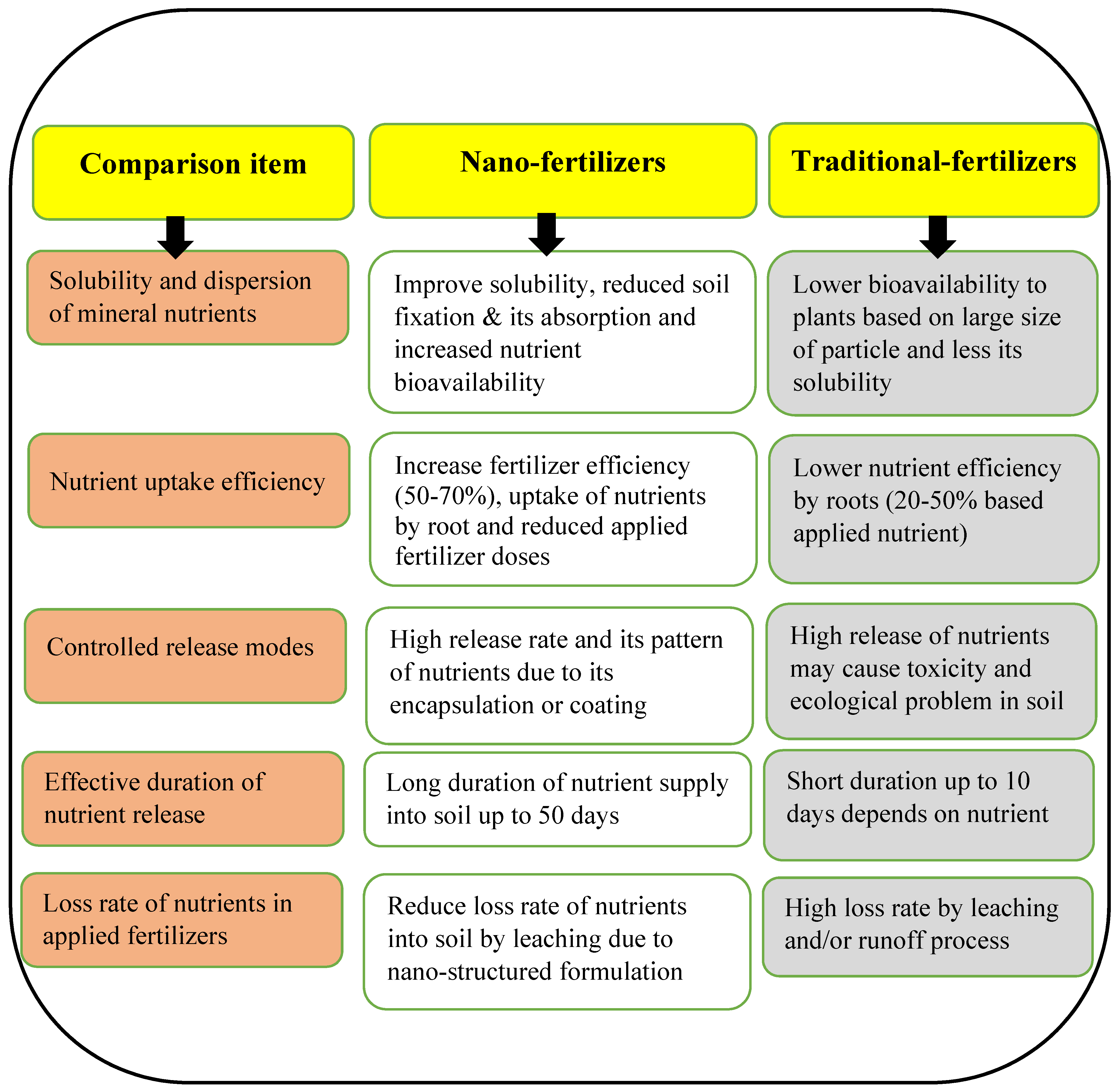
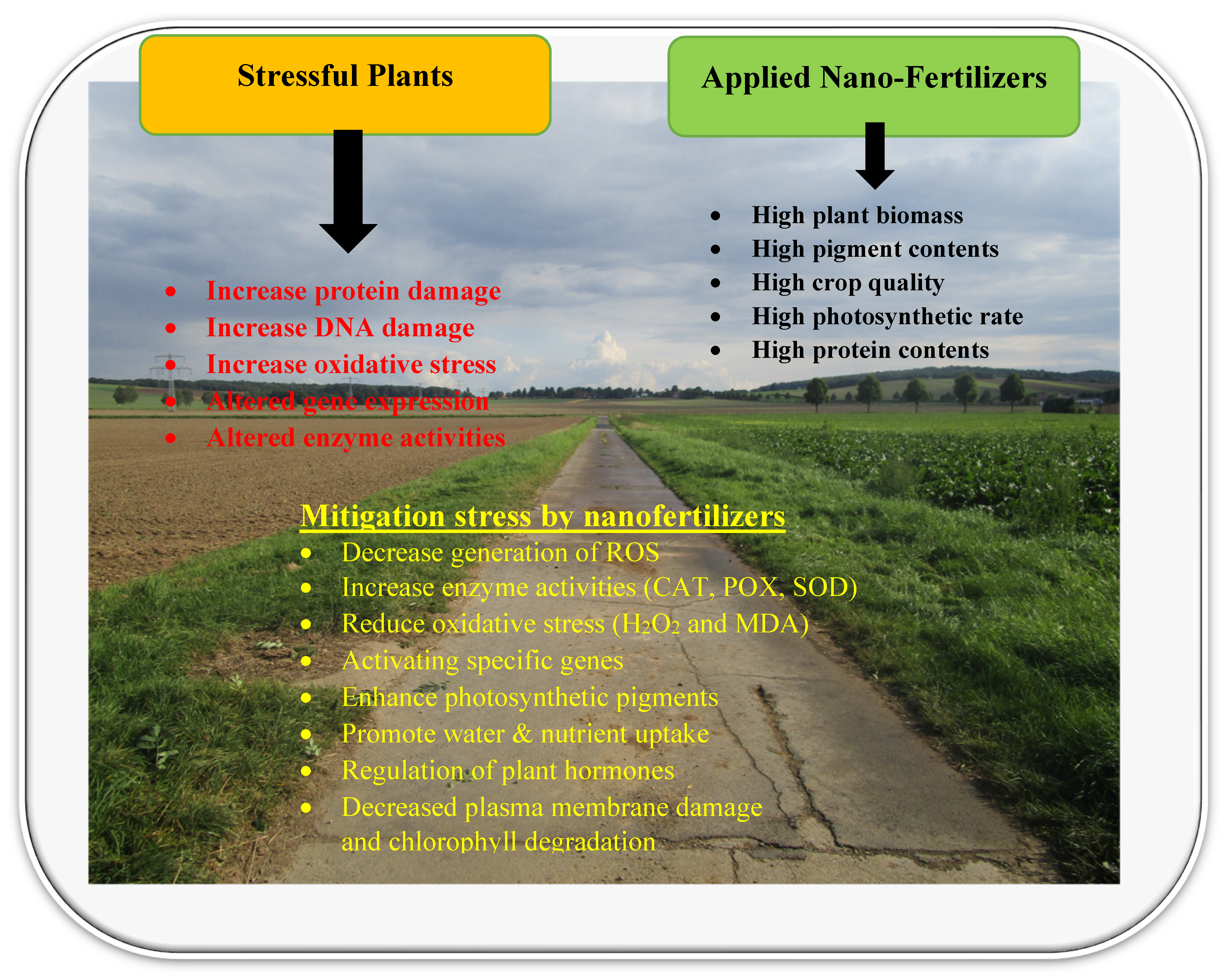
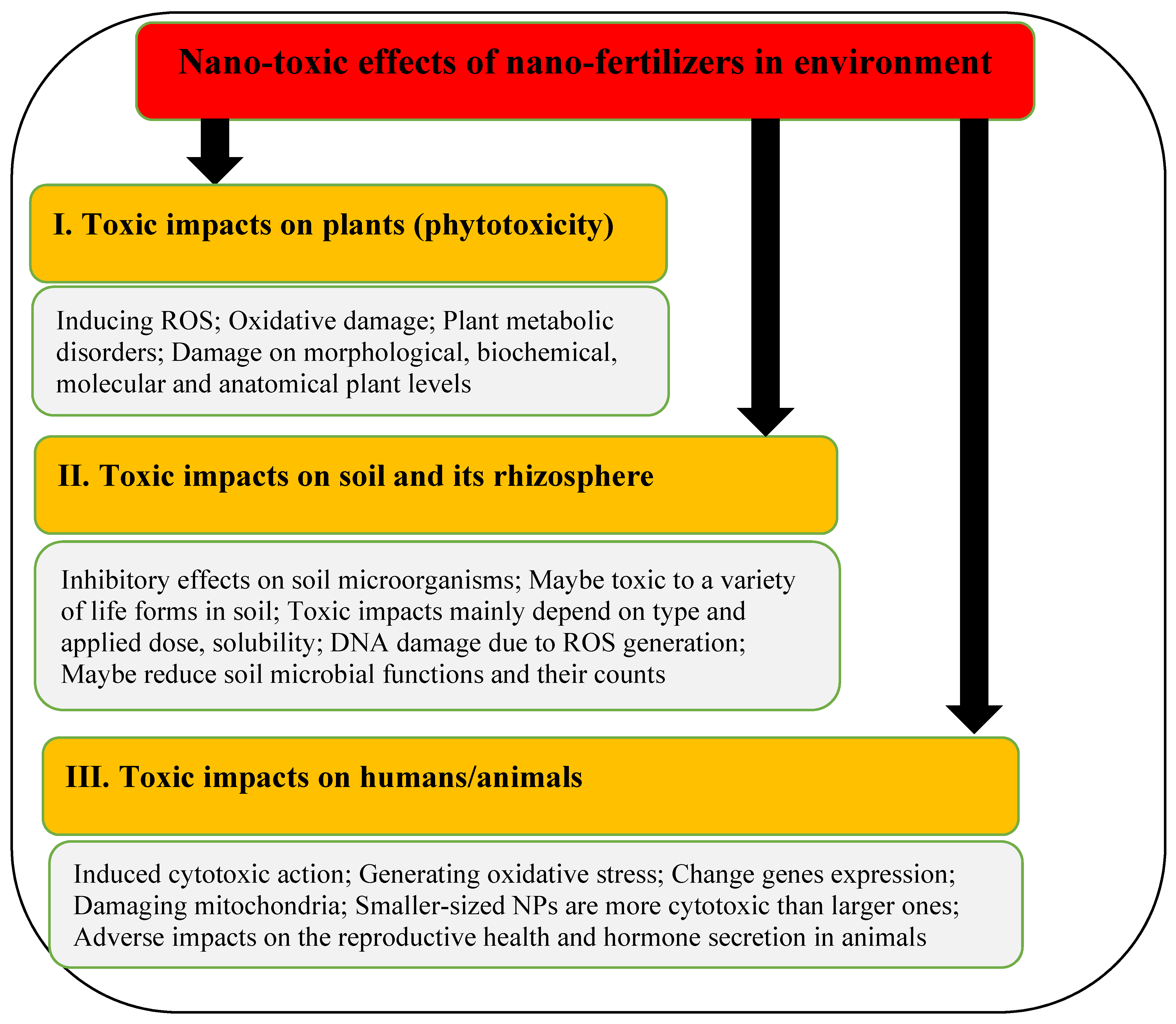
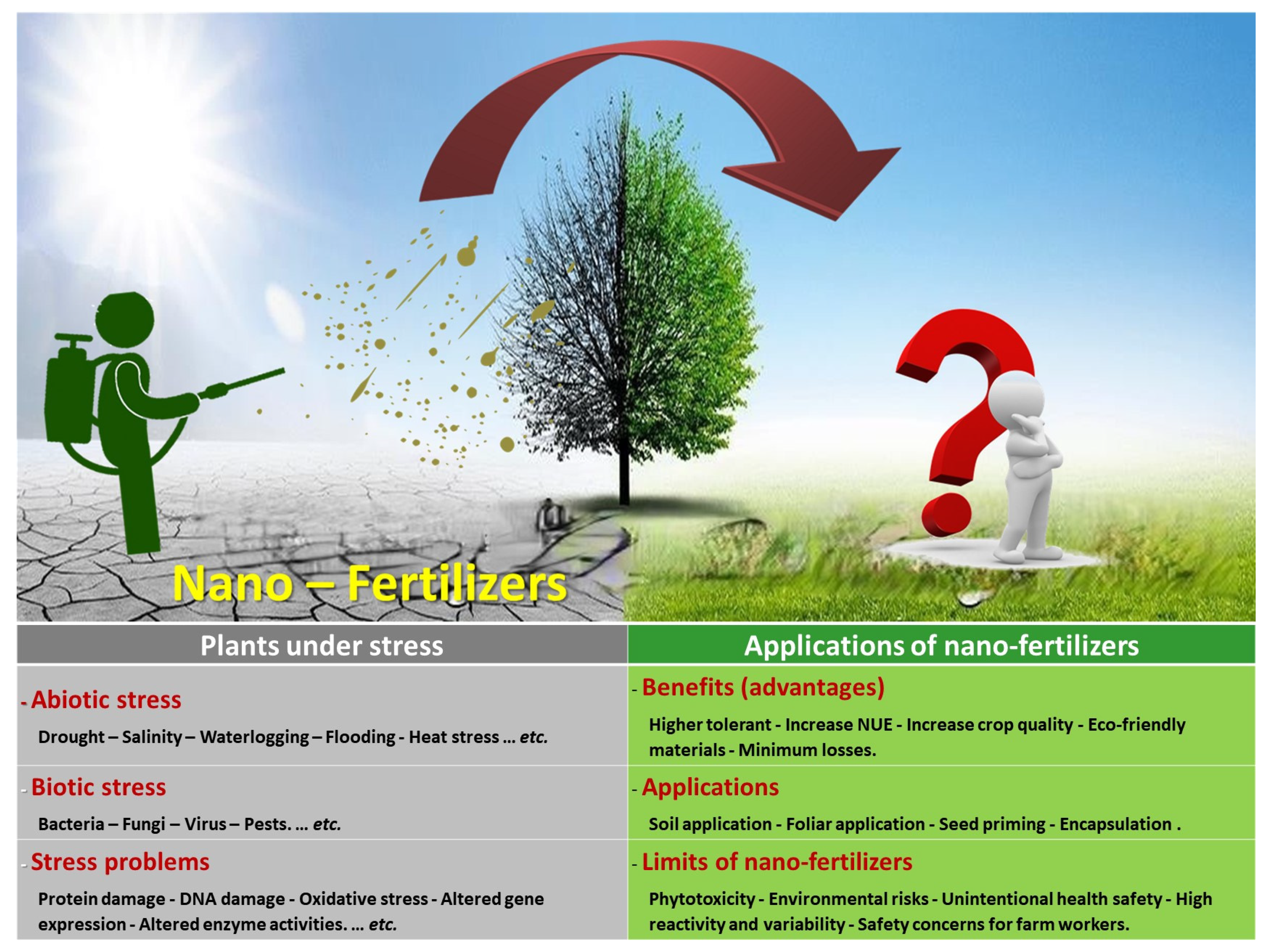
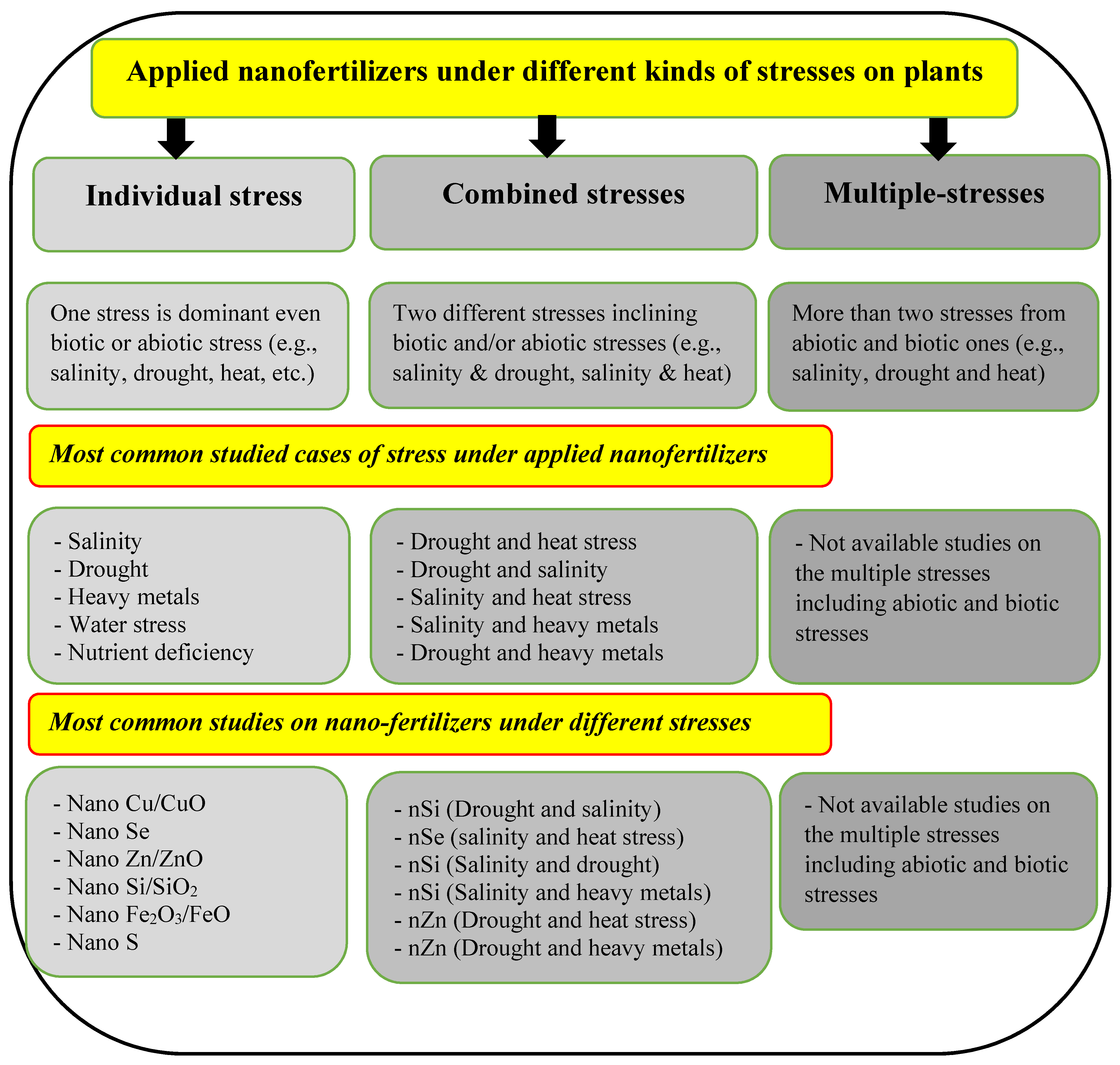
Publisher’s Note: MDPI stays neutral with regard to jurisdictional claims in published maps and institutional affiliations. |
© 2022 by the authors. Licensee MDPI, Basel, Switzerland. This article is an open access article distributed under the terms and conditions of the Creative Commons Attribution (CC BY) license (https://creativecommons.org/licenses/by/4.0/).