


Abstract
Experience has shown that when a target group that benefits from or is affected by an intervention is included in the planning procedure from the beginning, underlying success factors are revealed and respected. Coming to sustainable mobility planning, an ideal participatory scheme (optimal synthesis of different perspectives) accompanying the sustainable mobility planning cycle would add to the interventions’ success. The current paper, based on the knowledge acquired within the e-smartec Interreg EUROPE project, is inspired by the wide spectrum of marketing techniques from the business sector and proposes the effective transfer of them to mobility co-planning and citizens’ engagement. The approach for developing this capacity-building guide (MOBENGAGE-RADAR) on engagement in mobility planning includes (i) review of existing appealing marketing techniques (1st level), (ii) extraction of the affiliated engagement methods (2nd level), (iii) identification of real-world examples of successful citizens’ engagement practices (3rd level), and (iv) correlation of methods and examples with SUMP steps. MOBENGAGE-RADAR visualizes the applicability of the different engagement and awareness raising methods for each step of mobility planning and can be used as the base for creative thinking while developing an engagement strategy.
1. Introduction
As decision-making is based on identifying and prioritizing future interventions to optimally manage a situation, the consulting approach is inherently found within the planning procedure [1]. Participatory planning is a decision-making approach where the user (users, with the broad meaning of involved partner/body) or better, the one who directly benefits from or is influenced by the proposed interventions, is placed at the center of the policy making. In participatory planning, stakeholders take the position of the co-designer next to decision makers and collaborate with them throughout the whole planning cycle: the design, delivery, promotion, and monitoring of co-decided interventions [2]. Public participation and the benefits of this bottom-up approach in planning are not issues of our time; Aristotle, the well-known 4th century BC Greek philosopher, describes in his work of political philosophy “Politics”, the “State” as an organized structure where power is exercised by the majority of citizens in order to achieve benefits for all. The term “citizen” was therefore associated with the notion of active participation in the public issues, and Aristotle supports that a citizen is anyone who can take part in the governmental and decision-making process.
As a research tool, participatory planning is first referred to around the 1930s, when it is mentioned as a cornerstone for addressing various issues where the contribution of the public with evaluations, ideas, and suggestions enriches the scientific findings [3]. During the 1960s, there was a wide reference to the concept of participation by researchers from various scientific fields, including the sociologists who actively involved the crowd (crowd-learning) in their research in order to gain the necessary internal understanding of their case studies. In this context and for covering various research needs, the idea of “focus groups” was born, which is still an effective method of enhancing the interest and involvement of the public in co-planning [3,4,5,6,7]. By the years and with the evolution of societies and on a case-by-case basis, the level of participation of citizens and stakeholders in decision-making varied significantly, and while at the beginning, the complexity of multi-actor involvement seemed to be an obstacle regarding the effective involvement of citizens, today the situation seems to have changed. Particular emphasis has begun to be placed on citizen participation in crucial sustainability-related issues [8,9]. Today, probably more than ever, with climate change risks and socio-economic crisis effects asking for real change in citizen behavior, participatory planning is transformed to both a challenge and a goal for the decision-making process [3,10,11,12]. It is indicated that the pivotal role in the accelerated efforts to shift to participatory approaches is played by the environmental issues that threaten the health of citizens [6]. From the 1980s onward, bottom-up decision-making models seem to have added further pressure on the traditional top-down models [3,13,14,15].
The theory and practice of governance models is increasingly concerned with placing the citizen at the center of the policy-making arena as a goal for a real, profound change in the way of governing. The goal is to develop policies and interventions (services, infrastructures, urban concepts, etc.) that meet real needs and expectations. Concepts such as “co-creation” and “co-production” describe the systematic pursuit of stable and productive cooperation between governments, non-governmental organizations, stakeholders, and citizens. In many countries, citizen involvement in policy making and service planning has been hotly debated or attempted, but the degree to which the exact goal is achieved varies considerably. There have been some notable achievements, and there is abundant public policy literature that supports continuous strong cooperation between citizens and decision makers for achieving visions. Nevertheless, real involvement in co-planning and services co-development requires significant changes in the culture and daily functioning of authorities. On the one hand, it requires new skills of civil servants as negotiators and facilitators. In particular, the effective link with the citizen requires political will and high support for the real decentralization of power and joint decision-making [16]. On the other hand, it requires from the side of citizens, an orientation toward absolute respect of the fellow human being and the protection of the common good, the willingness for active participation, and the dedication (time and effort) required for participation on an ongoing basis.
Coming to participatory planning in mobility decision-making and planning, one of the basic principles on which the development of successful and acceptable mobility plans is based is the active involvement and participation of the real users or otherwise direct beneficiaries of the mobility measures, therefore citizens and the involved stakeholders [17]. Diving into the reasons that prevent the adoption of acceptable and therefore effective mobility plans, low commitment of citizens to participating in the whole process cannot be omitted [18]. According to [19], the real meaning of commitment is not only to provide information for awareness but also to strengthen the relationship with and trust of citizens for achieving a common goal. Previous research has shown significant difficulties in actively engaging citizens in the planning of transport services [20] due to the limited understanding of the pivotal role that citizens can play and also due to the lack of capacity of local authorities to provide appropriate opportunities for citizen involvement. According to [21], the benefits of mobility planning participatory approach that include enhanced exchange of ideas, evaluation and adoption of good practices, and conflicts’ evaluation and resolution. The placement of citizens next to the position of the designers of the city where they live gives them the right to speak, strengthens their trust in the decisions, and at the same time contributes in the generation of a sense of “ownership” (ownership feeling) for the interventions proposed and implemented [22]. In this way, it is considered as the most feasible way to increase public acceptance of and support for mobility interventions. The process of creating this close link among citizens, institutions, and decision makers (living lab, ecosystem approach) is difficult as it is associated with a change in the behavior and culture of citizens in most cases and requires a long-term implementation plan with significant resource allocation: time, cost, and staff training [23,24]. A successful participatory process is expected to increase the level of acceptance of the proposed interventions as well as to substantially help achieve a change in the behavior toward sustainable modes and means of transportation. In addition, such an effort is necessary to build bridges between local/regional authorities and civil society, with the ultimate goal of building positive and meaningful relationships.
The transition to sustainable mobility requires active support from both competent authorities and citizens, as clearly mentioned in the Sustainable Urban Mobility Plan (SUMP) cycle approach [25]. It is vital that all relevant actors and target groups are fully informed of the goals of the SUMP and that they are able to express needs that will be heard and respected. This helps in the acceptance of the SUMP and also in real improvement of its quality. Taking into account the above, the scope of participatory planning can be divided into two categories:
- Awareness, which refers to all techniques and methods used for informing, raising awareness among, and educating the public, with the ultimate goal of adopting new behavioral patterns that favor sustainable mobility.
- Collaboration and co-design, which refers to all techniques and methods exploited for promoting collaboration and active public participation in the design process [26].
Among the lessons learned during the first development period of the SUMP (until 2018, with the revision of the directives) is that citizens should be involved in the design process from the earliest stages of design and that their interest should be maintained alive even after the completion of the SUMP. The engagement goals (information, consultation, participation, and cooperation), the timing and frequency in reaching citizens, as well as the proper use of techniques and tools for involving citizens and stakeholders are of crucial importance and must be well defined from the outset of developing a SUMP in an integrated participatory planning strategy.
Based on the above, the current paper reviews marketing techniques and methods and extracts useful tips for transferring the business sector experience from engagement into mobility planning. The review refers to both traditional methods already applied in mobility planning (i.e., focus groups, traditional consultation procedures, and transport surveys) and more innovative approaches in co-planning (i.e., exploitation of ICT tools for engagement, crowd-sourcing apps, and interactive learning environments). The novelty of the work consists, apart from the presentation of innovative methods for the mobility planning area engagement, in the correlation of methods with marketing techniques, which provides the reader the possibility to go beyond the traditional frames. The knowledge gained from the review process is concentrated in MOBENGAGE-RADAR, a quick and easy engagement decision-making guide that presents the applicability of identified methods per step of the SUMP cycle. The MOBENGAGE-RADAR should be seen as the base for creative thinking in mobility co-planning, highlighting directly linked methods per step but leaving the space for further innovation, while offering a wider view of interlinked, more innovative methods.
2. Materials and Methods
The purpose of this review article is to identify opportunities for exploiting smart and innovative methods from marketing to “bottom-up” mobility planning. The type of review chosen by the authors is the narrative review, which is the most common way of reviewing an extensive theme and is skewed toward a qualitative interpretation of prior knowledge [27]. More specifically, the framework follows a systematic approach comprising three parallel steps, namely: search and screening (conduct a search and identify keywords, such as marketing techniques and engagement methods), desired information extraction (links among the above topics with mobility planning, participatory planning, and co-creation), and writing the review (document results), while generating knowledge for mobility co-planning in the form of a guidance (MOBENGAGE-RADAR).
More specifically, the methodological approach for developing this capacity building guide on engagement in mobility planning includes (i) the review of appealing marketing techniques (1st level), (ii) the extraction of the affiliated engagement methods (2nd level), (iii) the identification of real-world examples of successful citizens’ engagement practices (3rd level), and (iv) the correlation of methods and examples with SUMP steps accompanied by implementation and transferability tips (Figure 1).
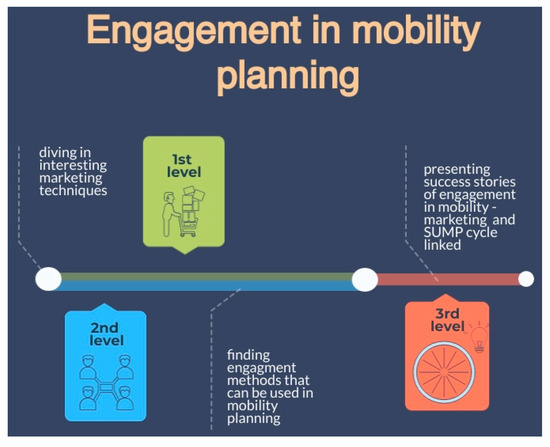
Figure 1.
The methodological steps of the framework.
2.1. First and Second Levels of Review; Marketing Techniques and Methods for Increasing Engagement Levels
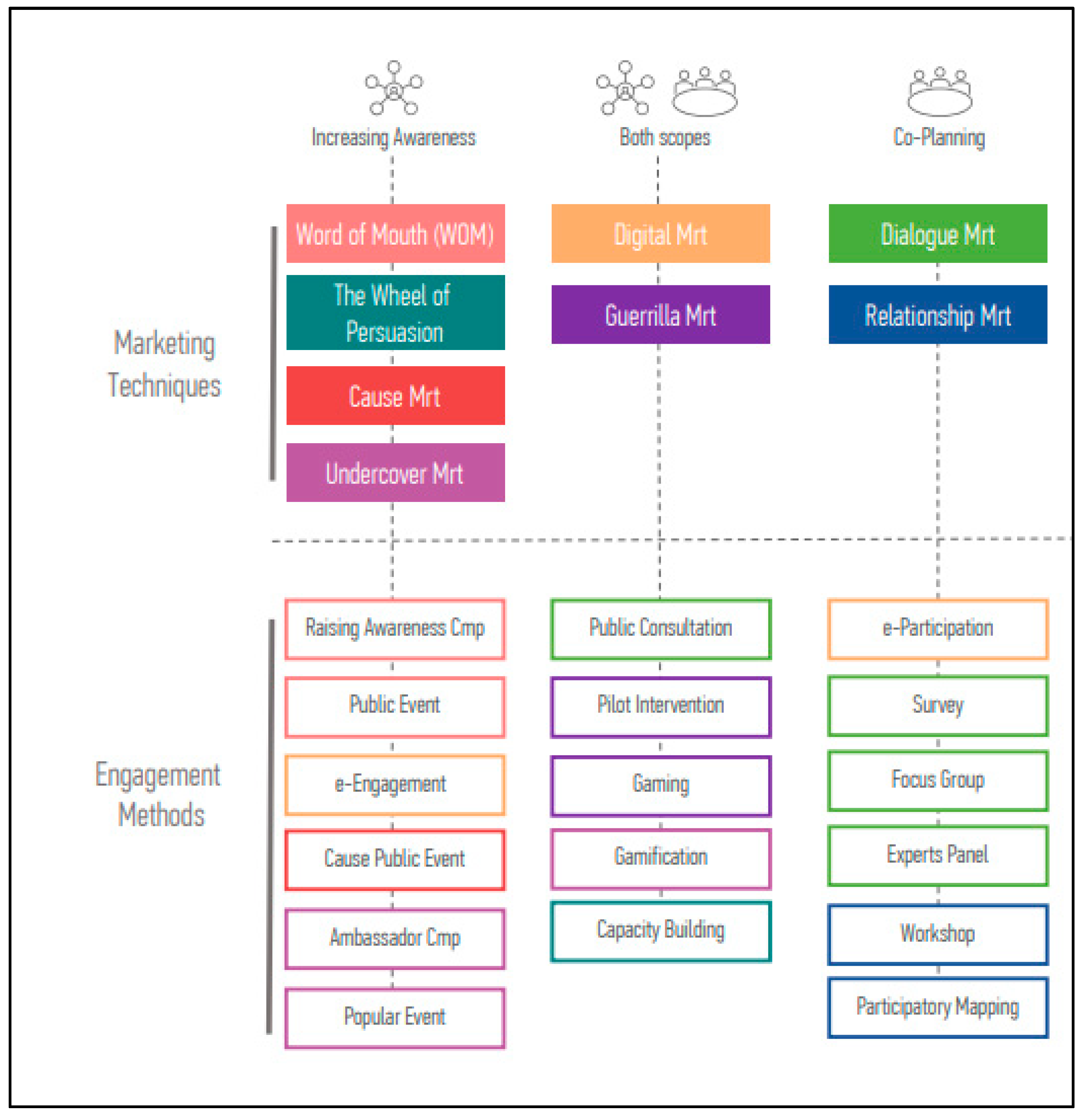
In the framework of the current work, with the term “engagement marketing techniques” we refer to the combination of promotional strategies and the use of methods of engaging and activating the public. The main goal is the support of public voice, the interaction with decision makers, and active participation in planning. The marketing techniques and the associated engagement methods that can be used in the co-design of SUMP and also in the active promotion and support of sustainable mobility measures are depicted in Figure 2 and are briefly presented in the sections that follow.
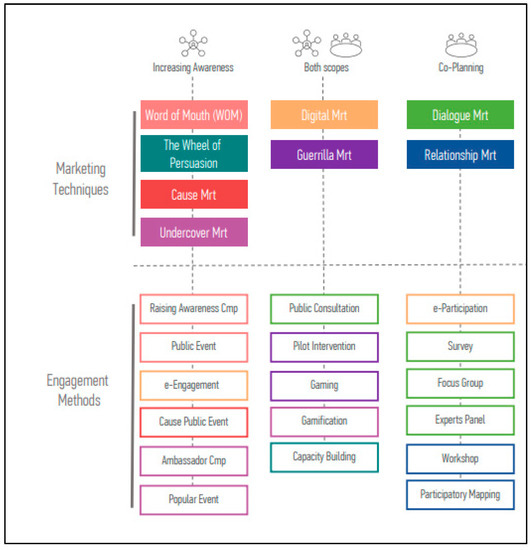
Figure 2.
Marketing techniques and engagement methods [26].
A common starting point for properly transferring every marketing technique and method in the transport planning procedure is target clustering (groups), identification of the key characteristics per target group (demographic, cultural, behavioral, and attitudinal), and mining of their needs. The principal characteristics and needs of the target groups define the content and language of the messages to be communicated (easy wording and short messages for kids, multi-language approach when referring to multi-cultural functional areas, etc.) and guide the selection of proper methods (i.e., a crowd-sourcing app can be also used for collecting data from older people but prior to its launch, intense training (focus group based) should take place as should social media activation for younger audience and employers as ambassadors) [28,29,30]. A common ending point per technique exploited is the evaluation of its success, evaluating communication and engagement efforts using basic quantitative and qualitative key performance indicators, such as the number of participants, interaction with others, and the sense of belonging [31]. The interested reader is referred to the cited references for detailed descriptions of the above starting and ending common points.
2.1.1. Word-of-Mouth Communication
The technique of narrating and transmitting knowledge through the dissemination of information is known as word-of-mouth communication. The main features of this technique are:
- Rapid diffusion of information,
- Attracting the public interest through interactive visualized elements,
- Use of mass communication channels/wide range of audience coverage,
- Use of simple and targeted verbal content.
Today, the use of word-of-mouth diffusion of information is considered as a key means of its effective dissemination. A basic modification from the traditional concept of word of mouth is the online transmission of information from user to user [32]. “Evangelism marketing” is an advanced form of word of mouth in which companies “use” customers who strongly believe in a particular product or service to persuade others to buy and use it. Customers become volunteer supporters by actively disseminating the product or service on behalf of the company [33]. The well-known communication and awareness-raising campaigns on sustainable development issues and public events are engagement methods of the word-of-mouth technique that find application in sustainable transport design [34]. According to [35], marketers are interested in providing positive word of mouth, such as novel experiences, a fact that can act as valuable feedback for decision-making. It needs, however, a strong fingerprint to be created in order for the method to be effective, close work with a group of travelers, and strong experience that can lead by example other citizens. Face-to-face word-of-mouth communication and family/peer influence on participation can facilitate engagement of hard-to-reach groups, such as older people [36].
2.1.2. Cause Marketing
Cause marketing is a technique usually used when referring to charities since it promotes social responsibility. Key features of this technique are that it:
- Focuses on raising public awareness around a topic, while combining relevant activities or ideas that can be attributed to the topic under investigation.
- Is usually used by non-profit organizations.
- Offers the opportunity to engage the public, not only rationally but also emotionally, through the promotion of moral values and new patterns of behavior.
- Focuses on the emotional interaction of the audience, emphasizing the sense of social responsibility.
“Social responsibility” is a highly creative and cost-effective approach for promoting products or services that adapts and develops over time, adopting key temporal and local characteristics in its implementation [37]. The technique of social responsibility uses in the field of transport planning methods of involvement similar to those in the word-of-mouth technique. The method requires a strong emotional exchange between the “marketer” and the audience and a positive link with the root cause in order to act effectively. Therefore, the best link among cause and behavior should be identified.
2.1.3. Digital Marketing
The digital marketing technique, a technique that uses digital services and platforms to promote services and products, is also referred to as Internet marketing [38]. Tools and channels that promote digital participation (e-participation) and engagement (e-engagement) are the main methods that support the digital dissemination of information. It is a powerful method, positively applicable in almost every case under the necessary transformations (mixed use, pure exploitation, more advanced ICT tools for more tech-savvy citizens, simpler forms for every type of citizen, etc.).
2.1.4. Dialogue Marketing
The dialogue marketing technique is a technique where the power of media is exploited in order to open dialogue with the public. Key features of dialogue marketing are:
- Creating trust with the public;
- Offering simple and targeted thematic communication;
- Creating safe spaces for the exchange of views and ideas, encouraging diversity.
A variety of methods are used in the dialogue technique, such as various forms of surveys, public consultation, focus groups, and expert panels that have traditionally shown a good dynamic. Nowadays, combined with ICT tools, dialogue marketing is transformed and made even more effective.
2.1.5. Relationship Marketing
The relationship marketing technique is a technique that focuses on specific target groups aiming to create long-term links [39]. The interaction extends beyond communication and feedback, acquiring features of corporate collaboration. It includes a set of sub-strategies with three main objectives:
- Target group interaction: Targeting a specific audience using social media to create dialogue.
- Creation of centers of influence: Cooperation with key actors for the creation of “cells” of influence.
- Co-planning: Use of targeted methods aimed at the cooperation of citizens and stakeholders in joint decision-making.
The key feature of the technique is the focus on creating collaborative links with specific target groups, while it involves multiple levels of interaction, where both the provider and the recipient benefit from this interaction (win–win effect). Workshops and participatory mapping are well-known co-design methods that fall into the broader category of “long-term” relationship generation. Relationship-based inclusive engagement approaches were identified as strategies for reaching hard-to-reach groups since they build trust and confidence in the process [40].
2.1.6. The Wheel of Persuasion
The wheel of persuasion is a technique that uses the ability to pursue. When thinking of persuasion, negative examples often come to mind. However, in this case, we are referring to the positive force of persuasion that encourages the adoption of alternative patterns of behavior, changing the common perspective and using reward as motivation [41]. Capacity building is a method that aims at education and consequently at persuasion and a substantial understanding of the value of co-planning. Capacity building shows a good dynamic toward upgrading skills of engagement.
2.1.7. Guerilla Marketing
Guerilla marketing is a technique that uses alternative ways of interacting with a target group. It uses the surprise effect for creating opportunities to promote an idea or a project. Its key characteristics are [42]:
- Low-cost, low-budget needs;
- Inventiveness and creativity, e.g., in the use of alternative ways of interacting with the public;
- Intense interaction with the public;
- Use of digital channels to attract the target group and create an original experience [43]; augmented reality and virtual reality are the most modern aspects injected into guerilla marketing methods.
In mobility co-planning, pilot interventions, in the sense of temporary interventions to understand their use and value, are a method that could be included in guerilla marketing in the sense that offers a real pocket experience of a future intervention. In addition, serious games (gaming) used in recent years as a way to attract the interest and raise awareness of citizens on issues of sustainability and sustainable development are included in this technique [44].
2.1.8. Undercover Marketing
A technique using subconscious messages or secret messages in order to promote an idea or a product/service is undercover marketing. As above, when referring to subliminal messages for engagement, we focus on the positive side of delivering a positive idea that the conscious mind does not detect. It has many similarities with word-of-mouth communication, as its goal is to disseminate information focusing on specific topics, while the main element that differentiates this technique is the use of seemingly irrelevant methods of interaction with the public and the use of hidden messages to pique the interest of the public. Popular events used to promote additional issues, campaigns with the presence of “ambassadors” giving messages to encourage public health behaviors (ambassador campaigns), and gamification elements are methods of subconscious messaging that have been used in sustainable mobility development. The audience to be more likely to be engaged through ambassadors has to do with the type of ambassador mobilized. In the framework of the current work, with the term “engagement marketing techniques,” we refer to the combination of promotional strategies and the use of methods of engaging and activating the public. The main goal is the support of public voice, the interaction with decision makers, and active participation in planning. The marketing techniques and the associated engagement methods that can be used in the co-design of the SUMP and also in the active promotion and support of sustainable mobility measures are depicted in Figure 2 and briefly presented below.
2.2. Third Level of Review; Success Stories in Engagement throughout the SUMP Cycle
The success stories, good practices presented below, even if they have a specific application (involvement of a specific target group in co-planning, i.e., parents, students, and staff), can, under appropriate modifications, further apply to other target groups.
2.2.1. MOTIVATE App: A Crowd-Sourcing and Interactive Learning Environment
The MOTIVATE app is an integrated crowd-sourcing game initiative toward transforming travelers into active agents of change of the new low-carbon era. The MOTIVATE app is a cloud-based tool that collects data and provides a first-level overview of daily trips and travelers’ opinions. The platform, through the provided services, aims to:
- Support the participatory approach of the decision-making process;
- Provide insight into real travelers’ needs;
- Increase travelers’ interest in the mobility planning process;
- Transform travelers’ into active agents of sustainable mobility adoption;
- Raise awareness in terms of sustainable mobility.
The app consists of four services:
A. Trip diaries/frequent trips: The service aims to collect information regarding the mobility patterns and behavior of all the end users (citizens and visitors). The daily trips are declared by any user either on real time (GPS enabled) or after the trip (frequent trips). This service enables the development of a valuable and highly cost-effective data library concerning the daily mobility patterns of the city.
B. Evaluation of existing transport measures: The service aims to collect information from the end users regarding specific mobility measures and transport services already operating in the city. The users are asked to rate the performance of the existing mobility measures and transport services, giving a clear view of their satisfaction from their current operation.
C. Preference on future transport interventions: The service aims to collect information from the end users regarding their perceptions of specific mobility interventions by rating their importance.
D. Game: A game is provided to the end users aiming to make them more familiar with sustainability and attract them to the app.
The MOTIVATE application has been introduced as a good practice in the good practice platform of the Interreg Europe Transnational Cooperation Program and is also considered as a tool that can support co-planning even in times such as the difficult recent COVID-19 pandemic. As an online tool, given the appropriate promotion, it can complement/replace (to the desired degree) physical consultation procedures and events. It can also act as a permanent communication channel for citizens, administrators on mobility issues.
2.2.2. Trendsportal Card Game; a Serious Game Facilitating Sustainable Mobility Vision Co-Creation
A good example of the interaction and optimal involvement of stakeholders and citizens during the co-development step of the vision of North Limburg (Netherlands Region) is the Trendsportal card game.
Trendsportal, an initiative of the eight municipalities of the RMO Noord-Limburg, offers to residents, companies, interested parties, and governments access to stimulating ideas for transport issues in North Limburg. The initiative has done a great job on engagement, among else, using gamification and gaming techniques through digital (web portal) and nondigital (focus groups) channels.
Coming to a good practice exploiting gaming benefits, the Trendsportal card game consists of cards, each of which represents the objectives of the Venlo Sustainable Urban Mobility Plan. Players (municipal staff, city council members, businessmen, citizens, students and parents’ associations, cyclists, people with reduced mobility, etc.) were asked to choose between specific cards (linked to the goals of sustainable mobility) and to state their thoughts and suggestions for achieving the relevant objectives. In this way, the vision for the city was agreed on and co-designed, enhancing the sense of total ownership associated with respect for the proposed mobility measures and respect for interventions [45].
2.2.3. School Bike Route Planner; Co-Designing the Way to School by Bike
The School Bike Route Planner smartphone application has been developed as a tool to promote safe cycling to and from school in the Hessen region of Germany. It promotes the participatory process in design by inviting parents, students, and teachers to co-plan school cycling. The promotion of cycling is linked beyond environmental goals to the issue of active mobility as a means of improving physical health, thus making the benefit double (combining digital marketing with hidden messages). The application is easy to use, works in a way similar to other well-known routing applications and provides information not only on cycling routes leading to schools in the area but also on points of interest. In the existing network, students, parents, and the school community are invited to note their suggestions and ideas in order to increase the level of safety, while any problems related to travel can also be identified. The results from the participatory planning process of the bicycle routes are not only used for the development and improvement of the infrastructure but also evaluated in the wider context of transport planning at the regional level. By discussing the results in general in specialized laboratories (students, administration, politicians, police, schools, etc.), often decisions to change infrastructure or manage traffic can be made directly, specifically for low-cost and low-effort measures [45].
2.2.4. Placing Students in the Role of Decision Makers of Tomorrow, the Interactive SUSTAIN Erasmus + Project Sustainability Awareness Game
The SUSTAIN Erasmus + game is an interactive tool to help participants (initial target; students of universities) experience immediate responsibility for their daily choices. Therefore, it is a way to build capacity on decision-making. By experimenting with different solutions and dealing directly with their consequences in a simulation environment, students can easily realize that “convenient” decisions (i.e., irrational use of private cars) are becoming a destroying lifestyle for sustainability of living areas. In the SUSTAIN game, each player “becomes” the deputy mayor of a key department, such as Infrastructure, Environment & Sustainability, Transport, Welfare, Culture, or Sports & Education. The main goal of each department is to address specific problems and the related implications of its decisions in the city, while the main challenge is that all decisions are interrelated and overall success relies on good interdepartmental cooperation among [46].
2.2.5. REFORM: Fostering Regional Cooperation and Capacity Building for SUMPs
The practice established permanent regional cooperation for increasing the capacity of the local municipalities and facilitating the deployment of their Sustainable Urban Mobility Plans (SUMPs) that integrate the regional policies and move above the “silo” approaches in municipal urban transport planning. The practice was implemented through the delivery of two capacity-building and exchange-of-experience sessions, one delivered for the staff members of the Region of Central Macedonia (named “training for the trainers”) and the other delivered for the staff members of the Municipalities of RCM. Both sessions had two-day duration and the aim to:
- Improve the average level of knowledge among city officers and technicians about SUMPs;
- Raise awareness at regional and municipal levels about the scope and content of SUMPs;
- Enhance the planning capacities of regions and municipalities in SUMP development;
- Inculcate the SUMP principle of cross-sectoral and cross-municipal planning.
The training for the trainers targeted a small number of representatives from the Region of RCM, who would, afterward, maximize the value of the training delivery to the municipalities. A hierarchy-of-training approach was applied in order to prepare the future trainers to deliver the SUMP training to others in the most effective way. The participatory element was considered essential for the delivery of the sessions. Common mapping and data were used, taking the participants through the whole SUMP process. Presentation material included reference to good practices, while exercises/worksheets included various tools/approaches according to the section delivered. A mixture of plans, figures, data, info cards for proposed measures, flipchart paper sheets, and photographs brought the element of reality to the case study, simulating real co-planning processes. Role playing was applied, as the trainees formed two groups, region representatives and city representatives, reflecting potential different views on priorities of transport planning. Nonetheless, all members of the groups belonged to the SUMP Working Group and, therefore, they needed to work together to find a balanced solution.
In the framework of the REFORM project, the Region of Central Macedonia (Greece) developed a dedicated-to-Sustainable-Urban-Mobility-Planning support web platform for Greek municipalities that are on the way to procure, develop, and adopt a SUMP (https://www.keyp-svak-rcm.imet.gr/, accessed on 18 January 2022). Guidance, training, capacity building, and dialogue area creation are among the principal goals of this SUMP competence center.
3. Results
The inspiration from the review of the above marketing techniques and methods and the success stories of engagement in mobility planning concluded in the proposal of a practical guide on engagement on the various phases of the SUMP cycle.
The following Table 1, Table 2, Table 3 and Table 4 present analytically the assignment of the marketing techniques (MT) and the participation methods (PM) to the different SUMP cycle phases, giving also more details as regards their key characteristics and the key participants.

Table 1.
Assignment of dialogue marketing techniques and participation methods to the SUMP cycle (own elaboration on SUMP steps, [26]).
Table 2.
Assignment of guerrilla and undercover marketing techniques and participation methods to the SUMP cycle (e-smartec 2020).
Table 3.
Assignment of word-of-mouth and cause marketing techniques and participation methods to the SUMP cycle (e-smartec 2020).
Table 4.
Assignment of wheel-of-persuasion and relationship marketing techniques and participation methods to the SUMP cycle (e-smartec 2020).
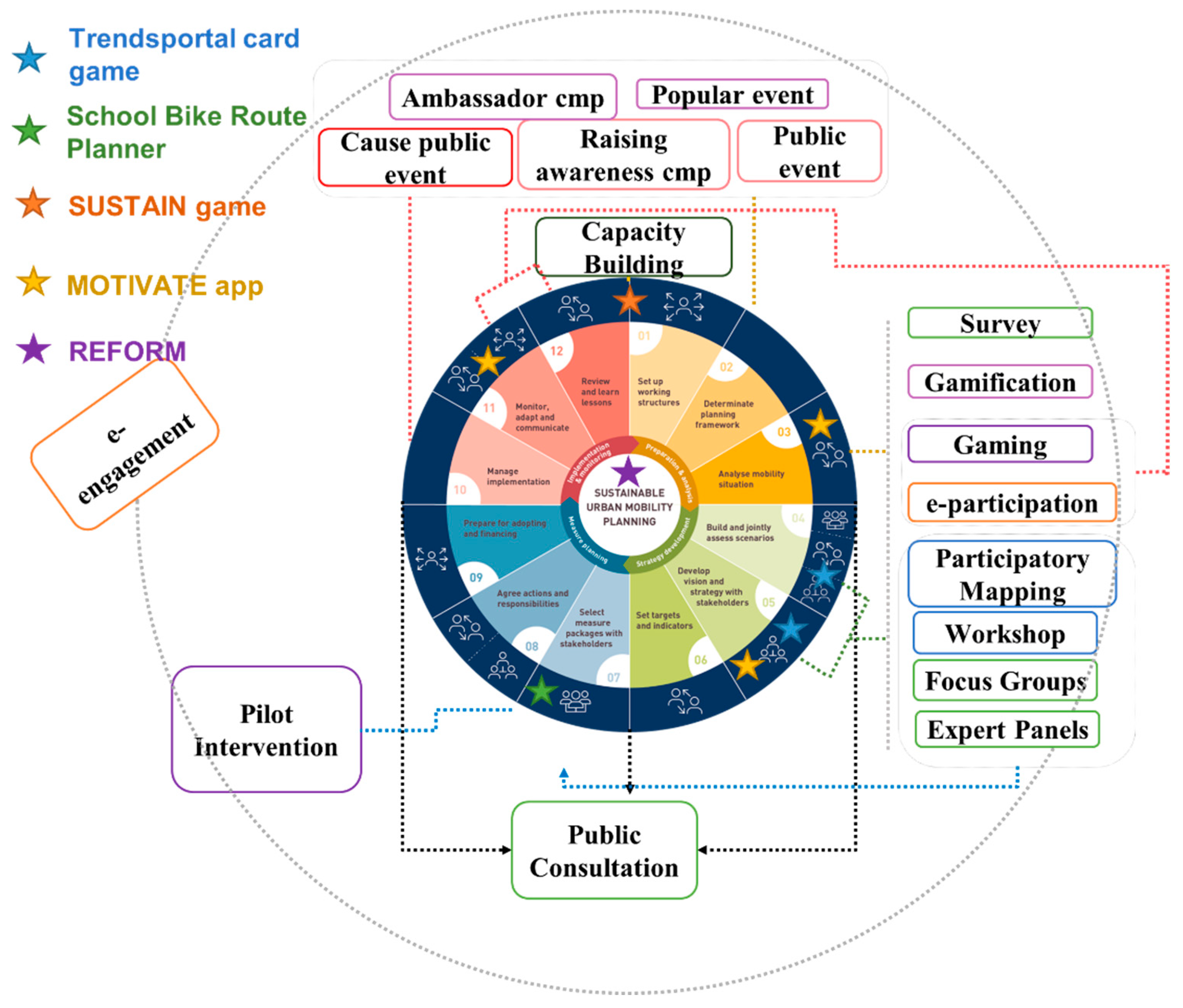
Figure 3 graphically depicts methods proposed by the authors per step, linked where possible with good practices; the content of this figure reflects only the authors’ view and should be seen as a starting point for brainstorming since both methods and good practices under modifications and from a different spectrum can apply in multiple steps.
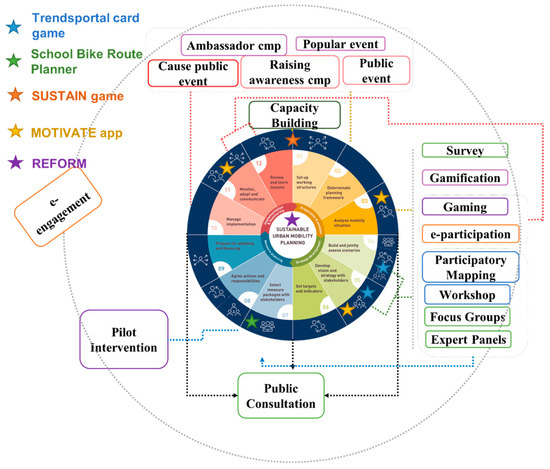
Figure 3.
The MOBENGAGE-RADAR; engagement methods and best practices linked with the SUMP cycle (own elaboration on the SUMP cycle, [25]).
The engagement in the SUMP cycle (according to MOBENGAGE-RADAR) starts with capacity building at the internal (competence authority) level with the meaning that cross-sectorial cooperation is needed and staff should be trained on this modern way of co-planning. Furthermore, the decision-making levels need to be trained themselves on the principles and value of participatory planning, knowledge that should be practically transferred to the relative staff that is going to monitor SUMP development. External experts with knowledge on marketing techniques and methods for supporting co-planning can pave the path toward intense engagement. The beginning of SUMP should mark a real change in citizens’ perspective toward mobility planning. Therefore, a warm introduction of the scopes and the whole procedure can mobilize them and attractive methods, such as ambassador campaigns and the popular events during which the SUMP is introduced, can add to initiative’s welcoming. The first half of the SUMP cycle involves data and users’ needs collection and embeds a creative process (brainstorming, ideas creation, prioritization of requirements, vision co-design, etc.) that leaves a lot of space for applying and experimenting with various techniques in engagement (surveys, games, workshops, participatory mapping activities, etc.). Different needs should be addressed in the first half of the SUMP cycle; the mapping of the current situation in the third step can be done with a combination of more traditional approaches (i.e., data collection with transport surveys, crowd-sourcing data from floating cars, etc.) while exploiting also innovative gaming and relationships-building techniques, i.e., “provide us your daily trips and get rewards for being part of decision-making.” Scenario building and vision development in the fourth and fifth steps, respectively, are by definition citizen-led steps (main principles of modern mobility planning); they can be fields of experimentation for collecting needs and ideas (surveys and polls, participatory mapping trials, workshops, debates, recurrent focus groups for discussing and redefining, expert panels for comping different needs and ideas, etc.). The 3rd phase of the SUMP asks also for innovation in reaching the public for introducing to them the future interventions (i.e., pilot interventions can help fine-tune measures and increase satisfaction). Finally, the 4th phase, where the adopted plan is in force, measure monitoring and upgrade are strongly dependent on citizens’ feedback. Here, clever ways of keeping citizens’ interest and participation at high levels are necessary; gamification methods involving rewards and crowd-sourcing tools can transform responsibility into pleasure. Furthermore, each phase of the SUMP cycle should close with an overall presentation (information) of the previous activities and a consultation procedure that guarantees public acceptance. E-engagement and digital engagement (a dedicated webpage of SUMP with all the relevant information, e-surveys, voting, etc.) should be activated throughout the whole SUMP cycle. The last is also a lesson learned during the COVID-19 pandemic, where engagement depended mainly on virtual meetings and digital activities. Examples of successful digital engagement actions during this unprecedented situation proved that participatory planning is impossible only when its added value is not well-understood.
4. Discussion and Conclusions
The current paper focuses on the value of co-planning in sustainable mobility, a key component of the modern approach of SUMPs, and presents the MOBENGAGE-RADAR, which aims to become a useful guide for authorities to start designing an engagement strategy to accompany the SUMP cycle (potential methods per step and indicative good practices). To strengthen participation and joint actions to increase sustainability, fully binding and successive (continuous) public awareness and engagement actions are required. The marketing industry and the techniques it exploits can trigger innovative ideas in the co-design of serious everyday topics, such as sustainable transportation. Experience has shown that a combination of methods and tools increases the success rate of actions, while the provision of experiential experiences (such as knowledge gained and critical ability enhanced through serious games) can act as a catalyst for the benefit of mobility plans (sense of co-ownership) and interventions (respect, contribution to evaluation, and substantial upgrading of sustainable mobility measures). Basic obstacles in introducing engagement methods in mobility planning are related to the low level of understanding of the value of bottom-up approaches in planning (acceptance, respect, co-monitor, and upgrade), the low capacity of involved actors and staff regarding engagement techniques, and the lack of time and available budget. However, according to the authors, the benefits of a well-conducted engagement strategy outweigh the initial costs and a well-planned mixture of low-budget but still attractive campaigns and meetings (volunteerism, university students, local artists’ mobilization, EU project events’ exploitation, URBACT actions, etc.), with free online tools offering interactive elements, can be the answer to low budget availability. Finally, it goes without saying that the functional area’s special characteristics (population per age group, level of ICT use, sustainability-related concerns, etc.) should always be taken into account while forming a SUMP accompanying engagement strategy, since all these aspects are key criteria affecting the success of transfer of a good practice. The most-difficult-engage citizens’ groups, such as older people, should be reached via the combination of various methods (triggering of attention via pilot interventions and real tests, consultation via traditional phone surveys, media spots, etc.). The same also applies to harder-to-be-accepted measures. Decisions that radically change long-established lifestyles (i.e., banning cars from city centers) ask for a combination of intense awareness-raising efforts and methods to encourage citizens to change their attitudes and support and accept interventions.
Author Contributions
Conceptualization, M.M.; methodology, M.M., G.M. and M.C.; formal analysis, M.C.; data curation, G.M.; writing—original draft preparation, G.M. and M.M.; supervision, M.M. All authors have read and agreed to the published version of the manuscript.
Funding
This research has been implemented within the framework of the e-smartec project “Enhanced Sustainable Mobility with Marketing Techniques”, Interreg EUROPE Programme 2014–2020, co-financed by the European Regional Development Fund.
Institutional Review Board Statement
Not applicable.
Informed Consent Statement
Not applicable.
Data Availability Statement
All the original data of the survey can be found on reports of the e-smartec project and belong to the consortium coordinated by Dr. Maria Morfoulaki.
Acknowledgments
The authors would like to thank the Hellenic Institute of Transport for providing assistance in the collection of data and e-smartec project consortium for supporting information and data collection.
Conflicts of Interest
The authors declare no conflict of interest.
References
- Forester, J. The Deliberative Practitioner: Encouraging Participatory Planning Processes; Mit Press: Cambridge, MA, USA, 1999. [Google Scholar]
- Smith, R.W. A theoretical basis for participatory planning. Policy Sci. 1973, 4, 275–295. [Google Scholar] [CrossRef]
- Stratigea, A. Theory and Methods of Participatory Design; Association of Greek Academic Libraries: Athens, Greece, 2015; Available online: http://hdl.handle.net/11419/5428 (accessed on 13 August 2021).
- Merton, R.K. The Focused Interview and Focus Groups: Continuities and Discontinuities. Public Opin. Q. 1987, 51, 550–566. [Google Scholar] [CrossRef]
- Krueger, R.A. Moderating Focus Groups (Vol. 4); Sage Publications: New York, NY, USA, 1998. [Google Scholar]
- Jaeger, C.; Kasemir, B.; Stoll-Kleemann, S.; Schibli, D.; Dahinden, U. Climate change and the voice of the public. Integr. Assess. 2000, 1, 339–349. [Google Scholar] [CrossRef]
- Cameron, J. Focusing on the Focus Group. In Qualitative Research Methods in Human Geography, 2nd ed.; Oxford University Press: Melbourne, Australia, 2005; Chapter 8; pp. 116–132. [Google Scholar]
- Machina, M.J. Choice Under Uncertainty: Problems Solved and Unsolved. J. Econ. Perspect. 1987, 1, 121–154. [Google Scholar] [CrossRef] [Green Version]
- Stratigea, A.; Giaoutzi, M. Linking global to regional scenarios in foresight. Futures 2012, 44, 847–859. [Google Scholar] [CrossRef]
- Morgan, M.G.; Dowlatabadi, H. Learning from integrated assessment of climate change. Clim. Chang. 1996, 34, 337–368. [Google Scholar] [CrossRef]
- Rotmans, J. Methods for IA: The challenges and opportunities ahead. Environ. Model. Assess. 1998, 3, 155–179. [Google Scholar] [CrossRef]
- Smith, G.; Wales, C. The Theory and Practice of Citizens’ Juries. Policy Politics Stud. Local Gov. Its Serv. 1999, 27, 295–308. [Google Scholar] [CrossRef]
- Fishkin, J.J. The Voice of the People, Public Opinion and Democracy; Yale University Press: New Haven, CT, USA; London, UK, 1995. [Google Scholar]
- Bishop, J. Collaboration and Consensus. Town Ctry. Plan. 1998, 67, 111–114. [Google Scholar]
- Morris, P. Critical Citizens; Oxford University Press: Oxford, UK, 1999. [Google Scholar]
- Holmes, B. Citizens’ Engagement in Policymaking and the Design of Public Services; Parliamentary Library: Canberra, Australia, 2011. [Google Scholar]
- Freeman, R.E. Strategic Management: A Stakeholder Approach; Basic Books: New York, NY, USA, 1984. [Google Scholar]
- Myrovali, G.; Tsaples, G.; Morfoulaki, M.; Aifadopoulou, G.; Papathanasiou, J. An Interactive Learning Environment Based on System Dynamics Methodology for Sustainable Mobility Challenges Communication & Citizens’ Engagement. In Decision Support Systems VIII: Sustainable Data-Driven and Evidence-Based Decision Support. ICDSST 2018; Dargam, F., Delias, P., Linden, I., Mareschal, B., Eds.; Lecture Notes in Business Information Processing; Springer: Cham, Switzerland, 2018; Volume 313, pp. 88–99. [Google Scholar] [CrossRef]
- Dobos, A.; Jenei, A. Citizen Engagement as a Learning Experience. Procedia Soc. Behav. Sci. 2013, 93, 1085–1089. [Google Scholar] [CrossRef] [Green Version]
- Bickerstaff, K.; Walker, G.P. Participatory Local Governance and Transport Planning. Environ. Plan. 2001, 33, 431–451. [Google Scholar] [CrossRef]
- Booth, C.; Richardson, T. Placing the public in integrated transport planning. Transp. Policy 2001, 8, 141–149. [Google Scholar] [CrossRef]
- Myrovali, G.; Morfoulaki, M.; Vassilantonakis, B.-M.; Mpoutovinas, A.; Kotoula, K.M. Travelers-led Innovation in Sustainable Urban Mobility Plans. Period. Polytech. Transp. Eng. 2019, 48, 126–132. [Google Scholar] [CrossRef]
- Rizzi, P.; Porębska, A. Towards a Revised Framework for Participatory Planning in the Context of Risk. Sustainability 2020, 12, 5539. [Google Scholar] [CrossRef]
- Arcidiacono, C.; Procentese, F.; Baldi, S. Participatory Planning and Community Development: An E-Learning Training Program. J. Prev. Interv. Community 2009, 38, 70–83. [Google Scholar] [CrossRef] [PubMed]
- Rupprecht Consult (Ed.) Guidelines for Developing and Implementing a Sustainable Urban Mobility Plan, 2nd ed.; Rupprecht Consult Forschung & Beratung GmbH: Koln, Germany, 2019. [Google Scholar]
- e-smartec Project Interreg Europe 2014–2020. Del. Handbook for Success Tips on Marketing Techniques. 2020. Available online: https://projects2014-2020.interregeurope.eu/fileadmin/user_upload/tx_tevprojects/library/file_1611912931.pdf (accessed on 11 April 2021).
- Levy, Y.; Ellis, T.J. A Systems Approach to Conduct an Effective Literature Review in Support of Information Systems Research. Inf. Sci. Int. J. Emerg. Transdiscipl. 2006, 9, 181–212. [Google Scholar] [CrossRef] [Green Version]
- Whitnell, S. Successful Interventions with Hard to Reach Groups; Health and Safety Commission: London, UK, 2004. [Google Scholar]
- Gómez, M.; Lopez, C.; Molina, A. An integrated model of social media brand engagement. Comput. Hum. Behav. 2019, 96, 196–206. [Google Scholar] [CrossRef]
- Sopjani, L.; Stier, J.J.; Ritzén, S.; Hesselgren, M.; Georén, P. Involving users and user roles in the transition to sustainable mobility systems: The case of light electric vehicle sharing in Sweden. Transp. Res. Part D Transp. Environ. 2018, 71, 207–221. [Google Scholar] [CrossRef]
- Schindler, L.A.; Burkholder, G.J.; Morad, O.A.; Marsh, C. Computer-based technology and student engagement: A critical review of the literature. Int. J. Educ. Technol. High. Educ. 2017, 14, 25. [Google Scholar] [CrossRef] [Green Version]
- Meiners, N.H.; Schwarting, U.; Seeberger, B. The Renaissance of Word-of-Mouth Marketing: A New Standard in Twenty-First Century Marketing Management?! Int. J. Econ. Sci. Appl. Res. 2010, 3, 79. [Google Scholar]
- McConnell, B.; Huba, J. Creating Customer Evangelists: How Loyal Customers Become a Volunteer Sales Force; Dearborn Trade Publishing: Chicago, IL, USA, 2003. [Google Scholar]
- e-smartec Project Interreg Europe 2014–2020. H ελληνική εκδοχή του e-smartec Training Material, 2021. 2020. Available online: https://projects2014-2020.interregeurope.eu/fileadmin/user_upload/tx_tevprojects/library/file_1618577997.pdf (accessed on 11 April 2022).
- Ng, S.; David, M.E.; Dagger, T.S. Generating positive word-of-mouth in the service experience. Manag. Serv. Qual. Int. J. 2011, 21, 133–151. [Google Scholar] [CrossRef]
- Liljas, A.E.M.; Walters, K.; Jovicic, A.; Iliffe, S.; Manthorpe, J.; Goodman, C.; Kharicha, K. Strategies to improve engagement of ‘hard to reach’ older people in research on health promotion: A systematic review. BMC Public Health 2017, 17, 349. [Google Scholar] [CrossRef] [PubMed] [Green Version]
- Smith, S.M.; Alcorn, D.S. Cause marketing: A new direction in the marketing of corporate responsibility. J. Consum. Mark. 1991, 8, 19–35. [Google Scholar] [CrossRef]
- Chaffey, D.; Ellis-Chadwick, F.; Mayer, R.; Johnston, K. Internet Marketing: Strategy, Implementation and Practice; Pearson Education: London, UK, 2009. [Google Scholar]
- Abeza, G.; O’Reilly, N.; Reid, I. Relationship Marketing and Social Media in Sport. Int. J. Sport Commun. 2013, 6, 120–142. [Google Scholar] [CrossRef]
- Lightbody, R. ‘Hard to Reach’or ‘Easy to Ignore’? Promoting Equality in Community Engagement. 2017. Available online: https://researchonline.gcu.ac.uk/ws/portalfiles/portal/27037627/WWSHardToReachOrEasyToIgnoreEvidenceReview.pdf (accessed on 11 April 2022).
- Funkhouser, G.R.; Parker, R. An Action-Based Theory of Persuasion in Marketing. J. Mark. Theory Pract. 1999, 7, 27–40. [Google Scholar] [CrossRef]
- Levinson, J.C. Guerrilla Marketing; Houghton Mifflin: Boston, MA, USA, 2007. [Google Scholar]
- Behal, V.; Sareen, S. Guerilla marketing: A low cost marketing strategy. Int. J. Manag. Res. Bus. Strategy 2014, 3, 1–6. [Google Scholar]
- Armenia, S.; Ciobanu, N.; Kulakowska, M.; Myrovali, G.; Papathanasiou, J.; Pompei, A.; Tsaples, G.; Tsironis, L. An Innovative Game-Based Approach for Teaching Urban Sustainability. Balk. Reg. Conf. Eng. Bus. Educ. 2019, 3, 338–343. [Google Scholar] [CrossRef]
- e-smartec Project Interreg Europe 2014–2020. Del. State-of-the Art on Marketing Techniques for Citizens’ Engagement in e-smartec Regions. 2020. Available online: https://projects2014-2020.interregeurope.eu/fileadmin/user_upload/tx_tevprojects/library/file_1618911855.pdf (accessed on 11 April 2021).
- Solińska-Nowak, A. Sustain, How to Learn Urban Sustainability through a Simulation. 2020. Available online: https://socialsimulations.org/sustain/ (accessed on 11 April 2021).
Publisher’s Note: MDPI stays neutral with regard to jurisdictional claims in published maps and institutional affiliations. |
© 2022 by the authors. Licensee MDPI, Basel, Switzerland. This article is an open access article distributed under the terms and conditions of the Creative Commons Attribution (CC BY) license (https://creativecommons.org/licenses/by/4.0/).