


Abstract
China promotes nature-based solutions (NbS) as key approaches to addressing climate change, ecosystem damage, and biodiversity loss. However, indigenous and local knowledge (ILK), which is recognized by international scholars as an essential element of successful NbS, has not been thoroughly studied in the Chinese context. By conducting a comprehensive review of Chinese central governmental policies and semi-structured interviews with typical cases, this study finds diversified sources of ILK and five pathways of ILK integration, including education, supervision, participation, knowledge preservation, and knowledge adoption. An increasing emphasis on community engagement has been driven by central policies, such as ecological civilization, carbon peaking, and carbon neutrality goals. From a practical perspective, consistent core ideas of ILK exist in selected typical Chinese cases and studies in other countries, namely co-existence and reciprocity with nature. While supportive central policies can set the scene, ILK integration could not be realized without local governmental endorsement, context-based implementation, and long-term multi-stakeholder participation. Furthermore, this study also figures out a potential deficiency in terms of realizing effective ILK integration in mainstream and conventional practices, which can be further investigated by future studies.
1. Introduction
Emerging in 2008 as an important buffer to climate change, nature-based solutions (NbS) have been gaining increasing global recognition as a promising tool to tackle various societal challenges while providing human well-being benefits [1,2,3]. In order to bring out the potential of NbS in creating environmental, social, and economic benefits, scholars and practitioners are actively exploring contributing elements to successful implementation, among which indigenous and local knowledge (ILK) is highlighted. In the context of NbS, ILK can also be referred to as “traditional knowledge (TK)” [4,5], “traditional ecological knowledge (TEK)” [6], and “indigenous environmental knowledge (IEK)” [7]. It covers indigenous beliefs, practices, cultures, philosophies, and everyday lifestyles, which lay their roots in local ecosystems and are developed through a long history of co-existence and reciprocity with nature [5,7,8,9].
ILK can contribute to context-based NbS, which enables adaptive management and increases social justice. First, a site-specific design that combines local environmental and cultural contexts is desired for the successful implementation of NbS [10]. To achieve such a design, various evidence, including science and TK from local people, need to be collected and analyzed when developing NbS [11]. Second, due to the uncertainties of dynamic nature and the shifting socio-political landscape, the long-term effectiveness of NbS requires adaptive management with timely modification and regular monitoring [1,12,13,14]. ILK can be an impactful tool in this aspect. International reports and academic studies have shown that indigenous people provide a source of knowledge for climate adaptation, biodiversity conservation, urban and rural resilience enhancement, and disaster control [3,15]. For instance, the IPCC Sixth Assessment Report stated with high confidence that planning processes that integrated ILK and scientific knowledge could effectively prevent maladaptation and control consequent risks to marginalized and vulnerable groups [16]. Another example is the sustainable forest-management method developed by indigenous groups in the Indian Himalayan Region, which contributed to biodiversity conservation under changing scenarios of the unique local ecosystem [5]. Third, omissions of ILK in decision making and the exclusion of indigenous communities in implementation could threaten the social justice in NbS [7,17]. By validating, integrating, and protecting ILK, NbS projects can prevent potential biopiracy and uplift indigenous groups when pursuing environmental, social, and economic benefits [18].
In China, while NbS are gaining increasing significance, there is a research gap regarding the inclusion of ILK. First, policies and practices falling within the concept umbrella in China are scattered, and current research on NbS in China is at an early stage of sorting out a policy framework or obtaining case-specific insights regarding certain issues [19,20]. Additionally, a discrepancy in defining and applying the term “indigenous and local communities” between international and domestic political contexts also creates obstacles to systematically investigating the function of ILK in Chinese NbS projects. In 1995, China abandoned the term “indigenous”, considering the fact that the marginalization of indigenous groups by European colonization was not domestically applicable [21]. The official rejection of the international concept has made it challenging for international scholars and practitioners to understand the real indigeneity in China. For example, by investigating activities conducted by international environmental non-governmental organizations in China, Hathaway concluded that while international projects actively connect with local people, they tend to simply substitute “indigenous people” with “ethnic minority groups”, and insufficient insights of the local context has constrained benefit delivery for marginalized communities [22].
In fact, as NbS receive attention in China, the providers of ILK mentioned in NbS policies go far beyond minor ethnicities. So far, China has been actively promoting NbS for mainstream climate action for international cooperation and a core principle for nationwide restorations of the mountain, river, forest, farmland, lake, and grassland ecosystems [23,24]. Even though scholars have identified that ethnic minority communities in China are conceptually aligned with the term “indigenous and local communities” in international agreements, such as the Convention of Biological Diversity and Nagoya Protocol, by providing traditional resources and knowledge [25], the status quo in terms of recognizing indigenous knowledge in NbS design and implementation in China is more diverse. In addition to integrating and preserving traditional knowledge of ethnic minorities in the National Biodiversity Conservation Priority Projects from 2011 to 2030, policies by the Chinese central government also mentioned other vital sources of ILK [26]. One typical case is the combination of conventional and modern agriculture and the preservation of traditional rural cultures in rural revitalization and rural sustainable development plans [27,28]. Furthermore, a broader community, such as citizens and grassroots people, is encouraged to participate and contribute their knowledge and skills to ecological protection and restoration plans in the northern sand-protection belt, southern hilly mountains, and northeastern forests from 2021 to 2035 [29,30,31].
Therefore, with the aim of narrowing the research gap in the actual progress of integrating ILK into NbS in the unique Chinese context, this paper reviews NbS-relevant policies and analyzes innovative practical cases. First of all, this study systematically collects policy data and conducts policy analysis to increase the understanding of ILK integration in the NbS of domestic and international scholars, despite scattered policies and an absence of important terminologies in China. Second, typical NbS cases featured with ILK are unfolded to demonstrate the policy–practice linkage and Chinese–international comparison. By presenting pathways through which ILK generates impact on NbS from policy perspectives and exemplar case studies, this study provides insights and lessons for policy makers at different levels, local governmental authorities, and practitioners to improve ILK identification, utilization, and protection in NbS implementation in China. In the meantime, this study identifies some replicable lessons for international practitioners and discusses the limitations of the findings in a general sense.
2. Conceptual Approach and Methodology
2.1. ILK-Integration Framework
So far, studies have pointed out various ways for ILK to contribute to successful NbS. They can be found in both documents and practices from the international to local levels. While specific methods generated to bring out the potential of ILK need to be tailored to different environmental, social, and economic contexts, there are four common channels across different situations. The first is the preservation and protection of traditional knowledge, which has been underlined not only in international agreements such as the 1992 Convention on Biodiversity Diversity (CBD,) but also in national policies, such as the climate initiatives in Canada [18,32,33]. The second pathway is to adopt ILK and engage the target group in decision making throughout the design, implementation, and management processes with thorough consideration, respect, and necessary combination with technical approaches [17,34,35]. As the third aspect, supervision emphasizes an ILK-led monitor pattern that enhances the adaptability and resilience of NbS [1,36]. Last, but not least, a general participation of indigenous people and local communities is also considered critical for just NbS, the scope of which covers the aforementioned three aspects, as well as extra possible descriptions, including community co-creation, full participation, and co-production [11,14,15].
Major pathways of ILK integration highlighted in the domestic context as shown in Table 1 are similar to international ones, despite minor differences. The National Plan for the Protection and Utilization of Biological Species Resources of China released in 2007 precisely defined the traditional knowledge as follows:
Knowledge, experience, innovation, or practice of current or potential values which have been accumulated and developed by local residents or communities within certain areas over a long period of time and passed on from generation to generation[37]. (Translated by authors)

Table 1.
Methods of knowledge integration.
Table 1.
Methods of knowledge integration.
| Category | Pathway | Definition | Pros and Cons | Literature |
|---|---|---|---|---|
| Direct mention of “knowledge” (and synonyms) in Chinese policies | Knowledge preservation | Protection of traditional and local cultures, knowledge, techniques, and skills in design, implementation, and management | Pro: a dedicated institution for knowledge identification and protection Con: requirements for sufficient budgets and professional personnel | [18,32] |
| Knowledge adoption | Active consideration, evaluation, and adoption of traditional and local cultures, knowledge, techniques, and skills in design, implementation, and management | Pro: maximizing the value of ILK and exploring potential benefits Con: requirements for appropriate ILK identification, professional personnel, and proper channels for adoption | [14,17,18] | |
| No direct mention of “knowledge” (and synonyms) in Chinese policies | Education | Official promotion of ideas, knowledge, and skills to communities | Pro: impacts a wider community; ties with nature from a young age Con: requirements on a certain level of literacy for recipients; requirements for appropriate recognition of ILK significance and components | [38,39] |
| Supervision | Right of the community to track the progress, report issues and suggestions, and enable adaptive management | Pro: adaptative management by virtue of deep understandings of environmental and social dynamics Con: challenges on providing sufficient rewards and long-term incentives | [1,36] | |
| Participation | Community engagement with design, implementation, and management in a general way | Pro: emphasis on hearing and respecting community voices Con: challenges on ensuring adequate participation with appropriate mechanisms | [11,15,35] |
This policy responded to the initiative of conserving, utilizing, and sharing indigenous and traditional knowledge of biological species and genetic resources proposed in the Convention of Biological Diversity (CBD). This policy echoed the two pathways of preservation and adoption in the international literature. Specifically, an action plan from 2006 to 2020 was presented, the core of which was to preserve, utilize, and pass on the expertise of ethnic minority groups regarding traditional medicine; genetic resources; traditional cultivation and breeding techniques; and conventional cultures, arts, and beliefs.
Participation and supervision can also be found in Chinese policies, though there is no direct mention of ILK. They are often mentioned together as enabling conditions for successful policy implementation, usually in the last section, but detailed guidance and requirements on these two pathways can also be found in the main body of certain policies. A typical case here is the river and lake chief system where a multi-layer monitoring system from central to village-level government is outlined for effective and long-term water basin management [40].
One dimension that is not obviously underlined in the discussion around ILK in the international context, but particularly emphasized in Chinese policies as another enabling condition, is education. Within domestic political discourse, education refers to the distribution of knowledge and skills, where ILK can be incorporated, among citizens in order to develop a society-wide learning and action-taking environment. This pathway has been included in the ILK-integration framework because it not only encourages community participation, which may cover indigenous groups, but also creates a positive atmosphere to build up social recognition of and mutual trust in appropriate knowledge and understandings including ILK.
2.2. Policy Data Collection and Analysis
First, this study identifies policies that proposed the same method and concept under the NbS definition by the IUCN [10]. The search scope includes all publicly available policies at the national level, excluding laws on the official websites of the State Council, the National Development and Reform Commission (NDRC), the Ministry of Ecology and Environment (MEE), the Ministry of Natural Resources (MNR), the Ministry of Agricultural and Rural Affairs (MARA), the Ministry of Housing and Urban-Rural Development (MoHURD), and the Ministry of Water Resources (MWR). Limited to the national level in the review process, this study excludes provincial and municipal policies to make the domestic mainstream idea clear and the research feasible.
Second, this study narrows NbS policies down to those mentioning ILK based on two groups of keywords. The first group includes “indigenous” and its synonyms under the international discourse, including “traditional” and “local”. Concepts with a wider scope that cover indigenous groups as a subset are also considered, including “community members”, “villagers”, “citizens”, “grassroots”, and “residents”. The second group indicates knowledge, including “experience”, “understanding”, “comment”, “suggestions”, “skills”, “cultures”, and “strategies”. Policies are considered relevant for our review only if they mention one or more keywords from each of the two groups, respectively.
The two steps above gather 116 policies from July 1985 to February 2023 in total. Based on the selected policies, this study first identifies major sources of ILK by categorizing policies based on terms describing characteristics of a certain group and counting the policies mentioning the corresponding groups. Second, the overall trend in the five pathways according to the number of policies with mentions over the studying period is presented. To achieve this, this study figured out one or more pathways included in each of the 116 policies. The number of policies under each pathway over time was then counted. Contributors to the dynamics and noticeable time nodes over time are analyzed. The general trend is followed by a closer look at the percentage of each pathway, changes in percentages over time, main providers of ILK relating to each pathway and common societal challenges under which the pathway is exercised.
2.3. Exemplar Case Selection and Analysis
In addition to policy analysis, this study conducts an in-depth analysis of typical cases to examine constructive elements of ILK, as well as which and how the pathways are realized in a real situation. With selected cases, the study also identifies lessons for successful ILK integration in China and potential gaps between policies and practices. Innovative practices on ILK integration were selected based on five criteria: (1) the selection focuses on three major application fields of Chinese ILK policies, including biodiversity, rural development, and water management, which are identified through methods in the following section; (2) the practice has gained domestic or international recognition for its ILK incorporation with awards or inclusion in typical case study books so as to provide propagable lessons; (3) indigenous people as a critical source of ILK, the core of this research, are clearly identified and demonstrate multidimensional participation; (4) the project has lasted for over five years and is continuously strengthening its capability of creating sustainable impacts and being scaled up at a larger scale in order to offer invaluable lessons on long-lasting benefit delivery; and (5) the project is planned and operated based on coordination among various stakeholders from the government to civil society, which enables the study to analyze the impact of policies on practices, as well as potential implementation gaps.
Based on the five criteria above, three typical cases were selected, including the Qiandao Lake Water Fund, the protection network for the Yunnan snub-nosed monkey, and the Laohegou Land Trust Reserve. This study focuses on three aspects of these cases: (1) how ILK is integrated through one or more of the five dimensions from a practical perspective; (2) how relevant policies influence these procedures; and (3) innovative highlights and limitations of ILK integration. Compared with possible counterparts that are also qualified for the above-listed screening criteria, these three cases demonstrate ground-breaking experiments that enable ILK-based benefit delivery, which are illustrated in Section 4.1. Additionally, they offer abundant information on the application of five pathways and allow the study to develop a multifold understanding of ILK integration in practice, which are unfolded in Section 4.2. Data were collected from two sources. The authors gathered initial background information of the cases through academic publications and online media coverage. Key facts and implementation details were then confirmed and amplified through semi-structured interviews with project practitioners who are involved or were once involved in corresponding projects for over five years with a good knowledge of government and community coordination.
3. Policy Analysis Results and Discussion
3.1. Indigenous Groups Identification
In terms of sources of ILK, this study categorizes six target groups mentioned in policies based on their definition scopes (Table 2). The first two are clearly defined by official documents, including ethnic minority groups and low-income people. The former is defined as the 55 ethnic groups other than the Han people [41]. The latter can be defined as people whose income is 0.75 times or less the median of urban incomes according to the Chinese National Bureau of Statistics. Before 2020, the year marking the completion of national poverty alleviation drive, this group also covered the needy, namely the population living under the national poverty line [42]. Additionally, this study sorts out three subgroups of the general concept of local people. The first group features keywords including “grassroots”, “indigenous”, and “within the project area”. The second group appears in policies with specific geographic areas, including villagers in rural areas, fishermen for marine management, and herdsmen within grasslands. The third group considers locally sourced and community-based positions, such as river chiefs and lake chiefs. Finally, a wider society that covers but does not specifically pinpoint indigenous and local people is also included in this framework in case a general adoption of ILK is missing during the analysis. It should be noted that terms are not completely independent from one another, and there can be partial overlaps between groups. For example, the overlap between the low-income group and rural residents is the target beneficiary under the national rural revitalization plan.
Table 2.
Sources of ILK and corresponding frequencies of policies with mention.
A prominent feature of indigenous groups in China is the wide coverage. The quantitative analysis, as shown in the Table 2, showcased that people in a general concept are considered the carriers of knowledge, which forms the top keynote of policies on NbS. Specifically, the broader community group ranks the top by the number of total mentions. Typical qualitative descriptions include consulting strategies from the people as a primary implementation principle for the policy, catering to the concerns and demands of people as a guiding ideology, and community engagement as an enabling condition [43,44,45].
The perspective of identifying indigenous groups in Chinese NbS-relevant policies is different from that of the research in an international context. Studies on ILK integration in NbS in countries or regions other than China attach significance to marginalization and vulnerability closely associated with historical reasons, ethnicity, and climate change [6,7,16,32]. By comparison, groups included in Chinese policies are found along with descriptions on environmental, economic, and social status quo, including income levels, jobs and functions, geographic administrative borders, and ecological borders. Despite less straightforward references to vulnerability, various empowering approaches have been provided with the categorizing framework to consider disadvantaged groups in an inclusive manner. This is demonstrated as protecting legal rights and providing financial and non-financial rewards for the group that contribute to project design, implementation, and management [46,47,48].
3.2. Overall Trends in ILK Integration
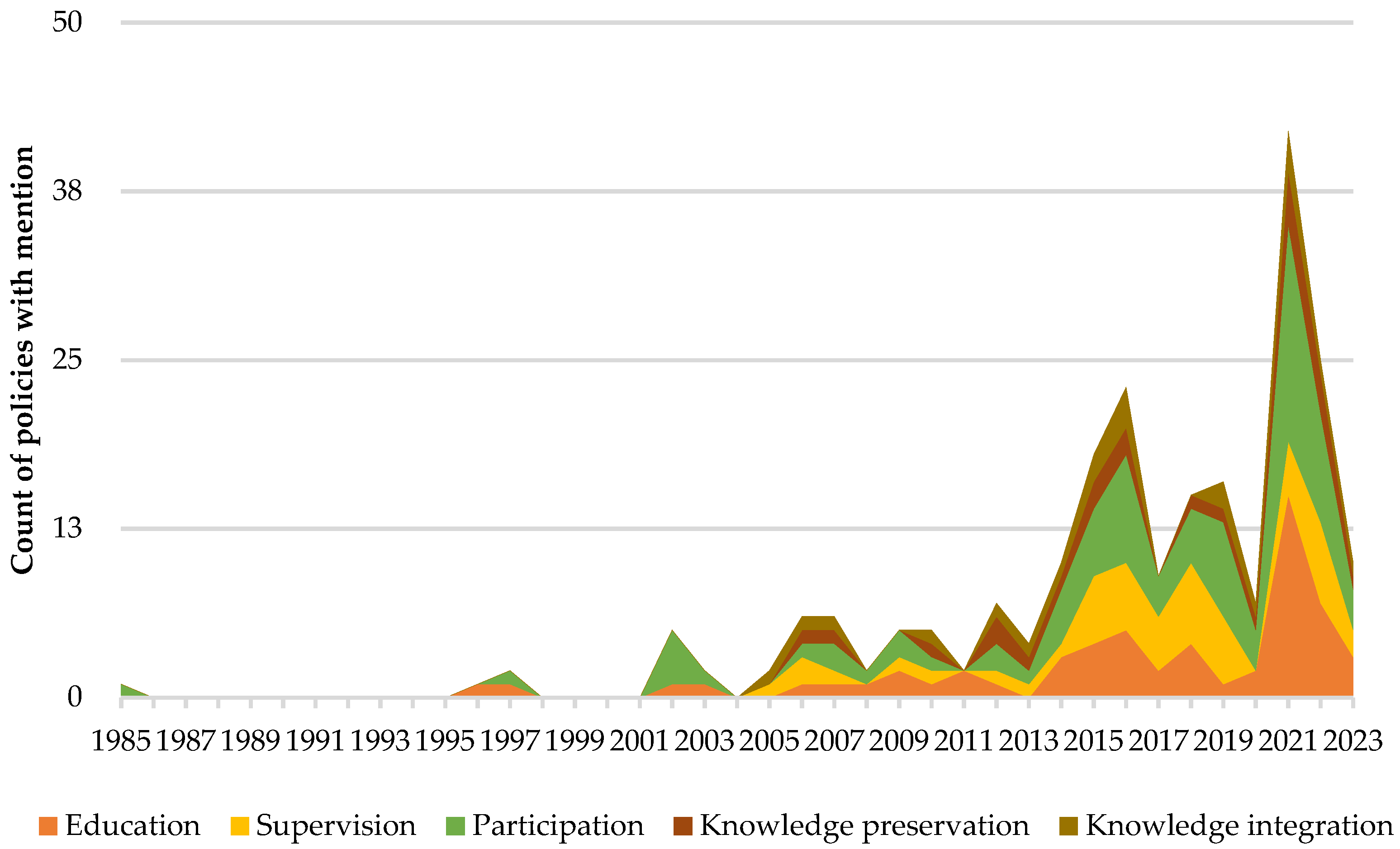
This study indicates an overall increasing trend in the total mention of five pathways since 2010 (Figure 1), though the few mentions of ILK integration before 2000 can be partially attributed to a lack of online records. As the central Chinese government releases its national development strategic plan every five years, two peaks, in 2016 and 2021, were formed due to the release of the 13th and the 14th Five-Year Plans with numerous detailed guidance on various topics from the General Office of the State Council and its ministries.
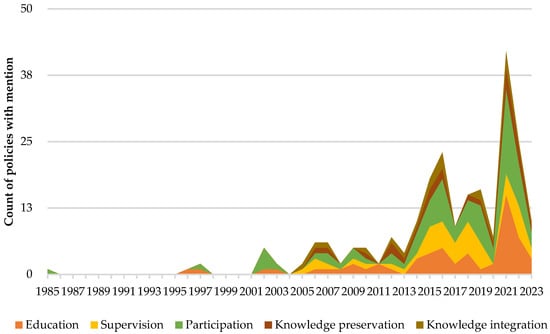
Figure 1.
Mentions of five pathways in central governmental policies from 1985 to 2023.
As suggested by the rising trend in Figure 1, China has been placing an increasing emphasis on ILK integration in NbS. Specifically, there was a noticeable increase after 2013. This was mainly driven by the creation and expansion of ecological civilization, the core values of which were putting people first, respecting nature, and enabling human–nature harmonious development. The detailed guidance on accelerating the implementation of ecological civilization released in 2015 by the State Council further contextualized and made concrete the principle of “putting people first” in spatial planning, nature conservation, law system development, and society-wide action [49]. Additionally, the set of carbon peak and carbon neutral goals in 2020, as well as chairing the UN Biodiversity Conference held in Montreal in 2022, also significantly contributed to the increase during the 13th to the 14th Five-Year Plan period.
3.3. Pathways to ILK Integration
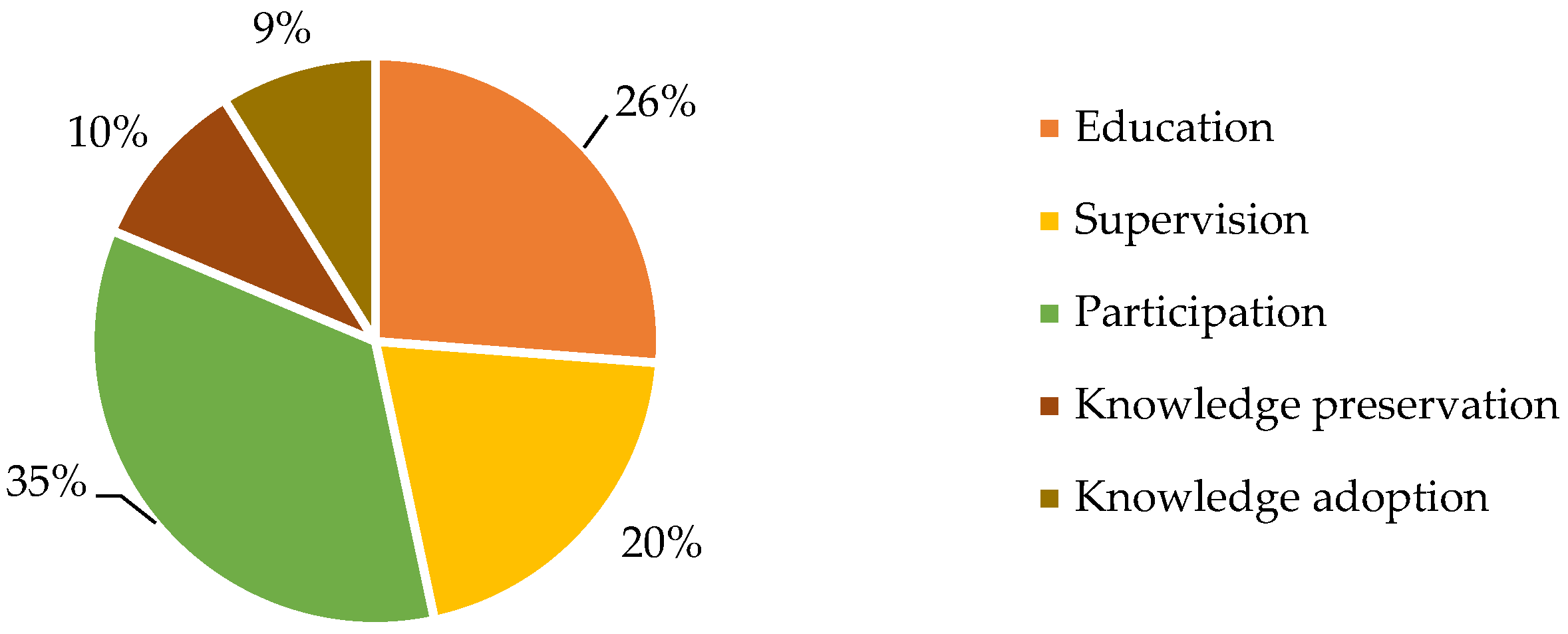
Among 255 mentions in total, participation accounts for the majority, followed by education and supervision (Figure 2). The high frequency of these three pathways is attributed to their role in the policy document, usually as a principle for implementation in the beginning or an enabling condition at the end. Specifically, the idea of community engagement is often included in the principal section, and enlarging the education scope and ensuring information accessibility of the wider community for public supervision are outlined following the main body. A relatively smaller proportion of explicit mentions of ILK indicates a potential to create context-based interpretations of central policies for different societal challenges at a local level.
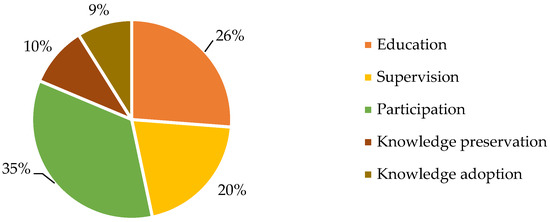
Figure 2.
Overall percentage of ILK pathways in central governmental policies.
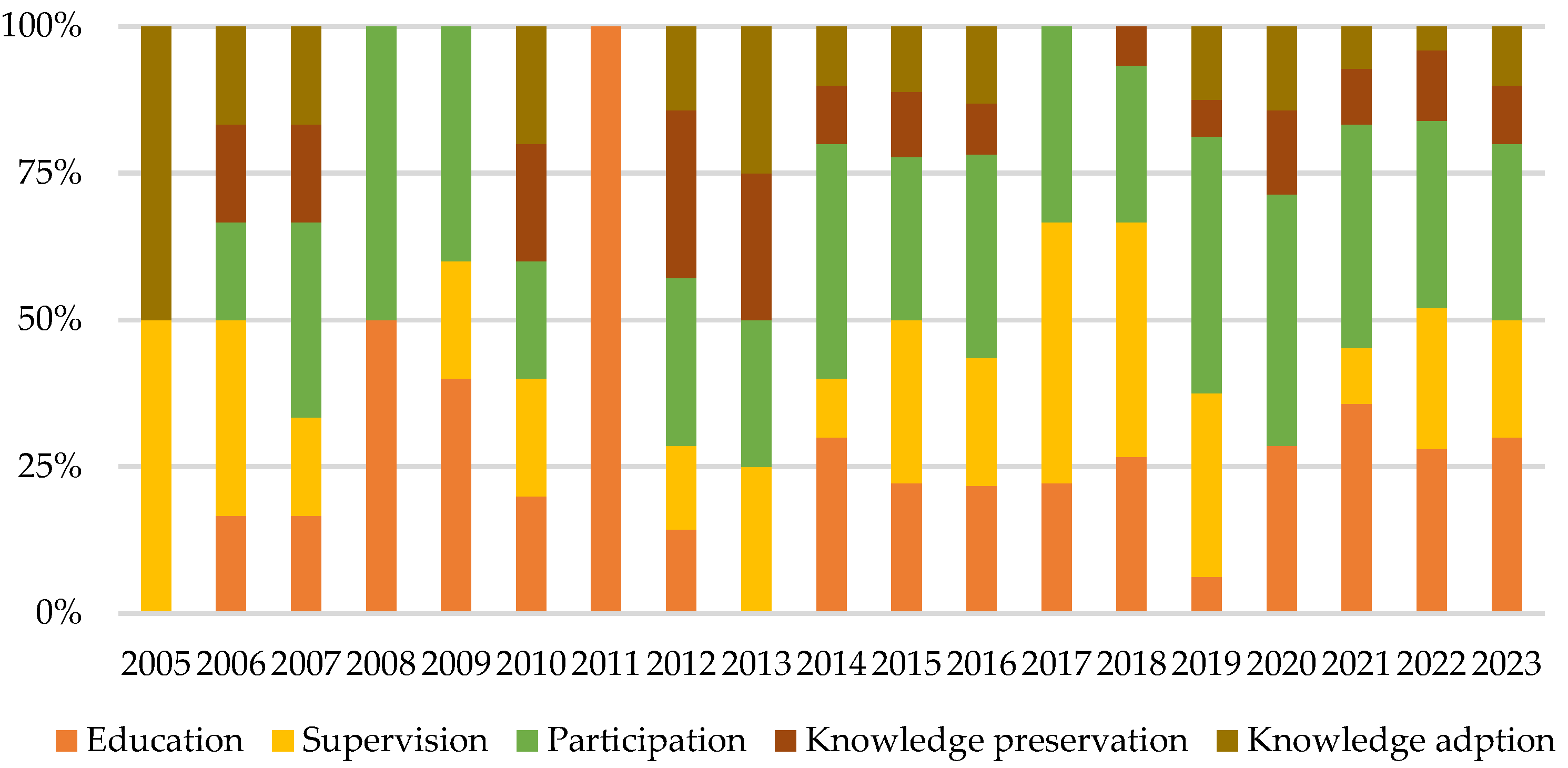
By analyzing the percentage of each pathway since ILK integration started to be mentioned in policies continuously, namely the year of 2015, it could be further seen from Figure 3 that participation has been taking a leading place consistently, while knowledge preservation and adoption gained notice over the past two five-year plans. The connotation of these three pathways has also been enriched over time.
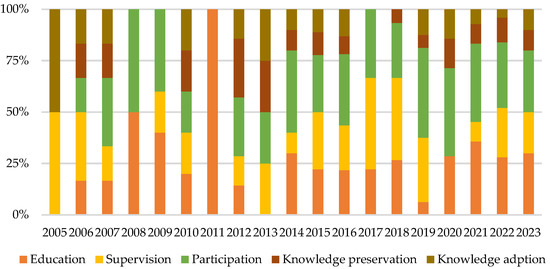
Figure 3.
Proportion of five pathways in central governmental policies from 2005 to 2023.
In terms of participation, local people and community engagement are clearly incorporated into the evaluation progress of policy implementation. For example, the Code for Assessment of Nature Reserve Management, published in 2017, allocated a certain proportion of scores on integrating residents regarding job providing, rewarding, and economic development [50]. Further progress is seen in the elaboration on the vague concept of multi-participation, which has been extended to enterprises, social organizations, individuals, schools, and so on with clear operation patterns, such as franchising, financing, voluntary work, and course delivery [51,52,53].
For knowledge preservation and adoption, the initiative of rural revitalization in the 14th Five-Year Plan largely contributed to their boost. They are established on the foundation of placing rural people, such as farmers, villagers, herdsmen, and fishermen, at the core, and promoting full-scale development of rural industries, talents, cultures, ecology, and organizations [54]. The integration of ILK in these five pillars has been further elaborated on in policies released by ministries accordingly. One common focus of these policies is the conservation and passing on of rural history, traditional skills, and culture. The economic and social values of ILK are highlighted since they tend to be linked with the inheritance of cultural heritage, architecture protection and renovation, tourism, and the development of associated industries [27,55,56,57].
3.4. Major Groups and Application Fields under Five Pathways
By counting policies mentioning the five ILK-integration pathways, this study identifies the top three main fields and target groups under each pathway (Table 3). The fundamental idea of relevant policies—people carry knowledge and skills which should be valued and integrated into NbS—applies to all situations. This is demonstrated by the fact that wider society has the highest number of mentions under each of the five pathways.
Table 3.
Major fields and groups under the five pathways of ILK integration in policies.
With a closer look at the major fields, biodiversity, water management, and rural development are the top three issues among all fields with 29, 26, and 24 relevant policies, respectively. It could be discovered that biodiversity and rural development have gained attention, especially under the two pathways giving a direct reference to knowledge. Contributors to the popularity of biodiversity conservation include precise definition of ILK created in central policies, a close link with CBD initiatives, and context-based goals and action plans for different biodiversity-conservation priority projects. Rural development is supported by a diversified range of associated industries in the rural area, multidimensional roles of rural communities in NbS implementation, and consistent respect for rural traditional cultures and heritages.
Major groups under each pathway are generally consistent with the findings in Section 3.1. Regarded as carriers of knowledge, actors in project implementation and supervision, and the target of education, the broader community are ranked at the top regarding policy mentions in all pathways. Groups with more detailed characteristics (group A and B) are mentioned less in central policies. So far, there has been a lack of unified and clear central guidance on identifying source groups of ILK. However, the absence may allow flexibility and possibility for lower-level government to narrow down the scope based on local contexts and gain progress in an effective way, as existing research on Chinese environmental policies suggests that there has been huge city heterogeneity in terms of economic development, resources, and capacity, and the toleration of the central government to divergent responses at the local level can contribute to successful local implementations [58,59].
4. Typical NbS Cases Featured with ILK in China: Analysis and Discussion
4.1. Case Background
4.1.1. Qiandao Lake Water Fund
Located in Chun’an County, Zhejiang Province, Qiandao Lake is a critical source of drinking water in East Coast China, especially for the Hangzhou metro area [60]. However, the lake was faced with the risk of eutrophication due to agricultural non-point-source pollution [57]. In order to restore water quality and tackle unsustainable farming, the Qiandao Lake Water Fund was officially launched in 2018 with joint efforts from the government, the World Bank, The Nature Conservancy, Minsheng Insurance Foundation, Alibaba Foundation, and Wanxiang Trust after three years of investigation and preparation. Since then, pilot nature-based agricultural solutions, including ecological ditches, constructed wetlands, green fertilizer covers, and nectar plants, have been introduced to local croplands and economic product farmlands. So far, the pilot practices have been proved effective with 30–40% nitrogen and phosphorus loss reduction with co-benefits in terms of decreasing carbon emissions and increasing community income [61].
The Qiandao Lake Water Fund is an innovative and ground-breaking exploration of long-term water-source-protection pattern in China for prospective NbS upscaling and with multi-stakeholder participative governance as a core. The systematic restoration of ecosystems in Qiandao Lake was listed in typical NbS cases in China published by IUCN and the Ministry of Natural Resources [62]. Additionally, the environmental, social, and economic benefits achieved by the Qiandao Lake Water Fund at the current stage for local communities and its potential for replicability are well recognized by the Food and Agriculture Organization in the case collection “Nature-based solutions in agriculture: the case and pathway for adoption” [63].
In this project, three groups of local communities are identified and included: rural dwellers in Chun’an County; the river chief team, which is partially constituted by residents in Chun’an County; and citizens in Chun’an County and those living in downstream areas. ILK is mainly derived from the first two groups, while the focus of the third group is education that fosters a social environment in which people widely understand and participate. In particular, the first two groups are included as key decision makers in this project since they generate a direct impact on the water quality while being directly influenced by the outcome of NbS implementation. Additionally, their familiarity with local soil, water, and species facilitates the promotion indigenous land and river management, planting methods, and invasive species identification.
4.1.2. Yunnan Snub-Nosed Monkey Protection Network
Living in Yunnan and Tibet, the Yunnan snub-nosed monkey was included as endangered on the Red List of threatened species by IUCN in 2003 and categorized as a first-class protection animal in China [64]. One of the key drivers of its habitat loss is human disturbance, including logging, agriculture, and grazing [65]. While collaboration between the government and civil society over the past 40 years has increased the total number through the establishment of nature reserves, its vulnerability remains high due to habitat fragmentation and a small group size [66]. In order to enhance overall habitat connectivity and boost community sustainable livelihoods, the Yunnan Forestry and Grassland Administration initiated the protection network for Yunnan snub-nosed monkeys in 2019 with 13 organizations, including governmental departments, academic institutions, and non-governmental organizations based on the pilot protection project launched in 2014. The scientific expert team has been closely cooperating with local communities in identifying priority areas, planning ecological corridors, and conducting vegetation restoration with indigenous plants. So far, the network has restored connected habitats of over 11,000 mu, which enabled carbon sequestration of 432,000 tons and a noticeable increase in community income in the meantime [67,68].
The protection network was recognized as an exemplar pattern of participative biodiversity governance and ecosystem restoration by the Ministry of Natural Resource of China in the case collection of “Typical case of ecological restoration in China” because it brings out the potential of NbS to benefit local environment, society, and economic development [67]. Moreover, this case provides invaluable experience in tackling the challenge of low community participation by establishing community-based protected areas. ILK is mainly obtained from villagers living within and near the protection network, among which the majority are ethnic minority groups, such as the Lisu, Tibetan, Bai, Naxi, and Yi people. The case incorporates diversified ILK, including traditional knowledge of landscapes and species, indigenous languages, as well as cultures and religions.
4.1.3. Laohegou Land Trust Reserve
The Laohegou area is located within four critical potential habitats of the giant panda in Pingwu County, Sichuan Province and is included as one of the 32 biodiversity priority areas listed in the China Biodiversity Conservation Strategy and Action Plan (2011–2030) [69]. Despite the strategic significance of biodiversity, the Laohegou area was confronted with illegal fishing, poaching, and trading of endangered animals, including giant pandas. As a response to conservation challenges, the protection project was launched in 2011 and introduced the land trust reserve model in 2013 after the Government of Pingwu County transferred the land-use right to civic organizations. The reserve introduced financial support from the private sector and integrated knowledge from local residents and forest farm rangers in protected area establishment, regular patrols, reduction in human interventions in protected areas, key ecosystem restoration, and development of community-based sustainable industries. As of 2022, the reserve has achieved a cumulative patrol coverage of more than 5000 miles, expanded effective protection from 110 square kilometers to nearly 250 square kilometers, and increased the wildlife encounter rate.
The Laohegou Land Trust Reserve is the first protected area of public welfare managed by civic organizations in China [69]. The progress of this ground-breaking model provided invaluable lessons for societal participation in nature reserve management. The outstanding project design and management also won it the 2016 British Expertise International Award. Two main sources of ILK are rangers of the state-owned forest farm and villagers. While villagers who conducted illegal hunting used to be a major threat to endangered species, the project is able to bring out the positive side of ecological knowledge from hunters by organizing community-based patrols. It also upscales the economic values of traditional farming and livestock-breeding skills by launching customized agriculture.
4.2. Case Analysis of ILK Integration
4.2.1. Practices and Lessons from the Three NbS Cases in China
The three typical cases showcase rich content, application contexts of ILK, and invaluable lessons in delivering long-term environmental, social, and economic co-benefits by integrating ILK (Table 4).
Table 4.
Five-dimensional ILK integration in typical NbS cases.
The cases demonstrate that various elements could fall within the concept of ILK, including ecosystem literacy, good practice in farming and breeding, as well as culture and religions. In the Qiandao Lake Water Fund, informal knowledge of local soil, species, and water is obtained from rural residents and river chiefs, contributed through consultation with villagers, experienced sharing sessions, and river patrols conducted by local communities. In the case of protection networks, the scientific team can learn from villagers of their in-depth understanding of local landscapes and animal activities by establishing partnerships with those willing to join in protection and restoration activities. Moreover, by living as neighbors over the years, the scientific team is able to increase familiarity with lifestyles, cultures, and religious beliefs of ethnic minority groups, which carries wisdom regarding co-existence with nature and ethnographic values but has been declining in the present day. At the Laohegou Land Trust Reserve, the information-sharing sessions for protection animal identification allow local forest farm rangers to freely share their knowledge of forest ecosystem dynamics and up-to-date living status of various species. Additionally, traditional practices of livestock breeding and ideas, observant habits of key animals, and ideas of land management can be learned and exchanged in the meetings of villagers, where governmental officials, residents within and around the protected area, and the scientific team gather together for joint decision making.
Five pathways of ILK integration are realized in a context-based manner in three cases. Application situations here include educational programs targeting a wider community, strategy design and implementation for ecological protection, restoration, adaptative management, and community development based on value realization of ecological products. While two or more application situations can be found in each case, the three cases are featured with different contexts. Specifically, the Qiandao Lake Water Fund has greatly boosted its impact on downstream residents by inviting river chiefs to interactive education programs. For example, in April 2021, the Water Fund organized an event “I have a fish in Qiandao Lake”, with the aim of increasing awareness of saving water and the knowledge of nature-based water protection of companies and citizens from downstream cities. During this event, river chiefs from Chun’an County presented their knowledge of the habit types of fish in the lake, as well as their experience in water management, such as cleaning invasive species and telling water quality by observing indicator fishes. The vivid narration of community-based water-protection stories motivated on-site participation and contributed to a page view of over 306,000 of the event online media coverage within one month according to the Water Fund internal monthly report of May 2021. In the protection network, traditional ecological literacy is integrated as part of the protection and restoration planning and implementation. A typical example here is that at the initial stage of the project, the scientific team were confused by the complicated mountainous landscapes and were easily lost when conducting ecosystem research and searching key habitats. Therefore, local villagers were invited as team guides to trace and follow snub-nosed monkeys effectively, identify critical ecological corridors, and find ways of efficiently navigating the wilderness. ILK integration in the Laohegou Land Trust Reserve is particularly highlighted in community economic development. Built upon the improved environment within nature reserves, the scientific team helped local villagers develop customized eco-friendly agricultural products, where indigenous farming and livestock-breeding techniques were fully adopted. This ensures product quality and increases motivation for community participation, resulting in the successful selling of the first batch with attractive profits and increased community partnership in the following several batches.
A mutual lesson learned from the cases is that to generate long-lasting multidimensional values, it is essential to enable participation from indigenous people and local community in initial planning and to gradually enlarge the scale and scope of inclusion through trials and errors. Throughout three cases, dependence on ILK started at early stages, including key species identification, ecological restoration methods development, and conservation practice design. Taking the case of the Qiandao Lake Water Fund as an example, when designing nature-based solutions to control the use of chemical herbicides in the first batch of a tea garden, the scientific team would not have been able to figure out the appropriate vegetation covers compatible with soil conditions and tea growth without consulting farmers about localized vegetation. The integration of ILK is expected to be upscaled to enable wide-reaching co-benefits. In the case of the Laohegou Land Trust Reserve, the customized products started with a small group of villagers and later extended over twentyfold by exploring and keeping suitable producing techniques while abandoning improper ones. In this way, economic values can be created in pace with conservation achievements.
4.2.2. Comparison with International Practices
The cases show a highly consistent essence of the ILK concept with that in international studies, namely the co-existence and reciprocity with nature. This is signified by traditional water- and fish-management practices to perform effective river patrols, indigenous animal tracking skills complementary to modern technology in ecological corridor mapping, and context-specific understandings of forest ecosystem dynamics. More importantly, through five pathways and three application situations, invaluable ILK is able to regain its significance among indigenous people and local communities and transform unsustainable behavior, eventually contributing to a synergy between environmental protection and economic development. Bright examples here are the protection network for the Yunnan snub-nosed monkey and the Laohegou Land Trust Reserve. The community members used to belittle endangered animals. However, as they realize that their experience and knowledge can contribute to protection activities and improve livelihoods, they feel proud of an increased wildlife encounter rate and become even more motivated as participators.
Similar to the role of ILK in NbS implementation in international studies, three cases also highlight ILK in adaptative management through community-led supervision activities shown in Table 4. Moreover, although it is not obvious in studies in the international context, the incorporation of ILK in impact-generating activities gains significance in the Qiandao Lake Water Fund and the Laohegou Land Trust Reserve. In addition to “I have a fish in Qiandao Lake”, the Laohegou project has trained and employed a group of local villagers to become tour guides for external visitors to protected areas. In this way, villagers are encouraged to enrich ecological education to a wider community with their personal know-how and stories in restoration and protection. However, dedicated methods to ILK preservation, such as the establishment of institutions, protocols, and knowledge databases outlined in international studies and Chinese central policies, are not evident in the three cases selected [18].
4.3. The Role of Policies, Implementation Highlights, and Limitations
The three cases demonstrate the foundational idea in ILK-relevant policies—people in a general concept are considered the carriers of valuable knowledge and skills—by enabling contributions from a wide range of community members on multiple occasions. This is not only attributed to the guiding principles of community participation in national and provincial policies as shown in Table 5, but also due to the innovation of the three cases. The authors were informed through the interviews that each of the three cases distinguishes itself from conventional practices in its corresponding field for wide stakeholder inclusion and community leadership. Therefore, the cases suggest that even though there might be a gap regarding implementing the core idea of central and provincial policies in water management, biodiversity conservation, and rural development, several feasible and promising patterns for effective ILK integration have been discovered through innovative explorations.
Table 5.
Government and policy impact on typical NbS cases.
While high-level policies provide guiding opinions, realizing such a general idea highly relies on endorsement, mobilization of residents, and internal operational consistency by local governments. First, formal or informal permission of multi-stakeholder protection and restoration in the case of the Water Fund and protection network and the official transfer of land-use rights to civil organizations in Laohegou provide the preconditions for any community-based pilot activities. Second, by virtue of its well-established reputation and reliability, the local government plays a critical role in motivating indigenous people and local communities to join the projects, especially at early stages, by enhancing their confidence and by solving potential concerns. Personnel mobilization coordinated by the government resulted in the successful formation of the river chief team in Qiandao Lake and the ecological corridor patrol team in the protection network. Third, consensus among different governmental departments at a local level is desired before outreaching to a wider community. In the case of the Laohegou Land Trust Reserve, no mutual decision-making mechanism could have come into force until the functional inconsistency between two committees under the village government was fixed. More importantly, while governments across different levels play irreplaceable roles in setting implementation principles and guidelines, as well as enabling community engagement, one-size-fits-all policies could fail to bring out the potential of ILK. Instead, the cases showcase that it is important for higher-level authorities to allow flexibility to local governments and non-governmental bodies in making context-based operational plans and make timely adjustments.
5. Conclusions
One key element of effective NbS is ILK integration. While the word “indigenous” is not recognized officially in China, by conducting a systematic policy review, this study discovered that people are widely considered as a source of knowledge in NbS-related policies. In general, there has been a noticeably increasing emphasis on ILK integration over the past two five-year-plan periods, which can be mainly attributed to ecological civilization construction, the establishment of carbon peak and carbon neutral goals, and the role of China as the host at the UN Biodiversity Conference. Specifically, through education, supervision, participation, knowledge preservation, and knowledge adoption, ILK is expected to facilitate the co-benefit generation by NbS in biodiversity conservation, rural development, water management, and other application fields.
From a practical perspective, three exemplar cases have shown promising approaches to integrating ILK by distinguishing themselves from conventional practices in multi-stakeholder participation and leadership of local communities. At a practical level, ILK is constituted by diversified elements, including ecological literacy, and good producing practices, and the local custom and five pathways are realized in a contextualized manner. A consistent emphasis on co-existence and reciprocity with nature, as well as the role of ILK, in adaptative management are found in both international studies and domestic cases. The cases also demonstrate successful ILK incorporation in educational activities to raise community awareness.
As an impact, this paper provides insights and lessons for domestic policy makers, local governmental authorities, and NbS practitioners in China and foreign countries on identifying, enhancing, and upscaling the value of ILK in NbS. First, this study found out that the principle of people foremost in ecological civilization policies and three cases greatly contributed to promoting and experimenting with ILK integration. Policy makers at different levels and designers of NbS projects may hold this principle as the foundation of ongoing and prospective conservation, restoration, and economic development of the communities. Second, as wide-reaching contents in central policies in China allow practical flexibility in the field, practitioners in the field can actively explore feasible alternatives and make institutions and practices highly tailored to the local context. Third, all three cases demonstrate that successful ILK integration relies not only on overall guidance from the central government, but also highly on the resource mobilization and endorsement of local authorities, without which civil society organizations or local communities might not be able to achieve the viable pathways or expected benefits of ILK integration. This finding highlights the indispensable role that should be taken by local-level governments in creating enabling conditions for multi-stakeholder engagement to central-level initiatives to be impactful. Fourth, this study finds that while co-existence and reciprocity with nature in ILK remains an important commonality between international and the three typical Chinese cases, it may not be spontaneously recognized and utilized by indigenous people and local communities due to a lack of awareness or long-standing unsustainable behavior, such as illegal hunting and logging. Therefore, a replicable lesson for practitioners in both China and other nations is to pay particular attention to latent ILK behind livelihoods, uncover the potential of ILK through community-based action, and increase long-run social recognition of the benefits of ILK.
This study has two aspects of limitations that signify the finite replicability of the lessons learnt and directions for future researchers. First, the policy review and case analysis in this study is framed in the unique context of China, where the concept of indigenous people is not officially recognized by the central government, and systematic policy guidance on ILK integration is missing. Despite the above-mentioned similarities shown in Chinese and international cases, the scalability and applicability of insights gained in this study can be limited when it comes to another country. Second, this study covers a limited number of cases with only program managers as interviewees. Therefore, it falls short of insights in knowledge preservation through dedicated approaches, as well as perspectives from indigenous people and governmental officials. While typical cases imply a potential gap of ILK integration between policies and conventional practices, this study does not cover any mainstream but traditional projects and cannot draw a solid conclusion on where and why the gap exists, as well as potential solutions. Future studies could expand the scope of this case study to explore a more comprehensive understanding of the role of ILK in NbS implementation in China by delving into the knowledge preservation and adoption methods in both mainstream and ground-breaking practices.
Author Contributions
Conceptualization, R.Y. and Q.M.; methodology, R.Y. and Q.M.; validation, R.Y. and Q.M.; formal analysis, R.Y.; investigation, R.Y.; resources, R.Y. and Q.M.; data curation, R.Y.; writing—original draft preparation, R.Y.; writing—review and editing, R.Y. and Q.M.; visualization, R.Y.; supervision, Q.M.; project administration, Q.M.; funding acquisition, Q.M. All authors have read and agreed to the published version of the manuscript.
Funding
This research was mainly funded by the National Social Science Fund of China on the Life Style of Urban Residents in Green and Low-carbon Society, grant number 22ASH012. This research was also supported by the National Social Science Fund of China on the Joint Prevention and Control Mechanism of Beijing-Tianjin-Hebei and Its Surrounding Areas, grant number 20BJY086.
Institutional Review Board Statement
Not applicable.
Informed Consent Statement
Informed consent was obtained from all subjects involved in the study.
Data Availability Statement
Publicly available datasets were analyzed for the policy review section in this study. These data can be found on the websites of the State Council of the People’s Republic of China, the National Development and Reform Commission (NDRC), the Ministry of Ecology and Environment (MEE), the Ministry of Natural Resources (MNR), the Ministry of Agricultural and Rural Affairs (MARA), the Ministry of Housing and Urban-Rural Development (MoHURD), and the Ministry of Water Resources (MWR). The policy screening results and case interview notes are available on request from the corresponding author.
Acknowledgments
The authors acknowledge Wei Kang and Haohong Liao for their participation in case study interviews.The authors also appreciate the research materials support by China Council for International Cooperation on Environment and Development (CCICED).
Conflicts of Interest
The authors declare no conflict of interest.
References
- IUCN. IUCN Global Standard for Nature-Based Solutions, 1st ed.; IUCN: Gland, Switzerland, 2020.
- UN Environment Programme. UN Environment Assembly Concludes with 14 Resolutions to Curb Pollution, Protect and Restore Nature Worldwide. Available online: http://www.unep.org/news-and-stories/press-release/un-environment-assembly-concludes-14-resolutions-curb-pollution (accessed on 9 March 2023).
- World Bank. Biodiversity, Climate Change, and Adaptation: Nature-Based Solutions from the World Bank Portfolio; World Bank: Washington, DC, USA, 2008.
- Gadgil, M.; Berkes, F.; Folke, C. Indigenous Knowledge for Biodiversity Conservation. Ambio 1993, 22, 151–156. [Google Scholar]
- Negi, V.S.; Pathak, R.; Thakur, S.; Joshi, R.K.; Bhatt, I.D.; Rawal, R.S. Scoping the Need of Mainstreaming Indigenous Knowledge for Sustainable Use of Bioresources in the Indian Himalayan Region. Environ. Manag. 2021, 72, 135–146. [Google Scholar] [CrossRef] [PubMed]
- Hosen, N.; Nakamura, H.; Hamzah, A. Adaptation to Climate Change: Does Traditional Ecological Knowledge Hold the Key? Sustainability 2020, 12, 676. [Google Scholar] [CrossRef]
- Grabowski, Z.J.; Wijsman, K.; Tomateo, C.; McPhearson, T. How Deep Does Justice Go? Addressing Ecological, Indigenous, and Infrastructural Justice through Nature-Based Solutions in New York City. Environ. Sci. Policy 2022, 138, 171–181. [Google Scholar] [CrossRef]
- Swiderska, K.; Argumedo, A.; Song, Y.; Rastogi, A.; Gurung, N.; Wekesa, C.; Li, G. Indigenous Knowledge and Values: Key for Nature Conservation; IIED: London, UK, 2021. [Google Scholar]
- Watson, J.; Robertson, A.; Rosen, F.D. Designing by Radical Indigenism. Landsc. Archit. Front. 2020, 8, 148–157. [Google Scholar] [CrossRef]
- Cohen-Shacham, E.; Walters, G.; Janzen, C.; Maginnis, S. Nature-Based Solutions to Address Global Societal Challenges; IUCN: Gland, Switzerland, 2016.
- Cohen-Shacham, E.; Andrade, A.; Dalton, J.; Dudley, N.; Jones, M.; Kumar, C.; Maginnis, S.; Maynard, S.; Nelson, C.R.; Renaud, F.G.; et al. Core Principles for Successfully Implementing and Upscaling Nature-Based Solutions. Environ. Sci. Policy 2019, 98, 20–29. [Google Scholar] [CrossRef]
- Eggermont, H.; Balian, E.; Azevedo, M.; Beumer, V.; Brodin, T.; Claudet, J.; Fady, B.; Grube, M.; Keune, H.; Lamarque, P.; et al. Nature-Based Solutions: New Influence for Environmental Management and Research in Europe. Gaia Okologische Perspekt. Nat.-Geistes-Wirtsch. 2015, 24, 243–248. [Google Scholar] [CrossRef]
- Fernandes, J.P.; Guiomar, N. Nature-Based Solutions: The Need to Increase the Knowledge on Their Potentialities and Limits. Land Degrad. Dev. 2018, 29, 1925–1939. [Google Scholar] [CrossRef]
- Vogel, B.; Yumagulova, L.; McBean, G.; Charles Norris, K.A. Indigenous-Led Nature-Based Solutions for the Climate Crisis: Insights from Canada. Sustainability 2022, 14, 6725. [Google Scholar] [CrossRef]
- Kiddle, G.L.; Bakineti, T.; Latai-Niusulu, A.; Missack, W.; Pedersen Zari, M.; Kiddle, R.; Chanse, V.; Blaschke, P.; Loubser, D. Nature-Based Solutions for Urban Climate Change Adaptation and Wellbeing: Evidence and Opportunities from Kiribati, Samoa, and Vanuatu. Front. Environ. Sci. 2021, 9, 442. [Google Scholar] [CrossRef]
- IPCC. Climate Change 2022: Impacts, Adaptation and Vulnerability. In Contribution of Working Group II to the Sixth Assessment Report of the Intergovernmental Panel on Climate Change; Pörtner, H.-O., Roberts, D.C., Tignor, M., Poloczanska, E.S., Mintenbeck, K., Alegría, A., Craig, M., Langsdorf, S., Löschke, S., Möller, V., et al., Eds.; Cambridge University Press: Cambridge, UK; New York, NY, USA, 2022; p. 3056. [Google Scholar]
- Reed, G.; Brunet, N.D.; McGregor, D.; Scurr, C.; Sadik, T.; Lavigne, J.; Longboat, S. Toward Indigenous Visions of Nature-Based Solutions: An Exploration into Canadian Federal Climate Policy. Clim. Policy 2022, 22, 514–533. [Google Scholar] [CrossRef]
- Cottrell, C. Avoiding a New Era in Biopiracy: Including Indigenous and Local Knowledge in Nature-Based Solutions to Climate Change. Environ. Sci. Policy 2022, 135, 162–168. [Google Scholar] [CrossRef]
- An, Y.; Gu, B.; Wang, Y.; Tian, X.; Zhai, H. Advances, Problems and Strategies of Policy for Nature-Based Solutions in the Fields of Climate Change in China. Clim. Change Res. 2021, 17, 184–194. [Google Scholar]
- Luo, M.; Sun, Y.; Rong, Y.; Hu, J. NbS practice in landscape engineering in Lishui city. China Land 2022, 439, 13–16. [Google Scholar] [CrossRef]
- Sturgeon, J.C. Pathways of “Indigenous Knowledge” in Yunnan, China. Alternatives 2007, 32, 129–153. [Google Scholar] [CrossRef]
- Hathaway, M.J. China’s Indigenous Peoples? How Global Environmentalism Unintentionally Smuggled the Notion of Indigeneity into China. Humanities 2016, 5, 54. [Google Scholar] [CrossRef]
- Ministry of Ecology and Environment of China. New Zealand-China Leaders’ Statement on Climate Change. Available online: https://english.mee.gov.cn/News_service/news_release/201904/t20190401_698078.shtml (accessed on 9 March 2023).
- Ministry of Natural Recourses of China; Ministry of Fiance of China; Ministry of Ecology and Environment of China. Shanshui Lintian Hucao Shengtai Baohu Xiufu Gongcheng Zhinan (Shixing) [Project Guide for Ecological Protection and Restoration of Mountains, Rivers, Forests, Farmlands, Lakes, and Grasslands (for Trial Implementation)]. Available online: https://www.cgs.gov.cn/tzgg/tzgg/202009/W020200921635208145062.pdf (accessed on 3 September 2022).
- Li, B.; Xue, D. Applicability and evaluation index system of the term “indigenous and local communities” of the Convention on Biological Diversity in China. Biodivers. Sci. 2021, 29, 193. [Google Scholar] [CrossRef]
- Ministry of Environmental Protection of China. Guanyu Yinfa Zhongguo Shengwu Duoyangxing Baohu Zhanlue Yu Xingdong Jihua (2011–2030 Nian) [Notice on the Issuance of China’s Biodiversity Conservation Strategy and Action Plan (2011–2030)]. Available online: https://www.mee.gov.cn/gkml/hbb/bwj/201009/t20100921_194841.htm (accessed on 3 September 2022).
- Ministry of Agriculture and Rural Affairs of China. Quanguo Nongye Kechixu Fazhan Guihua (2015–2030 Nian) [National Plan for Sustainable Agricultural Development (2015–2030). Available online: http://www.moa.gov.cn/gk/zcfg/qnhnzc/201505/t20150528_4622065.htm (accessed on 9 March 2023).
- National Forestry and Grassland Administration. “Shisiwu” Xiangcun Lvhua Meihua Xingdong Fang’an [The 14th Five-Year Plan of Action for Rural Greening and Beautifying]. Available online: http://www.forestry.gov.cn/sites/main/main/gov/content.jsp?TID=20221027153039525170128 (accessed on 9 March 2023).
- National Forestry and Grassland Administration. Beifang Fangshadai Shengtai Baohu He Xiufu Zhongda Gongcheng Jianshe Guihua (2021–2035 Nian) [Plan for the Construction of Major Ecological Protection and Restoration Projects in the Northern Sand Prevention Zone (2021–2035)]. Available online: http://www.forestry.gov.cn/sites/main/main/gov/content.jsp?TID=20220110163633586987237 (accessed on 9 March 2023).
- National Forestry and Grassland Administration. Nanfang Qiuling Shandidai Shengtai Baohu He Xiufu Zhongda Gongcheng Jianshe Guihua (2021–2035 Nian) [Plan for the Construction of Major Ecological Protection and Restoration Projects in the Hilly and Mountainous Regions of Southern China (2021–2035)]. Available online: http://www.forestry.gov.cn/sites/main/main/gov/content.jsp?TID=20220112104223124547639 (accessed on 9 March 2023).
- National Forestry and Grassland Administration. Dongbei Senlindai Shengtai Baohu He Xiufu Zhongda Gongcheng Jianshe Guihua (2021–2035 Nian) [Construction Plan of Major Ecological Protection and Restoration Projects in Northeast Forest Belt (2021–2035)]. Available online: http://www.forestry.gov.cn/sites/main/main/gov/content.jsp?TID=20220112104459162711942 (accessed on 9 March 2023).
- Townsend, J.; Moola, F.; Craig, M.-K. Indigenous Peoples Are Critical to the Success of Nature-Based Solutions to Climate Change. Facets 2020, 5, 551–556. [Google Scholar] [CrossRef]
- United Nations. Convention on Biological Diversity; Secretariat of the Convention on Biological Diversity, the United Nations: Rio de Janeiro, Brazil, 1992; pp. 1–12.
- Gupta, M.C.; Gupta, S. Strengthening Community-Led Development of Adaptive Pathways to Rural Resilient Infrastructure in Asia and the Pacific. Sustain. Resilient Infrastruct. 2023, 8, 133–142. [Google Scholar] [CrossRef]
- Jackson, W.; Freeman, M.; Freeman, B.; Parry-Husbands, H. Reshaping Forest Management in Australia to Provide Nature-Based Solutions to Global Challenges. Aust. For. 2021, 84, 50–58. [Google Scholar] [CrossRef]
- Di Sacco, A.; Hardwick, K.A.; Blakesley, D.; Brancalion, P.H.S.; Breman, E.; Cecilio Rebola, L.; Chomba, S.; Dixon, K.; Elliott, S.; Ruyonga, G.; et al. Ten Golden Rules for Reforestation to Optimize Carbon Sequestration, Biodiversity Recovery and Livelihood Benefits. Glob. Change Biol. 2021, 27, 1328–1348. [Google Scholar] [CrossRef] [PubMed]
- Ministry of Environmental Protection of China. Quanguo Shengwu Wuzhong Ziyuan Baohu Yu Liyong Guihua Gangyao [The National Plan for the Protection and Utilization of Biological Species Resources]. Available online: https://www.mee.gov.cn/gkml/zj/wj/200910/t20091022_172479.htm (accessed on 18 March 2023).
- Acharibasam, J.B.; McVittie, J. Connecting Children to Nature through the Integration of Indigenous Ecological Knowledge into Early Childhood Environmental Education. Aust. J. Environ. Educ. 2022, 1–13. [Google Scholar] [CrossRef]
- Njoh, A.J.; Esongo, N.M.; Ayuk-Etang, E.N.M.; Soh-Agwetang, F.C.; Ngyah-Etchutambe, I.B.; Asah, F.J.; Fomukong, E.B.; Tabrey, H.T. Challenges to Indigenous Knowledge Incorporation in Basic Environmental Education in Anglophone Cameroon. J. Asian Afr. Stud. 2022, 00219096221137645. [Google Scholar] [CrossRef]
- Ministry of Water Resources. Guanyu Jinyibu Qianghua Hezhang Huzhang Lvzhijinze de Zhidaoyijian [Guidelines on Further Strengthening the Duties of River and Lake Chiefs]. Available online: http://www.gov.cn/zhengce/zhengceku/2020-01/01/content_5465754.htm (accessed on 26 December 2022).
- State Council Information Office of China. Zhongguo de Shaoshuminzu Zhengce Ji Qi Shijian [China’s Minority Policy and Its Practice]. Available online: http://www.gov.cn/zwgk/2005-05/26/content_1131.htm (accessed on 18 March 2023).
- Cox, S. Poverty Eradication: A Chinese Success Story. Available online: http://za.china-embassy.gov.cn/eng/sgxw/202210/t20221019_10785796.htm (accessed on 18 March 2023).
- Ministry of Housing and Urban-Rural Development of China. Guanyu Yinfa Shisiwu Quanguo Chengshi Jichusheshi Jianshe Guihua de Tongzhi [Notice on the Issuance of the 14th Five-Year Plan for National Urban Infrastructure Construction]. Available online: http://www.gov.cn/zhengce/zhengceku/2022-07/31/content_5703690.htm (accessed on 28 March 2023).
- Ministry of Water Resources. Guanyu Jiakuai Tuijin Shengtai Qingjie Xiaoliuyu Jianshe de Zhidao Yijian [Guidelines on Speeding up the Construction of Ecologically Clean Small Watershed]. Available online: http://www.gov.cn/zhengce/zhengceku/2023-02/15/content_5741554.htm (accessed on 28 March 2023).
- National Forestry and Grassland Administration. Quanguo Shidi Baohu Guihua (2022–2030 Nian) [National Wetland Protection Plan (2022–2030)]. Available online: http://www.forestry.gov.cn/sites/main/main/gov/content.jsp?TID=20230104172037356945593 (accessed on 28 March 2023).
- Ministry of Land and Resources. Guanyu Jiaqiang Kuangshan Dizhi Huanjing Xiufu He Zonghe Zhili de Zhidao Yijian [Guidelines on Strengthening Restoration and Comprehensive Treatment of Geological Environment in Mines]. Available online: https://www.mee.gov.cn/gkml/hbb/gwy/201611/t20161124_368161.htm (accessed on 28 March 2023).
- Ministry of Natural Recourses of China. Tianranlin Baohu Xiufu Zhidu Fang’an [Systematic Plan for Natural Forest Protection and Restoration]. Available online: http://f.mnr.gov.cn/201907/t20190725_2449134.html (accessed on 28 March 2023).
- State Council Information Office of China. Guanyu Jianli Yi Guojiagongyuan Wei Zhuti de Ziranbaohudi Tixi de Zhidao Yijian [A Guideline on Establishing a System of Protected Natural Areas with National Parks as the Main Body]. Available online: http://f.mnr.gov.cn/201906/t20190627_2442400.html (accessed on 28 March 2023).
- State Council Information Office of China. Guanyu Jiakuai Tuijin Shengtai Wenming Jianshe de Yijian [Opinions on Accelerating the Construction of Ecological Civilization]. Available online: http://www.moa.gov.cn/gk/zcfg/qnhnzc/201505/t20150506_4581636.htm (accessed on 28 March 2023).
- Ministry of Environmental Protection of China. Ziran Baohuqu Guanli Pinggu Guifan [Code for Assessment of Nature Reserve Management]. Available online: https://www.mee.gov.cn/gkml/hbb/bgg/201712/t20171229_428892.htm (accessed on 27 March 2023).
- Ministry of Natural Recourses of China. Guojiaji Haiyang Baohuqu Guifanhua Jianshe Yu Guanli Zhinan [Guidelines for Standardized Construction and Management of National Marine Reserve]. Available online: http://gc.mnr.gov.cn/201807/t20180710_2079959.html (accessed on 27 March 2023).
- National Forestry and Grassland Administration. Guojia Gongyuan Kongjian Buju Fang’an [National Park Spatial Layout Scheme]. Available online: http://www.gov.cn/xinwen/2022-12/30/content_5734221.htm (accessed on 27 March 2023).
- State Council Information Office of China. Guanyu Guli He Zhichi Shehui Ziben Canyu Shengtai Baohu Xiufu de Yijian [Opinions on Encouraging and Supporting the Participation of Social Capital in Ecological Protection and Restoration]. Available online: http://www.gov.cn/zhengce/content/2021-11/10/content_5650075.htm (accessed on 27 March 2023).
- State Council Information Office of China. Guanyu Quanmian Tuijin Xiangcun Zhenxing Jiakuai Nongye Nongcun Xiandaihua de Yijian [Opinions on Comprehensively Promoting Rural Revitalization and Accelerating Agricultural and Rural Modernization]. Available online: http://www.gov.cn/zhengce/2021-02/21/content_5588098.htm (accessed on 27 March 2023).
- Ministry of Natural Recourses of China. Guanyu Cujin Xiangcun Lvyou Kechixu Fazhan de Zhidao Yijian [Guidelines on Promoting Sustainable Development of Rural Tourism]. Available online: http://www.gov.cn/zhengce/zhengceku/2018-12/31/content_5439318.htm (accessed on 18 March 2023).
- State Council Information Office of China. Xiangcun Zhenxing Zhanlue Guihua (2018–2022 Nian) [Strategic Plan for Rural Revitalization (2018–2022)]. Available online: http://www.gov.cn/zhengce/2018-09/26/content_5325534.htm (accessed on 18 March 2023).
- State Council Information Office of China. Guanyu Tuidong Chengxiang Jianshe Lvse Fazhan de Yijian [Opinions on Promoting Green Development of Urban and Rural Construction]. Available online: http://www.gov.cn/zhengce/2021-10/21/content_5644083.htm (accessed on 18 March 2023).
- Zinda, J.A.; Trac, C.J.; Zhai, D.; Harrell, S. Dual-Function Forests in the Returning Farmland to Forest Program and the Flexibility of Environmental Policy in China. Geoforum 2017, 78, 119–132. [Google Scholar] [CrossRef]
- Chen, X.; Lin, B. Towards Carbon Neutrality by Implementing Carbon Emissions Trading Scheme: Policy Evaluation in China. Energy Policy 2021, 157, 112510. [Google Scholar] [CrossRef]
- Gu, Q.; Li, J.; Deng, J.; Lin, Y.; Ma, L.; Wu, C.; Wang, K.; Hong, Y. Eco-Environmental Vulnerability Assessment for Large Drinking Water Resource: A Case Study of Qiandao Lake Area, China. Front. Earth Sci. 2015, 9, 578–589. [Google Scholar] [CrossRef]
- Jin, T.; Mu, Q.; Wang, L.; Guo, F.; Ge, L. Nature-Based Solutions to Water Crisis Practice in China: Eco-Friendly Water Management in Qiandao Lake, Zhejiang Province. Nat. Prot. Areas 2021, 1, 10–19. [Google Scholar] [CrossRef]
- Ministry of Natural Resources of China; IUCN. Typical Nature-Based Solutions Cases in China; Ministry of Natural Resources of China: Beijing, China; IUCN: Gland, Switzerland, 2021.
- Iseman, T.; Miralles-Wilhelm, F. Nature-Based Solutions in Agriculture: The Case and Pathway for Adoption; FAO and TNC: Rome, Italy, 2021. [Google Scholar]
- IUCN. The IUCN Red List of Threatened Species. Available online: https://www.iucnredlist.org/ (accessed on 10 April 2023).
- Su, X.; Han, W.; Liu, G. Potential Priority Areas and Protection Network for Yunnan Snub-Nosed Monkey (Rhinopithecus bieti) in Southwest China. J. Geogr. Sci. 2019, 29, 1211–1227. [Google Scholar] [CrossRef]
- Wang, H.; Xu, H.; Li, Y.; Xu, Z.; Ding, W.; Xiao, W.; Ye, H. New Distribution Records for the Endangered Black-and-White Snub-Nosed Monkeys (Rhinopithecus bieti) in Yunnan, China. Folia Zool. 2019, 68, 79–85. [Google Scholar] [CrossRef]
- Ministry of Natural Recourses of China. Protection Network for the Yunnan Snub-Nosed Monkey; Zhongguo Shengtai Xiufu Dianxing Anli [Typical Case of Ecological Restoration in China]; Ministry of Natural Recourses of China: Beijing, China, 2021.
- The Nature Conservancy. Annual Report on Overall Protection Network for Snub-Nosed Monkey Conservation in Yunnan. Available online: https://tnc.org.cn/content/details27_948.html (accessed on 11 April 2023).
- Jin, T.; Ni, J.; Wang, J. Practice and Experience in the Protection of Public Welfare Protected Areas in Sichuan: An Example from Laohegou Nature Reserve in Pingwu County. In Sichuan Ecological Construction Report (2018); Sichuan Bluebook; Social Sciences Literature Press: Beijing, China, 2018; pp. 71–84. [Google Scholar]
Disclaimer/Publisher’s Note: The statements, opinions and data contained in all publications are solely those of the individual author(s) and contributor(s) and not of MDPI and/or the editor(s). MDPI and/or the editor(s) disclaim responsibility for any injury to people or property resulting from any ideas, methods, instructions or products referred to in the content. |
© 2023 by the authors. Licensee MDPI, Basel, Switzerland. This article is an open access article distributed under the terms and conditions of the Creative Commons Attribution (CC BY) license (https://creativecommons.org/licenses/by/4.0/).