


Abstract
Many Chinese people view the heritage of industrial modernization (HOIM) negatively, which leads to a lack of appreciation and conservation efforts. This study aims to verify and discuss the efficacy of the present protection system, examining the link between HOIM facility openness and its affecting aspects. To achieve this goal, this study establishes a database of 132 projects focused on HOIM in Shenyang, a prototypical city of China’s contemporary growth. It analyzes their distribution patterns and preservation condition, and analytical methods such as correspondence analysis and regression analysis are used. The results reveal that factors such as private enterprises as facility users and conversion into cultural and commercial facilities have a positive impact on the openness of HOIM, of which cases increased after the establishment of the local protection system. To use private capital more flexibly and effectively, ways to improve the relationship between the rights and obligations of the government and private subjects in the protection system must be considered in future. This study clarifies the panorama of the conservation situation of HOIM and offers insights that may contribute to improving the protection system in local cities in China, such as Shenyang, in the future.
1. Introduction
1.1. Background
The study of the heritage of industrial modernization (HOIM) started in the United Kingdom, the birthplace of the Industrial Revolution. In the 1950s, the concept of industrial archaeology was proposed, and the Association for Industrial Archaeology (AIA) was established in 1974 to conduct research activities mainly on the sites of the Industrial Revolution and to establish the new academic field [1]. With the development of the AIA, European countries, represented by the UK, also paid attention to this new discipline. In 1978, the International Committee for the Conservation of Industrial Heritage (TICCIH) was established in Sweden, and it became an international authority in industrial archaeology to preserve and revitalize industrial heritage [2]. In 1989, the first international conference on 20th-century architectural heritage was held under the theme Twentieth-Century Architectural Heritage: Strategies for Conservation and Promotion, establishing standards and methods for the assessment, conservation, and restoration of heritage [3]. In 1994, UNESCO published the report of the expert meeting on the “Global Strategy” and thematic studies for a representative World Heritage List [4], which pointed out deviations in the classification of the World Heritage List and emphasized the importance of the designation and registration of the cultural landscape, industrial heritage, and 20th-century architecture. Since then, HOIM has drawn increasing attention from experts and researchers in various countries as a significant category of cultural heritage.
In 1977, Japan established the Japan Industrial Archaeology Society ahead of other Asian countries. The Agency for Cultural Affairs began a nationwide general investigation of modernization heritage in Japan in 1990; in 2007, the Ministry of Economy, Trade and Industry (METI) put forward the concept of the heritage of industrial modernization from the viewpoint of local urban revitalization [5]. Although China began to organize the history of modern architecture in the 1950s, all research activities on modern architecture almost came to a halt when a period of social turmoil (The Cultural Revolution, formally known as the Great Proletarian Cultural Revolution, which was launched in 1966 and lasted until 1976) began in the 1960s. It was not until the late 1980s that academic studies on modern architecture gradually resumed. In 1987, the Chinese Modern Architecture Research Society and the Asian Modern Architecture Research Society (established in Japan) reached a cooperation agreement on a general investigation of modern Chinese architecture [6]. They investigated 16 cities in China in the following year and published a series of reports, titled The Architectural Heritage of Modern China [7]. The chapter on Shenyang from the series was used as a data source to build the database for this study.
Thus, the research on HOIM is increasing every year in the international and Asian spheres and in China. Nevertheless, its value is often ambiguous and undecipherable to the public. Unlike other types of cultural heritage, HOIM is built in a shorter timeframe than ancient ruins or buildings, and much of it, such as factories, stations and bridges, is still in use [8]. In addition, for historical reasons HOIM is often associated with labor disputes and colonial domination, and is usually referred to as “colonial heritage” [9] or “negative heritage” (there is no formal definition of negative heritage, and it is generally accepted to refer to sites interpreted by a group as commemorating conflict, trauma and disaster) [10]. In China, the value of such heritage is often surrounded by historical and political controversies, and, in the context of rapid economic and social development, HOIM sites often face dismantling without sufficient justification. Therefore, it is essential to strengthen public awareness of preservation and the value of understanding such heritage, for example, by transforming it into public facilities and opening it to the public.
In 1986, the Ironbridge Gorge, the first location to be designated as a World Heritage Site in the United Kingdom, was planned as seven industrial monuments and museums, and cooperation with schools and other educational institutions has attracted an average of 300,000 visitors per year [11]. In Japan, the heritage related to the Meiji Industrial Revolution was designated as a World Heritage Site in 2015, and sites such as the Hashima Coal Mine [12] and the Former Kagoshima Foreign Engineer’s Residence [13] were launched, with various tourism activities attached during the inscription period. HOIM sites are also being rejuvenated in local cities. For example, the BankART1929 Project in Yokohama, which used to be a bank and warehouse, has been renovated and redesigned as a base for local NGO activities, and successfully contributes to community revitalization and economic development [14].
In recent years, China has also seen a proliferation of renovation and regeneration projects represented by old factories. For example, Factory 798 in Beijing [15] and Tianzifang Art District in Shanghai [16] have both been opened up as commercial spaces promoting local cultural and creative industries, thus achieving sustainable conservation and management. Local cities in China have only recently begun HOIM research and restoration projects. Urbanization and economic expansion continue to take precedence over cultural protection, especially in the development policies of these cities. Consequently, learning about and understanding the state of HOIM conservation and use in China’s municipal areas is crucial.
1.2. Modern Development and HOIM in Shenyang
Shenyang has a very long history of urban construction that dates back to the Xinle culture (5500–4800 BC), and it has been a transportation and military stronghold since ancient times. The first capital of the Qing Dynasty was established here by Nurhachi (Nurhachi (1558–1626) was a Jurchen chieftain considered to be the founding father of the Manchu state in China, later known as the Qing dynasty (1644–1912)) in 1636 (later they moved the capital to Beijing) and named Mukden City. (Since the Qing Dynasty was established by the Manchu people, the original name of Shenyang is “Mukden”, which is from the Manchu language. It is generally believed that “Fengtian” is the Chinese expression of “Mukden”. The name “Shenyang” was used by the government of the Republic of China in 1929, but Japan and Western countries still called it “Mukden” or “Fengtian” at that time. It was not until 1945 that the name was officially set as “Shenyang City”) It is commonly considered the source of the modern era, since the port of Yingkou opened in 1840 [17]. After this, foreign forces invaded: in particular, the construction activities of the railway attached land and colonies of Tsarist Russia, while Japan had great influence in Shenyang and the northeast region (Figure 1). Tsarist Russia, by signing the Li–Lobanov Treaty in 1896, established the Chinese Eastern Railway Company to start building railways in Northeast China. In 1904, the Russo-Japanese War (1904–1905) broke out. Japan won, signed the Treaty of Portsmouth with Russia, and obtained interests belonging to Russia in Northeast China [18] (pp. 2–10). In 1906, Japan established the South Manchuria Railway Company (the Mantetsu), which built the largest Mantetsu town (railway-attached land) in Shenyang [19] (pp. 72–83). The Republic of China (1912–1949) was established in 1912. The Fengtian clique (one of several opposing military factions that constituted the early Republic of China) controlled the jurisdiction of Mukden City and its international commercial area (i.e., the Treaty Port Area), and established new industrial areas to the east of Mukden City to compete with the Japanese asset industry. In 1931, the Mukden Incident (in which, on September 18, 1931, Japanese military personnel blew up a railway line owned by the Mantetsu, accusing Chinese dissidents of the act and responding with a full invasion that led to the occupation of Manchuria) broke out, the State of Manchuria was established in the following year, and the Fengtian Capital City Project was formulated and implemented; the Tiexi Industrial Zone to the west side of Mantetsu town was planned and established (Figure 2). Today, the pattern of streets and blocks in the central part of the city has changed little from the Fengtian Capital City Plan of the Manchuria government. We can say that the modern development of Shenyang is relatively typical in China: it began with the opening of the trade port and was semi-colonial in nature. However, compared with other major cities of Manchukuo (Figure 2b,c), only Shenyang is the capital of a feudal dynasty that has kept both its traditional capital (Figure 2d) and modern city features [20].
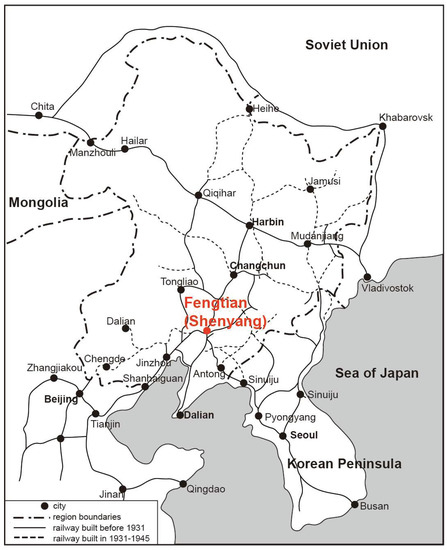
Figure 1.
Railways of Northeast China in 1945. Drawn by authors based on [21].
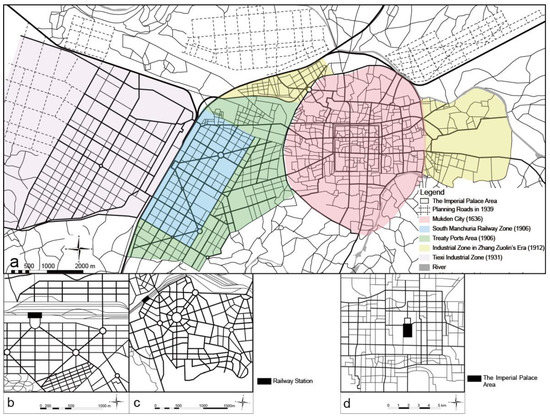
Figure 2.
Urbanization process in modern times. (a) Urban area in 1939, drawn by authors based on [22]. (b) South Manchuria Railway Zone in Changchun, drawn by authors based on [23] (p. 105). (c) Urban area planned by Russia and Japan in Dalian, drawn by authors based on [23] (p. 6). (d) Urban area around the imperial palace in Beijing, similar to Mukden city, drawn by authors based on [24].
Examining documents published by the government [25], we identified about half of the registered heritage sites in Shenyang as structures completed in the modern era. The vast majority of this modern heritage is urban public buildings such as schools, hospitals, banks and government agencies, including many large buildings such as Mukden Station (now Shenyang Station), the affiliated hospital of Nanman Medical University (now China Medical University) and Yamato Hotel (now Liaoning Hotel), as well as some industrial heritage such as the Sumitomo Metal Factory (now 1906 Cultural and Creative Park). There are also small facilities such as the residences of famous people, such as the official residence of Zuolin Zhang, and foreign consulates. However, because of the relevant background of this heritage, these sites have not been adequately protected and reasonably used for a long time. Due to unclear and negligent management practices, many historical buildings have been damaged or even illegally demolished. For example, the former site of the Fengtian Spinning Factory was illegally demolished by developers in January 2000 due to negligence in the approval process, and the former site of the French Consulate was partially smashed in October 2009 due to negligent construction [26].
With the enhancement in relevant research and cultural property protection awareness in recent years, people have gradually realized the crisis in protecting HOIM in Shenyang. Many well-known media outlets such as Workers’ Daily [26] and People’s Daily [27] have published relevant reports describing the plight of protection and confusion in the management of these heritage sites, calling for more attention to them. In 2009, it was decided that the former site of the Mantetsu Library was to be demolished by the government for an urban development project. Hearing the news, the Shenyang cultural preservation groups and other social groups opposed the decision through the internet and media campaigns, and the government and developers decided to rebuild the library on another site due to public pressure (Figure 3). However, this move was widely criticized for seriously destroying the “authenticity” value of cultural heritage [28].
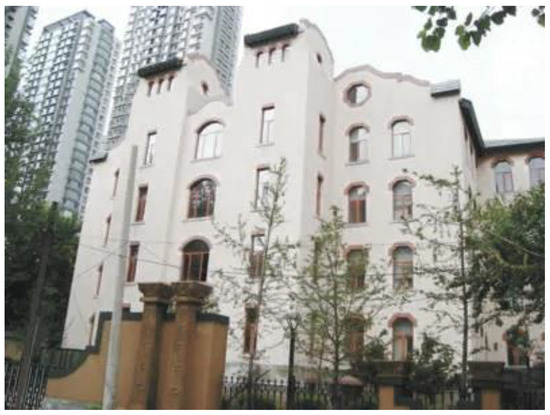
Figure 3.
Rebuilt Mantetsu Mukden Library.
Based on the background research above, it is very urgent to deepen the research on HOIM in Shenyang. Therefore, this study aims to grasp the overall utilization and conservation status of HOIM through a city-wide investigation, and to verify and examine the effects and issues of the current protection system by analyzing the openness of HOIM’s facilities and its impactable factors.
HOIM covers different terms used in various fields. For example, “industrial heritage” and “20th-century architecture” are usually used by UNESCO and TICCHI. In Japan, the Agency for Cultural Affairs and the METI employ the terms “modernization heritage” [29] and “heritage of industrial modernization” [30]. In China, there are no official designations, while in some local regulations terms such as “historical buildings,” “modern outstanding buildings” and “industrial heritage” are often used [31]. Considering the goals of the Japanese METI, we undertook this study with the notion of “legacy of industrial modernization” in mind. Thus, the objects of study in this investigation are referred to as HOIM, or heritage sites of industrial modernization. They are structures and other related material items constructed between the late 19th century and the end of the Asia-Pacific War (1941–1945).
1.3. Literature Review
The main research perspective on HOIM in the West began with the study of the historical and cultural values of industrial sites or modern architectural heritage [32]. Most of these studies are relatively early, conducted mainly through on-site investigations of heritage to elaborate and analyze the conservation values. Especially for negative heritage, from Nazi concentration camps to the Buddhas of Bamiyan in Afghanistan [33], industrial archaeology was established and proposed to help establish new recognition for HOIM. At the 15th International Conference of TICCIH, Stuart Smith (the general secretary of the International Committee for the Conservation of the Industrial Heritage, UK) suggested that the construction activities in Japanese colonies had a positive impact on spreading Western architectural and urban planning ideas and techniques before the prevalence of Japanese militarism, and had a catalytic effect on the modernization process in Asia [34]. These viewpoints inspired the ideas of this study. Subsequently, the conservation value of HOIM was clarified, and the research perspective gradually turned to conservation methods and policies; however, most investigations dealt with the technical aspects of restoration of buildings or structures [35,36]. In recent years, research and practice on the utilization and regeneration of HOIM have become very popular. Through rational reuse and renovation, HOIM sites are of great value not only economically, such as for tourism [37,38,39], but also in sustainable urban development [40,41]. In establishing these projects, the urban landscape environment is improved, and local authorities collaborate with each other so that the consensus and identity of the community are strengthened [42,43,44].
However, as mentioned above, research on HOIM in China began late compared to in the West and Japan, and most of it is through investigation of the historical literature to explore the historical and cultural characteristics necessary to clarify conservation value [45,46]. In particular, a large body of research on the Japanese colonies, including Shenyang, exists [18,47,48,49], not only in terms of vertical research results on the development of the modern history of a single city [50,51,52] but also horizontal comparative research on urban planning and architectural forms in mainland China, Taiwan and the Korean Peninsula [53]. Most of these studies use historical maps to grasp the spatial context of urban development and use geo-historical methods to explore the value of these heritage sites. However, these research results only identify the historical and cultural values behind these HOIMs, and do not address the current conservation status and usage aspects.
China’s fast urbanization and growing economy have combined to create a crisis in protecting urban history, especially HOIM sites. Consequently, the focus of HOIM studies shifted to the subject of reuse via redesign and renovation around 2000, although most of these investigations to date have been limited to case studies and research on specific buildings and sites [54,55,56]. Shenyang’s adaptive use of HOIM research [57,58,59] is quite new. These reports focus on a single site or area and look into preservation and protection strategies for the future. However, these studies lack content that grasps the overall status of conservation for HOIM in Shenyang City. There are few studies that reflect on the current situation of the protection system.
In terms of the heritage protection system in China, there are studies from a macro perspective that target the system of historic and cultural cities [60] and the system of cultural relic protection [61], thus exploring the formation process of the system and future development issues. There are also detailed reviews of the institutional system, from the constitutional level to the local regulation level, from the perspective of architectural heritage and historic buildings’ conservation [62]. As for the study of the local protection system in Shenyang, some scholars have combed through the local laws and policy changes and explored the advantages and disadvantages of the system to protect the urban historical environment [63,64,65,66]. However, there is a substantial lack of research from the perspective of HOIM.
By investigating HOIM in the downtown core of Shenyang, this study grasps the distribution characteristics from the urban scale and clarifies the panorama of the conservation situation in Shenyang. It does not limit itself to the clarification of the historical and cultural value of heritage or to a case study on the preservation and utilization of individual buildings. In addition, the effects and issues of the current protection system and planning scheme of HOIM in Shenyang are discussed from the perspective of local revitalization. We expect it to contribute to the improvement of the protection and conservation system in Shenyang and local Chinese cities in the future.
1.4. Materials and Methods
This study employed qualitative and quantitative methods (Figure 4). First, by sorting out the laws and regulations on cultural heritage protection at the national to local (Shenyang) level, the positioning of HOIM in the heritage protection system and the principles and methods of protection, as well as the objectives and core areas of the protection planning scheme, were clarified.
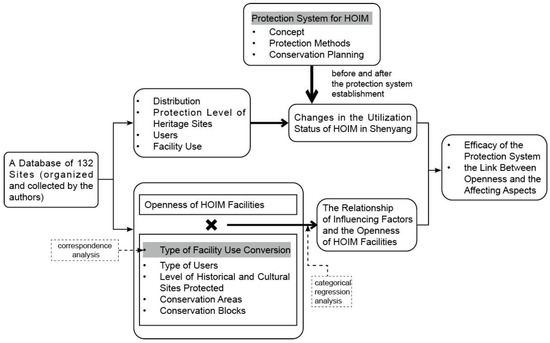
Figure 4.
Methodology and workflow.
This study adopted The Architectural Heritage of Modern China: The Shenyang Chapter [7] mentioned previously and the list of registered heritage sites (documents related to protected historical and cultural sites published by the Shenyang government from 1985 to 2020) as the basis materials. The items that meet the definition of HOIM in this study were screened out. Through on-site investigation and street view images (by Baidu map), the demolished projects were eliminated, and a database of HOIM in Shenyang (excluding the surrounding villages and towns) containing 132 sites was finally formed. We confirmed the location information, the protection level of heritage sites, the users, the facility use and the open status of the facilities through on-site investigation in combination with local chronicles and other literature.
Architectural heritage such as HOIM often requires changes from its original use to achieve adaptive reuse and thus meet the needs of modern society [67]. The adaptive use of heritage buildings is an important means of achieving sustainability [68]. Therefore, preservation and utilization status were clarified by examining the changes in registered heritage sites, the users and the facility use before and after the establishment of the local heritage protection system. By understanding the changes, the overall development of the protection system of HOIM can be seen in Shenyang, thus verifying the effectiveness of conservation policies.
As mentioned above, HOIM can have a significant impact on tourism, a tried-and-true strategy for creating a more sustainable society [69,70], if it is restored to being open to the public and used correctly [71]. Therefore, this study concludes that accessibility to facilities is a critical component of HOIM utilization. Factors such as the protection level of heritage sites, the users and the type of facility use were set as independent variables and openness level as the dependent variable. A categorical regression analysis (CATREG, by IBM SPSS Statistics V26) was performed to clarify the relationship between these conditional factors and openness level. Quantifying these elements can give a more objective presentation of the relationship between these element indicators and better reveal the importance of these factors [72].
Categorical regression analysis is a non-parametric multiple regression analysis that quantifies both categorical and numeric variables by assigning normalized values to derive optimal regression equations for the transformed variables [73]. It extends the standard approach by simultaneously scaling nominal, ordinal and numerical variables, which is widely used in research in the fields of economics and sociology [74,75,76].
2. Protection System Related to the HOIM in China
2.1. Protection System at the National Level
Chinese policy in terms of the preservation and protection of HOIM primarily comprises a policy system based on laws and regulations. One is the law system based on the Cultural Relics Protection Law of the People’s Republic of China (the “Cultural Relics Protection Law”), which was established under the authority of the National Cultural Heritage Administration (a special institute of the Ministry of Culture and Tourism of the People’s Republic of China); another is the institutional system based on the Regulation on Protecting Famous Historical and Cultural Cities, Towns and Villages (the “Historical and Cultural Cities Protection Regulation”), which was planned under the authority of the Ministry of Housing and Construction (The Ministry of Housing, Urban-Rural Development of the People’s Republic of China).
2.1.1. Position of HOIM in the System of Cultural Relics Protection Law
In 1956, the State Council promulgated the Notice on Protecting Cultural Relics in Agricultural Production and Construction, which first introduced the concept of “Historical and Cultural Sites Protected”. In 1982, the Cultural Relics Protection Law was officially issued and came into force, and the current law is the fifth amendment version of 2017, Article 3 of which has the relevant elaboration in terms of the designation of historical and cultural sites protected: “Immovable cultural relics such as sites of ancient culture, ancient tombs, ancient architectural structures, cave temples, stone carvings and murals and important modern and contemporary historic sites and typical buildings, may, depending on their historical, artistic and scientific value, be designated respectively as major sites to be protected at the national level, the provincial level, and the city or county level.” As seen, the concept of HOIM proposed in this study partially overlaps with “important modern and contemporary historic sites and typical buildings”, and its relationship with other cultural heritage categories in the system of the Cultural Relics Protection Law should be as shown in Figure 5.
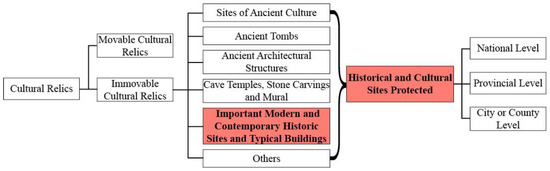
Figure 5.
The concept and position of HOIM in the Cultural Relics Protection Law. Drawn by the authors based on the Cultural Relics Protection Law, Article 3 and 47.
However, the value evaluations of historical and cultural sites protected belonging to the policy system of the Cultural Relics Protection Law have developed beyond the treatment of cultural relics (i.e., antique items); thus, “valuing the ancient over the modern” has long been prevalent. As mentioned above, research on HOIM in Chinese cultural heritage studies was only emphasized starting in the 1980s. From 1961 to 2019, China conducted three nationwide general investigations of cultural relics and identified 5058 major historical and cultural sites protected at the national level in eight batches. Figure 6 shows the changes in terms of the types and the number, and reveals the changes in the classification of immovable cultural relics. In November 1988, the Ministry of Construction (i.e., the old establishment of the Ministry of Housing and Construction) and the Ministry of Culture jointly issued the Notice on Focused Investigation and Protection of Outstanding Modern Buildings. Subsequently, the classification of “revolutionary sites and memorial buildings” was officially abolished in the fourth identification, and the classification of “important modern and contemporary historic sites and typical buildings” was supplemented. This transition shows how the judgment of modern cultural heritage’s worth moved away from purely political factors and toward the scientific, aesthetic and technological merits of historical materials. In terms of quantity, the number of important modern and contemporary historic sites and typical buildings has increased significantly since the sixth batch, which shows that the tendency of the historical and cultural sites protected has been slowly shifting to HOIM recently. It showed the progress of technological means and the improvement of conservation awareness for the heritage of modern times.
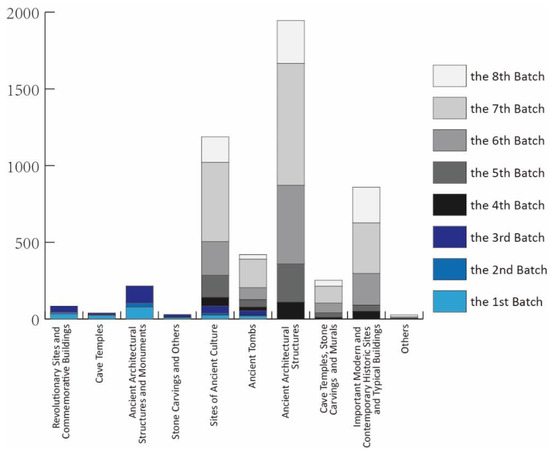
Figure 6.
Changes in the quantity and categories of registrations of major historical and cultural sites protected at the national level (unit: number of sites). Drawn by the authors based on [77].
2.1.2. Position of the HOIM in the Historical and Cultural Cities Protection Regulation
In July 2009, the Historical and Cultural Cities Protection Regulation, the subordinate regulation of the Cultural Relics Protection Law, and the Urban and Rural Planning Law of the People’s Republic of China were promulgated and implemented by the State Council. When compared to the Cultural Relics Protection Law, which focused on safeguarding individual buildings as cultural relics, the Historical and Cultural Cities Protection Regulation prioritized the protection of heritage clusters or individual historical structures, as well as the preservation of the natural and cultural landscapes in which they were situated. In contrast to the identification of historical and cultural sites protected in terms of the Law of Relics Protection, the designation objectives of the Historical and Cultural Cities Protection Regulation are cities, towns, villages or historic conservation areas.
The concept of HOIM in this study corresponds to “historical buildings” in the system of the Historical and Cultural Cities Protection Regulation. According to Article 47, ”Historical building” means a building or structure confined and announced by the people’s government of a city or county, which has a certain value for protection and can reflect historical style and features and local features, and which has not been announced as a site to be protected for its historical and cultural value or registered as a site of immovable cultural relics. We recognize historical buildings as registered heritage at the city level, independent of immovable cultural relics. In addition, the Regulation also describes the protective principles and methods of historic buildings. Although the definition of historical building is very general and refers to a wide range, based on the author’s investigation the research and identification of ancient buildings began relatively early, so most ancient buildings have been registered as immovable cultural relics, while the vast majority of the historical buildings are modern structures.
The protective systems of the Cultural Relics Protection Law and the Historical and Cultural Cities Protection Regulation have formed a three-layer protection system (city-area-building) at the national level (Table 1), and its specific protection practices can be summarized primarily in five aspects, as shown in Table 2. Because of its relatively young age, HOIM has many facilities in use as general buildings. Once they are immovable cultural relics, they must follow the strict principle of “maintaining the original state”, which can cause many inconveniences in the process of actual use. The Historical and Cultural Cities Protection Regulation establishes standards and provides ideas for revitalizing such buildings so that they may meet the needs of modern society. However, rules pertaining to alterations and repurposing existing structures are rare and mostly philosophical. Therefore, the implementation criteria should also refer to local regulations and laws, and the rules and regulations of the relevant administrative department of local governments.

Table 1.
Three layers of protection system for HOIM at the national and city level.
Table 2.
The methods for protection of HOIM.
2.2. Protection System in Shenyang
After 2000, social and economic development in China, which had undergone reform and opening up, entered a period of peace. Local metropolises in the northeastern areas of China, led by Harbin (2001), Shenyang (2009) and Changchun (2012), have planned and promulgated local ordinances, based on the Historical and Cultural Cities Protection Regulation, which are adapted to local characteristics and the current situation.
In 1982, the Ministry of Construction and Culture jointly issued the Notice on the Request for Protecting Famous Historical and Cultural Cities in China, and Shenyang became one of the 38 famous historical and cultural cities—the second batch announced, including Shanghai and Tianjin—recognized by the State Council. However, it was not until 2009 that the Shenyang government planned and implemented Regulations on Protecting Historical and Cultural City of Shenyang (the “Shenyang Regulation”), which defines planning guidelines related to urban historical and cultural features. In 2013, the Scheme on Historical Buildings Identification of Shenyang (the “Identification Scheme”) came into effect. Since then, at the local level in Shenyang, the three-layer protection system (areas, blocks and buildings) for HOIM has been formed (Table 1). However, in Shenyang, where there are many historical structures, including World Heritage Sites, there is considerable criticism about the delay in implementing the policies toward the department of cultural heritage in Shenyang [27], as the local regulations were introduced 27 years after the designation of the historical and cultural city.
In terms of the designation of historical buildings corresponding to the concept of HOIM in the Identification Scheme, buildings or structures that meet the identification conditions (see Table 1) can be categorized as Class I, Class II and Class III historical buildings and implement a kind of “classification protection approach.” Specifically, different protection principles are followed according to the class of the historical building. For example, the higher the class, the stricter the measures for building use and exterior structure to some extent (Table 2). In terms of content, the Shenyang Regulation and the Identification Scheme are local laws and regulations in line with local characteristics based on higher laws such as the Cultural Relics Protection Law and the Historical and Cultural Cities Protection Regulation; they are a flexible protection system based on the use status of these heritage facilities.
In the Shenyang Regulation, three areas, the Mukden City (built in the Qing Dynasty), the South Manchuria Railway Zone and the Treaty Port Area (built in the modern era), were set as historical urban areas. In 2016, based on the Shenyang Regulation, the Conservation Planning of Historical City [78] was officially released: besides the three areas above, the Expansion Area in Zhang Zuolin’s Era and the Tiexi Industrial Zone were also designated as historic urban areas, and the five areas combined have a conservation area of 80 km2 (Figure 7). Fangcheng City Block (the imperial urban area of Mukden City) and Shenyang Station—Zhongshan Road—Zhongshan Square Block (the Zhongshan Rd Block), that of many HOIMs, and other blocks and districts were designated as Historical and Cultural Blocks.
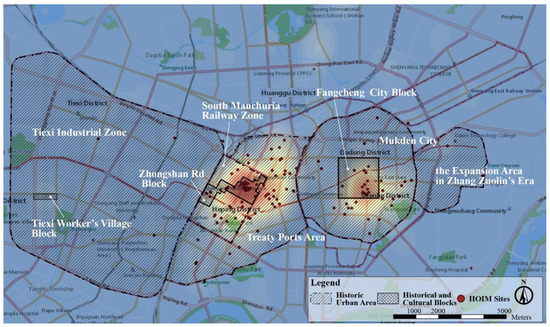
Figure 7.
The conservation areas and distribution of HOIM sites.
The distribution of the 132 projects in the database and the analysis results using the Kernel Density tool of ArcGIS are shown in Figure 7. It can be seen from the figure that most of the HOIM remains in the historic urban areas of Mukden City, South Man-churia Railway Zone and Treaty Port Area are especially concentrated in the historical and cultural blocks of the Zhongshan Rd Block and the southeast side of the Fangcheng City Block. The Zhongshan Rd Block is in the prosperous Shenyang Station trading area, and the Fangcheng City Block is within the Palace Museum of Shenyang and Zhongjie Street pedestrian mall, both of which are important downtown areas of Shenyang.
The reasons for the concentrated distribution of HOIM sites in the two places are ana-lyzed through the literature investigation. The Mantetsu developed and completed the modernization of the Mantetsu town (the scope of the South Manchuria Railway Zone historical and cultural block) after the Russo-Japanese War (1904–1905). The Zhongshan Rd Block is an important urban axis planned by the Mantetsu, but also by the colonial administrative center [79] (pp. 86–87). The historic urban area of Mukden City is a traditional Chinese pattern formed in the Qing Dynasty, and the Fangcheng City Block is the inner-city (walled city) area of Mukden City [80] (pp. 136–138). The Fengtian clique occupied the area in modern times, and the southeast position of the Fangcheng City Block is where the official residence of Zuolin Zhang was located, which is also the political center of the jurisdiction of the warlord’s government. Therefore, HOIM sites are more concentrated in these two places. The Treaty Port Area was an open area for foreigners to trade and live in since the Qing Dynasty, so it became a buffer zone between the Mantetsu and the Fengtian cliques and was also the site of a concentration of foreign consulates, banks and residences of dignitaries [81] (pp. 55–58). The volume of HOIM facilities in this area is smaller than in the two areas mentioned before.
3. Changes in the Utilization Status and the Factors Applying to the Openness of HOIM
This section examines 132 projects in the database, clarifying the changes in protection and use status before and after the introduction of the Shenyang Regulation and Identification Scheme to verify the effect of implementing the local protection policy in Shenyang. Before introducing local protection policy, the aforementioned publication in 1995 of The Architectural Heritage of Modern China: the Shenyang Chapter is the most authoritative and comprehensive report, so when collating the status before implementing the conservation policy the contents of this report were used as the basis, and the investigations on local chronicles [82] and other literature [81,83,84,85] are based on the 1995 time point.
3.1. Changes in the Utilization Status of HOIM in Shenyang
3.1.1. Changes in the Identification of Historical and Cultural Sites Protected
We can see from Table 3 that, from 1960 to 2020, Shenyang designated and published 238 historical and cultural sites protected in 17 batches. Among them, there are 108 sites belonging to the category of HOIM, accounting for 45% of the total. In terms of the change in quantity, it is worth mentioning that, starting from 2001, the number of HOIM sites designated in each batch reached almost half of the total, and the number of sites designated before and after introducing the Shenyang Regulation and the Identification Scheme (2008 to 2014) reached its peak. We can say that the Shenyang government has concentrated the focus of the work related to identifying historical and cultural sites protected in the past 20 years around HOIM. However, according to the on-site investigation results, there are 25 HOIM sites that have not been designated as immovable cultural relics. In addition, compared with the items recorded in the 1995 report, it can be determined that 63 HOIM sites were demolished. Therefore, a general city-wide investigation and promoting the quantity of sites protected for HOIM sites are very important.
Table 3.
Changes in the quantity of registered historical and cultural sites protected in Shenyang [24].
3.1.2. Changes in Types of HOIM Facility Users
In this study, users of HOIM facilities are classified into eight types of state-owned general enterprises, state-owned public utilities, private enterprise, civil society organizations, foreign-owned enterprises, government administration, private use and others according to the classification in the Company Law of the People’s Republic of China. It should be noted that because of the characteristics of the Chinese state system, state-owned public utilities are very broad in scope, ranging from those related to energy resources such as natural gas and electricity to those related to public welfare such as civic libraries and museums, as well as those directly related to the public interest of society such as healthcare and education, most of which fall into this category. In addition, state-owned general enterprises refer to companies in areas such as finance and industry that are backed and controlled by state-owned assets and operate in the same or similar manner as general companies.
Figure 8 shows the composition in types of users of 132 facilities before and after introducing a local protection policy. The number of facilities used or operated by state-owned general enterprises decreased a lot and private enterprises increased significantly. This is primarily because, under the influence of the economic reform that started in the early 1980s, the state-owned assets of the enterprises privatized many transfers. In addition, the facilities of the government administration also decreased. Because of the process of the establishment of the local protection system in Shenyang, investigation and research on HOIM continue to deepen, and its value as cultural heritage is gradually emphasized; the relevant adaptive use of the attempt is also gradually carried out. The facilities used by government agencies because of the ownership relationship are relatively simple, so it is easier to give priority to such transformation attempts. For example, the former site of the Mukden Catholic Youth Association, which was occupied by the Ministry of Public Security after the founding of the People’s Republic of China, was named an upgraded historical and cultural site protected in 2003 and returned to the Shenyang Catholic Association, where it is now used as a study center by the association (Figure 9. However, there were 118 (89%) HOIM facilities in 1995 and 95 (72%) at present that have a national user nature (i.e., state-owned public utilities, state-owned general enterprises and government administration), and it can be said that those who dominate the use or operation of HOIM facilities in Shenyang are still government and state-owned enterprises.
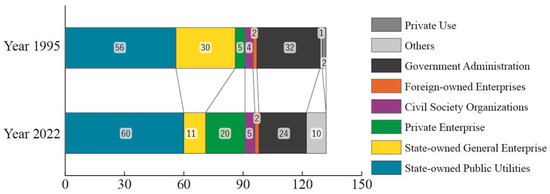
Figure 8.
The composition in types of facility users (unit: number of sites). The database was organized and collected by the authors.
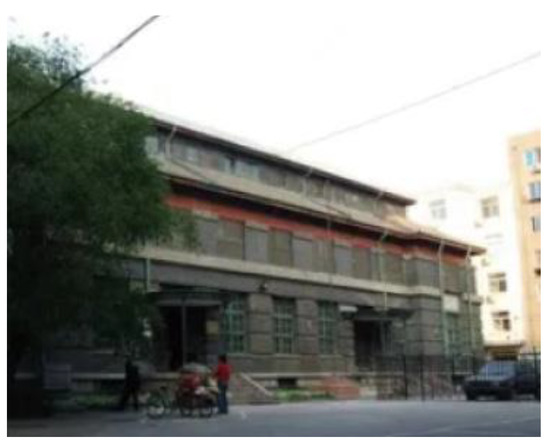
Figure 9.
Mukden Catholic Youth Association (Study Center for the Catholic Association now). An example of users changing from government administration to civil society organizations.
3.1.3. Changes in the Composition in Facility Use Classification
Figure 10 shows the changes in composition of the original facility use (when completed), before the establishment of the local protection system (1995), and the current use classification. It is exceedingly notable that commercial and cultural welfare facilities have increased while administrative and production facilities have decreased since the inception of the local protection system. Once a structure such as a factory has protected status as a historical or cultural site, it must adhere to the rules outlined in the preceding chapter and can no longer be used for production or storage activities that drain its resources.
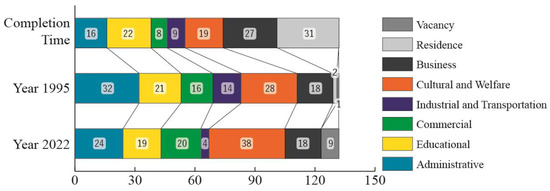
Figure 10.
The composition in facility use classification (unit: number of sites). The database was organized and collected by the authors.
For example, the site of the Sumitomo Metal Factory, which was a state-run machinery factory until 2010, was designated as a protected site, and then in 2012 the government held a public tender to transform it into a commercial complex, namely “the 1906 Cultural and Creative Park”, using private capital; it has become a newly popular tourist attraction in Shenyang (Figure 11a). It is also worth mentioning that the category of residential has disappeared from the current use of the HOIM facility. This was after the Pacific War (1941–1945)—because of the change in the administrative system, the social environment was turbulent, and the old government officials and capitalists fled, causing many official residences and houses to be left vacant, leading most of them to be taken over by the military or government agencies and used as administrative facilities for a long time. Most of these residential facilities were preserved as cultural facilities, such as exhibition halls and other buildings with high technical or artistic value, or as old residences of famous people with high historical value. For example, the Zuolin Zhang official residence (Figure 11b) was once expropriated by the government as a temporary office after the founding of the country but is now open to the public as an exhibition facility, the Commander Zhang’s Mansion Museum, which is a very important historical and cultural tourist spot in Shenyang.
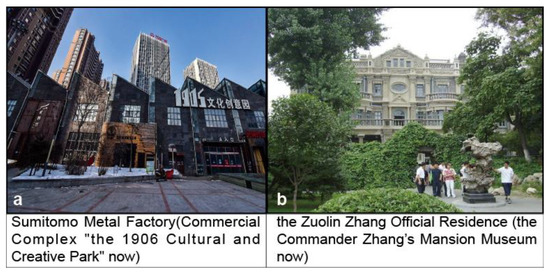
Figure 11.
Examples of facility use conversion. (a) Example of facility use conversion from industrial and transportation to commercial facilities. (b) Example of facility use conversion from residence to cultural facilities.
3.2. Openness and Influencing Factors of the HOIM
We have already shown that HOIM, compared to other forms of cultural material, has unique qualities that make it challenging for the public to appreciate the significance of its protection. Therefore, it is important to increase public awareness of the need to preserve such property by increasing the public’s appreciation for its allure and worth. Improving the accessibility of the facilities is crucial to achieving this goal. Since the HOIM in Shenyang is particularly concentrated in the downtown, if these facilities can improve their openness rationally, it will be very beneficial to the overall community vitality of the downtown and to protection and continuation in terms of the characteristics of the urban landscape.
3.2.1. Openness of HOIM Facilities and Their Criteria
In this study, the openness of the facilities is assumed to be a major factor in the utilization of modern heritage based on the reasons described in the previous section, and we judge the openness of the facilities based on two aspects. One is the open area of the facility, and the other is the freedom of facility accessibility. In terms of the former, if the main part of the facility (excluding auxiliary spaces such as equipment rooms) is open to the public, then the facility is considered fully open; if only part of the facility is open to the public, we consider the facility partially open. In terms of the latter, the facilities are classified into free access, fee-based access, restricted access (when the facilities are used for business, etc., or when advance procedures are required to apply for access) and non-access. To balance the size of each category and simplify the calculation, openness of HOIM facilities is set into five levels; we show the conditions of each level in Figure 12.
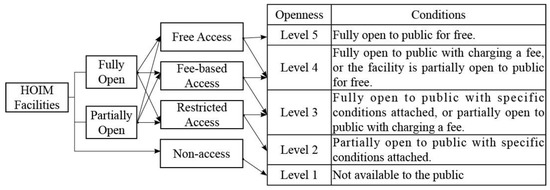
Figure 12.
The openness levels of the facilities.
Based on on-site investigation, the facilities with an openness level of 5 (10 sites) are mainly open spaces, such as parks and squares. For example, the water tower (Figure 13a) in the old site of Chiyoda Park (now Zhongshan Park) no longer serves its original function as a water supply but is still preserved as a landscape facility. In addition, there are religious facilities, such as churches, which are open for worship and visits during opening hours. Facilities with openness level 4 (46 sites) are mainly cultural facilities that have been transformed into museums or exhibition halls, or commercial facilities that are open as stores along the lower floors of the streets, an example being the Mantetsu Railway Office around Shenyang Station (Figure 13b). Facilities of openness level 3 number onlyfive sites, mainly the Nanman Medical University (now China Medical University, Figure 13c) of the relevant building clusters, where the auditorium and gymnasium and other facilities can also be used by external people if applicable. There are 14 facilities of openness level 2, mainly banks and administrative facilities for citizens to conduct business. Non-access facilities are the most numerous (57 sites, accounting for approximately 43% of the total); they are mainly government administrative offices and primary and secondary school buildings, which are not open to the public.
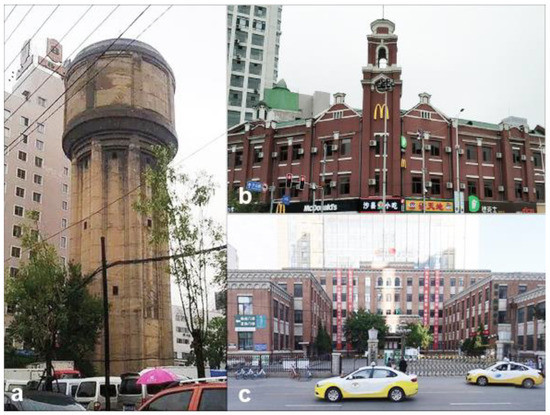
Figure 13.
Examples of HOIM facilities. (a) Water tower in Chiyoda Park (now Zhongshan Park). (b) Mantetsu Railway Office (now commercial facilities). (c) Nanman Medical University (now China Medical University).
3.2.2. The Relationship between Influencing Factors and the Openness of HOIM Facilities
According to the on-site investigation of the HOIM facilities, 70 of the 132 heritage sites have been converted to other use facilities. By understanding and analyzing the tendency and type of use conversion of these facilities, we can better clarify the reuse characteristics. To analyze and conclude the conversion more objectively, the authors defined the original and current facility use of projects in the database as two variables and conducted a correspondence analysis (by IBM SPSS Statistics). Correspondence analysis describes the relationship between variables by projecting the points of one variable onto a vector of category points from the origin to the other variable. It can visualize the data as a cross table (Table 4) and describe the relationships between two nominal variables in a low-dimensional space. The results are shown in Figure 14; the types of HOIM facility use conversion can be divided into six types: “continued original use” (62), “administrative facility conversion” (19), “cultural facility conversion” (23), and “commercial facility conversion” (12), “unused” (9)” and “other” (5).
Table 4.
Statistics on use conversion.
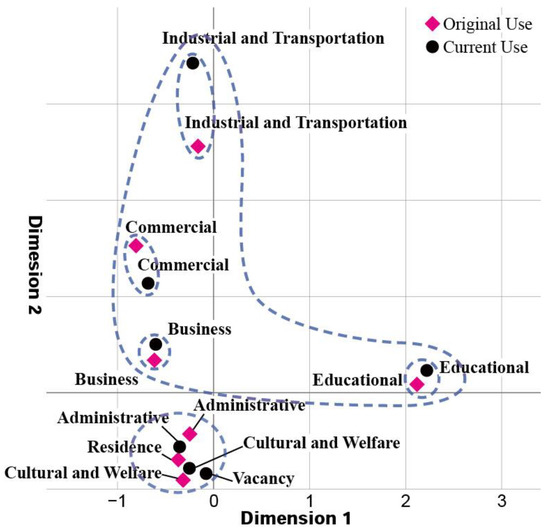
Figure 14.
Types of use conversion of HOIM sites.
Figure 14 shows the joint plot of category points from the results of the correspondence analysis. The points in terms of the production and distribution, education, commercial and office types all fall in the first and second quadrants, and the points of “original use” and “current use” of the same type are relatively close to each other, showing that the facilities of these use types tend towards “continued original use”. Further, according to the statistics on facility use change (Table 4), there are 62 facilities not changing the use type (accounting for about 50% of the total), 43 of which are managed and operated by state-owned users. Educational facilities such as primary and secondary schools accounted for most of them, such as Takachiho Elementary School (now Shenyang No. 134 Middle School) and Nanman Middle School (now Shenyang No. 23 Middle School). In addition, the points in the third quadrant show a tendency towards use conversion, and the statistics results from Table 4 indicate that there are more cases of use conversion to a cultural facility (23), administrative facility (19) or commercial facility (12). Most HOIM sites conversed to cultural facilities are small buildings, and there are more former residences of famous people, such as the above-mentioned Commander Zhang’s Mansion Museum as well as Erxun Zhao Exhibition Hall (former residence of the viceroy of Northeast China). Most of the HOIM sites converted to administrative facilities were of small or medium size, such as the Fengtian Import Association (now the Heping District Police Station). Large-sized HOIM sites located along the streets in busy areas tend to be converted to commercial facilities, such as the Manchurian Railway Office and the Chiyoda Branch of the Manchurian Central Bank (now a shopping mall).
In order to analyze and explain the relationship between the influencing factors and openness of HOIM facilities more objectively, the factors of the type of facility use conversion, type of users, level of historical and cultural sites protected, site conditions with conservation area and block were picked up in this study. We carried out a categorical regression analysis with openness of HOIM sites as a dependent variable and the five factors mentioned in the following as independent variables.
In the categorical regression analysis in this study, the variables of openness (levels 1–5) and the level of historical and cultural sites protected (levels 0–3) were set as ordinal variables. Regarding the site conditions, it can be seen from Figure 7 in Chapter 2 that all the subjects of this study are within the historic urban area, so this variable, i.e., the difference of the areas they are in and whether they are in a historical and cultural block, was set as a categorical variable (nominal variable). We set the type of users as a categorical variable (nominal variable) according to the current HOIM facilities user classification described in Section 3.1, and the type of facility use conversion as a nominal variable regarding the six types set in Section 3.2. We present the dependent and independent variables in Table 5.
Table 5.
Variables for the categorical regression analysis.
The results and model coefficients obtained from the categorical regression analysis are shown in Table 6 and Table 7. The coefficients showed that the regression model is statistically significant (Table 6, R2 = 0.624, p = 0.000 < 0.05). It can be learned from Table 7 that all the independent variables are significant (p < 0.05) except site conditions with conservation block, and that the factor of whether in a historical and cultural block (p = 0.185) in openness was not significant. In terms of the influence of each independent variable on openness, type of facility use conversion (“importance” = 0.633) and type of users (“importance” = 0.21) have a significant impact on the openness of HOIM facilities.
Table 6.
Model summary.
Table 7.
Coefficients of the CATREG Model.
Figure 15 is a histogram based on the standardized quantification values of items in each independent variable. Overall, the items of “cultural facility conversion”, “private enterprise as users” and “civil society organizations as users” have a significant and positive impact on the openness of HOIM facilities (quantification > 1.5). The crosstab on type of users and facility use conversion (Table 8) shows that most HOIM sites operated by civil society organizations and private enterprise are not “cultural facilities conversion”. Further, through specific findings according to investigation of individual cases, most of the HOIM sites operated by civil society organizations (mostly religious groups) as users are religious facilities such as churches, which have continued their original use. Most HOIM sites used by private enterprise are commercial facilities, which were originally commercial facilities or were later converted to commercial use.
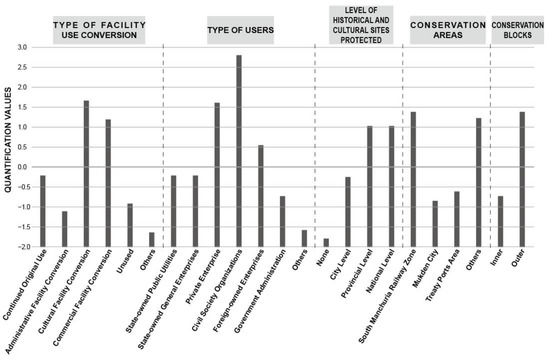
Figure 15.
The relationship between the openness of HOIM sites and the factors.
Table 8.
Cross-tabulation of facility use conversion and user types.
Among the category of “type of users”, “foreign-owned enterprises” has a positive impact on openness besides “private enterprise” and “civil society organizations”. From the previous analysis, about 50% of the HOIM is non-access, and 74% of the users have a national nature, which explains the reduced openness of these facilities in Shenyang as a whole. The same conclusion is illustrated by the negative quantification value of “government administration”, “state-owned general enterprises” and “state-owned public utilities” in Figure 15.
Among the variables of “level of historical and cultural sites protected”, the provincial and national levels have a greater impact on openness. Due to the relatively high historical and cultural value of registered HOIM heritage at these two levels, and guaranteed publicity in the process of application and approval, most of them have been renovated into cultural facilities such as museums. The on-site investigation also verified this.
In terms of the categories of site conditions with conservation areas, the historic urban area of the South Manchuria Railway Zone and the Treaty Port Area are both formed in modern times, but their openness level is relatively different. The South Manchuria Railway Zone is in the trading area of Shenyang Station, where the traffic is relatively convenient. The HOIM has been converted into commercial facilities; in particular, many shops have been opened on the ground floor. There used to be many banks in the Treaty Port Area in modern times, and most of the banks have been used without use conversion until now. In addition, as mentioned above, there are mostly small-volume HOIM facilities, such as houses and consulates in the Treaty Port Area, which are scattered and difficult for carrying out large-scale development and renovation activities.
Little emphasis is placed on a facility’s openness based on whether it is in the historical and cultural block. For this reason, “emphasizing protection rather than utilization” is a common theme in local protection regulations and urban planning schemes, with most content with the restrictions on the transformation of historical and cultural sites protected and construction within the conservation area.
4. Discussion and Results
Through the preceding analysis and conclusions, we made the following deductions regarding the protection and utilization of the HOIM in Shenyang.
The modern development of Shenyang City is very typical. However, the urban planning pattern has the characteristics of both a traditional Chinese capital and a modern city. The HOIM is distributed densely, with many sites in the downtown area, which is very rare compared to the country as a whole. Through the analysis in Chapter 3, it can be learned that, compared with the past (since 1995), the current preservation status shows that there is a large increase in the number of HOIM facilities operated by private enterprises, an increase in cases of changing use to cultural facilities and commercial facilities, and a decrease in the number of administrative facilities managed by government administration, etc.; this shows the effectiveness of Shenyang’s protection system in the preservation of HOIM. However, in the local regulations, there is much content on protecting urban environments and historic structures, while there is very little content on the reuse and renovation of the heritage sites, such as the repair and building use conversion, which are only some principles. We can speculate that this is negative for the utilization of Shenyang’s HOIM. Despite many deficiencies in the protection system, 132 HOIM sites in the downtown area of Shenyang can be preserved against the background of China’s rapid economic construction and urbanization development. According to the analysis in Section 3.2 above, it can be seen that about half of the HOIM facilities have not been changed from their original use, and have been continuously used up until now. In addition, over 70% of the HOIM facilities with “continued original use” are operated and managed by users of a national nature, which can be inferred to be one of the important reasons for the stable preservation state of the facilities. We cannot deny that the use of many facilities is dominated by state-owned subjects, so the overall openness level of HOIM in Shenyang is low.
In addition, there are now 25 HOIM facilities that have not been identified as registered heritage sites, and 63 sites that have been dismantled and have disappeared since 1995 in Shenyang. The objects to be protected from the perspective of the protection system are historical and cultural sites protected and other immovable cultural relics, but the protection obligations and responsibilities for those HOIM sites not designated are unclear. Therefore, it is necessary to improve the protection system, or to further promote the registration and designation of HOIM facilities.
From the analysis of the protection system and preservation status, it can be seen that the main trend in preservation status in Shenyang is that the relevant departments of the government handle the designation and approval of historical and cultural sites protected and immovable cultural relics, and the state-owned enterprises and subordinate organs of the government handle the operation and management of the facilities. Long-term protection plans for urban historical environments and buildings may be established and managed more efficiently with the use of such a system, which facilitates collaboration between the government’s urban planning, cultural relics management, and tourist departments. But such a conservation and management approach for a large amount of urban heritage is overly burdensome for the governmentand the over-reliance on government budgets for management and maintenance makes it more difficult to achieve sustainability.
In terms of the openness of the facilities, the overall low level of openness will lead to low public awareness about the value and conservation of HOIM, which is very detrimental to the future inheritance of cultural heritage and urban revitalization. Besides the HOIM facilities used by non-state nature subjects, such as civil society organizations, private and foreign enterprises, there are more cases of conversion to commercial facilities, and their openness is relatively high. From these analyses, we can deduce how to make better use of private capital and how to improve the relationship between the rights and obligations of the government and private enterprises or groups in the current system regarding heritage conservation, which are crucial issues for the future of HOIM utilization.
Cultural heritage can become the brand of a region, and its legacy and development can help shape the identities and characteristics of a region or city [86]. In terms of city identity, Shenyang City has been using the imperial capital of Mukden, the birthplace of the Qing Dynasty, as its label and the World Heritage Site, the Imperial Palace of the Qing Dynasty, as the focus of tourism [87], while the presence of a large number of HOIMs has been little publicized. The problem of the low openness level of the HOIM facilities highlighted by this study also reveals to a certain extent that the potential of HOIM in tourism has been ignored for a long time. The reason for this is that the existing cultural heritage conservation system has many limitations and lacks development guidance, making it difficult to utilize private resources. In addition, although this study does not involve the investigation and analysis of facilities’ property rights, most of the HOIM sites in Shenyang were directly received by the government after the war, so their property rights are also owned by the government or public organizations. According to the Cultural Relics Protection Law Article 24: “No immovable cultural relics owned by the State may be transferred or mortgaged. No State-owned sites protected for their historical and cultural value, which are established as museums or cultural relics preservation institutes or used as tourist sites may be made enterprise assets for business operation.” The results have confirmed that the participation of private capital has a very positive impact on the utilization and regeneration of HOIM, and such a provision exists in the higher-level law that can be supposed to greatly confine the further introduction of private capital. However, local cities in Japan, such as Yokohama and Chiba, which are also in Asia, have been actively promoting the development of the Designated Manager System and PFI (Private Finance Initiative) projects to provide higher-quality service to the public and use private resources more flexibly, and to reduce the cost of the government budget in terms of both capital and manpower [88,89].
With the social and economic reform and the popularity of internet technology, there are many new attempts at utilization of HOIM in Shenyang. For example, the development of the old Sumitomo Metal Factory mentioned above is a successful case of inviting private developers to transform the site into a comprehensive cultural and commercial facility. The Shenyang government has also been actively promoting online services for citizens in recent years. In order to strengthen the protection of immovable cultural relics, the government has launched several Old Building Clues Collection Activities on the government forums [90]. These initiatives have largely driven the motivation of the general public in the conservation of urban heritage, including the HOIM, and have presented the possibility of the establishment of a genuine citizen participation system in the future.
This study reveals the importance of HOIM for sustainable urban development and clarifies its role in economic development-related industries such as tourism. It has an enlightening role in the conservation of HOIM and its utilization as tourism resources in the future for other cities with similar historical backgrounds in China, as well as in Asian regions such as Taiwan and the Korean Peninsula.
By investigating the current conservation status of the HOIMs, this study clarified the subject of the utilization and use conversion of each HOIM facility at the urban scale. However, if we want to further explore the specific methods of the adaptive utilization of HOIMs, more detailed case studies and analyses of the maintenance process and management system of these kinds of heritage sites should be conducted to uncover more deep-seated problems in the current protection system. The successful utilization cases in various countries, such as those described in the Section 1 of this paper, are supported by corresponding preservation policies, such as recommending citizen participation and attracting private funding. Therefore, we believe that, in the future, we need to investigate examples of such policies and the systems of other countries and conduct comparative studies with the case of Shenyang, which will play a significant role in the conservation and utilization of HOIM in local cities in China.
Author Contributions
Conceptualization, B.S.; Data curation, B.S.; Formal analysis, B.S. and Y.H.; Funding acquisition, B.S. and K.I.; Investigation, B.S. and Y.H.; Methodology, B.S. and Y.H.; Project administration, B.S. and K.I.; Resources, B.S.; Software, B.S. and X.H.; Supervision, B.S.; Validation, B.S. and X.H.; Visualization, B.S. and X.H.; Writing—original draft, B.S.; Writing—review & editing, B.S. and K.I. All authors have read and agreed to the published version of the manuscript.
Funding
This research received no external funding.
Institutional Review Board Statement
Not applicable.
Informed Consent Statement
Not applicable.
Data Availability Statement
Not applicable.
Conflicts of Interest
The authors declare no conflict of interest.
References
- Hudson, K. Industrial Archaeology: An Introduction; Routledge: London, UK, 2014; ISBN 978-1-315-74638-8. [Google Scholar]
- Namikawa, H. About Industrial Archaeology and Industrial Heritage. St. Univ. Bull. Res. Inst. 2014, 40, 169–186. [Google Scholar]
- Council of Europe. Twentieth-Century Architectural Heritage: Strategies for Conservation and Promotion: Proceedings; Council of Europe Press: Strasbourg, France, 1994; ISBN 978-92-871-2463-0. [Google Scholar]
- UNESCO Headquarters. Report of the Expert Meeting on the “Global Strategy” and Thematic Studies for a Representative World Heritage List 1994. Available online: https://whc.unesco.org/en/documents/1570 (accessed on 23 December 2022).
- Inoue, S. Industrial Archaeology and Industrial Heritage: What Is the Purpose of Collecting Information and Who Should We Preserve It For? St. Univ. Bull. Res. Inst. 2004, 30, 61–90. [Google Scholar]
- Guo, X.; Zhang, X. An International Interpretation of the Ideology of Built Heritage Conservation in Modern China. Arch. J. 2009, 6, 24–27. [Google Scholar]
- Chen, B.; Zhang, F.; Murumatsu, S.; Nishizawa, Y. The Architectural Heritage of Modern China: The Shenyang Chapter; China Architecture Publishing & Media Co., Ltd.: Beijing, China, 1995; ISBN 978-7-112-02608-1. [Google Scholar]
- Jouji, S. Problems of Preservation and Utilization on Industrial Heritages. Proc. Gen. Meet. Assoc. Jpn. Geogr. 2011, 2011, 100053. [Google Scholar] [CrossRef]
- Lin, H. Sweetened Imposition: Re-Examining the Dilemma of the Adaptive Re-Use of Former Sugar Factory Sites as Cultural Creative Parks in Taiwan. Int. J. Cult. Creat. Ind. 2015, 2, 68–83. [Google Scholar]
- Toma, T. Battlefield Archaeology in Okinawa. In Proceedings of the 1st the Japanese Disaster Prevention and Archaeology Association, Miyagi, Japan, 22 September 2022; pp. 165–172. [Google Scholar] [CrossRef]
- Kato, K. The Industrial Heritage: Historical Vayage through the Life of the Everyday Man; Nikkei Inc.: Tokyo, Japan, 1999; ISBN 978-4-532-14676-4. [Google Scholar]
- UNESCO. Aerial View of the Hashima Coal Mine 2010. Available online: https://whc.unesco.org/en/documents/136176/ (accessed on 17 December 2022).
- UNESCO. Former Kagoshima Foreign Engineer’s Residence 2012. Available online: https://whc.unesco.org/en/documents/136169 (accessed on 17 December 2022).
- Masato, H.; Kiyoko, T.; Takeshi, O. Reports on Preservation and Utilization of the Modernization Heritage in Yokohama. Nara Prefect. Univ. Kenkyukiho 2014, 25, 73–83. [Google Scholar]
- Zhao, Z.; Liu, Y. The Protection and Regeneration of Urban Industrial Cultural Heritage under the “Industrial Park Model”: The Case of Beijing 798 Art Park. Chongqing Archit. 2022, 21, 21–22. [Google Scholar]
- Du, Y. Exploration on the Conservation and Renewal Methods of Atypical Historic Districts from the Perspective of HUL—Taking Shanghai Tianzifang as an Example. Inter. Archit. China 2022, 11, 150–152. [Google Scholar]
- Jiao, N. Brief Analysis of the Influence of Opening Trading Port on the Development of Industry and Commerce in Modern Mukden(1906–1931). Lit. Life (Trimonthly Publ.) 2016, 1, 155–156. [Google Scholar]
- Su, C. History of the Mantetsu; Fourteen Years of the Fall of Northeast China Series; Zhonghua Book Company: Beijing, China, 1990; ISBN 978-7-101-00844-9. [Google Scholar]
- Nishizawa, Y. Illustrated Manchuria: Giant of Manchuria; Kawade Shobo Shinsha: Tokyo, Japan, 2015; ISBN 978-4-309-76232-6. [Google Scholar]
- Keiichi, Y. Urban Planning Characteristics of Shinkei, Hoten, and Harbin. Research bulletin of Meisei University. Phys. Sci. Eng. 1971, 6, 89–102. [Google Scholar]
- Kato, S. The South Manchuria Railway Co., Ltd. Complete History: The Total Picture of The Semi-Governmental Corporation; Kodansha Gakujutsu Bunko: Tokyo, Japan, 2006; ISBN 978-4-06-516272-9. [Google Scholar]
- Mukden City Public Works Department, Urban Planning Division. Planning Map of Fengtian Capital City Project [Map]; Urban Planning Division of Mukden Government: Shenyang, China, 1939. [Google Scholar]
- The South Manchuria Railway Co., Ltd. South Manchuria Railway Travel Guide; The South Manchuria Railway Co., Ltd.: Dalian, China, 1929. [Google Scholar]
- UNESCO. World Heritage Centre Map Showing the Imperial Palace in Beijing. Available online: https://whc.unesco.org/en/list/439/documents/ (accessed on 12 January 2023).
- Bureau of Land and Resources of Shenyang City. List of Protected Historical and Cultural Sites in Shenyang 2020. Available online: http://www.shenyang.gov.cn/. (accessed on 12 December 2021).
- Ye, P. The Speed of Cultural Preservation Can Not Catch Up with The Urbanization Nearly 400 Historical Buildings Disappeared in 23 Years in Shenyang. Workers’ Daily. 14 December 2015. Available online: https://www.chinanews.com.cn/sh/2015/12-14/7669413.shtml (accessed on 5 December 2022).
- He, Y. Shenyang National Site Protected Unmanaged, Shuaifu Office Into A Dangerous Building. People’s Daily. 17 November 2011. Available online: https://www.chinanews.com.cn/gn/2011/11-17/3466279.shtml (accessed on 24 October 2022).
- Lu, L. The Mantetsu Library Forced to Move. Res. Mantetsu 2009, 1, 10. [Google Scholar]
- Saito, E. Survey and Preservation on Modernization Heritage. J. Archit. Build. Sci. 1991, 1991, 32. [Google Scholar]
- Ministry of Economy, Trade and Industry. 33 Heritage Constellations of Industrial Modernization 2007. Available online: https://www.meti.go.jp/policy/mono_info_service/mono/creative/kindaikasangyoisan/index.html. (accessed on 10 June 2020).
- Lan, W.; Hu, M.; Zhao, Z. Review, Characteristics and Prospects of the Protection System of Historic Cities. Urban Plan. Forum 2019, 2, 30–35. [Google Scholar] [CrossRef]
- Hamashita, T. Historical Transformation of Coastal Urban City Networks in East China Sea Zone: From Pusan-Nagasaki-Ryukyu-Southeast Asia Channel to Yinchon-Shanghai-Kobe Channel. J. Soc. Sci. 2009, 60, 67–95. [Google Scholar] [CrossRef]
- Meskell, L. Negative Heritage and Past Mastering in Archaeology. Anthropol. Q. 2002, 75, 557–574. [Google Scholar] [CrossRef]
- Smith, S. The Japanese Colonial Empire and Its Industrial Legacy. In Proceedings of the Selected Papers of the XVth International Congress of the International Committee for the Conservation of the Industrial Heritage, Taipei, Taiwan, 4–8 September 2012; pp. 208–218. [Google Scholar]
- Moropoulou, A.; Lampropoulos, K.; Apostolopoulou, M.; Tsilimantou, E. Novel, Sustainable Preservation of Modern and Historic Buildings and Infrastructure. The Paradigm of the Holy Aedicule’s Rehabilitation. Int. J. Archit. Herit. 2021, 15, 864–884. [Google Scholar] [CrossRef]
- Du, X.; Jia, B. Discussion on Applying Trombe Wall Technology for Wall Conservation and Energy Saving in Modern Historic Buildings. Int. J. Archit. Herit. 2019, 13, 537–548. [Google Scholar] [CrossRef]
- Otero, J. Heritage Conservation Future: Where We Stand, Challenges Ahead, and a Paradigm Shift. Global Chall. 2022, 6, 2100084. [Google Scholar] [CrossRef]
- Tweed, C.; Sutherland, M. Built Cultural Heritage and Sustainable Urban Development. Landsc. Urban Plan. 2007, 83, 62–69. [Google Scholar] [CrossRef]
- Jones, C.; Munday, M. Blaenavon and United Nations World Heritage Site Status: Is Conservation of Industrial Heritage a Road to Local Economic Development? Reg. Stud. 2001, 35, 585–590. [Google Scholar] [CrossRef]
- Orange, H. Industrial Archaeology: Its Place Within the Academic Discipline, the Public Realm and the Heritage Industry. Ind. Archaeol. Rev. 2008, 30, 83–95. [Google Scholar] [CrossRef]
- Wicke, C.; Berger, S.; Golombek, J. Industrial Heritage and Regional Identities; Taylor & Francis Group: Oxford, UK, 2020; ISBN 978-0-367-59236-3. [Google Scholar]
- Rieko, S.; Katsuhiro, K.; Naoaki, O. Study on Variety of Pedestrian Space with Conversion of the Historical Buildings in Area Surrounding Otaru Canal. Urban Plan. Build. Econ. Hous. Issues 2007, 2007, 309–310. [Google Scholar]
- Rieko, S.; Katsuhiro, K. Basic Study on Realities of Conversion of Historical Buildings of Local City in Hokkaido. J. City Plan. Inst. Jpn. 2010, 45, 373–378. [Google Scholar] [CrossRef]
- Yumi, F.; Hirokazu, A.; Tomoko, H. A Primary Contractor’s Role in Conservation of Industrial Heritage: Cases of Textile Mill in Osaka and Hyogo. J. Archit. Plan. Trans. AIJ 2013, 78, 1067–1076. [Google Scholar]
- Zhao, Z.; Xu, S.; Aoki, N.; Tian, T. The Activities of Architectural Organizations and Technicians Under Colonial Rule—Take the Construction of Anshan Steel Works and Anshan Urbanization under Japanese Colonial Rule as an Example. J. Asian Archit. Build. Eng. 2022. [Google Scholar] [CrossRef]
- Chen, M.; Tong, H.; Xu, Y.; Zhou, Q.; Hu, L. Value Analysis and Rehabilitation Strategies for the Former Qingdao Exchange Building—A Case Study of a Typical Modern Architectural Heritage in the Early 20th Century in China. Buildings 2022, 12, 980. [Google Scholar] [CrossRef]
- Nishizawa, Y. Japanese Colonial Architecture; The University of Nagoya Press: Nagoya, Japan, 2008; ISBN 978-4-8158-0580-7. [Google Scholar]
- Zhang, Z. Urban Study of Modern Shanghai; Shanghai People’s Publishing House: Shanghai, China, 1990; ISBN 978-7-5321-3275-1. [Google Scholar]
- Yuzo, Y. (Ed.) Research on Manchukuo; Ryokage Shobo Co., Ltd.: Tokyo, Japan, 1995; ISBN 978-4-89774-547-3. [Google Scholar]
- Hui, L.; Mikiko, I. A Historical Study on the Evolution of Parks, Open Space and Park System Planning in Shenyang City, China- from the End of the 19th Century to 1945. J. City Plan. Inst. Jpn. 2010, 45, 40. [Google Scholar] [CrossRef]
- Shi, B. Study on the Spatial Evolution of Historical and Cultural Forms in Modern Shenyang. Master’ Thesis, Shenyang Jianzhu University, Shenyang, China, 2020. [Google Scholar]
- Xu, L. The Modernization Process of The City and Architecture of The Manchurian Railway Annex in Modern Shenyang. Archit. Cult. 2013, 10, 55–57. [Google Scholar]
- Li, B.; Guo, J. A Historical Study of Urban Planning Paradigms in Japanese-Occupied Areas of Modern China. Urban Plan. J. 2003, 4, 43–48. [Google Scholar]
- Zhang, J.; Cenci, J.; Becue, V.; Koutra, S.; Liao, C. Stewardship of Industrial Heritage Protection in Typical Western European and Chinese Regions: Values and Dilemmas. Land 2022, 11, 772. [Google Scholar] [CrossRef]
- Han, J. Study on the Implementation Path of Overall Conservation and Reuse of Industrial Heritage. Master’ Thesis, Huazhong University of Science and Technology, Wuhan, China, 2019. [Google Scholar]
- Xu, Z. Research on the Protection and Regeneration of Industrial Building Heritage along the Canal in Hangzhou. Master’ Thesis, Zhejiang University, Hangzhou, China, 2012. [Google Scholar]
- Zhang, Y. Sustainable Development and Comparison between Three Provinces of Northeast China and Ruhr Germany from the Perspective of Industrial Tourism. In Proceedings of the 2022 6th International Seminar on Education, Management and Social Sciences (ISEMSS 2022), Dali, China, 15–17 July 2022; pp. 2082–2088. [Google Scholar] [CrossRef]
- Chen, X. Shenyang Residence of Warlord Called Feng Faction’s Conservation and Reuse Research. Master’ Thesis, Shenyang Jianzhu University, Shenyang, China, 2012. [Google Scholar]
- Gao, Y.; Shi, H.; Peng, L.; Song, M. Research of Combination Urban Culture Landscape With Time-Honored Brand Culture Regeneration—In Case of Time-Honored Brand Enterprise in Shenyang Catering Industry. J. Hum. Settl. West China 2016, 31, 101–105. [Google Scholar] [CrossRef]
- Li, J. Research on the Law System of China’s Historical Cities Protection. Master’ Thesis, Chongqing University, Chongqing, China, 2005. [Google Scholar]
- Wang, Y. Research on the System of Officially Protected Site in China. Doctoral’ Thesis, Fudan University, Shanghai, China, 2009. [Google Scholar]
- Tang, D. A Study on Identification Criteria of Excellent Modern Architectures. Master’ Thesis, South China University of Technology, Guangzhou, China, 2012. [Google Scholar]
- Wang, N.; Deng, K. A Study on the Changes of Regulations Related to the Conservation and Utilization of Landscape Heritage in Shenyang. In Proceedings of the 2019 Annual Conference of the Chinese Society of Landscape Architecture (Previous), Shanghai, China, 18–21 October 2019; pp. 208–211. [Google Scholar] [CrossRef]
- Ni, D. Preservation and Heritage of Shenyang’s Historic Urban Landscape. Master’ Thesis, Shenyang Jianzhu University, Shenyang, China, 2017. [Google Scholar]
- Liu, M.; Fu, C.; Liu, X.; Xie, B.; Zhang, P. Study on the Conservation and Redesign of Shenyang’s Historic Urban Landscape. ChengShi Jianshe LiLun Yan Jiu 2014, 19, 786. [Google Scholar]
- Zhang, Z. A Way to Improve the Quality of Historical and Traditional Districts in the Construction of Shenyang’s Famous Historical and Cultural City. Cult. Ind. 2022, 1, 124–126. [Google Scholar]
- Mısırlısoy, D.; Günçe, K. Adaptive Reuse Strategies for Heritage Buildings: A Holistic Approach. Sustain. Cities Soc. 2016, 26, 91–98. [Google Scholar] [CrossRef]
- Alhojaly, R.A.; Alawad, A.A.; Ghabra, N.A. A Proposed Model of Assessing the Adaptive Reuse of Heritage Buildings in Historic Jeddah. Buildings 2022, 12, 406. [Google Scholar] [CrossRef]
- Md Ali, Z.; Zawawi, R.; Myeda, N.E.; Mohamad, N. Adaptive Reuse of Historical Buildings: Service Quality Measurement of Kuala Lumpur Museums. Int. J. Build. Pathol. Adapt. 2018, 37, 54–68. [Google Scholar] [CrossRef]
- Samadzadehyazdi, S.; Ansari, M.; Mahdavinejad, M.; Bemaninan, M. Significance of Authenticity: Learning from Best Practice of Adaptive Reuse in the Industrial Heritage of Iran. Int. J. Archit. Herit. 2020, 14, 329–344. [Google Scholar] [CrossRef]
- Chen, C.; Chiu, Y.; Tsai, L. Evaluating the Adaptive Reuse of Historic Buildings through Multicriteria Decision-Making. Habitat Int. 2018, 81, 12–23. [Google Scholar] [CrossRef]
- Alexandru, I.; Grama, V. The External Western Balkan Border of the European Union and Its Borderland: Premises for Building Functional Transborder Territorial Systems. Ann. Istrian Mediterr. Stud. 2010, 20, 457–468. [Google Scholar]
- Meulman, J.J. Prediction and Classification in Nonlinear Data Analysis: Something Old, Something New, Something Borrowed, Something Blue. Psychometrika 2003, 68, 493–517. [Google Scholar] [CrossRef]
- Majumdar, S.; Pujari, V. Exploring Usage of Mobile Banking Apps in the UAE: A Categorical Regression Analysis. J. Financ. Serv. Mark. 2022, 27, 177–189. [Google Scholar] [CrossRef]
- Nabareseh, S. Can Business-to-Consumer Electronic Commerce Be a Game-Changer in Anglophone West African Countries? Insights from Secondary Data and Consumers’ Perspectives. World Appl. Sci. J. 2014, 30, 1515–1525. [Google Scholar] [CrossRef]
- Çilan, Ç.A.; Can, M. Measuring Factors Effecting MBA Students’ Academic Performance by Using Categorical Regression Analysis: A Case Study of Institution of Business Economics, Istanbul University. Procedia-Soc. Behav. Sci. 2014, 122, 405–409. [Google Scholar] [CrossRef]
- State Council of the People’s Republic of China Notice on the Approval and Publication of the Eighth Batch of Historical and Cultural Sites Protected on the National Level. Gaz. State Counc. People’s Repub. China 2019, 1677, 9–37.
- Shenyang Planning and Land Resources Bureau. Master Plan of Shenyang City (2011–2020), Chapter 8: The Conservation Planning of Historical City 2016. Available online: http://m.planning.org.cn/zx_news/4958.htm (accessed on 20 October 2021).
- Nishizawa, Y. Illustrated Tales of “Manchurian” Cities: Harbin, Dalian, Shenyang, and Changchun; Kawade Shobo Shinsha: Tokyo, Japan, 1996; ISBN 4-309-72558-9. [Google Scholar]
- Wang, J.; Li, B. Historical Study of Modern Urban Planning in Shenyang; Shandong People’s Publishing House: Jinan, China, 2017; ISBN 978-7-209-10937-6. [Google Scholar]
- Chen, B.; Liu, S.; Shen, X.; Ha, J. History of Modern Architecture in Shenyang; China Architecture& Building Press: Beijing, China, 2016; ISBN 978-7-112-18540-5. [Google Scholar]
- Local Chronicles Office of Shenyang Municipal People’s Government. Shenyang City Annals Volume 2: Urban Construction; Shenyang Publishing House: Shenyang, China, 1989. [Google Scholar]
- Chen, B. Shenyang City Architecture Illustration; China Machine Press: Beijing, China, 2011; ISBN 978-7-111-31262-8. [Google Scholar]
- Zhao, Y. Shenyang Historical Sites Illustration; Shenyang Publishing House: Shenyang, China, 2002; ISBN 978-7-1113-1262-8. [Google Scholar]
- Chen, B. Inventory of Historical Buildings in Shenyang City; Southeast University Press: Nanjing, China, 2010; ISBN 978-7-5641-2081-8. [Google Scholar]
- Ilieș, D.C.; Hodor, N.; Indrie, L.; Dejeu, P.; Ilieș, A.; Albu, A.; Caciora, T.; Ilieș, M.; Barbu-Tudoran, L.; Grama, V. Investigations of the Surface of Heritage Objects and Green Bioremediation: Case Study of Artefacts from Maramureş, Romania. Appl. Sci. 2021, 11, 6643. [Google Scholar] [CrossRef]
- Xiao, J. Landscape of Mukden City: Inheriting a Thousand Years of Culture. Shenyang’s Daily. 14 October 2010. Available online: https://h.r.sn.cn/M3mzZS (accessed on 12 January 2023).
- Sasaki, K.; Matsumoto, S. Status of Actual Introduction and Operation of Designated Manager System in Tokyo Metropolitan City Parks. J. Environ. Inf. Sci. 2022, 36, 26–31. [Google Scholar] [CrossRef]
- Wakasa, T.; Muraki, M. A Study on PFI Projects by the Local Authority. J. City Plan. Inst. Jpn. 2005, 40, 79. [Google Scholar] [CrossRef]
- Shenyang Planning and Land Resources Bureau Searching for the Imprint of Urban Space: Re-Call for Clues of Old Buildings in Shenyang. Available online: http://zrzyj.shenyang.gov.cn/ztgz/lswhmcbh/202208/t20220822_4107441.html (accessed on 6 January 2023).
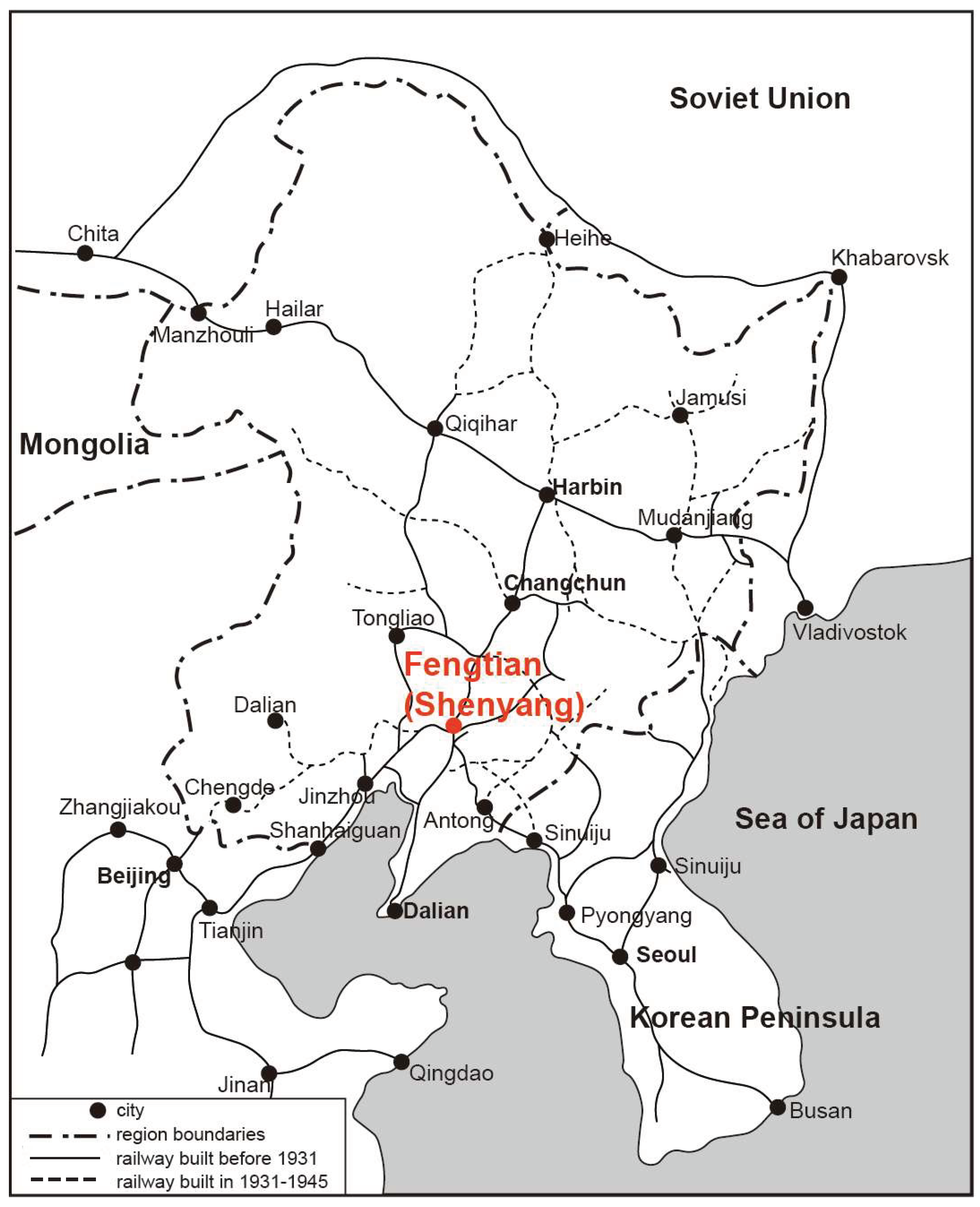
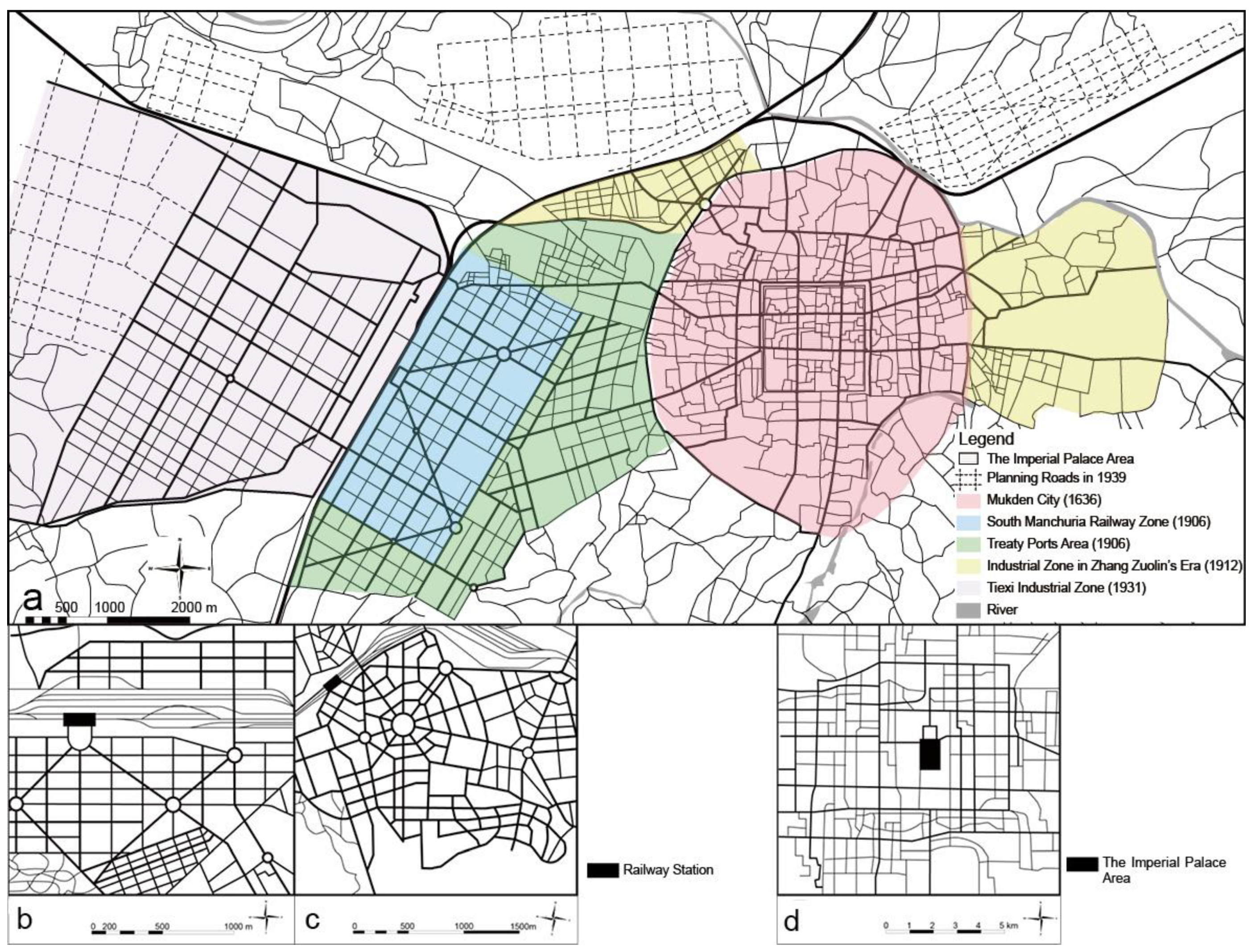
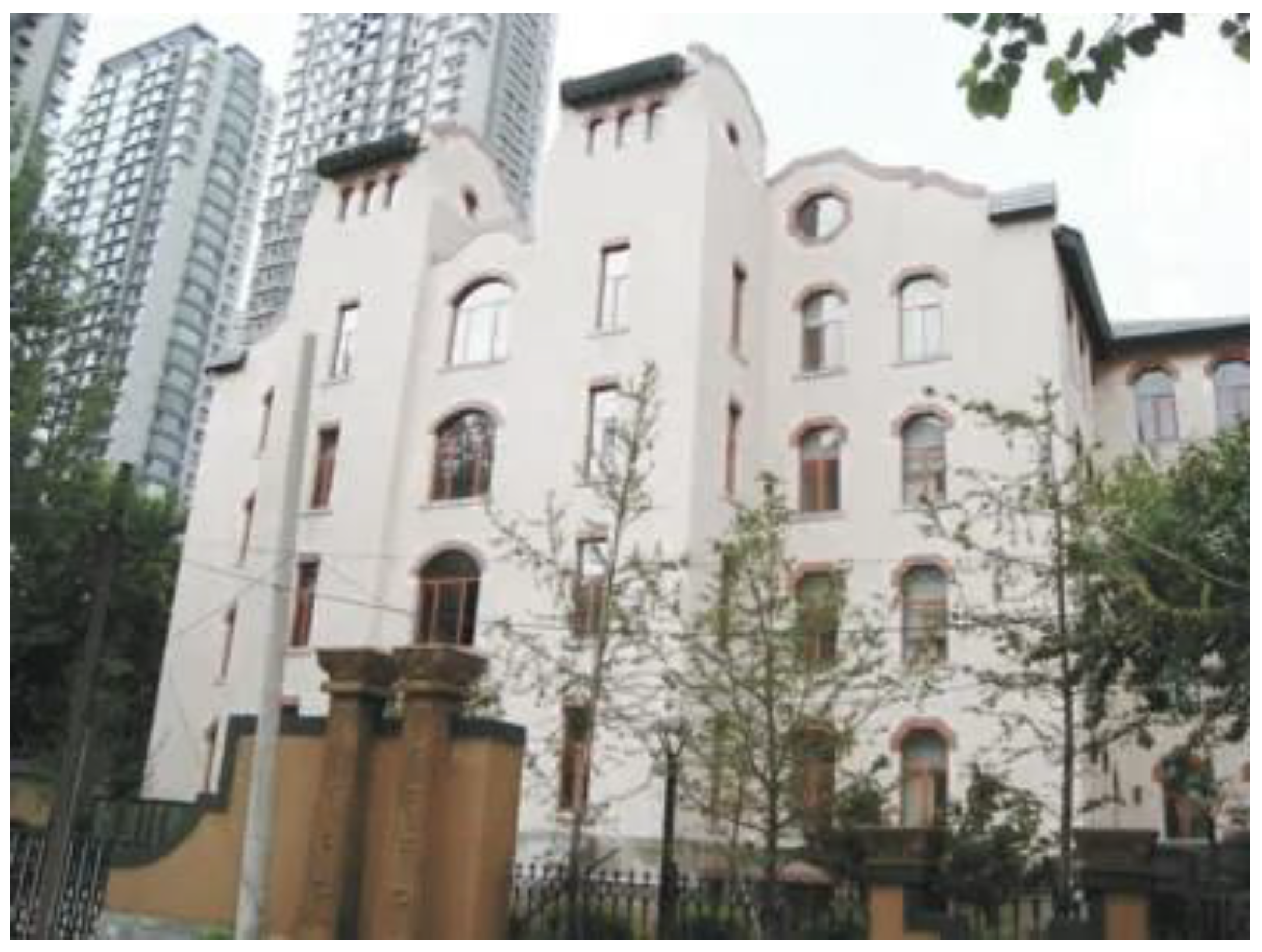
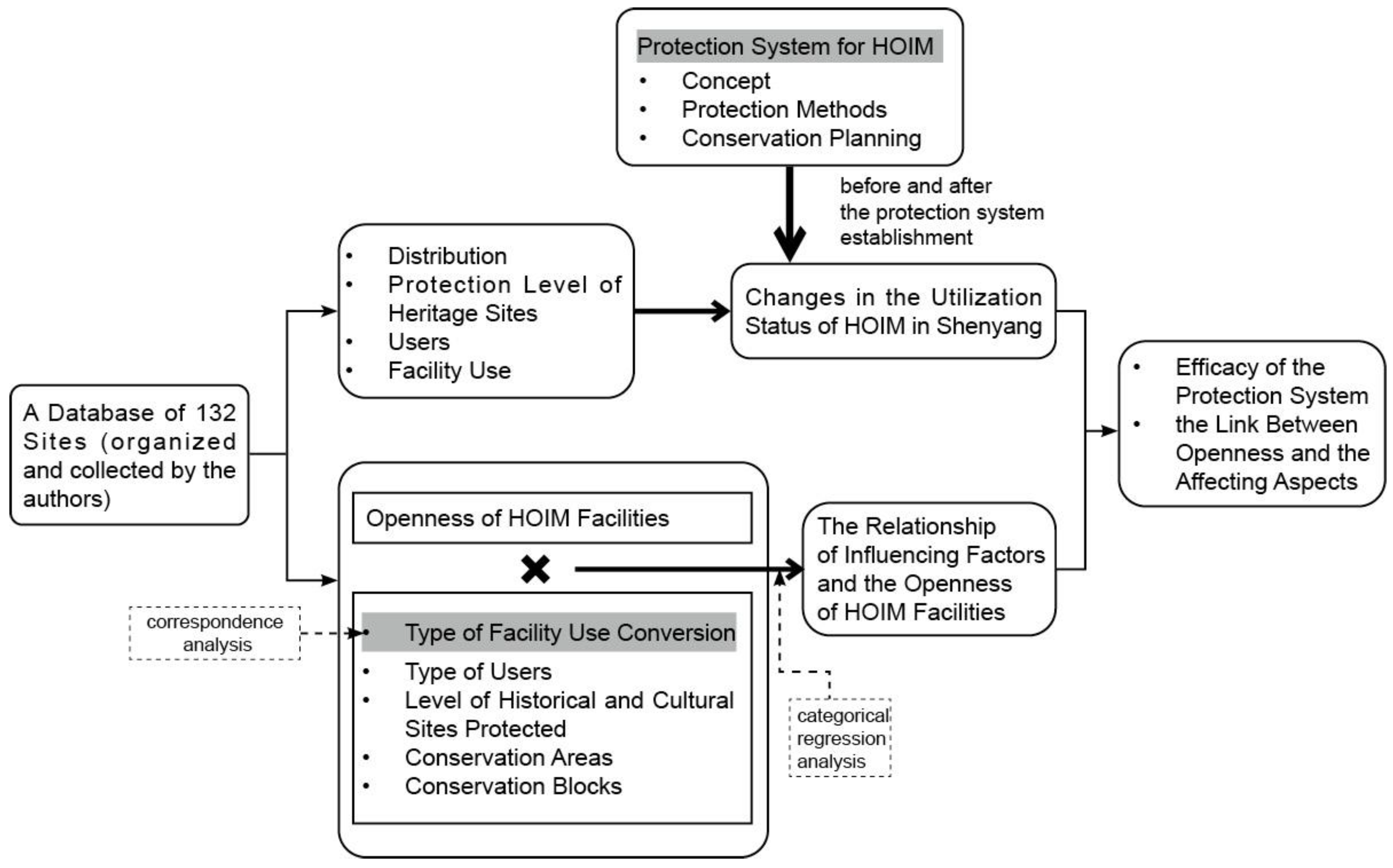
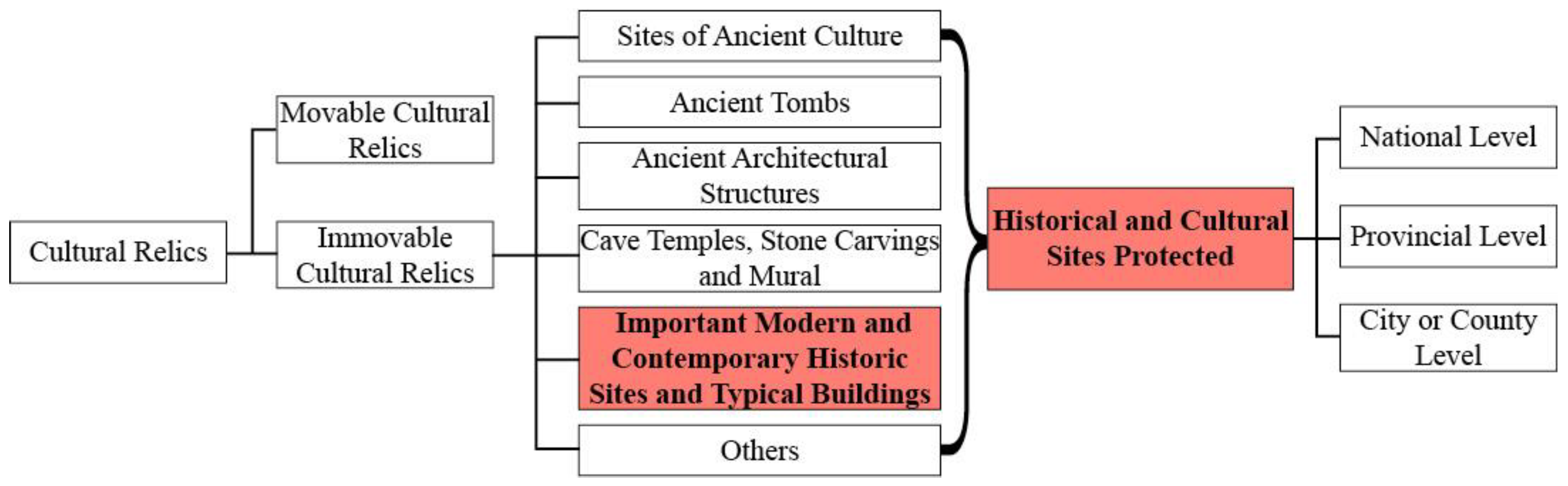
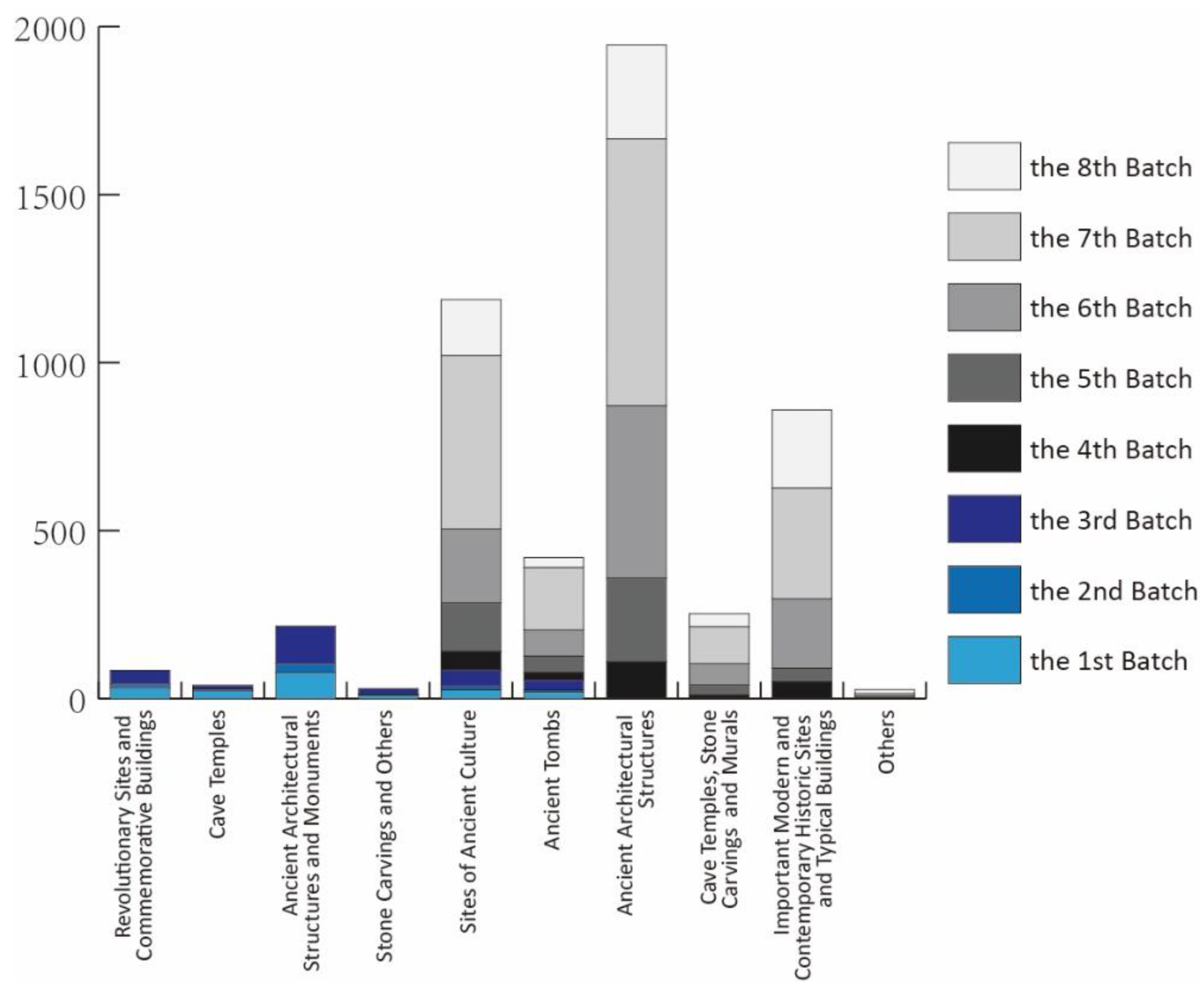
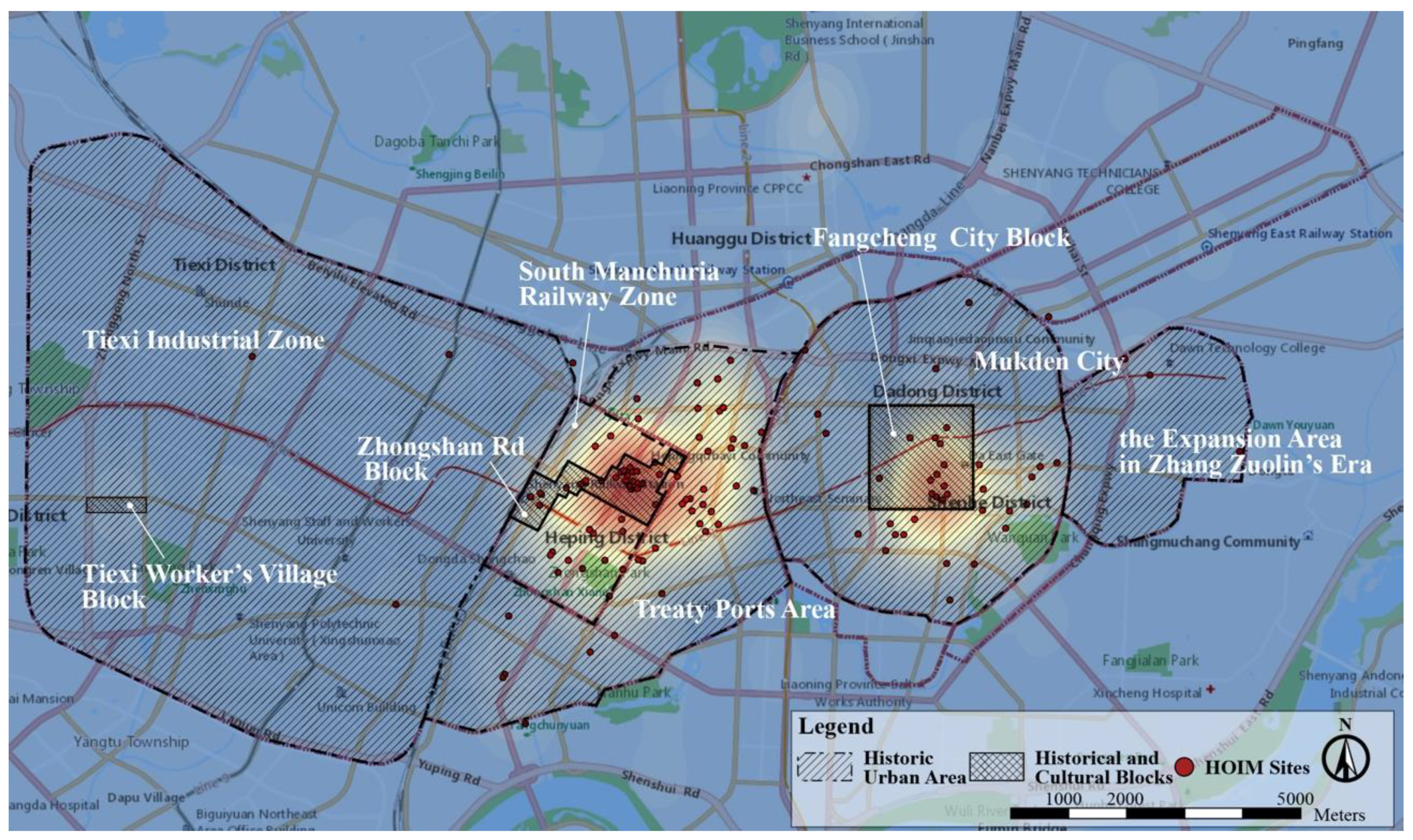
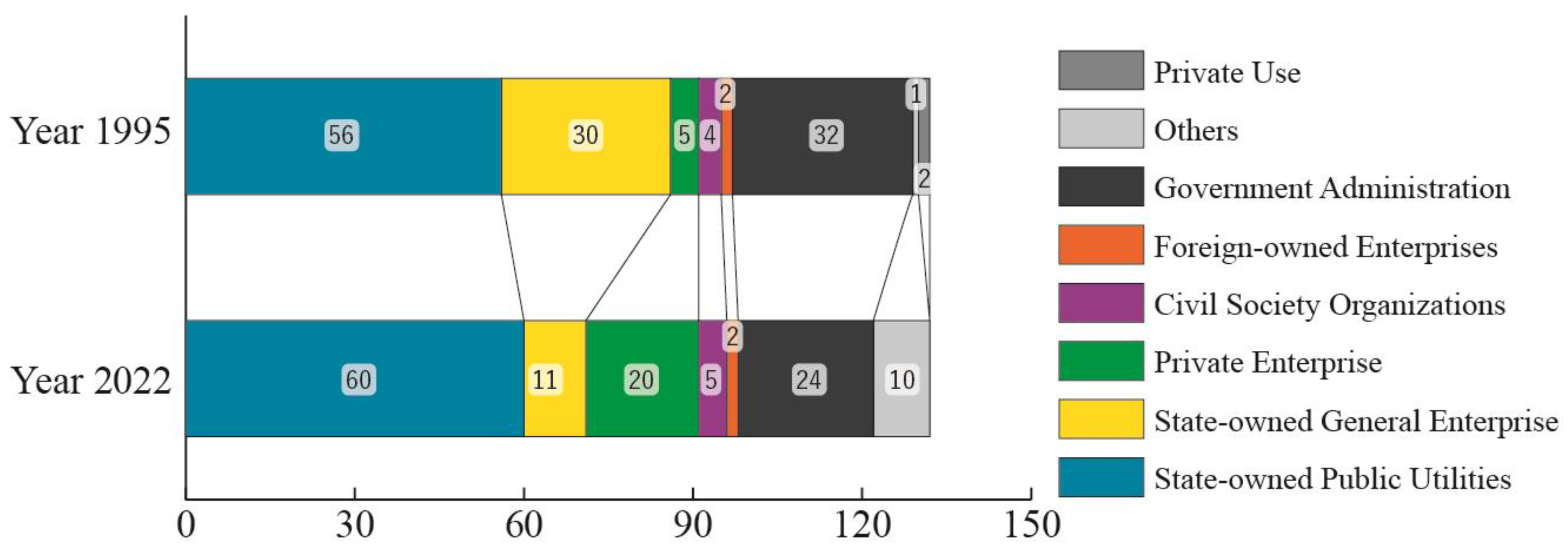
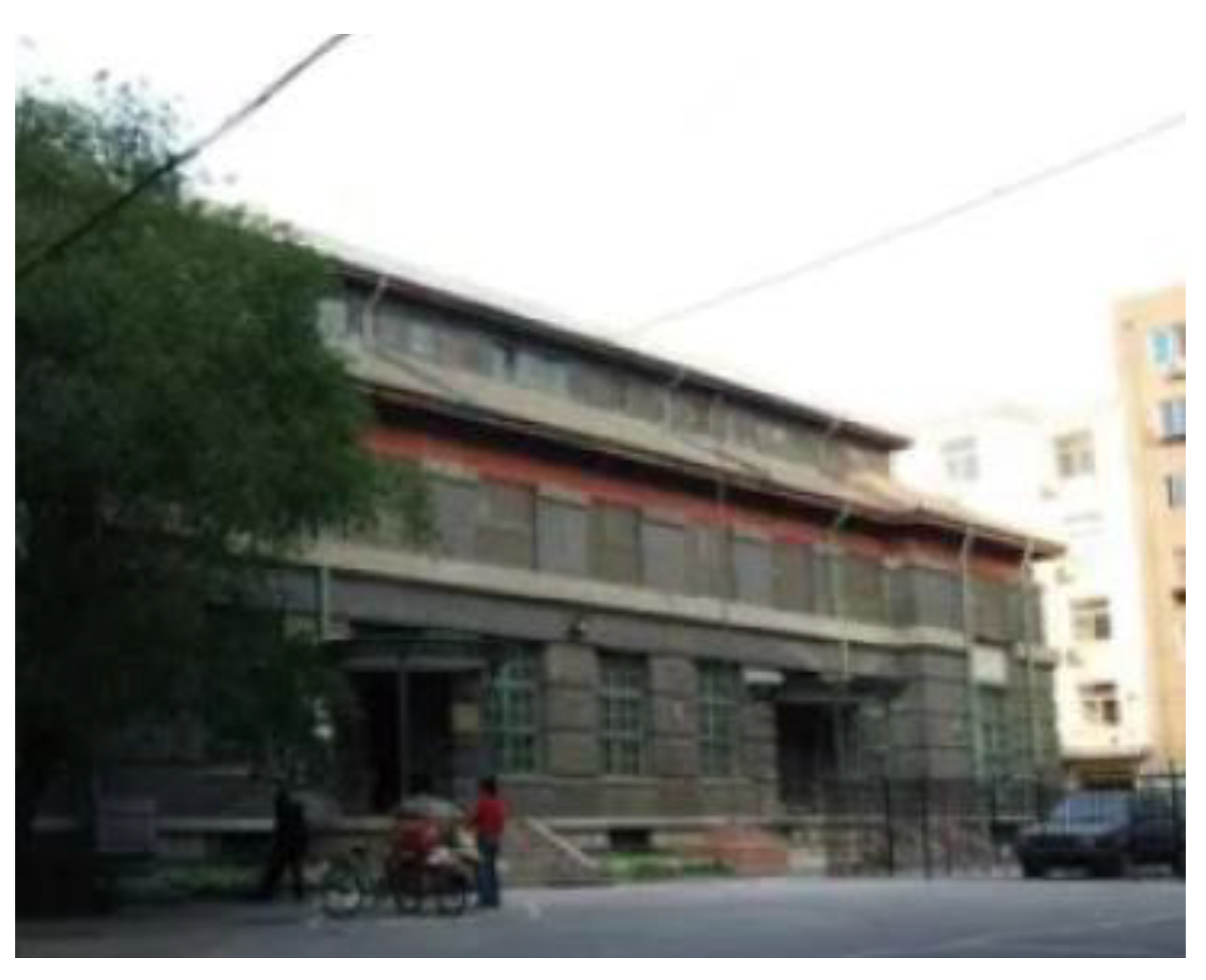
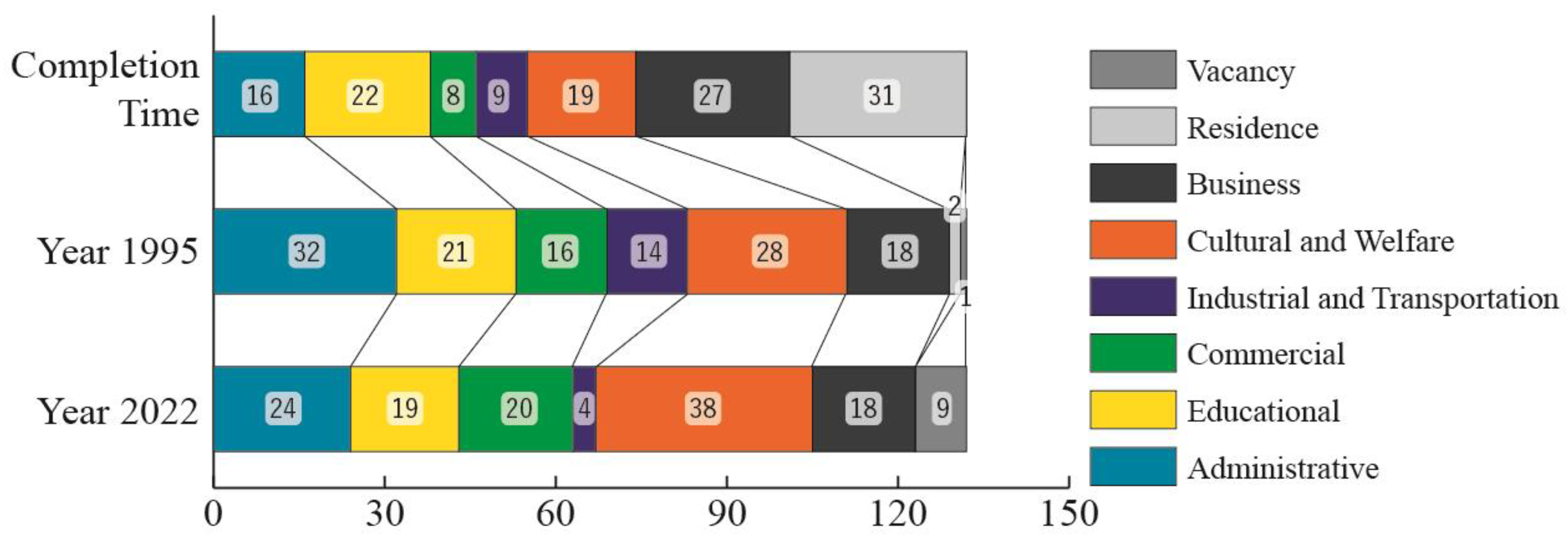
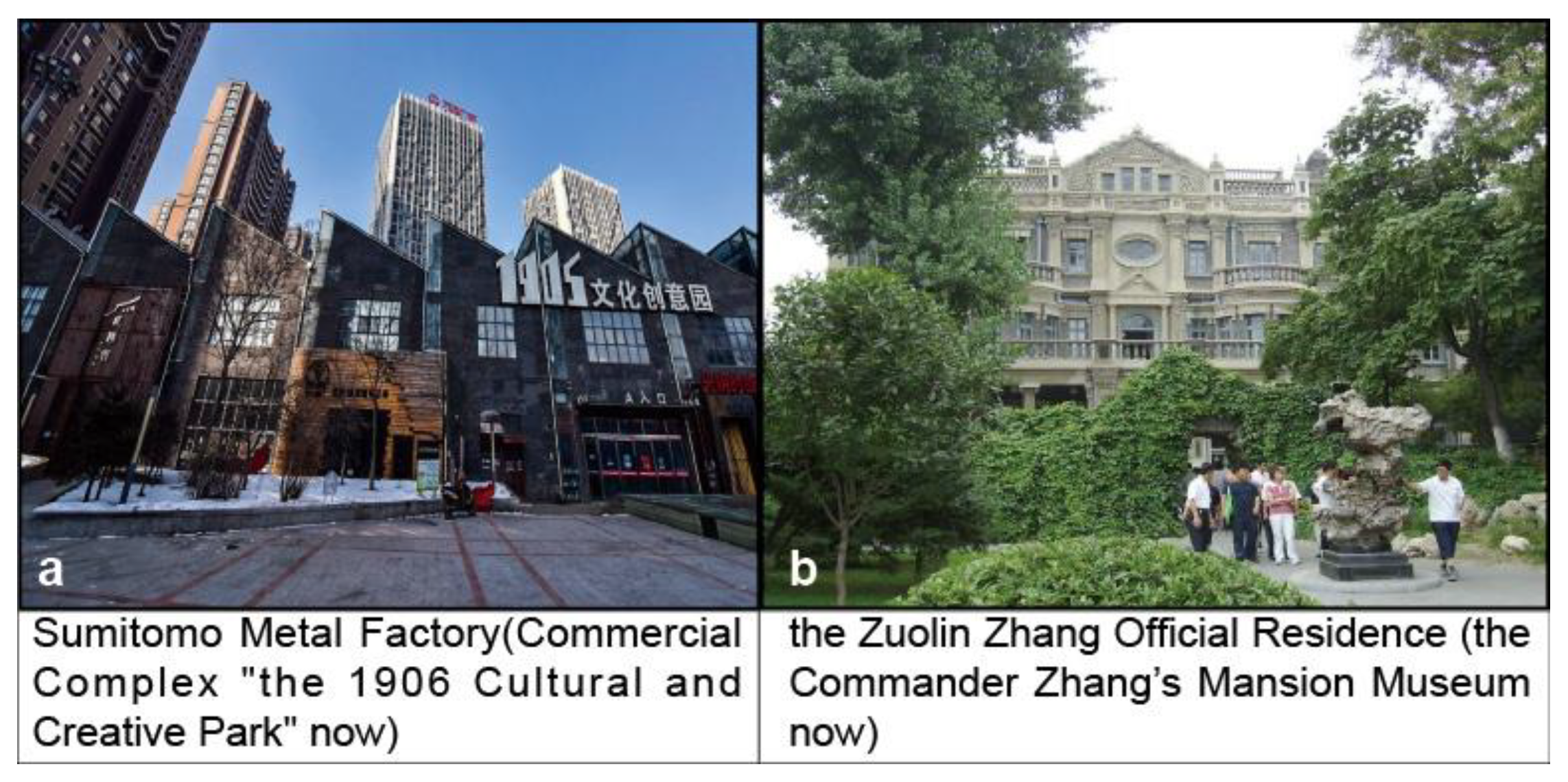
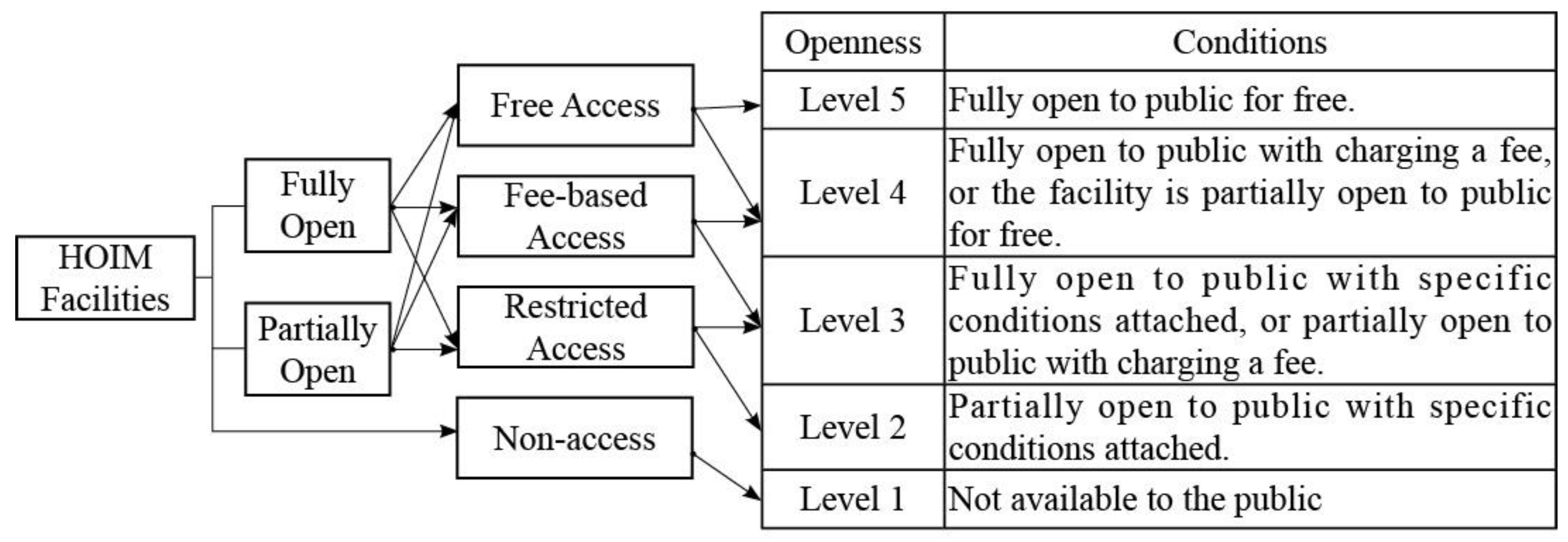
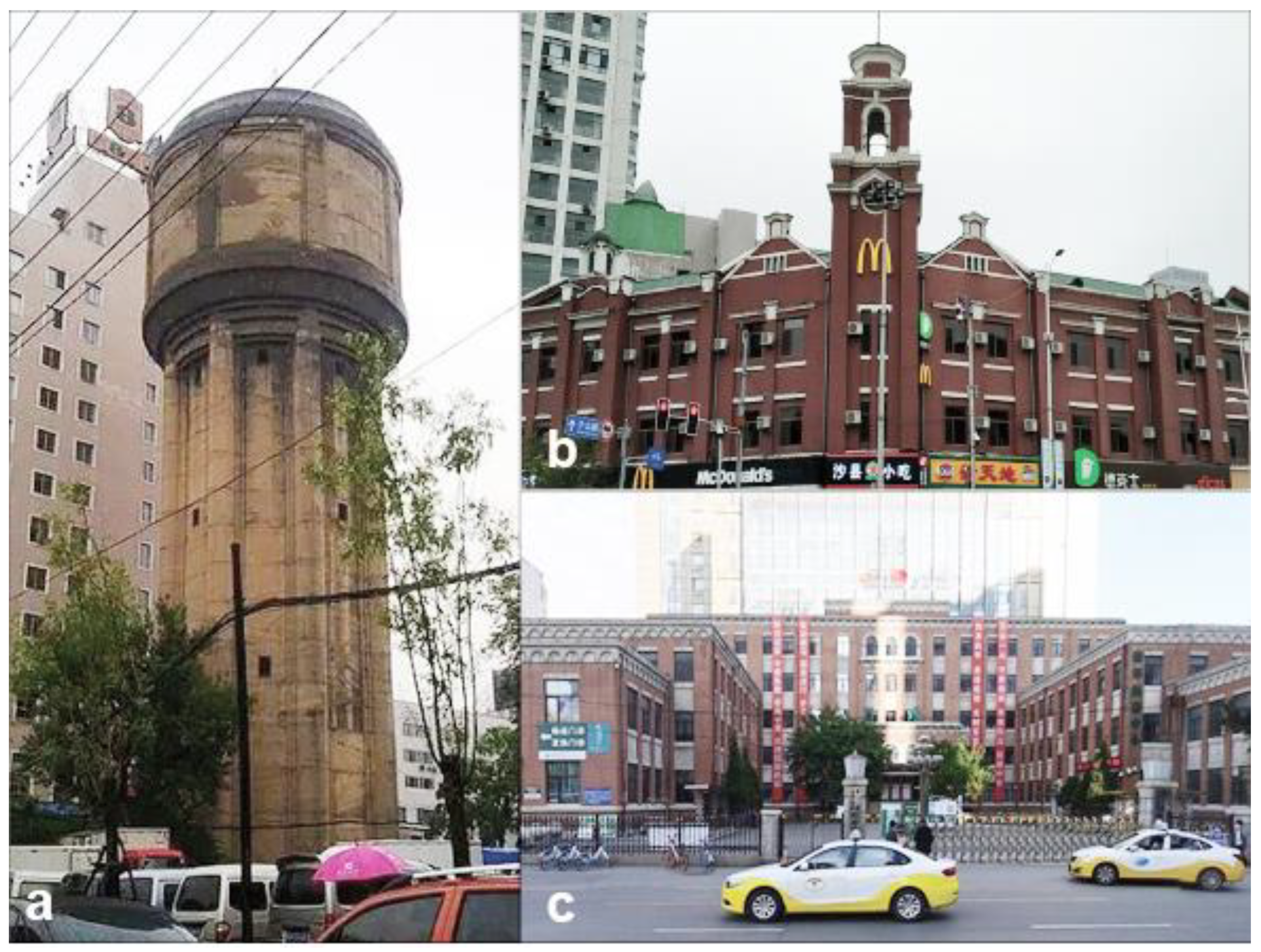
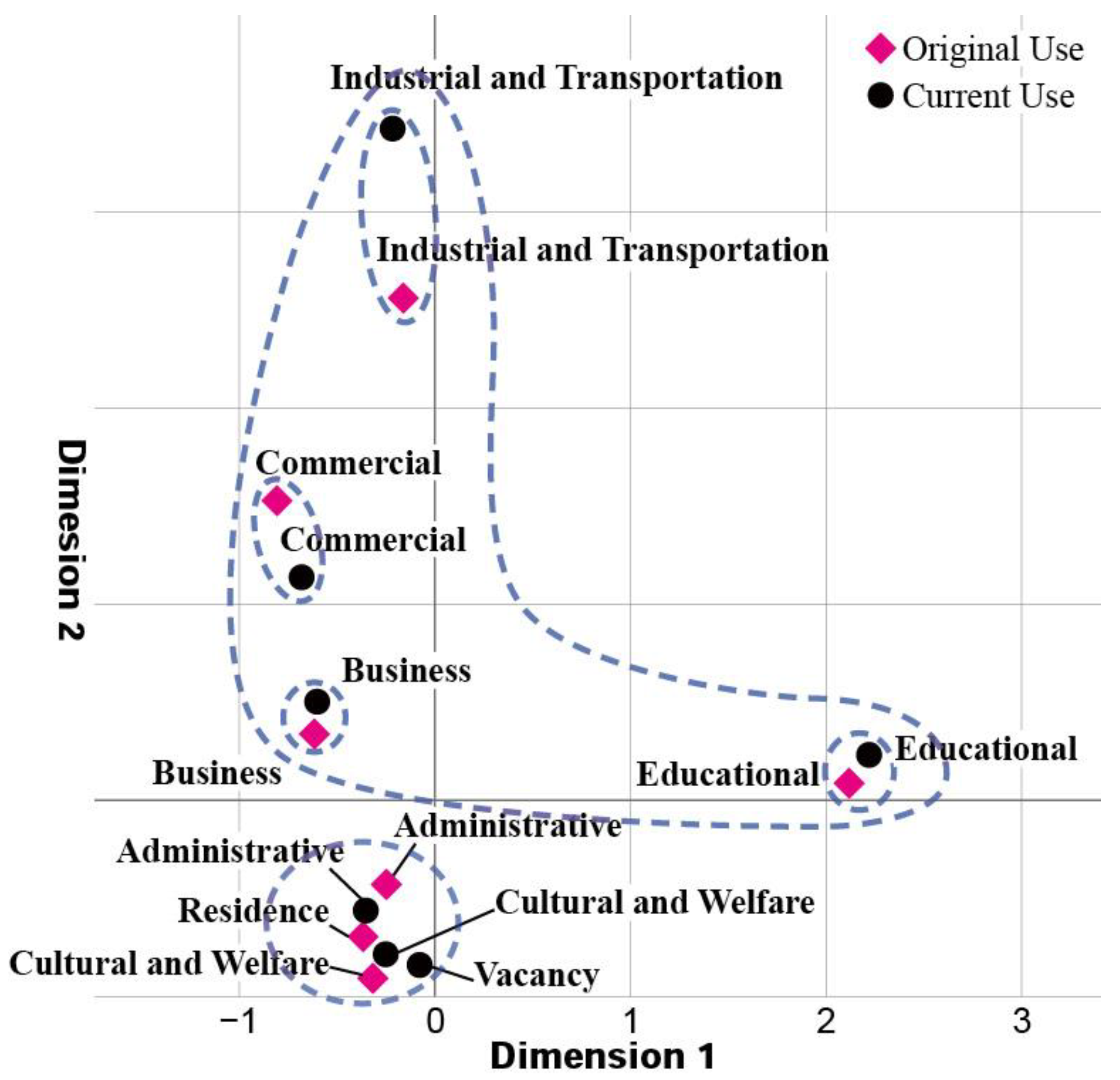
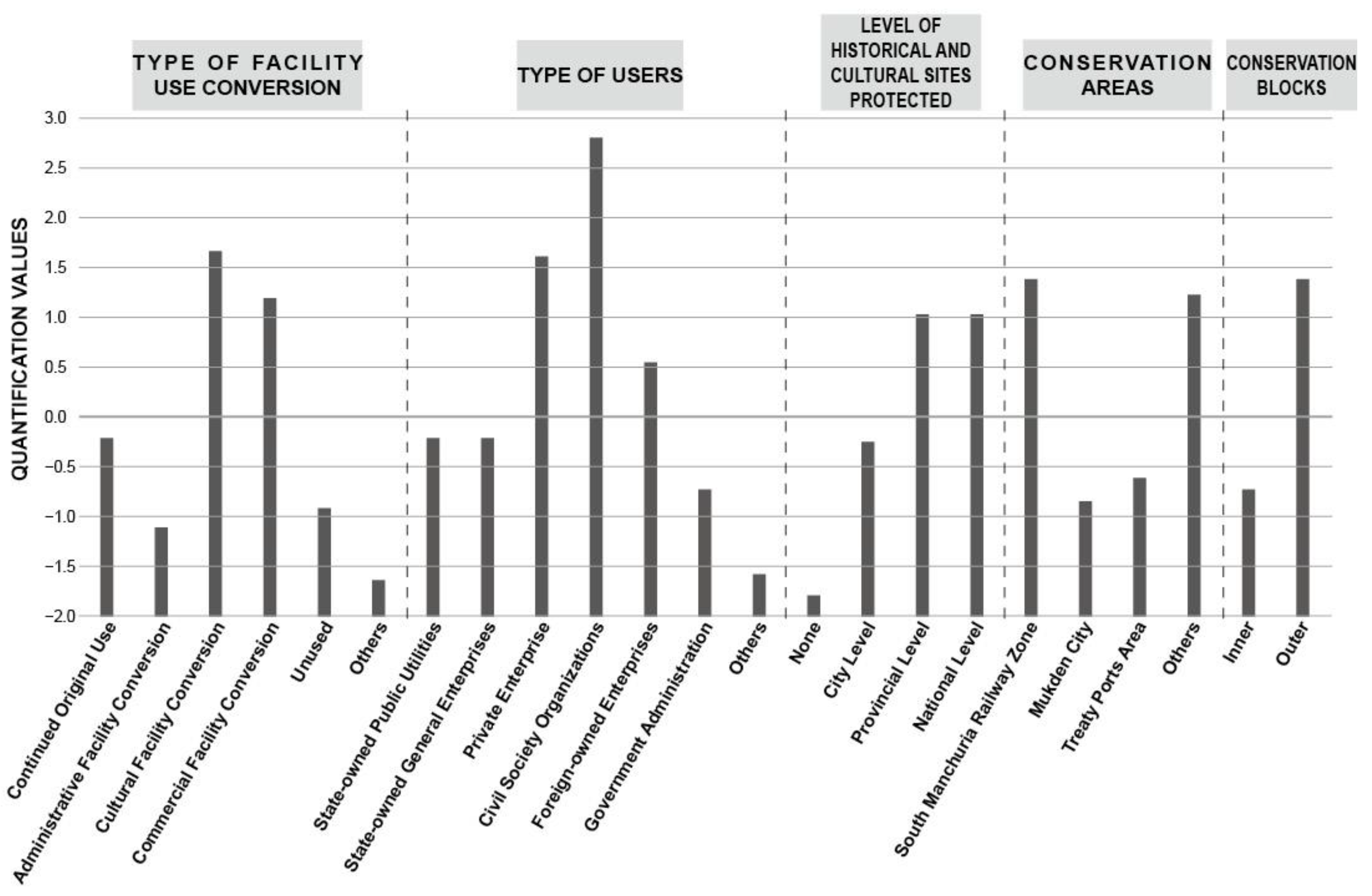

Disclaimer/Publisher’s Note: The statements, opinions and data contained in all publications are solely those of the individual author(s) and contributor(s) and not of MDPI and/or the editor(s). MDPI and/or the editor(s) disclaim responsibility for any injury to people or property resulting from any ideas, methods, instructions or products referred to in the content. |
© 2023 by the authors. Licensee MDPI, Basel, Switzerland. This article is an open access article distributed under the terms and conditions of the Creative Commons Attribution (CC BY) license (https://creativecommons.org/licenses/by/4.0/).