


Abstract
At the time of reflection on green justice, when the role of public green spaces is increasing, it is worth paying attention to vernacular greenery, especially in single-family residential areas on city outskirts which property owners arrange in front parts of plots. The paper’s aim is to show that vernacular front gardens (VFG) can act as missing public space and at the same time have the attributes of public green space, providing ecosystem services (ES). In order to confirm these assumptions, we carried out a VFG’s attributes inventory and a survey on garden designers. We identified dominating garden features and conducted a cluster analysis of the gardens based on their characteristics. The basis for building periurban streetscape in single-family housing estates is the visual inclusiveness of VFGs. They provide all the ES groups, playing representational, natural and recreational roles as well as serving as locations of edible plants production. Streets in residential sites, thanks to VFG, can be treated as real green public spaces creating a type of green area accessible not only to owners but also to pedestrian eyes. We conclude that our results can be valuable for city planning but also for the professional garden designers.
1. Introduction
1.1. The Research Background
Over some recent years, the role of urban greenery has significantly increased. Green areas are important not only due to the climate crisis but also for sanitary comfort. In the growing significance of greenery in maintaining quality of living environment in cities with persistent tendency of urban sprawl [1,2], the role of single-family housing and private gardens attached to them seems to be underestimated. Although research is known about their crucial effect on reducing psychotropic prescribing in people suffering from a spectrum of depression and mental disorders [3], private gardens are marginalised as an effective urban green space due to their exclusivity. Private plots with gardens constitute 11.5% of the area of the Warsaw agglomeration [4]. Compared to Warsaw’s public parks and squares, it is over five times more [5]. For comparison, the garden area in Stockholm is 16%, and in the UK cities 22–27% [6,7].
The importance of garden nature in the environment is undeniable. The benefits for ecosystems and biodiversity are measurable in the case of home gardens [8,9,10]. Together with adjacent urban green spaces, undeveloped and open spaces, they form green complexes important to the ecology of urban landscape [11].
There are many methods of walking comfort research, especially identifying walking environment [12,13,14]. Several microenvironmental audit tools are widely applied in international studies such as MAPS, PEDS or SPACE [15,16,17]. However, the value of private gardens in building the image of local landscape has been hardly studied [18,19]. Although the concept of using private plots as public space is also rarely referred [20,21], we can recall the idea of landscape cores [22], i.e., corridors of public spaces through which users move while perceiving landscape; these are streets with private properties in single-family housing areas. The core of streets with visible front gardens is accessible public space, and vernacular front gardens, if visible from the street, often play the role of the only green space visible to the public in vicinity. The greenery of front gardens is only visually accessible, but still can serve benefits to its users—neighbourhood dwellers and passersby.
A home garden is a very easily accessible handy greenery, providing contact with nature. Front gardens therefore fulfil the conditions of equitable access to public goods, guaranteeing the so-called “green justice” [23,24]. Thus, they may contribute to support the health of the inhabitants and reduce social inequalities [25]. Urbanisation processes also influence rural greenery’s functional and material layer. Usually undervalued as private spaces inaccessible to the wider public, home garden spaces are sometimes the only green areas in neighbourhood, especially in single-family housing areas devoid of public green space [26]. Gardens also fulfil an important function in creating a cultural landscape image in periurban neighbourhoods.
On the city outskirts, public space for social contact is limited to streets in neighborhoods, which give view access to neighbours’ gardens. Therefore, the role of private gardens as urban greenery, providing provisioning and regulating ecosystem services (ES) the same way as public greenery does, cannot be underestimated as mentioned by several authors [8,27,28,29,30].
1.2. What Is the Vernacular Front Garden (VFG)?
A garden, both in semantic and material layers, was described as a vehicle of identity of places and type of greenery which builds the image of inhabited landscape. Thanks to the tradition of using plant species and the forms of composing them, the garden was found as a relatively permanent repository of management traditions in this process [31,32], just like the vernacular structures of rural habitat. Such structures are known as a characteristic structure of home garden, including front garden—an area accompanying the function of presenting the house and possessions [33]. The list of characteristic ornamental plants and crops resulting from the specificity of the peculiar image of VFG use have been also provided [34,35].
Vernacular garden is usually defined as a home garden or part of a private plot traditionally organised (‘designed’), planted and maintained by owners’ families. However, urban greenery in residential sites can also be a carrier of vernacular tradition, having the potential to be organised by inhabitants with various vernacular attributes. They are green elements and place management traditionally applied by inhabitants, e.g., flowerbeds, ornamental greenery decorations, garden furniture, etc. Vernacular gardens are also generally found in cities [36,37,38].
In the history of human habitation, vernacular gardens and architecture have gained distinctive values: features providing provisioning, regulating and cultural ecosystem services (according to Common International Classification of Ecosystem Services—CICES 5.1 and CICES-Be [39,40]. Scientific literature lists emblematic plants and remarkable plant types (e.g., deciduous, conifers, climbers, perennials, plants in containers); “advanced” forms of composition (e.g., rhythmic plantings, row plantings, sculptures, ornamental stones, etc.); and inclusiveness of the view for pedestrians [41,42].
Vernacular gardens reflect the preferences of their owners because they independently choose plants and equipment, combining their own needs, the tradition of arranging inhabited space and contemporary trends set by designers [33,43]. Therefore, the influence of designers’ beliefs and views on vernacular gardens seems obvious, even though they do not design them personally. Furthermore, designers are aware of current needs for environment and landscape (e.g., due to climate change), and there is a growing awareness of private greenery as common infrastructure and ecosystem services provider [44,45,46].
1.3. Ecosystem Services (ES) Provided by Urban Greenery
Although many papers have covered the issue of ecosystem services of housing estates [5,47,48,49], we know little about ES provided by private gardens. The existing research is based on the role of traditional gardens as witnesses to tradition and heritage [50,51], estimating their decorative and representational function [52,53,54]. These functions fall into cultural services [40]; however, this does not complete their list.
VFG can be classified as areas with some potential to provide ecosystem services not only in the whole cultural spectrum, such as physical and intellectual interactions with landscapes; emblematic and spiritual, but also other services described by Millennium Ecosystem Assessment, Common International Classification of Ecosystem Services [39] and CICES-Be [40] such as provisioning and regulation.
Ecosystem services provided by greenery are essential because of their role in regulating local climate and preserving biodiversity similar to other kinds of greenery and producing other food [55]. It is essential, but still not the only role of such a type of greenery. Cultural ecosystem services are crucial, satisfying the needs for territorialism, helping to build place identity and attachment [49,56,57,58]. VFGs have the potential to provide them because of their traditional and familiar image and creating a sense of togetherness and being an indicator of community awareness accompanying participative democracy [59,60].
A good many authors underline the positive influence of gardens for maintaining biodiversity and quality of life, e.g., [11,61]. Research on ecosystem services in vernacular gardens where authors focus on environmental and social values of street greenery stands out [38,62]. However, compared to the abundant studies of potential in delivering ES by different vegetation types, studies of particular attributes of vernacular gardens that influence the delivery of these services are relatively uncommon.
Studies of ES served by multifamily block-of-flats residential areas, allotment gardens and community gardens potential have been widely conducted [55]. However, to our knowledge, the study of private vernacular gardens visually accessible for the public–private front gardens did not occur. By taking into account factors of importance, as for example, size of settlements [25], the values of such gardens can be strengthened through reasonable management. Well-thought-out management of urban green space can also contribute to crime prevention and facilitate safety [63]. Hence, the knowledge of the value of private facilities, which participate in the creation of public spaces in the provision of ecosystem services, can make a valuable contribution to the conscious planning of public green spaces with the participation of private spaces.
Our studies can be valuable for urban planners but also for professional garden designers. We want to show that vernacular front gardens (VFG) can act as missing public space and at the same time have the attributes of public green space, providing ecosystem services (ES), thus contributing to “green justice” in the urban space. The awareness of VGF values could be also important in stimulating and motivating homeowners to thoughtfully build VFGs in a way that contributes to creating a high-quality living environment for residents by the building’s 15 min walkable neighbourhoods [25].
1.4. Aim of the Study and Research Questions
The primary aim of our research was to determine the potential of providing ecosystem services by VFG on private properties in residential sites of terraced, semi-detached and detached houses in Warsaw. The second one was to identify the characteristics of VFGs and to include them in estimating the potential of providing ES in the single-family housing areas and to identify the attributes of VFG that are of importance in the ES delivery. We also wanted to find out if designers (as trendsetters) use design tools to provide ecosystem services in front gardens and if neighbourhood norms play a role in VFG characteristics of individual settlements. To reach the objectives described above, we formulated the following research questions:
- 1
- Do VFG create a landscape of public streets? Are they open and inclusive; do they create street landscape core?
- 2
- Which attributes of VFG providing ecosystem services according to attributes enumerated by literature [39,40] are present in VFG—chosen and preferred by their owners in their VFG development? What are attributes only incidental in VFG?
- 3
- Which ecosystem services provided by VFG are preferred according to the designers?
- 4
- Can distinctive groups of VFG be distinguished?
2. Materials and Methods
2.1. Research Procedure
To achieve our objectives, we designed the research using fieldwork on a selected group of gardens located in the outskirts of Warsaw, and a survey addressed to designers—garden designers. We have chosen Warsaw as it is a big city with typical problems of city sprawl. Dynamic development of city outskirts caused the construction of several single-family housing estates in former rural or green undeveloped areas.
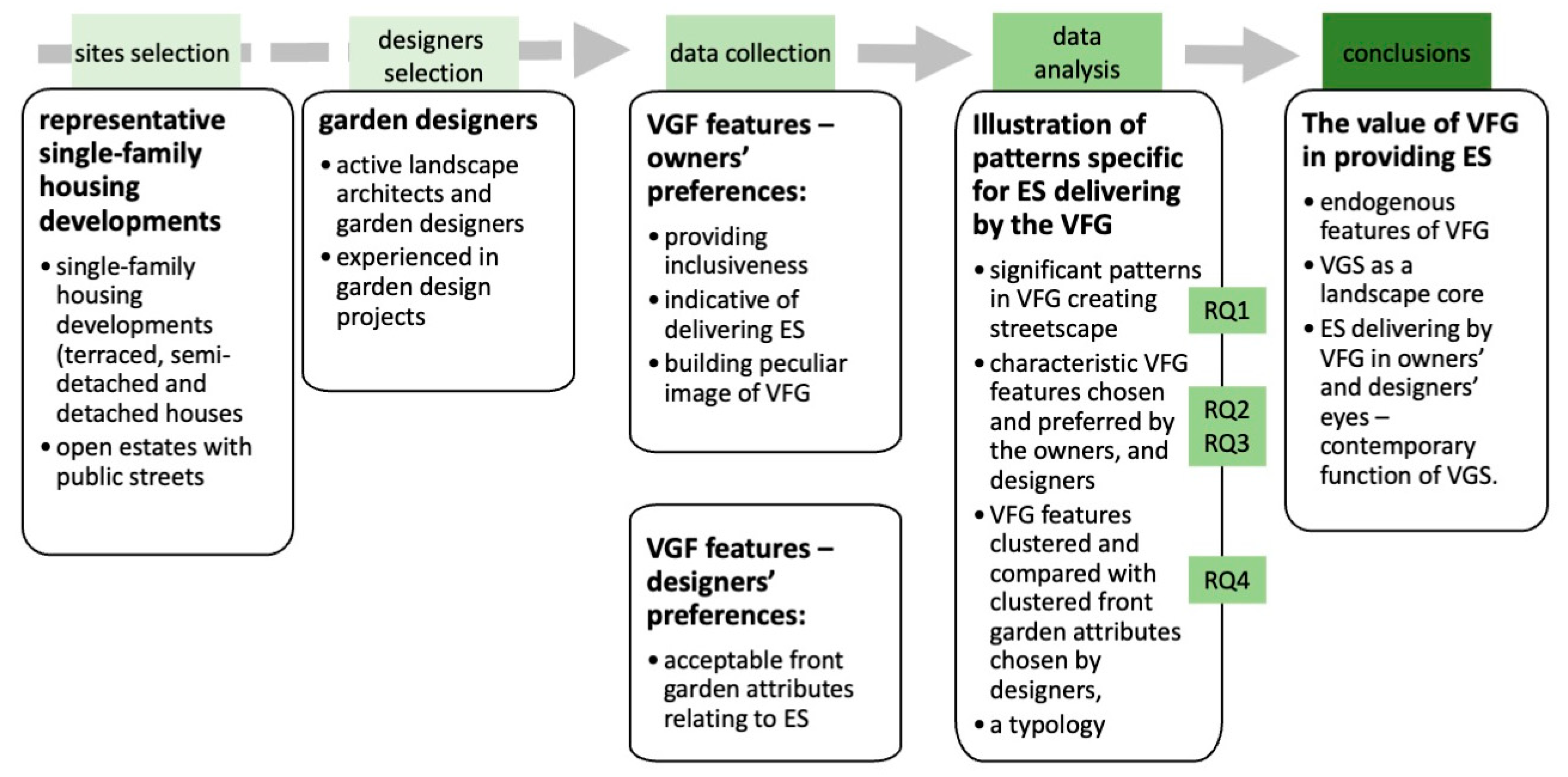
Firstly, we selected representative single-family housing developments for the outskirts of Warsaw—terraced, semi-detached or detached houses. We have picked houses located in residential areas accessible to pedestrians from the outside (unfenced complexes of settlements, without gates and barriers to the street), where the streets leading to the properties are at the same time walking routes used by residents and visitors (Section 2.2). In the second step, we collected the data from the front gardens of the properties selected before, according to a previously prepared inventory form (Section 2.3.1). Simultaneously, a group of garden designers affiliated with the Polish trade association (Association of Landscape Architecture) was surveyed, asking them to complete the survey form we had prepared (Section 2.3.2). In the third step, all the data were analysed using tabular summaries and statistical methods, which are described in detail in Section 2.4. In the end, the findings were discussed and concluded (Figure 1).
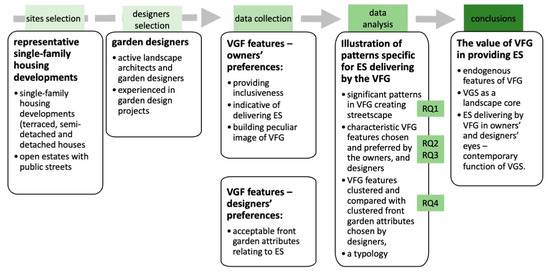
Figure 1.
Schematic representation of the research procedure.
2.2. Study Areas Selection
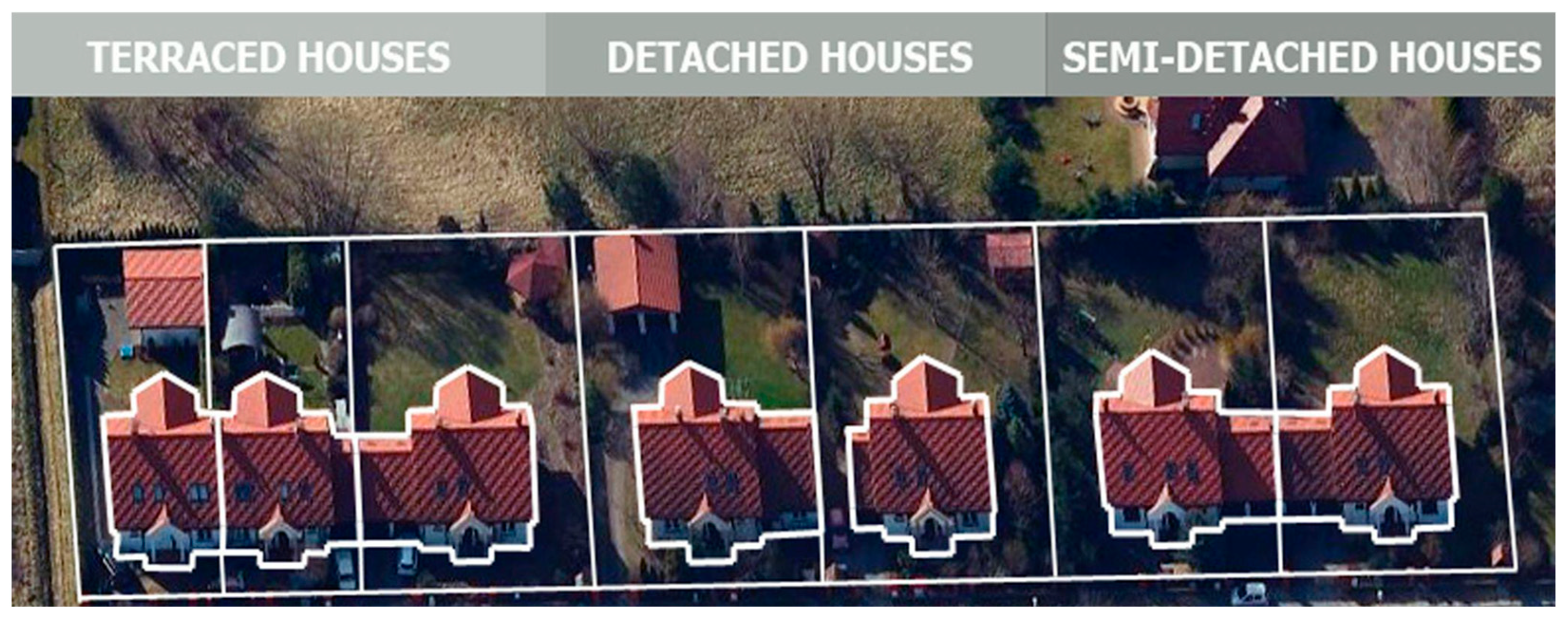
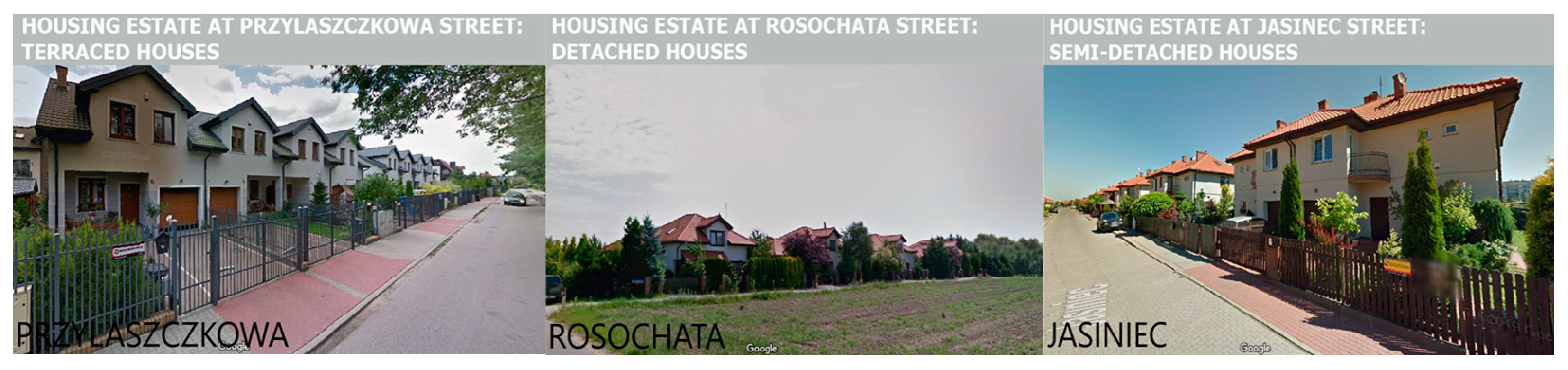
When selecting study areas, in each case, the research subject was a VFG accompanying a private detached, semi-detached or terraced house in its front part (Figure 2 and Figure 3).
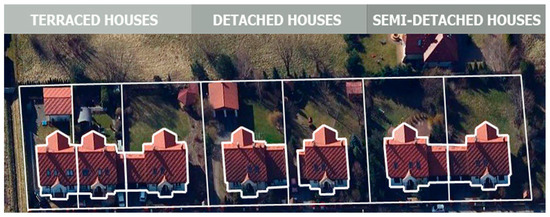
Figure 2.
Examples of the researched plots, bird’s eye view: left—terraced houses, middle—detached houses, right—semi-detached house.
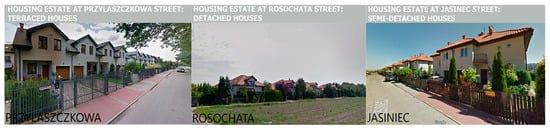
Figure 3.
Examples of the researched plots, normal view: left—terraced houses, middle—detached houses, right—semi-detached house.
Due to the heterogeneity of private gardens in Warsaw’s urban peripheries, the selection of study areas objects was not based only on the presence of a front garden. The following selection criteria were chosen:
- Areas within the administrative boundaries of Warsaw, but on the outskirts of the city, or in loosely built-up areas inside the city, always of a suburban character (single-family housing);
- Stylistically homogeneous buildings (a housing estate)—in the form of terraced houses, semi-detached and detached houses;
- The minimum number of houses (and gardens) in the residential housing estate: three;
- Due to the availability of the estate for passers-by due to the ecosystem services provided—gated communities were not tested;
- Due to the surveyed choices of garden users, only single-family housing was taken into account;
- According to the assessment of the plants age, available data and the assessment of the estate general appearance (of the estate), objects created during the last 20–25 years were taken into account.
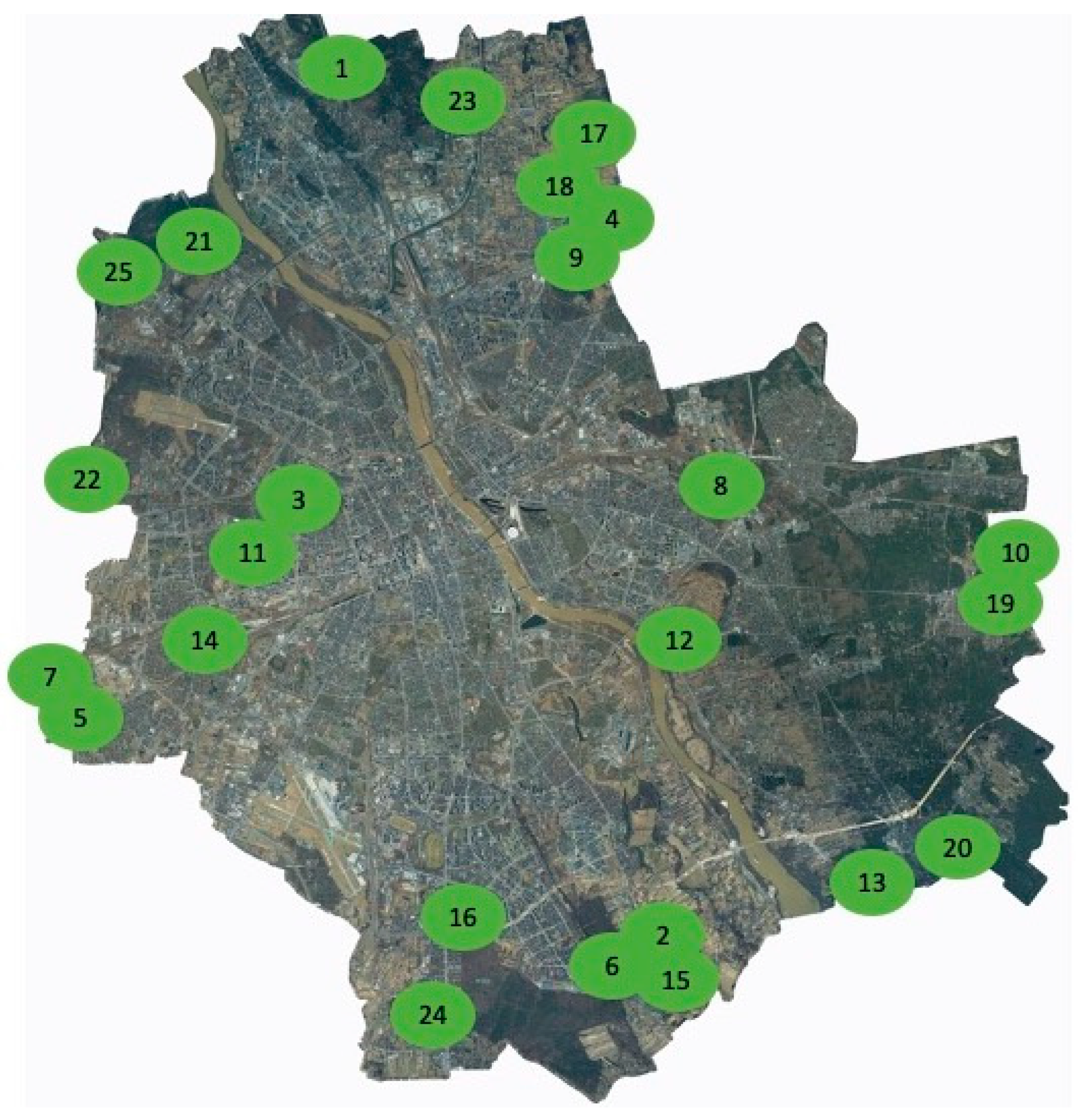
Finally, 25 housing estates were selected. Housing types: terraced (248 houses in total, this type is present in 17 housing estates), semi-detached (130 houses in total, this type is present in 12 housing estates), detached (7 houses in total, this type is present in 3 housing estates). Number of developments with only terraced housing: 12, semi-detached only: 7, detached only: 1, mixed (occurrence of terraced housing and semi-detached or terraced, semi-detached and detached in one settlement): 5. The area of the front gardens analysed ranges from 25 to 230 m2. In total, we examined n = 385 gardens with a total area of approximately 29,520 m2 (Figure 4).
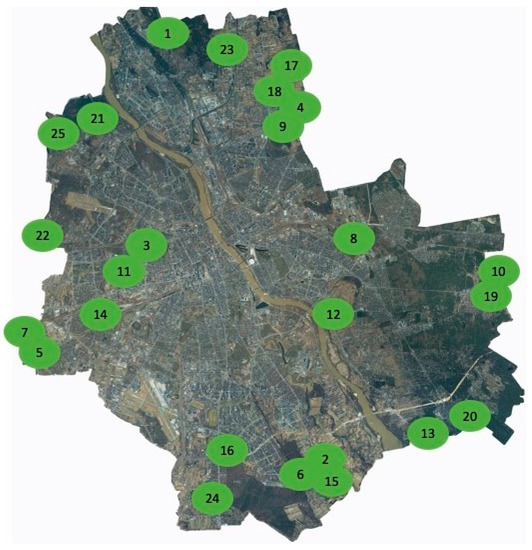
Figure 4.
Researched estates on the Warsaw map. Streets: 1—Brzezińska, 2—Dobrodzieja, 3—Dobrogniewa, 4—Kartograficzna/Geodezyjna, 5—Królów Polskich, 6—Korbońskiego, 7—Henryka Brodatego/Henryka II Pobożnego, 8—Oraczy, 9—Jasiniec, 10—Al. Piłsudskiego (Wesoła), 11—Przanowskiego, 12—Poprawna, 13—Przylaszczkowa, 14—Redaktorska, 15—Rosochata, 16—Roentgena, 17—Słonecznego Poranka, 18—Zaułek, 19—Mazowiecka (Wesoła), 20—Narcyzowa, 21—Jamki, 22—Wójcickiego, 23—Stuletnia, 24—Głęboka, 25—Widokowa.
2.3. Methods of Data Collection
2.3.1. Identification of VFG Attributes Delivering ES—Gardens’ Features Inventory
To identify VFG features indicative of delivering ES, the features of gardens related to a given group were classified following CICES-Be [40], considering the features providing provisioning, regulating and cultural ecosystem services (Table 1).

Table 1.
Gardens inventory questionnaire—groups and their description (results widely referred in Section 3.3).
In addition, the occurrence of the following elements contributing a peculiar image of VFG was inventoried:
- Inclusiveness of the view: the presence of flowerbeds in front of the fence, no fence, openwork fence, full fence; fence covered by hedge or creeper; good view from the street to the garden, and moderate view.
- Emblematic plants [34,43,64]: rose, lilac, elderberry, apple, linden, oak, and spruce or fir planted as a Christmas tree.
- The most frequently recurring species of plants;
- Plant types: deciduous trees, conifers, deciduous shrubs, coniferous shrubs, climbers, perennials, plants in containers, and turf. In this place we also noted if there were no plants at all;
- “Advanced” forms of garden composition: sheared forms, grafted forms, rhythmic plantings, row plantings, perennial–seasonal flower beds, decorative stones, and sculptures.
The inventory was made based on Google Street View pictures, assuming that it pretended to be the views of the streetscape perceived by pedestrians. This method allows recognizing the nature of planting and species of plants visible from the street and has been used on numerous occasions [65,66,67] to study public space through eyes of users. To substantiate and verify the results, a site visit was carried out in each housing estate and the development of each plot was additionally assessed using oblique photographs in the Warszawa Ukośna application (https://ukosne.um.warszawa.pl/, accessed on 1 August 2022). The plant inventory took into account the size, colour, texture and availability of nursery stock at the time the estate was built. Plants and objects obscured by fences and not visible from the street were not inventoried.
2.3.2. Identification of Designers’ Preferences—A Survey
The questionnaire for designers aimed to find out to what extent they were prepared to use design tools to provide ecosystem services through a publicised part of the house garden (front garden). A study was carried out on n = 47 designers, professional home garden designers associated with the Polish Landscape Architecture Association (SAK). We asked them about acceptable front garden attributes relating to ES (Table 2). The ES attributes used in the literature are known by designers, so we decided to ask “not explicitly”, using designed forms rather than typical ES descriptions.
Table 2.
Designers questionnaire—groups and their descriptions.
The survey was conducted using an anonymous form with the following questions:
- If according to the respondent the following items can be accepted in front gardens: bird feeder, pollinator house, composter, rainwater barrel, small greenhouse, drainage ditch, erratic boulder, sculpture, shrine, figurines of animals or dwarfs, used items repeatedly (bottles, tires, containers), items evoking sentiment, memories—souvenirs (old plough, ladder waggon, or waggon wheel). Answers had to be given on a Likert scale (−2 not at all, −1 rather not, 0—I have no opinion, 1—rather yes, 2—of course, yes!) [68].
- In addition, a question about age, gender, education and professional experience was asked.
2.4. Methods of Data Analysis
To illustrate the openness of front gardens, their transparency and inclusiveness, creating streetscape and landscape core [research question 1], we calculated the percentage share of plots with a given characteristic in the total plots researched. We did the same calculations in order to study characteristic features and ecosystem services chosen and preferred by the owners [research question 2]. The results were visualised using Microsoft Excel (version 16.56) diagrams.
As statistical analyses of the designers’ preferences [research question 3], we calculated the percentage share of respective characteristics for each rating scale in the total of questionnaires. We also calculated the median values (50th percentiles), 25th percentiles and 75th percentiles. A Kruskal–Wallis test was used in order to check if significant differences between the medians of the characteristics exist. Statistical analyses were carried out using PAST v. 4.03 [69].
We conducted a hierarchical cluster analysis (using PAST v. 4.03 [69] as well) in order to check for distinctive groups of VFG [research question 4]. The cluster analyses was carried out on the base of the first step results (identification of VFG attributes delivering ES—gardens’ features (see Section 2.3.1)). The VFG were grouped using Euclidian distance as distance measure and agglomeration according to Ward. The strength of the resulting nodes was tested by bootstrapping analysis (499 resamplings). Bootstrap proportions (percentage of replicates where the node is still supported) of ≥70% correspond to a probability of ≥95% that the respective clade is correct [70]. To better understand differences in VFG image, the major characteristics were described for the identified clusters. Characteristics present in at least 30% or 50% of the gardens belonging to the respective clusters were used to define dominant (30%) or very dominant (50%) features which characterise the different types distinguished by cluster analysis.
3. Results
3.1. VFG as a Part of Streetscape—Inclusiveness of VFG
A vast majority of the plots were fenced (Table S1). Only 2.5% had no physical fence, and observation allowed the claim that these were unoccupied properties. Although the garden’s interior was only moderately visible in up to 66% of the VFGs surveyed, in most cases, the fence allowed visual penetration of the front garden. Trees and higher (than the fence) shrubs or even their tops were clearly visible above fences and were inventoried. Sometimes, they were additionally provided with a hedge (22%) or climber (7.5%) to screen the interior view further.
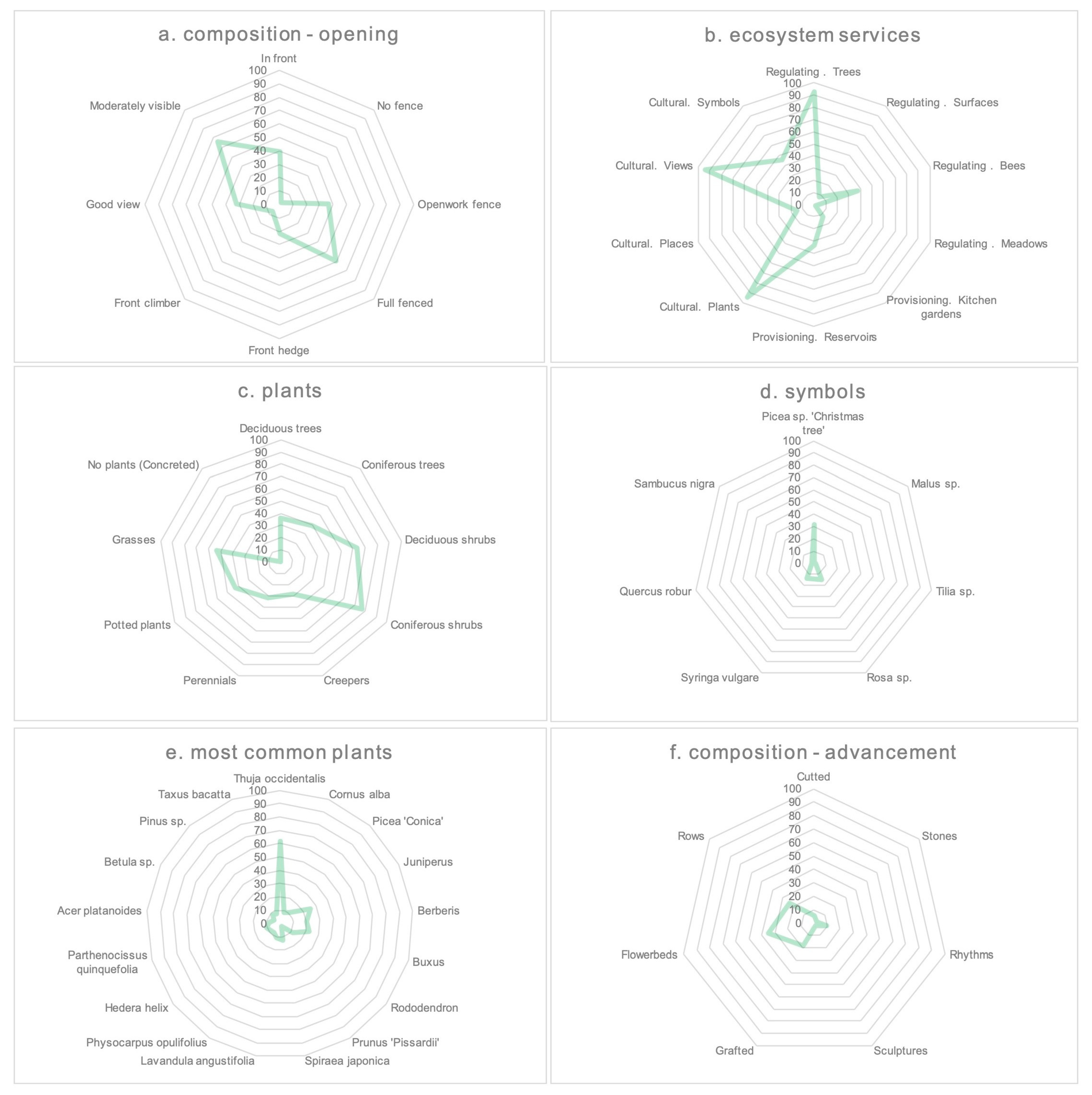
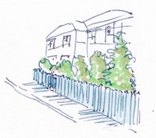
Even in the case of a solid fence, garden owners arranged the space “in front” of their fence with an additional row of colourful shrubs or flowerbeds. We called it the pre-front garden. As many as 40% of the gardens used this option (Figure 5a).
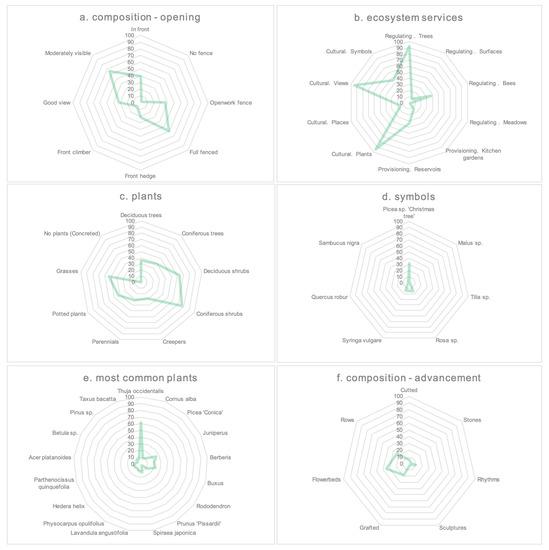
Figure 5.
Distribution of attributes by category: (a) VFG composition—opening; (b) ecosystem services observed in VFG; (c) plants (groups); (d) symbols (emblematic plants); (e) the most common species (f) composition—advancement.
3.2. Ecosystem Services in VFG
3.2.1. Attributes of ES in VFG—Owners’ Preferences
Exploring the ES attributes present in the VFG (means preferred by owners), we found that the primary medium for ES evidence are different types of plants. A service that is described as “Regulating. Trees” was observed in 93% of the VFGs. The remaining 7% were VFGs at uninhabited plots (in all inhabited properties, the gardens provided this service). We were able to correlate this attribute with the “Cultural” services presented by the attribute “Plants”, which we observed in 94% of the VFGs, and with green “Views” (from windows) (94%). Another quantitatively advanced attribute representing “Regulating” ES was “Bees” (37%), also observed due to plants attracting them. Other attributes in the “Regulating” ES were rarely observed: “Surfaces” (7.5%) and “Meadows” (1.6%) represented by flowering meadows and natural biodiverse turfs. Among the “Cultural” ES, there is also the attribute “Symbols”, which was recorded in 45% of plots. In the group of “Provisioning” ES the “Reservoirs” (34%) dominated (Figure 5b).
Regarding “Plants” coniferous (76%) and deciduous shrubs (62%) are the most common plants chosen by owners in VFGs. The next most abundant attribute is “Grasses” (50%), then we can enumerate coniferous (39%) and deciduous trees (35%). Seasonal plants in pots, perennials and climbers are in the range of 30–40% (Figure 5c).
Looking for “Emblematic” plants, “Christmas trees” (spruces and firs) and rose and lilac were found in larger quantities (31%, 13% and 14%, respectively) (Figure 5d). Considering the most common plants, there were a number of recurring genera and species: thuja (Thuja sp.)—occurring in 61% of VFG., Junipers (Juniperus sp.), barberries (Berberis sp.), and boxwoods (Buxus sempervirens)—only over 20%. There were also common to find “Conica” spruce (Picea glauca ‘Conica’), “Pissardii” plum (Prunus cerasifera “Pissardii”), Japanese spiraea (Spiraea japonica) in their different varieties; lavender (Lavandula angustifolia), ivy (Hedera helix), Virginia creeper (Parhenocissus quinquefolia, P. vitacea, P. tricuspidata), maple (Acer sp.), birch (Betula verrucosa, B. papyrifera), yew (Taxus baccata), pine (Pinus sp.) in different varieties and rhododendron (Rhododendron sp.) (Figure 5e).
Purposeful compositional progression was found less frequently in the VFG. The most common was to enclose plants in a delineated flowerbed (35%). Another observed compositional treatment was the row arrangement of plants. It was repeated in 24% of VFG, and in this group, rhythmic repetitions were observed in 10% of the plots. Next, regularity was observed in grafted forms (18%). Non-plant ornamental forms appeared sporadically—stones in nine gardens (2.33%), sculptures in six gardens (1.6%) (Figure 5f).
3.2.2. Ecosystem Services in VFG—Designers’ Preferences
Among the regulating ES, “bird feeders” received the highest ratings (23% and 49% positive—“yes”, “of course yes” answers) (Table S2). Designers’ preferences for “insect houses” were similarly distributed (30% and 34%). In contrast, “drainage ditch” are less acceptable than others among the regulating ES (28% and 17%).
Another group of ES, provisioning, compiled in percentages of ratings shows that designers completely disapprove of utilitarian elements such as a “composter” or a “small greenhouse” in a VFG (15% and 6%, and 21% and 17%, respectively). The only acceptable ones from provisioning ES are “rainwater barrel” (30%, 28%).
Further, if we follow the cultural ES we can claim that the designers rather unanimously consider the “boulders” in the front garden to be the correct form (40%, 32%); the highest score was given to “sculpture” (28%, 53%). The others have not been recognised by designers (values above 0, but only to a low degree): “figures”(15%, 13%), “reusing”materials (13%, 9%) and “sentimental rustic decors” (Table 3).
Table 3.
Summary of VFG attributes evaluated by designers: Percentage shares (%) of each rating scale for each attribute (bold—highest percentage share, italic—lowest percentage share), 75th percentiles, medians and 25th percentiles.
The percentage shares of ratings were affirmed by median values, 75th percentiles and 25th percentiles (Table 3). The Kruskal–Wallis test revealed statistically significant differences between the medians of the characteristics (p < 0.001).
3.3. Groups of VFG Distinguished Based on Their Features
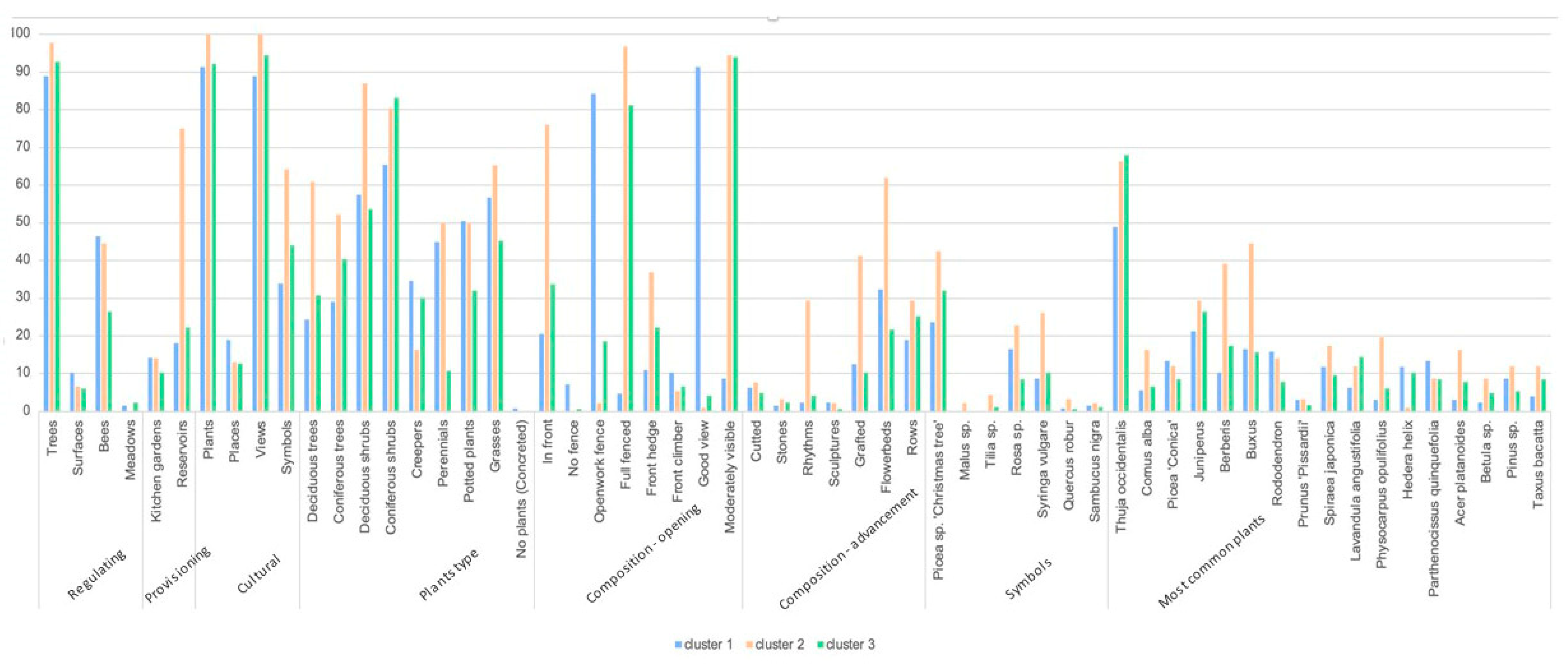
The hierarchical cluster analysis resulted in three main clusters. The first cluster, to which belong 127 VFG, is characterised by a very high percentage of gardens with “openwork fences” and “good view” (Figure 6). Bootstrapping confirmed a very strong separation of this cluster from the second and the third cluster (bootstrap proportion = 100), but the strength of the node regarding the latter ones is very weak (bootstrap proportion = 0). The second cluster consists of 92 VFG. It is more diversified at the composition–advancement level. With respect to composition, it is similar to the third cluster. The second cluster is distinguished by a high percentage of VFG with water reservoirs (provisioning service) and symbols (cultural service) and also a greater share of deciduous trees and shrubs. Regarding the composition-opening category, VFG with “in front”, “full fenced” and “moderately visible” have a high percentage share. VFG at the Composition–advancement level have more often than the other clusters “rhythms”, “grafted”, “flowerbeds” and also slightly more “symbols” (Figure 6). The third cluster consists of 166 VFG. As the second cluster, it is characterised by a very high percentage share of VFG with “full fenced” and “moderately visible” in the composition-opening category (Figure 6). The characteristics of VFGs presented collect the features that build their image. The dominant and very dominant characteristics of the involved gardens define the inclusivity and composition of the VFG in the three clusters as “Open”, “Closed but friendly” and “Closed”, respectively (Table 4).
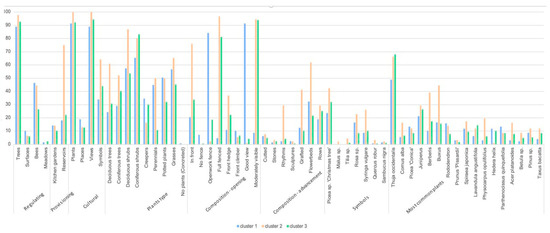
Figure 6.
Percentage share of attributes by category for the VFGs in the clusters identified by hierarchical cluster analysis: blue—cluster 1, orange—cluster 2, green—cluster 3.
Table 4.
Characteristics of vernacular front gardens belonging to the identified clusters based on their features (bold—>50%, italic—>30%).
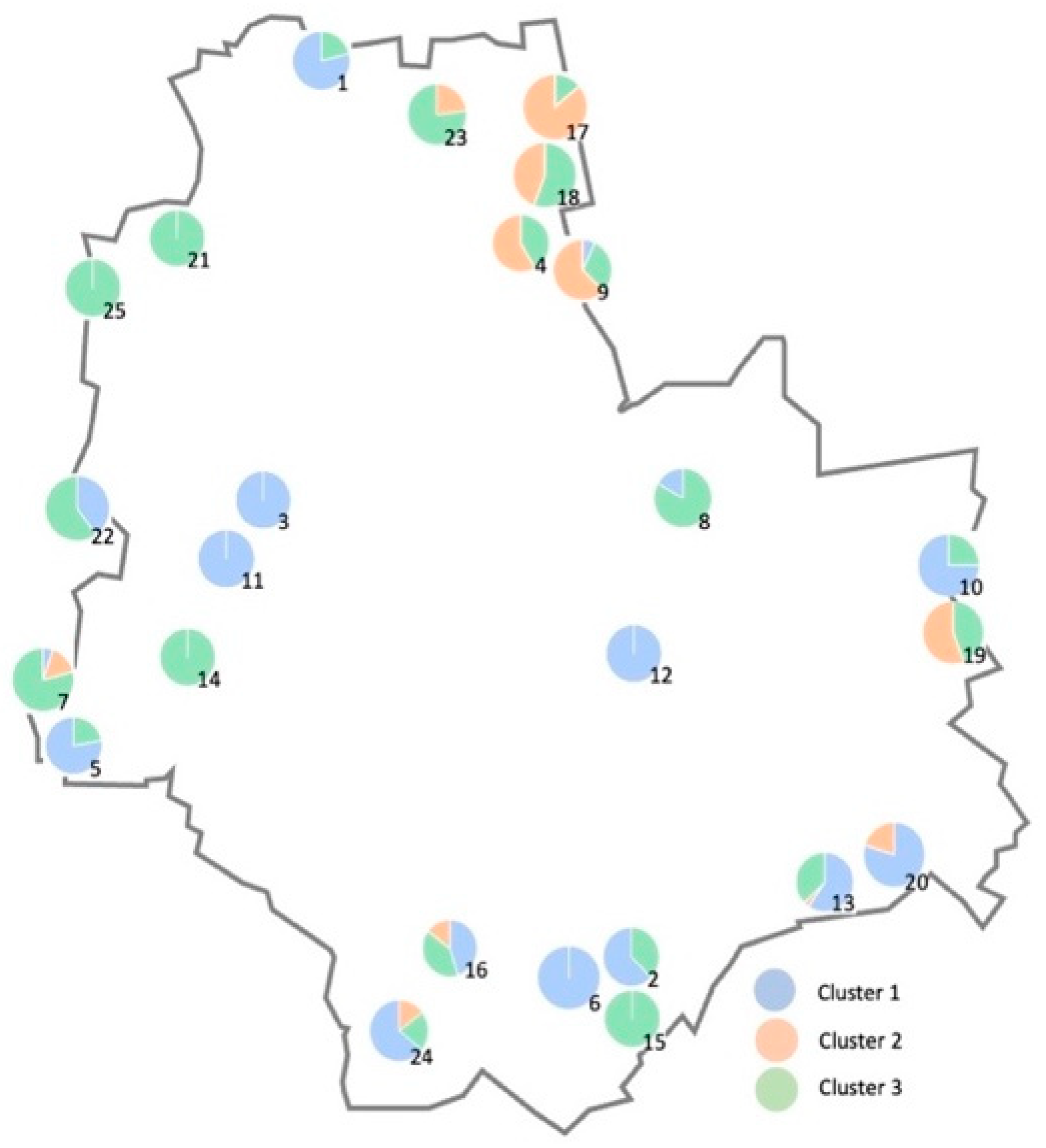
Regarding spatial distribution of VFGs of the clusters, it is noteworthy that the individual settlements are characterised by the presence of gardens belonging to the same clusters with respect to most of the gardens surveyed in them. As far as the distribution in Warsaw is concerned, settlements located close to each other are characterised by similar proportions regarding the assignment of the gardens to clusters (Figure 7).
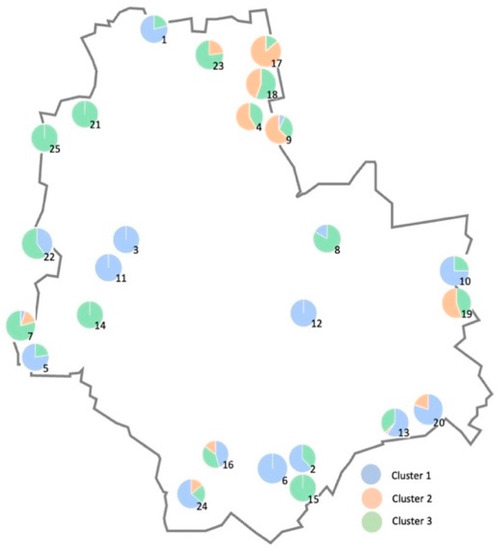
Figure 7.
Spatial distribution of VFGs belonging to the identified clusters in individual settlements and on the territory of Warsaw.
4. Discussion
4.1. Inclusiveness of VFG
Our results indicated that VFG create the streetscape of single-family residential sites in Warsaw. Although most of the investigated plots have a full, only partially transparent fence, based on those findings, thanks to the choices of garden owners, we can say that it is possible to describe attributes of such a streetscape. The presence of pre-front gardens and characteristic plants makes VFG shape the identity and variety of the site. Building a pre-front garden while obstructing the view of the interior garden demonstrates a high degree of understanding of the inclusive nature of VFG.
Many sources indicate lacking green public spaces in single-family housing areas [71,72,73]. Due to recurring plants, VFG can be considered a characteristic streetscape and can be treated as green public space, especially in places where it is missing. The fact that based on all the characteristics, groups of VFG regarding residential areas could be detected can be explained by two main findings. Firstly, our study draws attention to the visual accessibility of the VFG from the street. Transparency of the enclosure determines the development of the VFG. Where it is open, the development appears richer and the composition more complex. Secondly, gardens within each estate are clustered by similar development, which may indicate a desire to fit in with the community, thus expressed by the garden owners. The linear nature of the landscape core has already been indicated by Peter Goodchild [22], who has studied the landscape context in garden heritage conservation and protection. Other authors note that gardens form clusters along streets if they are visible from houses located along with them [74,75]. However, more and more single-family housing estates are being closed and excluded, becoming white spots on the map of public spaces [76,77]. They are also poorly connected due to the fact of being built directly on de-owned land, making them uncomfortable areas to walk [73].
4.2. VFG Attributes Providing ES
The dominant plants are shrubs, both deciduous and coniferous, and the most prominent species in their range are barberry, thujas, and junipers. Only in second place are beds of perennials and seasonal plants, mentioned in the literature as obvious [7,78]. It should also be noted that barberries have colourful foliage, making them a more durable and easier to maintain substitute for a colourful bed.
The basic aim of our study was to find out if VFG plays a role in the delivery of ecosystem services. Garden owners preferred “trees and shrubs improving air quality” (“Regulating”), “green/blue” view (“Cultural”) and ornamental plants and animals (“Provisioning”). In front gardens, these ornamental plant and animal functions are not produced, but only give pleasure to owners’ and pedestrians’ eyes. We can say that it is still a cultural service. In that case, cultural ES constitute the great majority.
However, decorative plants are common in VFG, the assumption about particular emblematic plants used in Polish gardens [35,65] and advanced composition is not confirmed. At the same time, we observed “new emblematic” plants, repeated in several plots, constituting more than 30% of them. There was a “Christmas tree”, plants in containers and delineated flowerbeds. Looking for emblems, i.e., plants recognizable as remarkable for Polish home gardens, we searched for spruces and firs as “Christmas trees” in front gardens, because we know from our design experience this form is desired in VFG by owners. We identified apple, lime, rose, lilac, oak, and elderberry as significant plant emblematic forms. However, our study showed that the plants we considered emblematic are not such at all. A new emblem turned out to be thuyas occurring in 61% of VFG junipers, barberries and boxwoods (over 20%).
Interestingly, 13% of the VFG are equipped with a “Kitchen garden” (Provisioning ES), a number similar to “Spaces for relaxation and playing in gardens”, which allows us to claim some similarity (Provisioning ES). The questions arise whether it is legitimate to say that the VFG are perhaps beginning to take over some of the functions of the main gardens or whether maybe some users do not mind combining the representative function with the practical one (the kitchen garden). As a partial result of the studies, this claim requires a deeper analysis and checking the correlation between the utilitarian and representative functions and ecosystem services. It may also be interesting to track further the impact of the SARS Cov-2 pandemic on designer preferences. Although they do not declare a significant change in design style (less than 25% of answers from 3 to 5), they are more willing to talk about the importance of natural values (32% of answers from 3 to 5), and much more willing (41% of answers from 3 to 5) about a place for recreation. It can be seen that the garden is no longer only decorative. In the literature, front gardens are considered representational spaces [79,80,81], while our findings have shown that they are also recreational spaces, as well as places for growing useful plants, and not only melliferous, but also the edible ones.
4.3. ES Preferred According to the Garden Designers
According to the designers—garden designers, the preferred ES are also “Cultural”, and “Regulating” ES represented by sculptures and bird feeders. Bearing in mind that they selected attributes from the list, we can confirm the similarity of results. However, while designers prefer more mature aesthetic attributes, they are not ready either to change the function of front garden to either production or nature. In addition to negating the notorious symbolic figures (gnomes, animal figurines), they cannot imagine either a composter or objects associated with recycling (tires, bottles). However, they do appear in the trendsetters’ show gardens [82].
In the case of the survey of designers, it seems reasonable to conclude that regarding cultural ES, a clear division between acceptance and denial of certain forms depicting culture is shown. The accepted ones include erratic boulders and sculptures. The negated ones include reusing elements and folk art crafts.
The designers’ opinions of the use of religious and sentimental elements are indifferent, so it appears that these aspects are rather left to the decision of the garden owner and not the designers. The result that designers’ opinions correlate with the ones gained for the studied gardens is visible especially in cultural and provisioning ES. The front garden is believed to have an established cultural role, as evidenced by choice of owners and designers, and delivering provisioning services is ensured by the presence of plants and animals. Based on semi-structured interviews with 44 gardeners in Barcelona, similar results were obtained [62]. In this study, most ecosystem services identified by the gardeners belonged to the cultural ones, and only one supporting ecosystem service was identified.
4.4. Groups of VFG. Differences and Similarities between Attributes of VFG and Designers Preferences concerning ES
The hierarchical cluster analysis showed that a major role in separating the VFG played compositional characteristics. First, the observation we described in Section 4.1 is confirmed. The main aspects differentiating the VFG are “Composition, opening”. Less important but noticeable is the difference resulting from the presence of flowerbeds which, although mentioned in the literature [53,54,55] are now found in only one third of the gardens, apparently distinguishing them from the others. The compositional attributes are given importance by the differentiating features of the ecosystem services—cultural ES. “Symbols” (Emblematics) are popular in the VFG—corresponding to “sculptures” and boulders as the positively assessed “cultural” ES by designers. The spatial distribution of the clusters studied indicates that gardens in individual settlements are similar. Some authors argue that by creating a shared estate landscape through similar front garden development, owners inform on their community to the outside; “neighbourhood norms influence gardening practices” [34,83,84].
Ecosystem services represented by attributes preferred by garden owners as detected based on the studied VFG was only partly confirmed by the opinion of the designers. The attitudes of owners and designers coincide when it comes to cultural ES. This confirms the traditional image of VFG as heritage. There is a difference regarding “Regulating”, which is not relevant to garden owners and at the same time is important to designers. The similarity concerns one element only: “Bees” (regulating ES) are significant to both garden owners and designers.
5. Conclusions
The results of our research confirmed that VFG plays a role in providing ecosystem services while being visually accessible and creating the streetscape. Both garden owners and designers choose those garden attributes related to delivering cultural and provisioning services. These attributes are mainly plants and visual access. Repeated groups of attributes, confirmed by clusters, demonstrate the uniqueness of these streetscapes. Therefore, residential sites with VFG can be treated in the category of green streets or living streets (woonerfs approach). This is another argument against gated communities and a reason not to close streets in housing estates to pedestrians.
The adopted method of using Google Street View images had been already used several times in similar types of research [65,66,67] and provided with valuable data and results. However, based on our results, we conclude that it does not allow for a precise inventory of plants in the investigated gardens. Therefore, we recommend in future studies additional use of a pool of qualitative research in the social research group (e.g., IDI interviews) and detailed inventories at different stages of the growing season.
Our conclusions are of practical value since single-family housing estates are undervalued as accessible green areas and considered exclusive areas. Our findings can be used in city area planning, especially in districts where the local plan allocates land for single-family housing. It also can be used in studies on the management of green areas on the city’s outskirts. Designers should appreciate front gardens and take inspiration from the VFG for design tools that can provide ecosystem services. Private gardens, especially their front parts (VFGs), are visually accessible to passers-by. VFGs build public space on a par with street greenery, becoming a valuable green justice tool in neighbourhoods lacking publicly accessible green spaces. The use of elements providing provisioning and regulating services such as edible plants and pro-natural solutions (e.g., planting species providing food for birds and pollinating insects) can be a valuable model for designers to follow. Designers, being trendsetters, adopting these aspects can be “multipliers” of the ES and thus improve the quality of public spaces by acting in the private areas of their investors’ plots.
Supplementary Materials
The following supporting information can be downloaded at: https://www.mdpi.com/article/10.3390/su15032450/s1, Table S1: Results of the inventory of the vernacular front gardens—owners’ preferences (1 = the respective feature was present in the garden); Table S2: Results of the inventory of experts’ preferences.
Author Contributions
Conceptualization, B.J.G.; methodology, B.J.G., A.S.; investigation, B.J.G., M.B., I.M.; data curation, B.J.G., I.M. and A.S.; writing—original draft, B.J.G., I.M., M.B. and A.S.; writing—review and editing, B.J.G., I.M., M.B. and A.S. All authors have read and agreed to the published version of the manuscript.
Funding
This research received no external funding.
Institutional Review Board Statement
After consultation with the Research Ethics Committee of WULS, ethical review and approval were waived for this study due to the anonymity of the research. All anonymous participants consented to participate in the study.
Informed Consent Statement
Informed consent was obtained from all subjects involved in the study.
Data Availability Statement
The data supporting reported results can be found in the Supplementary Materials.
Acknowledgments
The authors would like to thank the Association of Landscape Architecture for their assistance in the research.
Conflicts of Interest
The authors declare no conflict of interest.
References
- Low, S.M. Incorporation and Gated Communities in the Greater Metro-Los Angeles Region as a Model of Privatization of Residential Communities. Home Cult. 2008, 5, 85–108. [Google Scholar] [CrossRef]
- Pařil, V.; Ondrůšková, B.; Krajickova, A.; Petra, Z. The Cost of Suburbanization: Spending on Environmental Protection. Eur. Plan. Stud. 2021, 30, 2002–2021. [Google Scholar] [CrossRef]
- Aerts, R.; Vanlessen, N.; Dujardin, S.; Nemery, B.; Van Nieuwenhuyse, A.; Bauwelinck, M.; Casas, L.; Demoury, C.; Plusquin, M.; Nawrot, T.S. Residential Green Space and Mental Health-Related Prescription Medication Sales: An Ecological Study in Belgium. Environ. Res. 2022, 211, 113056. [Google Scholar] [CrossRef] [PubMed]
- BDOT10k. Database on the Terrain. Available online: https://bdot10k.geoportal.gov.pl (accessed on 7 December 2022).
- Sikorski, P.; Gawryszewska, B.; Sikorska, D.; Chormański, J.; Schwerk, A.; Jojczyk, A.; Ciężkowski, W.; Archiciński, P.; Łepkowski, M.; Dymitryszyn, I.; et al. The Value of Doing Nothing—How Informal Green Spaces Can Provide Comparable Ecosystem Services to Cultivated Urban Parks. Ecosyst. Serv. 2021, 50, 101339. [Google Scholar] [CrossRef]
- Colding, J.; Lundberg, J.; Folke, C. Incorporating Green-Area User Groups in Urban Ecosystem Management. AMBIO J. Hum. Environ. 2006, 35, 237–244. [Google Scholar] [CrossRef] [PubMed]
- Dewaelheyns, V.; Jakobsson, A.; Saltzman, K. Strategic Gardens and Gardening: Inviting a Widened Perspective on the Values of Private Green Space. Urban For. Urban Green. 2018, 30, 207–209. [Google Scholar] [CrossRef]
- Cameron, R.W.; Blanuša, T.; Taylor, J.E.; Salisbury, A.; Halstead, A.J.; Henricot, B.; Thompson, K. The domestic garden—Its contribution to urban green infrastructure. Urban For. Urban Green. 2012, 11, 129–137. [Google Scholar] [CrossRef]
- Kleijn, D.; Berendse, F.; Smit, R.; Gilissen, N. Agri-environment schemes do not effectively protect biodiversity in Dutch agricultural landscapes. Nature 2001, 413, 723–725. [Google Scholar] [CrossRef]
- Cussans, J.; Goulson, D.; Sanderson, R.; Goffe, L.; Darvill, B.; Osborne, J.L. Two bee-pollinated plant species show higher seed production when grown in gardens compared to arable farmland. PLoS ONE 2010, 5, e11753. [Google Scholar] [CrossRef]
- Goddard, M.A.; Dougill, A.J.; Benton, T.G. Scaling up from Gardens: Biodiversity Conservation in Urban Environments. Trends Ecol. Evol. 2010, 25, 90–98. [Google Scholar] [CrossRef]
- Southworth, M. Designing the Walkable City. J. Urban Plan. Dev. 2005, 131, 246–257. [Google Scholar] [CrossRef]
- Kim, S.; Park, S.; Lee, J.S. Meso- or Micro-Scale? Environmental Factors Influencing Pedestrian Satisfaction. Transp. Res. Part Transp. Environ. 2014, 30, 10–20. [Google Scholar] [CrossRef]
- Ozbil, A.; Gurleyen, T.; Yesiltepe, D.; Zunbuloglu, E. Comparative Associations of Street Network Design, Streetscape Attributes and Land-Use Characteristics on Pedestrian Flows in Peripheral Neighbourhoods. Int. J. Environ. Res. Public. Health 2019, 16, 1846. [Google Scholar] [CrossRef] [PubMed]
- Pikora, T.; Giles-Corti, B.; Bull, F.; Jamrozik, K.; Donovan, R. Developing a Framework for Assessment of the Environmental Determinants of Walking and Cycling. Soc. Sci. Med. 2003, 56, 1693–1703. [Google Scholar] [CrossRef] [PubMed]
- Clifton, K.J.; Livi Smith, A.D.; Rodriguez, D. The Development and Testing of an Audit for the Pedestrian Environment. Landsc. Urban Plan. 2007, 80, 95–110. [Google Scholar] [CrossRef]
- Sallis, J.F.; Cain, K.L.; Conway, T.L.; Gavand, K.A.; Millstein, R.A.; Geremia, C.M.; Frank, L.D.; Saelens, B.E.; Glanz, K.; King, A.C. Is Your Neighborhood Designed to Support Physical Activity? A Brief Streetscape Audit Tool. Prev. Chronic. Dis. 2015, 12, 150098. [Google Scholar] [CrossRef]
- Nassauer, J.; Wang, Z.; Dayrell, E. What Will the Neighbors Think? Cultural Norms and Ecological Design. Landsc. Urban Plan. 2009, 92, 282–292. [Google Scholar] [CrossRef]
- Davoren, E.; Siebert, S.; Cilliers, S.; du Toit, M.J. Influence of Socioeconomic Status on Design of Batswana Home Gardens and Associated Plant Diversity Patterns in Northern South Africa. Landsc. Ecol. Eng. 2016, 12, 129–139. [Google Scholar] [CrossRef]
- Németh, J.; Schmidt, S. The Privatization of Public Space: Modeling and Measuring Publicness. Environ. Plan. B Plan. Des. 2011, 38, 5–23. [Google Scholar] [CrossRef]
- Mantey, D.; Sudra, P. Types of Suburbs in Post-Socialist Poland and Their Potential for Creating Public Spaces. Cities 2018, 88, 209–221. [Google Scholar] [CrossRef]
- Goodchild, P.H. Conserving the Garden and Landscape Heritage: Responding to the Context. Conserv. Gard. Landsc. Herit. Responding Context 2005, 14, 17–27. [Google Scholar] [CrossRef]
- Egoz, S.; Makhzoumi, J.; Pungetti, G. (Eds.) The Right to Landscape; Routledge: Oxfordshire, UK, 2016. [Google Scholar] [CrossRef]
- Certomà, C.; Noori, S.; Sondermann, M. Urban Gardening and the Struggle for Social and Spatial Justice; Manchester University Press: Manchester, UK, 2019. [Google Scholar] [CrossRef]
- Mocák, P.; Matlovičová, K.; Matlovič, R.; Pénzes, J.; Pachura, P.; Mishra, P.K.; Kostilníková, K.; Demková, M. 15-minute city concept as a sustainable urban development alternative: A brief outline of conceptual frameworks and Slovak cities as a case. Folia Geogr. 2022, 64, 69. [Google Scholar]
- Mantey, D.; Kępkowicz, A. Types of Public Spaces: The Polish Contribution to the Discussion of Suburban Public Space. Prof. Geogr. 2018, 70, 633–654. [Google Scholar] [CrossRef]
- Balzan, M.V.; Zulian, G.; Maes, J.; Borg, M. Assessing Urban Ecosystem Services to Prioritise Nature-Based Solutions in a High-Density Urban Area. Nat. Based Solut. 2021, 1, 100007. [Google Scholar] [CrossRef]
- Beumer, C.; Martens, P. BIMBY’s First Steps: A Pilot Study on the Contribution of Residential Front-Yards in Phoenix and Maastricht to Biodiversity, Ecosystem Services and Urban Sustainability. Urban Ecosyst. 2016, 19, 45–76. [Google Scholar] [CrossRef]
- Calvet-Mir, L.; Gómez-Baggethun, E.; Reyes-García, V. Beyond Food Production: Ecosystem Services Provided by Home Gardens. A Case Study in Vall Fosca, Catalan Pyrenees, Northeastern Spain. Ecol. Econ. 2012, 74, 153–160. [Google Scholar] [CrossRef]
- Mohri, H.; Lahoti, S.; Saito, O.; Mahalingam, A.; Gunatilleke, N.; Irham; Hoang, V. T.; Hitinayake, G.; Takeuchi, K.; Herath, S. Assessment of Ecosystem Services in Homegarden Systems in Indonesia, Sri Lanka, and Vietnam. Ecosyst. Serv. 2013, 5, 124–136. [Google Scholar] [CrossRef]
- Ciftcioglu, G.C.; Ebedi, S.; Abak, K. Evaluation of the Relationship between Ornamental Plants—Based Ecosystem Services and Human Wellbeing: A Case Study from Lefke Region of North Cyprus. Ecol. Indic. 2019, 102, 278–288. [Google Scholar] [CrossRef]
- Wakhidah, A.Z.; Chikmawati, T.; Purwanto, Y. Homegarden Ethnobotany of Two Saibatin Villages in Lampung, Indonesia: Species Diversity, Uses, and Values. For. Soc. 2020, 4, 338–357. [Google Scholar] [CrossRef]
- Gawryszewska, B.J. Historia i Struktura Ogrodu Rodzinnego; Wydawnictwo SGGW: Warszawa, Poland, 2008. [Google Scholar]
- Gawryszewska, B. Ogród Jako Miejsce w Krajobrazie Zamieszkiwanym; Wydawnictwo Wieś Jutra: Warszawa, Poland, 2013. [Google Scholar]
- Vogl-Lukasser, B.; Vogl, C.R. The Changing Face of Farmers’ Home Gardens: A Diachronic Analysis from Sillian (Eastern Tyrol, Austria). J. Ethnobiol. Ethnomedicine 2018, 14, 63. [Google Scholar] [CrossRef]
- Gawryszewska, B. Zielona Zmiana w Krajobrazie Miasta. Wernakularne Ogrody Miejskie Jako Konsekwencja Przemian Wizerunku, Funkcji i Znaczenia Zieleni w Przestrzeni Publicznej. Soc. Communitas 2019, 26, 121–141. [Google Scholar]
- Feltynowski, M.; Kronenberg, J.; Bergier, T.; Kabisch, N.; Łaszkiewicz, E.; Strohbach, M.W. Challenges of Urban Green Space Management in the Face of Using Inadequate Data. Urban For. Urban Green. 2018, 31, 56–66. [Google Scholar] [CrossRef]
- Sikorska, D.; Łaszkiewicz, E.; Krauze, K.; Sikorski, P. The Role of Informal Green Spaces in Reducing Inequalities in Urban Green Space Availability to Children and Seniors. Environ. Sci. Policy 2020, 108, 144–154. [Google Scholar] [CrossRef]
- European Environment Agency. CICES 2013 The Common International Classification of Ecosystem Services. Available online: https://cices.eu/ (accessed on 7 December 2022).
- Turkelboom, F.; Raquez, P.; Dufrêne, M.; Raes, L.; Simoens, I.; Jacobs, S.; Stevens, M.; De Vreese, R.; Panis, J.A.E.; Hermy, M.; et al. CICES Going Local. In Ecosystem Services; Elsevier: Amsterdam, The Netherlands, 2013. [Google Scholar] [CrossRef]
- Hunt, J.D.; Wolschke-Bulmahn, J. The Vernacular Garden; Dumbarton Oaks Research Library and Collection: Washington, DC, USA, 1993. [Google Scholar]
- Suartika, G.A.M. (Ed.) Vernacular Transformations: Architecture, Place, and Tradition; Pustaka Larasan: Denpasar, Indonesia, 2013. [Google Scholar]
- Notteboom, B. Residential Landscapes—Garden Design, Urban Planning and Social Formation in Belgium. Urban For. Urban Green. 2018, 30, 220–238. [Google Scholar] [CrossRef]
- Braschler, B.; Zwahlen, V.; Gilgado, J.D.; Rusterholz, H.-P.; Baur, B. Owners’ Perceptions Do Not Match Actual Ground-Dwelling Invertebrate Diversity in Their Gardens. Diversity 2021, 13, 189. [Google Scholar] [CrossRef]
- Hanson, H.; Eckberg, E.; Widenberg, M.; Olsson, J. Gardens’ Contribution to People and Urban Green Space. Urban For. Urban Green. 2021, 63, 127198. [Google Scholar] [CrossRef]
- Tahvonen, O. Scalable Green Infrastructure—The Case of Domestic Private Gardens in Vuores, Finland. Sustainability 2018, 10, 4571. [Google Scholar] [CrossRef]
- Wang, H.-F.; Qureshi, S.; Knapp, S.; Friedman, C.R.; Hubacek, K. A Basic Assessment of Residential Plant Diversity and Its Ecosystem Services and Disservices in Beijing, China. Appl. Geogr. 2015, 64, 121–131. [Google Scholar] [CrossRef]
- Larson, K.L.; Nelson, K.C.; Samples, S.R.; Hall, S.J.; Bettez, N.; Cavender-Bares, J.; Groffman, P.M.; Grove, M.; Heffernan, J.B.; Hobbie, S.E.; et al. Ecosystem Services in Managing Residential Landscapes: Priorities, Value Dimensions, and Cross-Regional Patterns. Urban Ecosyst. 2016, 19, 95–113. [Google Scholar] [CrossRef]
- Zwierzchowska, I.; Hof, A.; Iojă, I.-C.; Mueller, C.; Poniży, L.; Breuste, J.; Mizgajski, A. Multi-Scale Assessment of Cultural Ecosystem Services of Parks in Central European Cities. Urban For. Urban Green. 2018, 30, 84–97. [Google Scholar] [CrossRef]
- Alp, Ş.; Öztürk, Ş.; Türkoğlu, N.; Koyuncu, M. Basic Elements of the Traditional Garden Identity in the City of Van. Afr. J. Agric. Res. 2010, 5, 1277–1283. [Google Scholar]
- Jia, L.L.; Zhao, D.P. A Reference Research on the Local Traditional Garden Art for the Regional Landscape. Appl. Mech. Mater. 2012, 174–177, 2558–2562. [Google Scholar] [CrossRef]
- Ferradas, C. From Vegetable Gardens to Flower Gardens: The Symbolic Construction of Social Mobility in a Development Project. Hum. Organ. 1997, 56, 450–461. [Google Scholar] [CrossRef]
- Conan, M. Perspectives on Garden History. From Vernacular Gardens to a Social Anthropology of Gardening. Dumbart. Oaks Res. Libr. Collect. Wash. DC 1999, 21, 181–204. [Google Scholar]
- Eichemberg, M.T.; Amorozo, M.C.D.M.; de Moura, L.C. Species Composition and Plant Use in Old Urban Homegardens in Rio Claro, Southeast of Brazil. Acta Bot. Bras. 2009, 23, 1057–1075. [Google Scholar] [CrossRef]
- Bell, S.; Fox-Kämper, R.; Keshavarz, N.; Benson, M.; Caputo, S.; Noori, S.; Voigt, A. (Eds.) Urban Allotment Gardens in Europe; First issued in paperback; Routledge: London, UK; New York, NY, USA, 2018. [Google Scholar]
- Tuan, Y. Topophilia: A Study of Environmental Perception, Attitudes, and Values; Prentice-Hall: Englewood Cliffs, NJ, USA, 1974. [Google Scholar]
- Low, S.M.; Altman, I. Place Attachment. In Place Attachment; Altman, I., Low, S.M., Eds.; Springer: Boston, MA, USA, 1992; pp. 1–12. [Google Scholar] [CrossRef]
- Sennett, R. A Flexible City of Strangers. Le Monde Diplomatique. Available online: https://mondediplo.com/2001/02/16cities (accessed on 7 December 2022).
- Gehl, J. Cities for People; Island Press: Washington, DC, USA, 2010. [Google Scholar]
- Miessen, M. The Nightmare of Participation; Sternberg Press: Berlin, Germany, 2010. [Google Scholar]
- Camps-Calvet, M.; Langemeyer, J.; Calvet-Mir, L.; Gómez-Baggethun, E. Ecosystem Services Provided by Urban Gardens in Barcelona, Spain: Insights for Policy and Planning. Environ. Sci. Policy 2016, 62, 14–23. [Google Scholar] [CrossRef]
- Yin, Y.; Shao, Y.; Xue, Z.; Thwaites, K.; Zhang, K. An explorative study on the identification and evaluation of restorative streetscape elements. Landsc. Archit. Front. 2020, 8, 76. [Google Scholar] [CrossRef]
- Matlovičová, K.; Mocák, P.; Kolesárová, J. Environment of estates and crime prevention through urban environment formation and modification. Geogr. Pannonica 2016, 20, 168–180. [Google Scholar] [CrossRef]
- Łuczaj, Ł.J. Plant Identification Credibility in Ethnobotany: A Closer Look at Polish Ethnographic Studies. J. Ethnobiol. Ethnomedicine 2010, 6, 36. [Google Scholar] [CrossRef]
- Li, X.; Zhang, C.; Li, W.; Ricard, R.; Meng, Q.; Zhang, W. Assessing Street-Level Urban Greenery Using Google Street View and a Modified Green View Index. Urban For. Urban Green. 2015, 14, 675–685. [Google Scholar] [CrossRef]
- Richards, D.R.; Edwards, P.J. Quantifying Street Tree Regulating Ecosystem Services Using Google Street View. Ecol. Indic. 2017, 77, 31–40. [Google Scholar] [CrossRef]
- (Chen, J.; Zhou, C.; Li, F. Quantifying the Green View Indicator for Assessing Urban Greening Quality: An Analysis Based on Internet-Crawling Street View Data. Ecol. Indic. 2020, 113, 106192. [Google Scholar] [CrossRef]
- Elliott, A.; Woodward, W. Statistical Analysis Quick Reference Guidebook; SAGE Publications, Inc.: Thousand Oaks, CA, USA, 2007. [Google Scholar] [CrossRef]
- Hammer, O.; Harper, D.; Ryan, P. PAST: Paleontological Statistics Software Package for Education and Data Analysis. Palaeontol. Electron. 2001, 4, 1–9. [Google Scholar]
- Hillis, D.M.; Bull, J.J. An Empirical Test of Bootstrapping as a Method for Assessing Confidence in Phylogenetic Analysis. Syst. Biol. 1993, 42, 182–192. [Google Scholar] [CrossRef]
- Carmona, M. Contemporary Public Space: Critique and Classification, Part One: Critique. J. Urban Des. 2010, 15, 123–148. [Google Scholar] [CrossRef]
- Corcoran, M.P.; Hayes, M.K. Toward a Morphology of Public Space in Suburban Dublin. Built Environ. 2015, 41, 519–537. [Google Scholar] [CrossRef]
- Mantey, D. Social Consequences of Gated Communities: The Case of Suburban Warsaw. Prof. Geogr. 2017, 69, 151–161. [Google Scholar] [CrossRef]
- Hunter, M.C.R.; Brown, D.G. Spatial Contagion: Gardening along the Street in Residential Neighborhoods. Landsc. Urban Plan. 2012, 105, 407–416. [Google Scholar] [CrossRef]
- Zmyslony, J.; Gagnon, D. Path Analysis of Spatial Predictors of Front-Yard Landscape in an Anthropogenic Environment. Landscape Ecology. Landsc. Ecol. 2000, 15, 357–371. [Google Scholar] [CrossRef]
- Polanska, D.V. The Emergence of Gated Communities in Post-Communist Urban Context: And the Reasons for Their Increasing Popularity. J. Hous. Built Environ. 2010, 25, 295–312. [Google Scholar] [CrossRef]
- Cséfalvay, Z.; Webster, C. Gates or No Gates? A Cross-European Enquiry into the Driving Forces behind Gated Communities. Reg. Stud. 2012, 46, 293–308. [Google Scholar] [CrossRef]
- Bhatti, M.; Church, A.; Claremont, A. Peaceful, Pleasant and Private: The British Domestic Garden as an Ordinary Landscape. Landsc. Res. 2014, 39, 40–52. [Google Scholar] [CrossRef]
- Kirkpatrick, J.; Daniels, G.; Davison, A. An Antipodean Test of Spatial Contagion in Front Garden Character. Landsc. Urban Plan. 2009, 93, 103–110. [Google Scholar] [CrossRef]
- Smith, M.R. The Front Garden: New Approaches to Landscape Design; Houghton Mifflin Harcourt: Boston, MA, USA, 2001. [Google Scholar]
- Slater, E.; Peillon, M. The Suburban Front Garden: A Socio-Spatial Analysis. Nat. Cult. 2009, 4, 78–104. [Google Scholar] [CrossRef]
- Standler, K.; Froschauer, R.; Heistier, A. Best Private Plots 07—Der Beste Garten 2007. Available online: https://www.ots.at/presseaussendung/OTS_20071009_OTS0253/best-private-plots-07-der-beste-garten-2007-and-the-winner-is-bild (accessed on 7 December 2022).
- Van Heezik, Y.; Dickinson, K.; Freeman, C. Closing the Gap: Communicating to Change Gardening Practices in Support of Native Biodiversity in Urban Private Gardens. Ecol. Soc. 2012, 17, 34. [Google Scholar] [CrossRef]
- Goddard, M.A.; Ikin, K.; Lerman, S.B. Ecological and Social Factors Determining the Diversity of Birds in Residential Yards and Gardens. In Ecology and Conservation of Birds in Urban Environments; Murgui, E., Hedblom, M., Eds.; Springer: Cham, Switzerland, 2017; pp. 371–397. [Google Scholar] [CrossRef]
Disclaimer/Publisher’s Note: The statements, opinions and data contained in all publications are solely those of the individual author(s) and contributor(s) and not of MDPI and/or the editor(s). MDPI and/or the editor(s) disclaim responsibility for any injury to people or property resulting from any ideas, methods, instructions or products referred to in the content. |
© 2023 by the authors. Licensee MDPI, Basel, Switzerland. This article is an open access article distributed under the terms and conditions of the Creative Commons Attribution (CC BY) license (https://creativecommons.org/licenses/by/4.0/).