


Abstract
Seamless, efficient transport intermodality is a key aspect of the transition of cities toward sustainable mobility. The new “shared mobility hub” concept is increasingly gaining attention as a potential way to make this urgently needed transition happen. The present paper aims to provide an insightful view of the promising concept of shared mobility hub, initially by looking into the existing literature on its definitions and how they are classified to form different typologies. Following that, a new, flexible typology framework for shared mobility hubs is proposed. This is then applied to several existing hubs in five different cities in The Netherlands (Amsterdam, Eindhoven and Helmond), Spain (Sant Cugat de Vallès, Metropolitan Area of Barcelona), and Portugal (Lisbon). As these countries have different shared mobility policies in place and their citizens have very different mobility habits, we were able to reflect on how the proposed typology functions in varied contexts. This paper contributes to the ongoing discussion of a very timely topic in Europe and worldwide, which is the need for the deployment of a new generation of mobility hubs, with an emphasis on shared mobility. We trust that the suggested typology can be useful to policy-makers, local authorities, and transport and urban planners, as it can help with the conducting of a first effective screening with regard to which type of hub is needed for each specific case.
Keywords:
shared mobility; hub; cities; typology; framework; sustainable mobility; urban; transition 1. Introduction
The latest United Nations report on climate change released in April 2022 [1] leaves no room for misinterpretation; the greenhouse gas emissions of the last decade have been the highest that this planet has ever experienced, with cities being a major contributor to this phenomenon. The report highlights that enhancing shared mobility, as part of broader systemic changes to the way we live and move, can play a key role in the battle against climate change. Cities are priority places for trying out different policy scenarios and applying innovative concepts that can potentially contribute to the decline in car usage, which is a step towards achieving zero-net emissions from transport in the years to come. Limiting car use in cities has been identified as one of the most effective ways to diminish greenhouse gas emissions [2].
Private car has unambiguously been a protagonist in the evolution of urban mobility systems worldwide during the last decades [3,4], leading to not only a high volume of emissions [5,6] and increased air pollution [7,8], but also other severe negative results for cities and their inhabitants, such as immense levels of congestion [9,10], excessive land occupation [11], urban fragmentation [12], noise [13] and visual pollution [14]. In their attempt to reverse this trend, cities have begun to actively look for ways to achieve a modal shift, while at the same time providing their citizens with easy access to more sustainable modes, including shared (electric) mobility options [15,16]. Shared mobility can take several different forms, from car sharing [17,18] and bike sharing [19,20], services that have already existed for years, to transportation network companies [21,22] and most recently to the significant rise of shared micromobility, driven by e-scooters [23,24]. For an overview of different shared mobility options see [25], and for an overview of the potential impacts see [26].
Seamless, efficient intermodality is thus a key aspect of the transition of cities toward sustainable mobility. The question that arises is: how can cities make this vital and urgently needed transition happen in an effective way that will maximize the benefits for citizens? The new “shared mobility hub” concept is increasingly gaining attention and being considered as a potential robust answer to this question.
Mobility hubs can potentially contribute to eliminating private vehicle use in cities by providing a variety of sustainable transport modes and mobility services, including shared mobility options [27]. Therefore, it is essential to make sure there is an in-depth understanding of what exactly the shared mobility hub concept entails. This has proven to be more challenging than one could think at the outset. The reason is that, although the concept of (multimodal) transportation hubs in its traditional interpretation (e.g., a train station that has several bus stops and a metro station) has existed for decades and it already has well-accepted definitions in the literature (e.g., see [28,29]), the shared mobility hub is a new, emerging concept in cities all around the world which has recently risen in popularity among policy-makers, city and transportation authorities, researchers, urban and transport planners. It has also been noticed that an increasing number of EU-funded projects are lately focusing on the concept of shared mobility hubs (e.g., SHARE North, e-Hubs, SmartHubs (EIT), SmartHubs (JIP—Urban Europe)).
The present paper aims at providing an insightful view of the promising concept of shared mobility hub, initially by looking into the existing literature on its definitions and different types and how those are classified to form a typology. Following that, a new, flexible typology framework for shared mobility hubs is proposed to fill in an identified gap in the literature: the lack of a common approach in the European context on how to categorize different hub types.
Under the objective of deciding how a shared mobility hub should be defined and how different types of hubs can be classified, scientific literature has been reviewed, as well as so-called grey literature—reports, white papers, news articles, blogs, and websites—because there is so far no large volume of peer-reviewed scientific research that focuses on the concept. It is important to highlight that the literature review in this paper includes only hub-related material in which the existence of at least one shared mode is a pre-requisite; hence, literature (scientific or grey) about multimodal hubs that do not necessarily contain shared mobility options are not included in this paper. Moreover, only literature in the English language was reviewed, therefore documents or guidelines written in national languages (in countries such as The Netherlands this was found to be very often the case) are not part of this analysis.
The remainder of the paper is structured as follows. In the next section, we discuss the different existing definitions of shared mobility hubs, using a summary table and word clouds to provide an overview of them, before proposing our definition. Following that, Section 3 provides a thorough insight into existing mobility hub typologies, identifying the various dimensions used worldwide to categorize hubs. Section 4 presents our proposed typology. The dimensions selected to be included in it are discussed and the reasoning behind this choice is explained. This is followed by some examples of existing shared mobility hubs that can be representative of each proposed hub type. The paper ends with some general conclusions and perspectives for future research.
2. Shared Mobility Hub: Definitions
An overview of different definitions that were selected from the literature review is presented in Table 1. The references are in chronological order, from the oldest to the most recent; the increasing trend in the number of papers on the topic is evident, and also the fact that “non-scientific publications” is the dominant type of publication for the reasons discussed previously. Although the presence of shared mobility may not be eminent in the hub definition they use, in all the definitions included in this table, the term “mobility hubs” refers in reality to “shared mobility hubs”, i.e., hubs that include at least one shared mode.

Table 1.
Selected definitions of shared mobility hubs in the existing literature.
Table 1 shows that there are many different definitions of the concept of shared mobility hubs; with a closer observation, however, one can see that there are often similarities, overlaps, and the usage of some common terms and keywords among them. In order to obtain a better understanding of which of these terms appear to be of the most critical importance for defining a shared mobility hub, the data analysis and visualization technique of word cloud was employed.
Word clouds can be used as a way to effectively assess qualitative data and as a method to perform an initial screening of broad datasets that involve text [46]. The use of word clouds, which has experienced an upward trend in recent years [47] make it easier to identify common patterns across text and to recognize the words that are mentioned most frequently [48]. The most commonly identified words are usually indicated by size and/or (intensity of) colour. The word cloud technique was used, being aware of its limitations [49], and of the fact that for an in-depth analysis, other approaches such as content analysis could be more appropriate. However, this falls outside the scope of this work. The free online word cloud generator tool “WordClouds.com” was used for the formation of word clouds in this application. The word clouds that were created are presented in Figure 1, Figure 2, Figure 3 and Figure 4.
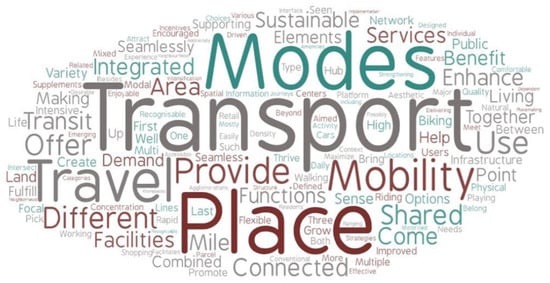
Figure 1.
Word cloud formed by all definitions of Table 1.

Figure 2.
Word cloud formed by the definitions of Table 1 when the word “transport” is excluded from the analysis.
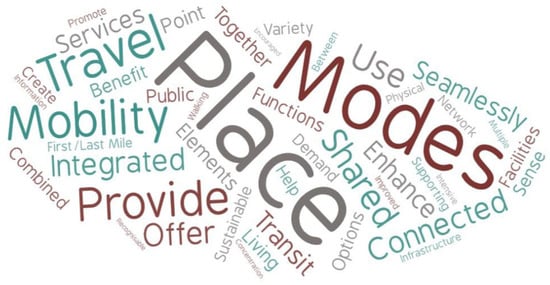
Figure 3.
Word cloud formed by the definitions of Table 1 with a decreased number of words (by excluding words of no importance for the definitions, such as connectors, propositions, common verbs, adjectives, and also the word “transport”).
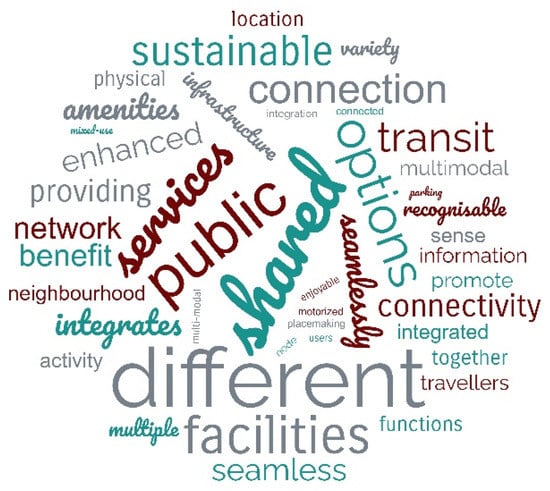
Figure 4.
Word cloud formed by the words included in the word cloud of Figure 3, after further excluding the four dominant words: “place”, “modes”, “mobility”, and “travel”.
Initially, all definitions of Table 1 were entered in the generator, and the output is presented in Figure 1. One can easily see that the result looks a bit confusing. This happens because all words were used to form this cloud, including propositions, articles, connectors, etc., which created a lot of “noise”. This can sometimes lead to confusion regarding which are the key words that are repeated. Moreover, what we see is that the word that was repeated more frequently in the various definitions was the word “transport”. This surely is not a surprise, and it does not provide further insight; therefore, no important lessons were learned in this first cloud. The next step was to first remove the word “transport” and run the analysis again (Figure 2) to see which word of the remaining ones would dominate. In Figure 2, we can see that “place” is now the most prominent word, which is very interesting because it means that although mobility hubs are built to provide people with transport options, the place that they create seems to be a significant component of the hub as well, according to the definitions.
To limit the fuzziness of the first two word clouds and be able to reach more substantial conclusions regarding which terms are the most important in the hub definitions, we followed a common strategy in cases where word clouds are used as a research instrument [46,47,48]; we excluded several words from the analysis, the ones that created the background noise before (common connecting words and propositions, common verbs etc.) and the new output is presented in Figure 3. In this figure, the dominant words might have remained the same as the ones in Figure 2, but now one can pay more attention to more words that appear to be important, such as “integrated”, “provide”, “seamlessly”, “together”, “connected”, and “enhance”.
For the last word cloud of Figure 4, we ran the analysis again with the same words used to form the word cloud of Figure 3, but this time excluding the most obvious terms, the words “place”, “modes”, “mobility” and “travel”. We can see that the result is more balanced this time, so we can easily spot the remaining most commonly used words in the definitions of a hub in the existing literature.
After reviewing all the definitions and taking into account the results of the application of the word cloud technique, our suggested definition for a shared mobility hub is the following:
A shared mobility hub is a place where different transport modes are integrated seamlessly, promoting efficient and sustainable urban mobility. Emphasis is given on shared mobility options such as bikes, scooters and cars. Connection with public transport (transit) is desirable but not necessary. The integration between mobility suppliers is important to provide a seamless, flexible connection at these transfer points. Ensuring an enjoyable experience for travelers is a crucial part of the hub concept as well, and therefore the hub should be considered not just as a transfer node but as a place where a variety of services come together, such as logistics services or restaurants.
3. Existing Shared Mobility Hub Typologies
The lack of a common approach across different studies and reports is something that can be noticed also regarding the hub typologies. The fact that shared mobility hubs are an emerging concept, with a constantly increasing volume of literature worldwide, but without a well-established line of research, leads to the existence of several different approaches regarding how to define hub types. Most of them are based on case-specific classifications, which means that the developed typology is tailored-made for the cities or metropolitan areas in which the hubs are placed. There are thus different ways to categorize mobility hubs, depending on the features one chooses to emphasize, and several dimensions are usually taken into account. For an overview of all the different typologies that were reviewed, see Table 2. The discussion that follows provides an analysis of this overview.
Table 2.
An overview of existing typologies for shared mobility hubs.
As shown in Table 2, the main factor on which most of the examined typologies base their categorization appears to be the urban context. This is followed by the size of the hub, spatial scale, role in the transportation network, and transportation function. An interesting finding is that in many typologies, whilst a main differentiating factor for categorizing hubs is used (e.g., the location context), by taking a closer look into the different categories that are suggested, one can see that this factor is often combined with others (e.g., with the size of hubs). For instance, in typologies based mainly on the urban context, it is often seen that some categories are defined only by size (e.g., mini hubs). Moreover, the key differentiating factor in one typology might be used as one of the dimensions to describe the categories in another typology. This means that, for example, in a typology based on the spatial scale, urban context can still be used as one of the descriptive dimensions (e.g., see [45]).
There are also some combination typologies, i.e., typologies that are based on more than one differentiating factor and look at multiple dimensions at the same time. In cases where these typologies suggest different ways to categorize hubs based on different factors, and this type of categorization has already been used in other reports, then the typology is mentioned in each of these sections (e.g., the same document can be cited in the urban context typologies and size typologies). In case the hub type combinations that are proposed cannot be directly linked to any other identified category, then the typology is included in the final section, namely “Combination typologies”.
3.1. Typologies Based on the Urban Context
The CoMoUK Study [36], conducted in the context of the EU Interreg North Sea Region “SHARE-North” project, emphasizes the fact that there is no “magic bullet” solution in terms of hub types, as local circumstances should be carefully considered before the introduction of a hub in an area. However, the study suggests that taking into account different components, possible combinations can be made that form a proposed typology, which should be further adapted to the setting on a case-by-case basis. They propose the division of hubs into six large categories, based on the context in which they are located and a combination of attributes under the perspective of some key components that have to do with mobility, but also with non-mobility elements, such as the regeneration of the urban environment around the hubs.
The first hub type according to them includes the large interchange/city hubs. These hubs accommodate a large number of travelers and they are located close to a rail station that offers not only regional but national connections as well. Local public transport services and taxis can also be found at the hub, in addition to car sharing and bike sharing options (both electric and non-electric). In terms of infrastructure, there is bike parking and EV charging points as well as information provision such as ticketing and itineraries in digital form. The waiting area in this type of hub is covered and safe, and the hub provides opportunities for buying food and/or drinks and admiring some art exhibitions by local artists. It should be noted that interchange in this case refers to connecting different transport modes or/and lines and services and not to the same term as defined in the geometric design of highways and streets. The second type is the transport corridors, which are smaller interchanges/linking hubs. This type of hub, as indicated by its name, focuses more on people transferring between modes, and therefore its objective is to facilitate the first/last mile trips, providing more sustainable options. The rail connections found in the proximity of this type of hub are of regional scale, and there are also lockers for receiving packages. Very similar to this type of hub are the so-called business park/new housing development hubs, but the infrastructure provision and the waiting space amenities are more limited in this case.
When the location context is the suburbs, and there are no rail connections but only local bus services, the CoMoUK study suggests introducing mini hubs with only carsharing services and even fewer amenities in the waiting space. The remaining hub types are “small market town”, “village hubs” and “tourism hubs”. In the last case, attention is paid to including a larger range of ticketing options and integrated services. It is worth mentioning that although the categorization of the CoMoUK Study typology is based on context, the different hub types incorporate references to the hub size as well, as discussed above.
The Strategic Study for the South East of Scotland [42] that followed a year later used the CoMoUK categorization as a basis and adapted it to the local setting of Scotland. This categorization is again based on the urban context, taking into account factors such as the trip generation magnitude of the hub. A difference between the two typologies is that the SEStran one does not include the tourism hub type and replaces the business/new housing development hub with the more inclusive category “key destinations”, which is broader and can be extended, for instance, to hospitals, universities, stadiums, and other facilities that attract a large number of visitors. Furthermore, the grouping of new housing development context is different, as in the SEStran case it belongs to the mini hubs category.
Another classification with context as the core parameter in forming the different hub categories and with the focus once again on the UK comes from a report by Arup and Go Ahead [50]. In this report, three categories of hubs are presented: rural, suburban, and urban. The rural type aims, among other objectives, at addressing the needs of vulnerable segments of the population, such as children and the elderly, ensuring a safe space to wait when transferring between modes, while at the same time providing opportunities for socializing (for instance by including amenities such as a playground or/and a farmer’s market). The suburban hub entails attributes that can facilitate the everyday life of its potential users, allowing them to spend creative time there, such as co-working spaces, while the urban hub offers an even larger variety of mobility options, as well as community services.
With a focus on the Greater Toronto and Hamilton metropolitan areas in Canada, Metrolinx [30] divided hubs into six categories, also based on the urban context in which they can be located: central (Toronto), urban transit nodes, emerging urban growth centres, historic suburban town centres, suburban transit nodes, and unique destinations. What can be noticed in this categorization, which has Canada as its focal point, is that the role of transit nodes is key, as two of the hub categories in the typology are characterized by the presence of a transit node. This is different from the two previous studies ([36,42]), the emphasis of which was on cities in Europe.
In a report by the Metropolitan Transportation Commission [51] for the San Francisco Bay area in the USA, six categories of hubs were identified: regional downtown, urban district, emerging urban district, suburban/rural, pulse hubs, and opportunity hubs. Note that although the choice of terms might differ, with a closer look one can see that this categorization has many similarities with the ones presented previously that are also based on the urban context. The two new terms that are introduced are “pulse hubs” and “opportunity hubs”. Pulse hubs are defined as places that attract a large number of trips, such as university campuses or airports. This definition is in line with the definition of “key destinations” or “unique destinations” used in other typologies discussed above. As for the term “opportunity hub”, it is used to describe a hub that can be built in an area that has the potential to experience increased demand because of the existence of favourable factors such as compact development, whereas the existing transport options are very limited.
3.2. Typologies Based on the Spatial Scale of the Hub (Influence Radius)
In the e-Hubs Digital Blueprint [52], three main types of hubs are identified based on the spatial scale within which the hub is expected to have an impact: interregional, regional and local/neighbourhood. The first one refers to hubs that accommodate a significant volume of daily travelers and offer various transport options, both for long as well as short distances. An essential element of this type of hub is the existence of a well-equipped area where travelers can spend their time in between modal shifts while being protected from adverse weather conditions. The regional hubs can be further divided into central and peripheral—in the latter case, emphasis is given to the existence of park-and-ride facilities to stimulate the switch from private vehicles to more sustainable mobility options. The local/neighbourhood hubs rely more on offering low-impact options for first/last mile connections. The City of Los Angeles and the LA Urban Design Studio [32] uses a similar method to categorize the hubs into neighbourhood, central, and regional ones. The concept of the neighbourhood hub is also the focus of the MSc thesis of van Rooij [58], who claims that the scientific literature in particular for this small-scale type of hub is still very scarce when compared to other types of larger-scale hubs.
In Blad et al. [45], the hubs are divided into residential, city, or regional ones, while the urban context, the modes offered at the hub, the transportation function, and the target groups of potential users are taken into account as dimensions in each one of these categories. It is worthy of note that the category “residential” seems to be in line with the “neighbourhood” category in other classifications. The main user target group of the residential category is the inhabitants of the area, and the connection with existing public transport options is not a pre-requisite for this hub type.
3.3. Typologies Based on the Size of the Hub
The Portland Bureau of Transportation Study [38] highlights the importance of the size of the hub as the main differentiating factor among types, and proposes separating the hubs into major, mid-sized, minor, and mini. A similar approach is followed by the Shared Use Mobility Center [34] in which the hubs are divided into small, located in high population density areas, medium, for medium density areas, and large, for lower density areas. It is interesting to notice that the Rhode Island Transit Master Plan [53], also focusing on hub size, proposes a classification from the opposite perspective: small hubs for neighbourhoods, medium hubs for higher density areas, and large hubs for downtown areas or the end of major transit lines. Therefore, in this approach, large hubs would be located in high-density areas, contrary to the approach of the Shared Use Mobility Center. Aono [35] categorizes the hubs into mini, light, medium, and large, ranging from at least one shared mode in the first case to multiple options in the last one.
3.4. Typologies Based on the Transportation Function
The Metrolinx report [30], which was already cited above for suggesting a typology based on the urban context, also makes a distinction according to the transportation function of the hub; it claims that a hub can function as an entry, transfer, or destination. According to the report, if a hub experiences a large number of departing trips during the morning rush hour, then this hub can be characterized as an entry hub, while, on the other hand, when a hub has a large number of incoming trips at the same time, this makes it a destination hub. This distinction in the aforementioned three types of hubs is also included in the more recent updated report of Metrolinks [54].
3.5. Role of the Hub in the Transportation Network
Focusing on the Canadian context and with the objective of identifying best practices for mobility hubs in the metropolitan area of Vancouver, Aono (2019) adds an additional dimension to the urban context, transportation function, spatial scale, and size of the hub: the role of the hub in the transportation network. He classifies hubs in: gateway, referring to hubs located in big transit stations with many connections and transport modes, and anchor hubs, which are located in areas with significant growth potential. The first category is also used by Arlington County [55] in their report about developing mobility hubs in Arlington, Virginia, USA. Two additional categories appear in this report. The first one includes intersection hubs; as their name reveals, they are located where many transit lines intersect and where there are various transfer options. Finally, there are point hubs, for which proximity to transit is not necessary. These hubs operate mostly on the neighbourhood level.
3.6. Combination Typologies
In the Master’s thesis of Koedood [40], who investigates the role of hubs as a social connector in neighbourhoods with a focus on Bremen, Germany, three types of hubs are introduced which are a combination of other types that we have seen in the previous typologies: neighbourhood, business, and transit hubs. The neighbourhood hub serves as the origin and destination of commute trips of local inhabitants, while the business hub is used by employees or visitors of business centres, and that is why most of the times its use is reduced significantly outside of working hours. The transit hub is usually at city scale and serves a wider variety of users and multiple purposes. PosadMaxwan [56], focusing on the Dutch context, differentiates hubs based on the number of shared mobility vehicles they provide, the radius of the catchment area around them, their footprint, and the available space per person in the hub (both measured in m2). This classification results in four types of hubs: the micro hub, the street scale hub, the neighbourhood scale hub, and the city-district scale hub.
In the revised Metrolinx report [54], a two-dimensional combined typology is proposed, with one dimension being the transportation function (with the three classes: entry, transfer, and destination) mentioned above, and the new dimension being the urban character. According to the authors of the report, based on its urban character, a hub can be “established”, “priority” or “local”. Established hubs are existing hubs that are already considered successful and have fulfilled their objectives (e.g., they have reached a minimum demand level). Priority hubs are those which have yet to fulfil their full potential, but are getting there, whereas local hubs are hubs for which trip generation will never be the main objective; they will act as reference points for a community or neighbourhood, so the focus when planning such a hub should be more on the non-mobility services offered at the hub location.
The City of Amsterdam [57], in their report Amsterdam back to the future: more space for living through hubs, distinguishes five types of hubs, four of which are based on the spatial scale: neighbourhood, district, city, and regional; the fifth type is the private hub, and this is what makes the typology belong to the combined category. This last type refers to hubs located on private property (e.g., apartment/company parking spaces), which can be run either by the owners of the property, the users themselves, or different cooperatives [59].
3.7. Classification of Hubs from a Network Perspective
Some works approach shared mobility hubs from a network perspective. Posad Maxwan [56], investigated whether optimising a network of mobility hubs can contribute to higher walkability levels in a city, dividing the hubs into four types (neighbourhood, district, transfer, and public transport) that can each be either large, medium, small, or extra small. Coenegrachts et al. [60], examined different scenarios for business model blueprints for shared mobility hubs and identified the following different types of hub networks: first/last mile network, clustered network, point-of-interest (POI) network, hybrid network, and closed network.
Focusing on fist/last mile trips, the first type of hub network aims at providing more sustainable options to public transport users by integrating hubs within the existing public transport network. A clustered network refers to the attempt of creating clusters of shared modes in decentralized areas where the supply of such services is quite low in order to motivate the residents to switch from private cars to shared mobility. The next type of network comprises hubs that connect several POIs of a city, making it easier and more appealing for travelers to visit them, while at the same time decreasing the space allocated to parking around the locations. Hubs that combine docked shared mobility services and free-floating ones can form a so-called hybrid network, while if a subscription is needed to access the shared mobility services (e.g., when the hubs are located within a business park), we are talking about a closed hub network [60].
4. Proposed Shared Mobility Hub Typology
In the previous section (Section 3), we reviewed and discussed various typologies suggested in studies and reports, and the dimensions that are being used by these typologies. Following that, we selected from them the dimensions that are more suitable for the European context. When required, we adapted the categories under each one of the dimensions and also added a new dimension. Our own proposed typology matrix is presented in Table 3.
Table 3.
Proposed shared mobility hub typology framework.
As presented in Table 3, our proposed typology for shared mobility hubs consists of five hub types. Each type is a synthesis of the following five different dimensions: urban context, transportation function, mobility spatial scale, shared mobility services offered at the hub, and proximity to public transport, with the urban context being the main dimension that gives each hub type its name. The crosses in each one of the remaining four dimensions mean that the hub can belong to any of these categories. Belonging to one or the other category (e.g., mini or light hub) does not alternate the hub type, defined by the main dimension.
4.1. Dimensions for the Proposed Typology
4.1.1. Urban Context: Main Dimension
The urban context is considered the main (and only fixed) dimension; we have seen that it is the dimension most commonly used to differentiate hub types in most of the hub typologies we reviewed. Many researchers have already explored the connection between the urban form and travel behaviour [61]. Factors related to the urban environment are associated with the levels of accessibility by active modes in cities [62]. There is also a whole line of established research in the area of urban planning called space syntax, investigating how the movement of pedestrians is related to the urban layout of an area, and how this can be used for prediction purposes (e.g., see [63,64]). Moreover, in Section 2 it was shown that in most definitions of mobility hubs in the existing literature (including our proposed definition), urban space is a strong component. Based therefore on the unambiguous fact that the urban context is of critical importance when it comes to classifying mobility hubs, we use it as the key dimension for classification in the presented typology.
The five categories of urban context that were used are the following: city centre, emerging urban growth centre, historic centre, and suburban, or key (standalone) destination. This does not mean that there will only be one type of city centre hub; for example, it means that if it is a city centre hub then it cannot be a historic centre hub, since the categories are mutually exclusive. Shared mobility hubs can be categorized under this dimension into five types, which were mainly inspired by the ones used in Metrolinx report for the Greater Toronto and Hamilton area [30] and the Translink Report for Metro Vancouver [35], which is discussed in Section 3. Three of the categories (city centre, suburban, unique destination) are also seen in variations of the European typologies (e.g., [36]). The emerging urban growth centre and the historic centre were included for the first time, to the best of our knowledge, in a typology that focuses on European cities. With this choice, we attempt to highlight that these two urban context categories are very commonly encountered in European cities as well, and their special attributes and defining characteristics require attention when planning the introduction of a shared mobility hub there. An explanation of each one of the categories that belong to this dimension follows.
City Centre
“City centre” in our proposed typology refers to compact urban areas with high density that attract a large number of travelers and activities and have an existing multi-modal environment, mixed land uses, and usually have limited room for further land development (e.g., see [65]). Density is perceived as a critical figure in urban planning, as it can provide insight into the way cities operate and evolve; it can refer to floor area ratio, residential density, or population density [66]. No exact range is given for the density, and this is done purposefully, as it depends on the overall scale of the city. For instance, the area near the Amsterdam central train station in the city of Amsterdam, in The Netherlands (Figure 5a), is a good example of the city centre urban context, and so is the area around the King Cross St. Pancras train station in London, UK (Figure 5b). Other examples exist, such as the area around Syntagma square in Athens, Greece, and the area surrounding Plaça de Catalunya in Barcelona, Spain, although these four cities have different scales and densities.
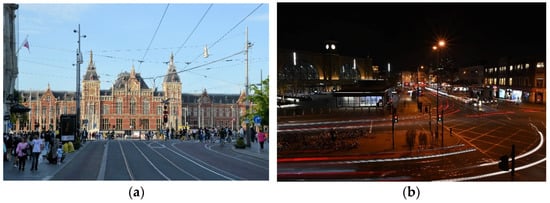
Figure 5.
(a) The area around Amsterdam Central station, Amsterdam, the Netherlands. Photo by Shinjan Bhattacharya on Unsplash; (b) The area around King Cross St. Pancras station, London, UK. Photo by Eranjan on Unsplash.
Suburban
The term “suburban” can have a wide interpretation and include several different concepts. According to a study titled “Defining suburbs: How definitions shape the suburban landscape [67] published recently by the Harvard Joint Center for Housing Studies, “Suburban definitions vary widely in terms of their content, their concepts of boundaries, and their methods of drawing relationships between cities and suburbs”. For instance, Kubeš and Ouředníček [68] have categorized suburbs into the following sub-categories: semi-suburbs, suburbs, small suburban towns, and exurbs. They also highlight that in addition to the residential function, which is usually the predominant one, service function and recreational function are also met in some of these types.
In the proposed typology, the term suburban describes areas outside the core of the main city, and can either refer to areas that can accommodate a large number of commuters or/and leisure travelers to/from the main city (e.g., the so-called satellite-cities, or business parks/shopping centres that are located outside the city centre and have park-and-ride facilities), or to any other area that is not in the core of the city, such as residential areas/business areas. In the Netherlands, an example would be the residential neighbourhood of Voorhof, outside the city centre of Delft and the area around Kralingse Zoom in Rotterdam, where a large park-and-ride is located.
Emerging Urban Growth Centre
Emerging urban growth centres include areas that have more unbuilt land available and thus more potential for development. These could include new-built areas or areas where renovation and urban renewal are taking place (through, for instance, new infrastructure projects or the opening of attractive land uses, namely museums, theatres, cinemas, shops restaurants, and bars, e.g., new “hipster” city neighbourhoods) (e.g., see [69,70,71]). In The Netherlands, an example would be the neighbourhood of Rotterdam Zuid (in the southern part of the city), where redevelopment projects are taking place and this has started to transform the area, attract a larger number of trips, and redefine the area’s character. Other examples in Europe include the Navigli canal area in Milan, Italy, and the Gkazi neighbourhood in Athens, Greece.
Historic Centre
Historic centres are the core of many cities in Europe, comprising a variety of historic buildings and heritage sites, and gathering cultural and economic activity [72]. They are usually areas with lower population density, mixed uses, and walkable areas (e.g., an existing extensive network of pedestrianized streets/shared space/traffic calming measures). There is often limited room for further development, and special rules/regulations could apply (such as protected buildings/landmarks). Historic centres very often show high touristic interest. Europe provides a rich variety of examples of cities with such centres (for an overview of the current state see the working paper European Historic Urban Areas—State of Play by van Twuijver [73]), to name just a few: Delft, The Netherlands; Florence, Italy; Warsaw, Poland (Figure 6a); Bremen, Germany (Figure 6b); and Vienna, Austria.
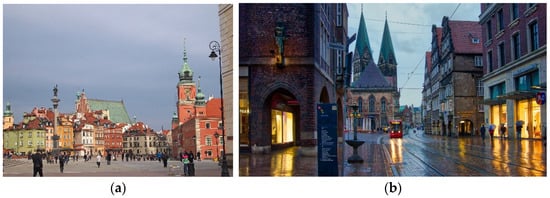
Figure 6.
(a) The historic centre of the city of Warsaw, Poland. Image by andrzej_b from Pixabay; (b) The historic centre of the city of Bremen, Germany, with an extensive network of pedestrianized areas and shared space with public transport. Image by Marina Zabawa from Pixabay.
Key (Standalone) Destination
The last category of the urban context dimension is the key (standalone) destinations. These are areas that attract and generate a large volume of trips and activities, due to the fact that the main attraction is located there (e.g., a stadium, a university campus, or a popular park). The attraction gives the area its character (people rarely go there for other reasons than visiting this specific place). Examples include Van Nelle Fabriek in Rotterdam and the Keukenhof flower park, both in the Netherlands; the Arsenal stadium in London, UK, and the University Campus of Democritus University of Thrace, outside the city centre of Xanthi, Greece.
4.1.2. Transportation Function
The next dimension in our proposed typology framework is the transportation function, which can be origin/destination or transfer. The former describes hubs that are placed in areas that generate or/and receive trips and which mainly serve as the start or/and end point of a trip, while the second type of hub might be the origin/destination for some travelers, but the majority of trips that take place with the aim of transferring to another location. The transfer function requires the existence of public transport station(s) or a park and ride area, while the previous function of origin/destination does not require such facilities. In the real world, rarely is a hub used only as a transfer point, as it can be the destination/origin of some travelers, and therefore some of our suggested hub types can belong to both categories.
4.1.3. Mobility Spatial Scale
The mobility spatial scale is another essential aspect to take into consideration when designing a typology for shared mobility hubs; as discussed in Section 3, many of the existing typologies use this as the sole dimension or combine it with others. In the case of the typology proposed herein, this distinction has to do with the “buffer-zone/catchment area” of the hub, so it is significantly related to the target users, which is why the term mobility is added to the name of the category. If the aim is to address the needs of one (or a few) neighbourhoods, then the scale of the hub is the neighbourhood. If the catchment area of the hub is the whole city, then naturally it belongs to the sub-category “city”, and in case the hub aims to serve an area that exceeds the city limits, a larger region/the whole metropolitan area, the sub-category “region” is the most representative. Again, these categories are not mutually exclusive, as there could be hubs that act both at the regional and city levels, for example.
4.1.4. Shared Mobility Services Offered at the Hub
The number of shared modes/services available at the hub place it in one of the following categories: mini, light, medium, or large [35]. A mini hub, as the term implies, is a very small-scale hub where a minimum of one shared transport mode is offered. If at least two shared mobility options exist already, often with the prospect of expansion, then the hub can be characterized as light. In a medium shared mobility hub, a variety of shared mobility services is offered, which usually requires more space and physical integration. Large shared mobility hubs offer all the shared modes available in the city, and the target user groups usually include both residents and visitors/tourists.
4.1.5. Proximity to Public Transport
The fifth and last dimension that completes the proposed typology table is the proximity to public transport. This dimension examines whether multi-modality and connection with public transport (usually rail or metro stations) is a key for the hub. In any other case, the hub can be close to public transport stations/stops, but this is not one of the key attributes of the hub (a “make-or-break” criterion).
4.2. Strengths of the Proposed Shared Mobility Hub Typology
The novel aspect of our proposed typology framework is that except for the main fixed dimension (the urban context), regarding the other four dimensions, the hub can belong to one of the categories, depending on the case, such as the number of mobility services offered at the hub make it belong to the mini, light, medium or large category, but this does not mean that a city centre hub has to necessarily be of a specific size. The reason is that, in real-life examples, we have seen that the other dimensions depend on various factors, including the size of the city and when the hub started operating. For instance, it might also be the case that a hub starts in a city centre as light, and moves further up as it expands and accommodates more shared mobility modes. All the possible combinations that define the suggested hub types are shown in Table 3, with crosses for each hub type in the categories of the five dimensions.
For instance, a suburban hub can either operate on a neighbourhood or on a regional scale, based on the definition of suburb; as discussed previously, we encompass in our definition both the satellite cities that act as suburbs for a larger city in the area (in that case the hub would have a regional impact), and areas within a city that are outside the city centre (in that case the hub can have more of a neighbourhood impact).
5. Applying the Proposed Typology to Existing Hubs
For this section, we applied the typology classification to some examples of shared mobility hubs that were developed in the context of the project SmartHubs (funded by the KIC on Urban mobility, part of the EIT). We tried to place these hubs in the proposed typology to see if and how they would fit, in order to validate our approach. In this section, these examples are presented. The hubs that are going to be discussed are located in the following cities: Amsterdam, Eindhoven, and Helmond in The Netherlands, Sant Cugat de Vallès (Metropolitan Area of Barcelona) in Spain, and Lisbon in Portugal.
5.1. Hubs in Amsterdam, The Netherlands
In the city of Amsterdam, The Netherlands, two different shared mobility hubs were developed during the project SmartHubs. One of them is located in the parking area of a private hotel (The Social Hub Amsterdam City—former Student Hotel), and the other one at Marineterrein, an area where innovation living labs are taking place (more information about this area will follow in the specific section) (Figure 7).
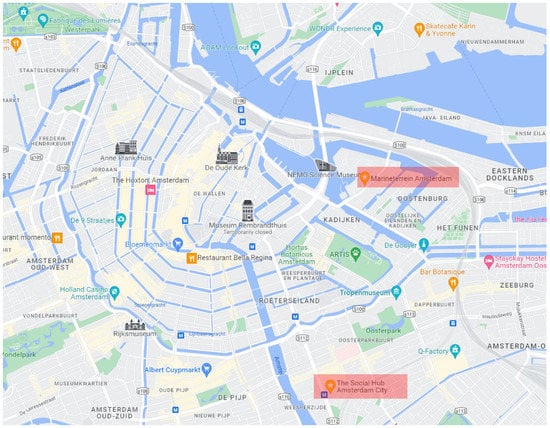
Figure 7.
Location of the two hubs in Amsterdam, highlighted with red on Google Maps. The Social Hub Amsterdam City (former Student Hotel) hub is located at the following geographical coordinates (in DD) 52.35460, 4.91293, and the Marineterrein Amsterdam hub is located at the following geographical coordinates (in DD) 52.37262, 4.91781.
5.1.1. Hub at the Social Hub Amsterdam City (Former Student Hotel Amsterdam)
General Information
This hub is located at the parking lot next to the Social Hub Amsterdam City (former Student Hotel Amsterdam) in the city of Amsterdam, within 100 m walking distance from/to the metro station Wibautstraat, from which three lines of the metro network of the city pass. It started its operation in 2021. The services offered at the hub include bike sharing and e-bikes, as well as (e) car and cargo bikes. Potential user groups are mainly the residents of the Student Hotel (mostly students on short-term accommodation) and residents of the neighbourhood and secondary visitors of the area (Figure 8a,b) [74].
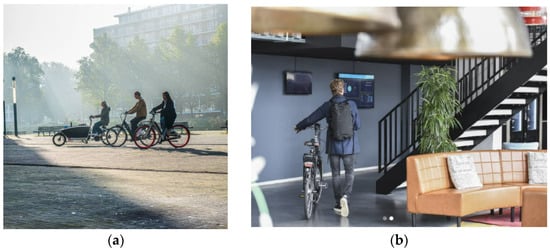
Figure 8.
(a,b) Users of the hub at the Social Hub Amsterdam (Former Student Hotel). Photos are from the SmartHubs EIT project (Official Instagram page).
Application of the Proposed Typology
The main dimension of our proposed typology is the urban context. As can be seen in the map of Figure 7, this hub is located at the edge of the main core of the city centre of Amsterdam, and therefore we can say that it falls well into a transition area that comprises part of the city centre category and part of the definition of suburban areas that was discussed in Section 4.1 of this paper. As the main target users include students who temporarily reside at the hotel, it can be argued that the main transportation function of the hub is origin/destination, as it is assumed that the students will use the hotel as their base and will make use of the shared services offered at the hub to travel to different activities and destinations and then go back to the hotel. The same can be said for the residents of the area, as they will start or end their trip at the hub. The hub also aims to capture some visitors of the area, but as this is a secondary target group, we can safely assume that even when they enter the equation the main transportation function of the hub will remain “origin/destination”. Even if some of the travelers use the hub as a transfer location to switch modes, this will not occur with a large number of travelers, as the hub is not located in the proximity of a rail station or a major metro stop/interchange of the public transport network of Amsterdam.
In order to determine to which category of mobility spatial scale this hub belongs, we used aggregated data, provided by the mobility operator of the hub (the company Hely), on the addresses that the users of the hub have registered as their home address on the shared mobility app. As Figure 9 shows, the majority of users have registered a home address somewhere in the neighbourhood of the hub, and the data dispersion shows that the influence radius of the hub is not the whole city or region. Therefore, according to our proposed typology, the mobility spatial scale of the hub is the neighbourhood. Given the fact that at least three different shared modes are offered at the hub, size wise it belongs to the medium category of our proposed typology. While it is close to a metro station, we cannot say that this is a “make-or-break” criterion for the hub, as we discussed that its main transportation function is origin/destination and the mobility spatial scale of it is the neighbourhood. This is in line with the last dimension of our proposed typology for suburban hubs, because, as we discussed previously in Section 4.1.5 of the paper, the proximity to public transport is usually not of significant importance for the hub.
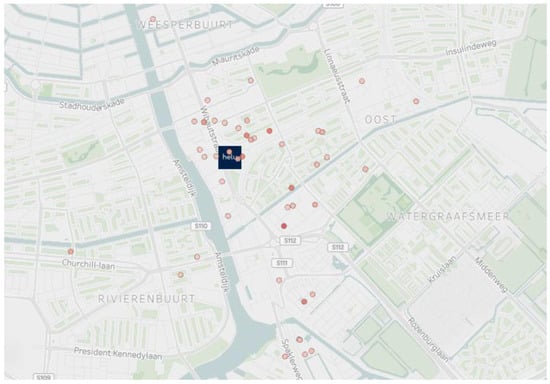
Figure 9.
Home addresses of the users of the hub near the former Student Hotel Amsterdam [74].
5.1.2. Hub at the Marineterrein
General Information
This hub is located within the Marineterrein in Amsterdam, an area that was a shipyard in the 17th century. Currently, many living labs are taking place by several organisations, using art, science, and technology to achieve sustainability goals; it is generally an area where innovation is tested in practice [75]. The hub opened in 2022. Currently, two shared modes are available there: e-bikes and cargo e-bikes. There are also charging facilities for private e-bikes. There is a bus stop in close proximity, and Amsterdam central station (the main train station of the city) and two metro stations are within a radius of about 1.5 km.
Application of the Proposed Typology
The Marineterrein area as described above fits very well into the description of the urban context category “emerging urban growth centre”, which was discussed in Section 4.1.1. According to the shared mobility operator responsible for the shared mobility services offered at the hub (as in the case of the other Amsterdam hub, the company Hely), the main users of the hub include employees working within the Marineterrein, or people who live or work in the proximityof it. Many of them take advantage of the fact that within the shared mobility app there is an option to book a shared e-bike for a specific day and time. This provides them with the certainty that an e-bike will be available when they need it, and this and increases the trustworthiness of the hub. Similarly to the other Amsterdam hub, it can be argued that as the majority of users live or work in the neighbourhood, the main transportation function of the hub is origin/destination, and the mobility spatial scale of it is the neighbourhood. The latter can also be indicated by the name that has been given to it: “Buurthub”, (Figure 10) which means Neighbourhood hub. In terms of size, this hub belongs to the light category, as there are only two shared modes available there. The hub can easily be reached by public transport, and it is closer to the central train station of Amsterdam, compared to the other Amsterdam hub, but we still do not see this as having a major influence on the usage of the hub itself (with travelers using it as a transfer point or with it having an impact that reaches the city level). Hence, we can argue that the proximity to public transport does not have a significant impact on the hub, as it is usually the case with the hubs located at emerging growth urban centres, according to our proposed typology.
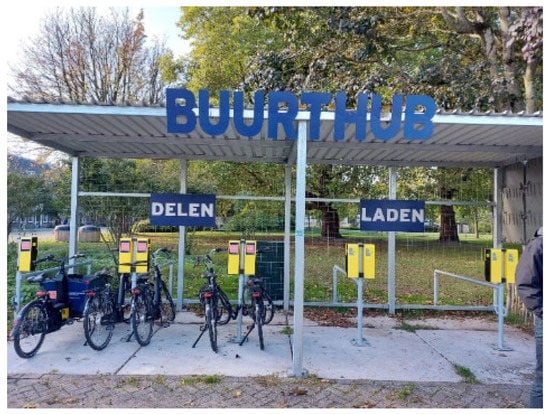
Figure 10.
Buurthub (in Dutch: Neighbourhoud hub) in the Marineterrein, Amsterdam, The Netherlands.
5.2. Hub in Brandevoort, Helmond Municipality, The Netherlands
5.2.1. General Information
This hub is located outside the Brandevoort train station, in the residential area of Brandevoort, a suburb of the city of Helmond in the southeastern part of The Netherlands (Figure 11). It opened in 2021 and includes e-car sharing (Figure 12a) and e-cargo bikes (Figure 12b). The target users of the hub are mainly families living in the neighbourhood [74].
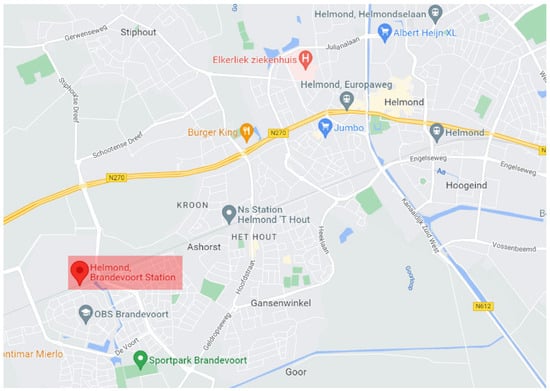
Figure 11.
Location of the hub in Brandevoort, Helmond municipality, highlighted with red on Google Maps. Its geographical coordinates (in DD) are 51.46308, 5.60904.
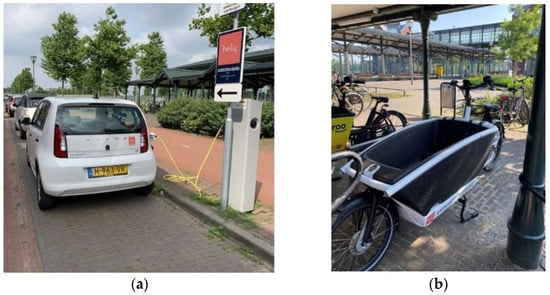
Figure 12.
Hub located outside the train station of Helmond Brandevoort offering (a) shared electric cars and (b) shared cargo e-bikes. Photos are from the SmartHubs EIT project (Official Instagram page).
5.2.2. Application of the Proposed Typology
Regarding the urban context dimension of the proposed typology, as Brandevoort is a suburban area of the city of Helmond, the hub belongs to the suburban category. In order to decide its transportation function as well as mobility spatial scale, we looked at the aggregated data of the users of the hub that the shared mobility provider (Hely) has made available. According to them, all users live within less than 2 km from the hub, with the majority of them living within an 800 m radius of it [74]. This indicates that the hub serves as the origin or/and destination of the trips and does not seem to have a transfer function. Furthermore, it leads to the conclusion that the mobility spatial scale of the hub is the neighbourhood, as we do not see citizens living further away (e.g., in Helmond) using the hub so far. In terms of size, with two shared mobility services, the hub falls into the category of “light hub”. Although it is located just outside a train station, we do not see this influencing the function of the hub, as so far no multi-modal trips were recorded based on the data of the first years of operation [74]. Hence, for the last dimension of the proposed typology, the connection to public transport is also, in this case, not a necessity.
5.3. Hub in Eindhoven, The Netherlands
5.3.1. General Information
This hub is located on the outskirts of the city of Eindhoven, at a new large park and ride facility (P + R Genneper Parken) (Figure 13 and Figure 14) next to a business and a cultural and sports centre, generating a significant number of trips. It opened in 2021 and provides shared bikes and e-bikes and free-floating shared mobility options as well (e-moped and e-bike). Eindhoven Municipality, with the creation of this hub, aims to motivate visitors to park at the edge of the city and continue their trip to the city centre using a sustainable (shared) mode. It also has infrastructure for e-vehicle charging [74]. The hub is located next to a high-occupancy vehicle (HOV) bus line, which offers a high-quality and frequency bus connection directly to the city centre of Eindhoven [76].
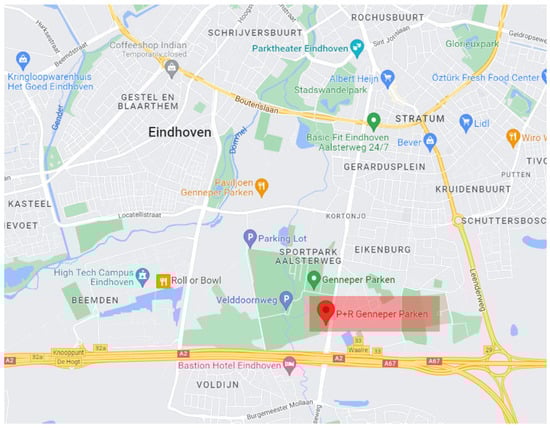
Figure 13.
Location of the hub in Eindhoven, highlighted with red, from Google Maps. Its geographical coordinates (in DD) are 51.40853, 5.48024.
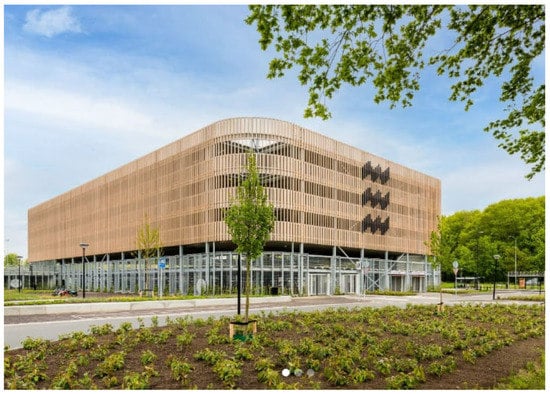
Figure 14.
The P + R Genneper Parken in Eindhoven (the photo is from the SmartHubs EIT project) (Official Instagram page).
5.3.2. Application of the Proposed Typology
The hub is located on the outskirts of the city of Eindhoven, and therefore the category of the urban context dimension of our proposed typology that better fits the description, in this case, is the suburban hub. Most of the users will go to the hub because there is a P + R there, to switch modes, or because they are working at or visiting the Municipal Health Services (GGD), the Van der Valk Hotel, or are making use of the sporting and cultural facilities of the Genneper Parken [74]. As for the transportation function, the City of Eindhoven representatives estimate that the hub accommodates 80% transfer trips and 20% origin/destination ones [76], so the main function of the hub is transfer. It is interesting to note that in the case of P + R facilities, the destination itself encompasses the transfer component. The hub’s primary target audience is regional traffic from the south of The Netherlands heading into the city centre of Eindhoven [76]. Therefore, the mobility spatial scale of the hub is the region in this case. Regarding the last dimension of our proposed typology, the proximity to public transport, in this case we do not have proximity to rail but rather to an HOV bus line, which can influence the use of the hub, promoting multi-modal trips and motivating travelers to possibly use the shared modes offered at the hub as a solution for first/last mile trips. In our proposed typology, proximity to public transport does not necessarily play a significant role in this type of hub.
5.4. Hub in Sant Cugat de Vallès, Metropolitan Area of Barcelona, Spain
5.4.1. General Information
This hub opened in 2021 and is located at the train station of Mira-Sol in the Municipality of Sant Cugat de Vallès, in the Metropolitan Area of Barcelona, Spain (Figure 15). It is a rapidly growing municipality with a population of approximately 91,000 inhabitants [74]. The only available shared mode at the hub (2022) is cargo shared e-bikes (Figure 16a,b), but there are plans to expand the hub to at least include shared bikes as an additional shared mode. Furthermore, extensive private parking facilities have been added to the hub, as well as facilities for charging electric bikes, a repair desk, and an inflator [74]. The objective of this hub is twofold: first, it aims to increase the use of cargo e-bikes by the residents, and second, to facilitate the first/last mile trips of travelers to and from Barcelona [77].
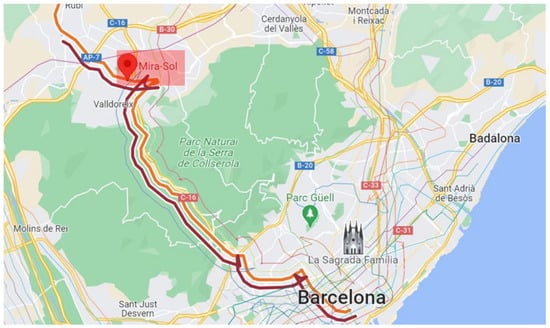
Figure 15.
Location of the hub at Mira-Sol train station at Sant Cugat de Vallès, highlighted with red on Google Maps, in relation to the city of Barcelona, Spain. Its geographical coordinates (in DD) are 41.46940, 2.06134.
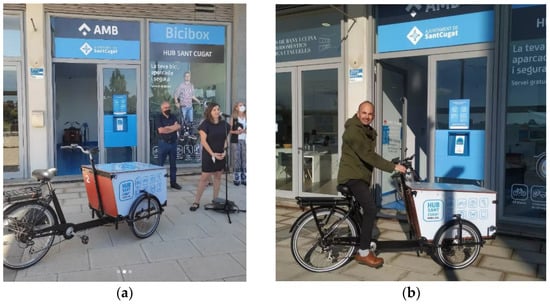
Figure 16.
(a,b) Hub located at the train station of Mira-Sol, Metropolitan Area of Barcelona, Spain which started as a mini-hub, offering only shared cargo e-bikes. Photos are from the SmartHubs EIT project (Official Instagram page).
5.4.2. Application of the Proposed Typology
The hub belongs to the suburban type, as Sant Cugat is mainly residential, and is considered a satellite city of Barcelona, with a large number of commuters travelling to and from Barcelona every day. In addition, the International University of Catalonia has a campus there which acts as a large trip generator. Therefore, it has a dual transportation function: transfer as well as origin/destination. Moreover, the hub can at the same time have a regional mobility spatial scale, concerning the trips to/from Barcelona, or a neighbourhood one, with respect to Sant Cugat. As the hub includes only a shared mode, it belongs to the mini hub category in terms of size. The proximity to public transport (rail station of Mira Sol) in this case plays an important role in the overall function of the hub, although according to our proposed typology, this is not always the case in suburban hubs.
5.5. Hub in Lisbon, Portugal
5.5.1. General Information
Lisbon has an established bike sharing system called GIRA, with 139 stations (as of October 2022), providing regular and e-bikes. For the SmartHubs project, a hub was created at GIRA docking station no. 550, located in the Lumiar district. The site has a metro station in its proximity and it is next to one of the city’s main bus terminals, the Campo Grande terminal (Figure 17). This terminal serves as an entry point for daily commuters from the North and West of the metropolitan area of Lisbon [74]. EMEL (In Portuguese, Empresa Municipal de Mobilidade e Estacionamento de Lisboa (Lisbon Municipal Mobility and Parking Company)) plans to expand the hub by adding new mobility services and other value-added services based on the results of a co-creation process with citizens which took place in 2022 [74]. The hub offers both regular bikes and e-bikes (Figure 18a,b).
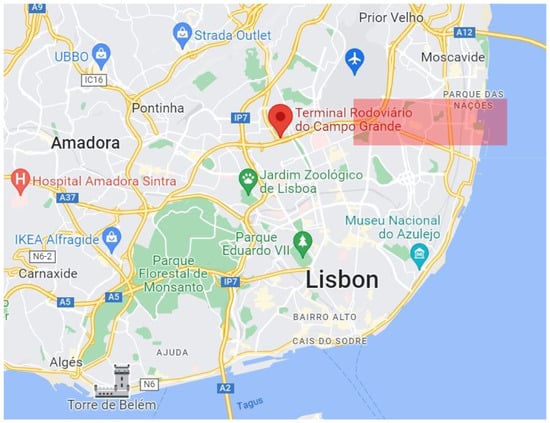
Figure 17.
Location of the hub next to the Terminal Campo Grande in Lisbon, highlighted with red on Google Maps, with the geographical coordinates of (in DD) 38.75962, −9.15990.
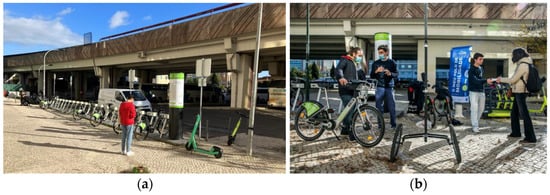
Figure 18.
(a,b) Hub located next to the Campo Grande Bus Terminal in Lisbon, Portugal, which provides bike and e-bike sharing. Photos are from the SmartHubs EIT project (Official Instagram page).
5.5.2. Application of the Proposed Typology
As with the first hub in Amsterdam that we discussed previously, the hub is located in the transition area between the main core of the city centre of Lisbon and the region just outside of it, and therefore it can be placed at the borderline between the city centre and the suburban category concerning urban context. As discussed above, it is located next to one of the principal bus terminals of the city, which sees a large number of commuters on a daily basis. That makes it have mainly a transfer function, as citizens are expected to use the hub as part of a multi-modal trip that includes bus, (e) bike, and possibly other modes as well. Alternatively, the bikes can be used as a first/last mile mode to/from the bus terminal. Data from the GIRA-shared bikes show that in 2022 the average trip in an e-bike from the hub lasted 15 min and had a distance of approximately 2.8 km, while the same figures for a trip with a regular bike were 11 min and 1.8 km, respectively [74]. Moreover, the great majority (85.7%) of the users are travelling to and from the city of Lisbon, with almost 32% living in Lumiar, the neighbourhood where the mobility hub is located, and approximately 16% in Alvalade, a nearby neighbourhood. Two municipalities located in the North of Lisbon metropolitan area with public transport connections to the Campo Grande station, namely Loures and Odivelas, appear to be the place of residence of some of the travelers as well (about 5%) [74].
Regarding the mobility spatial scale, the length of the trips made by users of the hub, especially the ones made by e-bike, shows that they reach destinations outside the neighbourhood of Lumiar, although they are not long enough for us to safely assume that the hub has a mobility spatial scale that goes beyond the neighbourhood and reaches the city level. However, if we take into account the connection with Campo Grande Terminal and the multi-modal trips that are taking place, we could also say that the mobility spatial scale of the hub is the region. As there are two shared modes available at the hub, it is a light hub. Figure 18a,b shows that some users of the free-floating e-scooters that operate in the city of Lisbon park their e-scooters near the bike parking location, but as this is done spontaneously by the users and the hub itself does not provide specific parking places for e-scooters, at least at the moment (2022) (According to a new agreement (January 2023) between the City Council of Lisbon and the five e-scooter companies that operate in the city, the e-scooters should have specific hotspots in the city where they can be parked, otherwise their users will not be able to complete their trips (Source: https://www.theportugalnews.com/news/2023-01-10/lisbon-clamps-down-on-scooters/73685) (accessed on 5 February 2023)), the e-scooters cannot be considered part of the mobility hub. The proximity to public (regional) transport has an important role in this case, as the large bus terminal generates multi-modal trips.
It is interesting to note that in Lisbon there are also GIRA shared bike stations (that can be considered mini hubs with just one shared mode) that are located in the transition area of two other urban context categories: the city centre and the historic city centre, and also that there are areas that have a mix of both characters.
5.6. Reflection on the Application of the Proposed Typology to the Different Hubs
In this section, we discuss how our proposed typology for shared mobility hubs can be applied to different hubs that were created in the context of the SmartHubs project, funded by the EIT Urban Mobility-KIC. We focused on six different shared mobility hubs located in five different cities in three countries. The selected cities were of very different scale and size, ranging from Amsterdam and Lisbon, the capital cities of The Netherlands and Portugal, to a small city in the metropolitan area of Barcelona in Spain. Moreover, the three participating countries have different shared mobility policies in place, and their citizens have very different mobility habits. For instance, in The Netherlands, there is a well-established bike culture for commuting and leisure trips that has existed for decades, while the same cannot be said for Portugal or most cities in Spain, where the shift to more sustainable modes of transportation has been more recent. Other factors that have to do with the geomorphology of the area differentiate the case studies as well, e.g., the flat Dutch cities in comparison to hilly Lisbon. We therefore, think that we managed to have a sufficiently diverse selection of example cases to test how our proposed typology could be applied to different hubs.
It was shown that most of the examined hubs belong to the suburban category of the urban context. This did not come as a surprise to us, because as discussed in Section 4, according to urban planning literature, the suburban context is the one with the most widespread definition of all the categories, as it can include many different concepts: from satellite cities to residential neighbourhoods outside the main core of the city centre. In addition to suburban hubs, we also discussed hubs that are located in the transition area between what is considered suburban and the city centre, and also a hub that belongs to the emerging urban growth centre category. It was also shown that the two hub types are not represented in the project SmartHubs, and these are the key (standalone) destination and the historic centre one. Although there are cities in this project that have historic city centres (e.g., Lisbon), they have decided to locate the hubs in different areas.
We can conclude that the application of the proposed typology took place without revealing any major flaws in it, as we were able to classify all hubs in one of the given categories, in all the proposed dimensions. An interesting insight that emerged from the discussion is that often a hub does not belong to strictly one category of urban context, but is rather located in a transition zone between two categories, such as in the case of the hubs in Amsterdam and Lisbon. As for the dimensions of mobility spatial scale and size of the hub, all examined hubs could be placed in one of the suggested categories without facing any incompatibility issues concerning what was suggested by the typology.
Another interesting observation from the application of the proposed typology is that although, according to it and based on the literature review that we have made, the proximity to public transportation is not a necessity for a shared mobility hub located in a suburban area, we saw that there are cases where the public transport connection plays a pivotal role in suburban hubs because it incentivizes multi-modal trips. This can be explained once again by the wide spectrum of contexts that the definition of “suburban” can entail. A key takeaway and an idea for future research can therefore be to further explore the category of suburban hubs. By taking a deeper look at this specific type of hub that is very common in cities, new sub-categories for the typology dimensions may emerge. For example, for a satellite city type of suburban hub, public transport is possibly a necessity, while for a residential area type of suburban hub this does not appear to be a break-or-make criterion.
Additional ideas for future research can include examining each one of the proposed hub types and real life examples of them in detail, also under the perspective of services that can add value to the users of the hub, such as restaurants etc., because as we saw in Section 2 of the paper, they can be an important part of a shared mobility hub. Moreover, it would be very interesting to investigate how the development of shared mobility hubs can take place in cities where the dockless shared mobility services (such as e-scooters) are the dominant mode of shared mobility, and if such situation would require adaptations to the categories of our suggested typology (e.g., see the discussion about the current situation with e-scooters in Lisbon in Section 5.5).
6. Conclusions
This paper contributes to the ongoing discussion of a very timely topic in Europe and worldwide, which is the need for the deployment of a new generation of mobility hubs, with an emphasis on shared mobility, to play an important role in the transition to a more sustainable urban mobility system. After reviewing the existing academic as well as non-academic literature on the topic, the lack of a common approach in defining what exactly comprises a shared mobility hub and how to distinguish different types of hubs was identified. Our work offers a review of existing definitions and suggests a new definition encompassing the essence of a current and future shared mobility mode.
The paper also provided thorough insights into existing typologies that attempt to classify different hub types and discusses the main components used in these classifications, highlighting the main differences and similarities among various approaches worldwide. Following that, a selection of which dimensions to be included in our proposed framework took place, and a simple and user-friendly typology framework in the form of a matrix, with five different types of hubs, was proposed. The suggested approach aims to be more flexible than the existing ones, as only the main dimension, the urban context, is fixed, which means that, for instance, a city centre hub does not need to be of a specific size; it can start small and evolve into a larger one, which in some cases could have been restrictive at the stage of planning. As referred to previously, the selection of the dimensions and categories under each dimension was made with a focus on the reality of European cities, although the typology is not restricted to only fit the classification of hubs located in Europe.
We trust that the suggested typology can be useful to policy-makers, local authorities, transport and urban planners, as it can help conduct a first screening of which type of hub is needed for each specific case, according to the needs of the city, but also the strategies, policies, and aspirations of the decision-makers. Deciding which type(s) of hub would be best to build is an important step that needs to be completed before moving on to the next step, which would entail dealing with the hub location problem, thus identifying the best locations to place the shared mobility hubs in the city. This is typically a combinatorial optimization problem that is already hard to solve for uni-modal situations (e.g., see [78,79]).
The research presented herein can open interesting pathways in assisting the decision-making process of finding the most desirable locations to locate shared mobility hubs, as before planning the development of hubs, understanding the need to have different types is of critical importance. For instance, the proposed typology can be used in combination with a decision support tool which uses spatial multi-criteria analysis to find desirable locations for shared mobility hubs in a city.
Author Contributions
Conceptualization, A.R., G.H.d.A.C., I.A.J. and M.M.C.; methodology, A.R., G.H.d.A.C., I.A.J. and M.M.C.; validation, A.R., G.H.d.A.C., I.A.J. and M.M.C.; formal analysis, A.R., G.H.d.A.C., I.A.J. and M.M.C.; investigation, A.R.; writing—original draft preparation, A.R.; writing—review and editing, G.H.d.A.C., I.A.J. and M.M.C.; visualization, A.R.; supervision, G.H.d.A.C.; funding acquisition, G.H.d.A.C. All authors have read and agreed to the published version of the manuscript.
Funding
The research presented herein is part of the SmartHubs Project (2020–2022), funded by the EIT–KIC on Urban Mobility. Grant Agreement: GA2021 EIT UM.
Data Availability Statement
Data sharing is not applicable to this article.
Conflicts of Interest
The authors declare that they have no conflict of interest.
References
- IPCC (Intergovernmental Panel on Climate Change). Climate Change 2022. Mitigation of Climate Change: Summary for Policy Makers. Available online: https://www.ipcc.ch/report/ar6/wg3/downloads/report/IPCC_AR6_WGIII_SPM.pdf (accessed on 25 November 2022).
- Kuss, P.; Nicholas, K.A. A dozen effective interventions to reduce car use in European cities: Lessons learned from a meta-analysis and transition management. Case Stud. Transp. Policy 2022, 10, 1494–1513. [Google Scholar] [CrossRef]
- Saeidizand, P.; Fransen, K.; Boussauw, K. Revisiting car dependency: A worldwide analysis of car travel in global metropolitan areas. Cities 2022, 120, 103467. [Google Scholar] [CrossRef]
- Marletto, G. Car and the city: Socio-technical transition pathways to 2030. Technol. Forecast. Soc. Chang. 2014, 87, 164–178. [Google Scholar] [CrossRef]
- Tian, X.; Huang, G.; Song, Z.; An, C.; Chen, Z. Impact from the evolution of private vehicle fleet composition on traffic related emissions in the small-medium automotive city. Sci. Total Environ. 2022, 840, 156657. [Google Scholar] [CrossRef]
- González, R.M.; Marrero, G.A.; Rodríguez-López, J.; Marrero, A.S. Analyzing CO2 emissions from passenger cars in Europe: A dynamic panel data approach. Energy Policy 2019, 129, 1271–1281. [Google Scholar] [CrossRef]
- Adams, M.D.; Requia, W.J. How private vehicle use increases ambient air pollution concentrations at schools during the morning drop-off of children. Atmos. Environ. 2017, 165, 264–273. [Google Scholar] [CrossRef]
- Degraeuwe, B.; Thunis, P.; Clappier, A.; Weiss, M.; Lefebvre, W.; Janssen, S.; Vranckx, S. Impact of passenger car NOX emissions on urban NO2 pollution—Scenario analysis for 8 European cities. Atmos. Environ. 2017, 171, 330–337. [Google Scholar] [CrossRef]
- Struyf, E.; Sys, C.; van de Voorde, E.; Vanelslander, T. Calculating the cost of congestion to society: A case study application to Flanders. Res. Transp. Bus. Manag. 2022, 44, 100573. [Google Scholar] [CrossRef]
- Fan, Z.; Harper, C. Congestion and environmental impacts of short car trip replacement with micromobility modes. Transp. Res. Part D 2022, 103, 103173. [Google Scholar] [CrossRef]
- Guzman, L.A.; Oviedo, D.; Arellana, J.; Cantillo-Garcia, V. Buying a car and the street: Transport justice and urban space distribution. Transp. Res. Part D 2021, 95, 102860. [Google Scholar] [CrossRef]
- Delclos-Alio, X.; Kanai, C.; Soriano, L.; Quistberg, D.A.; Ju, Y.; Dronova, I.; Gouveia, N.; Rodriguez, D.A. Cars in Latin America: An exploration of the urban landscape and street network correlates of motorization in 300 cities. Travel Behav. Soc. 2023, 30, 192–201. [Google Scholar] [CrossRef]
- European Environmental Agency. Environmental Noise in Europe—2020. Report No. 22/2019. Available online: https://www.eea.europa.eu/publications/environmental-noise-in-europe (accessed on 25 November 2022).
- Anciaes, P.R. Visual Impacts from Transport. In International Encyclopedia of Transportation; Elsevier: Amsterdam, The Netherlands, 2021; pp. 285–291. [Google Scholar]
- Svennevik, E.M.C.; Dijk, M.; Arnfalk, P. How do new mobility practices emerge? A comparative analysis of car-sharing in cities in Norway, Sweden and the Netherlands. Energy Res. Soc. Sci. 2021, 82, 102305. [Google Scholar] [CrossRef]
- Bösehans, G.; Bell, M.; Thorpe, N.; Correia, G.H.A.; Dissanayake, D. eHUBs—Identifying the potential early and late adopters of shared electric mobility hubs. Int. J. Sustain. Transp. 2021, 17, 199–218. [Google Scholar] [CrossRef]
- Christensen, T.H.; Friis, F.; Nielsen, M.V. Shifting from ownership to access and the future for MaaS: Insights from car sharing practices in Copenhagen. Case Stud. Transp. Policy 2022, 10, 841–850. [Google Scholar] [CrossRef]
- Haase, E. Driving the environmental extra mile—Car sharing and voluntary carbon dioxide offsetting. Transp. Res. Part D 2022, 109, 103361. [Google Scholar] [CrossRef]
- Kim, M.; Cho, G.H. Examining the causal relationship between bike-share and public transit in response to the COVID-19 pandemic. Cities 2022, 131, 104024. [Google Scholar] [CrossRef]
- Ricci, M. Bike sharing: A review of evidence on impacts and processes of implementation and operation. Res. Transp. Bus. Manag. 2015, 15, 28–38. [Google Scholar] [CrossRef]
- Shaheen, S.; Cohen, A. Transportation Network Companies (TNCs) and the Future of Public Transportation. Int. Encycl. Transp. 2021, 2021, 584–588. [Google Scholar]
- Akimova, T.; Arana-Landín, G.; Heras-Saizarbitoria, I. The economic impact of Transportation Network companies on the traditional taxi Sector: An empirical study in Spain. Case Stud. Transp. Policy 2020, 8, 612–619. [Google Scholar] [CrossRef]
- Liao, F.; Correia, G. Electric carsharing and micromobility: A literature review on their usage pattern, demand, and potential impacts. Int. J. Sustain. Transp. 2022, 16, 269–286. [Google Scholar] [CrossRef]
- Gebhardt, L.; Ehrenberger, S.; Worf, C.; Cyganski, R. Can shared E-scooters reduce CO2 emissions by substituting car trips in Germany? Transp. Res. Part D 2022, 109, 103328. [Google Scholar] [CrossRef]
- Shaheen, S.; Chan, N. Mobility and the Sharing Economy: Potential to Overcome First-and Last-Mile Public Transit Connections. 2020. Available online: https://escholarship.org/uc/item/8042k3d7 (accessed on 25 November 2022).
- Roukouni, A.; Correia, G.H.d.A. Evaluation methods for the impacts of shared mobility: Classification and critical review. Sustainability 2020, 12, 10504. [Google Scholar] [CrossRef]
- Aydin, N.; Seker, S.; Ozkan, B. Planning location of mobility hub for sustainable urban mobility. Sustain. Cities Soc. 2022, 81, 103843. [Google Scholar] [CrossRef]
- Rongen, T.; Tillema, T.; Arts, J.; Alonso-Gonzalez, M.J.; Witte, J.-J. An analysis of the mobility hub concept in the Netherlands: Historical lessons for its implementation. J. Transp. Geogr. 2022, 104, 103419. [Google Scholar] [CrossRef]
- Bernardes Real, L.; Contreras, I.; Cordeu, J.-F.; Saraiva de Camargo, R.; de Miranda, G. Multimodal hub network design with flexible routes. Transp. Res. Part E 2021, 146, 102188. [Google Scholar] [CrossRef]
- Metrolinx. MOBILITY HUB GUIDELINES for the Greater Toronto and Hamilton Area. 2011. Available online: https://www.metrolinxengage.com/sites/default/files/mhgbrochure.pdf (accessed on 25 November 2022).
- City of Hamilton. James Street North Mobility Hub Study. BrookMcllroy. 2014. Available online: https://www.hamilton.ca/city-planning/planning-community/james-street-north-mobility-hub-study (accessed on 25 November 2022).
- City of Los Angeles and LA Urban Design Studio. Mobility Hubs: A Reader’s Guide. 2016. Available online: http://www.urbandesignla.com/resources/MobilityHubsReadersGuide.php (accessed on 25 November 2022).
- Miramontes, M.; Pfertner, M.; Sharanya Rayaprolu, H.; Schreiner, M.; Wulfhorst, G. Impacts of a multimodal mobility service on travel behavior and preferences: User insights from Munich’s first Mobility Station. Transportation 2017, 44, 1325–1342. [Google Scholar] [CrossRef]
- Shared Used Mobility Center. Mobility Hub Principles. 2018. Available online: https://sharedusemobilitycenter.org/wp-content/uploads/2018/08/Mobility-Hub-Principles.pdf (accessed on 25 November 2022).
- Aono, S. Identifying Best Practices for Mobility Hubs. Report Prepared for TransLink. 2019. Available online: https://sustain.ubc.ca/sites/default/files/Sustainability%20Scholars/2018_Sustainability_Scholars/Reports/2018-71%20Identifying%20Best%20Practices%20for%20Mobility%20Hubs_Aono.pdf (accessed on 5 December 2022).
- CoMoUK. Mobility Hubs Guidance. EU Interreg North Sea Region “SHARE North” Project. 2019. Available online: https://como.org.uk/wp-content/uploads/2019/10/Mobility-Hub-Guide-241019-final.pdf (accessed on 5 December 2022).
- Mouw, A. Applying the Concept of Mobility Hubs in the Context of the Achtersluispolder. Bachelor’s Thesis, Civil Engineering, University of Twente, Enschede, The Netherlands, 2020. Available online: http://essay.utwente.nl/85058/1/Mouw-Alex.pdf (accessed on 5 December 2022).
- Portland Bureau of Transportation. Mobility Hub Typology Study. 2020. Available online: https://altago.com/wp-content/uploads/PBOT-Mobility-Hub-Typology_June2020.pdf (accessed on 9 August 2022).
- Snel, W. How Mobility Hubs Create Synergy Between Mobility, Energy and Social Challenges. In Transportation Planning 2020. Moving People Over Cars: Mobility for Healthy Communities; American Planning Association, Transportation Planning Division: Chicago, IL, USA, 2020; Available online: https://altago.com/wp-content/uploads/APA_TPD_Publications_SoTP_2020.pdf (accessed on 9 August 2022).
- Koedood, J. Future Mobihubs as Social Connector for the Neighbourhood. about Positive Friction, Quantum Mechanics, and your Mother. Master’s Thesis, TU Delft, Delft, The Netherlands, 2020. Available online: https://repository.tudelft.nl/islandora/object/uuid%3A39e32d21-e63b-444b-8fe7-86f33ee1053e (accessed on 9 August 2022).
- Li, X. Design of a Living as a Service Platform including Shared Mobility. Master’s Thesis, TU Delft, Delft, The Netherlands, 2020. Available online: https://repository.tudelft.nl/islandora/object/uuid%3A8d9fe171-ac1b-4366-8d01-983e6f0900e0 (accessed on 9 August 2022).
- SEStran. Mobility Hubs: A Strategic Study for the South East of Scotland/SEStran Region. 2020. Available online: https://sestran.gov.uk/wp-content/uploads/2020/05/SEStran-Mobility-Hubs-Strategic-Study-Final-Report.pdf (accessed on 9 August 2022).
- Tippabhatla, R. Analysing Mobility Hubs Using Microsimulation Travel Demand Model. The Case of OCTAVIUS. Master’s Thesis, TU Delft, Delft, The Netherlands, 2020. Available online: https://repository.tudelft.nl/islandora/object/uuid%3Adbdb926d-3ad6-473c-a5a6-62bf873e91a3 (accessed on 23 November 2022).
- San Diego Forward. 2021 Regional Plan. Mobility Hubs. 2021. Available online: https://sdforward.com/docs/default-source/2021-regional-plan/5039-sdfrpvisionfivebigmovesonesheets-mobility-hubs-june2019_final.pdf?sfvrsn=7fd3f865_2 (accessed on 17 July 2022).
- Blad, K.; Correia, G.H.d.A.; van Nes, R.; Annema, J.A. A methodology to determine suitable locations for regional shared mobility hubs. Case Stud. Transp. Policy 2021, 10, 1904–1916. [Google Scholar] [CrossRef]
- DePaolo, C.A.; Wilkinson, K. Get Your Head into the Clouds: Using Word Clouds for Analyzing Qualitative Assessment Data. TechTrends 2014, 58, 38–44. [Google Scholar] [CrossRef]
- Jin, Y. Development of Word Cloud Generator Software Based on Python. Procedia Eng. 2017, 147, 788–792. [Google Scholar] [CrossRef]
- Heimerl, F.; Lohmann, S.; Lange, S.; Ertl, T. Word Cloud Explorer: Text Analytics Based on Word Clouds. In Proceedings of the 47th Hawaii International Conference on System Science, Waikoloa, HI, USA, 6–9 January 2014. [Google Scholar]
- Temple, S. Word Clouds Are Lame. Exploring the Limitations of the Word Cloud as a Data Visualization. Published in towards Data Science. 2019. Available online: https://towardsdatascience.com/word-clouds-are-lame-263d9cbc49b7 (accessed on 3 December 2022).
- Arup and Go-Ahead. Future Mobility Hubs. Supporting the Transition towards Sustainable Journeys. 2020. Available online: https://www.arup.com/perspectives/publications/research/section/future-mobility-hubs (accessed on 15 October 2022).
- Metropolitan Transportation Commission. Bay Area Regional Mobility Hubs. Mobility Hub Implementation Playbook. 2021. Available online: https://mtc.ca.gov/tools-and-resources/digital-library/mtc-mobility-hub-implementation-playbook (accessed on 18 November 2022).
- Bayern Innovativ GmbH. e-Hubs Digital Blueprint. 2022. Available online: https://www.bayern-innovativ.de/en/ehubs/page/ehubs-project-strengthens-shared-mobility (accessed on 18 November 2022).
- Rhode Island Transit Master Plan. Transit Forward RI 2040. Transit Strategies Mobility Hubs. 2019. Available online: https://transitforwardri.com/pdf/Strategy%20Paper%2018%20Mobility%20Hubs.pdf (accessed on 18 November 2022).
- Metrolinx Mobility Hub. Policy Review. Background Paper. 2014 Regional Transportation Plan. 2018. Available online: https://www.metrolinx.com/en/regionalplanning/rtp/background/Mobility%20Hub%20Policy%20Review%202018.pdf (accessed on 17 July 2022).
- Arlington County. Mobility Hubs. Guidebook and Pilot Concept Design. 2021. Available online: https://www.mwcog.org/assets/1/6/TLC_FY21_-_Arlington_County_Micro-Mobility_Transit_Hub_Prototype.pdf (accessed on 18 November 2022).
- PosadMaxwan. Walkability & Mobility Hubs: GIS Applications for Mobility Transitions. 2021. Available online: https://upload.lingacms.nl/nv_230ff9fa/Presentaties_2021/Ronde_3/Mobility_Hub_networks__catalyst_for_Walkable_neighborhoods.pdf (accessed on 5 December 2022).
- City of Amsterdam. Amsterdam Back to the Future. More Space for Living through Hubs. Project Report in Collaboration with Fronteer; City of Amsterdam: Amsterdam, NY, USA, 2021. [Google Scholar]
- Van Rooij, D.M.E. Neighbourhood Mobility Hubs Exploring the Potential Users, Their Perceptions and Travel Behaviour Effects. Master’s Thesis, TU Delft, Delft, The Netherlands, 2020. Available online: https://cenexgroup.nl/wp-content/uploads/2021/05/ThesisFinal-1.pdf (accessed on 3 October 2022).
- Van Heijningen, W. Shared Mobilty and Hubs City of Amsterdam. In Proceedings of the City Managers Meeting Tomorrow Mobility World Congress, Barcelona, Spain, 16–22 November 2022; Available online: https://impacts.org/wp-content/uploads/2022/11/Presentation-shared-mobility-and-hubs-TMWC-Barcelona-16-nov-2022-Amsterdam.pdf (accessed on 15 January 2023).
- Coenegrachts, E.; Beckers, J.; Vaneslander, T.; Verhetsel, A. Business Model Blueprints for the Shared Mobility Hub Network. Sustainability 2021, 13, 6939. [Google Scholar] [CrossRef]
- Handy, S. Methodologies for exploring the link between urban form and travel behaviour. Transp. Res. Part D Transp. Environ. 1996, 1, 151–165. [Google Scholar] [CrossRef]
- Wolday, F. The effect of neighbourhood and urban center structures on active travel in small cities. Cities 2023, 132, 104050. [Google Scholar] [CrossRef]
- Hillier, B. Cities as Movement Economies. In Space Is the Machine; Cambridge University Press: Cambridge, UK, 1996; pp. 111–137. [Google Scholar]
- Monokrousou, K.; Giannopoulou, M. Interpreting and Predicting Pedestrian Movement in Public Space through Space Syntax Analysis. Procedia Soc. Behav. Sci. 2016, 223, 509–514. [Google Scholar] [CrossRef]
- Bibri, S.E.; Krogstie, J.; Kärrholm, M. Compact city planning and development: Emerging practices and strategies for achieving the goals of sustainability. Dev. Built Environ. 2020, 4, 100021. [Google Scholar] [CrossRef]
- Lehmann, S. Sustainable urbanism: Towards a framework for quality and optimal density? Future Cities Environ. 2016, 2, 8. [Google Scholar] [CrossRef]
- Airgood-Obryski, W.; Rieger, S. Defining Suburbs: How Definitions Shape the Suburban Landscape. Joint Center of Housing Studies of Harvard University. 2019. Available online: https://www.jchs.harvard.edu/sites/default/files/Harvard_JCHS_Airgood-Obrycki_Rieger_Defining_Suburbs.pdf (accessed on 15 January 2023).
- Kubeš, J.; Ouředníček, M. Functional types of suburban settlements around two differently sized Czech cities. Cities 2022, 127, 103742. [Google Scholar] [CrossRef]
- Zhou, C.; Petryshyn, H.; Kryvoruchko, O.; Kochan, O.; Przystupa, K. Potential and Opportunities of Use of Postindustrial Buildings and Territories for Urban Development: Case Studies of the Historical Area in Lviv (Ukraine). Sustainability 2022, 14, 16020. [Google Scholar] [CrossRef]
- Versluis, R. Urban Renewal in Rotterdam an Analysis of the Discourse of Gentrification in Rotterdam’s Urban Policy and Practices. Master’s Thesis, Wageningen University, Wageningen, The Netherlands, 2017. Available online: https://edepot.wur.nl/425058 (accessed on 17 January 2023).
- Droste, C.; Lelevrier, C.; Wassenberg, F. Urban Regeneration in European Social Housing Areas. In Social Housing in Europe II: A Review of Policies and Outcomes; Scanlon, K., Whitehead, C., Eds.; LSE: London, UK, 2008; Chapter 11. [Google Scholar]
- Serageldin, I.; Shluger, E.; Martin-Brown, J. Historic Cities and Scared Sites: Cultural Roots for Urban Futures; The World Bank: Washington, DC, USA, 2001. [Google Scholar]
- Van Twuijver, M.; Bosma, N. Working Paper: European Historic Urban Areas—State of Play. HUB-IN Project—Hubs of Innovation and Entrepreneurship for the Transformation of Historic Urban Areas; H2020-SC5-2019, GA 869429; European Commission: Brussels, Belgium, 2021. [Google Scholar]
- Berndsen, J. 21062 SMARTHUBS DEL12 End of Hub Pilot Evaluation Report; Deliverable Report; EIT Urban Mobility: München, Germany, 2022. [Google Scholar]
- Marineterrein Amsterdam. Available online: https://www.marineterrein.nl/ (accessed on 15 January 2023).
- Kramer, B. Representative of the City of Eindhoven in the SmartHubs (EIT) Project; European Institute of Innovation and Technology: Budapest, Hungary, 2021. [Google Scholar]
- SmartHubs (EIT). 2022. Available online: https://smarthubs.eu/ (accessed on 15 January 2023).
- Huang, K.; An, K.; Correia, G.H.d.A. Planning station capacity and fleet size of one-way electric carsharing systems with continuous state of charge functions. Eur. J. Oper. Res. 2020, 287, 1075–1091. [Google Scholar] [CrossRef]
- Correia, G.H.d.A.; Antunes, A.P. Optimization approach to depot location and trip selection in one-way carsharing systems. Transp. Res. Part E 2012, 48, 223–247. [Google Scholar] [CrossRef]
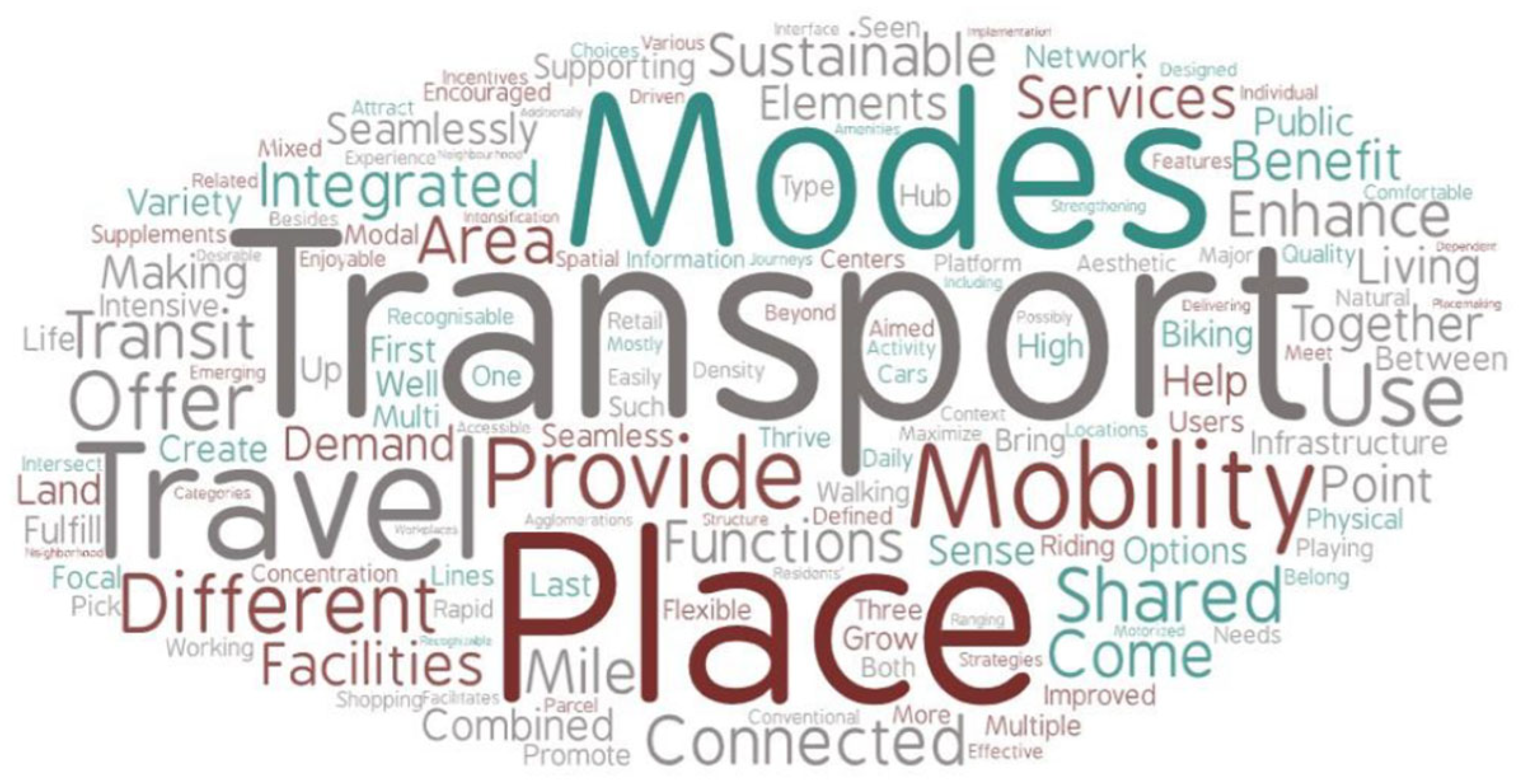
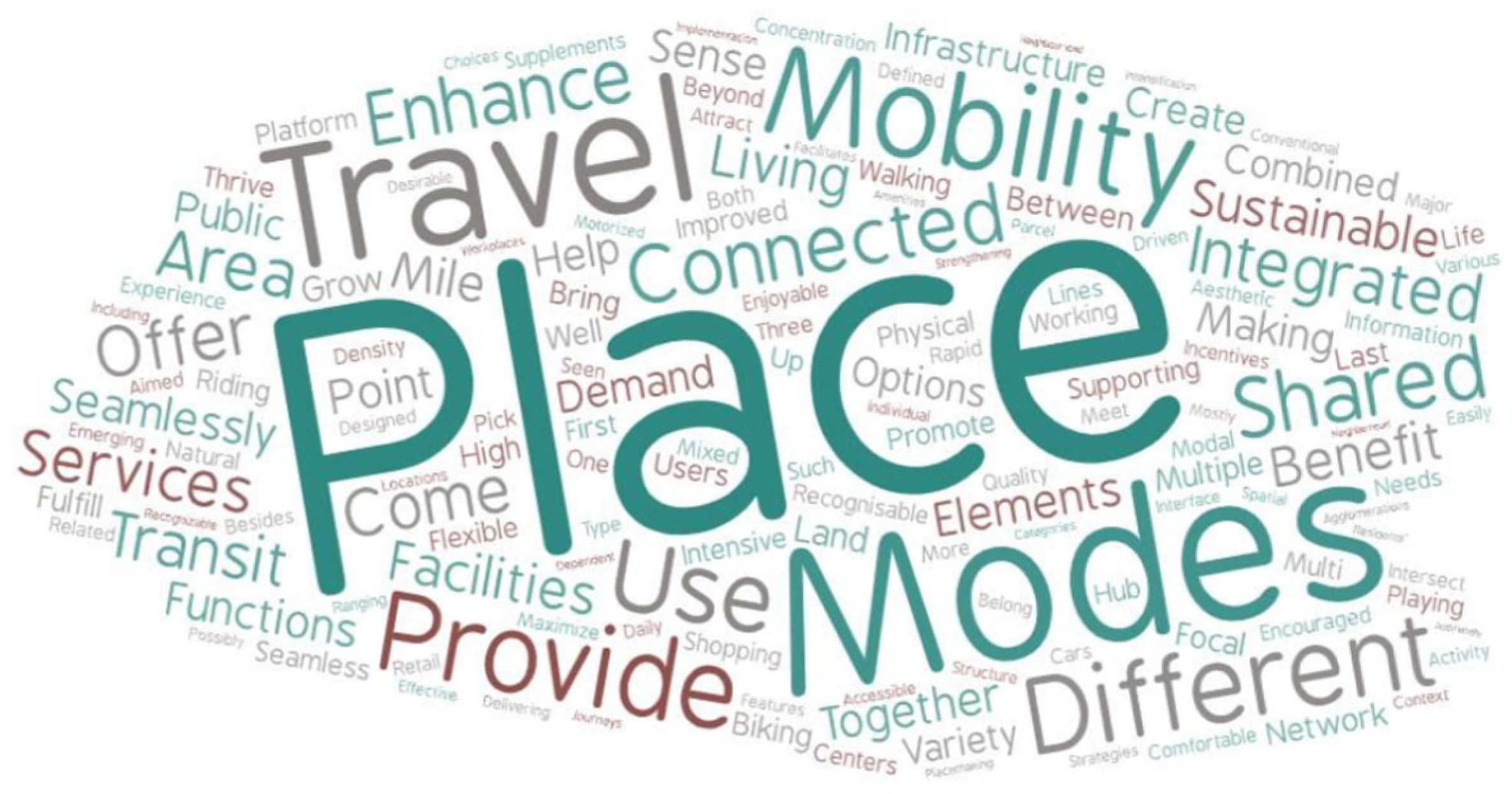
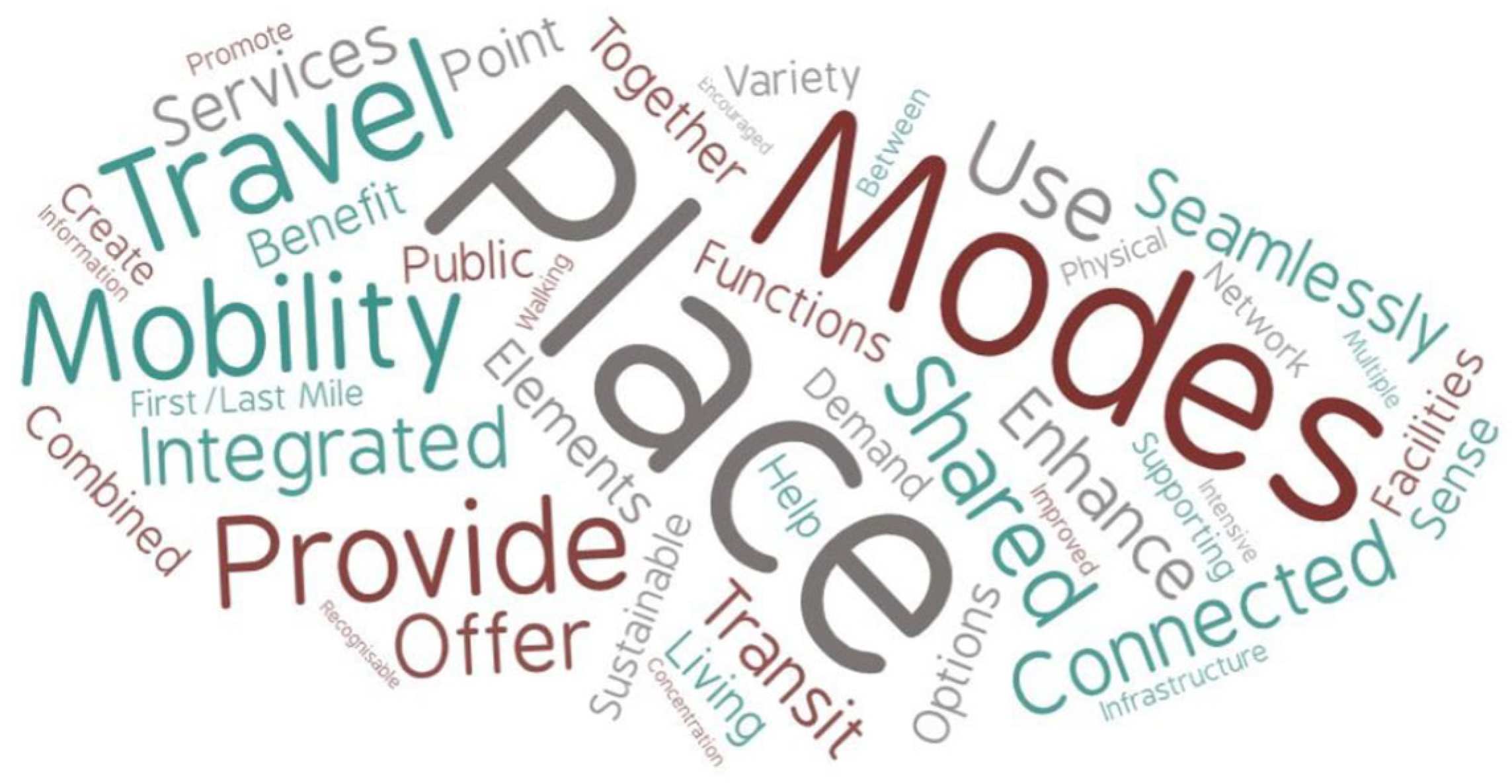
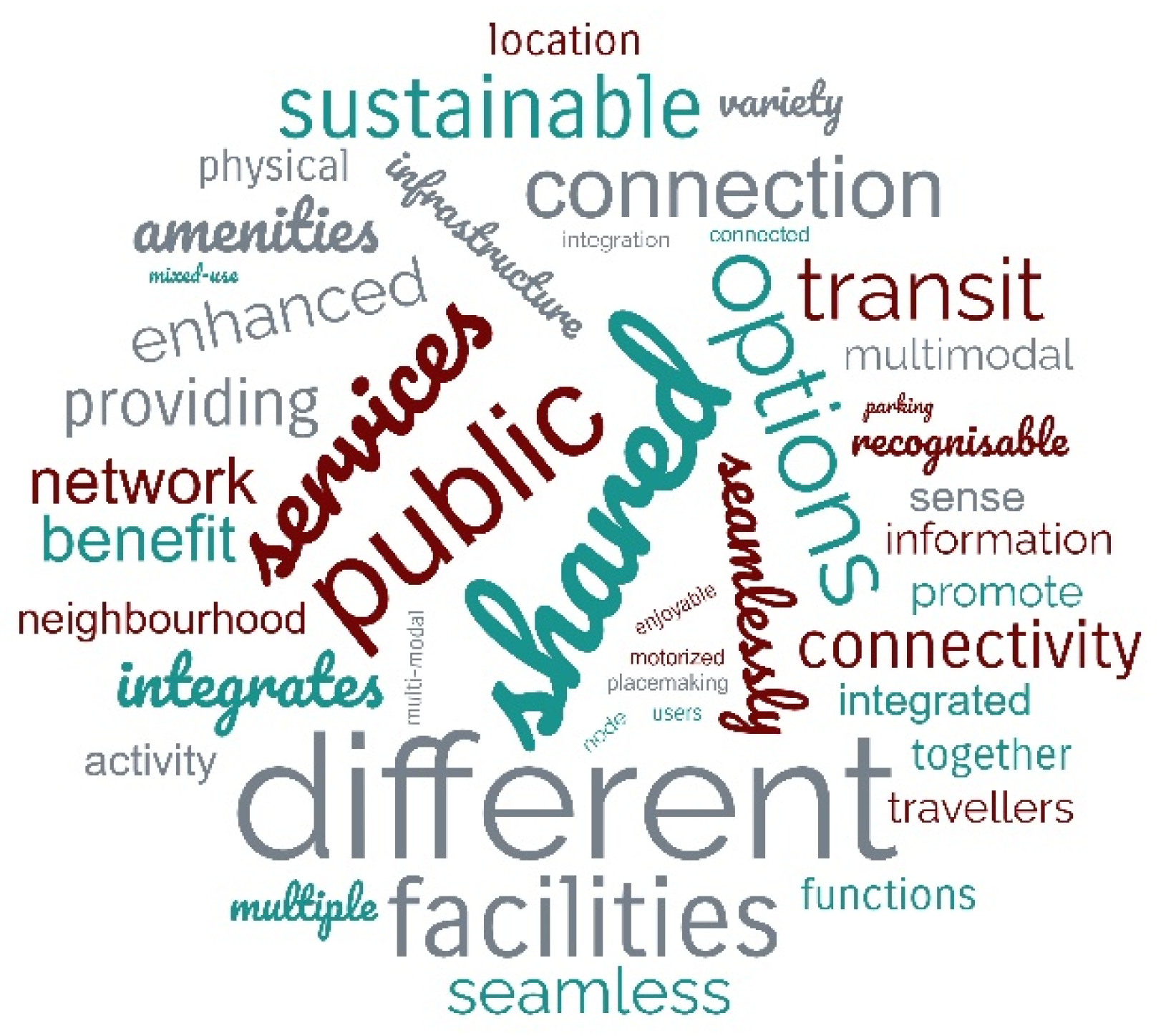
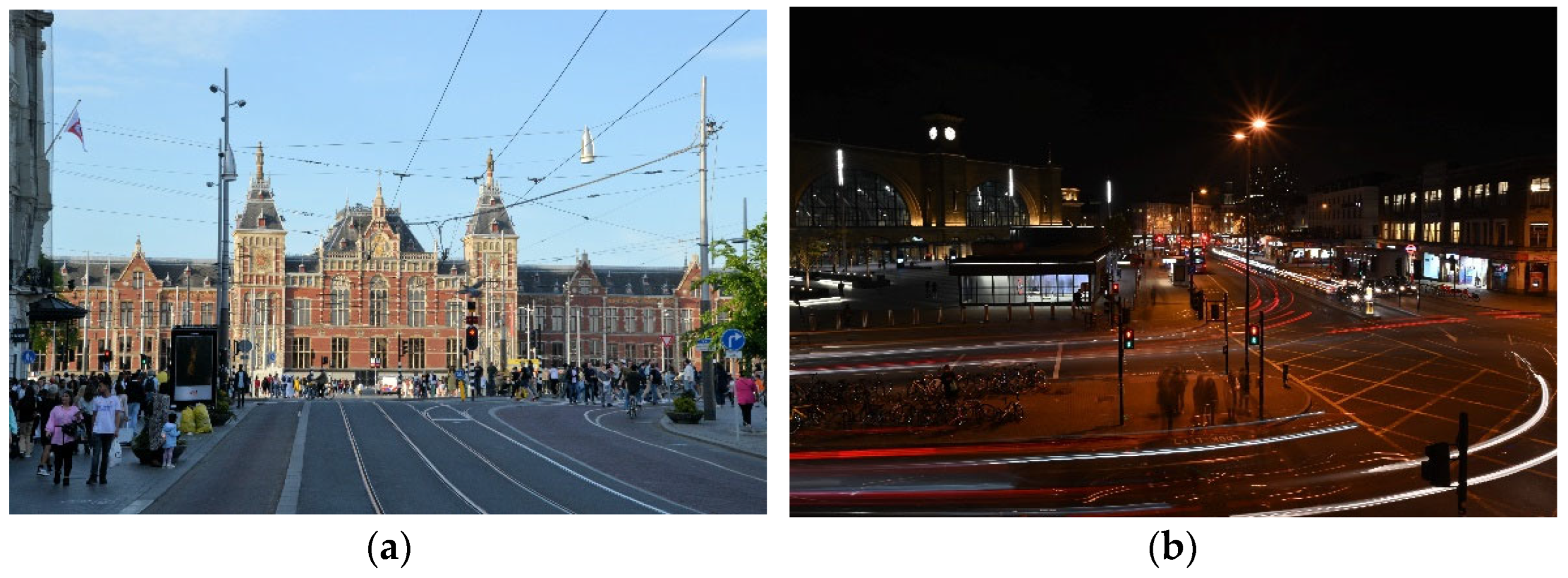
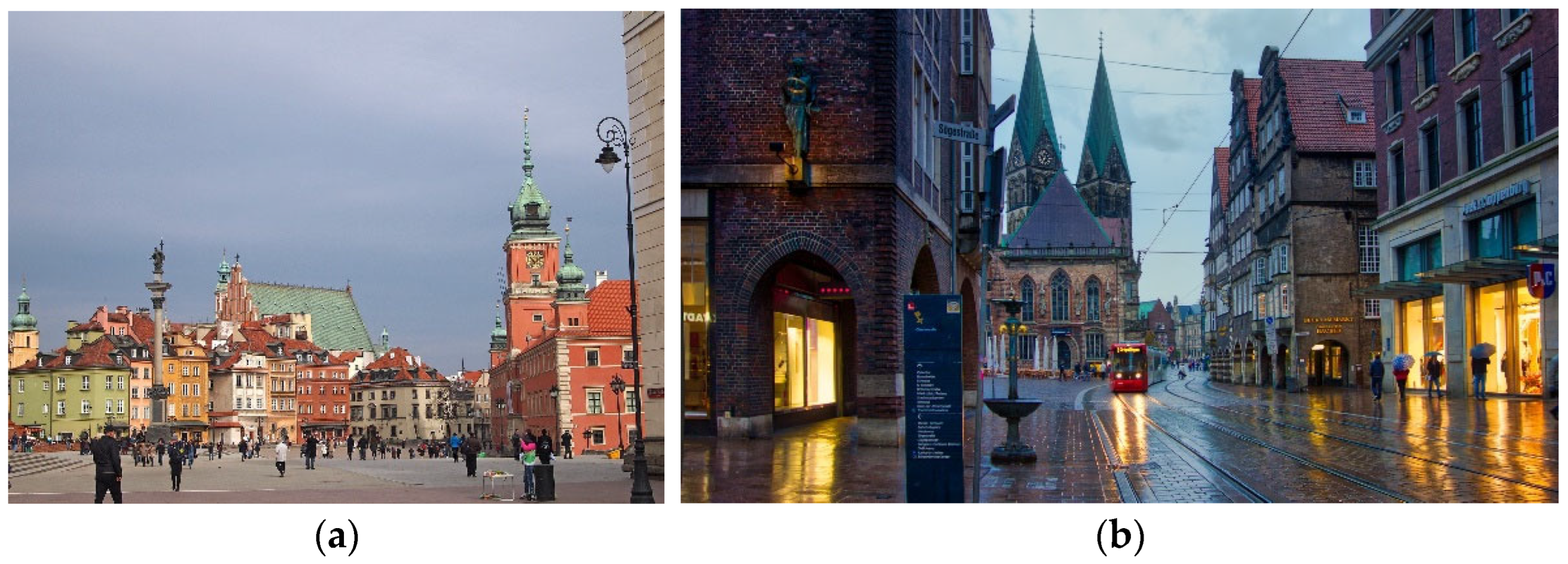
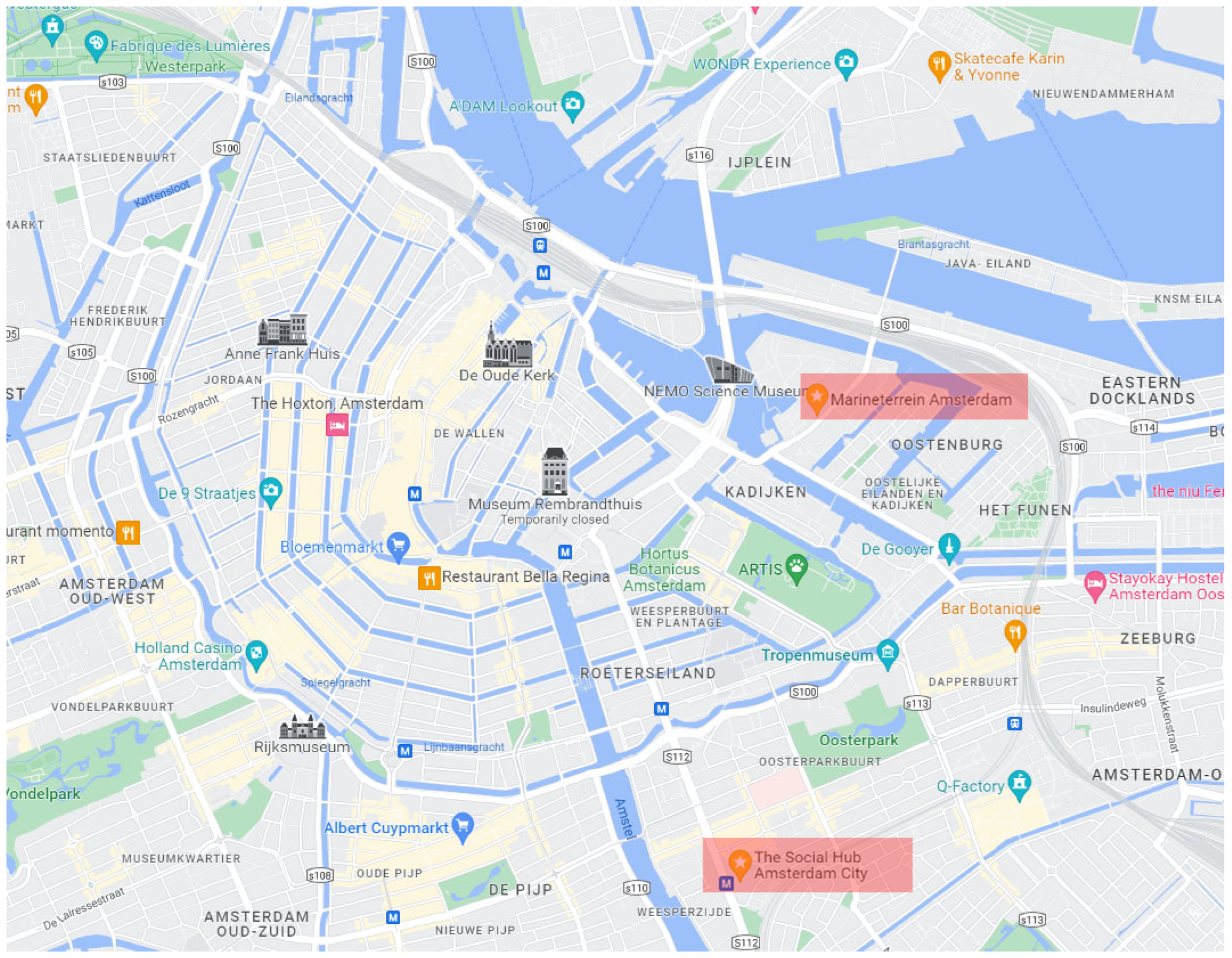
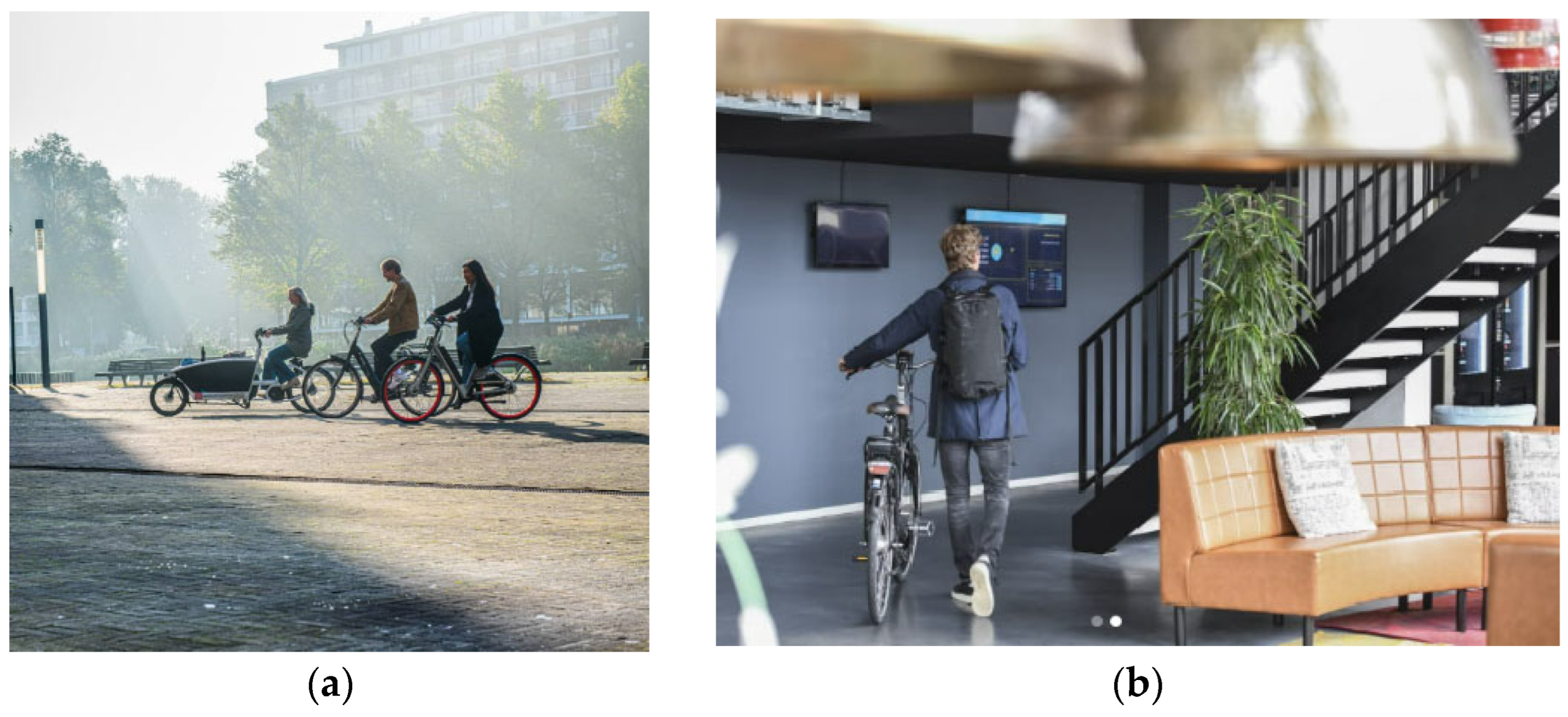
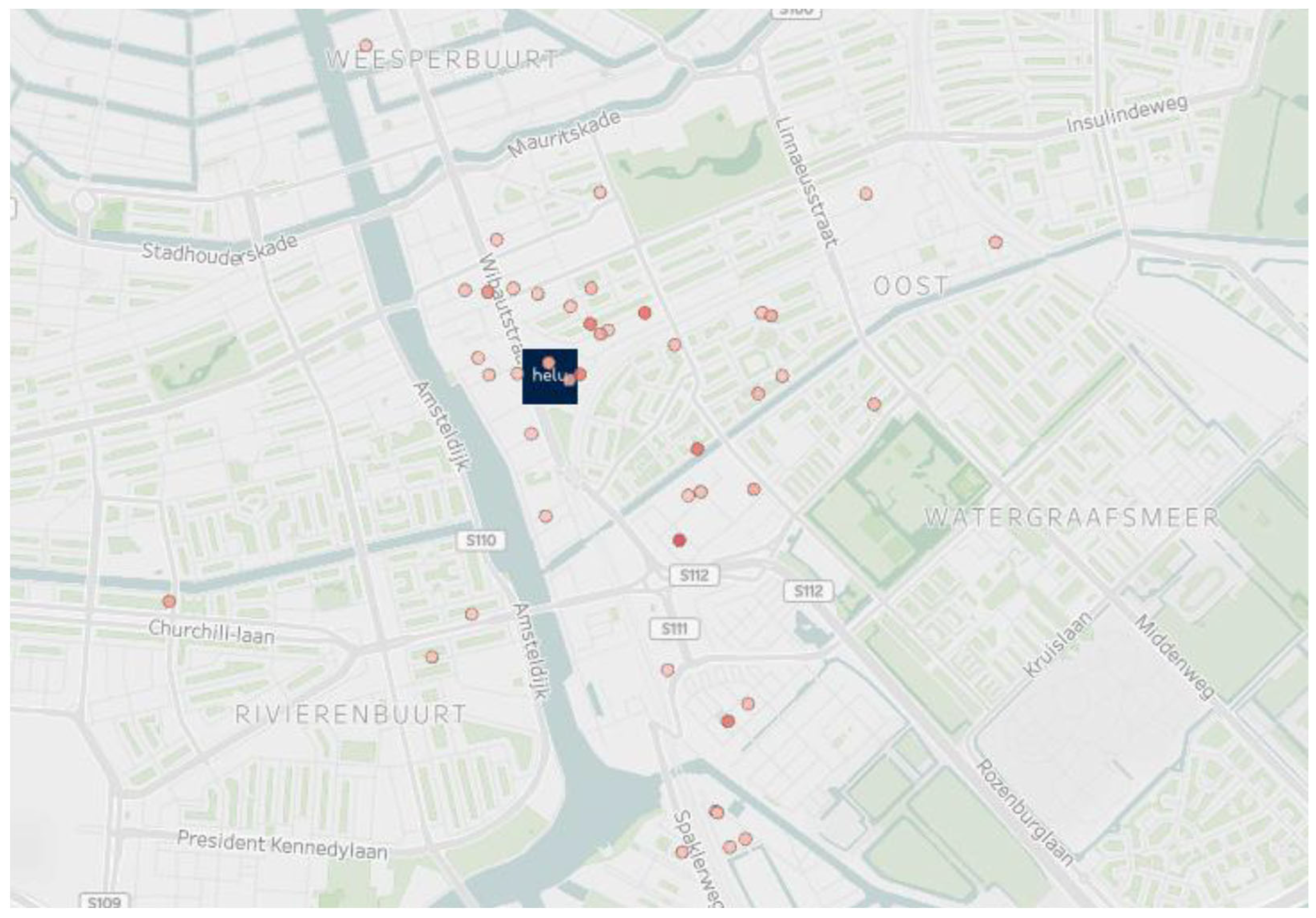
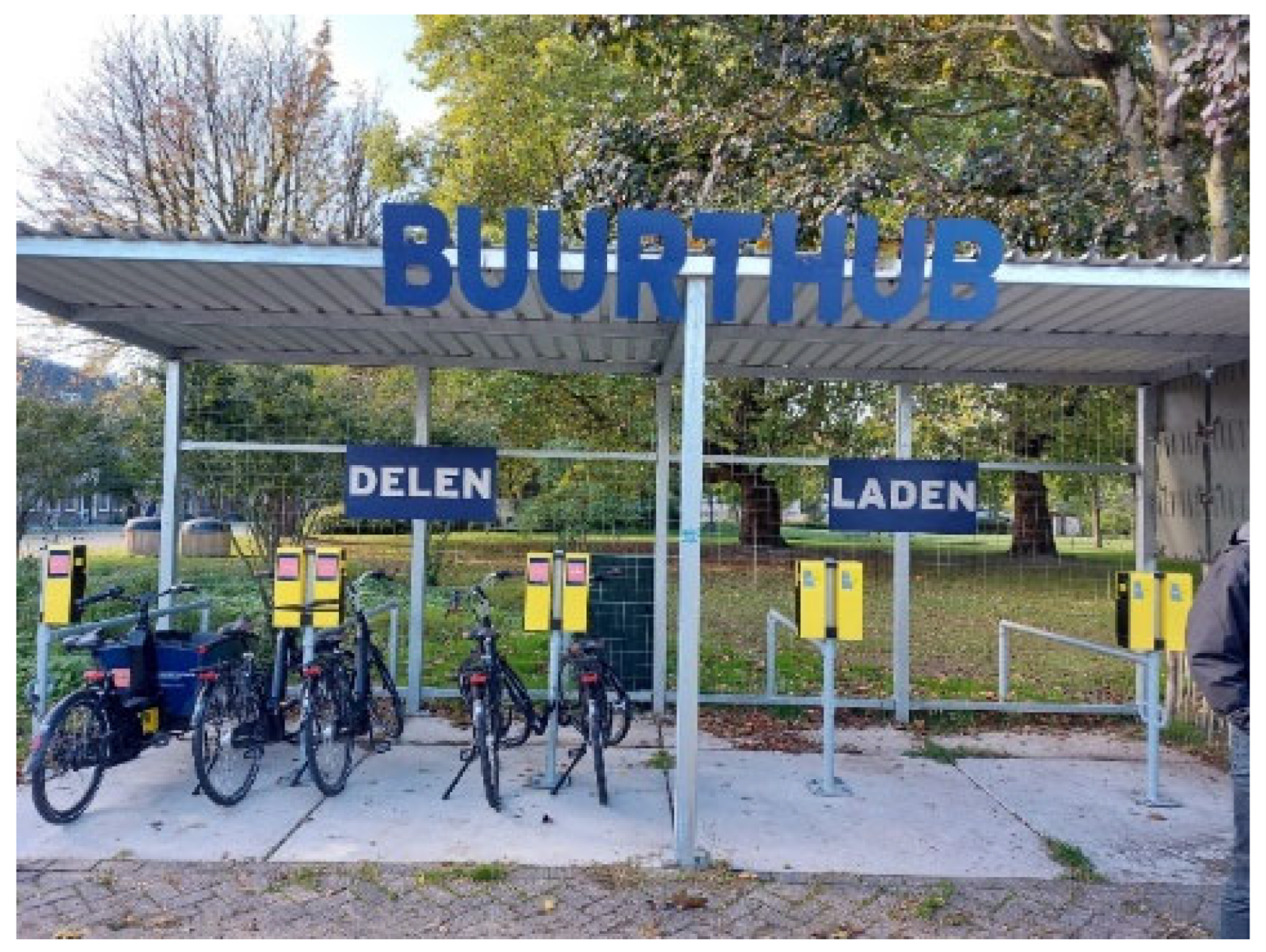
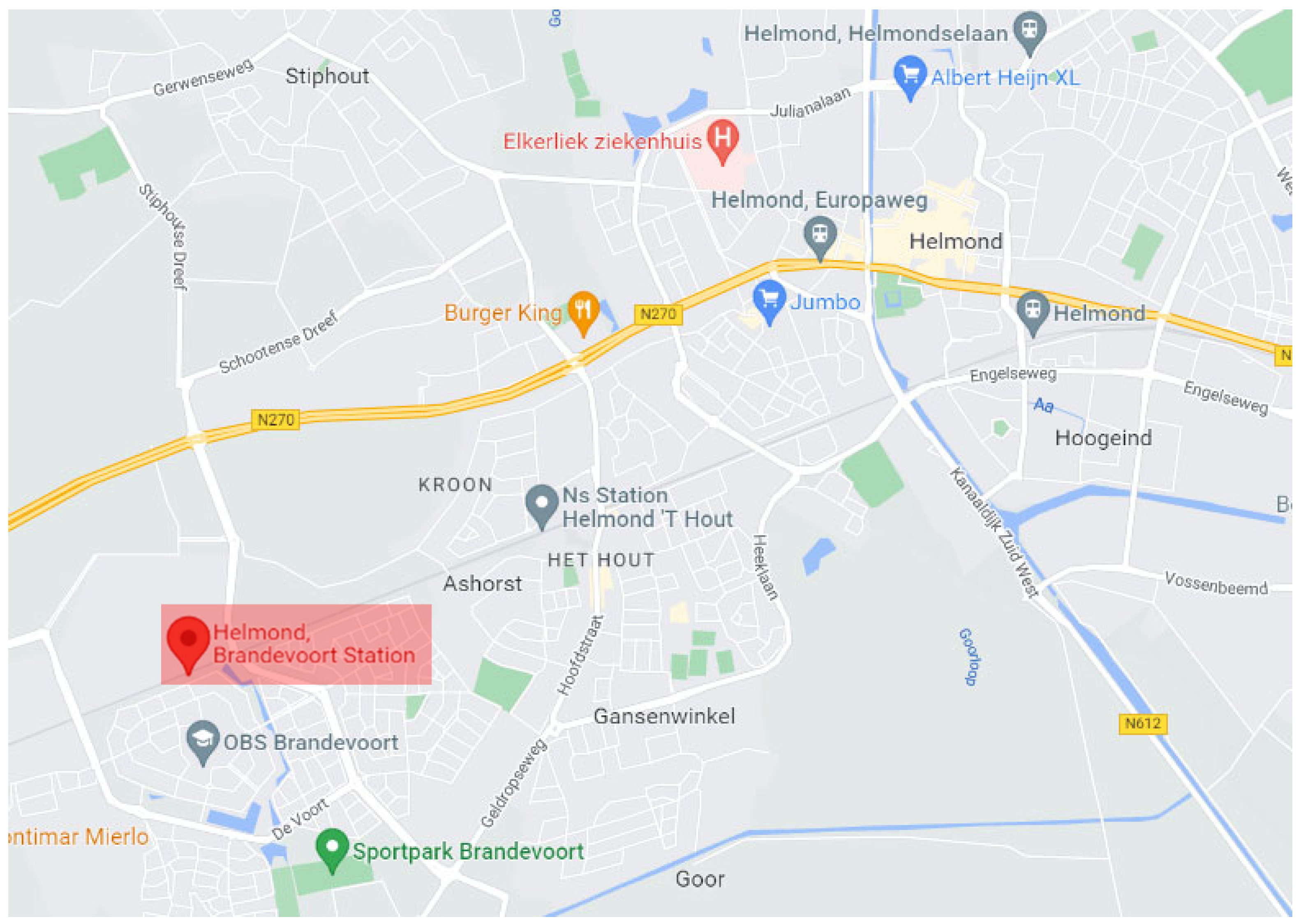
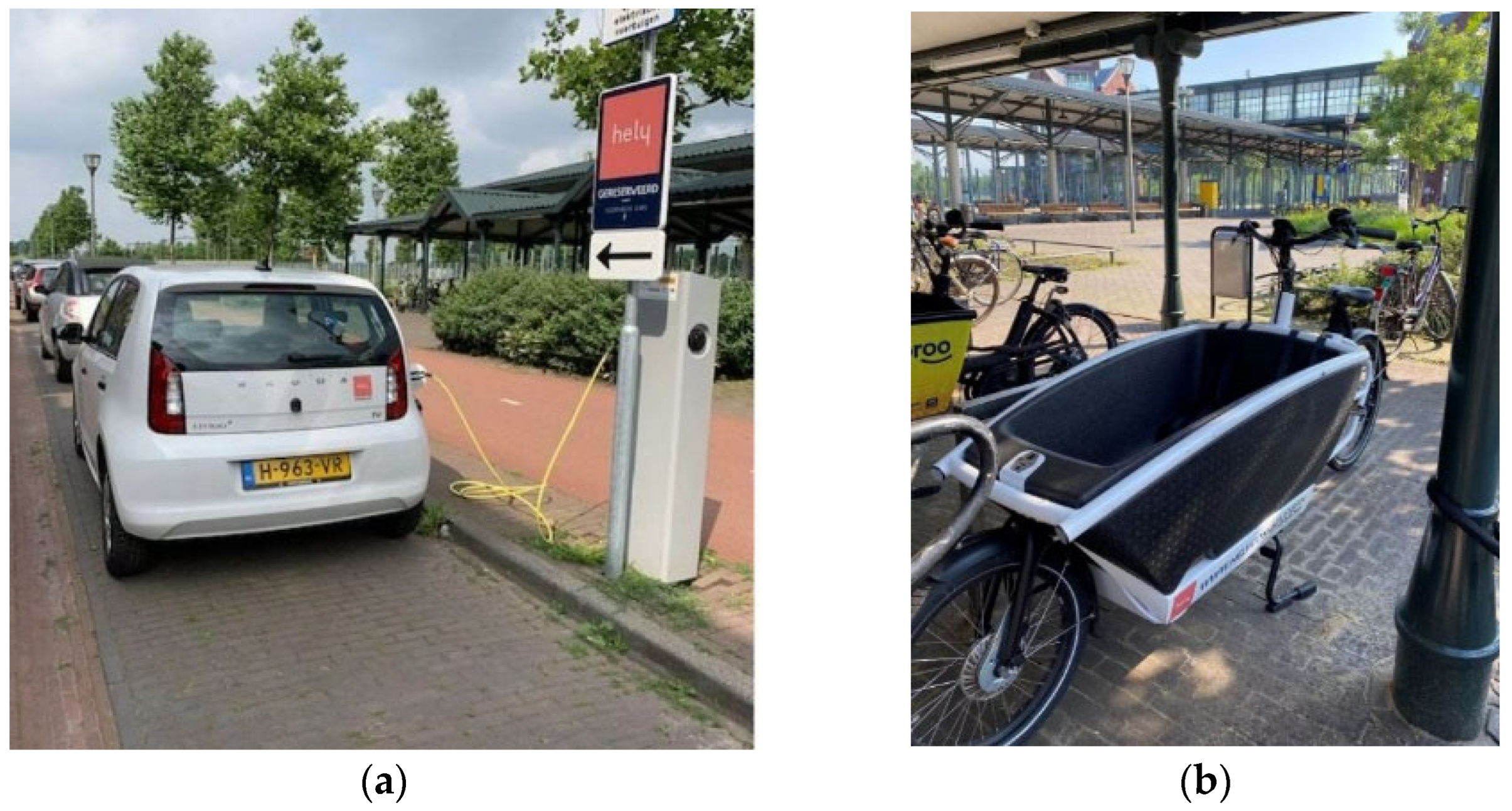
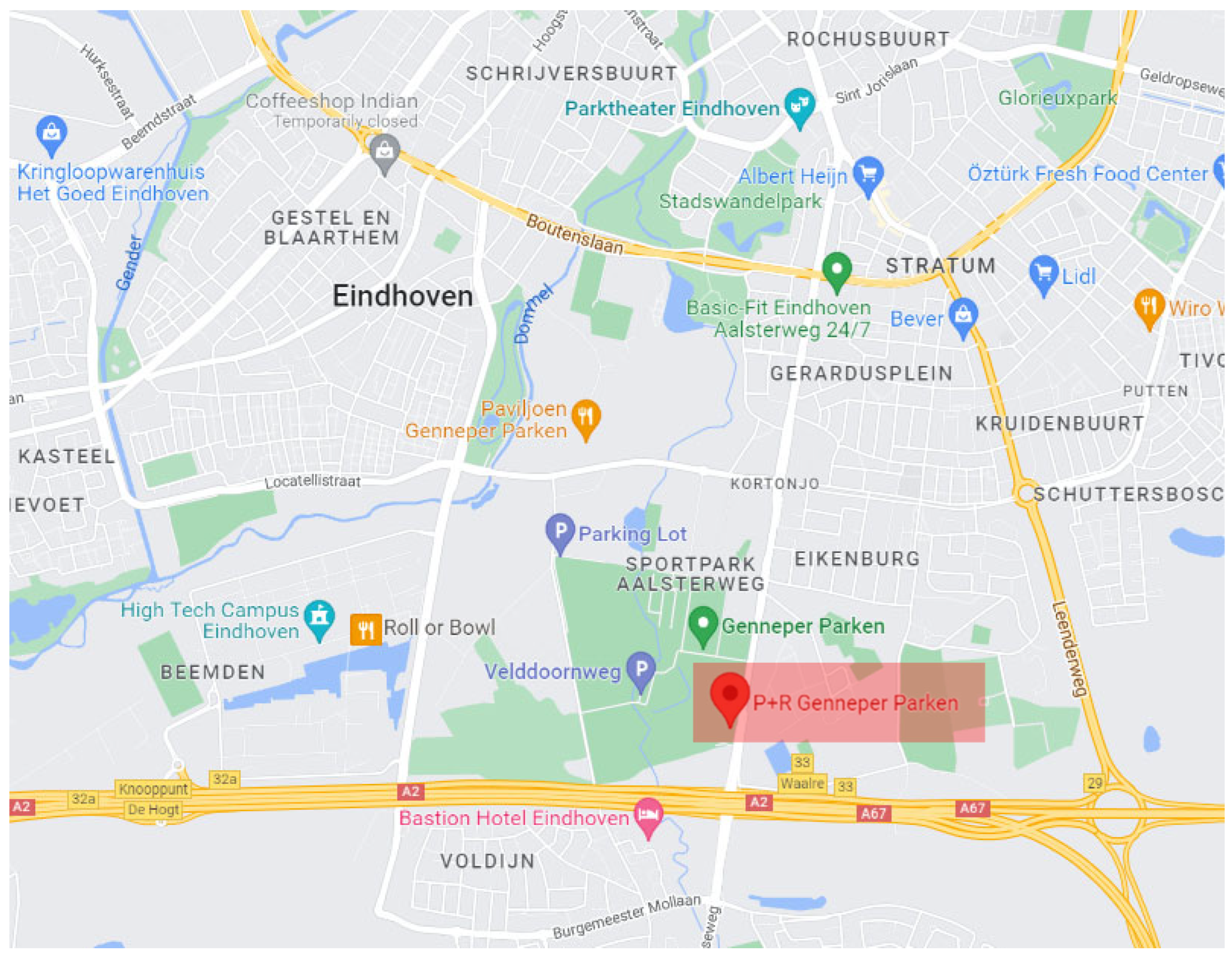
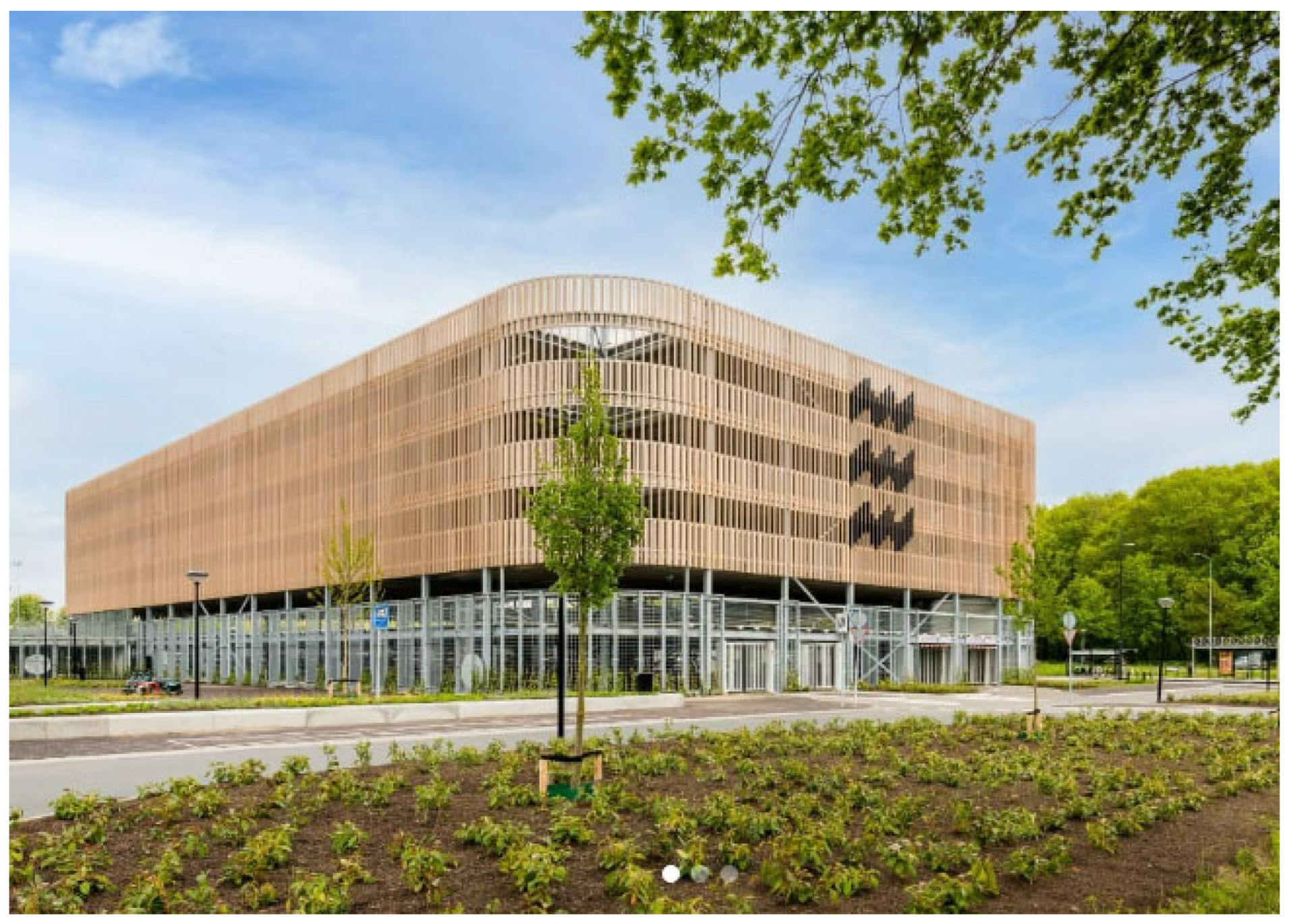
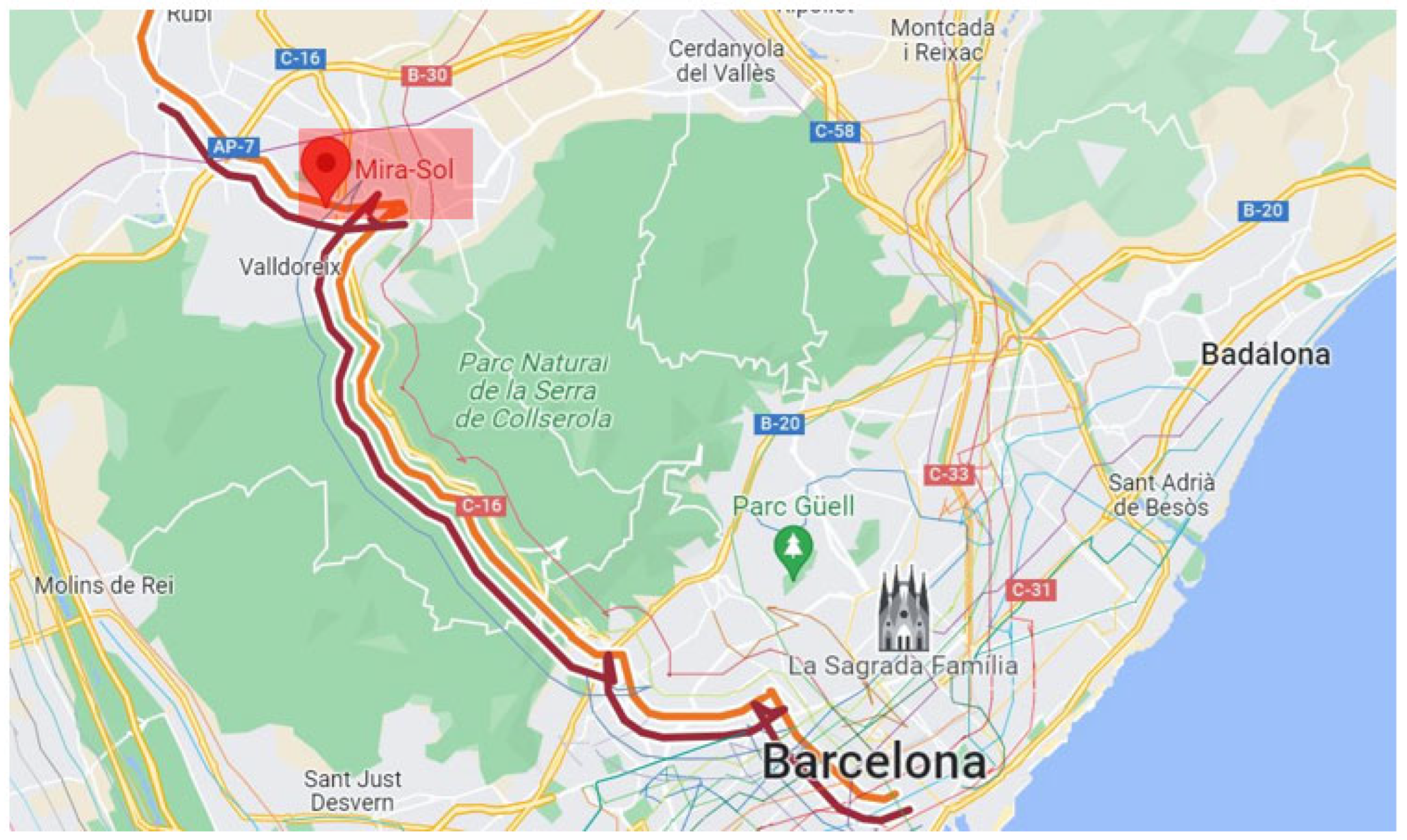
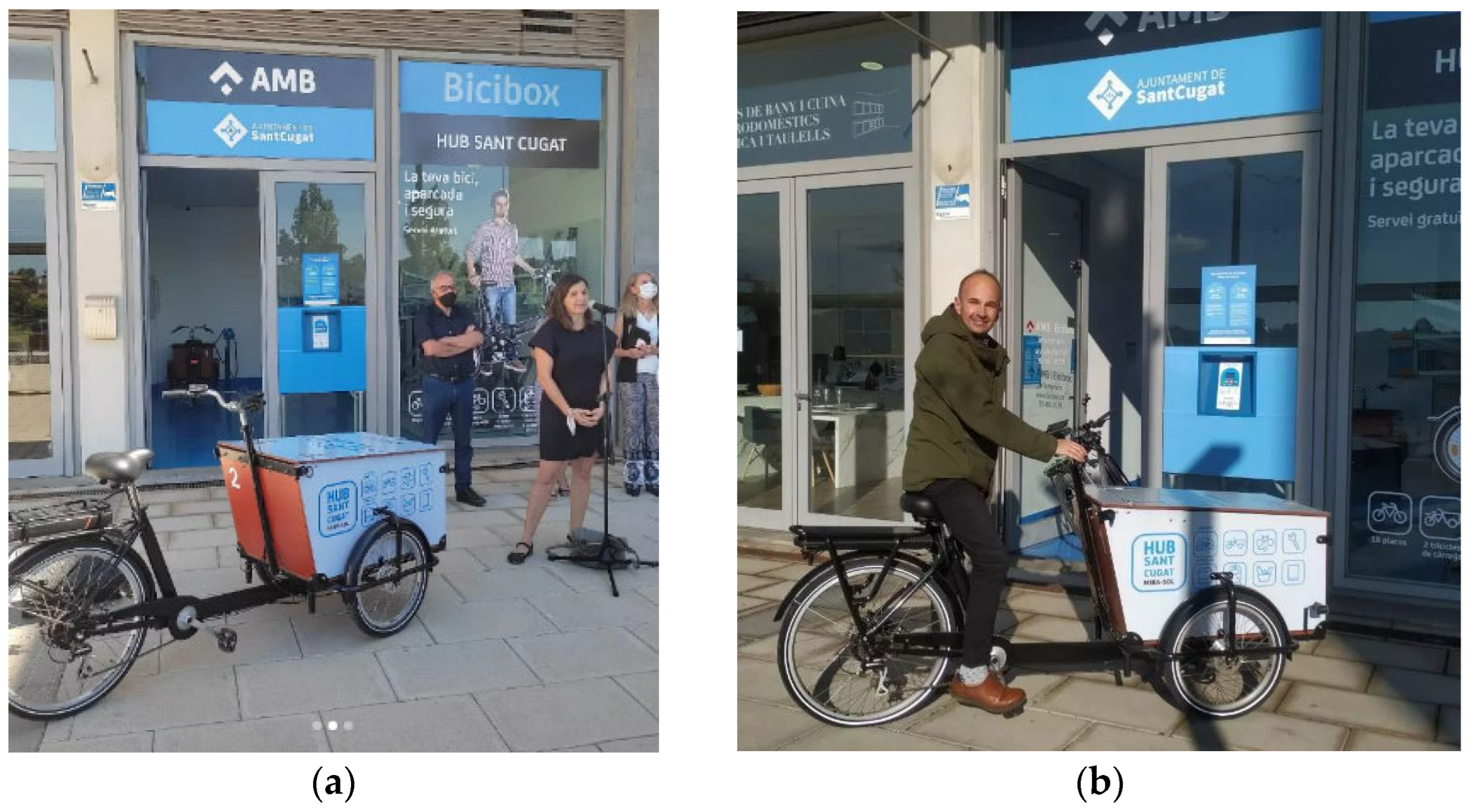
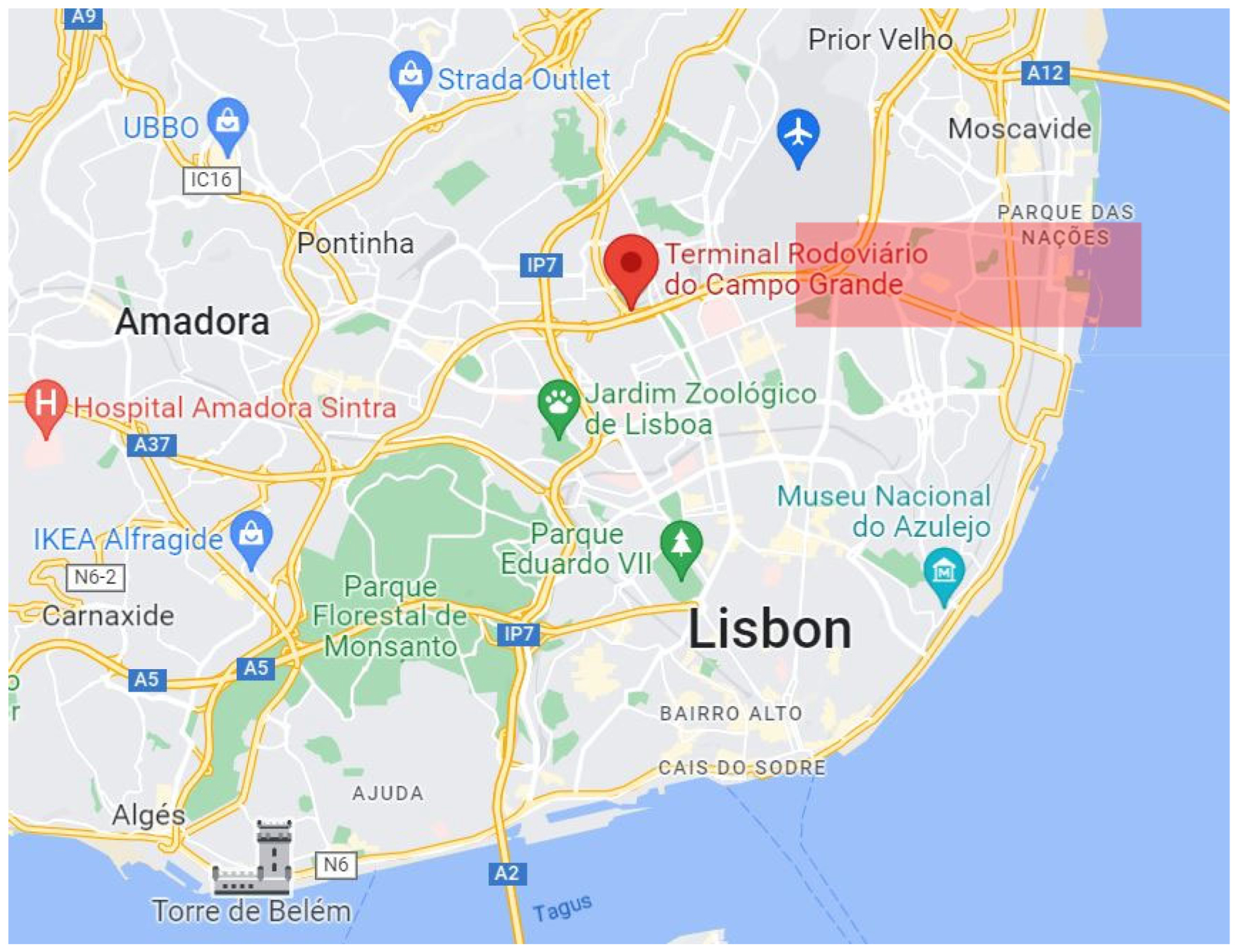
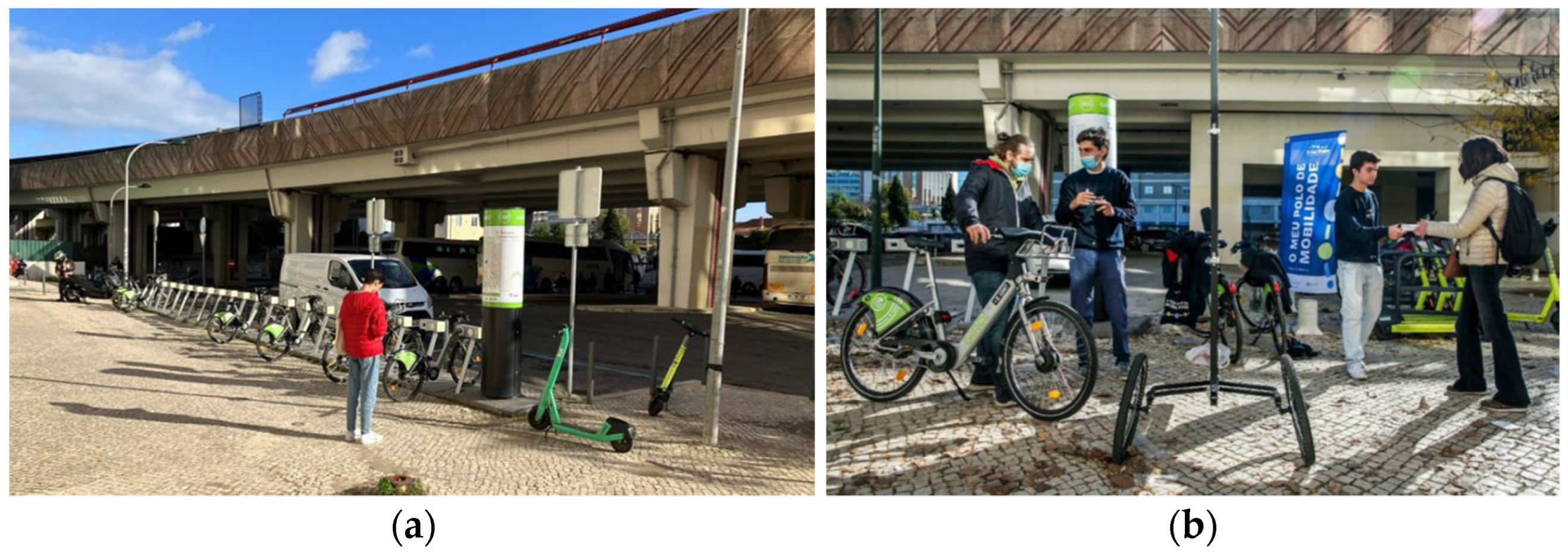
Disclaimer/Publisher’s Note: The statements, opinions and data contained in all publications are solely those of the individual author(s) and contributor(s) and not of MDPI and/or the editor(s). MDPI and/or the editor(s) disclaim responsibility for any injury to people or property resulting from any ideas, methods, instructions or products referred to in the content. |
© 2023 by the authors. Licensee MDPI, Basel, Switzerland. This article is an open access article distributed under the terms and conditions of the Creative Commons Attribution (CC BY) license (https://creativecommons.org/licenses/by/4.0/).