


Abstract
This paper investigates the level of sustainability awareness among university students in the UAE. This research proposed and implemented an experimental digital awareness platform to educate students and citizens in the United Arab Emirates on the 17 goals of sustainability. This study presents the survey results before and after using the proposed mobile application focused on sustainability. We demonstrate the effectiveness of the proposed digital platform in increasing awareness by conducting experiments using the platform and analyzing the survey results. Our survey results indicate that a large proportion of the participants, 49%, had no idea what the 17 SDGs are. The user experience of our digital platform showed that 93% of participants became aware of the 17 SDGs and were willing to contribute to achieving one or more SDGs. Additionally, the use of our platform encouraged 75% of the participants to be actively involved in SDG activities and events.
1. Introduction
Sustainability is the idea that human societies must live and meet their needs without compromising the ability of future generations to meet their own needs. The first time this word appeared was in 1987 in a Brundtland report [1] as a result of international crises from ozone depletion, air pollution, global warming, and other environmental problems related to raising the standard of living. No doubt, reliance on non-renewable energy without looking for a permanent alternative will lead to the disappearance of oil, damage to the atmosphere, the extinction of animal species, disruption of the ecological diet, and, ultimately, the loss of human life.
In 2015, the United Nations designed a collection of seventeen interlinked objectives to serve as a shared blueprint for peace and prosperity for people and the planet. Environmental education (EE) goals were laid out very early in the Tbilisi Conference of 1979 [2] by the international community. Academic communities developed and announced educational programs on EE in academia in the Talloires and Halifax declarations of 1990 and 1991. As such, the sustainability triad, economic, social, and environmental, [3] was introduced as a framework to help students develop and apply sustainability activities in the classroom and later in real life.
The first essential element of achieving sustainability is public awareness of the 17 different sustainability goals [4]. Sustainability awareness is still low in many countries, including the United Arab Emirates (UAE), which is striving to achieve sustainability in different aspects. Recently, Expo 2020 and COP28 were held in the UAE, and one of the critical goals of such global exhibitions is to achieve sustainable development goals. The second essential element is the cooperation of different stakeholders, including academia, the government, residents, and industry. These stakeholders need to incorporate the SDGs into their daily lives/business activities. Therefore, there is a need for IT solutions to enable this process and place increased emphasis on the social factors. Hence, the provision of digital tools and platforms to support sustainability is a paramount element because it enables the social factor in EE and leverages the use of IT.
In the UAE, awareness and participation among residents and students in achieving the SDGs are still low, and there is a shortage of specialized tools and applications to support such activities. For example, the government of the UAE has a Twitter/X account, namely @UAESDGs, which is used to announce and publicize different government activities and achievements related to the SDGs [5]. However, a specialized digital platform on sustainability is needed to achieve the three elements of awareness, stakeholder collaboration, and the social factor. The use of media to raise awareness levels has been proven effective and supportive [6,7]. However, a dedicated mobile application is needed to involve all stakeholders, including residents, industry, and, most importantly, younger generations. Such involvement must be aligned with standard social media applications, contribute to all SDGs, include school students very early, have attractive features, and be supported by the government.
To demonstrate the success of and need for our digital platform, we present a case study on the level of awareness in the UAE, one of the rising countries, in supporting the SDGs. This case study includes a survey of 367 university students that was used to examine their level of awareness of and engagement with the SDGs. According to our survey, a large percentage of the participants, 49%, had no idea what the 17 goals are. However, 97.8% of the participants were willing to contribute to achieving the SDGs, and 90% of participants would like to be updated with the latest UAE SDG achievements. Overall, the study found a lack of awareness of global sustainability goals. This study also proposes a mobile platform to enhance awareness of and encourage engagement in the SDGs by taking an active role in different societal activities. The main contributions of this work are summarized as follows.
- We surveyed students at UAE University, the largest institute in the UAE, regarding their awareness of and engagement with the SDGs.
- Based on the survey results, we developed a digital platform in response to the students’ feedback. The mobile application’s design and development are based on the students’ views in terms of usability and attractiveness, and it considers different age categories.
- We surveyed students after using the mobile application and reported improvements in their level of awareness.
The remainder of this paper is organized as follows: Section 2 summarizes what we consider to be related work to our contribution. Section 3 presents the research objectives of this paper. Section 4 elaborates on the methodology and surveys conducted. Section 5 focuses on the digital platform’s analysis, design, and results. In Section 6, we draw our conclusions and discuss future work. Finally, in Section 7 and Section 8, we state the study’s ethical considerations and limitations.
2. Related Work
In this section, we present current state-of-the-art research on SDG awareness and platform development in the Middle East and North Africa (MENA) region.
The use of the sustainability triad, namely, economic, social, and environmental, as a framework to teach sustainability in classrooms was introduced in [3]. The study showed that the sustainability triad offers a pedagogical framework to better understand sustainability and its obstacles in classrooms.
The authors in [8] presented a systematic literature review to show that social media such as Facebook and Twitter/X have high potential in terms of widely disseminating sustainability awareness. After reviewing articles in three different online databases, they concluded that higher education needs to utilize and adapt the ubiquity of social media to extend how environmental sustainability is perceived by students and the faculty.
Kaur et al. [9] investigated different factors of social media that can be used to motivate users to adopt environmentally friendly behavior. They used factor analysis and percentage analysis to process data collected through structured questionnaires. Interestingly, they found that there is a connection between the usage of social media and changes in environmental issue awareness levels. Muhammad et al. [10] came to a similar conclusion with the addition that such awareness connections can be used to enhance environmental and government policies.
The empirical research study in [11] examined how 16 global companies from four different industry sectors utilize social media platforms and corporate social responsibility (CSR) reports to communicate about sustainability. They found that green companies are more likely to report sustainability activities in their formal corporate communications.
Due to global climate change, SDG awareness has recently received considerable attention, especially in the MENA region. Abou-Korin [12] examined the environmental problems associated with rapid urbanization in the Dammam Metropolitan Area (DMA) in the Kingdom of Saudi Arabia (KSA). Another study [13] showed that the level of sustainability awareness in the KSA is very low among university students. The study recommended offering courses and on/off campus activities on sustainability to promote the SDGs and to include other government and private stakeholders that have an influence on the sustainable knowledge and behaviors of individuals. Similar studies have been conducted in other countries, such as Spain and Turkey [14].
The authors of [6] discussed, surveyed, and analyzed the role of digital media in achieving sustainable development in the Arab World. The main recommendation of the study was to utilize digital media to provide relevant information to environmental development events and plans to successfully achieve their goals. Susilawati and Surf [7] explored and examined public awareness of sustainable housing in the KSA. The survey analysis showed that more than 50% of the participants were not aware of sustainable housing. The study recommended using local media to educate the public on the benefits of the sustainable implementation of housing stock.
Pejić Bach et al. [15] explored and analyzed stakeholders’ perceptions of development priorities in the UAE. They suggested that the UAE government needs to develop more effective strategies to assist sustainable economic growth in the UAE. The study revealed that the respondents prioritize economic development factors over sustainability factors; hence, a media campaign is recommended to increase sustainability awareness. The authors of [16] found that increasing social awareness is critical in achieving sustainable procurement in the public sector in the UAE. In a study by Muhammad et al. [17] on the identified factors relating to consumer awareness of organic food, the authors found that awareness of organic food among UAE nationals is higher than that among non-nationals due to income discrepancies. The study found that awareness of organic food is essential for farmers in terms of creating a greater market share. Alkaabi et al. [18] explored Spatial Data Infrastructure (SDI) and quality education as tools to raise awareness levels among UAE University students. The authors developed, validated, and analyzed an SDI-based questionnaire to geography and non-geography cohorts to assess their knowledge of the SDGs. The study concluded that participating in an SDG awareness program within the technological pedagogical content knowledge model demonstrated significant awareness differences in terms of various aspects of the SDGs.
In terms of applications and platforms that are relevant to sustainability, very few applications have been developed in the MENA region. In the following, we summarize popular platforms along with their features [19]. “Think Dirty” is an easy-to-use application that provides information on sustainable ingredients in products by scanning product barcodes. Another beneficial application is “Good On You”, which ensures that clothes were sourced, designed, and produced with the environment in mind. The users can also add new brands to the directory, message brands, and receive suggestions for sustainable clothing substitutes. For food wastage issues, “Oilo” was designed to allow users to share their leftover food in the application, and needy neighbors can pick it up. The “My Little Plastic Footprint” application suggests sustainable alternatives to different plastic items. The “Refresh go Green” application helps users turn their home into a greener environment. It also gives indications about a person’s diet, health, or daily habits. The “Good Guide” application provides easy-to-reach, ethical, and environmentally friendly products. It provides scientific health, environmental, and social ratings on a huge database of products.
The above applications are goal- and location-specific, can be used individually, and lack general awareness features that could encourage the public of the UAE on the SDGs.
The work presented in this paper is similar to the work in [12,13] since it explores SDG awareness levels by conducting and analyzing surveys. However, our work is different because it focuses on the social factor in the UAE and provides a solution to improve awareness by developing and presenting a digital platform, as well as recommendations.
3. Research Objectives
This research was realized at the United Arab Emirates University (UAEU), located in Al Ain, Abu Dhabi, UAE. The main goals of this work are to study the level of awareness and knowledge concerning the SDGs among UAEU students, as well as explore the involvement of social media applications in improving SDG awareness. In this study, we conducted surveys and carried out investigations to ascertain the effect of specialized social digital platforms on improving public awareness and participation in SDG activities. The main objectives of this work are summarized in the following.
- To examine and measure the level of SDG awareness among UAEU students.
- To assess the effectiveness and impact of social digital platforms on student awareness of the SDGs.
- To solicit user preferences on digital platform design and user experience.
Our research objectives are based on surveys and previous research studies in the area. The first goal, to measure the awareness level, is driven by the lack of recent studies on the level of awareness in the UAE. The latter goals are drawn from previous research on education and sustainable development, as it is hypothesized that there exists an association between sustainable development goals (SDGs) and social media [9,10,11].
4. Methodology
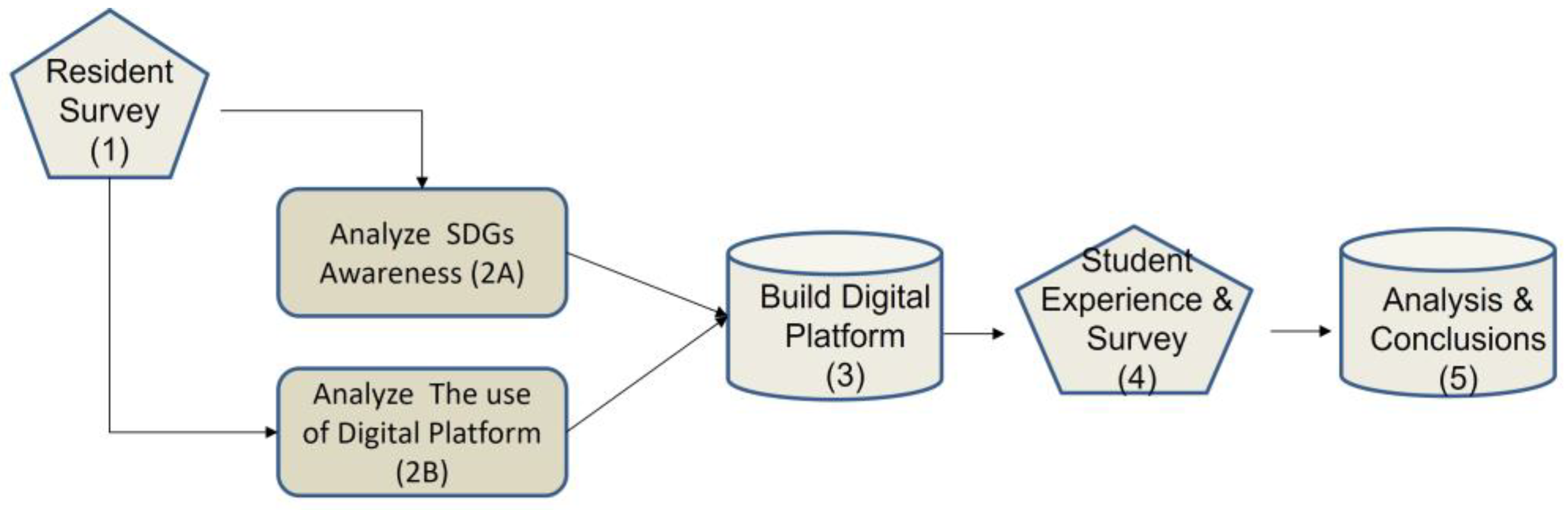
In this section, we elaborate on the research methodology and surveys we have conducted in this study. Figure 1 summarizes these steps as follows. First, we conducted a survey targeting different age groups and demographics in the UAE. The survey questions attempted to identify the level of awareness relating to the SDGs and different ways to improve awareness and involvement, including the use of social media platforms. Second, we analyzed the results of the survey and the impact of using digital platforms to improve awareness and engagement with SDG activities. Third, we built a customized digital platform for UAE students to assess the impact of social media on awareness and engagement with the SDGs. Fourth, we conducted another survey to analyze the user experience of the digital platform and the level of involvement with the SDGs. Finally, we drew conclusions and reported the final findings of our study.
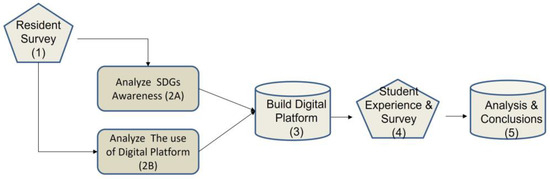
Figure 1.
Summary of the methodology.
4.1. Awareness Level Analysis
We conducted a survey targeting different age categories in the UAE. The survey questions attempt to identify the level of awareness of the SDGs and to detect possible improvements. The survey was designed to be short, simple, and comprehensive. Table 1 presents the main questions in the survey.

Table 1.
Awareness survey questions.
In the following paragraphs, we analyze and summarize our findings. The reader can find detailed findings and statistics in [20].
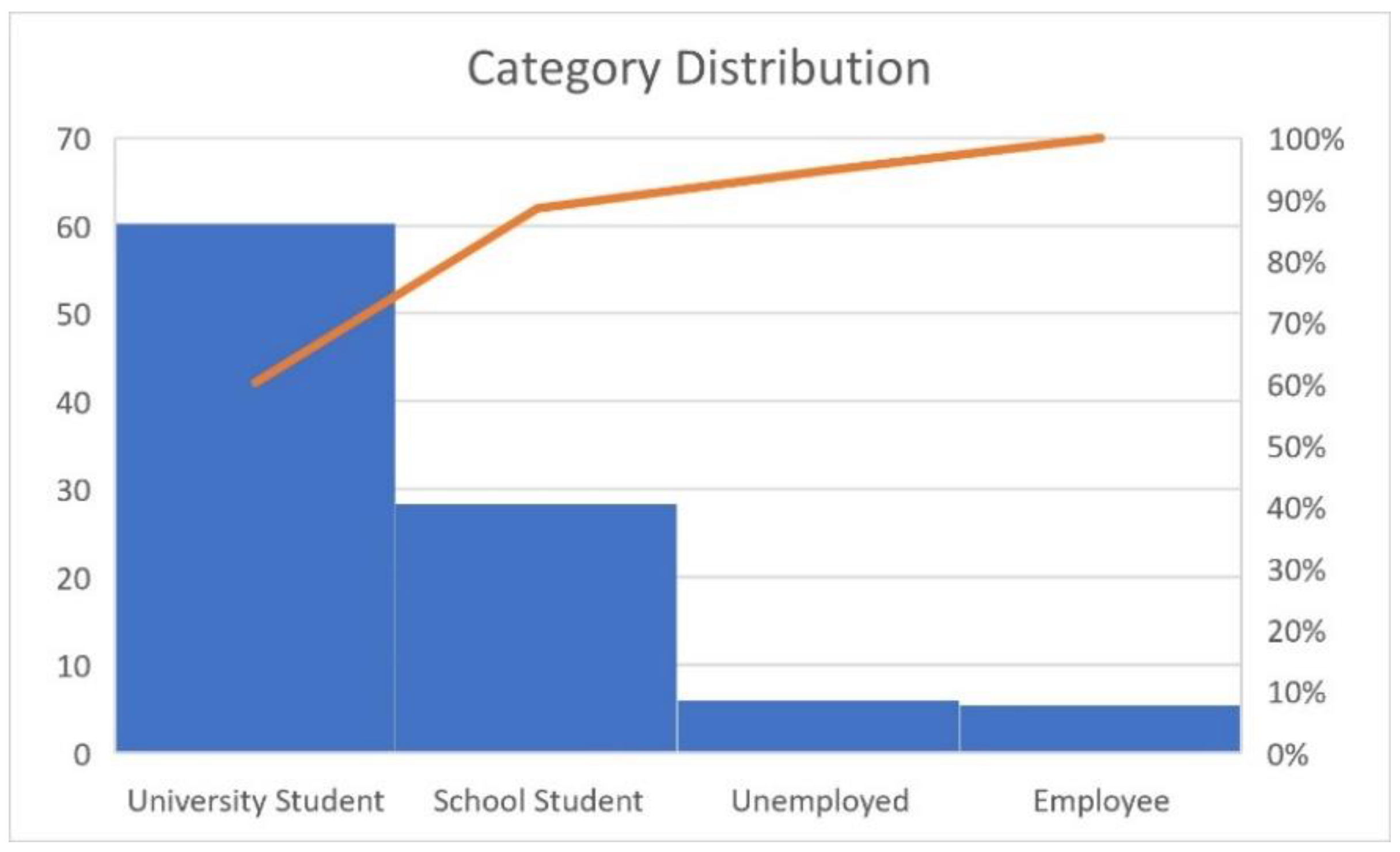
We received 367 responses from different age groups that were distributed as follows: 8.2% belong to the 5–15 age group, 86.4% belong to the 15–30 age group, and 5.4% belong to the 31–60 age group. The majority of respondents, 92%, were UAE nationals, which is consistent with recent surveys and the results presented in [6,7]. In terms of employment, the distribution of the responses was 60%, 28%, 5%, and 5% for college students, school students, employees, and unemployed, respectively (see Figure 2).
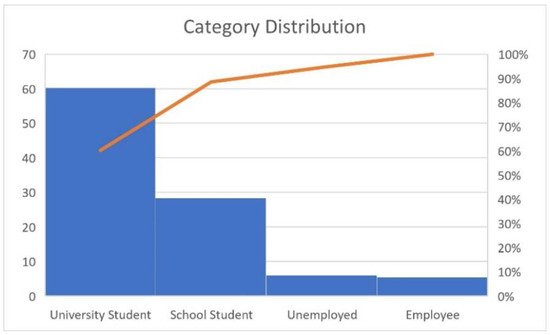
Figure 2.
Category distribution of the survey respondents.
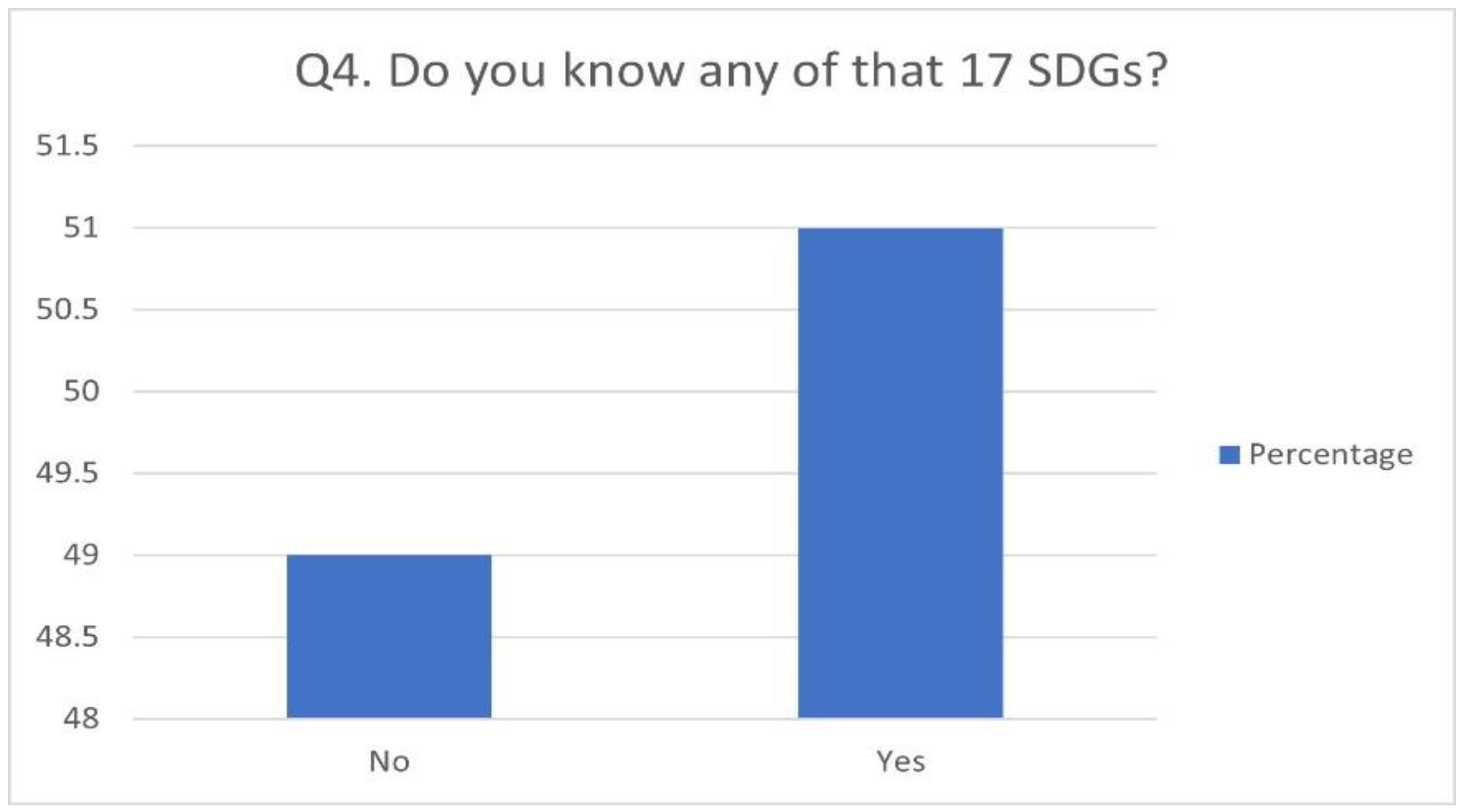
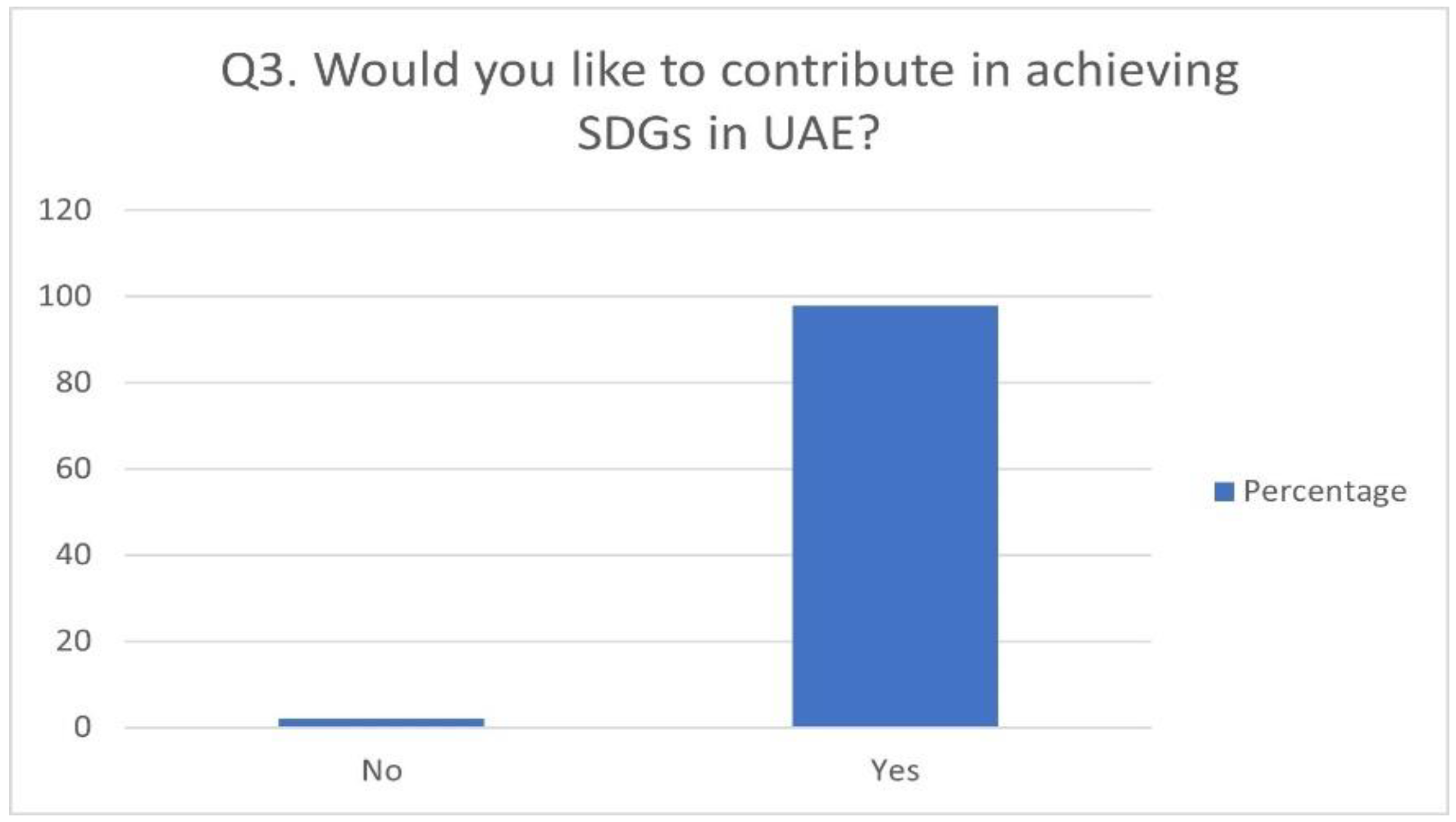
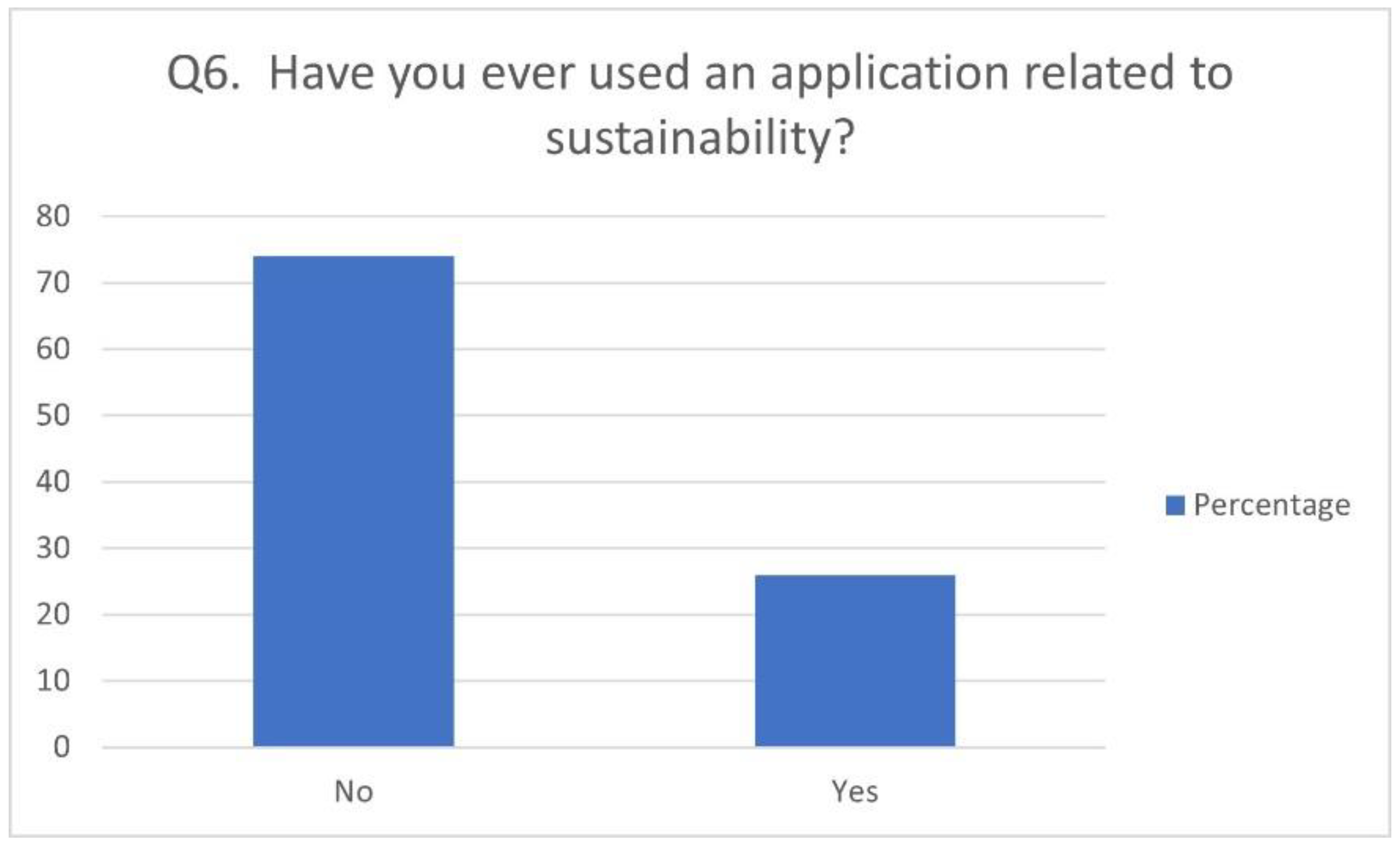
In terms of the awareness levels of the 17 SDGs, Figure 3 shows that 49% of the participants were not aware of the SDGs. Table 2 presents a breakdown of the awareness by goal ordered from highest to lowest. The table shows that the audience seemed aware/familiar with SDG goals 1, 5, and 6, while goals 12 and 17 were among the lesser-known goals. Nonetheless, over 97% of the participants showed an interest in contributing to sustainability through different activities, see Figure 4. Additionally, the survey responses showed that 74% of the participants did not use any application related to sustainability and/or did not participate in any activity, see Figure 5.
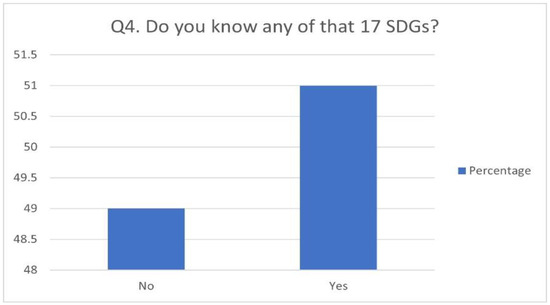
Figure 3.
Awareness level of 17 SDGs.
Table 2.
Level of awareness per goal sorted from highest to lowest.
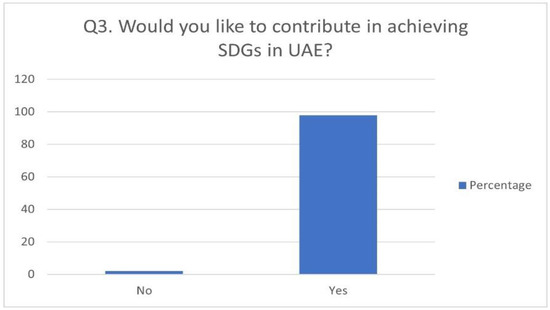
Figure 4.
Responses concerning willingness to contribute to achieving SDGs in the UAE.
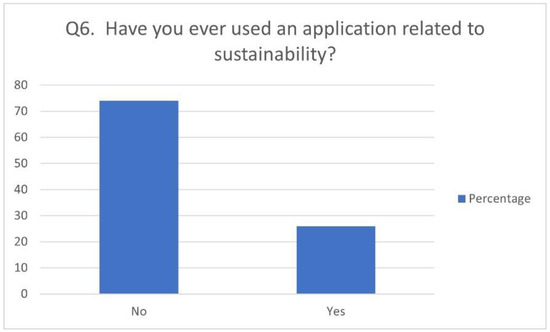
Figure 5.
Responses concerning Q5 on using digital platforms for sustainability.
In conclusion, awareness levels relating to SDGs need dramatic improvement. We found that students and youngsters are mostly interested in the future of the SDGs in the UAE. Additionally, citizens are more interested in sustainability than residents due to the different levels of living standards between them. Moreover, the top SDGs identified as national goals to be achieved are as follows: “G1. No Poverty”, “G5. Gender equality”, and “G6. Clean water and sanitation”. Finally, we conclude that an application or a platform is urgently needed to help UAE citizens and residents participate and engage in SDG activities. The application will be used to increase awareness of different SDGs and the activities related to them in private, public, and government sectors.
4.2. Customized Digital Platform for UAE (SAMA)
Based on the sustainability triad and the conclusions of the survey we conducted in Section 4.1, we decided to build a digital platform to improve the awareness and engagement of UAE citizens. This step aligned with our methodology, namely, step 3 in Figure 1. Recall that the social factor is one pillar of the sustainability triad; hence, we must strive to have residents, students, and other stakeholders socially involved in the SDGs. Additionally, UAE citizens and residents are very active on social media [21]; hence, the introduction of a socially accessible platform will be appealing to users.
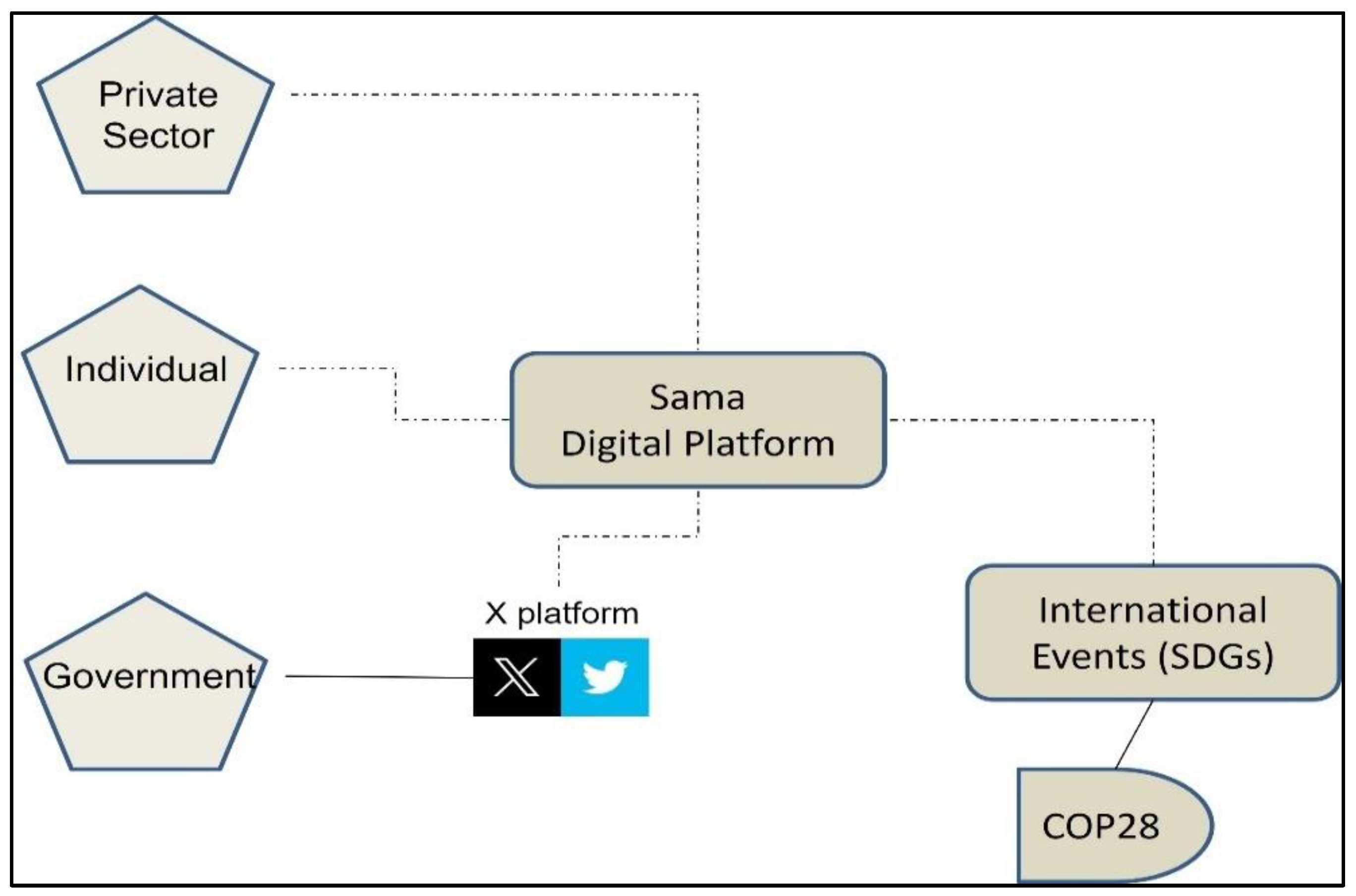
Figure 6 presents SAMA as a centralized platform in which different stakeholders can connect and use the platform to promote sustainability awareness, events, and activities. We know that different government and private entities have their own general websites; however, we need a specialized platform that connects all entities’ activities, news, and achievements relating to sustainability and presents them to the public. This way, global events, such as EXPO2020 and COP28, can become very popular and easy to find when individuals read about them on SAMA’s landing page.
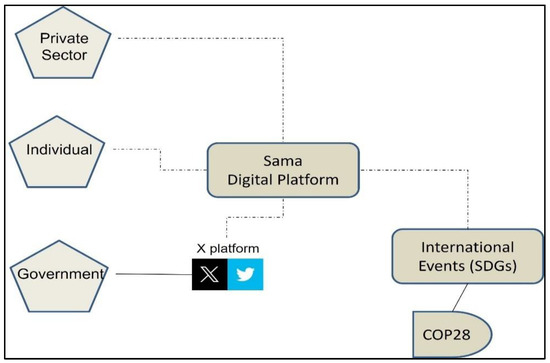
Figure 6.
Stakeholders of SAMA.
4.2.1. Mobile Platform Design
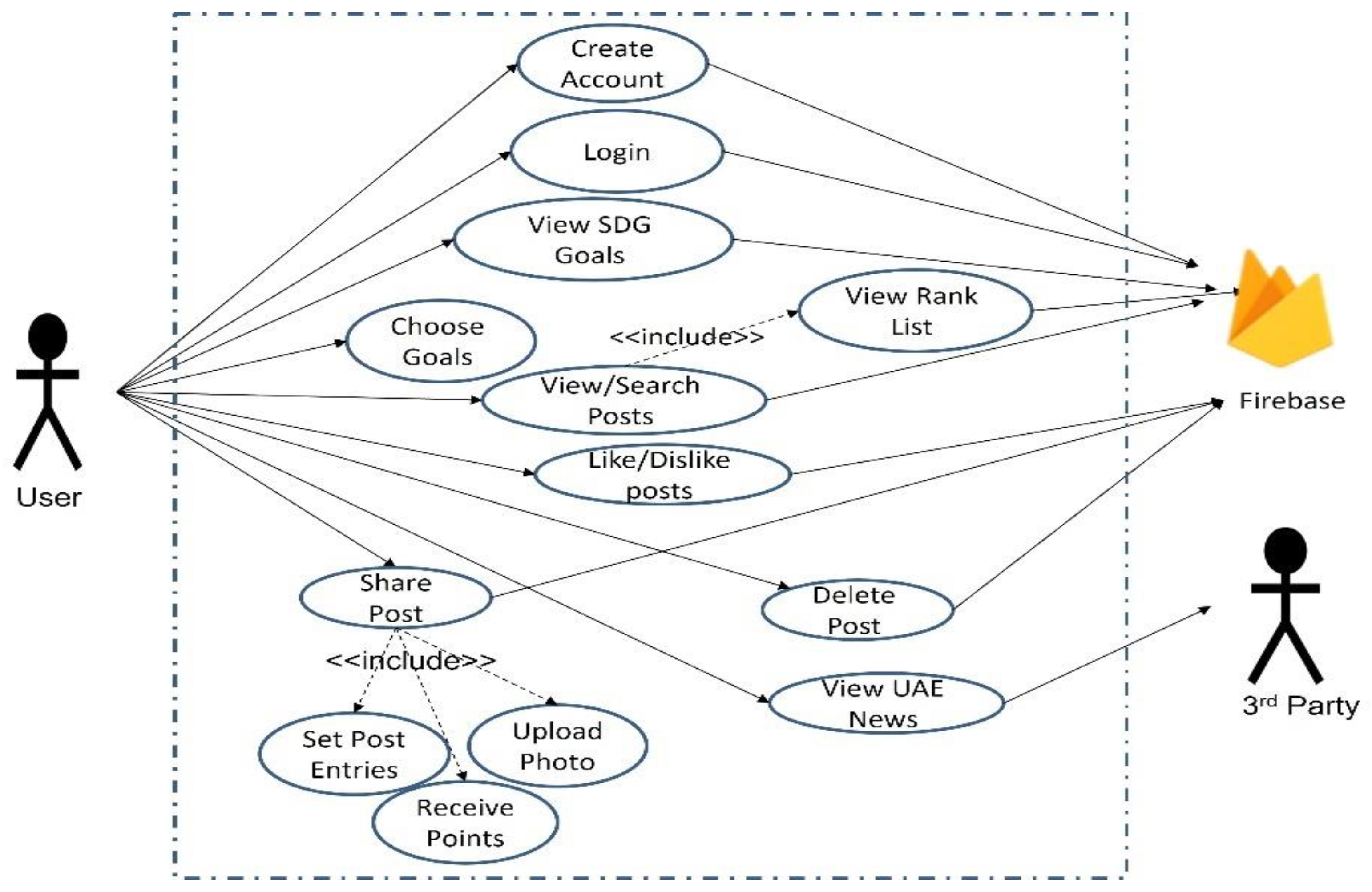
SAMA 1.0 is a twofold mobile application: first, it is designed to encourage UAE residents to engage in the SDGs, and second, it is designed to spread awareness of the SDGs among the UAE community. Briefly, the application has the following screens: registration, login, interests, profile updates, notifications, goal awareness, like/dislike/points/encouragement, search, and contribution to sustainability, as shown in Figure 7. The use case model is a standard diagram that follows the Unified Modeling Language (UML) standards in which functions/features and main participants are identified.
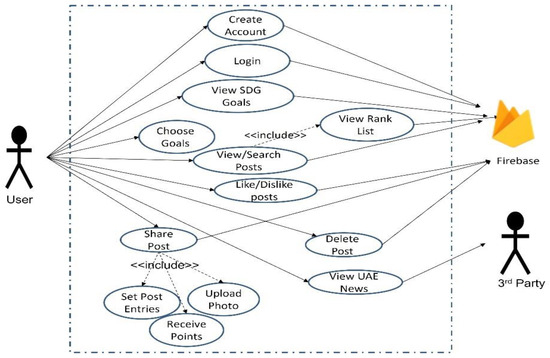
Figure 7.
Use case model of SAMA.
The stickman notation represents an actor. Actors are external entities that interact with SAMA. We have 3 actors, namely, users, firebase DB, and third-party members (corporate partners). Functions or use cases are depicted as oval notations. For example, in Figure 7, the user (actor) interacts with a shared post (function) by providing different post entries such as a post title, SDG goal, image/video, etc. Brief descriptions of the use cases are presented in Table 3. The reader can find more details of the SAMA use case model in [20].
Table 3.
Brief descriptions of the use case.
4.2.2. Data Architecture
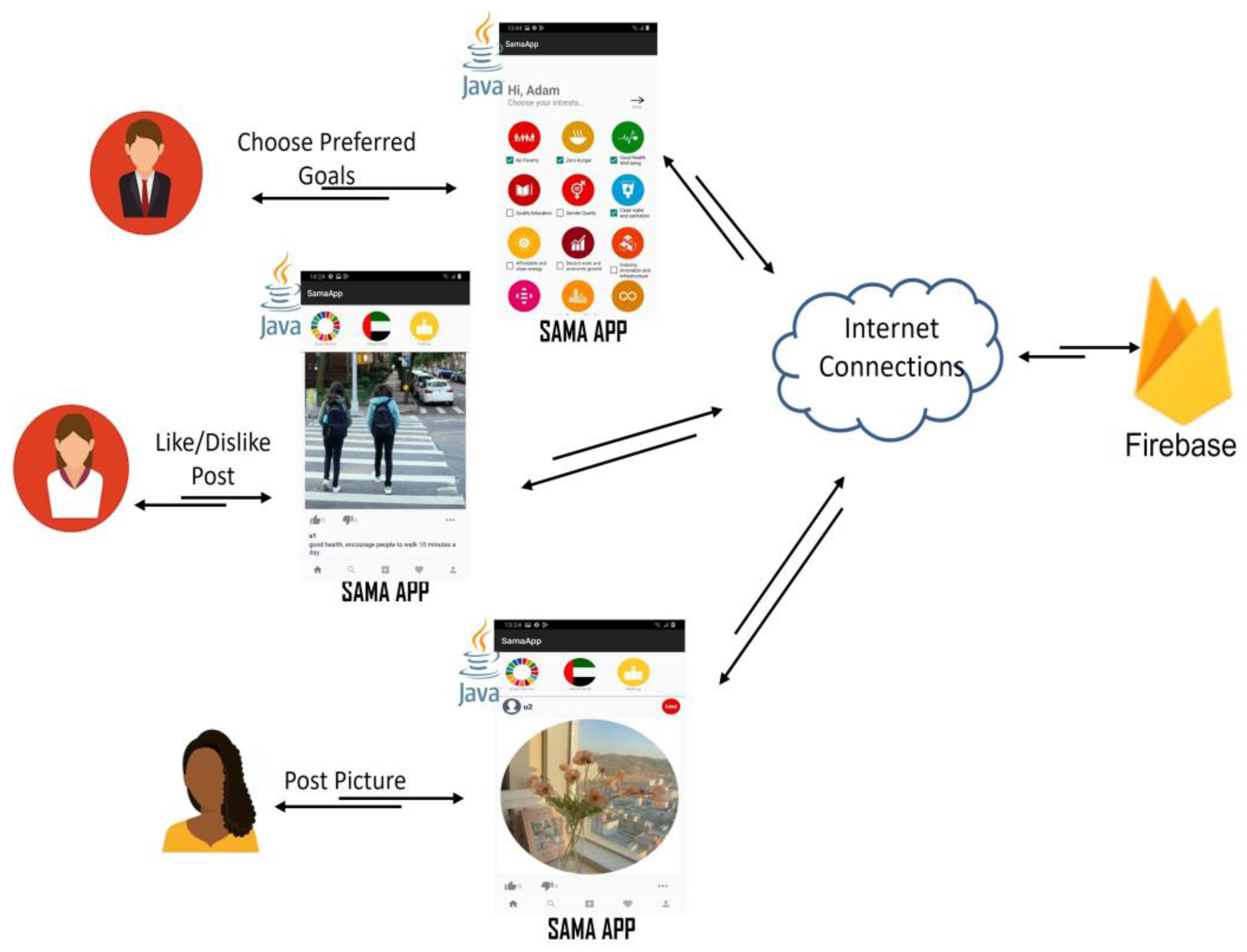
The architecture of the SAMA platform is shown in Figure 8. After downloading the application, users can communicate through a standard Internet connection to share posts and comment on SDG activities. The backend of SAMA is the Google Firebase repository [22].
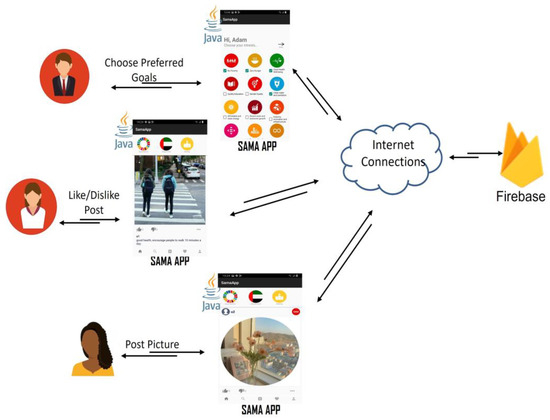
Figure 8.
SAMA architecture with UI front-end and Firebase repository as back-end.
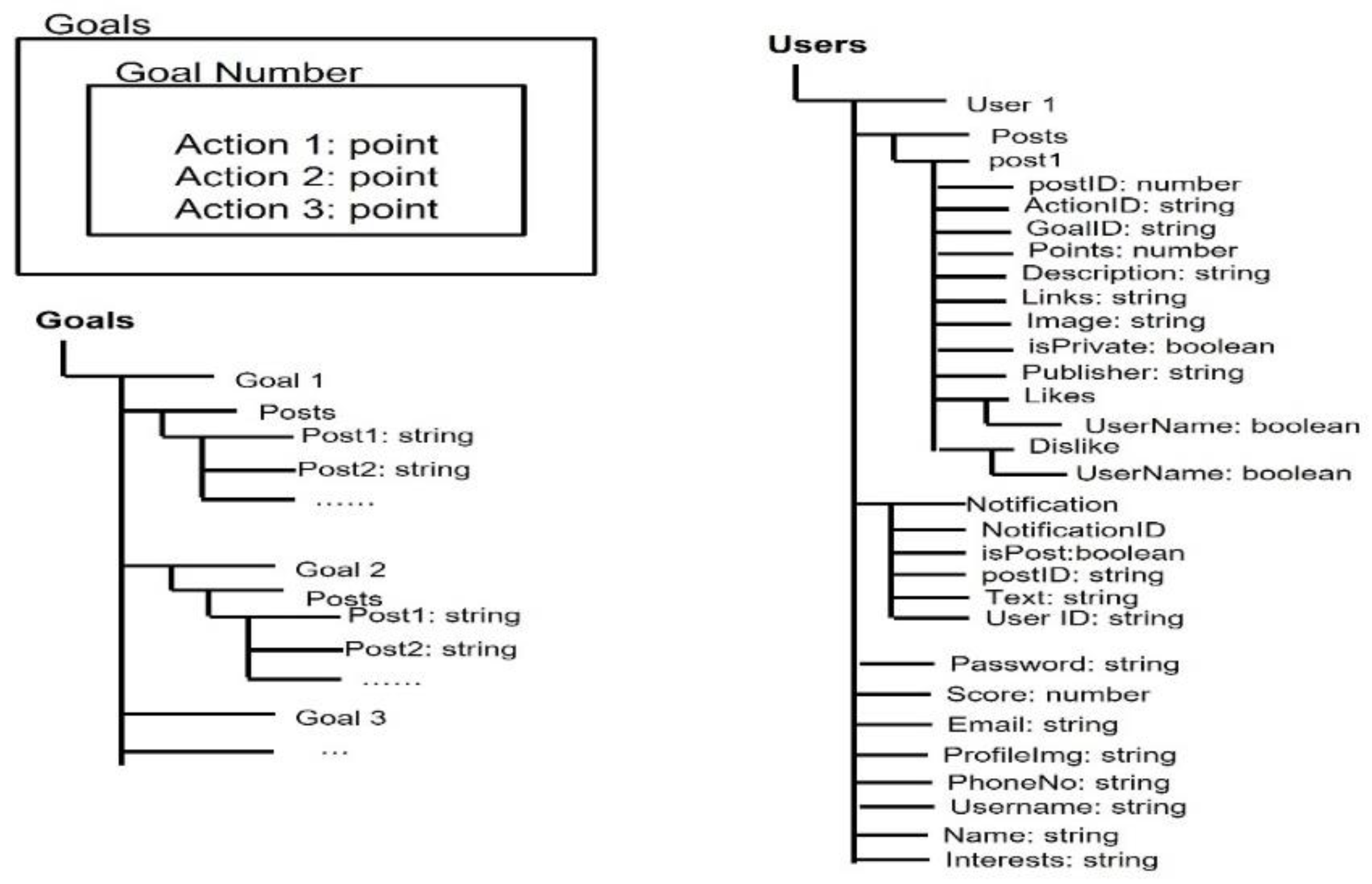
Firebase is a NoSQL cloud database that enables applications to share data and exchange information in real time. The data architecture of SAMA is presented in Figure 9. In terms of data representation, we stored objects in a single large JSON tree structure that is updated regularly in real time. For retrieval, we use two structures to retrieve the data quickly. Specifically, we have multiple users in the first structure to enable user profile updates. Each user structure has post, score, email, profile photo, phone number, username, name, password, interests, and notifications fields. Under the notifications, we have post flag, post ID, text, and user ID fields to update users with different activities and scoring changes. To make the retrieval and searching of posts fast, we save the posts’ unique IDs under their relevant SDG; see the “Goals” branch shown in Figure 9. Each post entry contains action, description, goal, goal ID, image, likes, dislikes, points, post ID, private, and publisher fields.
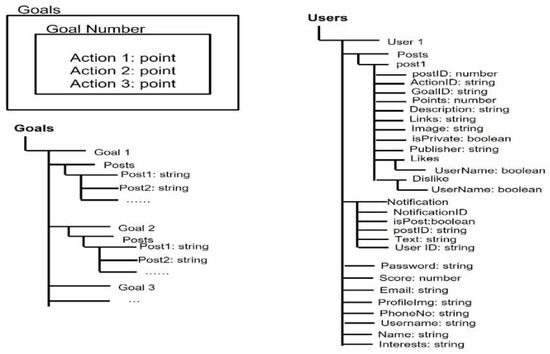
Figure 9.
SAMA data model (Cloud NoSQL-Firebase).
4.2.3. User Interface Design
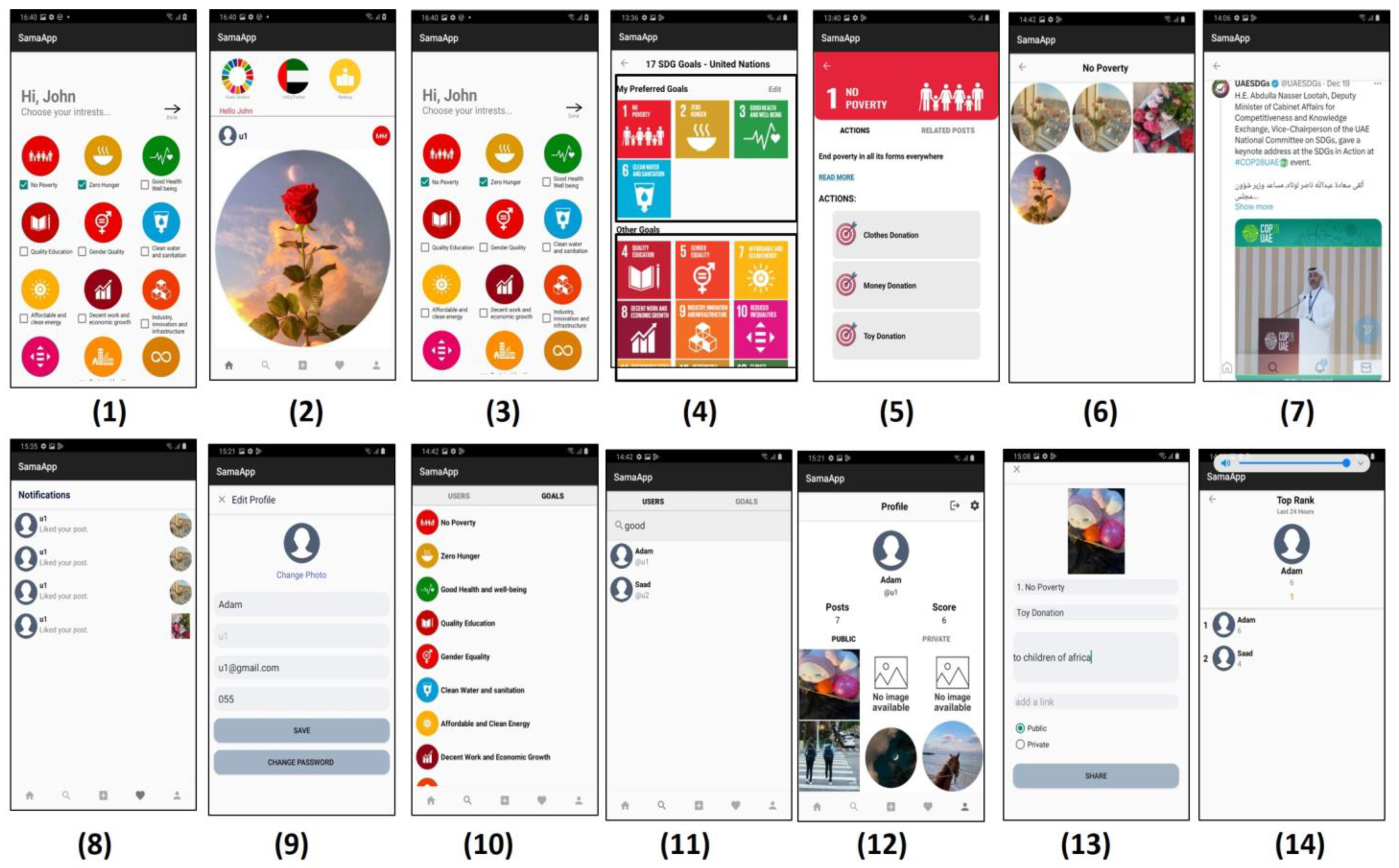
SAMA is a user-friendly application with a very high usability level. Most users used it directly without any help due to following standard HCI (human–computer interaction) design principles and considering the feedback from users in the surveys. Figure 10 presents the UI screens. The UI was designed using Figma and PowerPoint and deployed on Android Studio as XML pages. The platform provides abundant information about each goal, along with related auxiliary actions, references, and posts. Users can share their creative activities and post them to the public (or make them private). For more details on the design, implementation, UI experience, and other aspects of SAMA, we refer the reader to the platform manual available at [20].
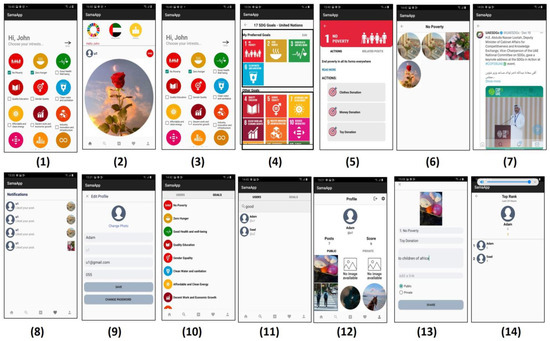
Figure 10.
SAMA UI screenshots.
4.2.4. Platform Implementation
SAMA is implemented in Java using Android Studio IDE. It consists of 38 Java classes and 65 XML files. The project has more than 11 thousand lines of code, and it occupies around 129 MB of device memory. The code, documentation, and manual are public and can be accessed on GitHub [20].
5. SAMA Analysis and Results
Following our methodology, namely, Step 4 in Figure 1, we conducted experiments with a group of UAEU students to assess the impact of SAMA on SDG awareness and engagement. Specifically, we installed SAMA on several mobile devices and distributed them to a random sample of 34 students, mainly from the 17–30 age category, see Table 4. The participants used the application independently for 7–30 days, see Table 5. The main goals of these interviews/surveys are as follows.
Table 4.
Age distribution of the SAMA experiments.
Table 5.
Time/usage distribution of the SAMA experiments.
- (1)
- Assess the impact of SAMA on SDG awareness.
- (2)
- Measure the impact of SAMA on the engagement of the participants in different activities/actions.
- (3)
- Evaluate the usability of SAMA among different age categories of users.
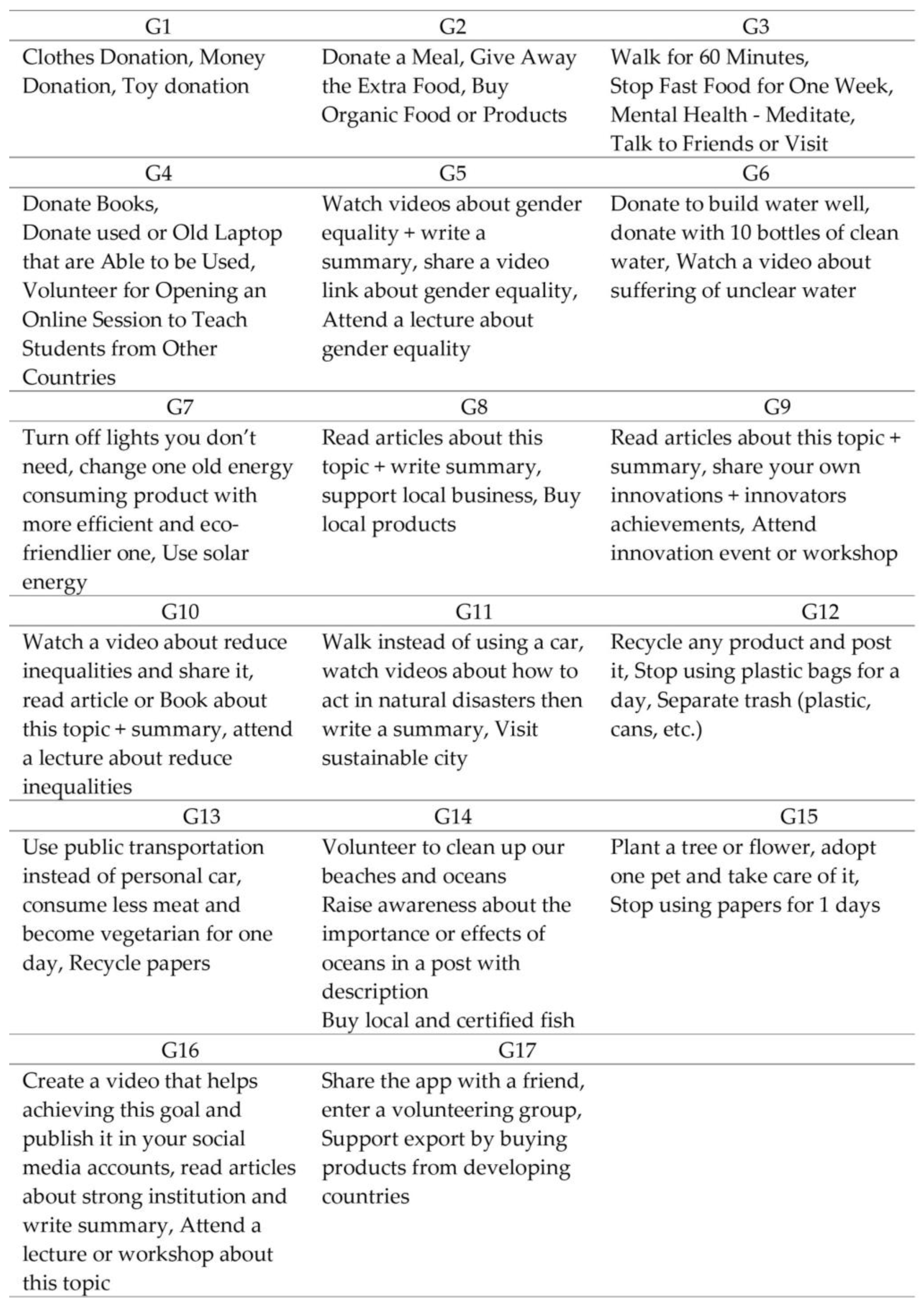
Table 6 presents the interview questions categorized based on the three goals shown above. For study goal 2 shown above (SDG engagement), we measured the engagement of the participants based on their actions/activities in each SDG. Figure 11 presents the actions that are relevant to each SDG. For example, any kind of donation is considered an action/activity that belongs to SDG-1 (No poverty), walking instead of using a car is considered an action/activity that belongs to SDG-11 (Sustainable cities and communities), etc. In the following, we will analyze the experiment results and elaborate on the participants’ responses.
Table 6.
SAMA interviews/surveys questions and how they map to the study goals.
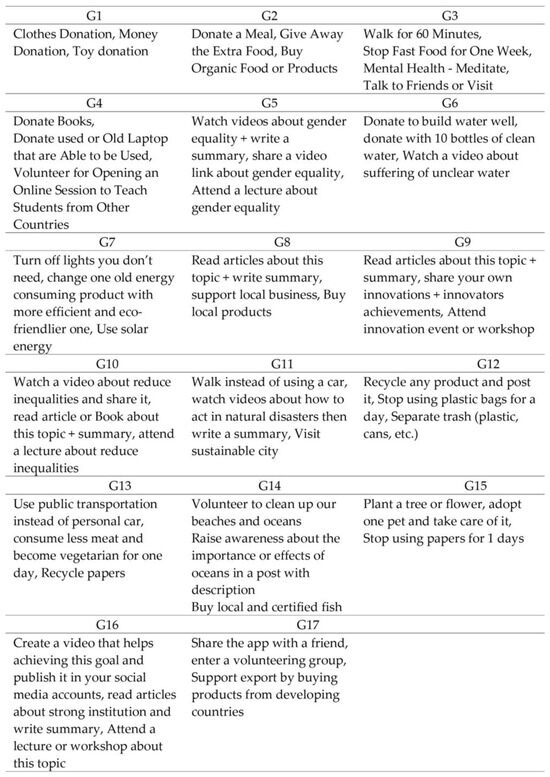
Figure 11.
Actions/activities that are related to each SDG.
Table 7 presents the positive impact of SAMA on the awareness of the SDGs. Specifically, it shows the level of awareness before and after using SAMA. More than 93% of the participants rated their SDG awareness after using SAMA as 4–5, where 5 indicates full awareness of the SDGs. Observe that before using SAMA, 75% of the participants ranked their awareness of SDGs as 1–2, where 1 is “not aware”. It is evident that SAMA has drastically increased the awareness of the participants and experimentally proved the results of other studies on social media, as in [6,7].
Table 7.
Level of awareness of SDGs (Scale 1–5) before and after using SAMA.
In the SAMA application, we measure engagement by looking at the number of posts on the platform. Recall that a post is defined as the sharing of physical action/activity that is related to one of the SDGs. Table 8 presents the most interesting/engaging SDGs among the participants sorted in descending order. Notice that G3 (Good health and wellbeing) and G15 (Life on land) are the most interesting goals among 13% of the participants. This result aligns with the fact that the UAE is a rich country, and residents might be more interested in sustaining their health and quality of life. Table 9 shows the number of actions shared by participants on SAMA. For example, 15% of the participants engaged in more than four actions, while 48% of the participants shared only two actions during the experiments. This reflects the contribution of users and their positive engagement to SDGs. It also gives the user the opportunity and space to improve awareness and encourage public engagement.
Table 8.
SDG interests among participants.
Table 9.
Actions/activities participation distribution.
In terms of the application’s usability, 84% of the participant indicated that SAMA is an easy-to-use and user-friendly platform, and they rated its usability as excellent or very good. Finally, 73% of the participants indicated that they would recommend the application to other colleagues or family members, see Table 10.
Table 10.
Survey response on the recommendation of SAMA to a friend.
6. Conclusions and Recommendations
In this paper, we investigated sustainability awareness levels in the UAE. We presented and analyzed survey results on how to engage students and residents in different SDG activities and actions. Unfortunately, awareness levels are low, and people, especially students, need encouragement and more engagement. The authors proposed SAMA as a mobile platform to improve awareness and encourage the young generation to participate in the SDGs by sharing their different activities and contributions on a public platform. The application was evaluated by the authors (development team) and finally tested by the users in terms of functionality and usability. The authors conducted an experimental survey in which the application was disturbed among a random sample of students, and the participants used the application for about 1–4 weeks. Application usability seemed very high, and students described it as easy/enjoyable to use. In terms of awareness of the SDGs, the awareness level increased dramatically from 75% (not aware) to 94% (well aware), which indicates that such a platform will help the UAE in spreading SDG awareness, especially among university students and young generations.
We recommend including sustainability activities and knowledge in the early grades at schools and making it part of in/out class activities. Additionally, we think that standard courses on sustainability need to be mandated in the college curriculum. Although UAEU, the biggest institute in the UAE, has a general education course on sustainability, the awareness level seems low among other students in the country. Additionally, the government needs to support national platforms to improve awareness and engagement in sustainability activities.
In the near future, we plan to extend this research by studying SDG activities and projects at schools. By adding the classroom space feature, the faculty/teacher can post SDG project themes, and students can post their innovative activities and contributions on that theme. We will study the effect of school projects in the classroom space and measure awareness among students.
7. Ethical Considerations
The surveys in this work were conducted according to the guidelines of the Declaration of Helsinki and approved by the Institutional Review Board (or Ethics Committee) of United Arab Emirates University (protocol code ERSC_2023_2629; date of approval, 6 April 2023) and a copy of the ethical form can be found at [20]. Informed consent was obtained from all subjects involved in the study.
This study received ethical approval from the research office of UAE University to protect the rights and confidentiality of the students. Prior to the start of the survey and the experiment, the authors explained to the students the procedure and the usage of the application on mobile devices. The purpose of the study was not explained in advance so as not to influence the students’ responses. The students were instructed that they could discontinue participation or decline to respond to any of the questions in the survey. All students provided spoken informed consent.
8. Limitations of the Study
In this paper, we investigated the awareness levels of sustainability in the UAE. We analyzed survey results on how to engage students and residents in different activities and actions relating to the SDGs. This study focused on the role of universities in enriching students’ sustainability literacy and influencing additional SDG-supportive activities and actions. Unfortunately, the audience in our study is mainly college students, and it lacks representation from other demographic groups, such as professionals, residents from different age groups, and people from diverse cultural backgrounds. Therefore, we cannot possibly use the results to draw conclusions on the level of awareness of the whole society. Additionally, a follow-up method by other researchers could possibly improve the participants’ professional behavior in sustainability by including other parameters to the survey, such as program study, year of study, and gender.
Author Contributions
Conceptualization M.A.; methodology, A.A., F.A., S.A. and R.A.; writing—review and editing, A.A., R.A. and M.A.; formal-analysis, A.A., R.A. and M.A.; software, F.A. and S.A., validation, F.A. and S.A.; investigation, F.A. and S.A.; writing original draft, A.A., F.A., S.A. and R.A.; supervision, M.A.; project administration, M.A.; funding acquisition, M.A. All authors have read and agreed to the published version of the manuscript.
Funding
This research is funded by the United Arab Emirates University research grant number 2609.
Institutional Review Board Statement
The study was conducted in accordance with the Declaration of Helsinki and approved by the Institutional Review Board (or Ethics Committee) of UAE University (protocol code ERSC_2023_2629 and date of approval 6 April 2023).
Informed Consent Statement
Informed consent was obtained from all subjects involved in the study.
Data Availability Statement
The data presented in this study are openly available at Github, link: https://github.com/mxawad2000/SGD_2022_SAMA (accessed on 23 December 2023).
Conflicts of Interest
The authors declare no conflicts of interest.
References
- Keeble, B.R. The Brundtland report: ‘Our common future’. Med. War 1988, 4, 17–25. [Google Scholar] [CrossRef]
- United Nations Environment Programme. Intergovernmental Conference on Environmental Education, Tbilisi, USSR, 14–26 October 1977: Final Report; UNESCO: Paris, France, 1978. [Google Scholar]
- Herremans, I.M.; Reid, R.E. Developing awareness of the sustainability concept. J. Environ. Educ. 2002, 34, 16–20. [Google Scholar] [CrossRef]
- The 17 Goals. Sustainable Development Goals. UN. Available online: https://sdgs.un.org/goals (accessed on 10 December 2023).
- UAE National Committee of SDG. Available online: https://sdgsuae-fcsa.opendata.arcgis.com/ (accessed on 10 December 2023).
- Al Sheikh, H.E.; Al Serhan, F.A. Role of digital media in achieving Sustainable Development in the Arab World. Saudi J. Humanities Soc. Sci. 2022, 7, 177–187. [Google Scholar] [CrossRef]
- Susilawati, C.; Al Surf, M. Challenges facing sustainable housing in Saudi Arabia: A current study showing the level of public awareness. In Proceedings of the 17th Annual Pacific Rim Real Estate Society Conference, Gold Coast, Australia, 16–19 January 2021. [Google Scholar]
- Hamid, S.; Ijab, M.T.; Sulaiman, H.; Anwar, R.M.; Norman, A.A. Social media for environmental sustainability awareness in higher education. Int. J. Sustain. High. Educ. 2017, 18, 474–491. [Google Scholar] [CrossRef]
- Kaur, A.; Chahal, H.S. Role of social media in increasing environmental issue awareness. Res. World 2018, 9, 19–27. [Google Scholar] [CrossRef]
- Mohammed, A.A.A.; Dominic, D.D. Social influence on the use of social media towards environmental sustainability awareness in HEI. In Proceedings of the 2021 International Conference on Computer & Information Sciences (ICCOINS), Kuching, Malaysia, 13–15 July 2021. [Google Scholar]
- Reilly, A.H.; Hynan, K.A. Corporate communication, sustainability, and social media: It’s not easy (really) being green. Bus. Horiz. 2014, 57, 747–758. [Google Scholar] [CrossRef]
- Abou-Korin, A.A. Impacts of rapid urbanisation in the Arab World: The case of Dammam metropolitan area, Saudi Arabia. In Proceedings of the 5th International Conference and Workshop on Built Environment in Developing Countries (ICBEDC 2011), Penang, Malaysia, 6–7 December 2011; University Sains Malaysia: Pulao Pinang, Malaysia, 2011. [Google Scholar]
- Alsaati, T.; El-Nakla, S.; El-Nakla, D. Level of Sustainability Awareness among University Students in the Eastern Province of Saudi Arabia. Sustainability 2020, 12, 3159. [Google Scholar] [CrossRef]
- Bor, Ö.; Tosun, B.; Eler, S.; Eler, N. Sport Academics’ Awareness and Knowledge of Sustainability in Higher Education in Türkiye. Sustainability 2023, 15, 6527. [Google Scholar] [CrossRef]
- Pejić Bach, M.; Žmuk, B.; Kamenjarska, T.; Bašić, M.; Morić Milovanović, B. The economic and sustainability priorities in the United Arab Emirates: Conflict exploration. J. Enterprising Communities People Places Glob. Econ. 2023, 17, 966–998. [Google Scholar] [CrossRef]
- Al Nuaimi, B.K.; Khan, M.; Ajmal, M. Implementing sustainable procurement in the United Arab Emirates public sector. J. Public Procure. 2020, 20, 97–117. [Google Scholar] [CrossRef]
- Muhammad, S.; Fathelrahman, E.; Tasbih Ullah, R.U. The Significance of Consumer’s Awareness about Organic Food Products in the United Arab Emirates. Sustainability 2016, 8, 833. [Google Scholar] [CrossRef]
- Alkaabi, K.; Mehmood, K.; Bhatacharyya, P.; Aldhaheri, H. Sustainable Development Goals from Theory to Practice Using Spatial Data Infrastructure: A Case Study of UAEU Undergraduate Students. Sustainability 2023, 15, 12394. [Google Scholar] [CrossRef]
- Serges, L. Top 10 Mobile Apps That Promote Sustainability. 2021. Available online: https://blog.hylamobile.com/top-10-mobile-apps-that-promote-sustainability (accessed on 25 April 2022).
- GitHub Link to Supportive Documents Article Resources. Available online: https://github.com/mxawad2000/SGD_2022_SAMA (accessed on 23 December 2023).
- UAE Social Media Statistics on Meltwater.com. Available online: https://www.meltwater.com/en/blog/social-media-statistics-uae (accessed on 10 December 2023).
- Moroney, L. The Firebase Realtime Database. In The Definitive Guide to Firebase: Build Android Apps on Google’s Mobile Platform; Apress: New York, NY, USA, 2017; pp. 51–71. [Google Scholar]
Disclaimer/Publisher’s Note: The statements, opinions and data contained in all publications are solely those of the individual author(s) and contributor(s) and not of MDPI and/or the editor(s). MDPI and/or the editor(s) disclaim responsibility for any injury to people or property resulting from any ideas, methods, instructions or products referred to in the content. |
© 2024 by the authors. Licensee MDPI, Basel, Switzerland. This article is an open access article distributed under the terms and conditions of the Creative Commons Attribution (CC BY) license (https://creativecommons.org/licenses/by/4.0/).