


Abstract
The global water crisis represents one of humanity’s most pressing challenges, with over 2 billion people lacking access to safely managed drinking water. This study presents the implementation and evaluation of an innovative air-conditioning condensate recovery system at Building F of the Faculty of Electrical and Electronic Engineering (FIEE), Universidad Veracruzana, Mexico. The system integrates twenty-six 24,000 BTU air-conditioning units across twelve classrooms and two laboratories, recovering approximately 520 L of condensate water daily. An initial physicochemical characterization of the recovered condensate was conducted through pH, electrical conductivity (EC), and total dissolved solids (TDS) measurements. In addition, the dried residue obtained after evaporation of the condensate was examined using semi-quantitative X-ray fluorescence (XRF) analysis. The XRF results describe the relative elemental composition of the dried residue and must not be interpreted as aqueous concentrations or as evidence of compliance with water-quality standards. The recovery system includes a nominal 0.5 µm polypropylene sediment cartridge, activated-carbon filtration, and a Crystolite® treatment medium. Because paired measurements before and after treatment were not performed, the removal efficiencies of these components were not determined. The recovered water is subsequently stored and processed in a dual-tank configuration: a primary 3300 L storage system and a secondary 200 L tank used to prepare fertilizer-amended condensate for ornamental-plant irrigation. A fully water-soluble monopotassium phosphate fertilizer (MKP, 0 (–52–34) was incorporated at a gravimetric proportion of 1:10 (1 g MKP per 10 g recovered condensate water).
1. Introduction
The global water crisis represents one of humanity’s most pressing challenges, affecting every dimension of human life and development. According to the World Health Organization (WHO), over 2 billion people currently lack access to safely managed drinking water [1,2]. This crisis is driven by multiple interconnected factors, including water pollution, rapid population growth, and accelerating climate change [1]. Climate change has particularly intensified water scarcity through altered precipitation patterns, resulting in insufficient rainfall to sustain vegetation, agricultural productivity, and groundwater recharge. Urbanization further compounds this problem, as the expansion of impervious surfaces such as concrete and asphalt significantly reduces natural water infiltration and disrupts the hydrological cycle.
A compelling illustration of these challenges is found in Veracruz, Mexico, where the northern region faces severe and recurrent water shortages. In recent years, groundwater levels have dropped precipitously below historically established thresholds [3], a crisis attributable to unauthorized extraction, inefficient water-use practices, and inadequate rainwater harvesting infrastructure. This regional situation exemplifies how local water management failures intersect with broader global trends in climate change and urban expansion.
Water conservation strategies encompass a wide range of approaches, with rainwater harvesting representing a cornerstone solution. The strategic construction of dams and reservoirs enables the capture and storage of precipitation during wet seasons for use during drought periods [4]. Contemporary approaches have expanded beyond traditional surface storage to include managed aquifer recharge and underground storage systems, which minimize evaporative losses while preserving water quality. In agricultural contexts, precision irrigation technologies such as drip systems that deliver water directly to plant root zones achieve efficiency rates of up to 95% compared to conventional methods [5], simultaneously conserving water, enhancing crop yields, and reducing soil erosion and nutrient leaching.
The adoption of drought-resistant agriculture constitutes another vital component of sustainable water management. By cultivating varieties specifically bred for water efficiency, agricultural productivity can be maintained even under water-stressed conditions. This approach integrates the selection of drought-tolerant crops, soil moisture conservation techniques, climate-smart agricultural practices, and precision farming technologies. When combined with improved soil management strategies such as mulching and conservation tillage, these measures create resilient agricultural systems that optimize water use while safeguarding food security.
Integrated surface and groundwater management has emerged as a critical strategy for drought-prone regions. A case study from southern Iran demonstrates how coordinated management of multiple water sources, coupled with strategic usage policies, significantly enhances water security while protecting aquifer sustainability [5], an approach particularly effective where single-source management strategies have proven insufficient. Water reclamation and reuse represent an equally powerful solution, especially in arid and semi-arid regions. Advanced treatment technologies now enable the safe transformation of wastewater into a resource suitable for agricultural operations, industrial processes, and urban landscape maintenance, simultaneously conserving freshwater and strengthening the resilience of the broader water cycle [5,6,7].
The effectiveness of these strategies depends on robust monitoring systems, clear regulatory frameworks, meaningful stakeholder engagement, advanced treatment technologies, and comprehensive distribution infrastructure. In recent years, the recovery and utilization of condensate water from air-conditioning (AC) systems have gained considerable attention as a complementary strategy amid growing water scarcity concerns and institutional sustainability initiatives [8,9]. Modern collection systems have evolved from simple drainage pipes to sophisticated networks integrating water-quality sensors, flow meters, and IoT-enabled monitoring devices that provide real-time data on collection rates and water-quality parameters, enabling automated diversion based on system demands [10,11].
This study presents the design and implementation of a full-scale system for collecting, storing, and operationally reusing air-conditioning condensate in Building F of the Faculty of Electrical and Electronic Engineering (FIEE), Universidad Veracruzana, Mexico. The study also provides an initial physicochemical characterization based on pH, electrical conductivity (EC), and total dissolved solids (TDS), whereas the elemental composition of the dried residue obtained from an independent untreated condensate batch was assessed by semi-quantitative X-ray fluorescence analysis. These analytical measurements were intended to establish a preliminary baseline and not to demonstrate regulatory compliance, microbiological safety, treatment-removal efficiency, or agronomic performance.
2. Materials and Methods
2.1. Study Site and Condensate Recovery System
When warm, humid air contacts a colder surface such as the evaporator coil of an air-conditioning unit, the water vapor it carries undergoes a phase change from gas to liquid, depositing as condensate on that surface. This phenomenon is well established in refrigeration and HVAC engineering. Condensate from cooling equipment is generated at significant volumes and represents a viable alternative water source for non-potable applications [12,13]. Condensate is generally of good quality, characterized by very low dissolved solids. For this reason, commercial and public buildings in several countries have adopted condensate recovery systems, redirecting the collected water to cooling towers, irrigation systems, landscaping, and sanitation uses [12,13]. The rate of condensate water production from an air-conditioning system can be estimated using the psychrometric relationship between the air supply conditions and the return air conditions. A commonly used expression is [14]:
where is mass flow rate of condensate water generated (kg/s or kg/h), is the mass flow rate of dry air processed by the unit (kg/s or kg/h), is humidity ratio of the entering (return) air (kg water/kg dry air), and is the humidity ratio of the leaving (supply) air (kg water/kg dry air). The humidity ratio can be determined from psychrometric charts or calculated from the dry-bulb temperature and relative humidity using:
where is the partial pressure of water vapor, and is the total atmospheric pressure. The volumetric condensate yield (liters per hour) is obtained by dividing by the density of liquid water (~1 kg/L).
Climate is a decisive factor in condensate yield. As a rule, condensate recovery becomes economically and technically viable only when ambient temperatures exceed 18.3 °C (65 °F) and relative humidity remains above 30%; below these thresholds, generation rates drop sharply and may not justify system investment.
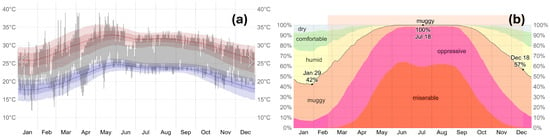
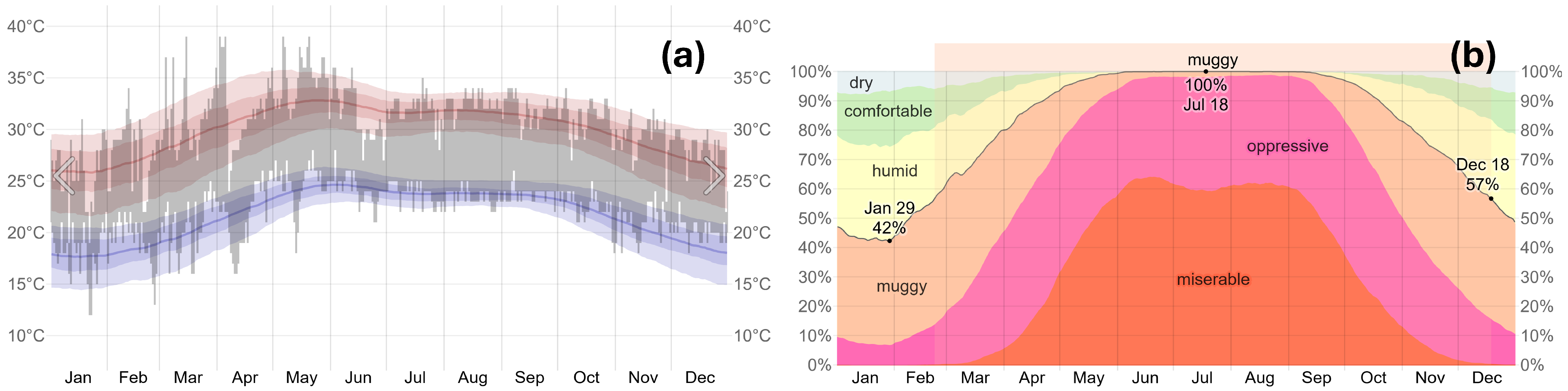
The FIIE Building F is located in the city of Boca del Río, situated on the central coast of the state of Veracruz along the Gulf of Mexico. Together with the adjacent city of Veracruz, it forms a continuous metropolitan area directly exposed to maritime influences that govern its thermal and hygroscopic conditions. The climate of the Veracruz–Boca del Río metropolitan area is tropical, warm, and persistently humid, with temperatures typically ranging between 18 °C and 33 °C. High atmospheric moisture and prevailing winds from the Gulf of Mexico combine to produce a pronounced heat index. The annual climate cycle is broadly divided into two contrasting seasons: Rainy Season (June–October): This period is characterized by high temperatures, elevated humidity, dense cloud cover, and frequent heavy rainfall, often accompanied by thunderstorms. The heat index regularly exceeds 35 °C, creating conditions highly favorable for condensate generation. Dry Season (November–May): Conditions remain warm but comparatively clearer. This season is punctuated by the Nortes cold fronts descending from northern latitudes, which bring strong winds, rough coastal seas, and temporary but significant temperature drops [15]. Figure 1 presents the monthly temperature and relative humidity profiles recorded in Boca del Río throughout 2025. The data confirms persistently elevated values of both parameters across most of the year. Given that condensate generation scales directly with the humidity difference between return and supply air, the consistently high ambient humidity of this location represents a favorable and largely year-round condition for condensate water recovery.
Figure 1.
Annual variation in (a) reported air temperatures and (b) humidity comfort levels in Boca del Río, Veracruz, Mexico, during 2025. In (a); gray bars show the daily ranges of reported temperatures; red and blue ticks indicate the 24h maximum and minimum temperatures, respectively; faint red and blue lines represent the daily average hig and low temperatures; and the inner and outer shaded bands represent the 25th–75th and 10th–90th percentile ranges, respectively. In (b), the colored areas indicate the percentage of time classified as dry, comfortable, humid, muggy, oppressive, or miserable based on dew point, while the black line represents the combined percentage of time under muggy-or-worse conditions. Source: WeatherSpark [15].
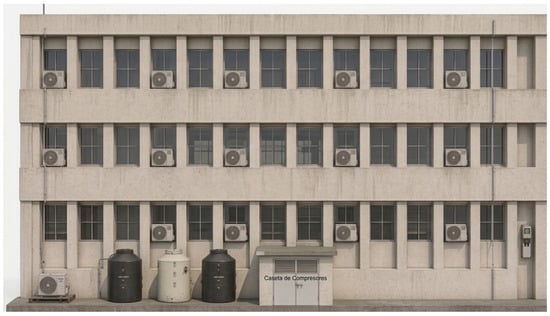
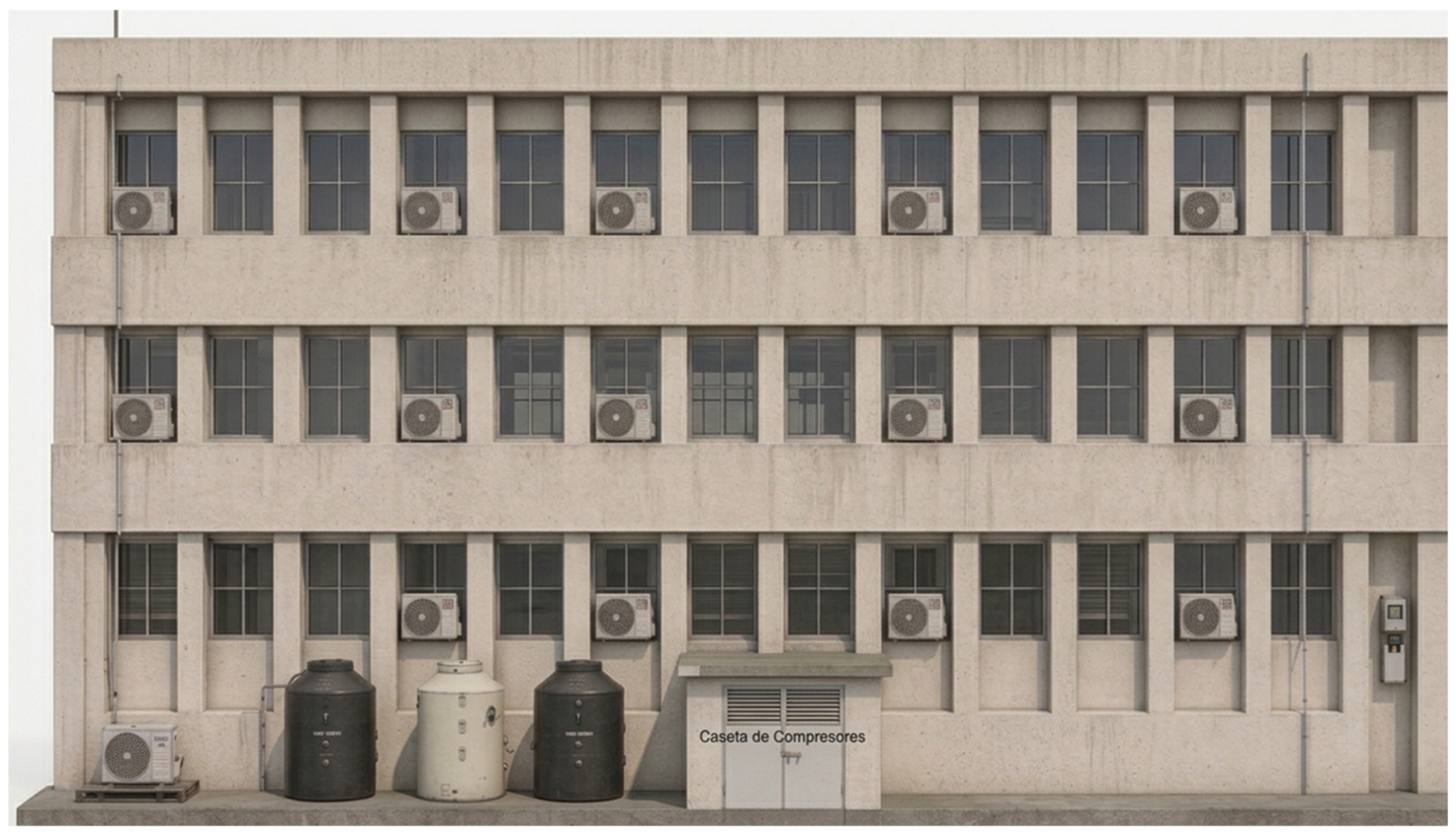
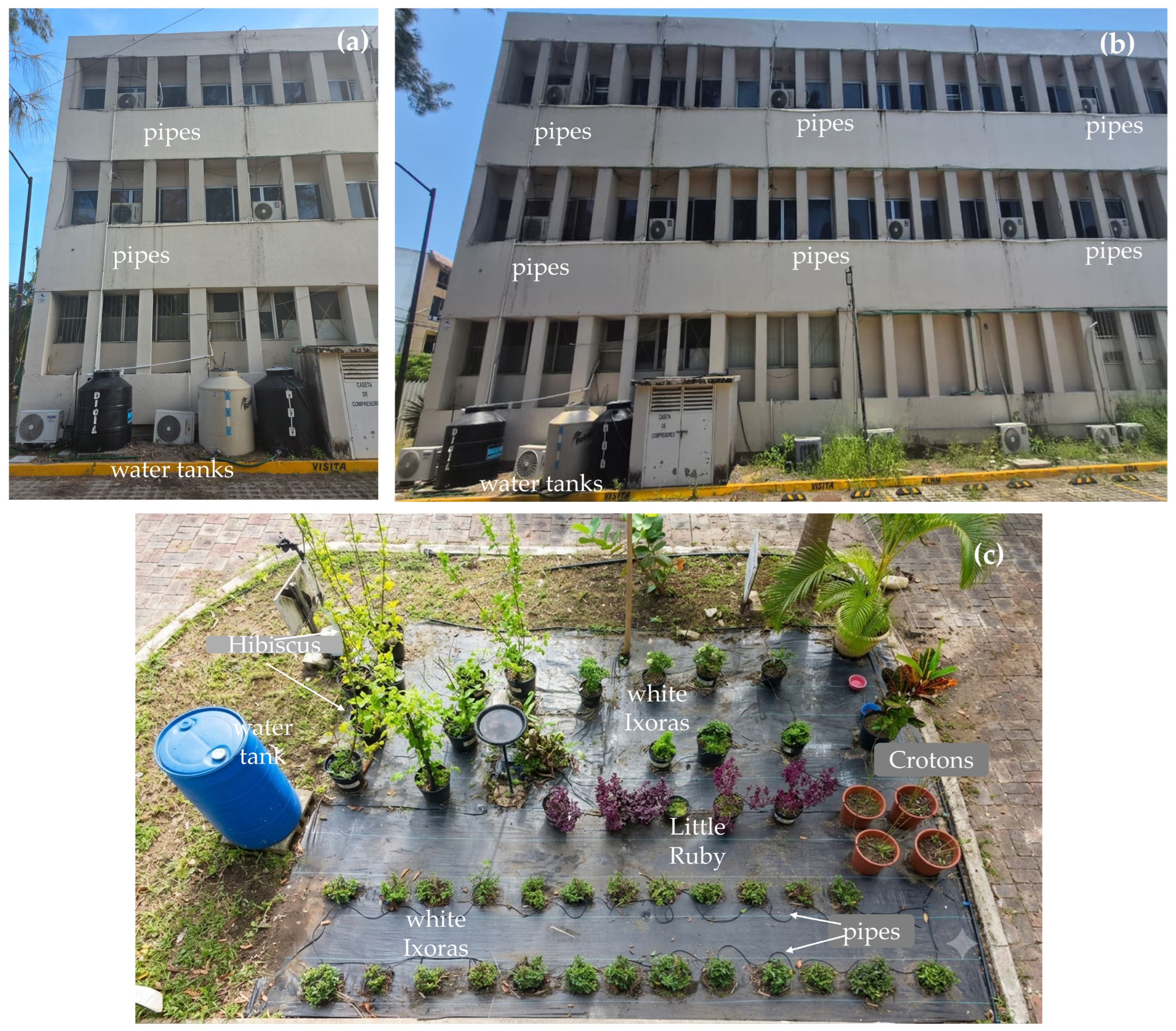
The system integrates twenty-six 24,000 BTU air-conditioning units across twelve classrooms and two laboratories, each classroom measuring 7 × 8 × 4 m. The implemented condensate recovery system uses a network of chlorinated polyvinyl chloride (CPVC) pipes and fittings installed along the exterior façade to collect condensate from multiple air-conditioning units. The condensate flows by gravity through the network to the filtration and storage configuration shown in Figure 2. This arrangement centralizes the condensate generated by the distributed units and facilitates system access and maintenance. Treatment performance and compliance with water-quality standards were not evaluated.
Figure 2.
Schematic front elevation of Building F showing the distributed split air-conditioning units, condensate collection lines, three 1100 L storage tanks, and the associated transfer and storage infrastructure.
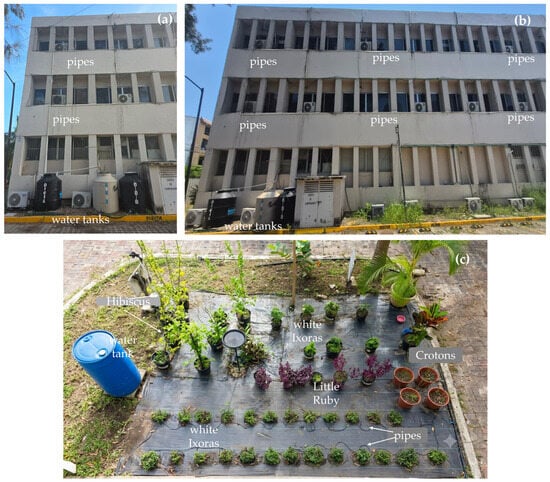
Before entering the storage tanks, the collected condensate passes through a 9¾-inch polypropylene sediment cartridge and an activated-carbon filtration stage (Figure 3). During the September–June operating period, the sediment cartridge was replaced every three months, within the 3–6-month interval recommended by the manufacturer. During the July–August vacation period, the storage tanks were completely emptied. The 1100 L storage tanks receive the filtered condensate; the first contains a Crystolite® treatment medium (Watch Water GmbH, Mannheim, Germany), installed for further water conditioning based on its intended commercial function [16]. Treatment performance was not evaluated through paired influent–effluent measurements; therefore, the removal of particles, solids, or metals was not quantified. Once the storage tanks reach capacity, a semi-submersible pump transfers the water to a 54,000 L cistern. This transfer cycle is conducted approximately twice per week, as shown in Figure 3a,b.
Figure 3.
Implemented condensate recovery and irrigation system: (a,b) exterior CPVC collection lines and storage tanks installed at Building F; (c) initial arrangement of the ornamental plants, water-storage tank, and irrigation distribution pipes. The ornamental plants included white ixora, hibiscus, little ruby, and croton.
From this primary reservoir, the recovered condensate is directed to a 200 L secondary tank, where a fully water-soluble monopotassium phosphate fertilizer (MKP, 0-52-34) was added at a gravimetric proportion of 1:10 (1 g MKP per 10 g recovered condensate water). According to the manufacturer’s technical specification, the fertilizer is nitrogen-free and contains 52.23% phosphorus expressed as (P2O5), and 34.08% potassium expressed as (K2O) [17]. The mixture is homogenized using an Atverce CM01 six-speed electric mixer (Atverce, Mexico City, Mexico) equipped with a spiral mixing paddle (2100 W; manufacturer-specified nominal speed range, 360–930 rpm) and subsequently distributed to the ornamental plants through the solar-powered irrigation system. Because the fertilizer quantity was recorded as an operational part rather than as a measured mass, the final fertilizer and nutrient concentrations in the irrigation solution could not be calculated.
The system’s distribution is governed by a dual-valve control mechanism integrated with each storage tank, enabling precise routing of water to its intended application. For irrigation purposes, operators close the primary valve and open the secondary valve, directing fertilizer-enriched water to landscaping zones. Conversely, for facility maintenance and laboratory applications, the secondary valve remains closed while the primary valve is opened, channeling untreated recovery water to the appropriate usage points. This configuration operationally separates the non-fertilized and fertilizer-amended water circuits. However, application-specific water quality and reuse safety were not evaluated.
Approximately 400 L of recovered condensate per week were allocated to ornamental-plant irrigation. The remaining condensate was periodically transferred to the Building F cistern and made available for non-potable cleaning and maintenance activities. Volumes stored, withdrawn, discarded, lost, or overflowed were not recorded; therefore, a complete water balance could not be established.
The fertilizer-enriched water is used to irrigate a variety of ornamental plants, including white ixoras (Ixora coccinea), hibiscus (Hibiscus rosa-sinensis), little ruby (Alternanthera dentata), and crotons (Codiaeum variegatum). Delivery is carried out through a solar-powered automated irrigation system, in which hoses connect directly from the 200 L tank to each plant; see Figure 3c.
2.2. Physicochemical Characterization of the Liquid Condensate
The physicochemical characterization of the recovered condensate was performed using a portable multiparameter meter (HI9811-51, Hanna Instruments, Woonsocket, RI, USA) equipped with an HI1285-51 combined probe. Water samples were collected from the primary storage reservoir after passage through the installed filtration and conditioning system and before the addition of MKP fertilizer. These samples were different from the untreated condensate batch used for the XRF analysis described in Section 2.3.
The pH, EC, and TDS were measured directly in the liquid condensate. The probe was rinsed with deionized water between samples and immersed in each sample until the displayed values stabilized. The measurements were performed according to the operating instructions provided by the instrument manufacturer.
A total of 6560 pH readings, 3280 EC readings, and 3280 TDS readings were recorded during the monitoring period. These values represent the total number of instrumental readings rather than equivalent numbers of independent water samples.
The mean, standard deviation, minimum, and maximum were calculated for each physicochemical parameter. These measurements provide an initial physicochemical characterization of the recovered condensate but do not establish its microbiological safety, elemental composition, regulatory compliance, or unrestricted suitability for non-potable reuse.
2.3. Preparation and Semi-Quantitative XRF Analysis of the Dried Condensate Residue
For the semi-quantitative elemental characterization, a cumulative volume of 20 L of untreated condensate was collected directly from the discharge outlets of operating air-conditioning units, before filtration, storage, or treatment. No sample-selection criterion was applied; the condensate was collected according to its availability during normal system operation.
The collected condensate was evaporated at 80 °C for 72 h in a Felisa Model 330 laboratory oven (Felisa, Zapopan, Jalisco, Mexico), yielding approximately 2 g of recovered dried residue. Five analytical portions were prepared from the recovered residue without applying a specific selection criterion. Each portion was analyzed five times, resulting in 25 XRF measurements. Approximately 6 mg of dried residue was used per measurement, corresponding to a total analyzed mass of approximately 150 mg.
Semi-quantitative X-ray fluorescence analysis was performed using a MESA-50 instrument (HORIBA, Ltd., Kyoto, Japan) equipped with a Rh/Pd X-ray tube (Horiba, Kyoto, Japan), operated at 50 kV under automatic current control and without a primary-beam filter. For each measurement, the dried residue was placed in a sample cell fitted with a disposable X-ray-transparent polyethylene film supplied by the instrument manufacturer. The collimator aperture was selected according to the amount and distribution of powder in the cell, ensuring that the incident beam remained confined to the sample area.
The reported elemental values represent the mean normalized relative composition obtained from the 25 measurements. The semi-quantitative XRF software reports the detected elemental composition on a normalized ppm basis, in which the sum of the detected elements equals 1,000,000 ppm. These values were converted to relative mass percentages by dividing each value by 10,000. Because the five analytical portions were prepared from the same dried residue obtained from a single condensate batch, they were treated as analytical replicates rather than independent environmental samples. No inferential statistical test was applied. Accordingly, the XRF results characterize the relative elemental composition of the analyzed dried residue and must not be interpreted as elemental concentrations in the original liquid condensate, temporal or spatial variability, or evidence of compliance with water-quality standards.
2.4. Monitoring Soil pH and Environmental Conditions
During the operational irrigation period, soil pH and environmental conditions were monitored at the locations of four ornamental plant groups: white ixora, hibiscus, little ruby, and croton. Monitoring began in January 2024 and continued during 2025. Measurements were conducted three times daily at the locations assigned to each plant group.
Soil pH was measured by inserting the probe into the soil associated with each ornamental plant group. Air temperature, relative humidity, and incident illuminance were measured using the same BSTiltion 6-in-1 multifunctional instrument (BSTiltion, China; manufacturer city not specified), positioned 10 cm from the plants. Illuminance was recorded in lux. These measurements were used to characterize the local conditions under which irrigation was performed.
Measurements were grouped by plant type and year. For each variable, the mean, standard deviation, minimum, and maximum were calculated from the available records. These measurements characterize the soil pH and environmental conditions recorded at the plant locations; they were not intended to quantify plant growth, physiological performance, soil nutrient dynamics, or treatment effects.
3. Results
3.1. Semi-Quantitative XRF Characterization of the Dried Condensate Residue
The semi-quantitative XRF analysis identified the elements present in the dried residue obtained after evaporation of the condensate. The reported values represent normalized relative mass percentages of the elemental composition detected in the dried residue and do not correspond to elemental concentrations in the original liquid condensate.
Elemental identification required confirmation of at least two characteristic emission lines per element. The results are semi-quantitative, as the matrix composition was unknown; quantification was carried out using the instrument’s proprietary software, which does not require external calibration standards. Elements of toxicological relevance, Cr, Ni, and Mn, were grouped together and are highlighted in the lower section of Table 1.
Table 1.
Normalized relative elemental composition of the dried residue obtained by evaporation of untreated air-conditioning condensate. Values are expressed as relative mass percentages normalized to the total elemental composition detected by semi-quantitative XRF analysis. These values describe the analyzed dried residue and do not represent aqueous elemental concentrations in the original condensate.
The pH, EC, and TDS were measured directly in the liquid condensate, whereas the XRF analysis was performed on the solid residue obtained after evaporation.
3.2. Characterization of Condensate Water Output from Air-Conditioning Units in FIEE Building F
The facility’s geographical location plays a determining role in the daily volume of condensate generated by the air-conditioning units, as ambient temperature and relative humidity directly influence condensation rates. The elevated condensate output observed in the classrooms can be attributed to three compounding factors: extended daily operating hours, high occupant density, and increased internal thermal and moisture loads. Each classroom operates continuously from 7:00 a.m. to 9:00 p.m., accommodating an average of 30 to 40 students, conditions that collectively contribute to substantial moisture accumulation within each conditioned space. Table 2 presents the descriptive statistics for pH, EC, and TDS, including their mean values, standard deviations, and observed ranges. These parameters provide a preliminary physicochemical description of the recovered condensate but do not establish chemical or microbiological safety, absence of metals, regulatory compliance, or unrestricted suitability for the proposed non-potable applications.
Table 2.
Descriptive statistics of the physicochemical parameters measured in the recovered air-conditioning condensate.
3.3. Operational Irrigation Reuse and Monitored Environmental Conditions
The MKP-amended condensate prepared using the operational 1:10 fertilizer-to-water proportion described in Section 2.1 was used to irrigate white ixora, hibiscus, little ruby, and croton plants. Figure 3c shows the initial distribution of the ornamental plants. This activity was implemented to demonstrate the collection, conditioning, and distribution of recovered condensate through the installed irrigation system; it was not designed as a controlled agronomic experiment. Beginning in January 2024, air temperature, relative humidity, light intensity, and pH of the irrigation solution were recorded three times daily. Table 3 and Table 4 summarize the monitored conditions for 2024 and 2025, respectively. These variables describe the conditions under which operational irrigation occurred and must not be interpreted as direct indicators of plant performance or treatment effects.
Table 3.
Descriptive statistics of the variables monitored at the ornamental-plant locations during 2024.
Table 4.
Descriptive statistics of the variables monitored at the ornamental-plant locations during 2025.
According to Table 3 and Table 4, the results indicate that, between 2024 and 2025, the environmental conditions of the system underwent a general shift characterized by rising temperatures and increased light exposure, while pH levels remained stable and relative humidity tended toward greater uniformity across species.
With respect to temperature, a consistent increase in mean values was observed across all species, rising from a range of 27.6–29.0 °C in 2024 to 30.4–33.8 °C in 2025. Croton species exhibited the most pronounced thermal increase, with mean temperature rising from 29.0 °C to 33.8 °C (Δ = +4.8 °C), as well as the widest recorded range (21–41 °C), suggesting greater exposure to extreme thermal conditions during this period. Given that this upward trend was consistent across all monitored species, it is more appropriately attributed to a broader environmental shift likely seasonal or climatic in origin rather than to conditions specific to any individual species. These variations may reflect inter-annual climatic fluctuations or modifications in cultivation and monitoring protocols applied between the two measurement periods.
4. Discussion
4.1. Condensate Yield Under Humid Tropical and Institutional Operating Conditions
The condensate recovery system collected an average total volume of approximately 520 L d−1 from 26 active split air-conditioning units, each with a nominal cooling capacity of 24,000 BTU h−1. The units operated for approximately 14 h d−1, from 07:00 to 21:00 h, corresponding to 364 accumulated unit-hours per day. Considering that each unit had a nominal cooling capacity of 2 refrigeration tons, the total operating capacity was 52 TR. The measured condensate production was therefore equivalent to 20 L unit−1 d−1, 1.43 L unit−1 h−1, and 0.714 L TR−1 h−1. These values were obtained from the daily accumulated condensate generated by the complete network of 26 units during a 12-month monitoring period.
The capacity-normalized yield obtained in the present study falls within the approximate range of 0.38–1.14 L TR−1 h−1 previously reported for air-conditioning condensate recovery systems operating in warm and humid climates [8,18]. It was moderately lower than the values reported by Ahmed et al. [19] for residential split systems in Bahrain, where 2- and 3-TR units produced 1.963 and 2.54 L h−1, respectively. These values correspond to approximately 0.98 and 0.85 L TR−1 h−1. The present result is therefore consistent with the order of magnitude reported for split systems, while confirming that condensate production cannot be estimated solely from nominal cooling capacity.
Differences among studies are expected because condensate formation is controlled by climatic, psychrometric, operational, and building-related variables. Previous investigations have identified indoor and outdoor temperature, dew-point temperature, relative and absolute humidity, air velocity, airflow rate, evaporator-coil geometry, ventilation requirements, and cooling capacity as relevant determinants of condensate production [8,18]. Building occupancy and operating schedules also affect latent cooling loads because occupants release moisture through respiration and perspiration, while infiltration, ventilation, and door opening can introduce additional humid outdoor air into conditioned spaces [8,18].
These factors are particularly relevant to the evaluated university building, where the classrooms accommodate approximately 30–40 students and remain conditioned throughout a 14 h academic schedule. The combination of prolonged operation, high occupant density, and the humid coastal climate of Boca del Río provide favorable conditions for continuous moisture removal. Elbrashy et al. [20] similarly identified occupancy, operating time, and atmospheric humidity as major contributors to condensate production in a university engineering building. However, the contribution of each factor in the present study remains inferential because hourly psychrometric conditions at the inlet and outlet of each air-conditioning unit were not monitored.
The present study differs methodologically from investigations in which whole-building production was projected from a representative room or a limited number of air-conditioning units. Elbrashy et al. [20], for example, estimated a total production of approximately 6 m3 d−1 for a university building equipped with 113 units by extrapolating representative production values to the entire installation. In the present case, the reported 520 L d−1 corresponded to the accumulated production of all 26 operating units. This approach more directly represents the integrated performance of the collection network and avoids assuming identical production among units.
The 12-month monitoring period is also relevant because condensate production can vary with seasonal temperature, atmospheric moisture, equipment demand, and building occupancy. AlGhamdi et al. [21] reported a significant relationship between atmospheric humidity and condensate production and found annual yields of 20,614 L for split air-conditioning systems and 8725 L for window-type systems in Jeddah. Differences between equipment types were attributed partly to their operating characteristics and drainage configurations [21]. Nevertheless, reporting only the mean value of 520 L d−1 may conceal monthly variability associated with the rainy season, cold-front events, academic vacations, and changes in occupancy. Monthly production data would therefore strengthen the assessment of seasonal reliability.
Overall, the normalized condensate yield confirms the technical feasibility of recovering water from multiple distributed split systems under humid tropical and institutional operating conditions. However, extrapolation to other buildings should be based on normalized indicators such as L unit−1 h−1 and L TR−1 h−1, together with local psychrometric, occupancy, and operating data, rather than on total daily production alone [8,18].
4.2. Physicochemical and Elemental Characteristics of the Recovered Condensate
The recovered condensate exhibited a mean pH of 6.91 ± 0.60, with values ranging from 5.38 to 7.50. Total dissolved solids ranged from 23 to 120 mg L−1, with a mean value of 58.25 ± 33.55 mg L−1, whereas EC varied from 48 to 178 µS cm−1 and averaged 79.25 ± 44.03 µS cm−1. These values characterize the recovered condensate as a relatively low-mineralization water stream, consistent with previous studies reporting low dissolved-solids contents and low EC in air-conditioning condensate [8,21].
Low TDS and EC may be advantageous for non-potable applications in which mineral scaling is undesirable. Nevertheless, low mineralization does not demonstrate chemical or microbiological safety. Condensate is initially produced by cooling and dehumidifying air, but its final quality may be modified through contact with evaporator coils, drain pans, metallic joints, pipes, hoses, storage tanks, indoor dust, aerosols, cleaning products, and biofilms [8,21]. The minimum pH of 5.38 also indicates that the water was occasionally acidic, which may increase its interaction with metallic surfaces during conveyance and storage.
The elemental results must be interpreted according to the analytical boundary of the XRF procedure. The analysis was conducted on solid powder obtained after evaporating the condensate rather than directly on the liquid water. Because the elemental values were normalized to the elemental composition detected in the recovered solid residue, they sum approximately to 100% and represent the relative composition of that residue. Consequently, the values reported for Cl, Ca, K, Fe, Si, Cr, Zn, Cu, Mn, and Ni must not be interpreted as aqueous concentrations in the original condensate.
Potential sources of the detected elements may include HVAC components, corrosion products, deposited atmospheric particles, collection-system materials, or sample handling. However, source apportionment was not performed, and the present XRF analysis cannot distinguish between dissolved constituents, suspended particles, precipitated salts, corrosion products, or mixtures of these forms.
Air-conditioning condensate may also receive airborne microplastic particles through processes associated with particle deposition on the evaporator surface and their subsequent transfer to the condensed water. Indoor and semi-open air may contain synthetic fibers, fragments derived from textiles and clothing, and microplastic-containing dust. These particles could accumulate on air-conditioning components and subsequently enter the condensate stream. Nevertheless, microplastics were not measured in this study; therefore, their presence, concentration, polymer composition, and contribution to the recovered residue cannot be determined.
A second potential pathway is the release of particles or polymer-associated substances from components used in the collection, filtration, storage, and irrigation system. Recent evidence indicates that processing-induced residual stress in semicrystalline polypropylene and polyethylene can promote the segregation of low-molecular-weight amorphous polymer domains and their subsequent release into water as amorphous polymer micropollutants [22]. This mechanism differs from conventional fragmentation caused by weathering or mechanical abrasion and suggests that pollutant release may also be influenced by the manufacturing history, residual stress, temperature, and configuration of polymeric components. Nevertheless, the occurrence and magnitude of this process depend on the polymer composition and operational conditions of each component. The present study did not characterize the polymeric materials, residual stresses, or particle release from the installed system. Therefore, the results do not demonstrate that this mechanism occurred. Furthermore, XRF analysis of the dried residue cannot identify polymeric particles, determine their size distribution, or distinguish airborne microplastics from polymer-derived contaminants.
Direct comparison with water-quality limits would require concentrations expressed on a liquid-volume basis, such as mg L−1 or µg L−1. AlGhamdi et al. [21], for example, used inductively coupled plasma optical emission spectroscopy to quantify metals directly in condensate samples. Their approach allowed individual concentrations of As, Cd, Cr, Cu, Fe, Hg, Mn, Ni, Pb, and Zn to be compared with water-quality criteria. This differs fundamentally from the semi-quantitative XRF characterization of an evaporated residue.
Evaporation of the 20 L untreated condensate batch yielded approximately 2 g of recovered dried residue. This approximate recovery corresponds nominally to 0.1 g L−1 of residue relative to the initial condensate volume. However, because the procedure was conducted to obtain material for XRF characterization rather than as a standardized gravimetric determination of total solids, this value should be interpreted cautiously. Potential material losses during evaporation, recovery, and sample handling were not quantified. Moreover, the recovered-residue mass and the normalized XRF composition cannot be used to calculate individual aqueous elemental concentrations; validated liquid-phase analyses would still be required for that purpose.
The measured pH, EC, and TDS values therefore support the classification of the condensate as a low-salinity alternative water source. However, these three parameters alone are insufficient to establish suitability for every proposed use. A fit-for-purpose assessment should additionally consider turbidity, alkalinity, hardness, chloride, sulfate, nutrients, organic matter, chemical oxygen demand, relevant metals, and microbiological indicators [21,23]. Seguela et al. [23] emphasized that condensate intended for landscape reuse should also be evaluated in terms of sodium adsorption ratio, bacterial counts, soil infiltration, corrosion, and potential effects on exposed users. The present findings should therefore be considered an initial physicochemical and elemental characterization rather than evidence of potable-water quality, absence of contaminants, or unrestricted reuse suitability.
4.3. Treatment Requirements, Storage Effects, and Fit-for-Purpose Reuse
The implemented recovery system integrates gravitational collection through a CPVC network, a nominal 0.5 µm polypropylene sediment cartridge, activated-carbon filtration, treatment with a Crystolite® medium [16], three 1100 L storage tanks, transfer to a 54,000 L cistern, and a separate 200 L tank for preparing MKP-amended irrigation water using the operational 1:10 fertilizer-to-water proportion described in Section 2.1 and the commercial formulation described in [17]. The polypropylene sediment cartridge, activated carbon, and Crystolite® medium constituted the operational filtration configuration implemented in the system. However, paired measurements before and after treatment were not performed. Consequently, the removal efficiencies of the individual components or of the combined filtration sequence cannot be quantified for suspended particles, dissolved or particulate metals, organic substances, microorganisms, or microplastics. The presence of these filtration components should therefore not be interpreted as evidence of improved water quality or treatment effectiveness.
The independent control of the non-fertilized and fertilizer-enriched water circuits represents an operational advantage because it allows the recovered water to be directed according to its intended application. However, the performance of the treatment train was not evaluated through paired measurements before and after each treatment stage. Consequently, the removal efficiencies of the sediment cartridge, activated carbon, and Crystolite® medium cannot currently be quantified. The manufacturer information cited in [16] describes the intended function of the commercial treatment medium but does not constitute experimental evidence of removal efficiency under the hydraulic and water-quality conditions of the present system. The installed treatment train should therefore be described in terms of its configuration and intended function rather than as a validated process for removing solids, metals, organic substances, or microorganisms.
The current filtration stages should not be interpreted as equivalent to disinfection. Sediment retention and activated-carbon filtration address different water-quality objectives from microbial inactivation. AlGhamdi et al. [21] detected bacterial contamination in air-conditioning condensate samples even when physicochemical parameters and most elemental concentrations were considered acceptable. This finding demonstrates that apparently favorable pH, TDS, and EC values do not exclude microbiological contamination.
Storage represents an additional water-quality control point. At a mean production rate of 520 L d−1, the combined nominal capacity of the three 1100 L tanks corresponds to approximately 6.3 days of condensate generation. If the 54,000 L cistern were exclusively dedicated to condensate and initially empty, its nominal capacity would correspond to approximately 104 days of production. These calculations do not represent the actual hydraulic residence time because water withdrawals, mixing, additional inflows, pumping cycles, evaporation, leakage, and overflow were not quantified.
Nevertheless, the large difference between daily production and storage capacity indicates that water turnover and stagnation require consideration. Extended residence time, warm environmental conditions, and the absence of a disinfectant residual may favor microbial proliferation and biofilm formation. Algarni et al. [8] emphasized the importance of regular cleaning, avoidance of prolonged stagnation, and appropriate treatment or disinfection when condensate is intended for applications involving greater human exposure.
The three-month sediment-cartridge replacement schedule, implemented during the September–June operating period, was consistent with the manufacturer’s recommended 3–6-month replacement interval. The tanks were emptied and cleaned during the July–August vacations period. However, scheduled replacement and cleaning do not demonstrate treatment performance. Their effectiveness should be evaluated using operational indicators such as pressure loss, flow reduction, visible fouling, turbidity, changes in EC or TDS, and microbiological measurements. Cleaning of evaporator trays, drainpipes, tanks, pumps, and distribution lines is also important because contamination can occur both upstream and downstream of the filtration system [8,21].
A fit-for-purpose approach is therefore preferable to applying a single water-quality criterion to all uses. Seguela et al. [23] proposed that onsite non-potable reuse systems should be evaluated by first quantifying the available water, identifying compatible end uses, characterizing use-specific quality parameters, and assessing potential effects on users, soils, plants, and hydraulic infrastructure. For landscape irrigation, relevant parameters include pH, EC, sodium adsorption ratio, metals, suspended particles, microorganisms, emitter clogging, and soil infiltration [23].
For sanitary flushing and general cleaning, microbiological quality, turbidity, odor, aerosol exposure, and prevention of cross-connections become more relevant. Laboratory applications require a separate assessment because low TDS alone does not establish suitability for analytical glassware, reagent preparation, sterilization, or final rinsing. The current characterization therefore supports further evaluation for controlled, low-exposure non-potable applications, but it is insufficient to certify unrestricted irrigation, sanitary reuse, or analytical laboratory use.
4.4. Operational Irrigation Reuse and Implications for Plants and Soils
The recovered condensate was used operationally to irrigate white ixora, hibiscus, little ruby, and croton plants through a solar-powered distribution system. Before irrigation, the condensate was amended with the water-soluble MKP fertilizer described in [17], using the operational 1:10 fertilizer-to-water proportion reported in Section 2.1. This implementation demonstrates that condensate collected from multiple split air-conditioning units can be stored, conditioned, and delivered through a functional landscape-irrigation network.
During the operational irrigation period, the ornamental plants remained in generally good visual condition, without evident deterioration. However, systematic assessments of growth, flowering, survival, physiological performance, or plant health were not conducted. This qualitative observation should not be interpreted as evidence of an agronomic benefit or long-term irrigation safety.
Ahmed et al. [19] similarly demonstrated the practical recovery of condensate from residential split air-conditioning systems and its distribution to garden-irrigation outlets in Bahrain. Their results confirmed the operational feasibility of substituting part of the conventional irrigation-water demand with condensate. However, as in the present study, the main contribution was associated with water collection and distribution rather than a controlled evaluation of plant physiological or growth responses.
The monitored variables in the present study—temperature, relative humidity, pH, and luminosity—describe the environmental conditions under which the plants were maintained. They do not directly quantify plant performance. No control group irrigated with conventional water, condensate-only treatment, fertilizer-only treatment, or replicated experimental design was included. Moreover, plant height, leaf number, canopy development, survival, flowering, biomass, chlorophyll content, water-use efficiency, and visible phytotoxicity were not measured.
Consequently, the available data cannot demonstrate that condensate irrigation improved or maintained plant growth relative to another water source. The addition of the commercial fertilizer [17] further prevents any plant response from being attributed exclusively to the condensate. In addition, because the fertilizer amount was recorded as an operational part rather than as a measured mass, the final concentrations of MKP, phosphorus, and potassium in the irrigation solution could not be calculated. Consequently, the agronomic contribution of the fertilizer dose and its possible influence on solution pH or plant responses cannot be evaluated from the available records. Air-conditioning condensate is generally low in dissolved nutrients and should be considered primarily a water source rather than a complete nutrient solution [8,24].
Ansari et al. [24] reported a comparable need for nutrient supplementation in a different biological application. Air-conditioning condensate supported the cultivation of Chlorella sorokiniana, but the highest condensate-based biomass production was achieved when the recovered water was combined with a nutrient-rich growth medium. Their findings demonstrate that condensate can partially substitute freshwater while additional nutrients remain necessary to sustain biological production [24].
The low EC of the condensate may reduce the direct salt load applied during irrigation. Nevertheless, very low ionic strength is not universally advantageous for soils. Seguela et al. [23] reported that low dissolved salt concentrations may affect soil infiltration and recommended evaluating EC together with sodium adsorption ratio, pH, bacterial indicators, and soil properties before unrestricted landscape reuse. Irrigation suitability therefore depends on the interaction between water quality, fertilizer addition, irrigation frequency, plant species, and the physical and chemical properties of the receiving soil.
The elemental signals detected in the evaporated residue also warrant consideration under long-term irrigation. Previous studies have associated metals and inorganic particles in condensate with HVAC components, corrosion products, deposited dust, and environmental contamination [8,21]. Continuous application of water containing trace metals or suspended inorganic particles could potentially lead to soil accumulation. However, the current XRF results cannot quantify that risk because they do not represent aqueous concentrations. Direct analysis of the irrigation water and periodic monitoring of soil pH, EC, nutrients, infiltration, and metal concentrations would be necessary to evaluate long-term effects.
The irrigation component should therefore be interpreted as an operational demonstration of fertilizer-enriched condensate reuse for landscape maintenance. It does not demonstrate agronomic superiority, improved plant physiology, or long-term plant and soil safety.
4.5. Water Sustainability, Circularity, Scalability, and Study Limitations
The main sustainability contribution of the implemented system is the recovery of an onsite water stream that would otherwise be discharged from the air-conditioning network. Redirecting approximately 520 L d−1 to controlled non-potable applications converts a routinely discarded by-product into a locally available resource. This approach is consistent with circular-water-management principles, in which water is retained within productive cycles and dependence on conventional water supplies is potentially reduced [25,26]. Nevertheless, recovered volume alone does not quantify the complete sustainability performance of the system. The actual water-conservation benefit depends on the amount of condensate that is effectively used, the conventional water demand displaced, losses during conveyance and storage, overflow, treatment requirements, maintenance, and the compatibility between water availability and end-use demand. Farfán Chilicaus et al. [26] emphasized that circular-water systems should be evaluated through combined technical, environmental, economic, regulatory, and social indicators rather than through resource recovery alone. The proportion of the building’s non-potable demand supplied by condensate was not quantified in the present study. This indicator requires measurement of the water used for irrigation, cleaning, sanitary flushing, or other selected applications. Opher and Friedler [25] demonstrated the importance of demand-based assessment by reporting that air-conditioning condensate could supply different proportions of non-potable water demand according to climate and building configuration. Their results also showed that combining condensate and rainwater harvesting can improve water savings when the same infrastructure is used seasonally [25].
The water–energy nexus must also be considered. Condensate is produced as a by-product of air-conditioning that is already required for thermal comfort, and therefore no separate atmospheric-water-generation device is required. However, auxiliary energy is consumed by pumping, mixing, filtration, monitoring, control, and distribution. Eades [27] showed that the net environmental performance of condensate recovery depends on system configuration, end use, pumping demand, and opportunities for simultaneous water and energy recovery.
The present study does not report pump power, pumping duration, annual electricity use, filter-related material consumption, or maintenance energy. Consequently, net energy savings and greenhouse-gas reductions cannot currently be claimed. The solar-powered irrigation system may reduce grid-electricity requirements for distribution, but its contribution should be quantified before being incorporated into an energy or carbon balance.
Storage capacity also influences sustainability performance. Opher and Friedler [25] found that increasing storage volume initially improved water recovery but could increase environmental impacts beyond an optimum capacity because of the additional infrastructure. In the present system, the appropriate storage capacity should be evaluated through a water balance that considers daily and monthly inflows, end-use demand, withdrawal frequency, acceptable residence time, overflow probability, and microbial-control requirements.
Economic viability similarly remains to be determined. Magrini et al. [6] showed that atmospheric-water and condensate recovery systems can offset a substantial proportion of building water demand under favorable climatic and operational conditions. However, their system was specifically designed to integrate air-conditioning and water extraction and therefore is not directly equivalent to passive condensate recovery from conventional split units. For the present system, a complete economic assessment would require capital costs, filter and treatment-media replacement, electricity, maintenance, cleaning, water-quality testing, and the monetary value of conventional water displaced.
Treatment requirements must also be defined according to the intended end use of the recovered water. For applications requiring potable quality or stricter contaminant control, substantially more advanced treatment and analytical validation would be necessary. Adu et al. [28] evaluated a hybrid treatment train combining membrane-aerated biological pretreatment with reverse osmosis for humidity-condensate recovery in a closed life-support system. Although that application differs substantially from the present building-scale, non-potable reuse system, it demonstrates the importance of matching treatment complexity and validation requirements to the intended water-quality objective.
The use of existing split air-conditioning units and retrofitted drainage infrastructure represents an important practical advantage. Asim et al. [29] emphasized that retrofitting existing HVAC infrastructure can provide substantial sustainability opportunities because it avoids replacing the primary cooling system. The present configuration demonstrates that distributed condensate outlets can be integrated into a centralized network using gravity flow, storage tanks, pumping, and application-specific distribution.
Scalability nevertheless depends on climate, dew point, atmospheric moisture, cooling capacity, equipment type, operating hours, occupancy, drainage elevation, piping configuration, available storage, end-use demand, maintenance capacity, and local water costs [8,18]. The normalized production of 0.714 L TR−1 h−1 is therefore a more transferable performance indicator than the absolute recovery of 520 L d−1. Even this normalized value should be applied cautiously because latent loads and ventilation conditions differ among buildings.
Approximately 400 L of recovered condensate per week were allocated to irrigation, whereas the remaining water was transferred periodically to the Building F cistern for non-potable cleaning and maintenance activities. However, storage levels, withdrawals, losses, discards, and overflow volumes were not quantified; therefore, effective potable-water substitution and net water savings could not be calculated.
The study has several limitations. Monthly condensate-production data were not reported; treatment performance was not evaluated through untreated-versus-treated comparisons; XRF provided relative solid-residue composition rather than aqueous concentrations; microbiological quality was not evaluated; storage turnover, overflow, losses, and actual water withdrawals were not quantified; and auxiliary energy, potable-water substitution, economic performance, and environmental impacts were not calculated. Treatment performance was not evaluated through paired influent–effluent measurements. Therefore, the removal efficiencies of the sediment cartridge, activated carbon, and Crystolite® medium could not be determined for particulate matter, metals, organic substances, microorganisms, or microplastics. In addition, the irrigation component did not include control treatments or direct plant-growth, physiological, or soil-response measurements.
Microplastics, nanoplastics, and polymer-associated organic additives were not analyzed in the liquid condensate or in the materials recovered during filtration. Consequently, this study cannot determine whether airborne microplastics were transferred to the condensate or whether polymeric components of the collection and irrigation system released particles or additives during operation. The removal efficiency of the sediment cartridge, activated carbon, and conditioning medium for microplastic particles was also not evaluated. Future assessments should include paired sampling at the air-conditioning outlet and after each treatment stage, procedural blanks, particle-size characterization, and polymer-specific identification methods. Such an approach would help distinguish atmospheric inputs from particles potentially released by the recovery-system components. No systematic visual inspection or characterization of particulate matter retained in the condensate or filtration system was performed; therefore, the presence or absence of microplastics cannot be inferred from the operational observations.
Despite these limitations, the study provides full-scale evidence that condensate generated by multiple distributed split air-conditioning units can be centralized, collected, filtered, stored, and operationally reused in a humid tropical university building. Further evaluation of seasonal production, treatment effectiveness, microbiological quality, water-demand substitution, energy consumption, economic performance, and plant–soil responses would allow the system to be assessed as a complete circular-water-management strategy.
Future research should integrate water-quality, treatment-performance, agronomic, and sustainability assessments. A comprehensive water-quality program should include microbiological indicators and dissolved-metal concentrations determined using validated aqueous methods such as ICP-OES or ICP-MS, because the XRF analysis of dry residue conducted in the present study cannot provide dissolved concentrations. Treatment performance should be evaluated through paired sampling at the air-conditioning outlet, after each filtration or conditioning stage, during storage, and at the point of use. This design would allow stage-specific and overall removal efficiencies to be calculated for relevant physicochemical, elemental, organic, particulate, and microbiological parameters.
The effects of irrigation should also be examined through a controlled experiment with adequate biological replication and appropriate controls. Treatments should distinguish the effects of water source, treatment, and fertilizer, in addition to avoiding the confounding present in the current operational demonstration. Plant growth, survival, physiological responses, and visual condition should be evaluated together with baseline and periodic measurements of soil pH, EC, salinity, nutrient status, and the accumulation of potentially harmful elements. Longer monitoring periods would be required to identify cumulative changes that may not be detectable during short-term irrigation.
Finally, the environmental and economic performance of the system should be evaluated through a life-cycle assessment and cost–benefit analysis. These assessments should account for infrastructure, auxiliary electricity, filters and treatment media, maintenance, water-quality monitoring, avoided conventional-water consumption, and end-of-life requirements. Integrating these analyses would determine whether the operational recovery demonstrated here results in measurable long-term water, environmental, and economic benefits.
5. Conclusions
The implemented system demonstrates the technical feasibility of collecting, centralizing, storing, and operationally reusing air-conditioning condensate at building scale under humid tropical conditions. Under the documented operating configuration, the network recovered approximately 520 L d−1 from 26 split air-conditioning units and supplied MKP-amended condensate for operational irrigation of ornamental plants. The pH, EC and TDS measurements provide an initial physicochemical characterization of the recovered water. In contrast, the XRF results describe only the relative elemental composition of the dried evaporation residue and must not be interpreted as aqueous concentrations or evidence of regulatory compliance. The study did not evaluate microbiological safety, treatment-removal efficiency, controlled plant responses, effective potable-water substitution, or comprehensive environmental and economic sustainability. Further controlled analyses are therefore required to determine treatment performance, reuse safety, agronomic effects, and the long-term sustainability benefits of the system. Future validation should also examine airborne and material-derived microplastics, polymer-associated additives, and their removal or retention across the different stages of the recovery system.
Author Contributions
Conceptualization and investigation R.M.W.-G., E.O.-d.-l.-R., F.L.-H. and A.S.-V.; methodology and software, C.A.C.-Á., R.J.-A. and R.M.W.-G.; formal analysis, R.M.W.-G., E.O.-d.-l.-R. and F.C.-B.; M.V.-H., F.C.-B. and F.L.-H. writing—review and editing. All authors have read and agreed to the published version of the manuscript.
Funding
This research was funded by the Secretariat of Science, Humanities, Technology and Innovation (SECIHTI), through Frontier Science Basic 2025-I-2274 grant. The project was registered in the Universidad Veracruzana System for Research Registration and Evaluation (SIREI-UV) under project number 43895202428.
Institutional Review Board Statement
Not applicable.
Informed Consent Statement
Not applicable.
Data Availability Statement
The original contributions presented in this study are included in the article. Further inquiries can be directed to the corresponding authors.
Conflicts of Interest
The authors declare no conflicts of interest.
References
- Drinking Water. Available online: https://www.who.int/es/news-room/fact-sheets/detail/drinking-water (accessed on 11 April 2026).
- UNESCO. Available online: https://www.unesco.org/en/articles/imminent-risk-global-water-crisis-warns-un-world-water-development-report-2023 (accessed on 5 August 2026).
- Crisis del Agua en México. Available online: https://es.mongabay.com/2024/03/mexico-escasez-de-agua-xalapa-crisis-nacional/ (accessed on 5 August 2026).
- Seven Seas Water Group. Water Solutions for Drought-Prone Regions|Seven Seas Water Group. Available online: https://sevenseaswater.com/water-solutions-for-drought-stricken-regions/ (accessed on 5 August 2026).
- Mani, A.; Tsai, T.-C.F.; Kao, S.-C.; Nasz, B.S.; Ashfaq, M.; Rastogi, D. Conjunctive management of surface and groundwater resources under projected future climate change scenarios. J. Hydrol. 2016, 540, 397–411. [Google Scholar] [CrossRef] [Scilit]
- Magrini, A.; Cattani, L.; Cartesegna, M.; Magnani, L. Water production from air conditioning systems: Some evaluations about a sustainable use of resources. Sustainability 2017, 9, 1309. [Google Scholar] [CrossRef] [Scilit]
- Jarimi, H.; Powell, R.; Riffat, S. Review of sustainable methods for atmospheric water harvesting. Int. J. Low-Carbon Technol. 2020, 15, 253–276. [Google Scholar] [CrossRef] [Scilit]
- Algarni, S.; Saleel, C.A.; Abdul Mujeebu, M. Air-conditioning condensate recovery and applications—Current developments and challenges ahead. Sustain. Cities Soc. 2018, 37, 263–274. [Google Scholar] [CrossRef] [Scilit]
- Loveless, K.; Farooq, A.; Ghaffour, N. Collection of Condensate Water: Global Potential and Water Quality Impacts. Water Resour. Manag. 2013, 27, 1351–1361. [Google Scholar] [CrossRef] [Scilit]
- Lin, J.; Xie, C.; Tan, W.; Li, Z. Intelligent Condensation Irrigation System Based on Internet of Things. In Proceedings of the 2023 5th International Conference on Intelligent Control, Measurement and Signal Processing (ICMSP), Chengdu, China, 19–21 May 2023; pp. 1065–1070. [Google Scholar] [CrossRef] [Scilit]
- Haque, M.A.; Ahmad, S.; Eljialy, A.E.M.; Uddin, M.Y.; Sonal, D. Internet of Things (IoT) based Model for Water Management System. In Proceedings of the 2023 International Conference on Smart Computing and Application (ICSCA), Hail, Saudi Arabia, 5–6 February 2023; pp. 1–5. [Google Scholar] [CrossRef] [Scilit]
- Ali, M.; Saifur, S.; Ali, M. Quantification of Condensate Water Generated from Air Conditioning System. In Proceedings of Civil and Water Resources Engineering Conference, Dhaka, Bangladesh, 3–4 November 2017; BIAM Foundation: Dhaka, Bangladesh, 2017. [Google Scholar]
- Hoseinzadeh, E.; Zendeh-Nam, A.; Parchekani, A. Quantitative and qualitative assessment of air-conditioner condensate as a supplementary urban water resource. Desalin. Water Treat. 2026, 326, 101712. [Google Scholar] [CrossRef] [Scilit]
- Legg, R. Properties of Humid Air. In Air Conditioning System Design; Butterworth-Heinemann: Oxford, UK, 2017; pp. 1–28. [Google Scholar] [CrossRef] [Scilit]
- Weather Veracruz. Available online: https://weatherspark.com/h/y/8657/2025/Historical-Weather-during-2025-in-Veracruz-Mexico (accessed on 5 August 2026).
- Water Systems. Available online: https://watchwater.mx/crystolite/ (accessed on 5 August 2026).
- ISAOSA. MKP Solubles: Ficha Técnica. Available online: https://fertimax.com.mx/ft/Ficha%20T%C3%A9cnica%20MKP.pdf (accessed on 5 August 2026).
- Carvalho, D.V.; Sant’Ana, D. A comprehensive review of air-conditioning condensed water supply models. Rev. Obs. Econ. Latinoam. 2024, 22, e3269. [Google Scholar] [CrossRef] [Scilit]
- Ahmed, H.M.; Ashraf, M.A.; Yoong, C.K.; Fei, T.Y. Reimagining wastewater: Air conditioning condensate as a viable irrigation source. Water Conserv. Manag. 2025, 9, 774–778. [Google Scholar] [CrossRef] [Scilit]
- Elbrashy, A.; Vafai, K.; Elshennawy, A.; Ayman, M.; Elgebaly, A.; Rashad, M. Harvesting of condensate water from air conditioners in large institutions as a sustainable resource. Water Resour. Manag. 2025, 39, 5289–5312. [Google Scholar] [CrossRef] [Scilit]
- AlGhamdi, S.A.; Alromi, D.; Jambi, E.; Alzughaibi, T.; Al-Ansari, A. Heavy metals and microbial assessment of air conditioning condensate water in Jeddah City–Saudi Arabia: Concept of sustainable water resources. Sustain. Water Resour. Manag. 2024, 10, 139. [Google Scholar] [CrossRef] [Scilit]
- Li, D.; Li, P.; Shi, Y.; Sheerin, E.D.; Zhang, Z.; Yang, L.; Xiao, L.; Hill, C.; Gordon, C.; Ruether, M.; et al. Stress-induced phase separation in plastics drives the release of amorphous polymer micropollutants into water. Nat. Commun. 2025, 16, 3814. [Google Scholar] [CrossRef] [Scilit] [PubMed]
- Seguela, G.; Littlewood, J.R.; Karani, G. Non-potable water quality assessment methodology for water conservation in arid climates. Water Conserv. Sci. Eng. 2020, 5, 215–234. [Google Scholar] [CrossRef] [Scilit]
- Ansari, F.A.; Hassan, H.; Ramanna, L.; Gani, K.M.; Singh, K.; Rawat, I.; Gupta, S.K.; Kumari, S.; Bux, F. Recycling air conditioner-generated condensate water for microalgal biomass production and carbon dioxide sequestration. J. Environ. Manag. 2024, 351, 119917. [Google Scholar] [CrossRef] [Scilit] [PubMed]
- Opher, T.; Friedler, E. Sustainability assessment of harvesting rainwater and air-conditioning condensate water in multi-family residential buildings under various conditions in Israel—A simulation study. Sustainability 2024, 16, 8369. [Google Scholar] [CrossRef] [Scilit]
- Farfán Chilicaus, G.C.; Cruz Salinas, L.E.; Silva León, P.M.; Lizarzaburu Aguinaga, D.A.; Vera Zelada, P.; Vera Zelada, L.A.; Luque Luque, E.O.; Licapa Redolfo, R.; Ramos Farroñán, E.V. Circular economy and water sustainability: Systematic review of water management technologies and strategies (2018–2024). Sustainability 2025, 17, 6544. [Google Scholar] [CrossRef] [Scilit]
- Eades, W.G. Energy and water recovery using air-handling unit condensate from laboratory HVAC systems. Sustain. Cities Soc. 2018, 42, 162–175. [Google Scholar] [CrossRef] [Scilit]
- Adu, S.; Walker, W.S.; Jackson, W.A. Potable Water Recovery for Space Habitation Systems Using Hybrid Life Support Systems: Biological Pretreatment Coupled with Reverse Osmosis for Humidity Condensate Recovery. Membranes 2025, 15, 212. [Google Scholar] [CrossRef] [Scilit] [PubMed]
- Asim, N.; Badiei, M.; Mohammad, M.; Razali, H.; Rajabi, A.; Chin Haw, L.; Jameelah Ghazali, M. Sustainability of heating, ventilation and air-conditioning systems in buildings—An overview. Int. J. Environ. Res. Public Health 2022, 19, 1016. [Google Scholar] [CrossRef] [Scilit] [PubMed]

Disclaimer/Publisher’s Note: The statements, opinions and data contained in all publications are solely those of the individual author(s) and contributor(s) and not of MDPI and/or the editor(s). MDPI and/or the editor(s) disclaim responsibility for any injury to people or property resulting from any ideas, methods, instructions or products referred to in the content. |
© 2026 by the authors. Licensee MDPI, Basel, Switzerland. This article is an open access article distributed under the terms and conditions of the Creative Commons Attribution (CC BY) license.