Article

Improving Land Surface Emissivity for Better Simulation of Microwave Radiances over Northern Latitudes


1
Swedish Meteorological and Hydrological Institute (SMHI), 601 76 Norrköping, Sweden
2
The Norwegian Meteorological Institute, 0313 Oslo, Norway
*
Author to whom correspondence should be addressed.
Remote Sens. 2026, 18(16), 2819; https://doi.org/10.3390/rs18162819
Submission received: 29 June 2026 / Revised: 11 August 2026 / Accepted: 18 August 2026 / Published: 20 August 2026

Abstract

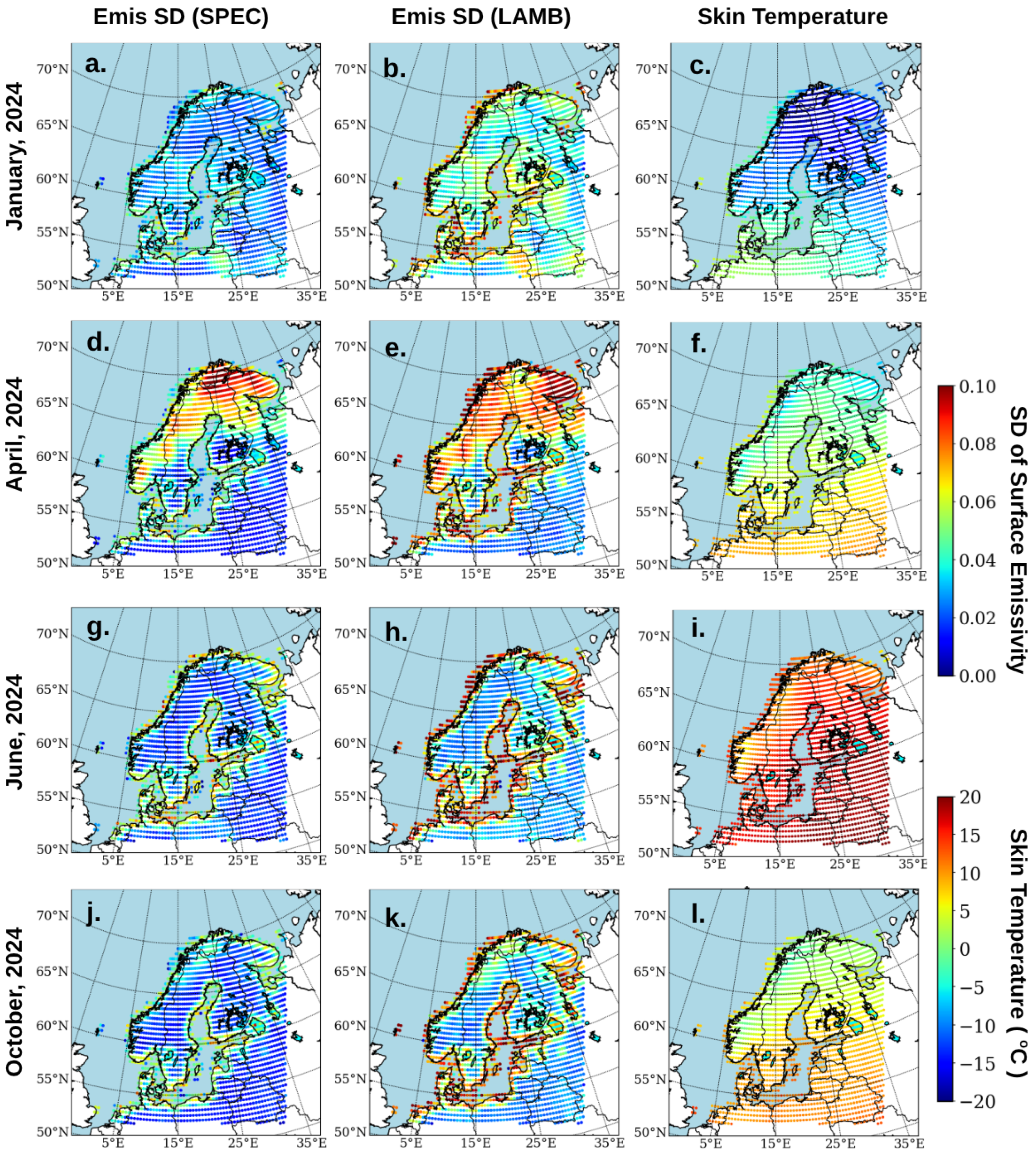
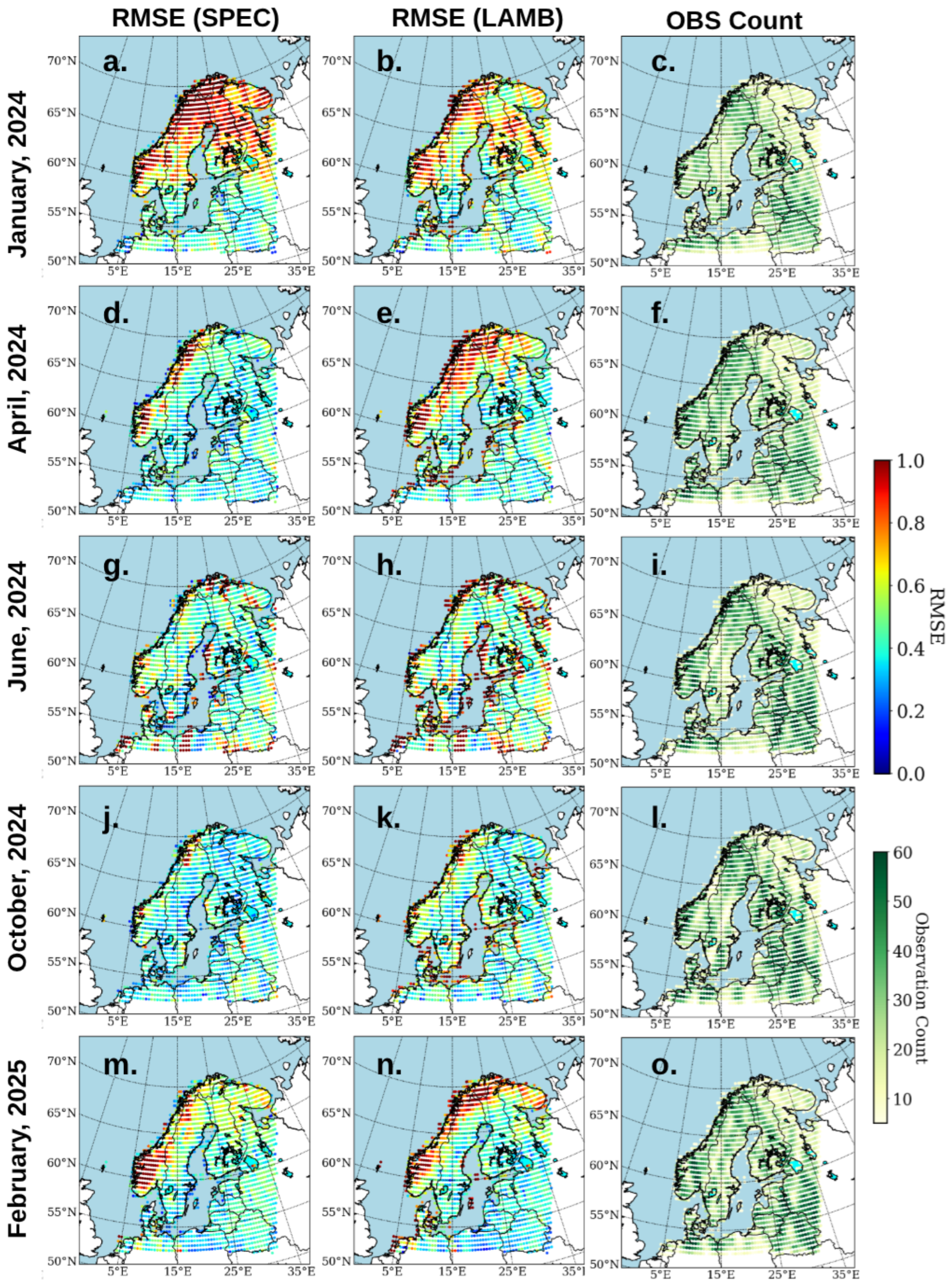
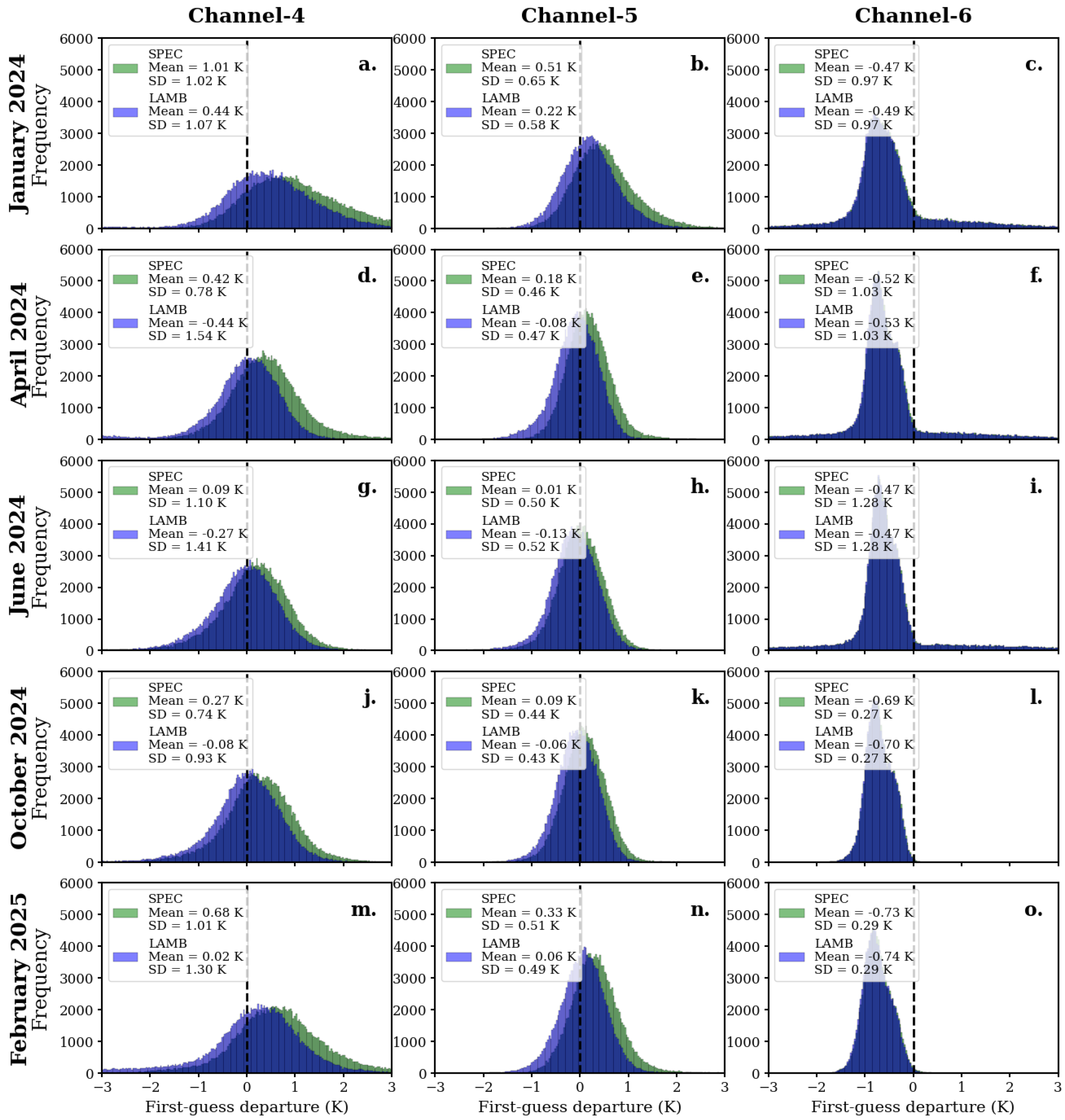
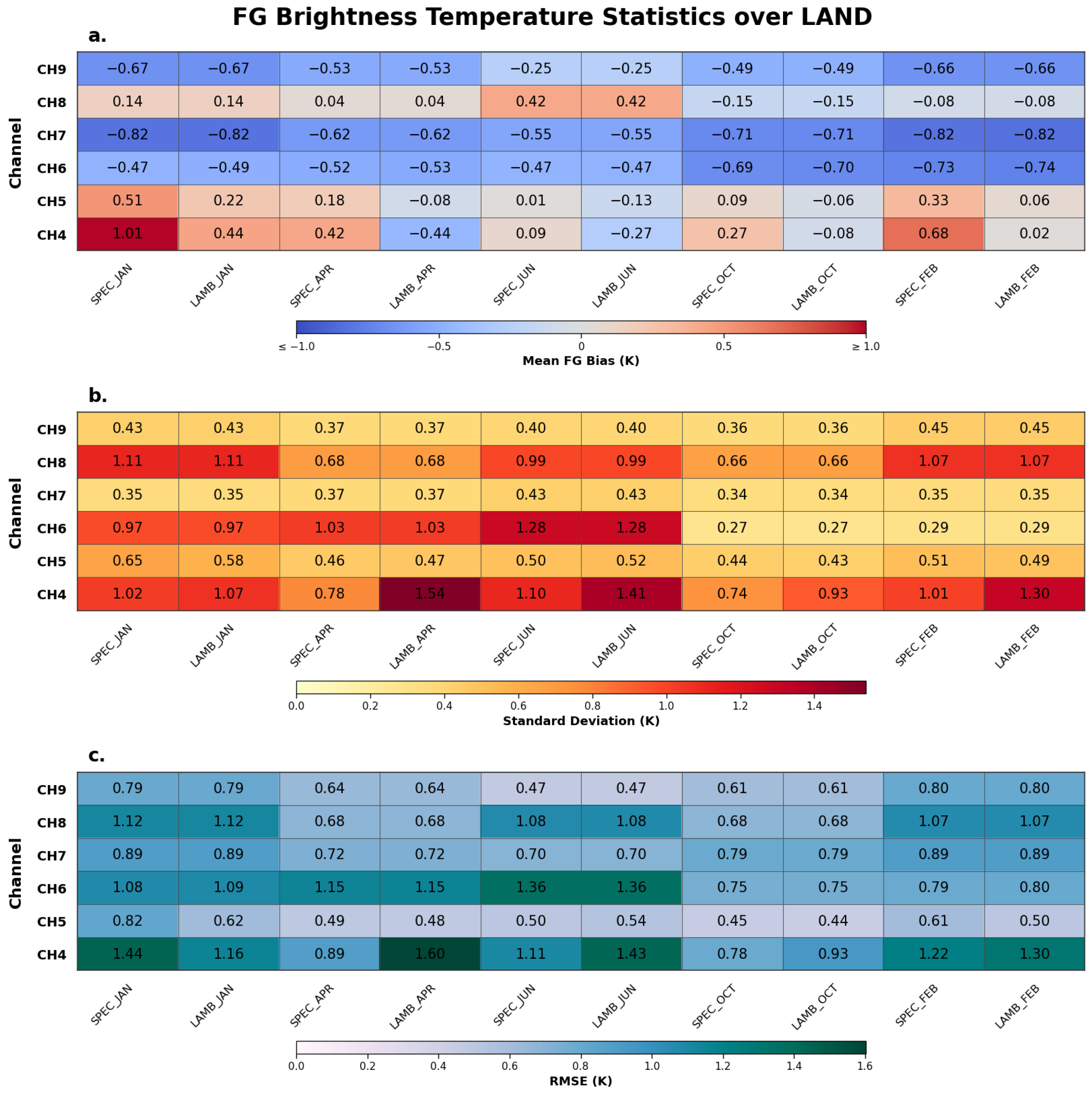
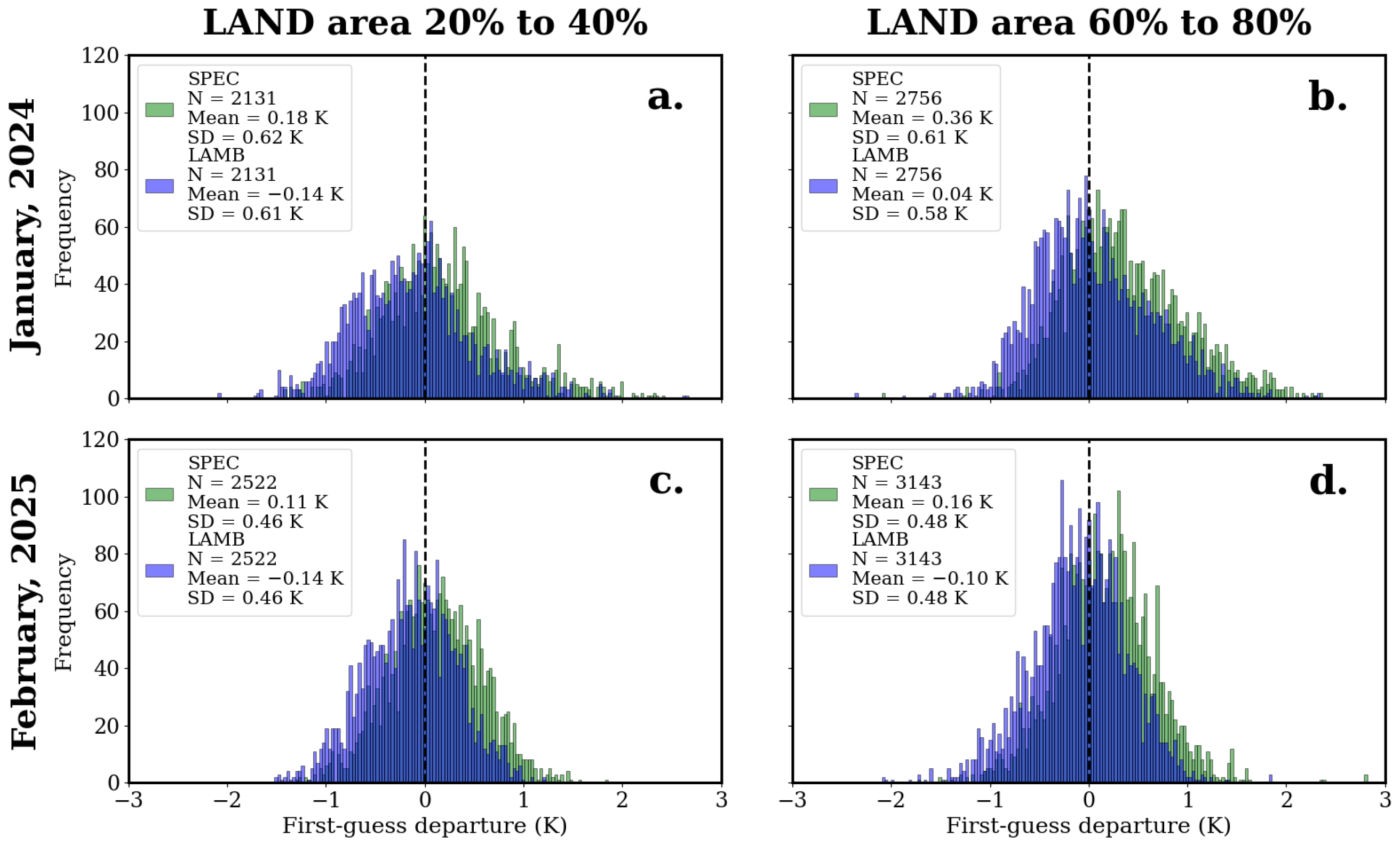
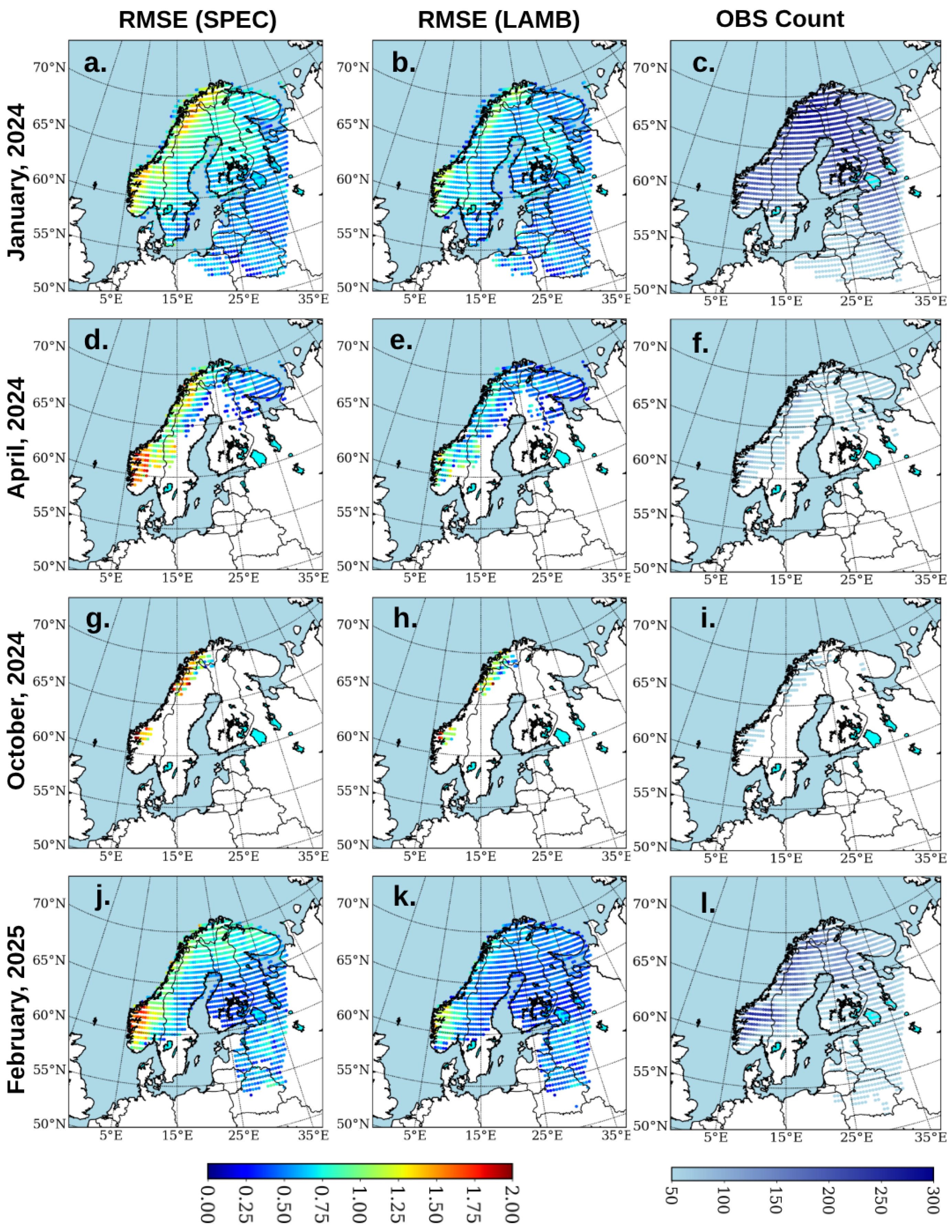
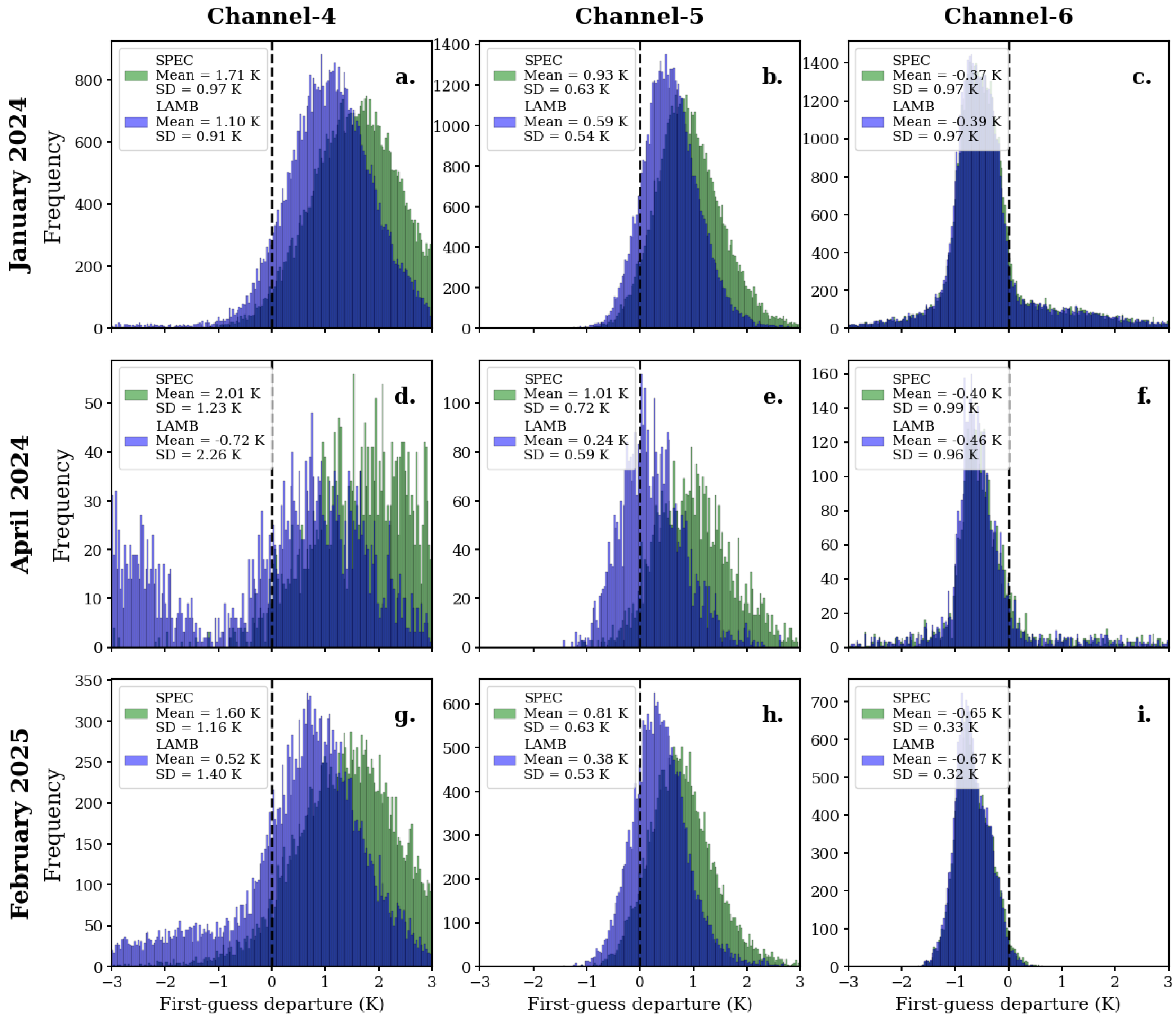
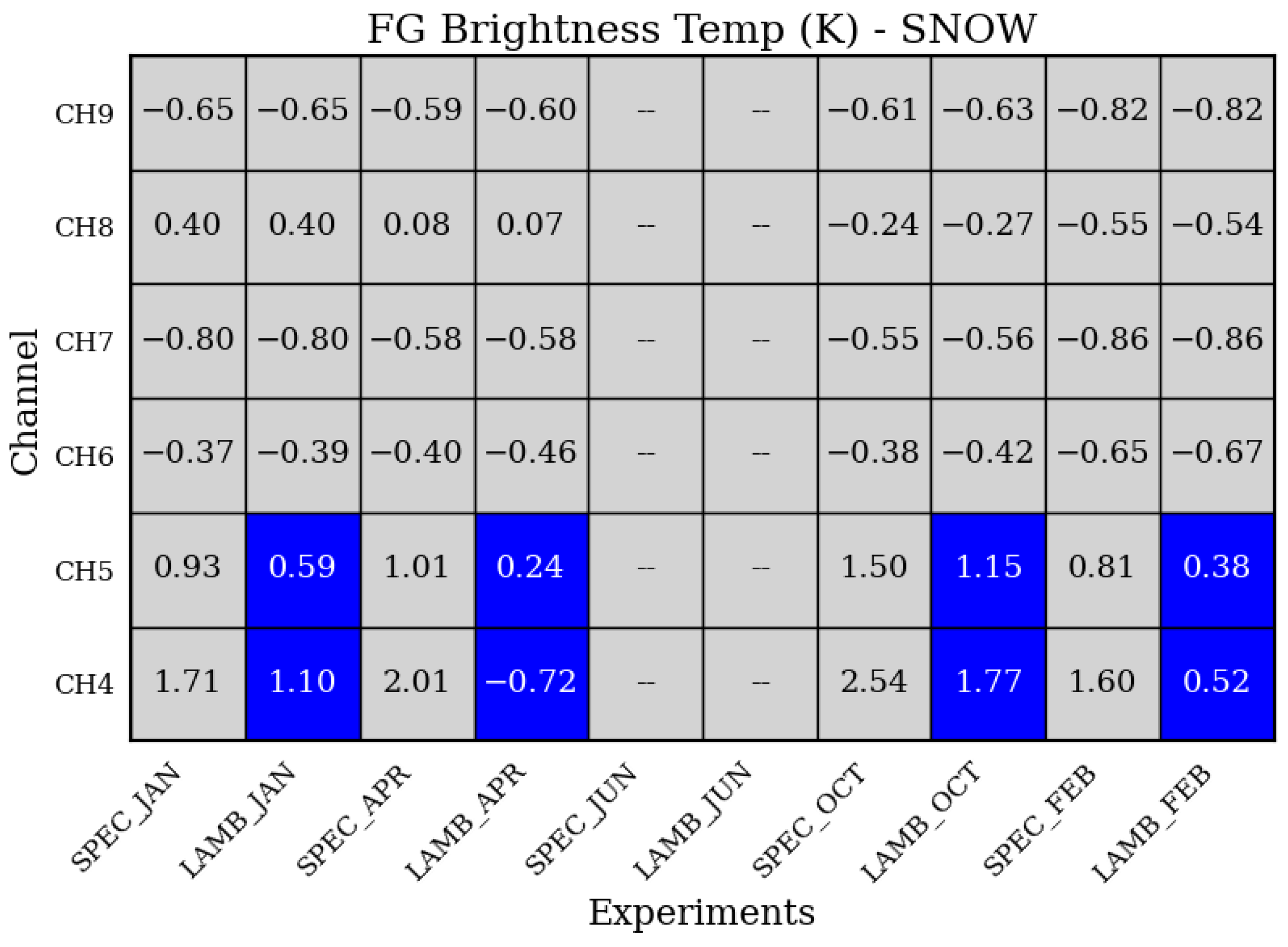
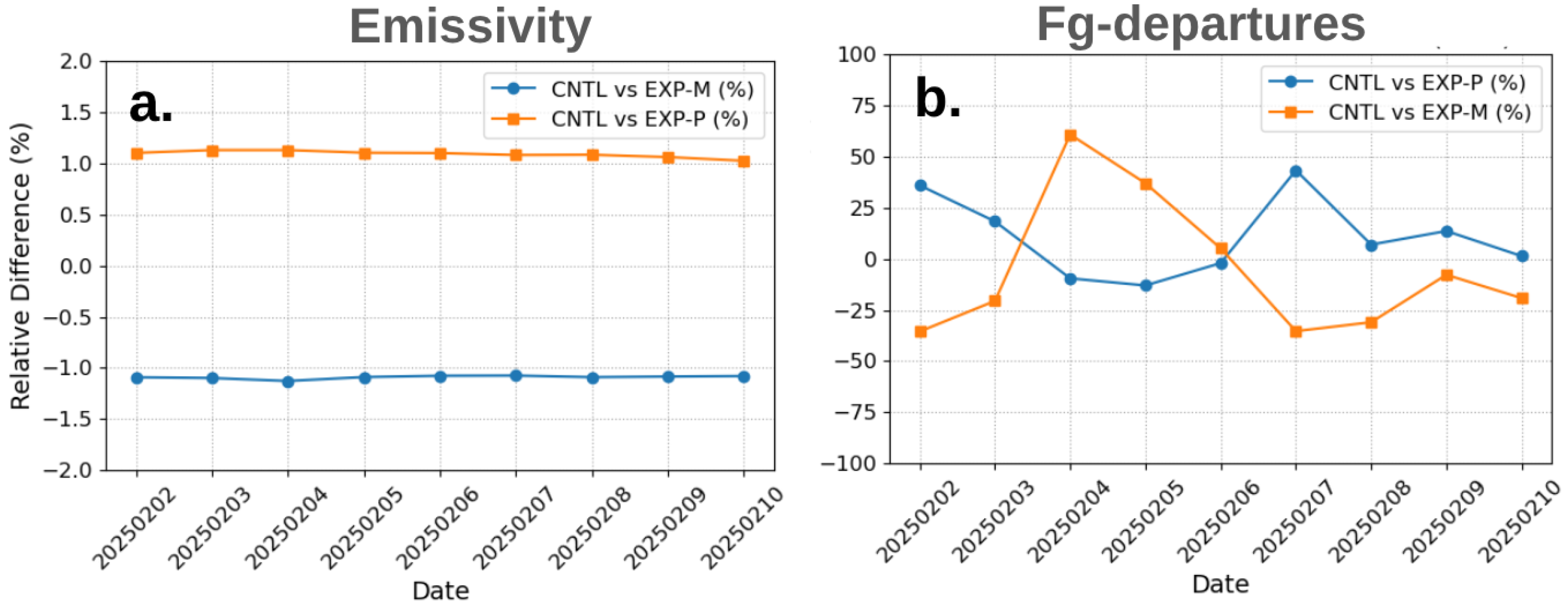
The utilisation of microwave radiances is crucial for enhancing the precision of weather forecasts. Despite existing uncertainties over land and ice-covered surfaces, recent advances have enhanced their use. This study examines the impact of assuming either Lambertian or specular surface reflection on the simulation of brightness temperatures for surface-sensitive, clear-sky AMSU-A microwave radiances across land and snow-covered areas. It represents the preliminary work before running a full assimilation and forecast impact study. Using the high-resolution HARMONIE-AROME regional modelling system, experiments were conducted to retrieve and analyse the retrieved emissivity in different conditions/seasons. The emissivity was also used as input to the radiative transfer model to simulate brightness temperatures of surface-sensitive sounding channels. The results show that the Lambertian assumption produces higher variability in dynamic surface emissivity, while the specular approach yields smaller and more consistent deviations. During winter, specular reflection shows higher first-guess departures (e.g., observations minus simulations) for surface-sensitive sounding observations, whereas in summer it performs better over land surfaces. Over snow-covered regions, the use of the Lambertian reflection to simulate the brightness temperature gives smaller mean errors for AMSU-A channels 4 (52.8 GHz) and 5 (53.59 GHz). These findings encourage further investigation into implementing a parameter that accounts for the Lambertian component of surface reflection when simulating brightness temperature in high-resolution limited-area models. Additionally, these findings provide practical guidance for configuring complex Nordic surface regional models and for future Arctic Weather Satellite microwave radiance assimilation.
Keywords: surface emissivity; AMSU-A; surface emissivity; Lambertian reflection; specular reflection; limited area model; land surface; snow-cover surface surface emissivity; AMSU-A; surface emissivity; Lambertian reflection; specular reflection; limited area model; land surface; snow-cover surface