Article

GPU-Based Solar Irradiance Estimation over Digital Surface Models Using Structurally Lossless Viewshed Compression


Faculty of Electrical Engineering and Computer Science, University of Maribor, 2000 Maribor, Slovenia
*
Author to whom correspondence should be addressed.
Remote Sens. 2026, 18(17), 3044; https://doi.org/10.3390/rs18173044

Submission received: 18 July 2026 / Revised: 1 September 2026 / Accepted: 3 September 2026 / Published: 6 September 2026

Abstract

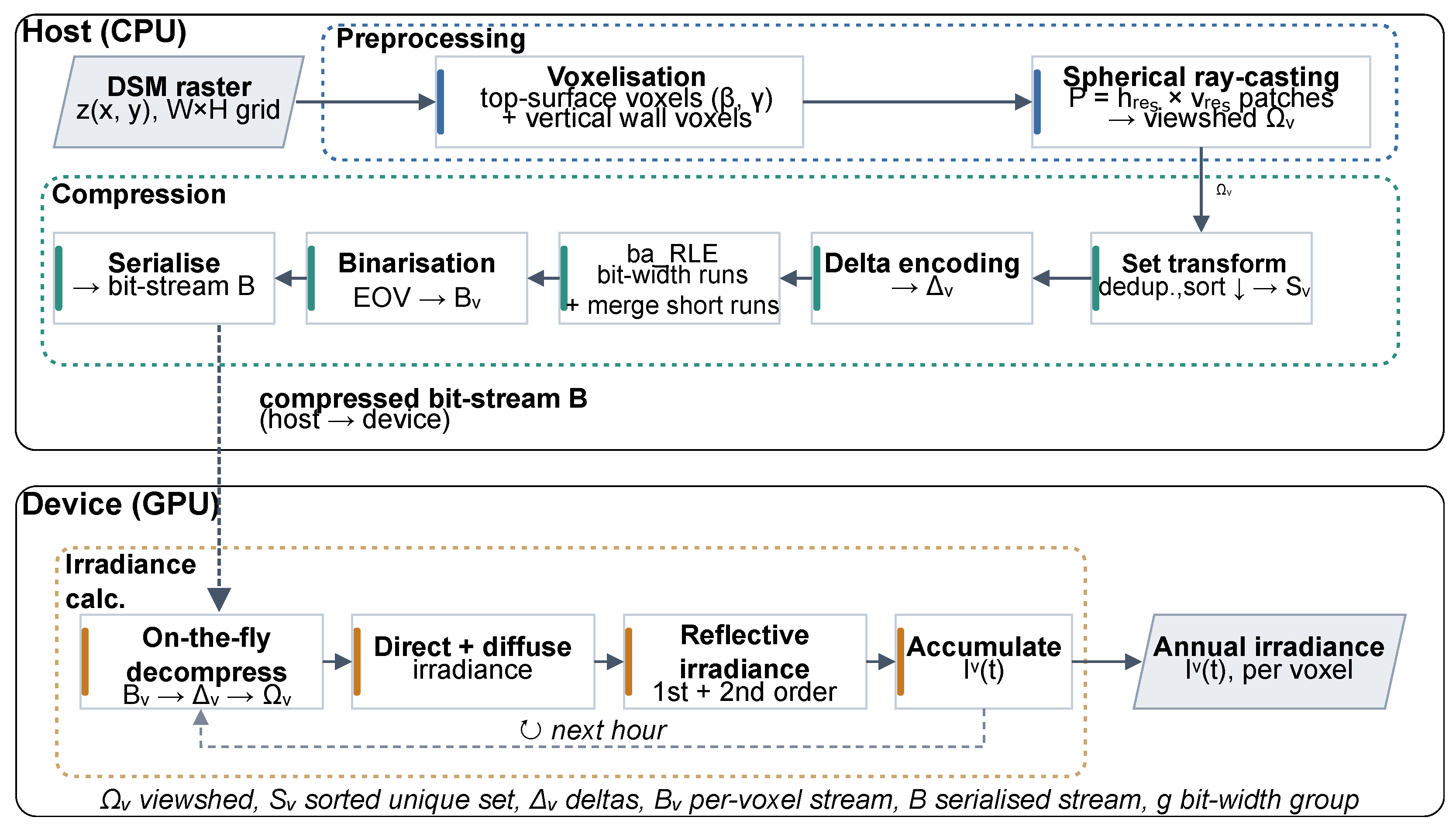
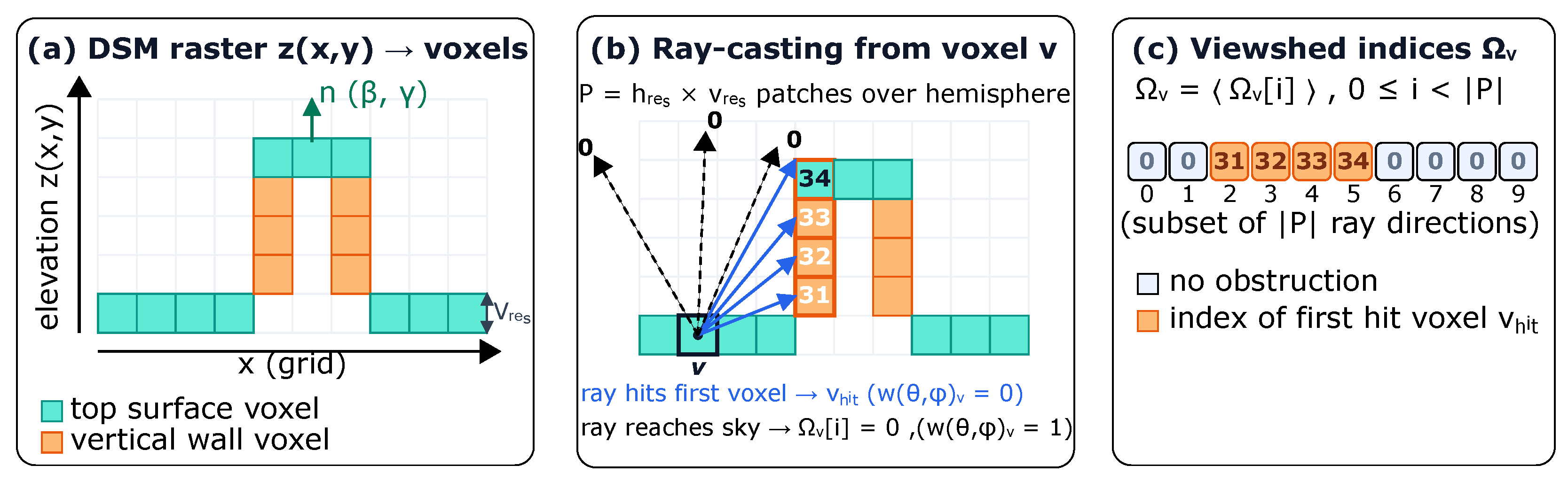
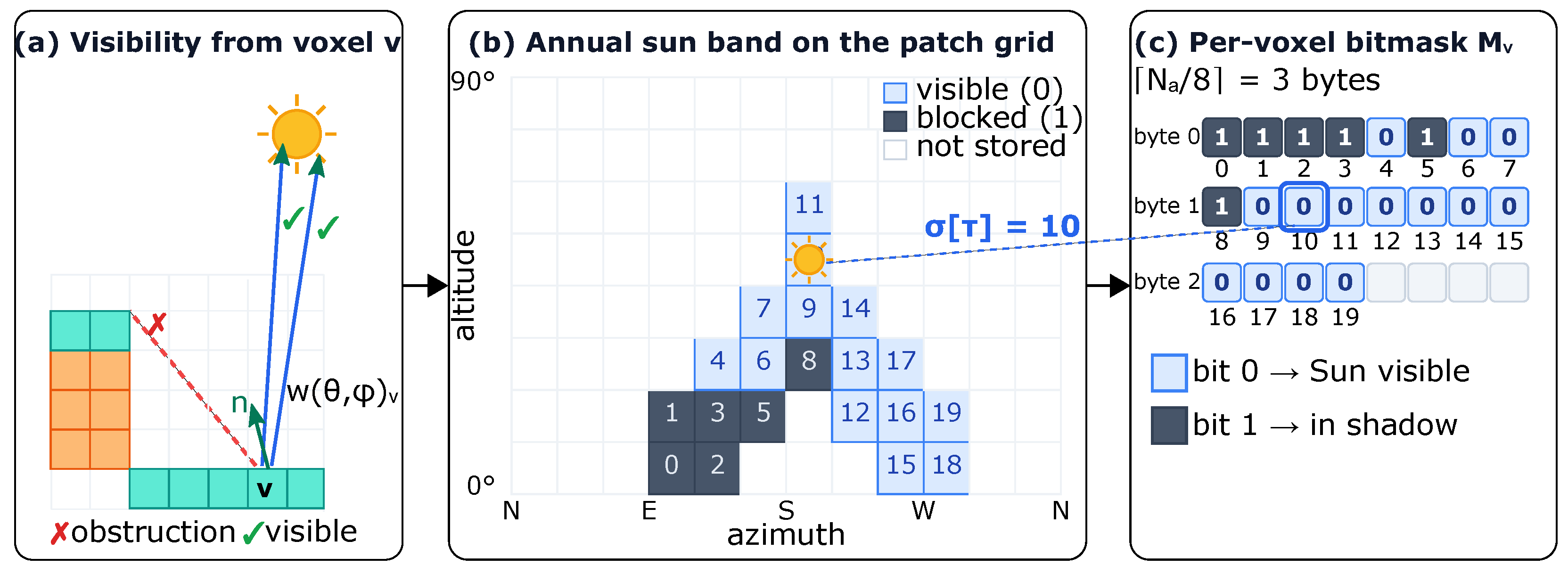
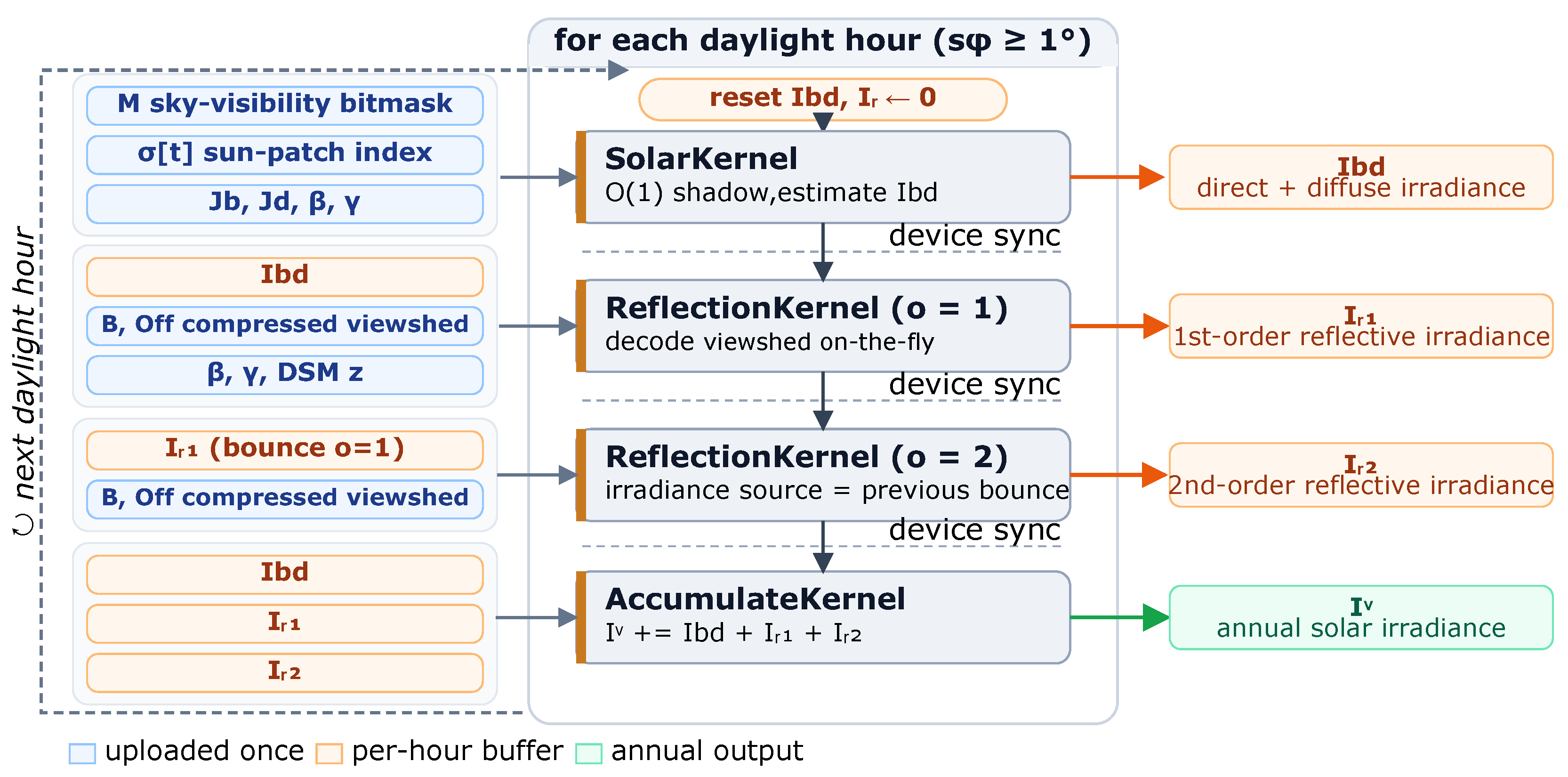
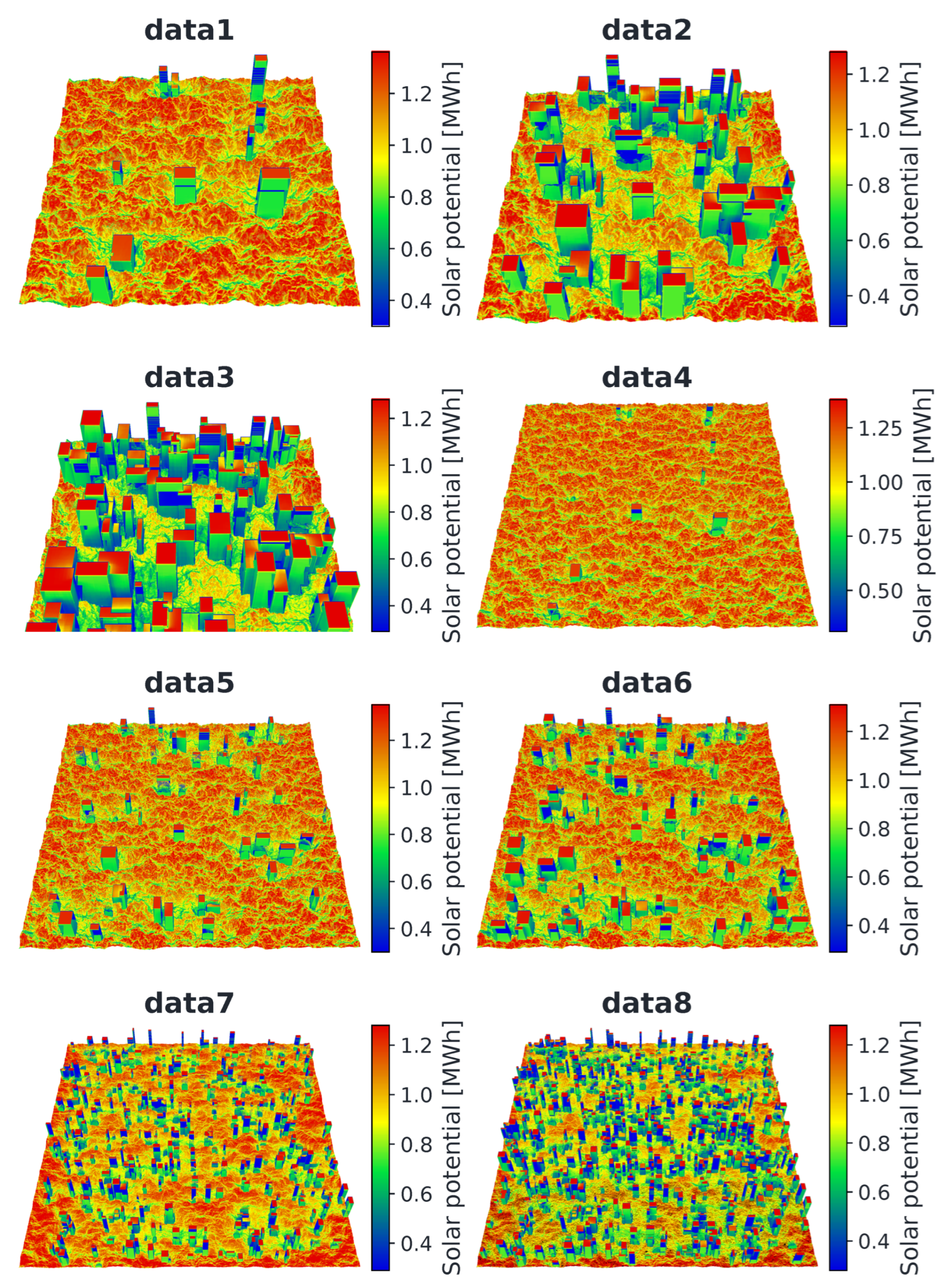
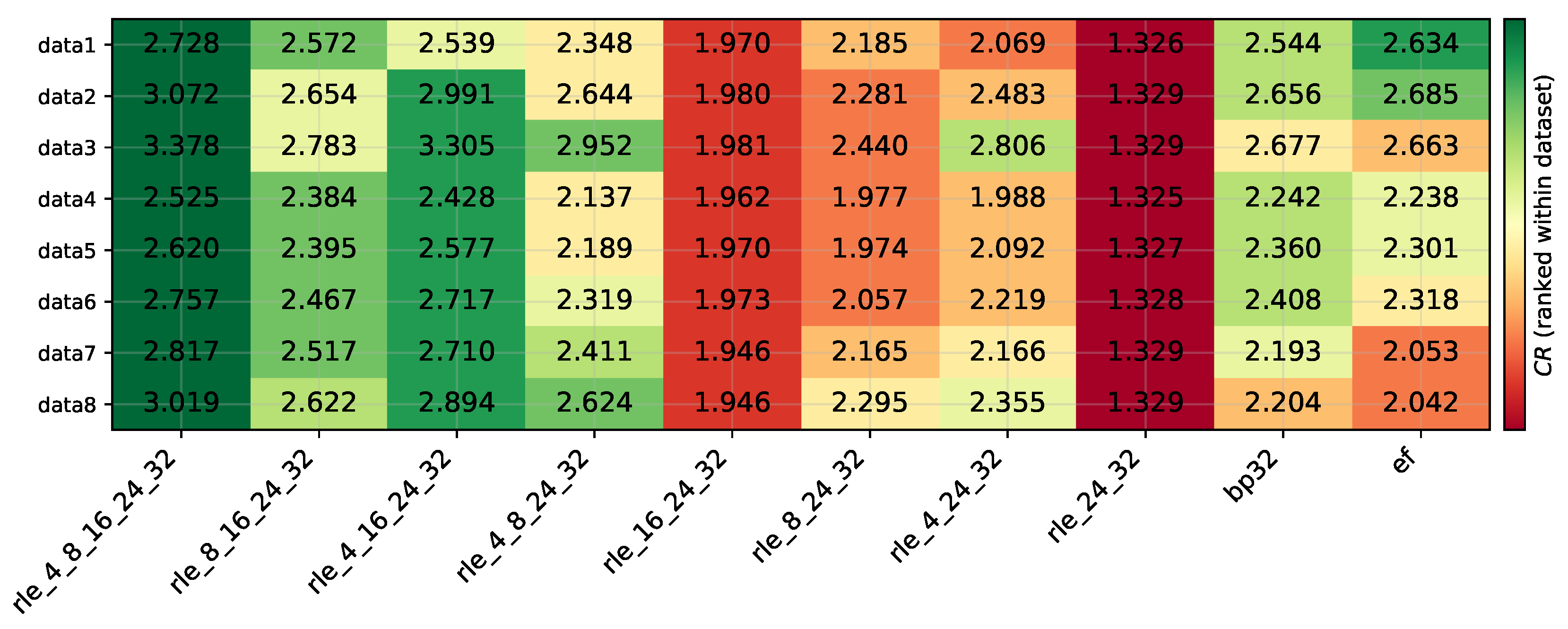
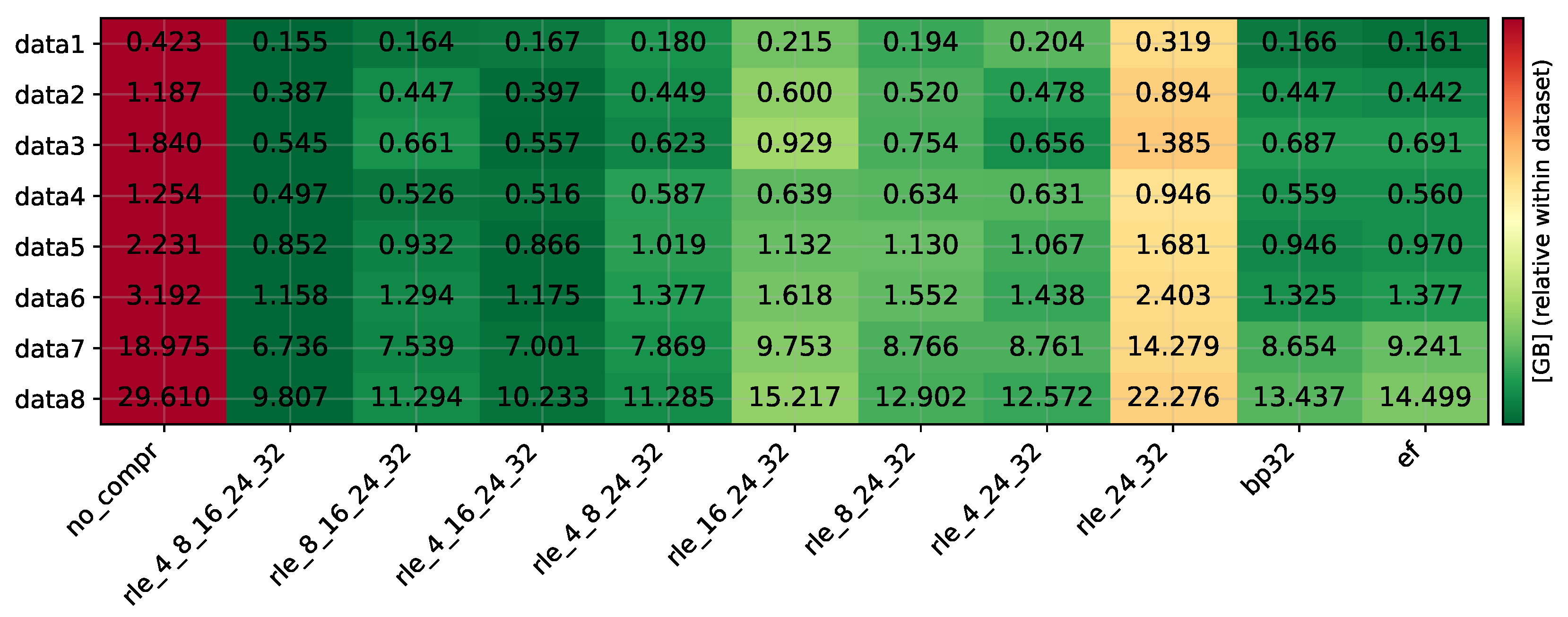
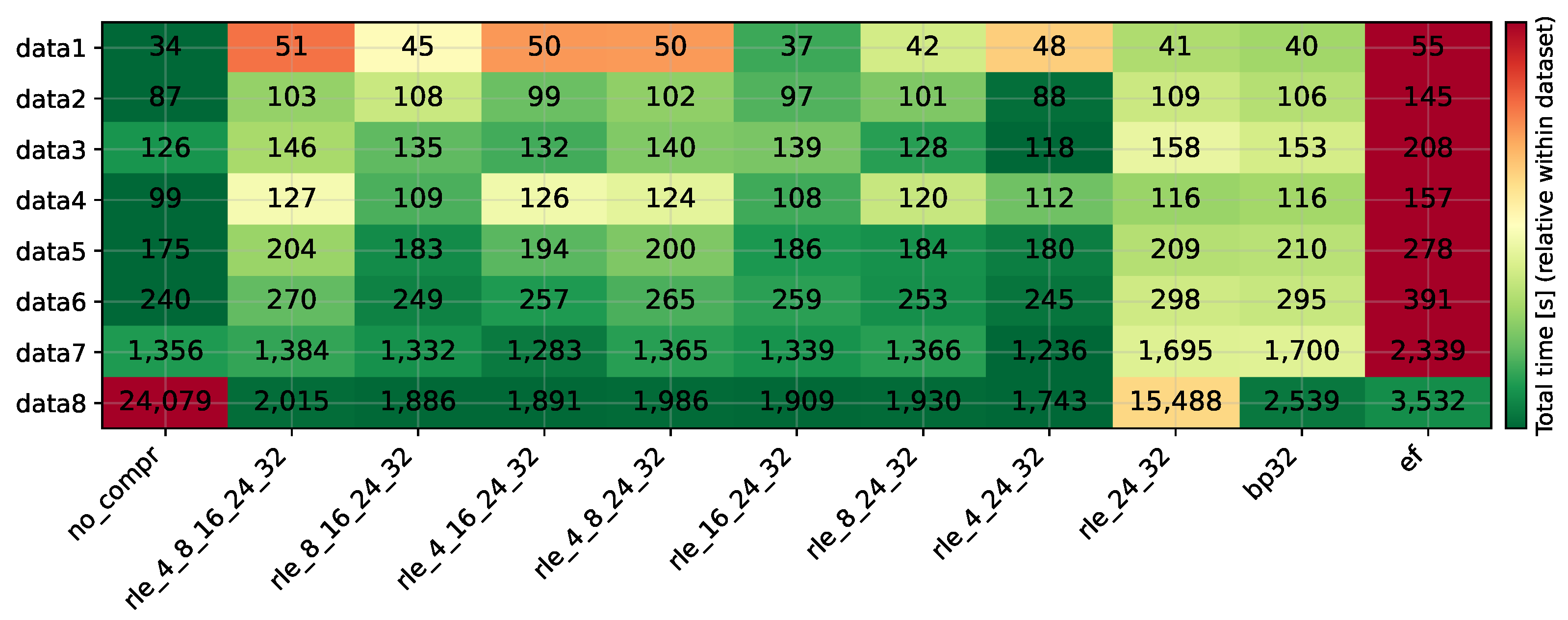
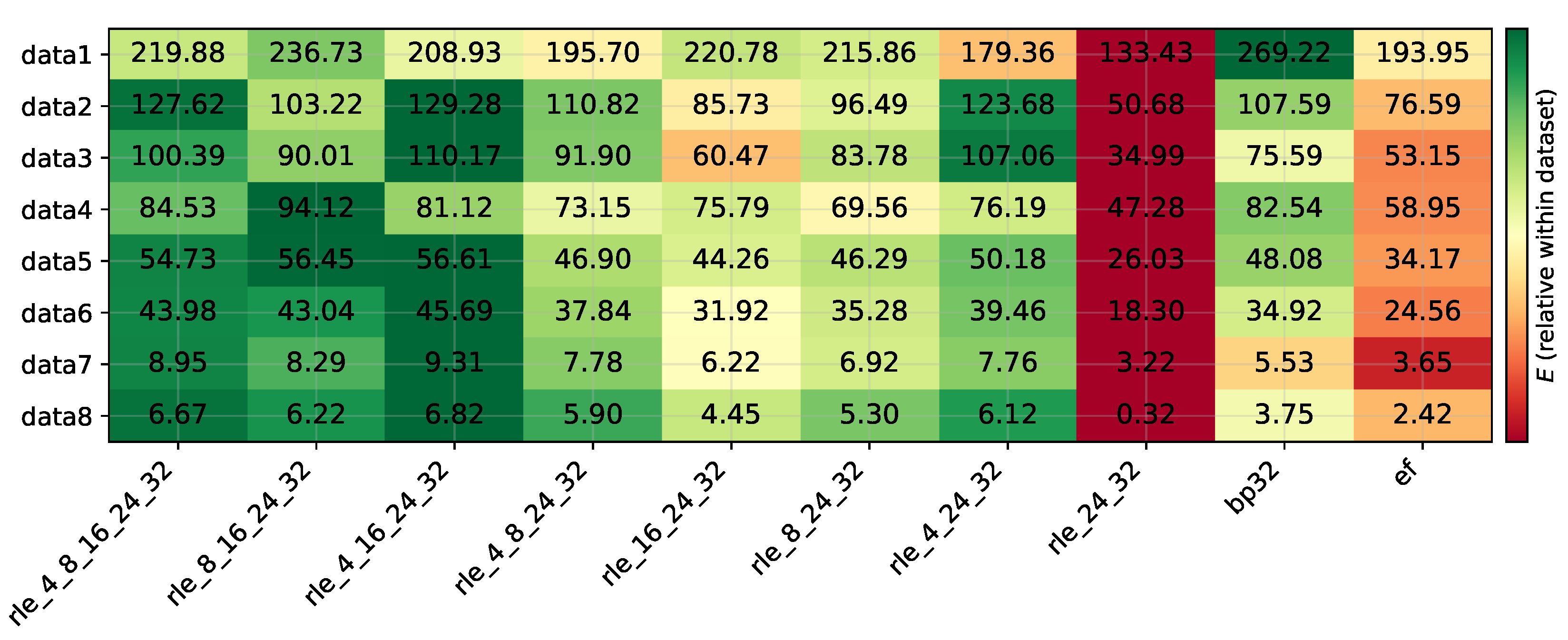
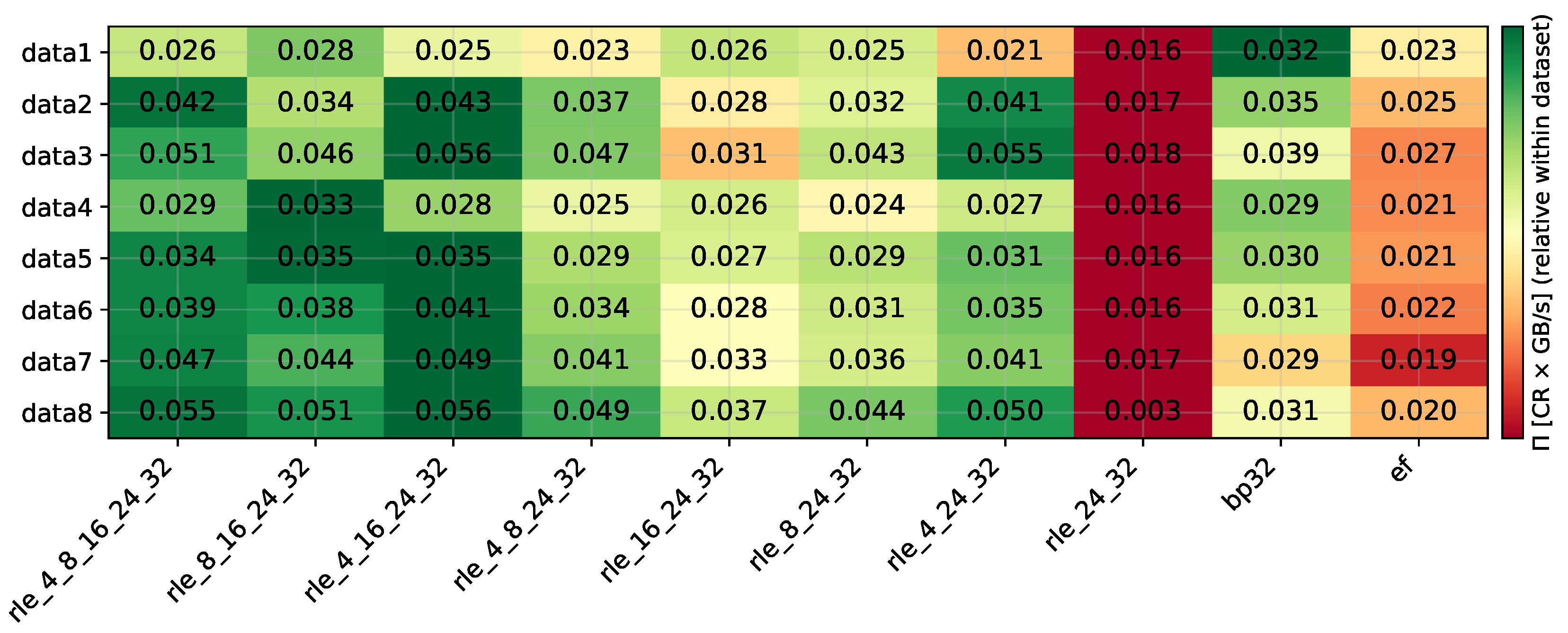
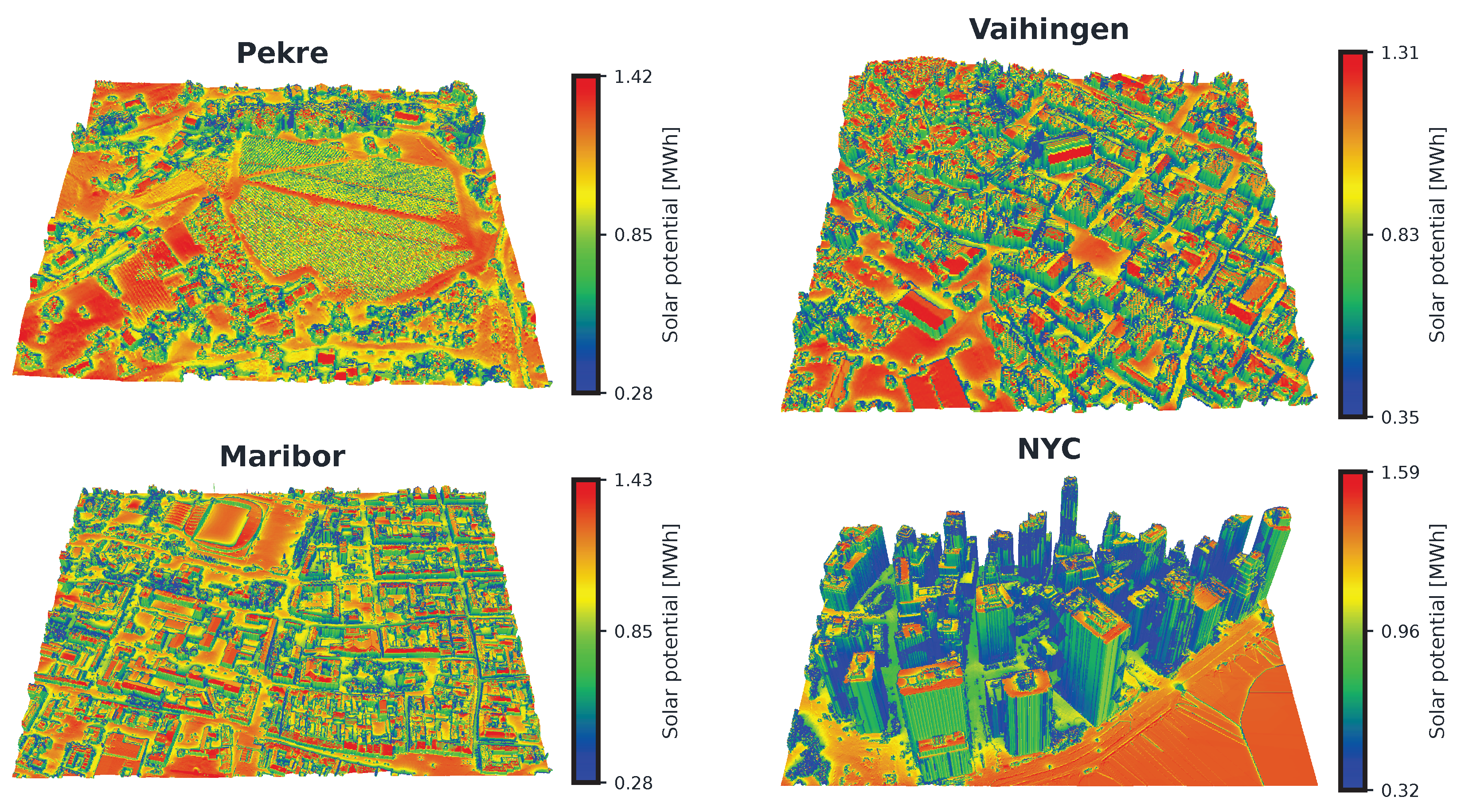
High-resolution solar irradiance modelling over large 3D geospatial data is computationally demanding, and accounting for surface inter-reflection makes it even so. For computational efficiency it requires storing for every part of the surface, explicit knowledge of the other surfaces visible from it (its viewshed). The storage of each surface’s viewshed grows with both the dataset size and the angular resolution, and quickly becomes the dominant memory bottleneck. This paper presents a novel Graphics Processing Unit (GPU)-accelerated method for estimating solar potential over Digital Surface Models (DSMs) that model direct, diffuse and reflective irradiances. It keeps the viewshed information compact through a novel structurally lossless compression, i.e., a domain-specific encoding of remote sensing-derived visibility data that preserves exactly the visibility structure consumed by the radiative model, rather than a general-purpose integer coder. An ablation analysis over eight synthetic DSMs showed that the best compression scheme reached a compression ratio (CR) of up to ≈3.3, exceeding the general-purpose GPU baselines Binary Packing 32 and Elias-Fano on every dataset. On the largest DSM, whose 29.6 GB uncompressed viewshed exceeds the 24 GB device memory, compression kept the data resident and reduced the runtime from 6.7 h to 0.5 h. Finally, the proposed method was applied to LiDAR (Light Detection and Ranging)-derived DSMs for four distinct locations, with the results demonstrating its high applicability.
Keywords: solar irradiance; GPGPU; viewshed; RLE; structurally lossless compression solar irradiance; GPGPU; viewshed; RLE; structurally lossless compression