


The authors wish to make the following corrections to this paper [1]:
The following words in bold face are to be added: In Section 2.1 “Cells”, lines 3 and 4: 1% complex of antibiotics/L-glutamine (stock = 10,000 IU/mL penicillin, 10,000 μg/mL streptomycin, and 29.2 mg/mL L-glutamine; Mediatech Inc., Manassas, VA, USA); in Section 2.4 “Western Blot (WB)”, lines 5 and 7: “tri-buffered saline” should be changed to “Tris-buffered saline” on both lines.
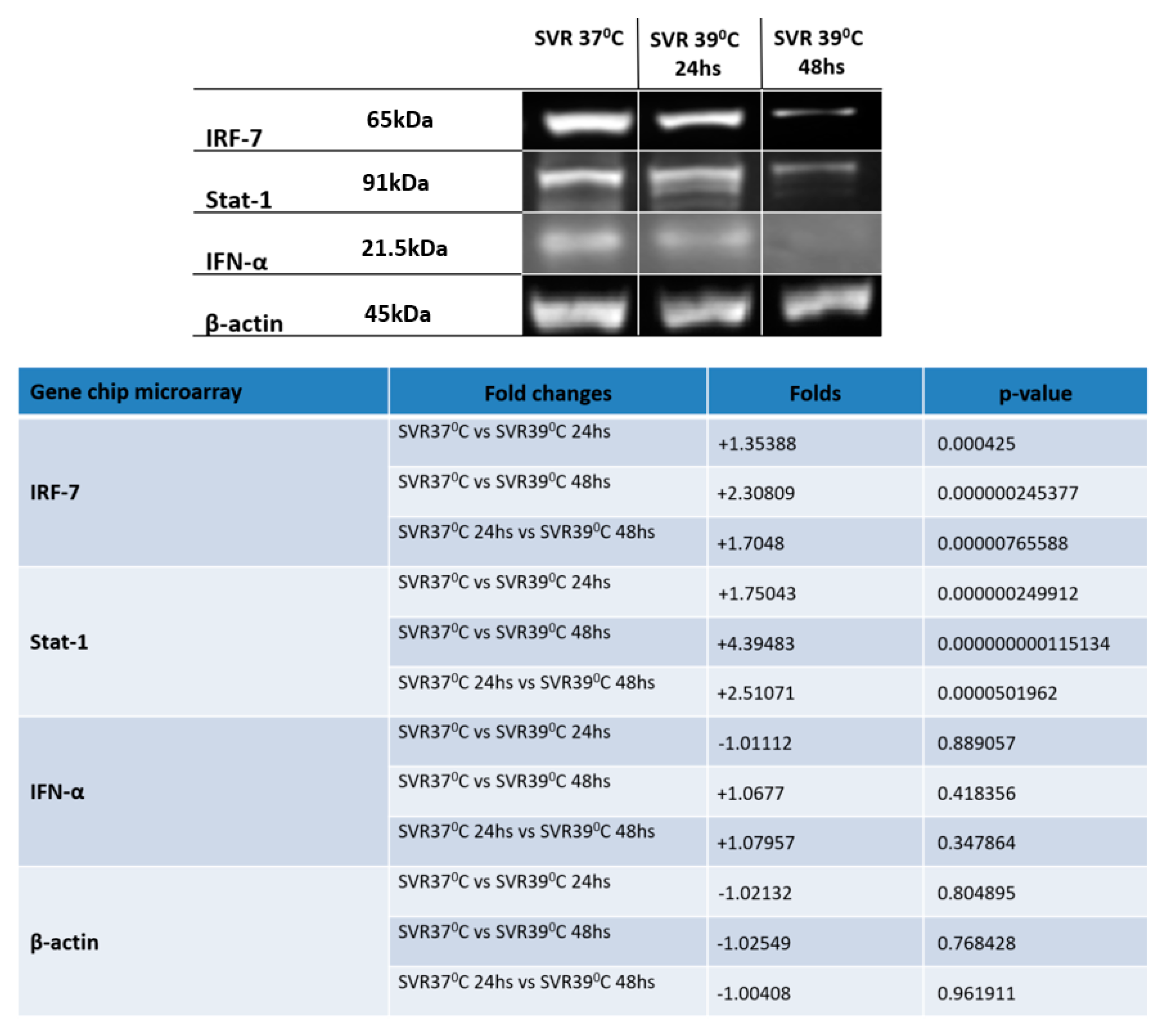
In the original article, there was a mistake in Figure 3, where the MW of β-actin was incorrectly recorded as 65 kd, when it should be changed to 45 kd. The new Figure 3 is listed below:
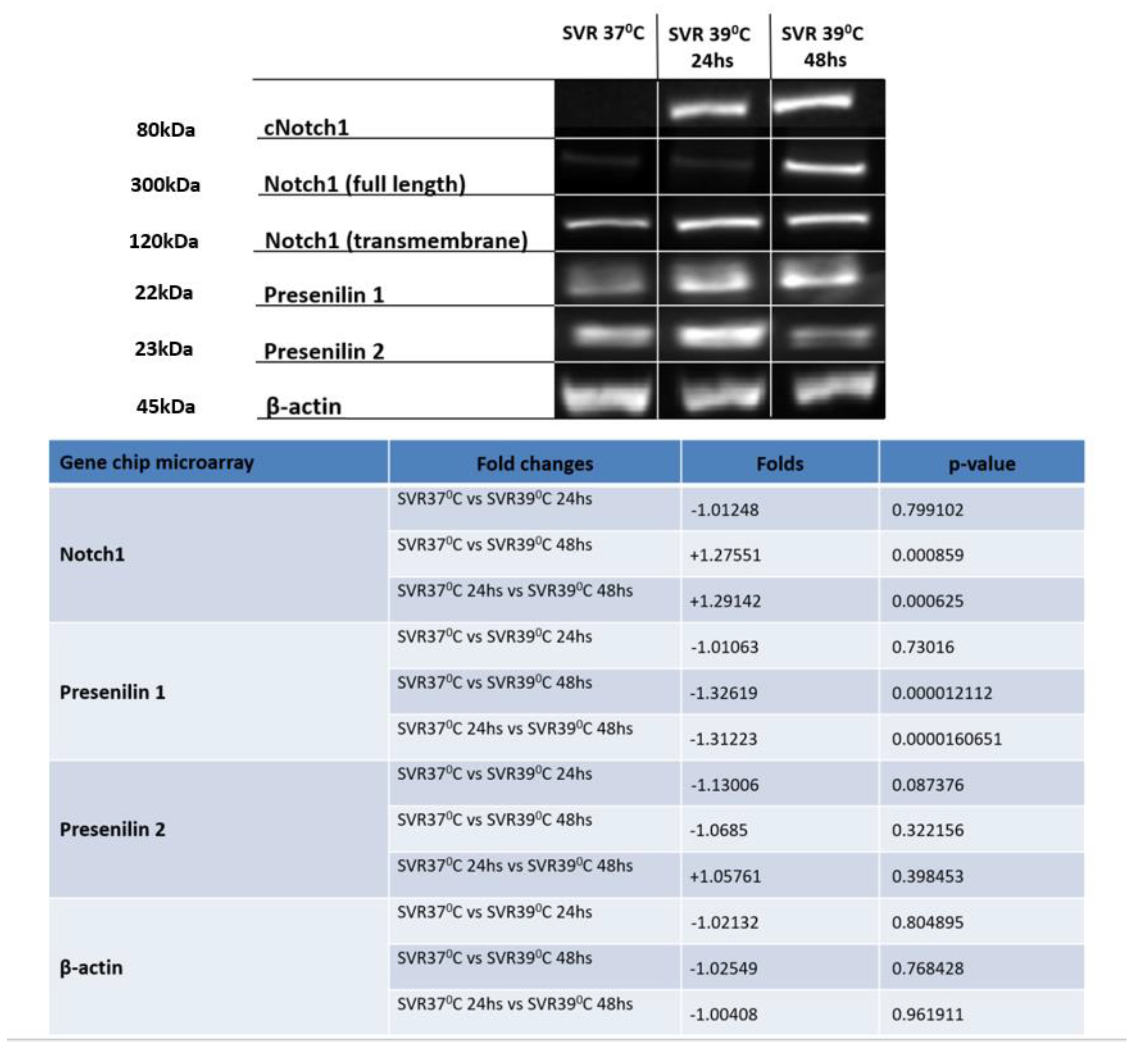
In Figure 4, ‘B-actin’ should be changed to ‘β-actin’. The new Figure 4 is listed below:
In Figure 5, the SDHA band was accidently duplicated and listed as p53. The duplicated band has been removed. The new Figure 5 is listed below:
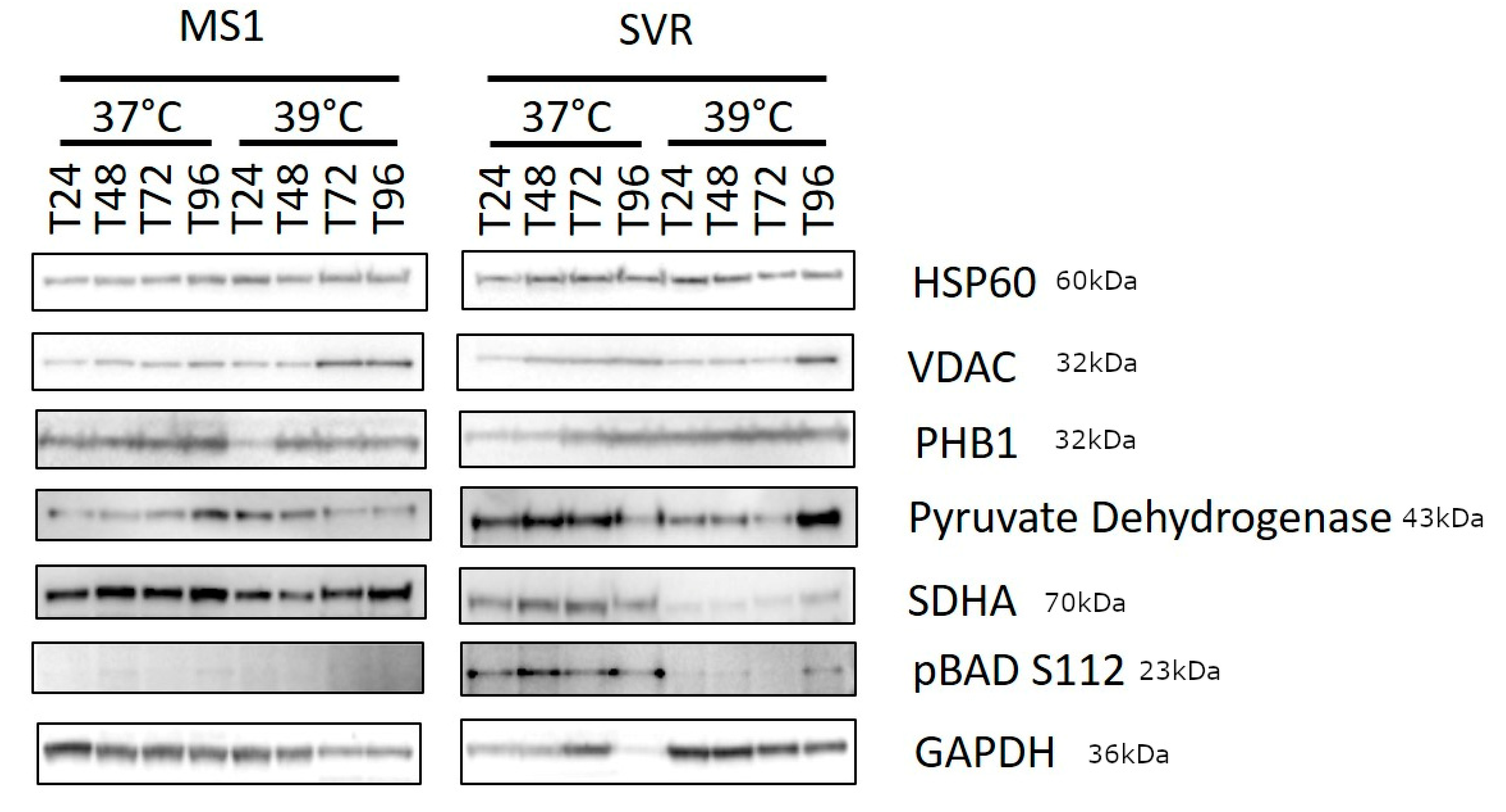
The p53 figure represents a duplication of the SDHA Western blot, and thus should be deleted. Since we are not using the p53 data, we request the deletion of the following sentences: “p53 is dephosphorylated in SVR cells upon shifting to the nonpermissive temperature in ras transformed SVR cells, but not in MS1 cells, suggesting that this is not a nonspecific heat shock event, but that it is induced by oncogenic ras” in the last paragraph of Section 3 “Result” and the sentence “p53 is rapidly phosphorylated in SVR cells upon shift to 39 °C (Figure 5) and it is well known that phosphorylated p53 translocates to the mitochondria and may mediate apoptosis [46]” in Section 4 “Discussion and Conclusions” should be removed. Reference [47] and [48] should thus be re-numbered to [46] and [47], respectively.
The authors apologize for any inconvenience caused and state that the scientific conclusions are unaffected. The original article has been updated.
Reference
- Da Costa, A.; Bonner, M.Y.; Rao, S.; Gilbert, L.; Sasaki, M.; Elsey, J.; MacKelfresh, J.; Arbiser, J.L. Establishment of a Temperature-Sensitive Model of Oncogene-Induced Senescence in Angiosarcoma Cells. Cancers 2020, 12, 395. [Google Scholar] [CrossRef] [PubMed]
Publisher’s Note: MDPI stays neutral with regard to jurisdictional claims in published maps and institutional affiliations. |
© 2021 by the authors. Licensee MDPI, Basel, Switzerland. This article is an open access article distributed under the terms and conditions of the Creative Commons Attribution (CC BY) license (https://creativecommons.org/licenses/by/4.0/).