


Abstract
This study aims to assess the post-installation rainwater management issues associated with household RWH systems in the southwestern coastal regions of Bangladesh. A face-to-face questionnaire survey (including free listing) was administered to over 300 households in the Khulna and Satkhira districts to understand the water consumption behavior of users, operation and maintenance of the RWH system components, governance and capacity-building needs, and overall perception. It was found that the current capacity of most household storage tanks is insufficient to meet the year-round water demands (cited by 151 users; Smith’s Salience Index (SSI) = 0.671), and around 53% of the users relied on another water source besides the RWH system. The users frequently cleaned various components of the RWH system, although they did not pay much attention to cleaning the roof catchment. Most users did not have sufficient knowledge of water treatment methods (cited by 10 users; SSI = 0.033) or water quality testing protocol (cited by 29 users; SSI = 0.084). Proximity to the house (cited 222 times by the users, SSI = 0.589) is considered the primary benefit of the RWH system. The absence of adequate functional components (cited by 56 users; SSI = 0.170) and having to share water with other households (cited by 23 users; SSI = 0.068) were highlighted as the two main problems associated with the use of the RWH system. The users also highlighted the lack of training on operation and maintenance (O&M) and the absence of monitoring support. This study provides clues to strengthening existing RWH system intervention programs in the water-challenged regions of Bangladesh.
1. Introduction
The struggle for drinking water in the coastal areas of Bangladesh is well documented, with the most acute crisis occurring in the southwestern coastal regions, particularly the Khulna and Satkhira districts [1]. People in these regions experience an extreme shortage of drinking water because suitable freshwater aquifers at reasonable depths are not available, and the surface water is highly saline and turbid [2,3]. Rainwater harvesting (RWH) is considered one of the alternate options for drinking water in coastal and arsenic-affected areas where surface- and groundwater are scarce, or the existing water supply system is insufficient to meet the demand for potable water [4,5]. Rooftop RWH at the household level is increasingly promoted worldwide to reduce the number of people lacking an improved water supply [6]. As Bangladesh is a tropical country, it receives high seasonal rainfall, with an average annual rainfall of around 240 cm in most parts of the country [7]. Abundant rainfall in the southwestern coastal areas and suitable roof catchments and construction materials make rainwater harvesting (RWH) a reliable water option in these regions [8,9]. During the last few years, the Department of Public Health Engineering (DPHE) has undertaken several interventions through various projects to promote household and community-based RWH systems and Pond Sand Filters (PSF) both in the coastal and arsenic-affected areas in the country to augment the drinking water supply. In addition to these, Non-Governmental Organizations (NGOs) and other donor agencies have been actively promoting the RWH system through several programs. Additionally, Managed Aquifer Recharge (MAR) is considered a sustainable, cheap, and climate-resilient drinking water supply option for coastal communities [10,11].
The capacity of the RWH tanks provided by the government or donor agencies was 500 to 5000 Liters [12,13]. However, family size, water demand, catchment types, and rainfall quantity were not accounted for in prescribing these tanks. Therefore, it was found that most households could avail water from rainwater tanks for about eight months, and for the rest of the year, people generally use other unreliable and often unsafe distant sources such as pond water, tube wells, and PSF during the dry season [12]. Women are affected most during those dry periods since they are traditionally responsible for collecting water from distant sources. Although rainwater harvesting can be an attractive drinking water supply system, potential health risk factors, such as microbial and chemical contamination, cannot be ignored [14,15,16]. The lack of knowledge about proper materials, rainwater collection, conveyance systems, and storage reservoirs can potentially decelerate the adoption of the RWH systems in water-challenged areas [17,18,19].
While rainwater harvesting (RWH) systems remain a popular option for potable use at households in the southwestern coastal regions of Bangladesh, the operation and maintenance (O&M) of the infrastructure have become a great challenge. Several studies found that the lack of awareness about the proper O&M of the RWH system adversely affected its performance [20,21]. A study found that around 24% of RWH systems remained non-functional due to a lack of proper maintenance [22]. Regular cleaning of the tank, gutters, downpipes, and rooftops is not performed properly by the household, often due to the absence of well-defined protocols or a lack of awareness [1]. Since the RWH system is a decentralized water supply option, it is difficult for the DPHE to set up an institutional O&M and surveillance service, and the successful operation depends practically on the household.
Previous studies regarding harvested rainwater in the southwestern coastal region of Bangladesh have focused on the drinking water quality at primary schools and the household using RWH [2,8,23], potable water scarcity issues [17], people’s perception of rainwater harvesting before installation [24], and estimating the water collection potential [25]. However, very few of them have explored the sustainability issues of the RWH system, such as post-installation operation and maintenance challenges, household perception concerning financing and rainwater management, and social acceptance. The involvement of NGOs and other institutions in the surveillance of RWH systems, monitoring, and perception regarding the benefits and challenges of the household RWH systems have rarely been assessed. The main objectives of this study are: (i) to assess the existing water management practices (consumption behavior, water treatment, operation and maintenance) of households having RWH systems and the adequacy of existing RWH system components; and (ii) to explore the household perception of operating a household RWH system, its expected benefits, and challenges faced in the context of the southwestern coastal region of Bangladesh.
2. Materials and Methods
2.1. Study Area
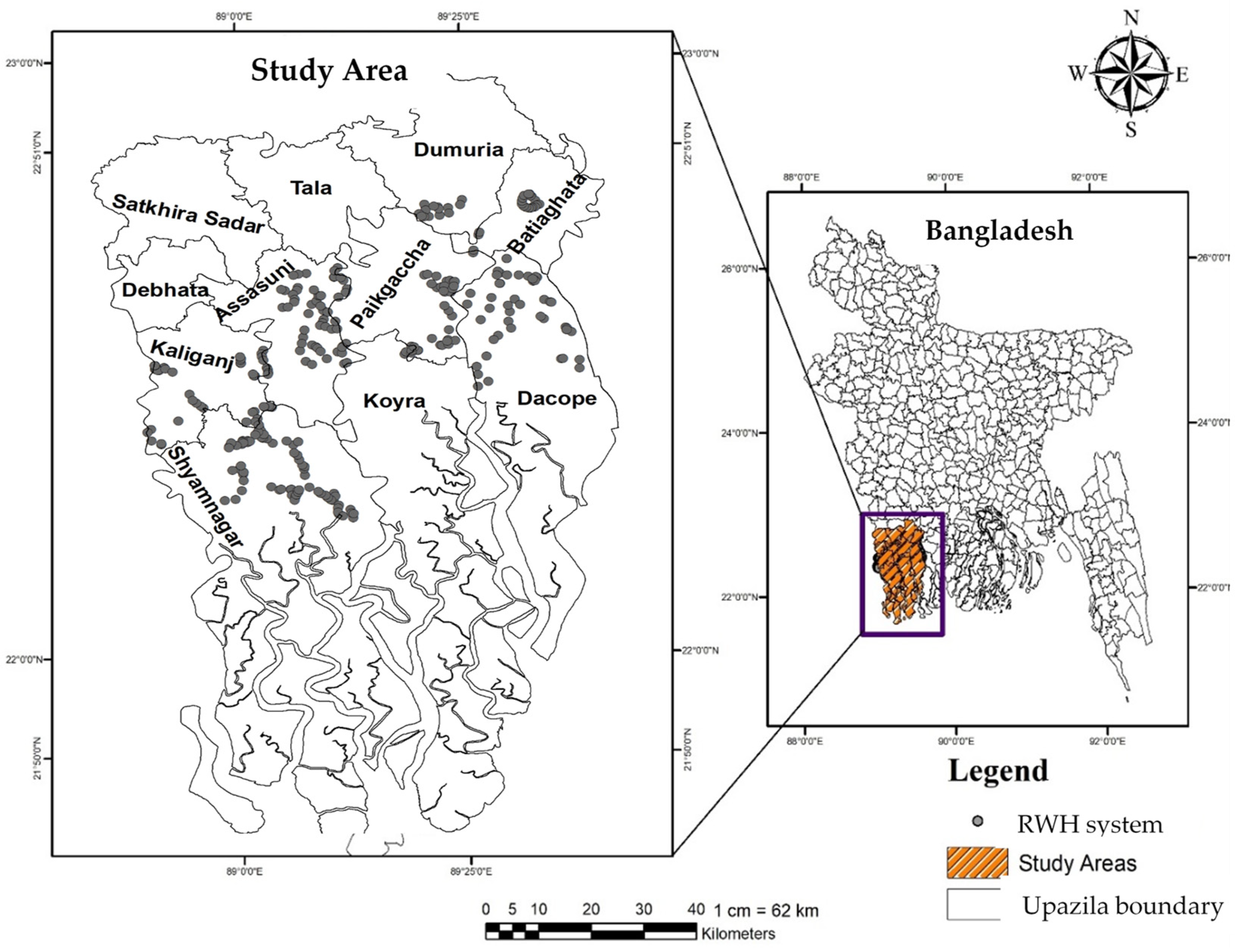
A survey was conducted in randomly selected households having an RWH system in the southwestern coastal areas of Bangladesh. The study area included Dacope, Paikgachha, Batiaghata, Dumuria Upazila (sub-district) of the Khulna district, and Kaliganj, Shyamnagar, Assasuni Upazila (sub-district) of the Satkhira district (Figure 1). Geographically, this area extends from 24°220′ N to 24°730′ N latitude and 88°360′ E to 88°200′ E longitude, and the average elevation is less than 10 m above mean sea level. The area has a humid climate with three distinct seasons: pre-monsoon (March to June), monsoon (July to October), and post-monsoon (November to February). This region’s mean annual rainfall varies between 150 and 200 cm, with about 70% of the rainfall occurring in the monsoon season [11].
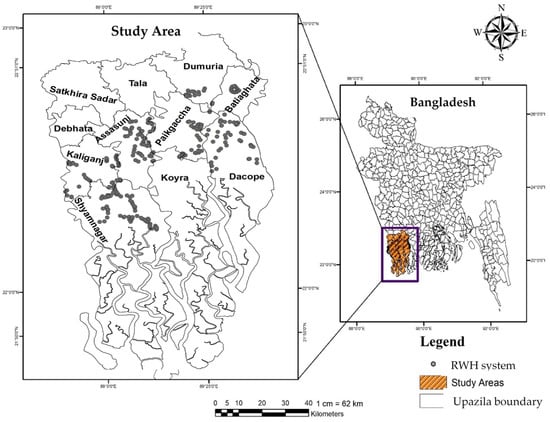
Figure 1.
Locations of selected household RWH systems in Khulna and Satkhira district.
2.2. Sampling and Data Collection
A female from each household (responsible for collecting the household drinking water) was the primary participant in the survey. Sometimes female participants were unwilling to participate in the interview due to shyness or fear of providing the wrong information. In such a situation, data were collected from a male family member in the presence of the female participant. The households were randomly sampled from approximately 200 villages in the study area. When any household member refused to participate, the nearest house having an RWH system was considered. The total sample size was 300. A list of households using RWH in the study area, obtained from the Department of Public Health Engineering (DPHE), was used to guide the surveyor.
Data were collected using a questionnaire survey and an on-spot assessment of the RWH. Questions were set regarding socio-demographic characteristics, the household’s water collection and consumption behavior, operation and maintenance practices (the cleaning of the tank, gutter, mesh, catchment), household perception of water quality, water treatment practice, involvement of NGOs and other institutions in the surveillance of the RWH system, and monitoring and capacity building for the RWH system. Five free listing questions were designed to collect quantitative data about the respondents’ perceptions of the various aspects of the rainwater harvesting (RWH) system. Participants were asked to respond spontaneously to a list of issues in response to the topics, including the benefits of using RWH, reasons behind the insufficient water, motivational factors for shifting to RWH from the previous water source, challenges for the users during the use of the RWH system, and proposed solutions for the problems. Data were entered into Statistical Package for Social Sciences (SPSS) v26.0 for analysis.
2.3. Free Listing Analysis
Free listing is a qualitative and methodological tool widely used in various scientific disciplines [26]. The Smith’s Salience Index (SSI) is calculated for each item registered in a set of free lists, which are then ranked according to relevance [27]. The SSI is defined as follows [28]:
where L = the length of the list, Rj = the rank of item j in the list, and N = the number of lists in the sample.
SSI = (∑ (L − Rj + 1)/L)/N
Smith’s Salience Index (SSI) considers the frequency of a given item across all lists and the item’s rank in the respondent’s list. For a given respondent, the salience (S) of item j is calculated through the above formula. Then, the overall SSI is calculated with the average salience (S) of all respondents for a given item [29]. The interpretation of these values, however, is entirely subjective. The salience index ranges from 0 to 1 and measures the global importance of the reasons mentioned across all lists [30]. Items with a higher salience score were of greater significance [31,32].
3. Results
3.1. Socio-Demographic Characteristics
The socio-demographic characteristics of the respondents are shown in Table 1. Most of the respondents (82.7%) were more than 25 years old, indicating that they were well acquainted with their RWH system and could provide reliable and accurate information. The mean age of the respondents was about 37 years. In the study area, household size widely varied between 2 to 16, with an average household size of 5.5. The majority of the surveyed respondents (39.3%) completed secondary education, and a few were found to be university graduates (8.7%). Most respondents (37%) reported their average monthly family income to be between Bangladesh Taka (BDT) 5000 to 10,000. The mean length of the duration of the household RWH system used in the study area was 3.1 years.

Table 1.
Socio-demographic characteristics of the surveyed households.
3.2. Source of Funds for RWH System Installation
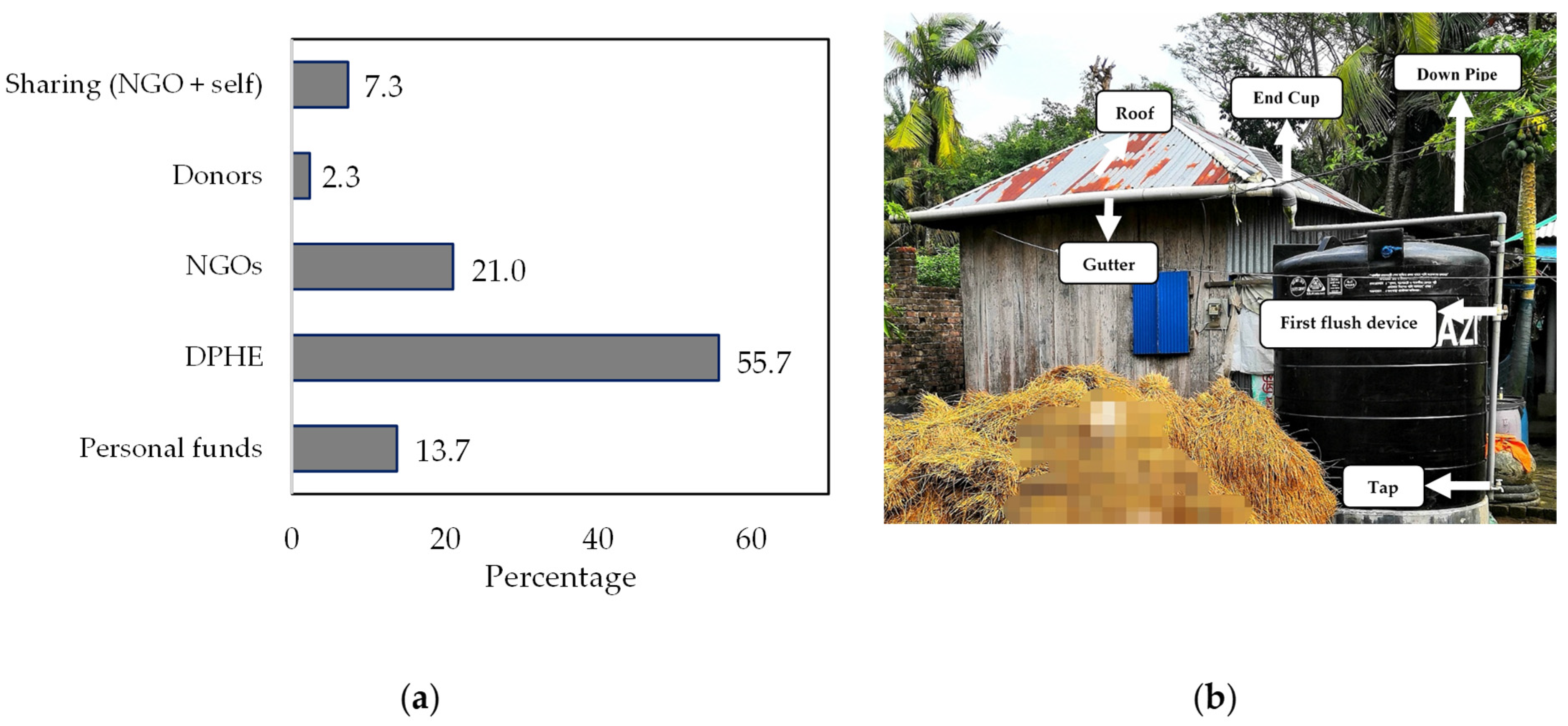
The financial condition of most households in the coastal areas is poor; as a result, they need external support to install RWH systems [33]. In total, 2.3% of households installed the RWH system with support from donor agencies, whereas the DPHE installed most (55.7% of households) of the RWH systems through various projects (Figure 2a). A typical household RWH system installed in the southwestern coastal region is shown in Figure 2b.
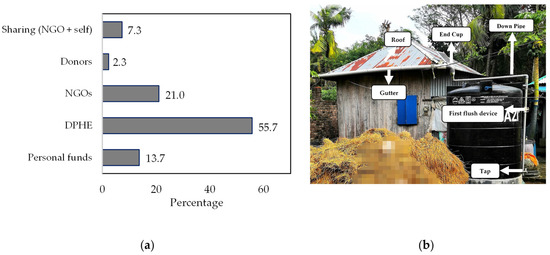
Figure 2.
(a) Proportion of RWH systems installed by different means; (b) typical RWH system installed in the southwestern coastal region of Bangladesh, showing different components (Source: ITN-BUET).
NGOs also installed many RWH systems (21% of households). A total of 13.7% of households installed the RWH systems using personal funds, while 7.3% had cost-sharing arrangements with NGOs. There was anecdotal evidence of discrimination regarding allocating the RWH system among the households in the study areas. Some wealthy families received the RWH system from the authorities, while some low-income families were deprived. The wealthy people in the community often exert influence during the allocation of water points through different projects, which can result in an inequitable distribution.
3.3. Usage and Availability of Rainwater for Domestic Use
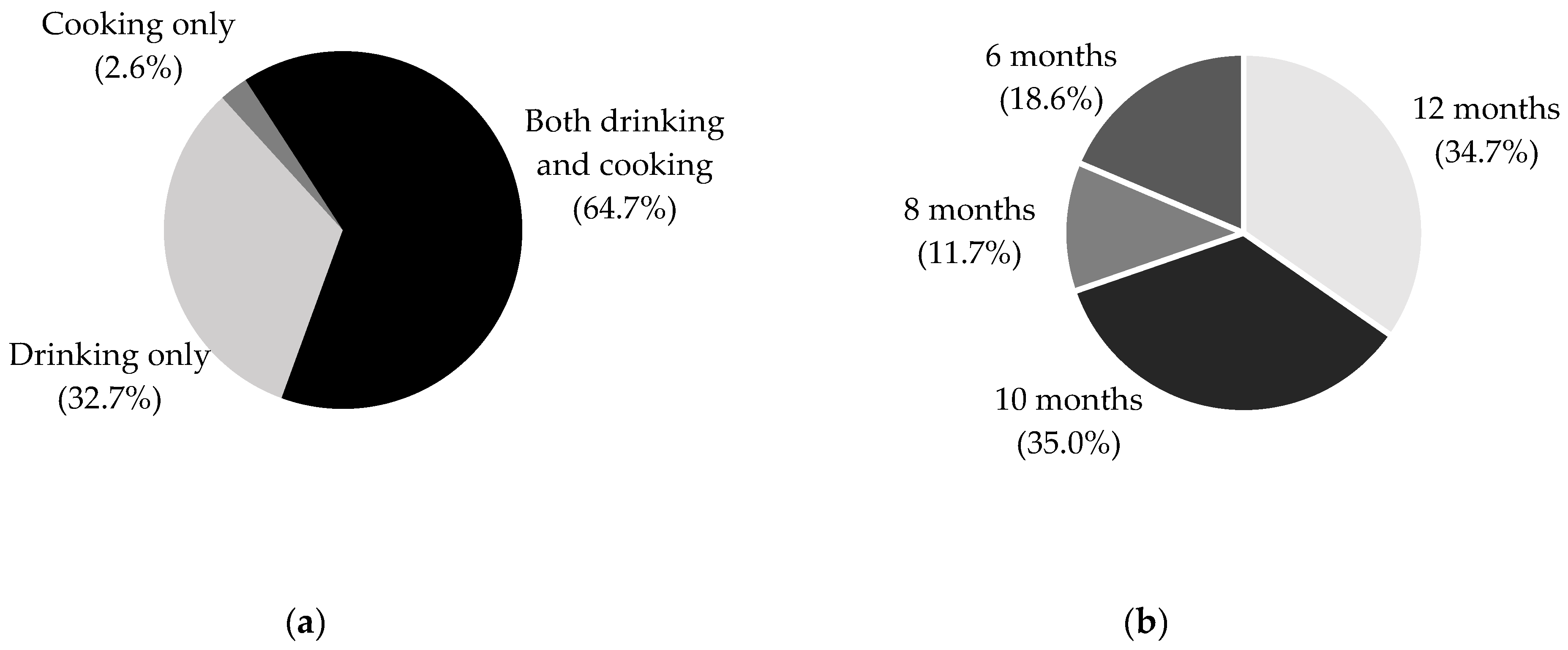
The coastal people understand the importance of rainwater during the dry season when drinking water is scarce; hence, they use their harvested rainwater strictly for drinking and cooking purposes. It is shown in Figure 3a that about 32.7% and 64.7% of the households used rainwater for drinking only and for both drinking and cooking, respectively. Water availability is an essential factor for the sustainability of the RWH system. A previous study found that in most cases, stored rainwater is available for about 6 to 9 months, depending on reservoir capacity, mainly during and after the rainy season [13]. In this study, it was found that more than one-third of the surveyed households (34.7%) could use rainwater all year round, including both rainy (4 months) and dry seasons (8 months), and this was mainly true for those who had rainwater harvesting systems with a storage tank volume of 3000 Liters (Figure 3b). Around 18.6% of the surveyed households reported that they could use stored rainwater for only two months after the rainy season. However, women from some households said that they were not interested in using their stored rainwater during the winter season (December to February). They preferred to carry water from a distant source during that time because they wanted to conserve their stored rainwater for the hot dry season (April to May) when collecting water from a distant source is more inconvenient.
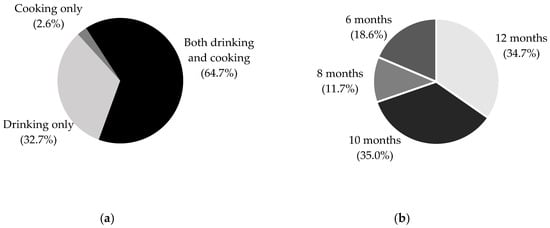
Figure 3.
(a) The typical use of rainwater in the study area; (b) a distribution of the time rainwater is available for domestic use in the study area. The values in the parenthesis indicate the proportion of households.
3.4. Distance and Time Required for Water Collection from Previous Sources
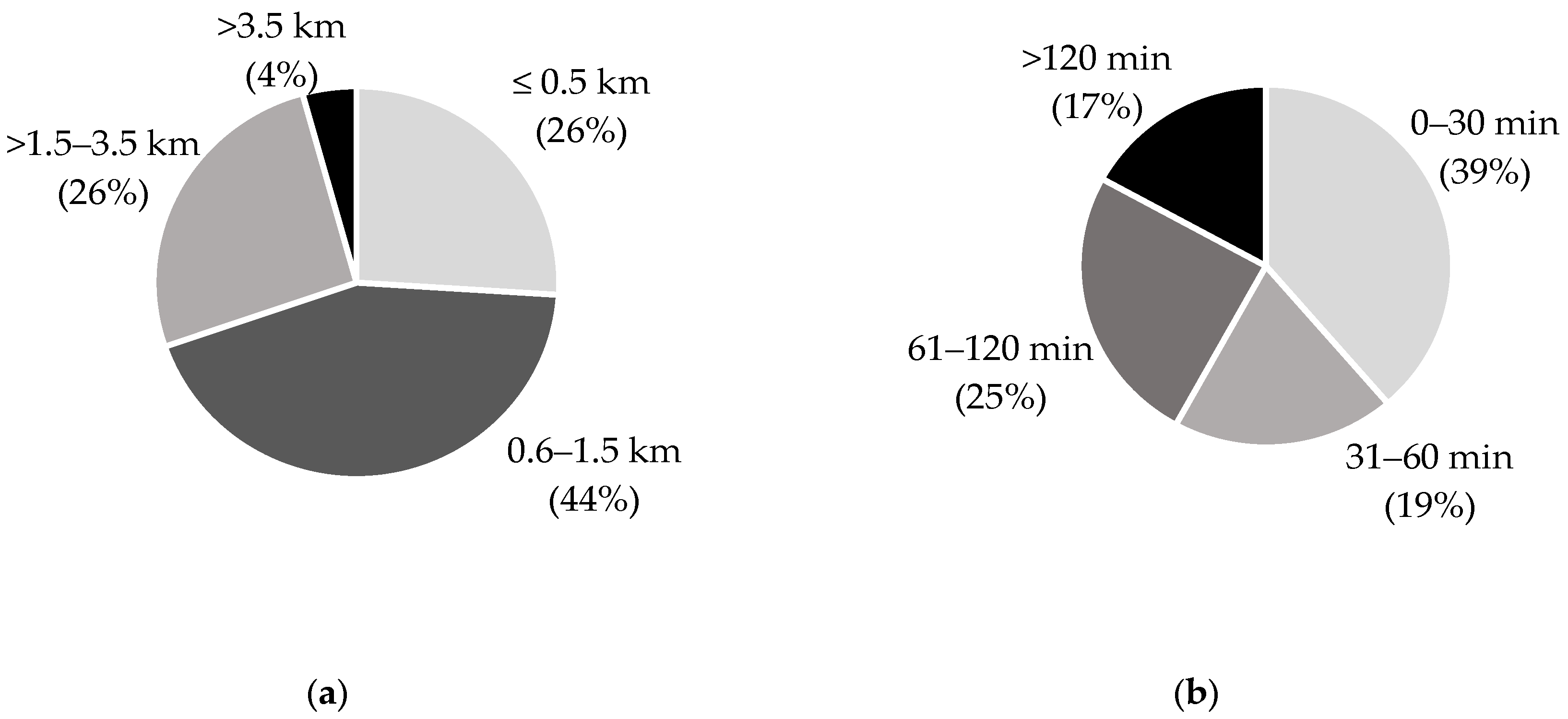
Before installing the RWH system, households collected the drinking water from a distant source by themselves or with a hired van. The female members of the household were mainly engaged in fetching water from distant or nearby sources. They had to spend a significant amount of time collecting water, preventing them from doing routine household work. One study found that a decrease in the distance to the water source from 1000 to 10 m was associated with increased per capita water consumption [34]. Figure 4 shows the distance the respondents need to travel and the time required for water collection from the other drinking water source in the study area. A majority of the households (44%) used to obtain drinking water within 0.6–1.5 km from their premises in the study area, while nearly 4% had no safe drinking water sources within 3.5 km (Figure 4a). The main drinking water sources for the population in the study area before installing the RWH system were Pond Sand Filters (PSFs), ponds, tube wells, and filters. Figure 4b shows that the time required for water collection from the previous drinking water sources was within 30 min for nearly 39% of the households, while more than 120 min were required for about 17% of households. A significant amount of time was saved by installing the RWH system at the household level. Consequently, the households reported having more time to spend on other productive activities such as children’s care, education, and farming.
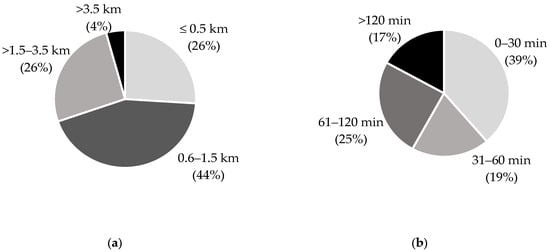
Figure 4.
(a) Distance of previous drinking water source and (b) amount of time spent collecting water for domestic use before installing the RWH system. The values in the parenthesis indicate the proportion of households.
3.5. Drinking Water Options
The struggle for drinking water all year round has become a common scenario among the coastal population due to the salinity intrusion in surface- and groundwater. Although the RWH system has attenuated this severity by providing fresh water for several months a year, the users need to rely on other water sources to meet their yearlong drinking and cooking water demands. The survey result showed that about 53% of users reported relying on another source besides rainwater to obtain drinking water throughout the year. Around 24.3% of households used rainwater and filtered water from local vendors for drinking purposes (Table 2). A total of 34.7% households responded that they used only rainwater to meet their yearlong water needs. Around 12% of households depended on two different water sources besides rainwater to meet their water demands. Choosing other water options (ponds, PSFs, tube wells, local vendors) depends on the availability and accessibility of these water sources.
Table 2.
Present drinking water options.
3.6. Current Capacity of Storage Tank for Rainwater Collection
Tank capacity is an important consideration in maximizing rainwater collection. To determine the optimum tank volume, the amount of rainfall and its yearly distribution, roof area, and water consumption behavior are critical factors [35]. Table 3 shows the study area’s storage tank capacity for rainwater collection. Most household RWH systems (57%) had a storage tank with a capacity of 2500–3000 Liters, whereas larger storage tanks (>4000 Liters) were used by only 1% of households. The reason for 2500–3000 Liters being the dominant size is that such tanks were part of the project specifications by the government or NGOs. The tank size was not customized based on household size, which could potentially affect the reliability of the system. A previous study showed that a maximum of 70 to 85% reliability could be achieved under average climate conditions with the current tank sizes for household RWH systems in the coastal areas of Bangladesh [12].
Table 3.
Current storage capacity for rainwater collection in coastal areas.
3.7. Portion and Size of the Roof Catchment Area Used for Rainwater Collection
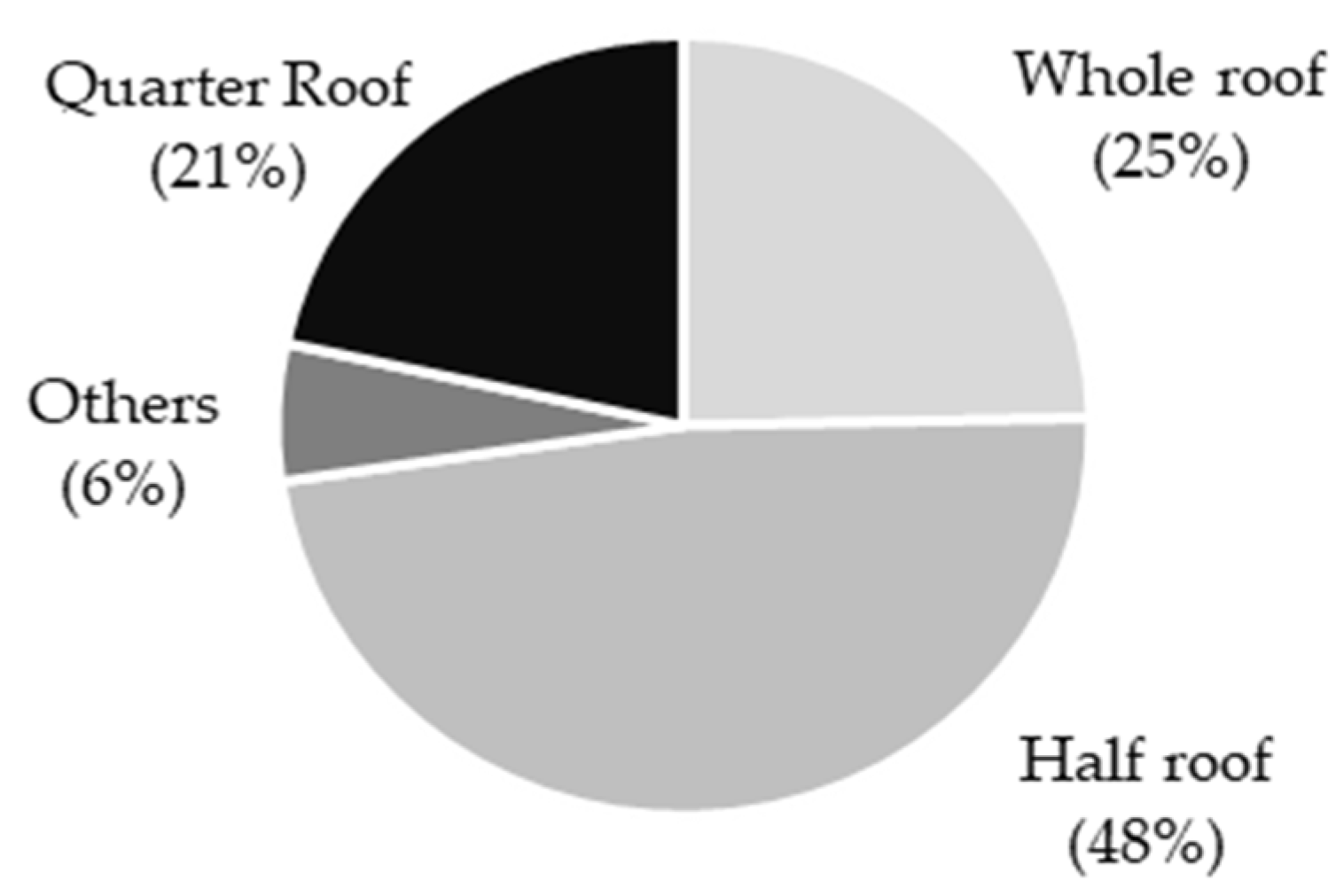
The portion and size of the roofs are important factors for rainwater collection. One study found that water-saving efficiency increases with the roof surface area [36]. Figure 5 shows the portion of the roof used by respondents as the catchment. Around 48% of households used half the roof as a catchment for rainwater collection. The main reason for using half of the roof was that most of the houses in the study areas were made with a pent roof (a roof consisting of a single sloping surface). It is challenging to catch water from other roof portions without sufficient piping installed. Around 6% of households used other options, mainly polyethylene, as catchment due to the lack of proper roofs.
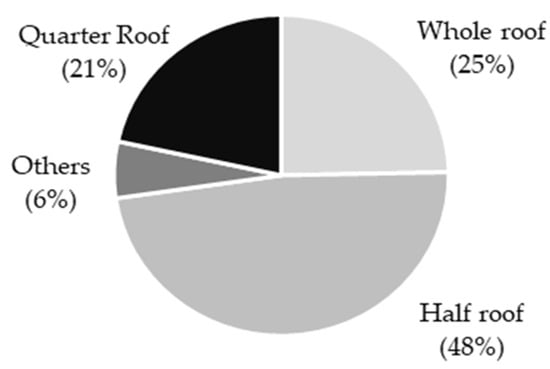
Figure 5.
The portion of the roof used as a catchment for rainwater collection. The values in the parenthesis indicate the proportion of households.
Table 4 shows the approximate size of the roof catchment used for rainwater collection. Most households (65.3%) had a roof with an area between 10–30 square meters, while 21% had a roof with less than 10 square meters. Among them, most households used polyethylene as a temporary catchment. One study showed that a roof catchment area of about 15 square meters (160 square feet) is sufficient to collect the required water needed for a family of 6–7 members for domestic water demand during the dry period [8]. It can be said that most of the households had a sufficient roof surface area for rainwater collection, but they lacked the piping system to collect water from the entire roof. Therefore, to maximize water collection, households need large-volume storage tanks.
Table 4.
Approximate size of the roof catchment area for rainwater collection.
3.8. Components of the RWH System
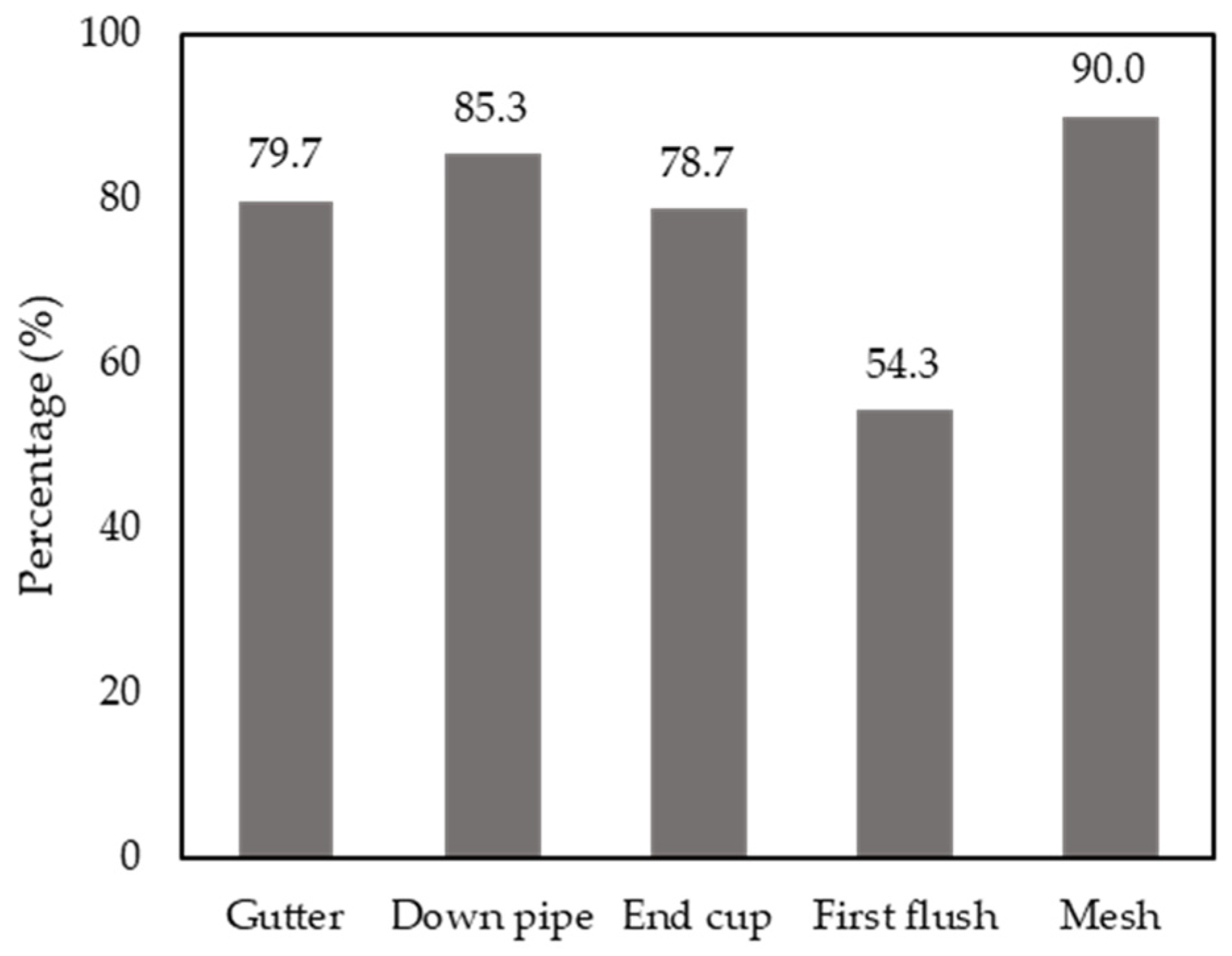
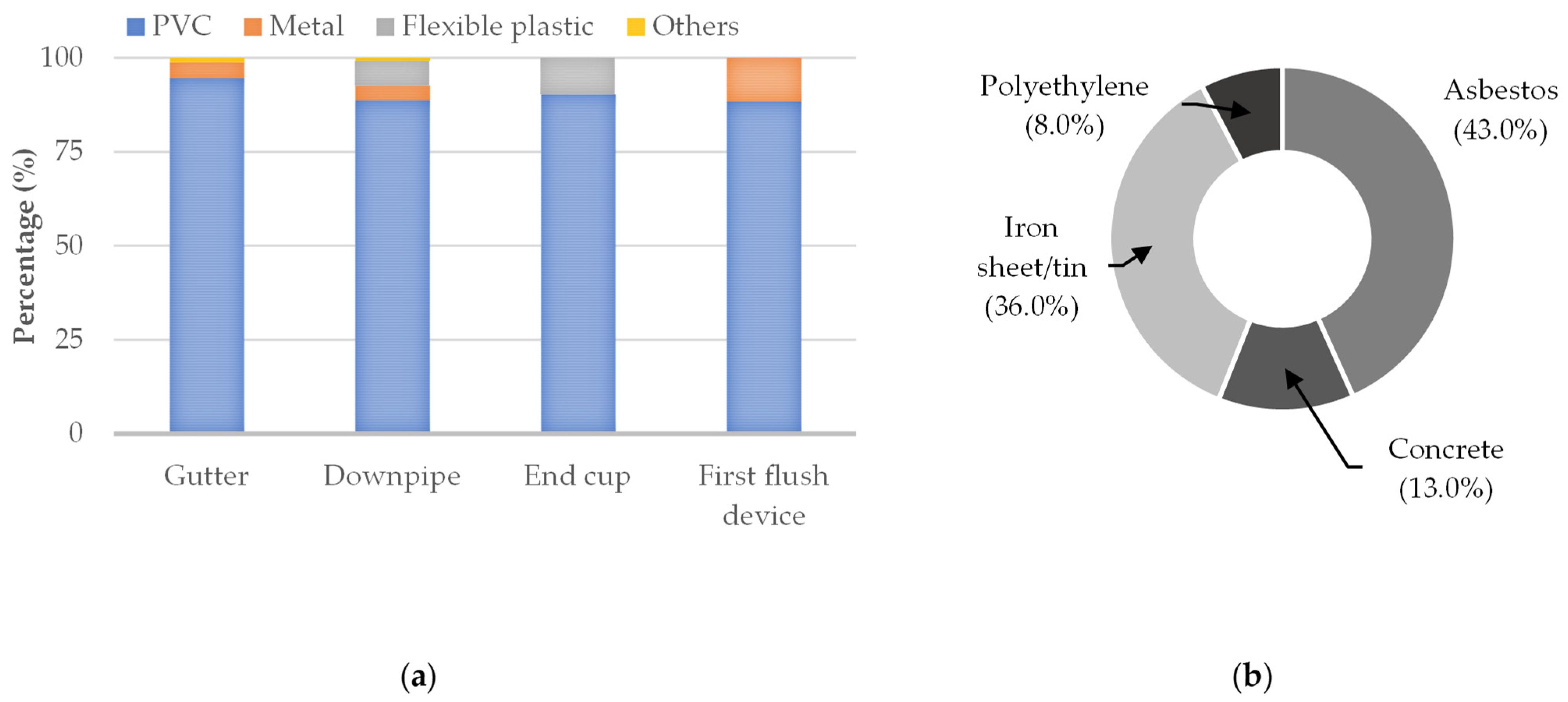
There is a common perception that the rainwater harvesting (RWH) system is an environmentally sustainable water supply option. This perception is not always true for all arrangements of the RWH system and components [37]. Important factors in collecting and maintaining good quality rainwater include the proper design and installation of rainwater harvesting systems. Figure 6 shows the various elements present in the RWH system in the study area. Around 79.7% of the surveyed households had gutters in their RWH system, while 20.3% of houses were found with no gutter because those households collected rainwater from the rooftop directly or used polyethylene as a catchment. Of those with gutters, the majority (94.6%) were made of polyvinyl chloride (PVC) or unplasticized polyvinyl chloride (uPVC), while 4.2% and 1.2% were metal iron sheets and others (bamboo), respectively. A downpipe connecting the gutter with the storage tank was found in 85.3% of household RWH systems. Most of the downpipes were made of PVC (88.7%) and flexible plastic (6.6%), and only 0.8% were made of bamboo, as shown in Figure 7a. Around 78.7% of RWH systems had end cups to pass the rainwater from the gutter to the downpipe. The majority of households (90%) used end cups made from PVC, and the rest of the households (10%) used plastic bottles as end cups (Figure 7a). To protect the entry of dust, insects, or bird excreta into the storage tank, about 90% of the household RWH systems had a proper filter/mesh. In the study area, it was also found that about 54.3% of RWH systems had the first flush device while the rest of the households practiced first flushing manually. Of those who installed the first flush device, around 90% of the first flush devices were made of PVC, and only 10% were made of metal.
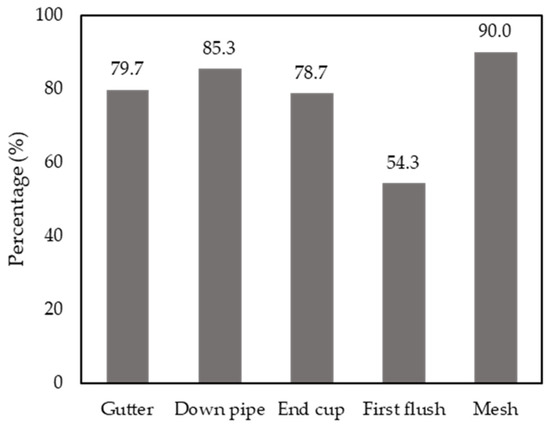
Figure 6.
Presence of different components of the RWH system.
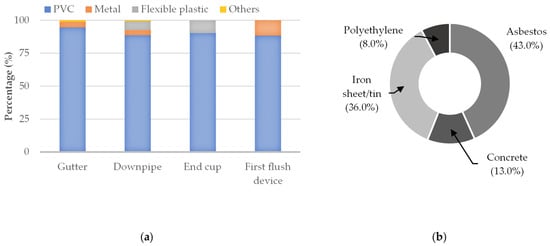
Figure 7.
(a) Materials used for the different components of the RWH system; (b) nature of the roof catchment. The values in percentages indicate the proportion of households.
Figure 7b shows that the roof of most houses was made of asbestos–cement sheets (43%), while the rest had iron sheet/tin (36%), concrete (13%), and polyethylene (8%) as the roofing materials. One study concluded that metal roofs are commonly recommended for rainwater harvesting, as the water collected from metal roofs has lower concentrations of fecal bacteria than other roofing materials (concrete tiles, asphalt shingle, etc.) [38].
3.9. Rainwater Management Practices
Table 5 shows the existing practices for rainwater management by the households. Rainwater is not suitable for direct use as drinking water due to contamination by microorganisms, heavy metals, and organic matter [39,40,41]. This could be due to the poor maintenance of the collection system, which includes catchment roofs, gutters, downpipes, first-flush devices, and storage tanks. Cleaning is one of the most important aspects of maintenance. Almost all the surveyed households (98%) cleaned the tanks yearly, while households not cleaning the tanks at all were marginal (2%). More than 85% of the households cleaned the gutter and downpipes at least once a year. Around 13.3% of the households reported that they did not clean the downpipe. The lack of knowledge on how to fix the downpipe after the cleaning might be a reason for not cleaning the downpipe frequently. Around 55% of respondents having a mesh/filter in their RWH system practiced cleaning. A total of 21.1% of households cleaned the mesh several times a year, while the rest (43%) preferred replacing their mesh when it was dirty. Approximately three-fourths (78.7%) of the surveyed households relied on the first rain of the season to wash the roofs instead of purposefully cleaning them. Overhanging vegetation is another important factor that could significantly influence rainwater quality. An on-spot assessment showed no overhanging vegetation on the roof in 79% of the surveyed houses, indicating that users were aware of the importance of cutting or trimming trees.
Table 5.
Rainwater management practices of the households.
First-flush diversion involves discarding the initial, dirtiest flush of runoff from a rainfall event [42]. Many studies found that long dry periods often increased the pollutant load from the catchment roofs [39]. Therefore, eliminating the first flush helps increase the quality of harvesting water. Around 51% of the surveyed households waited more than 25 min, while 22% waited 16–24 min before collecting water. A few households (5%) were not discarding the first flush. Water collection using a tap and transportation using a jar or pitcher were common amongst the surveyed households (97%); only about 3% withdrew the water directly from the tank without a tap. Most household RWH system users (48.3%) spent less than 50 BDT for O&M purposes.
3.10. Rainwater Quality Monitoring and Treatment Practices
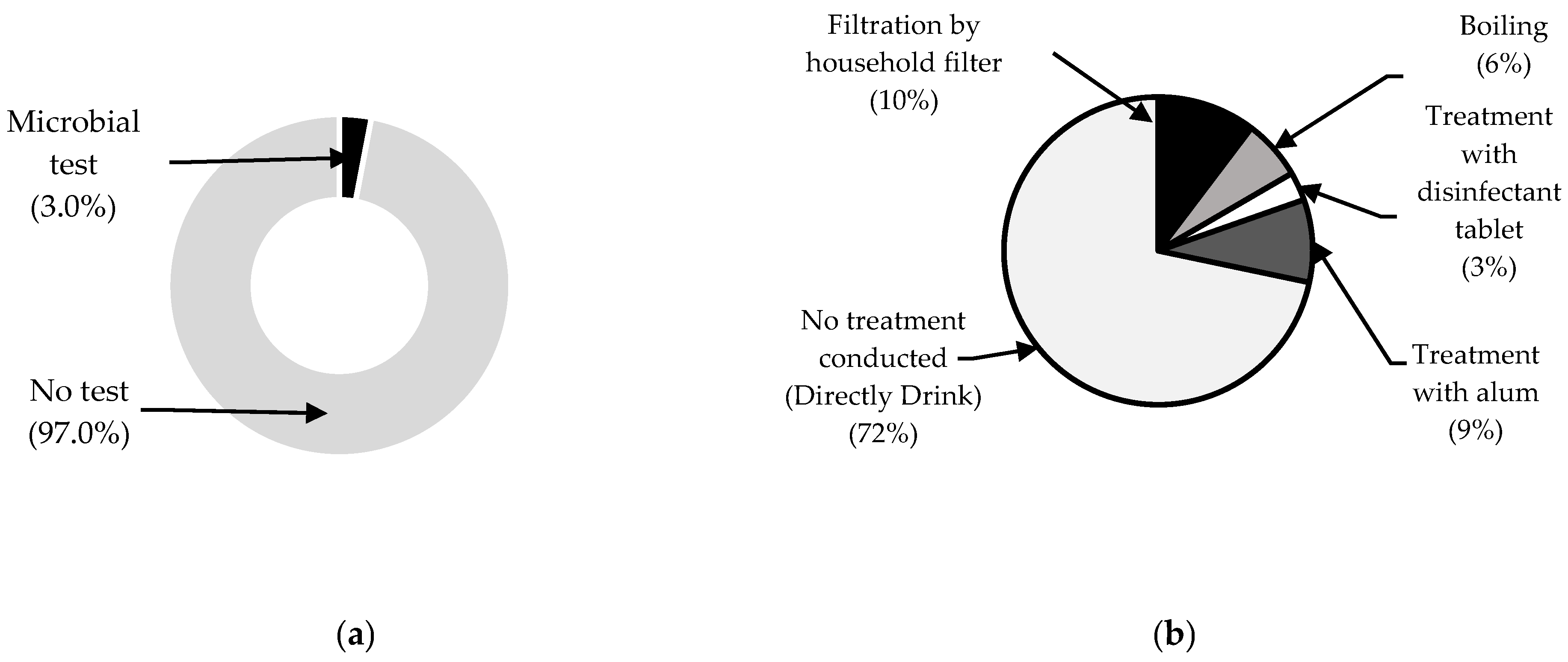
Long-term storage and preserving of the quality of harvested rainwater are challenging without proper knowledge of water preservation [13]. It was found that around 59.3% of the respondents did not know that rainwater should be tested regularly. About 83.7% of the households said they did not know what test was needed for their harvested rainwater. Around 97% of the users reported that they did not test harvested rainwater (Figure 8a). There was a general lack of awareness regarding monitoring water quality from the user’s perspective. There were also no laboratories in the vicinity of the households or testing kits available in case the user wanted to test the water quality.
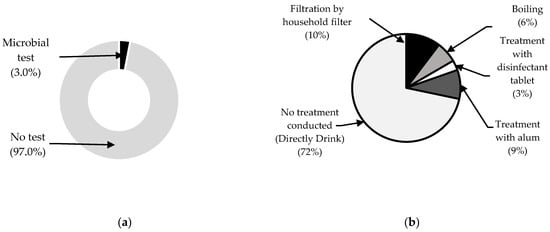
Figure 8.
(a) Type of tests carried out by household RWH users; (b) treatment methods for harvested rainwater location of the tank. The values in the parenthesis indicate the proportion of households.
As mentioned in Section 3.9, the collection system is the main source of rainwater contamination. However, there is growing evidence that rainwater can get contaminated before reaching the collection system [43]. It is often recommended to carry out treatment for harvested rainwater before drinking [44]. The treatment can be through filtration, adding chemicals (alum, disinfectant), or other processes. Figure 8b shows the rainwater treatment practices carried out by the users in the study areas. More than two-thirds (72%) mentioned they drank rainwater without any treatment, while around 28% of households reported using the in-house method to purify their harvested rainwater for drinking. Among them, nearly 10% and 9% of the households who used the in-house purifying process used home filtration and alum, respectively. Boiling (6%) was also practiced for water treatment in the study area.
3.11. Operation and Maintenance, Monitoring Support, and Capacity Building
The lack of knowledge and poor maintenance behavior influence the functionality of the RWH system and rainwater quality. Thus, it is necessary to not only install the RWH system, but also to build the capacity to operate the systems, which can be achieved through arranging various training programs to capacitate the users. Table 6 shows that most of the respondents (91%) did not receive training on O&M for the RWH system, while the users received other training on nutrition, arsenic, etc. Around 81% and 89.3% of the RWH system users reported not receiving monitoring support and usage instruction, respectively. Such shortcomings in capacity can significantly influence the performance and sustainability of the installed RWH system.
Table 6.
Various surveillance activities carried out by government/NGOs.
3.12. Household Perception by Salience Index
The RWH system has gained popularity because it has numerous benefits. A free listing question about the beneficial impact of the RWH system was asked to explore some essential advantages of using it (Table 7). ‘Proximity to the household’ showed the highest SSI (0.589) with 222 citations, indicating that this is the most significant benefit to the users. SSI values of the ‘RWH system reduces the waterborne diseases’, ‘Rainwater is safe for drinking’, and ‘Quality of rainwater is acceptable’ were 0.277, 0.180, and 0.179 with 143, 76, and 102 citations, respectively.
Table 7.
Free listing results by salience.
There were many reasons behind the insufficient yearlong water demands, including the inadequate volume of the storage tank. There were at least seven reasons why the users thought they did not obtain sufficient rainwater throughout the year. The most significant cause behind the insufficient water was ‘Inadequate storage volume’ (cited by 151 respondents, SSI = 0.671). About 66 users of the RWH system said they had to share water with individuals other than those belonging to different households, such as visitors, guests, school-going children, and customers of shops, especially in dry periods (SSI = 0.324).
The most significant motivating factor for choosing RWH as their main drinking water source over the previous water source was ‘Rainwater has many benefits’, cited by 151 users (SSI = 0.502). The benefits they stated were the source of water being close to the household, relief from carrying water from a distant source, and rainwater being safe for drinking and cooking. ‘Presence of high arsenic and iron in tube-well water’ was mentioned by 25 users (SSI = 0.077), and ‘Pond water appeared to be spoiled due to storm, bathing, garbage dumping, and dishwashing’ was cited by 22 users (SSI = 0.073). Sometimes pond owners were not interested in sharing water with other households, and this reason was mentioned by five respondents (SSI = 0.011).
The most frequent problem that the users faced was a ‘Low-volume storage tank’, mentioned by 86 respondents (SSI = 0.263). In addition, ‘Facing difficulties in water collection’ due to inadequate RWH components (cited by 56 users, SSI = 0.170) and ‘Inadequate rainwater testing facilities’ (cited by 29 users, SSI = 0.084) were the significant problems that the users faced during the use of RWH. The users had to share water with other households that did not have suitable water options (cited by 23 users, SSI = 0.068).
Most surveyed households suggested one or two solutions for solving their issues. According to users, providing a larger capacity storage tank was the most effective solution (cited by 100 users, SSI = 0.310), indicating that the capacity of the tank is an important limitation for getting sufficient water. The users mentioned that properly placing the RWH components (mesh, pipes, gutter, filter, tap) is crucial for rainwater collection (cited by 37 users; SSI = 0.113). Taking the necessary steps to set up dedicated rainwater testing laboratories was also cited by 36 users (SSI = 0.104) as the possible solution to the rainwater testing facility problem.
4. Discussion and Conclusion
Although RWH has been made popular in the water-challenged southwestern coastal region of Bangladesh through government and donor agency interventions, its proper functioning has been found to be lacking in many areas. This study explored the post-installation rainwater management issues associated with household RWH systems in the southwestern coastal regions of Bangladesh. Critical aspects explored were the socioeconomic conditions of the household, usage behavior, water treatment practices, operational features, maintenance practice, and governance issues.
The households use their harvested rainwater for drinking and cooking, but the storage tank capacity has been found to be insufficient to ensure yearlong water availability. Therefore, most households still have not become completely independent of their previous water options (PSF, tube well, pond), and some are located large distances from the household. Larger family sizes and low-volume storage tanks are the most cited causes of insufficient water throughout the year. The roof portion used as a catchment, as well as the size of the roof, can also be a factor that affects the quantities of water being collected. Many families could not use the entire roof as a catchment due to a lack of gutters and pipes. The RWH systems installed by different projects did not customize the storage tank capacity based on such factors, which could be responsible for the inadequate quantity of water throughout the year. The findings emphasize the need for having a storage tank commensurate with the size of the family and a proper collection system to receive water from the entire catchment to ensure year-round water demands.
The users in the region generally followed a good practice of frequently cleaning the storage tanks, gutters, downpipes, and filter media/mesh, although they did not pay much attention to the roof cleaning. Most of the roofs of the surveyed households did not have overhanging vegetation in the study area. Most households waited for more than 25 min before collecting rainwater after the dry period, indicating that they knew the importance of first flushing to maintain the quality of the collected rainwater. Even after good cleaning practices, there is a risk of microbial contamination in the harvested rainwater, which cannot be ignored. The lack of properly functioning RWH components and the use of makeshift arrangements for missing or damaged RWH components could also be the potential cause of microbial contamination. This risk has to be minimized by post-storage treatment practices, and the regular monitoring of rainwater quality.
Most users drank rainwater without treatment, and almost all did not test the quality of their stored water. This is because they lacked adequate knowledge of water treatment, preservation methods, and water quality testing protocols for harvested rainwater. The usage instructions accompanied by the RWH units were not communicated properly to the households, and in some cases the instructions were not provided at all. Therefore, the users should be sensitized of the need for post-storage treatment (e.g., boiling, filtration, disinfection) before drinking rainwater to minimize the health risk from microbial contamination. This study also emphasizes the need for providing water quality monitoring support to households using RWH by the related agencies. This can be conducted by establishing laboratories at the Upazila level and encouraging the users to have their water tested at certain intervals.
The material used for the different components of the RWH system could be responsible for introducing chemical contaminants in harvested rainwater. PVC or un-plasticized polyvinyl chloride (uPVC) material is typically used for gutters and downpipes due to its high strength, long-term durability, and low cost. A recent study found the presence of heavy metal (Pb) in stored rainwater due to uPVC gutters and downpipes [23]. The main reason behind this contamination is that uPVC pipes may contain Pb due to using lead compounds as the stabilizer during manufacturing [23]. Our survey results show that most households use gutter and downpipes made from PVC/uPVC, and these households are more likely to have Pb content in their stored rainwater. Recent studies suggest that contaminants such as Polycyclic aromatic hydrocarbons and trace metals, which are present in the air due to various anthropogenic activities, can appear in stormwater runoff [45,46,47]. Therefore, it is suggested that the collected water should be occasionally tested for lead (Pb) and other contaminants.
The lack of training on O&M and institutional monitoring support for the RWH systems is another finding from the study. Many households did not receive training and monitoring support from the organizations providing the RWH units. The design aspects of the RWH system and its operation and maintenance are technical issues, which the households need to be sensitized to run the system properly. This is where the government institutions (DPHE), NGOs, and donor agencies can play a crucial role in providing post-installation support and building capacity at the household level. Increasing public awareness regarding the beneficial effects of good O&M practices through various capacity-building programs is essential. A national O&M guideline for small-scale water supplies (including RWH systems) with the allocation of resources for O&M should help RWH systems run fruitfully. It is also important to adopt water safety plans for RWH systems to reduce water quality risk from microbial and chemical contamination. The southwestern coastal region of Bangladesh is one of the most water-challenged areas in the country, and RWH is an important source of water supply in the area. This study suggests a strong need for monitoring the performance of RWH systems and provides clues to strengthening existing RWH intervention programs.
Author Contributions
Conceptualization, T.A.; methodology, S.G. and T.A.; software, S.G.; validation, S.G. and T.A.; formal analysis, S.G. and T.A.; investigation, S.G.; resources, T.A.; data curation, S.G.; writing—original draft preparation, S.G. and T.A.; writing—review and editing, S.G. and T.A.; visualization, S.G.; supervision, T.A.; project administration, T.A.; funding acquisition, T.A. All authors have read and agreed to the published version of the manuscript.
Funding
This work was supported by graduate student funding from Committee for Advanced Studies and Research (CASR), BUET, and ITN-BUET.
Data Availability Statement
All relevant data are included in the paper.
Acknowledgments
The authors are pleased to acknowledge the participants of this survey questionnaire. In addition, the authors express their gratitude to the officials from the Department of Public Health Engineering and International Training Network (ITN)-BUET for their support throughout this study by providing all the necessary materials and technical support.
Conflicts of Interest
The authors declare that there is no conflict of interest.
References
- Haq, S.A.; Alum, M.A. Assessment, Concept Design and Layout for Proposed Rainwater Harvesting Infrastructure in Southwestern Bangladesh; Idyllic Design-RAiN Forum: Dhaka, Bangladesh, 2017; pp. 1–81. [Google Scholar]
- Islam, M.A.; Sakakibara, H.; Karim, M.R.; Sekine, M.; Mahmud, Z.H. Bacteriological assessment of drinking water supply options in coastal areas of Bangladesh. J. Water Health 2011, 9, 415–428. [Google Scholar] [CrossRef] [PubMed]
- Islam, M.A.; Azad, A.K.; Akber, M.A.; Rahman, M.; Sadhu, I. Effectiveness of solar disinfection (SODIS) in rural coastal Bangladesh. J. Water Health 2015, 13, 1113–1122. [Google Scholar] [CrossRef] [PubMed]
- Igbinosa, I.H.; Aighewi, I.T. Quality assessment and public health status of harvested rainwater in a peri-urban community in Edo State of Nigeria. Environ. Monit. Assess. 2017, 189, 1–12. [Google Scholar] [CrossRef]
- Ahmed, W.; Zhang, Q.; Ishii, S.; Hamilton, K.; Haas, C. Microfluidic quantification of multiple enteric and opportunistic bacterial pathogens in roof-harvested rainwater tank samples. Environ. Monit. Assess. 2018, 190, 1–11. [Google Scholar] [CrossRef]
- United Nations Environment Programme (UNEP). Rainwater harvesting: A lifeline for human ‘wellbeing’. Stockholm Environment Institute. Available online: https://wedocs.unep.org/20.500.11822/7762 (accessed on 20 October 2021).
- Ahmed, M.F. Rainwater Harvesting Potentials in Bangladesh. In Proceedings of the 25th WEDC Conference on Integrated Development for Water Supply and Sanitation, Addis Ababa, Ethiopia, 30 August 1999. [Google Scholar]
- Karim, M.R. Assessment of rainwater harvesting for drinking water supply in Bangladesh. Water Supply 2010, 10, 243–249. [Google Scholar] [CrossRef]
- Government of Bangladesh (GOB). Arsenic Mitigation in Bangladesh; Local Government Division (LGD), Ministry of Local Government, Rural Development (LGRD) and Co-Operatives; Government of the People’s Republic of Bangladesh: Dhaka, Bangladesh, 2002.
- Sultana, S.; Ahmed, K.M.; Mahtab-Ul-Alam, S.M.; Hasan, M.; Tuinhof, A.; Ghosh, S.K.; Rahman, M.S.; Ravenscroft, P.; Zheng, Y. Low-Cost Aquifer Storage and Recovery: Implications for Improving Drinking Water Access for Rural Communities in Coastal Bangladesh. J. Hydrol. Eng. 2015, 20, 1–12. [Google Scholar] [CrossRef]
- Kabir, M.P.; Islam, M.A.; Akber, M.A.; Ahsan, M.S. Bacteriological assessment of aquifer storage and recovery (ASR) water in southwest coastal Bangladesh. J Water Sanit. Hyg. Dev. 2016, 6, 231–241. [Google Scholar] [CrossRef]
- Karim, M.R.; Bashar, M.Z.I.; Imteaz, M.A. Reliability and economic analysis of urban rainwater harvesting in a megacity in Bangladesh. Resour. Conserv. Recycl. 2015, 104, 61–67. [Google Scholar] [CrossRef]
- Karim, M.R. Quality and suitability of harvested rainwater for drinking in Bangladesh. Water Supply 2010, 10, 359–366. [Google Scholar] [CrossRef]
- Simmons, G.; Hope, V.; Lewis, G.; Whitmore, J.; Wanzhen, G. Contamination of potable roof-collected rainwater in Auckland, New Zealand. Water Res. 2001, 35, 1518–1524. [Google Scholar] [CrossRef]
- Chang, M.; McBroom, M.W.; Beasley, R.S. Roofing as a source of nonpoint water pollution. J Env. Manag. 2004, 73, 307–315. [Google Scholar] [CrossRef] [PubMed]
- Zhu, K.; Zhang, L.; Hart, W.; Liu, M.; Chen, H. Quality issues in harvested rainwater in arid and semi-arid Loess Plateau of Northern China. J Arid. Environ. 2004, 57, 487–505. [Google Scholar] [CrossRef]
- Islam, M.A.; Sakakibara, H.; Karim, M.R.; Sekine, M. Potable water scarcity: Options and issues in the coastal areas of Bangladesh. J Water Health 2013, 11, 532–542. [Google Scholar] [CrossRef]
- Lye, D.J. Rooftop Runoff as a Source of Contamination: A Review. Sci Total Env. 2009, 407, 5429–5434. [Google Scholar] [CrossRef]
- Ward, S.; Memon, F.A.; Butler, D. Rainwater harvesting model-based design evaluation. Water Sci Technol 2010, 61, 85–96. [Google Scholar] [CrossRef] [PubMed]
- Rahman, M.M.; Jahra, F. Challenges for Implementation of Rainwater Harvesting Project in Arsenic Affected Areas of Bangladesh; Technical Report; Bangladesh University of Engineering and Technology (BUET): Dhaka, Bangladesh, 2006. [Google Scholar]
- Abdullah, H.M.; Rahman, M.M. Initiating rainwater harvest technology for climate change-induced drought-resilient agriculture: Scopes and challenges in Bangladesh. J. Agri. Env. Int. Dev. 2015, 109, 189–208. [Google Scholar] [CrossRef]
- Ravenscroft, R.; Kabir, A.; Ibn Hakim, S.A.; Ibrahim, A.K.M.; Ghosh, S.K.; Rahman, M.S.; Akhter, F.; Sattar, M.A. Effectiveness of public rural water points in Bangladesh with special reference to arsenic mitigation. J Water Sanit. Hyg. Dev. 2014, 4, 545–562. [Google Scholar] [CrossRef]
- Islam, M.A.; Akber, M.A.; Rahman, M.A.; Islam, M.A.; Kabir, M.P. Evaluation of harvested rainwater quality at primary schools of southwest coastal Bangladesh. Env. Monit. Assess. 2019, 191, 1–12. [Google Scholar] [CrossRef]
- Karim, M.R.; Shelly, A.B.; Biswas, M. People’s perception and acceptance of rainwater harvesting in a coastal area in Bangladesh. In Proceedings of the 12th International Rainwater Catchment Systems Conference, New Delhi, India, 1 November 2005. [Google Scholar]
- Yusuf, F.M.S. Rainwater Harvesting Potential in Bangladesh. M. Sc; Engineering, Bangladesh University of Engineering and Technology: Dhaka, Bangladesh, 2000. [Google Scholar]
- Sousa, D.C.; Soldati, G.T.; Monteiro, J.M.; Araújo, T.A.; Albuquerque, U.P. Information Retrieval during Free Listing Is Biased by Memory: Evidence from Medicinal Plants. PLoS ONE 2016, 11, e0165838. [Google Scholar] [CrossRef]
- Chaves, L.S.; Nascimento, A.; Albuquerque, U. What matters in free listing? A probabilistic interpretation of the Salience Index. Acta Bot. Bras. 2019, 33, 1–10. [Google Scholar] [CrossRef]
- Smith, J.J.; Borgatti, S. Salience Counts-And So Does Accuracy: Correcting and Updating a Measure for Free-List-Item Salience. J Linguist. Anthropol. 1997, 7, 208–209. [Google Scholar] [CrossRef]
- Domenech, L.; Heijnen, H.; Sauri, D. Rainwater harvesting for human consumption and livelihood improvement in rural Nepal: Benefits and risks. Water Environ. J. 2012, 26, 465–472. [Google Scholar] [CrossRef]
- Bernard, H.R. Sampling. In Research Methods in Anthropology: Qualitative and Quantitative Approaches, 4th ed.; Altamira Press: Oxford, UK, 2006; pp. 146–168. [Google Scholar]
- Bernard, H.R. Sampling. In Research Methods in Cultural Anthropology; Sage Publications: Newbury, CA, USA, 1988; pp. 79–109. [Google Scholar]
- Weller, S.C. Cross-cultural concepts of illness: Variation and validation. Am. Anthropol. 1984, 86, 341–351. [Google Scholar] [CrossRef]
- Bangladesh Bureau of Statistics. Available online: http://www.bbs.gov.bd/site/page/648dd9f5-067b-4bcc-ba38-45bfb9b12394/- (accessed on 21 October 2022).
- Arouna, A.; Dabbert, S. Determinants of Domestic Water Use by Rural Households Without Access to Private Improved Water Sources in Benin: A Seemingly Unrelated Tobit Approach. Water Resour. Manag. 2010, 24, 1381–1398. [Google Scholar] [CrossRef]
- Kakoulas, D.A.; Golfinopoulos, S.K.; Koumparou, D.; Alexakis, D.E. The Effectiveness of Rainwater Harvesting Infrastructure in a Mediterranean Island. Water 2022, 14, 716. [Google Scholar] [CrossRef]
- Daud, N.M.; Mahiran, N.N.; Ruslan, A.K.; Hamzah, N.; Bakar, A.A.A.; Badrealam, S.; Manan, E.A.; Hamzah, F.A. Effect of roof size on the rainwater harvesting tank sizes and performances using Tangki NAHRIM 2.0. In Proceedings of the 4th International Conference on Civil and Environmental Engineering (CENVIRON 2021), Penang, Malaysia, 9 December 2021. [Google Scholar]
- Rashid, A.R.M.; Bhuiyan, M.A.; Pramanik, B.; Jayasuriya, N. Life cycle assessment of rainwater harvesting system components–To determine the environmentally sustainable design. J Clean. Prod. 2021, 326, 1–36. [Google Scholar] [CrossRef]
- Mendez, C.B.; Klenzendorf, J.B.; Afshar, B.R.; Simmons, M.T.; Barrett, M.E.; Kinney, K.A.; Kirisits, M.J. The effect of roofing material on the quality of harvested rainwater. Water Res. 2011, 45, 2049–2059. [Google Scholar] [CrossRef]
- Dao, D.A.; Tran, S.H.; Dang, H.T.T.; Nguyen, V.A.; Nguyen, V.A.; Do, C.V.; Han, M. Assessment of rainwater harvesting and maintenance practice for better drinking water quality in rural areas. AQUA 2021, 70, 202–216. [Google Scholar] [CrossRef]
- Lee, M.; Kim, M.; Kim, Y.; Han, M. Consideration of rainwater quality parameters for drinking purposes: A case study in rural Vietnam. J Env. Manag. 2017, 200, 400–406. [Google Scholar] [CrossRef]
- Tran, S.H.; Dang, H.T.; Dao, D.A.; Nguyen, V.A.; Nguyen, T.L.; Han, M. On-site rainwater harvesting and treatment for drinking water supply: Assessment of cost and technical issues. Environ. Sci. Pollut. Res. Int. 2020, 28, 11928–11941. [Google Scholar] [CrossRef]
- Ahmed, T.; Khan, M.R. Effect of first flush diversion on the reliability of urban rainwater harvesting systems in Dhaka. Int. J. Hydrol. Sci. Technol. 2021, 11, 392–404. [Google Scholar] [CrossRef]
- Ambade, B. Physico-Chemical Assessment of Rain, Fog and Runoff Water: Rain, Fog and Runoff water Pollution is the Forerunner of Perdition; Lap Lambert: Saarbrücken, Germany, 2012; pp. 1–136. [Google Scholar]
- Freire, R.A.; Levänen, J.; Bonvoisin, J. Challenges of Open Design in Low-Income Communities: A Case Study of Residential Rainwater Harvesting Systems. CoDesign 2021, 18, 1–19. [Google Scholar] [CrossRef]
- Ambade, B.; Sethi, S.S.; Giri, B.; Biswas, J.K.; Bauddh, K. Characterization, Behavior, and Risk Assessment of Polycyclic Aromatic Hydrocarbons (PAHs) in the Estuary Sediments. Bull. Environ. Contam Toxicol 2022, 108, 243–252. [Google Scholar] [CrossRef] [PubMed]
- Vithanage, M.; Bandara, P.C.; Novo, L.; Kumar, A.; Ambade, B.; Naveendrakumar, G.; Ranagalage, M.; Magana-Arachchi, D.N. Deposition of trace metals associated with atmospheric particulate matter: Environmental fate and health risk assessment. Chemosphere 2022, 303, 135051. [Google Scholar] [CrossRef] [PubMed]
- Ambade, B.; Sethi, S.S.; Chintalacheruvu, M.R. Distribution, risk assessment, and source apportionment of polycyclic aromatic hydrocarbons (PAHs) using positive matrix factorization (PMF) in urban soils of East India. Environ. Geochem. Health 2022, 1–15. [Google Scholar] [CrossRef] [PubMed]
Publisher’s Note: MDPI stays neutral with regard to jurisdictional claims in published maps and institutional affiliations. |
© 2022 by the authors. Licensee MDPI, Basel, Switzerland. This article is an open access article distributed under the terms and conditions of the Creative Commons Attribution (CC BY) license (https://creativecommons.org/licenses/by/4.0/).