


Abstract
Non-Newtonian debris flows represent a critical challenge for hydraulic infrastructure in mountainous regions, often causing significant damage and service disruption. However, current models typically simplify these flows as Newtonian, leading to inaccurate design assumptions. This study addresses this gap by comparing the hydraulic behavior of Newtonian and non-Newtonian flows in an alluvial fan, using the Amoray Gully in Apurímac, Peru, as a case study. This gully intersects the Interoceánica Sur national highway via a low-water crossing (baden), making it a relevant site for evaluating debris flow impacts on critical road infrastructure. The methodology integrates hydrological analysis, rheological characterization, and hydraulic modeling. QGIS 3.16 was used for watershed delineation and extraction of physiographic parameters, while a high-resolution topographic survey was conducted using an RTK drone. Rainfall-runoff modeling was performed in HEC-HMS 4.7 using 25 years of precipitation data, and hydraulic simulations were executed in HEC-RAS 6.6, incorporating rheological parameters and calibrated with the footprint of a historical event (5-year return period). Results show that traditional Newtonian models underestimate flow depth by 17% and overestimate velocity by 54%, primarily due to unaccounted particle-collision effects. Based on these findings, a multi-barrel circular culvert was designed to improve debris flow management. This study provides a replicable modeling framework for debris-prone watersheds and contributes to improving design standards in complex terrain. The proposed methodology and findings offer practical guidance for hydraulic design in mountainous terrain affected by debris flows, especially where infrastructure intersects active alluvial fans.
1. Introduction
Globally, since the 1980s, there has been a significant surge in research on vulnerability to natural disasters, driven by the growing impacts of climate change. Among these, floods and their effects on transportation infrastructure have garnered particular attention, prompting advancements in resilience engineering [1]. Resilience emphasizes effective floodwater management, which mitigates risks to both populations and infrastructure [2]. As climate change has amplified the intensity and frequency of flooding in recent decades [3], enhancing infrastructure resilience has become a critical priority especially for vital systems like transportation networks, which must remain safe and fully operational [4]. Flood risk analysis through hydrological modeling and forecasting is critical for assessing flood resilience, as water depth and spatial extent directly determine transportation infrastructure vulnerability [1]. To improve accuracy, hydraulic simulation tools such as 1D HEC-RAS [5], 2D Iber [6,7], and HEC-RAS 2D [8], integrated with software like GIS and HEC-HMS, are essential for developing flood risk reduction strategies [9]. These tools have been extensively applied to critical transportation infrastructure, particularly railway networks [10] and bridges [11,12,13]. However, significant research gaps remain in modeling debris flow interactions with transportation networks, especially highways traversing alluvial fans where non-Newtonian flows dominate. This research gap is particularly critical in regions like Peru, where such events frequently disrupt vital transport corridors.
Peru is one of the most vulnerable countries to climate change alterations, which produces several natural phenomena, such as floods, that intensify their consequences [14]. In the 1997–1998 ENSO (El Niño-Southern Oscillation) event, Peru and Ecuador were the most affected countries in South America due to widespread flooding and landslides [15]. That situation gave the authorities an opportunity to build appropriate infrastructure and develop adequate prevention plans for subsequent natural disasters. Nonetheless, years later, during the 2016–2017 ENSO event—when the Rimac river basin experienced an extreme increase of more than 5000% in precipitation compared to normal levels [16]—the nation’s infrastructure vulnerability was exposed [17]: 10,251 km of roads were affected, 4030 km were destroyed, and for rural roads, 5939 km were affected, and 2398 km were destroyed [18]. Also, in 2023, heavy rain resulted in 638.3 km of roads being affected and 59.3 km of roads being destroyed; 68.5 km of rural roads were affected, and 8.6 km were destroyed [19]. Such a concerning situation reflects the lack of preparedness of the country to hydrological phenomena, highlighting the value of this research and, as Espinoza Vigil et al. [17] stated, the need for more representative models of disaster events to mitigate associated risks.
In recent years, Apurímac, Peru, has been one of the cities that has suffered the greatest damage due to the ENSO phenomenon. From January to March of 2024, interruptions were observed on the Interoceánica Sur national highway due to heavy rains, triggering mass movements downstream, causing damage to hydraulic structures, agricultural areas, and severing national transport corridors. As a result, in January of 2024, the Peruvian government declared a State of Emergency in Apurimac due to the impact of the heavy rains [20]. This case demonstrates how traditional clear water models fail to capture debris flow dynamics, highlighting the necessity of non-Newtonian modeling. It also renders the infrastructure unsustainable, as achieving sustainability goals largely depends on the planning stage [21].
Regarding non-Newtonian flow modeling, a literature review was performed, and the following research was found (Table 1), where the author, year, relevance, and method are shown.

Table 1.
Literature review on non-Newtonian flow modeling.
The literature review on debris flow modeling across various contexts revealed that its primary application is risk management, primarily focused on small watersheds affected by extreme hydrological events. It can be noticed that FLO-2D, HEC-RAS 2D, and Iber are the most used software. HEC-RAS 2D offers three principal advantages for hydraulic modeling: (1) open-source free software, (2) efficient hydraulic modeling, and (3) seamless GIS integration via RAS Mapper [25]. While the software generates three-dimensional visualizations of two-dimensional hydrodynamic results and has been validated for debris flow applications [27], it lacks rigorous testing for alluvial fan road interactions, a gap specifically addressed in this investigation. In parallel, recent modeling efforts have expanded to include post-wildfire woody debris transport [31], volcanogenic flows [29], and mine tailings floods [27,30].
The literature review identifies a critical gap in analyzing debris flow interactions with primary road networks, particularly in countries with regulations like Perú’s [32] lacking debris-flow-specific modeling guidelines [32]. This study addresses this limitation by proposing a robust hydraulic modeling approach that compares clear water and non-Newtonian flow models. While the research is framed within the Peruvian context, its findings are relevant to other regions facing similar geohydrological conditions, especially areas prone to debris flow hazards affecting critical infrastructure. By providing a methodological framework for improved hydraulic modeling, this study contributes to a broader understanding of risk assessment and mitigation strategies in vulnerable transport corridors worldwide.
2. Considerations on Hydraulic Modeling in HEC-RAS
HEC-RAS (Hydrologic Engineering Center’s River Analysis System) is a software developed by the U.S. Army Corps of Engineers that enables one-dimensional and two-dimensional hydraulic simulations in rivers, streams, and both natural and artificial channels. Its main purpose is to solve the Saint Venant equations to model steady and unsteady flow behavior in open channels [33]. In its 2D mode, HEC-RAS allows for more accurate spatial flow distribution by incorporating complex topographic features and variable boundary conditions. Version 6.6 further enhances its capabilities by supporting non-Newtonian flow modeling, making it particularly useful for simulating flash floods, debris flows, and hyper concentrated flows typical of high Andean catchments.
The HEC-RAS version 6.6 numerical model [27] enables 2D modeling of non-Newtonian flows using a single-phase approach, which accounts for flow phenomena governed by rheological models, specifically stress–strain relationships. Additionally, it introduces a mud and debris slope (), incorporated into the friction slope to account for frictional losses in the Newtonian momentum equation. The governing equations in HEC-RAS are:
The friction slope is defined as a function of the fluid’s unit weight and hydraulic radius (. The shear stress equation is given by:
where is the unit weight of the fluid, R is the hydraulic radius, and Sf is the friction slope. Rearranging, the friction slope is expressed as:
Similarly, the mud and debris slope is proportional to internal shear stress (:
2.1. Rheological Models
Non-Newtonian flows can be represented using various rheological models, each with distinct characteristics and levels of complexity. The Bingham model is one of the most used for simulating hyper-concentrated flows such as mud or debris flows, as it defines a linear relationship between shear stress and strain rate once a yield stress is exceeded. It requires only two parameters—yield stress and plastic viscosity—which facilitates its calibration in the field [34].
The O’Brien model, on the other hand, introduces a quadratic formulation that incorporates the nonlinear effects of particle collisions and turbulence into the behavior described by the Bingham model. It only requires data input on volumetric concentration and mean grain size, making it especially useful for modeling debris flows in steep channels [35].
Finally, the Herschel–Bulkley model generalizes Bingham behavior using a power–law relationship, allowing for a more flexible representation of pseudoplastic or dilatant materials. Although versatile, its application is typically restricted to laboratory studies, as it involves parameters that are difficult to obtain under field conditions [36].
2.2. Rheological Parameters
To determine rheological parameters (yield strength and dynamic viscosity), the Mud and Debris Flow manual [33] relies on empirical measurements. For yield strength estimation, HEC-RAS offers three approaches: exponential, user yield, and Coulomb. Given the challenges in measuring sludge and debris flows, HEC-RAS provides four methods for calculating dynamic viscosity: exponential, Maron and Pierce, user-defined viscosity, and user-defined viscosity ratio [27].
The exponential method incorporates two empirical parameters into an exponential function of volumetric concentration.
where a and b are calibration coefficients, CV is the volumetric concentration, and denotes an exponential function that models the variation in yield stress () as a function of volumetric concentration. Similarly, the exponential and user-defined viscosity methods estimate dynamic viscosity as:
where is the relative viscosity, is a calibration parameter, and expresses how dynamic viscosity increases exponentially with volumetric concentration.
2.3. Taxonomy of Non-Newtonian Flows
The HEC-RAS numerical model classifies non-Newtonian flows based on volumetric concentration (CV) and other relevant parameters. The classification criteria and corresponding rheological models used for simulation are summarized in Table 2, where Ns is the shear strength parameter, related to the cohesion of the granular material in clastic flows.
Table 2.
Classification of non-Newtonian flow [33].
This classification provides a structured framework for selecting appropriate rheological models based on solid concentration and flow characteristics.
2.4. Volumetric Concentration
Accurately estimating the CV for non-Newtonian flows presents significant challenges. Current methodologies include comparative analysis of pre- and post-event LIDAR data or by deduction from historical records [33]. In this study, CV was estimated through an event that occurred in 2021, and through declarations from residents living near the stream.
3. Materials and Methods
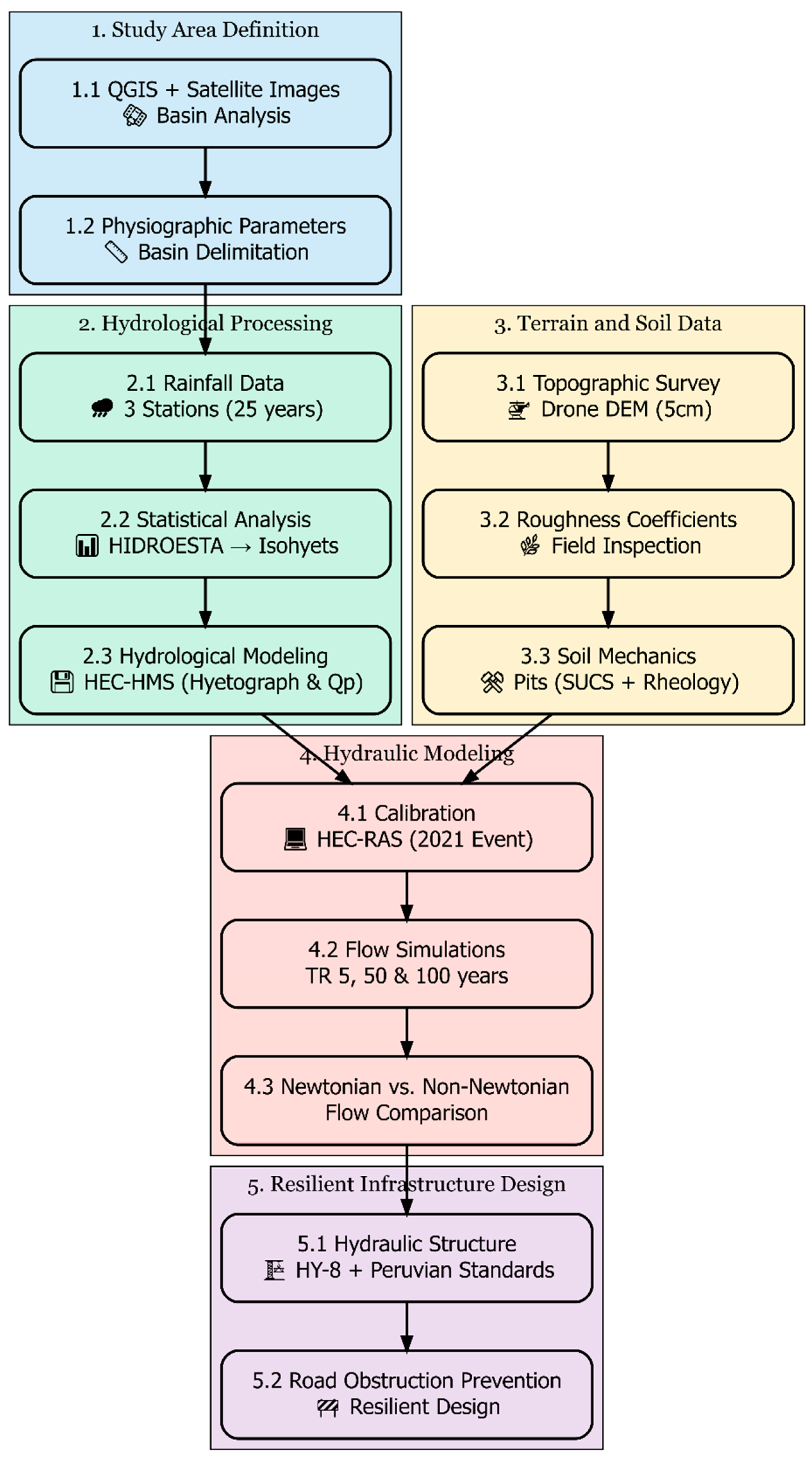
The proposed methodology (Figure 1) for this study consists of the following steps:
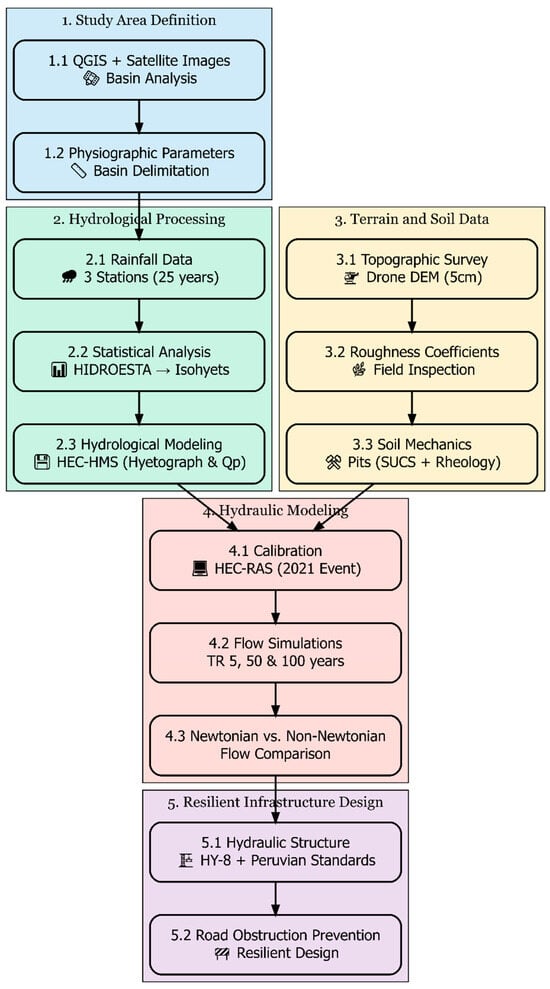
Figure 1.
Methodology flow chart.
- Study area definition: The Amoray Gully watershed was delineated using QGIS 3.16 software based on satellite imagery and a 5 m resolution DEM from the Earthdata platform. Key physiographic parameters (e.g., area, slope, main channel length) were extracted for hydrologic modeling.
- Hydrological processing: Maximum 24 h rainfall records from three nearby SENAMHI meteorological stations [37] (Andahuaylas, Tambobamba, and Chalhuanca) [37] were analyzed for the 1996–2020 period. A rainfall frequency analysis was carried out using the HIDROESTA software [38], applying the Kolmogorov–Smirnov goodness-of-fit test to identify the best-fitting statistical distribution (e.g., Log-Pearson Type III, Gumbel, Log-Normal). Design storm hyetographs for return periods of 2, 5, 10, 25, 50, 100, 200, and 500 years were generated using Dick Peschke’s Alternating Block Method. Rainfall-runoff transformation was performed in HEC-HMS using the Soil Conservation Service (SCS-CN) method. Curve Number (CN) values were derived from a raster model provided by the National Water Authority of Peru (ANA), based on land use and hydrologic soil group classifications [39]. No baseflow contribution was considered in the model due to the torrential behavior of the watershed.
- Terrain and soil data collection: A drone-based photogrammetric survey was used to generate a high-resolution Digital Elevation Model (DEM). Field reconnaissance was conducted to assign Manning’s roughness coefficients to different land cover types, following the guidelines of Chow [36]. Soil samples were collected from three test pits at 1.5 m depth and classified using USCS. Granulometric analyses were performed to estimate rheological parameters for non-Newtonian flow modeling in HEC-RAS.
- Hydraulic modeling in HEC-RAS: Two-dimensional simulations were performed in HEC-RAS 6.6 using both Newtonian and non-Newtonian flow assumptions. The hydrodynamic model was calibrated using the 2021 debris flow event reported by INDECI [40], supported by photographic evidence and field validation of watermarks. Peak flows from HEC-HMS corresponding to return periods of 5, 50, and 100 years were used as input. Rheological parameters were incorporated according to empirical equations defined by HEC-RAS [30], assuming a Typical Soil behavior. Comparisons were made between flow depths, velocities, and flood extents for Newtonian and non-Newtonian simulations.
- Infrastructure design: Based on the results of the 100-year scenario, a culvert structure was designed using HY-8 software to prevent blockage of the national highway crossing the alluvial fan. The design adheres to Peruvian technical guidelines for flood mitigation infrastructure [41].
Additionally, Table 3 outlines the sources/tools, types, descriptions, and model usage of the data used in this research.
Table 3.
Data sources and processing methodology.
4. Study Area
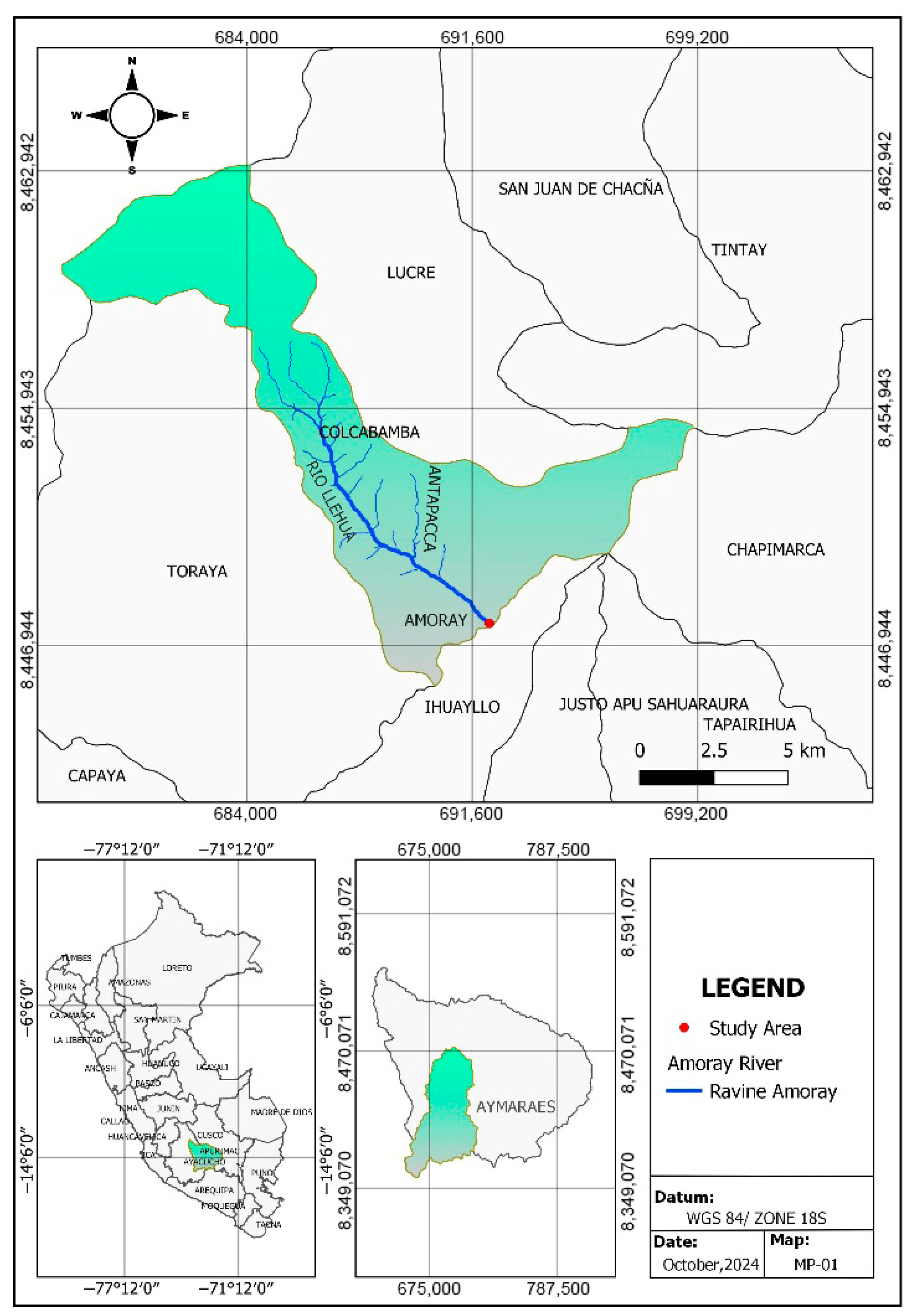
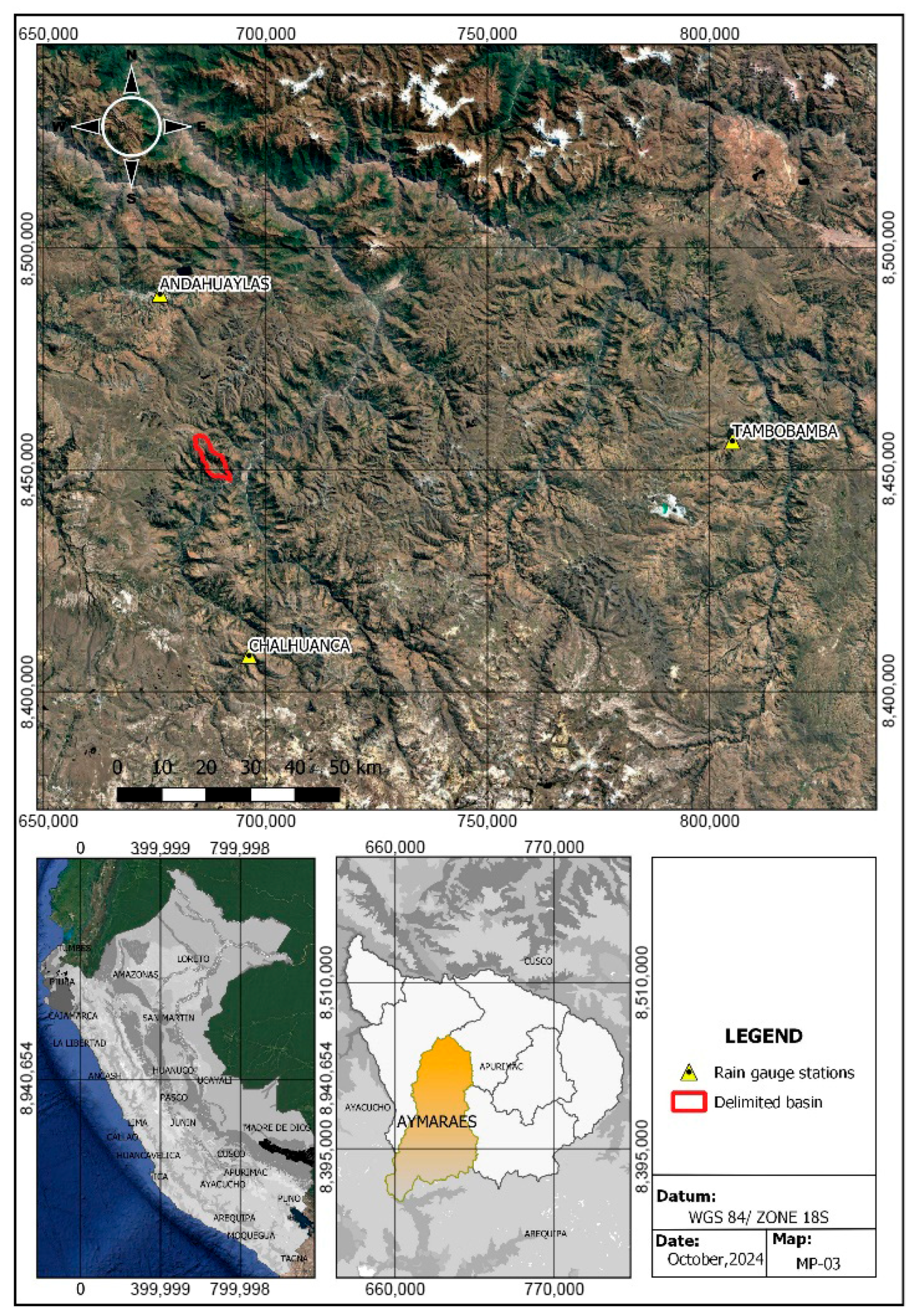
The Amoray Gully, framed between the headwaters of the Llehua River of constant course and the Antapacca Gully of permanent course, is placed in the southern zone of Peru, in the district of Colcabamba, province of Aymaraes, Apurimac region. Geographically, it is located by the following UTM coordinates: South (S): 8,450,682 m; West (W): 689,213 m; Altitude: 3360 masl (meters above sea level). The location of the study area is shown in Figure 2.
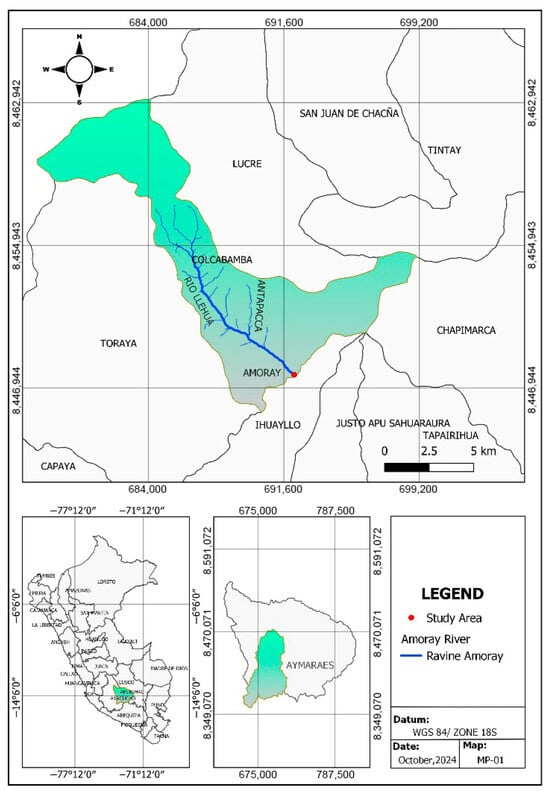
Figure 2.
Location map of the study area.
Watershed Analysis
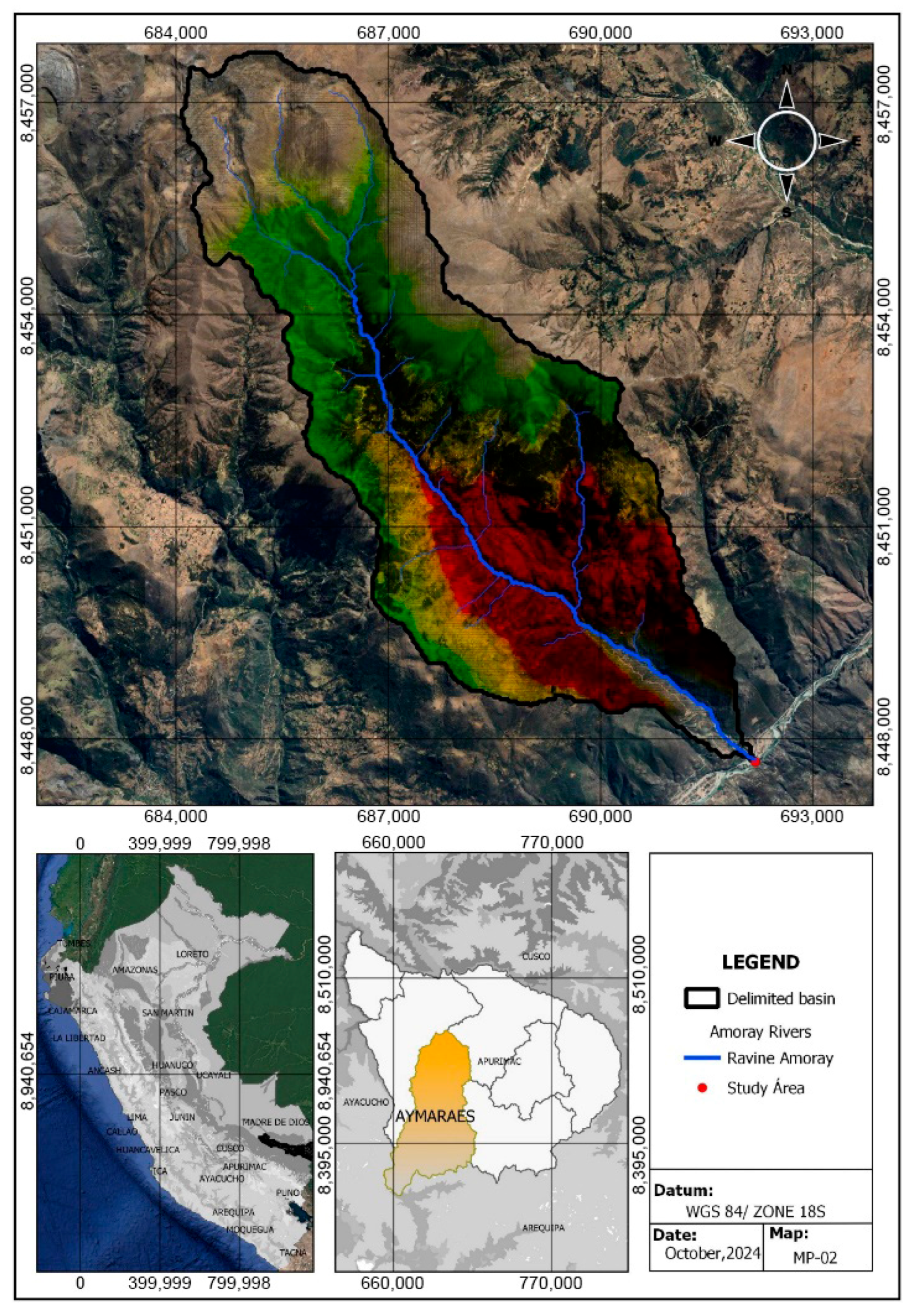
The delimitation of the watershed corresponding to Zone 18S (Figure 3) was carried out using the QGIS 3.16 software [43], subsequently a digital model of the Earthdata database [42] with a resolution of 5 m was used, obtaining the most important physiographic parameters of the micro basin (Table 4).
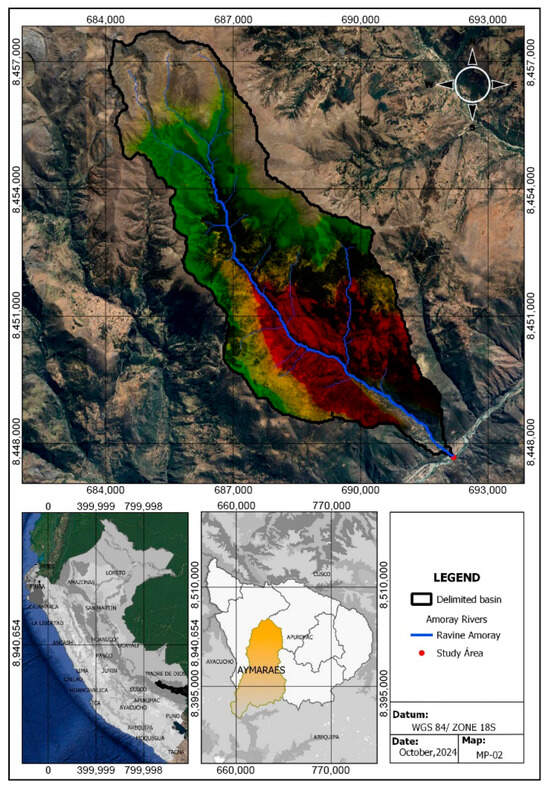
Figure 3.
Delimitation of the hydrographic basin—Amoray Gully.
Table 4.
Summary of physiographic parameters of the micro-basin QGIS.
5. Hydrological Processing
Precipitation data from the nearest stations to the study area, which are the Tambobamba, Chalhuanca, and Andahuaylas stations (Figure 4), were used, obtaining maximum 24 h precipitation records from 1996 to 2020, from the National Meteorology and Hydrology Service of Peru-SENAMHI. The analysis and processing of the information was performed from the historical data of the maximum 24 h precipitation of each station, using the Smirnorv–Kolgomorov goodness-of-fit test; then, the precipitation was calculated for each return period of 2, 5, 10, 25, 50, 100, 200, and 500 years with a significance level of α = 0.05, with the assistance of the HIDROESTA 2.0. software [38], which uses the parameters considered by the Peruvian regulations [32]. The maximum rainfall in 24 h for the mentioned return periods is shown in Table 5. The 1000-year return period was excluded due to the lack of regulatory requirements and the high associated costs, which are only justifiable for critical infrastructure, such as large dams or nuclear facilities. Instead, the 500-year return period was considered a technically adequate extreme scenario.
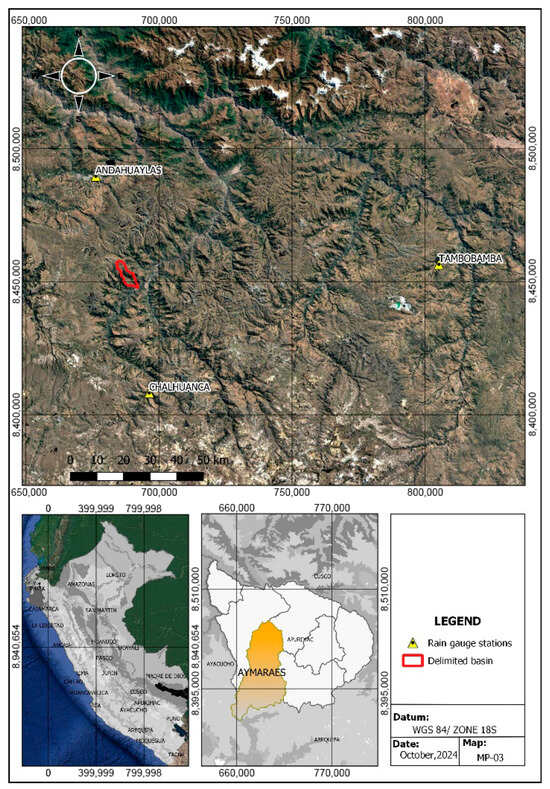
Figure 4.
Location of rainfall stations.
Table 5.
Maximum rainfall in 24 h (mm), for different return periods at each station.
Therefore, the maximum annual 24 h rainfall is calculated using the isohyet method for each return period, as shown in Table 6.
Table 6.
Maximum annual rainfall in 24 h—isohyet method.
For the determination of the liquid hydrographs, the Dick Peschke methodology and the alternating block method were used, and the calculation of the curve number factor was obtained through the raster model of the Peruvian entity Autoridad Nacional del Agua (ANA). In Peru, ANA is a public institution of the Ministry of Agriculture and Irrigation in charge of the administration of natural sources and water volumes, which contains the use and type of soil in wet, dry, and normal conditions [48]. For the rainfall-runoff transformation, the hydrologic model of the HEC-HMS software was used, which uses the Soil Conservation Service (SCS) [49]. Table 7 shows the input data to the HEC-HMS hydrologic model.
Table 7.
Input data—Quebrada Amoray.
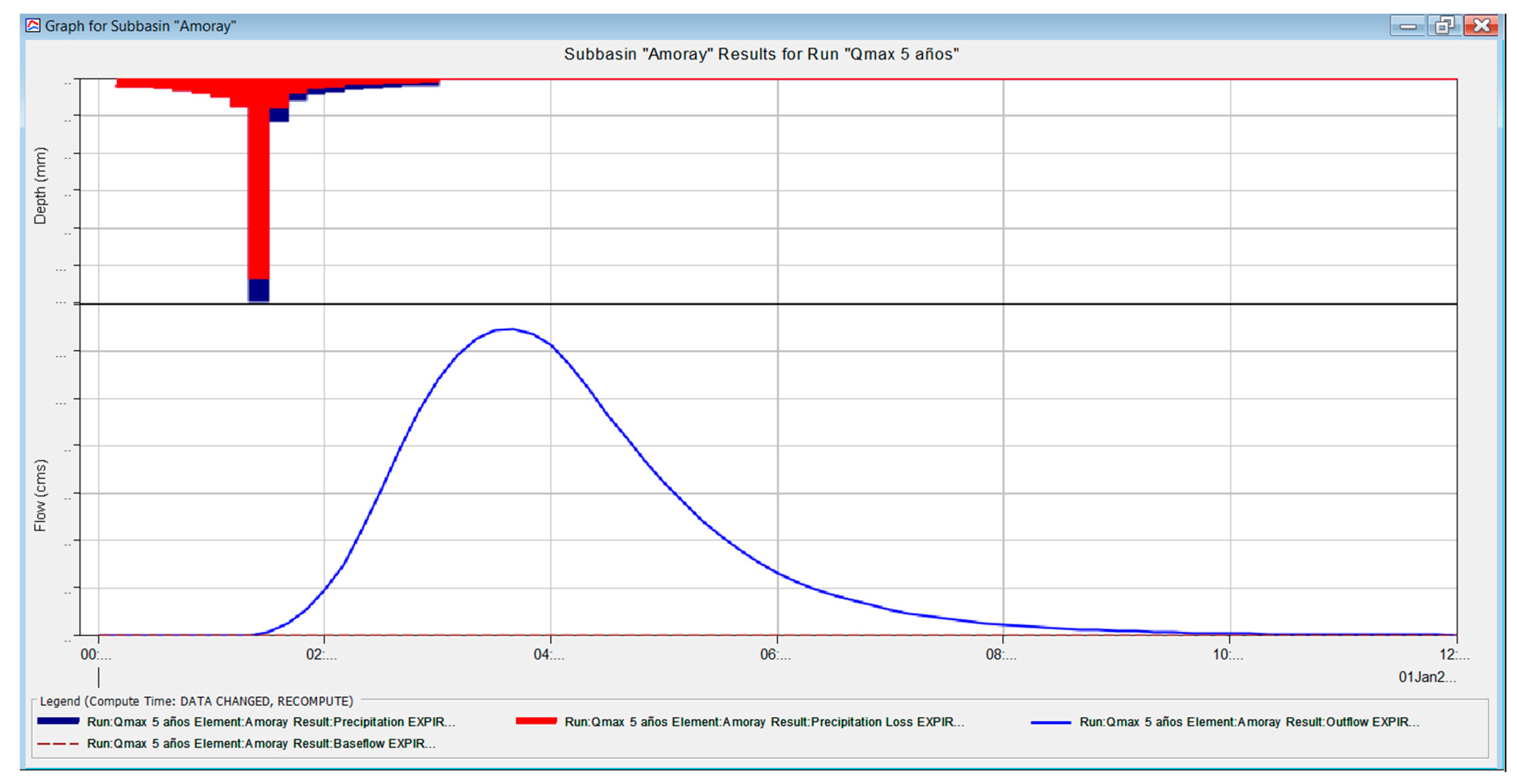
The maximum instantaneous discharges for the 5-year return period (Figure 5) and the different return periods (Table 8) are also shown.
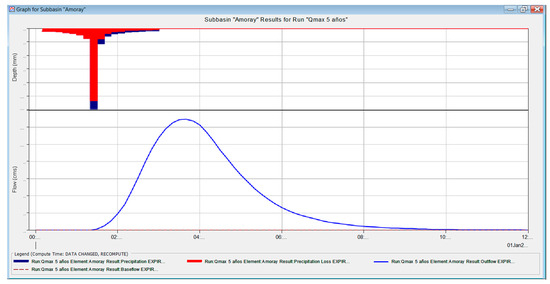
Figure 5.
Liquid hydrograph-TR = 5 years.
Table 8.
HEC-HMS flow rate results.
6. Hydraulic Processing
6.1. Topography
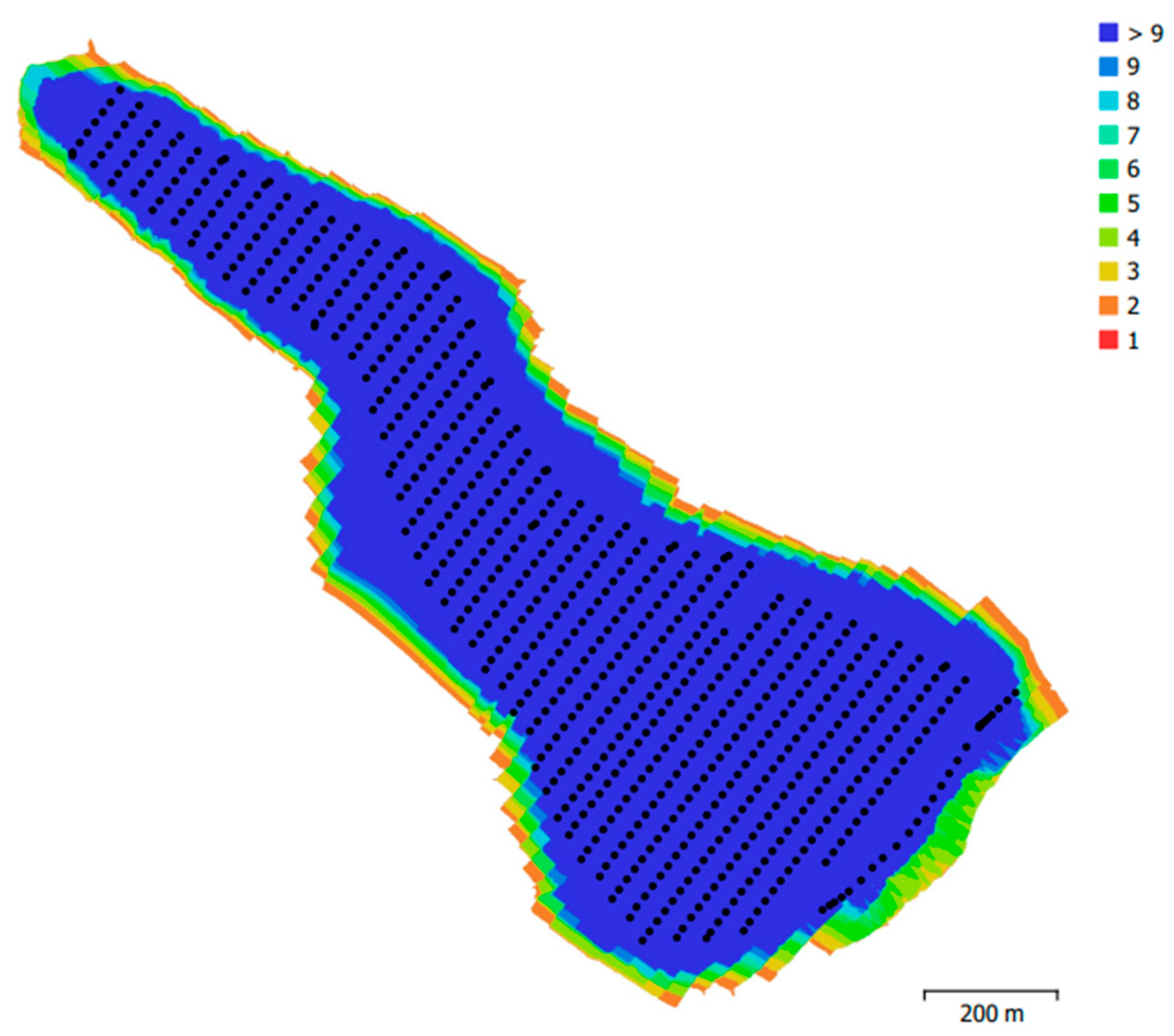
The photogrammetric survey consists of obtaining data such as contour lines and orthophotos using a drone, and the establishment of a static point, which is performed through the post-processing of the horizontal and vertical correction of the photographs, reaching an accuracy ranging from 2 to 5 cm, which must be linked to the national geodetic network. For this study, fieldwork was conducted using an RPAS RTK drone. Considering the shape and area of interest, the plan was developed, and four flights were carried out over the Amoray alluvial fan. Figure 6 shows the positions of the cameras and the orthophoto of the Amoray Gully.
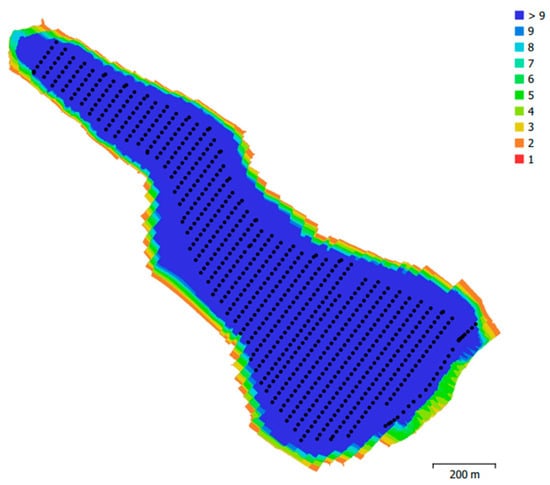
Figure 6.
Positions of the cameras.
6.2. Roughness Coefficients
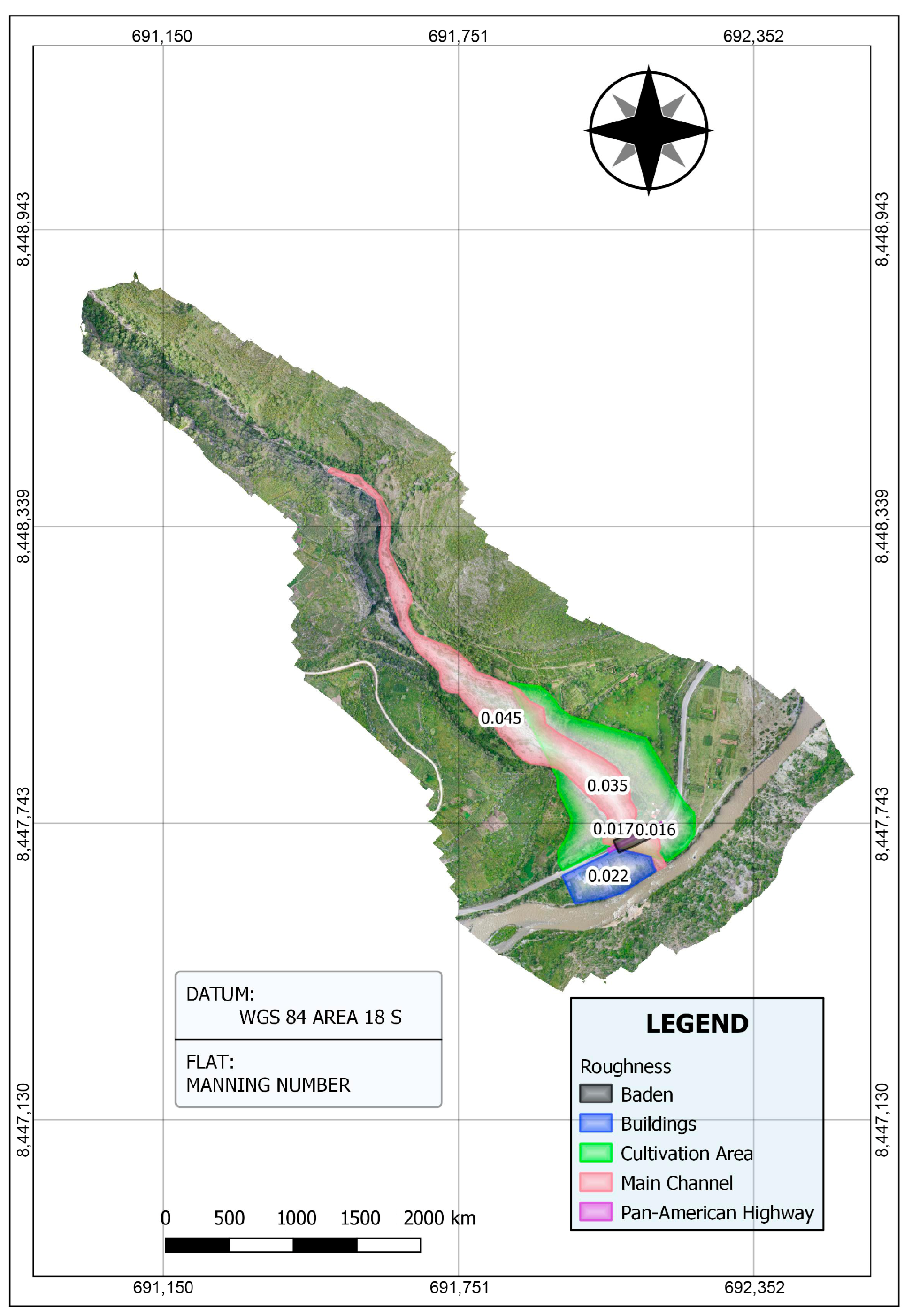
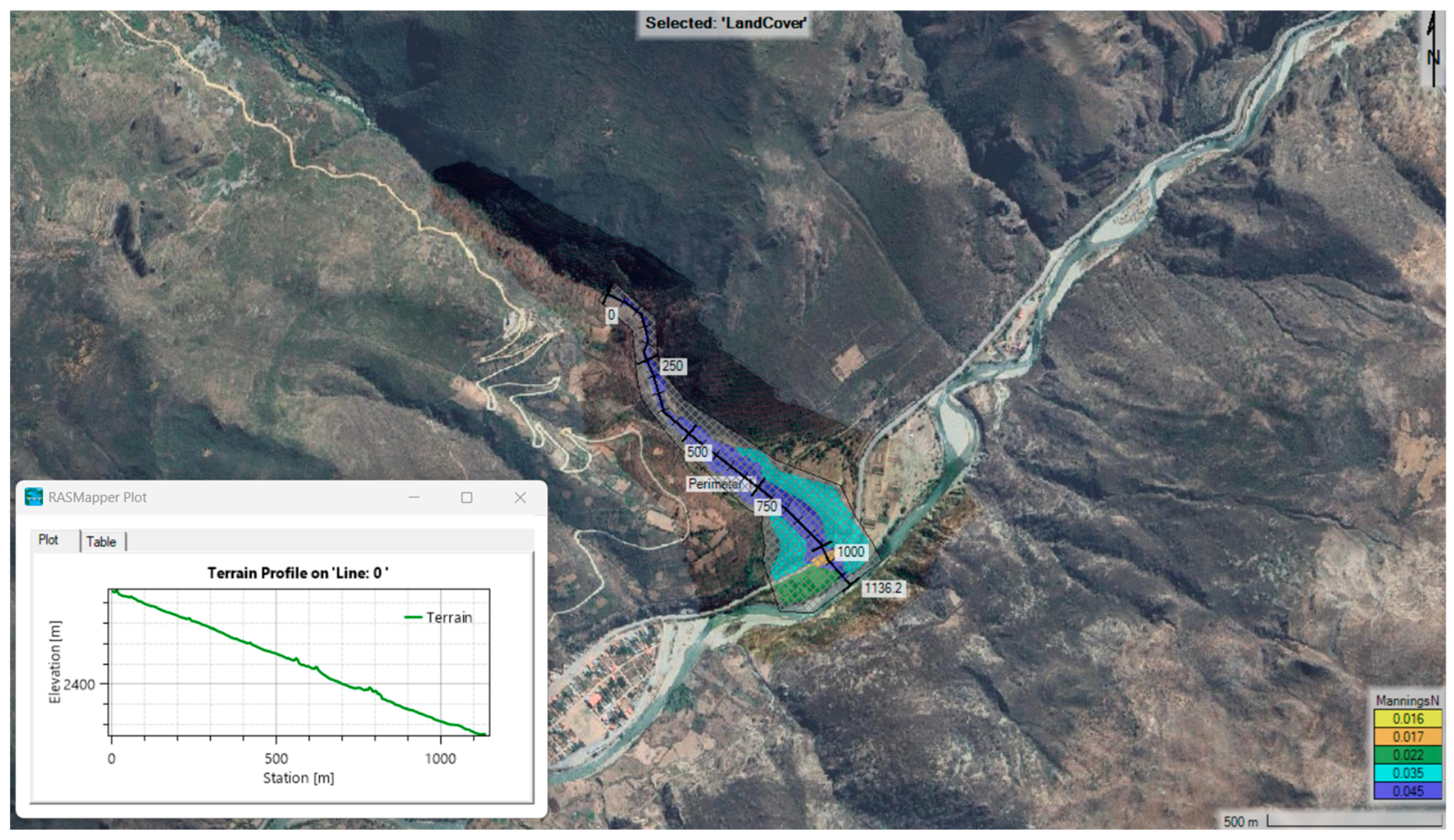
Determining the Manning roughness coefficients is one of the most important steps in flood modeling, as these coefficients directly influence flood extents, water levels, and flow velocities [50]. To ensure spatial accuracy in the study area, the HEC-RAS land cover layer methodology [51] was employed. This approach provides detailed spatial representation of different ground cover types. The method involves (1) generating specific classification polygons, (2) assigning Manning’s coefficients tailored to each cover type (in this case, primarily the channel bed, as it is a natural gully), and (3) integrating them with the digital terrain model. This methodology significantly improves hydraulic model accuracy by accounting for the actual spatial distribution of roughness, avoiding oversimplifications in non-urbanized natural environments.
To find Manning coefficients, the roughness values of Ven Te Chow [45] were considered, which are shown in Table 9 based on the components found in the field. The recognition and assignment of the roughness coefficients were conducted in situ with support from orthophotos and the results are shown in Figure 7.
Table 9.
Roughness coefficients Quebrada Amoray.
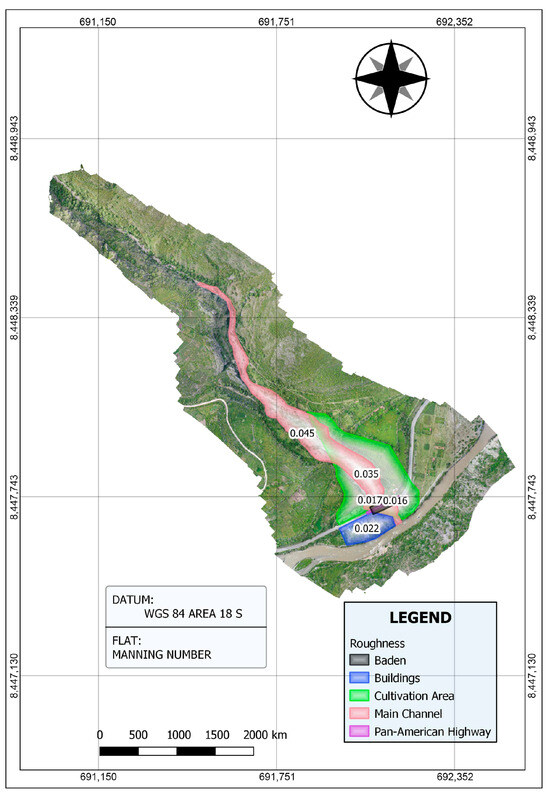
Figure 7.
Manning’s number—Quebrada Amoray.
6.3. Soil Mechanics Study
For the soil mechanics tests, in situ samples were taken in three (03) pits with a depth of 1.5 m to establish the rheological parameters. The sample N° 1 was obtained at the beginning of the alluvial fan; this is a model sample, since the purest mixture is found at the beginning, from which the rheological parameters are derived [52]. Samples N° 2 and N° 3 were obtained from the middle part of the stream bed and from the end of the alluvial fan. After being analyzed in the laboratory, samples N° 1, N° 2, and N° 3 were found to have a USCS classification “SP” (poorly gravelly sand).
6.4. Obtaining Rheological Parameters
To obtain the rheological parameters (yield strength and dynamic viscosity), the exponential, user yield, and user-defined viscosity approximations were used. HEC-RAS adds limits and ranges for the rheological parameters [33], according to the type of soil material [27], as it is shown in Table 10 and Table 11.
Table 10.
Yield stress coefficients [33].
Table 11.
Dynamic viscosity coefficients [33].
According to the results of the granulometric study, it is assumed that the soil of the Amoray Gully is Typical Soil. Subsequently, the rheological parameters were calculated with the empirical equations provided by HEC-RAS (Equations (5) and (6)). These are shown in Table 12.
Table 12.
Rheological parameters—Amoray Gully.
7. Hydraulic Modeling in HEC-RAS
For the modeling of the Newtonian flow in HEC-RAS, a georeferenced digital elevation model (DEM) was used (Figure 8), which was added in the RAS MAPPER option of the software. Then the perimeter of the study area was created, with a 5 × 5 computational mesh; afterward, the boundary conditions were created, and finally, the HEC-HMS liquid hydrograph was added, so the program can execute the processing. For a non-Newtonian flow, the simulation criteria are the same; once the rheological parameters are known, they are added in the “unsteady flow data” option of HEC-RAS.
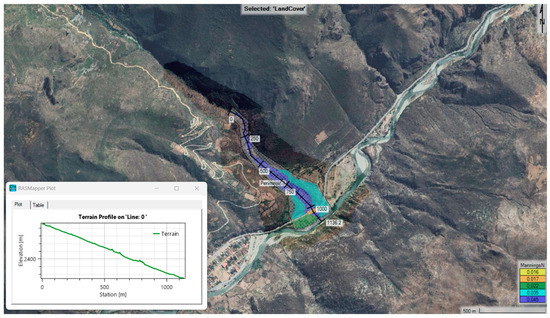
Figure 8.
DEM Quebrada Amoray.
The DEM study area was delineated based on the following: the critical maximum flood point along the main roadway at the low-water crossing (baden)—an engineered structure designed to permit surface flow during flood events, with elevation flush with or below the natural channel bed; a 1 km upstream section encompassing the alluvial fan apex (sediment transport-to-deposition transition zone); and an extended reach for comprehensive Newtonian/non-Newtonian flow regime analysis, surpassing the 500 m minimum requirement established by Peruvian regulations [32]. It should be noted that the DEM has not undergone terrain modifications or deletions, maintaining the natural and current ground conditions.
Calibration of the Model with Field Evidence
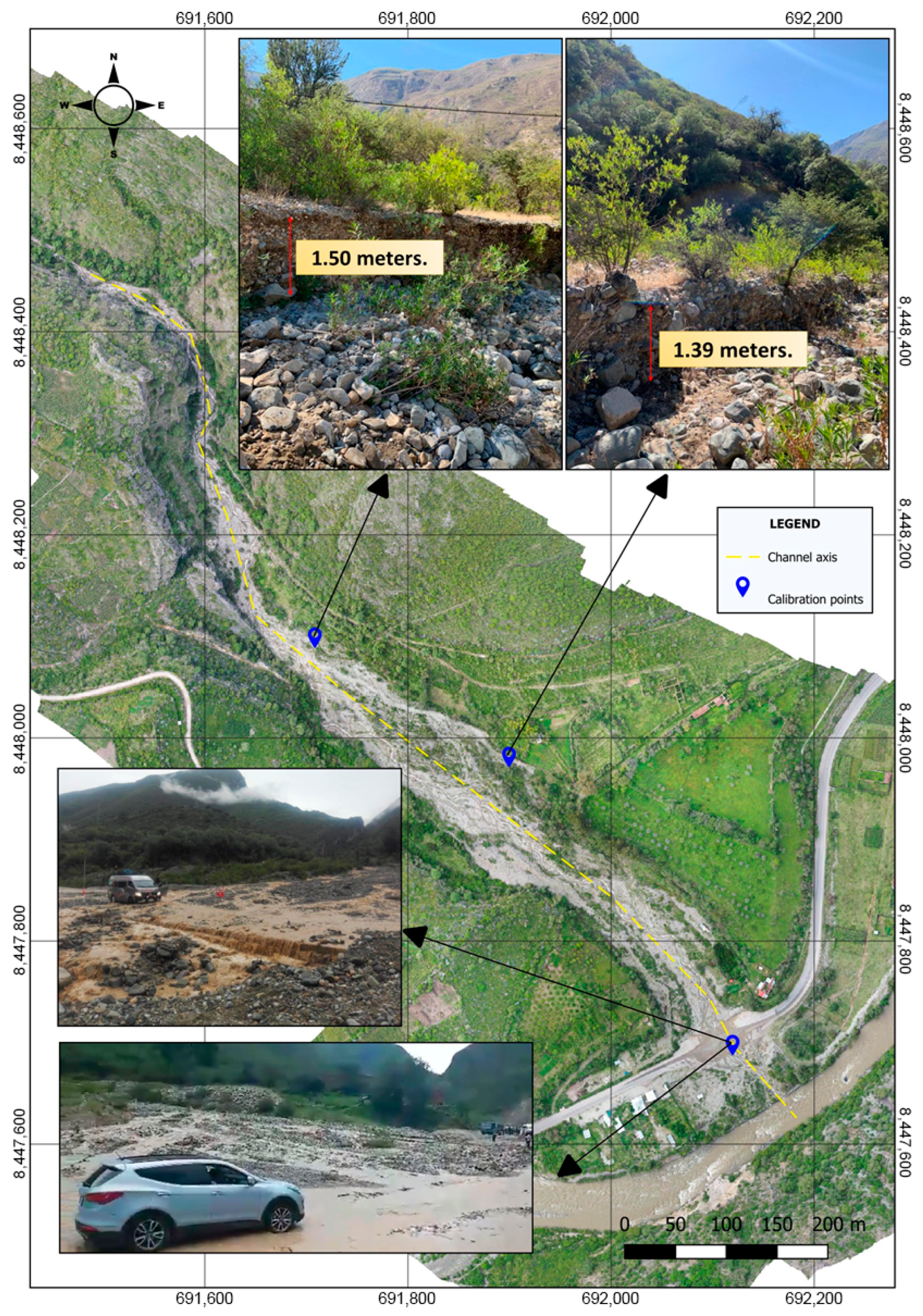
To support the reliability of the model results, it is necessary to calibrate the simulation [53]. For calibration, the event that occurred in the year 2021 was used, where the Amoray Gully witnessed debris flows according to the reports of the Peruvian entity INDECI (National Institute of Civil Defense) [40]. First, the design flow was calibrated through three simulations for the return periods of 2, 5, and 10 years, where the liquid flow of 12.9 m3/s (5-year return period) is the flow that resembles the mentioned event. Also, the volumetric concentration was estimated according to the images taken of the event (Figure 9) and with the testimonies of the villagers living near the study area; the volumetric concentration was estimated at 61% and a maximum of 65.5%.
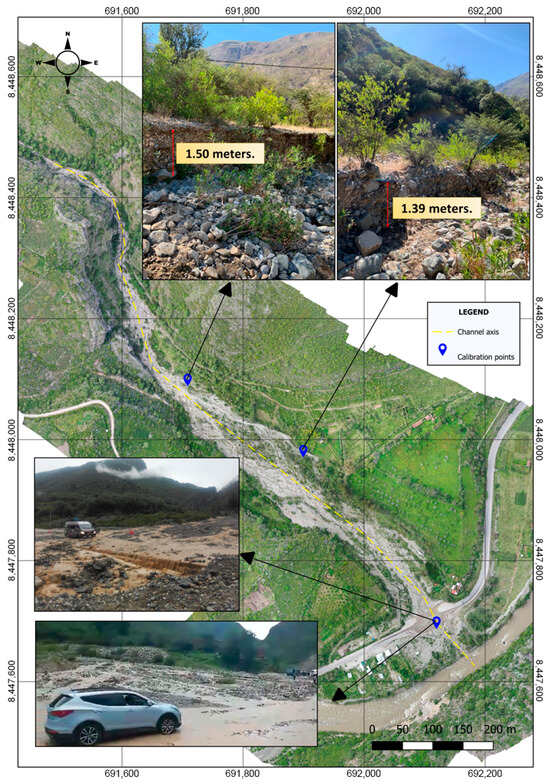
Figure 9.
Event 2021—Quebrada Amoray.
The calibration of the maximum streamflow was performed with the evidence left in the field [22]; this method consists of adjusting the model’s streamflow with the fluid footprint left by the stream [54]. For this study, points were taken at the beginning and in the middle part of the stream’s alluvial fan, where it was verified that the fluid footprint left by the stream reached a height of 1.39 m and 1.50 m, as shown in Figure 9.
These results are verified with the first model, which presents a better fit to the given event of the year 2021. It must be considered that the debris flow parameters are very sensitive. In this context, it is important to make comparisons with field tests [22].
8. Results
8.1. Simulated Scenarios
Three simulations were performed to present the liquid hydrographs with return periods (RP) of 5, 50, and 100 years [22]. Subsequently, for the calculation of the debris flow, the calculation methodology of the empirical expression “O’BRIEN” was used, which is based on a “Bulking factor” that is a multiplier to the clear water flow [23].
8.1.1. Return Period (RP = 5 Years)
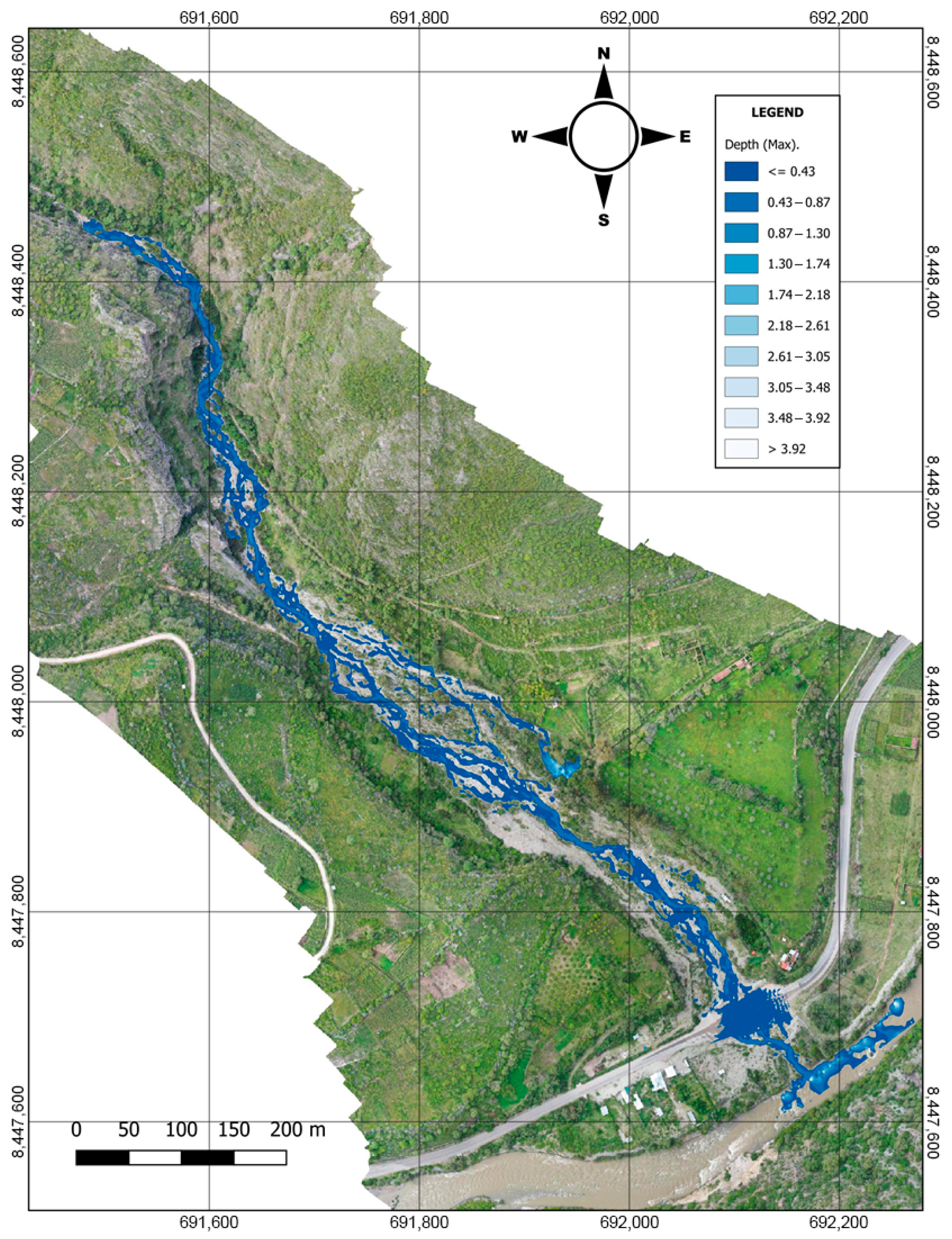
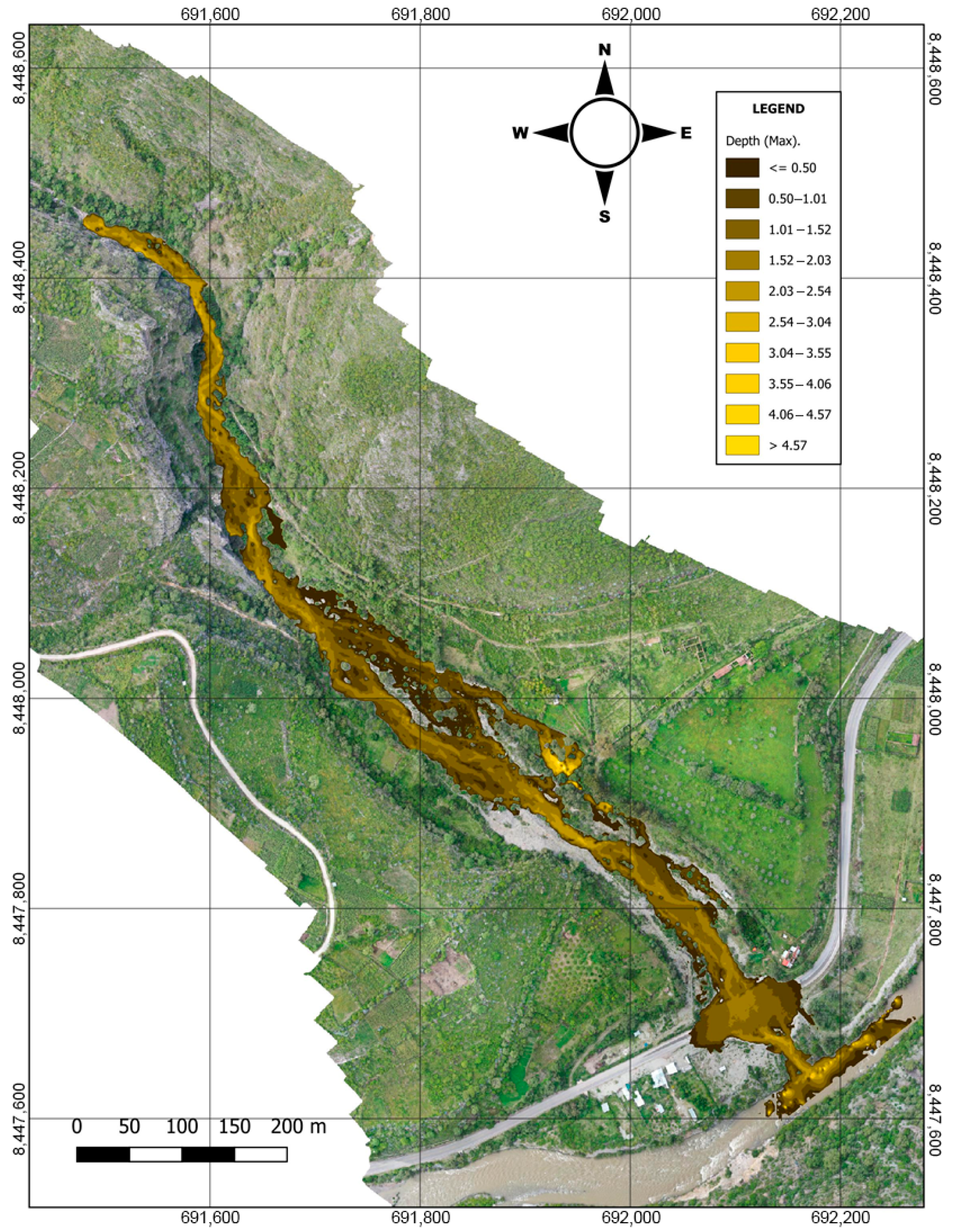
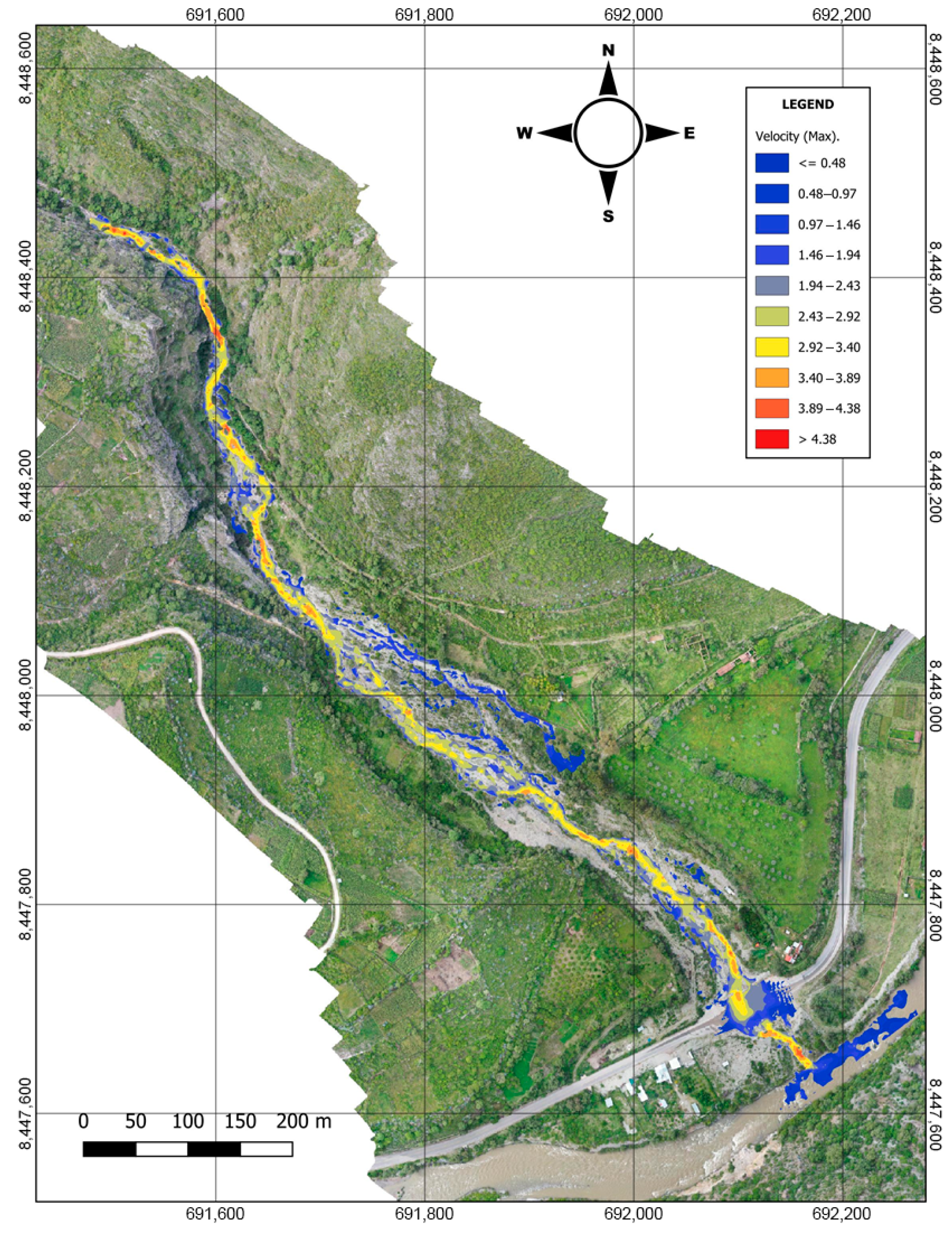
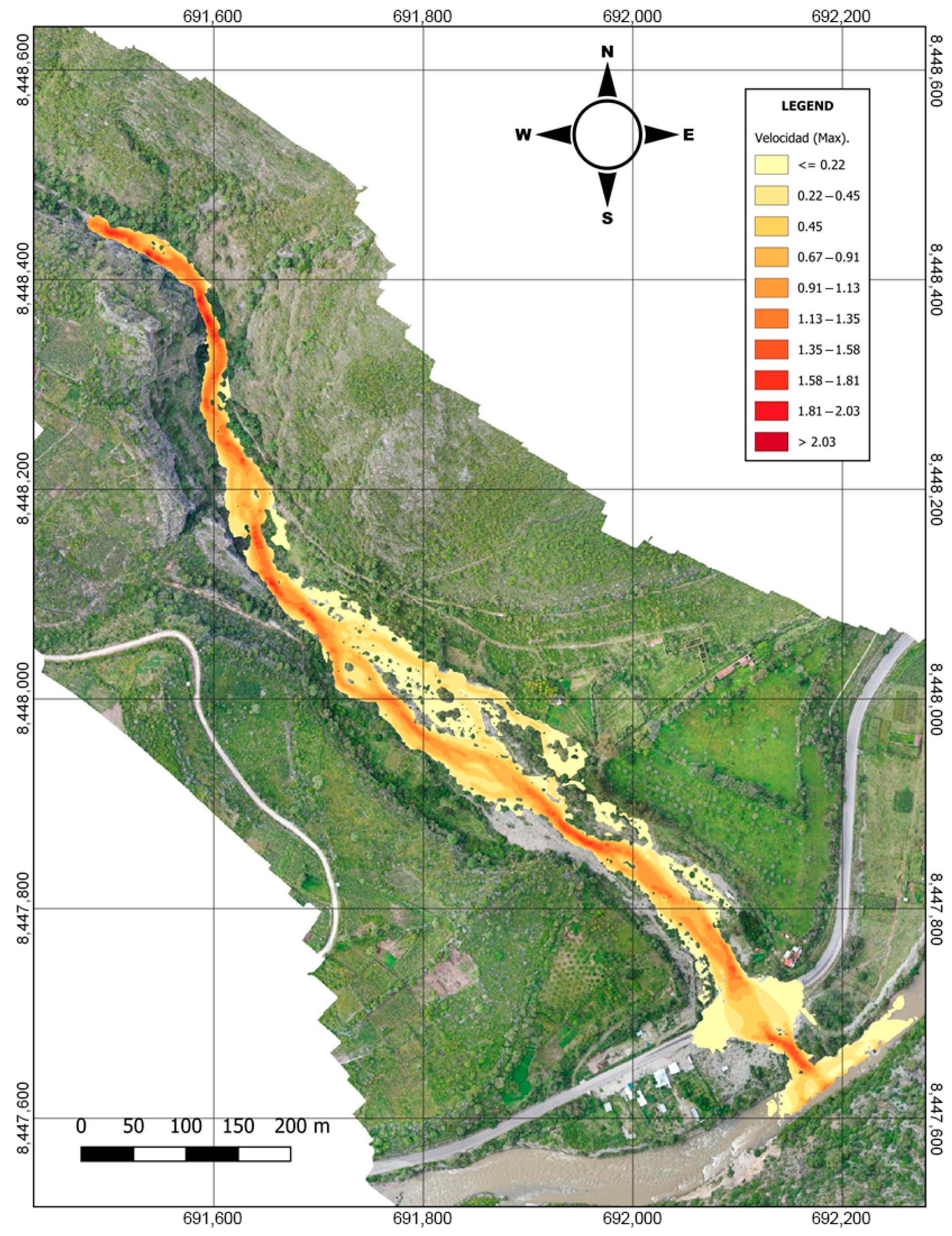
This first simulation was carried out with a design flow of 12.9 m3/s, for a return period of 5 years and a volumetric solids concentration of 65.5%, the results of which are shown in Table 13 and Figure 10, Figure 11, Figure 12 and Figure 13.
Table 13.
Results—RP = 5 years.
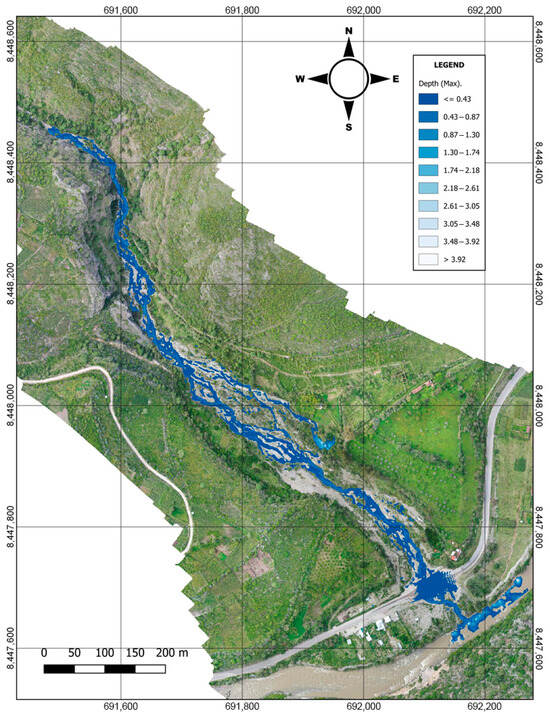
Figure 10.
Maximum depth—Newtonian flow.
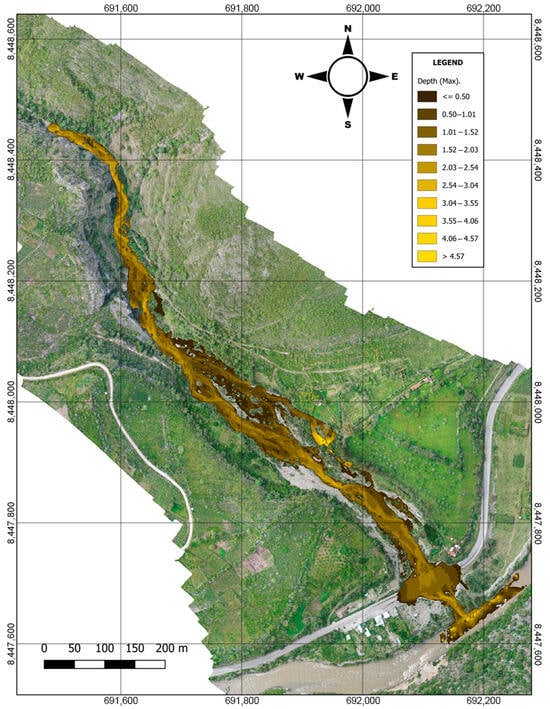
Figure 11.
Maximum depth—non-Newtonian flow.
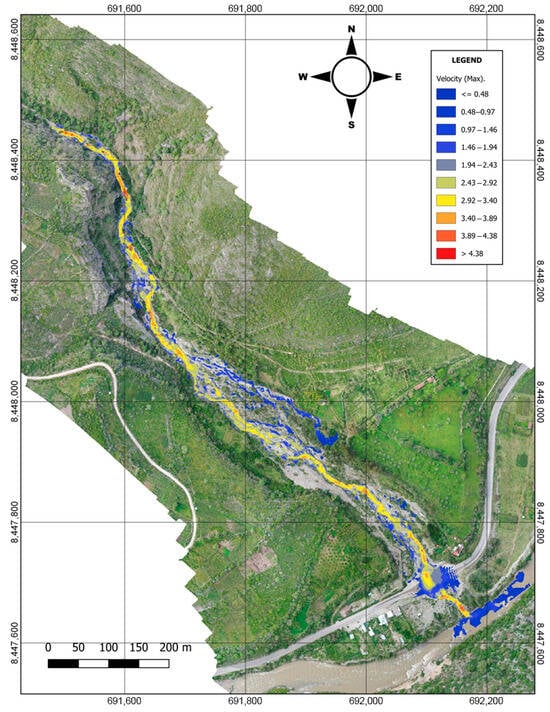
Figure 12.
Maximum velocity—Newtonian flow.
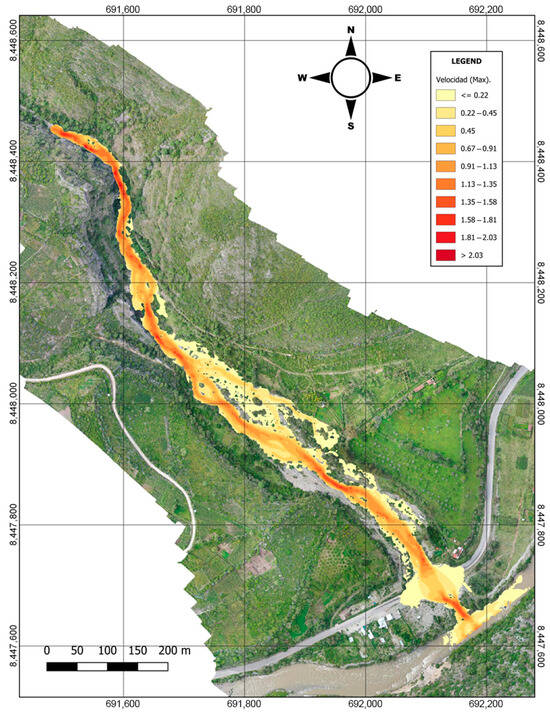
Figure 13.
Maximum velocity—non-Newtonian flow.
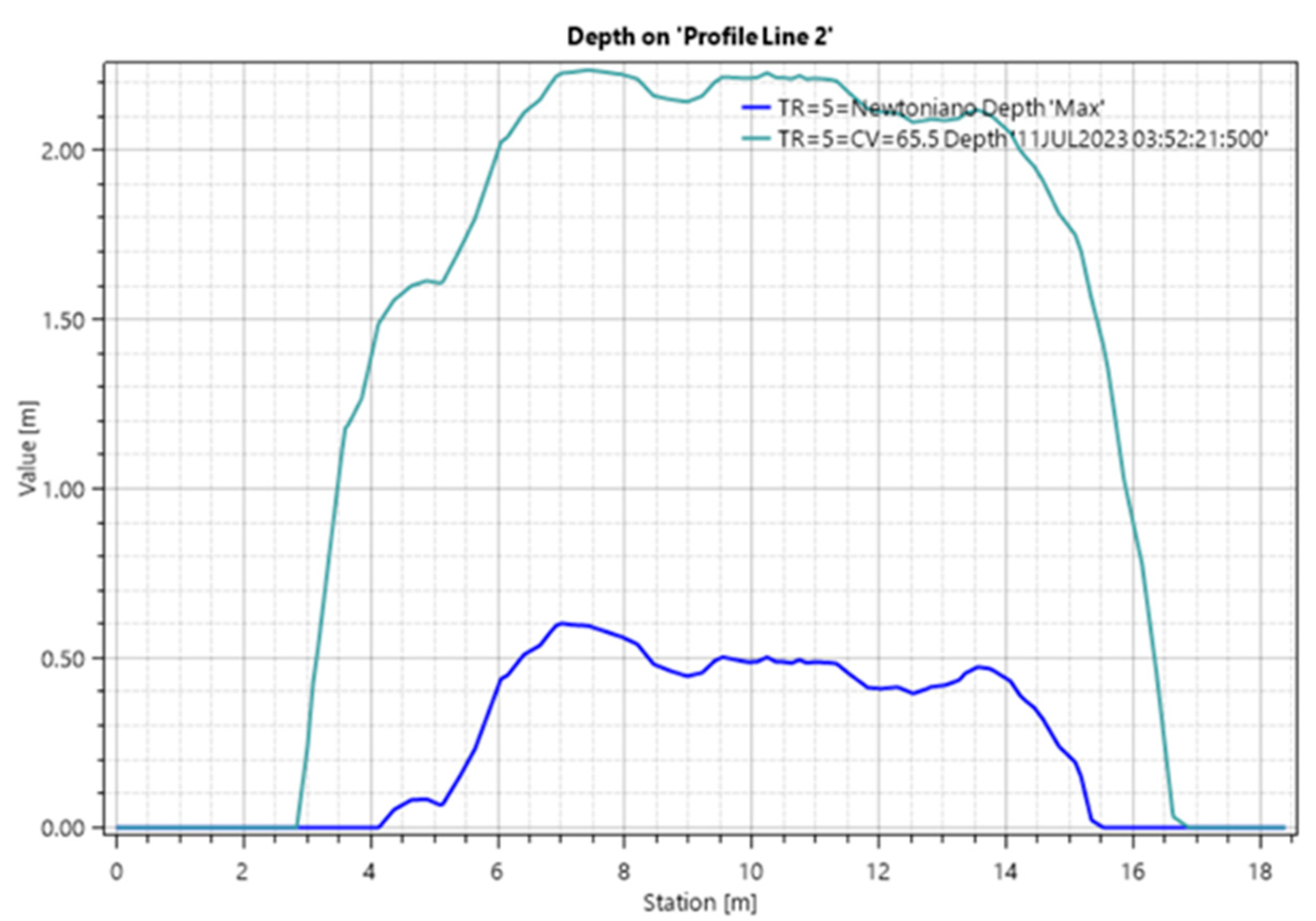
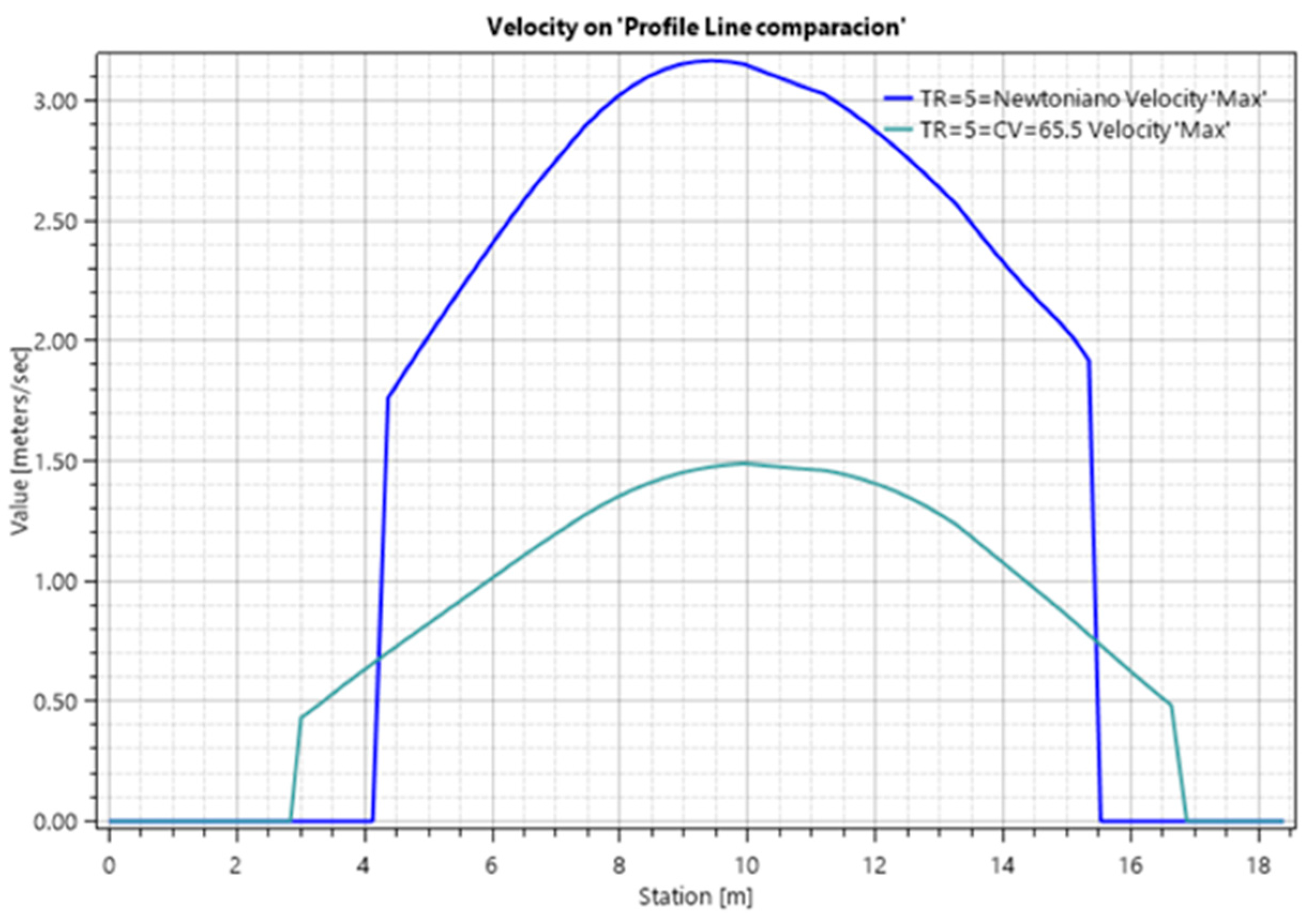
Additional maximum velocity and depth results from HEC-RAS can be visualized through profile lines, as shown in Figure 14 and Figure 15. The selected cross-section is located approximately 250 m upstream of the baden, where the channel exhibits uniform geometry and stable hydraulic conditions, making this location ideal for comparative performance analysis of the model outputs. The plots clearly demonstrate that non-Newtonian flows exhibit lower velocities compared to Newtonian flows, attributable to their higher density relative to clear water.
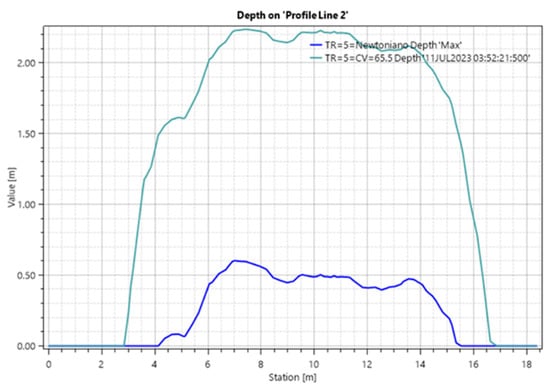
Figure 14.
Depth profiles: Newtonian and non-Newtonian flows (TR = 5 years). Y-axis: Depth (m); X-axis: Distance along profile (m).
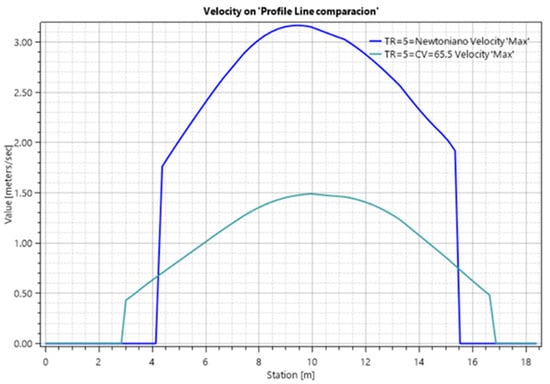
Figure 15.
Velocity profiles: Newtonian and non-Newtonian flows (TR = 5 years). Y-axis: Velocity (m/s); X-axis: Distance along profile (m).
8.1.2. Return Period (RP = 50 and 100 Years)
The second and third simulations were carried out based on ANA regulations. The ANA, in its resolution N° 153-2016 (Regulation for the Delimitation and Maintenance of Marginal Limits in River Courses and Natural and Artificial Water Bodies) [55], indicates the return period of 50 years for natural watercourses adjacent to agricultural land and a return period of 100 years for natural watercourses next to population settlements. The comparison of results between the different return periods is shown in Table 14.
Table 14.
Results for TR = 50 and 100 years.
8.2. Cross-Section Works
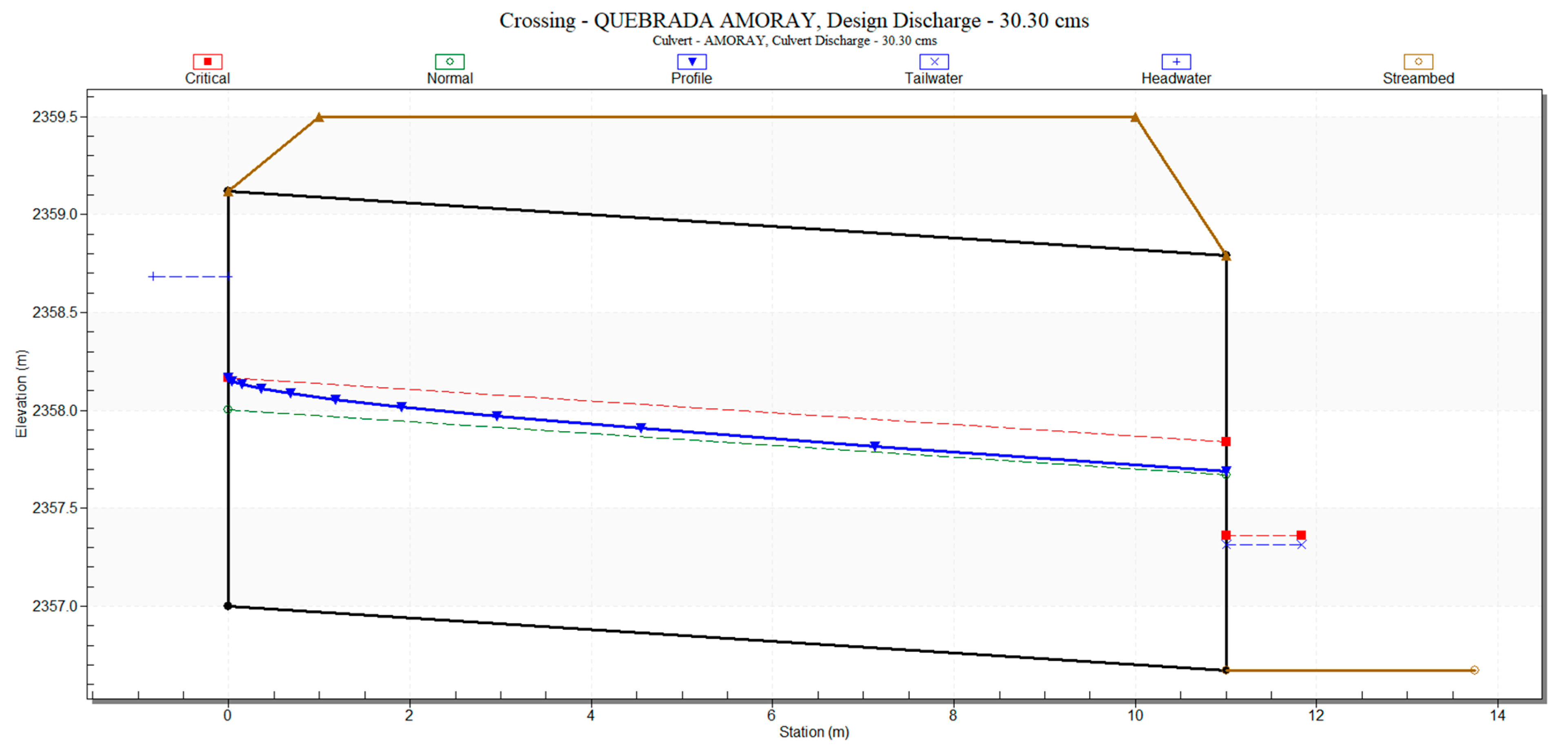
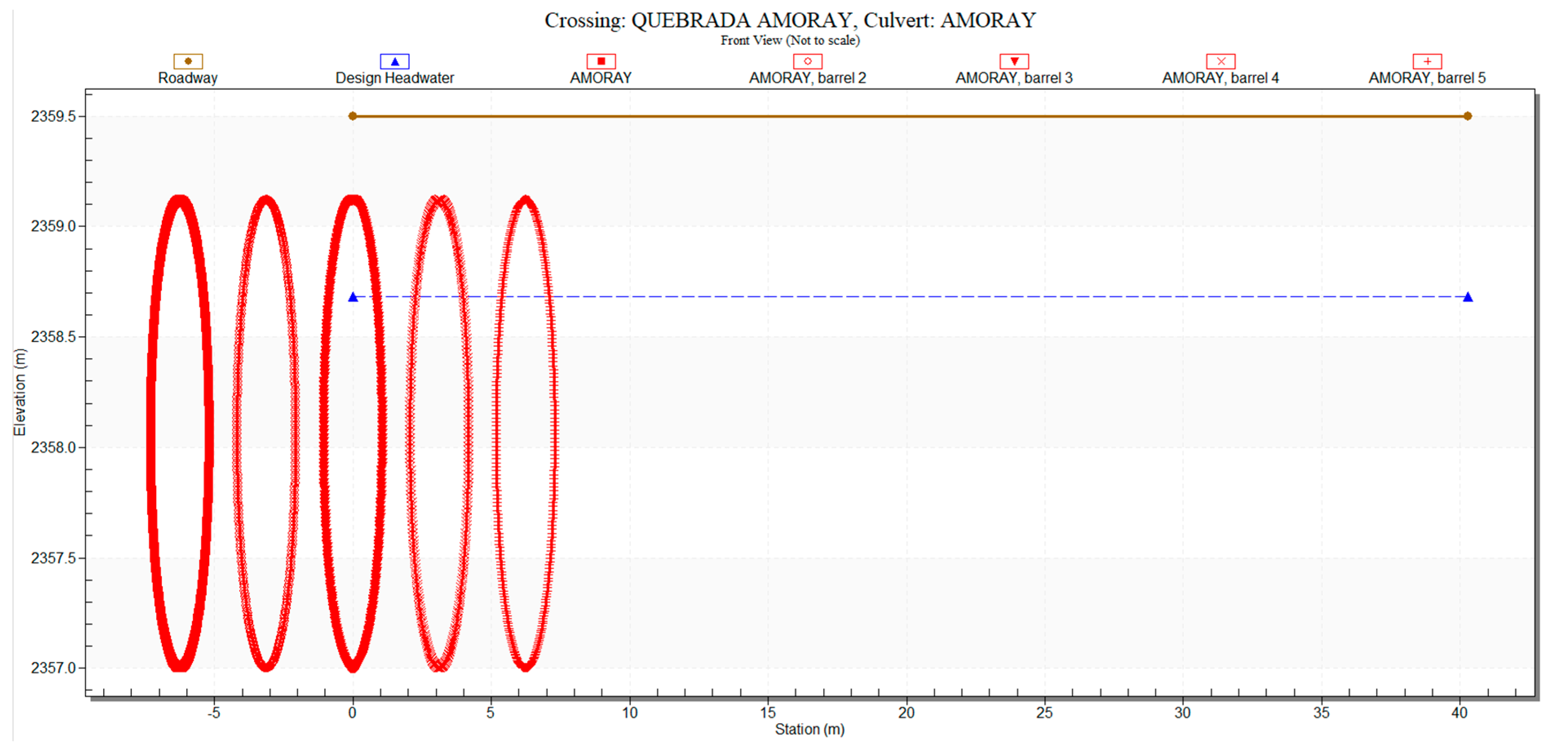
According to the problems of the study area, a cross-section culvert (Multiplate Circular Culvert) was designed using the HY-8 program. For its design, the results of the maximum drainage of the 50-year return period were used, which, according to the manual of Hydrology, Hydraulics and Drainage in Peru, the return period is 50 years [32]. For the selection of the culvert diameter, the technical data sheet of a local company was used. The culvert consists of five barrels, a diameter of 2.12 m, and model 28C [56]; the front and side view of the culvert are visualized in Figure 16 and Figure 17.
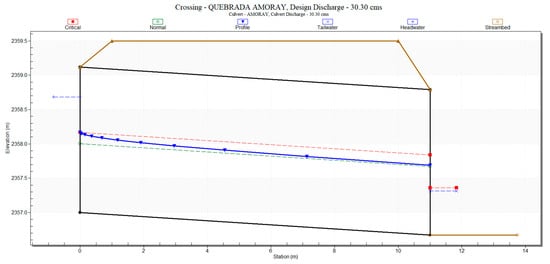
Figure 16.
Side view of the culvert.
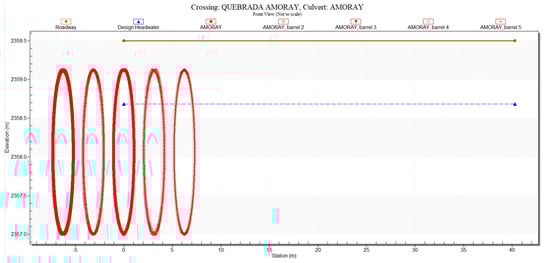
Figure 17.
Front view of the culvert.
9. Conclusions
The HEC-HMS model was employed to determine peak discharges in the Amoray Gully through precipitation-runoff transformation via SCS Unit Hydrograph and a Net rainfall estimation using the Curve Number method (CN = 85). The model showed sensitivity to the concentration time parameter (2.9 h), yielding peak flows for multiple return periods.
The HEC-HMS/HEC-RAS 6.6 coupled framework demonstrates superior flood risk assessment in alluvial fans, revealing that traditional clear-water models underestimate flood depths by 17%, and conventional approaches overestimate flow velocities by 54% for 5-year return period events. These discrepancies, evidenced in the 2021 Amoray Gully disaster, jeopardize infrastructure resilience when designed with outdated methods.
The O’Brien rheological model (CV = 61–65.5%) successfully captured debris flow dynamics, offering local municipalities in sediment-rich environments a validated methodology that addresses a critical gap in the country’s current hydraulic design standards [29], which lack provisions for non-Newtonian flows.
A circular multi-eye, multi-plate culvert (5 units of ∅2.12 m) was designed in compliance with Peruvian standards [32], specifically to mitigate obstruction risks from debris flows during extreme events (50-year return period) at the Amoray Gully (km 35 of the Lima–Abancay Highway). This structure features a trapezoidal section (downstream), eaves, and end walls with square edges. This technical solution, implemented in alluvial fans, is scalable for protecting critical road infrastructure, and offers potential application in similar geomorphological contexts.
Developing countries should mandate non-Newtonian modeling for infrastructure in debris-flow-prone areas, as demonstrated by the catastrophic failures during the 2016–2017 El Niño phenomenon [17].
The incorporation of HEC-RAS modeling outputs with real-time debris flow monitoring networks in high-risk gullies would substantially enhance urban preparedness and early warning systems. The implementation of additional control structures such as check dams should be considered to manage debris flows, taking into consideration climate change impacts, potential cascade failures of check dams due to unprecedented debris flows, dynamic forces, and rock impacts [57].
The hydraulic modeling methodology presented is useful for government authorities for adequate flood control and can be replicated in other countries with similar considerations [58], and, thus, seeking resilience in hydraulic infrastructures in terms of hydraulic modeling facing hydrological phenomena [59].
Furthermore, the model can be recalibrated in future studies using specialized hydraulic modeling technologies and software such as sediment transport modules in HEC-RAS and Iber, specifically through advanced analysis of sedimentological parameters (e.g., volumetric concentration), and the processing of new hydrological records. This update capability will progressively optimize the accuracy of numerical simulations.
Author Contributions
Conceptualization, D.C.L., A.J.E.V., and G.Y.N.A.; validation, G.Y.N.A.; formal analysis, D.C.L.; investigation, D.C.L. and A.H.P.; resources, M.T.L.; data curation, M.T.L.; writing—original draft preparation, D.C.L. and A.H.P.; writing—review and editing, A.J.E.V. and A.H.P. All authors have read and agreed to the published version of the manuscript.
Funding
This research received no external funding.
Data Availability Statement
The raw data supporting the conclusions of this article will be made available by the authors on request.
Acknowledgments
We deeply acknowledge Mario Chacon Chipa (†), father of author David Chacon, whose commitment and expertise were vital to this research. His decisive support during fieldwork, along with his personal guidance and unwavering motivation, were instrumental to this study’s success. We honor his memory and dedication. We equally recognize Carlos Sánchez-Carigga for his expert advisory role during methodological review and final writing stages.
Conflicts of Interest
The authors declare no conflicts of interest.
References
- Watson, G.; Ahn, J.E. A Systematic Review: To Increase Transportation Infrastructure Resilience to Flooding Events. Appl. Sci. 2022, 12, 12331. [Google Scholar] [CrossRef]
- Department of Environmental Conservation. Flood Resilience. Available online: https://dec.vermont.gov/content/flood-resilience (accessed on 18 March 2025).
- Zhao, H.; Wang, H.; Zhang, Y.; Zhao, R.; Qi, Z.; Zhang, H. Flash Flood Simulation for Hilly Reservoirs Considering Upstream Reservoirs—A Case Study of Moushan Reservoir. Sustainability 2024, 16, 5001. [Google Scholar] [CrossRef]
- CISA. Critical Infrastructure Sectors. Available online: https://www.cisa.gov/topics/critical-infrastructure-security-and-resilience/critical-infrastructure-sectors (accessed on 18 March 2025).
- da Silva, L.A.; Rudorff, C.; Ovando, A.; Pimentel, A.; Cuartas, L.A.; dos Alvalá, R.C.S. Inundation Mapping Using Hydraulic Modeling with High-Resolution Remote Sensed Data: A Case Study in the Acre River Basin, Brazil. Model. Earth Syst. Environ. 2024, 10, 3051–3066. [Google Scholar] [CrossRef]
- Ortiz-Giraldo, L.; Botero, B.A.; Vega, J. An Integral Assessment of Landslide Dams Generated by the Occurrence of Rainfall-Induced Landslide and Debris Flow Hazard Chain. Front. Earth Sci. (Lausanne) 2023, 11, 1157881. [Google Scholar] [CrossRef]
- Vega, J.; Ortiz-Giraldo, L.; Botero, B.A.; Hidalgo, C.; Parra, J.C. Probabilistic Cascade Modeling for Enhanced Flood and Landslide Hazard Assessment: Integrating Multi-Model Approaches in the La Liboriana River Basin. Water 2024, 16, 2404. [Google Scholar] [CrossRef]
- Alamanos, A.; Papaioannou, G.; Varlas, G.; Markogianni, V.; Papadopoulos, A.; Dimitriou, E. Representation of a Post-Fire Flash-Flood Event Combining Meteorological Simulations, Remote Sensing, and Hydraulic Modeling. Land 2024, 13, 47. [Google Scholar] [CrossRef]
- Peker, İ.B.; Gülbaz, S.; Demir, V.; Orhan, O.; Beden, N. Integration of HEC-RAS and HEC-HMS with GIS in Flood Modeling and Flood Hazard Mapping. Sustainability 2024, 16, 1226. [Google Scholar] [CrossRef]
- Samela, C.; Carisi, F.; Domeneghetti, A.; Petruccelli, N.; Castellarin, A.; Iacobini, F.; Rinaldi, A.; Zammuto, A.; Brath, A. A Methodological Framework for Flood Hazard Assessment for Land Transport Infrastructures. Int. J. Disaster Risk Reduct. 2023, 85, 103491. [Google Scholar] [CrossRef]
- Ccanccapa Puma, J.; Hidalgo Valdivia, V.A.; Espinoza Vigil, A.J.; Booker, J. Preserving Heritage Riverine Bridges: A Hydrological Approach to the Case Study of the Grau Bridge in Peru. Heritage 2024, 7, 3350–3371. [Google Scholar] [CrossRef]
- Huarca Pulcha, A.; Espinoza Vigil, A.J.; Booker, J. Prioritizing Riverine Bridge Interventions: A Hydrological and Multidimensional Approach. Designs 2023, 7, 117. [Google Scholar] [CrossRef]
- Espinoza Vigil, A.J.; Booker, J. Hydrological Vulnerability Assessment of Riverine Bridges: The Bajo Grau Bridge Case Study. Water 2023, 15, 846. [Google Scholar] [CrossRef]
- Zavala, K. Dr. Rodríguez: “Perú Es Uno de Los Países Más Vulnerables al Cambio Climático”>> UDEP Hoy. Available online: https://www.udep.edu.pe/hoy/2021/11/dr-rodriguez-peru-es-uno-de-los-paises-mas-vulnerables-al-cambio-climatico/ (accessed on 20 September 2024).
- Organización Panamericana de la Salud Fenómeno El Niño, 1997–1998. Crónicas Desastres 2000, 2000, 175–230.
- Servicio Nacional De Meteorologia E Hidrologia Del Peru Informe Técnico El Niño Costero 2017 Condiciones Termo-Pluviometricas a Nivel Nacional SENAMHI Peru 2017. Available online: https://sigrid.cenepred.gob.pe/sigridv3/documento/3656 (accessed on 5 July 2025).
- Espinoza Vigil, A.J.; Booker, J.D. Building National Disaster Resilience: Assessment of ENSO-Driven Disasters in Peru. Int. J. Disaster Resil. Built Environ. 2023, 14, 423–433. [Google Scholar] [CrossRef]
- INDECI Resumen Ejecutivo Historico-Temporada de Lluvias, 2016–2017. Available online: https://portal.indeci.gob.pe/emergencias/resumen-ejecutivo-historico-temporada-de-lluvias-2016-2017-actualizado-al-24-de-enero-2018-2/ (accessed on 26 January 2025).
- INDECI Resumen Ejecutivo N° 323-2023. Temporada de Lluvias 2022–2023. Available online: https://drive.google.com/file/d/1TXLtyd6ne7oRen3-m3hrBYGD9rhL6Vzh/view (accessed on 26 January 2025).
- El Peruano Decreto Supremo Que Declara El Estado de Emergencia En El Distrito de Chalhuanca de La Provincia de Aymaraes Del Departamento de Apurímac, Por Impacto de Daños a Consecuencia de Intensas Precipitaciones Pluviales-Decreto Supremo-N° 004-2024-PCM-Presidencia Del Consejo De Ministros. Available online: https://busquedas.elperuano.pe/dispositivo/NL/2256589-1 (accessed on 20 September 2024).
- Salas, S.P.; Sellés, M.G.; i Plaza, J.B.; Melgar, L.I.G. Susceptibilidad a Inundación Por Flujos Torrenciales a Partir de La Integración Del Método Geomorfológico y de La Modelización Con FLO-2D, Lago Atitlán, Guatemala. Rev. Mex. Cienc. Geol. 2019, 36, 64–75. [Google Scholar] [CrossRef]
- Quispe, R.L.; Vargas, E.P.; Jihuallanga, C.A. Nivel De Riesgo Por Desborde E Inundación Aplicando Un Modelo De Flujo De Escombros En La Quebrada Lluta Para La Mina Karla En Tacna. Cienc. Desarro. 2019, 23, 11–20. [Google Scholar] [CrossRef]
- Del Savio, A.A.; Astocahuana, S.I.Q.; Navarro, L.F.C. Numerical Simulation of Debris Flows of the Catastrophic Event of February 2019 in Mirave-Peru. Rev. Ambiente Água 2019, 14, e2437. [Google Scholar] [CrossRef]
- Hou, S.; Cao, P.; Chen, L.; Feng, Z.; Wang, L.; Li, A.; Liu, J.; Li, Y.; Zheng, H. Debris Flow Hazard Assessment of the Eryang River Watershed Based on Numerical Simulation. Hydrogeol. Eng. Geol. 2021, 48, 143–151. [Google Scholar] [CrossRef]
- Martinez Olmedo, V.A. Aplicación y Comparación Modelos de Flujos Detríticos, FLO-2D y HEC-RAS a Quebradas Acerilla y La Mesilla, Cuenca Del Río Huasco, Eventos Marzo 2015. Bachelor’s Thesis, Universidad de Chile, Santiago, Chile, 2022. [Google Scholar]
- Bonasia, R.; Turchi, A.; Madonia, P.; Fornaciai, A.; Favalli, M.; Gioia, A.; Di Traglia, F. Modelling Erosion and Floods in Volcanic Environment: The Case Study of the Island of Vulcano (Aeolian Archipelago, Italy). Sustainability 2022, 14, 16549. [Google Scholar] [CrossRef]
- Gibson, S.; Moura, L.Z.; Ackerman, C.; Ortman, N.; Amorim, R.; Floyd, I.; Eom, M.; Creech, C.; Sánchez, A. Prototype Scale Evaluation of Non-Newtonian Algorithms in HEC-RAS: Mud and Debris Flow Case Studies of Santa Barbara and Brumadinho. Geosciences 2022, 12, 134. [Google Scholar] [CrossRef]
- Masoumi, M.; Sarang, A.; Ardestani, M.; Niksokhan, M.H. Estimating Peak Flow of Farahzad River in Tehran under Climate Change and Debris Flow Scenarios: A Novel Approach and Its Implications for Urban Flood Hazard Mapping. J. Water Clim. Change 2024, 15, 1364–1379. [Google Scholar] [CrossRef]
- Zahroni, A.; Nugroho, E.O.; Harlan, D.; Soentoro, E.A.; Aprilian, Z. Estimation of Debris Flow Using Curve Number Analysis for The Mount Agung Volcanic Event, Bali, Indonesia. E3S Web Conf. 2024, 476, 01015. [Google Scholar] [CrossRef]
- Sanz-Ramos, M.; Bladé, E.; Sánchez-Juny, M.; Dysarz, T. Extension of Iber for Simulating Non–Newtonian Shallow Flows: Mine-Tailings Spill Propagation Modelling. Water 2024, 16, 2039. [Google Scholar] [CrossRef]
- Wasklewicz, T.; Chen, A.; Guthrie, R.H. Post-Wildfire Debris Flow and Large Woody Debris Transport Modeling from the North Complex Fire to Lake Oroville. Water 2023, 15, 762. [Google Scholar] [CrossRef]
- Ministerio de Transportes y Comunicaciones Manual de Hidrología, Hidráulica y Drenaje. Available online: https://spij.minjus.gob.pe/Graficos/Peru/2011/Octubre/10/RD-20-2011-MTC-14.pdf (accessed on 27 September 2024).
- USACE Hydrologic Engineering Center HEC-RAS Mud and Debris Flow. Available online: https://www.hec.usace.army.mil/confluence/rasdocs/rasmuddebris (accessed on 5 October 2024).
- Coussot, P. Mudflow Rheology and Dynamics. In Mudflow Rheol. Dyn.; IAHR Monograph Series; A.A. Balkema: Rotherdam, The Netherlands, 1997. [Google Scholar] [CrossRef]
- O’Brien, J.S.; Julien, P.Y.; Fullerton, W.T. Two-Dimensional Water Flood and Mudflow Simulation. J. Hydraul. Eng. 1993, 119, 244–261. [Google Scholar] [CrossRef]
- Herschel, W.H.; Bulkley, R. Konsistenzmessungen von Gummi-Benzollösungen. Kolloid-Z. 1926, 39, 291–300. [Google Scholar] [CrossRef]
- Ministerio del Ambiente Perú SENAMHI-Descarga de Datos. Available online: https://www.senamhi.gob.pe/site/descarga-datos/ (accessed on 5 July 2025).
- Villón, M. Hidroesta 2. Cálculos Hidrológicos. Segunda Ed.; Centro de Desarrollo de Material Bibliografico. Available online: https://isbn.cloud/9789968514163/hidroesta-2-calculos-hidrologicos-/ (accessed on 16 July 2025).
- Geo GPS Perú: Numero de Curva-Descargar Mapa Shapefile. Available online: https://www.geogpsperu.com/2019/04/numero-de-curva-descargar-mapa.html (accessed on 5 July 2025).
- Indeci Reporte Complementario No 7855-19/12/2021/Coen-Indeci/06:00 HORAS (Reporte No 1) Huaico en el Distrito de Colcabamba-Apurímac. Available online: https://portal.indeci.gob.pe/wp-content/uploads/2021/12/REPORTE-COMPLEMENTARIO-N%C2%BA-7855-19DIC2021-HUAICO-EN-EL-DISTRITO-DE-COLCABAMBA-APUR%C3%8DMAC-1.pdf (accessed on 5 October 2024).
- Plataforma del Estado Peruano Resolución Jefatural N.° R.J. 332-2016-ANA-Normas y Documentos Legales-Autoridad Nacional Del Agua. Available online: https://www.gob.pe/institucion/ana/normas-legales/538418-r-j-332-2016-ana (accessed on 5 July 2025).
- NASA Earthdata Search. Available online: https://search.earthdata.nasa.gov/search (accessed on 28 April 2025).
- QGIS Web Site. Available online: https://qgis.org/ (accessed on 28 April 2025).
- HEC-HMS User’s Manual. Available online: https://www.hec.usace.army.mil/confluence/hmsdocs/hmsum/latest (accessed on 6 July 2025).
- Te Chow, V. Hidraúlica de Canales Abiertos; Mcgraw-Hill Interamericana: Bogotá, Colombia, 1994; ISBN 9586002284. [Google Scholar]
- HEC-RAS Downloads. Available online: https://www.hec.usace.army.mil/software/hec-ras/download.aspx (accessed on 6 July 2025).
- Culvert Hydraulics-Hydraulics-Bridges & Structures-Federal Highway Administration. Available online: https://www.fhwa.dot.gov/engineering/hydraulics/software/hy8/ (accessed on 6 July 2025).
- Ramos, M.; Saldivar, G. Análisis de Riesgo Frente a Máximas Avenidas con el Uso del Producto Grillado Pisco pd en Las Quebradas Polanco, san Lázaro, Miraflores y Mariano Melgar en la Provincia de Arequipa; Universidad Catolica de Santa Maria: Arequipa, Peru, 2022. [Google Scholar]
- Lee, K.K.F.; Ling, L.; Yusop, Z. The Revised Curve Number Rainfall–Runoff Methodology for an Improved Runoff Prediction. Water 2023, 15, 491. [Google Scholar] [CrossRef]
- Demir, V.; Keskin, A.Ü. Obtaining the Manning Roughness with Terrestrial-Remote Sensing Technique and Flood Modeling Using FLO-2D: A Case Study Samsun from Turkey. Geofizika 2020, 37, 131–156. [Google Scholar] [CrossRef]
- USACE Hydrologic Engineering Center HEC-RAS 2D User´s Manual-Creating Land Cover, Manning’s n Values, and % Impervious Layers. Available online: https://www.hec.usace.army.mil/confluence/rasdocs/r2dum/latest/developing-a-terrain-model-and-geospatial-layers/creating-land-cover-mannings-n-values-and-impervious-layers (accessed on 2 July 2025).
- Puma, R.N.H.; Sivincha, F.C. Simulación de Huayco e Inundación y Propuesta de Solución En El Anexo de Pescadores, Distrito de Ocoña, Provincia de Camana, Departamento de Arequipa; Universidad Nacional de San Agustin: Arequipa, Peru, 2019. [Google Scholar]
- Romero, S.L. Calibración de Un Modelo Hidráulico de Lluvia Distribuida En Una Cuenca: Procedimiento y Sensibilidad de Parámetros. Aplicación al Caso Del Río Ojailén (Ciudad Real); Dpto. Ingeniería Aeroespacial y Mecánica de Fluidos Escuela Técnica Superior de Ingeniería Universidad de Sevilla: Sevilla, Spain, 2023. [Google Scholar]
- Flores, M.A.B. Análisis Comparativo de Un Modelo Hidrodinámico Unidimensional Para Flujo Newtonianos y No Newtonianos Del Río Seco Zona Urbana Tacna; Universidad Nacional Jorge Basadre Grohmann: Tacna, Peru, 2015. [Google Scholar]
- ANA, R.J. No 153-2016-ANA; Drupal, Autoridad Nacional del Agua, Ministerio de Desarrollo Agrario y Riego: Lima, Peru, 2016. [Google Scholar]
- Siderperu Ficha Tecnica Alcantarilla Multiplate. Available online: https://construyeconacerosiderperu.pe/productos/infraestructura-vial/alcantarillas/alcantarilla-multiplate-MP-152 (accessed on 5 October 2024).
- Hosseinipoor, M.; Rudsary, A.M.; Danesh-Yazdi, M.; Kazempour, Z.; Yeganeh, Y. Why Structural Solutions for Flood Control Should Be Adapted to Climate Change? Nat. Hazards 2024, 121, 4657–4682. [Google Scholar] [CrossRef]
- Juarez-Quispe, J.; Rojas-Chura, E.; Espinoza Vigil, A.J.; Guillén Málaga, M.S.; Yabar-Ardiles, O.; Anco-Valdivia, J.; Valencia-Félix, S. Advancing Sustainable Infrastructure Management: Insights from System Dynamics. Buildings 2025, 15, 210. [Google Scholar] [CrossRef]
- Valencia-Félix, S.; Anco-Valdivia, J.; Espinoza Vigil, A.J.; Hidalgo Valdivia, A.V.; Sanchez-Carigga, C. Review of Green Water Systems for Urban Flood Resilience: Literature and Codes. Water 2024, 16, 2908. [Google Scholar] [CrossRef]
Disclaimer/Publisher’s Note: The statements, opinions and data contained in all publications are solely those of the individual author(s) and contributor(s) and not of MDPI and/or the editor(s). MDPI and/or the editor(s) disclaim responsibility for any injury to people or property resulting from any ideas, methods, instructions or products referred to in the content. |
© 2025 by the authors. Licensee MDPI, Basel, Switzerland. This article is an open access article distributed under the terms and conditions of the Creative Commons Attribution (CC BY) license (https://creativecommons.org/licenses/by/4.0/).