Article

Comprehensive Analysis of Oxidation Ditch and High-Efficiency Multi-Cycle A2/O Processes Performance in Urban Wastewater Treatment

1
School of Resource and Environmental Engineering, Hefei University of Technology, Hefei 230009, China
2
Anhui Zhonghuan Environmental Protection Technology Co., Ltd., Hefei 230000, China
3
Pollution Control and Resource Utilization in Industrial Parks Joint Laboratory of Anhui Province, Hefei 230000, China
*
Author to whom correspondence should be addressed.
Water 2025, 17(5), 713; https://doi.org/10.3390/w17050713
Submission received: 8 January 2025 / Revised: 27 February 2025 / Accepted: 27 February 2025 / Published: 28 February 2025

Abstract

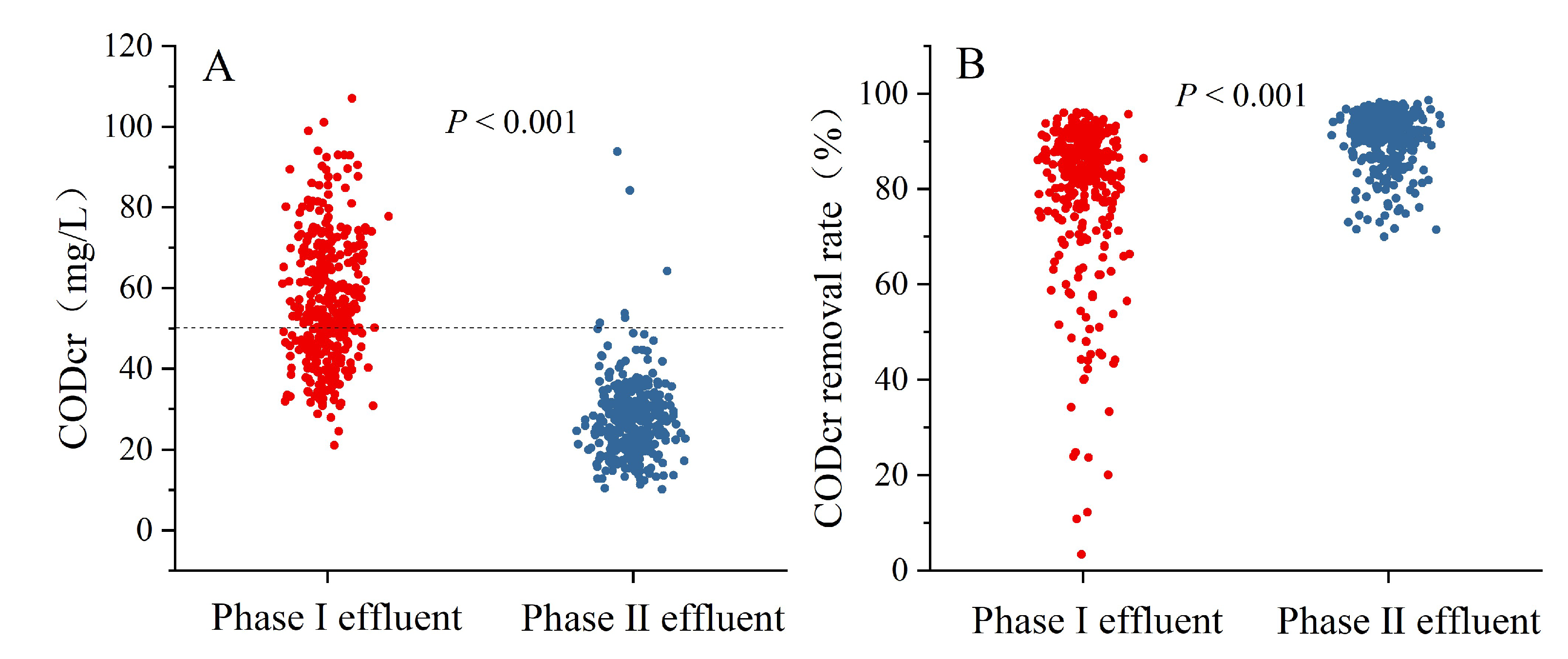
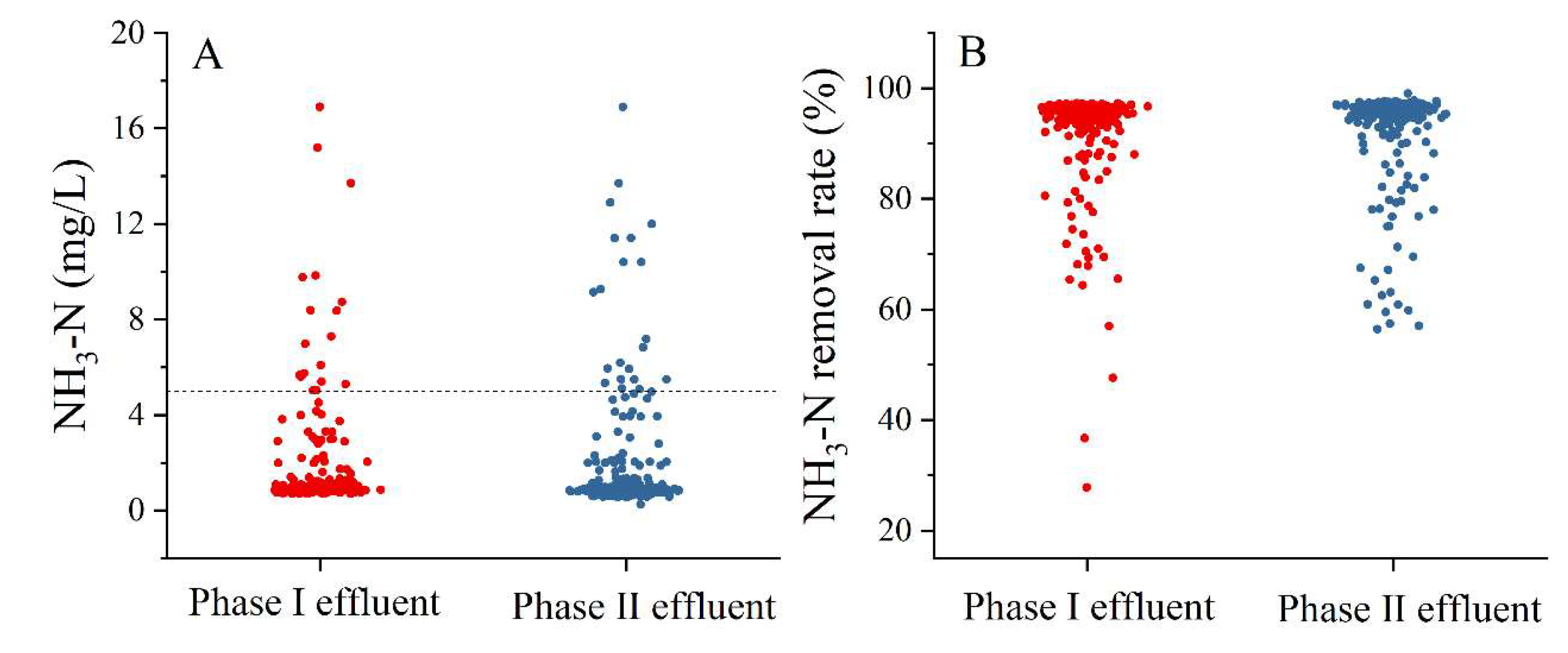
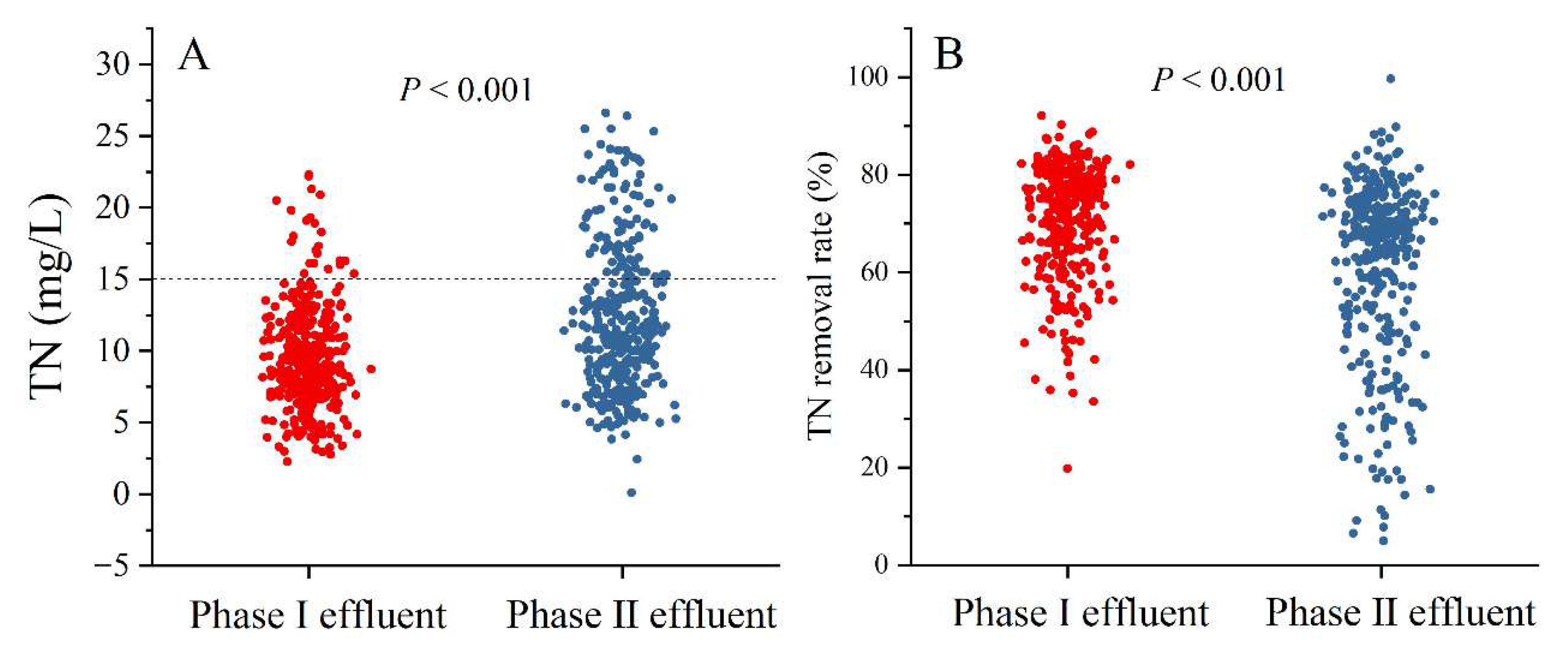
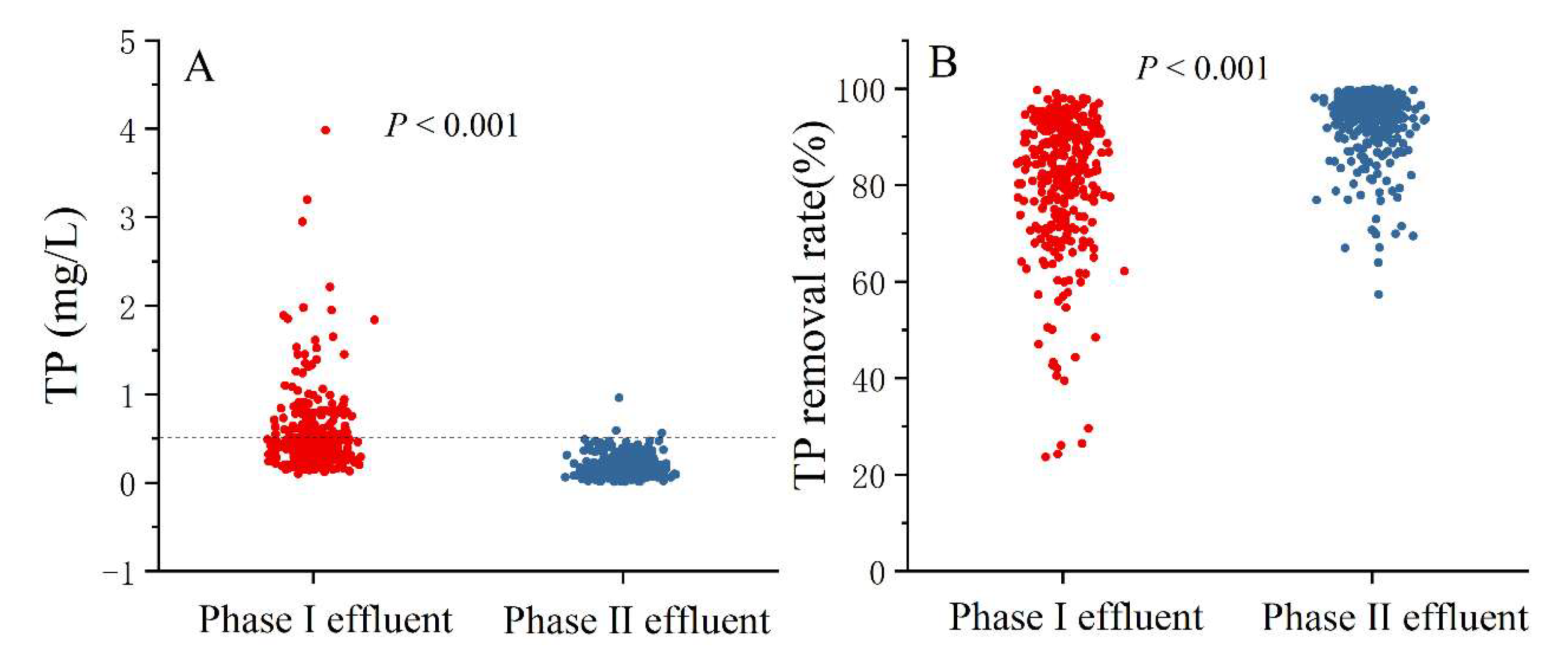
Oxidation ditch and Anaerobic–Anoxic–Oxic (A2/O) processes have been applied in urban wastewater treatment plants for decades, but the differences between two processes in engineering applications are less studied. Based on the continuous monitoring of Ningyang’s sewage treatment plant (Shandong, China) for one year, this study systematically analyzed the removal efficiencies of nutrients in the oxidation ditch and the modified high-efficiency multi-cycle A2/O processes. The results showed that chemical oxygen demand (COD) and total phosphorus (TP) removal in the modified high-efficiency multi-cycle A2/O process of the Phase II project was better than that in the oxidation ditch process of the Phase I project, and the average concentration of COD and TP in the effluent was 49.9% and 51.7% lower than that in the oxidation ditch process, respectively. The removal rate of ammonia nitrogen (NH4+-N) by the two processes was basically the same, while the total nitrogen (TN) effluent concentration of the oxidation ditch process was 31.4% lower than that in the high-efficiency multi-cycle A2/O process. In summary, the high-efficiency multi-cycle A2/O process had a better treatment performance regarding nutrient removal than the oxidation ditch process under the same conditions. Furthermore, the engineering and operational costs of the high-efficiency multi-cycle A2/O process were lower.
Keywords: oxidation ditch process; high-efficiency multi-cycle A2/O process; urban wastewater; removal rate oxidation ditch process; high-efficiency multi-cycle A2/O process; urban wastewater; removal rate