Article

Characterization of Glass-Cutting Sludge and Process Wastewater Toward Resource Recovery and Sustainable Water Management

by
Paweł Kwaśnicki
1,2,*,
Ludmiła Marszałek
1,
Dariusz Augustowski
1,
Katarzyna Grąz
2,
Agnieszka Generowicz
3,* and
Anna Sykuła
4
1
Research & Development Centre for Photovoltaics, ML System S.A., Zaczernie 190G, 36-062 Zaczernie, Poland
2
Faculty of Medicine, Institute of Biological Sciences, John Paul II Catholic University of Lublin, Konstantynów 1H, 20-708 Lublin, Poland
3
Cracow University of Technology, Department of Environmental Technologies, ul. Warszawska 24, 31-155 Kraków, Poland
4
Institute of Natural Products and Cosmetics, Faculty of Biotechnology and Food Sciences, Lodz University of Technology, ul. Stefanowskiego 2/22, 90-537 Lodz, Poland
*
Authors to whom correspondence should be addressed.
Water 2026, 18(15), 1825; https://doi.org/10.3390/w18151825
Submission received: 9 June 2026 / Revised: 22 July 2026 / Accepted: 24 July 2026 / Published: 27 July 2026

Abstract

This study presents a comprehensive and integrated characterization of solid and liquid residues generated during industrial glass-cutting operations, highlighting the novelty of treating glass-cutting sludge and process wastewater as compositionally linked outputs of the same industrial comminution process. The research examined the morphology, elemental composition, and selected physicochemical properties of sludge and wastewater-derived particulates to assess material-recovery potential and provide a basis for further evaluation of water reuse. Samples were analyzed using particle morphology assessment, scanning electron microscopy coupled with energy-dispersive X-ray spectroscopy (SEM-EDS), Fourier-transform infrared spectroscopy with attenuated total reflectance (FTIR-ATR), dynamic light scattering (DLS), and pH measurements. The results showed that the solid fraction consisted predominantly of soda–lime–silica glass constituents, with oxygen, silicon, sodium, calcium, and magnesium as the main components, while potentially problematic contaminants remained at low levels. Although isolated particles enriched in Fe, Cu, Ni, Sn, La, or Ce were detected, their occurrence was limited and did not significantly affect the average particulate composition observed within the SEM-EDS dataset. This is particularly important for coated glass, where functional coatings contribute negligibly to the bulk glass matrix. From a material-recovery perspective, the sludge should be regarded as a promising glass-derived mineral residue requiring further route-specific qualification rather than as waste intended solely for disposal. However, this study does not demonstrate suitability for any specific reuse route, and additional validation is needed regarding compositional consistency, variability, moisture and organic content, leaching behavior, and route-specific acceptance criteria. For process wastewater, contamination was governed mainly by suspended glass-derived solids, indicating that solid–liquid separation is the key treatment step. However, the present dataset is insufficient to confirm the suitability of treated water for direct industrial recirculation, and the results should therefore be interpreted as indicating potential for further evaluation after appropriate clarification. This work establishes an empirical multi-scale characterization framework that links glass-cutting sludge and process wastewater as compositionally related outputs of the same comminution process, thereby supporting circular-economy strategies by jointly informing sludge valorization and water-clarification pathways. Overall, this work establishes a multiscale characterization framework for integrated residue management, jointly supporting sludge valorization and wastewater clarification assessment within a circular-economy perspective.

1. Introduction

The modern flat glass-manufacturing and -processing industries play an essential role in global socio-economic development [1], supplying critical materials for the architectural [2], automotive [3], and rapidly expanding photovoltaic sectors [4,5]. However, this high industrial output is inextricably linked to significant environmental footprints, specifically regarding heavy raw material consumption [6] and high freshwater requirements during mechanical processing stages [7]. In conventional linear production models, mechanical operations such as cutting, grinding, and edge-polishing generate large quantities of high-moisture industrial residues known as glass-cutting sludge [8], alongside heavily loaded process wastewater [9]. Historically, these streams have been treated as hazardous or low-value industrial waste requiring costly sedimentation, chemical treatment, and subsequent landfill disposal [10]. In the context of escalating global resource scarcity, stringent environmental regulations, and the widespread transition toward a circular economy [11], transitioning these linear waste streams into closed-loop, resource-recovering industrial cycles has become an urgent priority for sustainable industrial management [12].
The generation of glass-processing residues represents a distinct challenge within industrial environmental engineering [13]. During mechanical processing, the brittle fracture behavior of soda–lime–silica float glass results in a complex, highly polydisperse system of sharp, angular particulate matter [14,15]. While coarser fragments settle rapidly, the fine and ultrafine particulate fractions remain suspended within the process water matrix. The persistence of these suspended mineral microparticles within water circuits is highly problematic [16]; if left untreated or improperly clarified, they accumulate within industrial ducts, cause severe abrasive wear to automated cutting components, and heavily degrade the operational stability of mechanical processing lines [17,18]. Consequently, maintaining a continuous flow of high-quality process water is mandatory for glass-processing plants [19]. To minimize escalating freshwater fees and strict environmental discharge penalties, many modern facilities aim to implement closed-loop or semi-closed technological water systems [20]. The primary bottleneck in achieving highly efficient water recirculation lies in the technological difficulty of continuously separating these fine, irregular glass particulates from the circulating stream [21].
Glass-processing residues are generated worldwide wherever flat, container, automotive, or specialty glass is manufactured and processed. The largest volumes are produced in regions with well-developed glass industries, including Europe, North America, East Asia (particularly China, Japan, and South Korea), and rapidly industrializing countries such as India. These residues, especially glass-cutting sludge and process wastewater, are commonly landfilled despite containing valuable mineral resources. Recycling glass-processing residues is important because it reduces the amount of waste sent to landfills, conserves natural raw materials such as silica sand and limestone, lowers the environmental footprint of glass production, and supports circular-economy principles. In addition, recovering usable glass particles and reusing treated process water can reduce resource consumption, improve process sustainability, and contribute to lower greenhouse gas emissions associated with the extraction and processing of virgin materials.
Concurrently, solid by-product-isolated glass-cutting sludge presents a parallel valorization bottleneck. Unlike macroscopic cullet, which is seamlessly reintroduced into glass-melting furnaces as a secondary raw material, fine glass powders and sludges are typically excluded from direct closed-loop recycling [22,23]. In conventional sorting and melting operations, fine particulate fractions below 1 mm are highly prone to carrying organic impurities, cause dangerous dusting inside glass furnaces, and can disrupt chemical homogeneity during standard batch melting if the precise chemical composition is unverified [24,25]. Furthermore, contemporary industrial glass lines frequently process functionally modified and coated glasses (e.g., low-emissivity, anti-reflective, or conductive thin films applied via physical vapor deposition) [26]. Although these nanometric functional layers provide crucial optical and thermal properties to the end products, they introduce trace foreign elements—such as transition metals, rare-earth oxides, and sulfur compounds [27,28]—into the mixed waste stream. Fears regarding bulk chemical contamination from these coatings often drive conservative waste management strategies, causing industries to default to landfilling rather than resource recovery.
Despite these limitations, recent advancements in materials science and environmental technology indicate substantial, unexploited valorization potential for glass-processing residues [29]. The literature demonstrates that when fine waste glass fractions are thoroughly cleaned, dewatered, and structurally characterized, they can serve as excellent secondary raw materials [30,31]. Beyond potential reintroduction into specific glass-furnace batches under controlled conditions, finely divided glass sludge can be routed toward alternative mineral-processing pathways [32,33]. Due to its high silica content and specific surface area, fine glass powder can act as a reactive or semi-reactive microfiller in cementitious matrices [34], geopolymers [35], and composite construction products, where its angular geometry provides excellent mechanical interlocking and microstructural densification without compromising structural integrity [36,37]. Thus, a comprehensive, multi-scale characterization of both the solid sludge and the suspended wastewater particulates is an absolute prerequisite to unlocking these circular pathways [38]. Determining the exact threshold of coating-derived contamination at the bulk level is essential to verify whether these streams can safely enter material recovery routes.
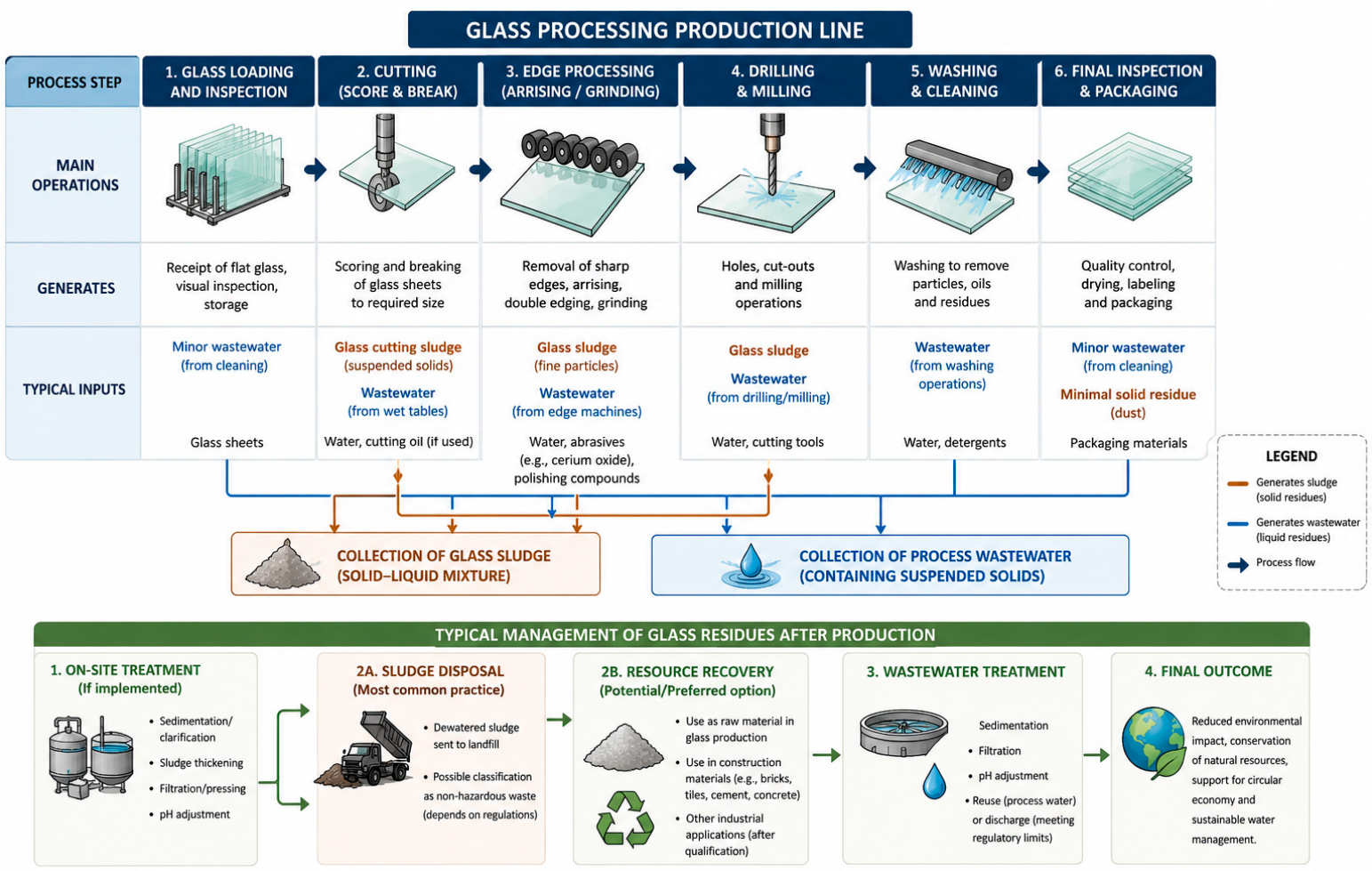
Glass-processing residues are still managed predominantly by conventional waste-treatment practices (see Figure 1). After collection, the sludge is usually thickened; dewatered by sedimentation, filtration, or filter pressing; and subsequently disposed of in landfills, particularly when no established recycling route is available. In facilities equipped with wastewater-treatment systems, process water is clarified through sedimentation and filtration to remove suspended glass particles before being reused within the production process or discharged in accordance with environmental regulations [39]. Recent studies emphasize that, because glass-cutting sludge consists mainly of fine soda–lime–silica glass particles with relatively low concentrations of contaminants, it should increasingly be regarded as a secondary mineral resource rather than a waste. The world should focus on its valorization as a raw material for new glass production, cement, concrete, bricks, ceramics, and glass–ceramic products, supporting circular-economy strategies and reducing landfill disposal [40].
To date, few studies have provided an integrated, simultaneous evaluation of both the liquid and solid residue phases derived from an active, mixed-thickness industrial glass-processing line. Because both residue streams originate from the same industrial glass-cutting process, their integrated characterization can provide a more comprehensive basis for evaluating resource recovery and wastewater management [41]. Many existing research works focus exclusively on the civil engineering properties of pre-conditioned glass powders [42] or address wastewater treatment in isolation [43], omitting the direct mineralogical and chemical links between the suspended solids and the bulk sludge by-product [44]. To address this knowledge gap, this study provides a comprehensive physicochemical and morphological characterization of the post-processing residues generated within an operational closed-loop industrial glass-cutting system utilizing municipal feed water.
Accordingly, the aim of this work is to determine whether integrated multiscale characterization can reveal a common mechanistic origin of these two streams and provide a screening-level basis for subsequent route-specific qualification of sludge and treatment-oriented assessment of wastewater. To this end, we applied a multi-scale analytical workflow including automated optical morphology mapping (Morphologi G3S), scanning electron microscopy coupled with energy-dispersive X-ray spectroscopy (SEM-EDS), Fourier-transform infrared spectroscopy (FTIR-ATR), dynamic light scattering (DLS), and pH profiling to examine particle-size distribution, morphology, elemental composition, and selected physicochemical features of both fractions. The novelty of the study lies in the integrated analysis of as-generated industrial sludge and process wastewater as compositionally linked outputs of one comminution process under real operating conditions, rather than as unrelated waste streams or pre-conditioned materials prepared for a predefined recycling route [45].

2. Materials and Methods

2.1. Materials

The investigated materials originated from an industrial closed-loop water system applied in the mechanical processing of manufacturing glass [46]. The system was designed to minimize freshwater consumption and enable continuous internal recirculation of process water in accordance with circular-economy principles. The processed material consisted of industrial float-glass sheets with thicknesses ranging from 1 to 12 mm. All glass sheets were processed within a single industrial line under identical operating conditions, without separation into individual thickness classes. This reflects real industrial practice in which mixed-thickness glass streams are simultaneously subjected to cutting and grinding operations. As a result, the generated particulate matter and sludge represent a composite waste stream derived from soda–lime–silicate glass of variable thickness.
The chemical composition of the processed material was dominated by the SiO2-Na2O-CaO system typical for float glass. Functional coatings were present only on a minor fraction of the processed glass; however, due to their nanometric thickness relative to the bulk substrate, their volumetric contribution to the overall material stream was considered negligible.
Four types of process samples, collected in a glass factory in southeastern Poland, were analyzed as described below.
(a)
Tap water (feed water)
Municipal water was used as the baseline process medium. Prior to use, the water underwent standard industrial pre-conditioning involving mechanical filtration to remove coarse impurities. The water contained naturally occurring dissolved inorganic ions typical of municipal supply systems.
(b)
Process circulating water
Water was continuously recirculated during cutting and grinding operations. This stream contained suspended particulate matter generated by mechanical abrasion of glass. The system operated under continuous mixing conditions to ensure homogenization prior to sampling.
(c)
Post-process glass slurry
Glass-processing sludge (slurry) was collected from the sedimentation and filtration units as the solid by-product of the process. The sludge consisted predominantly of glass-derived particles and was evaluated as a potential secondary raw material for glass-furnace feedstock.
(d)
Post-treatment water
Water was collected downstream of the solid–liquid separation and filtration system. This fraction represented the effluent after removal of suspended solids and was intended for reintegration into the closed-loop system. The morphology of particles present in the sludge and wastewater was first evaluated using an image-based particle characterization system (Morphologi).
This analysis enabled the assessment of particle-size variability and shape, and the tendency toward agglomeration, which are important from the point of view of separation efficiency and secondary use of the recovered solid fraction. A more detailed examination of particle surface features and microstructure was carried out by scanning electron microscopy (SEM). Representative SEM images were recorded for both sludge and wastewater-derived particulates at different magnifications in order to compare the morphology of compact fragments, fine debris, and irregularly shaped particles generated during glass cutting. The elemental composition of the analyzed materials was determined using energy-dispersive X-ray spectroscopy (EDS) coupled with SEM. Particular attention was paid to the identification of major glass-forming elements and to the detection of trace components that could originate from coatings, processing aids, or mechanical wear of the industrial system.
To complement the microstructural analysis, Fourier-transform infrared spectroscopy with attenuated total reflectance (FTIR-ATR) was used to identify characteristic chemical bonds and confirm the silicate nature of the material. This step was intended to support the interpretation of the mineral and glass-related composition of the recovered sludge and any deposits present in the wastewater fraction. For liquid samples, dynamic light scattering (DLS) measurements were additionally performed using a Zetasizer instrument to determine the hydrodynamic size distribution of suspended particles. This analysis provided information on the fine particulate fraction that may have remained in the water phase after glass processing and is relevant to the design of clarification and reuse strategies. The pH of the wastewater samples was measured using a calibrated pH meter under laboratory conditions. The pH value was included as a basic parameter describing the chemical stability of the water phase and its relevance for preliminary assessment of treatment conditions and potential reuse.
The analytical results obtained for sludge and wastewater were interpreted jointly in order to assess the degree of contamination and the feasibility of sludge reuse. Special emphasis was placed on determining whether the solid fraction retained a composition close to that of the parent glass and whether the contribution of coating-derived elements was sufficiently low to avoid major limitations in recycling applications.
In parallel, the quality of the wastewater was considered in relation to the possibility of separating suspended solids with the aid of flocculation and related treatment steps, as indicated in the manuscript concept. On this basis, the environmental assessment addressed two practical outcomes: recovery of the sludge as a secondary raw material and the potential for future reuse of treated water in a closed technological cycle.

2.2. Methods

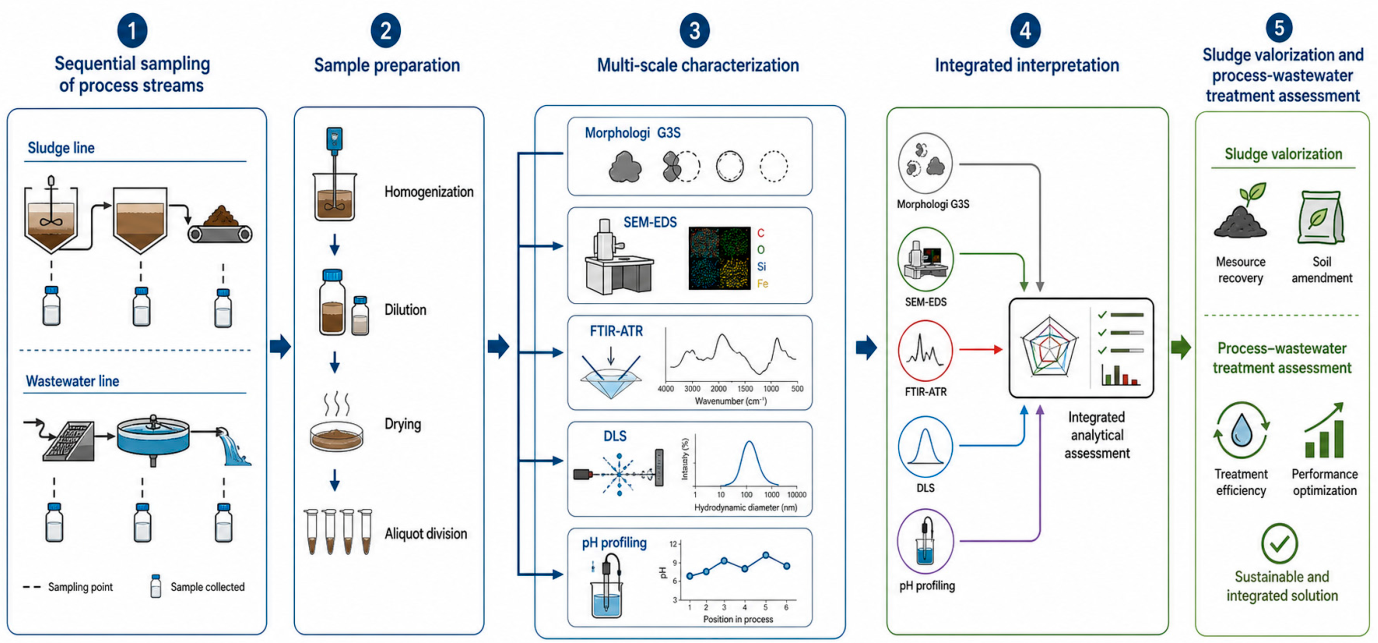
A multi-scale analytical workflow was applied to characterize morphology, particle-size distribution, elemental composition, molecular structure, and physicochemical properties of both solid and liquid fractions. To clarify the sequence of operations, Figure 2 presents a schematic overview of the analytical workflow, from sample collection and preparation through successive application of morphological, microstructural, spectroscopic, and physicochemical measurements for both sludge and wastewater fractions.
Figure 2 presents a schematic representation of the experimental workflow, showing the sampling of tap water, circulating process water, post-process glass sludge, and post-treatment water, followed by sample preparation and sequential application of Morphologi G3S particle analysis, SEM-EDS screening, FTIR-ATR spectroscopy, DLS measurements for liquid samples, and pH profiling, together with the joint interpretation of these datasets for sludge valorization and wastewater treatment assessment.
During the preparation of this study, the authors used Perplexity, powered by GPT-5.4, to generate schematic visualizations, presented as Figure 1 and Figure 2. These figures were subsequently reviewed, edited, and approved by the authors, who take full responsibility for their accuracy and for the content of this publication.

2.2.1. Scanning Electron Microscopy with Energy-Dispersive X-Ray Spectroscopy (SEM-EDS)

Morphological and elemental characterization of sludge and selected particulate fractions was performed using a TM3000 scanning electron microscope (Hitachi High-Technologies Corporation, Tokyo, Japan) equipped with a SwiftED3000 energy-dispersive X-ray spectroscopy (EDS) detector. Analyses were conducted under high-vacuum conditions at an accelerating voltage of 15 kV. Secondary electron imaging was used to evaluate particle morphology, surface texture, and agglomeration state. Images were acquired at magnifications of 500×, 1000×, and 2000× under identical acquisition parameters. Elemental composition was determined using EDS in point analysis and area-mapping modes. For each sample, at least three independent regions were analyzed to ensure statistical representativeness. It should be noted that SEM-EDS was applied here as a screening tool for characterization of the particulate fraction only and for semi-quantitative comparison of particle-associated elemental features within the analyzed fields of view. The method does not provide a fully representative bulk compositional analysis of the entire sample and does not replace bulk analytical techniques such as XRF or digestion-based ICP methods, nor does it replace dissolved-phase chemical analysis, leaching tests, or regulatory wastewater classification procedures.

2.2.2. Automated Morphological Analysis (Morphologi G3S)

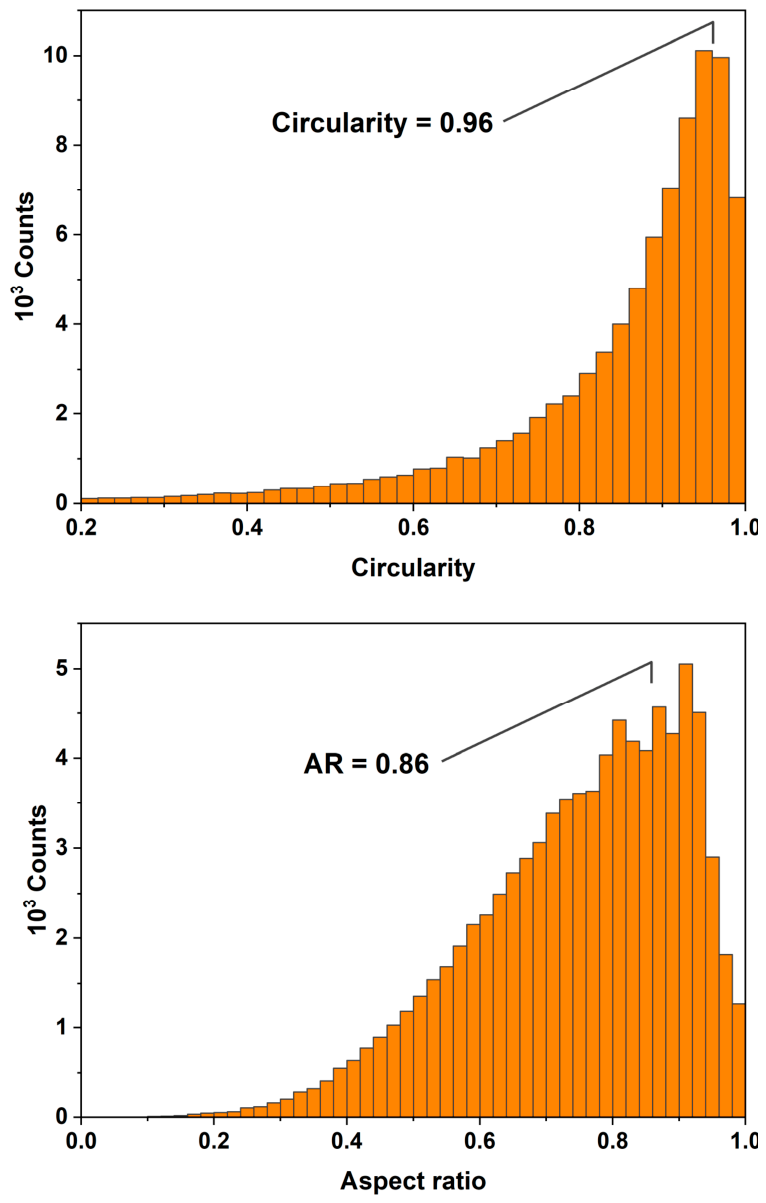
Particle-size distribution and morphological parameters were determined using a Morphologi G3S system (Malvern Panalytical Ltd., Malvern, Worcestershire, UK), combining optical microscopy with automated image analysis. Prior to measurement, samples were dispersed in deionized water and subjected to mild ultrasonication (low power, short duration) to reduce agglomeration without inducing particle fragmentation. The suspensions were then deposited onto glass slides and dried under ambient laboratory conditions. A minimum of 10,000 particles per sample were analyzed. Particle-size parameters were calculated from the analyzed particle population, and the reported values represent characteristic particle-size values obtained from the complete measurement dataset. The following morphological descriptors were extracted: equivalent circular diameter (ECD), particle area, aspect ratio, elongation, and circularity. Data acquisition and processing were performed using Morphologi G3S software (version 8.10, Malvern Panalytical Ltd., Malvern, UK).

2.2.3. Dynamic Light Scattering (DLS)

Hydrodynamic particle-size distribution in liquid samples was measured using a Zetasizer Nano ZS (Malvern Panalytical Ltd., Malvern, Worcestershire, UK) equipped with a 633 nm He-Ne laser. Measurements were performed at 25 ± 0.5 °C in disposable polystyrene cuvettes using backscatter detection at 173°. Each sample was equilibrated for 120 s prior to measurement, and measurements were performed in triplicate. Because the investigated wastewater represented a highly polydisperse suspension of irregular, non-spherical mineral particles with potential sedimentation during handling and measurement, the DLS results were treated as additional information only and were not used as the principal basis for quantitative particle-size interpretation. In particular, the intensity-weighted DLS distribution may be biased toward a relatively small number of larger scattering particles and should therefore be interpreted only as supportive evidence for the presence of a fine suspended fraction.

2.2.4. Fourier Transform Infrared Spectroscopy (FTIR-ATR)

FTIR-ATR analysis was performed using a Nicolet iS50 spectrometer (Thermo Scientific, Madison, WI, USA) equipped with a diamond ATR accessory. Spectra were recorded in the range of 4000–400 cm−1 at a spectral resolution of 4 cm−1. Each spectrum was obtained by averaging 32 scans to improve the signal-to-noise ratio. Background spectra were recorded prior to each measurement and automatically subtracted. The method was used to detect potential organic compounds such as surfactants or process-related additives in both water and sludge fractions.

2.2.5. pH Measurement

The pH of all aqueous samples was measured using a Mettler Toledo pH meter (Mettler-Toledo AG, Greifensee, Switzerland) equipped with a combined glass electrode. The instrument was calibrated daily using standard buffer solutions (pH 4.00, 7.00, and 10.00). Measurements were performed at 22 ± 1 °C. Each sample was analyzed in triplicate to ensure reproducibility.

3. Results

3.1. Glass-Cutting Slurry

3.1.1. Morphology and Particle-Size Distribution

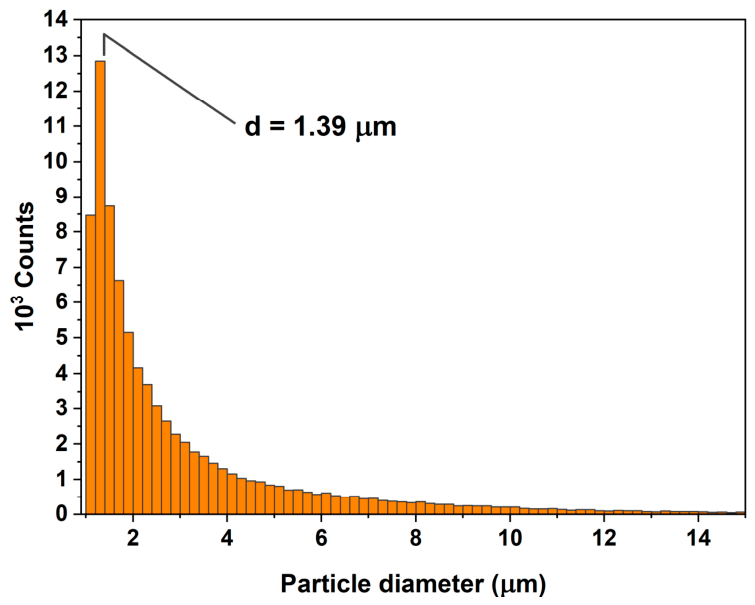
The post-process glass slurry represented the solid fraction collected from the sedimentation and filtration units of the industrial glass-cutting line. Particle-size analysis confirmed that this material was heterogeneous and clearly polydisperse, reflecting the broad range of particle sizes generated during mechanical fragmentation of the parent soda–lime–silica glass. As shown in Figure 3, the slurry contained a wide distribution of particles rather than a narrowly defined size fraction, which is consistent with the mixed-thickness glass feedstock and the fracture-based nature of the cutting process. The predominant particle size was estimated by analysis software in the Morphologi G3S system to 1.39 µm.
The predominance of irregularly shaped particles and the presence of a substantial fine fraction are technologically important because they influence the settling, dewatering, classification, and potential reuse of the recovered material. In practical terms, the finer fraction may be more difficult to separate completely from the water phase during primary sedimentation [47], whereas the coarser fraction is more likely to be recovered efficiently as part of the bulk sludge. This broad particle-size distribution therefore confirms that the slurry should not be treated as a uniform residue, but rather as a multiphase mineral material with fractions with different recovery and reuse potential [48].
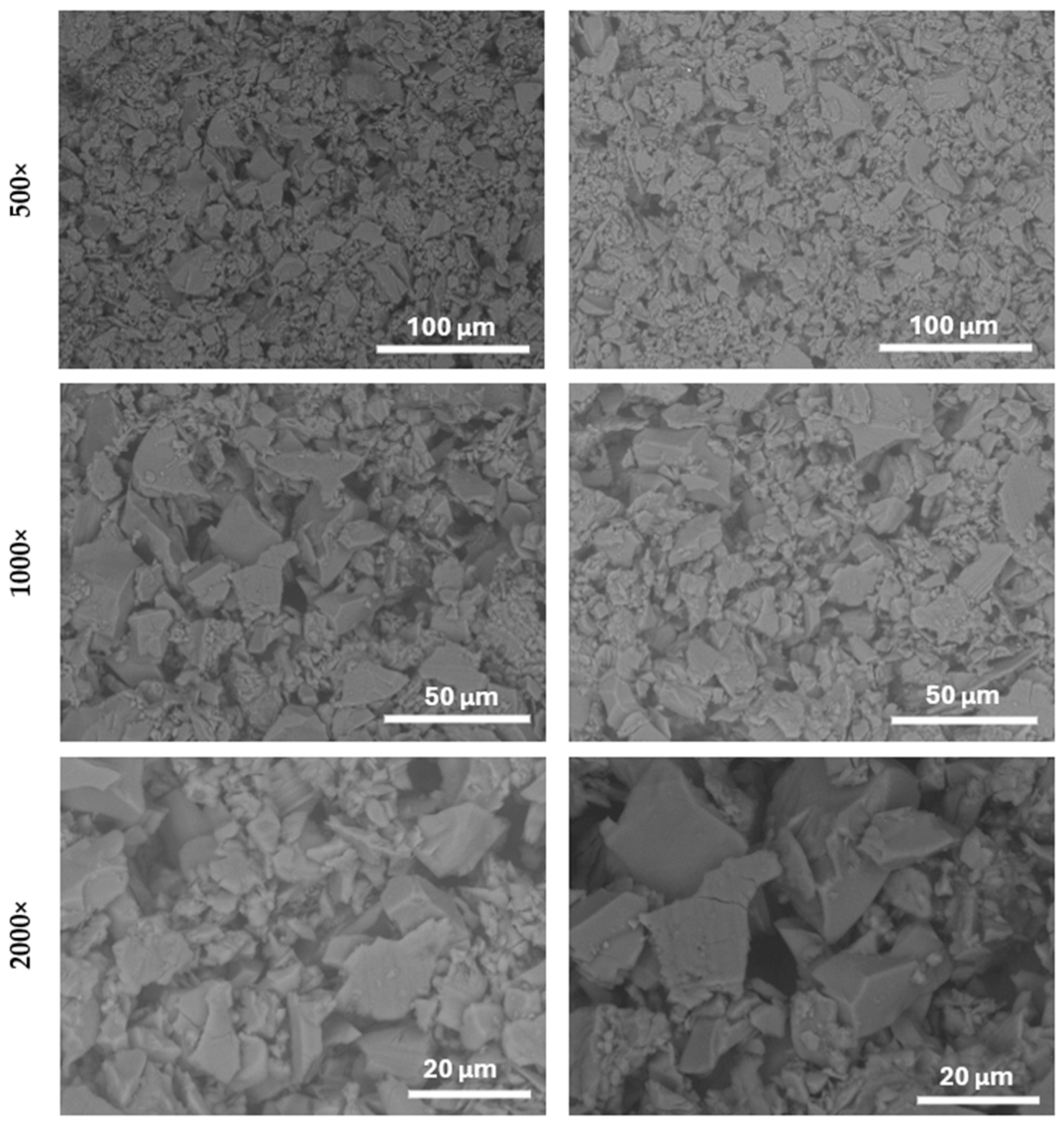
Representative SEM micrographs of the slurry particles are shown in Figure 4. The images reveal predominantly angular and irregular fragments, accompanied by finer debris and locally agglomerated clusters, which is characteristic of brittle fracture of technical glass during cutting and grinding [49]. No dominant morphology suggestive of secondary precipitation products was observed, indicating that the solid residue retained the physical characteristics of comminuted glass rather than those of a chemically transformed waste.
The angular shape of the particles is relevant from both technological and application-oriented perspectives. Sharp-edged and non-spherical particles typically exhibit increased interparticle friction and higher specific surface area than rounded grains, which may affect sedimentation behavior, packing density, and the performance of the material in downstream reuse pathways. Similar relationships between glass particle morphology, surface characteristics, and material performance have been reported for mechanically processed waste glass powders [50].
At the same time, such morphology is favorable for selected mineral applications [51], particularly where mechanical interlocking or filler–matrix interaction is important [52].
Another important observation is the simultaneous presence of both larger fractured fragments and fine particulate material. This confirms that the sludge originated from the same mechanical comminution process but contains fractions that may differ in practical value and in the most suitable route for further management. The coarser fraction may be more compatible with glass-related recovery routes, whereas the finer fraction may be more relevant for powder-based or filler-type applications after appropriate conditioning.
Overall, the morphological results show that the glass-cutting slurry retained the physical identity of fractured soda–lime–silica glass and exhibited a particle-size distribution relevant to potential secondary use; however, practical suitability for any specific reuse route would require additional route-specific qualification.

3.1.2. Chemical and Structural Characterization

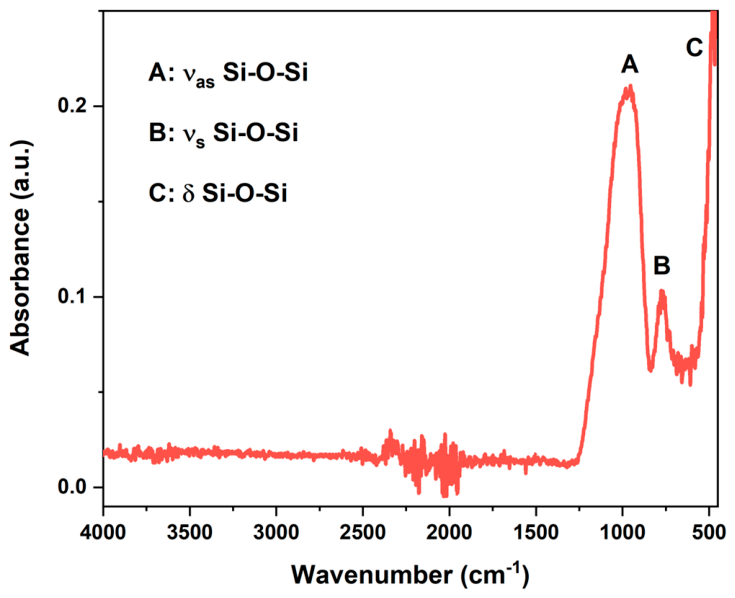
The chemical and structural characterization of the slurry further confirmed its glass-derived nature. The FTIR spectrum presented in Figure 5 was consistent with the silicate structure of soda–lime–silica glass and supported the interpretation that the recovered solid fraction retained the chemical identity of the parent material. No organic or inorganic contaminations were detected.
SEM-EDS analysis showed that the sludge was composed predominantly of oxygen, silicon, sodium, calcium, carbon, and magnesium, as summarized in Table 1. The average atomic contents were 63.6 ± 0.9% for O, 18.3 ± 1.1% for Si, 6.1 ± 0.1% for Na, 2.6 ± 0.4% for Ca, 7.7 ± 0.6% for C, and 1.6 ± 0.1% for Mg, whereas the corresponding weight fractions were 53.2 ± 1.4%, 26.9 ± 1.2%, 7.3 ± 0.2%, 5.4 ± 0.7%, 4.8 ± 0.4%, and 2.0 ± 0.1%, respectively. Aluminum was detected only at a very low level, while Fe, La, and Ce were present only at trace or below-detection levels in the averaged dataset.
This elemental profile is characteristic of soda–lime–silica glass and confirms that the sludge was derived mainly from the parent glass material. The very low contribution of Al and the trace or below-detection-level occurrence of Fe, La, and Ce indicate that the bulk composition of the sludge remained largely unaffected by technologically introduced additives or external contamination.
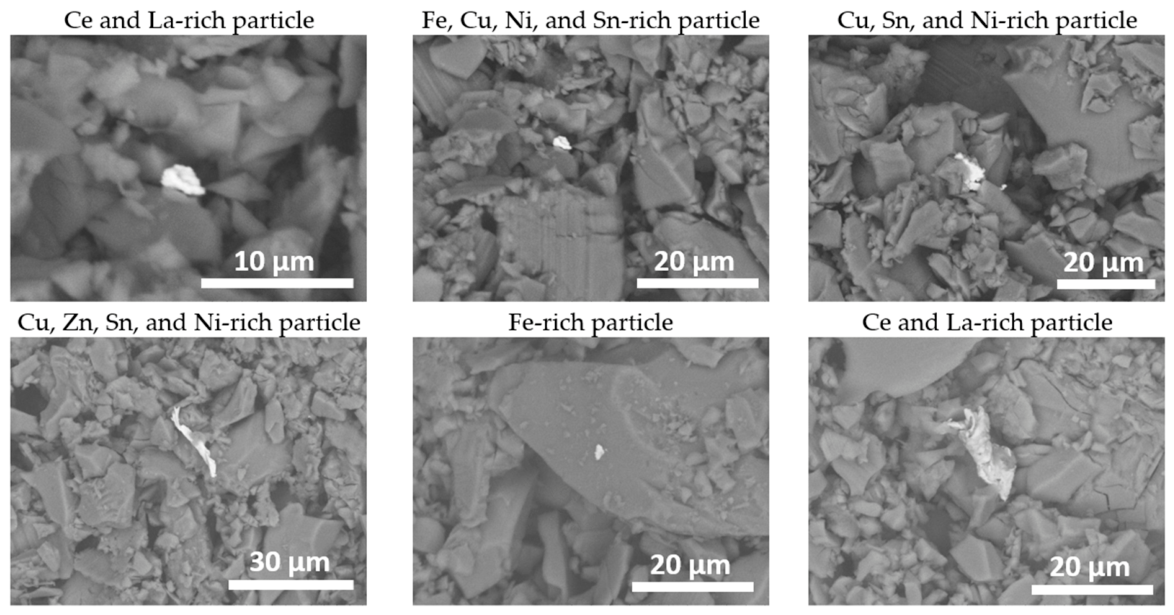
At the same time, localized SEM-EDS observations identified individual particles enriched in elements such as Fe, Cu, Ni, Sn, Zn, La, and Ce, as shown in Figure 6. These particles should be interpreted as isolated contamination events or minor process-related inclusions rather than as representative of the sludge as a whole, because the averaged elemental dataset demonstrates that their overall contribution was negligible.
This finding is especially relevant for industrial systems in which coated glass may also be processed [53]. Even though trace elements associated with coatings were detected in selected particles, their presence did not materially change the averaged particle-associated elemental profile observed by SEM-EDS, which suggests that the particulate fraction analyzed was still dominated by the glass matrix. However, confirmation of the true bulk mass contribution of such minor constituents would require independent bulk compositional analysis. From the standpoint of resource recovery, the chemical similarity between the sludge and conventional commercial glass is therefore a key result [54].

3.1.3. Reuse Implications of Slurry

Taken together, the morphological, FTIR, and SEM-EDS results indicate that the glass-cutting slurry remained compositionally and structurally close to the parent float glass. These findings support its interpretation as a glass-derived mineral residue with potential for further evaluation as a secondary raw material, rather than as a waste intended solely for disposal. At the same time, the present study does not provide sufficient evidence to confirm practical suitability of the sludge for any specific reuse route, including direct return to glass-furnace feedstock or other environmentally qualified secondary applications. In particular, additional validation would be required regarding bulk compositional consistency, batch-to-batch variability, moisture and organic content, leaching behavior, and route-specific acceptance criteria. Accordingly, the present results should be understood as demonstrating reuse potential at a screening level rather than full technological qualification for industrial reintroduction. The broad particle-size distribution also suggests that the recovered material should not be treated as a uniform residue, but rather as a multiphase mineral fraction that may benefit from granulometric separation prior to further evaluation. In this context, coarser fractions may be considered candidates for assessment in glass-related recovery routes, whereas finer fractions may be more suitable for investigation in powder-based or other mineral applications where high surface area and silicate-rich composition are advantageous [55]. Importantly, the presence of coated glass in the processed stream does not appear to be a dominant limitation at the bulk-composition level in the present case. Coating-related elements were detected only in isolated particles and did not significantly affect the composition of the sludge. Nevertheless, route-specific qualification would be necessary before industrial implementation. From an environmental-management perspective, these findings suggest that the recovered residue may represent a candidate material for future applications, provided that additional testing confirms technical and environmental acceptability for selected uses. In this way, appropriate dewatering, classification, and qualification of the sludge could contribute to reducing landfill demand and virgin raw material consumption within a more circular management strategy for industrial glass processing.

3.2. Process Wastewater

3.2.1. Morphology and Particle-Size Distribution

The process wastewater contained suspended particulate matter generated during mechanical cutting and grinding of float glass within the closed-loop industrial system. In contrast to the post-process glass slurry, which represented the recovered bulk solid fraction, the wastewater retained the finer and more dispersible tail of the same glass-derived particulate system. From the perspective of water treatment, this distinction is important because the particles remaining in the aqueous phase are those most likely to interfere with process stability and to limit direct water recirculation if they are not efficiently removed [48].
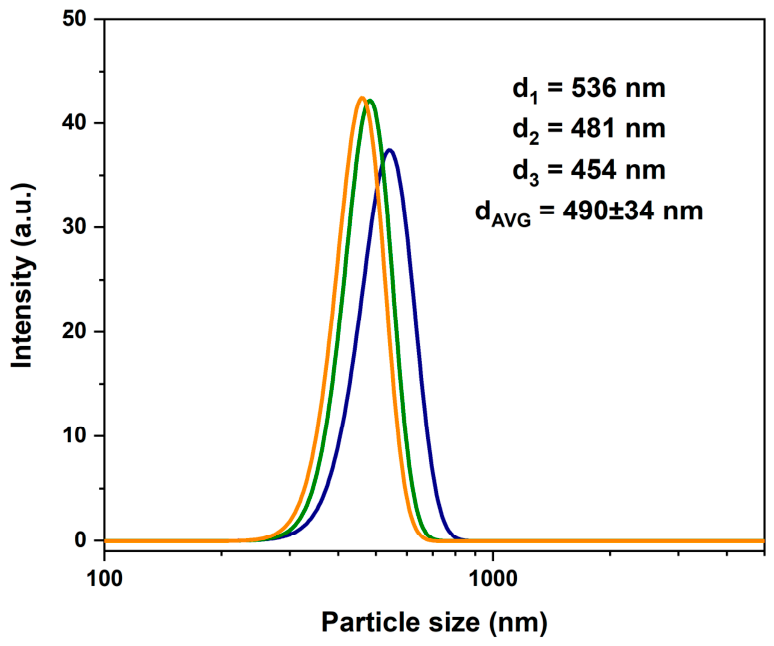
Residual cutting particles present in the wastewater before filtration are illustrated in Figure 7. Their occurrence confirms that the circulating water acted primarily as a transport medium for dispersed mineral solids generated during the cutting process rather than as a chemically transformed liquid stream. The presence of visible residual particulate matter before filtration also indicates that primary mechanical separation alone was insufficient to eliminate the finer suspended fraction from the water circuit.
Further particle-size assessment of the particulate matter associated with the wastewater indicated that the suspended solids remained heterogeneous and polydisperse even after treatment. As shown in Figure 7, the DLS measurement supports the presence of a fine suspended fraction in the submicron range, but this result should be interpreted only qualitatively because the investigated system consisted of irregular, non-spherical, multimodal, and partially settling mineral particles. Under such conditions, the intensity-weighted DLS response may be disproportionately influenced by a limited number of larger particles and therefore does not provide a robust standalone representation of the true particle-size distribution. Accordingly, the main significance of this result is to confirm the persistence of fine dispersed solids in the aqueous phase rather than to establish a definitive mean particle size [56]. The size distribution of particles remaining in the wastewater after filtration is shown in Figure 8.
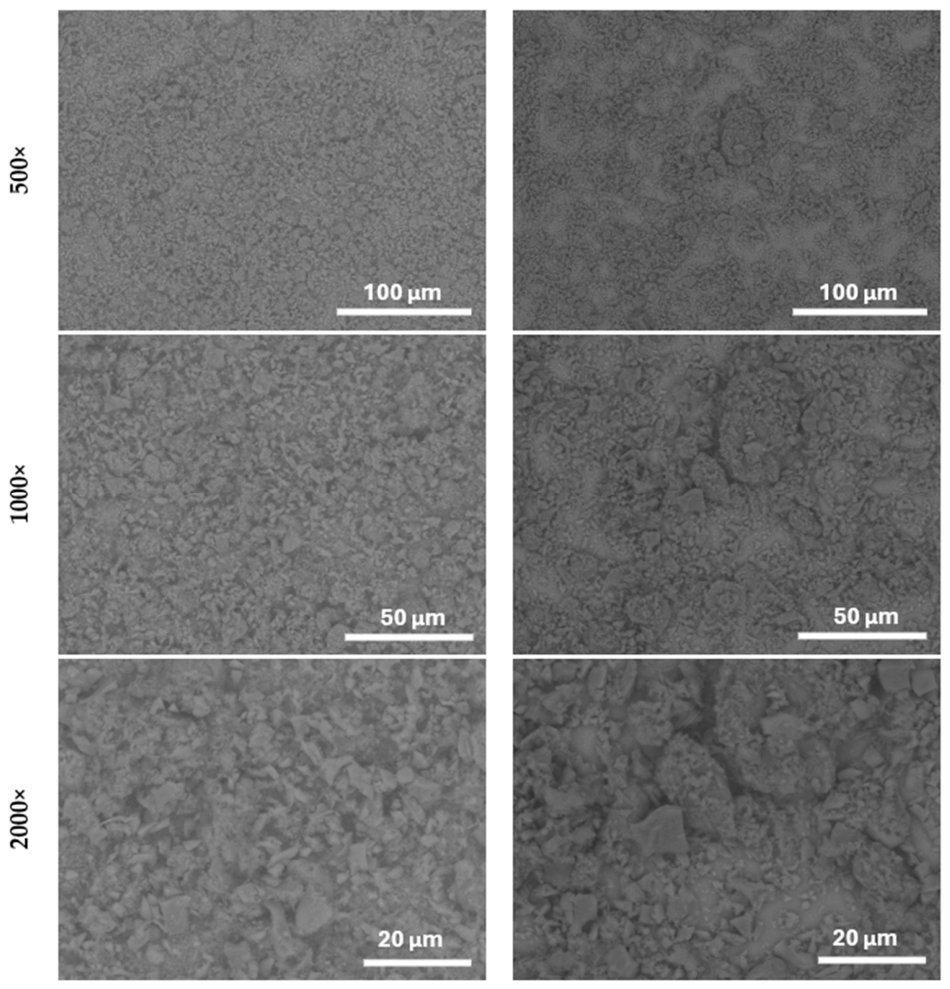
Representative SEM micrographs of particles sedimented from wastewater after filtration are presented in Figure 9. The observed particles were predominantly irregular, angular to sub-angular fragments accompanied by fine debris and locally agglomerated clusters, which is fully consistent with the brittle fracture behavior of soda–lime–silica glass during mechanical processing. No dominant morphology indicative of secondary precipitation products or non-mineral soft residues was observed, supporting the interpretation that the particulate load of the wastewater was governed mainly by dispersed glass-derived solids.
The angular and non-spherical character of the wastewater-derived particles is important for interpreting their behavior in suspension. Such particles typically exhibit unfavorable settling characteristics compared with compact rounded grains, and the finest fraction is especially prone to prolonged suspension in the aqueous phase. As a result, simple gravitational settling may be insufficient for complete clarification, particularly when the system continuously recirculates fine mineral debris under industrial operating conditions.
Dynamic light scattering measurements complemented the morphological observations by providing only indicative information on the hydrodynamic response of suspended particles directly in the liquid environment. This is useful because DLS probes dispersed particles in suspension, whereas SEM provides information on particle shape and surface morphology after drying. However, due to the irregular shape, broad polydispersity, and likely multimodal character of the wastewater-derived solids, the DLS data should be regarded only as supportive evidence for the persistence of a fine suspended fraction and not as a definitive quantitative description of particle-size distribution in the water phase.
Overall, the morphological results indicate that the process wastewater contained mainly fine glass-derived particles with irregular fracture morphology and sufficiently small size to remain at least partly suspended in the aqueous phase. This finding confirms that particulate loading, rather than severe chemical transformation of the water itself, was the principal factor limiting immediate reuse of the process water.

3.2.2. Composition of Wastewater-Derived Particulates

SEM-EDS analysis of the particulate matter present in the process wastewater showed that the suspended solids were composed predominantly of oxygen, silicon, calcium, carbon, magnesium, and sodium, as summarized in Table 2. The average atomic contents were 65.3 ± 2.5 at.% for O, 19.0 ± 5.3 at.% for Si, 2.8 ± 1.0 at.% for Ca, 6.8 ± 4.0 at.% for C, 2.4 ± 0.5 at.% for Mg, and 2.8 ± 1.4 at.% for Na, whereas the corresponding weight fractions were 54.5 ± 4.5 wt.%, 27.5 ± 6.0 wt.%, 5.9 ± 1.9 wt.%, 4.4 ± 1.8 wt.%, 3.0 ± 0.7 wt.%, and 3.3 ± 1.5 wt.%, respectively. Aluminum and sulfur were detected only at low levels, while potassium, iron, lanthanum, and cerium were absent or below the detection limit in the averaged dataset.
This elemental composition is consistent with a particulate fraction derived mainly from soda–lime–silica glass and indicates that wastewater contamination was governed primarily by suspended mineral debris generated during mechanical glass cutting. The dominance of Si, O, Na, Ca, and Mg confirms that the main source of contamination was the parent glass material rather than an external chemically complex pollutant load. In practical terms, these results indicate that the particulate fraction of the wastewater was dominated by dispersed inorganic solids derived mainly from glass processing. However, SEM-EDS characterizes only the particulate phase and does not provide information on dissolved contaminants present in the liquid fraction, nor does it provide a fully representative bulk compositional analysis of the wastewater sample as a whole.
The relatively low levels of Al and S, together with the absence of detectable Fe, La, and Ce in the averaged composition, are important for assessing the environmental significance of the wastewater stream. These results suggest that the fine particulate matter remaining in the water phase did not contain a substantial contribution of metallic wear products or coating-derived contaminants at the bulk level. Although trace foreign elements may occur locally in individual particles, the mean EDS dataset indicates that their overall contribution to the suspended-solid fraction was negligible.
A comparison with the composition of the sludge shows a clear compositional similarity between the recovered solid residue and the suspended particles remaining in the process water. In both cases, the dominant elements correspond to the glass matrix, which supports the interpretation that the wastewater contamination is essentially a continuation of the same mechanical fragmentation process observed for the sludge fraction, but shifted toward finer and more dispersible particles. The pH values of the investigated streams were 7.05 for the feed water, 8.48 for the process circulating water, and 10.03 for the post-process glass slurry suspension, indicating an increase in alkalinity associated with the presence of finely divided glass particles.

3.2.3. Implications for Water Recirculation

The wastewater results indicate that the principal technological challenge in the aqueous stream is the efficient removal of suspended mineral solids through solid–liquid separation. At the same time, the study does not assess dissolved-phase chemistry and therefore does not exclude the need for additional water-quality evaluation depending on the intended reuse scenario [57].
However, the present study does not provide a comprehensive water-quality dataset sufficient to confirm suitability for recirculation under industrial operating conditions. Therefore, the current results should be interpreted as indicating the potential for further evaluation of treated wastewater reuse, rather than as definitive proof of its direct applicability in a closed-loop or semi-closed technological system [58].

3.3. Integrated Interpretation of Residue Management

When interpreted together, the sludge and wastewater results indicate that both streams originated from the same mechanical fragmentation process acting on soda–lime–silica glass during industrial cutting operations. The sludge represented the bulk solid fraction recovered from sedimentation and filtration, whereas the wastewater retained the finer and more dispersible particles that remained suspended in the aqueous phase. Similar observations have been reported for waste glass powders, where the predominance of silica-based phases and glass-derived oxides was identified as a key factor supporting their potential use in cementitious and other mineral-based applications [59]. The observed angular morphology and glass-like composition are consistent with previous studies describing mechanically processed waste glass as a secondary mineral resource rather than a conventional waste material [60].
This relationship is supported by the morphological similarity observed in both fractions, particularly the predominance of angular and irregular particles characteristic of brittle fracture. It is also consistent with the SEM-EDS results, which showed that the dominant elements in both solid fractions were those typical of the glass matrix, namely O, Si, Na, Ca, and Mg, while the contribution of other elements remained limited in the averaged particulate datasets. From the standpoint of direct interpretation of the present dataset, the main result is therefore not the confirmation of a specific reuse or treatment route, but the demonstration that the two residual streams are physically and compositionally linked. This point is important because it shows that sludge and wastewater should not be interpreted as unrelated waste forms, but rather as complementary outputs of the same industrial comminution process. At the same time, the present study supports different immediate interpretations for the two fractions. In the case of sludge, the results indicate a glass-derived mineral residue that retained the principal characteristics of the parent material and may therefore be regarded as a candidate for further recovery-oriented qualification. In the case of wastewater, the results show that suspended particulate matter was an important feature of the aqueous stream and that the fine solid fraction remaining in circulation should be considered a key target in further treatment-oriented assessment.
These conclusions, however, should remain within the limits of the methods applied in the study. The current dataset does not establish suitability of the sludge for any specific reuse pathway, nor does it confirm the suitability of treated water for direct recirculation under industrial operating conditions. In addition, SEM-EDS characterizes the particulate phase only and does not provide information on dissolved contaminants or regulatory classification. Accordingly, the integrated interpretation proposed here should be understood as a characterization-based framework for further evaluation rather than as validation of an implemented circular-management route. In this sense, the principal contribution of the present study is to show that both residual streams can be interpreted within one common physicochemical context. This provides a clearer basis for future work aimed at verifying application-specific reuse options for the solid fraction and treatment performance criteria for the water phase.

Implications for Industrial Environmental Management

The results obtained in this study have direct implications for environmental management in glass-processing plants because they show that both major residual streams generated during cutting, namely sludge and process wastewater, have a significantly higher recovery potential than would be expected for a conventional contaminated industrial waste. The solid fraction was shown to consist predominantly of glass-derived mineral particles with a morphology and composition close to soda–lime–silica glass, whereas the water phase contained mainly fine suspended particles originating from the same mechanical fragmentation process. This suggests that the investigated system may be considered within an integrated management strategy combining evaluation of solids recovery options and further assessment of water-treatment possibilities. From the perspective of solid-waste management, the findings support considering the sludge as a candidate for recovery-oriented management rather than treating it exclusively as a disposal burden, provided that further qualification confirms acceptable composition and quality. The low apparent contamination level, together with the predominance of standard glass-forming oxides, indicates that the material may be considered for further evaluation in glass-related or other mineral applications after appropriate dewatering, classification, and route-specific quality assessment. This is particularly important in industrial sustainability practice, because reuse of glass-derived secondary material may reduce both virgin raw material demand and the amount of waste directed to landfill. At the same time, the results suggest that sludge management should be based on particle-size-dependent routing rather than on treating the entire stream as a uniform residue. Coarser fractions are more likely to be compatible with glass-related recovery routes, whereas finer fractions may require alternative reuse pathways or additional purification because very fine glass fractions are generally more difficult to clean and reintroduce directly into conventional recycling systems. Therefore, an effective environmental management scheme should include not only sludge collection and dewatering, but also granulometric classification and verification of impurity levels before the final destination is selected.
The wastewater results point to an important practical implication. Because the contamination of the aqueous phase was associated mainly with suspended mineral particles rather than with a strongly complex dissolved pollutant load, the key treatment objective appears to be efficient solid–liquid separation rather than advanced chemical remediation. In industrial practice, this suggests that water recirculation may be worth further evaluation, especially where clarification trains based on coagulation–flocculation, flotation, sedimentation, and filtration are available to remove fine glass particles and other suspended solids. This interpretation is relevant for closed-loop or semi-closed technological systems. If suspended particles are not removed effectively, they may accumulate in the circulation system, impair equipment performance, increase wear, and reduce the quality of reused water. Conversely, improved clarification may support process stability, reduce freshwater demand, and lower the volume of wastewater requiring external discharge; however, confirmation of recirculation suitability would require a broader quantitative water-quality assessment than that provided in the present study.
An important implication of the present study is that sludge qualification for potential recovery and wastewater treatment should be considered as mutually linked elements of one process-management concept rather than as separate environmental tasks [34]. Removal of suspended solids from wastewater not only improves the quality of water for recirculation, but also concentrates a glass-rich particulate fraction that may be directed toward material recovery. In this sense, efficient clarification has a dual benefit: it supports both cleaner water management and better qualification of the recovered solid phase. The results are also encouraging in the context of feedstock variability, including the industrial processing of coated glass. Although isolated particles enriched in coating-related or process-related elements were detected, their contribution to the averaged composition remained low, which suggests that occasional presence of technologically modified glass does not necessarily eliminate the possibility of recovery-oriented management. Nevertheless, this does not remove the need for monitoring, especially in plants where the processed material mix changes over time or includes laminated, coated, or otherwise modified products. For industrial implementation, the most appropriate strategy appears to be a controlled circular-management model based on routine characterization of both the solid and liquid phases. Such an approach should include routine characterization of residue composition and treatment performance, with additional validation required before industrial implementation. This is particularly important if the company aims to move from simple waste handling toward a circular-economy model in which glass-processing residues are retained within productive use for as long as possible. Overall, the present findings indicate that the investigated waste streams should be managed according to a recovery hierarchy in which potential reuse options are evaluated in a route-specific manner, alternative mineral valorization is considered when direct recycling is not demonstrated, and disposal remains the least desirable option. Such a hierarchy may provide a basis for future strategies aimed at improving the environmental and operational performance of industrial glass processing.

4. Discussion

The results consistently indicate that the investigated glass-cutting sludge was composed predominantly of particles derived from the mechanical fragmentation of soda–lime–silica glass and contained only a limited contribution of technologically introduced contaminants. The novelty of the present study lies in the integrated evaluation of two as-generated industrial residue streams—sludge and process wastewater—collected directly from an operational glass-cutting line and interpreted as compositionally linked outputs of the same comminution process. This differs from many previous studies focused either on pre-conditioned waste glass powders prepared for predefined reuse applications or on wastewater-treatment issues considered independently of the solid residue. The results support a mechanistic interpretation in which the main difference between the two streams is controlled primarily by particle-size-dependent separation, while both retain the dominant signature of the parent soda–lime–silica glass matrix. Morphological observations showed angular and irregular particles typical of brittle fracture, while SEM-EDS data confirmed the dominance of major glass-forming elements such as O, Si, Na, Ca, and Mg, in agreement with previous reports describing fine glass residues from flat-glass-cutting and -grinding operations. In many earlier studies, fine glass powders and sludges have been treated as problematic wastes because of concerns regarding heterogeneous contamination, high moisture content, and uncertain suitability for conventional recycling routes, leading to conservative disposal practices despite their glass-rich nature. In contrast, the present work demonstrates that, for the analyzed industrial system, the averaged composition of the sludge remained close to that of conventional soda–lime–silica glass and that particles enriched in Fe, Cu, Ni, Sn, Zn, La, or Ce were observed only locally and did not significantly alter the overall elemental profile, thereby supporting its interpretation as a glass-derived mineral residue with screening-level recovery potential rather than as a residue intended solely for disposal.
This interpretation is consistent with literature emphasizing that fine waste glass fractions can serve as secondary raw materials in cementitious matrices, ceramics, geopolymers, and related mineral products, provided that their bulk composition and contamination levels are adequately controlled [61]. However, in many of those works the examined material consists of pre-selected or pre-conditioned glass powders, often derived from controlled recycling streams, whereas the present study focuses on as-generated cutting sludge collected directly from sedimentation and filtration units in an operational industrial line. By characterizing this more challenging residue at the point of generation, our results complement existing valorization studies and highlight the need for route-specific qualification steps such as dewatering, particle-size classification, and leaching tests before the sludge can be considered for direct integration into established reuse pathways. In this sense, the applied analytical techniques, including SEM-EDS, FTIR-ATR, and particle morphology analysis, provide reliable preliminary information on particle-associated composition, silicate structural features, and contamination patterns detectable within their respective analytical scope, but do not replace representative bulk compositional analysis or the broader suite of tests required for full industrial qualification. In particular, FTIR-ATR supports identification of dominant infrared-active bonding environments but does not exclude inorganic impurities, trace metals, or dissolved contaminants outside the detection range of the method. In particular, route-specific reuse assessment would require bulk analytical validation, for example, by XRF or digestion-based ICP methods, together with variability studies, moisture and organic-content analysis, and leaching tests. The FTIR results should be interpreted within the analytical scope of infrared spectroscopy. In the present study, FTIR-ATR was useful for confirming the dominant silicate character of the analyzed particulate material and for screening for pronounced infrared-active organic features. However, the absence of additional FTIR bands cannot be interpreted as proof of the absence of contamination in a general sense, because inorganic impurities, trace metals, and dissolved contaminants may remain undetected if they are not associated with diagnostically significant infrared-active vibrations under the applied measurement conditions.
An important outcome of this study, aligned with current valorization approaches, is the recognition that particle size and morphology strongly influence the most appropriate recovery strategy. The wide particle-size distribution observed here indicates that glass-cutting sludge should be regarded as a heterogeneous material rather than a single uniform residue, which is consistent with reports recommending granulometric separation prior to utilization, so that coarse fractions may be directed toward glass-related recycling or aggregate applications, while finer fractions are considered for cementitious, ceramic, or geopolymer products where high specific surface area and silicate-rich composition are advantageous. Our results reinforce this perspective by showing that the sludge combines larger fractured fragments with fine particulate material originating from the same mechanical comminution process, suggesting that a particle-size-dependent routing strategy is more appropriate than a single destination for the entire stream. The observation of isolated particles containing elements such as Fe, Cu, Ni, Sn, La, or Ce, potentially originating from functional coatings or process-related inclusions, also aligns with literature concerns regarding coated and modified glass; nevertheless, the very low bulk contribution of these elements in our case suggests that occasional processing of coated glass does not necessarily compromise overall recycling potential, provided that feedstock composition is monitored and route-specific acceptance criteria are respected.
From the perspective of circular economy and sustainable resource management [62,63], our sludge results support recent trends that advocate a transition from conventional landfill-oriented disposal toward selective, qualification-based valorization of glass-processing residues [39]. Similarly to other studies that report environmental benefits of reusing fine glass fractions in construction materials and glass–ceramics, we show that the investigated sludge is a low-contaminated, glass-rich mineral residue with promising potential for further route-specific evaluation in glass manufacturing, cement and concrete production, ceramics, geopolymers, or other mineral-based applications. At the same time, the present dataset does not provide comprehensive information on bulk compositional consistency, moisture and organic content, or leaching behavior, and therefore cannot be used to confirm suitability for any specific reuse route, a limitation that parallels those identified in prior screening-level studies of industrial glass wastes. Consequently, we emphasize that appropriate dewatering, particle-size classification, and application-oriented technical and environmental assessment remain indispensable steps before industrial implementation, in line with European and international sustainability strategies that promote characterization-based resource management [44].
The wastewater characterization complements these findings by extending the discussion beyond material recovery to integrated water-resource management. The analyzed wastewater was contaminated predominantly by suspended mineral particles originating from glass processing, whereas no evidence of a substantial dissolved contaminant load was observed at the level of the particulate-focused methods employed, which is consistent with studies that identify suspended solids as the primary treatment target in glass-processing water circuits. In line with recent developments in industrial water management, our results indicate that efficient solid–liquid separation—through clarification trains based on coagulation–flocculation, sedimentation, flotation, membrane separation, or filtration—is likely to be more critical than advanced chemical remediation for the investigated system. However, unlike works that report detailed water-quality datasets and pilot-scale recirculation performance, the present study does not include comprehensive measurements such as COD, BOD, total dissolved solids, conductivity, and trace dissolved contaminants, and therefore cannot confirm the suitability of treated water for direct recirculation under industrial operating conditions, a limitation that we explicitly highlight.
Taken together, the sludge and wastewater results point toward an integrated process-management concept that is broadly consistent with the circular-economy principles discussed in the literature but has not been extensively implemented for simultaneous management of both solid and liquid residues from glass cutting. Removal of suspended solids from wastewater not only improves the quality of water for potential recirculation, as suggested by prior studies on closed-loop water systems [63], but also concentrates a glass-rich particulate fraction that can be evaluated as a candidate for material recovery, thereby creating a dual benefit in terms of resource efficiency and waste reduction. The present work contributes to this discussion by showing that both major residual streams generated during cutting—sludge and process wastewater—can be interpreted within one common physicochemical context as compositionally linked outputs of the same mechanical comminution process, rather than as unrelated wastes. Overall, our findings support a transition from conventional waste disposal toward characterization-based resource management of glass-processing residues, while also clarifying the current limitations of the dataset and outlining the additional technical, environmental, and economic validation required before confirming specific recycling pathways for the sludge or the feasibility of direct process-water recirculation under industrial operating conditions.

5. Conclusions

This study demonstrated that the solid and liquid residues generated during industrial glass-cutting operations constitute two physically related fractions originating from the same mechanical comminution process of soda–lime–silica glass. The combined application of image-based particle analysis, SEM observations, FTIR, and SEM-EDS showed that the sludge was dominated by angular glass-derived particles and retained the principal structural and compositional characteristics of the parent material, whereas the wastewater contained the finer and more dispersible fraction of the same particulate system remaining in suspension. At the level of the analyzed particulate fraction, both residue streams were characterized predominantly by elements typical of the glass matrix, while particles enriched in other elements were observed only locally and did not materially affect the averaged composition of the sludge. On this basis, the sludge may be regarded as a glass-derived mineral residue with potential for further recovery-oriented evaluation; however, the present dataset does not provide sufficient evidence to confirm its suitability for any specific reuse route. Similarly, the wastewater results indicate that suspended solids constitute a key feature of the analyzed aqueous stream and that solid–liquid separation should be considered a central aspect of further treatment assessment, although the present study does not establish the suitability of treated water for direct recirculation under industrial operating conditions. Accordingly, the findings should be interpreted as providing a characterization-based framework for subsequent route-specific qualification of the solid fraction and expanded quality assessment of the liquid phase, rather than as evidence of technological readiness, environmental acceptability, or regulatory compliance. Further work should therefore include broader compositional consistency studies, leachability-related verification of the sludge, and more comprehensive analysis of the liquid phase under representative operational conditions. Overall, the study demonstrates that integrated characterization of both glass-cutting sludge and process wastewater provides a common physicochemical basis for future assessment of recovery-oriented strategies for the solid fraction and treatment options for particulate-rich process water within a circular-economy framework.

Author Contributions

Conceptualization, P.K., L.M., D.A., K.G. and A.G.; Methodology, P.K., L.M. and D.A.; Software, P.K., L.M. and D.A.; Validation, P.K., L.M. and D.A.; Formal analysis, P.K., L.M. and D.A.; Investigation, P.K., L.M. and D.A.; Resources, P.K., L.M., D.A., K.G., A.S. and A.G.; Data curation, P.K., L.M., D.A. and A.G.; Writing—original draft, P.K., L.M. and D.A.; Writing—review and editing, P.K., L.M., D.A. and A.G.; Visualization, P.K., L.M. and D.A.; Supervision, P.K.; Project administration, P.K., L.M. and D.A.; Funding acquisition, P.K., L.M. and D.A. All authors have read and agreed to the published version of the manuscript.

Funding

This research received no external funding.

Data Availability Statement

The data presented in this study are available on request from the corresponding authors. The data are not publicly available due to institutional restriction.

Acknowledgments

The authors acknowledge the use of Perplexity, powered by GPT-5.4, for assistance to generate Figure 1 and Figure 2. All AI-generated outputs were carefully reviewed and edited by the authors, who take full responsibility for the final content.

Conflicts of Interest

Authors Paweł Kwaśnicki, Ludmiła Marszałek and Dariusz Augustowski were employed by ML System S.A. The remaining authors declare that the research was conducted in the absence of any commercial or financial relationships that could be construed as a potential conflict of interest.

References

  1. Arbab, M.; Finley, J.J. Glass in Architecture. Int. J. Appl. Glass Sci. 2010, 1, 118–129. [Google Scholar] [CrossRef] [Scilit]
  2. Shaw, M.; Vlahopoulos, D.; Usma-Mansfield, C.; Sarmiento, J.; Snooks, R.; Koutsonikolas, T.; Birbilis, N. The Additive Manufacturing of Glass: A Critical Review. Appl. Sci. 2025, 15, 3414. [Google Scholar] [CrossRef] [Scilit]
  3. Chen, S.; Zang, M.; Wang, D.; Yoshimura, S.; Yamada, T. Numerical Analysis of Impact Failure of Automotive Laminated Glass: A Review. Compos. B Eng. 2017, 122, 47–60. [Google Scholar] [CrossRef] [Scilit]
  4. Dyer, T.D. Glass Recycling. In Handbook of Recycling: State-of-the-Art for Practitioners, Analysts, and Scientists; Elsevier: Amsterdam, The Netherlands, 2014; pp. 191–209. [Google Scholar] [CrossRef] [Scilit]
  5. Hubert, M. Industrial Glass Processing and Fabrication. In Springer Handbooks; Springer: Berlin/Heidelberg, Germany, 2019; pp. 1195–1231. [Google Scholar] [CrossRef] [Scilit]
  6. Mohajerani, A.; Vajna, J.; Cheung, T.H.H.; Kurmus, H.; Arulrajah, A.; Horpibulsuk, S. Practical Recycling Applications of Crushed Waste Glass in Construction Materials: A Review. Constr. Build. Mater. 2017, 156, 443–467. [Google Scholar] [CrossRef] [Scilit]
  7. Deng, W.; Spathi, C.; Coulbeck, T.; Erhan, K.; Backhouse, D.; Marshall, M.; Ireson, R.; Bingham, P.A. Exploratory Research in Alternative Raw Material Sources and Reformulation for Industrial Soda-Lime-Silica Glass Batches. Int. J. Appl. Glass Sci. 2020, 11, 340–356. [Google Scholar] [CrossRef] [Scilit]
  8. Gabr, A.A.; Ali, M.A.; Orabi, A.H.; Osman, H.M.; Elyan, S.S. A Novel Method Has Been Developed to Efficiently Recover Valuable Lead, Zinc, and Rare Earth Elements from Hazardous Waste Generated by Glass Polishing. Arab J. Basic Appl. Sci. 2023, 30, 513–525. [Google Scholar] [CrossRef] [Scilit]
  9. Siedlecka, E.; Siedlecki, J.; Bednarski, B.; Białek, S. From Waste to Resource: Circular Economy Approaches to Valorize Fine Glass, Ceramic, and Plastic Residues in a Glass Recycling Plant. Sustainability 2025, 17, 7966. [Google Scholar] [CrossRef] [Scilit]
  10. Czapla, A.; Kruszelnicka, I.; Drewnowski, J. Silica Sand Recovery into Wastewater Treatment: Circular Economy Applications in Glass Fibre Reinforced Plastic Pipe Manufacturing. J. Ecol. Eng. 2026, 27, 81–97. [Google Scholar] [CrossRef] [Scilit]
  11. Bulut, E.; Abacioglu Yesiltepe, S. Transparent Face of Global Competition: The Raw Material Dilemma in the Glass and Glassware Industry. Compet. Rev. 2026, 36, 240–262. [Google Scholar] [CrossRef] [Scilit]
  12. Baek, C.R.; Kim, H.D.; Jang, Y.-C. Exploring Glass Recycling: Trends, Technologies, and Future Trajectories. Environ. Eng. Res. 2025, 30, 240241. [Google Scholar] [CrossRef] [Scilit]
  13. Samad, S.A.; Arafat, A.; Lester, E.; Ahmed, I. Upcycling Glass Waste into Porous Microspheres for Wastewater Treatment Applications: Efficacy of Dye Removal. Materials 2022, 15, 5809. [Google Scholar] [CrossRef] [Scilit] [PubMed]
  14. Sodiya, E.F.; Olagbende, S.; Ilesanmi, N.Y. Nondegradable Waste Discharges from Soda Lime Silica Glass Manufacturing Process. Mt. Top Univ. J. Appl. Sci. Technol. 2024, 4, 31–41. [Google Scholar]
  15. Perianu, I.-A.; Cojocaru, R.; Binchiciu, E.-F.; Mnerie, G. Innovative Solutions for Waste Removal (Used Abrasive) Resulted from Water Jet Cutting Process. Eng. Innov. 2022, 2, 2021–2032. [Google Scholar] [CrossRef] [Scilit]
  16. Sharifi, Y.; Afshoon, I.; Firoozjaei, Z.; Momeni, A. Utilization of Waste Glass Micro-Particles in Producing Self-Consolidating Concrete Mixtures. Int. J. Concr. Struct. Mater. 2016, 10, 337–353. [Google Scholar] [CrossRef] [Scilit]
  17. Andreola, F.; Barbieri, L.; Lancellotti, I.; Leonelli, C.; Manfredini, T. Recycling of Industrial Wastes in Ceramic Manufacturing: State of Art and Glass Case Studies. Ceram. Int. 2016, 42, 13333–13338. [Google Scholar] [CrossRef] [Scilit]
  18. Bellopede, R.; Zichella, L.; Marini, P. Glass Waste3: A Preliminary Study for a New Industrial Recovery Processing. Sustainability 2020, 12, 1997. [Google Scholar] [CrossRef] [Scilit]
  19. Gholipour, A.; Zahabi, H.; Stefanakis, A.I. A Novel Pilot and Full-Scale Constructed Wetland Study for Glass Industry Wastewater Treatment. Chemosphere 2020, 247, 125966. [Google Scholar] [CrossRef] [Scilit] [PubMed]
  20. Yao, Z.; Qin, B.; Huang, Z.; Ruan, J.; Xu, Z. Green Combined Resource Recycling System for the Recycling of Waste Glass. ACS Sustain. Chem. Eng. 2021, 9, 7361–7368. [Google Scholar] [CrossRef] [Scilit]
  21. Bristogianni, T.; Oikonomopoulou, F. Glass Up-Casting: A Review on the Current Challenges in Glass Recycling and a Novel Approach for Recycling “as-Is” Glass Waste into Volumetric Glass Components. Glass Struct. Eng. 2023, 8, 255–302. [Google Scholar] [CrossRef] [Scilit]
  22. Abbasi, M.; Hashemi, B. Fabrication and Characterization of Bioactive Glass-Ceramic Using Soda–Lime–Silica Waste Glass. Mater. Sci. Eng. C 2014, 37, 399–404. [Google Scholar] [CrossRef] [Scilit] [PubMed]
  23. Benlalla, A.; Elmoussaouiti, M.; Dahhou, M.; Assafi, M. Utilization of Water Treatment Plant Sludge in Structural Ceramics Bricks. Appl. Clay Sci. 2015, 118, 171–177. [Google Scholar] [CrossRef] [Scilit]
  24. Huang, Y.; Chen, Z.; Liu, Y.; Lu, J.X.; Bian, Z.; Yio, M.; Cheeseman, C.; Wang, F.; Sun Poon, C. Recycling of Waste Glass and Incinerated Sewage Sludge Ash in Glass-Ceramics. Waste Manag. 2024, 174, 229–239. [Google Scholar] [CrossRef] [Scilit] [PubMed]
  25. Lu, J.X.; Zhou, Y.; He, P.; Wang, S.; Shen, P.; Poon, C.S. Sustainable Reuse of Waste Glass and Incinerated Sewage Sludge Ash in Insulating Building Products: Functional and Durability Assessment. J. Clean. Prod. 2019, 236, 117635. [Google Scholar] [CrossRef] [Scilit]
  26. Kim, H.D.; Baek, C.R.; Jang, Y.C. Advancing Glass Recycling and Environmental Applications with Porous Glass: A Mini-Review. J. Mater. Cycles Waste Manag. 2024, 26, 2620–2633. [Google Scholar] [CrossRef] [Scilit]
  27. Dey, T.; Naughton, D. Cleaning and Anti-Reflective (AR) Hydrophobic Coating of Glass Surface: A Review from Materials Science Perspective. J. Sol-Gel Sci. Technol. 2015, 77, 1–27. [Google Scholar] [CrossRef] [Scilit]
  28. Khaled, K.; Berardi, U. Current and Future Coating Technologies for Architectural Glazing Applications. Energy Build. 2021, 244, 111022. [Google Scholar] [CrossRef] [Scilit]
  29. Siddika, A.; Hajimohammadi, A.; Ferdous, W.; Sahajwalla, V. Roles of Waste Glass and the Effect of Process Parameters on the Properties of Sustainable Cement and Geopolymer Concrete—A State-of-the-Art Review. Polymers 2021, 13, 3935. [Google Scholar] [CrossRef] [Scilit] [PubMed]
  30. Mydin, M.A.O.; Jagadesh, P.; Bahrami, A.; Majeed, S.S.; Dulaimi, A.; Omar, R. Study on Fresh and Hardened State Properties of Eco-Friendly Foamed Concrete Incorporating Waste Soda-Lime Glass. Sci. Rep. 2024, 14, 18733. [Google Scholar] [CrossRef] [Scilit] [PubMed]
  31. De Carvalho Gomes, S.; Zhou, J.L.; Li, W.; Long, G. Progress in Manufacture and Properties of Construction Materials Incorporating Water Treatment Sludge: A Review. Resour. Conserv. Recycl. 2019, 145, 148–159. [Google Scholar] [CrossRef] [Scilit]
  32. Wahab, Z.A.; Zaibon, S.; Matori, K.A.; Edros, N.H.; Yeow, T.M.; Mayzan, M.Z.H.; Ghazali, M.S.M.; Daud, M.N.M. Preparation and Characterization of Glass-Ceramic Synthesized from Soda Lime Glass and Wastewater Sludge. Pertanika J. Sci. Technol. 2010, 18, 223–229. [Google Scholar]
  33. Toya, T.; Nakamura, A.; Kameshima, Y.; Nakajima, A.; Okada, K. Glass-Ceramics Prepared from Sludge Generated by a Water Purification Plant. Ceram. Int. 2007, 33, 573–577. [Google Scholar] [CrossRef] [Scilit]
  34. Hassani, M.S.; Matos, J.C.; Zhang, Y.; Teixeira, E.R. Green Concrete with Glass Powder—A Literature Review. Sustainability 2023, 15, 14864. [Google Scholar] [CrossRef] [Scilit]
  35. Vafaei, M.; Allahverdi, A. High Strength Geopolymer Binder Based on Waste-Glass Powder. Adv. Powder Technol. 2017, 28, 215–222. [Google Scholar] [CrossRef] [Scilit]
  36. Olofinnade, O.M.; Ede, A.N.; Ndambuki, J.M. Sustainable Green Environment through Utilization of Waste Soda-Lime Glass for Production of Concrete. J. Mater. Environ. Sci. 2017, 8, 1139–1152. [Google Scholar]
  37. Fu, C.; Liang, J.; Yang, G.; Dagestani, A.a.; Liu, W.; Luo, X.; Zeng, B.; Wu, H.; Huang, M.; Lin, L.; et al. Recycling of Waste Glass as Raw Materials for the Preparation of Self-Cleaning, Light-Weight and High-Strength Porous Ceramics. J. Clean. Prod. 2021, 317, 128395. [Google Scholar] [CrossRef] [Scilit]
  38. Wang, L.; Jiang, W.; Gong, X.; Liu, F.; Fan, Z. Recycling Water Glass from Wet Reclamation Sewage of Waste Sodium Silicate-Bonded Sand. China Foundry 2019, 16, 198–203. [Google Scholar] [CrossRef] [Scilit]
  39. Delbari, S.A.; Hof, L.A. Glass Waste Circular Economy—Advancing to High-Value Glass Sheets Recovery Using Industry 4.0 and 5.0 Technologies. J. Clean. Prod. 2024, 462, 142629. [Google Scholar] [CrossRef] [Scilit]
  40. Ahmad, T.; Ahmad, K.; Alam, M. Sustainable Management of Water Treatment Sludge through 3‘R’ Concept. J. Clean. Prod. 2016, 124, 1–13. [Google Scholar] [CrossRef] [Scilit]
  41. Kathi, S.; Singh, S.; Yadav, R.; Singh, A.N.; Mahmoud, A.E.D. Wastewater and Sludge Valorisation: A Novel Approach for Treatment and Resource Recovery to Achieve Circular Economy Concept. Front. Chem. Eng. 2023, 5, 1129783. [Google Scholar] [CrossRef] [Scilit]
  42. Flood, M.; Fennessy, L.; Lockrey, S.; Avendano, A.; Glover, J.; Kandare, E.; Bhat, T. Glass Fines: A Review of Cleaning and up-Cycling Possibilities. J. Clean. Prod. 2020, 267, 121875. [Google Scholar] [CrossRef] [Scilit]
  43. Tereshchenko, I.M.; Dormeshkin, O.B.; Kravchuk, A.P.; Zhikh, B.P. Status and Prospects of Development of Production of Glassy Foamed Heat-Insulation Materials. Glass Ceram. 2017, 74, 216–219. [Google Scholar] [CrossRef] [Scilit]
  44. Geboes, E.; Galle, W.; De Temmerman, N. Make or Break the Loop: A Cross-Practitioners Review of Glass Circularity. Glass Struct. Eng. 2022, 8, 193–210. [Google Scholar] [CrossRef] [Scilit]
  45. Rincón, A.; Marangoni, M.; Cetin, S.; Bernardo, E. Recycling of Inorganic Waste in Monolithic and Cellular Glass-Based Materials for Structural and Functional Applications. J. Chem. Technol. Biotechnol. 2016, 91, 1946–1961. [Google Scholar] [CrossRef] [Scilit] [PubMed]
  46. Petrov, D.; Yaitskiy, S.; Bragina, L. Environmental Features Review of Glass Production. Glass Technol. Eur. J. Glass Sci. Technol. A 2025, 66, 27–32. [Google Scholar] [CrossRef] [Scilit]
  47. Andre, C.; Laux, D.; Ferrandis, J.Y.; Blasco, H. Real-Time Analysis of the Growth of Granular Media by an Ultrasonic Method: Application to the Sedimentation of Glass Balls in Water. Powder Technol. 2011, 208, 301–307. [Google Scholar] [CrossRef] [Scilit]
  48. Ferdous, W.; Manalo, A.; Siddique, R.; Mendis, P.; Zhuge, Y.; Wong, H.S.; Lokuge, W.; Aravinthan, T.; Schubel, P. Recycling of Landfill Wastes (Tyres, Plastics and Glass) in Construction—A Review on Global Waste Generation, Performance, Application and Future Opportunities. Resour. Conserv. Recycl. 2021, 173, 105745. [Google Scholar] [CrossRef] [Scilit]
  49. Lima, A.M.d.O.; Graça, M.P.F.; Hammami, I.; Macêdo, A.A.M. Waste-Glass-Derived Porous Silica: Synthesis and Structural Characterization. Materials 2026, 19, 601. [Google Scholar] [CrossRef] [Scilit] [PubMed]
  50. Malaiškienė, J.; Bekerė, K.; Škamat, J. Effect of Waste Glass Incorporation Methods on the Physical, Mechanical and Microstructural Properties of Cementitious Binders. Materials 2026, 19, 1346. [Google Scholar] [CrossRef] [Scilit] [PubMed]
  51. Harrison, E.; Berenjian, A.; Seifan, M. Recycling of Waste Glass as Aggregate in Cement-Based Materials. Environ. Sci. Ecotechnol. 2020, 4, 100064. [Google Scholar] [CrossRef] [Scilit] [PubMed]
  52. Singh Shekhawat, B.; Aggarwal, V. Utilisation of Waste Glass Powder in Concrete—A Literature Review. Int. J. Innov. Res. Sci. Eng. Technol. 2007, 3, 14822–14826. [Google Scholar]
  53. Syafiq, A.; Balakrishnan, V.; Ali, M.S.; Dhoble, S.J.; Rahim, N.A.; Omar, A.; Bakar, A.H.A. Application of Transparent Self-Cleaning Coating for Photovoltaic Panel: A Review. Curr. Opin. Chem. Eng. 2022, 36, 100801. [Google Scholar] [CrossRef] [Scilit]
  54. Chang, J.H.; Tsai, Y.S.; Yang, P.Y. A Review of Glass Fibre Recycling Technology Using Chemical and Mechanical Separation of Surface Sizing Agents. Recycling 2021, 6, 79. [Google Scholar] [CrossRef] [Scilit]
  55. Singh, J.; Singh, R. A Review on Recycling of Waste Glass in Construction Industry. Int. J. Adv. Res. Eng. Appl. Sci. 2016, 5, 37–44. [Google Scholar] [CrossRef] [Scilit]
  56. Azimi, B.; Sepahvand, S.; Ismaeilimoghadam, S.; Kargarzadeh, H.; Ashori, A.; Jonoobi, M.; Danti, S. Application of Cellulose-Based Materials as Water Purification Filters; A State-of-the-Art Review. J. Polym. Environ. 2023, 32, 345–366. [Google Scholar] [CrossRef] [Scilit]
  57. Cescon, A.; Jiang, J.Q. Filtration Process and Alternative Filter Media Material in Water Treatment. Water 2020, 12, 3377. [Google Scholar] [CrossRef] [Scilit]
  58. Yuan, X.; Wang, J.; Song, Q.; Xu, Z. Integrated Assessment of Economic Benefits and Environmental Impact in Waste Glass Closed-Loop Recycling for Promoting Glass Circularity. J. Clean. Prod. 2024, 444, 141155. [Google Scholar] [CrossRef] [Scilit]
  59. Jiang, Y.; Ling, T.C.; Mo, K.H.; Shi, C. A Critical Review of Waste Glass Powder—Multiple Roles of Utilization in Cement-Based Materials and Construction Products. J. Environ. Manag. 2019, 242, 440–449. [Google Scholar] [CrossRef] [Scilit] [PubMed]
  60. Chand, G.; Achintha, M.; Wang, Y. Challenges and Opportunities in Using High Percentage Waste Glass Powder as Cement Replacement in Concrete. Mater. Circ. Econ. 2025, 7, 19. [Google Scholar] [CrossRef] [Scilit]
  61. Franco-Luján, V.A.; Ramírez-Arellanes, S.; Gomez-Sanchez, A.; Pérez-Ramos, A.E.; Cruz-García, E.S.; Cruz-Martínez, H. Properties of Fresh and Hardened Cement-Based Materials with Waste Glass as Supplementary Cementitious Material: A Review. J. Build. Eng. 2024, 95, 110137. [Google Scholar] [CrossRef] [Scilit]
  62. United Nations Environment Programme; International Solid Waste Association. Global Waste Management Outlook 2024: Beyond an Age of Waste—Turning Rubbish into a Resource; United Nations Environment Programme: Nairobi, Kenya, 2024. [Google Scholar] [CrossRef] [Scilit] [PubMed]
  63. Koseoglu-Imer, D.Y.; Oral, H.V.; Coutinho Calheiros, C.S.; Krzeminski, P.; Güçlü, S.; Pereira, S.A.; Surmacz-Górska, J.; Plaza, E.; Samaras, P.; Binder, P.M.; et al. Current Challenges and Future Perspectives for the Full Circular Economy of Water in European Countries. J. Environ. Manag. 2023, 345, 118627. [Google Scholar] [CrossRef] [Scilit] [PubMed]
Figure 1. Schematic representation of the main glass-processing operations generating glass sludge and process wastewater, together with typical residue-management pathways, including solid–liquid separation, sludge disposal or resource recovery, and wastewater treatment for reuse or discharge [author-developed schematic prepared with AI assistance].
Water 18 01825 g001
Figure 2. Workflow of sample collection and multi-scale analytical characterization [author-developed schematic prepared with AI assistance].
Water 18 01825 g002
Figure 3. Size distribution of glass particles in post-process glass slurry.
Water 18 01825 g003
Figure 4. SEM images of particles in post-process glass slurry.
Water 18 01825 g004
Figure 5. FTIR spectrum of post-process glass slurry particles with characteristic silicate network vibration bands: νas Si-O-Si asymmetric stretching, νs Si-O-Si symmetric stretching, δ Si-O-Si bending.
Water 18 01825 g005
Figure 6. SEM images of contamination particles identified among slurry particles.
Water 18 01825 g006
Figure 7. Morphological analysis of residual glass particles in process wastewater before filtration, including circularity and aspect ratio parameters.
Water 18 01825 g007
Figure 8. Size distribution of the particles observed in wastewater after filters. The three colors (orange, green, and blue) correspond to independent DLS measurement replicates (d1, d2, d3), respectively.
Water 18 01825 g008
Figure 9. SEM images of particles sedimented from the wastewater after filters.
Water 18 01825 g009
Table 1. Elemental concentration of glass particles after cutting process measured by EDS.
ElementAtomic %Weight %
Oxygen63.6 ± 0.953.2 ± 1.4
Silicon18.3 ± 1.126.9 ± 1.2
Sodium6.1 ± 0.17.3 ± 0.2
Calcium2.6 ± 0.45.4 ± 0.7
Carbon7.7 ± 0.64.8 ± 0.4
Magnesium1.6 ± 0.12.0 ± 0.1
Aluminum0.1 ± 0.10.2 ± 0.2
Iron<0.05<0.05
Lanthanum<0.05<0.05
Cerium<0.05<0.05
Table 2. Elemental concentration of particles sedimented from wastewater after filters measured by EDS.
ElementAtomic %Weight %
Oxygen65.3 ± 2.554.5 ± 4.5
Silicon19 ± 5.327.5 ± 6.0
Calcium2.8 ± 1.05.9 ± 1.9
Carbon6.8 ± 4.04.4 ± 1.8
Magnesium2.4 ± 0.53.0 ± 0.7
Sodium2.8 ± 1.43.3 ± 1.5
Aluminum0.4 ± 0.20.6 ± 0.2
Sulfur0.3 ± 0.10.5 ± 0.2
Potassium<0.05<0.05
Iron00
Lanthanum00
Cerium00
Disclaimer/Publisher’s Note: The statements, opinions and data contained in all publications are solely those of the individual author(s) and contributor(s) and not of MDPI and/or the editor(s). MDPI and/or the editor(s) disclaim responsibility for any injury to people or property resulting from any ideas, methods, instructions or products referred to in the content.