


Abstract
Artificial intelligence (AI) is increasingly used in water research. However, many AI models, particularly complex machine learning models, often generate outcomes that are difficult for humans to interpret. Explainable artificial intelligence (XAI) has been developed to address these challenges by providing transparent and human-interpretable explanations of model behavior and predictions. We conducted a structured narrative review using predefined searches of Web of Science Core Collection and Scopus to synthesize empirical XAI applications across six water-research domains: hydrological processes, water quality and pollution, groundwater systems, urban water systems, climate–water interactions, and water and wastewater treatment. The review covers feature-importance methods, SHapley Additive exPlanations (SHAP), Local Interpretable Model-agnostic Explanations (LIME), partial dependence plots (PDPs), individual conditional expectation (ICE) plots, accumulated local effects (ALE) plots, counterfactual explanations, and deep-learning attribution methods. Building on previous reviews and perspectives focused on particular water domains or methodological priorities, we provide a cross-domain synthesis of XAI spanning natural and engineered water systems, with emphasis on method selection, model and data compatibility, explanation reliability, and operational implementation. These capabilities, however, must be interpreted with appropriate caution because XAI explanations remain conditional on the data, fitted model, and explanation method, and therefore should not be treated as evidence of causal mechanisms or environmental controls. Recognizing these limitations, we provide practical guidance for selecting and evaluating XAI methods and outline priorities for developing reliable, scalable, and operationally useful AI systems for water research and management.
1. Introduction
Water resources and water quality are increasingly influenced by climate change, urbanization, population growth, land-use change, and environmental pollution [1,2]. These interconnected pressures affect surface water, groundwater, urban water infrastructure, and water-dependent ecosystems, creating complex challenges for sustainable water resource management. Addressing these challenges requires timely monitoring, accurate prediction, and informed decision-making.
Advances in environmental monitoring networks, remote sensing technologies, sensor platforms, and computational capabilities have generated unprecedented volumes of water-related data [3,4]. Consequently, AI-driven analytical approaches, particularly machine learning methods, are widely used to support monitoring, prediction, and decision-making in water systems [5]. Many machine learning (including deep learning) models, including Random Forest and neural network models, have been successfully applied in flood forecasting, streamflow prediction, water-quality assessment, groundwater modeling, urban water management, and climate–water studies [6,7,8]. These approaches often show advantages in capturing nonlinear relationships, high-dimensional interactions, and complex spatiotemporal dynamics, making them increasingly important for water research and management [9,10].
Despite their strong predictive power, many AI models, e.g., neural networks, operate as “black boxes,” providing limited insights into how predictions are made and which factors contribute to model outcomes. In water research, predictive accuracy alone is often insufficient. Researchers, practitioners, and decision-makers increasingly need to understand how AI models generate predictions and whether the underlying relationships are scientifically meaningful and physically plausible. However, the lack of transparency in these AI models can hinder scientific understanding and limit the practical adoption of AI-based solutions for water-resource management and environmental decision-making [11,12,13].
Explainable artificial intelligence (XAI) has been developed to address these challenges associated with complex AI models. XAI comprises a set of methods that provide explanations of model behavior and prediction outcomes that are understandable to humans, thereby improving the transparency and interpretability of AI systems [11,12,14]. These approaches enable researchers to quantify feature importance, visualize feature–response relationships, identify nonlinear patterns and thresholds, and explore interactions among predictors [15,16,17]. In water research, XAI has increasingly been applied not only to improve model transparency but also to identify influential environmental predictors and enhance scientific understanding of complex water systems [13].
Several reviews and perspectives have examined XAI in specific areas of water research, including hydroclimatic applications [18], responsible and trustworthy use of XAI in hydrology and water resources [13], urban water systems engineering [19], water-quality monitoring [20], and hydrological and hydrogeological modeling [21]. While these reviews provide valuable domain-specific and methodological insights, their scope and analytical emphases vary. We therefore provide an integrated cross-domain synthesis across natural and engineered water systems, examining XAI-method selection, model and data compatibility, explanation reliability, application patterns, and operational implementation (Table 1).
Table 1.
Comparison of previous XAI reviews and perspectives in water research with the present review.
Specifically, this review aims to: (1) introduce and classify commonly used and emerging XAI methods; (2) map and quantitatively synthesize empirical applications across six water-research domains; (3) critically evaluate method selection, model and data compatibility, explanation reliability and uncertainty, and the interpretation of model-derived findings; and (4) provide practical guidance and a prioritized roadmap for reliable and operationally useful XAI in water research.
A structured narrative review design was adopted because the manuscript integrates heterogeneous empirical applications, methodological studies, previous reviews, and conceptual frameworks across water research. Empirical studies were identified through predefined searches of Web of Science Core Collection and Scopus conducted on 6 August 2026. The searches retrieved 618 and 693 records, respectively; after cross-database deduplication, 773 unique records were screened using prespecified eligibility criteria, and 499 empirical studies were retained for data extraction and descriptive synthesis. Included studies were classified across six application domains and synthesized separately from the methodological and conceptual literature. Complete executable search strategies, database filters, eligibility criteria, and record counts are provided in Supplementary Table S1, and the study-selection process is summarized in Supplementary Figure S1.
For each included empirical study, we coded publication year, study region, primary water-research domain, machine-learning model(s), XAI approach(es), and explanation scope. Each study was assigned to one primary water-research domain according to its principal research objective and modeled system. Primary application domains were mutually exclusive, whereas machine-learning model and XAI-method categories were non-mutually exclusive because individual studies could use multiple approaches. Detailed coding definitions and decision rules are provided in Supplementary Table S2.
Beyond the differences summarized in Table 1, the 499-study synthesis reveals rapid growth but substantial geographic concentration, strong reliance on tree-based/boosting models and SHAP-based explanations, variation across water-research domains, and limited routine operational implementation. These findings highlight important gaps in methodological diversity, geographic representation, and translation into practice.
2. Concepts and Methods of XAI
2.1. Concept of XAI
XAI is a set of approaches to making the outputs of AI models understandable to human users [22,23,24]. XAI aims to enhance the transparency of AI-based models, thereby helping to overcome the black-box problem during modeling [11,12,23]. Rather than treating AI models solely as predictive tools, XAI techniques help explain why a model generates a particular prediction, which input features contribute most strongly to that prediction, and how these contributions vary across data conditions and environmental contexts [12,16,17,25]. In water research, XAI provides a means of interpreting complex machine-learning models and understanding how environmental factors contribute to model predictions. By identifying influential predictors, quantifying feature contributions, and visualizing predictor–response relationships, XAI enhances model transparency and supports the interpretation of AI-based analyses across diverse water-related applications. As shown in Figure 1, XAI methods can be classified along three complementary dimensions: when interpretability is introduced (ante hoc or post hoc), explanation scope (global or local), and model dependence (model-agnostic or model-specific). These dimensions are not mutually exclusive; a post hoc method may provide global or local explanations and may be either model-agnostic or model-specific.
Figure 1.
Classification of XAI methods in water research. XAI approaches are divided into ante hoc and post hoc methods. Ante hoc approaches are inherently interpretable by design, while post hoc approaches provide explanations for trained models and can be divided into global and local explanations. These methods include feature importance, PDP, ALE, SHAP, LIME, and counterfactual explanations.
2.1.1. Ante Hoc and Post Hoc Explainability
XAI methods can generally be divided into two categories based on when interpretability is introduced: ante hoc interpretability and post hoc explainability [12,26,27]. Ante hoc interpretability, which is also known as intrinsic interpretability, refers to models that are inherently transparent and easy to understand, such as linear regression models, decision trees, rule-based systems, and generalized additive models [25,27,28,29]. In contrast, post hoc explainability approaches are applied to already trained models, particularly complex models that require external explanation methods such as SHapley Additive exPlanations (SHAP) and Local Interpretable Model-agnostic Explanations (LIME) [12,16,17,26,27].
2.1.2. Global and Local Interpretability
Based on the scope of interpretation, XAI methods can be divided into global and local explanations. Global explanations aim to describe the overall behavior of a model across an entire dataset [12,26,27,30]. These approaches help researchers understand how a model makes predictions and which variables have the greatest influence on model outputs. Common global explanation approaches include model-based feature importance measures, global surrogate models, permutation feature importance (PFI), partial dependence plots (PDPs), accumulated local effects (ALE) plots and aggregated SHAP values [12,26,27,31].
In contrast, local explanations focus on individual predictions and explain why a model generates a specific result for a particular observation, event, location, or time period. These methods help reveal how different predictors contribute to a specific prediction under a given context. Common local approaches include LIME, individual SHAP, individual conditional expectation (ICE) plots, and counterfactual explanations [16,17,32,33,34]. Some methods, particularly SHAP, can support both global and local interpretation depending on how the explanations are summarized or applied. The appropriate explanation scope therefore depends on whether the objective is to understand overall model behavior or specific predictions. A more detailed comparison of global and local XAI approaches, including computational cost and scalability considerations, is provided in Table S3.
2.1.3. Model-Agnostic and Model-Specific Explainability
XAI methods can also be classified as model-agnostic or model-specific according to their dependence on the underlying predictive model. Model-agnostic methods explain a fitted model through its inputs and outputs and can therefore be applied across model classes without relying on model-specific internal structures [26,27]. Common examples include PFI, PDPs, ICE, ALE, LIME, KernelSHAP, and many counterfactual approaches [15,16,17,32,33,34,35]. In contrast, model-specific methods use internal model structures, gradients, or intermediate activations, often providing more tailored or computationally efficient explanations but restricting their use to compatible models [30,36]. Examples include TreeSHAP for tree-based models [30] and Integrated Gradients, DeepLIFT, layer-wise relevance propagation, and Grad-CAM for deep-learning models [37,38,39,40]. Graph-specific methods such as GNNExplainer are designed to explain predictions from graph neural networks [41]. Thus, broader XAI frameworks such as SHAP can include both model-agnostic and model-specific implementations [16,30]. Method selection should therefore consider model compatibility together with the explanation objective, data structure, computational requirements, and explanation reliability.
2.2. Common XAI Methods in Water Research
2.2.1. Shapley Additive Explanations (SHAP)
SHAP is a feature-attribution method that explains model predictions by quantifying the contribution of each predictor or feature to model outputs based on Shapley values from cooperative game theory [16]. A major advantage of SHAP is that it supports both global and local interpretation. At the global level, SHAP values can be aggregated across all observations to identify important predictors, reveal interaction effects, and characterize overall model behavior. At the local level, SHAP explains individual predictions by showing how each predictor contributes to a specific outcome [16,30]. Common SHAP visualization tools include summary plots, dependence plots, and waterfall plots, which help researchers interpret predictor importance, predictor–response relationships, and individual predictions. Detailed graphical examples and interpretation guidance for these plots are available in the official SHAP documentation [42]. Because of its strong theoretical foundation, intuitive visualizations, and ability to provide both local and global explanations, SHAP has become one of the most widely used XAI techniques in water research.
2.2.2. Local Interpretable Model-Agnostic Explanations (LIME)
LIME is a post hoc, local explainability method that explains individual model predictions by fitting a simple, interpretable surrogate model to approximate the complex model in the neighborhood of a target observation [17]. By generating perturbed samples around the observation of interest and evaluating corresponding model responses, LIME estimates how individual predictors contribute to a specific prediction. It is particularly useful for understanding individual events, locations, or observations and investigating why a model produces a specific outcome under a specific condition. Because LIME is model-agnostic, it can be applied to a wide range of machine-learning models without requiring access to their internal structures [17,26]. However, LIMEs can be sensitive to the sampling strategy, kernel function, and perturbation procedure used to construct the surrogate model, which may affect the stability and reliability of the explanations [17,43,44].
2.2.3. Partial Dependence Plots (PDPs) and Individual Conditional Expectation (ICE)
PDPs and ICE plots are two widely used visualization techniques for interpreting predictor–response relationships in machine-learning models. PDPs show how model predictions change with a predictor while averaging over the influence of other variables, helping researchers identify nonlinear relationships, threshold effects, and general trends [35]. Because PDPs summarize average responses across the entire dataset, they provide a global interpretation of model behavior. However, PDPs may produce misleading results when predictors are strongly correlated, a common issue in environmental datasets.
ICE plots extend PDPs by displaying predictor–response relationships for individual observations rather than average effects [32]. By visualizing separate response curves for each observation, ICE plots reveal heterogeneity in predictor effects and can identify patterns that may be masked in aggregated PDP results. Consequently, PDPs and ICE plots are often used together to provide complementary perspectives on model behavior, with PDPs highlighting overall trends and ICE plots revealing observation-specific responses. Practical examples and guidance for generating and interpreting PDP and ICE plots are provided in the scikit-learn documentation [45]. In water research, these methods are frequently applied to explore nonlinear environmental responses, identify thresholds, and improve understanding of complex hydrological and environmental processes.
2.2.4. Accumulated Local Effects (ALE)
Accumulated Local Effects (ALE) plots are a model-agnostic interpretation method developed to quantify the influence of individual predictors on model outputs while accounting for correlations among explanatory variables [15,46]. Unlike PDPs, ALE computes local changes in model predictions within intervals of a predictor and then accumulates these effects across the observed data range. As a result, ALE is generally more robust when predictors are correlated because it reduces the extrapolation and bias problems that can affect PDP-based interpretations [15]. This property makes ALE particularly useful for environmental applications, where strong correlations among climatic, hydrological, and landscape variables are common. Examples and technical guidance for ALE plots are available in the ALEPlot documentation [47]. In water research, ALE has been used to characterize nonlinear predictor–response relationships, identify threshold effects, and investigate spatial heterogeneity in predictor–response relationships [46,48,49].
2.2.5. Emerging Explainability Approaches
Beyond commonly used model-agnostic approaches, several emerging XAI methods are increasingly relevant to deep-learning and high-dimensional applications. Integrated Gradients, DeepLIFT, and layer-wise relevance propagation provide feature-level attribution for neural networks, while SmoothGrad can reduce noise in gradient-based saliency maps and Grad-CAM identifies influential regions in convolutional neural network (CNN) outputs. Other approaches address different explanation objectives: Anchors generates high-precision local rules, Testing with Concept Activation Vectors (TCAV) evaluates model sensitivity to user-defined concepts, and FastSHAP uses a learned explainer to approximate Shapley values efficiently [34,50,51]. Counterfactual and attention-based approaches can further support scenario-based and spatiotemporal interpretation [33,52].
The choice of XAI method should reflect the underlying model architecture and data structure. Grad-CAM and related saliency methods are particularly suited to CNN-based spatial or image data, whereas Integrated Gradients, DeepLIFT, and related attribution methods can be applied to deep neural networks, including recurrent and long short-term memory (LSTM) models. For Transformer models, attention weights may provide useful information but should not automatically be interpreted as faithful explanations. Graph-specific methods such as GNNExplainer can identify influential subgraphs and node features in graph neural networks [41]. Physics-informed neural networks incorporate physical constraints during model training but are not inherently explainable and still require explicit attribution, sensitivity, or diagnostic approaches to interpret model behavior. Overall, XAI-method selection should consider model architecture, data structure, explanation objective, computational requirements, and explanation reliability, with faithfulness and stability evaluated before scientific interpretation.
2.3. Selection and Evaluation of XAI Approaches
No single XAI method is universally optimal. PFI is efficient but provides limited information beyond importance rankings; SHAP supports global and local attribution but can be computationally demanding and sensitive to predictor dependence; LIME is intuitive but may be unstable; PDPs and ICE visualize model-learned response patterns but may extrapolate under correlated predictors; ALE reduces this problem but is less intuitive; and counterfactual explanations support scenario analysis but require feasibility and dependence constraints [13,15,16,17,26,27,30,31,32,33,34,35,43,44,46]. Table 2 critically compares these methods in terms of explanation scope, model compatibility, computational demand, reliability, strengths, and limitations.
Table 2.
Critical comparison of commonly used explainable artificial intelligence (XAI) methods in water research.
Correlated predictors can substantially affect XAI results. PFI may divide or underestimate importance when correlated variables provide similar predictive information, while SHAP attributions depend on assumptions about feature dependence and the selected background data. LIME and counterfactual methods may generate unrealistic perturbations when predictor relationships are ignored, and PDPs and ICE may evaluate implausible predictor combinations. ALE reduces this extrapolation problem but does not eliminate uncertainty arising from strong dependence or sparse data. Researchers should therefore examine predictor correlations, consider grouped or dependence-aware explanations, compare complementary methods, test alternative reference settings, and assess explanation stability across model refits and sensitivity analyses.
Explanation reliability should be evaluated separately from predictive performance. Fidelity or faithfulness assesses whether an explanation accurately represents the fitted model, whereas stability and robustness concern its consistency across repeated model fitting, data perturbations, resampling, and alternative explainer settings. Other relevant dimensions include consistency across methods or models, completeness, sensitivity to predictor dependence and reference settings, uncertainty, and human interpretability. Physical plausibility provides complementary domain-based evidence but does not itself establish explanation faithfulness. Reliable interpretation therefore requires sensitivity analyses, comparison across complementary methods and model specifications, and transparent reporting of explanation uncertainty [22,31,43,46,53,54]. In practice, reliability evaluation should be tailored to the XAI method. PFI can be assessed using repeated permutations and model refits; SHAP can be evaluated by examining sensitivity to background or reference data, predictor-dependence assumptions, and model refitting; and LIME can be evaluated by assessing local surrogate fidelity and stability across perturbations. For PDPs and ICE, empirical data support and potential extrapolation should be examined, particularly when predictors are correlated, whereas ALE should be assessed for sensitivity to interval specification and sparse data. Counterfactual explanations additionally require evaluation of physical feasibility and predictor-dependence constraints.
Ensemble-learning models introduce additional considerations for explainability. Explanations can be generated for the ensemble prediction as a whole or separately for individual component models. Agreement among component models may increase confidence in a model-derived pattern, whereas substantial variation in feature attributions or response patterns may indicate explanation instability. Researchers using ensemble models should therefore consider comparing ensemble-level and component-level explanations and assessing their consistency across model members, resampling, and alternative ensemble specifications.
Data structure also influences the suitability and interpretation of XAI methods. Tabular, time-series, spatial and spatiotemporal, image, graph-structured, and multi-source datasets differ in their dependence structures and model architectures, which can affect the validity and usefulness of different explanation approaches. Practical guidance on data–model–XAI compatibility is provided in Supplementary Table S4.
3. Applications of XAI in Water Research
Applications were organized into six domains: hydrological processes, water quality and pollution, groundwater systems, urban water systems, climate–water interactions, and water and wastewater treatment. This structure captures both natural and engineered water systems and facilitates comparison across research communities.
3.1. Hydrological Processes
Hydrological processes represent one of the most extensively studied application areas of XAI in water research. Major applications include streamflow and runoff prediction, flood forecasting, drought assessment, rainfall–runoff modeling, soil moisture estimation, and snowmelt and cryosphere hydrology [18,21]. Because hydrological systems are governed by complex interactions among climatic, topographic, vegetation, soil, and human-related factors, machine-learning models have become increasingly popular for capturing nonlinear hydrological dynamics and improving predictive performance.
In hydrological applications, XAI is primarily used to improve model transparency and identify the environmental factors that influence hydrological predictions. Across a wide range of studies, precipitation, temperature, humidity, soil moisture, snow-related variables, land use, vegetation, and terrain characteristics have consistently emerged as important predictors of hydrological processes [21,55,56,57,58]. By quantifying the relative importance of these variables, XAI helps researchers better understand predictor contributions underlying hydrological model behavior and evaluate whether model predictions are consistent with established hydrological knowledge.
SHAP is the most frequently applied explainability method in hydrological studies [55,59,60]. Across studies, precipitation, temperature, snowmelt, soil moisture, and antecedent hydrological conditions consistently emerge as influential predictors of hydrological responses. LIME has been used to reveal which factors contribute to specific events such as flood risk and increased river flow [21,61,62]. Other explainability techniques, including PDPs, ALE, and ICE, have also been applied to interpret site-specific predictions, investigate predictor–response relationships, and evaluate the effects of environmental variables under different hydrological conditions [46,49,63].
3.2. Water Quality and Pollution
Water quality and pollution represent another major application area of XAI. Currently, XAI has been applied in many topics, including nutrient dynamics, dissolved oxygen prediction, turbidity and sediment transport, harmful algal blooms, microbial contamination, heavy metals, and emerging environmental contaminants such as per- and polyfluoroalkyl substances (PFAS) and microplastics. Because water quality is influenced by multiple factors, such as hydrological conditions, watershed characteristics, climatic variability, and human activities, XAI provides a valuable framework for identifying dominant predictors, quantifying their interactions, and uncovering nonlinear environmental responses in aquatic systems.
In water quality applications, XAI is primarily used to identify dominant environmental and anthropogenic predictors that influence pollutant concentrations and ecological conditions. Across diverse studies, meteorological variables, hydrological conditions, land-use patterns, watershed characteristics, urbanization, agricultural activities, and industrial emissions have been identified as important factors affecting water quality and pollution dynamics. By quantifying the relative importance of these factors, XAI helps researchers better understand model-derived predictor contributions to water-quality variation and pollution exposure.
Similarly, SHAP has been widely utilized to identify influential predictors of nutrient concentrations, water quality indices, harmful algal blooms, sediment transport, and contaminant occurrence [64,65,66,67]. Other methods, including LIME, PDPs, ALE, and ICE, have also been used to investigate predictor–response relationships and explain site-specific predictions. These techniques enable researchers to evaluate how environmental factors contribute to water quality and improve understanding in AI-based water quality assessments.
Beyond improving model interpretability, XAI is increasingly being integrated with remote sensing, sensor networks, and long-term monitoring systems to support large-scale water-quality assessment and pollution surveillance. These applications enable researchers to identify pollution sources, predict patterns associated with contaminant occurrence, and improve understanding of complex water-quality dynamics across space and time.
3.3. Groundwater Systems
Groundwater systems represent an increasingly important application area of XAI in water research. Major topics include groundwater-level prediction, aquifer recharge, pollutant transport, and saltwater intrusion [18,68,69,70,71,72,73]. Compared to surface water systems, groundwater dynamics are often less directly observed and shaped by the combined influences of precipitation, evapotranspiration, soil and geological properties, hydrochemical characteristics, land-use change, and long-term climate variability. Recent studies have started to employ interpretable machine learning and XAI methods to improve the transparency of modeling for groundwater-related topics, commonly in groundwater recharge, groundwater quality and coastal aquifer management [69,71,72,74].
In groundwater research, XAI is primarily used to identify the environmental and anthropogenic factors that influence groundwater dynamics and water quality. Across studies, precipitation, evapotranspiration, soil moisture, vegetation, aquifer properties, geological conditions, and land-use patterns have consistently emerged as important predictors of groundwater levels, recharge rates, and groundwater quality. XAI has also been applied to contaminant transport and groundwater-quality assessments, where natural environmental conditions and human activities such as urbanization, industrial development, waste disposal, and groundwater extraction jointly influence groundwater contamination and water quality [68,73,75,76]. By quantifying the relative importance of these factors, XAI helps researchers better understand the influential factors underlying groundwater predictions and evaluate the plausibility of model outputs.
SHAP is the most widely used approach in groundwater and has been applied extensively to groundwater-level forecasting, recharge estimation, groundwater-quality assessment, and contaminant transport analysis to identify influential predictors and explain model outputs. Other methods, including PDPs, ICE, ALE, and feature-importance analysis, have also been used to explore predictor–response relationships and assess the effects of hydroclimatic, geological, and anthropogenic variables on groundwater conditions.
Overall, XAI has enhanced understanding of groundwater systems by revealing how climatic, geological, hydrological, and anthropogenic factors jointly influence groundwater dynamics, providing new opportunities for interpreting complex subsurface processes and supporting sustainable groundwater management.
3.4. Urban Water Systems
Urban water systems have become an increasingly important application area of XAI in water research. Major applications include urban flood prediction, stormwater management, combined sewer overflow forecasting, drainage network analysis, smart water distribution systems, and infrastructure optimization. Compared with natural hydrological systems, urban water processes are strongly influenced by human-built environments, including impervious surfaces, drainage infrastructure, land development patterns, transportation networks, and blue–green infrastructure. As a result, machine learning models are increasingly used to support urban water management, creating a growing need for interpretable and transparent modeling approaches.
In urban water applications, XAI is primarily used to identify the factors that influence flooding, runoff generation, infrastructure performance, and system operations. Studies have consistently identified precipitation, impervious surface cover, land use, topography, vegetation, drainage characteristics, and infrastructure conditions as important predictors of urban flooding and stormwater dynamics. In smart water systems and sewer network applications, XAI has also been applied to evaluate the influence of hydraulic conditions, sensor observations, operational controls, and network configurations on system performance [77,78,79]. These explanations help reveal why specific flooding events, drainage failures, or operational disruptions occur and provide actionable insights for infrastructure planning and system optimization [77,78,79].
SHAP has been widely used to identify dominant predictors of urban flooding, explain infrastructure performance, and interpret operational decisions in smart water systems. Other approaches, including LIME, PDPs, ALE, and feature-importance analysis, have also been applied to investigate predictor–response relationships and improve understanding of important factors for urban water systems [19,80,81].
3.5. Climate–Water Interactions
Climate–water interactions have become an increasingly important application area of XAI in water research. Major applications include drought assessment and forecasting, extreme precipitation analysis, rainfall–runoff modeling, streamflow prediction, hydroclimatic forecasting, and evaluations of hydrological responses to climate variability and climate change [18,70,82]. Existing applications primarily focus on extreme precipitation events, temperature–hydrology coupling, drought–heat interactions, and hydrological responses to climate variability and climate change [18,70,82,83,84,85,86,87,88,89,90,91]. Because hydrological systems are strongly influenced by climatic factors, machine learning models are increasingly used to characterize complex climate–water relationships and improve hydroclimatic prediction.
Across a wide range of applications, precipitation, temperature, evapotranspiration, soil moisture, snowpack conditions, radiation, atmospheric circulation indices, and large-scale climate patterns have consistently emerged as important predictors of drought, streamflow, runoff, and extreme precipitation. By quantifying the relative importance of these variables, XAI helps researchers better understand the climatic controls underlying hydrological predictions and assess whether model outputs are consistent with established hydroclimatic knowledge.
SHAP has been extensively applied to drought prediction, extreme precipitation analysis, rainfall–runoff modeling, and climate-impact assessments to identify influential climatic factors and explain model predictions [84,86,87,90]. Other methods, including PDPs, ALE and ICE, have also been used in these areas [48,63].
Beyond improving prediction accuracy, XAI has contributed to a deeper understanding of climate sensitivities, threshold responses, lagged effects, and compound-event interactions in water systems. These insights are increasingly important for evaluating climate-change impacts, improving hydroclimatic resilience, and supporting adaptive water-resource management.
3.6. Water and Wastewater Treatment
Beyond natural and urban water systems, XAI is increasingly being applied to drinking-water and wastewater treatment, including contaminant removal, membrane performance and fouling, biological treatment, desalination, effluent-quality prediction, and process optimization [92,93,94,95,96,97]. Treatment performance reflects complex interactions among influent characteristics, physicochemical and biological processes, operating conditions, and treatment configurations. Machine-learning models have been used to predict outcomes such as contaminant removal, effluent quality, membrane flux, chemical demand, and energy consumption, while XAI helps identify influential process variables and characterize model-response patterns [96,98,99,100].
SHAP and LIME have been used to evaluate the contributions of variables such as influent contaminant concentrations, pH, temperature, dissolved oxygen, hydraulic conditions, and membrane operating parameters to predicted treatment outcomes. PDPs, ALE, and ICE further help characterize nonlinear model-response relationships, interactions, and operating ranges associated with treatment performance [92,93,97,101]. These approaches can support process diagnosis and optimization by identifying conditions associated with improved contaminant removal, effluent quality, membrane performance, and energy efficiency.
However, XAI-derived interpretations remain conditional on the observed operating range, correlations among process variables, transient conditions, and plant-specific configurations. Feature importance, threshold-like patterns, and predictor–response relationships should therefore be interpreted as model-derived evidence rather than direct evidence of causal treatment mechanisms. For operational use, these findings should be evaluated against process knowledge and, where possible, validated under independent operating conditions or across treatment systems [92,94,97,101].
Table 3 presents representative empirical studies selected to illustrate the diversity of application domains, datasets, machine-learning models, and XAI approaches; it is not intended as an exhaustive inventory of the included studies.
Table 3.
Representative empirical applications of XAI across major water-research domains.
3.7. Quantitative Patterns of AI and XAI Use Across Water-Research Domains
To complement the domain-specific synthesis, we conducted a descriptive analysis of the 499 included empirical studies. Because this quantitative synthesis was designed as descriptive evidence mapping rather than quantitative pooling of study findings or effect estimates, included studies were not weighted according to methodological quality. We summarized annual publication trends, geographic distribution of study areas, application domains, and the use of AI models and XAI methods. Detailed results are provided in the Supplementary Materials (Table S5).
The literature showed rapid recent growth, with 135 studies published in 2025 and 242 studies identified in 2026 through the 6 August search date. Studies were concentrated in China (44.1%), followed by other Asian regions (14.4%) and North America (12.4%). Water quality and pollution was the largest application domain (32.3%), followed by hydrological processes (22.8%), climate−water interactions (15.4%), groundwater systems (12.8%), urban water systems (10.6%), and water and wastewater treatment (6.0%). Tree-based and boosting models were the most frequently used AI approaches (85.4%), followed by deep-learning and neural-network models (43.9%) and support-vector models (26.7%). SHAP and other Shapley-based approaches dominated XAI use (89.0%), followed by partial dependence methods (13.8%) and feature-importance methods (7.8%) (Figures S2 and S3).
3.8. Operational Implementation of XAI in Water Management
Operational implementation of XAI in water management remains emerging. Recent studies have moved beyond retrospective model interpretation toward real-time and decision-oriented applications, including hydraulic-state analysis and digital-twin support in water-distribution systems, explainable water-demand and leakage forecasting, and operator-oriented wastewater-treatment control [104,105,106]. These applications demonstrate the potential of XAI to support monitoring, operational decisions, and process optimization. However, most reported applications remain at the research, prototype, or decision-support stage, and evidence of sustained routine deployment in water utilities or management agencies is still limited. Broader implementation will require integration with operational data streams, prospective validation, user-centered evaluation, and continued assessment of model and explanation reliability.
4. Insights from XAI in Water Research
Although XAI was originally developed to explain model outputs, it is increasingly being used to generate new insights into water systems. XAI has helped identify influential predictors, uncover nonlinear relationships, reveal interaction effects, characterize spatiotemporal heterogeneity, and assess whether model behavior is physically plausible. XAI-derived insights should be interpreted as conditional on the data, fitted model, predictor representation, and explanation method rather than as deterministic properties of the underlying water system. Explanations may vary across training samples, model specifications, predictor dependence, background or reference settings, and XAI algorithms. Accordingly, patterns identified by XAI should be regarded as model-derived evidence whose broader environmental interpretation requires independent support. Explanation uncertainty can be evaluated by assessing the stability of results across model refits, resampled datasets, alternative model specifications, complementary XAI methods, and relevant explainer settings.
4.1. Identifying Key Environmental Predictors
One of the most important contributions of XAI in water research is its ability to identify which environmental variables have a strong influence on model outputs. Across a wide range of applications, explainability methods such as SHAP, PFI, PDPs, and ALE have been used to quantify the relative importance of climatic, hydrological, geological, ecological, and anthropogenic predictors [13,21]. These studies frequently identify precipitation, temperature, topography, and anthropogenic activities as major contributors to model outputs, while XAI provides model-specific quantitative estimates of predictor contributions. For instance, in flood susceptibility mapping, Ibebuchi and Abu [107] leveraged a SHAP-integrated Random Forest framework to quantitatively identify that low channel elevation, flatter slopes, and high discharge variability are the dominant predictors of flooding, jointly accounting for 53% of model importance. Similarly, in water-quality modeling, researchers have successfully used SHAP and LIME to narrow down a large number of environmental variables into targeted indicators. Models evaluating Water Quality Indices (WQI) consistently isolate parameters like dissolved oxygen, chemical oxygen demand, and specific nutrient pollutants as overarching predictors of ecological health [108,109], allowing agencies to streamline monitoring efforts by focusing only on the highest-weighted variables [110]. By identifying these influential predictors, XAI helps characterize model-learned patterns associated with water-system behavior and can support more targeted monitoring and management strategies.
4.2. Characterizing Nonlinear Model-Response Patterns and Change Points
Many water-related processes are characterized by nonlinear responses that may be captured by machine-learning models. XAI methods have increasingly been used to reveal these complex relationships by visualizing how model predictions respond to marginal changes in individual predictors.
Techniques such as SHAP dependence plots and ALE plots have identified abrupt changes or change points in model-learned predictor–response relationships. A compelling example is found in groundwater management: Chakraborty et al. [70] utilized XAI to identify a model-derived change point around 30 °C in semi-arid aquifers. Above this value, predicted groundwater depletion increased, whereas lower temperatures were associated with greater recharge. Similar nonlinear model-response changes have been observed in streamflow and rainfall–runoff studies. Such values should be viewed as context-specific model-derived change points, not universal environmental thresholds, because they may vary across datasets, models, methods, locations, and time periods.
4.3. Understanding Interactions Among Environmental Factors
Water systems are influenced by complex interactions among climatic, geological, ecological, and anthropogenic factors. Consequently, understanding interactions among environmental variables is often as important as identifying their individual effects.
Recent XAI studies have increasingly employed SHAP interaction values and multidimensional dependence plots to investigate these paired effects, revealing that environmental predictors rarely act independently. For example, in estuarine environments, XAI interaction analysis identified a model-learned interaction between declining upstream water levels and sea-level pressure anomalies in relation to salinity intrusion [111]. Similar interaction patterns have been identified in watershed hydrology, where precipitation interacts with temperature, watershed area, and slope to shape runoff generation, producing distinct responses across climatic seasons and topographic settings [57]. By revealing these synergistic and antagonistic relationships, XAI helps identify the key factors and interactions underlying hydro-environmental dynamics, enabling management strategies to account for compound risks.
4.4. Revealing Spatial Heterogeneity
Spatial heterogeneity is a common feature of water systems, as environmental conditions and water-related challenges often differ across regions. XAI has provided new opportunities for exploring this spatial variability without building completely separate localized models.
Local explanation methods allow researchers to compare predictor contributions across different locations to identify region-specific influential factors [112,113]. For example, in a study of multiscale groundwater drought, Cai et al. [113] used Expected Gradients to identify a scale-dependent divergence in model-attributed predictor contributions. Their XAI framework revealed that temperature-related variables are the primary predictors of regional groundwater droughts, whereas precipitation-related variables dominate in smaller, localized catchments. Similarly, large-scale studies in the western United States have shown that deep groundwater depletion is primarily driven by human pumping in agricultural regions, whereas shallow aquifer dynamics are more strongly influenced by climate variability [114]. Understanding this spatial heterogeneity is critical for developing location-specific mitigation strategies and avoiding uniform management approaches that may not be effective across regions.
4.5. Characterizing Temporal Dynamics
Water systems are inherently dynamic, exhibiting seasonal variability, lagged memory responses, and extreme-event-driven fluctuations. Understanding these temporal dynamics is crucial for effective prediction, particularly as climate change influences historical temporal patterns.
XAI methods have been extensively applied to time-series models, such as LSTM, a type of recurrent neural network, to investigate how predictor importance varies over time. Jiang et al. [115] used time-aware XAI to examine how temporal factors influence floods, revealing distinct contributions from snowmelt, recent rainfall, and antecedent rainfall conditions. By providing interpretable insights into temporal variability and lag effects, XAI helps improve understanding of water-system dynamics and their responses to changing environmental conditions.
4.6. Evaluating Model Functional Realism and Physical Plausibility
As machine learning models, especially deep-learning architectures, achieve increasingly high predictive accuracy, an important question is whether they capture physically plausible relationships among precipitation, evapotranspiration, soil moisture, streamflow, and related hydrological variables. XAI has emerged as a valuable tool for evaluating model behavior by examining whether model-learned relationships are consistent with established physical knowledge. However, physical plausibility and explanation faithfulness are distinct: agreement with domain knowledge does not demonstrate that an explanation faithfully represents the fitted model, while a faithful explanation may reveal physically implausible model behavior.
Bayati et al. [116] demonstrated the necessity of this approach by developing a hydrology-specific XAI framework using Impulse Response Functions to evaluate highly accurate LSTM rainfall–runoff models. Counterintuitively, XAI revealed that strong model performance, as indicated by smaller Root Mean Square Error (RMSE) values, does not necessarily imply that a model has learned hydrologically meaningful relationships. In more than 70% of the rain-dominated watersheds analyzed, LSTMs learned spurious relationships despite strong predictive performance. These findings highlight the importance of XAI for identifying physically implausible model behavior.
5. Opportunities and Future Directions
While the integration of XAI has advanced the transparency of machine-learning models in water research, the field remains in a transitional phase. Most current applications rely on post hoc explanation methods applied to conventional predictive models, with limited attention to explanation reliability, uncertainty, data and model structure, external validation, and operational implementation. Future research should therefore advance toward more reliable, structure-aware, uncertainty-aware, and causally informed approaches. In the short term, priorities include standardized reporting, explanation-quality assessment, sensitivity analysis, reproducible benchmarking, and improved matching of XAI methods to data and model structures. Medium-term priorities include spatiotemporal and uncertainty-aware explainability, integration with physics-informed and causally informed frameworks, multi-source data integration, and external validation. Longer-term priorities include real-time operational deployment, explainable digital twins, adaptive monitoring, and rigorous evaluation of emerging AI–XAI paradigms. The following subsections discuss these research directions in greater detail. Figure 2 synthesizes the major themes identified in the reviewed literature and illustrates how XAI methods, scientific interpretation, and decision-support applications are connected in water research.
Figure 2.
Integrated synthesis framework for explainable artificial intelligence (XAI) in water research. The framework summarizes how water-related data are analyzed using AI and machine-learning models, how XAI methods generate scientific insights, and how these insights can support water-resource management and decision-making.
5.1. Bridging XAI and Causal Inference Methods
Future research must focus on integrating XAI with causal inference frameworks, advancing AI-based water studies from model-centered explanations toward causally meaningful interpretations. Widely used approaches like SHAP, LIME, PDPs, and ALE successfully identify important predictors and visualize feature–response relationships; however, they inherently explain the predictive correlations learned by the model, which may not reflect actual causal mechanisms [117,118]. Causal interpretation must instead rely on the study design, estimand, identification assumptions, and analytical framework, while XAI can support interpretation of model behavior or effect heterogeneity within a valid causal analysis.
To bridge this gap, the development of causal XAI frameworks is needed. These frameworks evaluate whether model explanations align with justifiable environmental mechanisms rather than mere statistical coincidence. An operationally feasible direction is embedding causal inference tools, such as directed acyclic graphs (DAGs), causal discovery, time-series causal analysis, and double machine learning, directly into XAI interpretations [119,120,121,122]. Recent studies have demonstrated the value of this integration. For example, Liu et al. [123] combined causal machine learning with SHAP and showed that predictive importance does not necessarily imply causal influence in water-quality systems.
5.2. Incorporating Spatiotemporal Structures into XAI
Water systems are inherently dynamic, with processes governed by complex spatiotemporal dependencies. However, many current explanation techniques summarize feature contributions at a global level without explicitly accounting for spatial autocorrelation, temporal lag effects, or scale-dependent processes.
Future XAI applications must develop explicitly spatiotemporal-aware structures. Hydrological events, such as runoff response, flood propagation, drought formation, and water-quality fluxes, are rarely governed by isolated variables at a single location; they are the result of upstream-downstream connectivity, catchment hierarchy, and preceding seasonal conditions [124,125,126,127]. By explicitly incorporating spatial connectivity and temporal dependencies, future XAI frameworks may provide more process-aware explanations of how environmental signals propagate through hydrological systems.
5.3. Physics-Informed Machine Learning and Multi-Source Data Integration
A persistent critique of purely data-driven models is their potential to generate predictions that violate relevant physical constraints, such as mass or energy balances. Advances in physics-informed machine learning (PIML) present a major opportunity to embed hydroclimatic principles, process constraints, and domain knowledge directly into data-driven architectures, thereby reducing physically implausible predictions [128,129,130].
When synthesized with XAI, physics-informed modeling can help align model explanations with physically plausible water-related processes and reduce the influence of spurious patterns or local coincidence. Furthermore, integrating multi-source data, spanning in situ monitoring, satellite observations, and geospatial datasets, allows models to represent hydrological processes across broader spatiotemporal scales, providing a richer, multidimensional foundation for XAI interpretation [87,131,132].
5.4. Diversifying XAI Methods Beyond SHAP
While SHAP remains the most widely used XAI method in water research, future studies should adopt a broader range of explainability approaches. SHAP excels at identifying the magnitude and direction of feature contributions, but it may struggle to capture rule-based reasoning, counterfactual scenarios, or the spatial focus of deep learning image models [13,46,133].
A diversified XAI toolkit is required. Counterfactual explanations allow researchers to explore “what-if” scenarios, such as how specific reductions in anthropogenic stressors might alter predicted water quality [134]. For deep learning models processing sequential hydrological data, Attention mechanisms highlight which specific time steps or spatial units the model focuses on [135,136]. Conversely, Grad-CAM is highly suited for convolutional models, generating visual attribution maps to highlight critical terrain or imagery characteristics driving the output [137,138].
5.5. Digital-Enabled XAI for Operational Water Management
Future research should explore how XAI can be integrated into real-time water-resource management systems. By embedding XAI within digital infrastructures—such as IoT sensors, edge computing, cloud platforms, and digital twins—explanations can be tied to continuous data acquisition for rapid decision support [19,20,139].
In this digitally enabled workflow, interpretation is generated near the point of data collection. For example, edge-computing XAI can help operators discern whether a sudden smart-sensor alarm originates from genuine rainfall intensity, contaminant inputs, or a localized sensor malfunction [78,140,141]. This establishes a foundation for “Explainable Digital Twins” that are not merely predictive, but more transparent and actionable for infrastructure managers.
5.6. Emerging AI–XAI Paradigms
Beyond current explainability approaches, emerging AI paradigms may further expand the role of XAI in water research. Integrating XAI with generative AI could improve the transparency of synthetic data generation and scenario simulation, while Graph XAI offers new opportunities for interpreting complex hydrological networks, river systems, and urban water infrastructure [142,143,144]. Similarly, explainable reinforcement learning may enhance the transparency of reinforcement learning models used for reservoir operations, flood control, and water infrastructure optimization [145,146]. As AI technologies improve, explainability can help make water-resource management systems easier to understand, more flexible, and more trustworthy.
6. Practical Considerations for Applying XAI in Water Research
6.1. Choosing Appropriate XAI Methods for Different Water Applications
Selecting an appropriate XAI method depends on the study objective, model type, data characteristics, and desired level of interpretation. In general, global explanation methods are most suitable for identifying influential environmental predictors and understanding overall model behavior across large datasets, whereas local explanation methods are better suited for interpreting individual predictions and localized events. For example, global SHAP analyses, PFI, PDPs, and ALE plots are commonly used to identify key predictors of hydrological, groundwater, and water-quality processes, while local SHAP, LIME, and ICE plots provide insights into specific floods, contamination events, or monitoring locations.
Environmental datasets often contain strong correlations among predictors, such as precipitation, soil moisture, temperature, and evapotranspiration. Under such conditions, method selection requires additional caution. PDPs may generate unrealistic predictor combinations when variables are highly correlated, whereas ALE plots are generally more robust because they account for local feature distributions [15]. Consequently, researchers should select XAI methods that align with both the scientific questions being addressed and statistical characteristics of the data.
Because different XAI methods provide complementary perspectives on model behavior, combining multiple approaches may often provide more comprehensive insights than relying on a single XAI technique. Table 4 provides practical guidance for matching common research questions with appropriate XAI approaches and summarizes key considerations for interpreting explanation results.
Table 4.
Practical guidance for selecting XAI methods in water research. The table summarizes common interpretability objectives, recommended XAI approaches, and key considerations in selecting appropriate explanation methods for different water-related applications.
6.2. Common Pitfalls in XAI Interpretation
Despite their utility, XAI methods can produce misleading conclusions if explanations are interpreted without appropriate methodological and physical context. One of the most common misconceptions is the assumption that feature importance implies causality. Most XAI approaches, including SHAP and LIME, identify predictive associations learned by the model rather than the underlying causal mechanisms governing environmental systems [46,117]. Consequently, influential predictors identified by XAI should be interpreted as model-derived associations or candidate hypotheses rather than definitive causal factors.
Another important challenge arises from correlated environmental variables. Climatic, hydrological, ecological, and land-use factors often exhibit strong interdependencies, which can influence feature-attribution estimates and complicate interpretation [147]. Researchers should therefore evaluate predictor correlations and consider appropriate interpretation methods, particularly when multicollinearity is substantial.
In addition, explanation results may vary across models, datasets, and XAI techniques. Local explanations are often sensitive to data density and extrapolation beyond the training domain, while different XAI methods can produce different interpretations of the same prediction [18]. These limitations highlight the importance of cautious interpretation and transparent reporting of methodological assumptions when applying XAI in water research.
6.3. Recommendations for Applying XAI in Water Research
To apply XAI effectively in water research, researchers should adopt transparent, reproducible, and physically grounded workflows. The application should begin with a clearly defined scientific or operational objective, because the appropriate explanation depends on what the analysis is intended to establish. Researchers should distinguish whether XAI is being used to identify influential predictors, characterize nonlinear model responses, explain individual predictions, evaluate spatial or temporal heterogeneity, generate scientific hypotheses, or support operational decisions. Model performance should be rigorously evaluated before interpretability analyses are conducted, because explanations derived from poorly fitted or overfitted models may be misleading. Validation strategies should reflect the structure of the application data, with particular attention to spatial and temporal dependence, data leakage, predictor correlation, extrapolation beyond the training domain, and differences between training and intended deployment conditions. XAI methods should then be selected according to the explanation objective, model architecture, data characteristics, and intended level of interpretation rather than based solely on method popularity.
XAI outputs should be interpreted in conjunction with hydrological, ecological, and environmental knowledge. However, scientific interpretation should distinguish model explanation from environmental inference. Feature importance or attribution describes how a fitted model uses available predictors and should not, by itself, be interpreted as evidence of environmental control or causality [46,117]. Agreement with established process knowledge may strengthen the physical plausibility of an interpretation but does not establish explanation faithfulness or causality. Explanation uncertainty should also be explicitly considered because XAI results may vary with model specification, data characteristics, and analytical choices [53,54]. Greater confidence can be placed in findings that are reproducible across reasonable model specifications, complementary XAI methods, and sensitivity analyses and are supported by independent process knowledge or external evidence. Conversely, unstable or method-dependent findings should be presented as provisional hypotheses. For operational applications, explanations should additionally be evaluated for understandability, physical feasibility, decision relevance, and stability within the intended management context.
A recommended workflow is summarized in Figure 3, covering problem definition, data preparation, model validation, XAI-method selection, explanation evaluation, domain-based interpretation, and transparent reporting. The workflow emphasizes that predictive accuracy, explanation reliability, physical plausibility, and causal interpretation are distinct forms of evidence and should not be treated as interchangeable.
Figure 3.
Recommended workflow for applying XAI in water research.
7. Conclusions
The application of XAI in water research represents a pivotal shift from a primary focus on predictive accuracy toward greater scientific interpretability and understanding of environmental processes. Across hydrological processes, water quality, groundwater systems, urban water management, climate–water interactions, and water and wastewater treatment, XAI can help identify influential predictors, characterize model-learned nonlinear relationships and interactions, and examine spatiotemporal variation in model behavior. Our cross-domain evidence map further demonstrates that the rapid expansion of XAI has been accompanied by substantial geographic and methodological concentration and comparatively limited routine operational implementation.
XAI-method selection should be guided by the analytical objective, model architecture, data structure, and intended use. Global methods such as PFI, aggregated SHAP, PDPs, and ALE are useful for characterizing overall model behavior; local methods such as SHAP, LIME, ICE, and counterfactual explanations are more appropriate for interpreting individual predictions or scenario-specific outcomes. Deep-learning applications may require architecture-specific approaches such as Integrated Gradients or Grad-CAM, whereas graph-based models require graph-specific explainability methods.
Despite these advances, XAI explanations remain conditional on the data, fitted model, predictor dependence, and explanation method and should not be interpreted automatically as causal mechanisms or environmental controls. Reliable use of XAI therefore requires evaluation of predictive performance, explanation faithfulness and stability, predictor dependence, uncertainty, and domain plausibility, preferably using complementary methods and sensitivity analyses. Continued advances in structure-aware, uncertainty-aware, physics-informed, and causally informed approaches will be important for developing reliable and operationally useful AI systems for water research and management.
Supplementary Materials
The following supporting information can be downloaded at: https://www.mdpi.com/article/10.3390/w18172187/s1, Supplementary Methods: Literature Search and Corpus Development; Table S1: Final database search strategy for empirical literature; Table S2: Coding definitions and decision rules for the quantitative synthesis of empirical XAI studies; Table S3: Comparison of global and local XAI approaches and their computational and scalability considerations; Table S4: Compatibility of common XAI approaches with data structures and machine-learning models relevant to water research; Table S5: Summary of empirical XAI applications across six water-research domains; Figure S1: Literature selection flowchart for this review; Figure S2: Publication trends, geographic distribution, and primary application domains of empirical XAI studies in water research; Figure S3: Distribution of machine-learning model families and XAI methods in empirical water-research studies.
Author Contributions
Conceptualization, J.W.; methodology, Y.D. and J.W.; investigation, Y.D.; writing—original draft preparation, Y.D. and J.W.; writing—review and editing, Y.D., Y.C. and J.W.; visualization, Y.C. and J.W.; supervision, J.W.; project administration, J.W. All authors have read and agreed to the published version of the manuscript.
Funding
This research received no external funding.
Data Availability Statement
The data supporting this review were derived from publicly available published studies cited in the article. Summary data used in the quantitative synthesis are provided in the Supplementary Materials.
Acknowledgments
During the preparation of this manuscript, the authors used ChatGPT (GPT-5.6 Sol; OpenAI) for assistance with language editing and manuscript preparation. The authors reviewed and edited the output and take full responsibility for the content of this publication.
Conflicts of Interest
The authors declare no conflicts of interest.
Abbreviations
The following abbreviations are used in this manuscript:
| AI | Artificial intelligence |
| XAI | Explainable artificial intelligence |
| SHAP | Shapley Additive Explanations |
| LIME | Local Interpretable Model-Agnostic Explanations |
| PDP | Partial dependence plot |
| ICE | Individual Conditional Expectation |
| PFI | Permutation Feature Importance |
| ALE | Accumulated local effects |
| LSTM | Long short-term memory |
| RMSE | Root mean square error |
| PFAS | Per- and Polyfluoroalkyl Substances |
| WQI | Water Quality Index |
References
- Haddeland, I.; Heinke, J.; Biemans, H.; Eisner, S.; Flörke, M.; Hanasaki, N.; Konzmann, M.; Ludwig, F.; Masaki, Y.; Schewe, J.; et al. Global Water Resources Affected by Human Interventions and Climate Change. Proc. Natl. Acad. Sci. USA 2014, 111, 3251–3256. [Google Scholar] [CrossRef] [Scilit] [PubMed]
- Vörösmarty, C.J.; McIntyre, P.B.; Gessner, M.O.; Dudgeon, D.; Prusevich, A.; Green, P.; Glidden, S.; Bunn, S.E.; Sullivan, C.A.; Liermann, C.R.; et al. Global Threats to Human Water Security and River Biodiversity. Nature 2010, 467, 555–561. [Google Scholar] [CrossRef] [Scilit] [PubMed]
- Cui, Y.; Chen, X.; Gao, J.; Yan, B.; Tang, G.; Hong, Y. Global Water Cycle and Remote Sensing Big Data: Overview, Challenge, and Opportunities. Big Earth Data 2018, 2, 282–297. [Google Scholar] [CrossRef] [Scilit]
- Manjakkal, L.; Mitra, S.; Petillot, Y.R.; Shutler, J.; Scott, E.M.; Willander, M.; Dahiya, R. Connected Sensors, Innovative Sensor Deployment, and Intelligent Data Analysis for Online Water Quality Monitoring. IEEE Internet Things J. 2021, 8, 13805–13824. [Google Scholar] [CrossRef] [Scilit]
- Gacu, J.G.; Monjardin, C.E.F.; Mangulabnan, R.G.T.; Pugat, G.C.E.; Solmerin, J.G. Artificial Intelligence (AI) in Surface Water Management: A Comprehensive Review of Methods, Applications, and Challenges. Water 2025, 17, 1707. [Google Scholar] [CrossRef] [Scilit]
- Mosavi, A.; Ozturk, P.; Chau, K. Flood Prediction Using Machine Learning Models: Literature Review. Water 2018, 10, 1536. [Google Scholar] [CrossRef] [Scilit]
- Shen, C.; Appling, A.P.; Gentine, P.; Bandai, T.; Gupta, H.; Tartakovsky, A.; Baity-Jesi, M.; Fenicia, F.; Kifer, D.; Li, L.; et al. Differentiable Modelling to Unify Machine Learning and Physical Models for Geosciences. Nat. Rev. Earth Environ. 2023, 4, 552–567. [Google Scholar] [CrossRef] [Scilit]
- Sit, M.; Demiray, B.Z.; Xiang, Z.; Ewing, G.J.; Sermet, Y.; Demir, I. A Comprehensive Review of Deep Learning Applications in Hydrology and Water Resources. Water Sci. Technol. 2020, 82, 2635–2670. [Google Scholar] [CrossRef] [Scilit] [PubMed]
- Kratzert, F.; Klotz, D.; Shalev, G.; Klambauer, G.; Hochreiter, S.; Nearing, G. Towards Learning Universal, Regional, and Local Hydrological Behaviors via Machine Learning Applied to Large-Sample Datasets. Hydrol. Earth Syst. Sci. 2019, 23, 5089–5110. [Google Scholar] [CrossRef] [Scilit]
- Reichstein, M.; Camps-Valls, G.; Stevens, B.; Jung, M.; Denzler, J.; Carvalhais, N.; Prabhat. Deep Learning and Process Understanding for Data-Driven Earth System Science. Nature 2019, 566, 195–204. [Google Scholar] [CrossRef] [Scilit] [PubMed]
- Adadi, A.; Berrada, M. Peeking Inside the Black-Box: A Survey on Explainable Artificial Intelligence (XAI). IEEE Access 2018, 6, 52138–52160. [Google Scholar] [CrossRef] [Scilit]
- Barredo Arrieta, A.; Díaz-Rodríguez, N.; Del Ser, J.; Bennetot, A.; Tabik, S.; Barbado, A.; Garcia, S.; Gil-Lopez, S.; Molina, D.; Benjamins, R.; et al. Explainable Artificial Intelligence (XAI): Concepts, Taxonomies, Opportunities and Challenges toward Responsible AI. Inf. Fusion. 2020, 58, 82–115. [Google Scholar] [CrossRef] [Scilit]
- Maier, H.R.; Rosa Taghikhah, F.; Nabavi, E.; Razavi, S.; Gupta, H.; Wu, W.; Radford, D.A.G.; Huang, J. How Much X Is in XAI: Responsible Use of “Explainable” Artificial Intelligence in Hydrology and Water Resources. J. Hydrol. X 2024, 25, 100185. [Google Scholar] [CrossRef] [Scilit]
- Molnar, C.; Casalicchio, G.; Bischl, B. Interpretable Machine Learning—A Brief History, State-of-the-Art and Challenges. In Proceedings of the ECML PKDD 2020 Workshops, Virtually, 14–18 September 2020; Koprinska, I., Kamp, M., Appice, A., Loglisci, C., Antonie, L., Zimmermann, A., Guidotti, R., Özgöbek, Ö., Ribeiro, R.P., Gavaldà, R., et al., Eds.; Springer International Publishing: Cham, Switzerland, 2020; pp. 417–431. [Google Scholar]
- Apley, D.W.; Zhu, J. Visualizing the Effects of Predictor Variables in Black Box Supervised Learning Models. J. R. Stat. Soc. Ser. B Stat. Methodol. 2020, 82, 1059–1086. [Google Scholar] [CrossRef] [Scilit]
- Lundberg, S.M.; Lee, S.-I. A Unified Approach to Interpreting Model Predictions. In Proceedings of the Advances in Neural Information Processing Systems, Long Beach, CA, USA, 4–9 December 2017; Curran Associates, Inc.: Red Hook, NY, USA, 2017; Volume 30, pp. 4765–4774. [Google Scholar]
- Ribeiro, M.T.; Singh, S.; Guestrin, C. “Why Should I Trust You?”: Explaining the Predictions of Any Classifier. In Proceedings of the 22nd ACM SIGKDD International Conference on Knowledge Discovery and Data Mining, San Francisco, CA, USA, 13–17 August 2016; Association for Computing Machinery: New York, NY, USA, 2016; pp. 1135–1144. [Google Scholar]
- Başağaoğlu, H.; Chakraborty, D.; Lago, C.D.; Gutierrez, L.; Şahinli, M.A.; Giacomoni, M.; Furl, C.; Mirchi, A.; Moriasi, D.; Şengör, S.S. A Review on Interpretable and Explainable Artificial Intelligence in Hydroclimatic Applications. Water 2022, 14, 1230. [Google Scholar] [CrossRef] [Scilit]
- Infant, S.S.; Vickram, S.; Saravanan, A.; Mathan Muthu, C.M.; Yuarajan, D. Explainable Artificial Intelligence for Sustainable Urban Water Systems Engineering. Results Eng. 2025, 25, 104349. [Google Scholar] [CrossRef] [Scilit]
- Aderemi, I.A.; Kehinde, T.O.; Okwor, U.D.; Ahmad, K.H.; Adjei, K.Y.; Ekechi, C.C. Explainable AI for Water Quality Monitoring: A Systematic Review of Transparency, Interpretability, and Trust. IEEE Sens. Rev. 2025, 2, 419–443. [Google Scholar] [CrossRef] [Scilit]
- Zounemat-Kermani, M.; Kheimi, M. Explainable Artificial Intelligence in Hydrology: A Review. Water Resour. Manag. 2026, 40, 106. [Google Scholar] [CrossRef] [Scilit]
- Doshi-Velez, F.; Kim, B. Towards A Rigorous Science of Interpretable Machine Learning. arXiv 2017, arXiv:1702.08608. [Google Scholar]
- Gunning, D.; Stefik, M.; Choi, J.; Miller, T.; Stumpf, S.; Yang, G.-Z. XAI—Explainable Artificial Intelligence. Sci. Robot. 2019, 4, eaay7120. [Google Scholar] [CrossRef] [Scilit] [PubMed]
- Miller, T. Explanation in Artificial Intelligence: Insights from the Social Sciences. Artif. Intell. 2019, 267, 1–38. [Google Scholar] [CrossRef] [Scilit]
- Murdoch, W.J.; Singh, C.; Kumbier, K.; Abbasi-Asl, R.; Yu, B. Definitions, Methods, and Applications in Interpretable Machine Learning. Proc. Natl. Acad. Sci. USA 2019, 116, 22071–22080. [Google Scholar] [CrossRef] [Scilit] [PubMed]
- Guidotti, R.; Monreale, A.; Ruggieri, S.; Turini, F.; Giannotti, F.; Pedreschi, D. A Survey of Methods for Explaining Black Box Models. ACM Comput. Surv. 2018, 51, 93. [Google Scholar] [CrossRef] [Scilit]
- Linardatos, P.; Papastefanopoulos, V.; Kotsiantis, S. Explainable AI: A Review of Machine Learning Interpretability Methods. Entropy 2020, 23, 18. [Google Scholar] [CrossRef] [Scilit] [PubMed]
- Retzlaff, C.O.; Angerschmid, A.; Saranti, A.; Schneeberger, D.; Röttger, R.; Müller, H.; Holzinger, A. Post-Hoc vs Ante-Hoc Explanations: xAI Design Guidelines for Data Scientists. Cogn. Syst. Res. 2024, 86, 101243. [Google Scholar] [CrossRef] [Scilit]
- Rudin, C. Stop Explaining Black Box Machine Learning Models for High Stakes Decisions and Use Interpretable Models Instead. Nat. Mach. Intell. 2019, 1, 206–215. [Google Scholar] [CrossRef] [Scilit] [PubMed]
- Lundberg, S.; Erion, G.; Chen, H.; DeGrave, A.; Prutkin, J.M.; Nair, B.; Katz, R.; Himmelfarb, J.; Bansal, N.; Lee, S.-I. From Local Explanations to Global Understanding with Explainable AI for Trees. Nat. Mach. Intell. 2020, 2, 56–67. [Google Scholar] [CrossRef] [Scilit] [PubMed]
- Carvalho, D.V.; Pereira, E.M.; Cardoso, J.S. Machine Learning Interpretability: A Survey on Methods and Metrics. Electronics 2019, 8, 832. [Google Scholar] [CrossRef] [Scilit]
- Goldstein, A.; Kapelner, A.; Bleich, J.; Pitkin, E. Peeking Inside the Black Box: Visualizing Statistical Learning With Plots of Individual Conditional Expectation. J. Comput. Graph. Stat. 2015, 24, 44–65. [Google Scholar] [CrossRef] [Scilit]
- Mothilal, R.K.; Sharma, A.; Tan, C. Explaining Machine Learning Classifiers through Diverse Counterfactual Explanations. In Proceedings of the 2020 Conference on Fairness, Accountability, and Transparency, Barcelona, Spain, 27–30 January 2020; Association for Computing Machinery: New York, NY, USA, 2020; pp. 607–617. [Google Scholar]
- Ribeiro, M.T.; Singh, S.; Guestrin, C. Anchors: High-Precision Model-Agnostic Explanations. Proc. AAAI Conf. Artif. Intell. 2018, 32, 11491. [Google Scholar] [CrossRef] [Scilit]
- Greenwell, B.M. Pdp: An R Package for Constructing Partial Dependence Plots. R J. 2017, 9, 421–436. [Google Scholar] [CrossRef] [Scilit]
- Samek, W.; Montavon, G.; Lapuschkin, S.; Anders, C.J.; Müller, K.-R. Explaining Deep Neural Networks and Beyond: A Review of Methods and Applications. Proc. IEEE 2021, 109, 247–278. [Google Scholar] [CrossRef] [Scilit]
- Bach, S.; Binder, A.; Montavon, G.; Klauschen, F.; Müller, K.-R.; Samek, W. On Pixel-Wise Explanations for Non-Linear Classifier Decisions by Layer-Wise Relevance Propagation. PLoS ONE 2015, 10, e0130140. [Google Scholar] [CrossRef] [Scilit] [PubMed]
- Selvaraju, R.R.; Cogswell, M.; Das, A.; Vedantam, R.; Parikh, D.; Batra, D. Grad-CAM: Visual Explanations From Deep Networks via Gradient-Based Localization. In Proceedings of the 2017 IEEE International Conference on Computer Vision (ICCV), Venice, Italy, 22–29 October 2017; IEEE: Piscataway, NJ, USA, 2017; pp. 618–626. [Google Scholar]
- Shrikumar, A.; Greenside, P.; Kundaje, A. Learning Important Features Through Propagating Activation Differences. In Proceedings of the 34th International Conference on Machine Learning, Sydney, Australia, 6–11 August 2017; PMLR: Glasgow, UK, 2017; pp. 3145–3153. [Google Scholar]
- Sundararajan, M.; Taly, A.; Yan, Q. Axiomatic Attribution for Deep Networks. In Proceedings of the 34th International Conference on Machine Learning, Sydney, Australia, 6–11 August 2017; PMLR: Glasgow, UK, 2017; pp. 3319–3328. [Google Scholar]
- Ying, Z.; Bourgeois, D.; You, J.; Zitnik, M.; Leskovec, J. GNNExplainer: Generating Explanations for Graph Neural Networks. In Proceedings of the Advances in Neural Information Processing Systems, Vancouver, BC, Canada, 8–14 December 2019; Curran Associates, Inc.: Red Hook, NY, USA, 2019; Volume 32, pp. 9240–9251. [Google Scholar]
- Welcome to the SHAP Documentation—SHAP Latest Documentation. Available online: https://shap.readthedocs.io/en/latest/ (accessed on 16 August 2026).
- Alvarez-Melis, D.; Jaakkola, T.S. On the Robustness of Interpretability Methods. arXiv 2018, arXiv:1806.08049. [Google Scholar]
- Zhou, Z.; Hooker, G.; Wang, F. S-LIME: Stabilized-LIME for Model Explanation. In Proceedings of the 27th ACM SIGKDD Conference on Knowledge Discovery & Data Mining, Virtual, 14–18 August 2021; Association for Computing Machinery: New York, NY, USA, 2021; pp. 2429–2438. [Google Scholar]
- Partial Dependence and Individual Conditional Expectation Plots. Available online: https://scikit-learn.org/stable/modules/partial_dependence.html (accessed on 16 August 2026).
- Slater, L.; Blougouras, G.; Deng, L.; Deng, Q.; Ford, E.; Hoek van Dijke, A.; Huang, F.; Jiang, S.; Liu, Y.; Moulds, S.; et al. Challenges and Opportunities of ML and Explainable AI in Large-Sample Hydrology. Philos. Trans. A Math. Phys. Eng. Sci. 2025, 383, 20240287. [Google Scholar] [CrossRef] [Scilit] [PubMed]
- R: Accumulated Local Effects (ALE) Plots. Available online: https://search.r-project.org/CRAN/refmans/ALEPlot/html/ALEPlot.html (accessed on 16 August 2026).
- Huang, F.; Shangguan, W.; Li, Q.; Li, L.; Zhang, Y. Beyond Prediction: An Integrated Post-Hoc Approach to Interpret Complex Model in Hydrometeorology. Environ. Model. Softw. 2023, 167, 105762. [Google Scholar] [CrossRef] [Scilit]
- Stein, L.; Clark, M.P.; Knoben, W.J.M.; Pianosi, F.; Woods, R.A. How Do Climate and Catchment Attributes Influence Flood Generating Processes? A Large-Sample Study for 671 Catchments Across the Contiguous USA. Water Resour. Res. 2021, 57, e2020WR028300. [Google Scholar] [CrossRef] [Scilit]
- Jethani, N.; Sudarshan, M.; Covert, I.C.; Lee, S.-I.; Ranganath, R. FastSHAP: Real-Time Shapley Value Estimation. In Proceedings of the International Conference on Learning Representations, Online, 25–29 April 2022; Curran Associates, Inc.: Red Hook, NY, USA, 2022. [Google Scholar]
- Kim, B.; Wattenberg, M.; Gilmer, J.; Cai, C.; Wexler, J.; Viegas, F.; Sayres, R. Interpretability Beyond Feature Attribution: Quantitative Testing with Concept Activation Vectors (TCAV). In Proceedings of the 35th International Conference on Machine Learning, Stockholm, Sweden, 10–15 July 2018; PMLR: Glasgow, UK, 2018; pp. 2668–2677. [Google Scholar]
- Vaswani, A.; Shazeer, N.; Parmar, N.; Uszkoreit, J.; Jones, L.; Gomez, A.N.; Kaiser, L.; Polosukhin, I. Attention Is All You Need. In Proceedings of the Advances in Neural Information Processing Systems 30, Long Beach, CA, USA, 4–9 December 2017; Curran Associates, Inc.: Red Hook, NY, USA, 2017; Volume 30, pp. 5998–6008. [Google Scholar]
- Cohen, J.; Huan, X. Uncertainty-Aware Explainable AI as a Foundational Paradigm for Digital Twins. Front. Mech. Eng. 2024, 9, 1329146. [Google Scholar] [CrossRef] [Scilit]
- Löfström, H.; Löfström, T.; Hjort, A.; Yapicioglu, F.R. Concerning Uncertainty—A Systematic Survey of Uncertainty-Aware XAI. arXiv 2026, arXiv:2603.26838v1. [Google Scholar]
- Gulshad, K.; Yaseen, A.; Szydłowski, M. From Data to Decision: Interpretable Machine Learning for Predicting Flood Susceptibility in Gdańsk, Poland. Remote Sens. 2024, 16, 3902. [Google Scholar] [CrossRef] [Scilit]
- Hao, H.; Hao, Y.; Li, Z.; Qi, C.; Wang, Q.; Zhang, M.; Liu, Y.; Liu, Q.; Jim Yeh, T.-C. Insight into Glacio-Hydrologicalprocesses Using Explainable Machine-Learning (XAI) Models. J. Hydrol. 2024, 634, 131047. [Google Scholar] [CrossRef] [Scilit]
- Wang, S.; Peng, H.; Hu, Q.; Jiang, M. Analysis of Runoff Generation Driving Factors Based on Hydrological Model and Interpretable Machine Learning Method. J. Hydrol. Reg. Stud. 2022, 42, 101139. [Google Scholar] [CrossRef] [Scilit]
- Yin, H.; Bista, P.; Ghimire, R.; Yang, H.; Carroll, K.C. Unraveling Soil Moisture Dynamics with Dual-Scale Interpretable Machine Learning: Cover Cropping and Irrigation Insights in Semi-Arid Agriculture. Vadose Zone J. 2026, 25, e70077. [Google Scholar] [CrossRef] [Scilit]
- Badillo-Rivera, E.; Santiago, R.; Poma, I.; Chavez, T.; Arroyo-Paz, A.; Aucahuasi-Almidon, A.; Hinostroza, E.; Segura, E.; Eyzaguirre, L.; León, H.; et al. Flood Susceptibility Mapping in El Niño Phenomenom Integrating Multitemporal Radar Analysis, GIS and Machine Learning Techniques, Piura River Basin, Peru. Front. Environ. Sci. 2025, 13, 1672107. [Google Scholar] [CrossRef] [Scilit]
- Choubin, B.; Jaafari, A.; Henareh, J.; Karimi, O.; Sajedi Hosseini, F. Explainable Artificial Intelligence (XAI) for Interpreting Predictive Models and Key Variables in Flood Susceptibility. Results Eng. 2025, 27, 105976. [Google Scholar] [CrossRef] [Scilit]
- Althoff, D.; Bazame, H.C.; Nascimento, J.G. Untangling Hybrid Hydrological Models with Explainable Artificial Intelligence. H2Open J. 2021, 4, 13–28. [Google Scholar] [CrossRef] [Scilit]
- Ma, M.; Wang, T.; Yang, J.; Chen, Z.; Wang, J.; Liu, R.; Miao, X. XAI-Driven Flood Risk Assessment: Integrating Machine Learning and Hydrological Model. Geosci. Front. 2026, 17, 102244. [Google Scholar] [CrossRef] [Scilit]
- Chen, Y.; Liu, J.; Jiang, Y.; Gao, J.; Han, Y. Comparative Analysis of Decision Tree, Time Series, and Semi-Distributed Hydrological Models for Runoff Prediction in Snowmelt-Influenced and Human-Activity-Intensive Basins: A Case Study of the Shiribeshi-Toshibetsu Basin, Japan. J. Hydroinformatics 2024, 26, 2375–2388. [Google Scholar] [CrossRef] [Scilit]
- Xue, Y.; Niu, Z.; Zhang, P.; Zhang, R.; Jia, L.; Duan, K. Optimizing Water Quality Monitoring in an Arid Wetland Using Interpretable Machine Learning: From Identifying Dominant Parameters to Simplifying the Water Quality Index. Ecol. Indic. 2025, 181, 114397. [Google Scholar] [CrossRef] [Scilit]
- Yue, Z.J.; Wang, N.N.; Xu, B.D.; Huang, X.; Yang, D.M.; Xiao, H.B.; Shi, Z.H. Toward Trustworthy Machine Learning for Daily Sediment Modeling in the Riverine Systems: An Integrated Framework With Enhanced Uncertainty Quantification and Interpretability. Water Resour. Res. 2025, 61, e2024WR038650. [Google Scholar] [CrossRef] [Scilit]
- Zhang, Z.; Huang, J.; Duan, S.; Huang, Y.; Cai, J.; Bian, J. Use of Interpretable Machine Learning to Identify the Factors Influencing the Nonlinear Linkage between Land Use and River Water Quality in the Chesapeake Bay Watershed. Ecol. Indic. 2022, 140, 108977. [Google Scholar] [CrossRef] [Scilit]
- Zhou, X.; Liu, G.; Wu, Y.; Wang, G.; Xu, Y.; Liu, T. XGBoost-SHAP Based Multi-Scale Evaluation and Nonlinear Response of River Health in Guangdong Province. Ecol. Indic. 2025, 178, 114138. [Google Scholar] [CrossRef] [Scilit]
- Alam, S.M.K.; Li, P.; Rahman, M.; Fida, M.; Elumalai, V. Key Factors Affecting Groundwater Nitrate Levels in the Yinchuan Region, Northwest China: Research Using the eXtreme Gradient Boosting (XGBoost) Model with the SHapley Additive exPlanations (SHAP) Method. Environ. Pollut. 2025, 364, 125336. [Google Scholar] [CrossRef] [Scilit] [PubMed]
- Armanuos, A.M.; Elshaarawy, M.K. Estimating Saltwater Wedge Length in Sloping Coastal Aquifers Using Explainable Machine Learning Models. Earth Sci. Inf. 2025, 18, 405. [Google Scholar] [CrossRef] [Scilit]
- Chakraborty, D.; Başağaoğlu, H.; Gutierrez, L.; Mirchi, A. Explainable AI Reveals New Hydroclimatic Insights for Ecosystem-Centric Groundwater Management. Environ. Res. Lett. 2021, 16, 114024. [Google Scholar] [CrossRef] [Scilit]
- Elshaarawy, M.K.; Armanuos, A.M. Predicting Seawater Intrusion Wedge Length in Coastal Aquifers Using Hybrid Gradient Boosting Techniques. Earth Sci. Inf. 2025, 18, 243. [Google Scholar] [CrossRef] [Scilit]
- Jung, H.; Saynisch-Wagner, J.; Schulz, S. Can eXplainable AI Offer a New Perspective for Groundwater Recharge Estimation?—Global-Scale Modeling Using Neural Network. Water Resour. Res. 2024, 60, e2023WR036360. [Google Scholar] [CrossRef] [Scilit]
- Rad, M.; Abtahi, A.; Berndtsson, R.; McKnight, U.S.; Aminifar, A. Interpretable Machine Learning for Predicting the Fate and Transport of Pentachlorophenol in Groundwater. Environ. Pollut. 2024, 345, 123449. [Google Scholar] [CrossRef] [Scilit] [PubMed]
- Alshehri, F.; Rahman, A. Coupling Machine and Deep Learning with Explainable Artificial Intelligence for Improving Prediction of Groundwater Quality and Decision-Making in Arid Region, Saudi Arabia. Water 2023, 15, 2298. [Google Scholar] [CrossRef] [Scilit]
- Hagedorn, B.; Pratt, M.; Sweeney, C.; Becker, M.; Bram, D.; Chou, B.; Gaines, A. Assessing Risk of Groundwater Pollution Exposure from Sea Level Rise in California. Sci. Total Environ. 2025, 989, 179695. [Google Scholar] [CrossRef] [Scilit] [PubMed]
- Kwak, K.; Lee, E.H. Impact of Road Transport System on Groundwater Quality Inferred from Explainable Artificial Intelligence (XAI). Sci. Total Environ. 2024, 917, 170388. [Google Scholar] [CrossRef] [Scilit] [PubMed]
- Maltbie, N.; Niu, N.; Van Doren, M.; Johnson, R. XAI Tools in the Public Sector: A Case Study on Predicting Combined Sewer Overflows. In Proceedings of the 29th ACM Joint Meeting on European Software Engineering Conference and Symposium on the Foundations of Software Engineering, Athens, Greece, 23–28 August 2021; Association for Computing Machinery: New York, NY, USA, 2021; pp. 1032–1044. [Google Scholar]
- Naith, Q.; Mancy, H. An IoT-Enabled Hybrid DRL-XAI Framework for Transparent Urban Water Management. CMES-Comput. Model. Eng. Sci. 2025, 144, 387–405. [Google Scholar] [CrossRef] [Scilit]
- Yi, Z.; Sun, W.; Wang, H.; Han, G.; Wang, J. Interpretable Deep Learning for Sewer Network Water Level Forecasting in a Northern Chinese City: Implications for Enhancing Real-Time Assessment of System Operational Conditions. J. Hydrol. Reg. Stud. 2026, 64, 103116. [Google Scholar] [CrossRef] [Scilit]
- Tella, A.; Pham, Q.B.; Zahidi, I.; Fai, C.M.; Ibrahim, K.S.M.H. Advancing Flood Susceptibility Mapping with Explainable AI: A Novel Application of Accumulated Local Effects (ALE). Water Resour. Manag. 2026, 40, 140. [Google Scholar] [CrossRef] [Scilit]
- Wang, M.; Li, Y.; Yuan, H.; Zhou, S.; Wang, Y.; Ikram, R.M.A.; Li, J. An XGBoost-SHAP Approach to Quantifying Morphological Impact on Urban Flooding Susceptibility. Ecol. Indic. 2023, 156, 111137. [Google Scholar] [CrossRef] [Scilit]
- Parasar, P.; Krishna, A.P. Explainable AI-Driven Assessment of Hydro Climatic Interactions Shaping River Discharge Dynamics in a Monsoonal Basin. Sci. Rep. 2025, 15, 27302. [Google Scholar] [CrossRef] [Scilit] [PubMed]
- Anderson, S.; Radić, V. Interpreting Deep Machine Learning for Streamflow Modeling Across Glacial, Nival, and Pluvial Regimes in Southwestern Canada. Front. Water 2022, 4, 934709. [Google Scholar] [CrossRef] [Scilit]
- Deng, C.; Jiang, X.; Jiang, C.; Nie, T.; Lei, Y.; Yang, A. Insights into Teleconnection Mechanism of Extreme Precipitation Events Based on the SHAP-XGBoost Model: Evidence from Hekou-Longmen Section in China. Nat. Hazards 2025, 121, 7447–7468. [Google Scholar] [CrossRef] [Scilit]
- Hosseini, F.; Prieto, C.; Álvarez, C. An Explainable AI Approach for Interpreting Regionally Optimized Deep Neural Networks in Hydrological Prediction. J. Hydrol. 2025, 661, 133689. [Google Scholar] [CrossRef] [Scilit]
- Hui, J.; Wei, X.; Hou, Y. Improving Explainable AI in Attributing Hydrological Responses to Climate Variabilities in Snow-Dominated Watersheds. Appl. Soft Comput. 2025, 183, 113682. [Google Scholar] [CrossRef] [Scilit]
- Liu, G.; Yu, X.; Kong, D.; Salem Al-Sakkaf, A.; Zhang, J. Multisource Data and Explainable Machine Learning for Monitoring Compound Drought and Heat Events at Fine Scale in a Typical Arid and Semiarid Region. IEEE Trans. Geosci. Remote Sens. 2025, 63, 4419419. [Google Scholar] [CrossRef] [Scilit]
- Li, M.; Yao, Y.; Feng, Z.; Ou, M. Hydrological Drought Prediction and Its Influencing Features Analysis Based on a Machine Learning Model. Nat. Hazards Earth Syst. Sci. 2025, 25, 4299–4316. [Google Scholar] [CrossRef] [Scilit]
- Lyu, Y.; Yong, B. Using an Explainable Machine Learning Approach to Produce High-Resolution Hourly Precipitation Estimates for a Typical Data-Deficiency Basin. J. Geophys. Res. Mach. Learn. Comput. 2025, 2, e2024JH000489. [Google Scholar] [CrossRef] [Scilit]
- Tian, Y.; Zhao, Y.; Li, J.; Shen, C.; Zhang, Y.; Wen, D.; Qi, X.; Liu, Y.; Chen, D. Explainable Artificial Intelligence Identifies Key Meteorological Drivers of Extreme Precipitation in the Asian Monsoon Region. Atmos. Res. 2026, 336, 108809. [Google Scholar] [CrossRef] [Scilit]
- Zhang, B.; Abu Salem, F.K.; Hayes, M.J.; Smith, K.H.; Tadesse, T.; Wardlow, B.D. Explainable Machine Learning for the Prediction and Assessment of Complex Drought Impacts. Sci. Total Environ. 2023, 898, 165509. [Google Scholar] [CrossRef] [Scilit] [PubMed]
- Chen, J.; Wan, J.; Wang, Y.; Ji, S. Interpretable Artificial Intelligence for Prediction and Optimization of Effluent Quality and Energy Consumption in Wastewater Treatment Processes: Global and Local Interpretations. J. Environ. Chem. Eng. 2026, 14, 120767. [Google Scholar] [CrossRef] [Scilit]
- Jiang, J.; Xiang, X.; Zhou, Q.; Zhou, L.; Bi, X.; Khanal, S.K.; Wang, Z.; Chen, G.; Guo, G. Optimization of a Novel Engineered Ecosystem Integrating Carbon, Nitrogen, Phosphorus, and Sulfur Biotransformation for Saline Wastewater Treatment Using an Interpretable Machine Learning Approach. Environ. Sci. Technol. 2024, 58, 12989–12999. [Google Scholar] [CrossRef] [Scilit] [PubMed]
- Nasir, F.B.; Li, J. Application of Explainable Artificial Intelligence and Machine Learning in Predicting Wastewater Treatment Plant Variables: A Comparative Study of Small- and Large-Scale Treatment Plants. Environ. Sci. Adv. 2026, 5, 1174–1188. [Google Scholar] [CrossRef] [Scilit]
- Song, Y.; Moon, J.; Park, K. Explainable AI for Permeate Flux Prediction in Forward Osmosis: SHAP Interpretability and Theoretical Validation for Enhanced Predictive Reliability. Desalination 2025, 601, 118551. [Google Scholar] [CrossRef] [Scilit]
- Wang, Y.; Li, T.; Bai, L.; Yu, H.; Qu, F. Comparison of Interpretable Machine Learning Models and Mechanistic Model for Predicting Effluent Nitrogen in WWTP. J. Water Process Eng. 2025, 77, 108344. [Google Scholar] [CrossRef] [Scilit]
- Xu, X.; Zhang, J.; Li, C.; Mai, Z.; Dai, L.; Deng, E.; Guan, K.; Zhang, P.; Kumagai, K.; Hasegawa, S.; et al. Optimization of OARO-RO Hybrid Systems for the Ammonium Nitrogen Recovery for Wastewater Treatment Using an Explainable Machine Learning. Desalination 2026, 634, 120311. [Google Scholar] [CrossRef] [Scilit]
- Li, B.; Ma, R.; Jiang, J.; Guo, L.; Li, K. Deployment of Interpretable Machine Learning in a Water Treatment Device—Feasibility Exploration of Performance Enhancement. J. Water Process Eng. 2024, 58, 104781. [Google Scholar] [CrossRef] [Scilit]
- Park, H.; Jeong, G.; Oh, Y.; Kim, T.; Kim, M.; Koo, J. Feature-Engineered Machine Learning for Daily-Scale Prediction of Effluent Total Phosphorus and Coagulant Dosing Optimization in Full-Scale DAF Systems. Water Sci. Technol. 2026, 93, 1003–1023. [Google Scholar] [CrossRef] [Scilit] [PubMed]
- Yun, J.; Yu, Y.; Tao, C.; Zhai, M.; Zhang, H.; Chen, Y.; Li, H.; Zhang, B.; Ma, J. Machine Learning-Based Optimization of Enhanced Nitrogen Removal in a Full-Scale Urban Wastewater Treatment Plant with Ecological Combination Ponds. Water Res. 2025, 285, 123976. [Google Scholar] [CrossRef] [Scilit] [PubMed]
- Zhu, A.; Wu, Y.; An, Y.; Liu, Q.; Ji, Z. Explainable Machine Learning Analysis of Trace Organic Contaminants Removal Performance and Mechanisms in Water Purification Processes. Process Saf. Environ. Prot. 2026, 214, 109099. [Google Scholar] [CrossRef] [Scilit]
- Suh, S.; Moon, J.; Jung, S.; Pyo, J. Improving Fecal Bacteria Estimation Using Machine Learning and Explainable AI in Four Major Rivers, South Korea. Sci. Total Environ. 2024, 957, 177459. [Google Scholar] [CrossRef] [Scilit] [PubMed]
- Yang, Y.; Chui, T.F.M. Modeling and Interpreting Hydrological Responses of Sustainable Urban Drainage Systems with Explainable Machine Learning Methods. Hydrol. Earth Syst. Sci. 2021, 25, 5839–5858. [Google Scholar] [CrossRef] [Scilit]
- Brentan, B.M.; Menapace, A.; Oberascher, M.; Herrera, M.; Sitzenfrei, R. Enhancing Explainable AI with Graph Signal Processing: Applications in Water Distribution Systems. Water Res. 2025, 285, 124022. [Google Scholar] [CrossRef] [Scilit] [PubMed]
- Fayaz, J.; McMillan, L.; Cardenas, V.; Varga, L. Real-Time Weather-Adaptive Water Flow and Leakage Forecasting Using an Explainable Unified Deep Neural Network. Appl. Soft Comput. 2026, 195, 115061. [Google Scholar] [CrossRef] [Scilit]
- Lu, Y.; Bu, Y.; Li, B.; Dai, Y.; Wang, S.; Shi, L.; Ma, B. From Black-Box Prediction to Probabilistic Control: An Explainable CNN-SHAP-Monte Carlo Framework for Low-Carbon Wastewater Treatment. J. Water Process Eng. 2025, 79, 109050. [Google Scholar] [CrossRef] [Scilit]
- Ibebuchi, C.C.; Abu, I.-O. Probabilistic Flood Susceptibility Mapping Using Explainable AI for the Western United States. Environ. Res. Commun. 2025, 7, 105008. [Google Scholar] [CrossRef] [Scilit]
- Makumbura, R.K.; Mampitiya, L.; Rathnayake, N.; Meddage, D.P.P.; Henna, S.; Dang, T.L.; Hoshino, Y.; Rathnayake, U. Advancing Water Quality Assessment and Prediction Using Machine Learning Models, Coupled with Explainable Artificial Intelligence (XAI) Techniques like Shapley Additive Explanations (SHAP) for Interpreting the Black-Box Nature. Results Eng. 2024, 23, 102831. [Google Scholar] [CrossRef] [Scilit]
- Mallick, J.; Alqadhi, S.; Hang, H.T.; Alsubih, M. Interpreting Optimised Data-Driven Solution with Explainable Artificial Intelligence (XAI) for Water Quality Assessment for Better Decision-Making in Pollution Management. Environ. Sci. Pollut. Res. 2024, 31, 42948–42969. [Google Scholar] [CrossRef] [Scilit] [PubMed]
- Dutta, P.; Sarma, S. Smart Water Management: Role of IoT, AI, and Machine Learning in Water Quality Monitoring. Water Environ. Res. 2026, 98, e70249. [Google Scholar] [CrossRef] [Scilit] [PubMed]
- Debnath, M.; Alamdari, N. Seasonal Groundwater–Salinity Dynamics and Climate-Driven Saltwater Intrusion in Coastal South Florida. J. Hydrol. Reg. Stud. 2026, 64, 103117. [Google Scholar] [CrossRef] [Scilit]
- Alvi, D.; Cao, Y.; Eskridge, C.; Frantz, S.; Apul, O.; Cubas, F.J.; Trieu, P.; Lee, J.; Gungor, K.; Wu, J. Insights from Explainable AI-Assisted Microbial Source Tracking in an Urban Watershed. ACS EST Water 2026. [Google Scholar] [CrossRef] [Scilit]
- Cai, H.; Shi, H.; Zhou, Z.; Liu, S.; Babovic, V. Explaining the Mechanism of Multiscale Groundwater Drought Events: A New Perspective From Interpretable Deep Learning Model. Water Resour. Res. 2024, 60, e2023WR035139. [Google Scholar] [CrossRef] [Scilit]
- Dai, Q.; Siegel, D.; Xu, T. An Explainable AI Approach to Deciphering Groundwater Depth Responses to Climate Variability and Human Activities in Western U.S. Sci. Total Environ. 2026, 1035, 181852. [Google Scholar] [CrossRef] [Scilit] [PubMed]
- Jiang, S.; Bevacqua, E.; Zscheischler, J. River Flooding Mechanisms and Their Changes in Europe Revealed by Explainable Machine Learning. Hydrol. Earth Syst. Sci. 2022, 26, 6339–6359. [Google Scholar] [CrossRef] [Scilit]
- Bayati, A.; Ameli, A.A.; Razavi, S. Evaluating the Functional Realism of Deep Learning Rainfall-Runoff Models Using Catchment Hydrology Principles. Water Resour. Res. 2026, 62, e2025WR040076. [Google Scholar] [CrossRef] [Scilit]
- Carloni, G.; Berti, A.; Colantonio, S. The Role of Causality in Explainable Artificial Intelligence. WIREs Data Min. Knowl. Discov. 2025, 15, e70015. [Google Scholar] [CrossRef] [Scilit]
- Chou, Y.-L.; Moreira, C.; Bruza, P.; Ouyang, C.; Jorge, J. Counterfactuals and Causability in Explainable Artificial Intelligence: Theory, Algorithms, and Applications. Inf. Fusion 2022, 81, 59–83. [Google Scholar] [CrossRef] [Scilit]
- Ouyang, Z.; Wu, A.; Chen, S.; Li, K. Combining Causal Inference with Machine Learning for Reconstructing Mountain Snow Water Equivalent Data. Water 2026, 18, 1243. [Google Scholar] [CrossRef] [Scilit]
- Shakeri, R.; Amini, H.; Fakheri, F.; Lam, M.Y.; Zahraie, B. Comparative Analysis of Correlation and Causality Inference in Water Quality Problems with Emphasis on TDS Karkheh River in Iran. Sci. Rep. 2025, 15, 2798. [Google Scholar] [CrossRef] [Scilit] [PubMed]
- Wang, C.; Wu, F.; Shi, X.; Yang, W.; Liu, X. Driving Factors of Urban Reclaimed Water Development in Water-Environment-Sensitive Regions: Coupled Causal Inference with Double Machine Learning and Causal Forest. J. Hydrol. 2026, 675, 135586. [Google Scholar] [CrossRef] [Scilit]
- Zhu, Y.; Liu, Q. Toward Transparent Groundwater Contamination Risk Forecasting: Integrating Causal Discovery and Bayesian Graph Neural Networks. Sci. Total Environ. 2025, 998, 180233. [Google Scholar] [CrossRef] [Scilit] [PubMed]
- Liu, S.; Xu, J.; Wang, R.; Fu, X.; Liu, X.; Zhao, Y.; Zhang, X. Investigating the Causal Effects of Anthropogenic Factors on Urban Streams and Lakes Water Quality by Integrating Causal Inference with Interpretable Machine Learning. J. Clean. Prod. 2025, 488, 144626. [Google Scholar] [CrossRef] [Scilit]
- Chu, W.; Zhang, C.; Li, H.; Zhang, L.; Shen, D.; Li, R. SHAP-Powered Insights into Spatiotemporal Effects: Unlocking Explainable Bayesian-Neural-Network Urban Flood Forecasting. Int. J. Appl. Earth Obs. Geoinf. 2024, 131, 103972. [Google Scholar] [CrossRef] [Scilit]
- Feng, J.; Li, J.; Xu, C.-Y.; Wang, Z.; Zhang, Z.; Wu, X.; Lai, C.; Zeng, Z.; Tong, H.; Jiang, S. Viewing Soil Moisture Flash Drought Onset Mechanism and Their Changes Through XAI Lens: A Case Study in Eastern China. Water Resour. Res. 2024, 60, e2023WR036297. [Google Scholar] [CrossRef] [Scilit]
- He, H.; Wang, J.; Ding, J.; Wang, L. Spatial Downscaling of Precipitation Data in Arid Regions Based on the XGBoost-MGWR Model: A Case Study of the Turpan–Hami Region. Land 2024, 13, 448. [Google Scholar] [CrossRef] [Scilit]
- Mo, Y.; Xu, J.; Zhu, S.; Xu, B.; Wu, J.; Jin, G.; Wang, Y.-G.; Li, L. Spatial Heterogeneity of Groundwater Depths in Coastal Cities and Their Responses to Multiple Factors Interactions by Interpretable Machine Learning Models. Geosci. Front. 2025, 16, 102033. [Google Scholar] [CrossRef] [Scilit]
- Chew, A.W.Z.; He, R.; Zhang, L. Physics Informed Machine Learning (PIML) for Design, Management and Resilience-Development of Urban Infrastructures: A Review. Arch. Comput. Methods Eng. 2025, 32, 399–439. [Google Scholar] [CrossRef] [Scilit]
- El Bilali, A.; Brouziyne, Y.; Attar, O.; Lamane, H.; Hadri, A.; Taleb, A. Physics-Informed Machine Learning Algorithms for Forecasting Sediment Yield: An Analysis of Physical Consistency, Sensitivity, and Interpretability. Environ. Sci. Pollut. Res. 2024, 31, 47237–47257. [Google Scholar] [CrossRef] [Scilit] [PubMed]
- Hu, J.; Deng, C.; Zhang, Q.; Pang, A. Physics-Informed Neural Networks Enhanced by Data Augmentation: A Novel Framework for Robust Soil Moisture Estimation Using Multi-Source Data Fusion. J. Hydrol. 2025, 663, 134320. [Google Scholar] [CrossRef] [Scilit]
- Wu, S.; Li, X.; Dong, W.; Wang, S.; Zhang, X.; Xu, Z. Multi-Source and Heterogeneous Marine Hydrometeorology Spatio-Temporal Data Analysis with Machine Learning: A Survey. World Wide Web 2023, 26, 1115–1156. [Google Scholar] [CrossRef] [Scilit]
- Xu, H.; Yang, X.; Hu, Y.; Wang, D.; Liang, Z.; Mu, H.; Wang, Y.; Shi, L.; Gao, H.; Song, D.; et al. Trusted Artificial Intelligence for Environmental Assessments: An Explainable High-Precision Model with Multi-Source Big Data. Environ. Sci. Ecotechnology 2024, 22, 100479. [Google Scholar] [CrossRef] [Scilit] [PubMed]
- Bramm, A.M.; Matrenin, P.V.; Khalyasmaa, A.I. A Review of XAI Methods Applications in Forecasting Runoff and Water Level Hydrological Tasks. Mathematics 2025, 13, 2830. [Google Scholar] [CrossRef] [Scilit]
- Wachter, S.; Mittelstadt, B.; Russell, C. Counterfactual Explanations without Opening the Black Box: Automated Decisions and the GDPR. Harv. J. Law Technol. 2018, 31, 841–887. [Google Scholar]
- Chen, L.; Cai, X.; Li, Z.; Xing, J.; Ai, J. Where Is My Attention? An Explainable AI Exploration in Water Detection from SAR Imagery. Int. J. Appl. Earth Obs. Geoinf. 2024, 130, 103878. [Google Scholar] [CrossRef] [Scilit]
- Tan, L.; Mi, W.; Qin, H.; Jie, Y.; Liu, G.; Qu, Y.; Li, C.; Yang, W.; Peng, Y. A Multimodal Runoff Forecasting Model Based on Clustering Enhancement and Attention Mechanism. J. Hydrol. Reg. Stud. 2025, 62, 102912. [Google Scholar] [CrossRef] [Scilit]
- Chen, Y.-C.; Chang, T.-Y.; Chow, H.-Y.; Li, S.-L.; Ou, C.-Y. Using Convolutional Neural Networks to Build a Lightweight Flood Height Prediction Model with Grad-Cam for the Selection of Key Grid Cells in Radar Echo Maps. Water 2022, 14, 155. [Google Scholar] [CrossRef] [Scilit]
- Xiang, X.; Guo, S.; Cui, Z.; Wang, L.; Xu, C.-Y. Improving Flood Forecast Accuracy Based on Explainable Convolutional Neural Network by Grad-CAM Method. J. Hydrol. 2024, 642, 131867. [Google Scholar] [CrossRef] [Scilit]
- Gavali, S.B.; More, A.S.; Deokate, S.T. Neuroclear: A Novel Explainable Ai Framework for Sustainable Water Quality Intelligence and Adaptive Management. In Proceedings of the 2025 9th International Conference on Computing, Communication, Control and Automation (ICCCBEA), Pune, India, 26–27 February 2015; Associates, Inc.: Red Hook, NY, USA, 2025; pp. 1–5. [Google Scholar]
- Amanatidis, P.; Lyratzis, E.; Angelopoulos, V.; Kouloumpris, E.; Skaperdas, E.; Bassiliades, N.; Vlahavas, I.; Maris, F.; Emmanouloudis, D.; Karampatzakis, D. Intelligent Water Management Through Edge-Enabled IoT, AI, and Big Data Technologies. IoT 2025, 7, 5. [Google Scholar] [CrossRef] [Scilit]
- Mahapatro, P.K.; Panigrahi, R.; Padhy, N. Integrated Internet of Things and Artificial Intelligence System for Real-Time Multi-Nutrient Water Quality Analysis in Agriculture. Eng. Proc. 2024, 82, 72. [Google Scholar] [CrossRef] [Scilit]
- Liu, P.; Zhang, Y.; Biljecki, F. Explainable Spatially Explicit Geospatial Artificial Intelligence in Urban Analytics. Environ. Plan. B Urban Anal. City Sci. 2024, 51, 1104–1123. [Google Scholar] [CrossRef] [Scilit]
- Nandan, M.; Mitra, S.; De, D. GraphXAI: A Survey of Graph Neural Networks (GNNs) for Explainable AI (XAI). Neural Comput. Appl. 2025, 37, 10949–11000. [Google Scholar] [CrossRef] [Scilit]
- Perera, U.A.K.K.; Coralage, D.T.S.; Ekanayake, I.U.; Alawatugoda, J.; Meddage, D.P.P. A New Frontier in Streamflow Modeling in Ungauged Basins with Sparse Data: A Modified Generative Adversarial Network with Explainable AI. Results Eng. 2024, 21, 101920. [Google Scholar] [CrossRef] [Scilit]
- Bekkemoen, Y. Explainable Reinforcement Learning (XRL): A Systematic Literature Review and Taxonomy. Mach. Learn. 2024, 113, 355–441. [Google Scholar] [CrossRef] [Scilit]
- Yousefi, S.; Mardanian, S.; Jaafari, A.; Tavangar, Z. A Reinforcement Learning Approach with Explainable AI for Spatial Flood Susceptibility Analysis. J. Hydrol. Reg. Stud. 2026, 63, 103035. [Google Scholar] [CrossRef] [Scilit]
- Dormann, C.F.; Elith, J.; Bacher, S.; Buchmann, C.; Carl, G.; Carré, G.; Marquéz, J.R.G.; Gruber, B.; Lafourcade, B.; Leitão, P.J.; et al. Collinearity: A Review of Methods to Deal with It and a Simulation Study Evaluating Their Performance. Ecography 2013, 36, 27–46. [Google Scholar] [CrossRef] [Scilit]
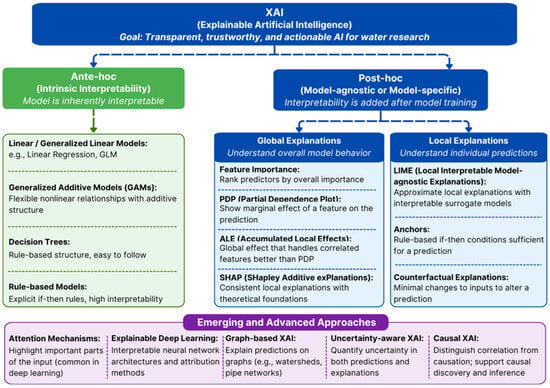
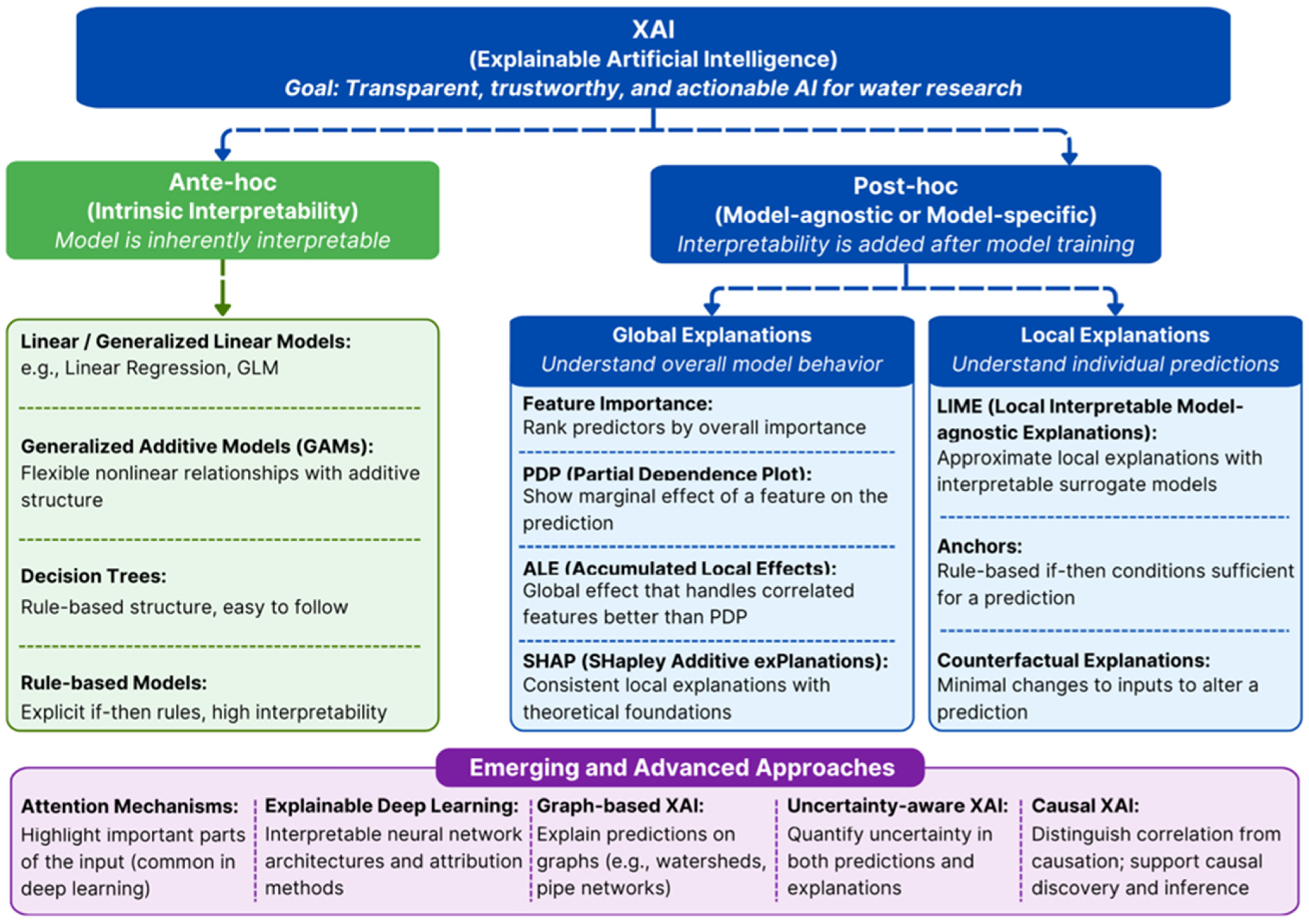
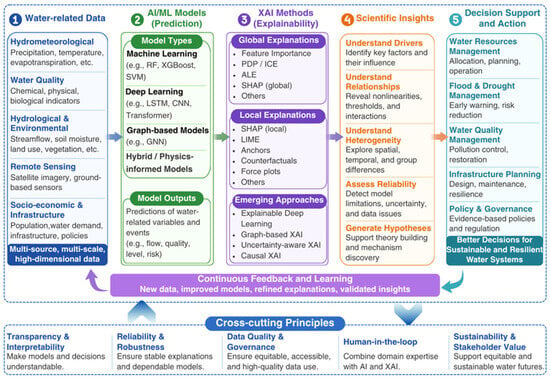
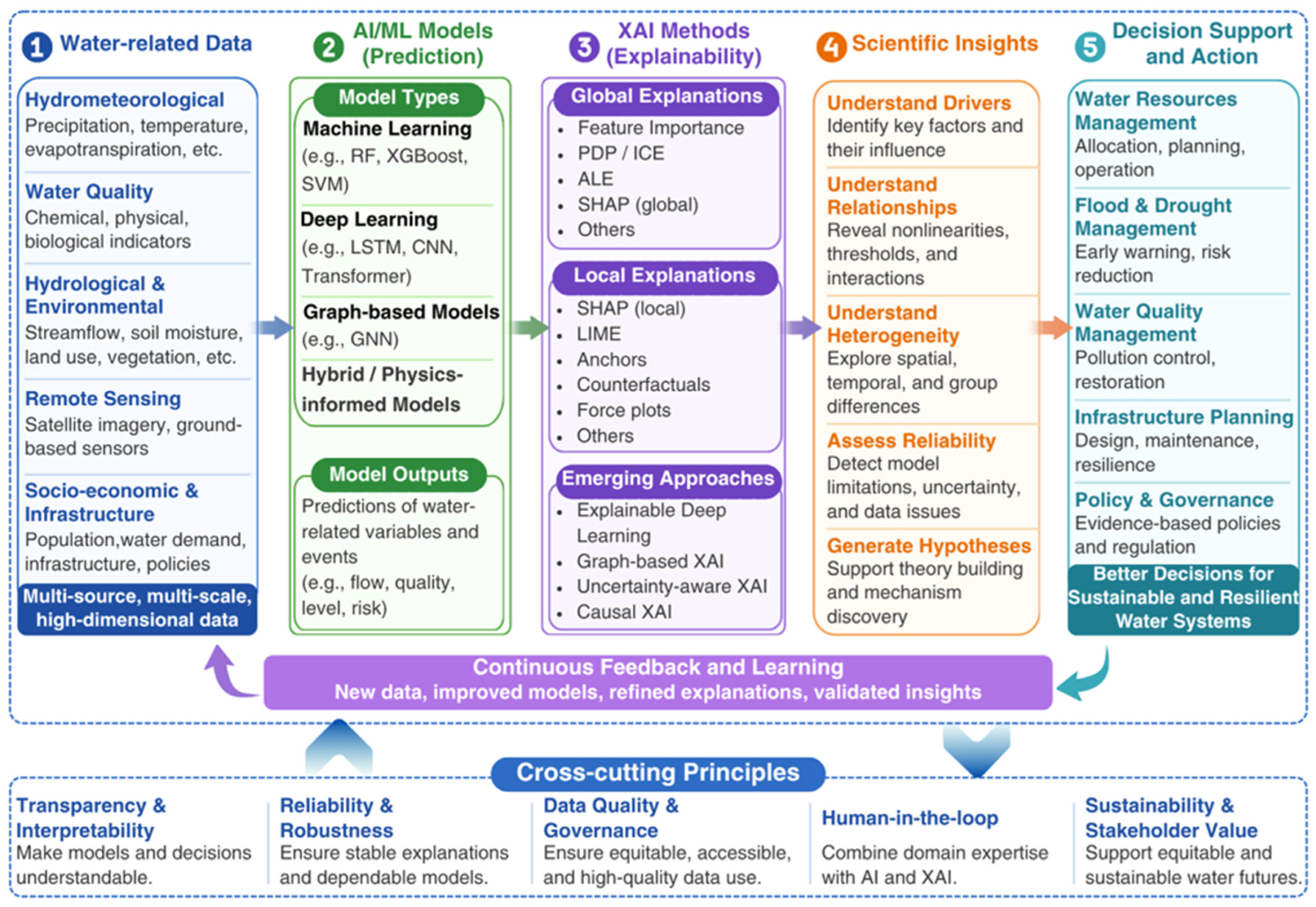
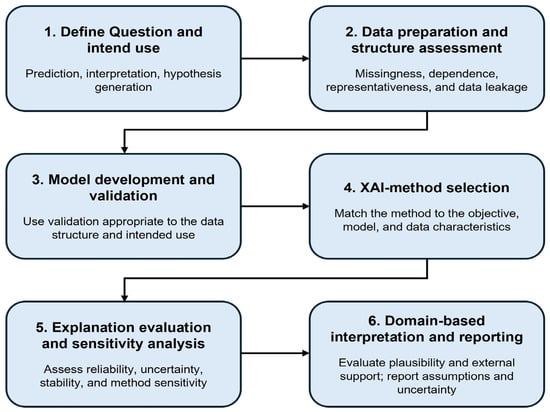
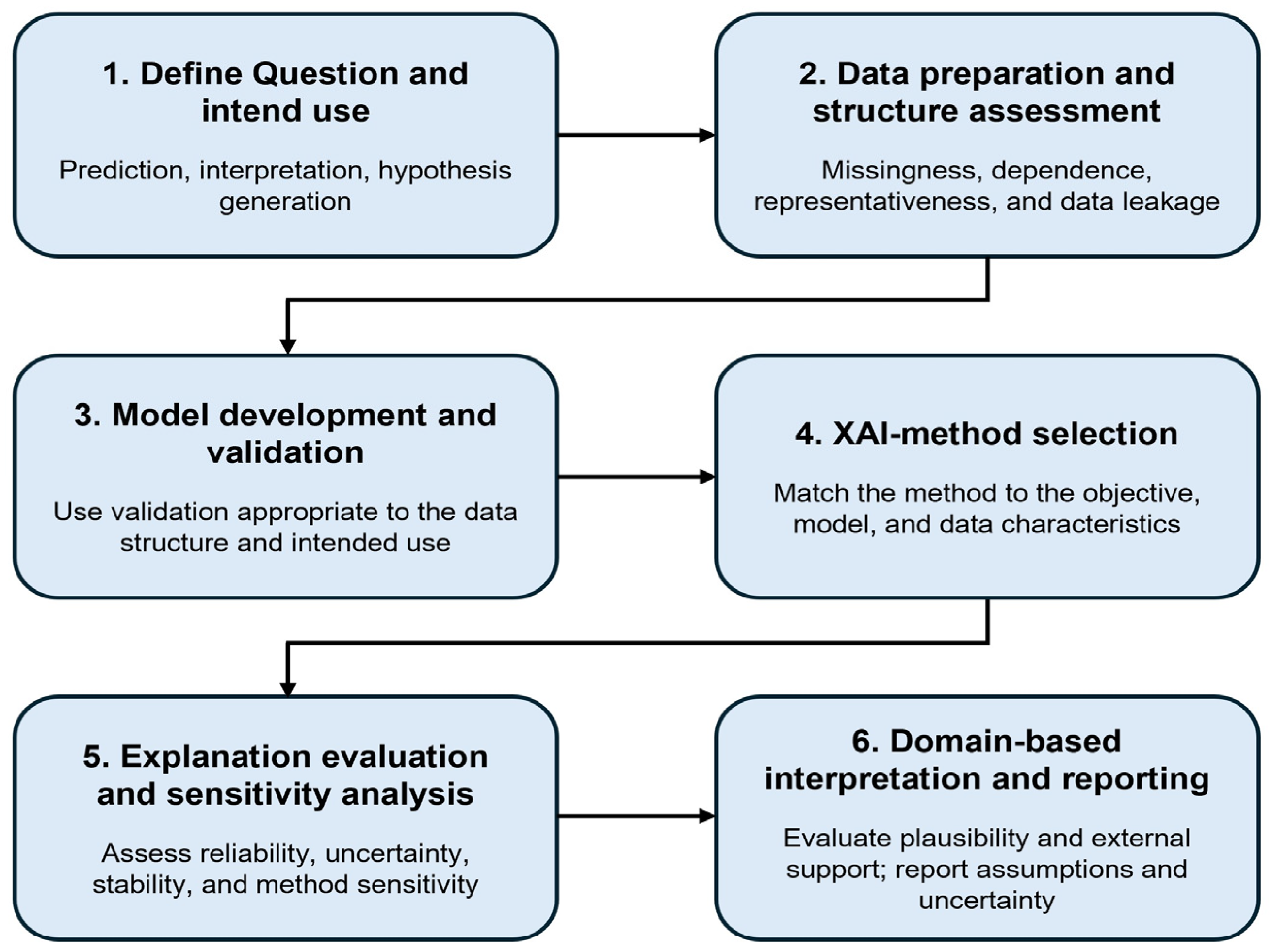

Disclaimer/Publisher’s Note: The statements, opinions and data contained in all publications are solely those of the individual author(s) and contributor(s) and not of MDPI and/or the editor(s). MDPI and/or the editor(s) disclaim responsibility for any injury to people or property resulting from any ideas, methods, instructions or products referred to in the content. |
© 2026 by the authors. Licensee MDPI, Basel, Switzerland. This article is an open access article distributed under the terms and conditions of the Creative Commons Attribution (CC BY) license.