


Abstract
Hospital wastewater (HWW) carries a high and variable burden of pathogenic microorganisms, along with a diverse spectrum of emerging contaminants, such as pharmaceutically active compounds (PhACs) and antimicrobial resistance (AMR) determinants, posing significant challenges to conventional municipal treatment systems. The COVID-19 pandemic intensified the global use of disinfection technologies for infection control, inadvertently leading to the generation and release of novel classes of disinfection by-products (DBPs) and transformation products (TPs). These emerging by-products, alongside the persistent release of pharmaceuticals and AMR elements, have exposed critical limitations in conventional and advanced disinfection processes when applied to such complex matrices. This review synthesizes recent literature on disinfection-oriented advanced treatment strategies and other contaminants of emerging concern in hospital effluents worldwide. The discussed technologies include chlorine-based disinfection (e.g., free chlorine and chlorine dioxide), ozonation, ultraviolet irradiation (UV), electrochemical disinfection (ECD), nanomaterial-enabled disinfection, and combined multi-barrier schemes. While real-time monitoring of key compounds in HWW is increasingly feasible, critical bottlenecks remain: culture-based indicators may underestimate viable but non-culturable populations, molecular assays quantify genes without directly reflecting infectivity or transfer potential, and complex matrices hinder methodological harmonization. Future efforts should prioritize risk-based multi-barrier design, activity-informed monitoring, and intelligent process control to achieve robust co-mitigation of pathogens, PhACs, and AMR while minimizing disinfection by-products (DBPs) and life-cycle energy consumption.
1. Introduction
Hospitals and medical healthcare services play a pivotal role in protecting human health and welfare, advancing medical science, and providing a foundation for public well-being [1,2,3]. The operation of hospitals requires a substantial water supply, generating significant volumes of hospital wastewater (HWW). Hospitals in high-income countries produce the highest average wastewater flow per facility, reported as approximately 466 m3/day, compared with 297 m3/day and 95 m3/day per facility in upper-middle-income and low- and middle-income countries, respectively. It is important to note that these averages are based on reported flows per hospital and are not standardized for facility scale or function. Direct comparison across income groups is therefore limited by variability in hospital size, infrastructure, and local water-use patterns [2]. HWW is considered high-risk due to its complex mixture of pathogenic microorganisms and toxic chemical contaminants [4,5]. Unlike typical urban wastewater (UWW), HWW contains elevated concentrations of pharmaceutically active compounds (PhACs), antibiotic resistance genes (ARGs), pathogenic microbes, heavy metals, and radioactive isotopes [6,7,8]. Concentrations of these contaminants can be two to 150 times higher than in UWW [9]. If inadequately treated, they can migrate into the environment, leading to bioaccumulation, biotoxicity, and the spread of antibiotic resistance [10,11,12,13]. During the COVID-19 pandemic, HWW was identified as a potential environmental reservoir and surveillance medium for SARS-CoV-2 RNA, while evidence for transmission via viable infectious virus remained limited and context-dependent [14]. Therefore, effective treatment of HWW prior to discharge is essential.
To meet the criteria of discharging of HWW, traditional technologies undergo various disinfection treatments and subsequent detection techniques to verify whether HWW has been effectively treated, as demonstrated in Figure 1. These disinfection technologies include chlorination pretreatment, ultraviolet light, nanomaterials, ozone, electrochemical, and all tech combined. The detection methods include qPCR, toxicity chemical analysis, cell viability, and selective cultures. The pathways represent the conventional wastewater treatment technologies, which still face considerable challenges in managing HWW due to its complex and variable composition. For example, UWW usually applies conventional primary and secondary treatment methods using aerobic and anaerobic biological strategies to remove the complex and then fix the nitrogen and phosphorus, followed by tertiary disinfection or polishing processes such as chlorination, ozonation, and UV irradiation to eliminate the micro-pathogens. These streamlined process technologies exhibit limitations in efficiency, safety, and sustainability [15,16]. Chlorination effectively inactivates many bacteria but generates carcinogenic disinfection by-products (DBPs). Protozoan pathogens such as cryptosporidium are widely recognized as chlorine-resistant organisms, and typical chlorine CT values used in wastewater disinfection may achieve only limited (<1 log) inactivation, unless substantially higher contact times or combined processes are applied [17,18]. Ozonation offers efficient pathogen inactivation and organic matter degradation with low halogenated by-product risk but suffers from high energy consumption, operational costs, and a lack of residual disinfection capacity [19,20]. UV irradiation leaves no chemical residues but is susceptible to water quality fluctuations and may inadequately inactivate viruses at typical doses [21]. Activated sludge systems show minimal removal efficiency for emerging contaminants such as antibiotics and ARGs, potentially exacerbating environmental dissemination of resistance [14,22]. Table 1 summarizes daily wastewater volumes, major hazardous constituents, and key treatment bottlenecks for hospitals in various countries [1,2,3].
Figure 1.
Hospital wastewater treatment pathways.
Table 1.
Daily wastewater volume, main harmful substances in wastewater, and the HWW treatment bottleneck of hospitals in some countries.
Recent research has focused on upgrading or integrating advanced oxidation processes (AOPs), membrane separation, and bioaugmentation technologies. For instance, a UV/persulfate system achieves 87% removal of azathioprine at a low cost of 0.06 USD/m3/order [4]. Composite membrane materials have been innovatively applied to enhance microbial removal, achieving near-complete elimination of endospore-forming Bacillus [5]. Bioaugmented systems combining jujube kernel-based aerated biofilters with dual backwashing processes achieve 97% removal of coliform bacteria, alongside 92.42% and 99.4% removal efficiencies for COD and NO3−, respectively [6]. Additionally, biosensors targeting ARGs enable visual detection of the ermB gene at concentrations as low as 2.75 × 10³ copies/μL, overcoming false positives associated with loop-mediated isothermal amplification (LAMP) and supporting precise monitoring [7].
In terms of regulatory frameworks, global management of HWW remains inadequately standardized, with only a limited number of countries or organizations established specific guidelines for HWW treatment and discharge [8]. For instance, China issued the Discharge standard of water pollutants from medical organizations (GB 18466-2005) [9] in 2005 and released the Technical standard of sewage treatment engineering for medical institution (GB 51459-2024) [10] in 2024, which emphasizes the necessity of disinfection processes for eliminating biological pollutants in HWW. In the United States, HWW is regulated under industrial effluent standards, and discharges into surface water must comply with the Effluent Guidelines of the Clean Water Act to ensure treated water quality [11]. The World Health Organization (WHO) provides guidance for municipal wastewater treatment plants receiving disinfected hospital effluents via sewer systems [8]. Significant disparities exist in practical HWW management across nations. Due to technological and financial constraints, countries such as Australia, Belgium, and EU member states classify HWW as municipal wastewater, permitting direct discharge into domestic sewage systems for co-treatment in urban plants, with post-treatment quality controls [8]. In contrast, nations like the United States and China mandate industrial wastewater treatment standards, requiring pretreatment (or direct treatment) in specialized facilities before environmental discharge [1,12,13]. Where such regulatory frameworks, infrastructure, or enforcement mechanisms are absent or insufficient—particularly in parts of the developing countries—HWW may still be inappropriately discharged with limited or ineffective treatment, posing persistent risks to water bodies and public health. Therefore, the standardized regulations need to be established by the countries in order to forward effective supervision.
2. Literature Analysis of Hospital Wastewater Treatment
The advanced treatment technologies and disinfection techniques for hospital wastewater were analyzed. A literature visualization analysis was adopted, and the search was conducted through Web of Science using the core search term “Hospital wastewater treatment”. Relevant literature from 2021 to 2025 was retrieved, resulting in a total of 842 relevant papers. Using VOSviewer (version 1.6.20), the related terms and research hotspots in the current HWW treatment research were analyzed, and the visualization map is shown in Figure 2. The bibliometric mapping was conducted using VOSviewer. A minimum keyword occurrence threshold of five was applied. Full counting was used, and a manual thesaurus file was employed to merge synonyms and remove irrelevant terms. The size of the circles represents the frequency of keyword occurrence, and different colors represent different directions. “Hospital wastewater” is the most central keyword, and the main content associated with the green area is “wastewater treatment”, “degradation”, “adsorption”, “performance”, “Disinfection”, while the red area mainly associates with “antimicrobial resistance”, “genes”, “bacteria”, “antibiotic resistance genes”. The blue part mainly associates with “pharmaceuticals”, “antibiotics”, “personal care products”, and “treatment plants”. Before the emergence of COVID-19, the keywords “pathogens” and “ARGs” appeared 15 times in the literature search. However, after the outbreak of COVID-19, the occurrences of these two keywords in the literature search increased to over 63 times, as reflected by growing publication density and keyword co-occurrence patterns, rather than a strictly quantified temporal trend. This requires distinction from the treatment technologies of ordinary urban wastewater. Here, “distinction” refers not only to influent composition but more importantly to treatment endpoints and risk boundaries, including pathogen log-reduction targets, ARG control expectations, and micropollutant discharge limits, which are further reflected in the subsequent process design discussions. Therefore, this review aims to integrate common disinfection technologies and advanced treatment technologies for HWW, with the goal of providing new insights and directions for achieving efficient removal of various pollutants in HWW.
Figure 2.
Visual analysis chart of literature retrieval summary based on keywords (The red cluster is mainly closely associated with antimicrobial resistance, the green cluster is mainly closely associated with hospital wastewater, and the blue cluster is mainly closely associated with pharmaceuticals).
3. Classification and Properties of Hospital Wastewater
HWW can be divided into four types based on contaminant properties: infectious, chemical, radioactive, and common sanitary sewage [2,14]. This classification helps to identify the main risk-control factors and guides the process configuration of “qualitative collection–pretreatment–comprehensive treatment”.
Contaminated wastewater mainly comes from high-exposure scenarios such as infectious disease areas, isolation wards, operating rooms, laboratories, and microbiology laboratories. It contains a relatively high load of pathogens (bacteria, viruses, parasites) as well as biological hazard factors such as antibacterial residues, drug-resistant bacteria (ARB), and genes (ARGs). It is one of the key features that distinguish HWW from general domestic sewage [3,14]. During the COVID-19 period, a total of 27 different types of bacteria and 61 ARGs were detected in wastewater samples from four hospitals in Qatar. Among them, the number of ARGs in wastewater from the COVID-19 patient area was the largest, accounting for 88.5% of the detected ARG types, noting that this proportion may be influenced by sampling design, ward layout, and internal drainage configurations, and thus should be interpreted as an indicative rather than absolute value [15]. To prevent the spread of such pollutants, this type of wastewater needs to be strictly disinfected. HWW often requires risk-oriented disinfection measures specifically targeting pathogens, ARB, and ARGs, whereas upstream load control and polishing units mainly address bulk organic matter and pharmaceuticals. HWW requiring disinfection performance typically corresponding to ≥3–5 log reduction for bacterial indicators and ≥2–4 log reduction for viral surrogates, while acknowledging that indicator–pathogen mismatches, especially for viruses and protozoa, may necessitate multi-indicator evaluation or surrogate-based assessment.
Chemical wastewater often comes from the laboratory, pharmacies/preparations, surgeries, disinfection and cleaning processes, etc. Typical pollutants include drug residues (antibiotics, antitumor drugs, analgesics/psychotropic drugs, hormones, etc.), disinfectants and their by-products (chlorine-containing preparations, glutaraldehyde, etc.), chemicals related to imaging/contrast, and laboratory reagents (acids and bases, heavy metals, organic solvents) [3,14,16]. Compared with municipal sewage, the spectrum of drugs and emerging micro-pollutants in HWW is more complex, and the concentration fluctuations are stronger. Some drugs can reach the level of milligrams per liter in raw water (the highest reported detection can reach approximately 1.1 mg·L−1), and they often exist in the form of “low-concentration, multi-component, and continuous input” ranging from nanograms per liter to micrograms per liter. This thus exerts persistent pressure on the conventional biochemical system [3,17,18]. In addition, the coexistence of halogen-containing oxidants and nitrogen-containing organic substances brought about during the disinfection and cleaning process may also increase the potential for the subsequent formation of halogenated/nitrogen-containing by-products [3,14].
Radioactive wastewater mainly comes from the diagnosis and treatment of nuclear medicine/radiology and the operation of radioactive drugs (such as radionuclide imaging, radioactive drug preparation, and cleaning waste liquids), containing radioactive isotopes such as iodine-131 and technetium-99 m, which have short half-lives but pose a risk of bioaccumulation. Although many have a relatively short half-life, if emissions are not controlled, they may pose environmental and occupational exposure risks [14]. In practice, radioactive wastewater is commonly managed through source segregation and decay storage, with holding times determined by isotope half-lives before release to the general treatment line. Threshold-based diversion and routine radiological monitoring are typically applied to ensure compliance. These measures function primarily as upstream source-control steps, rather than relying on downstream biological or chemical units for risk mitigation.
In addition to the above three types, hospitals also discharge domestic wastewater similar to municipal sewage (such as drainage from canteens, baths, laundry, and general wards), with the main pollutant loads being organic matter, suspended solids, and nitrogen and phosphorus nutrients. However, due to the frequent confluence with infectious/chemical/radioactive wastewater within the hospital, the overall water quality composition is more complex, and the shock load is more prominent [2,3,14]. In terms of physicochemical properties, HWW typically has relatively high biochemical oxygen demand (BOD), COD, TSS, and nitrogen indicators, and its biodegradability is relatively lower (BOD/COD ratio is smaller), thereby increasing the difficulty of stable compliance by single-biological methods [3,16]. The average COD of HWW in different regions can reach approximately 591–1074 mg/L, and in some cases, it can be as high as over 2000 mg/L. The average BOD in some areas is approximately 200 mg/L, and in some hospitals, it can reach over 1000 mg/L. TSS also shows significant regional differences (for instance, the average in Europe can be higher than that in Asia), and the pH of HWW is usually close to neutral (about 7.5). Parida et al. further provided the statistical result that the global average pH of HWW is approximately 7.55, suggesting that the overall pH is relatively stable, but the pollution load varies significantly [2]. Therefore, conducting diversion and targeted pretreatment by risk category remains an important prerequisite for the full-process control of HWW [14,17].
This source-based classification and risk-oriented segregation framework not only clarifies the dominant pollutant profiles and control priorities of different HWW streams but also provides a practical basis for selecting appropriate treatment processes and designing multi-barrier blocks. In this context, early diversion and targeted pretreatment are critical steps for reducing downstream treatment pressure and improving the reliability and cost-effectiveness of advanced disinfection and risk control. But, in practice, complete physical separation of all wastewater streams is rarely feasible. Segregation is therefore often implemented through simplified source-based decision rules, such as prioritizing the isolation of effluents from infectious wards, laboratories, and nuclear medicine units using dedicated drainage lines or temporary holding tanks. The minimum infrastructure typically involves partial pipeline diversion or modular pretreatment units rather than fully independent treatment systems. However, this approach may break down in older facilities with shared plumbing networks, during peak hydraulic loads, or when operational management is insufficient, leading to early mixing and reduced source-control effectiveness.
4. Disinfection Technology
HWW is a complex type of wastewater, containing many harmful pollutants such as pathogenic microorganisms, antibiotic residues, and multidrug-resistant bacteria. These pollutants seriously threaten aquatic ecosystems and public health [19,20,21]. Traditional sewage treatment technologies are ineffective at removing pollutants from HWW [22]. Therefore, the commonly used disinfection technologies for HWW include chlorination pretreatment, ozone, and ultraviolet (UV) [23]. In recent years, more advanced technologies have been adopted, such as electrochemical disinfection, nanomaterial disinfection, and the combination of disinfection technologies [24,25,26]. The by-products, advantages, limitations, and costs of HWW disinfection technology are shown in Table 2.
Table 2.
The by-products, advantages, limitations, and costs of HWW’s disinfection technology.
In this review, disinfection technologies are discussed primarily from a pathogen and AMR control perspective, whereas their oxidative or polishing roles in micropollutant removal are revisited in the advanced treatment section.
4.1. Chlorination Pretreatment
Chlorination pretreatment refers to the addition of chlorine-containing disinfectants before the HWW enters the comprehensive treatment system to preliminarily inactivate pathogenic microorganisms in the wastewater [27,28]. The main purpose is to reduce biological risks before the wastewater enters centralized treatment facilities and prevent cross-infection or secondary pollution between the hospital and downstream facilities [14,53]. Chlorination pretreatment with chlorine-containing disinfectants is one of the most traditional methods for treating HWW, which can effectively eliminate harmful substances such as bacteria and viruses in wastewater [23,27]. Meanwhile, it is widely used due to its low cost, simple equipment, and stable operation [19,21]. There are many types of chlorine-containing disinfectants. The most commonly used chlorine-containing disinfectants include bleaching powder, sodium hypochlorite, chlorine gas, and chlorine dioxide [23]. The mechanism of chlorination pretreatment is generally through hypochlorite in chlorine-containing disinfectants, which destroys the cell membranes of pathogenic bacteria, alters their permeability, and disrupts the integrity of the cells [29]. Meanwhile, chlorine-containing disinfectants can also oxidize the proteins, enzymes, DNA, and RNA of the cells, rendering them inactive [53]. Chlorine gas mainly dissolves in water to form hypochlorous acid and hydrochloric acid. Hypochlorous acid dominates the sterilization process, while hydrochloric acid enhances the acidic environment and increases the sterilization efficiency [23]. Unlike conventional chlorine-based disinfectants, ClO2 inactivates microorganisms primarily via single-electron transfer reactions, which can efficiently destroy cell membranes and membrane proteins, oxidize key enzymes, and disrupt energy metabolism, thereby achieving rapid inactivation of bacteria and fungi [30].
Azuma et al. investigated the effects of direct chloramine disinfection on six types of ARB and antimicrobial susceptible bacteria (AMSB) in HWW and wastewater from wastewater treatment plants (STP) [27]. Direct chlorination effectively inactivated most ARB and AMSB. Jiang et al. studied the chlorination effects of Escherichia coli (E. coli) and Enterococcus in the on-site sewage treatment system of hospitals. The quantities of live bacteria/VBNC E. coli and Enterococcus in the stock solution were 5.76–6.34/5.76–6.33 and 5.44–5.76/5.44–5.75 log10 (cells/mL), respectively [29]. After chlorination treatment, the log decreased by 0.44–1.88/0.43–1.88 and 0.29–1.29/0.28–1.28, respectively. Chlorination did not effectively eliminate ARGs and MGEs, but it prompted them to release external cells, indicating that there is still a risk of antibiotic resistance in HWW after chlorination. Meanwhile, chlorination treatment generates many disinfection by-products, such as trihalomethanes, haloacetic acids, haloaldehydes, etc. These by-products pose potential hazards to aquatic ecology and human health [21]. Therefore, chlorination pretreatment has certain limitations.
4.2. Ozone
Ozone is a powerful oxidant and disinfectant, suitable for various wastewater treatment applications. Ozone technology (O3) can effectively kill viruses and bacteria in HWW treatment. Its reaction mechanism can be summarized into two paths. One of them is the selective direct oxidation of molecular ozone, which preferentially attacks electron-rich groups (such as alkene bonds, aromatic amines, sulfides, etc.), rapidly altering the structure of microbial cell membranes and further oxidizing key enzyme proteins, thereby leading to the destruction of cell permeability and metabolic imbalance [32]. The second one is the non-selective oxidation of reactive oxygen species such as hydroxyl radicals (•OH) produced by the decomposition of ozone in water, which can further promote the chain breaking and functional group transformation of refractory organic substances, and enhance the overall mineralization and toxicity reduction potential [33]. In addition, ozonation can also trigger oxidative stress, thereby enhancing its antibacterial effect [53].
It is reported that ozone technology can effectively remove over 93% of antibiotics from HWW [17]. Azuma et al. took medical institution wastewater as the object and treated it based on ozone technology. The results showed that after another 10 to 30 min of treatment, multiple antibiotics (>99.9%) and ARB were inactivated [54]. Kim et al. utilized ozone to simultaneously degrade pharmaceuticals and personal care products (PPCPs) in HWW, including caffeine (CAF), atenolol (ATL), carbamazepine (CBZ), sulfamethoxazole (SMX), trimethoprim (TMP), and acetaminophen (ACT). Research shows that when the dissolved ozone is 1.0–1.5 mg/L, ozone alone can achieve over 95% removal within 20 min [55]. Lee et al. adopted ozone technology as an enhanced treatment measure for wastewater to reduce micro-pollutants (OMPs) and disinfect the wastewater simultaneously. The study found that when the ozone dosage was 0.5 g O3/g DOC, 39 types of OMPs were completely eliminated, and the removal efficiency of 22 types of OMPs was 54 ± 14%. At a specific ozone dose of 0.7 g O3/g DOC, OMP with strong ozone reactivity can be removed by nearly 100%, while OMP with weak reactivity can still be removed by approximately 30–77% [32]. It is worth noting that the use of ozone technology to treat wastewater may lead to the generation of various toxic substances, which are related to the various impurities in the wastewater. Typical risks include the formation of bromate and nitrosamine in brominated substrates [32], both of which are regarded as carcinogens for humans and pose a threat to human life and health. At the same time, ozone technology also has the disadvantages of high operating costs and complex water quality. Problems such as efficiency fluctuations lead to incomplete mineralization of pollutants [34,53]. In recent years, most researchers have combined ozone technology with other technologies to enhance the treatment effect, such as ultraviolet rays, ultrasonic waves, hydrogen peroxide, electrochemical processes, etc. [52].
Despite the demonstrated effectiveness of ozone technology in HWW treatment, its practical performance is highly dependent on wastewater characteristics, target pollutants, and process configuration. Compared with conventional biological and physicochemical treatment technologies, ozonation exhibits a clear advantage in the rapid inactivation of ARB and the degradation of structurally complex or biologically recalcitrant compounds, owing to its strong oxidation capacity and dual reaction pathways. In contrast, AOPs such as O3/H2O2 or O3/UV can significantly enhance hydroxyl radical generation, thereby improving the removal efficiency of weakly ozone-reactive pollutants. From an applicability perspective, ozonation is particularly suitable for scenarios requiring simultaneous disinfection and micropollutant control, such as hospital wastewater or pharmaceutical effluents with high antibiotic loads. However, for wastewater containing elevated levels of bromide or nitrogenous compounds, careful control of ozone dosage and reaction conditions is essential to mitigate the formation of hazardous by-products such as bromate and nitrosamines. Therefore, ozone technology is more appropriately positioned as a polishing or advanced treatment step rather than a standalone solution. In practice, ozonation is best implemented as a monitoring-guided and pilot-validated module combined with downstream biological or adsorptive polishing, rather than a fixed-dose stand-alone step, particularly where bromide and organic nitrogen fluctuate across facilities.
4.3. Ultraviolet Light
Ultraviolet (UV) refers to ultraviolet light with wavelengths ranging from 200 to 400 nanometers [23]. DNA, RNA, or proteins of microorganisms can absorb UV light. UV inhibits protein synthesis by damaging the DNA and RNA structures of bacteria, viruses, and single-celled microorganisms, leading to microbial inactivation [37]. UV technology is one of the most mature physical disinfection routes applied in HWW treatment. In engineering, low-pressure mercury lamps (254 nm, UV-C) or medium-pressure UV systems are mostly used. In recent years, new light sources such as UV-LED have also emerged. UV disinfection features a rapid sterilization rate, simple equipment, simple by-products, etc. [21].
Some studies suggest that the emerging far UVC treatment (with wavelengths ranging from 200 to 235 nanometers) can effectively treat disinfected residual bacteria (DRB) in wastewater due to its high antibacterial efficiency and low ecological burden [38]. Gao et al. studied the effect of 220 nm ultraviolet light on DRB of Escherichia coli, Pseudomonas aeruginosa, and Bacillus subtilis, etc. The results showed that compared with 254 nm UV, 222 nm UV generally had a higher inactivation effect on DRB, especially on Pseudomonas aeruginosa [38]. Shen et al. evaluated the inactivation performance of ARB in wastewater discharge through different disinfection techniques. The experiment found that ultraviolet light at 8.19 mJ cm−2 could reduce the number of multidrug-resistant bacteria by 99% [39]. However, the drawback of UV is that it cannot continuously disinfect. Meanwhile, HWW often has high turbidity and suspended solids, and particle masking will significantly reduce the effective dose, thereby lowering the treatment capacity of UV [19]. At present, the research focus is shifting from single UV disinfection to multi-barrier and process intensification. One approach is to sequentially apply or couple UV with oxidants/disinfectants (such as UV-LED+chlorine, Cl2-UV, etc.) to enhance the control of ARB/ARG and horizontal gene transfer risks, and to reduce side reactions through process sequence design [40]. Another one is to construct an integrated route of “coagulation–biological treatment–UV/H2O2 (or UV/PS)–membrane separation/adsorption”, and introduce online control and model prediction to stably meet the standards and reduce unit energy consumption under water quality fluctuations [41].
Conventional UV-C systems (254 nm) primarily inactivate microorganisms through direct DNA and RNA damage, which enables rapid disinfection with minimal chemical by-products. However, this mechanism is inherently limited by the lack of residual disinfection capability and strong dependence on optical water quality, making UV-C less effective in HWW with high turbidity or suspended solids. From an engineering perspective, UV technology is most appropriate for applications requiring rapid, chemical-free disinfection under controlled water quality conditions, particularly as a final disinfection or barrier step in multi-stage HWW treatment systems. Therefore, UV is primarily evaluated as a rapid physical disinfection barrier, while its oxidative function is mainly relevant in UV-AOP configurations rather than as a standalone oxidation process.
4.4. Electrochemical Disinfection
Electrochemical disinfection (ECD) generates strong oxidizing/disinfecting species in situ on the electrode surface through an applied current, achieving synchronous control of pathogenic microorganisms and drug-resistance-related pollutants. Its functions can generally be divided into two categories: “indirect oxidation” and “direct electrochemical action”. Direct oxidation refers to the temporary inactivation of microbial cells caused by the direct oxidation on the electrode surface. Indirect oxidation refers to the electrocatalytic generation of reactive oxygen species (ROS), such as H2O2, O3, OH, etc., or active chlorine, such as Cl2, HClO, ClO-, etc. to promote disinfection [24].
Existing studies have shown that ECD can still achieve high inactivation and drug-resistance-control capabilities in “hospital urine/high-load medical matrix” with high salinity and high ammonia nitrogen. Herraiz-Carbone et al. compared different electrochemical reactors for complex synthetic hospital urine, and the results showed that microfluidic flow through a reactor can achieve 5–6 logs of ARB removal within 180 min, while the MIKROZON® electrochemical unit can achieve seven logs of “complete disinfection” within 60 min. Meanwhile, MIKROZON® also demonstrated a stronger ability to reduce ARGs, with average reductions of 4.18 logs, 3.96 logs, and 3.23 logs for blaKPC, blaTEM, and ermB, respectively [43]. In addition to biological risk control, electrochemical processes can also take into account the deep removal of drug residues: Ouarda et al. treated real hospital wastewater with NB/BDD anodes. Under the conditions of 35.4 mA·cm−2 and 120 min, the overall removal of target drug residues could reach 100%, and pointed out that UV254 and fluorescence signals could be used as process alternative indicators for online characterization of pollutant attenuation [44].
However, ECD still has several limitations in the application of hospital wastewater. Firstly, electrode stability and mass transfer conditions are the key factors determining efficiency and energy consumption: the highly oxidized environment and local acidification near the anode can easily cause scaling, corrosion, and passivation, leading to a decline in electrocatalytic activity, a decrease in disinfection efficiency per unit charge, and a shortened electrode life, thereby increasing the total life-cycle cost [24].
The current research focus is on the combination of electrochemistry with other disinfection methods, such as photochemical and oxidation processes, to generate in situ oxidant routes like ozone/hydrogen peroxide through electrochemistry, in order to achieve the synergistic control of ARB/ARG and trace amounts of drugs while reducing the dosage of chemicals [45].
Electrochemical disinfection occupies an intermediate position between conventional chemical disinfection and advanced oxidation processes. Compared with chlorination, ECD offers greater flexibility through in situ generation of oxidants and reduced chemical transport and storage risks, while enabling partial control of ARGs and pharmaceuticals. Relative to ozone or UV-based AOPs, ECD demonstrates strong adaptability to high-salinity and high-ammonia matrices, such as hospital urine streams, but suffers from higher energy consumption and electrode degradation issues under prolonged operation. Electrode stability, fouling, and replacement frequency remain key economic bottlenecks at scale. Consequently, ECD is more suitable for high-strength, decentralized or specialized hospital streams, or as a hybrid unit combined with photochemical or oxidation processes, rather than as a universal disinfection technology for large-flow municipal integration.
4.5. Disinfection Methods for Nanomaterials
Nanomaterial disinfection is usually used as an HWW advanced treatment/terminal-strengthening unit. Through the contact sterilization or adsorption interception effect of nanomaterials, it can achieve a synergistic reduction in pathogenic microorganisms and drug-resistance-related risks through pathways such as the generation of active oxygen by photoelectricity [48]. In the scenario of hospital wastewater enriched with ARB and ARGs, there is a clear demand for developing more efficient and sustainable inactivation technologies [56].
Kamani used N-doped TiO2 nanoparticles to remove coliform bacteria and fecal coliform bacteria in the effluent of hospital sewage treatment plants in the sun/n-doped TiO2 process. After 150 min, the cell counts of coliform bacteria and fecal coliform bacteria decreased from 5 × 10⁵ to 7 × 10³ MPN/100 mL and from 4 × 10³ to 2 × 10² MPN/100 mL, respectively [49]. Carbon quantum dots (CQDs) and graphene (oxidation) quantum dots (GQDs/GOQDs) are often used as co-catalysts or photosensitive components due to their zero-dimensional size, tunable surface chemistry, and excellent photoelectric properties. They enhance disinfection efficiency by improving visible light utilization, promoting electron-hole separation, and ROS generation. Taking graphene oxide quantum dots (ox-GQDs) modified oxygen-doped porous carbon nitride (PCNO) as an example, the research indicates that the introduction of ultra-small zero-dimensional quantum dots can accelerate charge transfer, regulate energy bands, and improve light capture, thereby significantly enhancing the photocatalytic activity of porous semiconductors. Xu et al. reported that when the loading of ox-GQDs is 0.2 wt%, the killing rate of E. coli by ox-GQDs/PCNO within 4 h of visible light irradiation can reach 99.6%, while that of unmodified PCNO is only 31.9%, indicating that quantum dot modification can upgrade the “weak visible light response substrate material” to an efficient disinfection system [50]. Another representative route is the combination of CQDs and TiO2: the CQD-TiO2 prepared by Guo et al. showed stronger free-radical generation and faster sterilization kinetics under visible light. Its killing efficiencies against E. coli and Staphylococcus aureus under 1.0 mg·mL−1 visible light for 24 h were 90.9% and 92.8%, respectively. It maintains stable antibacterial performance after seven cycles [51]. The introduction of transition metal dopants, such as Fe, into CQDs/GQDs has recently attracted attention because Fe sites can act as electron traps or redox-active centers, promoting interfacial charge transfer and Fenton-like reactions while potentially enabling magnetic recovery and reducing material dispersion. Therefore, Fe-doped CDQ systems are considered a promising direction not solely due to improved antibacterial efficiency, but because they offer a feasible pathway toward balancing catalytic activity, recyclability, and operational safety. This not only enhances electron transfer but also improves visible-light response and carrier-separation efficiency. Moreover, it can be combined with UV, ozone, or electrochemical units to build multi-barrier coupling processes to adapt to the fluctuations in HWW water quality and achieve stable compliance.
Although numerous laboratory-scale studies report high removal efficiencies of nanomaterial-based systems for pharmaceuticals, pathogens, and AMR determinants, their full-scale application in hospital wastewater treatment is still constrained by economic, engineering, and environmental factors. One of the most critical bottlenecks is the high material synthesis cost and energy intensity, particularly for advanced nanomaterials such as graphene derivatives, carbon nanotubes, and engineered metal oxides, which remain significantly higher than that of conventional adsorbents or oxidation reagents, thereby limiting their practical deployment in WWTPs [57,58]. Moreover, the scalability and reproducibility of nanomaterial properties (e.g., particle size distribution, surface functional groups, and dispersion stability) are difficult to maintain under industrial production conditions, and treatment performance often deteriorates in real HWW matrices with high DOM and suspended solids compared with laboratory systems [59].
From an operational perspective, material loss, recovery difficulty, and regeneration inefficiency further undermine the cost-effectiveness of nano-enabled processes. Although immobilization strategies and magnetic separation have been proposed to improve nanomaterial reuse, long-term stability, regeneration efficiency, and standardized recovery protocols under continuous-flow conditions are still insufficiently demonstrated at pilot or full scale [58,60]. In addition, the potential environmental and health risks associated with nanoparticle release, including ecotoxicity, bioaccumulation, and secondary contamination, raise regulatory and public-acceptance concerns, highlighting the need for comprehensive life-cycle assessment and risk-oriented evaluation before large-scale implementation [3,5,59]. Consequently, future development of nanomaterial-driven disinfection in HWW should prioritize low-cost and green synthesis routes, material immobilization and recovery design, and integrated techno-economic and environmental assessments, rather than solely pursuing higher laboratory-scale removal efficiencies.
4.6. Combined Use of Disinfection Technologies
The combined disinfection of hospital wastewater mostly adopts the multi-barrier concept. By operating two or more disinfection or advanced oxidation units in sequence or in coupling, rapid inactivation, deep oxidation, and residual risk control can be achieved simultaneously in the same process [61]. Typical routes include the coupled system of advanced ozone oxidation, the ultraviolet and chlorine-containing oxidation system and its electrochemical generation version, the ultraviolet and hydrogen peroxide system, as well as the combined process that achieves extremely fast disinfection with a highly active oxidation system [61]. The basis of this synergy lies in the fact that the ozone, ultraviolet, and peroxide systems can continuously generate strong oxidizing species such as hydroxyl radicals in the aqueous phase, intensifying the non-selective destruction of cell membranes, proteins, and nucleic acids. The chlorine-containing system, on the other hand, can provide a certain continuous disinfection capacity and inhibit regrowth in the pipeline section [62]. Pre-oxidation can also alter the structure of particles and organic matrices, reduce the shielding effect, and make the effective dose of subsequent ultraviolet or chemical oxidation more sufficient, thereby enhancing the overall inactivation efficiency and reducing the dose requirement of a single process [62].
For HWW, Azuma et al. compared systems such as O3, O3 and H2O2, O3 and UV, and O3/UV/H2O2. The results showed that multiple antibacterial drugs and drug-resistant bacteria could be inactivated or removed by more than 99.9% within 10 to 30 min, and the drug-resistant genes could be reduced by 1.4 to 6.6 log10 during the treatment process. Overall, the performance of O3 with UV and O3 with UV and H2O2 is superior to that of single ozone or O3 with H2O2 systems, indicating that the free-radical pathway is more crucial for the in-depth control of AMR elements [54]. Another common combination is the combination of chlorine and ultraviolet light. Shekhawat et al. compared chlorination alone, ultraviolet alone, and the combined chlorine–ultraviolet process in treated sewage. The study selected a chlorine dose of 2.5 mg/L and an ultraviolet dose of 41 mJ·cm−2 based on meeting the control target of coliform bacteria. The effects of the combined process on microbial communities, resistance-related functional genes, and the formation of disinfection by-products were further evaluated, suggesting that while the combined use of chlorine and ultraviolet rays enhances disinfection efficiency, it is necessary to simultaneously pay attention to by-products and risk transfer [63]. The combined technology also has certain limitations. The process coupling needs to be adjusted and controlled. The longer the AOP chain, the higher the requirements for operation control and maintenance. If there is a lack of online monitoring and closed-loop regulation, it is easy to have excessive addiction or insufficient treatment.
Multi-barrier disinfection strategies generally outperform single processes in terms of microbial inactivation and AMR control; their effectiveness and practicality strongly depend on the functional role of each unit within the treatment train. Radical-driven combinations (e.g., O3/UV, O3/UV/H2O2, UV/H2O2) are particularly effective for the deep degradation of antibiotic-resistant bacteria and resistance genes due to sustained hydroxyl radical generation, but they lack residual disinfection capacity and are sensitive to fluctuations in water matrix composition. In contrast, chlorine–UV systems integrate rapid photolytic inactivation with downstream residual protection, making them more suitable for distribution systems requiring regrowth suppression, albeit at the cost of increased by-product formation risks. Pre-oxidation–disinfection sequences further enhance overall efficiency by reducing particle shielding and lowering the required dose of downstream units, yet excessive process coupling can lead to higher operational complexity, energy consumption, and control challenges. Therefore, combined disinfection systems are most appropriate when designed with clear functional partitioning—assigning advanced oxidation for deep AMR attenuation and chlorine-based processes for residual control—supported by real-time monitoring and closed-loop regulation to avoid over-oxidation or insufficient treatment. From an engineering perspective, multi-barrier disinfection should be regarded as a flexible toolbox rather than a universally intensified solution, with process selection guided by target risks, water quality variability, and operational manageability.
4.7. Non-Thermal Plasma-Based Disinfection
Non-thermal plasma (NTP)-based disinfection has emerged as a promising chemical-free advanced treatment strategy for HWW, particularly for the inactivation of pathogens and the control of AMR. Unlike conventional chemical or photochemical disinfection, NTP generates a complex mixture of highly reactive species, including hydroxyl radicals, atomic oxygen, ozone, hydrogen peroxide (H2O2), reactive nitrogen species (RNS), ultraviolet photons, and transient electric fields, which can act synergistically to induce rapid microbial inactivation [64,65].
Current plasma configurations applied in water treatment mainly include dielectric barrier discharge (DBD), plasma jets, corona discharge, and gliding arc discharge systems. These reactors can be operated at atmospheric pressure and near-ambient temperature, making them suitable for decentralized or on-site HWW treatment scenarios [64]. Experimental studies have demonstrated that NTP can achieve several-log reductions in pathogenic bacteria within minutes, primarily through oxidative damage to cell membranes, intracellular proteins, and nucleic acids, as well as direct disruption of ARGs.
Compared with traditional disinfectants, plasma-based processes show particular advantages in AMR control. Multiple studies have reported that NTP is capable of degrading both intracellular and extracellular ARGs, thereby reducing the risk of resistance persistence associated with disinfection-induced cell lysis [66,67]. Ho et al. demonstrated that exposure to non-thermal atmospheric pressure plasma resulted in significant fragmentation and loss of function of ARG sequences, even when bacterial culturability had already been eliminated, indicating a decoupling between microbial inactivation and genetic risk control [67]. These findings suggest that plasma-based disinfection may offer a broader risk-reduction spectrum than conventional methods that primarily target viable cells.
Plasma processes also exhibit synergy when coupled with oxidants or other advanced treatment units. For example, the integration of NTP with peracetic acid or hydrogen peroxide has been shown to enhance radical generation efficiency and accelerate the removal of antibiotics and ARGs in complex wastewater matrices [65]. Such hybrid strategies may partially offset the energy demand of plasma systems while improving robustness under fluctuating HWW compositions.
Despite its advantages, the large-scale application of plasma-based disinfection remains limited by several challenges. High energy consumption, reactor scale-up difficulties, and reduced treatment efficiency in high-turbidity or high-organic-load matrices remain critical bottlenecks [64,66]. In addition, the formation of plasma-induced transformation products and nitrogen-containing by-products has not been fully characterized, necessitating further research on toxicity evolution and process optimization before full-scale implementation in HWW treatment systems.
In general, plasma-based disinfection represents a promising complementary technology for high-risk wastewater streams, particularly where chemical minimization and enhanced AMR control are prioritized. Future research should focus on reactor engineering, energy optimization, and integration with existing multi-barrier treatment frameworks to improve feasibility and reliability for hospital wastewater applications.
5. Advanced Treatment Technology
5.1. Physico-Chemical Treatment
Research on physical and chemical treatment is relatively scarce. The two commonly used methods are membrane filtration and adsorption. Membrane filtration is a traditional tertiary treatment process used to remove pollutants from wastewater [13]. Membrane filtration in the advanced treatment of hospital wastewater usually takes pressure-driven membrane separation as the core, achieving synchronous control of particulate matter, pathogens, and some micro-pollutants through screening, retention, and interface interaction [68]. Adsorption technology, due to its simplicity of operation, rapid onset of effect, and strong process flexibility, is often used for advanced treatment of HWW, with a focus on reducing emerging pollutants such as antibiotics (ECs) [69].
5.1.1. Membrane Filtration
Nanofiltration (NF) and reverse osmosis (RO) are commonly used dense-membrane separation units in the advanced treatment stage of hospital wastewater, usually placed after the secondary effluent. Both are pressure-driven processes, but their separation mechanisms are different. In addition to pore-size screening, NF is also affected by the surface charge of the membrane and the morphology of solute ions. It often retains charged or dissociable drugs through Donnan repulsion and dielectric effect enhancement [13]. RO, on the other hand, mainly relies on dissolution and diffusion, with denser mass-transfer channels and a stronger overall barrier to solutes. The removal effect of new pollutants such as drug-active compounds and endocrine disruptors in hospital wastewater is often closely related to molecular weight, state of charge, solubility, influent organic matrix, and operating conditions [13].
It has been reported that NF helps remove pharmaceutically active compounds (PhACs) from hospital wastewater through three steps: adsorption, sieving, and electrostatic desorption. The removal rate of halogen-containing organic compounds and natural and synthetic steroid hormones in hospital wastewater by NF can exceed 90% [13]. Dense nanofiltration membranes can achieve a high proportion of retention for typical drugs under optimized operating conditions. Licona et al. demonstrated that under conditions of 20 bar and pH 5, the retention rate of NF90 for drugs such as acetaminophen, caffeine, ibuprofen, analgin, and diclofenac could exceed 88%, and pointed out that small molecules are mainly controlled by screening. The retention of easily dissociated compounds such as ibuprofen within the pH range of 5 to 7 is more significantly affected by electrostatic repulsion [70]. In broader membrane separation research, Radjenovic et al. systematically evaluated the removal of NF and RO from various drugs, and the retention rates of almost all the tested drugs exceeded 85% [71]. Membrane separation is essentially a phase-transfer technology rather than a degradation process. Pollutants are more concentrated in the concentrate rather than degraded, which poses requirements for subsequent treatment in the context of hospital wastewater. In terms of ARG risk, NF and RO have certain barrier effects on ARG. The reduction mechanism not only includes the retention of gene-carrying microorganisms and particles but may also involve the size exclusion of free DNA and membrane surface interaction. The review of hospital wastewater also emphasizes that RO and NF can achieve a relatively high logarithmic reduction. However, in some studies, ARG signals were still detected at the gene-copy level, which does not necessarily indicate viable resistant organisms but suggests incomplete genetic risk attenuation. Therefore, relying on a single barrier is not sufficient to completely eliminate residual risks [13]. Although NF and RO can provide high-quality effluent without the addition of disinfectants, the membrane filtration process often leads to flux decline and increased maintenance costs due to biological and organic contamination [69]. At the same time, pretreatment under complex matrices cannot be ignored. Usually, it is necessary to reduce the load of colloids and dissolved organic matter through coagulation sedimentation, microfiltration, or ultrafiltration, etc., to reduce the tendency of masking and contamination, thereby stabilizing membrane flux and retention performance [72]. Therefore, NF/RO should be regarded as a separation barrier rather than a complete destruction process, and its overall treatment success is conditional on the management strategy for the concentrate stream.
A more feasible direction at present is to develop low-pressure RO and anti-pollution modified membranes, and to combine them with online monitoring to achieve adaptive operation based on water-quality fluctuations. Alternatively, the concentrated liquid can be incorporated into the terminal destruction unit, and the drug residues and transformation products enriched in it can be reduced through methods such as granular activated carbon adsorption or electrochemical oxidation. For instance, when granular activated carbon is used for RO concentrated liquid, the removal rates of ibuprofen and diclofenac can reach 90.9% and 85.9%, respectively. And the concentrated liquid can be further treated by electrochemical oxidation to reduce the risk of discharge [72].
5.1.2. Adsorption
Adsorption is usually contributed by both physical adsorption and chemical adsorption. The former relies on pore filling and van der Waals interactions, while the latter is related to electrostatic interactions, hydrogen bonds, complexation, and π-π interactions mediated by surface functional groups. Its removal efficiency is affected by the pore structure and surface properties of the adsorbent, and is also significantly restricted by water quality factors such as pH, salinity, temperature, and competitive adsorption of dissolved organic matter [69]. “Removal” for adsorption refers to aqueous-phase reduction rather than molecular destruction, and the overall environmental benefit depends on regeneration or final disposal pathways. At present, the most mature application in engineering is activated carbon (AC), including powdered activated carbon (PAC) and granular activated carbon (GAC). PAC is mostly operated by adding slurry and usually requires subsequent filtration and separation. GAC mostly adopts fixed beds, which have both adsorption and filtration functions, making it easier to achieve saturation utilization and continuous operation [72].
Margott et al. investigated a pilot-scale powdered activated carbon (PAC) adsorption system that utilized a well-mixed contact reactor with a volume of 30 m3, continuously adding PAC slurry at a concentration of 3–5 g/L until the dosage reached 10–20 mg/L [73]. Burdova et al. used Miscanthus x giganteus biochar in the effluent of a real hospital sewage treatment plant. This biochar also showed a relatively high reduction effect on multiple target drugs. For instance, the removal rates of sulfamethoxazole, trimethoprim, venlafaxine, clarithromycin, tramadol, and diclofenac reached 80%, 91%, 100%, 96%, 93%, and 86%, respectively [74].
However, adsorption does not completely remove pollutants but transfers them to the solid phase. If regeneration and disposal are improper, desorption or solid waste disposal may cause secondary pollution. Meanwhile, the high organic load and complex matrix of HWW can lead to non-specific adsorption and capacity loss, resulting in increased reagent consumption and operating costs [69]. In practical applications, PAC and GAC are currently the main types, which have disadvantages such as high operating costs and insufficient adsorption selectivity.
The research focus is shifting from traditional carbon materials to new adsorbent systems that are high-capacity, renewable, and more suitable for field applications. Mkilima et al. used alkali-treated pineapple leaf fibers as adsorbents under optimized conditions, such as pH 7 and 35 °C. The removal rates of ciprofloxacin, acetaminophen, and ibuprofen can reach up to 89.7%, 88.5%, and 77.1%, respectively. This material still maintains a relatively high removal level during the regeneration cycle, and the removal rate remains at 85.9% after the fifth cycle, suggesting that it has certain application prospects in the direction of low-cost renewable adsorbents [75].
Adsorption is widely applied for the attenuation of micropollutants in HWW; its effectiveness is fundamentally governed by the trade-off between removal efficiency, selectivity, and life-cycle sustainability. Conventional carbon-based adsorbents, such as PAC and GAC, exhibit broad-spectrum adsorption driven by pore filling and surface interactions, making them robust under variable influent conditions; however, this non-selective behavior also leads to rapid capacity exhaustion in complex wastewater matrices and increased operational costs. In contrast, emerging biochar- and biomass-derived adsorbents offer advantages in terms of renewability, tunable surface chemistry, and regeneration potential, yet their adsorption performance remains highly sensitive to water quality fluctuations and competitive organic matter interference. From a mechanistic perspective, adsorption does not achieve molecular destruction but merely transfers contaminants to the solid phase, rendering regeneration, disposal, and desorption control critical to preventing secondary pollution. Therefore, adsorption is more suitably positioned as a polishing or buffering unit in HWW treatment trains, particularly for mitigating residual pharmaceuticals and toxicity peaks, rather than as a standalone removal strategy. The rational selection of adsorbents should prioritize not only uptake capacity but also selectivity, regenerability, and compatibility with downstream regeneration or disposal pathways.
5.2. Chemical Treatment
5.2.1. AOP
Advanced oxidation process (AOP) is centered on the generation of strong reactive oxygen species (ROS) such as hydroxyl radicals in situ, and achieves the simultaneous reduction in refractory drug residues and biological risk factors through non-selective oxidation [22]. In HWW, the Fenton system generates hydroxyl radicals through the activation of hydrogen peroxide by Fe2+, thereby triggering the cracking of aromatic rings, side-chain breakage, and functional group transformation, and can concurrently damage cell membrane lipids, membrane proteins, and nucleic acid structures, inactivating bacteria and viruses.
The traditional Fenton is constrained by acidic conditions and iron sludge formation, so the research focus has gradually shifted to photo-Fenton and similar Fenton systems that can operate in near-neutral conditions. On the one hand, visible light or sunlight is introduced to promote the cycling of Fe3+ to Fe2+, accelerating the continuous supply of ROS. On the other hand, by using chelating agents to stabilize dissolved iron, the risk of iron precipitation is reduced. Taking Fe3+-ethylenediaminetetra-succinic acid (EDDS) as an example, Cuervo Lumbaque et al. used solar photo-Fenton in real HWW to achieve approximately 77% overall removal of six representative drug residues (each 500 μg/L) within 30 min [76]. Additionally, electro-Fenton (EF) transforms the “agent addition” part into an in situ supply by the electrode, typically continuously generating H2O2 through the reduction of Fe3+ by two electrons at the cathode, and simultaneously achieving Fe3+ reduction and regeneration, thus maintaining the flux of hydroxyl radicals at a lower dosage. It is also coupled with microbial electro-Fenton (BEF) for energy recovery during the treatment process. Li et al. constructed a microbial electro-Fenton system using erythromycin (ERY) as a model pollutant, achieving an average removal rate of 88.73% within 48 h, and a significant reduction in resistance genes such as ermB, with a log removal of ermB reaching 1.96, indicating the potential of EF systems in the coordinated control of low-concentration antibiotics and ARGs [77]. At the level of resistance risk control, Ahmed et al. conducted photo-Fenton disinfection research under visible light LED and neutral pH conditions, achieving approximately 6.17 log removal of ARBs within 30 min, and reducing extracellular ARBs by 6.75–8.56 log, and no ARB growth was observed within 48 h, indicating that enhanced ROS can simultaneously reduce the risk of culturable bacteria and the transferable genetic information load [78].
Although AOP has shown outstanding performance in reducing new pollutants and resistance risks in HWW, its limitations still need to be pointed out in the review. AOP typically faces problems such as high oxidant consumption, substrate quenching, and competition with side reactions. Dissolved organic matter and carbonate in hospital wastewater can reduce the utilization efficiency of effective hydroxyl radicals, and some drugs may form transformation products through oxidation rather than complete mineralization. Therefore, it is necessary to combine toxicity assessment with subsequent biological treatment or adsorption units for a risk closed-loop [76].
Compared with membrane separation, AOPs generally introduce higher chemical consumption, whereas their advantage lies in molecular transformation rather than phase transfer. From a process-comparison perspective, AOPs are distinguished by their ability to achieve non-selective chemical destruction of pharmaceuticals and resistance determinants, rather than simple phase transfer or biological attenuation. However, this advantage is accompanied by high oxidant demand and sensitivity to matrix scavengers, which limits energy efficiency under complex hospital wastewater conditions. Compared with biological or adsorption-based treatments, AOPs offer faster and more robust risk reduction but require careful integration to avoid incomplete mineralization and excessive operating costs. Therefore, AOPs are best positioned as targeted polishing or intensification units, where their strong oxidation capacity is applied to residual high-risk compounds after upstream load reduction.
5.2.2. Contact Aeration Process
The functionalized microbubble technology takes the intrinsic advantages in removing bacterial cells as well as co-existing organic matter. Those colloidal gas aphron-based microbubbles are of a special structure, consisting of a gas core encapsulated with multilayered surfactant molecules. The microbubbles can be surface- and core-modified through complexing the frother component with coagulant (or flocculant) and/or encapsulating the oxidative component into the gaseous core [79]. In HWW treatment, this approach can be coupled with the enhanced gas–liquid contact process of the contact aeration process (CA): the high specific surface area of microbubbles and the higher gas content rate enhance the mass transfer efficiency. Meanwhile, the surface coagulation layer provides charge neutralization, scavenging and bridging effects, making it easier for bacterial cells, colloidal organic matter, and particles carrying antimicrobial genes to be captured at the interface and separated along with the bubbles; if ozone is loaded in the gas core, in situ oxidation and inactivation can be achieved near the interface, forming a cascade process of capture, oxidation, and inactivation, thereby simultaneously reducing conventional pollution indicators and risk factors related to antibiotic resistance within a shorter retention time [79,80,81].
Existing studies have provided relatively clear engineering performance data. Zhang et al. used real hospital wastewater as the object, constructed Al(III)- or Fe(III)-modified colloidal microbubbles and their ozone-loaded systems, with influent COD of 174.8 ± 22.1 mg/L, fecal coliforms of (1.47 ± 0.50) × 104 MPN/L, and culturable bacteria of (2.79 ± 1.45) × 105 CFU/mL; using the functionalized microbubbles loaded with ozone for 3 min could reduce COD to approximately 25.3 mg/L, and reduce fecal coliforms to the level meeting the discharge standards of medical institutions, while inhibiting regrowth and enhancing the biodegradability of organic matter [79]. Regarding the risk of antibiotic resistance, another study used coagulative colloidal gas aphrons (CCGAs) to capture sulfamethoxazole-resistant bacteria, with the removal rate of resistant bacteria reaching 92.4–97.5% under the presence of dissolved organic matter, and the free-type ARGs could be reduced by 1.86–3.30 log; further encapsulating ozone as coagulative colloidal ozone aphrons (CCOAs) led to 91.2% of resistant bacterial cell membranes being damaged and inactivated, indicating that the gas core oxidant can significantly enhance the interface inactivation intensity and strengthen antibiotic resistance control [80].
The advantages of this CA-enhanced route lie in its compact process, short contact time, and the ability to reduce the dosage requirements of a single disinfection or oxidation unit through the synergy of capture and in situ oxidation, thus being more suitable for use as a pre-boosting or end barrier in upgrading and renovation. Its limitations mainly come from the constraints of reagents and operation: coagulants and surfactants bring chemical consumption and sludge production, and dissolved organic matter in complex substrates may have a competitive effect on the capture of free ARGs and lead to performance fluctuations; the ozone loading system also needs to pay attention to the risks of bromate salts and other by-products and on-site safety, energy consumption issues [79,80,81]. Future innovations can focus on degradable low-toxicity foaming systems, the recycling of functionalized interface materials, and coupling with electrochemical or photochemical processes to achieve on-demand generation of ozone or hydrogen peroxide in situ, and combining with online monitoring to achieve stable dual constraints on pathogens and antibiotic resistance factors [13,79,81].
5.2.3. Flocculation and Coagulation
Traditional coagulation–flocculation technology was implemented via the addition of chemicals to agglomerate dissolved and suspended colloid into large particles with a decrease in turbidity [82]. The flocs are removed as sludge by a subsequent sedimentation process. The mechanism of coagulation–flocculation was particle destabilization by changing surface charge via double-layer compression, charge neutralization, colloid entrapment, and intraparticle bridging. Common coagulants or flocculants include Aluminum sulfate, polyaluminum chloride, ferric chloride, iron sulfate, and ferric sulfate in practice. Owing to its easy operation, relatively simple design, and low energy consumption, coagulation–flocculation has been successfully employed in different types of industries. Flocculation and coagulation are very helpful in reducing odor, turbidity, and some contaminants, and the removal efficiency can be regulated by adjusting coagulants ratio, but have no significant effect on ARGs and emerging contaminants. Flocculation and coagulation are effective in the removal of total suspended solids (TSS) (88%) and chemical oxygen demand (COD) (52%), but removal for pharmaceutical and personal care products (PPCPs) is low [83]. The removal rates for diclofenac (DCF), naproxen (NPX), and ibuprofen (IBP) are lower than 46%. The combined coagulation–flotation process can remove 92% of TSS. In the HWW matrix, the combination of natural protein-based coagulant and polyaluminium chloride can also enhance the reduction in pathogenic bacteria. Nonfodji et al. reported that when Moringa oleifera seed protein (MOP) was used in HWW, the removal rates of E. coli, Vibrio cholerae (V. cholerae), and Pseudomonas aeruginosa were 74.28%, 76.36%, and 90%, respectively; after further constructing the MOP-PACl composite coagulant, the removal rates of E. coli, V. cholerae, and P. aeruginosa were increased to 79.11%, 98.66%, and 100% [84].
However, the high cost of coagulants and the environmental challenges associated with the disposal of post-flocculation residues may impose significant economic and ecological burdens. Consequently, the development of low-cost and environmentally friendly materials has emerged as a critical research field. Moringa oleifera seeds protein–polyaluminum chloride composite coagulant was applied in HWW treatment [84], which present a removal rate of 73.80% turbidity, 50% COD, 52.68% UV254, 95.75% against E. coli, 98.40% against V. cholerae, and 86.21% against P. aeruginosa strains. In addition, electrocoagulation (EC) has been proven as a cost-effective treatment technology in recent decades. EC has merits, including simple operation, high removal efficiency, low hydraulic retention time (HRT) for treatment, no moving parts, less sludge production, no chemical use, and even disinfection potential. The electrode materials, voltage, and reaction conditions can change the removal efficiency. EC process using aluminum and iron electrodes can achieve the highest COD and turbidity removal of real HWW in neutral conditions, while using three iron pairs as electrodes can achieve a removal efficiency of 91.92%, 87%, and 92.16% for cefazolin, COD, and turbidity removal, respectively. The removal efficiency can be increased with an increase in voltage [85]. EC process can also be combined with other technologies, like coupling of continuous flow electrochemical coagulation (ECC) and adsorption for the removal of pollutants/contaminants in real HWW. The coupling method achieved a desired 75–80% COD removal, disinfection effect of <10 CFU/mL, and an operation cost of less than 50.95 INR/m3 [86]. EC also shows good removal performance on emerging contaminants. EC process by aluminum electrodes was applied successfully with a removal efficiency of 88.57% for ciprofloxacin. Electrode consumption and electrical energy consumption were found to be 66.80 g m−3 and 0.613 kWh m−3, respectively [87]. Ghernaout et al. demonstrated in the culture medium system that EC could completely remove E. coli cells within approximately 30 min, demonstrating its rapid ability to reduce bacteria [88].
Despite their proven effectiveness in turbidity, TSS, and partial COD removal, coagulation–flocculation and electrocoagulation processes function primarily as physical–chemical separation technologies rather than true contaminant-destruction pathways. Conventional chemical coagulation offers operational simplicity and robustness under fluctuating hydraulic conditions, but its non-selective removal mechanism limits its effectiveness toward ARGs and dissolved micropollutants while generating large volumes of chemical sludge that pose disposal challenges. In contrast, electrocoagulation introduces in situ coagulant generation and electrochemical effects that enhance contaminant destabilization and microbial inactivation, while reducing chemical input and sludge production; however, its performance is highly dependent on electrode material, energy supply, and operational control. From an application perspective, coagulation-based technologies are best suited as pretreatment or supporting units in HWW treatment trains, where they mitigate particulate shielding, reduce organic load, and stabilize influent quality for downstream advanced oxidation or disinfection processes. Their role should therefore be evaluated based on sludge management capacity, energy availability, and integration potential, rather than standalone removal efficiency of emerging contaminants or resistance determinants.
5.3. Biological Treatment
Biological treatment in wastewater is ecologically and economically attractive among water treatment methods. Common biological treatments include conventional active sludge (AS), constructed wetlands, ultrafiltration membrane biological reactors (MBR), and fungi treatment (FG). In biological treatment, microorganisms degrade the contaminants from HWW into transformation products (TP) via microbial processes (biodegradation, either metabolic or co-metabolic), sorption onto sludge flocs, and volatilization (mainly during aeration, negligible) [89].
5.3.1. Active Sludge Process
The activated sludge process (ASP) is one of the most commonly used secondary biological treatment processes in HWW. Its removal mechanism mainly relies on biological oxidation under aerobic conditions, accompanied by the adsorption and distribution of pollutants on sludge flocs. The removal of PhACs is often contributed to jointly by biological transformation and sludge adsorption. It is significantly affected by the hydrophobicity, biodegradability of compounds, and operating parameters [13].
ASP has a stable effect on the removal of conventional pollutants. Pérez-Bou et al. treated HWW with aerobic granular sludge technology. The removal rates of COD and BOD5 reached 75% and 100%, respectively; the removal rate of nitrogen was between 70% and 90%, and the removal rate of phosphate was the highest at 50% [90]. Kosma et al. demonstrated that the removal rates of BOD and COD by ASP could reach 95.7% and 94.9%, respectively, while the overall degradation rate of PhACs was approximately 75% [91]. However, the removal of different drug residues varies greatly. It has been reported that the degradation rate of ASP for different PhACs can fluctuate within the range of 39% to 98%, and ibuprofen, ketoprofen, naproxen, etc., can often achieve a removal rate of over 80% in conventional activated sludge systems [13]. In addition, prolonging the hydraulic retention time (HRT) helps to increase the chance of contact reaction, while increasing the sludge retention time (solids retention time, SRT) can promote the enrichment of slow-growing functional bacteria and system adaptation. Studies have shown that an SRT of approximately 10 days can effectively reduce pollutant concentrations under batch conditions, but an excessively long HRT/SRT will lead to increased volume, energy consumption, and sludge disposal pressure [13].
Although ASP is not designed with disinfection as its goal, it can reduce ARB to a certain extent in the complete processing chain. The evaluation of two on-site systems that adopted conventional activated sludge with sand filtration and chlorination for advanced treatment showed that the ARB could be reduced by approximately 1.34 log, and suggested that longer HRT and SRT might be associated with higher removal [17]. However, ARGs are often difficult to effectively reduce simultaneously in conventional biological treatments. The research found that only some genes decreased after treatment, while blaTEM, qnrS, sul1, etc., may still remain at relatively high levels in downstream environments, suggesting that ASP may become a “sink” of drug resistance factors under certain conditions, and there is a risk of horizontal gene transfer [17]. Therefore, ASP is more suitable to serve as the main burden-reduction and stabilization unit of HWW. The risk control of pathogens and AMR still relies on the synergy of multiple barriers, such as end-of-pipe disinfection or advanced oxidation.
The advantages of ASP include mature technology, rich operational experience, a relatively simple structure, and controllable costs [13]. The main limitations are that antibiotics, disinfectants, and surfactants in HWW may inhibit key functional bacterial communities, leading to effluent fluctuations, higher sludge production, and increased disposal pressure under high-load conditions [13,69]. At present, ASP mainly focuses on process intensification and process coupling. For instance, it enhances co-metabolic capacity by optimizing HRT/SRT and oxygen supply strategies, and is connected in series with deep units such as adsorption, membrane separation, or advanced oxidation to achieve the synergistic reduction in PhACs and AMR and lower the load of end units [17].
When evaluated alongside advanced physico-chemical technologies, the activated sludge process functions primarily as a bulk load reduction and system stabilization platform rather than a dedicated control measure for pharmaceuticals or antimicrobial resistance. Its strengths lie in cost-effectiveness and robustness for conventional pollutants, while its limitations become evident for poorly biodegradable compounds and ARG persistence. Compared with membrane or oxidation-based units, ASP exhibits lower removal consistency for emerging contaminants but provides essential buffering capacity for downstream processes. Consequently, ASP should be regarded as a foundational biological barrier whose value lies in enabling subsequent advanced treatments to operate more efficiently and reliably.
5.3.2. Constructed Wetlands
Constructed wetlands (CWs), often serving as the terminal advanced treatment or polishing units of HWWS, rely on the synergistic effects of substrates, plants, and microorganisms to achieve particle retention, conversion of dissolved organic matter, and reduction in some new pollutants under low energy consumption conditions. Its essence is to couple filtration, sedimentation, substrate adsorption, and rhizosphere biofilm degradation in the same reaction space, and drive nitrification, denitrification, and co-metabolic transformation through the REDOX gradient within the wetland. Therefore, it is generally regarded as having potential as a secondary or enhanced polishing process [92].
In terms of pathogen and drug resistance risk control, CWs have a considerable ability to reduce indicator bacteria and ARB. Experimental studies on the treatment of HWW with horizontal subsurface flow constructed wetlands (HSSF) showed that the removal of total coliform bacteria and fecal coliform bacteria could reach 7.1 log and 5.1 log, respectively. The removal of ARB was higher in the vegetation system, with a reduction range of 80.8% to 93.2% recorded, indicating a significant contribution of biofilm and substrate filtration in the rhizosphere to bacterial removal [93]. The removal of new pollutants and AMR carriers, as well as the enhancement of configuration and aeration, can significantly improve efficiency. The aeration-type composite CWs system constructed by Chen et al. demonstrated stable performance in the removal of antibiotics and ARGs, with a total antibiotic aqueous phase removal rate ranging from 87.4% to 95.3% and a total ARGs removal rate ranging from 87.8% to 99.1% [94]. The removal of its mass is mainly attributed to microbial degradation, while matrix adsorption and biological processes are regarded as the key mechanisms for ARGs reduction. Seasonal fluctuations in the actual load of typical drug residues in HWW also need to be paid attention to. Alsubih et al. detected in the CW treatment at the experimental scale that the levels of NSAIDs such as acetaminophen and ibuprofen in HWW could reach 1503–6307 ng/L and 564–808 ng/L, respectively. Antibiotics such as sulfamethoxazole and ciprofloxacin can reach 16,532–21,635 ng/L and 734–1178 ng/L, respectively [95].
From an operational perspective, the advantages of CWs lie in their simple operation and maintenance, low energy consumption, and low demand for chemicals. However, CW also has certain limitations, such as large land occupation, susceptibility to fluctuations in temperature and water quality, and potential clogging and saturation of substrate adsorption sites during long-term operation. At the same time, the stable depth control of persistent drugs and AMRs often still requires the formation of multiple barriers with terminal disinfection or oxidation units. Recent studies have begun to clearly position CWs as the natural base barrier for AMR diffusion, and enhance the ability to reduce drug-resistant bacteria through segmented series connection, enhanced aeration, and operation management [96].
Relative to engineered treatment units, constructed wetlands offer a low-energy, nature-based attenuation pathway driven by filtration, adsorption, and rhizosphere-associated biodegradation. While their removal efficiency for pharmaceuticals and resistance elements is generally lower and more variable than that of AOPs or membrane systems, wetlands provide sustained background reduction with minimal operational input. Their performance is inherently constrained by land availability, climatic sensitivity, and substrate saturation over time. Therefore, constructed wetlands are most suitably positioned as polishing or buffering units, complementing high-intensity technologies by providing passive risk attenuation and effluent quality stabilization.
5.3.3. Membrane Bioreactors (MBR)
Membrane treatment reactors (MBR) have become one of the most common advanced biological units in HWW on-site and centralized treatment, and are often combined with subsequent disinfection or advanced treatment to form a multi-barrier system.
MBR has a stable advantage over conventional indicators and microorganisms. Based on the summary of full-size cases, the average effluent from MBR can reduce COD, BOD, and ammonia nitrogen to approximately 77.6, 10.3, and 1.9 mg/L, respectively. Moreover, fecal coliform bacteria, Escherichia coli, enterococcus, and total coliform bacteria can be removed by more than 3 log after the membrane tank, providing a basis for subsequent disinfection and load reduction [97]. The removal rate of representative PhACs by MBR is mostly in the range of 80% to 95%, and there are significant differences among different compounds, usually showing a trend that estrogens are higher than antiepileptic drugs and some antibiotics [13]. Process coupling can further “make up for the shortcomings”: for instance, sponge MBR can achieve the removal of COD and BOD5 by approximately 92% and 94.9%, respectively, and reduce norfloxacin by about 93.1%. Subsequent ozone application can further remove trimethoprim, ciprofloxacin, and sulfamethoxazole to 97 ± 2%, 94 ± 1%, and 89 ± 4%, respectively, demonstrating the synergy of membrane biological units and oxidation units on PhACs [13].
The advantages of MBR mainly lie in its stable effluent quality, relatively compact land occupation, buffering capacity against water quality fluctuations, and the ability to form a multi-barrier process that is easy to implement in engineering with disinfection units [13]. Nevertheless, several limitations remain. Membrane fouling leads to an increase in transmembrane pressure difference and cleaning frequency, and energy consumption and operation and maintenance costs have become key constraints [97]. Multi-barrier combinations such as MBR followed by ozone, activated carbon, and UV have been demonstrated, and activated carbon and UV have been proven in the field system to reduce some ARGs to the detection limit or achieve additional reduction by an order of magnitude, providing a more controllable risk boundary for HWW upgrading and recycling [98].
From a process-function perspective, MBR acts primarily as a stabilization and load-reduction platform rather than a complete solution for emerging contaminants and AMR control. Its superior performance compared with conventional activated sludge systems stems from biomass retention, extended sludge age, and physical membrane separation, which together enhance biodegradation and achieve reliable microbial removal. However, the fate of pharmaceuticals and resistance determinants in ABRs is governed by compound-specific biodegradability and sorption affinity, resulting in heterogeneous removal and potential accumulation in sludge rather than complete elimination. Consequently, MBR alone cannot ensure consistent control of ARGs or highly persistent PhACs. In practice, MBR is best positioned as a core biological barrier that produces a hydraulically and biologically stable effluent, thereby enabling downstream oxidation, adsorption, or disinfection units to operate more efficiently and with reduced dosage. When evaluated within an integrated treatment train, the value of MBR lies not in maximizing individual pollutant removal but in providing process resilience, footprint reduction, and a controllable interface for multi-barrier risk management in HWW upgrading and reuse.
Taken together, these advanced technologies should not be interpreted as mutually exclusive alternatives, but rather as modular components that can be combined with biological and disinfection units to form context-specific multi-barrier configurations.
6. Challenges
These challenges are not independent technical issues but are closely linked to upstream pollutant characteristics, downstream monitoring uncertainties, and process configuration choices discussed in previous sections. Therefore, the following discussion is intended to connect mechanistic insights with practical design and operational implications, rather than treating them as isolated constraints.
Despite rapid progress in advanced processing for disinfection, there are still some challenges that hinder the safe and cost-effective control of pathogens, PhACs, and AMR determinants in HWW. HWW is highly uneven in terms of flow and composition. Compared with urban sewage, its matrix usually contains higher levels of suspended solids and dissolved organic matter (DOM) [2,16]. This variability increases the demand for oxidants while also reducing the dosage control in the pretreatment process. Therefore, there is an increasing reliance on adaptive control to maintain stability under impact loads [14,17]. In practice, adaptive dosing is commonly supported by real-time surrogate indicators such as UVT254, oxidation–reduction potential (ORP), turbidity, or conductivity-based DOC proxies; however, under severe shock loads or high particulate matrices, these signals may lose linearity and are therefore more suitable for trend-based adjustment rather than absolute dosage determination.
AMR control remains a core bottleneck. Oxidative stress and cell destruction increase the release of extracellular DNA and mobile genetic elements (MGEs), thereby enhancing extracellular ARGs. A comprehensive one-year investigation report stated that chlorination treatment increased the relative abundance of dissolved and granular extracellular ARGs in the treated wastewater, highlighting that traditional disinfection might unintentionally transfer the risk of AMR from the cellular part to the extracellular part [99]. It should be noted that an increase in relative extracellular ARG abundance does not necessarily imply proportional risk escalation, as infectivity depends on absolute gene copy numbers, viability, mobility potential, and downstream exposure pathways rather than relative ratios alone. Furthermore, even with a significant reduction in antibiotics, the risk of ARG still cannot be ignored, which indicates the importance of further testing and verification after treatment, rather than relying solely on the removal of antibiotic compounds [100].
The formation of disinfection by-products (DBPs) and transformation products (TPs) still does not fully characterize HWW. Chlorination and ultraviolet chlorination can produce trihalomethanes, haloacetic acids, haloacetonitrile, and other nitrogen-containing DBPS, while ozonation can generate bromate and promote the formation of nitrosamines, depending on the bromides and organic nitrogen in the matrix [21,32,101]. Meanwhile, advanced oxidation processes (AOPs) and electrochemical pathways may partially oxidize PhACs into various TPs with unknown persistence and toxicity. This creates a trade-off between target removal and risk transfer, emphasizing the necessity of combining non-target screening with effect-based biases and process optimization to avoid the “surface compliance” that accompanies an increased burden of toxicity [7,21].
While the preceding sections focused on treatment and disinfection performance, effective risk control in HWW systems ultimately depends on how monitoring frameworks translate these performances into verifiable evidence and operational decisions. Monitoring gaps complicate performance verification and risk communication. Culture-based methods may underestimate the status of live bacteria but not culturable (VBNC), while quantitative polymerase chain reaction (qPCR) and metagenomic quantified genetic markers do not necessarily indicate live bacteria or infectiousness. Disinfection itself can induce aquatic pathogens to enter the VBNC state, and VBNC cells may maintain virulence or resuscitate under favorable conditions. This challenges traditional compliance metrics and means that “not detected” does not always equal “risk-free” [35]. Survivability-related tools such as propidium azide binding qPCR (PMA-qPCR) provide a partial bridge between culture and gene-based detection, but their accuracy may still be affected by matrix inhibition and complex solids, requiring careful QA/QC and method standardization [36]. For PMA-qPCR to reasonably inform regulatory or risk-based decisions, basic QA/QC measures such as spike-recovery tests, inhibition controls, calibration standards, and matrix-specific validation are generally expected to ensure signal reliability in high-solids wastewater matrices.
Taken together, these challenges indicate that future HWW treatment strategies should shift from isolated performance enhancement toward risk-oriented, adaptive, and verification-driven process design. From a technological perspective, advanced treatment systems are likely to evolve toward modular multi-barrier configurations with clear functional partitioning, where biological units stabilize the matrix, oxidation processes target persistent PhACs and ARGs, and terminal disinfection focuses on residual risk containment rather than sole compliance. Increasing reliance on real-time or surrogate indicators (e.g., UV254, fluorescence indices, online ORP or DOC proxies) is expected to support adaptive dosing and prevent over-oxidation under fluctuating influent conditions. For AMR control, future pathways should prioritize processes capable of simultaneously damaging extracellular DNA and suppressing horizontal gene transfer, rather than relying on antibiotic removal alone. In parallel, the integration of non-target screening, effect-based bioassays, and viability-informed molecular tools into routine monitoring frameworks will be essential to bridge the gap between treatment performance and actual health risk. Overall, the next generation of HWW treatment is expected to move toward a “performance–risk–verification” paradigm, in which technological advancement is guided not only by removal efficiency but also by controllability, interpretability, and long-term risk mitigation.
To effectively address AMR, multi-barrier design principles should be incorporated into HWW treatment systems. This approach involves integrating several complementary processes, such as advanced oxidation and biological treatment, each focusing on specific contaminants. These processes work synergistically to tackle not only pathogens but also ARGs and MGEs. Layering disinfection and oxidation stages can ensure comprehensive risk control, targeting both the destruction of microorganisms and the prevention of resistance gene transfer. By integrating these multi-barrier systems, HWW treatment will become more resilient and adaptable to the evolving landscape of AMR.
While monitoring methods such as culture-based techniques, qPCR, and metagenomics have been thoroughly discussed, it is essential to evolve these methods to better address practical needs. A layered monitoring strategy combining real-time indicators, compliance verification, and long-term risk assessments would ensure more effective control. Real-time indicators, like UV254 or turbidity, can be used for process control to make immediate adjustments, while qPCR and culture-based methods ensure compliance. For long-term risk assessment, metagenomics can track microbial community shifts and potential resistance gene emergence. A hybrid approach integrating traditional and molecular methods will provide more robust data for process adaptation and help detect new or emerging pathogens and resistance traits.
7. Conclusions and Perspectives
This review intentionally integrates pollutant characteristics, treatment technologies, monitoring strategies, and risk-oriented design concepts into a unified framework, aiming to move beyond technology-by-technology comparisons toward a system-level perspective on hospital wastewater management.
Recent research has begun to generate longer-term and full/pilot-scale evidence on the efficacy and operational stability of advanced treatment technologies under real hospital wastewater conditions, thereby strengthening the practical relevance of multi-barrier HWW strategies. For example, a 2025 study investigated on-site ozonation pretreatment of real hospital wastewater, demonstrating complete removal of a broad suite of 21 PhACs at an ozone dose of ~1.5 mg O3/mg COD in a continuous operational setting, highlighting the feasibility of ozonation as an effective PhAC polishing step beyond short-term laboratory tests [102]. Additionally, a comprehensive global techno-economic analysis of MBR systems for HWW shows widespread long-term applications across >200 real installations, with evolving membrane configurations and decreasing operational expenditures, thereby confirming MBR’s scalability and cost-competitiveness for full-scale hospital wastewater treatment [97].
In conclusion, HWW is a high-risk and highly variable efflux, in which pathogens, PhACs, and AMR determinants occur together and interact with complex matrices. This article reviews the latest advancements in disinfection strategies, including chlorine-based disinfection, ozonation, UV, ECD, nanomaterial disinfection, and multi-barrier combination schemes, as well as upstream physicochemical, chemical, and biological processes used for load reduction and polishing, shown in Table 3. Existing evidence supports a multi-barrier model, in which powerful primary clearance is combined with targeted oxidation and final disinfection, while controlling microbial and chemical risks.
Table 3.
Conceptual framework for risk-oriented HWW treatment and monitoring design.
Looking ahead, first of all, a standardized and survivability-related monitoring framework is needed to integrate culture, survivability PCR, metagenomics, and effect-based analysis with matrix inhibition and QA/QC for inter-laboratory comparability. Secondly, there is process selection and optimization, using online alternatives and model-based control to minimize overloading while maintaining safety under fluctuating loads. Finally, sustainable technology development must be carried out, including systematic management of concentrates and residues, as well as life-cycle assessment of emerging materials (such as nanoparticle driver units), to ensure that performance improvements do not translate into new environmental responsibilities.
It should be noted that the strength of evidence is not uniform across all treatment options. Multi-barrier configurations are mainly supported by field and operational data, whereas recommendations regarding model-based control and life-cycle optimization are currently derived more from pilot studies and simulation-based assessments rather than standardized full-scale implementations.
Author Contributions
Conceptualization, K.L., N.W., J.Y. and S.Y.; methodology, S.L., H.Y. and S.H.; resources, X.W. and J.H.; data curation, N.W. and S.L.; writing—original draft preparation, K.L., N.W., S.L. and S.Y.; writing— review and editing, P.P. and S.Y.; supervision, N.W. and S.Y.; project administration, K.L. and S.Y.; funding acquisition, K.L., N.W. and S.Y. All authors have read and agreed to the published version of the manuscript.
Funding
This research was supported by the National Key Research and Development Program of China (2024YFD1700304) and the Key Research Project of the Jiaxing Science and Technology Program (2025AC041).
Data Availability Statement
No new data were created or analyzed in this study. The original contributions presented in this study are included in the article. Further inquiries can be directed to the corresponding authors.
Conflicts of Interest
The authors declare no conflicts of interest.
Abbreviations
The following abbreviations are used in this manuscript:
| HWW | hospital wastewater |
| PhACs | pharmaceutically active compounds |
| AMR | antimicrobial resistance |
| UV | ultraviolet irradiation |
| ECD | electrochemical disinfection |
| DBPs | disinfection by-products |
References
- Carraro, E.; Bonetta, S.; Bertino, C.; Lorenzi, E.; Bonetta, S.; Gilli, G. Hospital effluents management: Chemical, physical, microbiological risks and legislation in different countries. J. Environ. Manag. 2016, 168, 185–199. [Google Scholar] [CrossRef] [Scilit] [PubMed]
- Parida, V.K.; Sikarwar, D.; Majumder, A.; Gupta, A.K. An assessment of hospital wastewater and biomedical waste generation, existing legislations, risk assessment, treatment processes, and scenario during COVID-19. J. Environ. Manag. 2022, 308, 114609. [Google Scholar] [CrossRef] [Scilit]
- Majumder, A.; Gupta, A.K.; Ghosal, P.S.; Varma, M. A review on hospital wastewater treatment: A special emphasis on occurrence and removal of pharmaceutically active compounds, resistant microorganisms, and SARS-CoV-2. J. Environ. Chem. Eng. 2021, 9, 104812. [Google Scholar] [CrossRef] [Scilit]
- Zhang, Y.; Zhang, J.; Xiao, Y.; Chang, V.W.C.; Lim, T.-T. Kinetic and mechanistic investigation of azathioprine degradation in water by UV, UV/H2O2 and UV/persulfate. Chem. Eng. J. 2016, 302, 526–534. [Google Scholar] [CrossRef] [Scilit]
- Taha, T.H.; Abu-Saied, M.A.; Elnouby, M.S.; Hashem, M.; Alamri, S.; Mostafa, Y. Designing of pressure-free filtration system integrating polyvinyl alcohol/chitosan-silver nanoparticle membrane for purification of microbe-containing water. Water Supply 2019, 19, 2443–2452. [Google Scholar] [CrossRef] [Scilit]
- Malakootian, M.; Toolabi, A.; Hosseini, S. Advanced treatment of effluent extended aeration process using biological aerated filter (BAF) with natural media: Modification in media, design and backwashing process. AMB Express 2021, 11, 100. [Google Scholar] [CrossRef] [Scilit]
- Mao, K.; Zhang, H.; Ran, F.; Cao, H.; Feng, R.; Du, W.; Li, X.; Yang, Z. Portable biosensor combining CRISPR/Cas12a and loop-mediated isothermal amplification for antibiotic resistance gene ermB in wastewater. J. Hazard. Mater. 2024, 462, 132793. [Google Scholar] [CrossRef] [Scilit]
- Carraro, E.; Bonetta, S.; Bonetta, S. Hospital Wastewater: Existing Regulations and Current Trends in Management. In Hospital Wastewaters: Characteristics, Management, Treatment and Environmental Risks; Verlicchi, P., Ed.; Springer International Publishing: Cham, Switzerland, 2018; pp. 1–16. [Google Scholar]
- GB 18466-2005; Discharge Standard of Water Pollutants from Medical Organizations. Ministry of Ecology and Environment: Beijing, China, 2005.
- GB 51459-2024; Technical Standard of Sewage Treatment Engineering for Medical Institution. Ministry of Housing and Urban-Rural Development: Beijing, China, 2024.
- Sharma, C.; Gupta, S.; Kumar, V.; Kumar, V. Hospital-associated effluents: The masked environmental threat that needs urgent attention and action. Discov. Appl. Sci. 2024, 7, 40. [Google Scholar] [CrossRef] [Scilit]
- Khan, N.A.; Vambol, V.; Vambol, S.; Bolibrukh, B.; Sillanpaa, M.; Changani, F.; Esrafili, A.; Yousefi, M. Hospital effluent guidelines and legislation scenario around the globe: A critical review. J. Environ. Chem. Eng. 2021, 9, 105874. [Google Scholar] [CrossRef] [Scilit]
- Bhandari, G.; Chaudhary, P.; Gangola, S.; Gupta, S.; Gupta, A.; Rafatullah, M.; Chen, S. A review on hospital wastewater treatment technologies: Current management practices and future prospects. J. Water Process Eng. 2023, 56, 104516. [Google Scholar] [CrossRef] [Scilit]
- Bouabadi, I.; Miyah, Y.; Benjelloun, M.; El-habacha, M.; El Addouli, J. Advanced strategies for the innovative treatment of hospital liquid effluents: A comprehensive review. Bioresour. Technol. Rep. 2024, 28, 101990. [Google Scholar] [CrossRef] [Scilit]
- Johar, A.A.; Salih, M.A.; Abdelrahman, H.A.; Al Mana, H.; Hadi, H.A.; Eltai, N.O. Wastewater-based epidemiology for tracking bacterial diversity and antibiotic resistance in COVID-19 isolation hospitals in Qatar. J. Hosp. Infect. 2023, 141, 209–220. [Google Scholar] [CrossRef] [Scilit]
- Verlicchi, P.; Galletti, A.; Petrovic, M.; Barceló, D. Hospital effluents as a source of emerging pollutants: An overview of micropollutants and sustainable treatment options. J. Hydrol. 2010, 389, 416–428. [Google Scholar] [CrossRef] [Scilit]
- Pariente, M.I.; Segura, Y.; Álvarez-Torrellas, S.; Casas, J.A.; De Pedro, Z.M.; Diaz, E.; García, J.; López-Muñoz, M.J.; Marugán, J.; Mohedano, A.F.; et al. Critical review of technologies for the on-site treatment of hospital wastewater: From conventional to combined advanced processes. J. Environ. Manag. 2022, 320, 115769. [Google Scholar] [CrossRef] [Scilit] [PubMed]
- Ajala, O.J.; Tijani, J.O.; Salau, R.B.; Abdulkareem, A.S.; Aremu, O.S. A review of emerging micro-pollutants in hospital wastewater: Environmental fate and remediation options. Results Eng. 2022, 16, 100671. [Google Scholar] [CrossRef] [Scilit]
- Zhu, L.; Shuai, X.; Xu, L.; Sun, Y.; Lin, Z.; Zhou, Z.; Meng, L.; Chen, H. Mechanisms underlying the effect of chlorination and UV disinfection on VBNC state Escherichia coli isolated from hospital wastewater. J. Hazard. Mater. 2022, 423, 127228. [Google Scholar] [CrossRef] [Scilit]
- Achak, M.; Alaoui Bakri, S.; Chhiti, Y.; M’Hamdi Alaoui, F.E.; Barka, N.; Boumya, W. SARS-CoV-2 in hospital wastewater during outbreak of COVID-19: A review on detection, survival and disinfection technologies. Sci. Total Environ. 2021, 761, 143192. [Google Scholar] [CrossRef] [Scilit]
- Luo, Y.; Feng, L.; Liu, Y.; Zhang, L. Disinfection by-products formation and acute toxicity variation of hospital wastewater under different disinfection processes. Sep. Purif. Technol. 2020, 238, 116405. [Google Scholar] [CrossRef] [Scilit]
- Yu, S.-Y.; Xie, Z.-H.; Wu, X.; Zheng, Y.-Z.; Shi, Y.; Xiong, Z.-K.; Zhou, P.; Liu, Y.; He, C.-S.; Pan, Z.-C.; et al. Review of advanced oxidation processes for treating hospital sewage to achieve decontamination and disinfection. Chin. Chem. Lett. 2024, 35, 108714. [Google Scholar] [CrossRef] [Scilit]
- Wang, J.; Shen, J.; Ye, D.; Yan, X.; Zhang, Y.; Yang, W.; Li, X.; Wang, J.; Zhang, L.; Pan, L. Disinfection technology of hospital wastes and wastewater: Suggestions for disinfection strategy during coronavirus Disease 2019 (COVID-19) pandemic in China. Environ. Pollut. 2020, 262, 114665. [Google Scholar] [CrossRef] [Scilit]
- Li, Z.; Yang, D.; Li, S.; Yang, L.; Yan, W.; Xu, H. Advances on electrochemical disinfection research: Mechanisms, influencing factors and applications. Sci. Total Environ. 2024, 912, 169043. [Google Scholar] [CrossRef] [Scilit]
- Pham, L.T.; Le, H.T.M.; Tam, L.T.T.; Dao, H.T.; Vu, M.X.; Ngo, T.H.A.; Lu, L.T.; Nguyen, D.T. Novel magnetic nanocomposite Fe3O4@CS@PHMG as an effective and recyclable antimicrobial material for hospital wastewater disinfection. RSC Adv. 2025, 15, 2792–2799. [Google Scholar] [CrossRef] [Scilit] [PubMed]
- Ghosh, S.; Harsha, N.V.M.S.; Singh, S.P.; Shriwastav, A. Simultaneous removal of ciprofloxacin and disinfection from wastewater by combined photocatalytic reactor (PCR) and membrane bioreactor (MBR) system. J. Environ. Chem. Eng. 2023, 11, 110855. [Google Scholar] [CrossRef] [Scilit]
- Azuma, T.; Hayashi, T. On-site chlorination responsible for effective disinfection of wastewater from hospital. Sci. Total Environ. 2021, 776, 145951. [Google Scholar] [CrossRef] [Scilit]
- Xue, B.; Guo, X.; Cao, J.; Yang, S.; Qiu, Z.; Wang, J.; Shen, Z. The occurrence, ecological risk, and control of disinfection by-products from intensified wastewater disinfection during the COVID-19 pandemic. Sci. Total Environ. 2023, 900, 165602. [Google Scholar] [CrossRef] [Scilit]
- Jiang, Q.; Li, H.; Wan, K.; Ye, C.; Yu, X. Quantification and antibiotic resistance risk assessment of chlorination-residual viable/VBNC Escherichia coli and Enterococcus in on-site hospital wastewater treatment system. Sci. Total Environ. 2023, 872, 162139. [Google Scholar] [CrossRef] [Scilit] [PubMed]
- Xu, M.-Y.; Lin, Y.-L.; Zhang, T.-Y.; Hu, C.-Y.; Tang, Y.-L.; Deng, J.; Xu, B. Chlorine dioxide-based oxidation processes for water purification: A review. J. Hazard. Mater. 2022, 436, 129195. [Google Scholar] [CrossRef] [Scilit]
- Albolafio, S.; Marín, A.; Allende, A.; García, F.; Simón-Andreu, P.J.; Soler, M.A.; Gil, M.I. Strategies for mitigating chlorinated disinfection byproducts in wastewater treatment plants. Chemosphere 2022, 288, 132583. [Google Scholar] [CrossRef] [Scilit]
- Lee, W.; Choi, S.; Kim, H.; Lee, W.; Lee, M.; Son, H.; Lee, C.; Cho, M.; Lee, Y. Efficiency of ozonation and O3/H2O2 as enhanced wastewater treatment processes for micropollutant abatement and disinfection with minimized byproduct formation. J. Hazard. Mater. 2023, 454, 131436. [Google Scholar] [CrossRef] [Scilit]
- Lim, S.; Shi, J.L.; von Gunten, U.; McCurry, D.L. Ozonation of organic compounds in water and wastewater: A critical review. Water Res. 2022, 213, 118053. [Google Scholar] [CrossRef] [Scilit]
- Guerrero-Granados, K.F.; Sanchez, A.B.; Moker, A.; Boergers, A.; Schastok, S.; Kube, C.; Panglisch, S.; Tuerk, J. Performance evaluation of the USONiQ ozonation as advanced wastewater treatment. J. Environ. Chem. Eng. 2025, 13, 117440. [Google Scholar] [CrossRef] [Scilit]
- Ye, C.; Chen, C.; Feng, M.; Ou, R.; Yu, X. Emerging contaminants in the water environment: Disinfection-induced viable but non-culturable waterborne pathogens. J. Hazard. Mater. 2024, 461, 132666. [Google Scholar] [CrossRef] [Scilit]
- Li, D.; Tong, T.; Zeng, S.; Lin, Y.; Wu, S.; He, M. Quantification of viable bacteria in wastewater treatment plants by using propidium monoazide combined with quantitative PCR (PMA-qPCR). J. Environ. Sci. 2014, 26, 299–306. [Google Scholar] [CrossRef] [Scilit]
- Demeersseman, N.; Saegeman, V.; Cossey, V.; Devriese, H.; Schuermans, A. Shedding a light on ultraviolet-C technologies in the hospital environment. J. Hosp. Infect. 2023, 132, 85–92. [Google Scholar] [CrossRef] [Scilit]
- Gao, R.; Gao, S.-H.; Li, J.; Huang, F.; Zhao, Y.; Xie, J.; Pan, Y.; Zhang, W.; Wang, A. Removal of disinfection residual bacteria in UV222, UV222/H2O2 and UV222/peroxymonosulfate systems: What is the safe usage for wastewater reclamation. Water Res. 2025, 282, 123602. [Google Scholar] [CrossRef] [Scilit] [PubMed]
- Shen, Y.; Luo, J.; Di Cesare, A.; Guo, N.; Zou, S.; Yang, Y. Performance evaluation for the inactivation of multidrug-resistant bacteria in wastewater effluent by different disinfection technologies. Environ. Pollut. 2024, 345, 123427. [Google Scholar] [CrossRef] [Scilit] [PubMed]
- Wan, Q.; Cao, R.; Wen, G.; Xu, X.; Xia, Y.; Wu, G.; Li, Y.; Wang, J.; Lin, Y.; Huang, T. Sequential use of UV-LEDs irradiation and chlorine to disinfect waterborne fungal spores: Efficiency, mechanism and photoreactivation. J. Hazard. Mater. 2022, 423, 127102. [Google Scholar] [CrossRef] [Scilit]
- Mir-Tutusaus, J.A.; Jaén-Gil, A.; Barceló, D.; Buttiglieri, G.; Gonzalez-Olmos, R.; Rodriguez-Mozaz, S.; Caminal, G.; Sarrà, M. Prospects on coupling UV/H2O2 with activated sludge or a fungal treatment for the removal of pharmaceutically active compounds in real hospital wastewater. Sci. Total Environ. 2021, 773, 145374. [Google Scholar] [CrossRef] [Scilit]
- Carré, E.; Pérot, J.; Jauzein, V.; Lopez-Ferber, M. Impact of suspended particles on UV disinfection of activated-sludge effluent with the aim of reclamation. J. Water Process Eng. 2018, 22, 87–93. [Google Scholar] [CrossRef] [Scilit]
- Herraiz-Carboné, M.; Cotillas, S.; Lacasa, E.; Vasileva, M.; Sainz de Baranda, C.; Riquelme, E.; Cañizares, P.; Sáez, C. Disinfection of polymicrobial urines by electrochemical oxidation: Removal of antibiotic-resistant bacteria and genes. J. Hazard. Mater. 2022, 426, 128028. [Google Scholar] [CrossRef] [Scilit]
- Ouarda, Y.; Bouchard, F.; Azaïs, A.; Vaudreuil, M.-A.; Drogui, P.; Dayal Tyagi, R.; Sauvé, S.; Buelna, G.; Dubé, R. Electrochemical treatment of real hospital wastewaters and monitoring of pharmaceutical residues by using surrogate models. J. Environ. Chem. Eng. 2019, 7, 103332. [Google Scholar] [CrossRef] [Scilit]
- Correia, S.E.; Lacasa, E.; Cañizares, P.; Rodrigo, M.A.; Sáez, C. Energy-efficient electro-ozonizers: A solution for antibiotic-resistant bacteria (ARB) in wastewater. Process Saf. Environ. Prot. 2025, 201, 107639. [Google Scholar] [CrossRef] [Scilit]
- Jung, Y.J.; Baek, K.W.; Oh, B.S.; Kang, J.-W. An investigation of the formation of chlorate and perchlorate during electrolysis using Pt/Ti electrodes: The effects of pH and reactive oxygen species and the results of kinetic studies. Water Res. 2010, 44, 5345–5355. [Google Scholar] [CrossRef] [Scilit] [PubMed]
- Rajab, M.; Heim, C.; Letzel, T.; Drewes, J.E.; Helmreich, B. Electrochemical disinfection using boron-doped diamond electrode—The synergetic effects of in situ ozone and free chlorine generation. Chemosphere 2015, 121, 47–53. [Google Scholar] [CrossRef] [Scilit]
- Hu, Z.-T.; Chen, Y.; Fei, Y.-F.; Loo, S.-L.; Chen, G.; Hu, M.; Song, Y.; Zhao, J.; Zhang, Y.; Wang, J. An overview of nanomaterial-based novel disinfection technologies for harmful microorganisms: Mechanism, synthesis, devices and application. Sci. Total Environ. 2022, 837, 155720. [Google Scholar] [CrossRef] [Scilit]
- Kamani, H.; Ashrafi, S.D.; Lima, E.C.; Panahi, A.H.; Nezhad, M.G.; Abdipour, H. Synthesis of N-doped TiO2 nanoparticle and its application for disinfection of a treatment plant effluent from hospital wastewater. Desalin. Water Treat. 2023, 289, 155–162. [Google Scholar] [CrossRef] [Scilit]
- Xu, J.; Huang, J.; Wang, Z.; Zhu, Y. Enhanced visible-light photocatalytic degradation and disinfection performance of oxidized nanoporous g-C3N4 via decoration with graphene oxide quantum dots. Chin. J. Catal. 2020, 41, 474–484. [Google Scholar] [CrossRef] [Scilit]
- Yan, Y.; Kuang, W.; Shi, L.; Ye, X.; Yang, Y.; Xie, X.; Shi, Q.; Tan, S. Carbon quantum dot-decorated TiO2 for fast and sustainable antibacterial properties under visible-light. J. Alloys Compd. 2019, 777, 234–243. [Google Scholar] [CrossRef] [Scilit]
- Gu, L.; Yu, C.; Chen, K.; Wu, Y.; Wang, X.; Zhang, H.; Zhou, P.; Xiong, Z.; Lai, B. Simultaneous degradation of pharmaceutical contaminants and sterilization in real hospital wastewater by a highly efficient electrocatalytic ozonation process: Performance, mechanism and application. Chem. Eng. J. 2024, 491, 152020. [Google Scholar] [CrossRef] [Scilit]
- Stefaniak, K.; Harnisz, M.; Męcik, M.; Korzeniewska, E. ARB inactivation, ARGs and antibiotics degradation in hospital wastewater. J. Hazard. Mater. 2025, 495, 138833. [Google Scholar] [CrossRef] [Scilit] [PubMed]
- Azuma, T.; Usui, M.; Hayashi, T. Inactivation of antibiotic-resistant bacteria in hospital wastewater by ozone-based advanced water treatment processes. Sci. Total Environ. 2024, 906, 167432. [Google Scholar] [CrossRef] [Scilit]
- Vásquez-Vásquez, M.; Araque-González, M.; Escobar-Zuluaga, J.E.; Zúñiga-Benítez, H.; Peñuela, G.A. Assessment of the use of ozone-based technologies in the removal of azithromycin, cephalexin, and doxycycline in deionized water and hospital wastewater. J. Water Process Eng. 2025, 71, 107303. [Google Scholar] [CrossRef] [Scilit]
- Herraiz-Carboné, M.; Cotillas, S.; Lacasa, E.; Sainz de Baranda, C.; Riquelme, E.; Cañizares, P.; Rodrigo, M.A.; Sáez, C. A review on disinfection technologies for controlling the antibiotic resistance spread. Sci. Total Environ. 2021, 797, 149150. [Google Scholar] [CrossRef] [Scilit]
- Mpongwana, N.; Rathilal, S. A Review of the Techno-Economic Feasibility of Nanoparticle Application for Wastewater Treatment. Water 2022, 14, 1550. [Google Scholar] [CrossRef] [Scilit]
- Ahmed, S.F.; Mofijur, M.; Ahmed, B.; Mehnaz, T.; Mehejabin, F.; Maliat, D.; Hoang, A.T.; Shafiullah, G.M. Nanomaterials as a sustainable choice for treating wastewater. Environ. Res. 2022, 214, 113807. [Google Scholar] [CrossRef] [Scilit]
- Escudero-Castillo, I.; Mato-Díaz, F.J.; Rodriguez-Alvarez, A. Furloughs, Teleworking and Other Work Situations during the COVID-19 Lockdown: Impact on Mental Well-Being. Int. J. Environ. Res. Public Health 2021, 18, 2898. [Google Scholar] [CrossRef] [Scilit]
- Adeleye, A.S.; Conway, J.R.; Garner, K.; Huang, Y.; Su, Y.; Keller, A.A. Engineered nanomaterials for water treatment and remediation: Costs, benefits, and applicability. Chem. Eng. J. 2016, 286, 640–662. [Google Scholar] [CrossRef] [Scilit]
- Zhang, Y.; Wang, H.; Li, Y.; Wang, B.; Huang, J.; Deng, S.; Yu, G.; Wang, Y. Removal of micropollutants by an electrochemically driven UV/chlorine process for decentralized water treatment. Water Res. 2020, 183, 116115. [Google Scholar] [CrossRef] [Scilit] [PubMed]
- Rekhate, C.V.; Srivastava, J.K. Recent advances in ozone-based advanced oxidation processes for treatment of wastewater—A review. Chem. Eng. J. Adv. 2020, 3, 100031. [Google Scholar] [CrossRef] [Scilit]
- Shekhawat, S.S.; Kulshreshtha, N.M.; Vivekanand, V.; Gupta, A.B. Impact of combined chlorine and UV technology on the bacterial diversity, antibiotic resistance genes and disinfection by-products in treated sewage. Bioresour. Technol. 2021, 339, 125615. [Google Scholar] [CrossRef] [Scilit]
- Patinglag, L.; Melling, L.M.; Whitehead, K.A.; Sawtell, D.; Iles, A.; Shaw, K.J. Non-thermal plasma-based inactivation of bacteria in water using a microfluidic reactor. Water Res. 2021, 201, 117321. [Google Scholar] [CrossRef] [Scilit]
- Zhang, A.; Jiang, X.; Ding, Y.; Jiang, N.; Ping, Q.; Wang, L.; Liu, Y. Simultaneous removal of antibiotics and antibiotic resistance genes in wastewater by a novel nonthermal plasma/peracetic acid combination system: Synergistic performance and mechanism. J. Hazard. Mater. 2023, 452, 131357. [Google Scholar] [CrossRef] [Scilit]
- Magureanu, M.; Bilea, F.; Bradu, C.; Hong, D. A review on non-thermal plasma treatment of water contaminated with antibiotics. J. Hazard. Mater. 2021, 417, 125481. [Google Scholar] [CrossRef] [Scilit]
- Courti, I.; Muja, C.; Maho, T.; Sainct, F.P.; Guillot, P. Degradation of Bacterial Antibiotic Resistance Genes during Exposure to Non-Thermal Atmospheric Pressure Plasma. Antibiotics 2022, 11, 747. [Google Scholar] [CrossRef] [Scilit]
- Sadare, O.O.; Oke, D.; Olawuni, O.A.; Olayiwola, I.A.; Moothi, K. Modelling and optimization of membrane process for removal of biologics (pathogens) from water and wastewater: Current perspectives and challenges. Heliyon 2024, 10, e29864. [Google Scholar] [CrossRef] [Scilit]
- Nugraha, M.W.; Kim, S.; Roddick, F.; Xie, Z.; Fan, L. A review of the recent advancements in adsorption technology for removing antibiotics from hospital wastewater. J. Water Process Eng. 2025, 70, 106960. [Google Scholar] [CrossRef] [Scilit]
- Licona, K.P.M.; Geaquinto, L.R.d.O.; Nicolini, J.V.; Figueiredo, N.G.; Chiapetta, S.C.; Habert, A.C.; Yokoyama, L. Assessing potential of nanofiltration and reverse osmosis for removal of toxic pharmaceuticals from water. J. Water Process Eng. 2018, 25, 195–204. [Google Scholar] [CrossRef] [Scilit]
- Radjenović, J.; Petrović, M.; Ventura, F.; Barceló, D. Rejection of pharmaceuticals in nanofiltration and reverse osmosis membrane drinking water treatment. Water Res. 2008, 42, 3601–3610. [Google Scholar] [CrossRef] [Scilit] [PubMed]
- Ghazal, H.; Koumaki, E.; Hoslett, J.; Malamis, S.; Katsou, E.; Barcelo, D.; Jouhara, H. Insights into current physical, chemical and hybrid technologies used for the treatment of wastewater contaminated with pharmaceuticals. J. Clean. Prod. 2022, 361, 132079. [Google Scholar] [CrossRef] [Scilit]
- Margot, J.; Kienle, C.; Magnet, A.; Weil, M.; Rossi, L.; de Alencastro, L.F.; Abegglen, C.; Thonney, D.; Chèvre, N.; Schärer, M.; et al. Treatment of micropollutants in municipal wastewater: Ozone or powdered activated carbon? Sci. Total Environ. 2013, 461–462, 480–498. [Google Scholar] [CrossRef] [Scilit]
- Burdová, H.; Brázová, V.; Kwoczynski, Z.; Snow, J.; Trögl, J.; Kříženecká, S. Miscanthus x giganteus biochar: Effective adsorption of pharmaceuticals from model solution and hospital wastewater. J. Clean. Prod. 2024, 460, 142545. [Google Scholar] [CrossRef] [Scilit]
- Mkilima, T.; Saspugayeva, G.; Kaliyeva, G.; Samatova, I.; Rakhimova, B.; Tuleuova, G.; Tauyekel, A.; Batyayeva, Y.; Karibzhanova, R.; Cherkeshova, S. Enhanced adsorption of emerging contaminants from pharmaceutical wastewater using alkaline-treated pineapple leaf fiber integrated with UV-LED technology. Case Stud. Chem. Environ. Eng. 2024, 10, 101000. [Google Scholar] [CrossRef] [Scilit]
- Cuervo Lumbaque, E.; Cardoso, R.M.; de Araújo Gomes, A.; Malato, S.; Sánchez Pérez, J.A.; Sirtori, C. Removal of pharmaceuticals in hospital wastewater by solar photo-Fenton with Fe3+-EDDS using a pilot raceway pond reactor: Transformation products and in silico toxicity assessment. Microchem. J. 2021, 164, 106014. [Google Scholar] [CrossRef] [Scilit]
- Li, S.; Liu, Y.; Ge, R.; Yang, S.; Zhai, Y.; Hua, T.; Ondon, B.S.; Zhou, Q.; Li, F. Microbial electro-Fenton: A promising system for antibiotics resistance genes degradation and energy generation. Sci. Total Environ. 2020, 699, 134160. [Google Scholar] [CrossRef] [Scilit]
- Ahmed, Y.; Lu, J.; Yuan, Z.; Bond, P.L.; Guo, J. Efficient inactivation of antibiotic resistant bacteria and antibiotic resistance genes by photo-Fenton process under visible LED light and neutral pH. Water Res. 2020, 179, 115878. [Google Scholar] [CrossRef] [Scilit]
- Zhang, M.; Liu, J.; Hu, N.; Fang, Q.; Zhang, D.; Qiang, Z.; Pan, X. Cascade capture, oxidization and inactivation for removing multi-species pollutants, antimicrobial resistance and pathogenicity from hospital wastewater. J. Hazard. Mater. 2023, 457, 131730. [Google Scholar] [CrossRef] [Scilit] [PubMed]
- Zhang, M.; Yu, B.; Xu, T.; Zhang, D.; Qiang, Z.; Pan, X. Insights into capture-inactivation/oxidation of antibiotic resistance bacteria and cell-free antibiotic resistance genes from waters using flexibly-functionalized microbubbles. J. Hazard. Mater. 2022, 428, 128249. [Google Scholar] [CrossRef] [Scilit] [PubMed]
- Liang, J.; Fei, Y.; Yin, Y.; Han, Q.; Liu, Y.; Feng, L.; Zhang, L. Advancements in wastewater treatment: A comprehensive review of ozone microbubbles technology. Environ. Res. 2025, 266, 120469. [Google Scholar] [CrossRef] [Scilit] [PubMed]
- Teh, C.Y.; Budiman, P.M.; Shak, K.P.Y.; Wu, T.Y. Recent Advancement of Coagulation–Flocculation and Its Application in Wastewater Treatment. Ind. Eng. Chem. Res. 2016, 55, 4363–4389. [Google Scholar] [CrossRef] [Scilit]
- Suarez, S.; Lema, J.M.; Omil, F. Pre-treatment of hospital wastewater by coagulation–flocculation and flotation. Bioresour. Technol. 2009, 100, 2138–2146. [Google Scholar] [CrossRef] [Scilit]
- Nonfodji, O.M.; Fatombi, J.K.; Ahoyo, T.A.; Osseni, S.A.; Aminou, T. Performance of Moringa oleifera seeds protein and Moringa oleifera seeds protein-polyaluminum chloride composite coagulant in removing organic matter and antibiotic resistant bacteria from hospital wastewater. J. Water Process Eng. 2020, 33, 101103. [Google Scholar] [CrossRef] [Scilit]
- Esfandyari, Y.; Saeb, K.; Tavana, A.; Rahnavard, A.; Fahimi, F.G. Effective removal of cefazolin from hospital wastewater by the electrocoagulation process. Water Sci. Technol. 2020, 80, 2422–2429. [Google Scholar] [CrossRef] [Scilit] [PubMed]
- Singh, S.; Mahesh, S.; Sahana, M. Hybrid Treatment of Hospital Wastewater Combining Continuous Flow Electrochemical Coagulation Coupled with Adsorption. Water Air Soil Pollut. 2023, 234, 107. [Google Scholar] [CrossRef] [Scilit]
- Ahmadzadeh, S.; Asadipour, A.; Pournamdari, M.; Behnam, B.; Rahimi, H.R.; Dolatabadi, M. Removal of ciprofloxacin from hospital wastewater using electrocoagulation technique by aluminum electrode: Optimization and modelling through response surface methodology. Process Saf. Environ. Prot. 2017, 109, 538–547. [Google Scholar] [CrossRef] [Scilit]
- Ghernaout, D.; Badis, A.; Kellil, A.; Ghernaout, B. Application of electrocoagulation in Escherichia coli culture and two surface waters. Desalination 2008, 219, 118–125. [Google Scholar] [CrossRef] [Scilit]
- Verlicchi, P.; Al Aukidy, M.; Zambello, E. What have we learned from worldwide experiences on the management and treatment of hospital effluent?—An overview and a discussion on perspectives. Sci. Total Environ. 2015, 514, 467–491. [Google Scholar] [CrossRef] [Scilit]
- Pérez-Bou, L.; Rosa-Masegosa, A.; Vilchez-Vargas, R.; Link, A.; Gonzalez-Martinez, A.; Gonzalez-Lopez, J.; Muñoz-Palazon, B. Treatment of hospital wastewater using aerobic granular sludge technology: Removal performance and microbial dynamics. J. Water Process Eng. 2024, 60, 105206. [Google Scholar] [CrossRef] [Scilit]
- Kosma, C.I.; Lambropoulou, D.A.; Albanis, T.A. Occurrence and removal of PPCPs in municipal and hospital wastewaters in Greece. J. Hazard. Mater. 2010, 179, 804–817. [Google Scholar] [CrossRef] [Scilit]
- Li, Y.; Zhu, G.; Ng, W.J.; Tan, S.K. A review on removing pharmaceutical contaminants from wastewater by constructed wetlands: Design, performance and mechanism. Sci. Total Environ. 2014, 468–469, 908–932. [Google Scholar] [CrossRef] [Scilit]
- Dires, S.; Birhanu, T.; Ambelu, A.; Sahilu, G. Antibiotic resistant bacteria removal of subsurface flow constructed wetlands from hospital wastewater. J. Environ. Chem. Eng. 2018, 6, 4265–4272. [Google Scholar] [CrossRef] [Scilit]
- Chen, J.; Deng, W.-J.; Liu, Y.-S.; Hu, L.-X.; He, L.-Y.; Zhao, J.-L.; Wang, T.-T.; Ying, G.-G. Fate and removal of antibiotics and antibiotic resistance genes in hybrid constructed wetlands. Environ. Pollut. 2019, 249, 894–903. [Google Scholar] [CrossRef] [Scilit] [PubMed]
- Alsubih, M.; El Morabet, R.; Khan, R.A.; Khan, N.A.; Khan, A.R.; Khan, S.; Mushtaque, N.; Hussain, A.; Yousefi, M. Performance evaluation of constructed wetland for removal of pharmaceutical compounds from hospital wastewater: Seasonal perspective. Arab. J. Chem. 2022, 15, 104344. [Google Scholar] [CrossRef] [Scilit]
- Borsetto, C.; Dykes, C.; Kockiri, B.; Song, L.; Wellington, E.M.H.; Abolfathi, S. Constructed wetlands as nature-based barriers: Mitigating antimicrobial resistance and pathogen dispersal in riverine systems. J. Hazard. Mater. 2025, 495, 138855. [Google Scholar] [CrossRef] [Scilit]
- He, J.; Zhang, Z.; Cui, F.; Tan, X.; Zheng, X.; Cheng, R. Global techno-economic analysis of MBR for hospital wastewater treatment. Sci. Total Environ. 2024, 956, 177172. [Google Scholar] [CrossRef] [Scilit]
- Paulus, G.K.; Hornstra, L.M.; Alygizakis, N.; Slobodnik, J.; Thomaidis, N.; Medema, G. The impact of on-site hospital wastewater treatment on the downstream communal wastewater system in terms of antibiotics and antibiotic resistance genes. Int. J. Hyg. Environ. Health 2019, 222, 635–644. [Google Scholar] [CrossRef] [Scilit]
- Liu, S.-S.; Qu, H.-M.; Yang, D.; Hu, H.; Liu, W.-L.; Qiu, Z.-G.; Hou, A.-M.; Guo, J.; Li, J.-W.; Shen, Z.-Q.; et al. Chlorine disinfection increases both intracellular and extracellular antibiotic resistance genes in a full-scale wastewater treatment plant. Water Res. 2018, 136, 131–136. [Google Scholar] [CrossRef] [Scilit]
- Chi, T.; Liu, Z.; Zhang, B.; Zhu, L.; Hu, B. Risk assessment of the spread of antibiotic resistance genes from hospitals to the receiving environment via wastewater treatment plants. Ecotoxicol. Environ. Saf. 2025, 306, 119264. [Google Scholar] [CrossRef] [Scilit] [PubMed]
- Yeom, Y.; Han, J.; Zhang, X.; Shang, C.; Zhang, T.; Li, X.; Duan, X.; Dionysiou, D.D. A review on the degradation efficiency, DBP formation, and toxicity variation in the UV/chlorine treatment of micropollutants. Chem. Eng. J. 2021, 424, 130053. [Google Scholar] [CrossRef] [Scilit]
- Ateş, H.; Mansımlı, M. Removal of pharmaceutically active compounds from hospital wastewater by ozonation pretreatment. Environ. Res. Technol. 2025, 8, 571–580. [Google Scholar] [CrossRef] [Scilit]
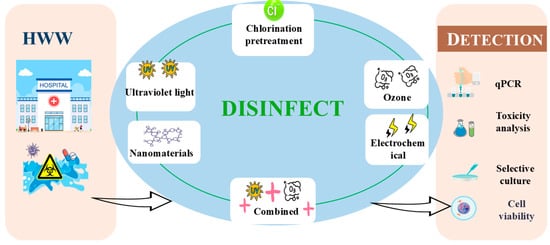
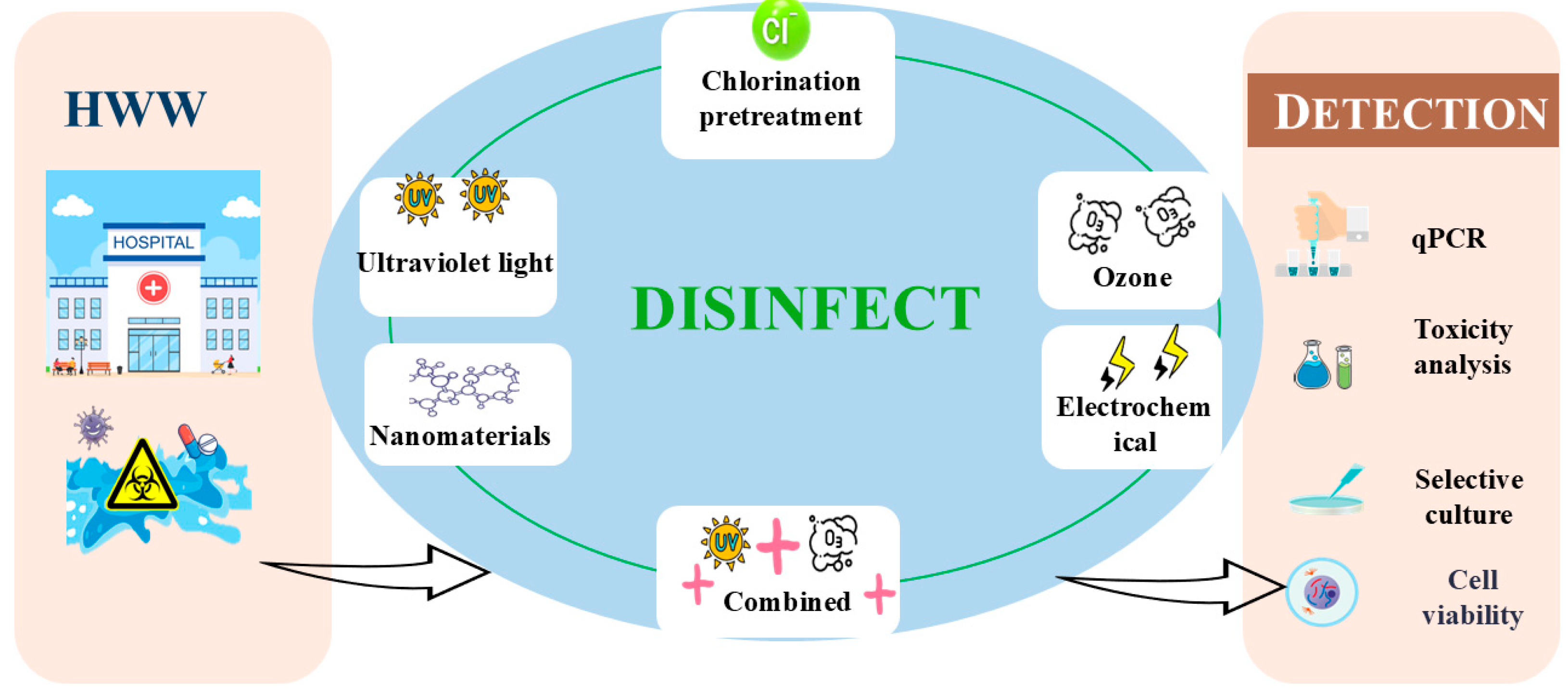
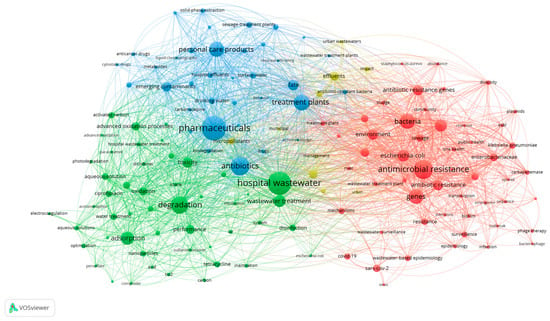
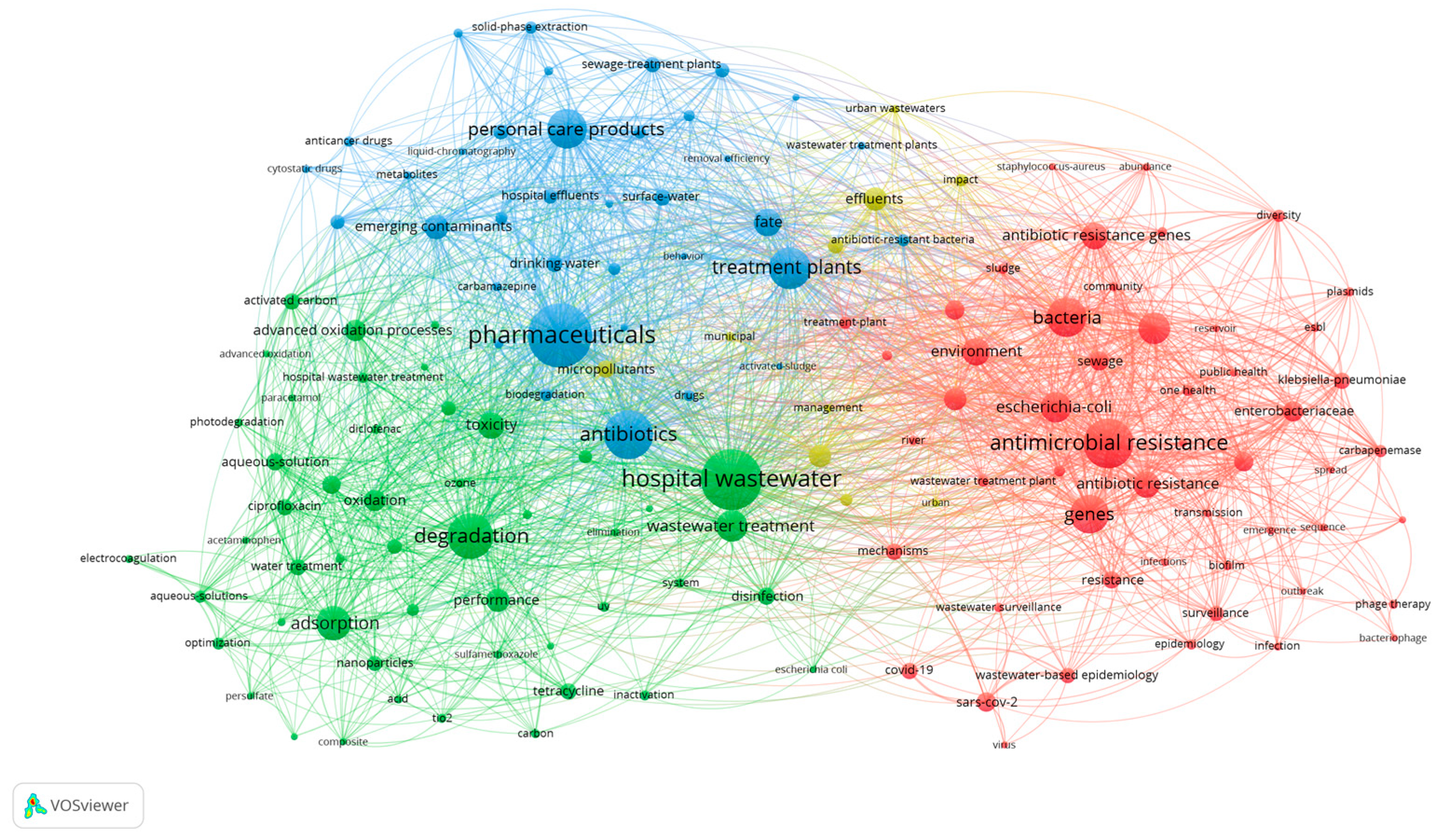

Disclaimer/Publisher’s Note: The statements, opinions and data contained in all publications are solely those of the individual author(s) and contributor(s) and not of MDPI and/or the editor(s). MDPI and/or the editor(s) disclaim responsibility for any injury to people or property resulting from any ideas, methods, instructions or products referred to in the content. |
© 2026 by the authors. Licensee MDPI, Basel, Switzerland. This article is an open access article distributed under the terms and conditions of the Creative Commons Attribution (CC BY) license.