


Abstract
This study examines approximate long wave and the modified Boussinesq equations, as well as their complexities with the Atangana–Baleanu fractional derivative operator in the Caputo sense. The analytical solution of the aforementioned model is discussed using the Elzaki transform and the Adomian decomposition method. These problems are indispensable for defining the characteristics of surface water waves by applying a particular relationship of dispersion. We used Elzaki transformation on time-fractional approximate long wave and modified Boussinesq equations, followed by inverse Elzaki transformation, to achieve the results of the equations. To validate the methodology, we concentrated on two systems and compared them to the actual solutions. The numerical and graphical results demonstrate that the proposed method is computationally precise and straightforward for investigating and resolving fractionally coupled nonlinear phenomena that occur in scientific and technological.
1. Introduction
In recent years, fractional partial differential equations (PDEs) have achieved popularity and validation due to their demonstrated applicability in a broad range of applied science fields of study. Evaluating that the nonlinear oscillation of fractional derivatives can be used to model earthquakes, the fractional fluid-dynamic traffic model can be used to compensate for the shortcoming caused by the presumption of continued traffic flow. Numerous researchers, such as Coimbra, Riemann–Liouville, Riesz, Weyl, Hadamard, Caputo–Fabrizio, Atangana–Baleanu, Jumarie, Grunwald–Letnikov, Liouville, and Caputo, have proposed various fractional operator formulations and concepts. In addition, fractional partial differential equations are used to model numerous physical phenomena, such as population dynamics, chemical reaction, image processing, virology, thermodynamics, bifurcation, porous media, Levy statistics, physics, and engineering problems [1,2,3,4,5,6]. Symmetry analysis is beautiful, especially when it comes to the study of partial differential equations and, more specifically, those equations that come from the Mathematics of Finance. The key to comprehending nature is symmetry; however, the majority of natural phenomena lack symmetry. The technique of spontaneous symmetry-breaking is a sophisticated method for concealing symmetry. There are two types of symmetries: infinitesimal and finite. On the other hand, space is in a constant state of flux. Mathematicians have always been intrigued by patterns [7,8]. Classifications of both planar and spatial patterns became more serious in the nineteenth century. In physics and applied mathematics, the necessity of determining novel approximate or exact solutions for nonlinear differential equations remain a fundamental problem requiring the development of new methodologies [9,10,11,12,13].
In the 20th century, Whitham [14], Broer [15], and Kaup [16] investigated the Whitham–Broer–Kaup (WBK) equations, which explain the propagation of shallow water with a different dispersion comparison. Consider the system of fractional-order Whitham–Broer–Kaup equations [17]:
where is the fractional derivative, is the horizontal velocity and is the height that is different from the liquid’s equilibrium position. In addition, since a and b are constants representing various diffusion strengths, Equation (1) becomes a modified Boussinesq equation when and . Similarly, for and , the scheme represents the standard long wave model. These relations are derived from fluid mechanics to demonstrate the propagation of waves in dissipative and nonlinear media. They are suggested for models via the water leakage through porous groundwater strata and are broadly used in coastal and marine ecosystems technology [18,19,20]. In addition, Equation (1) is the basis for different designs used to represent the unconfined groundwater, such as drains and surface water fluid models.
The Adomian decomposition method was developed by the American scientist G. Adomian. It emphasizes the search for a set of solutions and the decomposition of the nonlinear operator into a sequence in which Adomian polynomials are repeatedly computed using the terms. This method is enhanced by the Elzaki transformation, and the enhanced method is called the Elzaki decomposition method [21,22,23,24]. Elzaki transform is a contemporary integral transform that Tarig Elzaki introduced in 2010. Elzaki transformation is an altered combination of the Sumudu and Laplace transforms [25,26,27].
2. Preliminaries
Definition 1.
The fractional Caputo derivative (CFD) is defined as [28,29,30,31]:
Definition 2.
The derivative in terms of Atangana–Baleanu Caputo manner (ABC) is defined as [28,29,30,31]:
is a normalization function equal to 1 when and is represented by in Equation (3).
Definition 3.
The ABC fractional integral operator is as [28,29,30,31]
Definition 4.
For the function , the transform in term of Elzaki is as [28,29,30,31]
where .
Theorem 1.
Elzaki transformation convolution theorem, The following equality holds:
where the Elzaki transform is indicated by .
Definition 5.
The Elzaki transform of the CFD operator is given by [28,29,30,31]
where .
Theorem 2.
The fractional Elzaki transform of ABC derivative is defined as
where .
Proof.
From Definition 2, we have:
Then, taking into account the definition and convolution of the Elzaki transform, we get
□
3. Methodology
Consider the general fractional partial differential equation is given as
with initial condition
here and M are linear and non-linear terms and source function is .
Applying the Elzaki transform of Equation (11), we get
Using inverse Elzaki transform (13), we have
The nonlinear term is defined as
where represents the Adomian polynomials and they are expressed as
4. Numerical Examples
Example 1.
Consider the fractional modified Boussinesq equations
with the initial conditions
Using the Elzaki transformation to Equation (20), we get
The nonlinear term can be expressed as
By making it easier, the above equation can be written as
We obtain by using inverse Elzaki transform to Equation (24), we get
Now we are implementing EDM Suppose that the unknown terms and obtain the infinite series solution is given as
The Adomian polynomials represented the nonlinear functions and are expressed by , , and .
The remaining terms of the EDM solution and for can be achieved simply. The series type solution is determined as
For Equation (20), the exact solutions are achieved at
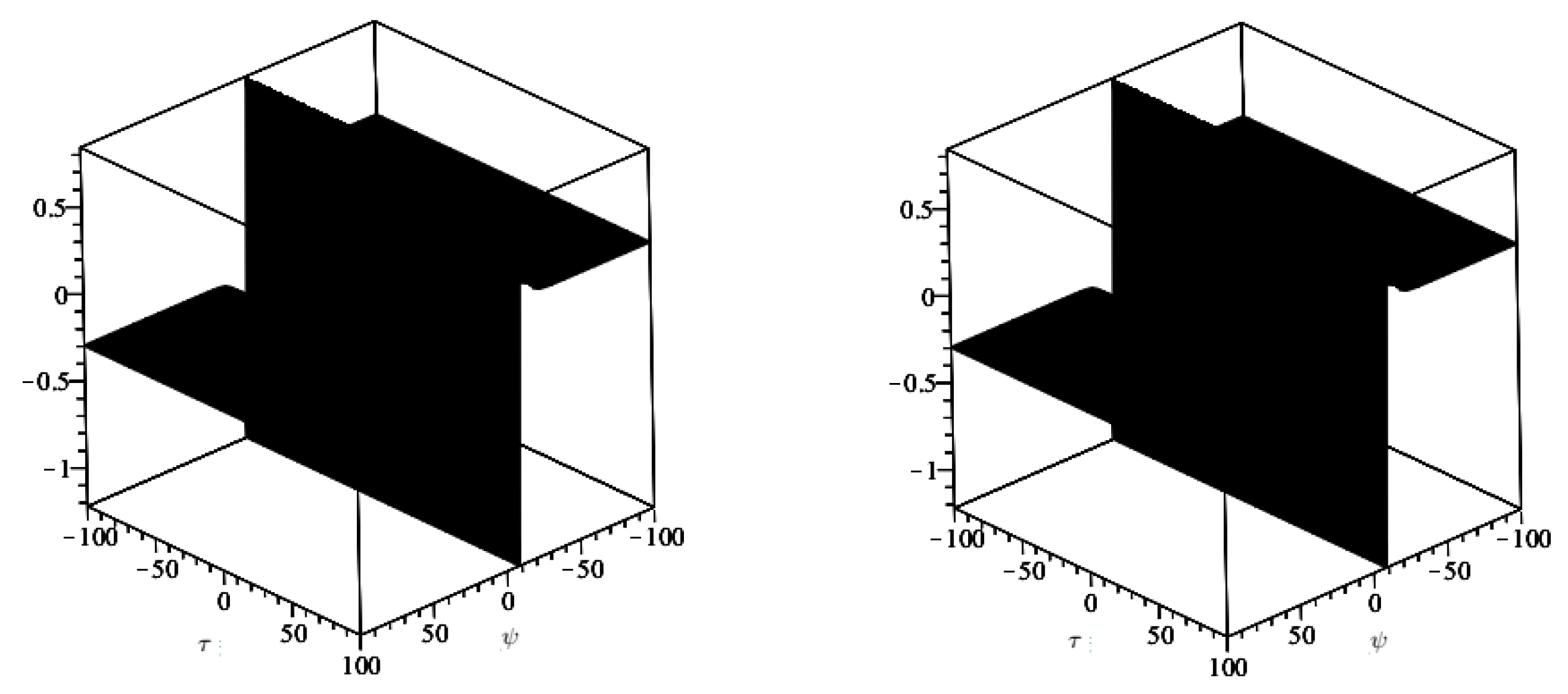
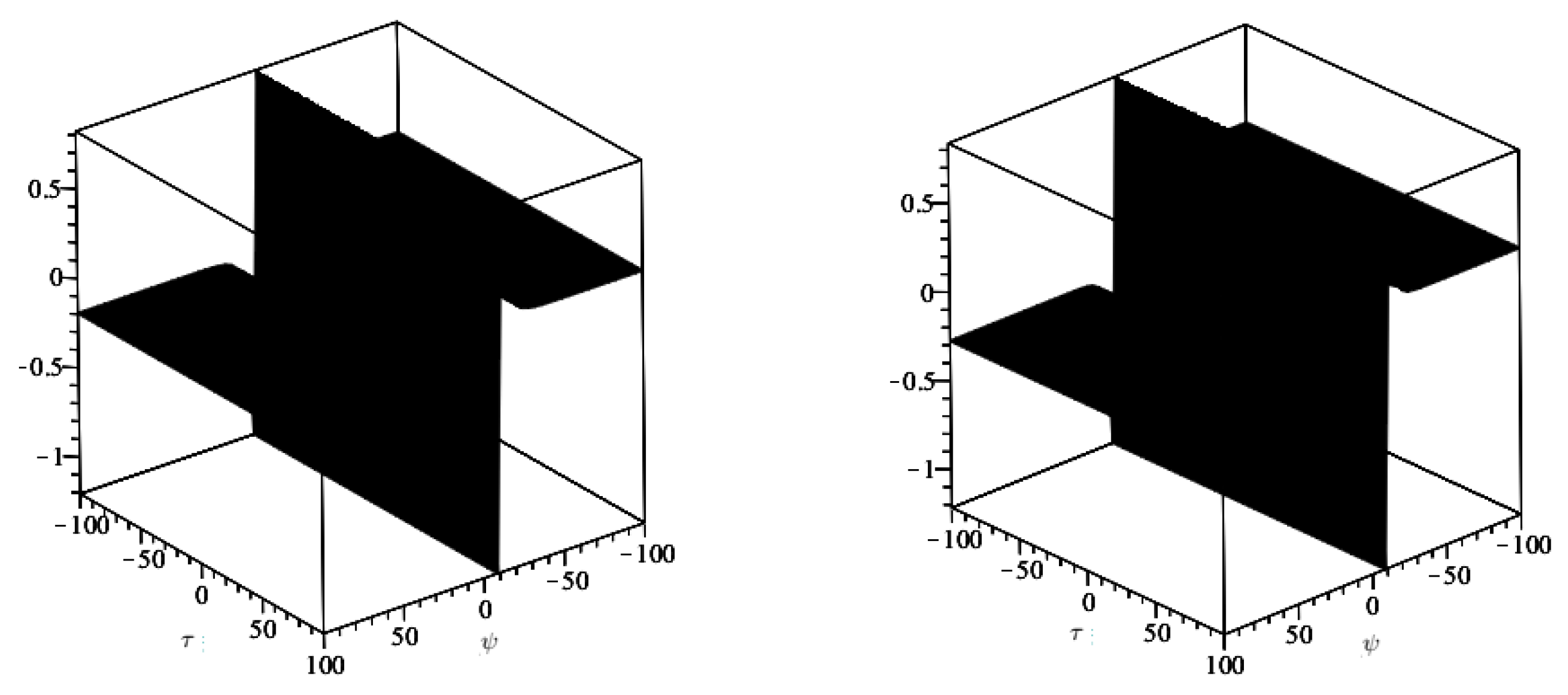
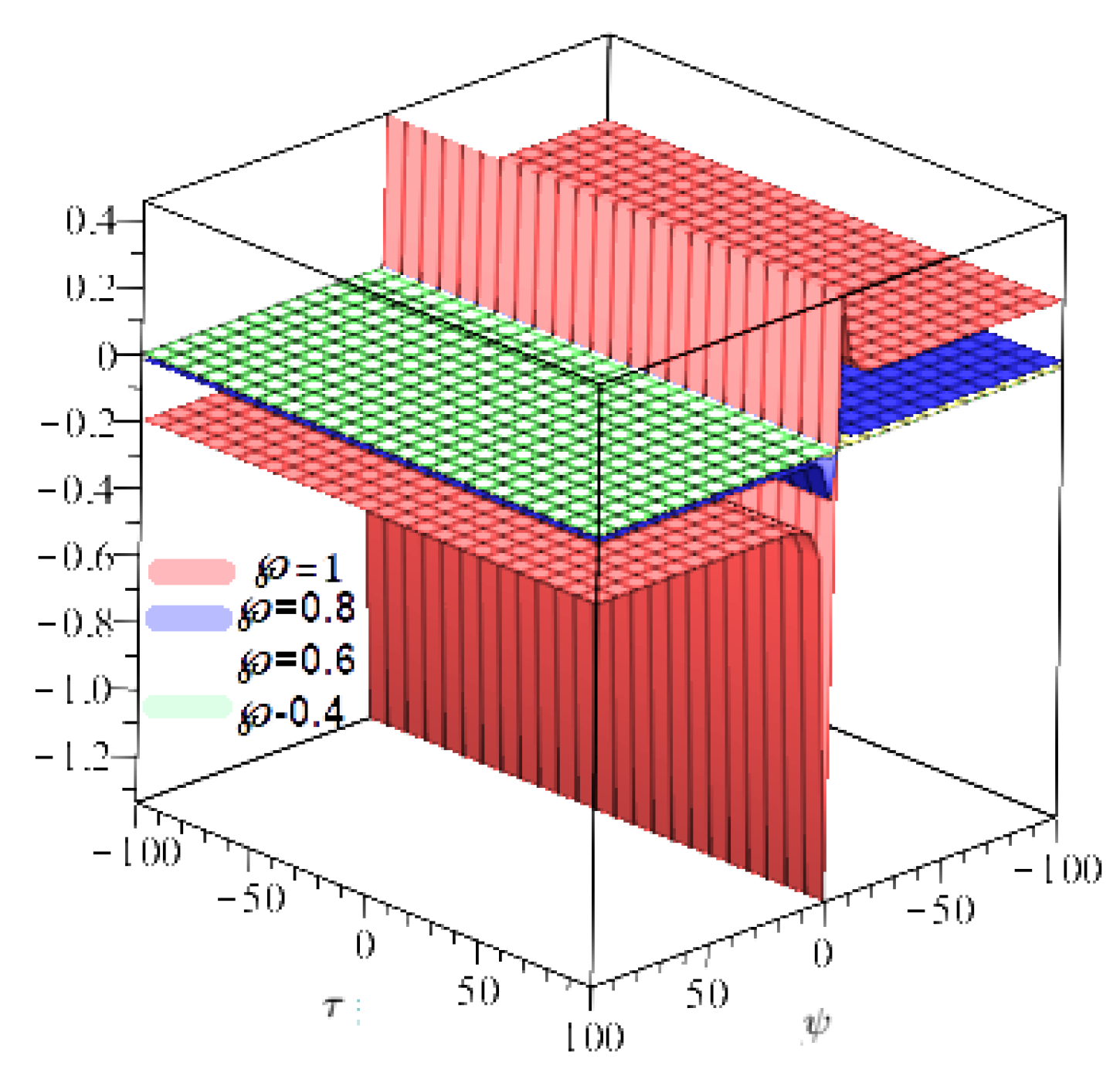
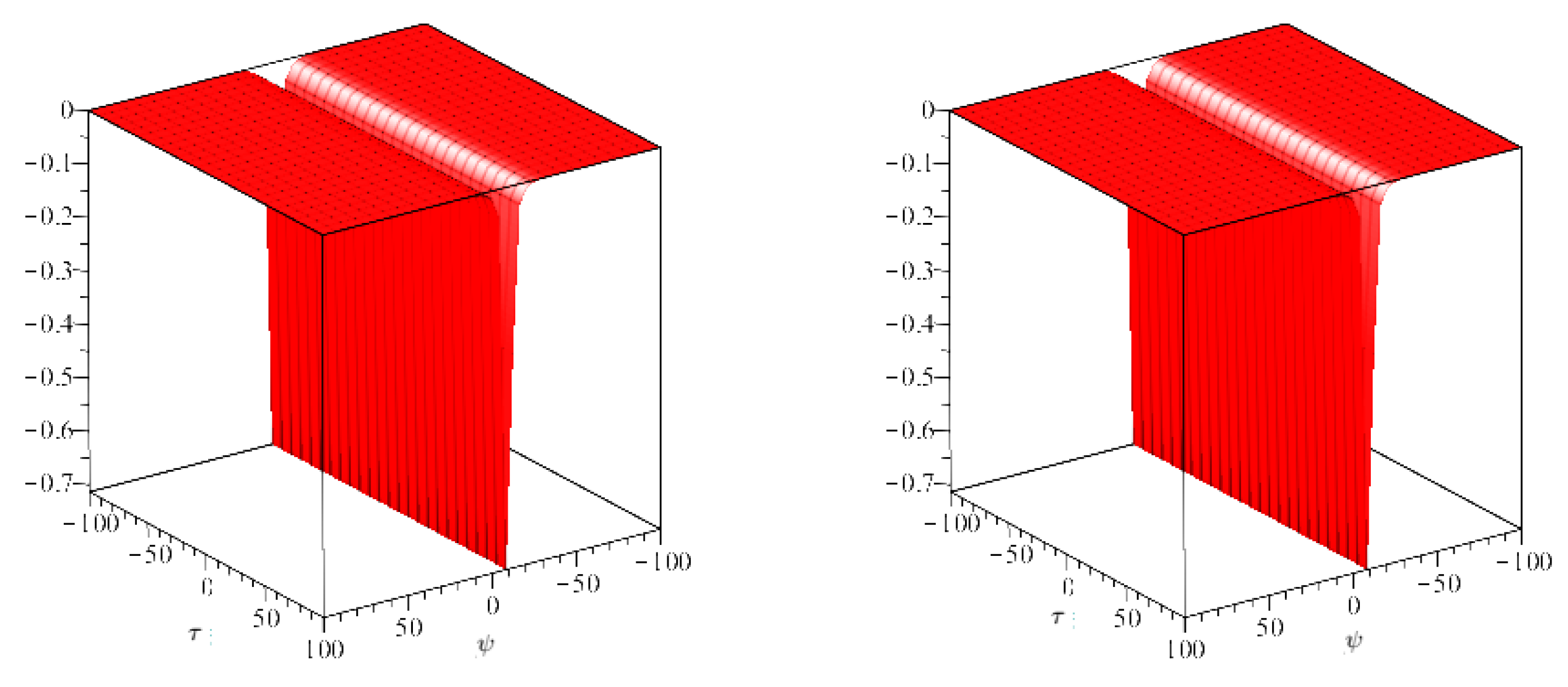
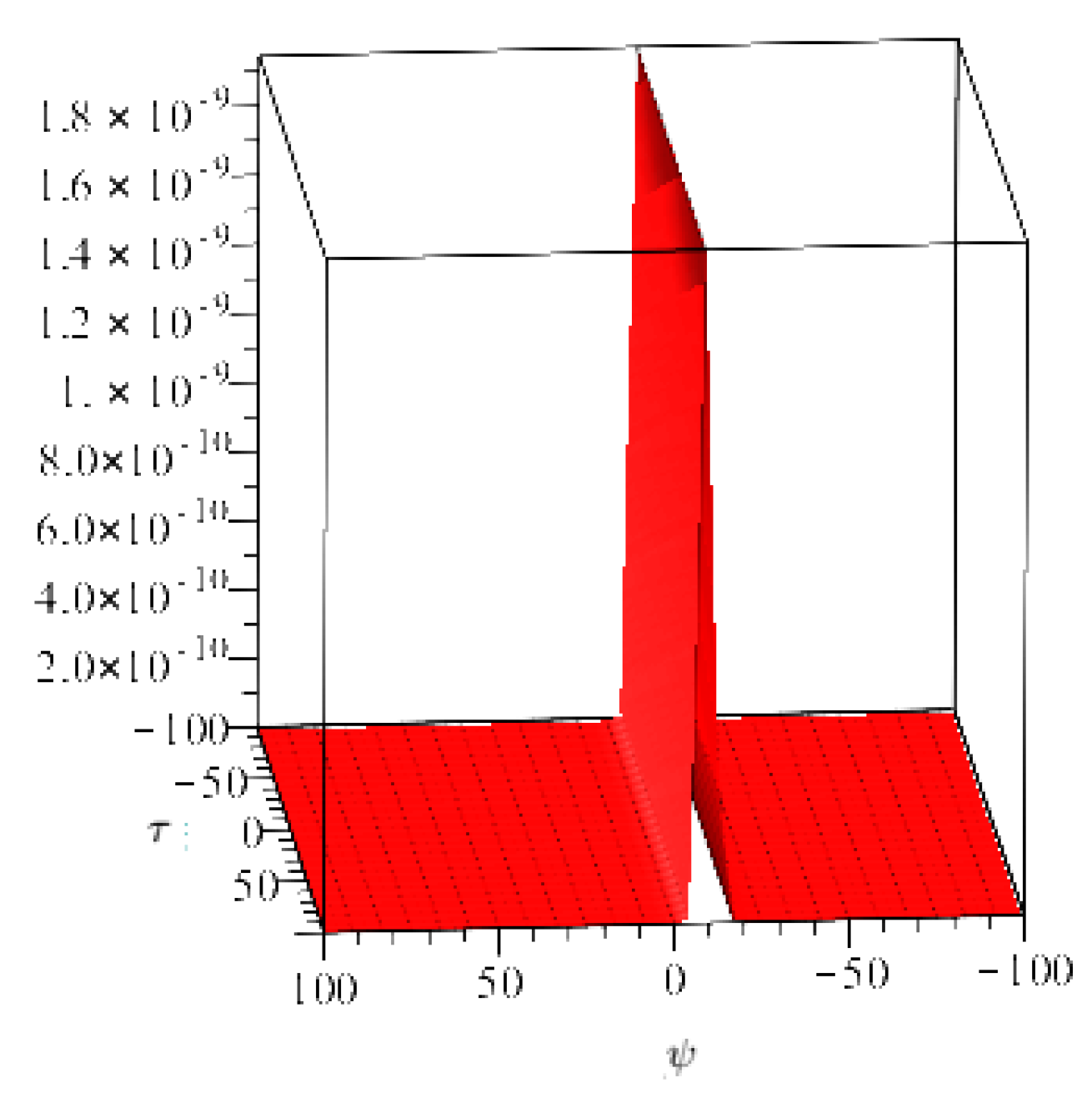
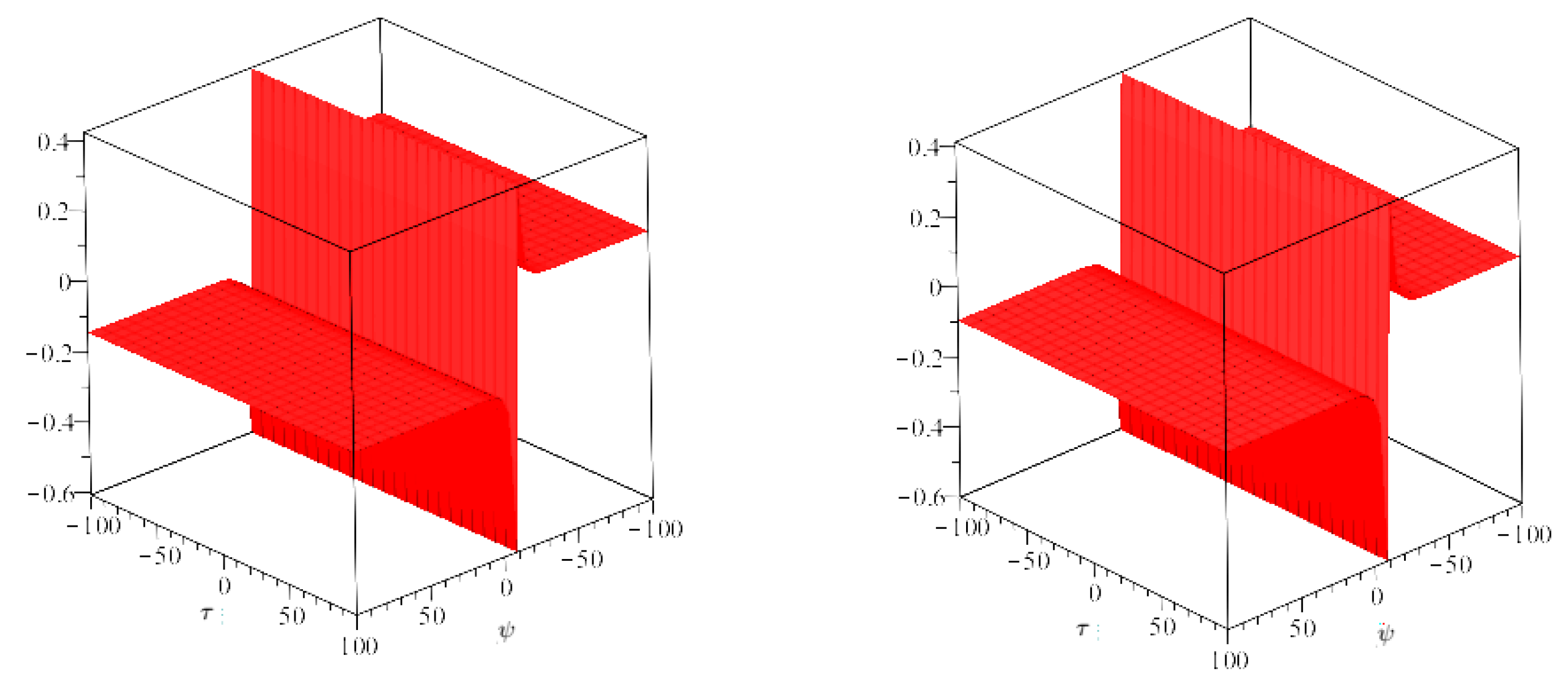
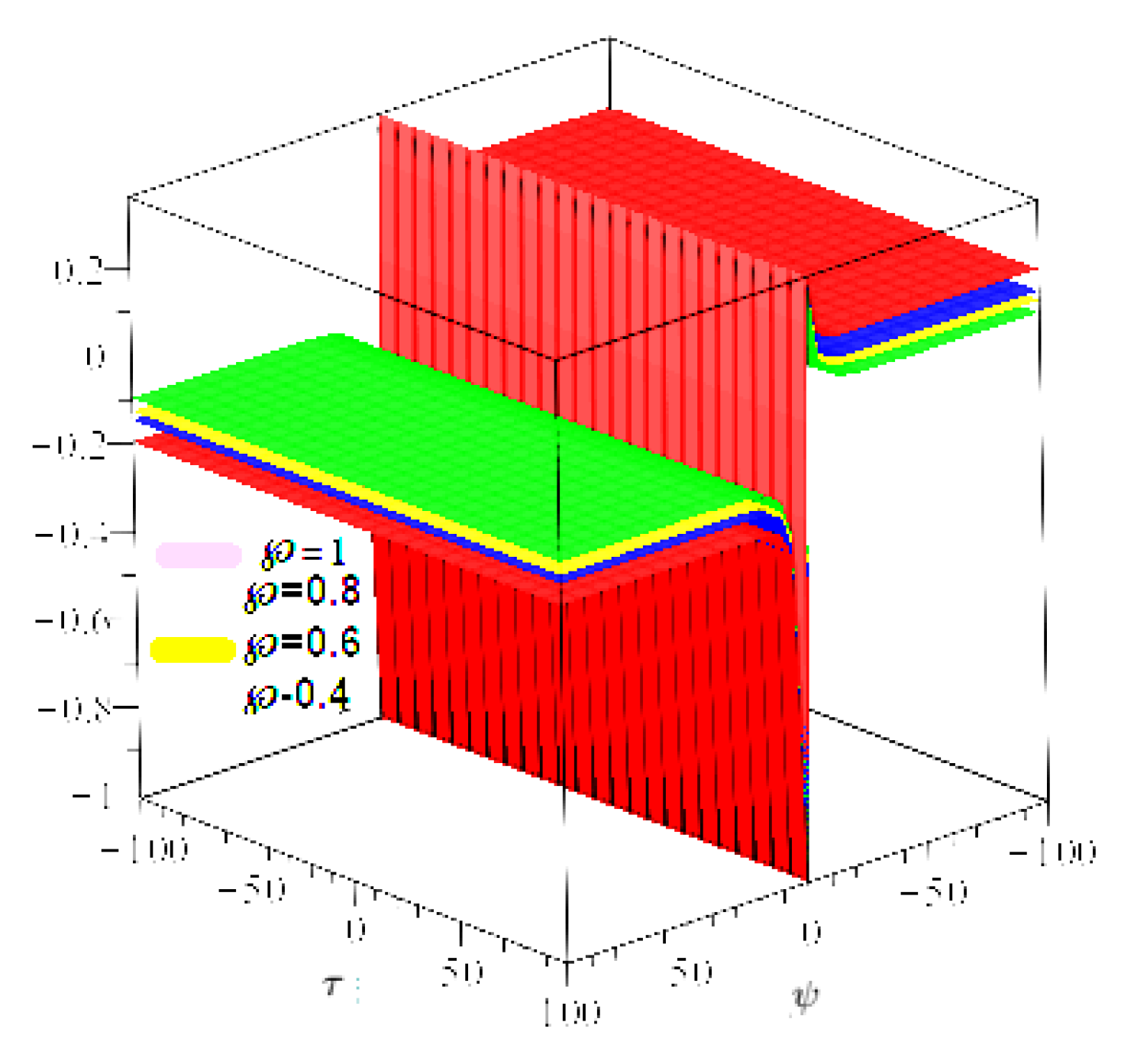
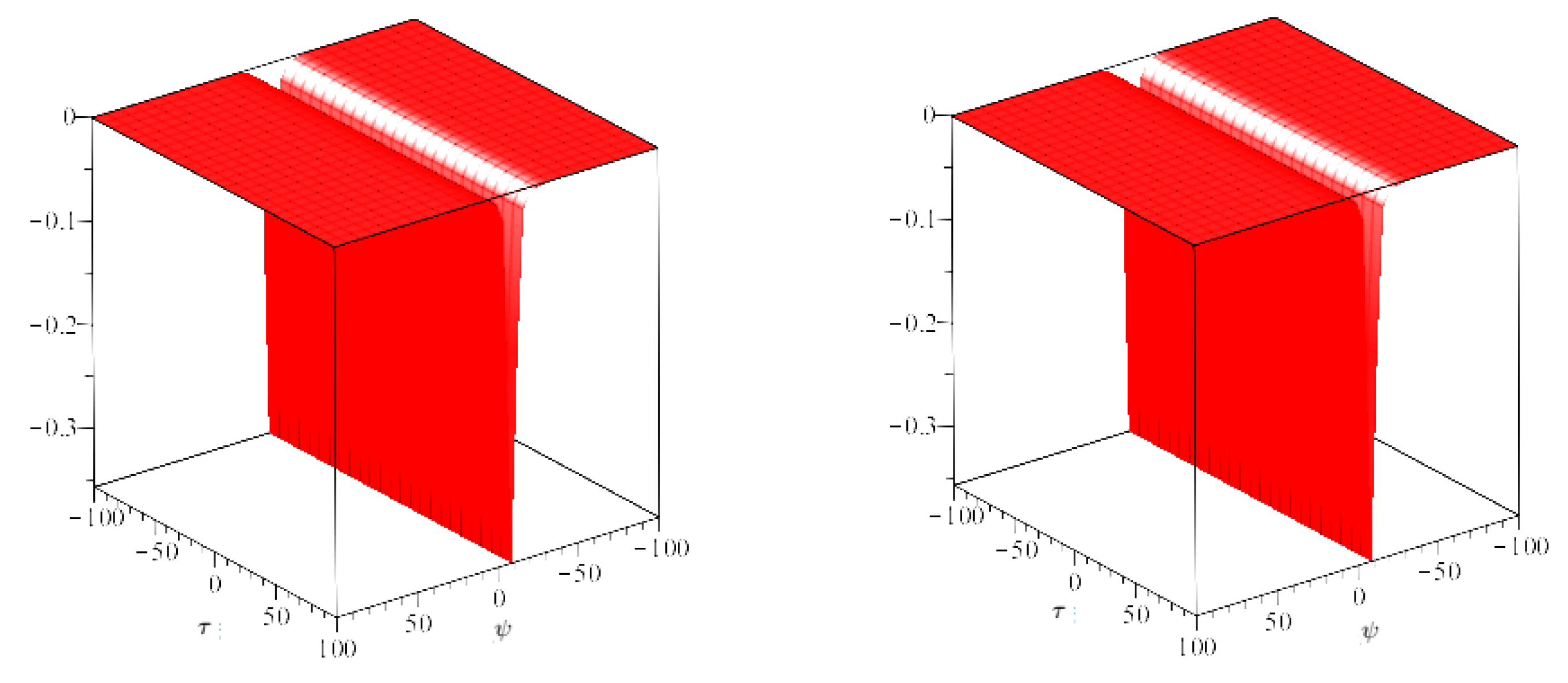
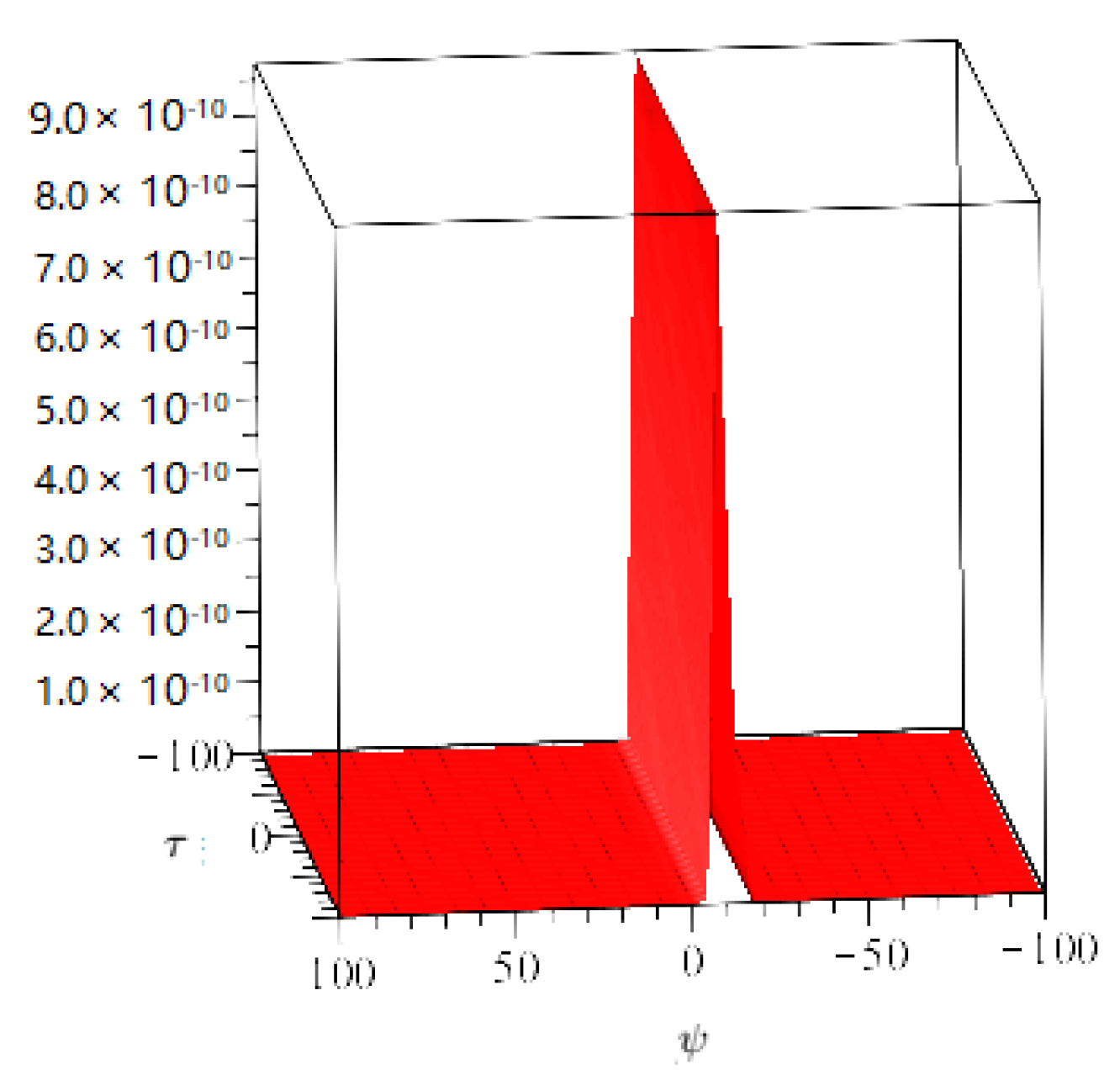
In Figure 1, the actual and analytical results for at of Example 1 with a show that they closed contact with each other. Figure 2, analytic result figure for at and and Figure 3, analytic result figure for at different value of of Example 1. Figure 4, the actual and analytic result of at of Example 1 with a show that they closed contact with each other and Figure 5, the analytic result graph for at different value of of Example 1. In Table 1 and Table 2 the actual and analytical solutions of and of Example 1 at a different fractional-order of having various value of and .
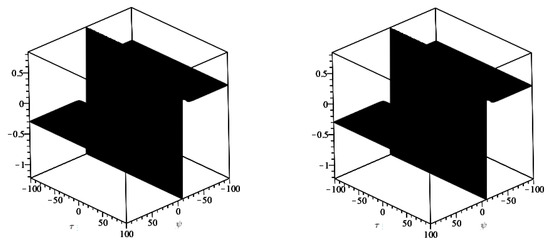
Figure 1.
The actual and analytical results for at of Example 1.
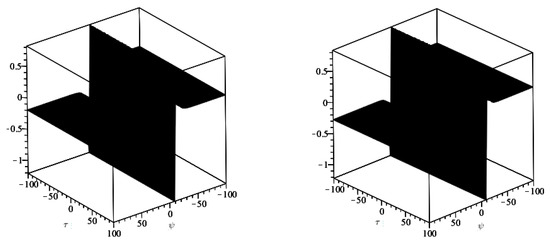
Figure 2.
The analytic result figure for at and .
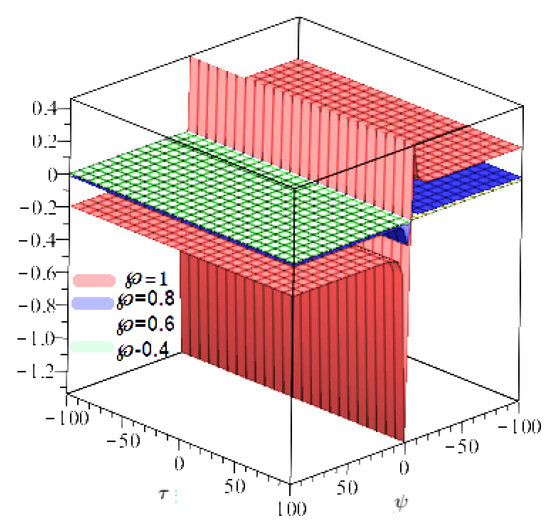
Figure 3.
The analytic result figure for at a different value of of Example 1.
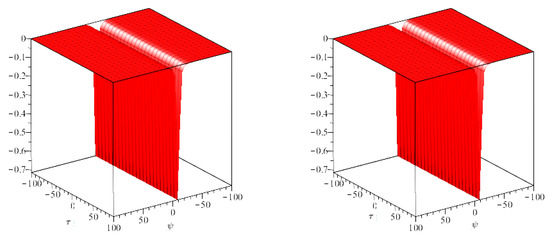
Figure 4.
The actual and analytic result of at of Example 1.
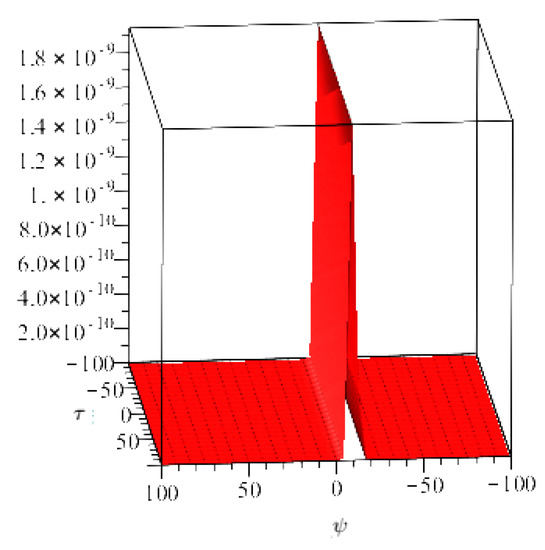
Figure 5.
The analytic result figure for at a different value of of Example 1.

Table 1.
The actual and analytical solutions of of Example 1 at a different fractional-order of having various value of and .
Table 2.
The actual and analytical solutions of of Example 1 at a different fractional-order of having various values of and .
Example 2.
Consider the fractional order approximate long wave equations
with the initial conditions
Using the Elzaki transformation to Equation (33), we get
The nonlinear term can be written as
By making it easier, the above equation can be written as
Applying inverse Elzaki transform to Equation (37), we get
Now we apply EDM Suppose that the unknown terms and obtain the infinite series solution as
The nonlinear functions expressed with the help of Adomian polynomials , , and . We can be written the Equation (38) as a solution for using these functions,
On both sides, comparing the Equation (40), we get
The remaining terms of the EDM solution and can be obtained simply. The series type solution is determined as
For Equation (33), the exact solutions is achieved at
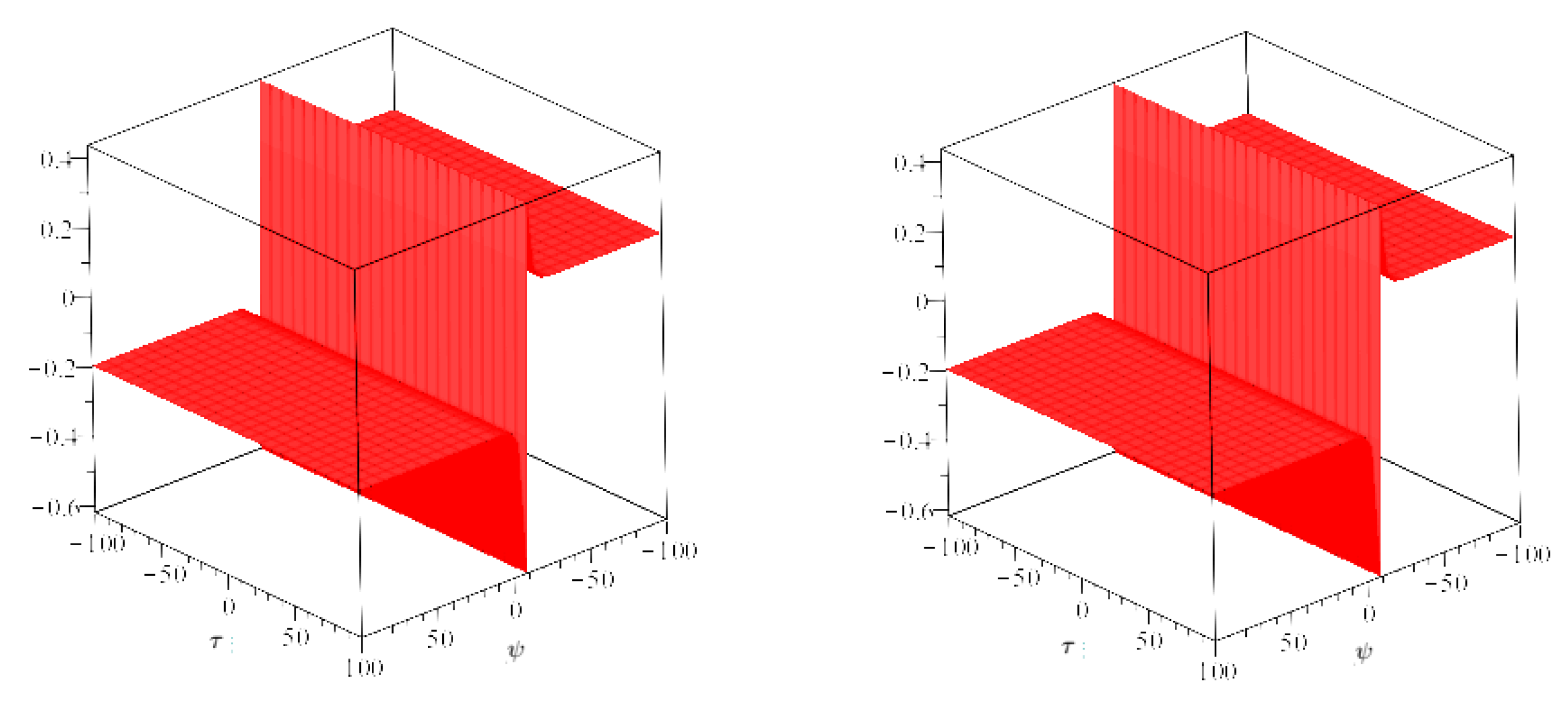
In Figure 6, the actual and analytical results for at of Example 2 with a show that they closed contact with each other. Figure 7, analytic result figure for at and and Figure 8, analytic result figure for at different value of of Example 2. Figure 9, the actual and analytic result of at of Example 2 with show that the closed contact with each other and Figure 10, the analytic result graph for at different value of of Example 2. In Table 3 and Table 4, the exact and EDM solutions of and of Example 2 at different fractional-order of having various values of and .
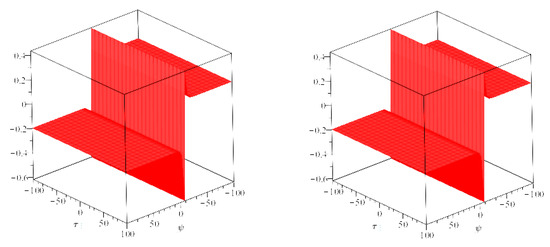
Figure 6.
The exact and analytical results for at of Example 2.
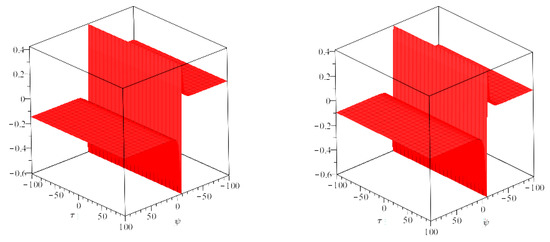
Figure 7.
The analytic result figure for at and of Example 2.
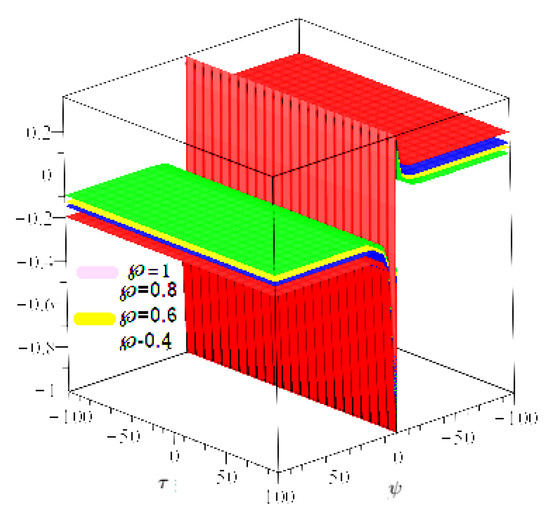
Figure 8.
The analytic result figure for at different values of of Example 2.
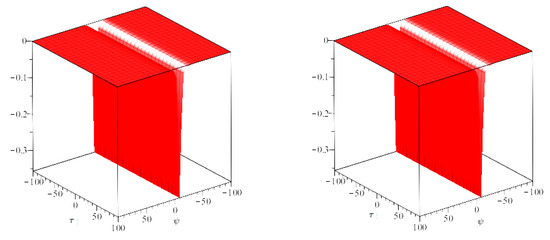
Figure 9.
The exact and analytic result of at of Example 2.
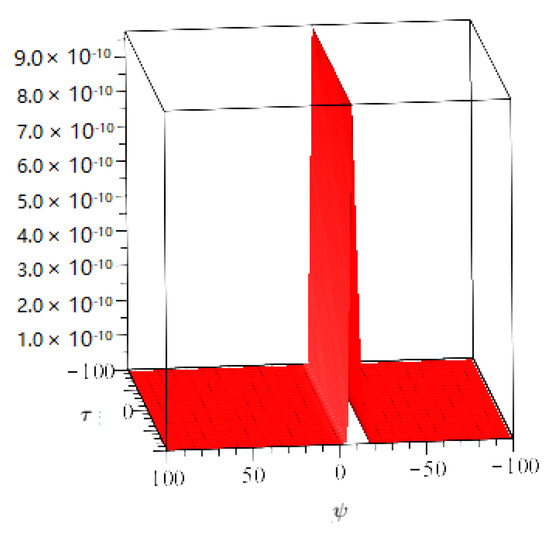
Figure 10.
The analytic result graph for at different value of of Example 2.
Table 3.
The exact and EDM solutions of of Example 2 at different fractional-order of having various values of and .
Table 4.
The exact and EDM solutions of of Example 2 at a different fractional-order of having various values of and .
5. Conclusions
In this study, the Elzaki decomposition method is applied to analyze the system of approximate long wave and modified Boussinesq equations. The two problems are investigated to calculate and validate the accuracy of the proposed method. Compared to the current analytic method for finding approximate results in the system of fractional nonlinear partial differential equations, the proposed methodology is quick and easy. The solutions have been demonstrated in the shape of tables and graphs. The suggested technique makes a list of results in the form of a given equation, which is more accurate and requires less work. For both fractionally coupled systems, calculations were done to figure out the absolute error. At , a number of mathematical results are evaluated by comparing what is known as the analytic method and the actual solutions. The current methods are better because they require less math and are more accurate. Moreover, it is shown that the presented method is very simple to use, it works, and can be used to solve a different fractional system of differential equations. In the future, we plan to extend the application of the Elzaki decomposition method to analyze higher dimensional physical applications. In particular, we will consider the recent implementations of fractional-order problems.
Funding
The author extend their appreciation to the Deanship of Scientific Research at King Khalid University for funding this work through Larg Groups (R.G.P2./41/43).
Institutional Review Board Statement
Not applicable.
Informed Consent Statement
Not applicable.
Data Availability Statement
The numerical data used to support the findings of this study are included within the article.
Acknowledgments
The author extend their appreciation to the Deanship of Scientific Research at King Khalid University for funding this work through Larg Groups (R.G.P2./41/43).
Conflicts of Interest
The author declares that there is no conflict of interest regarding the publication of this article.
References
- Podlubny, I. Fractional Differential Equations: An Introduction to Fractional Derivatives, Fractional Differential Equations, to Methods of Their Solution and Some of Their Applications; Academic Press: New York, NY, USA, 1999. [Google Scholar]
- Khan, H.; Kumam, P.; Baleanu, D.; Arif, M. An efficient analytical technique, for the solution of fractional-order telegraph equations. Mathematics 2019, 7, 426. [Google Scholar] [CrossRef]
- Kiryakova, S.V. Multiple (multiindex) Mittag-Leffler functions and relations to generalized fractional calculus. J. Comput. Appl. Math. 2000, 118, 441–452. [Google Scholar] [CrossRef]
- Shah, R.; Baleanu, D.; Kumam, P.; Arif, M. The analytical investigation of time-fractional multi-dimensional Navier-Stokes equation. Alex. Eng. J. 2020, 59, 2941–2956. [Google Scholar] [CrossRef]
- Khan, H.; Farooq, U.; Baleanu, D.; Kumam, P.; Arif, M. Analytical solutions of (2+ time fractional order) dimensional physical models, using modified decomposition method. Appl. Sci. 2019, 10, 122. [Google Scholar] [CrossRef]
- Momani, S.; Shawagfeh, N.T. Decomposition method for solving fractional Riccati differential equations. Appl. Math. Comput. 2006, 182, 1083–1092. [Google Scholar] [CrossRef]
- Shymanskyi, V.; Sokolovskyy, Y. Variational Formulation of the Stress-Strain Problem in Capillary-Porous Materials with Fractal Structure. In Proceedings of the 2020 IEEE 15th International Conference on Computer Sciences and Information Technologies (CSIT), Zbarazh, Ukraine, 23–26 September 2020; Volume 1, pp. 1–4. [Google Scholar]
- Shymanskyi, V.; Sokolovskyy, Y. Finite Element Calculation of the Linear Elasticity Problem for Biomaterials with Fractal Structure. Open Bioinform. J. 2021, 14, 114–122. [Google Scholar] [CrossRef]
- Siryk, S.V.; Salnikov, N.N. Numerical solution of Burgers equation by Petrov-Galerkin method with adaptive weighting functions. J. Autom. Inf. Sci. 2012, 44, 50–67. [Google Scholar] [CrossRef]
- Roos, H.-G.; Stynes, M.; Tobiska, L. Robust Numerical Methods for Singularly Perturbed Differential Equations; Springer: Berlin/Heidelberg, Germany, 2008; 604p. [Google Scholar]
- Areshi, M.; Khan, A.; Shah, R.; Nonlaopon, K. Analytical investigation of fractional-order Newell-Whitehead-Segel equations via a novel transform. AIMS Math. 2022, 7, 6936–6958. [Google Scholar] [CrossRef]
- Salnikov, N.N.; Siryk, S.V. Construction of Weight Functions of the Petrov-Galerkin Method for Convection-Diffusion-Reaction Equations in the Three-Dimensional Case. Cybern. Syst. Anal. 2014, 50, 805–814. [Google Scholar] [CrossRef]
- John, V.; Knobloch, P.; Novo, J. Finite elements for scalar convection-dominated equations and incompressible flow problems: A never ending story? Comput. Vis. Sci. 2018, 19, 47–63. [Google Scholar] [CrossRef]
- Whitham, G.B. Variational methods and applications to water waves. Proc. R. Soc. Lond. Ser. A 1967, 299, 6–25. [Google Scholar]
- Broer, L.J.F. Approximate equations for long water waves. Appl. Sci. Res. 1975, 31, 377–395. [Google Scholar] [CrossRef]
- Kaup, D.J. A higher-order water-wave equation and the method for solving it. Prog. Theor. Phys. 1975, 54, 396–408. [Google Scholar] [CrossRef]
- Saha Ray, S. A novel method for travelling wave solutions of fractional Whitham-Broer-Kaup, fractional modified Boussinesq and fractional approximate long wave equations in shallow water. Math. Methods Appl. Sci. 2015, 38, 1352–1368. [Google Scholar] [CrossRef]
- Shah, N.; Alyousef, H.; El-Tantawy, S.; Chung, J. Analytical Investigation of Fractional-Order Korteweg–De-Vries-Type Equations under Atangana–Baleanu–Caputo Operator: Modeling Nonlinear Waves in a Plasma and Fluid. Symmetry 2022, 14, 739. [Google Scholar] [CrossRef]
- Chen, Y.; Liu, P.L.F. Modified Boussinesq equations and associated parabolic models for water wave propagation. J. Fluid Mech. 1995, 288, 351–381. [Google Scholar] [CrossRef]
- Khater, M.M.; Kumar, D. New exact solutions for the time fractional coupled Boussinesq-Burger equation and approximate long water wave equation in shallow water. J. Ocean Eng. Sci. 2017, 2, 223–228. [Google Scholar] [CrossRef]
- Nuruddeen, R.I. Elzaki decomposition method and its applications in solving linear and nonlinear Schrodinger equations. Sohag J. Math. 2017, 4, 1–5. [Google Scholar] [CrossRef]
- Naeem, M.; Azhar, O.F.; Zidan, A.M.; Nonlaopon, K.; Shah, R. Numerical analysis of fractional-order parabolic equations via Elzaki transform. J. Funct. Spaces 2021, 2021, 3484482. [Google Scholar] [CrossRef]
- Alaoui, M.K.; Fayyaz, R.; Khan, A.; Shah, R.; Abdo, M.S. Analytical investigation of Noyes-Field model for time-fractional Belousov-Zhabotinsky reaction. Complexity 2021, 2021, 3248376. [Google Scholar] [CrossRef]
- Srivastava, H.M.; Shah, R.; Khan, H.; Arif, M. Some analytical and numerical investigation of a family of fractional-order Helmholtz equations in two space dimensions. Math. Methods Appl. Sci. 2020, 43, 199–212. [Google Scholar] [CrossRef]
- Elzaki, T.M.; Alkhateeb, S.A. Modification of Sumudu transform Elzaki transform and Adomian decomposition method. Appl. Math. Sci. 2015, 9, 603–611. [Google Scholar] [CrossRef]
- Shah, R.; Kumam, P.; Arif, M. An analytical technique to solve the system of nonlinear fractional partial differential equations. Mathematics 2019, 7, 505. [Google Scholar] [CrossRef]
- Aljahdaly, N.H.; Akgul, A.; Mahariq, I.; Kafle, J. A comparative analysis of the fractional-order coupled Korteweg-De Vries equations with the Mittag-Leffler law. J. Math. 2022, 2022, 8876149. [Google Scholar] [CrossRef]
- Atangana, A.; Baleanu, D. New fractional derivatives with nonlocal and non-singular kernel: Theory and application to heat transfer model. Therm. Sci. 2016, 20, 763–769. [Google Scholar] [CrossRef]
- Elzaki, T.M. The new integral transform Elzaki transform. Glob. J. Pure Appl. Math. 2011, 7, 57–64. [Google Scholar]
- Alderremy, A.A.; Elzaki, T.M.; Chamekh, M. New transform iterative method for solving some Klein-Gordon equations. Results Phys. 2018, 10, 655–659. [Google Scholar] [CrossRef]
- Kim, H. The time shifting theorem and the convolution for Elzaki transform. Int. J. Pure Appl. Math. 2013, 87, 261–271. [Google Scholar] [CrossRef]
Publisher’s Note: MDPI stays neutral with regard to jurisdictional claims in published maps and institutional affiliations. |
© 2022 by the author. Licensee MDPI, Basel, Switzerland. This article is an open access article distributed under the terms and conditions of the Creative Commons Attribution (CC BY) license (https://creativecommons.org/licenses/by/4.0/).