Demography and Population Projection of Tetranychus urticae (Tetranychidae) on Phaseolus vulgaris (Fabaceae) Colonized by Entomopathogenic Fungal Endophytes
by
 , , ,
, , ,
Pengxiang Hong
, 
Chandra Kanta Dash
 ,
,
Muhammad Adeel Ghafar
 ,
,
Inzamam Ul Haq
 ,
,
Liuyang Lu
,
Chenghua Zhou
,
Qing Wu
and
Liande Wang
* State Key Laboratory of Ecological Pest Control for Fujian and Taiwan Crops, Key Laboratory of Biopesticide and Chemical Biology, MOE, College of Plant Protection, Fujian Agriculture and Forestry University, Fuzhou 350002, China
*
Author to whom correspondence should be addressed.
Insects 2024, 15(1), 73; https://doi.org/10.3390/insects15010073
Submission received: 25 October 2023
/
Revised: 1 January 2024
/
Accepted: 3 January 2024
/
Published: 21 January 2024
(This article belongs to the Section Other Arthropods and General Topics)
Simple Summary
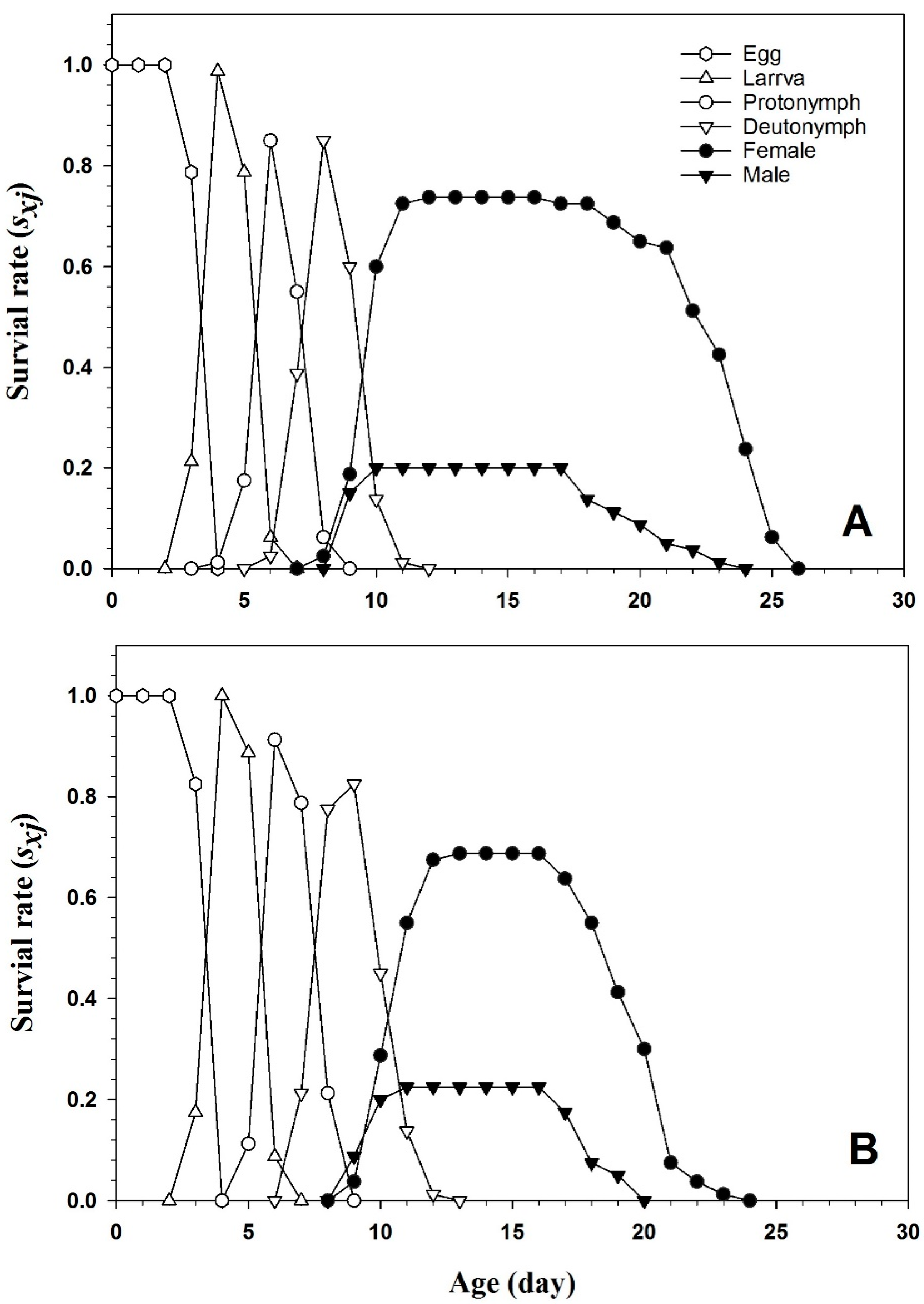
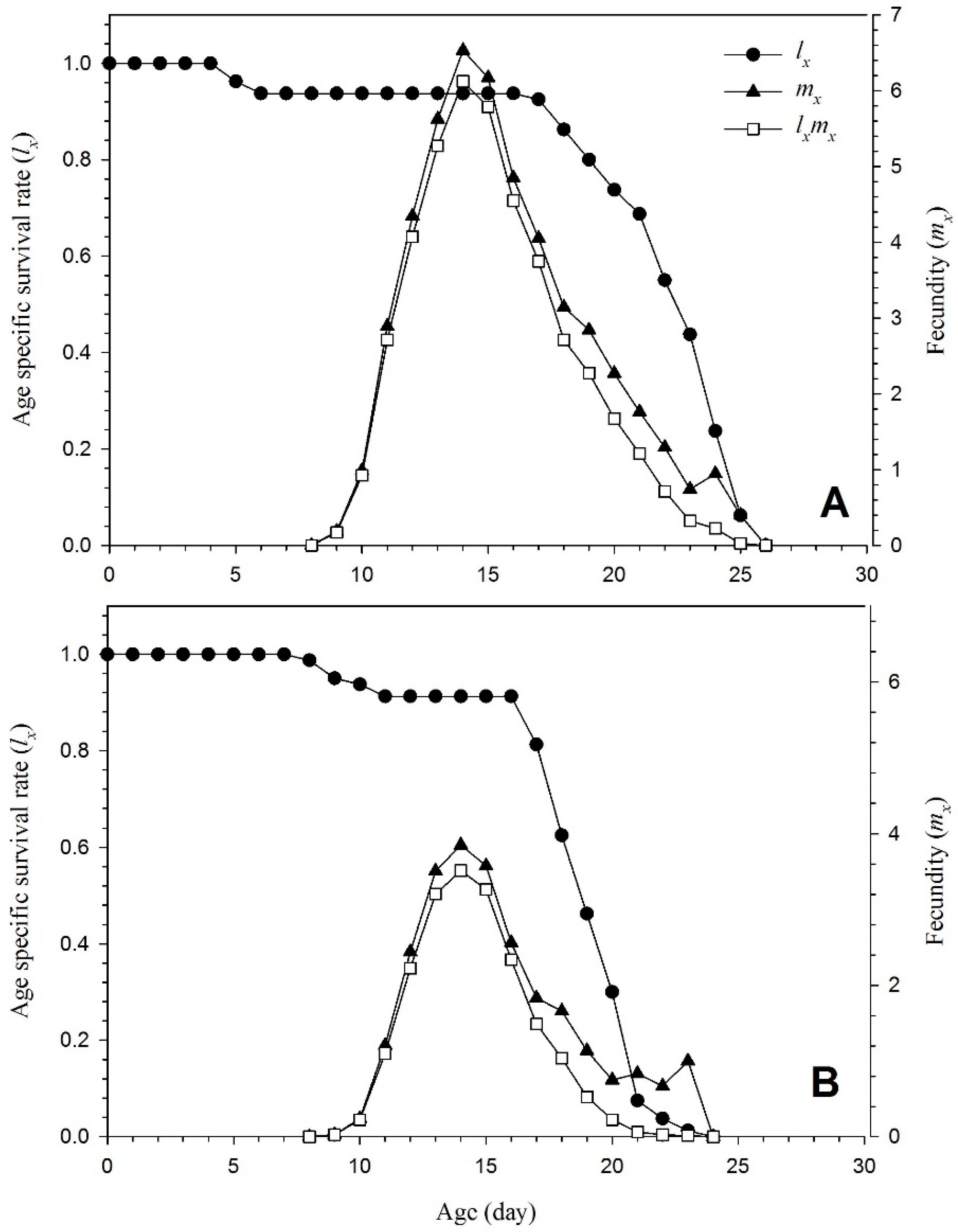
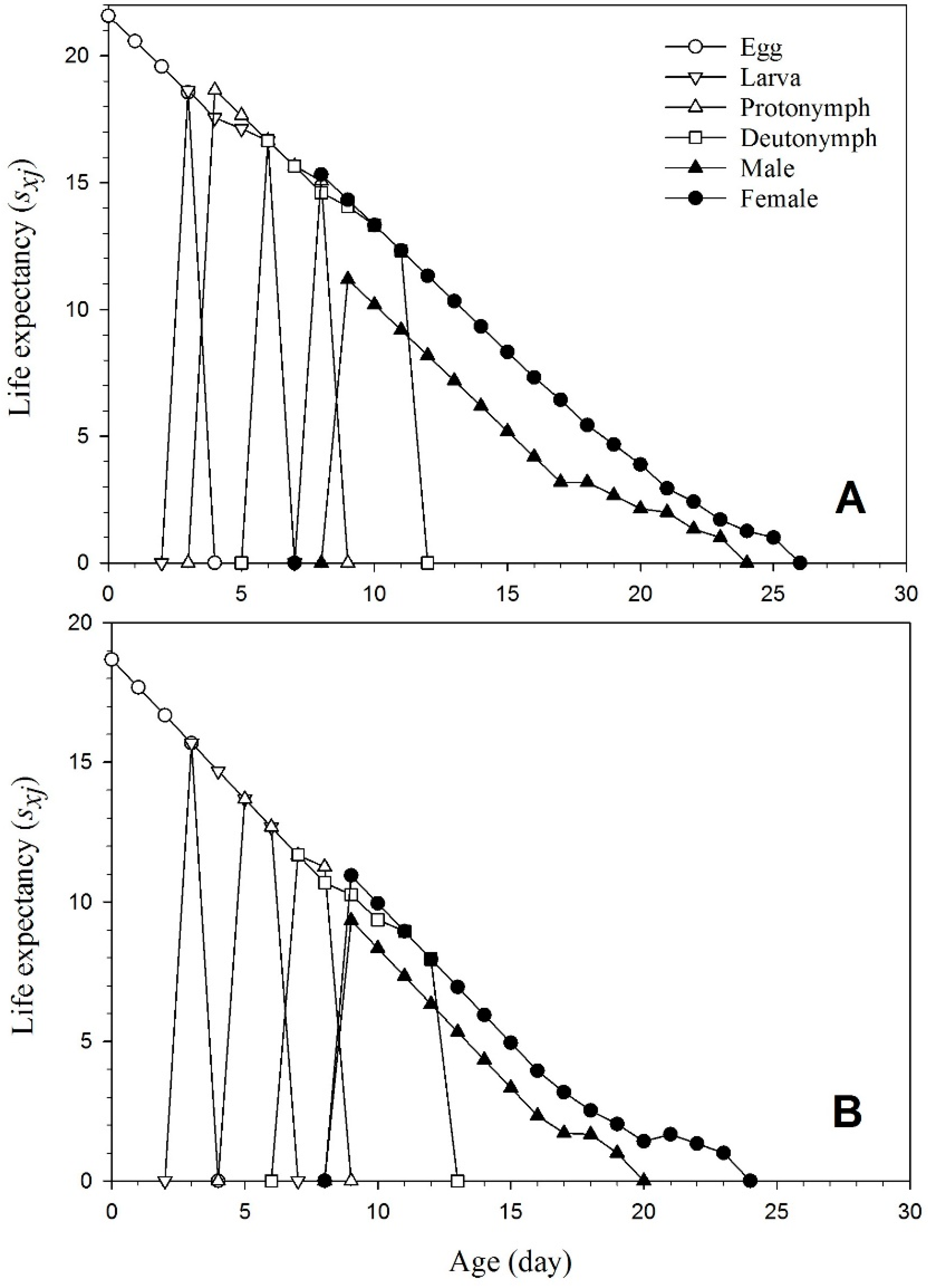
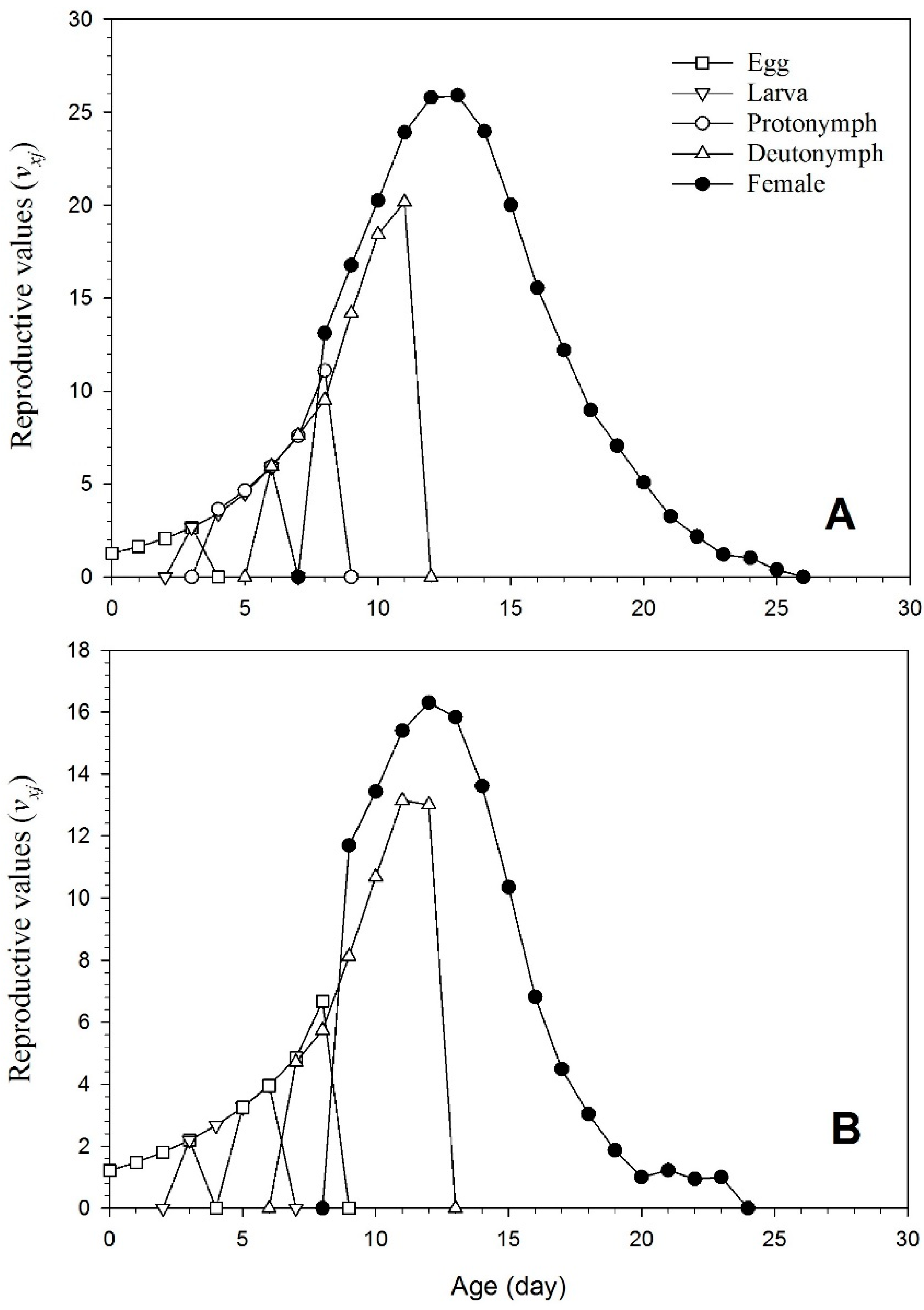
The two-spotted spider mite Tetranychus urticae and its interactions with fungi, notably Beauveria bassiana, on common bean plants were the main subjects of this study. The mite’s life cycle on untreated and endophyte-colonized plants was examined using the age-stage, two-sex life table hypothesis. The findings indicated that mites reared on untreated plants had shorter developmental stages and higher fecundity than those on colonized plants. Furthermore, mites on untreated plants displayed a higher intrinsic rate of increase and net reproductive rate. The study also revealed that fungal endophyte colonization negatively affected mite growth, adult lifespan, fecundity, reproductive rate, and the intrinsic rate of increase. The findings point to a possible application of entomopathogenic fungal endophytes in host plant resistance programs for future integrated pest control.
Abstract
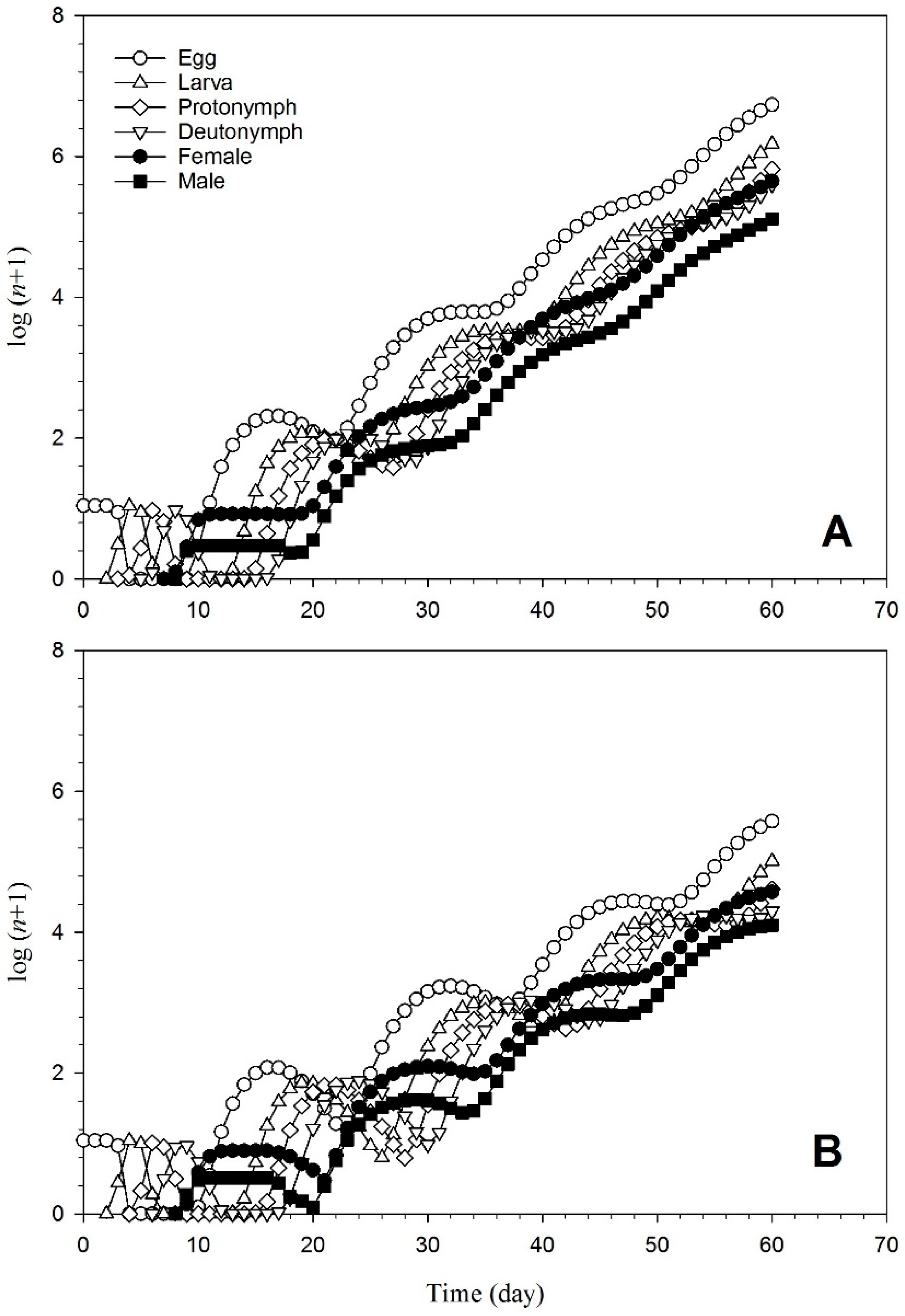
Tetranychus urticae is a highly polyphagous and global pest. Spider mites primarily feed on the underside of leaves, resulting in decreased photosynthesis, nutritional loss, and the development of chlorotic patches. We investigated the life tables of the two-spotted spider mite T. urticae on fungal endophyte Beauveria bassiana colonized and untreated plants of the common Phaseolus vulgaris L., a bean plant. Based on the age-stage, two-sex life table theory, data were evaluated. The mites raised on untreated plants had protonymphs, deutonymphs, and total pre-adult stage durations that were considerably shorter (1.76, 2.14, and 9.77 d, respectively) than the mites raised on plants that had been colonized (2.02, 2.45, and 10.49 d, respectively). The fecundity (F) varied from 28.01 eggs per female of colonized plants to 57.67 eggs per female of endophyte-untreated plants. The net reproductive rate (R0) in the plants with and without endophytes was 19.26 and 42.53 brood, respectively. The untreated plants had an intrinsic rate of increase (rm) of 0.245 days as opposed to the colonized plants, which had an r of 0.196 days and a finite rate of increase (λ) (1.27 and 1.21, respectively). Population forecasts based on a two-sex, age-stage life table demonstrated the dynamism and variability of the stage structure. Furthermore, the colonization of B. bassiana had a negative impact on the growth and development of T. urticae. It lowered the adult mite life span, female fecundity, net reproduction rate, and intrinsic growth rate. We propose that future research should better use entomopathogenic fungal endophytes to understand host plant resistance strategies in integrated pest management.