


Abstract
Background: Targeted training interventions, including neuromuscular warm-up protocols, eccentric resistance training, and dynamic stretching exercises, with limited and heterogeneous evidence on recovery strategies, have shown potential benefits for muscle performance and reductions in injury risk. Objective: To synthesize and structure contemporary evidence on exercise-based interventions spanning the pre-activity warm-up through post-activity recovery, emphasizing performance outcomes, injury-related effects, reported dose–response patterns, and implementation characteristics. Methods: This systematic review with structured qualitative synthesis was based on a systematic database search and eligibility screening process (n = 40 studies). Studies evaluating exercise-based interventions targeting injury prevention and/or performance in athletes were included. Data extraction included study design, population characteristics, intervention components, outcomes, and risk-of-bias assessments, which were summarized using comparative tables and descriptive analyses. Due to heterogeneity, results were synthesized qualitatively without meta-analysis. Results: Neuromuscular warm-ups (e.g., FIFA 11+) were frequently linked to reduced reported lower-extremity injury risk, alongside improvements in sprint, jump, and balance performance. Eccentric hamstring training was linked in several studies to lower reported hamstring injury rates and increased eccentric strength and fascicle length, while dynamic warm-ups may acutely improve sprint and jump performance. Evidence regarding recovery modalities was heterogeneous, supporting a cautious and individualized emphasis on sleep, nutrition, and hydration. However, heterogeneity in study designs, outcome measures, and populations limits the comparability and generalizability of the findings. Conclusions: Exercise-based interventions, including neuromuscular warm-ups, eccentric strengthening, dynamic stretching, and progressive load and recovery strategies, may support performance enhancement and injury-risk reduction in youth and adult athletes when appropriately implemented, although interpretation is limited by study heterogeneity.
1. Introduction
Muscle–tendon unit injuries, such as muscle strains and tendinopathies, often arise from the accumulation of fatigue, inadequate preparation for exercise, and abrupt fluctuations in training load. Exercise-based interventions implemented in training practice, particularly structured neuromuscular warm-ups, eccentric hamstring training, dynamic mobility exercises, and controlled load management, are generally associated with improved sprinting, jumping, and balance performance, as well as with meaningful reductions in lower-extremity injuries [1,2,3,4,5,6,7]. School- and club-level programs, such as FIFA 11+ and iSPRINT, demonstrate high scalability and adherence [8,9], while targeted eccentric protocols (e.g., the Nordic hamstring exercise) effectively reduce the risk of hamstring injuries [10,11]. Dynamic warm-ups help maintain or enhance explosive performance compared with prolonged static stretching, in line with the current consensus on pre-exercise preparation [12,13]. Pre-conditioning strategies and the use of wearable resistance may enhance short-term readiness [14,15], whereas structured injury-prevention programs have been shown to reduce severe knee injuries in elite football players [16,17]. Existing reviews most often address warm-up protocols, strength interventions, or recovery strategies separately, with limited integration across the entire training–competition continuum [18,19,20]. Moreover, performance enhancement and injury prevention are frequently treated as distinct objectives, despite sharing common neuromuscular and load-related determinants. However, a comprehensive synthesis integrating these strategies across the full training–recovery continuum remains lacking.
This review aims to integrate evidence across the warm-up, training, load management, and recovery phases through a structured qualitative synthesis aimed at identifying general patterns across intervention types within neuromuscular, performance, and load-related domains, without conducting direct comparative effectiveness analyses or formal evaluation of interaction effects and without performing a pooled quantitative analysis.
2. Materials and Methods
2.1. Protocol Registration and Reporting Guidelines
This systematic review with qualitative synthesis was conducted according to the Preferred Reporting Items for Systematic Reviews and Meta-Analyses (PRISMA) 2020 [4] guidelines and was prospectively registered in PROSPERO (Registration ID: CRD420251154465). The protocol followed PRISMA-P recommendations for protocol development.
2.2. Design and Sources
This systematic review was conducted following the Preferred Reporting Items for Systematic Reviews and Meta-Analyses (PRISMA) 2020 guidelines. The review was based on an evidence set comprising 40 human studies, including randomized controlled trials (n = 11), cluster randomized controlled trials (n = 3), meta-analyses (n = 12), systematic reviews (n = 7), controlled/quasi-experimental studies (n = 4), cohort studies (n = 2), and observational studies (n = 1), identified through the systematic database search and eligibility screening process described below. To comprehensively characterize the available evidence base, a structured qualitative synthesis approach was employed, integrating both primary studies and secondary evidence (systematic reviews and meta-analyses). Such an approach facilitates the translation of evidence into practice through a combined analysis of the data. Given the heterogeneity in study designs, populations, and outcome measures, a quantitative meta-analysis was not performed, and findings were synthesized narratively.
An extensive literature search was conducted across multiple databases, including PubMed, Scopus, Web of Science, EBSCO, and SPORTDiscus, from database inception through August 2025. The search strategy was developed around the guiding research question “From Warm-Up to Recovery: Optimizing Muscle Performance and Injury Prevention through Training Interventions” and employed a combination of Medical Subject Headings (MeSH) terms and free-text keywords. Search terms included combinations of: (“neuromuscular training” OR “warm-up” OR “injury prevention” OR “eccentric training” OR “strength training” OR “FIFA 11+” OR “iSPRINT”) AND (“muscle performance” OR “injury incidence” OR “athletic performance” OR “sprint” OR “jump” OR “balance”) AND (“randomized controlled trial” OR “systematic review” OR “meta-analysis”). No language or date restrictions were applied to maximize comprehensiveness. The full search strategy for each database is provided in the Supplementary Table S7.
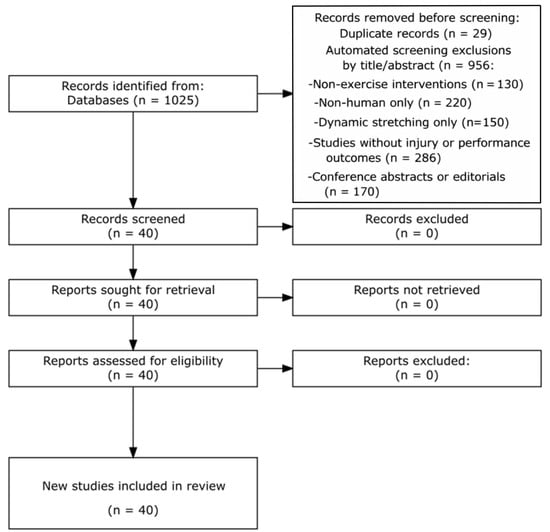
Study Selection Process: The initial database searches yielded 1025 records. After the automated removal of 29 duplicate records using reference management software (EndNote 20, Clarivate Analytics, Philadelphia, PA, USA), with duplicate detection based on matching author names, titles, publication years, and DOIs, 996 records underwent preliminary screening based on titles and abstracts. During this phase, 956 records were excluded using predefined automated criteria: non-exercise interventions (n = 130), non-human or mechanistic studies only (n = 220), studies without injury or performance outcomes (n = 286), dynamic stretching-only interventions (n = 150), and conference abstracts or editorials (n = 170). Automated screening was limited to initial filtering, and all exclusions were verified manually by two independent reviewers. Studies focusing exclusively on dynamic stretching were excluded because such interventions do not represent comprehensive training strategies and do not align with the integrative scope of this review, which aimed to evaluate multicomponent or structured exercise-based interventions across the training–recovery continuum. Automated exclusions were verified by two independent reviewers to ensure consistency and accuracy of the screening process. This systematic screening process resulted in 40 studies that met our inclusion criteria and were included in the final qualitative synthesis (see Figure 1). To avoid double counting of evidence, findings from systematic reviews and meta-analyses were interpreted alongside primary studies without being combined quantitatively.
Figure 1.
PRISMA flow diagram illustrating the study selection process.
Quality Assessment and Data Extraction: Two independent reviewers extracted data using standardized forms, including study design, participant characteristics, intervention details, comparator conditions, outcome measures, and key statistical findings. Methodological quality was assessed using appropriate tools based on study design, with discrepancies resolved through consensus or third-reviewer consultation.
2.3. Eligibility Criteria
Inclusion criteria: (i) human participants engaged in sport or structured exercise; (ii) an exercise-based warm-up, training (NMT/FIFA 11+, eccentric hamstring, dynamic stretching, wearable resistance, preseason ramp-up), or recovery protocol (defined as post-exercise interventions including active recovery, nutritional strategies, and sleep-related approaches); (iii) at least one muscle performance or injury outcome (sprint time, CMJ, Y-Balance, injury incidence/rate); and (iv) a randomized/controlled design, cohort, or systematic review/meta-analysis.
We excluded non-empirical work, mechanistic studies without applied outcomes, and modalities without an exercise component. Study selection: titles and abstracts were screened independently by two reviewers, with disagreements resolved through consensus.
2.4. Outcomes and Definitions
Primary outcomes included injury incidence and time-loss metrics, expressed using effect measures such as relative risk (RR) and incidence rate ratio (IRR). Performance outcomes included linear sprint (5–30 m), jump height (CMJ/VJ/SLJ), agility/change of direction, Y-Balance Test (YBT), VO2max, and neuromuscular indices (e.g., eccentric strength, hamstring-to-quadriceps ratio, fascicle length). Subgroup effects (sex, age) and dosing (frequency, duration, weekly exposure, intervention length) were abstracted [2,12].
2.5. Data Extraction and Reliability
Two reviewers independently extracted design, participant characteristics, intervention descriptors, comparators, primary outcomes (definitions, tools, timing), and key statistics (effect sizes, confidence intervals, p-values, RRs/IRRs). Discrepancies were resolved by consensus or third-reviewer adjudication. Inter-rater agreement was quantified using Cohen’s kappa coefficient, indicating moderate agreement (κ = 0.44) according to Landis and Koch criteria.
2.6. Risk of Bias
Methodological quality and risk of bias were independently assessed by two reviewers using design-specific validated tools [21,22,23]. For randomized controlled trials (RCTs) and cluster-RCTs, the Cochrane Risk of Bias 2 (RoB 2) tool was applied. Non-randomized and observational studies were evaluated using the ROBINS-I tool. Included systematic reviews and meta-analyses were appraised using the AMSTAR 2 checklist.
Domains assessed included the randomization process, allocation concealment, deviations from intended interventions, missing outcome data, outcome measurement, and selective reporting. Each study was categorized as low risk, some concerns, or high risk of bias.
Disagreements between reviewers were resolved by consensus, and when necessary, consultation with a third reviewer. A summary of methodological quality assessments is provided in Supplementary Table S2.
Given the heterogeneity of study designs and outcome metrics, risk-of-bias ratings were incorporated qualitatively into the interpretation of findings rather than used to weight pooled estimates.
2.7. Synthesis and Supplementary Analyses
The synthesis was conducted according to intervention class, defined based on the primary training modality (e.g., neuromuscular warm-up, eccentric training, multicomponent programs, and load management strategies) and population (e.g., youth vs. adult athletes, sex-specific cohorts, and sport type where reported), presenting comparative tables covering the spectrum of study designs, injury-risk metrics, performance outcomes, neuromuscular adaptations, sex-specific patterns, and dose–response relationships. Given heterogeneous denominators and metrics, we computed descriptive summaries (medians and ranges of reported effect estimates and performance changes) rather than a pooled meta-analysis [1].
3. Results
3.1. Evidence Base and Study Characteristics
The final included 40 studies: meta-analyses (n = 12), randomized controlled trials (n = 11), systematic reviews (n = 7), controlled/quasi-experimental studies (n = 4), cluster RCTs (n = 3), cohort studies (n = 2), and observational studies (n = 1). Soccer/football predominated, with basketball, rugby, and mixed-sport cohorts also represented. Youth/adolescent samples were frequent, including female-only and male-only cohorts [2,21] (see Figure 1). Table 1 summarizes the distribution and intervention classes. Supplementary Table S4 summarizes populations, interventions, dose/exposure, and primary outcomes extracted from the extended dataset.
Table 1.
Structural features of the evidence base: study designs and intervention categories.
3.2. Effects on Injury Outcomes
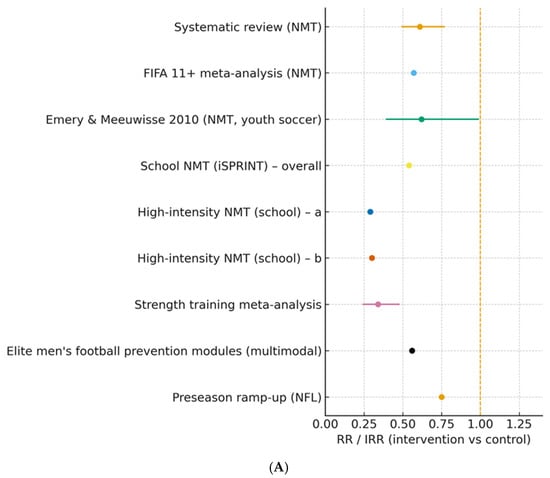
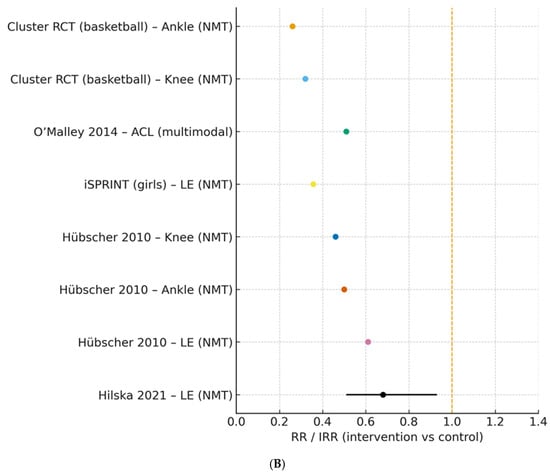
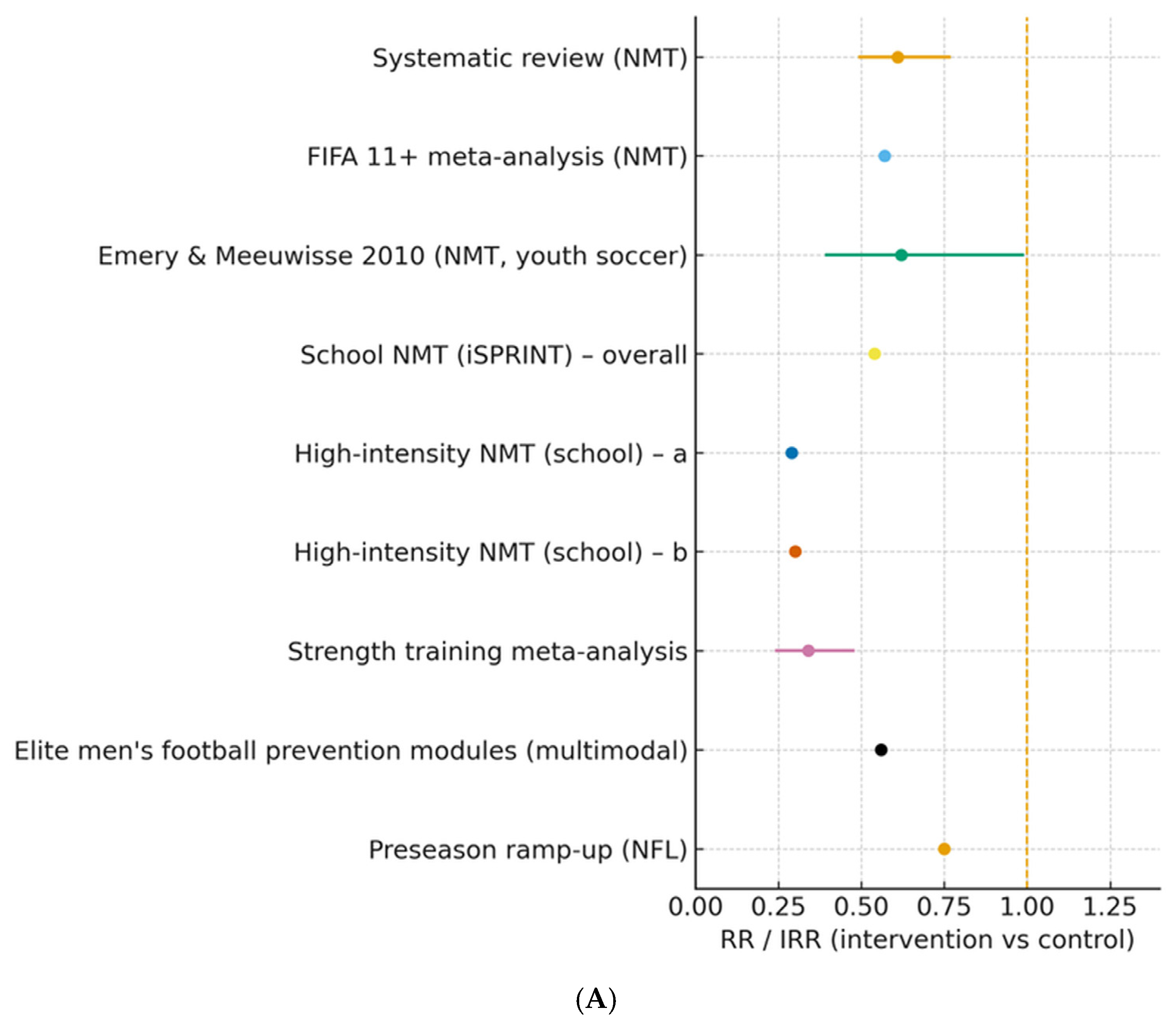
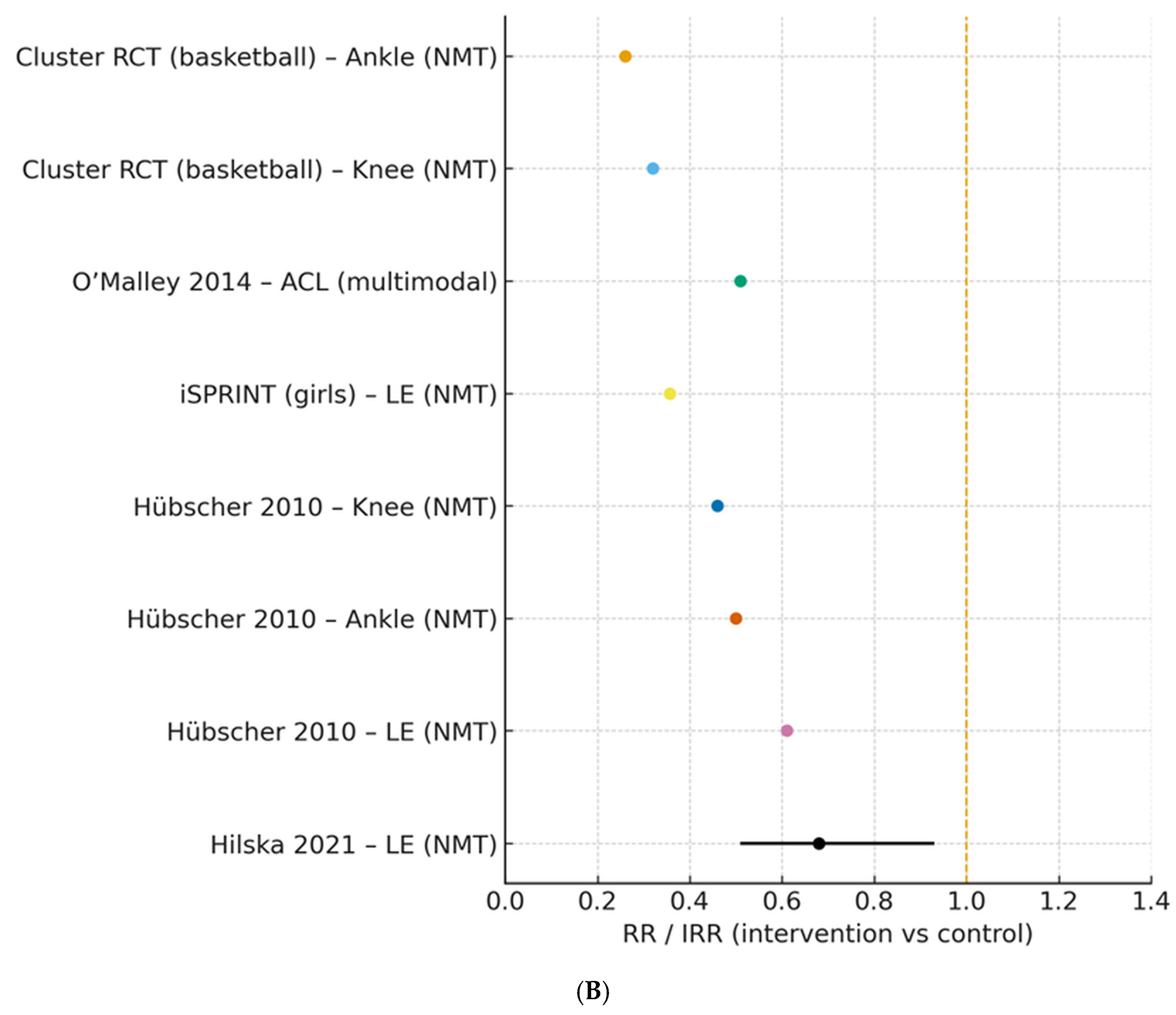
Across NMT/FIFA 11+ programs, estimates from meta-analyses and individual trials generally favored the intervention (RR ≈ 0.57–0.73; several IRRs < 0.60), suggesting reductions in ankle and knee injury risk. Eccentric hamstring programs reduced hamstring injury, including recurrent cases, and improved eccentric strength. Refer to Figure 2A,B for class-stratified and joint-specific forest plots, and to Supplementary Table S5 for representative injury-risk estimates with harmonized comparator direction [4,21,23,24].
Figure 2.
(A) Class-stratified forest plot of study-level injury-risk metrics (RR/IRR) across neuromuscular warm-ups (NMT/FIFA 11+), eccentric training interventions (including Nordic hamstring exercise, where applicable), multicomponent programs, and preseason ramp-up strategies; estimates expressed as intervention vs. control (values < 1.0 favor intervention), with 95% CIs shown where reported, and comparator directions harmonized. (B) Forest plot of joint-/compartment-specific injury-risk metrics (ankle, knee, ACL, lower extremity) from representative randomized trials and reviews; conventions as in Figure 2A (values < 1.0 favor intervention; 95% CIs where reported; NR indicates not reported). RR expresses the ratio of event risk between intervention and control groups, whereas IRR compares event incidence rates while accounting for exposure time [23,25,26].
3.2.1. Injury Prevention: Detailed Effects from Extended Dataset
Overall Signal and Consistency
Across studies (n = 26 comparisons), injury risk was generally lower in intervention versus control groups, with more pronounced effects observed for structured neuromuscular warm-ups and eccentric hamstring work. For neuromuscular training (NMT; including FIFA 11+, iSPRINT, and high-intensity NMT), non-weighted descriptive summaries of reported effect estimates yielded a median risk ratio of approximately 0.59, with a range of 0.26–0.73. These values suggest relative risk reductions of around 41%, with several trials reporting stronger effects at joint-specific endpoints (Figure 2A) [7,8,23,26]. Effects were directionally consistent in meta-analyses and large cluster RCTs, and persisted when analyses were stratified by age, sex, and sport [8,22,27].
By Intervention Class
- NMT/FIFA 11+. Estimates generally favored intervention across school-based and sport-specific cohorts, with similar magnitudes in meta-analyses and individual trials. Effects appeared more pronounced for joint-specific outcomes (ankle, knee) and in female cohorts, although reductions were also reported in youth male populations [9,28].
- Eccentric hamstring (NHE). Clinically meaningful reductions in hamstring injuries were reported, including recurrent cases [10,11,29]. NNT estimates indicate practical relevance in applied settings.
- Multicomponent programs. Balance- and agility-focused interventions demonstrated reduced injury rates in team-sport contexts, including elite football cohorts [16,25,30].
- Ramp-up/load management. Data-driven preseason ramp-up strategies were associated with reduced strain injuries, supporting progressive exposure models [19,31].
Link to Visualization
Class-stratified estimates and representative trial points are displayed in Figure 2A,B (panel A: global NMT/NHE/multicomponent summary; panel B: joint-specific endpoints). We annotate directionality where original reports used differing numerators/denominators and flag NR entries (see footnotes to Table 2).
Table 2.
Injury prevention outcomes: extended effects.
3.3. Effects on Performance and Neuromuscular Adaptations
Performance gains co-occurred with preventive effects. FIFA 11+-type programs were associated with improvements in vertical jump (~+4.7 cm) and reduced 20 m sprint (~−0.38 s). Elite female basketball NMT improved CMJ (~+9.4%) and Y-Balance (~+3–4%). Eccentric-overload work in junior soccer was associated with moderate-to-large CMJ effects and positive sprint responses. Wearable-resistance and high-intensity warm-ups showed sport-specific sprint/jump effects [3,8,13,15,28,33,37]. See Supplementary Table S6 and Table 3.
Table 3.
Performance outcomes in the extended dataset.
Training-induced changes included increased hamstring eccentric strength, longer biceps femoris fascicle length, favorable hamstring-to-quadriceps ratios, reduced inter-limb asymmetry, improved postural control, and reduced EMG-based delay times mechanistic correlates plausibly mediating injury-risk reduction [5,28,29,34,37,40]. Table 4 summarizes reported neuromuscular adaptations.
Table 4.
Strength, morphology, symmetry, and control changes following targeted programs.
3.4. Moderators of Response
Two school-based iSPRINT trials reported protective effects in girls but not boys; a female-specific analyses reported substantial ACL and ankle reductions; one youth multimodal program observed greater performance effects in boys [5,9,28,30]. Table 5 collates exemplars.
Table 5.
Differential responses by sex to neuromuscular and multimodal programs.
3.5. Intervention Characteristics
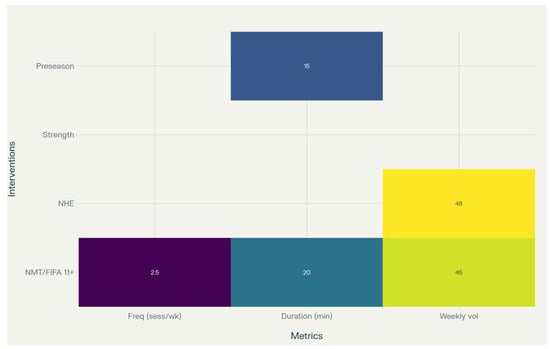
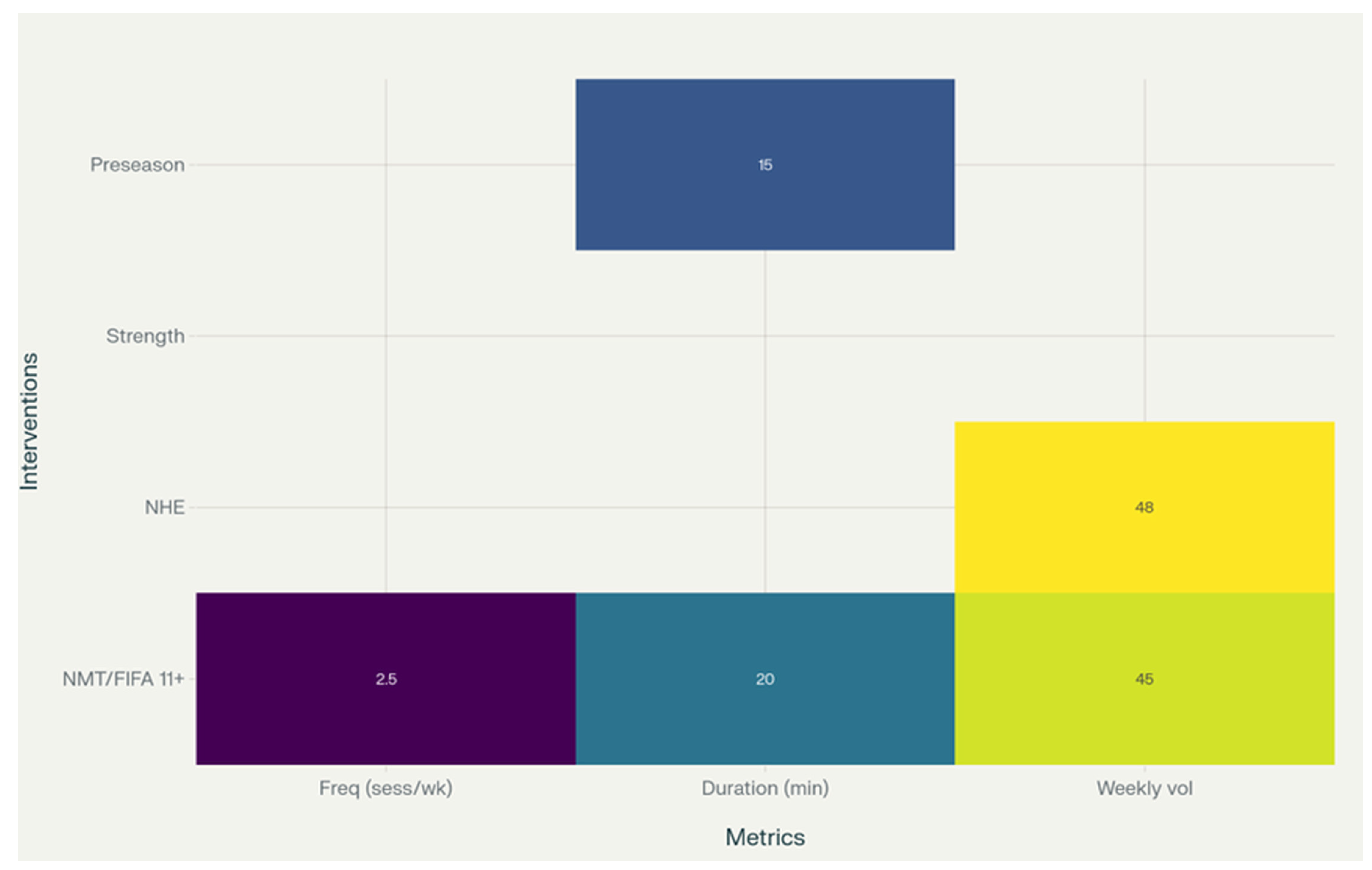
Evidence from multiple studies indicates that neuromuscular training (NMT) programs such as the FIFA 11+ are typically delivered two to three times per week for sessions lasting approximately 10–30 min (total weekly exposure ≈ 30–60 min). One randomized trial reported no significant difference in protective effect between 10- and 20-min sessions. Nordic hamstring exercise protocols generally employ a high-volume introductory phase followed by maintenance of ≈48 repetitions per week. A meta-analysis of strength-training interventions reported that a 10% increase in training volume is associated with an approximate 4% reduction in injury risk, and in professional preseason contexts, progressive ramp-up strategies were associated with reductions in lower-extremity strain injuries by around 25% [4,11,27,31,35,38]. See Figure 3 and Table 6.
Figure 3.
Schematic, descriptive summary of intervention characteristics (frequency, session duration, and weekly volume) derived from the included studies across neuromuscular warm-ups, Nordic hamstring exercises, strength training, and preseason ramp-up strategies. This figure does not represent a quantitative dose–response analysis or pooled estimates.
Table 6.
Frequency, duration, and volume targets for protective adaptation.
Dose and Delivery
Preventive effects were typically delivered as brief, frequent exposures: 2–3 sessions·wk−1, 10–30 min·session−1 (30–60 min·wk−1) for NMT [27], with no additional benefit of 20 versus 10 min in a cluster trial [38]. For NHE, front-loaded volume followed by low-dose maintenance sustained protection [11]. Further details on populations, interventions, and dosing parameters are available in Supplementary Table S4.
Comparisons of active versus passive recovery and citrulline malate versus placebo in trained cohorts reported no consistent differences for most performance outcomes, which is consistent with an individualized approach to recovery emphasizing sleep, nutrition, hydration, and athlete preference [41]. Post-match recovery responses varied depending on the type of activity performed [18,42].
4. Discussion
4.1. Principal Findings
The strength of evidence varies across study designs, with meta-analyses and randomized controlled trials providing relatively stronger support, while observational studies offer contextual insights but with greater variability. The available evidence suggests that exercise-based warm-up protocols and targeted strengthening interventions may help reduce injury risk—particularly for lower-extremity injuries—while also supporting functional performance across diverse populations, from adolescents to elite adult athletes. Evidence from meta-analyses and randomized controlled trials suggests that neuromuscular training (NMT), exemplified by the FIFA 11+ program, has been linked to protective effects, with randomized trials reporting relative risk reductions in ankle, knee, and anterior cruciate ligament (ACL) injuries in the range of 43–50% [8,24,26,32,35]. Related findings have also been reported for specific eccentric hamstring protocols, which address the high load of hamstring strains characteristic of many field sports, primarily through mechanisms involving increased fascicle length and eccentric strength [3,10,29]. Some evidence suggests dose-related effects of strength training, with incremental volume increases associated with approximately 4% reductions in injury risk, highlighting the importance of tailored and progressive loading regimens [4]. Such findings are supported by both systematic reviews and primary studies, suggesting that modifications in training volume, intensity, and cadence may influence injury risk, emphasizing the relevance of structured progressions such as pre-season ramp-ups [27,31,38].
From a practical perspective, reported reductions in absolute injury burden may support the applied relevance of these interventions. Where count data were available, absolute rate reductions appeared notable. For example, in elite female basketball, injuries were 32 vs. 79 in NMT versus control groups over a season [37]. Hamstring-specific endpoints yielded NNT values in the low teens (any injury) and single digits (recurrent), indicating potentially relevant applied benefit [10]. These magnitudes, combined with low time requirements (10–20 min integrated into warm-ups), may offer practical value for teams and school-based settings.
Additionally, post-match active recovery compared with sport-specific training produced context-dependent fatigue responses, suggesting that day-after recovery strategies may need to be individualized [18,42].
4.2. Mechanistic Plausibility
The biological plausibility of these preventive strategies is consistent with mechanistic insights into neuromuscular control, tissue adaptive capacity, and biomechanical optimization [40,43,44]. Improved motor control and postural stability, facilitated by neuromuscular training, are considered plausible contributors to reduced injury susceptibility, particularly for ligamentous injuries like ACL tears and ankle sprains [5,14]. Enhancing eccentric strength and fascicle length, through protocols like eccentric calf training or Nordic hamstring exercises, may improve the musculotendinous unit’s capacity to absorb shocks and reduce strain [13,18]. A related factor is the balance of antagonist and agonist muscle forces, specifically the H:Q ratio, where normalization can decrease anterior shear forces on the knee during dynamic tasks [37]. These tissue-level adaptations may also be complemented by dynamic warm-up routines and priming activities, which can increase neuromuscular excitability and facilitate rapid activation prior to exertion [29]. Additionally, the reduction in ACL injury risk observed particularly among female athletes may be partly explained by targeted neuromuscular training that improves landing mechanics and proprioception, aligning with findings from meta-analyses [8,30]. Biomechanical studies indicate that enhanced control of joint kinematics and kinetics can reduce abnormal stress on vulnerable structures, thereby offering a plausible mechanistic foundation for the observed clinical outcomes. For detailed quantitative dosing targets relevant to these mechanisms, see Supplementary Table S1a–g.
4.3. Load Management and Ramp-Up
Central to injury prevention is the principle of avoiding abrupt load spikes, which can overwhelm tissue capacity and precipitate injury [1,19]. Structured preseason ramp-up protocols, typically involving progressive increases in session duration and intensity over approximately 15-minute exposures, have been associated with reductions in lower-extremity strains by up to 25% in high-performance athletes, such as professional football players [31]. This is supported by findings indicating that gradual load increments and burden modulation may reduce the risk of overuse injuries by allowing connective tissue and neuromuscular systems to adapt safely [17]. Similarly, policy-level interventions, such as implementing injury screening and early detection programs (PPE), can further optimize training loads and prevent cumulative microtrauma [16]. When integrated into broader training frameworks, these strategies appear consistent with patterns of improved readiness and lower injury risk reported across studies.
4.4. Warm-Up Strategies, Priming, and Wearable Aids
The available literature suggests that dynamic stretching and activation exercises can be effective components of warm-up routines designed to prepare the neuromuscular system for explosive activity [12,13]. Static stretching, particularly when prolonged (>60 s), has been associated with subsequent performance decrements and may be more appropriate for flexibility-focused sessions than for pre-activity routines [13]. The concept of post-activation potentiation (PAP), whereby brief, high-intensity plyometric or resistance exercises may enhance neuromuscular output, appears promising when carefully dosed to avoid fatigue and overload [14,18,45]. Emerging pilot studies utilizing wearable resistance devices during warm-up have shown promising results in improving sprint and jump metrics, suggesting a potential adjunct to traditional warm-up protocols [15].
4.5. Implementation, Adherence, and Gender-Specific Considerations
Effective deployment of prevention programs hinges not only on their scientific efficacy but also on adherence, fidelity, and contextual tailoring. Embedding 10–20-minute neuromuscular training sessions into daily routines, along with structured checklists and progressively phased protocols, such as combined eccentric and isometric exercises, has been associated with better compliance among athletes [22,26]. Notably, data from school-based interventions indicate that girls derive relatively stronger protective effects from neuromuscular training modules, while boys often exhibit larger performance gains, suggesting a potential need for gender-sensitive modifications [9]. Such tailored approaches, combined with ongoing monitoring and feedback, may help optimize long-term adherence and maximize the protective effects reported in controlled studies.
4.6. Limitations and Generalizability
Heterogeneous denominators (per 1000 h vs. per season), effect metrics (RR vs. IRR), and varied protocols complicate pooling. Some large-scale meta-analyses and cluster RCTs strengthen confidence [4,36], but smaller or incompletely reported studies temper certainty. Most evidence involves youth soccer, with fewer studies in other sports or older adults, limiting generalizability [15,19].
In addition, some inconsistencies across studies were observed. Considering the broader body of evidence from randomized studies and synthesized analyses [4,8,9,11,24,25], these discrepancies may be related to differences in data coding or the selection of non-comparable control groups within individual studies. Importantly, excluding the most divergent result did not substantially change the overall pattern observed in our descriptive synthesis. Studies with unreported p-values (NR) [31] were retained in the qualitative synthesis but interpreted with caution.
4.7. Future Directions
Comparative effectiveness trials of NMT content variants, maturation-sensitive eccentric dosing, pragmatic load monitoring, and digital adherence supports are warranted. Broader sport representation and standardized reporting of denominators and fidelity would enhance translation.
4.8. Practical Recommendations
Available evidence suggests that commonly implemented intervention strategies include structured neuromuscular warm-up protocols lasting approximately 10–20 min, incorporating balance exercises, landing control, trunk–hip stability, progressive plyometrics, and short accelerations [2]. Eccentric hamstring training is typically performed one to three times per week, often with an initial progressive loading phase, and may be integrated with sprint-specific drills [10,11].
Dynamic stretching is frequently used as part of pre-activity preparation, whereas prolonged static stretching is more often reserved for flexibility-focused sessions [12,13]. Load management strategies generally involve monitoring weekly training volume and intensity, with gradual increases during preseason periods rather than abrupt spikes [1,31]. Recovery strategies primarily emphasize sleep, nutrition, and hydration, with mixed evidence regarding the effectiveness of active versus passive modalities, depending on context and athlete characteristics [18,41,42]. These implementation patterns are broadly aligned with the approaches described in studies reporting favorable injury-related outcomes.
5. Conclusions
Available evidence suggests that neuromuscular warm-ups performed 2–3 times per week for 10–20 min, phased eccentric hamstring training with low-volume maintenance, dynamic rather than prolonged static stretching prior to explosive tasks, progressive preseason load management, and individualized recovery strategies may represent practical components of exercise-based programs for supporting performance and lower-extremity injury prevention in youth and adult athletes. However, these conclusions should be interpreted in light of heterogeneity in study designs, outcome measures, and athlete populations [4,8,10,11,36,41].
Supplementary Materials
The following supporting information can be downloaded at https://www.mdpi.com/article/10.3390/sports14050187/s1: Supplementary Table S1a: CSV-derived dataset (reduced columns)—Neuromuscular Training (NMT/FIFA 11+); Supplementary Table S1b: CSV-derived dataset (reduced columns)—Eccentric/Nordic Hamstring; Supplementary Table S1c: CSV-derived dataset (reduced columns)—Strength Training; Supplementary Table S1d: CSV-derived dataset (reduced columns)—Multicomponent/Policy/Program; Supplementary Table S1e: CSV-derived dataset (reduced columns)—Load Monitoring/Quantification; Supplementary Table S1f: CSV-derived dataset (reduced columns)—Preseason Ramp-up; Supplementary Table S1g: CSV-derived dataset (reduced columns)—Other/Unspecified; Supplementary Table S2: Risk of bias and methodological quality assessment of included studies; Supplementary Table S3: PRISMA 2020 checklist; Supplementary Table S4. Characteristics of included studies (extended dataset); Supplementary Table S5. Relative and incidence rate ratios for injury outcomes in controlled evaluations; Supplementary Table S6. Sprinting, jumping, and balance responses to targeted preparatory work; Supplementary Table S7. Full Search Strategy.
Author Contributions
Conceptualization, S.K., M.S. and W.K.; methodology, S.K. and P.P.; software, W.K.; validation, W.K., S.K. and B.C.; formal analysis, W.K., S.K.; investigation, W.K. and S.K.; resources, M.S., K.O. and R.R.; data curation, W.K. and S.K.; writing—original draft preparation, S.K.; writing—review and editing, W.K., M.S., K.O., R.R., A.M., B.C., G.S.S., P.P. and S.K.; visualization, W.K.; supervision, P.P. and A.M.; project administration, W.K. and S.K.; funding acquisition, M.S. All authors have read and agreed to the published version of the manuscript.
Funding
This research received no external funding. The APC was funded by the authors.
Institutional Review Board Statement
Not applicable. This study is a systematic review with structured qualitative synthesis and did not involve humans or animals.
Informed Consent Statement
Not applicable. This study did not involve humans.
Data Availability Statement
The datasets analyzed in this study are included within the article and its Supplementary Materials. No new datasets were generated.
Acknowledgments
The authors would like to thank all colleagues who provided valuable comments, administrative assistance, and technical support during the preparation of this manuscript. The authors used an LLM for language editing and improving the readability of the manuscript. The authors reviewed and edited the content and take full responsibility for the final version of the manuscript.
Conflicts of Interest
The authors declare no conflicts of interest. The funders had no role in the design of the study; in the collection, analyses, or interpretation of data; in the writing of the manuscript; or in the decision to publish the results.
Abbreviations
The following abbreviations are used in this manuscript:
| ACL | anterior cruciate ligament |
| CI | confidence Interval |
| CK | creatine Kinase |
| CMJ | countermovement jump |
| EMG | electromyography |
| ES | effect size |
| H:Q | hamstring-to-quadriceps ratio |
| IRR | incidence rate ratio |
| LE | lower extremity |
| MVC | maximal voluntary contraction |
| MVF | maximal Voluntary Force |
| NFL | national Football League |
| NHE | Nordic hamstring exercise |
| NMT | neuromuscular training |
| NR | not reported |
| PEP | Prevent Injury and Enhance Performance |
| PEE | pre-participation examination |
| PNF | proprioceptive Neuromuscular Facilitation |
| PRISMA | Preferred Reporting Items for Systematic Reviews and Meta-Analyses |
| PRISMA-P | Preferred Reporting Items for Systematic Review and Meta-Analysis Protocols |
| RCT | randomized controlled trial |
| ROM | range of motion |
| RR | relative risk |
| SLJ | standing long jump |
| VO2max | maximal oxygen uptake |
| VJ | vertical jump |
| Wk | week |
| Y | years |
| YBT | Y Balance Test |
References
- Padulo, J.; Cicolari, M.; Enciso, V. The Impact of Training Load on Running Gait Variability: A Pilot Study. Acta Kinesiol. 2023, 13, 189–200. [Google Scholar] [CrossRef] [Scilit]
- Jaskulski, K.; Wysoczański, B.; Starczewski, M. Eight-Week Sensomotoric Warm-up Improves Motor Performance and Postural Stability in High-Performance Female Rugby-7 Players. Acta Kinesiol. 2024, 14, 125–138. [Google Scholar] [CrossRef] [Scilit]
- de Hoyo, M.; Pozo, M.; Sañudo, B.; Carrasco, L.; Gonzalo-Skok, O.; Domínguez-Cobo, S.; Morán-Camacho, E. Effects of a 10-Week in-Season Eccentric-Overload Training Program on Muscle-Injury Prevention and Performance in Junior Elite Soccer Players. Int. J. Sports Physiol. Perform. 2015, 10, 958–965. [Google Scholar] [CrossRef] [Scilit] [PubMed]
- Lauersen, J.B.; Andersen, T.E.; Andersen, L. Strength Training as Superior, Dose-Dependent and Safe Prevention of Acute and Overuse Sports Injuries: A Systematic Review, Qualitative Analysis and Meta-Analysis. Br. J. Sports Med. 2018, 52, 1557–1563. [Google Scholar] [CrossRef] [Scilit]
- Faude, O.; Rössler, R.; Petushek, E.; Roth, R.; Zahner, L.; Donath, L. Neuromuscular Adaptations to Multimodal Injury Prevention Programs in Youth Sports: A Systematic Review with Meta-Analysis of Randomized Controlled Trials. Front. Physiol. 2017, 8, 791. [Google Scholar] [CrossRef] [Scilit]
- Grooms, D.R.; Palmer, T.; Onate, J.A.; Myer, G.D.; Grindstaff, T. Soccer-Specific Warm-up and Lower Extremity Injury Rates in Collegiate Male Soccer Players. J. Athl. Train. 2013, 48, 782–789. [Google Scholar] [CrossRef] [Scilit]
- Steffen, K.; Meeuwisse, W.H.; Romiti, M.; Kang, J.; McKay, C.; Bizzini, M.; Dvorak, J.; Finch, C.F.; Myklebust, G.; Emery, C.A. Evaluation of How Different Implementation Strategies of an Injury Prevention Programme (FIFA 11+) Impact Team Adherence and Injury Risk in Canadian Female Youth Football Players: A Cluster-Randomized Trial. Br. J. Sports Med. 2013, 47, 480–487. [Google Scholar] [CrossRef] [Scilit]
- Vlachas, T.; Paraskevopoulos, E. The Effect of the FIFA 11+ on Injury Prevention and Performance in Football: Systematic Review with Meta-Analysis. BioMed 2022, 20, 26. [Google Scholar] [CrossRef] [Scilit]
- Foss, K.D.B.; Thomas, S.; Khoury, J.C.; Myer, G.D.; Hewett, T.E. A School-Based Neuromuscular Training Program and Sport-Related Injury Incidence: A Prospective Randomized Controlled Clinical Trial. J. Athl. Train. 2018, 53, 20–28. [Google Scholar] [CrossRef] [Scilit]
- Schache, A. Eccentric Hamstring Training Can Prevents Hamstring Injuries in Soccer Players. J. Physiother. 2012, 58, 225–234. [Google Scholar] [CrossRef] [Scilit] [PubMed]
- Nunes, H.; Fernandes, G.L.; Martins, P.N.; Ferreira, R.M. Effects of Nordic Hamstring Exercise on Performance and Injury: Umbrella Review. Healthcare 2024, 12, 1462. [Google Scholar] [CrossRef] [Scilit]
- Martone, D.; Russomando, L.; Cosco, L.; Dei, S.; Emerenziani, G.P.; Buono, P. Acute Effects of Dynamic Stretching and Core Stability on physical performance in U-16 Volleyball Performance. Acta Kinesiol. 2024, 14, 225–238. [Google Scholar] [CrossRef] [Scilit]
- Behm, D.G.; Blazevich, A.J.; Kay, A.D.; McHugh, M. Acute Effects of Muscle Stretching on Physical Performance, Range of Motion, and Injury Incidence in Healthy Active Individuals: A Systematic Review. Appl. Physiol. Nutr. Metab. 2016, 41, 1–11. [Google Scholar] [CrossRef] [Scilit]
- Boyd, L.; Deakin, G.B.; Devantier-Thomas, B.; Singh, U.; Doma, K. The Effects of Pre-Conditioning on Exercise-Induced Muscle Damage: Systematic Review and Meta-Analysis. Sports Med. 2023, 53, 151–169. [Google Scholar] [CrossRef] [Scilit]
- Bustos, A.; Metral, G.; Cronin, J.; Uthoff, A.; Dolcetti, J. Effects of Warming up with Lower-Body Wearable Resistance on Physical Performance Measures in Soccer Players Over an 8-Week Training Cycle. J. Strength Cond. Res. 2020, 34, 1623–1631. [Google Scholar] [CrossRef] [Scilit] [PubMed]
- Krutsch, W.; Lehmann, J.; Jansen, P.; Angele, P.; Fellner, B.; Achenbach, L.; Krutsch, V.; Nerlich, M.; Alt, V.; Loose, O. Prevention of Severe Knee Injuries in Men’s Elite Football by Training Modules. Knee Surg. Sports Traumatol. Arthrosc. 2019, 27, 106–114. [Google Scholar] [CrossRef] [Scilit]
- Owen, A.; Wong, D.; Dellal, A.; Paul, D.; Orhant, E.; Collie, S. Effect of an Injury Prevention Program on Muscle Injuries in Elite Professional Soccer. J. Strength Cond. Res. 2013, 27, 18–22. [Google Scholar] [CrossRef] [Scilit] [PubMed]
- Mason, B.; Mckune, A.J.; Pumpa, K.; Ball, N.B. The Use of Acute Exercise Interventions as Game Day Priming Strategies to Improve Physical Performance and Athlete Readiness in Team-Sport Athletes: A Systematic Review. Sports Med. 2020, 50, 1405–1420. [Google Scholar] [CrossRef] [Scilit]
- Booth, M.; Orr, R.; Cobley, S. The Effect of Training Loads on Performance Measures and Injury Characteristics in Rugby League Players: A Systematic Review. Int. J. Sports Physiol. Perform. 2017, 12, 105–117. [Google Scholar] [CrossRef] [Scilit]
- Pawlak, M.; Chudecka, M.; Leźnicka, K. Insight in perception of pain in sports—selected aspects. Acta Kinesiol. 2024, 18, 16–22. [Google Scholar] [CrossRef] [Scilit]
- Mainer-Pardos, E.; Kamis, O.; Oliveira, R.; Nobari, H. Effect of additional short sprint training on physical performance in adolescent male soccer players: A systematic review and meta-analysis. Acta Kinesiol. 2024, 14, 201–214. [Google Scholar] [CrossRef] [Scilit]
- Emery, C.A.; Roy, T.O.; Whittaker, J.L.; Nettel-Aguirre, A.; van Mechelen, W. Neuromuscular Training Injury Prevention Strategies in Youth Sport: Systematic Review & Meta-Analysis. Br. J. Sports Med. 2015, 49, 865–873. [Google Scholar] [CrossRef] [Scilit] [PubMed]
- Hübscher, M.; Zech, A.; Pfeifer, K.; Hänsel, F.; Vogt, L.; Banzer, W. Neuromuscular Training for Sports Injury Prevention: Systematic Review. Med. Sci. Sports Exerc. 2010, 42, 413–421. [Google Scholar] [CrossRef] [Scilit] [PubMed]
- Herman, K.; Barton, C.; Malliaras, P.; Morrissey, D. The effectiveness of neuromuscular warm-up strategies, that require no additional equipment, for preventing lower limb injuries during sports participation: A systematic review. BMC Med. 2012, 10, 75. [Google Scholar] [CrossRef] [Scilit]
- O’Malley, E.; Murphy, J.C.; Gissane, C.; McCarthy-Persson, U.; Blake, C. Effective Exercise-Based Training Interventions Targeting Injury Prevention in Team-Based Sports: Systematic Review. Br. J. Sports Med. 2014, 48, 1364–1370. [Google Scholar] [CrossRef] [Scilit]
- Hilska, M.; Leppänen, M.; Vasankari, T.; Aaltonen, S.; Kannus, P.; Parkkari, J.; Steffen, K.; Kujala, U.; Konttinen, N.; Räisänen, A.; et al. Neuromuscular Training Warm-up Prevents Acute Noncontact Lower Extremity Injuries in Children’s Soccer: A Cluster Randomized Controlled Trial. Orthop. J. Sports Med. 2021, 9, 23259671211005769. [Google Scholar] [CrossRef] [Scilit]
- Steib, S.; Rahlf, A.L.; Pfeifer, K.; Zech, A. Dose-Response Relationship of Neuromuscular Training for Injury Prevention in Youth Athletes: A Meta-Analysis. Front. Physiol. 2017, 8, 920. [Google Scholar] [CrossRef] [Scilit]
- Berg, C.V.D.; Emery, C.; Richmond, S.; Palacios-Derflingher, L.; McKay, C.; Doyle-Baker, P.K.; McKinlay, M.; Toomey, C.; Nettel-Aguirre, A.; Verhagen, E.; et al. Implementing a School Prevention Program to Reduce Injuries through Neuromuscular Training (iSPRINT): A Cluster-Randomized Controlled Trial. Br. J. Sports Med. 2019, 54, 913–919. [Google Scholar] [CrossRef] [Scilit]
- Rudisill, S.S.; Varady, N.H.; Kucharik, M.; Eberlin, C.T.; Martin, S. Evidence-Based Hamstring Injury Prevention and Risk Factor Management: A Systematic Review and Meta-Analysis of RCTs. Am. J. Sports Med. 2022, 50, 1103–1111. [Google Scholar] [CrossRef] [Scilit]
- Bullock, G.S.; Räisänen, A.M.; Martin, C.; Martin, M.; Galarneau, J.-M.; Whittaker, J.L.; Losciale, J.M.; Bizzini, M.; Bourne, M.N.; Dijkstra, H.P.; et al. Prevention Strategies for Lower Extremity Injury: A Systematic Review and Meta-Analyses for the Female, Woman and/or Girl Athlete Injury pRevention (FAIR) Consensus. Br. J. Sports Med. 2025, 59, 1575–1586. [Google Scholar] [CrossRef] [Scilit] [PubMed]
- Herzog, M.M.; Weiss, L.; Lee, R.Y.; Williams, T.; Ramsden, S.; Sills, A.K.; Mack, C.D. Lower Extremity Strains in the US National Football League, 2015–2019. Am. J. Sports Med. 2023, 51, 2176–2185. [Google Scholar] [CrossRef] [Scilit]
- Emery, C.A.; Meeuwisse, W.H. Effectiveness of a Neuromuscular Prevention Strategy to Reduce Injuries in Youth Soccer: A cluster-randomised controlled trial. Br. J. Sports Med. 2010, 44, 555–562. [Google Scholar] [CrossRef] [Scilit] [PubMed]
- Richmond, S.; Berg, C.V.D.; Owoeye, O.; Shi, Q.; Palacios-Derflingher, L.; Hagel, B.; Macpherson, A.; Emery, C. The Efficacy of a Neuromuscular Training Injury Prevention Warm-up Program in Junior High School Students. Br. J. Sports Med. 2017, 51, 379. [Google Scholar] [CrossRef] [Scilit]
- Paravlic, A.H.; Bakalár, P.; Puš, K.; Pišot, S.; Kalc, M.; Teraž, K.; Šlosar, L.; Peskar, M.; Marušič, U.; Šimunič, B. The Effectiveness of Neuromuscular Training Warm-up Program for Injury Prevention in Adolescent Male Basketball Players. J. Sports Sci. 2024, 42, 99–110. [Google Scholar] [CrossRef] [Scilit] [PubMed]
- Li, Y.; Zhu, W. The Preventive Effects of Neuromuscular Training on Lower Extremity Sports Injuries in Adolescent and Young Athletes: Systematic Review & Meta-Analysis. Knee Oxf. 2025, 56, 373–385. [Google Scholar] [CrossRef] [Scilit]
- Stojanović, E.; Scanlan, A.; Radovanović, D.; Jakovljević, V.; Faude, O. A Multicomponent Neuromuscular Warm-up Program Reduces Lower-Extremity Injuries in Trained Basketball Players: A Cluster Randomized Controlled Trial. Physician Sportsmed. 2022, 50, 219–226. [Google Scholar] [CrossRef] [Scilit]
- Bonato, M.; Benis, R.; La Torre, A. Neuromuscular Training Reduces Lower Limb Injuries in Elite Female Basketball Players: A Cluster Randomized Controlled Trial. Scand. J. Med. Sci. Sports 2018, 28, 371–379. [Google Scholar] [CrossRef] [Scilit]
- Rahlf, A.; Cornelius, J.; Hamacher, D.; Zech, A. Effects of a 10 vs. 20-Min Injury Prevention Program on Neuromuscular and Functional Performance in Adolescent Football Players. Front. Physiol. 2020, 8, 920. [Google Scholar] [CrossRef] [Scilit]
- Lopes, J.S.S.; Machado, A.F.; Micheletti, J.K.; De Almeida, A.C.; Cavina, A.P.; Pastre, C.M. Effects of Training with Elastic Resistance versus Conventional Resistance on Muscular Strength: A Systematic Review and Meta-Analysis. SAGE Open Med. 2019, 7, 2050312119831116. [Google Scholar] [CrossRef] [Scilit] [PubMed]
- Kuliś, S.; Callegari, B.; Maszczyk, A.; Pietraszewski, P. Physiological Limb Tremor Modulation by Physical Exertion: A Systematic Review and Meta-Analysis in Healthy Adults. Br. Med. Bull. 2025, 156, ldaf022. [Google Scholar] [CrossRef] [Scilit]
- Jafari, R.A.; Hosseini, S.R.A.; Rashidlamir, A.; Nobari, H. Active vs Passive Recovery Strategies and Citrulline Malate Supplementation in Wrestling. Acta Kinesiol. 2024, 14, 103–115. [Google Scholar] [CrossRef] [Scilit]
- Trecroci, A.; Porcelli, S.; Perri, E.; Pedrali, M.; Rasica, L.; Alberti, G.; Longo, S.; Iaia, F.M. Effects of Different Training Interventions on Recovery after a Soccer Match. J. Strength Cond. Res. 2020, 34, 363–371. [Google Scholar] [CrossRef] [Scilit] [PubMed]
- Kuliś, S.; Kłobuchowski, W.; Callegari, B.; Souza, G.S.; Ornowski, K.; Maszczyk, A.; Gajewski, J.; Pietraszewski, P. Acute Modulation of Physiological Tremor by Physical Exercise and Resistance-Based Protocols: A Meta-Analysis of Quantitative Neuromuscular Responses in Healthy Adults. Physiologia 2026, 6, 11. [Google Scholar] [CrossRef] [Scilit]
- Kuliś, S.; Kłobuchowski, W.; Skorulski, M.; Pietraszewski, P.; Callegari, B. Upper Limb Tremor Variability in Elite Sport Dancers: The Influence of Competitive Simulation. Biomed. Hum. Kinet. 2025, 17, 219–228. [Google Scholar] [CrossRef] [Scilit]
- Formiglio, E.; Patti, A.; Fernández-Peña, E.; Giustino, V.; Vicari, D.S.S.; Tamassia, A.; Gervasi, M. The Effects of Multiple Factors on Post-Activation Potentiation and Performance Enhancement: A Narrative Review. Acta Kinesiol. 2024, 14, 45–59. [Google Scholar] [CrossRef] [Scilit]

Disclaimer/Publisher’s Note: The statements, opinions and data contained in all publications are solely those of the individual author(s) and contributor(s) and not of MDPI and/or the editor(s). MDPI and/or the editor(s) disclaim responsibility for any injury to people or property resulting from any ideas, methods, instructions or products referred to in the content. |
© 2026 by the authors. Licensee MDPI, Basel, Switzerland. This article is an open access article distributed under the terms and conditions of the Creative Commons Attribution (CC BY) license.