Article

Improving Performance of Key–Value Stores for High-Performance Storage Devices


1
Department of Computer Science and Engineering, Seoul National University of Science and Technology, Seoul 01811, Republic of Korea
2
Department of Smart ICT Convergence Engineering, Seoul National University of Science and Technology, Seoul 01811, Republic of Korea
*
Author to whom correspondence should be addressed.
Appl. Sci. 2024, 14(17), 7538; https://doi.org/10.3390/app14177538
Submission received: 23 July 2024 / Revised: 20 August 2024 / Accepted: 23 August 2024 / Published: 26 August 2024

Abstract

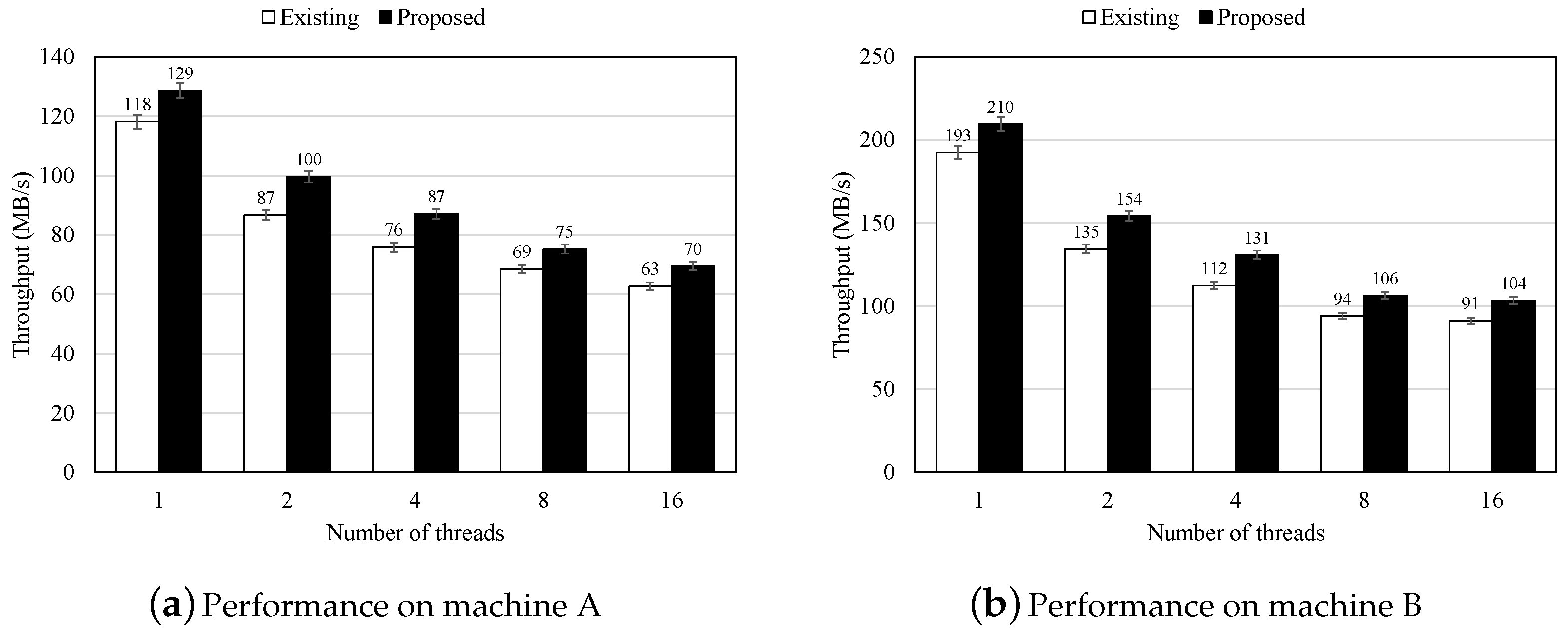
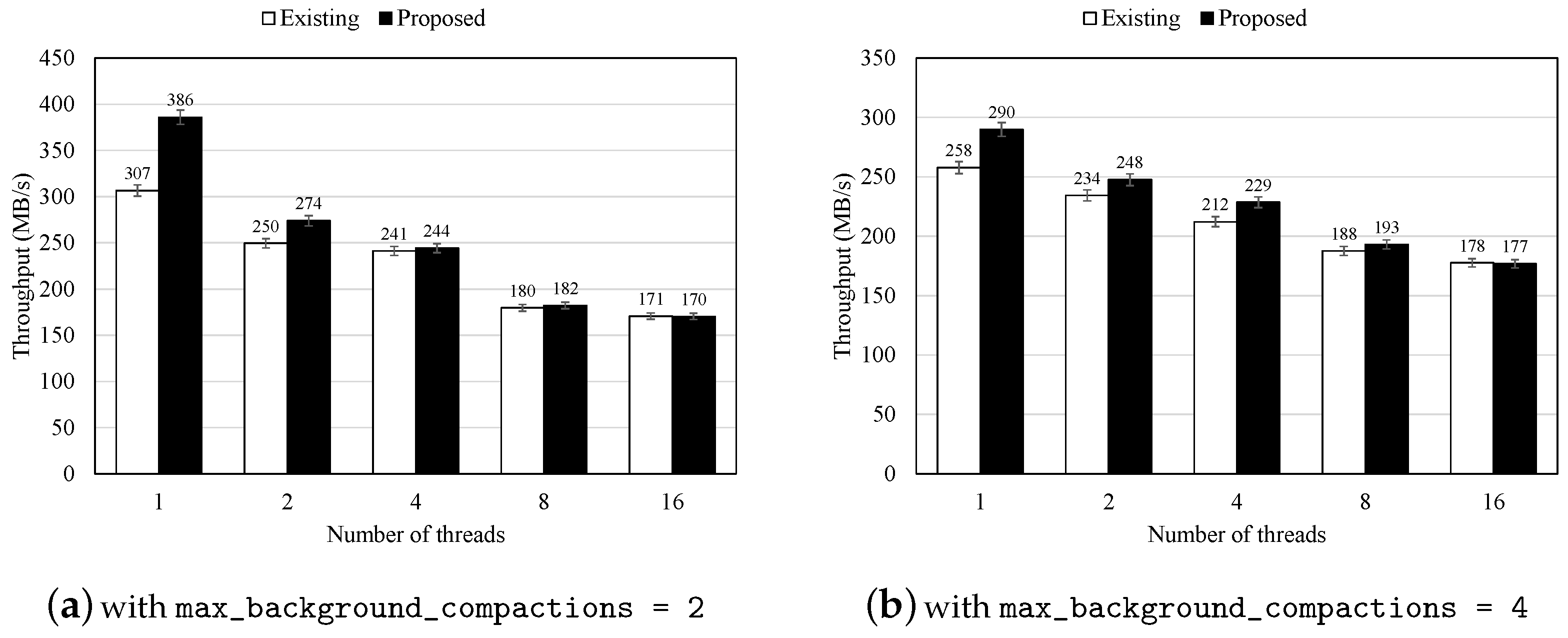
Key–value stores (KV stores) are becoming popular in both academia and industry due to their high performance and simplicity in data management. Unlike traditional database systems such as relational databases, KV stores manage data in key–value pairs and do not support relationships between the data. This simplicity enables KV stores to offer higher performance. To further improve the performance of KV stores, high-performance storage devices such as solid-state drives (SSDs) and non-volatile memory express (NVMe) SSDs have been widely adopted. These devices are intended to expedite data processing and storage. However, our studies indicate that, due to a lack of multi-thread-oriented programming, the performance of KV stores is far below the raw performance of high-performance storage devices. In this paper, we analyze the performance of existing KV stores utilizing high-performance storage devices. Our analysis reveals that the actual performance of KV stores is below the potential performance that these storage devices could offer. According to the profiling results, we argue that this performance gap is due to the coarse-grained locking mechanisms of existing KV stores. To alleviate this issue, we propose a multi-threaded compaction operation that leverages idle threads to participate in I/O operations. Our experimental results demonstrate that our scheme can improve the performance of KV stores by up to 16% by increasing the number of threads involved in I/O operations.
Keywords: key–value stores; high-performance storage devices; solid-state drives key–value stores; high-performance storage devices; solid-state drives