


Featured Application
The potential application of the work includes new software based on machine learning to support the design, planning, realization, and post-production processes of 3D-printed products.
Abstract
Three-dimensional (3D) printing techniques already enable the precise deposition of many materials, becoming a promising approach for materials engineering, mechanical engineering, or biomedical engineering. Recent advances in 3D printing enable scientists and engineers to create models with precisely controlled and complex microarchitecture, shapes, and surface finishes, including multi-material printing. The incorporation of artificial intelligence (AI) at various stages of 3D printing has made it possible to reconstruct objects from images (including, for example, medical images), select and optimize materials and the printing process, and monitor the lifecycle of products. New emerging opportunities are provided by the ability of machine learning (ML) to analyze complex data sets and learn from previous (historical) experience and predictions to dynamically optimize and individuate products and processes. This includes the synergistic capabilities of 3D printing and ML for the development of personalized products.
1. Introduction
Previous studies and publications developed the concept that artificial intelligence (AI) is useful in many areas of research on 3D-printed products. This is particularly true for supporting 3D printing with machine learning (ML), i.e., a data-driven approach that extracts complex connections between input and output data and uses these connections for optimization and prediction. However, there is still a lack of large-scale reviews and comparative studies. This gap results, among others, from the diversity of 3D printing technologies, materials used for this purpose, ML solutions, and products manufactured using 3D printing technology [1]. The use of machine learning (ML) in 3D printing faces significant challenges related to data collection and analysis. Currently, there is a lack of larger systems that would effectively organize data and enable their comprehensive analysis, which is a serious limitation for the development of this technology [2]. Additionally, the data available in the 3D printing sector are often unstructured and incomplete, which makes it difficult to use them in ML algorithms. To improve the situation, it is necessary to conduct a detailed audit of data, both those already collected and those generated on an ongoing basis, in terms of their usefulness in ML systems [3]. In the future, significant development of ML applications in the design and production of 3D-printed products is expected [4]. Particular attention is paid to the potential of this technology in the areas of commercialization and fintech, including market analysis, costs, profitability of products, and their families. Nevertheless, there are significant barriers that may hinder the development of this field [5]. One of them is the limited depth of the investor market, which may make it difficult to finance new ventures. In the case of 3D-printed medical devices, regulatory requirements, including the need to implement the MDR [6] and ISO 13485 [7] standards, pose an additional challenge. Despite these difficulties, the potential of ML in 3D printing remains enormous, especially in the context of automated design and optimization of production processes. Success in this area, however, will require effective cooperation between the technological, industrial, and regulatory sectors.
The observed gaps in emerging ML applications in 3D printing are presented in Table 1. These gaps highlight both gaps to be filled and opportunities for research and development at the intersection of ML and 3D printing.

Table 1.
Observed gaps in emerging ML applications in 3D printing (own version).
The aim of this article is to identify and disseminate more fully than before the role of ML in the design and production of personalized 3D-printed products, especially medical devices, in light of current research and economic practice as well as emerging research and industrial trends.
2. Materials and Methods
2.1. Data Set
This bibliometric analysis aims to investigate the research landscape and the state of knowledge and practice in the area of planning and implementing ML for the optimization of materials and 3D printing technologies. For this purpose, we used bibliometric methods to analyze recently (i.e., up to 10 years back) published scientific publications with a global reach. The approach used includes formulating research questions to identify key areas that include the current state of research, the origin of publications (institutions, country, funding mode), the most influential authors and articles, and, furthermore, the evolution of research topics. When possible, we tried to identify the sustainability goals related to the publications included in the review. This approach allows for a more comprehensive understanding of current research and industry trends, strategies, research, and business practice based on ML in the development of 3D printing. In light of the paradigms of Industry 4.0 (automation, robotization, technical control throughout the production cycle) and Industry 5.0 (human and environment at the center of attention), it becomes necessary to understand and plan further pro-development activities in this field and strengthen its potential. Interpretation of bibliometric data enriches current discussions and provides a solid foundation for future research.
2.2. Methods
In this study, we searched four bibliographic databases: Web of Science (WoS), Scopus, PubMed, and dblp. Their selection was dictated by their wide range of studies and rich data of global relevance (Table 2). We applied filters to focus on appropriately selected literature, narrowing the search scope to articles in English. After filtering, we manually reviewed each article to ensure that it met the inclusion criteria, which helped determine the final sample size. We then analyzed the main features of the dataset, including the most common authors, research groups/institutions, countries, topic groups, and emerging trends. This allowed us to map key terminology and its evolution, as well as the main research developments in the study area. Where possible, we tracked temporal trends to monitor changes in the research area over time, and we grouped publications into topic clusters, which showed the relationships between different research areas. This process highlighted important themes and subfields within the research area.
Table 2.
Bibliometric analysis procedure (own approach).
The study was based on selected elements of the PRISMA 2020 guidelines for bibliographic reviews [8], focusing on the following aspects: justification (item 3), objectives (item 4), eligibility criteria (item 5), information sources (item 6), search strategy (item 7), selection process (item 8), data collection process (item 9), synthesis methods (item 13a), synthesis results (item 20b), and discussion (item 23a) (see Supplementary Materials for details). For bibliometric analysis, tools embedded in the Web of Science (WoS), Scopus, PubMed, and dblp databases were used. This selected review methodology supports bibliometric and scientometric studies, often allowing for refined categorization by concepts, research areas, authors, documents, and sources. The results are presented in a table that allows for flexible analysis and visualization options. Considering the interdisciplinary scope and complexity of the topic, we have summarized the most important results of the review in a summary table.
The literature review process begins with a systematic search of multiple databases using predefined keywords and Boolean operators to ensure comprehensive coverage of relevant studies. Inclusion and exclusion criteria are established based on study relevance, publication date, methodological rigor, and relevance to research objectives, ensuring focused and high-quality selection. An initial automated filtering process removes duplicates and clearly irrelevant studies, followed by manual screening of titles and abstracts to further refine the selection. Full-text mining is performed by multiple reviewers to minimize subjective bias, and discrepancies are resolved through discussion or consultation with a third reviewer. The Preferred Reporting Items for Systematic Reviews and Meta-Analyses (PRISMA) flowchart is used to visually document the number of studies included and excluded at each stage, which increases transparency. The rationale for excluded studies is recorded, providing a clear justification for why some articles were not considered, reducing ambiguity in the selection process. Robustness checking ensures consistency in manual screening and minimizes potential bias introduced by individual reviewers. Sensitivity analysis is performed by reconsidering borderline cases and assessing whether different inclusion criteria would significantly change the final selection of studies. The review ensures replicability, allowing other researchers to check or replicate the selection of studies. This structured approach enhances the credibility of the literature review by ensuring that the conclusions drawn are based on a transparent and methodologically sound selection of studies.
3. Results
3.1. Data Sources
To refine the search, advanced filtered queries were used, limiting the results to articles in English. Searches were performed as follows: in WoS using the “Subject” field (consisting of title, abstract, keywords plus and other keywords); in Scopus using article title, abstract, and keywords; and in PubMed and dblp using manual sets of keywords. The databases were searched for articles using keywords such as “machine learning”, “3D print” or “3D printing” and “optimization” or “optimisation” (Table 3).
Table 3.
Detailed database search query (own version).
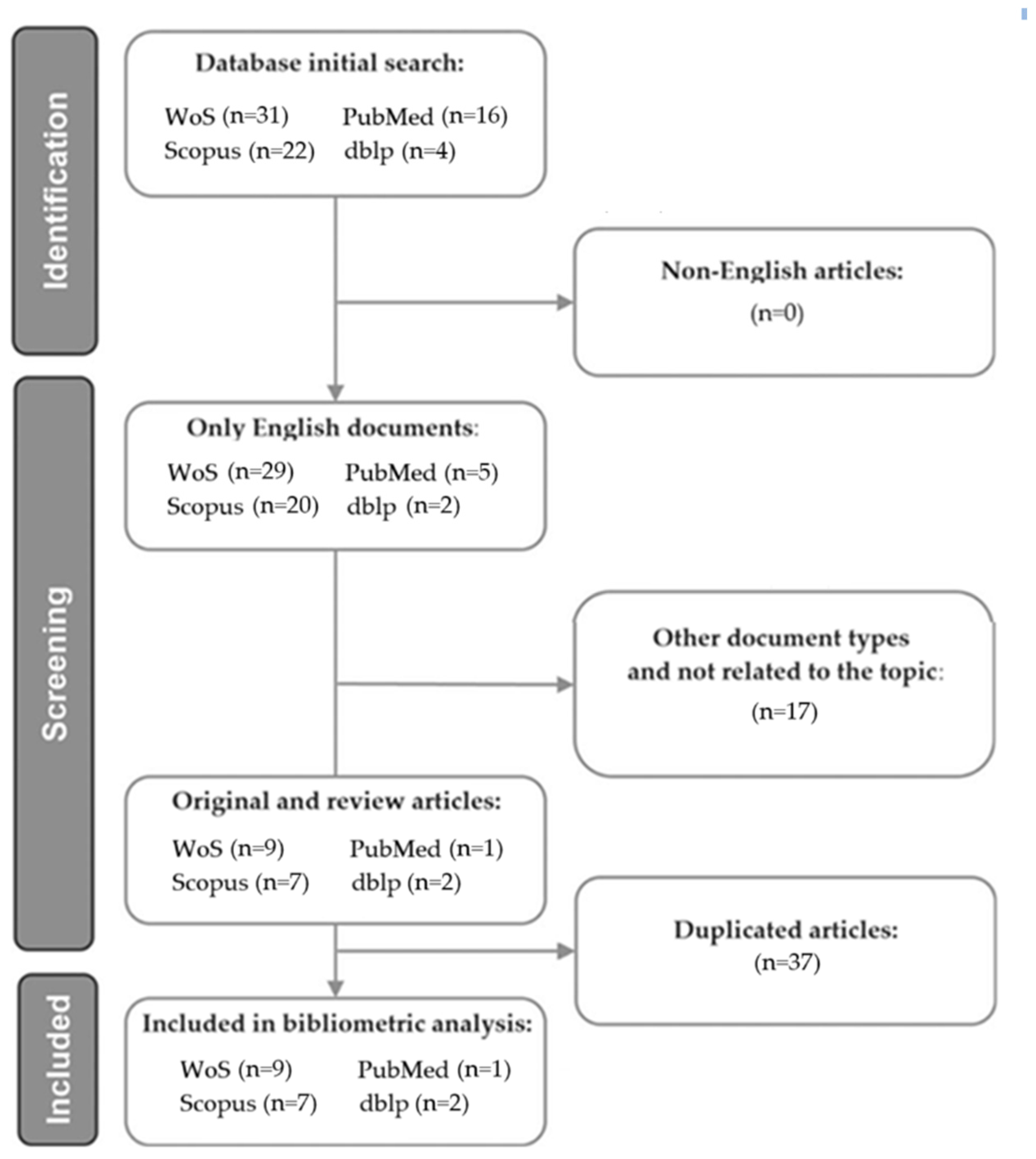
The selected set of publications was then further refined (Figure 1) by manually re-screening articles and removing irrelevant publications and duplicates to determine the final sample size.
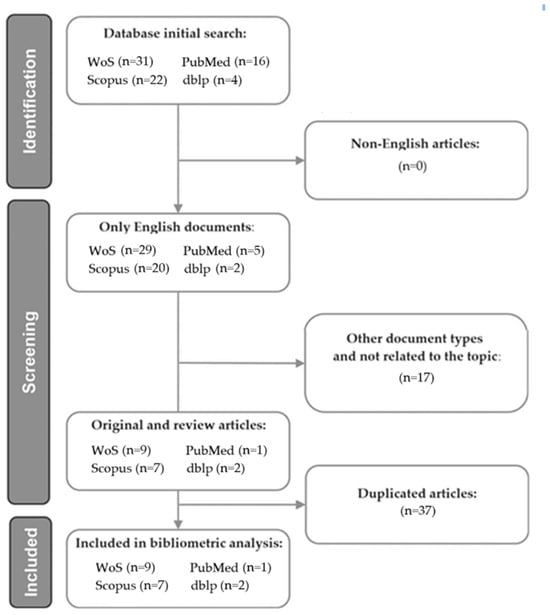
Figure 1.
PRISMA flow diagram of the review process using selected PRISMA 2020 guidelines.
The summary of the results of the bibliographic analysis is presented in Table 4. The review included 19 articles published in the last five years (no older ones were included).
Table 4.
Summary of bibliographic analysis results (WoS, Scopus, PubMed, dblp).
3.2. Transformative Role of ML in 3D Printing
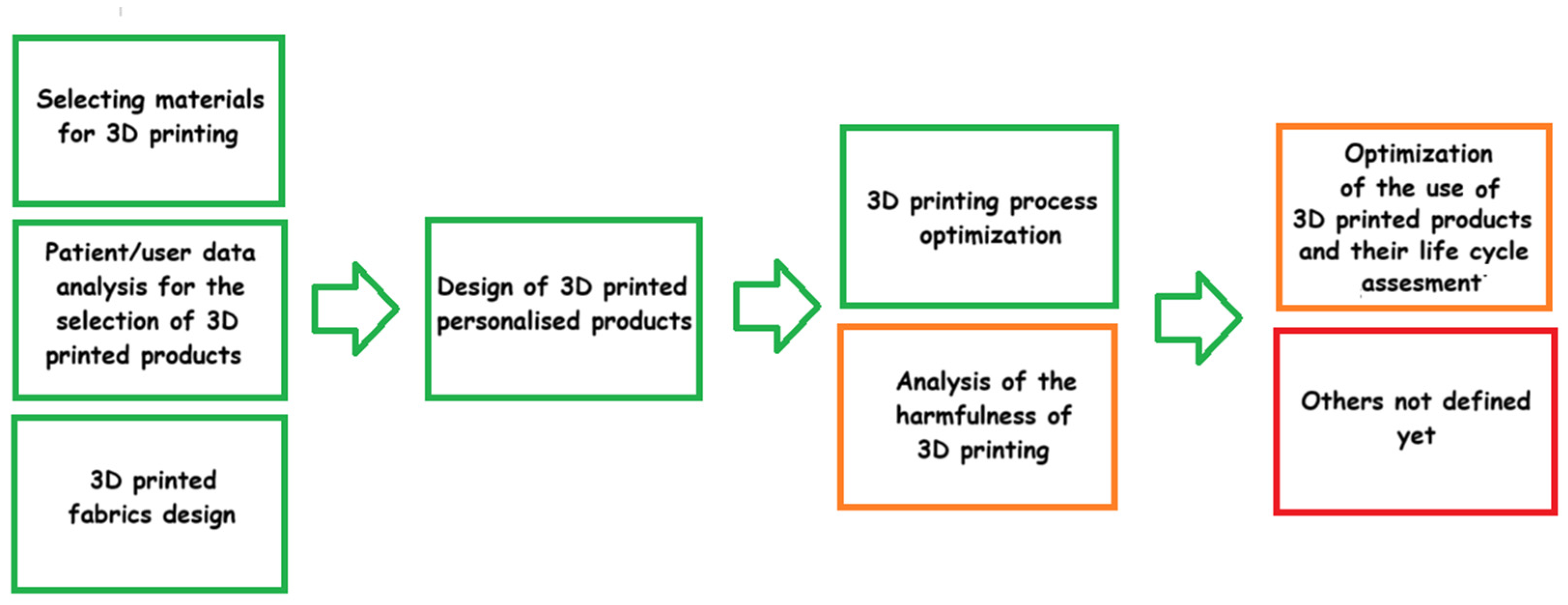
The transformative role of machine learning in 3D printing has revolutionized design, manufacturing, and quality assurance processes. ML algorithms enable the optimization of 3D designs by analyzing complex geometries and suggesting improvements in performance, strength, or material yield. In materials science, machine learning predicts the behavior of new materials under different conditions, accelerating the development of advanced fibers and composites. During the printing process, ML-based monitoring systems detect and correct errors in real time, reducing waste and ensuring higher-quality prints. Predictive modeling helps tune printing parameters such as speed, temperature, and layer thickness, increasing precision and reliability. ML also enables adaptive control, allowing printers to respond dynamically to changes in the environment or material properties. Generative design algorithms powered by ML create innovative structures that maximize productivity while minimizing material consumption, often leading to designs unattainable by traditional methods [9]. Quality assurance benefits from ML’s ability to analyze post-print inspection data, identify defects, and suggest corrective actions [10,11,12]. Additionally, ML integration facilitates predictive maintenance, reducing downtime by predicting printer part failures. As 3D printing scales to mass production, ML ensures consistent quality, productivity, and innovation, making it essential to the industry’s growth (Figure 2) [13].
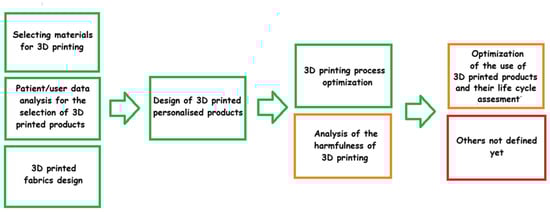
Figure 2.
Emerging applications of ML in 3D printing. Colors: green: well defined, orange: partly defined, red: not defined yet.
Emerging applications of machine learning in 3D printing that have not yet been defined may include, for example, real-time adaptive printing, i.e., ML can enable 3D printers to adapt to anomalies or unexpected changes during the printing process, such as changes in temperature, material consistency or layer alignment, providing higher-quality prints. ML could facilitate in-process quality control by identifying imperfections in prints as they are being formed and suggesting or applying real-time adjustments to reduce or compensate for defects. In addition, ML algorithms could predict when 3D printer components might fail or require maintenance, reducing downtime and increasing productivity. Through ML integration, 3D printers could optimize the reuse of failed prints and waste materials, identifying the best way to recycle them into new printing materials with minimal degradation. More broadly, ML could analyze consumer and industry trends to suggest innovative 3D printing applications, material combinations, and design ideas, driving faster adoption in niche markets, including within sustainable 3D printing or material or energy availability constraints.
3.3. ML in Selecting Materials for 3D Printing
Compared to the results obtained using the traditional approach based on artificial neural networks (ANN), the optimization based on more advanced ML algorithms improved the calculation speed by up to 1.5 times while maintaining the same print quality, better quality, and reduced mean square error (MSE), and also allowed to identify a set of printing parameters not previously determined by trial and error. This indicates that ML is an effective tool with significant potential for wide application in planning and optimizing material properties in the 3D printing process [14]. Moreover, the use of ML allows for more precise adjustment of raw material recipes, which can lead to a significant reduction in material losses. ML methods also allow for the dynamic adaptation of process parameters in real time, which is crucial in the case of complex and demanding production environments. Further research is needed on the application of low-cost but more computationally efficient solutions for multi-task and multi-material additive manufacturing as the number of materials, raw material recipes, and complex printing processes increases. The development of computational technologies supporting ML can further accelerate the optimization process. ML algorithms are already being used to predict and optimise energy absorption capacity under various processing conditions where print speed and layer height were critical values for achieving maximum energy absorption [15]. In the context of multi-component materials, ML can help identify synergies between components, which is difficult to achieve using traditional methods [16]. In the case of manufacturing critical components, such as aerospace parts, ML can contribute to improved reliability and safety. In addition, ML-based systems can support the prediction of the durability of printed elements, which allows for more accurate product life cycle planning. An important application of ML in the sustainable industry within the Industry 5.0 paradigm could be to optimize the mechanical properties of partially recycled 3D printing materials. In the case of recycled polylactic acid (PLA), ML has made it possible to predict the tensile behavior of 3D printing with an average error of 6.059%, and specific combinations of processing and post-treatment annealing parameters improve mechanical properties (e.g., by 7.31% in final tensile strength). Recycled PLA, under certain conditions, can be an alternative to virgin PLA (e.g., in the area of biodegradable packaging) [17]. An integrated approach, combining ML with other data analysis methods, such as evolutionary algorithms, can open up new possibilities in designing materials with required properties. With the development of 4D printing, ML is also becoming a tool enabling the effective design of active materials that respond to external stimuli. However, implementing these technologies in an industrial environment requires appropriate scaling and adapting models to the specific requirements of end users. The use of ML in 3D printing contributes to increasing the sustainability of production processes by reducing waste and optimally using resources [18].
3.4. ML in Patient Data Analysis for the Selection of 3D-Printed Medical Devices
We live in an information society, a knowledge-based society—the entire world is based on information, and information determines the value of a company or a person’s social status. It is, therefore, worth paying great attention to the following:
- Collecting data in repositories, such as the Bydgoszcz repository of medical images;
- Data audit (including for the purposes of their further use by ML);
- Data protection—the effects of neglecting security can be catastrophic for individuals or the operations of companies;
- Analysis of patient data, including within the paradigms of Industry 4.0 or e-health [2,3,4].
In the context of selecting personalized, 3D-printed medical devices, patient data analysis plays a key role. Thanks to machine learning algorithms, it is possible to quickly process large data sets, such as computed tomography images or genetic test results, which significantly speeds up the device design process. Machine Learning (ML) enables the identification of individual patient needs, which allows for precise matching of the device design to the user’s anatomy [2]. These systems can also predict potential problems related to the functioning of the device, which increases the safety and effectiveness of the therapy. Ensuring compliance with data protection regulations is also an important aspect, as ML algorithms require access to sensitive information. Implementing such technologies requires high-quality input data, as well as mechanisms for their verification, which increases the importance of data auditing. An integrated approach to data analysis and device design also allows for the creation of predictive models that support decision-making by doctors [3]. As part of Industry 4.0, combining data from different sources—such as hospitals, laboratories, or IoT devices—allows for a more comprehensive approach to diagnostics and treatment [4]. Examples of such applications can be found in systems supporting the printing of implants adapted to specific diseases or bone defects with high predictive accuracy scores of 0.9173 and 0.8772 [19,20]. ML-based analysis also contributes to the optimization of the production process, which allows for saving raw materials and costs [21,22]. In the future, these technologies may play a key role in the development of biocompatible materials dedicated to 3D printing [23,24,25]. Effective analysis of patient data and the use of ML is not only a step toward better medicine but also sustainable development of technology.
3.5. ML in the Design of 3D-Printed Products
A digital twin is a dynamic, digital replica of a technical object, such as a physical system, device, machine, production process, or even a living organism. Implementing digital twin technology has become an integral part of Industry 4.0, providing companies with tangible benefits, especially in the context of sustainable production and maintenance. This approach enables the collection and transformation of data into actionable knowledge [26]. Physical models are used to simulate tasks and processes, while simulation models are used to refine and improve physical tasks and operations. Continuous monitoring of processes and parameters enables continuous improvement of intelligent eco-design. By integrating advanced algorithms and machine learning (ML), digital twins can predict system failures, optimize performance, and reduce waste [27]. This capability is essential for sustainable production, enabling efficient use of resources and reducing environmental impact. Machine learning facilitates the identification of complex patterns in process data, driving innovation in product design. Integrating ML with digital twin platforms supports adaptive manufacturing, enabling real-time adjustments based on feedback from virtual simulations [28]. Such systems are particularly valuable for designing 3D-printed products, ensuring optimal material selection and structural integrity. By simulating how a product will behave under different conditions, digital twins enable engineers to identify and address potential design flaws before physical prototyping. This not only speeds up the development cycle but also minimizes the costs associated with a trial-and-error approach [29]. In addition to enhancing product functionality, machine learning-based digital twins support intelligent decision-making, streamlining production planning and operational efficiency. As a result, companies can achieve higher levels of personalization while maintaining scalability. The synergy between digital twins, 3D printing, and machine learning is paving the way for a new era of innovative product development, where sustainability and performance are seamlessly integrated.
3.6. ML in 3D Printing Process Optimization
The rapidly increasing cost and consumption of plastics underscores the need to optimize 3D printing processes. This can be achieved using advanced ML-based design methods or injection molding simulations [30,31]. These approaches help save material by reducing filament consumption, minimizing waste, and reducing the environmental impact of the printing process. AI-based optimization saves time and money without compromising the quality of the printed product. Such improvements offer significant competitive advantages, especially for thin-designed, mass-produced items [32]. By implementing ML, manufacturers can predict optimal printing parameters, ensuring consistency and reducing trial-and-error iterations. AI-based systems can identify inefficient material usage, leading to an estimated one free print for every 6.67 prints from previously wasted material. These savings not only reduce production costs but also align with sustainability goals. Additionally, optimization processes can dynamically adapt to different materials, delivering optimal results regardless of filament type [33]. This flexibility is key to meeting the diverse needs of the industry while remaining cost-effective. ML algorithms also help identify potential defects during the design phase, reducing the likelihood of failed prints [34]. Integrating AI into 3D printing supports more accurate layer deposition, increasing the structural integrity of products. By simulating the printing process, AI can identify the best configurations to minimize support structures, which further reduces material waste. These advances make 3D printing more accessible and environmentally friendly, promoting widespread adoption across industries. In addition to its environmental benefits, optimized 3D printing provides faster production cycles, allowing innovative designs to be brought to market faster. AI-based strategies not only increase efficiency but also increase the overall sustainability of additive manufacturing processes. Even such advanced 3D printing methods as pneumatic 3D printing of nanomaterials, useful for processing advanced materials (e.g., MXene) used in nanoenergetics, flexible electronics, and sensors are subject to process optimization. The pre-assessment evaluates whether the selected process parameters produce uniform, high-quality prints, and then the XGBoost algorithm performs a print quality classification with an accuracy of 90.44%, which facilitates the selection of optimal printing parameters [35].
The challenge in this area is not only a large number of materials with varying properties subjected to 3D printing with different parameters but also the diverse requirements resulting from their applications, often requiring dedicated solutions. Thus, a large number of data and often conflicting requirements will create demands for the use of ML to analyze them and search for efficient (e.g., energy, material) solutions. ML solutions in this area will need to be versatile and flexible if they are to be cost-effective [36,37]. A pro-quality issue strongly linked to the Industry 4.0 paradigm is the detection of errors as early as possible in all stages of production, preventing the waste of materials and energy and printing time. This requires the monitoring of the 3D printing process (including vision [38]) and its parameters and a proactive approach to optimize parameters in order to stop at an early enough stage a print that cannot be improved [39,40].
3.7. ML in 3D-Printed Fabrics Design
Some 3D-printed materials and structures have unique preprogrammed properties, e.g., lightness, mechanical resistance, or multifunctionality. These are obtained either by mimicking natural materials (e.g., porous) or by synthesizing from scratch structures that do not occur in nature. Currently, analyzing the relationship between geometry and mechanical properties is complex and costly, but ML has the potential to change this by contributing to the development of new classes of 3D-printed matter and structures with preprogrammed physical or chemical properties. The use of ML in the design of 3D-printed fabrics, such as chainmails for exoskeletons, enables automation and significant improvement in the efficiency of the entire process. This allows the creation of structures with programmed properties, such as variable stiffness or flexibility, depending on the direction of force. This allows for the adaptation of designs to the individual needs of users, taking into account different types and degrees of physical deficits [40]. An example of such an application is the hand exoskeleton, in which 3D-printed elements create a single-layer structure with an adjustable unidirectional or bidirectional bending module. The key innovation of this approach is the integration of real data from research on hand biomechanics with modern analysis methods using deep neural networks. These advanced algorithms allow for more precise adjustment of the mechanical parameters of the designed structures, such as stiffness or bending angles. This process ensures transparency, scalability, and the possibility of personalization of products from 3D-printed fabrics [40,41]. Thanks to this, exoskeletons can be precisely adapted to the therapeutic needs of a specific patient, supporting their rehabilitation. An additional advantage is the ability to selectively program the mechanical properties of such structures, which allows for their optimal operation in different directions of movement [42]. These solutions can be used not only in rehabilitation but also in innovative devices supporting the daily functioning of people with limited mobility. The use of advanced analytical tools in the design of 3D fabrics opens up new possibilities in the field of medicine and biomechanical engineering [43,44]. The example of the hand exoskeleton shows that 3D-printed chainmails can be created quickly and efficiently while maintaining high precision in adapting to the specific requirements of the user. In the future, such technologies can be used on a large scale, supporting not only rehabilitation but also the development of exoskeletons in other areas of application. Personalized 3D-printed structures have the potential to revolutionize the approach to creating modern assistive devices.
3.8. ML in the Analysis of the Harmfulness of 3D Printing
Modern software based on artificial intelligence has been created, which allows for the analysis of the level of pollution generated by 3D printing systems. Such tools allow for precise determination of the potential risks associated with the emission of harmful substances during the printing process. Based on input data such as printing technique, type of material, print mass, and expected safety parameters, the program assesses what precautions should be taken to minimize the negative impact on the environment and health of users. A key advantage of the software is the use of ML algorithms, which enable its continuous improvement. By introducing new data from real printing processes, the tool becomes increasingly precise and effective in predicting potential threats. This program does not replace existing metrics and tools for assessing emissions but complements them, offering more advanced and comprehensive analysis. In practice, this means that 3D printing users can make informed decisions regarding the choice of materials, printer settings, and protective measures. The software also allows for predicting the impact of different printing technologies on indoor air quality, which is particularly important in workplaces and educational spaces. This solution is particularly useful for companies involved in serial production and institutions conducting research on new materials for 3D printing. The program also offers the potential for further development toward the automatic generation of recommendations for users. This may include proposals for replacing materials with less harmful ones, optimizing printing parameters, or recommendations for ventilation of rooms. Thanks to this, the tool contributes to increased safety and reduces the negative impact of 3D printing technology on the environment. The long-term use of this software can also support the development of more ecological printing technologies, as its analyses can indicate key areas for improvement in production processes. Thanks to the integration of machine learning, this tool can become the foundation of future safety standards in the 3D printing industry [45].
In addition to the biocompatibility and cytotoxicity [46,47] obvious in medical applications, the identification of materials and potentially harmful exposures in the case of 3D-printed product end-of-life remains an important issue. This may involve different modes of impact, as, for example, in the U.S., among the residues of 3D-printed products, 58% are incinerated, 33% are landfilled, and only 9% are recycled. This poses a series of parallel scenarios for environmental and health protection. It is necessary not only to identify the sources of the above pollution but, above all, to shape pollution prevention and worker safety strategies [48].
3.9. ML in the Optimization of the Use of 3D-Printed Products, Including a Therapy Program Using 3D-Printed Medical Devices
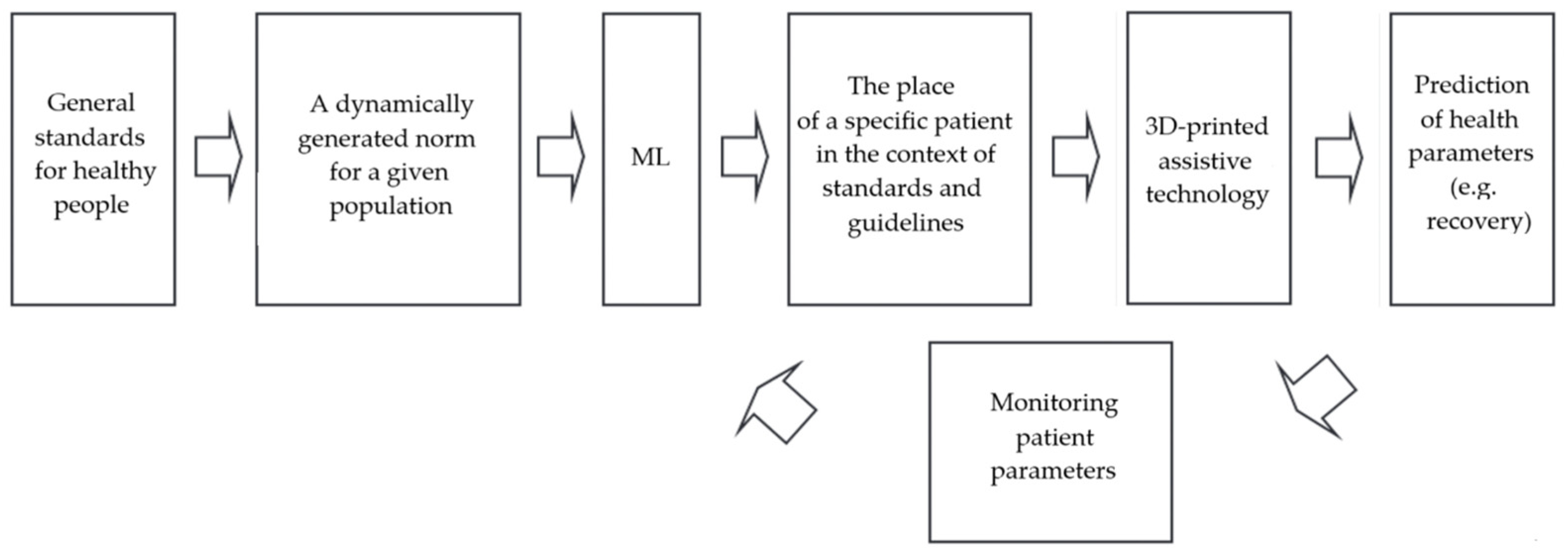
Optimizing the use of 3D-printed products, including medical devices supporting therapeutic programs, is gaining importance thanks to the use of artificial intelligence. Various motor deficits of the hands resulting from injuries and neurological or neurodegenerative diseases require an individualized diagnostic and therapeutic approach. In this context, remote monitoring of the patient’s condition is becoming an invaluable tool, enabling early detection of changes, preventive intervention, and monitoring of the effectiveness of therapy. The use of AI in the analysis of data from exoskeletons or other medical devices allows for precise assessment of the patient’s motor skills in home conditions. The integration of intelligent devices such as smartwatches, smart shoe inserts, or motion sensors allows for the collection of detailed data on the patient’s activity in real time. This makes it possible to create diagnostic systems that not only analyze the current state of health but also predict its future condition based on historical data. These systems are becoming a key element of preventive medicine, allowing for early recognition of micro-injuries or gradual deterioration of motor skills. This approach is used both in the rehabilitation of patients and in monitoring people practicing intensive sports, where the risk of accumulating injuries is high. An important element of therapy optimization is the integration of exoskeletons and orthoses with medical automation and robotics systems [49]. Telemedicine solutions can be used to systematically monitor patients, improving the continuity of diagnostics and the reliability of results. Moreover, the low costs of implementing such systems make them increasingly accessible [50]. Comparing the effectiveness of the remote approach with the traditional and hybrid one indicates the growing potential of telemedicine, especially in the field of rehabilitation [51]. One of the most promising areas of research remains the prediction of the patient’s future condition, which is based on the analysis of data collected in real time and archived. The development of ML systems supporting the production of personalized medical devices also allows for more precise adjustment of therapy to the needs of a specific patient. The combination of modern diagnostic methods with ML allows for better prediction of therapy results, rehabilitation, and assessment of the effectiveness of remote medical care (Figure 3) [52]. As more data are collected, these systems will be able to support medical personnel even more effectively in making therapeutic decisions [53].
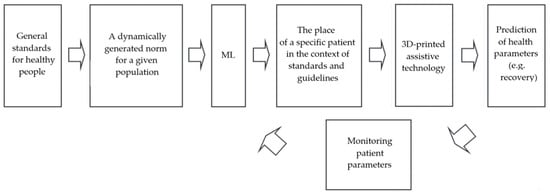
Figure 3.
ML-based preventive medicine system based on 3D-printed medical products (own version).
3.10. Technical and Business Analysis of the Usability of Proposed New Technologies
ML in 3D printing is revolutionizing additive manufacturing by optimizing material usage, reducing waste, and improving print accuracy through predictive analytics [3,4]. ML algorithms can improve process control by analyzing sensor data from printers in real time, enabling automatic adjustments to mitigate defects such as warpage, underextrusion, or layer shifting [1]. Advanced ML algorithms help enable generative design, where AI-based algorithms create high-performance, lightweight structures optimized for strength and material efficiency, particularly in aerospace and automotive applications [54]. ML enables adaptive slicing techniques that dynamically adjust layer thickness based on complexity, improving surface quality and print speed without compromising structural integrity. ML-based anomaly detection models analyze high-resolution images and thermal data to identify defects during printing, preventing material waste and reducing post-processing costs [55]. ML accelerates material innovation by predicting mechanical properties and optimizing composite formulations for strength, durability, and heat resistance, reducing the need for extensive physical testing [56]. Reinforcement learning algorithms enable autonomous printer calibration, reducing setup time and improving repeatability across machines and materials. Machine learning-based predictive maintenance models analyze historical performance data to predict printer component failures, minimizing downtime and costly repairs. For mass customization, ML enables efficient production planning by optimizing batch scheduling, reducing lead times, and personalizing product designs based on customer preferences [57]. AI-based topology optimization integrates with 3D printing to push the boundaries of traditional design, creating biomimetic structures that maximize efficiency and material performance. Cloud-based ML platforms facilitate distributed 3D printing networks, enabling companies to leverage decentralized manufacturing with real-time monitoring and optimization across multiple locations. ML improves multi-material printing by dynamically adjusting extrusion parameters, ensuring smooth transitions between different materials with minimal defects [58]. Integrating ML with digital twins in 3D printing enables virtual simulations of printing processes, predicting failures before physical production begins, saving costs and time [59]. Companies that use ML in 3D printing gain a competitive advantage by reducing production costs, improving product quality, and accelerating time to market through process automation and optimization [60]. As machine learning advances, its role in 3D printing will expand beyond defect detection and optimization, driving innovation in self-healing materials, AI-driven robot assembly, and fully autonomous digital manufacturing ecosystems [61] (Table 5).
Table 5.
Practical applications of ML in 3D printing in industry (own elaboration).
ML models vary in performance, strengths, and weaknesses based on the complexity of the problem, data availability, and computational requirements [3,4,62,63]. Decision trees are interpretable and fast but are prone to overfitting, especially for small datasets, while random forests mitigate overfitting by averaging multiple trees, which improves accuracy at the cost of increased complexity. Support vector machines perform well on high-dimensional data and offer robust classification but can be computationally expensive on large datasets. Logistic regression is efficient for binary classification and interpretable but has issues with nonlinearly separable data compared to more complex models. Neural networks are excellent at processing large, unstructured data such as images and text but require long training times and computational resources. K-Nearest Neighbors is simple and effective for small datasets but becomes inefficient as the dataset size grows due to its dependence on distance computations. Gradient boosting methods such as XGBoost and LightGBM offer high predictive accuracy by iteratively improving poor models but may require careful tuning to prevent overfitting. Naive Bayes is fast and works well with small datasets but relies on the assumption of feature independence, which limits its effectiveness in complex real-world applications. Reinforcement learning models adapt over time by learning from interactions but require high computational power and well-defined reward functions. The choice of machine learning model depends on trade-offs between interpretability, computational efficiency, data size, and the performance requirements of a given problem (Table 6).
Table 6.
Comparison of ML approaches (own elaboration).
4. Discussion
The state of the art in the use of ML in 3D printing, presented in previous publications, includes advanced applications in design, process optimization, and quality control. ML-based generative design enables the creation of complex, lightweight structures optimized for strength and material performance, often used in the aerospace and automotive industries. Real-time monitoring systems with ML integration are able to detect anomalies during printing, enabling immediate corrections to reduce waste and improve print quality. ML models are used to predict and optimize print parameters, such as temperature and speed, to improve the precision and consistency of different materials. Breakthroughs in predictive maintenance and predictive material behavior demonstrate the potential of machine learning to further automate and improve the 3D printing ecosystem, making processes more reliable and cost-effective.
4.1. Limitations of ML Use in 3D Printing
The use of ML in 3D printing faces limitations related to data requirements, computational costs, and interpretability. ML models require huge amounts of high-quality data (complete, reliable, unique, class-balanced) to work well, but such data are often scarce, inconsistent, or expensive to obtain in the context of 3D printing. The computational requirements for training and implementing advanced ML models can be prohibitive, especially for smaller organizations with limited resources. The black box of many machine learning algorithms makes it difficult to interpret and trust decisions, especially in critical manufacturing applications [64]. Another challenge is generalization, as ML models trained on specific printers or materials may not work effectively in different configurations. Real-time ML applications in 3D printing require robust hardware and software integration, which can be complex and error-prone. The rapid development of new materials and processes in 3D printing often outpaces the ability of ML models to adapt and remain relevant. Over-adaptation to specific data sets or scenarios can lead to suboptimal performance in real-world conditions. Ethical and safety risks, such as misuse of generative designs or gaps in automated decision-making systems [65]. The regulatory framework for AI-based manufacturing is still evolving, potentially delaying the widespread adoption of machine learning. From an implementation point of view, the high upfront investment costs of ML technologies may discourage companies from realizing their full potential in the 3D printing industry.
4.2. Directions of Further Research on ML Use in 3D Printing
Future research into the use of ML in 3D printing is likely to focus on increasing the accuracy and robustness of models through improved, continuously updated datasets and algorithms. The development of transfer learning techniques can help models trained on one type of printer or material adapt seamlessly to others, increasing their versatility. Integrating machine learning with real-time sensors and IoT devices is another promising direction, enabling adaptive control and feedback during printing. Advanced generative design algorithms can be explored to create even more efficient and innovative structures, combining functionality with sustainability (e.g., low energy consumption) [66,67]. Collaboration between materials scientists and ML experts can accelerate the development of new materials tailored to specific printing processes. Improving the interpretability and security of machine learning models is key to increasing trust and ensuring safe applications in critical industries such as aerospace and healthcare [68]. Research into reducing the computational cost of ML implementations could make these technologies more accessible to smaller companies. Hybrid approaches combining physics-based models with ML algorithms can provide a balance between accuracy and computational efficiency [69,70]. Improved ML-based predictive maintenance systems can be enhanced to minimize downtime and extend equipment life. An important research priority should be ethical and safe design principles for machine learning in 3D printing, ensuring responsible development and use of these transformative technologies [70,71].
A key aspect is the technological maturity to transfer the solution from academia to industry. The slow pace of development (build-up of experimental results in laboratory and operational conditions), low productivity of 3D printing, moderate quality and repeatability, and operation dependent on operator skill and experience are barriers to early and cost-effective industrial deployment of the technology. ML can accelerate these processes by automating data acquisition, preparation, and analysis and directly creating guidelines for 3D printers that optimize 3D printing processes within a feedback loop. This enables streamlined operation even with highly non-linear 3D printing processes [72,73]. This will be all the more important the more mature and widely used the proposed (Table 7).
Table 7.
Future trends emerging in ML in 3D printing (own elaboration based on [74,75,76,77,78,79,80,81,82,83,84,85]).
5. Conclusions
Three-dimensional printing has advanced significantly, enabling the precise deposition of various materials and making it a valuable tool in fields such as materials engineering, mechanical engineering, and biomedical engineering. Modern 3D printing enables the creation of complex models with controlled microarchitecture, complex shapes, and polished surface finishes. Multi-material printing capabilities further increase the versatility of 3D printing technology. Integrating AI into 3D printing processes enables the reconstruction of objects from images, such as medical scans. AI also facilitates material selection, process optimization, and lifecycle monitoring of printed products.ML improves 3D printing by analyzing complex data and learning from historical trends to dynamically improve processes. The synergy of 3D printing and ML opens the way to innovative, customized products tailored to individual needs in what is known as personalized mass production. This integration enables dynamic optimization of designs and processes based on predictive insights. Personalized product development has become more feasible by combining the capabilities of 3D printing and ML. These advances open up new opportunities for efficient and highly customized solutions across industries.
Supplementary Materials
The following supporting information can be downloaded at https://www.mdpi.com/article/10.3390/app15041781/s1, Supporting Information: Partial PRISMA 2020 checklist.
Author Contributions
Conceptualization, I.R., D.M., M.K., K.G. and A.P.; methodology, I.R. and D.M.; software, I.R., D.M., K.G. and A.P.; validation, I.R., D.M., K.G. and A.P.; formal analysis, I.R., D.M., M.K., K.G. and A.P.; investigation, I.R., D.M., K.G. and A.P.; resources, I.R., D.M., M.K., K.G. and A.P.; data curation, I.R., D.M., M.K., K.G. and A.P.; writing—original draft preparation, I.R., D.M., M.K., K.G. and A.P.; writing—review and editing, I.R., D.M., M.K., K.G. and A.P.; visualization, I.R., D.M., M.K., K.G. and A.P.; supervision, I.R.; project administration, I.R.; funding acquisition, I.R. All authors have read and agreed to the published version of the manuscript.
Funding
The work presented in the paper has been financed under a grant to maintain the research potential of Kazimierz Wielki University.
Institutional Review Board Statement
Not applicable.
Informed Consent Statement
Not applicable.
Data Availability Statement
No new data were created.
Conflicts of Interest
The authors declare no conflicts of interest.
Abbreviations
The following abbreviations are used in this manuscript:
| 3D | Three-dimensional |
| AI | Artificial intelligence |
| ANN | Artificial neural network |
| CAD | Computer-aided design |
| IoT | Internet of Things |
| ML | Machine learning |
| MSE | Mean squared error |
| PLA | Polylactic acid |
| PRISMA | Preferred Reporting Items for Systematic Reviews and Meta-Analyses |
References
- Rogers, H.; Pirner, D.; Mlakar, R.; Pawar, K.S. 3D Printing: An Analysis of Emerging Business Models. In Proceedings of the 2018 IEEE International Conference on Engineering, Technology and Innovation (ICE/ITMC), Stuttgart, Germany, 17–20 June 2018; IEEE: New York, NY, USA, 2018; pp. 1–7. [Google Scholar]
- Rojek, I.; Dostatni, E.; Mikołajewski, D.; Pawłowski, L.; Wegrzyn-Wolska, K. Modern approach to sustainable production in the context of Industry 4.0. Bull. Pol. Acad. Sci. Tech. Sci. 2022, 70, e143828. [Google Scholar] [CrossRef]
- Gilbert, F.; O’Connell, C.D.; Mladenovska, T.; Dodds, S. Print Mean Organ? Ethical and Regulatory Issues Emerging from 3D Bioprinting in Medicine. Sci. Eng. Ethics 2018, 24, 73–91. [Google Scholar] [CrossRef] [PubMed]
- Rojek, I.; Mikołajewski, D.; Dostatni, E.; Kopowski, J. Specificity of 3D Printing and AI-Based Optimization of Medical Devices Using the Example of a Group of Exoskeletons. Appl. Sci. 2023, 13, 1060. [Google Scholar] [CrossRef]
- Ghosh, S.; Johnson, M.V.; Neupane, R.; Hardin, J.; Berrigan, J.D.; Kalidindi, S.R.; Kong, Y.L. Machine learning-enabled feature classification of evaporation-driven multi-scale 3D printing. Flex. Print. Electron. 2022, 7, 014011. [Google Scholar] [CrossRef]
- Regulation (EU) 2017/745 of the European Parliament and of the Council of 5 April 2017 on Medical Devices. Available online: https://eur-lex.europa.eu/legal-content/EN/TXT/PDF/?uri=CELEX:32017R0745 (accessed on 30 December 2024).
- ISO 13485:2016; Quality Management Systems. ISO: Geneva, Switzerland, 2016. Available online: https://www.iso.org/standard/59752.html (accessed on 30 December 2024).
- Page, M.J.; McKenzie, J.E.; Bossuyt, P.M.; Boutron, I.; Hoffmann, T.C.; Mulrow, C.D.; Shamseer, L.; Tetzlaff, J.M.; Akl, E.A.; Brennan, S.E.; et al. The PRISMA 2020 statement: An updated guideline for reporting systematic reviews. BMJ 2021, 372, n71. [Google Scholar] [CrossRef] [PubMed]
- Said, S.; Boulkaibet, I.; Sheikh, M.; Karar, A.S.; Alkork, S.; Nait-ali, A. Machine-Learning-Based Muscle Control of a 3D-Printed Bionic Arm. Sensors 2020, 20, 3144. [Google Scholar] [CrossRef]
- Malashin, I.; Martysyuk, D.; Tynchenko, V.; Nelyub, V.; Borodulin, A.; Gantimurov, A.; Nisan, A.; Novozhilov, N.; Zelentsov, V.; Filimonov, A.; et al. Controlled Porosity of Selective Laser Melting-Produced Thermal Pipes: Experimental Analysis and Machine Learning Approach for Pore Recognition on Pipes Surfaces. Sensors 2024, 24, 4959. [Google Scholar] [CrossRef]
- Olowe, M.; Ogunsanya, M.; Best, B.; Hanif, Y.; Bajaj, S.; Vakkalagadda, V.; Fatoki, O.; Desai, S. Spectral Features Analysis for Print Quality Prediction in Additive Manufacturing: An Acoustics-Based Approach. Sensors 2024, 24, 4864. [Google Scholar] [CrossRef]
- Isiani, A.; Weiss, L.; Bardaweel, H.; Nguyen, H.; Crittenden, K. Fault Detection in 3D Printing: A Study on Sensor Positioning and Vibrational Patterns. Sensors 2023, 23, 7524. [Google Scholar] [CrossRef]
- Bofill, J.; Abisado, M.; Villaverde, J.; Sampedro, G.A. Exploring Digital Twin-Based Fault Monitoring: Challenges and Opportunities. Sensors 2023, 23, 7087. [Google Scholar] [CrossRef]
- Szczupak, E.; Małysza, M.; Wilk-Kołodziejczyk, D.; Jaśkowiec, K.; Bitka, A.; Głowacki, M.; Marcjan, Ł. Decision Support Tool in the Selection of Powder for 3D Printing. Materials 2024, 17, 1873. [Google Scholar] [CrossRef]
- Hasanzadeh, R. A New Polymeric Hybrid Auxetic Structure Additively Manufactured by Fused Filament Fabrication 3D Printing: Machine Learning-Based Energy Absorption Prediction and Optimization. Polymers 2024, 16, 3565. [Google Scholar] [CrossRef]
- Hooshmand, M.J.; Sakib-Uz-Zaman, C.; Khondoker, M.A.H. Machine Learning Algorithms for Predicting Mechanical Stiffness of Lattice Structure-Based Polymer Foam. Materials 2023, 16, 7173. [Google Scholar] [CrossRef]
- Tănase, M.; Portoacă, A.I.; Diniță, A.; Brănoiu, G.; Zamfir, F.; Sirbu, E.E.; Călin, C. Optimizing Mechanical Properties of Recycled 3D-Printed PLA Parts for Sustainable Packaging Solutions Using Experimental Analysis and Machine Learning. Polymers 2024, 16, 3268. [Google Scholar] [CrossRef]
- Ali, A.; Riaz, R.D.; Malik, U.J.; Abbas, S.B.; Usman, M.; Shah, M.U.; Kim, I.-H.; Hanif, A.; Faizan, M. Machine Learning-Based Predictive Model for Tensile and Flexural Strength of 3D-Printed Concrete. Materials 2023, 16, 4149. [Google Scholar] [CrossRef]
- Omigbodun, F.T.; Osa-Uwagboe, N.; Udu, A.G.; Oladapo, B.I. Leveraging Machine Learning for Optimized Mechanical Properties and 3D Printing of PLA/cHAP for Bone Implant. Biomimetics 2024, 9, 587. [Google Scholar] [CrossRef]
- Sarmah, P.; Gupta, K. Recent Advancements in Fabrication of Metal Matrix Composites: A Systematic Review. Materials 2024, 17, 4635. [Google Scholar] [CrossRef] [PubMed]
- Jiang, J.; Ma, Y. Path Planning Strategies to Optimize Accuracy, Quality, Build Time and Material Use in Additive Manufacturing: A Review. Micromachines 2020, 11, 633. [Google Scholar] [CrossRef] [PubMed]
- Ratnavel, R.; Viswanath, S.; Subramanian, J.; Selvaraj, V.K.; Prahasam, V.; Siddharth, S. Predicting the Optimal Input Parameters for the Desired Print Quality Using Machine Learning. Micromachines 2022, 13, 2231. [Google Scholar] [CrossRef]
- Das, S.; Jegadeesan, J.T.; Basu, B. Gelatin Methacryloyl (GelMA)-Based Biomaterial Inks: Process Science for 3D/4D Printing and Current Status. Biomacromolecules 2024, 25, 2156–2221. [Google Scholar] [CrossRef] [PubMed]
- Basu, B.; Gowtham, N.H.; Xiao, Y.; Kalidindi, S.R.; Leong, K.W. Biomaterial omics: Data science-driven pathways to develop fourth-generation biomaterials. Acta Biomater. 2022, 143, 1–25. [Google Scholar] [CrossRef]
- Suwardi, A.; Wang, F.; Xue, K.; Han, M.Y.; Teo, P.; Wang, P.; Wang, S.; Liu, Y.; Ye, E.; Li, Z.; et al. Machine Learning-Driven Biomaterials Evolution. Adv. Mater. 2022, 34, e2102703. [Google Scholar] [CrossRef] [PubMed]
- Menon, A.; Póczos, B.; Washburn, N.R. Optimization of Silicone 3D Printing with Hierarchical Machine Learning. 3D Print. Addit. Manuf. 2019, 6, 181–189. [Google Scholar] [CrossRef]
- Charalampous, P.; Kladovasilakis, N.; Tzovaras, D. Machine Learning-Based Mechanical Behavior Optimization of 3D Print Constructs Manufactured Via the FFF Process. J. Mater. Eng. Perform. 2022, 31, 4697–4706. [Google Scholar] [CrossRef]
- Khan, M.F.; Alam, A.; Al-Saidan, I. Real-time defect detection in 3D printing using machine learning. 2nd International Conference on Recent Advances in Materials and Manufacturing (ICRAMM). Mater. Today Proc. 2021, 42, 521–528. [Google Scholar] [CrossRef]
- Elder, B.; Neupane, R.; Tokita, E.; Ghosh, U.; Hales, S.; Kong, Y.L. Nanomaterial Patterning in 3D Printing. Adv Mater. 2020, 32, 1907142. [Google Scholar] [CrossRef] [PubMed]
- Abdullah, A.C.; Ozarslan, O.; Tasoglu, S. Machine learning-enabled optimization of melt electro-writing three-dimensional printing. Aggregate 2024, 5, e495. [Google Scholar] [CrossRef]
- Jiang, F.L.; Xia, M.; Hu, Y.W. Physics-Informed Machine Learning for Accurate Prediction of Temperature and Melt Pool Dimension in Metal Additive Manufacturing. 3D Print. Addit. Manuf. 2024, 11, e1679–e1689. [Google Scholar] [CrossRef]
- Pardakhti, M.; Chang, S.Y.; Ma, A.W.K. Efficient Creation of Jettability Diagrams Using Active Machine Learning. 3D Print. Addit. Manuf. 2024, 11, 1407–1417. [Google Scholar] [CrossRef]
- Kong, L.B.; Peng, X.; Chen, Y. Fast and Accurate Defects Detection for Additive Manufactured Parts by Multispectrum and Machine Learning. 3D Print. Addit. Manuf. 2023, 10, 393–405. [Google Scholar] [CrossRef]
- Koo, J.; Lee, S.; Kim, N. Downskin Surface Roughness Prediction with Machine Learning for As-Built CM247LC Fabricated Via Powder Bed Fusion with a Laser Beam. 3D Print. Addit. Manuf. 2024, 11, 1510–1522. [Google Scholar] [CrossRef] [PubMed]
- Ghandehari, A.; Tavares-Negrete, J.A.; Rajendran, J.; Yi, Q.; Esfandyarpour, R. Optimization of process parameters in 3D-nanomaterials printing for enhanced uniformity, quality, and dimensional precision using physics-guided artificial neural network. Discov. Nano 2024, 16, 204. [Google Scholar] [CrossRef] [PubMed]
- Shevchik, S.; Wrobel, R.; Quang, T.L.; Pandiyan, V.; Hoffmann, P.; Leinenbach, C.; Wasmer, K. Unsupervised quality monitoring of metal additive manufacturing using Bayesian adaptive resonance. Heliyon 2024, 10, e32656. [Google Scholar] [CrossRef]
- Kafle, A.; Silwal, R.; Koirala, B.; Zhu, W. Advancements in Cold Spray Additive Manufacturing: Process, Materials, Optimization, Applications, and Challenges. Materials 2024, 17, 5431. [Google Scholar] [CrossRef]
- McLain, B.; Mathenia, R.; Sparks, T.; Liou, F. Machine Vision to Provide Quantitative Analysis of Meltpool Stability for a Coaxial Wire Directed Energy Deposition Process. Materials 2024, 17, 5311. [Google Scholar] [CrossRef]
- Ashebir, D.A.; Hendlmeier, A.; Dunn, M.; Arablouei, R.; Lomov, S.V.; DiPietro, A.; Nikzad, M. Detecting Multi-Scale Defects in Material Extrusion Additive Manufacturing of Fiber-Reinforced Thermoplastic Composites: A Review of Challenges and Advanced Non-Destructive Testing Techniques. Polymers 2024, 16, 2986. [Google Scholar] [CrossRef] [PubMed]
- Mahmood, M.A.; Visan, A.I.; Ristoscu, C.; Mihailescu, I.N. Artificial Neural Network Algorithms for 3D Printing. Materials 2021, 14, 163. [Google Scholar] [CrossRef]
- Kuschmitz, S.; Ring, T.P.; Watschke, H.; Langer, S.C.; Vietor, T. Design and Additive Manufacturing of Porous Sound Absorbers—A Machine-Learning Approach. Materials 2021, 14, 1747. [Google Scholar] [CrossRef]
- Karimzadeh, M.; Basvoju, D.; Vakanski, A.; Charit, I.; Xu, F.; Zhang, X. Machine Learning for Additive Manufacturing of Functionally Graded Materials. Materials 2024, 17, 3673. [Google Scholar] [CrossRef] [PubMed]
- Tang, Z.Q.; Tian, T.; Molino, P.J.; Skvortsov, A.; Ruan, D.; Ding, J.; Li, Y. Recent Advances in Superhydrophobic Materials Development for Maritime Applications. Adv. Sci. 2024, 11, e2308152. [Google Scholar] [CrossRef]
- Deng, W.; Kumar, S.; Vallone, A.; Kochmann, D.M.; Greer, J.R. AI-Enabled Materials Design of Non-Periodic 3D Architectures with Predictable Direction-Dependent Elastic Properties. Adv. Mater. 2024, 36, e2308149. [Google Scholar] [CrossRef]
- Huang, J.H.R.; Wu, C.-Y.; Chan, H.-M.; Ciou, J.-Y. Printing Parameters of Sugar/Pectin Jelly Candy and Application by Using a Decision Tree in a Hot-Extrusion 3D Printing System. Sustainability 2022, 14, 11618. [Google Scholar] [CrossRef]
- Hirsch, W.D.B.; Weber, A.; Ferri, J.; Etges, A.; Neto, P.I.; Pereira, F.D.A.S.; Heitz, C. An Analysis of the Biocompatibility, Cytotoxicity, and Bone Conductivity of Polycaprolactone: An In Vivo Study. Polymers 2024, 16, 2271. [Google Scholar] [CrossRef]
- Wang, S.; Dai, J.; Xu, S.; Li, P.; Fouda, A.M.; Yilmaz, B.; Alhotan, A. Surface characteristics, cytotoxicity, and microbial adhesion of 3D-printed hybrid resin-ceramic materials for definitive restoration. J. Dent. 2025, 152, 105436. [Google Scholar] [CrossRef]
- Chea, J.D.; Ruiz-Mercado, G.J.; Smith, R.L.; Meyer, D.E.; Gonzalez, M.A.; Barrett, W.M. Material Flow Analysis and Occupational Exposure Assessment in Additive Manufacturing End-of-Life Material Management. Environ. Sci. Technol. 2024, 58, 9000–9012. [Google Scholar] [CrossRef]
- Toprak, C.B.; Dogruer, C.U. Finite Element Analysis and Machine Learning in the Loop Additive Manufacturing Process Parameter Optimization to Acquire the Desired Dynamics of Manufactured Parts. 3D Print. Addit. Manuf. 2024; early access. [Google Scholar]
- Li, Y.X.; Xu, G.N.; Wang, G. Machine Learning-Based Operational State Recognition and Compressive Property Prediction in Fused Filament Fabrication. 3D Print. Addit. Manuf. 2023, 10, 1347–1360. [Google Scholar] [CrossRef]
- Ang, B.W.K.; Yeow, C.H. A Learning-Based Approach to Sensorize Soft Robots. Soft Robot. 2022, 9, 1144–1153. [Google Scholar] [CrossRef]
- Goh, G.D.; Hamzah, N.M.B.; Yeong, W.Y. Anomaly Detection in Fused Filament Fabrication Using Machine Learning. 3D Print. Addit. Manuf. 2023, 10, 428–437. [Google Scholar] [CrossRef]
- Zhu, Y.; Sun, F.; Jia, C.; Huang, C.; Wang, K.; Li, Y.; Chou, L.; Mao, Y. A 3D Printing Triboelectric Sensor for Gait Analysis and Virtual Control Based on Human–Computer Interaction and the Internet of Things. Sustainability 2022, 14, 10875. [Google Scholar] [CrossRef]
- Yu, W.; Sing, S.L.; Chua, C.K.; Tian, X. Influence of re-melting on surface roughness and porosity of AlSi10Mg parts fabricated by selective laser melting. J. Alloys Compd. 2019, 792, 574–581. [Google Scholar] [CrossRef]
- Jing, C.; Hou, W.; Xiuzhuan, W.; Chu, S. Microstructure, porosity and mechanical properties of selective laser melted AlSi10Mg. Chin. J. Aeronaut. 2020, 33, 2043–2054. [Google Scholar]
- Aljabali, B.A.; Shelton, J.; Desai, S. Genetic Algorithm-Based Data-Driven Process Selection System for Additive Manufacturing in Industry 4.0. Materials 2024, 17, 4544. [Google Scholar] [CrossRef]
- Lu, S.; Ma, D.; Mi, X. A High-Throughput Circular Tumor Cell Sorting Chip with Trapezoidal Cross Section. Sensors 2024, 24, 3552. [Google Scholar] [CrossRef] [PubMed]
- Pekgor, M.; Arablouei, R.; Nikzad, M.; Masood, S. Displacement Estimation via 3D-Printed RFID Sensors for Structural Health Monitoring: Leveraging Machine Learning and Photoluminescence to Overcome Data Gaps. Sensors 2024, 24, 1233. [Google Scholar] [CrossRef]
- Chang, C.; Yang, Y.; Pei, L.; Han, Z.; Xiao, X.; Ji, Y. Heat transfer performance of 3D-printed aluminium flat-plate oscillating heat pipes for the thermal management of LEDs. Micromachines 2022, 13, 1949. [Google Scholar] [CrossRef]
- Paixao, P.A.; Michels, F.S.; Oliveira, S.L.; Goncalves, A.-M.B.; Martins, C.A.; Caires, A.R.L.; Alves, D.C.B. Miniaturized 3D-Printed Cell Enables Water/Ethanol Quantification Using Electrochemical Impedance Spectroscopy. Sensors 2024, 24, 131. [Google Scholar] [CrossRef]
- Mirzaei, H.; Ramezankhani, M.; Earl, E.; Tasnim, N.; Milani, A.S.; Hoorfar, M. Investigation of a Sparse Autoencoder-Based Feature Transfer Learning Frame work for Hydrogen Monitoring Using Microfluidic Olfaction Detectors. Sensors 2022, 22, 7696. [Google Scholar] [CrossRef]
- Xie, W.; Man, H.C.; Chan, C.W. Interplay of laser power and pore characteristics in selective laser melting of ZK60 magnesium alloys: A study base donin-situ monitoring and image analysis. J. Magnes. Alloy 2024, 12, 1346–1366. [Google Scholar] [CrossRef]
- Abafogi, A.T.; Kim, J.; Lee, J.; Mohammed, M.O.; van Noort, D.; Park, S. 3D-Printed Modular Microfluidic Device Enabling Preconcentrating Bacteria and Purifying Bacterial DNA in Blood fo rImproving the Sensitivity of Molecular Diagnostics. Sensors 2020, 20, 1202. [Google Scholar] [CrossRef]
- Ghimire, R.; Raji, A. Use of Artificial Intelligence in Design, Development, Additive Manufacturing, and Certification of Multifunctional Composites for Aircraft, Drones, and Spacecraft. Appl. Sci. 2024, 14, 1187. [Google Scholar] [CrossRef]
- Živković, M.; Žujović, M.; Milošević, J. Architectural 3D-Printed Structures Created Using Artificial Intelligence: A Review of Techniques and Applications. Appl. Sci. 2023, 13, 10671. [Google Scholar] [CrossRef]
- Wu, D.; Luo, Q.; Long, W.; Zhang, S.; Geng, S. Advancing Construction 3D Printing with Predictive Interlayer Bonding Strength: A Stacking Model Paradigm. Materials 2024, 17, 1033. [Google Scholar] [CrossRef]
- Pandeya, S.P.; Zou, S.; Roh, B.-M.; Xiao, X. Programmable Thermo-Responsive Self-Morphing Structures Design and Performance. Materials 2022, 15, 8775. [Google Scholar] [CrossRef]
- Rojek, I.; Mikołajewski, D.; Mroziński, A.; Macko, M. Machine Learning-andArtificial Intelligence-Derived Prediction for Home Smart Energy Systems with PV Installation and Battery Energy Storage. Energies 2023, 16, 6613. [Google Scholar] [CrossRef]
- Ulkir, O.; Bayraklilar, M.S.; Kuncan, M. Energy Consumption Prediction of Additive Manufactured Tensile Strength Parts Using Artificial Intelligence. 3D Print. Addit. Manuf. 2024, 11, e1909–e1920. [Google Scholar] [CrossRef]
- Czeczot, G.; Rojek, I.; Mikołajewski, D.; Sangho, B. AI in IIoT Management of Cybersecurity for Industry 4.0 andIndustry 5.0 Purposes. Electronics 2023, 12, 3800. [Google Scholar] [CrossRef]
- Korzeniowski, M.; Małachowska, A.M.; Szymański, M. Development and Implementation of a Deep Learning Algorithm to Evaluate the Powder Distribution Process During 3D Printing Using the LPBF Method. Appl. Sci. 2024, 14, 11718. [Google Scholar] [CrossRef]
- Polonsky, A.T.; Pollock, T.M. Closing the science gapin 3D metal printing. Science 2020, 368, 583–584. [Google Scholar] [CrossRef]
- Mieszczanek, P.; Corke, P.; Mehanian, C.; Dalton, P.D.; Hutmacher, D.W. Towards industry-ready additive manufacturing: AI-enabled closed-loop control for 3D melt electrowriting. Commun. Eng. 2024, 3, 158. [Google Scholar] [CrossRef]
- Li, Q.S.; Zhao, W.; Li, Y.; Yang, W.; Wang, G. Flexural properties and fracture behavior of CF/PEEK in orthogonal building orientation by FDM: Microstructure and mechanism. Polymers 2019, 11, 656. [Google Scholar] [CrossRef]
- Wang, J.; Li, H.; Liu, R.; Li, L.; Lin, Y.-H.; Nan, C.-W. Thermoelectric and mechanical properties of PLA/Bi0.5Sb1.5Te3 composite wires used for 3D printing. Compos. Sci. Technol. 2018, 157, 1–9. [Google Scholar] [CrossRef]
- Nam, J.; Kim, M. Advances in materials and technologies for digital light processing 3D printing. Nano Converg. 2024, 11, 45. [Google Scholar] [CrossRef] [PubMed]
- Chen, H.; Guo, L.; Zhu, W.; Li, C. Recent Advances in Multi-Material 3D Printing of Functional Ceramic Devices. Polymers 2022, 14, 4635. [Google Scholar] [CrossRef] [PubMed]
- Zhang, H.; Moon, S.K.; Ngo, T.H. Hybrid Machine Learning Method to Determine the Optimal Operating Process Window in Aerosol Jet 3D Printing. ACS Appl. Mater. Interfaces. 2019, 11, 17994–18003. [Google Scholar] [CrossRef] [PubMed]
- Li, F.; Macdonald, N.P.; Guijt, R.M.; Breadmore, M.C. Increasing the functionalities of 3D printed microchemical devices by single material, multimaterial, and print-pause-print 3D printing. Lab Chip 2018, 19, 35–49. [Google Scholar] [CrossRef]
- Sagot, M.; Derkenne, T.; Giunchi, P.; Davit, Y.; Nougayrède, J.P.; Tregouet, C.; Raimbault, V.; Malaquin, L.; Venzac, B. Functionality integration in stereolithography 3D printed microfluidics using a “print-pause-print” strategy. Lab Chip 2024, 24, 3508–3520. [Google Scholar] [CrossRef]
- Balakrishnan, H.K.; Doeven, E.H.; Merenda, A.; Dumée, L.F.; Guijt, R.M. 3D printing for the integration of porous materials into miniaturised fluidic devices: A review. Anal. Chim. Acta 2021, 1185, 338796. [Google Scholar] [CrossRef] [PubMed]
- Arefin, A.M.E.; Khatri, N.R.; Kulkarni, N.; Egan, P.F. Polymer 3D Printing Review: Materials, Process, and Design Strategiesfor Medical Applications. Polymers 2021, 13, 1499. [Google Scholar] [CrossRef]
- Muenks, D.; Kyosev, Y. Productivity Comparison Between Vat Polymerization and Fused Filament Fabrication Methods for Additive Manufacturing of Polymers. 3D Print. Addit. Manuf. 2023, 10, 40–49. [Google Scholar] [CrossRef] [PubMed]
- Lyu, J.; Akhavan, J.; Manoochehri, S. Image-based dataset of artifact surfaces fabricated by additive manufacturing with applications in machine learning. Data Brief. 2022, 41, 107852. [Google Scholar] [CrossRef]
- Jiang, J.C.; Yu, C.L.; Xu, X.; Ma, Y.S.; Liu, J.K. Achieving better connections between deposited lines in additive manufacturing via machine learning. Math. Biosci. Eng. 2020, 17, 3382–3394. [Google Scholar] [CrossRef] [PubMed]
Disclaimer/Publisher’s Note: The statements, opinions and data contained in all publications are solely those of the individual author(s) and contributor(s) and not of MDPI and/or the editor(s). MDPI and/or the editor(s) disclaim responsibility for any injury to people or property resulting from any ideas, methods, instructions or products referred to in the content. |
© 2025 by the authors. Licensee MDPI, Basel, Switzerland. This article is an open access article distributed under the terms and conditions of the Creative Commons Attribution (CC BY) license (https://creativecommons.org/licenses/by/4.0/).