


Abstract
Agriculture, alongside construction and mining, is one of the three most hazardous industries, and is characterized by numerous risk factors for occupational accidents. Unlike other industries, agriculture faces significant safety concerns related to the natural environment. Determining the causes of accidents is therefore imperative for accident prevention. However, the difficulty in investigating accidents owing to inadequate reporting and management systems among self-employed farmers hampers the determination of their causes. This study aims to determine the factors influencing agricultural accidents through a literature review. A systematic literature search was conducted according to the PRISMA guidelines. The initial search yielded 165 articles of which 34 papers were selected after removing those by applying the selection criteria. The selected papers were categorized into three domains: work accidents, machinery accidents, and farmer safety promotion. Accident causes were classified using the 4M technique: machine, media, man, and management. The results were visualized with a heat map. The main causes of accidents thus identified were insufficient operation/management, inappropriate work situation, and insufficient education/training. The findings of this study can serve as foundational data for developing measures to improve working environments not only in agriculture but also in other high-hazard industries.
1. Introduction
Agriculture, which provides humanity with food and economic value, is known as one of the three most hazardous industries along with construction and mining [1,2]. The agricultural work environment for farming includes traditional places such as open-air fields and orchards, as well as advanced technologies like greenhouses and smart farms. Thus, farmers are exposed to many hazards in their indoor and outdoor workspaces, such as agricultural products, facilities, agricultural machinery, tools, livestock, wild animals, natural disasters, and so on [3,4].
In agricultural work environments, a confluence of exposure-related risks and safety hazards exists, similar to those found in industrial settings. The potential for accidents common in industrial fields (e.g., falls, entanglements, collisions, and electrical shocks) extends to farmers as well. Alongside safety risk factors (e.g., fire, explosion, and confined spaces), hazards like particulate matter, gaseous substances, pesticide poisoning, noise, vibration, heat stress, and musculoskeletal strain can pose significant threats, potentially leading to occupational diseases. Accidents often arise owing to a convergence of various factors, forming intricate interrelationships that amplify the risk of accidents and diseases through synergistic effects [5].
This difficulty is further compounded by the inherent blurring of boundaries between work and non-work, workspace and home, and working hours and rest periods in agriculture [6]. Moreover, the aging rural population poses additional complexities in delineating causes related to demographic characteristics [7,8,9]. The relatively limited public interest in agriculture further contributes to the delayed identification of clear solutions [10,11]. Additionally, as opposed to industrial settings, agricultural machinery and equipment introduce unique hazards, increasing the risk of both safety accidents arising from the operation of motor-driven farm machinery and occupational diseases such as heat/cold illnesses due to indoor/outdoor working environments [12,13].
Research on accidents in the agricultural environment, which has incident or injury occurrence characteristics as complex as those in the industrial field, has been discussed on several topics to date. Agricultural incidents or injuries have been studied as an important issue like accidents in other industries. Most of the studies conducted on agricultural accidents were conducted to identify the major causes of incidents (e.g., pesticide poisoning, agricultural machinery, and so on) and establish the management or program for reducing the risk. To effectively implement accident prevention measures, it is crucial to categorize causes and thoroughly examine their characteristics [14,15].
Given the significance and applicability of existing research on safety accidents in agricultural work environments, a comprehensive analysis of the scope and classification of accident causes and characteristics in previous studies is essential. Unlike previous review studies on the causes of agricultural accidents, this study used the 4M technique to identify and categorize the causes of incidents. Therefore, this study aims to conduct a systematic review of the literature on the causes of accidents in agricultural work environments, classify these causes using the 4M technique (machine, media, man, management), and provide a direction for the development of prevention measures and foundational data.
2. Materials and Methods
2.1. Search Strategy and Selection Criteria
A comprehensive literature search and screening was performed according to the Preferred Reporting Item for Systematic Reviews and Meta-Analyses (PRISMA) guidelines, followed by a systematic classification of the selected papers. On 7 April 2023, an online search was conducted in PubMed and RDA Discovery using the keywords: “agricultural accident”, “agricultural injury”, “agricultural machinery accident”, “farmer safety”, or “health of farmers”. The search was limited to English-language papers and was not restricted to any specific publication or posting time frame.
PubMed is an international database specializing in biomedical and life science research, while RDA Discovery is a database tailored to agricultural academic searches developed by the Rural Development Administration of South Korea, typically used for searching for agricultural research materials, research papers, and dissertations.
2.2. Classification Methods for Review
The final selection of 34 papers was categorized into three topics: general agricultural work accidents, agricultural machinery accidents, and farmer safety promotion. As incidents or injuries can be caused by multiple characteristics, the 4M technique was used to categorize and analyze the characteristics of causes. The causes of accidents were classified into four factors using the 4M technique: machine, media, man, and management. In consideration of the characteristics of agricultural work accidents, the causes within each of these four factors were further subdivided into three detailed categories. It should be noted that some causes are listed under multiple categories, which is the reason for the presence of duplicate entries. The factor “machine” was subdivided into insufficient operation and management, insufficient safety devices, and insufficient safety design. The factor “media” was subdivided into moving passage, working environment, and climate conditions. The factor “man” was subdivided into personal sensitivity, defects in work methods, and inappropriate work situation. The factor “management” was subdivided into insufficient safety management system, insufficient education or training, and lack of regulations or guidelines, and managerial causes were subdivided into inadequate safety management systems, insufficient education and training, and lack of laws, regulations, guidelines, signs, and manuals (Table 1). Table 1 also presents individual items related to each category. The selection process was based on three reviewers reading the same papers separately and cross-checking them against the screening criteria, and only selecting papers where there was consensus.

Table 1.
Classification and detailed categories of causes of accidents according to 4M technique.
The results of classifying the accident causes were visualized using a heat map to highlight the relevant features. In this heat map, blue represents the frequency of accident occurrence, while red indicates the number of total agricultural accident-related issues. The intensity of each color correlates directly with its respective variable: a deeper blue signifies a higher frequency of accidents, while a more intense red denotes a greater number of total agricultural accident issues (Table 7).
3. Results
3.1. Searching Results and Selection for Review
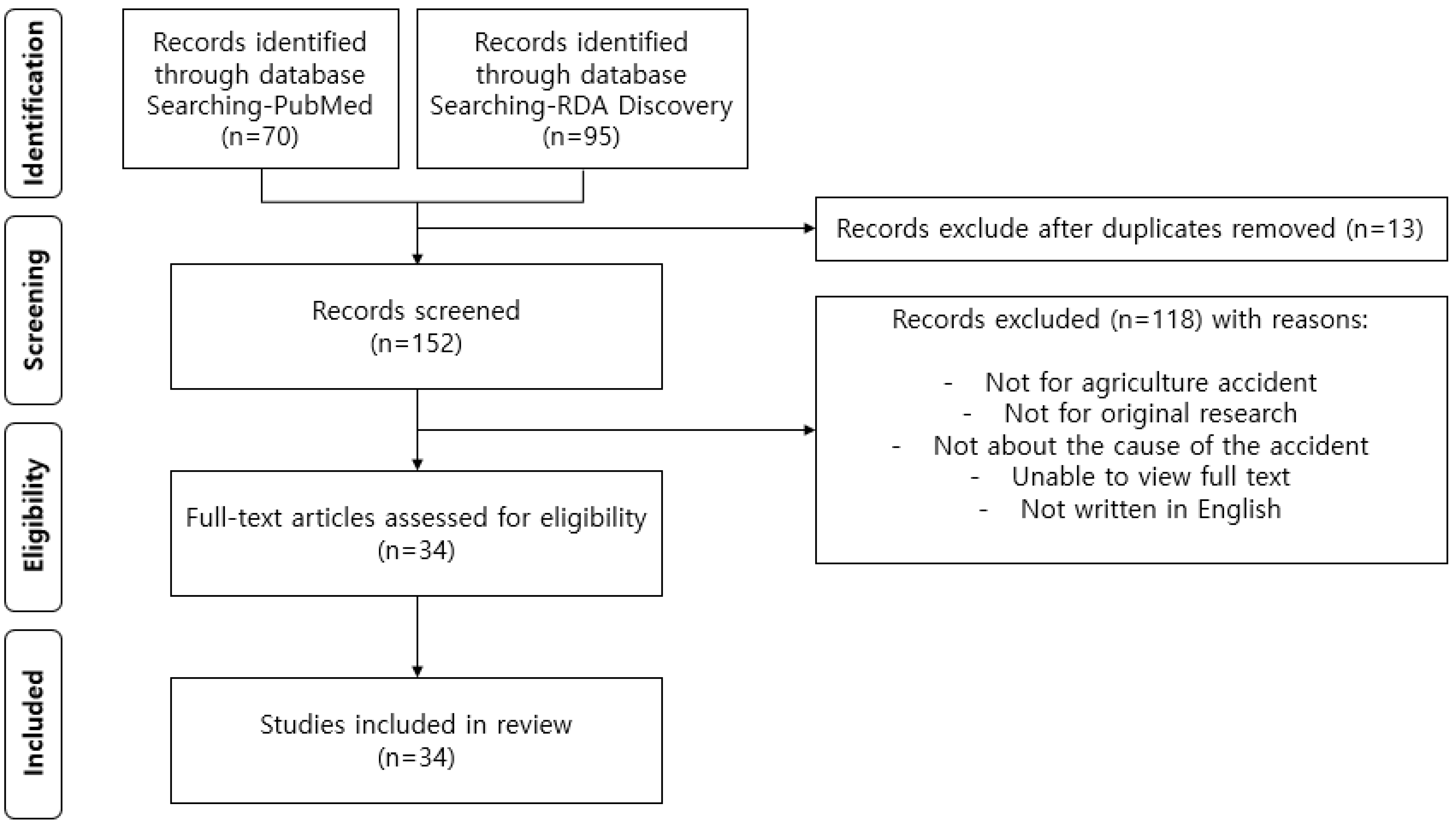
The literature search yielded a total of 165 papers: 70 from PubMed and 95 from RDA Discovery. After removing 13 duplicates, 152 papers remained. Applying the exclusion criteria led to the removal of 118 papers. The criteria for exclusion pertained to papers not related to agricultural accidents, not being original research, lacking specificity in accident causes, full-text unavailability, and non-English language publications. Consequently, the final selection for review was narrowed down to 34 papers (Table 2). Figure 1 presents a flowchart of the literature search and screening.
Table 2.
Key characteristics and findings of the reviewed papers.
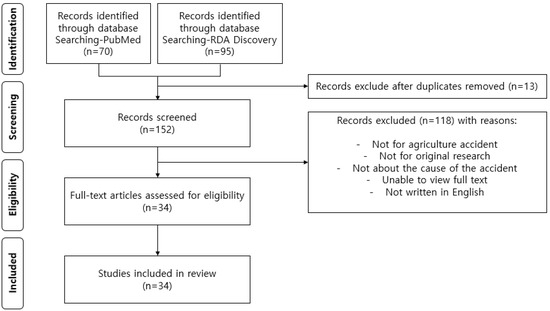
Figure 1.
PRISMA diagram for literature search and screening.
3.2. Number of Published Papers on Agricultural Accidents by Country
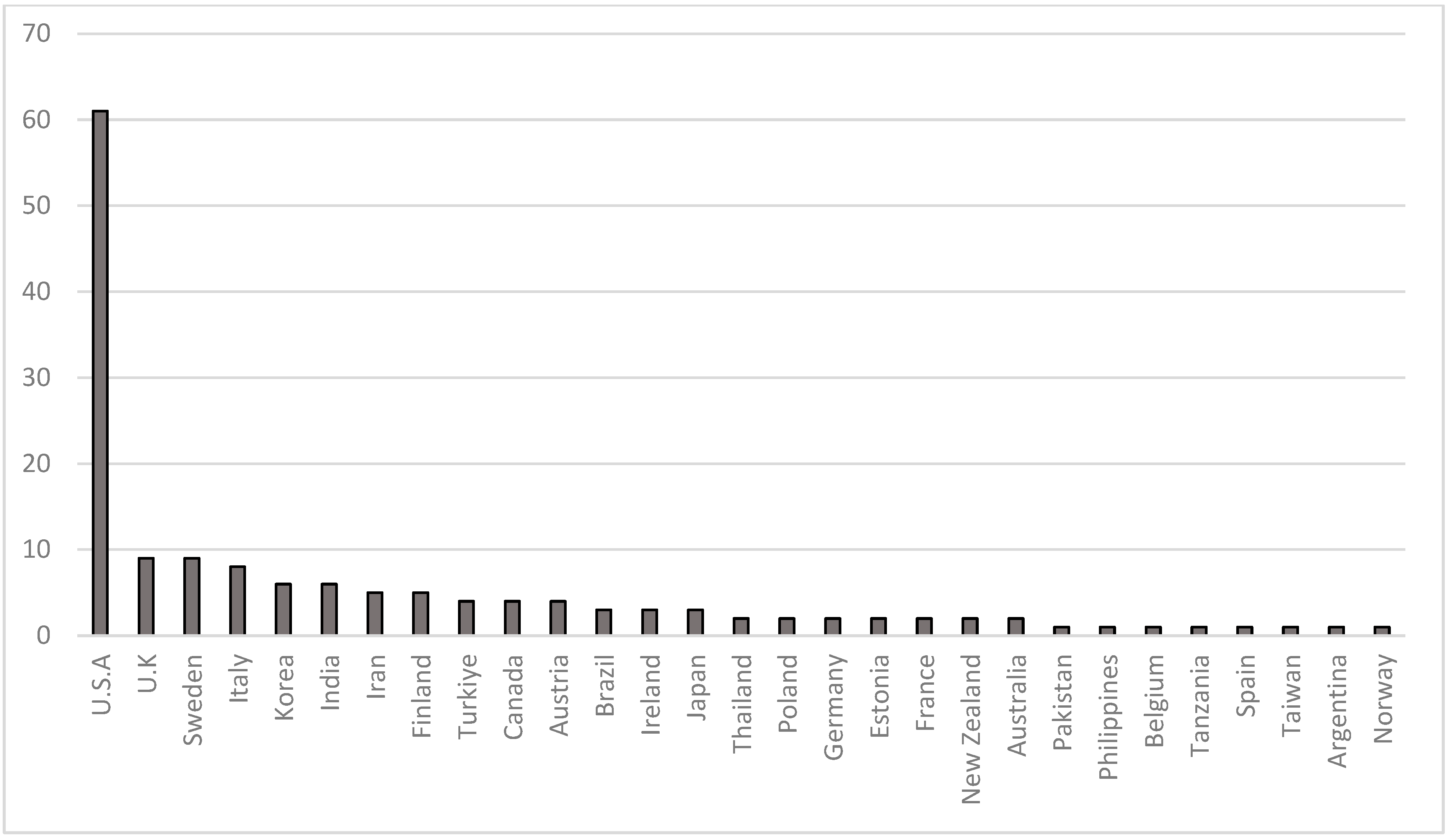
An analysis was conducted on the country of origin of the 152 papers retrieved initially (after removing 13 duplicates), to identify the geographical distribution of research on agricultural accidents. This analysis, conducted before applying the exclusion criteria, revealed that the United States produced the highest number of papers (n = 61, accounting for 40.1% of the total), followed by United Kingdom and Sweden (each with n = 9, 5.9%), Italy (n = 8, 5.3%), South Korea and India (each with n = 6, 3.9%), and Iran and Finland (each with n = 5, 3.3%) (Figure 2).
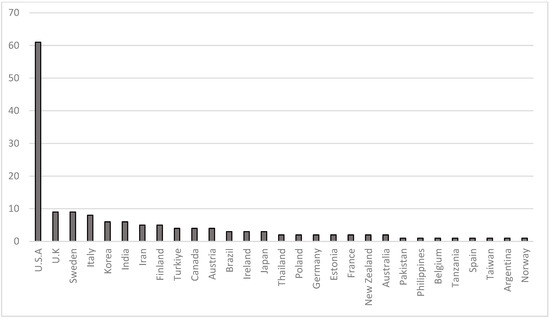
Figure 2.
Number of published papers on agricultural accidents by country.
3.3. Machine: Mechanical Causes of Agricultural Accidents
In the papers addressing general agricultural work accidents, the identified causes of accidents were as follows: insufficient operation/management (n = 3), insufficient safety devices (n = 2), and insufficient safety design (n = 2). For papers focusing on agricultural machinery accidents, insufficient operation/management was noted as the most common cause (n = 7), followed by insufficient safety devices (n = 6) and insufficient safety design (n = 3). In the context of farmer safety promotion, six papers cited both insufficient operation/management and insufficient safety devices, while four papers indicated insufficient safety design as a cause. Overall, across all categories, insufficient operation/management emerged as the most frequently identified cause (n = 16), whereas insufficient safety design was the least commonly cited (n = 9). Table 3 provides the details.
Table 3.
Classification of the causes of agricultural accidents pertaining to the “machine” factor.
3.4. Media: Material and Environmental Causes of Agricultural Accidents
Among the papers on general agricultural work accidents, one paper identified moving passages (farm roads/access roads) as a cause, and four papers cited the working environment as the most common cause, while none pointed to climate/disaster. In papers on agricultural machinery accidents, moving passages (farm roads/access roads) were the most commonly identified causes (n = 4), followed by the working environment (n = 2), and insufficient safety design (n = 1). In papers addressing farmer safety promotion, the working environment was the most commonly identified cause (n = 7), with one paper each citing moving passages (farm roads/access roads) and climate/disaster. Overall, within the ‘media’ factor, working environment emerged as the most frequently identified cause, mentioned in a total of 13 papers (Table 4).
Table 4.
Classification of the causes of agricultural accidents pertaining to the media factor.
3.5. Man: Human Causes of Agricultural Accidents
Among the papers on general agricultural work accidents, three papers each identified personal sensitivity, defects in work methods, and inappropriate work situation as causes. In papers on agricultural machinery accidents, two papers each cited personal sensitivity and defects in work methods as causes, with inappropriate work situation cited as the most common cause (n = 3). In papers on farmer safety promotion, personal sensitivity was identified as the most common cause (n = 11), followed by inappropriate work situation (n = 7). Defects in work methods were identified as the least common cause (n = 5). Overall, within the “man” factor, personal sensitivity emerged as the most frequently identified cause of accidents, mentioned in a total of 16 papers (Table 5).
Table 5.
Classification of the causes of agricultural accidents pertaining to the “man” factor.
3.6. Management: Management-Related Causes of Agricultural Accidents
Among the papers on general agricultural work accidents, two papers identified insufficient safety management system as a cause, and four papers cited inadequate education/training and lack of regulations or guidelines. In papers on agricultural machinery accidents, lack of regulations or guidelines was identified as the most common cause of accidents (n = 6), followed by inadequate education/training (n = 4) and insufficient safety management system (n = 3). In papers concerning farmer safety promotion, insufficient safety management system, inadequate education/training, and lack of regulations or guidelines were identified as causes of accidents in 9, 8, and 9 papers, respectively. Overall, within the “management” factor, lack of regulations or guidelines was identified as the most common cause of accidents, mentioned in a total of 19 papers (Table 6).
Table 6.
Classification of the causes of agricultural accidents pertaining to the “management” factor.
3.7. Overall Causes of Agricultural Accidents
Among the 34 papers, those focusing on general agricultural work accidents frequently identified working environment, insufficient education/training, and lack of regulations or guidelines as the most frequent cause of accidents, with each of these mentioned in four papers. Regarding agricultural machinery accidents, the most common cause was insufficient operation/management among the categories pertaining to the machine factor (Table 7). In papers on farmer safety promotion, while personal sensitivity (pertaining to the man factor) was the most frequently cited cause, all management-related categories were identified as significant causes of accidents. Overall, across all the papers, personal sensitivity (man factor), insufficient operation/management (machine factor), and insufficient education/training and lack of regulations or guidelines (management factor) were identified as the primary causes of accidents (Table 7).
Table 7.
Heat map of the classification of causes of agricultural accidents.
4. Discussion
This study aimed to classify the causes of agricultural accidents and extract key insights by reviewing papers from various countries. This approach helps understand the patterns and scopes of accidents occurring in agricultural work environments with a view to the establishment of preventive measures. The 34 papers related to agricultural accidents were categorized according to the 4M factors, with detailed categories and related items identified within each factor. These factors and categories provide a comprehensive framework for discussing the range of causes behind agricultural accidents and the necessary preventive measures to mitigate future incidents in agricultural work.
Compared to studies on accidents in other industries, there is a relative scarcity of research that has analyzed the causes of accidents in the agricultural sector [2,17,48]. For example, literature searches in manufacturing and construction yielded a larger number of studies with greater diversity than those in agriculture. In Korea, this could either be due to agriculture being perceived as less important and more nature-friendly than other industries or as a more isolated activity predominantly conducted in non-metropolitan areas. This disparity could also be attributed to agriculture’s position in a legal/institutional blind spot [14,49,50].
A considerable number of papers on agricultural accidents have originated from the United States, likely due to the country’s long-standing focus on agricultural worker safety [20,51,52,53]. The predominance of U.S. papers in this field may also be partly because non-English papers were not included in the analysis.
In this study, accident causes were categorized using the 4M method (machine, media, man, and management), a common approach for analyzing industrial accidents. Among the machine-related causes, insufficient operation/management was frequently identified as the primary cause of accidents across the three domains of general agricultural work, agricultural machinery accidents, and farmer safety promotion. Specifically, in the case of agricultural machinery accidents, the incidents were more often attributed to the operator’s lack of skill or machine malfunction, rather than to design flaws or inadequate safety devices [54,55,56]. In addition, there were a total of three papers that covered all four factor classifications of the 4M technique [16,21,28]. This underscores the necessity of developing comprehensive accident investigation systems and checklists to accurately pinpoint causes and facilitate effective accident prevention.
In the category of media-related causes, steep slopes, sharp curves, and road conditions (such as farm roads and access routes) were identified as primary contributors to accidents. The studies on agricultural work accidents and farmer safety promotion highlighted uneven or slippery floors, poorly lit and narrow spaces, and ground obstacles as major causes. Agricultural machinery accidents were reported to occur more frequently while moving on farm roads rather than during stationary indoor work [17,20,21,30,57,58]. Therefore, it is important for farm owners to carefully manage the primary pathways and operational times of agricultural machinery, by installing safety devices and warning signs, and enhancing the overall safety of transit routes and workspace structures.
Concerning the “man” factor, studies on farmer safety promotion consistently identified personal factors, particularly worker skill levels, as the most prevalent cause of accidents [59]. In the categories of defects in work methods and inappropriate work situation, insufficient safety education and excessive workloads emerged as major contributing factors, respectively. The majority of these studies investigating man-related causes were conducted within the farmer safety domain, likely due to their emphasis on the worker perspective. This underscores the significance of mitigating risks by enhancing worker skills and rectifying defects in work methods to minimize man-related accidents. Comprehensive safety training for workers, encompassing pre-employment, regular, and ad-hoc sessions, is crucial for educating workers about the specific nature of their tasks and ensuring safe work practices [12,14,36,44,46,47].
Within the “management” factor, the responsibility of farm owners and safety managers was identified as a major cause of accidents. Previous research on industrial accidents also showed that the employer’s commitment to managing the working environment and the safety manager’s ability to provide safety education significantly contribute to workplace safety. Improving the responsibility and willingness of farm owners and safety managers may be partially achieved through the establishment of related systems and guidelines for national policy making.
This study conducted a critical review of selected papers to categorize agricultural accidents and enumerate the causes as defined in each paper. While a systematic literature review successfully identified the major causes and characteristics of agricultural accidents in general, it faced limitations in rigorously determining the direct causes (i.e., immediate factors) of individual accidents within each category, especially when these were not explicitly stated by the authors. To partially mitigate this limitation, the study employed the 4M method. This approach allowed for an indirect estimation of these causes by comprehensively considering the categorized causes, types of accidents, and the authors’ judgments, rather than focusing on direct causes.
A limitation of this study is that it was not evaluated through a quality assessment process such as CASP (Critical Appraisal Skills Programme), which is used in systematic reviews. This study was conducted as a mini-review in advance of a future systematic review. Future systematic reviews should use quality assessment tools and risk of bias tools to improve the quality of studies.
Future systematic reviews need to investigate direct causes, unlike this study. This involves a more refined focus and search strategy, allowing for the identification of clear single causes of specific accidents to synthesize causal relationships. For instance, research could concentrate on tractor accidents within the category of agricultural machinery accidents, scrutinizing the primary causes and the factors that most significantly contribute to tractor accidents. Similarly, in the context of occupational diseases, after surveying overall hazardous factors, researchers should meticulously investigate the health effects of each individual substance or factor to establish their research directions.
In order to promote a culture of safety in agriculture, safety training programs should be developed, and safety devices, protective equipment, and warning signs should be made mandatory to create a safe working environment. In addition, improving poor facilities and establishing safe working infrastructure by providing subsidies to improve the working environment in farms through national support projects is also considered to be a way to prevent agricultural incidents.
5. Conclusions
This study was undertaken to determine the primary causes of accidents in agricultural work environments through a systematic literature review. As this study was a preliminary review for a future systematic review, no specific quality assessment was performed. However, to supplement this, we applied PRISMA and 4M techniques to systematically categorize the quality of the papers and the causes of accidents. Employing the 4M framework, the review identified insufficient machinery operation/management (machine), inappropriate working environments (media), personal sensitivity (man), and insufficient education/training and lack of regulations or guidelines (management) as the most frequently cited causes. This approach facilitated an indirect assessment of the connection between these causes and the types of agricultural accidents. Despite limited research on safety accidents in the agricultural sector, the comprehensive findings and insights gained from this study are likely to hold significant academic value in the field of agricultural safety. These findings are also expected to provide primary data for preventing accidents in small-scale workplaces with similar working characteristics, often characterized by less favorable conditions than those found in agriculture, and for improving workers’ conditions and the overall working environment.
Author Contributions
Conceptualization, W.C. and K.K.; methodology, W.C.; software, W.C.; validation, W.J. and K.K.; formal analysis, W.C.; investigation, W.C.; resources, W.J.; data curation, W.C.; writing—original draft preparation, W.C.; writing—review and editing, W.J.; visualization, W.J.; supervision, W.J.; project administration, K.K.; funding acquisition, K.K. All authors have read and agreed to the published version of the manuscript.
Funding
This study was carried out with the support of the Research Program for Agriculture Science and Technology Development (project No. PJ01599101) of the National Institute of Agricultural Sciences at the Rural Development Administration in the Republic of Korea.
Institutional Review Board Statement
Not applicable.
Data Availability Statement
Not applicable.
Acknowledgments
This study was carried out with the support of the Research Program for Agriculture Science and Technology Development (project No. PJ01599101) of the National Institute of Agricultural Sciences at the Rural Development Administration in the Republic of Korea.
Conflicts of Interest
The authors declare no conflicts of interest.
References
- Rautiainen, R.H.; Lehtola, M.M.; Day, L.M.; Schonstein, E.; Suutarinen, J.; Salminen, S.; Verbeek, J.H. Interventions for preventing injuries in the agricultural industry. Cochrane Database Syst. Rev. 2008, 1, CD006398. [Google Scholar] [CrossRef] [PubMed]
- Solomon, C. Accidental injuries in agriculture in the UK. Occup. Med. 2002, 52, 461–466. [Google Scholar] [CrossRef]
- Moradhaseli, S.; Farhadian, H.; Abbasi, E.; Ghofranipour, F. Factors affecting the incidence of occupational accidents among farmers. Health Educ. Health Promot. 2017, 5, 39–56. [Google Scholar]
- Gite, L.P.; Khadatkar, A.; Tyagi, K.K. Farm machinery accidents in Indian agriculture. In Proceedings of the Ergonomics for Everyone–Proceedings of International Ergonomics Conference, HWWE, Kolkata, India, 17–19 December 2009; 2009; pp. 283–290. Available online: https://www.researchgate.net/profile/Abhijit-Khadatkar/publication/262457121_Farm_machinery_accidents_in_Indian_agriculture/links/57872bcc08aef321de2c79e2/Farm-machinery-accidents-in-Indian-agriculture.pdf (accessed on 1 February 2024).
- Kim, H.; Lee, K.; Räsänen, K. Agricultural injuries in Korea and errors in systems of safety. Ann. Agric. Environ. Med. 2016, 23, 432–436. [Google Scholar] [CrossRef] [PubMed]
- Caffaro, F.; Micheletti Cremasco, M.; Roccato, M.; Cavallo, E. It does not occur by chance: A mediation model of the influence of workers’ characteristics, work environment factors, and near misses on agricultural machinery-related accidents. Int. J. Occup. Environ. Health 2017, 23, 52–59. [Google Scholar] [CrossRef] [PubMed]
- Mclaughlin, A.; Laura, M.; Sprufera, J.F. The aging farmer: Human factors research needs in agricultural work. Proc. Hum. Factors Ergon. Soc. Annu. Meet. 2009, 53, 1230–1234. [Google Scholar] [CrossRef]
- Keller, W.; Helmer, S.D.; Reyes, J.; Hauschild, D.; Haan, J.M. Fatal agricultural accidents in Kansas: A thirty-nine-year follow-up study with an emphasis on vehicular fatalities. J. Agromed. 2021, 26, 374–380. [Google Scholar] [CrossRef]
- Myers, J.R.; Layne, L.A.; Marsh, S.M. Injuries and fatalities to U.S. farmers and farm workers 55 years and older. Am. J. Ind. Med. 2009, 52, 185–194. [Google Scholar] [CrossRef]
- Mclaughlin, A.C.; Sprufera, J.F. Aging farmers are at high risk for injuries and fatalities: How human-factors research and application can help. North Carol. Med. J. 2011, 72, 481–483. [Google Scholar] [CrossRef]
- Tuure, V.-M. Cold working environments on dairy farms in Finland. Int. J. Circumpolar Health 2003, 62, 190–203. [Google Scholar] [CrossRef]
- Arana, I.; Mangado, J.; Arnal, P.; Arazuri, S.; Alfaro, J.R.; Jarén, C. Evaluation of risk factors in fatal accidents in agriculture. Span. J. Agric. Res. 2010, 8, 592–598. [Google Scholar] [CrossRef]
- Becker, W.J.; Wood, T.A. An Analysis of Agricultural Accidents in Florida-1992; University of Florida, Institute of Food and Agricultural Sciences: Gainesville, FL, USA, 1994. [Google Scholar]
- Lundqvist, P.; Gustafsson, B. Accidents and accident prevention in agriculture a review of selected studies. Int. J. Ind. Ergon. 1992, 10, 311–319. [Google Scholar] [CrossRef]
- Turgut, K.; Gurbuz, S.; Oguzturk, H.; Bican, S.; Kama, A.K. An unknown cause of agricultural accidents: Hoeing machine. Eurasian J. Emerg. Med. 2018, 17, 28–32. [Google Scholar] [CrossRef]
- Nag, P.K.; Patel, V.G. Work accidents among shiftworkers in industry. Int. J. Ind. Ergon. 1998, 21, 275–281. [Google Scholar] [CrossRef]
- Edwards, J.P.; Kuhn-Sherlock, B. Opportunities for improving the safety of dairy parlor workers. J. Dairy Sci. 2021, 104, 419–430. [Google Scholar] [CrossRef] [PubMed]
- Tsai, W.-T. Survey on agricultural accidents or injuries in Taiwan. J. Agromed. 2021, 26, 404–410. [Google Scholar] [CrossRef] [PubMed]
- Svendsen, K.; Aas, O.; Hilt, B. Nonfatal occupational injuries in Norwegian farmers. Saf. Health Work. 2014, 5, 147–151. [Google Scholar] [CrossRef]
- Johnson, A.; Baccaglini, L.; Haynatzki, G.R.; Achutan, C.; Loomis, D.; Rautiainen, R.H. Agricultural injuries among farmers and ranchers in the central United States during 2011–2015. J Agromed. 2021, 26, 62–72. [Google Scholar] [CrossRef]
- Pickett, W.; Brison, R.J.; Niezgoda, H.; Chipman, M.L. Nonfatal farm injuries in Ontario: A population-based survey. Accid. Anal. Prev. 1995, 27, 425–433. [Google Scholar] [CrossRef]
- Pinzke, S.; Nilsson, K.; Lundqvist, P. Farm tractors on Swedish public roads–age-related perspectives on police reported incidents and injuries. Work 2014, 49, 39–49. [Google Scholar] [CrossRef]
- Zago, A.M.; Meucci, R.D.; Fiori, N.; Carret, M.L.V.; Faria, N.M.X.; Fassa, A.G. Workplace accident prevalence and associated factors among tobacco farm in São Lourenço do Sul-RS, Brazil. Cien Saúde Colet 2018, 23, 1353–1362. [Google Scholar] [CrossRef]
- Momose, Y.; Suenaga, T. Gender differences in the occurrence of nonfatalagricultural injuries among farmers in Fukuoka, Japan. J. Rural Med. 2015, 10, 57–64. [Google Scholar] [CrossRef] [PubMed][Green Version]
- Taattola, K.; Rautiainen, R.H.; Karttunen, J.P.; Suutarinen, J.; Viluksela, M.K.; Louhelainen, K.; Mäittälä, J. Risk factors for occupational injuries among full-time farmers in Finland. J. Agric. Saf. Health 2012, 18, 83–93. [Google Scholar] [CrossRef] [PubMed]
- Azizi, T.; Hejazi, S.S.; Kameli, A. Frequency of complications of falling from the walnut tree, as an occupational-seasonal injury. J. Inj. Violence Res. 2018, 10, 91–96. [Google Scholar]
- Kogler, R.; Quendler, E.; Boxberger, J. Occupational accidents with mowing machines in Austrian agriculture. Ann. Agric. Environ. Med. 2015, 22, 137–141. [Google Scholar] [CrossRef] [PubMed][Green Version]
- Das, B. Agricultural work related injuries among the farmers of West Bengal, India. Int. J. Inj. Contr. Saf. Promot. 2014, 21, 205–215. [Google Scholar] [CrossRef] [PubMed]
- Tonozzi, T.R.; Layne, L.A. Hired crop worker injuries on farms in the United States: A comparison of two survey periods from the National Agricultural Workers Survey. Am. J. Ind. Med. 2016, 59, 408–423. [Google Scholar] [CrossRef]
- Wang, S.; Myers, J.R.; Layne, L.A. Injuries to hired crop workers in the United States: A descriptive analysis of a national probability survey. Am. J. Ind. Med. 2011, 54, 734–747. [Google Scholar] [CrossRef]
- Nilsson, K.; Pinzke, S. Occupational accidents among elderly farmers in Sweden. Work. 2012, 41 (Suppl. 1), 5324–5326. [Google Scholar] [CrossRef]
- Helgerson, S.D.; Milham, S. Farm workers electrocuted when irrigation pipes contact powerlines. Public. Health Rep. 1985, 100, 325–328. [Google Scholar]
- Bernhardt, J.H.; Langley, R.L. Analysis of tractor-related deaths in North Carolina from 1979 to 1988. J. Rural Health 1999, 15, 285–295. [Google Scholar] [CrossRef] [PubMed]
- Kim, Y.; Kim, D.; Park, K.; Kim, D. A study on analysis of industrial injury characteristics of aging workers in agriculture. J. Ergon. Soc. Korea 2014, 33, 477–486. [Google Scholar] [CrossRef]
- Tormoehlen, S. Analysis of Older Farmer Work-Related Fatalities in Indiana with Application of Findings to Injury Prevention Efforts. Ph.D. Thesis, Purdue University, West Lafayette, IN, USA, 2019. [Google Scholar]
- Beseler, C.L.; Rautiainen, R.H. Lack of agreement between safety priorities and practices in agricultural operators: A challenge for injury prevention. Safety 2022, 8, 39. [Google Scholar] [CrossRef]
- Lower, T.; Rolfe, M.; Monaghan, N. Non-intentional farm injury fatalities in NSW, Australia, 2001–2015. Public Health Res. Pract. 2017, 27, e2751746. [Google Scholar] [CrossRef] [PubMed]
- Milosavljevic, S.; McBride, D.I.; Bagheri, N.; Vasiljev, R.M.; Carman, A.B.; Rehn, B.; Moore, D. Factors associated with quad bike loss of control events in agriculture. Int. J. Ind. Ergon. 2011, 41, 317–321. [Google Scholar] [CrossRef]
- Rorat, M.; Thannhauser, A.; Jurek, T. Analysis of injuries and causes of death in fatal farm-related incidents in Lower Silesia, Poland. Ann. Agric. Environ. Med. 2015, 22, 271–274. [Google Scholar] [CrossRef] [PubMed]
- Cividino, S.R.S.; Pergher, G.; Zucchiatti, N.; Gubiani, R. Agricultural health and safety survey in Friuli Venezia Giulia. Agriculture 2018, 8, 9. [Google Scholar] [CrossRef]
- Nag, P.K.; Nag, A. Drudgery, accidents and injuries in Indian Agriculture. Ind. Health 2004, 42, 149–162. [Google Scholar] [CrossRef]
- Sharifirad, M.; Poursaeed, A.; Lashgarara, F.; Mirdamadi, S.M. Risk factors for musculoskeletal problems in paddy field workers in northern iran: A community-based study. J. Res. Med. Sci. Off. J. Isfahan Univ. Med. Sci. 2022, 27, 77. [Google Scholar] [CrossRef]
- Langley, R.L.; Morrow, W.E.M. Livestock handling—Minimizing worker injuries. J. Agromed. 2010, 15, 226–235. [Google Scholar] [CrossRef]
- Franklin, R.C.; Mcbain-Rigg, K.E.; Knight, S.M. Factors to be considered in developing occupational regulations for quad bikes in Australia. J. Agromed. 2015, 20, 370–380. [Google Scholar] [CrossRef] [PubMed]
- Kogler, R.; Quendler, E.; Boxberger, J. Occupational accidents with agricultural machinery in Austria. J. Agromed. 2016, 21, 61–70. [Google Scholar] [CrossRef]
- Kogler, R. Near accidents with agricultural vehicles, machinery and equipment in Austria in the year 2013. Agric. Eng. Int. CIGR J. 2015, 17, 141–157. [Google Scholar]
- Adekoya, N. Tractor-drawn mower occupational fatalities in production agriculture, 1992–1997. J. Agromed. 2002, 8, 55–64. [Google Scholar] [CrossRef]
- Suutarinen, J. Occupational Accidents in Finnish Agriculture—Causality and Managerial Aspects for Prevention; MTT: Jokioinen, Finland, 2003. [Google Scholar]
- Purschwitz, M.A.; Field, W.E. Scope and magnitude of injuries in the agricultural workplace. Am. J. Ind. Med. 1990, 18, 179–192. [Google Scholar] [CrossRef]
- Jansson, B.; Eriksson, C.-G. Accident involvement and attitudes towards hazards and countermeasures in a Swedish rural population. Scand. J. Soc. Med. 1990, 18, 139–142. [Google Scholar] [CrossRef]
- Wu, X.; Prior, R.L. Identification and characterization of anthocyanins by high-performance liquid chromatography-electrospray ionization-tandem mass spectrometry in common foods in the United States: Vegetables, nuts, and grains. J. Agric. Food Chem. 2005, 53, 3101–3113. [Google Scholar] [CrossRef]
- Hardin, C.M. The politics of agriculture in the United States. J. Farm. Econ. 1950, 32, 571–583. [Google Scholar] [CrossRef]
- Boody, G.; Vondracek, B.; Andow, D.A.; Krinke, M.; Westra, J.; Zimmerman, J.; Welle, P. Multifunctional agriculture in the United States. BioScience 2005, 55, 27–38. [Google Scholar] [CrossRef]
- Schulman, M.D.; Evensen, C.T.; Runyan, C.W.; Cohen, L.R.; Dunn, K.A. Farm work is dangerous for teens: Agricultural hazards and injuries among North Carolina teens. J. Rural Health 1997, 13, 295–305. [Google Scholar] [CrossRef]
- Mccurdy, S.A.; Carroll, D.J. Agricultural injury. Am. J. Ind. Med. 2000, 38, 463–480. [Google Scholar] [CrossRef] [PubMed]
- Irwin, A.; Poots, J. The human factor in agriculture: An interview study to identify farmers’ non-technical skills. Saf. Sci. 2015, 74, 114–121. [Google Scholar] [CrossRef]
- Luginbuhl, R.C.; Jones, V.C.; Langley, R.L. Farmers’ perceptions and concerns: The risks of driving farm vehicles on rural roadways in North Carolina. J. Agric. Saf. Health 2003, 9, 327–348. [Google Scholar] [CrossRef] [PubMed]
- Franklin, R.C.; King, J.C.; Riggs, M. A systematic review of large agriculture vehicles use and crash incidents on public roads. J. Agromed. 2020, 25, 14–27. [Google Scholar] [CrossRef]
- Raza, M.M.S.; Li, S.; Issa, S.F. Global patterns of agricultural machine and equipment injuries-a systematic literature review. J. Agromed. 2024, 29, 214–234. [Google Scholar] [CrossRef]
Disclaimer/Publisher’s Note: The statements, opinions and data contained in all publications are solely those of the individual author(s) and contributor(s) and not of MDPI and/or the editor(s). MDPI and/or the editor(s) disclaim responsibility for any injury to people or property resulting from any ideas, methods, instructions or products referred to in the content. |
© 2024 by the authors. Licensee MDPI, Basel, Switzerland. This article is an open access article distributed under the terms and conditions of the Creative Commons Attribution (CC BY) license (https://creativecommons.org/licenses/by/4.0/).