Bioinformatics Analysis of the Tomato SlPR5 Gene Family and the Thaumatin-like Protein SlPR5-3 Positively Regulates Tomato Resistance to Pst DC3000

Abstract
1. Introduction
2. Materials and Methods
2.1. Identification and Evolutionary Tree Construction of SlPR5 Gene Family Members in Tomato
2.2. Analysis of the Physicochemical Properties of the SlPR5 Family Members in Tomato
2.3. Chromosomal Localization Prediction, Gene Structure and Conserved Structural Domain Analysis of SlPR5 in Tomato
2.4. Analysis of Cis-Regulatory Elements
2.5. Subcellular Localization of the SlPR5-3 Protein
2.6. Plant Material and Treatment
2.7. Transcriptome Data Analysis
2.8. Real-Time Quantitative PCR (qRT–PCR) Analysis
2.9. Measurement of Physiological Indicators
2.10. Construction and Validation of SlPR5-3-Overexpressing and CRISPR Mutant Lines
2.11. Reactive Oxygen Species Staining
2.12. Statistical Analysis
3. Results
3.1. Identification and Physical Characterization of the SlPR5 Family in Tomato
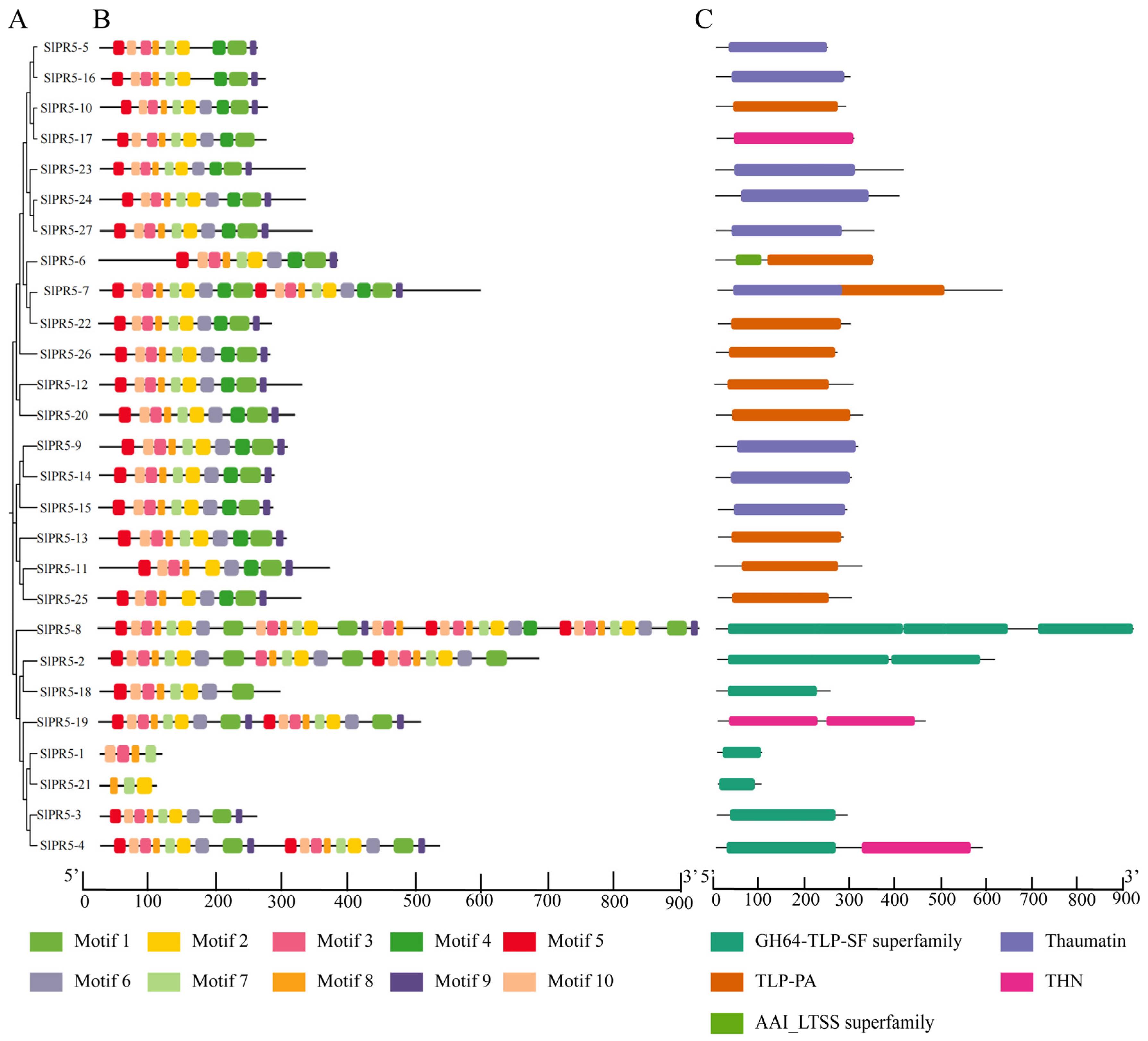
3.2. Analysis of Protein Conserved Motifs and Structural Domains
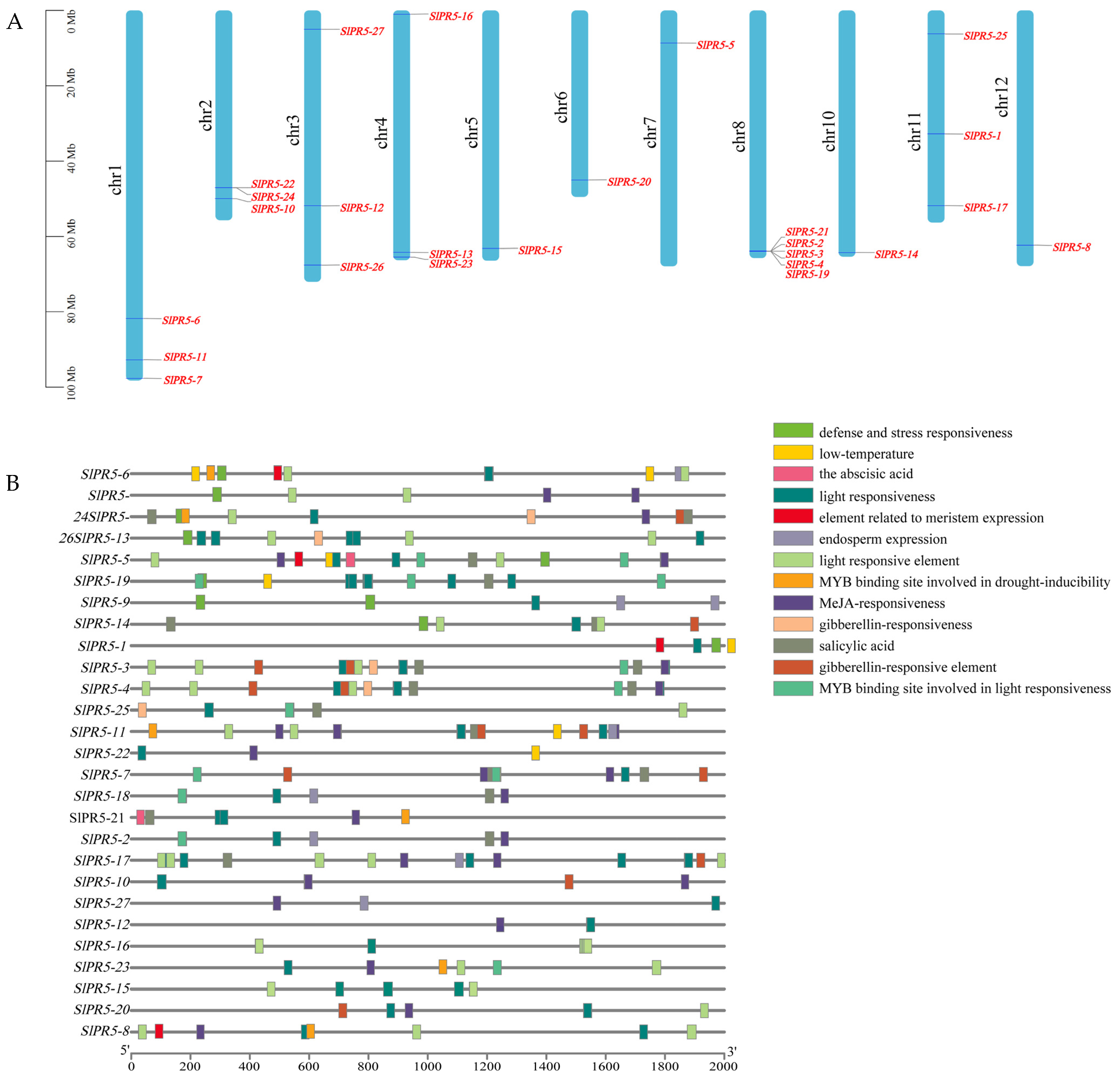
3.3. Chromosome Localization Prediction and Cis-Acting Element Analysis
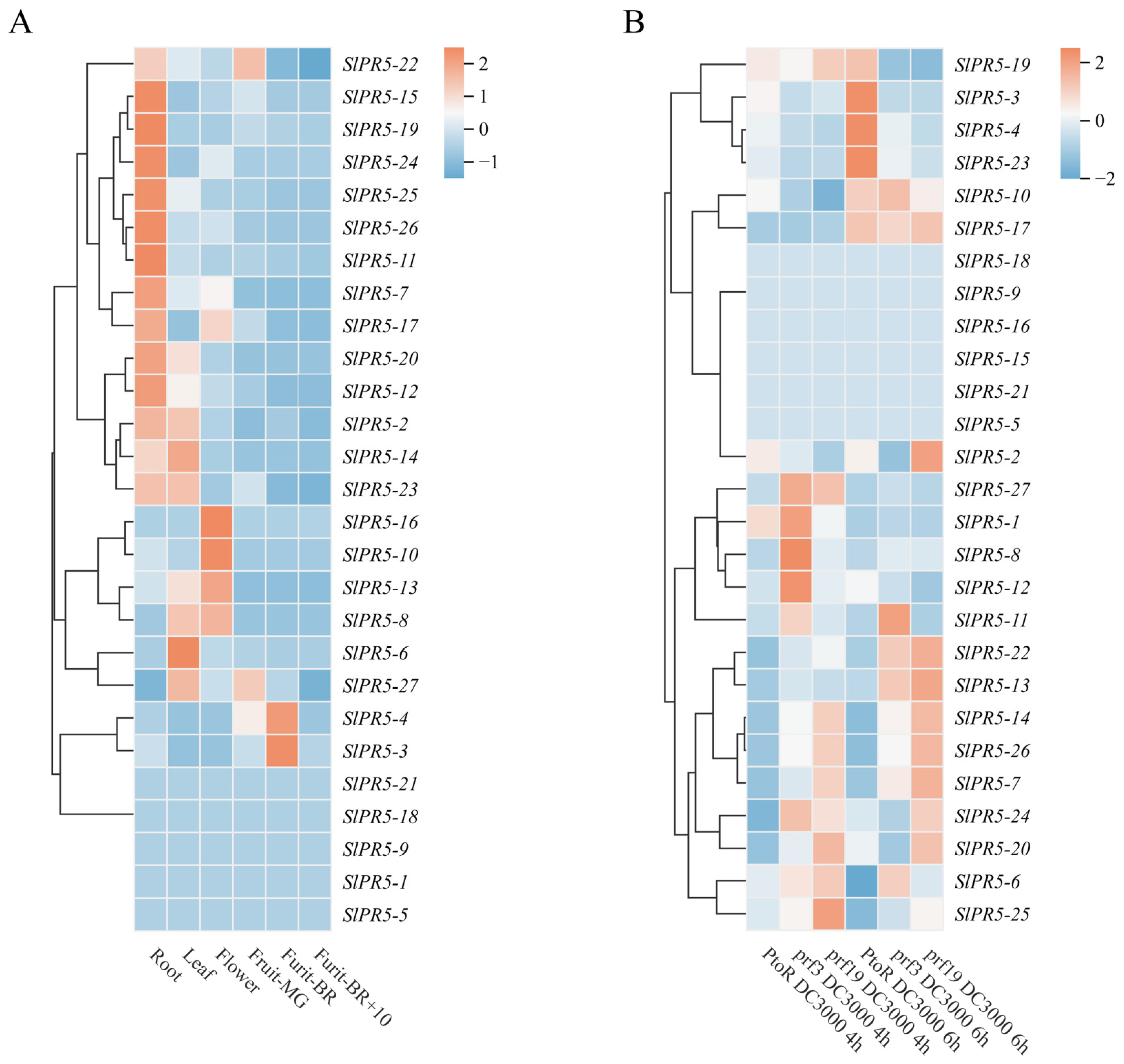
3.4. Analysis of SlPR5 Family Gene Expression Patterns in Tomato on the Basis of Transcriptome Data
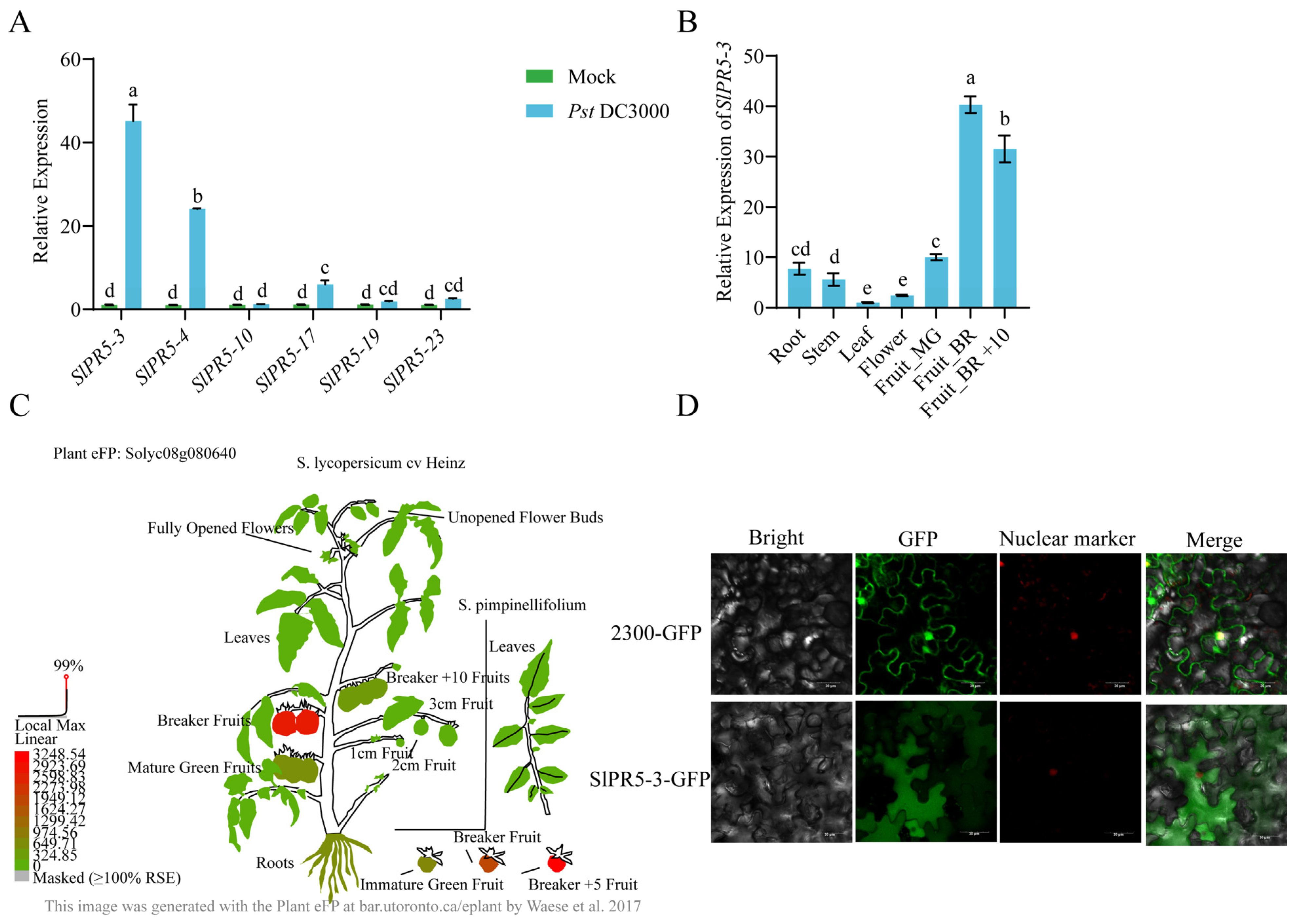
3.5. Analysis of the Disease Resistance Response of SlPR5 Genes to Pst DC3000 and the Tissue Specificity of SlPR5-3
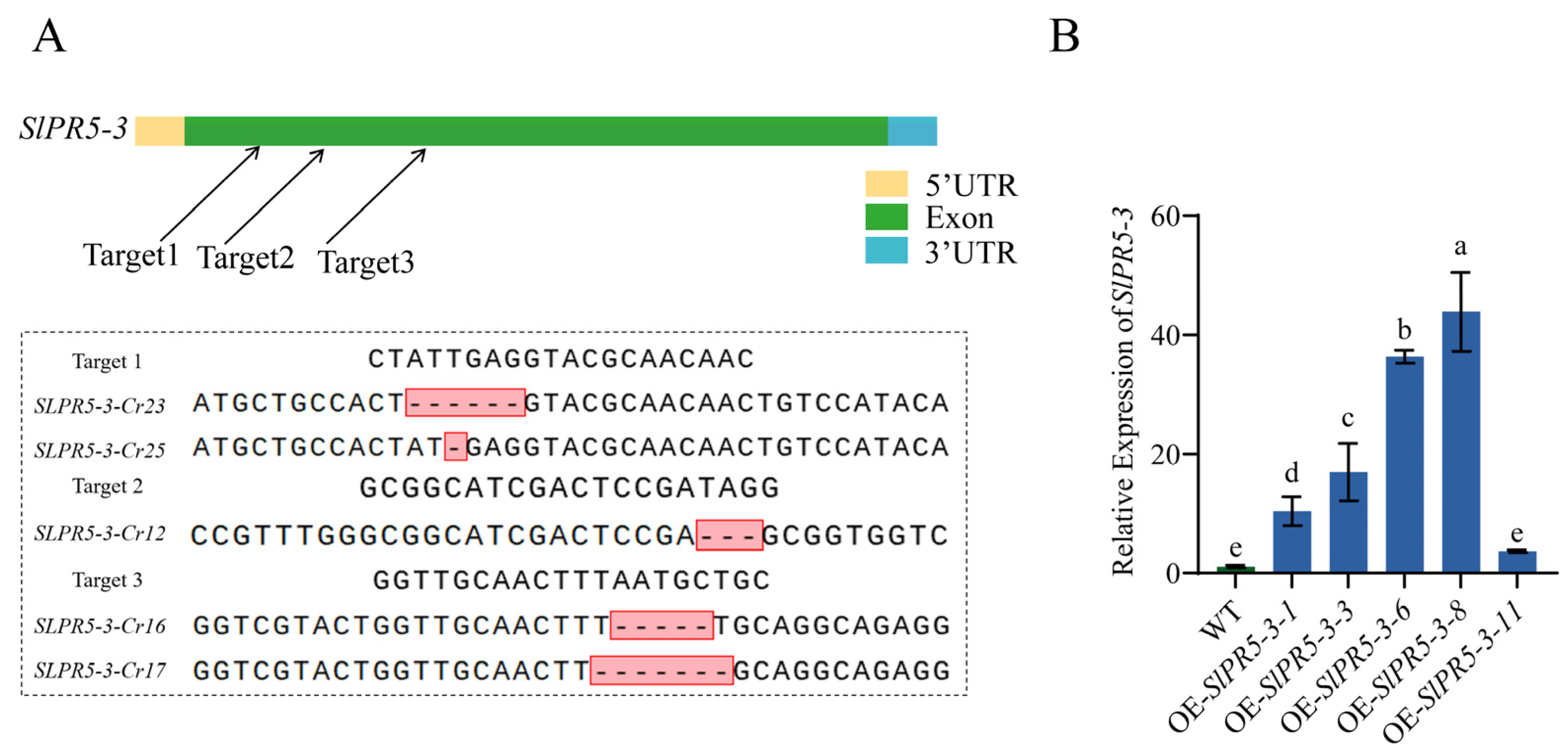
3.6. Generation of SlPR5-3 Mutants and Overexpression Plants
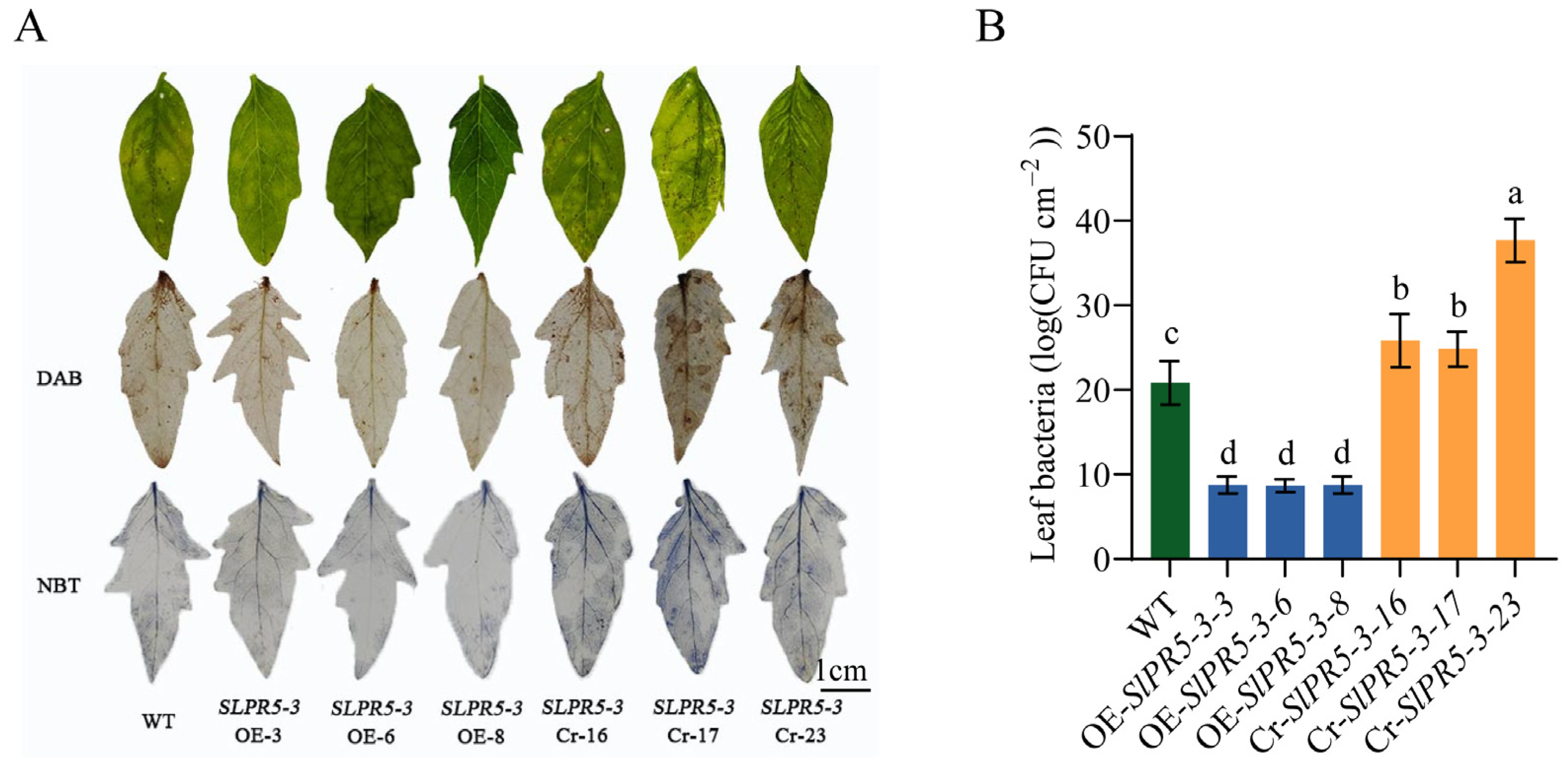
3.7. Phenotypic Analysis of Disease Resistance in SlPR5-3-Overexpressing and Mutant Lines
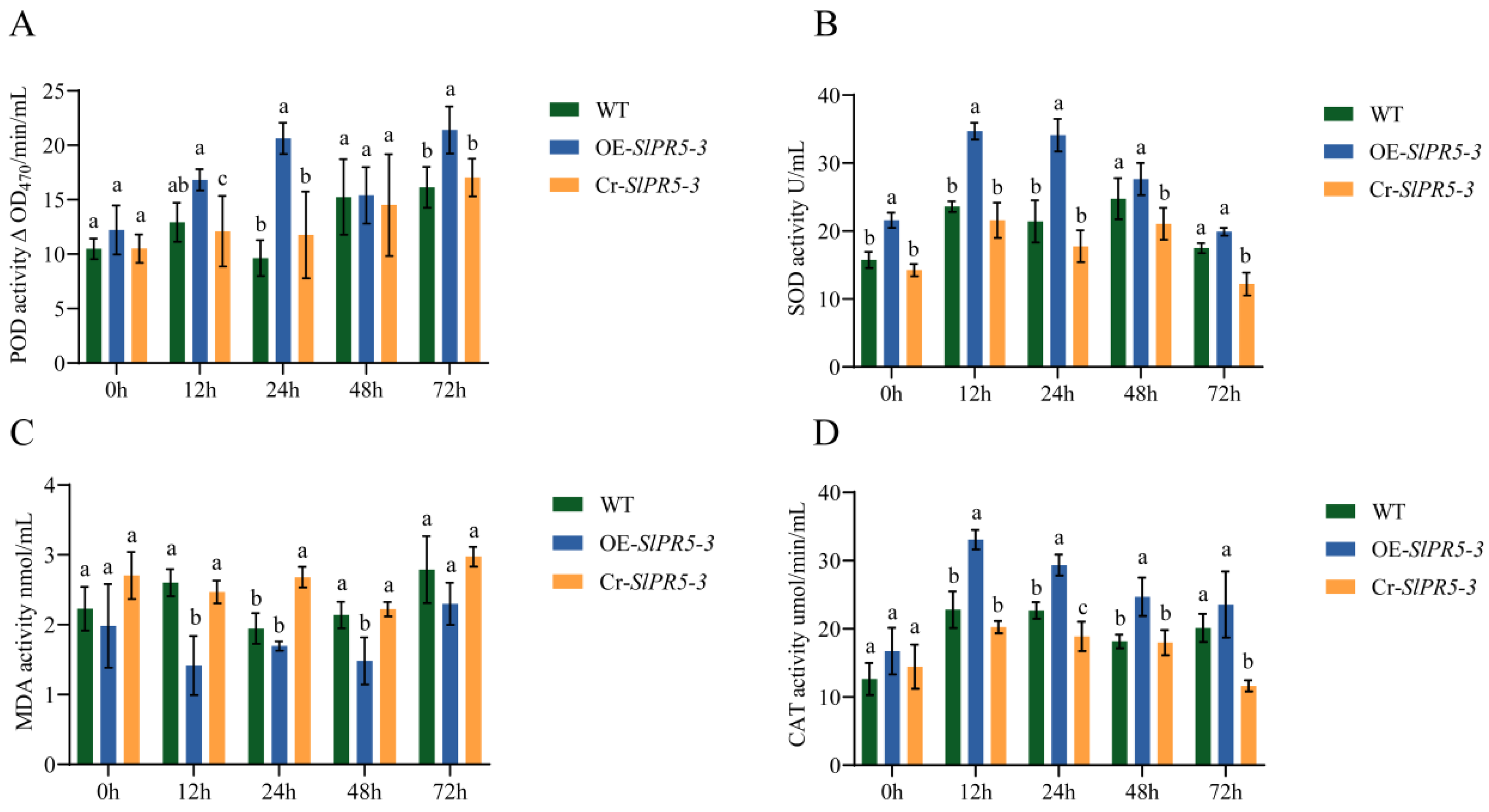
3.8. Measurement of Physiological Indicators of the Disease Resistance Response in SlPR5-3-Overexpressing and Mutant Lines
4. Discussion
5. Conclusions
Supplementary Materials
Author Contributions
Funding
Data Availability Statement
Acknowledgments
Conflicts of Interest
References
- Yan, Z.Y.; Zhao, M.S.; Ma, H.Y.; Liu, L.Z.; Yang, G. Biological and molecular characterization oftomato brown rugose fruit virus and development of quadruplex RT-PCR detection. J. Integr. Agric. 2021, 20, 1871–1879. [Google Scholar] [CrossRef]
- Lindeberg, M.; Cartinhour, S.; Myers, C.R.; Schechter, L.M.; Schneider, D.J.; Collmer, A. Closing the circle on the discovery of genes encoding Hrp regulon members and type III secretion system effectors in the genomes of three model Pseudomonas syringae strains. Mol. Plant-Microbe Interact. 2006, 19, 1151–1158. [Google Scholar] [CrossRef] [PubMed][Green Version]
- Yunis, H.; Bashan, Y.; Okon, Y.; Henis, Y. Weather dependence, yield losses and control of bacterial speck of tomato caused by pseudomonas tomato. Plant Dis. 1980, 64, 937–939. [Google Scholar] [CrossRef]
- Xu, S.; Zhang, Z.; Zhou, J.; Han, X.; Song, K.; Gu, H.; Sun, L. Comprehensive analysis of NAC genes reveals differential expression patterns in response to Pst DC3000 and their overlap expression pattern during PTI and ETI in tomato. Genes 2022, 13, 2015. [Google Scholar] [CrossRef] [PubMed]
- Hind, S.R.; Strickler, S.R.; Boyle, P.C.; Dunham, D.M.; Bao, Z.; O’Doherty, I.M.; Baccile, J.A.; Hoki, J.S.; Viox, E.G.; Clarke, C.R.; et al. Tomato receptor Flagellin-Sensing 3 binds flgII-28 and activates the plant immune system. Nat. Plants 2016, 2, 1–8. [Google Scholar] [CrossRef]
- Roberts, R.; Liu, A.E.; Wan, L.; Geiger, A.M.; Hind, S.R.; Rosli, H.G.; Martin, G.B. Molecular characterization of differences between the tomato immune receptors flagellin sensing 3 and flagellin sensing 2. Plant Physiol. 2020, 183, 1825–1837. [Google Scholar] [CrossRef]
- Zhang, N.; Pombo, M.A.; Rosli, H.G.; Martin, G.B. Tomato wall-associated kinase SlWak1 depends on Fls2/Fls3 to promote apoplastic immune responses to Pseudomonas syringae. Plant Physiol. 2020, 183, 1869–1882. [Google Scholar] [CrossRef]
- Nguyen, H.T.; Daudi, A.; Shah, J. Transcriptional reprogramming during establishment of systemic acquired resistance in Arabidopsis. Plant Physiol. 2010, 154, 708–721. [Google Scholar]
- Macho, A.P.; Zipfel, C. Plant PRRs and the activation of innate immune signaling. Mol. Cell 2014, 54, 263–272. [Google Scholar] [CrossRef]
- Li, L.; Yu, Y.; Zhou, Z.; Zhou, J.M. Plant pattern—Recognition receptors controlling innate immunity. Sci. China Life Sci. 2016, 59, 878–888. [Google Scholar] [CrossRef]
- Dong, J.; Xiao, F.; Fan, F.; Gu, L.; Cang, H.; Martin, G.B.; Chai, J. Crystal structure of the complex between Pseudomonas effector AvrPtoB and the tomato Pto kinase reveals both a shared and a unique interface compared with AvrPto-Pto. Plant Cell 2009, 21, 1846–1859. [Google Scholar] [CrossRef]
- Göhre, V.; Spallek, T.; Häweker, H.; Mersmann, S.; Mentzel, T.; Boller, T.; de Torres, M.; Robatzek, S. Plant pattern-recognition receptor FLS2 is directed for degradation by the bacterial ubiquitin ligase AvrPtoB. Curr. Biol. 2008, 18, 1824–1832. [Google Scholar] [CrossRef] [PubMed]
- Shan, L.; He, P.; Li, J.; Heese, A.; Peck, S.C.; Nürnberger, T.; Martin, G.; Sheen, J. Bacterial effectors target the common signaling partner BAK1 to disrupt multiple MAMP receptor-signaling complexes and impede plant immunity. Cell Host Microbe 2008, 4, 17–27. [Google Scholar] [CrossRef] [PubMed]
- Kim, Y.J.; Lin, N.C.; Martin, G.B. Two distinct Pseudomonas effector proteins interact with the Pto kinase and activate plant immunity. Cell 2002, 109, 589–598. [Google Scholar] [CrossRef] [PubMed]
- Nabi, Z.; Manzoor, S.; Nabi, S.U.; Wani, T.A.; Gulzar, H.; Farooq, M.; Vlădulescu, C.; Mansoor, S. Pattern-Triggered Immunity and Effector-Triggered Immunity: Crosstalk and cooperation of PRR and NLR-mediated plant defense pathways during host–pathogen interactions. Physiol. Mol. Biol. Plants 2024, 30, 587–604. [Google Scholar] [CrossRef]
- Gu, Y.Q.; Wildermuth, M.C.; Chakravarthy, S.; Loh, Y.T.; Yang, C.; He, X.; Han, Y.; Martin, G.B. Tomato transcription factors Pti4, Pti5, and Pti6 activate defense responses when expressed in Arabidopsis. Plant Cell 2002, 14, 817–831. [Google Scholar] [CrossRef]
- Sharma, S.; Bhattarai, K. Progress in developing bacterial spot resistance in tomato. Agronomy 2019, 9, 26. [Google Scholar] [CrossRef]
- Fang, X.; Meng, X.; Zhang, J.; Cao, S.; Tang, X.; Fan, T. AtWRKY1 negatively regulates the response of Arabidopsis thaliana to Pst. DC3000. Plant Physiol. Biochem. 2021, 166, 799–806. [Google Scholar] [CrossRef]
- Zhang, N.; Hecht, C.; Sun, X.; Fei, Z.; Martin, G.B. Loss of function of the bHLH transcription factor Nrd1 in tomato enhances resistance to Pseudomonas syringae. Plant Physiol. 2022, 190, 1334–1348. [Google Scholar] [CrossRef]
- Li, Y.M.; Wang, J.; Wang, P.; Shi, K. Function of sugar transport protein SlSTP2 in tomato defense against bacterial leaf spot. Sci. Agric. Sin. 2022, 55, 3144–3154. [Google Scholar]
- Wu, Z.; He, L.; Jin, Y.; Chen, J.; Shi, H.; Wang, Y.; Yang, W. Histone Deacetylase 6 suppresses salicylic acid biosynthesis to repress autoimmunity. Plant Physiol. 2021, 187, 2592–2607. [Google Scholar] [CrossRef]
- Van Loon, L.C.; Van Strien, E.A. The families of pathogenesis-related proteins, their activities, and comparative analysis of PR-1 type proteins. Physiol. Mol. Plant Pathol. 1999, 55, 85–97. [Google Scholar] [CrossRef]
- Piggott, N.; Ekramoddoullah, A.K.; Liu, J.J.; Yu, X. Gene cloning of a thaumatin-like (PR-5) protein of western white pine (Pinus monticola, D. Don) and expression studies of members of the PR-5 group. Physiol. Mol. Plant Pathol. 2004, 64, 1–8. [Google Scholar] [CrossRef]
- Sels, J.; Mathys, J.; De Coninck, B.M.; Cammue, B.P.; De Bolle, M.F. Plant pathogenesis-related (PR) proteins: A focus on PR peptides. Plant Physiol. Biochem. 2008, 46, 941–950. [Google Scholar] [CrossRef] [PubMed]
- Misra, R.C.; Sandeep; Kamthan, M.; Kumar, S.; Ghosh, S. A thaumatin-like protein of Ocimum basilicum confers tolerance to fungal pathogen and abiotic stress in transgenic Arabidopsis. Sci. Rep. 2016, 6, 25340. [Google Scholar] [CrossRef] [PubMed]
- Eden, D.; Matthew, J.B.; Rosa, J.J.; Richards, F.M. Increase in apparent compressibility of cytochrome c upon oxidation. Proc. Natl. Acad. Sci. USA 1982, 79, 815–819. [Google Scholar] [CrossRef]
- Dalen, L.S.; Johnsen, Ø.; Lönneborg, A.; Yaish, M.W. Freezing tolerance in Norway spruce, the potential role of pathogenesis-related proteins. Acta Physiol. Plant. 2015, 37, 1717. [Google Scholar] [CrossRef]
- Liu, C.; Han, L.H.; Wang, H.B. Identification and codon bias analysis of the sweet protein gene family in cereals. Northwest J. Agric. 2018, 27, 52–61. [Google Scholar]
- Anisimova, O.K.; Kochieva, E.Z.; Shchennikova, A.V.; Filyushin, M.A. Thaumatin-like protein (TLP) genes in garlic (Allium sativum L.): Genome-wide identification, characterization, and expression in response to Fusarium proliferatum infection. Plants 2022, 11, 748. [Google Scholar] [CrossRef]
- Wei, L.; Zhang, L.; Wang, W.W.; Yu, Z.Y.; Yu, D.Y.; Liu, L.J. Bioinformatics analysis of soybean disease course-related protein PR-5 and its homologous protein TPLs. Soybean Sci. 2016, 35, 380–387. [Google Scholar]
- Xi, Z.; Jia, H.; Li, Y.; Ma, J.; Lu, M.; Wang, Z.; Kong, D.X.; Deng, W.W. Identification and functional analysis of PR genes in leaves from variegated tea plant (Camellia sinensis). Agronomy 2024, 14, 156. [Google Scholar] [CrossRef]
- Šimkovicová, M.; Kramer, G.; Rep, M.; Takken, F.L. Tomato R-gene-mediated resistance against Fusarium wilt originates in roots and extends to shoots via xylem to limit pathogen colonization. Front. Plant Sci. 2024, 15, 1384431. [Google Scholar] [CrossRef] [PubMed]
- Pressey, R. Two isoforms of NP24: A thaumatin-like protein in tomato fruit. Phytochemistry 1997, 44, 1241–1245. [Google Scholar] [CrossRef] [PubMed]
- Anžlovar, S.; Dermastia, M. The comparative analysis of osmotins and osmotin-like PR-5 proteins. Plant Biol. 2003, 5, 116–124. [Google Scholar] [CrossRef]
- Li, X.; Xu, B.; Xu, J.; Li, Z.; Jiang, C.; Zhou, Y.; Zhao, K. Tomato-thaumatin-like protein genes Solyc08g080660 and Solyc08g080670 confer resistance to five soil-borne diseases by enhancing β-1, 3-glucanase activity. Genes 2023, 14, 1622. [Google Scholar] [CrossRef]
- Jia, X.; Zeng, H.; Wang, W.; Zhang, F.; Yin, H. Chitosan oligosaccharide induces resistance to Pseudomonas syringae pv. tomato DC3000 in Arabidopsis thaliana by activating both salicylic acid–and jasmonic acid–mediated pathways. Mol. Plant-Microbe Interact. 2018, 31, 1271–1279. [Google Scholar] [CrossRef]
- Weng, Q.Y.; Song, J.H.; Zhao, Y.T.; Zheng, X.; Huang, C.C.; Wang, G.Y.; Dong, J.G. T1N6_22 positively regulates Botrytis cinerea resistance but negatively regulates Pseudomonas syringae pv. tomato DC3000 resistance in Arabidopsis thaliana. Biotechnol. Biotechnol. Equip. 2017, 31, 690–697. [Google Scholar] [CrossRef]
- Khare, E.; Kim, K.; Lee, K.J. Rice OsPBL1 (ORYZA SATIVA ARABIDOPSIS PBS1-LIKE 1) enhanced defense of Arabidopsis against Pseudomonas syringae DC3000. Eur. J. Plant Pathol. 2016, 146, 901–910. [Google Scholar] [CrossRef]
- Jiang, C.H.; Fan, Z.H.; Xie, P.; Guo, J.H. Bacillus cereus AR156 extracellular polysaccharides served as a novel micro-associated molecular pattern to induced systemic immunity to Pst DC3000 in Arabidopsis. Front. Microbiol. 2016, 7, 664. [Google Scholar] [CrossRef]
- Fernandez-Pozo, N.; Menda, N.; Edwards, J.D.; Saha, S.; Tecle, I.Y.; Strickler, S.R.; Mueller, L.A. The Sol Genomics Network (SGN)—From genotype to phenotype to breeding. Nucleic Acids Res. 2015, 43, D1036–D1041. [Google Scholar] [CrossRef]
- El-Gebali, S.; Mistry, J.; Bateman, A.; Eddy, S.R.; Luciani, A.; Potter, S.C.; Finn, R.D. The Pfam protein families database in 2019. Nucleic Acids Res. 2019, 47, D427–D432. [Google Scholar] [CrossRef]
- Turkoglu, M.; Yanikoğlu, B.; Hanbay, D. PlantDiseaseNet: Convolutional neural network ensemble for plant disease and pest detection. Signal Image Video Process. 2021, 16, 301–309. [Google Scholar] [CrossRef]
- Swarbreck, D.; Wilks, C.; Lamesch, P.; Berardini, T.Z.; Garcia-Hernandez, M.; Foerster, H.; Huala, E. The Arabidopsis Information Resource (TAIR): Gene structure and function annotation. Nucleic Acids Res. 2007, 36 (Suppl. S1), D1009–D1014. [Google Scholar] [CrossRef]
- Gasteiger, E.; Gattiker, A.; Hoogland, C.; Ivanyi, I.; Appel, R.D.; Bairoch, A. ExPASy: The proteomics server for in-depth protein knowledge and analysis. Nucleic Acids Res. 2003, 31, 3784–3788. [Google Scholar] [CrossRef] [PubMed]
- Nordahl, P.T.; Søren, B.; Gunnar, V.H.; Henrik, N. SignalP 4.0: Discriminating signal peptides from transmembrane regions. Nat. Methods 2011, 8, 785–786. [Google Scholar] [CrossRef] [PubMed]
- Horton, P.; Park, K.J.; Obayashi, T.; Fujita, N.; Harada, H.; AdamsCollier, C.J.; Nakai, K. WoLF PSORT: Protein localization predictor. Nucleic Acids Res. 2007, 35, W585–W587. [Google Scholar] [CrossRef] [PubMed]
- Chen, C.; Chen, H.; Zhang, Y.; Thomas, H.R.; Frank, M.H.; He, Y.; Xia, R. TBtools: An integrative toolkit developed for interactive analyses of big biological data. Mol. Plant 2020, 13, 1194–1202. [Google Scholar] [CrossRef]
- Bailey, T.L.; Boden, M.; Buske, F.A.; Frith, M.; Grant, C.E.; Clementi, L.; Ren, J.; Li, W.W.; Noble, W.S. MEME SUITE: Tools for motif discovery and searching. Nucleic Acids Res. 2009, 37, W202–W208. [Google Scholar] [CrossRef]
- Zeng, D.C.; Ma, X.L.; Xie, X.R.; Zhu, Q.L.; Liu, Y.G. Operational methods for plant CRISPR/Cas9 multi-gene editing vector construction and mutation analysis, Science in China. Life Sci. 2018, 48, 783–794. [Google Scholar]
- Bournonville, C.F.; Díaz-Ricci, J.C. Quantitative determination of superoxide in plant leaves using a modified NBT staining method. Phytochem. Anal. 2011, 22, 268–271. [Google Scholar] [CrossRef]
- Ramel, F.; Sulmon, C.; Bogard, M.; Couée, I.; Gouesbet, G. Differential patterns of reactive oxygen species and antioxidative mechanisms during atrazine injury and sucrose-induced tolerance in Arabidopsis thaliana plantlets. BMC Plant Biol. 2009, 9, 28. [Google Scholar] [CrossRef] [PubMed]
- Waese, J.; Fan, J.; Pasha, A.; Yu, H.; Fucile, G.; Shi, R.; Cumming, M.; Kelley, L.A.; Sternberg, M.J.; Krishnakumar, V. ePlant: Visualizing and exploring multiple levels of data for hypothesis generation in plant biology. Plant Cell 2017, 29, 1806–1821. [Google Scholar] [CrossRef] [PubMed]
- Yang, H.L.; Yuan, Z.; Qian, X. Expression Profile Analysis of Thionin-like Gene Family in Barley. Biotechnol. Bull. 2022, 38, 140–147. [Google Scholar]
- Wang, T.; Hu, J.; Ma, X.; Li, C.; Yang, Q.; Feng, S.; Li, M.; Li, N.; Song, X. Identification, evolution and expression analyses of whole genome-wide TLP gene family in Brassica napus. BMC Genom. 2020, 21, 264. [Google Scholar] [CrossRef]
- Alves, M.C.S.; de Souza, R.S.; da Silva, R.C.C. Genome-Wide Identification and Characterization Thaumatin-like Protein (TLP) Genes in Wild Olive (Olea europaea var. sylvestris). Sci. Plena 2024, 20. [Google Scholar]
- Singh, S.; Tripathi, R.K.; Lemaux, P.G.; Buchanan, B.B.; Singh, J. Redox-dependent interaction between thaumatin-like protein and β-glucan influences malting quality of barley. Proc. Natl. Acad. Sci. USA 2017, 114, 7725–7730. [Google Scholar] [CrossRef]
- Li, C.N.; Liu, F.; Zhang, X.; Ren, Y.J.; Tang, H.C.; Que, Y.X. Bioinformatics and Expression Analysis of Thaumatin-like Protein Genes ScTLP2 and ScTLP3 from Sugarcane. Res. Gate 2020, 18, 65–73. [Google Scholar]
- Zhang, Y.; He, X.; Su, D.; Feng, Y.; Zhao, H.; Deng, H.; Liu, M. Comprehensive profiling of tubby-like protein expression uncovers ripening-related TLP genes in tomato (Solanum lycopersicum). Int. J. Mol. Sci. 2020, 21, 1000. [Google Scholar] [CrossRef]
- Sun, L.; Yu, G.; Han, X.; Xin, S.; Qiang, X.; Jiang, L.; Zhang, S.; Cheng, X. TsMIP6 enhances the tolerance of transgenic rice to salt stress and interacts with target proteins. J. Plant Biol. 2015, 58, 285–292. [Google Scholar] [CrossRef]
- Liu, C.; Han, L.; Wang, H.; Gao, Y.; Tang, L. Research Advances on Plant Thaumatin-like Protein Family. Biotechnol. Bull. 2018, 34, 9–17. [Google Scholar]
- Baker, S.S.; Wilhelm, K.S.; Thomashow, M.F. The 5′-region of Arabidopsis thaliana corl5a has cis-acting elements that confer cold-, drought- and ABA-regulated gene expression. Plant Mol. Biol. 1994, 24, 701–713. [Google Scholar] [CrossRef]
- Gao, Y.; Zan, X.-L.; Wu, X.-F.; Yao, L.; Chen, Y.-L.; Jia, S.-W.; Zhao, K.-J. Identification of fungus-responsive cis-acting element in the promoter of Brassica juncea chitinase gene, BjCHI1. Plant Sci. 2014, 215, 190–198. [Google Scholar] [CrossRef]
- Zhou, R.; Dong, Y.; Liu, X.; Feng, S.; Wang, C.; Ma, X.; Liu, J.; Liang, Q.; Bao, Y.; Xu, S. JrWRKY21 interacts with JrPTI5L to activate the expression of JrPR5L for resistance to Colletotrichum gloeosporioides in walnut. Plant J. 2022, 111, 1152–1166. [Google Scholar] [CrossRef] [PubMed]
- Liu, W.; Zhang, G.; Liu, C.; Tian, S.; Qiao, G.; Sun, H.; Luo, X.; Wang, S.; Cai, L.; Sun, X. NbTLP1 stabilizes NbPR1 to enhance resistance against Phytophthora capsici via salicylic acid signalling pathway in Nicotiana benthamiana. Plant Biotechnol. J. 2025, 23, 3748–3750. [Google Scholar] [CrossRef] [PubMed]
- Zhang, H.-C.; Gong, Y.-H.; Tao, T.; Lu, S.; Zhou, W.-Y.; Xia, H.; Zhang, X.-Y.; Yang, Q.-Q.; Zhang, M.-Q.; Hong, L.-M. Genome-wide identification of R2R3-MYB transcription factor subfamily genes involved in salt stress in rice (Oryza sativa L.). BMC Genom. 2024, 25, 797. [Google Scholar] [CrossRef] [PubMed]
- Cominelli, E.; Sala, T.; Calvi, D.; Gusmaroli, G.; Tonelli, C. Over-expression of the Arabidopsis AtMYB41 gene alters cell expansion and leaf surface permeability. Plant J. 2008, 53, 53–64. [Google Scholar] [CrossRef]
- Liu, Z.; Luan, Y.; Li, J.; Yin, Y. Expression of a tomato MYB gene in transgenic tobacco increases resistance to Fusarium oxysporum and Botrytis cinerea. Eur. J. Plant Pathol. 2016, 144, 607–617. [Google Scholar] [CrossRef]
- Hu, Z.L.; Deng, L.; Yao, N. Analysis of expression of the PR-1 and PR-5 genes in tomato. J. Southwest Agric. Univ. 2009, 31, 67–72. [Google Scholar]
- Samac, D.A.; Penuela, S.; Schnurr, J.A.; Hunt, E.N.; Foster-Hartnett, D.; Vandenbosch, K.A.; Gantt, J.S. Expression of coordinately regulated defence response genes and analysis of their role in disease resistance in Medicago truncatula. Mol. Plant Pathol. 2011, 12, 786–798. [Google Scholar] [CrossRef]
- Jami, S.K.; Anuradha, T.S.; Guruprasad, L. Molecular, biochemical and structural characterization of osmotin-like protein from black nightshade (Solanum nigrum). J. Plant Physiol. 2007, 164, 238–252. [Google Scholar] [CrossRef]
- Melchers, L.S.; Sela-Buurlage, M.B.; Vloemans, S.A.; Woloshuk, C.P.; Van Roekel, J.S.; Pen, J.; van den Elzen, P.J.; Cornelissen, M.J. Extracellular targeting of the vacuolar tobacco proteins AP24, chitinase and β-1, 3-glucanase in transgenic plants. Plant Mol. Biol. 1993, 21, 583–593. [Google Scholar] [CrossRef]
- Onishi, M.; Tachi, H.; Kojima, T.; Shiraiwa, M.; Takahara, H. Molecular cloning and characterization of a novel salt-inducible gene encoding an acidic isoform of PR-5 protein in soybean (Glycine max [L.] Merr.). Plant Physiol. Biochem. 2006, 44, 574–580. [Google Scholar] [CrossRef]
- Liu, J.; Hu, Y.; Lu, X.; Xu, J.; Wang, H.; Tang, W.; Li, C. The role of ribosomal protein StRPS5 in mediating resistance of Solanum tuberosum plants to Phytophthora infestans. Plant Sci. 2025, 357, 112539. [Google Scholar] [CrossRef] [PubMed]
- Li, J.; Wen, J.; Lease, K.A.; Doke, J.T.; Tax, F.E.; Walker, J.C. BAK1, an Arabidopsis LRR receptor-like protein kinase, interacts with BRI1 and modulates brassinosteroid signaling. Cell 2002, 110, 213–222. [Google Scholar] [CrossRef] [PubMed]
- Wang, X.; Zhang, X.; Liu, Y.; Ru, L.; Yan, G.; Xu, Y.; Yu, Y.; Zhu, Z.; He, Y. miR398-SlCSD1 module participates in the SA-H2O2 amplifying feedback loop in Solanum lycopersicum. J. Adv. Res. 2025, in press. [Google Scholar] [CrossRef] [PubMed]
- Martin, G.B.; Brommonschenkel, S.H.; Chunwongse, J.; Frary, A.; Ganal, M.W.; Spivey, R.; Wu, T.; Earle, E.D.; Tanksley, S.D. Map-based cloning of a protein kinase gene conferring disease resistance in tomato. Science 1993, 262, 1432–1436. [Google Scholar] [CrossRef]
- Van Loon, L.C.; Rep, M.; Pieterse, C.M.J. Significance of inducible defense-related proteins in infected plants. Annu. Rev. Phytopathol. 2006, 44, 135–162. [Google Scholar] [CrossRef]
- Craig, A.; Ewan, R.; Mesmar, J.; Gudipati, V.; Sadanandom, A. E3 ubiquitin ligases and plant innate immunity. J. Exp. Bot. 2009, 60, 1123–1132. [Google Scholar] [CrossRef]
- Govrin, E.M.; Levine, A. The hypersensitive response facilitates plant infection by the necrotrophic pathogen Botrytis cinerea. Curr. Biol. 2000, 10, 751–757. [Google Scholar] [CrossRef]
- Liu, G.; Li, D.; Mai, H.; Lin, X.; Lu, X.; Chen, K.; Wang, R.; Riaz, M.; Tian, J.; Liang, C. GmSTOP1-3 regulates flavonoid synthesis to reduce ROS accumulation and enhance aluminum tolerance in soybean. J. Hazard. Mater. 2024, 480, 136074. [Google Scholar] [CrossRef]
- Wang, N.; Fan, X.; He, M.; Hu, Z.; Tang, C.; Zhang, S.; Lin, D.; Gan, P.; Wang, J.; Huang, X. Transcriptional repression of TaNOX10 by TaWRKY19 compromises ROS generation and enhances wheat susceptibility to stripe rust. Plant Cell 2022, 34, 1784–1803. [Google Scholar] [CrossRef]
- Zhang, M.; Kang, H.; Zhang, G.; Chen, Y.; Kong, X.; Guo, Q.; Wang, W.J.P. Overexpression of TaUb2 enhances disease resistance to Pseudomonas syringae pv. tomato DC3000 in tobacco. Physiol. Mol. Plant Pathol. 2015, 90, 98–104. [Google Scholar] [CrossRef]
- Huang, Y.; Yang, J.; Sun, X.; Li, J.; Cao, X.; Yao, S.; Han, Y.; Chen, C.; Du, L.; Li, S. Perception of viral infections and initiation of antiviral defence in rice. Nature 2025, 641, 173–181. [Google Scholar] [CrossRef]
- De Gara, L.; de Pinto, M.C.; Tommasi, F. The antioxidant systems vis-à-vis reactive oxygen species during plant–pathogen interaction. Plant Physiol. Biochem. 2003, 41, 863–870. [Google Scholar] [CrossRef]




| GENE ID | GENE NAME | Number of | Molecular | Theoretical | Aliphatic | GRAVY | Instability | Subcellular Localization |
|---|---|---|---|---|---|---|---|---|
| Amino Acids (aa) | Weight (Da) | pI | Index | Index | ||||
| Solyc11g044400.1.1 | SlPR5-1 | 87 | 9451.58 | 5.29 | 71.72 | −0.301 | 41.54 | Extracellular |
| Solyc08g080620.2.1 | SlPR5-2 | 614 | 66,612.02 | 8.63 | 49.3 | −0.411 | 36.49 | Extracellular |
| Solyc08g080640.1.1 | SlPR5-3 | 247 | 26,646.21 | 8.28 | 54.53 | −0.246 | 35.52 | Cytosol |
| Solyc08g080650.2.1 | SlPR5-4 | 496 | 53,620.35 | 7.81 | 51.75 | −0.293 | 39.47 | Extracellular |
| Solyc07g017970.2.1 | SlPR5-5 | 239 | 26,323.92 | 7.83 | 66.11 | −0.147 | 31.17 | Extracellular |
| Solyc01g086840.2.1 | SlPR5-6 | 321 | 34,245.82 | 4.92 | 68.1 | 0.044 | 36.74 | Chloroplast |
| Solyc01g111330.3.1 | SlPR5-7 | 560 | 57,950.73 | 4.82 | 59.45 | −0.065 | 37.49 | Chloroplast |
| Solyc12g056390.2.1 | SlPR5-8 | 878 | 97,494.25 | 5.9 | 57.97 | −0.382 | 31.82 | Vacuolar membrane |
| Solyc09g011027.1.1 | SlPR5-9 | 253 | 27,399.66 | 8.46 | 72.02 | −0.031 | 46.62 | Chloroplast |
| Solyc02g087520.3.1 | SlPR5-10 | 270 | 29,446.75 | 8.24 | 71.48 | −0.093 | 54.51 | Chloroplast |
| Solyc01g104290.2.1 | SlPR5-11 | 318 | 34,394.2 | 6.83 | 75.69 | −0.058 | 34.4 | Cytosol |
| Solyc03g079960.3.1 | SlPR5-12 | 297 | 31,399.74 | 4.82 | 71.92 | 0.112 | 44.84 | Golgi apparatus |
| Solyc04g079890.3.1 | SlPR5-13 | 247 | 25,388.45 | 4.99 | 63.72 | 0.156 | 29.89 | Extracellular |
| Solyc10g084840.2.1 | SlPR5-14 | 245 | 26,188.25 | 7.27 | 79.96 | 0.082 | 41.42 | Extracellular |
| Solyc05g053020.3.1 | SlPR5-15 | 244 | 26,027.97 | 8.02 | 79.96 | 0.084 | 34.5 | Extracellular |
| Solyc04g007310.2.1 | SlPR5-16 | 255 | 27,954.86 | 7.36 | 74.59 | −0.121 | 27.31 | Chloroplast |
| Solyc11g066130.1.1 | SlPR5-17 | 252 | 27,265.05 | 8.15 | 70.87 | −0.063 | 54.48 | Extracellular |
| Solyc08g080585.1.1 | SlPR5-18 | 237 | 25,973.4 | 8.13 | 51.1 | −0.378 | 31.52 | Extracellular |
| Solyc08g080670.2.1 | SlPR5-19 | 472 | 51,865.27 | 6.07 | 46.29 | −0.402 | 38.33 | Chloroplast |
| Solyc06g073000.3.1 | SlPR5-20 | 270 | 28,605.7 | 4.73 | 74.85 | 0.239 | 36.87 | Chloroplast |
| Solyc08g080600.1.1 | SlPR5-21 | 75 | 8266.26 | 5.09 | 59.87 | −0.389 | 21.48 | Chloroplast |
| Solyc02g083760.3.1 | SlPR5-22 | 253 | 26,448.49 | 4.62 | 51.78 | −0.13 | 44.18 | Extracellular |
| Solyc04g081550.3.1 | SlPR5-23 | 335 | 35,383.5 | 4.95 | 61.82 | −0.145 | 42.72 | Extracellular |
| Solyc02g083790.3.1 | SlPR5-24 | 318 | 32,736.06 | 4.65 | 74.25 | 0.187 | 34.69 | Chloroplast |
| Solyc11g013300.2.1 | SlPR5-25 | 287 | 31,030.57 | 8.35 | 72.65 | 0.049 | 37.66 | Extracellular |
| Solyc03g118780.3.1 | SlPR5-26 | 245 | 26,121.88 | 8.92 | 63.02 | −0.049 | 41.01 | Chloroplast |
| Solyc03g033490.2.1 | SlPR5-27 | 310 | 32,067.2 | 4.69 | 66.74 | 0.087 | 49.41 | Extracellular |
Disclaimer/Publisher’s Note: The statements, opinions and data contained in all publications are solely those of the individual author(s) and contributor(s) and not of MDPI and/or the editor(s). MDPI and/or the editor(s) disclaim responsibility for any injury to people or property resulting from any ideas, methods, instructions or products referred to in the content. |
© 2025 by the authors. Licensee MDPI, Basel, Switzerland. This article is an open access article distributed under the terms and conditions of the Creative Commons Attribution (CC BY) license (https://creativecommons.org/licenses/by/4.0/).
Share and Cite
Pang, X.; Wang, Y.; Jiang, B.; Li, D.; Zhang, H.; Liu, D.; Xu, X.; Zhao, T. Bioinformatics Analysis of the Tomato SlPR5 Gene Family and the Thaumatin-like Protein SlPR5-3 Positively Regulates Tomato Resistance to Pst DC3000. Plants 2025, 14, 3389. https://doi.org/10.3390/plants14213389
Pang X, Wang Y, Jiang B, Li D, Zhang H, Liu D, Xu X, Zhao T. Bioinformatics Analysis of the Tomato SlPR5 Gene Family and the Thaumatin-like Protein SlPR5-3 Positively Regulates Tomato Resistance to Pst DC3000. Plants. 2025; 14(21):3389. https://doi.org/10.3390/plants14213389
Chicago/Turabian StylePang, Xinyue, Yue Wang, Binyu Jiang, Dalong Li, He Zhang, Dong Liu, Xiangyang Xu, and Tingting Zhao. 2025. "Bioinformatics Analysis of the Tomato SlPR5 Gene Family and the Thaumatin-like Protein SlPR5-3 Positively Regulates Tomato Resistance to Pst DC3000" Plants 14, no. 21: 3389. https://doi.org/10.3390/plants14213389
APA StylePang, X., Wang, Y., Jiang, B., Li, D., Zhang, H., Liu, D., Xu, X., & Zhao, T. (2025). Bioinformatics Analysis of the Tomato SlPR5 Gene Family and the Thaumatin-like Protein SlPR5-3 Positively Regulates Tomato Resistance to Pst DC3000. Plants, 14(21), 3389. https://doi.org/10.3390/plants14213389