


Abstract
This study examined the practices of innovation management used by Brazilian industries. A survey was carried out with specialists that assessed 27 practices (PR) proposed by ISO 56002, considering two types of firms: small and medium-sized industries (SMI) and large industries (LI). The methodological approach included Hierarchical Cluster Analysis to identify the similarities between the specialists and define levels of specialists, as well as Fuzzy TOPSIS and frequency and sensitivity analyses to examine their responses. PR1 (analysis of internal and external issues that impact innovation management) was deemed the best practice for LIs, whereas PR10 (adequate assessment of potential partnerships) was best evaluated for SMIs. The PR27 (periodic audits to identify opportunities for improvement) received the lowest rating from both LIs and SMIs. In general, SMIs in the Brazilian context have more severe deficiencies in terms of applying innovation management practices than LIs. A broad overview of the innovation practices adopted in the Brazilian industrial scenario is provided. The study’s findings may assist managers and policymakers to develop initiatives and actions to improve the capacity of Brazilian industries to innovate. This research can also support future studies aimed at better understanding specific practices related to the topic.
Keywords:
fuzzy sets in business management; multiple criteria decision making; mathematics applied to business; fuzzy TOPSIS; Hierarchical Cluster Analysis; innovation management; ISO 56002; Brazilian industries MSC:
03B52; 03E72
1. Introduction
Innovation processes are directly related to business evolution, since they are what drive industries to improve their products and services, enhance performance and expand market share [1,2,3]. Innovation enables organisations to explore new businesses and services, allowing access to external knowledge [4,5] and, at its limit, it is the factor that determines the survival of a company in an environment with increasing complexity, dynamics and competitiveness [6,7,8].
Through the innovation process, firms can gain a competitive advantage over time [9]. Openness to change and the implementation of innovation is an excellent way to increase performance, as it reduces the response time for customers and increases satisfaction rates [10]. Santoro et al. [11] and Nwankpa et al. [12] argue that resources are only transformed into a competitive advantage when used strategically and wisely and that innovation management can greatly contribute in this regard. Innovation management is an extremely powerful tool in a context of rapid technological change, high flow of information, increasing production costs and pressure for corporate responsibility [6,13]. Innovation plays an important role in the growth of both rich and developing economies [14,15], being a crucial factor for the social and economic development of the latter [16,17,18,19].
For innovation management to work, there must be tangible factors that measure effectiveness and success rate, an issue that proves to be a challenge [20]. Benraouane and Harrington [21] reinforce this idea and state that the clear definition of practices within a well-organised operational innovation management system is a differentiating factor between failure and sustained growth. In addition, it is important to emphasise that innovation management must be sensitive to the specifics of each firm, since factors such as size, pre-existing levels of technological advancement, type of industry, consumer market, strategies and organisational factors, greatly interfere in the approach to be adopted [22,23]. Thus, innovation management practices have a great impact on the results achieved by the organisation and, therefore, must be very well structured [9].
In this context, the ISO 56002 standard [24] has been regarded as an important instrument for the structuring, implementation, maintenance and continuous improvement of innovation management systems [21,25]. Hyland and Karlsson [26] state that ISO 56002 provided a common language and framework for building an innovation capability, while Mir et al. [27] highlight that there was no international consensus about how to manage innovation until prior to their publication. Anholon et al. [28] discussed the importance of the ISO 56002 standard in the context of COVID-19 in Brazil, arguing that it is critical that managers adopt the concepts and guidelines presented in this standard in order to recover organisations and their innovative approach, which is a vital component in this country’s economic recovery. Khan et al. [6] support this view and state that the COVID-19 pandemic is the perfect example which clearly shows that innovative companies can survive and continue their business due to innovation and technology.
Despite its importance, the literature on ISO 56002 is still quite scarce [6]. Considering its relatively recent launch and the importance of innovation management for the competitiveness and long-term survival of companies, studies that shed light on the process of implementing the ISO 56002 standard can be of great value [26,28]. In this setting, the objective of this article was to examine the innovation management practices adopted in the Brazilian industrial sector, using the ISO 56002 standard as a framework of analysis. This research is relevant to the spread of information about this key instrument and to the managers who can enhance innovation management practices based on ISO 56002. It is also relevant for companies that can improve their competitiveness and for developing countries whose economic development is heavily reliant on their ability to innovate. These factors were the primary motivation for conducting this study, which could contribute to debates and other research about the topic, regardless of the area of expertise.
It is important to note that this study is part of a larger project whose main goal was to conduct exploratory research in three areas in the Brazilian industrial context: (i) business continuity management; (ii) innovation management; and (iii) competence management. Each study used as a framework the corresponding ISO standard, namely ISO 22301, ISO 56002 and ISO 10015, respectively. In all studies, data was collected via survey from specialists with extensive academic and professional experience in the specific area (i, ii or iii). Regarding the data analysis, all studies used an adapted version of Fuzzy TOPSIS (Technique for Order Preference by Similarity to Ideal Solution), in which specialists were used as criteria and their responses were weighted based on their level of knowledge and experience in the area, as well as Hierarchical Cluster Analysis (HCA) to group the specialists according to their characteristics, frequency analysis and sensitivity analysis. The first study of this macro-project was published in the Mathematics journal with the title, “Analysis of the Level of Adoption of Business Continuity Practices by Brazilian Industries: An Exploratory Study Using Fuzzy TOPSIS” [29]. It featured in a special edition called, “Advances in Fuzzy Logic and Artificial Neural Networks”. In the present paper, the study concerning innovation management is presented.
2. Background
2.1. Innovation Management and the Growing Need for Structured Systems
Innovation management has great potential to add value to businesses and society as a whole [6,30]. In order to enhance innovation capacity, organisations need systemic changes that encompass not only the products offered, but also the way business is carried out [31]. Thus, innovation management systems need to be adaptable and sensitive to new knowledge [14].
According to Albors-Garrigos et al. [22], an organisation will successfully implement innovation processes if three key points are followed: (1) an innovation principle that challenges a previous obsolete model; (2) systematisation of innovation with well-defined phases and processes; and (3) transformation of innovation into a continuous process within the company. Rajapathirana and Hui [32] emphasise that innovation management incorporates well-established tools to support strategic decisions, in order to enable the integration of new technologies into key activities of the organisation. Tools, practices and management systems are critical components for organisations seeking to innovate. Without them, it is difficult to address the uncertainties and risks involved in the technological environment [22,23,33].
The innovation environment has been characterised by volatility, uncertainty, complexity and ambiguity (VUCA). Each aspect was pursued independently for a long period by academics in the strategy arena [34]. These characteristics arise because of several factors, among which are volatility, associated with unstable economic factors, uncertainty of rapid technological advances, complexity surrounding the emergence of multifactorial issues in an increasingly globally connected world and ambiguity due to the difficulty of choosing approaches suitable for specific situations [35]. The VUCA world, while posing significant challenges to companies seeking innovation, also represents an opportunity to innovate, as it produces conditions for the generation of ideas and technological evolution, thereby boosting the development of new systems and practices for managing innovation [36].
In this context, there is a growing need for structured innovation management systems (IMS) [25,26]. Mir et al. [37] studied the impacts of standardised IMS and found a significant positive relationship between a company’s innovative capability and business performance. Idris and Durmuşoğlu [38] added that the standardisation of IMS is essential to provide a common language, terminology, credibility, facilitated implementation and a benchmarking basis. Finally, the importance of IMS guidelines in systematically and efficiently managing innovation should be emphasized, with a focus on understanding the effects of innovation processes not only on R&D departments, but the whole company [37].
2.2. Innovation Management from the Perspective of ISO 56002 Standard
An important instrument in the search for systematic innovation is the ISO 56002 standard, since it makes it possible to manage innovation processes in a more integrated, systemic and effective way, thus adding value to companies’ business models [21,30].
According to the International Organization for Standardization [24], ISO 56002 provides guidance for the establishment, implementation, maintenance and continuous improvement of an innovation management system for use in all organisations. It is important to mention that it does not impose detailed methods for its implementation, such as tools or requirements, but rather establishes an overview for guidance [25].
In addition to an introductory section, ISO 56002 has ten other sections. The first three sections cover scope, normative references, and terminology and definitions. Section 4.1 of ISO 56002 introduces essential elements for businesses to have a good understanding of external (e.g., socioeconomic, geopolitical and market) and internal (e.g., strategic objectives, leadership, individual and organisational competencies) factors that affect innovation management. These factors must be evaluated on a regular basis to ensure that innovation management is successful and that the results are long-lasting [21].
Section 4.4 of ISO 56002 is concerned with the establishment of the IMS, which must be continually reviewed and improved. To accomplish this, organisations should foster an innovation culture within the business environment, as well as a strategy for managing internal and external collaborations [24].
For these efforts to be effective, it is essential that the leadership has a clear focus, vision and innovation strategy [6]. This entails demonstrating a willingness to take risks and tolerance for failure. Communication across all sectors and hierarchies is also essential. Section 5 of ISO 56002 addresses these concerns [24].
Another important part of ISO 56002 to be highlighted is Section 6.2, which proposes that, when commencing system planning, it is necessary to keep in mind: the goals to be achieved; how this will be done; who will be involved with each task; deadlines to be met; required resources; parameters for evaluating the results; and methods for communicating and recording them [24].
Throughout the entire process of planning, developing and implementing the ISO 56002 guidelines, the organisation must provide support, such as managing people, time, financial resources, infrastructure and knowledge [28]. Those in charge of the organisation must ensure that everyone involved is aware of the strategies to be used, objectives, the importance of innovation and the importance of each individual to this process [21]. Furthermore, the activities must be documented, updated as needed and controlled. Section 7 of the standard, specifically Sections 7.1 and 7.5, contains a description of these elements [24].
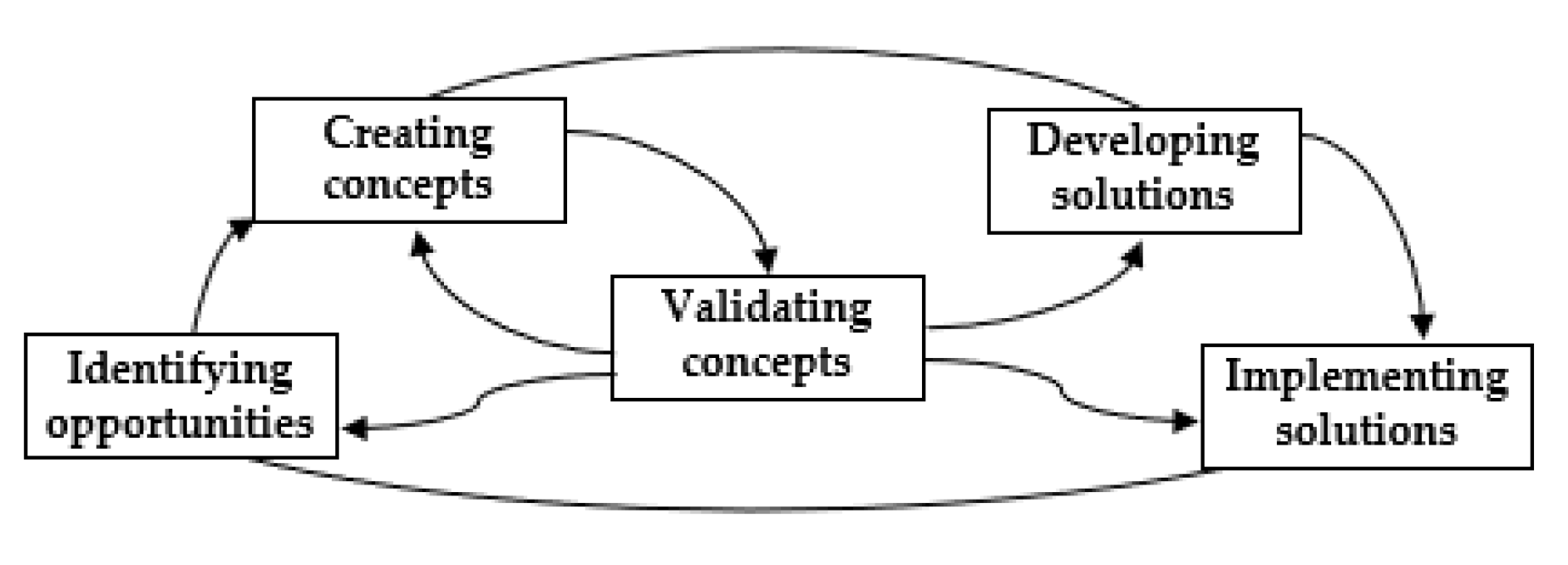
Section 8 of ISO 56002 focuses on the innovation process itself, proposing the following steps: identifying opportunities (8.3.2); creating concepts (8.3.3); validating concepts (8.3.4); developing solutions (8.3.5); and implementing solutions (8.3.6) [24]. It is important to emphasise that, in this standard, the innovation process is conceived in a non-linear manner, as illustrated in Figure 1.
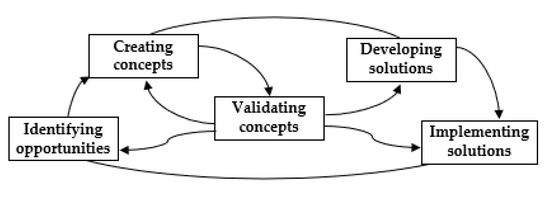
Figure 1.
Innovation processes and their interactions. Source: Elaborated based on ISO 56002 [24].
Finally, based on Sections 9 and 10 of the standard, the performance achieved must be evaluated in order to implement improvements. This process is encouraged to go through an internal audit as well as a leadership critical review [26], and improvement must occur on an ongoing basis for the IMS to be implemented effectively [24].
2.3. Innovation Management and Firm Size in the Brazilian Industrial Context
In the industrial sector of emerging countries such as Brazil, adaptability is regarded as an important characteristic to overcome the various daily problems, and the presence of an innovation management system can greatly contribute to this context [16]. Vrchota and Řehoř [39] state that firms without investments in innovation become much more limited, especially in terms of a qualified workforce. Innovating is, therefore, an essential process for overcoming crises and distinguishing those companies that will survive from those that will go bankrupt [6].
Literature has shown that firm size influences innovation management and the decisions involved in its implementation [19,40,41]. According to the National Confederation of Industry [42], the main representative entity of Brazilian industry, large industries (LI) have an advantage in managing risks because an unsuccessful investment or one with a slow return has less impact. Brazilian LIs are characterised by R&D strategies that are already validated and well-structured, as well as significant capital commitments for this purpose. Overall, they have a large consumer market and a large number of employees, and their operations have a national and even global impact [42].
In the case of medium-sized industries, innovation can lead to reaching new markets and overcoming crises [43], being a decisive factor in launching them into the global market [44]. However, there are several obstacles along the way, notably the company’s need to distinguish itself from so many other companies with similar characteristics. For Brazilian medium-sized enterprises, factors such as economic instability and investment uncertainty in the industry impose barriers to innovation. In addition, the capital allocated for innovation in this type of industry is scarce, increasing the risk and pressure to make the right decisions [42].
With regard to small industries in Brazil, the discussion on innovation is also necessary. While it is clear that management approaches and organisational objectives are different from those adopted by large and medium-sized companies, the reasons for innovating remain the same. Many of the challenges for small Brazilian industries, however, arise even before there is any financial return, necessitating constant re-elaboration of the business plan, redirection of monetary and technological efforts and high resilience on the part of all involved [42].
All types of businesses, companies and industries, regardless of their size, can benefit from well-structured innovation management systems [25,37,38]. Managers, firms and society as a whole may benefit from innovation, particularly in emerging economies, as is the case for Brazil [17,28].
2.4. Fuzzy Set Theory and Its Application in Innovation Management
There are several types of related uncertainties in the context of innovation management. Thus, Fuzzy Set Theories are a powerful tool with which to investigate topics in this field and they are increasingly used by researchers interested in the subject. Table 1 displays studies that used various fuzzy approaches to investigate topics related to innovation management.

Table 1.
Applications of fuzzy approaches to innovation management research.
More specifically, Fuzzy TOPSIS is a widely used research approach that has been used in a wide range of management-related areas, including, for example, business resilience [29], technology [58], environment [59] and team performance [60].
Fuzzy TOPSIS, proposed by Chen [61], is defined as a multi-criteria decision method that, in addition to providing an approximation of the Positive Ideal Solution (PIS) and the greatest possible distance from the Negative Ideal Solution (NIS), incorporates the factor of uncertainty of the numbers obtained, i.e., fuzzy logic [62].
Lima Junior and Carpinetti [63] conducted a study comparative analysis of TOPSIS and Fuzzy TOPSIS. The advantages of Fuzzy TOPSIS, according to these authors, are its appropriateness for investigating qualitative criteria and weights, for modelling quantitative criteria in situations of uncertainty, and the fact that the inclusion or exclusion of alternatives does not cause inversion in the generated ranking. In terms of its disadvantages, Fuzzy TOPSIS presents greater data collection complexity, needs additional judgments to parameterize fuzzy numbers and requires greater computational complexity [63].
Lima Junior et al. [64] conducted a study comparing Fuzzy TOPSIS and Fuzzy AHP. These authors pointed out that Fuzzy TOPSIS produces consistent preference order in terms of adequacy to changes of alternatives. When it comes to decision-making agility, Fuzzy TOPSIS outperforms Fuzzy AHP in most cases, except when there are very few criteria and alternatives. In terms of time complexity, Fuzzy AHP performs better than Fuzzy TOPSIS in most cases. Finally, it is critical to consider the number of criteria and alternatives in the problem under consideration, as Fuzzy TOPSIS has no such limitation, whereas Fuzzy AHP does [64].
3. Methodological Approach
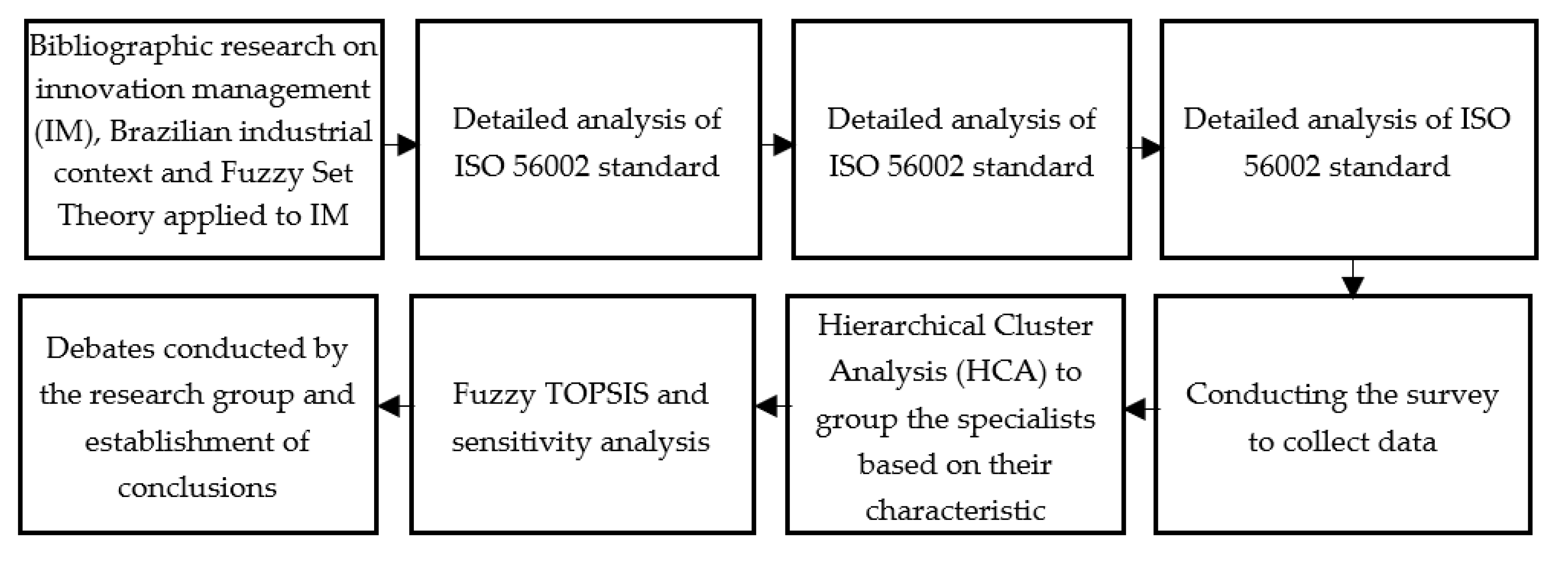
For a better understanding of the research steps, Figure 2 depicts the sequence of activities performed and, subsequently, a more detailed description of them is presented.
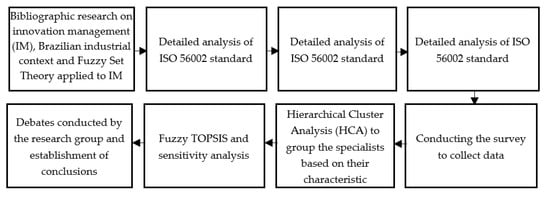
Figure 2.
Research steps and activities. Source: Elaborated by the authors.
3.1. Survey Design and Research Questionnaire Creation
In order to establish a panorama of the adoption of innovation management guidelines by Brazilian firms, a survey was carried out with specialists with extensive knowledge and experience in innovation management activities in Brazilian industries. This research was evaluated and approved by the university’s Research Ethics Committee (CAAE No. 50589321.2.0000.5404). In Brazil, all research involving information provided by human beings, even in terms of opinions, must be approved by a Research Ethics Committee. The CAAE is the protocol number that designates that this research has been approved to be conducted in Brazil. The survey addressed 27 practices related to the innovation management system proposed by ISO 56002 (Table 2).
Table 2.
The innovation management practices considered for analysis.
For each of the practices presented in Table 2, specialists were asked about their adoption considering two types of firms: small and medium-sized industries (SMI) and large industries (LI).
The first part of the questionnaire was dedicated to sampling characterisation, including questions about the specialist’s research area, academic titles and professional and research experience in innovation management.
The second part assessed the level of adoption of ISO 56002 innovation management practices by Brazilian LIs and SMIs. The questions in the research instrument (questionnaire) were the practices from PR1 to PR27. The methodological approach proposed by Bobel et al. [29] was used as follows: For each practice and each category, specialists should evaluate based on a five-point Likert scale: ‘Not applied’ (NA); ‘Applied superficially’ (AS); ‘Applied reasonably’ (AR); ‘Applied properly’ (AP); or ‘Applied in a well-structured way’ (AW). Each practice was analysed considering the type of firm (LI and SMI).
Sampling was done through a non-probabilistic and judgmental procedure, following the recommendations of Apostolopoulos and Liargovas [65], in which the researchers chose the audience based on the research purpose, conceptual and practical knowledge of the specialists that qualifies them to participate in the research, and relevance of the information to be obtained. The invitation to participate in the study was sent to potential participants identified based on the information available in the Brazilian National Council for Scientific and Technological Development Researchers Platform [66], obtaining 26 acceptances.
3.2. Procedures and Methods for Data Analysis
Following the completion of data collection, data analysis was carried out using HCA, Fuzzy TOPSIS and frequency and sensitivity analysis.
The HCA allowed defining how the data are grouped according to the characteristics of the specialists, resulting in a hierarchy that can be represented by a dendrogram [67]. In this study, the HCA was applied to understand specialists’ similarities and group them according to their academic titles and professional experience in the innovation management field. These aspects were chosen for analysis because the researchers considered they were the most relevant to the purpose of allocating the specialists in levels of ability to express opinions about the topics under investigation. The HCA produced seven groups of specialists (see Section 4.1 for a detailed explanation).
The percentage indicated by specialists for each of the 27 innovation management practices evaluated according to the type of firms (i.e., SMI and LI) was analyzed using frequency analysis. Fuzzy TOPSIS was employed to order the practices in Table 2 based on their level of application in Brazilian LIs and SMIs.
Following the methodological procedures proposed by Chen [61], the innovation management practices represented the alternatives () and the specialists the criteria ( with weights () based on their level of expertise (groups defined by the HCA). The matrix composed of the fuzzy numbers and the vector , which represents the fuzzy weights of the specialists, are presented below.
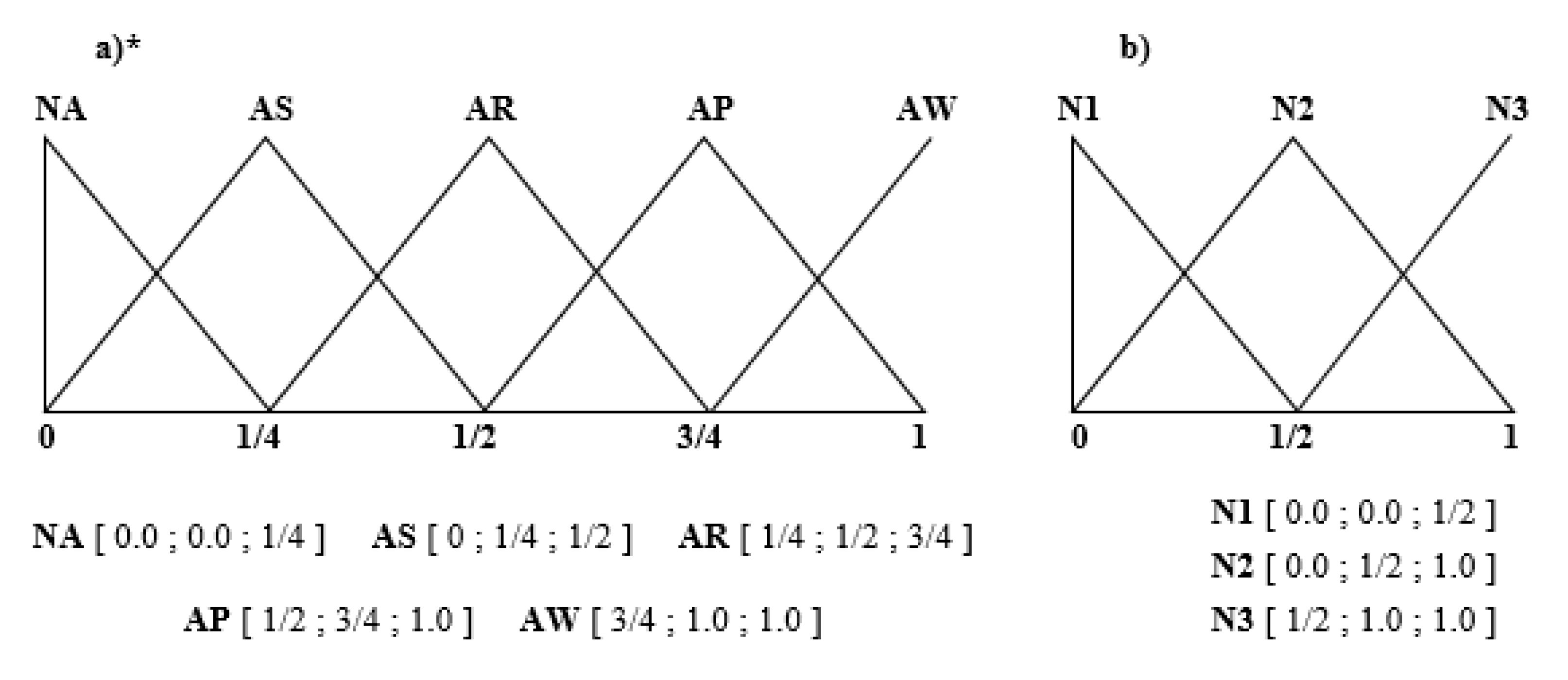
Figure 3 depicts the fuzzy version of the scales used (Figure 3a) and the levels for allocating specialists based on their educational level, experience and knowledge of innovation management (Figure 3b).
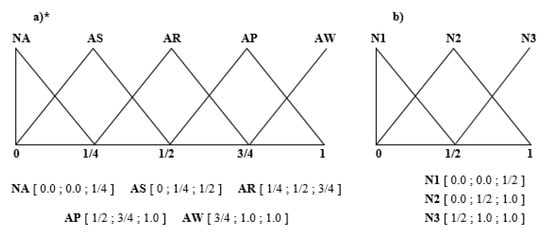
Figure 3.
Fuzzyfication of the evaluation scale of practices and levels for allocation of specialists. (a) depicts the fuzzy version of the scales used and (b) shows the levels for allocating specialists based on their educational level, experience and knowledge of innovation management. * Note: The scales used were based on Bobel et al. [29] as follows: Not applied (NA); Applied superficially (AS); Applied reasonably (AR); Applied properly (AP); Applied in a well-structured way (AW).
Following Chen’s [61] recommendations, the matrix was normalised based on the highest value, obtaining the matrix , which was then weighted by the vector , generating the matrix . The equations used in the calculation are shown in the sequence.
The next step was to calculate the distances between each element of the matrix and the PIS (unit vector) and NIS (null vector).
The sum of distances—positive () and negative ()—related to each alternative was calculated using the partial distances, allowing the structuring of the ranking of the alternatives based on the proximity coefficient ().
In the last step, a sensitivity analysis was performed to determine the impact of removing each group of specialists in the final comparative ranking of innovation management practices generated by Fuzzy TOPSIS. Seven scenarios for the sensitivity analysis were considered, each with a different group of specialists defined by the HCA removed: scenario 1 (remove Group 1 and keep the others); scenario 2 (remove Group 2 and keep the others); scenario 3 (remove Group 3 and keep the others); scenario 4 (remove Group 4 and keep the others); scenario 5 (remove Group 5 and keep the others); scenario 6 (remove Group 6 and keep the others); and scenario 7 (remove Group 7 and keep the others).
4. Results
4.1. Hierarchical Cluster Analysis
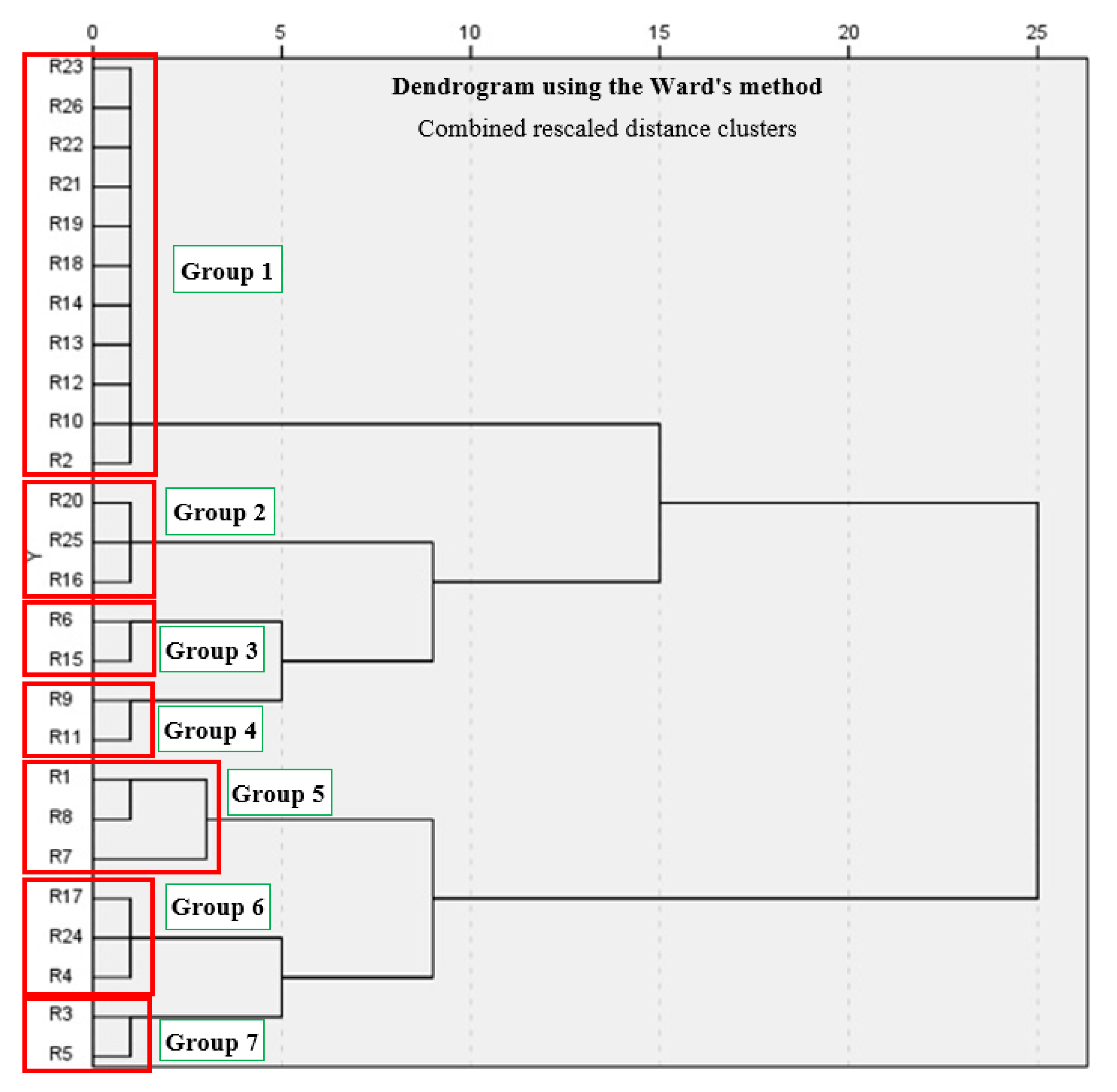
The specialists’ characteristics were assessed based on time working with innovation (years), research projects in the field of innovation management and experience in educating and developing innovation management professionals. The application of HCA resulted in the classification of the 26 specialists into seven groups, as shown in Figure 4.
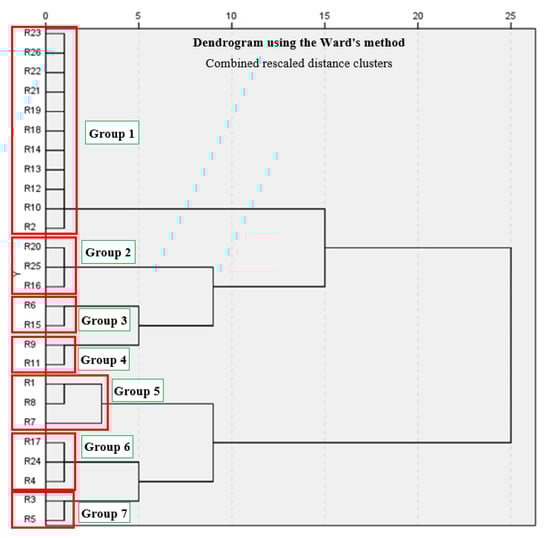
Figure 4.
Dendrogram from the Hierarchical Cluster Analysis.
The groups of specialists were then assigned in ascending order in levels 1 (Group 5), 2 (Groups 2, 3 and 7) and 3 (Groups 1, 4 and 6) (Table 3).
Table 3.
Classification of specialists based on their similarities.
Based on the characteristics of the specialists, N1, N2 and N3 correspond, respectively, to groups of those with lower, intermediate and high educational levels, experience and knowledge. It should be highlighted that the sample is composed of 84.6% of participants with a PhD, with an average of 17.7 years of experience in teaching and research in the area of innovation management. Moreover, it is important to note that this grouping used the fuzzy numbers technique, as explained in Section 3.2, which allowed for the incorporation of uncertainty in the allocation of specialists to levels through weighting.
4.2. Frequency Analysis of the Specialists’ Responses
For each of the 27 practices evaluated (see Table 2), the frequency of responses was calculated and the analysis was performed considering the types of firms (LI and SMI) and the groups of specialists (N1, N2, N3).
4.2.1. Adoption of Innovation Management Practices in Large Industries (LI)
The results for LIs are examined in this section. Following an analysis of the responses provided by the specialists considering the levels determined through the HCA (N1, N2 and N3), the unified global frequencies for LIs are analyzed.
Considering Brazilian LIs, none of the N1 specialists chose the response ‘Not applied’ (NA) for any of the 27 practices. In general, the most common responses in this group were distributed between the alternatives ‘Applied reasonably’ (AR) and ‘Applied properly’ (AP). Concerning PR3 (firms clearly define the scope of innovation management, that is, the limits and applicability of their processes, as well as functions, collaboration interest and willingness to face uncertainty), there was unanimous agreement in N1 on the alternative ‘Applied properly’ (AP). For N2, the option ‘Not applied’ (NA) was also not selected for any of the 27 practices. The option ‘Applied in a well-structured way’ (AW) was selected for fewer practices in N2 compared to N1. In terms of overall response distribution, N2 demonstrated greater homogeneity amongst the three intermediate options of the scale, namely AS, AR and AP, with emphasis on the latter two. N3 was the only group to provide answers that covered all five levels of practice application, focusing on intermediate alternatives (AS, AR and AP).
These findings show that, despite the perceived differences between N1, N2 and N3, specialists believe that Brazilian LIs have well-structured and consolidated innovation management practices. Based on the global frequency analysis, the LIs in Brazil present practices that are consistent with the literature on organisations with high revenue streams and high innovation performance.
Table 4 shows the global frequency of the evaluation of practices for LIs.
Table 4.
Level of adoption of innovation management practices in LIs.
4.2.2. Adoption of Innovation Management Practices in Small and Medium-Sized Industries (SMI)
The results for SMIs are examined in this section. Following an analysis of the responses provided by the specialists considering the levels determined through the HCA (N1, N2 and N3), the unified global frequencies for SMIs are analyzed.
In the scenario of SMIs in Brazil, the N1 specialists did not mark the options ‘Applied reasonably’ (AR) and ‘Applied properly’ (AP) for any of the 27 practices, while ‘Not applied’ (NA) was selected only for PR16 (firms manage their innovation portfolios properly, that is, they check how each initiative contributes to the achievement of the strategic objectives on a regular basis, analyse synergies between initiatives and communicate the progress of initiatives to stakeholders) by only one specialist. Thus, for N1, there is a significant concentration on the alternatives ‘Applied superficially’ (AS) and ‘Applied reasonably’ (AR), with complete agreement for several practices, which was not observed for the LIs. In the case of N2, there was also a clear concentration on the AS and AR, with only the alternative ‘Applied in a well-structured way’ (AW) not being chosen for any of the evaluated practices, a fact that also occurred for N3. These findings are consistent with those obtained for N1.
In general, the frequency analysis reveals a trend in which specialists at all levels (N1, N2 and N3) believe that there is no well-implemented innovation management practice in Brazilian SMIs. In addition, it is worth noting that the alternative ‘Applied properly’ (AP) was only chosen for a few practices and by a few specialists, causing the highest frequencies observed to be in the initial levels of application (NA, AS and AR).
Table 5 shows the global frequency of the evaluation of practices for SMIs.
Table 5.
Level of adoption of innovation management practices in SMIs.
4.3. Ranking of Adoption of Innovation Management Practices via Fuzzy TOPSIS
Based on Chen’s [61] approach to Fuzzy TOPSIS (see Section 3.2 for a step-by-step description), a ranking was obtained ordering the practices according to their level of adoption in LIs and SMIs.
4.3.1. Ordering Practices for Large Industries (LI)
Table 6 displays the outcomes of the innovation management practices ordering and the sensitivity analysis for LIs.
Table 6.
Ordering of practices via Fuzzy TOPSIS and sensitivity analysis for LIs.
The first place in the scenario of Brazilian LIs—i.e., the practice with the highest level of adoption—was PR1 (Firms frequently analyse internal and external issues that may compromise results related to innovation management), while the last place was PR27 (firms conduct periodic audits of their innovation management processes in order to identify opportunities for improvement; they seek to document the entire cycle so that such data can support decision-making and/or be used as lessons learned).
The group that had the most influence was G1, showing that the assignment of different weights to the three levels was done properly, as N3 (which encompasses G1, G4 and G6) should always be the one with the greatest impact.
4.3.2. Ordering Practices for Small and Medium-Sized Industries (SMI)
Table 7 shows the results of the innovation management practices ordering and the sensitivity analysis for SMIs.
Table 7.
Ordering of practices via Fuzzy TOPSIS and sensitivity analysis for SMIs.
In the scenario of SMIs in Brazil, it was observed that PR10 (firms have a system to correctly assess the need for collaboration to innovate—including innovation in terms of knowledge, competence, infrastructure and resources—and, if relevant, adopt guidelines to improve the selection process of partners) is the most well-established, while PR27 remained the least applied. Although PR10 was in first place in most of the tested scenarios and in the overall ranking, the sensitivity analysis revealed a fluctuation in the first position in the following cases: PR20 (firms continually review their innovation initiatives in terms of adequacy of scope and expected results) when G1 is excluded; PR6 (firms top management constantly supports and commits to activities in favour of innovation, as well as providing the necessary resources so that initiatives can take place and the desired results can be achieved) when G3 is excluded; and PR12 (firms assess existing deficiencies in terms of organisational competencies for innovation (individual or team competencies) and offer training programs to employees in order to achieve better performance in initiatives) when G7 is excluded.
The G6 was the most influential group, also belonging to the N3, which is methodologically consistent as it corresponds to specialists with the highest educational level, experience and knowledge in the area of innovation management.
5. Discussion
In general, SMIs in the Brazilian context have more severe deficiencies in terms of applying innovation management practices than LIs. SMIs did not have any of the 27 practices evaluated at the highest level of application, indicating that there is still much work to be done. Regardless of the fact that a number of barriers to SMIs’ innovation have been documented in the literature [16,42], it is critical that managers and policymakers pay attention to this issue, since innovation capacity can be a determining factor not only for SMIs’ growth [3,43,44], but also for their survival [6,21].
Although the results indicated that there is room for improvement in terms of innovation management in LIs, it is clear that the consolidation of practices is already much more evident when compared to SMIs. In the context of LIs, the corporate structure, materials, technologies and people are superior and can be adapted to market demands, the firm’s objectives and unexpected changes in a VUCA world [30,35,36]. This flexibility and reliability present in LIs, together with the willingness to take risks, are vital for the consolidation and effectiveness of an innovation management system [21].
When considering the ordering of practices based on their level of application, the results obtained spark important discussions. Although PR1 ranked first in all tested scenarios for Brazilian LIs, it is worth noting that three practices (PR3, PR15 and PR20) related to planning, scope definition and supervision of innovation management rank immediately after. Such practices express, respectively, the need to: identify the limits and applicability of innovation management; define plans for the innovation management process; and review the innovation initiatives put in place. These three practices are considered essential for the proper operation of the innovation management cycle, and it is significant that the results of this research are consistent with the qualified literature [26,28]. Furthermore, precisely because it is characterised as a cycle, it is necessary to consider the importance of feedback for the innovation management process, and it is concerning that PR27—related to the audit to identify opportunities for change and improvement—has received the lowest ratings, a result observed for both LIs and SMIs.
6. Conclusions
Based on the structure of the ISO 56002 standard and the opinions of specialists in the field, the goal of this study was to examine the level of adoption of innovation management practices in the Brazilian industrial sector. PR1 was regarded as having the highest application rate for LIs. In turn, PR10 was evaluated as the most adopted by SMIs. PR27 received the lowest rating from both LIs and SMIs. Taking into account all scenarios tested through sensitivity analysis, PR27 ranked last in 13 of the 16 cases.
Despite ISO 56002 being recently published and companies still working to comply with its guidelines, the recommended innovation management practices have seen some adherence in the reality of Brazilian LIs, while SMIs continue to be in more deficient circumstances. For Brazilian managers seeking to establish a structured innovation management system and/or consolidate current practices in their companies, the study’s findings may be helpful. Since innovation is a crucial component of the economic growth of countries, particularly in emerging economies like Brazil, it is also important to emphasize the systemic impact that improvements in a firm’s innovative capacity can have.
Although exploratory in nature, the findings of this study contribute to a better understanding of the reality of Brazilian industries in terms of innovation management and correlated practices, allowing for the expansion of the scientific literature in the field. The methodological approach developed in this study (i.e., survey, Fuzzy TOPSIS, HCA, frequency and sensitivity analysis) can be applied in other contexts to understand how industries are leading with innovation management systems. Thus, the research instruments and methods can be useful to advance a scholar and practitioner’s knowledge on innovation management by conducting studies or actions that compare their reality (including both developing and developed countries) with the findings of this study. The results and discussions presented in this paper can also be used to inform future studies aimed at better understanding specific practices related to the topic.
The limitations of the study are related to the specific context studied and the methods used. Regarding the method, it should be noted that triangular functions were used in the application of the Fuzzy TOPSIS method to determine both the scale of variables and the level of experience of the specialists (other types of functions could have been used), and that the weight vector was defined in three categories (N1, N2 and N3). It should be noted, however, that this study was designed with an exploratory purpose in mind, with the goal of better understanding the Brazilian industrial reality in terms of innovation management.
It is suggested that future research delve deeper into the innovation management practices in the Brazilian context, employing qualitative methods and expanding the sample of specialists. An interesting possibility is to use the Delphi method to refine debates on specific practices. Another suggestion is to compare the results using other multi-criteria decision-making approaches, providing more information for discussion.
Finally, it is worth noting that the ISO 56002 standard serves as an important reference for firms looking to implement practices related to innovation management, and researchers can be excellent partners in this regard.
Author Contributions
Conceptualization, G.G.P. and R.A.; methodology, G.G.P. and R.A.; validation, G.G.P. and R.A.; formal analysis, G.G.P., T.F.A.C.S. and R.A.; investigation, G.G.P. and R.A.; resources, T.F.A.C.S., I.S.R., G.H.S.M.d.M., L.V.Á., W.L.F. and R.A.; writing—original draft preparation, G.G.P., T.F.A.C.S. and R.A.; writing—review and editing, T.F.A.C.S., I.S.R., G.H.S.M.d.M., L.V.Á., W.L.F. and R.A.; supervision, R.A.; project administration, R.A. All authors have read and agreed to the published version of the manuscript.
Funding
The authors are grateful for the support of the National Council for Scientific and Technological Development (CNPq/Brazil) under the grants No. 304145/2021-1, No. 303924/2021-7 and No. 150662/2022-0.
Data Availability Statement
Not applicable.
Conflicts of Interest
The authors declare no conflict of interest. The funders had no role in the design of the study; in the collection, analyses, or interpretation of data; in the writing of the manuscript; or in the decision to publish the results.
References
- Gyedu, S.; Heng, T.; Ntarmah, A.H.; He, Y.; Frimppong, E. The Impact of Innovation on Economic Growth among G7 and BRICS Countries: A GMM Style Panel Vector Autoregressive Approach. Technol. Forecast. Soc. Chang. 2021, 173, 121169. [Google Scholar] [CrossRef]
- Skare, M.; Porada-Rochon, M. The Role of Innovation in Sustainable Growth: A Dynamic Panel Study on Micro and Macro Levels 1990–2019. Technol. Forecast. Soc. Chang. 2022, 175, 121337. [Google Scholar] [CrossRef]
- Oltra, M.J.; Flor, M.L.; Alfaro, J.A. Open Innovation and Firm Performance: The Role of Organizational Mechanisms. Bus. Process Manag. J. 2018, 24, 814–836. [Google Scholar] [CrossRef]
- Riad Shams, S.M.; Vrontis, D.; Chaudhuri, R.; Chavan, G.; Czinkota, M.R. Stakeholder Engagement for Innovation Management and Entrepreneurial Development: A Meta-Analysis. J. Bus. Res. 2020, 119, 67–86. [Google Scholar] [CrossRef] [PubMed]
- Nguyen, H.; Harrison, N. Leveraging Customer Knowledge to Enhance Process Innovation. Bus. Process Manag. J. 2019, 25, 307–322. [Google Scholar] [CrossRef]
- Khan, P.A.; Johl, S.K.; Johl, S.K. Does Adoption of ISO 56002-2019 and Green Innovation Reporting Enhance the Firm Sustainable Development Goal Performance? An Emerging Paradigm. Bus. Strateg. Environ. 2021, 30, 2922–2936. [Google Scholar] [CrossRef]
- Martínez-Costa, M.; Jimenez-Jimenez, D.; del Castro-del-Rosario, Y.P. The Performance Implications of the UNE 166.000 Standardised Innovation Management System. Eur. J. Innov. Manag. 2019, 22, 281–301. [Google Scholar] [CrossRef]
- Trabucchi, D.; Sanasi, S.; Ghezzi, A.; Buganza, T. Idle Asset Hunters—The Secret of Multi-Sided Platforms. Res. Manag. 2021, 64, 33–42. [Google Scholar] [CrossRef]
- Hwang, W.-S.; Choi, H.; Shin, J. A Mediating Role of Innovation Capability between Entrepreneurial Competencies and Competitive Advantage. Technol. Anal. Strateg. Manag. 2020, 32, 1–14. [Google Scholar] [CrossRef]
- Veiga, P.M.; Teixeira, S.J.; Figueiredo, R.; Fernandes, C.I. Entrepreneurship, Innovation and Competitiveness: A Public Institution Love Triangle. Socioecon. Plann. Sci. 2020, 72, 100863. [Google Scholar] [CrossRef]
- Santoro, G.; Vrontis, D.; Thrassou, A.; Dezi, L. The Internet of Things: Building a Knowledge Management System for Open Innovation and Knowledge Management Capacity. Technol. Forecast. Soc. Chang. 2018, 136, 347–354. [Google Scholar] [CrossRef]
- Nwankpa, J.K.; Roumani, Y.; Datta, P. Process Innovation in the Digital Age of Business: The Role of Digital Business Intensity and Knowledge Management. J. Knowl. Manag. 2022, 26, 1319–1341. [Google Scholar] [CrossRef]
- Ahmed, W.; Najmi, A.; Ikram, M. Steering Firm Performance through Innovative Capabilities: A Contingency Approach to Innovation Management. Technol. Soc. 2020, 63, 101385. [Google Scholar] [CrossRef]
- Vujanović, N.; Radošević, S.; Stojčić, N.; Hisarciklilar, M.; Hashi, I. FDI Spillover Effects on Innovation Activities of Knowledge Using and Knowledge Creating Firms: Evidence from an Emerging Economy. Technovation 2022, 118, 102512. [Google Scholar] [CrossRef]
- Ma, D.; Zhu, Q. Innovation in Emerging Economies: Research on the Digital Economy Driving High-Quality Green Development. J. Bus. Res. 2022, 145, 801–813. [Google Scholar] [CrossRef]
- Matos, L.M.; Rampasso, I.S.; Quelhas, O.L.G.; Leal Filho, W.; Anholon, R. Technological Innovation Management: Understanding Difficulties in an Emerging Country to Enhance Manufacturers Performance. Int. J. Product. Perform. Manag. 2021; ahead-of-print. [Google Scholar] [CrossRef]
- De Araujo, T.R.; Jugend, D.; Pimenta, M.L.; Jesus, G.M.K.; Barriga, G.D.D.C.; de Toledo, J.C.; Mariano, A.M. Influence of New Product Development Best Practices on Performance: An Analysis in Innovative Brazilian Companies. J. Bus. Ind. Mark. 2022, 37, 266–281. [Google Scholar] [CrossRef]
- Martinez, C.; Zuniga, P. Contracting for Technology Transfer: Patent Licensing and Know-How in Brazil. Ind. Innov. 2017, 24, 659–689. [Google Scholar] [CrossRef]
- Silva, D.R.d.M.; Lucas, L.O.; Vonortas, N.S. Internal Barriers to Innovation and University-Industry Cooperation among Technology-Based SMEs in Brazil. Ind. Innov. 2020, 27, 235–263. [Google Scholar] [CrossRef]
- Meissner, D.; Kergroach, S. Innovation Policy Mix: Mapping and Measurement. J. Technol. Transf. 2021, 46, 197–222. [Google Scholar] [CrossRef]
- Benraouane, S.; Harrington, H.J. Using the ISO 56002 Innovation Management System; Productivity Press: New York, NY, USA, 2021; ISBN 9781000373318. [Google Scholar]
- Albors-Garrigos, J.; Igartua, J.I.; Peiro, A. Innovation Management Techniques and Tools: Its Impact on Firm Innovation Performance. Int. J. Innov. Manag. 2018, 22, 1850051. [Google Scholar] [CrossRef]
- Niroumand, M.; Shahin, A.; Naghsh, A.; Peikari, H.R. Frugal Innovation Enablers, Critical Success Factors and Barriers: A Systematic Review. Creat. Innov. Manag. 2021, 30, 348–367. [Google Scholar] [CrossRef]
- ISO 56002; Innovation Management—Innovation Management System—Guidance. International Organization for Standardization: Genève, Switzerland, 2020.
- Tidd, J. A Review and Critical Assessment of the ISO 56002 Innovation Management Systems Standard: Evidence and Limitations. Int. J. Innov. Manag. 2021, 25, 2150049. [Google Scholar] [CrossRef]
- Hyland, J.; Karlsson, M. Towards a Management System Standard for Innovation. J. Innov. Manag. 2021, 9, XI–XIX. [Google Scholar] [CrossRef]
- Mir, R.A.; Rameez, R.; Tahir, N. Measuring Internet Banking Service Quality: An Empirical Evidence. TQM J. 2022, 32, 492–518. [Google Scholar] [CrossRef]
- Anholon, R.; Serafim, M.P.; Dibbern, T.; Leal, W. The Importance of ISO Management System Standards in a Scenario of Profound Changes Caused by the COVID-19 Pandemic to Brazilian Companies. Braz. J. Oper. Prod. Manag. 2022, 19, e20221248. [Google Scholar] [CrossRef]
- Bobel, V.A.d.O.; Sigahi, T.F.A.C.; Rampasso, I.S.; de Moraes, G.H.S.M.; Ávila, L.V.; Leal Filho, W.; Anholon, R. Analysis of the Level of Adoption of Business Continuity Practices by Brazilian Industries: An Exploratory Study Using Fuzzy TOPSIS. Mathematics 2022, 10, 4041. [Google Scholar] [CrossRef]
- Abdulkader, B.; Magni, D.; Cillo, V.; Papa, A.; Micera, R. Aligning Firm’s Value System and Open Innovation: A New Framework of Business Process Management beyond the Business Model Innovation. Bus. Process Manag. J. 2020, 26, 999–1020. [Google Scholar] [CrossRef]
- Kraśnicka, T.; Głód, W.; Wronka-Pośpiech, M. Management Innovation and Its Measurement. J. Entrep. Manag. Innov. 2016, 12, 95–122. [Google Scholar] [CrossRef]
- Rajapathirana, R.P.J.; Hui, Y. Relationship between Innovation Capability, Innovation Type, and Firm Performance. J. Innov. Knowl. 2018, 3, 44–55. [Google Scholar] [CrossRef]
- Milan, E.; Ulrich, F.; Faria, L.G.D.; Li-Ying, J. Exploring the Impact of Organisational, Technological and Relational Contingencies on Innovation Speed in the Light of Open Innovation. Ind. Innov. 2020, 27, 804–836. [Google Scholar] [CrossRef]
- Millar, C.C.J.M.; Groth, O.; Mahon, J.F. Management Innovation in a VUCA World: Challenges and Recommendations. Calif. Manage. Rev. 2018, 61, 5–14. [Google Scholar] [CrossRef]
- Taskan, B.; Junça-Silva, A.; Caetano, A. Clarifying the Conceptual Map of VUCA: A Systematic Review. Int. J. Organ. Anal. 2022; ahead-of-print. [Google Scholar] [CrossRef]
- Allahar, H. A Management Innovation Approach to Project Planning. Technol. Innov. Manag. Rev. 2019, 9, 4–13. [Google Scholar] [CrossRef]
- Mir, M.; Casadesús, M.; Petnji, L.H. The Impact of Standardized Innovation Management Systems on Innovation Capability and Business Performance: An Empirical Study. J. Eng. Technol. Manag. 2016, 41, 26–44. [Google Scholar] [CrossRef]
- Idris, M.-C.; Durmuşoğlu, A. Innovation Management Systems and Standards: A Systematic Literature Review and Guidance for Future Research. Sustainability 2021, 13, 8151. [Google Scholar] [CrossRef]
- Vrchota, J.; Řehoř, P. Project Management and Innovation in the Manufacturing Industry in Czech Republic. Procedia Comput. Sci. 2019, 164, 457–462. [Google Scholar] [CrossRef]
- Leal-Rodríguez, A.L.; Eldridge, S.; Roldán, J.L.; Leal-Millán, A.G.; Ortega-Gutiérrez, J. Organizational Unlearning, Innovation Outcomes, and Performance: The Moderating Effect of Firm Size. J. Bus. Res. 2015, 68, 803–809. [Google Scholar] [CrossRef]
- Forés, B.; Camisón, C. Does Incremental and Radical Innovation Performance Depend on Different Types of Knowledge Accumulation Capabilities and Organizational Size? J. Bus. Res. 2016, 69, 831–848. [Google Scholar] [CrossRef]
- NCI. To Innovate Is to Develop the Industry of the Future; CNI/SESI/ SENAI/SEBRAE: Brasília, Brazil, 2019. [Google Scholar]
- Limaj, E.; Bernroider, E.W.N. The Roles of Absorptive Capacity and Cultural Balance for Exploratory and Exploitative Innovation in SMEs. J. Bus. Res. 2019, 94, 137–153. [Google Scholar] [CrossRef]
- Falahat, M.; Ramayah, T.; Soto-Acosta, P.; Lee, Y.-Y. SMEs Internationalization: The Role of Product Innovation, Market Intelligence, Pricing and Marketing Communication Capabilities as Drivers of SMEs’ International Performance. Technol. Forecast. Soc. Chang. 2020, 152, 119908. [Google Scholar] [CrossRef]
- Alfaro-García, V.G.; Gil-Lafuente, A.M.; Alfaro Calderón, G.G. A Fuzzy Methodology for Innovation Management Measurement. Kybernetes 2017, 46, 50–66. [Google Scholar] [CrossRef]
- Ju, F.; Yuan, Y.; Yuan, Y.; Quan, W. A Divergence-Based Distance Measure for Intuitionistic Fuzzy Sets and Its Application in the Decision-Making of Innovation Management. IEEE Access 2020, 8, 1105–1117. [Google Scholar] [CrossRef]
- Yue, Q. Bilateral Matching Decision-Making for Knowledge Innovation Management Considering Matching Willingness in an Interval Intuitionistic Fuzzy Set Environment. J. Innov. Knowl. 2022, 7, 100209. [Google Scholar] [CrossRef]
- Hessami, F. Formulation and Explanation of a Success Model in Innovation Management and Its Diffusion at Sports Federations. Manag. Sci. Lett. 2018, 8, 69–78. [Google Scholar] [CrossRef]
- Dinesh, K.K. Sushil Fuzzy Predictive Modeling for the Hierarchical Structure of Strategic Innovation Management. IEEE Trans. Eng. Manag. 2023; early access. [Google Scholar] [CrossRef]
- Yang, T.A.O.; Bao, J.; Fu, Q.; Yang, B.O.; Chen, W.E.I. Risk Sharing Strategy for Collaborative Innovation Management of Environmental Protection Equipment Manufacturing Enterprises. J. Environ. Prot. Ecol. 2022, 23, 1928–1937. [Google Scholar]
- Yin, S.; Dong, T.; Li, B.; Gao, S. Developing a Conceptual Partner Selection Framework: Digital Green Innovation Management of Prefabricated Construction Enterprises for Sustainable Urban Development. Buildings 2022, 12, 721. [Google Scholar] [CrossRef]
- Poorkavoos, M.; Duan, Y.; Edwards, J.S.; Ramanathan, R. Identifying the Configurational Paths to Innovation in SMEs: A Fuzzy-Set Qualitative Comparative Analysis. J. Bus. Res. 2016, 69, 5843–5854. [Google Scholar] [CrossRef]
- Kumar, A.; Kaviani, M.A.; Hafezalkotob, A.; Zavadskas, E.K. Evaluating Innovation Capabilities of Real Estate Firms: A Combined Fuzzy Delphi and DEMATEL Approach. Int. J. Strateg. Prop. Manag. 2017, 21, 401–416. [Google Scholar] [CrossRef]
- Li, J.; Wang, Y. Coupling Effect of Regional Industrial Cluster and Innovation Based on Complex System Metric and Fuzzy Mathematics. J. Intell. Fuzzy Syst. 2019, 37, 6115–6126. [Google Scholar] [CrossRef]
- García, J.S.; Velásquez, J.R. Methodology for Evaluating Innovation Capabilities at University Institutions Using a Fuzzy System. J. Technol. Manag. Innov. 2013, 8, 101–102. [Google Scholar] [CrossRef]
- Jing, S.; Yang, Y.; Ho, Z.-P.; Yan, J.; Huang, H.-T. The Development of a Frame Model for Management Strategies Selection Using Fuzzy Proximity. Cluster Comput. 2017, 20, 141–153. [Google Scholar] [CrossRef]
- Velazquez-Cazares, M.G.; Gil-Lafuente, A.M.; Leon-Castro, E.; Blanco-Mesa, F. Innovation Capabilities Measurement Using Fuzzy Methodologies: A Colombian SMEs Case. Comput. Math. Organ. Theory 2021, 27, 384–413. [Google Scholar] [CrossRef]
- Abdul, D.; Wenqi, J. Evaluating Appropriate Communication Technology for Smart Grid by Using a Comprehensive Decision-Making Approach Fuzzy TOPSIS. Soft Comput. 2022, 26, 8521–8536. [Google Scholar] [CrossRef]
- Chen, D.; Faibil, D.; Agyemang, M. Evaluating Critical Barriers and Pathways to Implementation of E-Waste Formalization Management Systems in Ghana: A Hybrid BWM and Fuzzy TOPSIS Approach. Environ. Sci. Pollut. Res. 2020, 27, 44561–44584. [Google Scholar] [CrossRef]
- Wen, T.-C.; Chang, K.-H.; Lai, H.-H.; Liu, Y.-Y.; Wang, J.-C. A Novel Rugby Team Player Selection Method Integrating the TOPSIS and IPA Methods. Int. J. Sport Psychol. 2021, 52, 137–158. [Google Scholar] [CrossRef]
- Chen, C.-T. Extension of Fuzzy TOPSIS Method Based on Interval-Valued Fuzzy Sets”. Appl. Soft Comput. J. 2000, 26, 513–514. [Google Scholar] [CrossRef]
- Nădăban, S.; Dzitac, S.; Dzitac, I. Fuzzy TOPSIS: A General View. Procedia Comput. Sci. 2016, 91, 823–831. [Google Scholar] [CrossRef]
- Lima Junior, F.R.; Carpinetti, L.C.R. A Comparison between TOPSIS and Fuzzy-TOPSIS Methods to Support Multicriteria Decision Making for Supplier Selection. Gestão Produção 2015, 22, 17–34. [Google Scholar] [CrossRef]
- Lima Junior, F.R.; Osiro, L.; Carpinetti, L.C.R. A Comparison between Fuzzy AHP and Fuzzy TOPSIS Methods to Supplier Selection. Appl. Soft Comput. 2014, 21, 194–209. [Google Scholar] [CrossRef]
- Apostolopoulos, N.; Liargovas, P. Regional Parameters and Solar Energy Enterprises. Int. J. Energy Sect. Manag. 2016, 10, 19–37. [Google Scholar] [CrossRef]
- National Council for Scientific and Technological Development Lattes Platform 2022. Available online: https://lattes.cnpq.br (accessed on 1 February 2023).
- Subramaniyan, M.; Skoogh, A.; Muhammad, A.S.; Bokrantz, J.; Johansson, B.; Roser, C. A Generic Hierarchical Clustering Approach for Detecting Bottlenecks in Manufacturing. J. Manuf. Syst. 2020, 55, 143–158. [Google Scholar] [CrossRef]
Disclaimer/Publisher’s Note: The statements, opinions and data contained in all publications are solely those of the individual author(s) and contributor(s) and not of MDPI and/or the editor(s). MDPI and/or the editor(s) disclaim responsibility for any injury to people or property resulting from any ideas, methods, instructions or products referred to in the content. |
© 2023 by the authors. Licensee MDPI, Basel, Switzerland. This article is an open access article distributed under the terms and conditions of the Creative Commons Attribution (CC BY) license (https://creativecommons.org/licenses/by/4.0/).