


Abstract
Present study analyses the influence of flow characteristics of special water-oil two-phase microfluidic systems regarding the droplet generation, cell encapsulation and trapping processes. Water droplets were dispersed in oil continuous phase with the requirement of precise size distribution to enable effective cell entrapment. The evolving droplet size and the number of encapsulated cells were examined considering the applied flow rate ratios of the two phases. The hydrodynamic behaviour of the microfluidic system was modelled by Finite Element Method (FEM) coupled with particle trajectory calculation applying COMSOL Multiphysics code. The experimental results were compared to the simulation and the applicability of our droplet based cell encapsulating and trapping microfluidic system was characterised.
1. Introduction
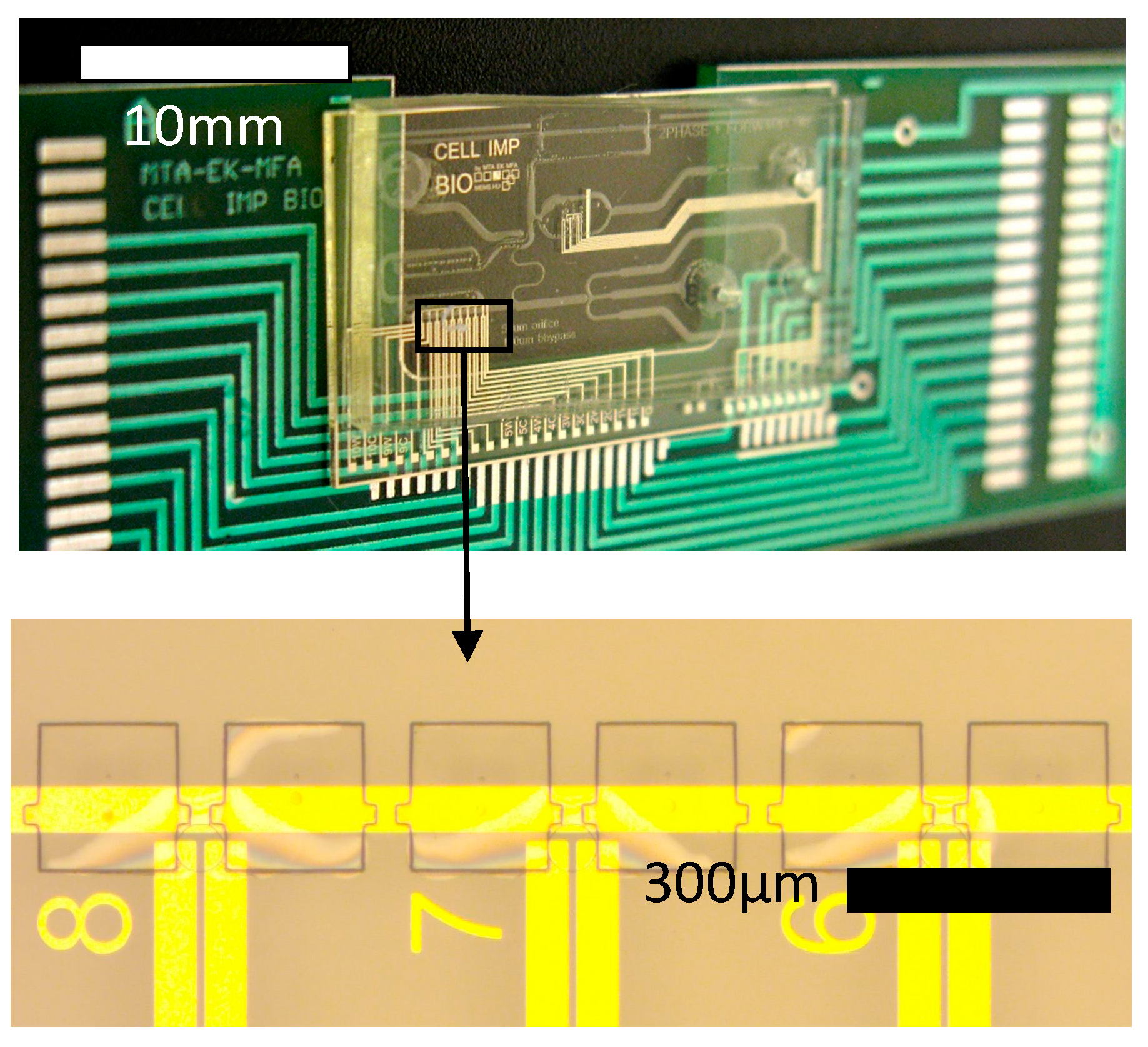
Multi-phase flows have numerous applications in the developing field of Lab-on-a-Chip (LOC) technology. In these multi-phase flow devices, monodisperse sheath emulsion helps to manipulate, focus and separate encapsulated chemical reagents or biosample containing living cells [1]. Therefore cell-analytical and diagnostic procedures can be automatized on microscale, although the precise control of droplet parameters and movements are essential for their reliable application. Present work focuses on the design and characterisation of a two-phase microfluidic device integrated with electrode system (Figure 1) for impedance analysis that is capable of creating and manipulating droplets having predetermined size aligned to the cell diameter being in the range of 4–20 µm.
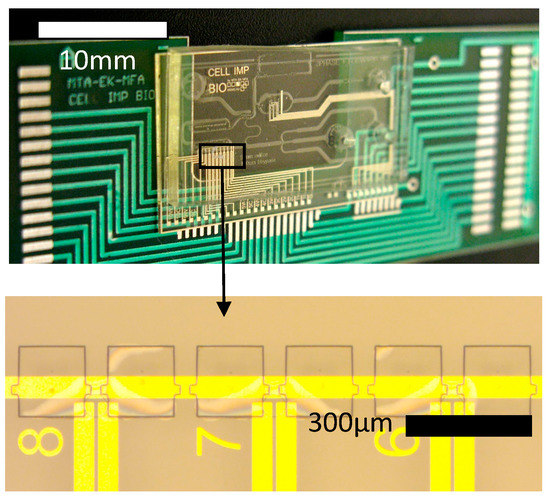
Figure 1.
Hybrid polymer microfluidic device (top) with integrated gold electrode system (bottom) for droplet generation, cell encapsulation, trapping and impedance analysis.
2. Materials and Methods
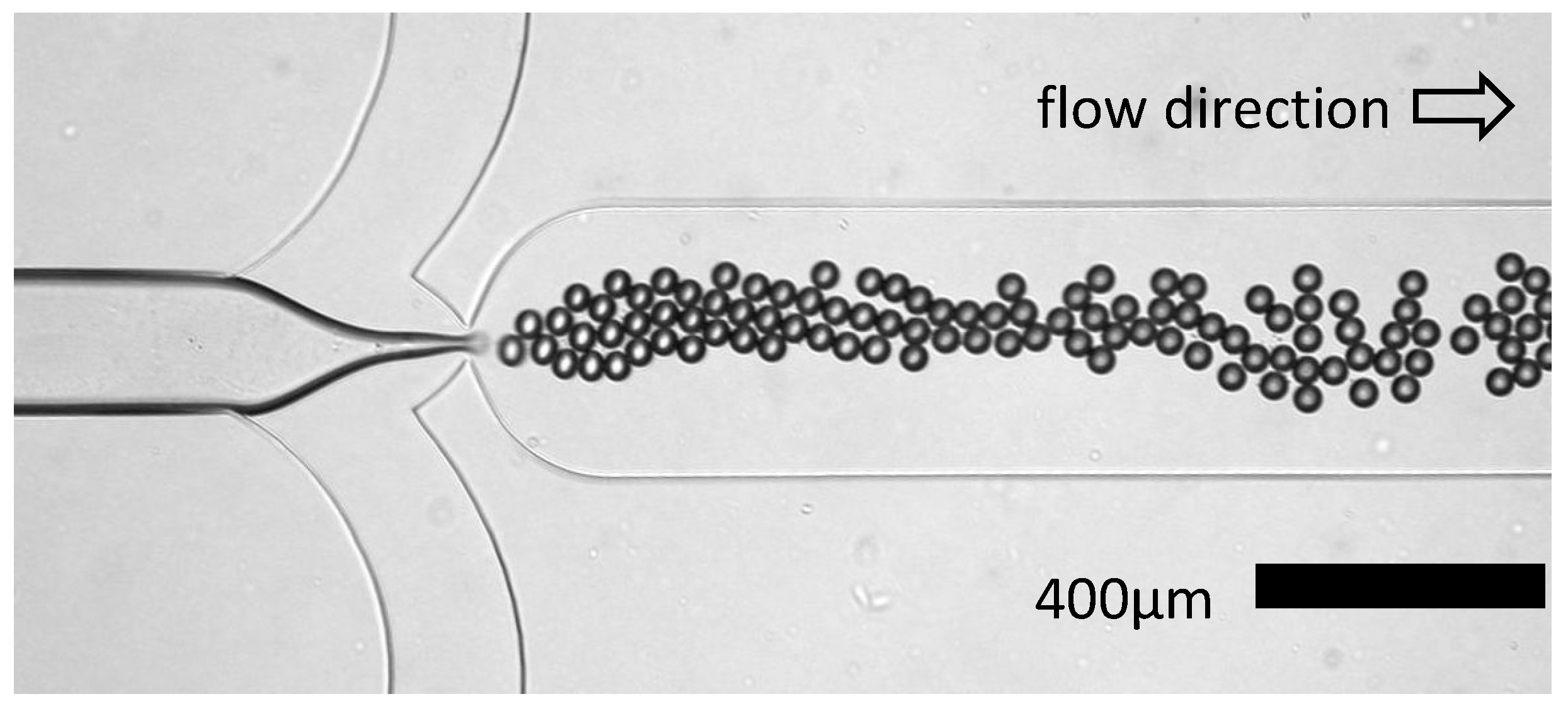
The cell-analytical system was fabricated by deposition and patterning integrated metal (Au) electrodes and formation of multi-layered SU-8 microfluidic structure on glass substrate. For proper sealing a PDMS layer was bonded onto the SU-8 surface by adequate surface modification. The general aim is to encapsulate a single cell in a given droplet—forming a microscopic nL size analytic chamber (Figure 2)—and to move it in a particular trajectory by proper control of droplet generation, progress in microchannels and trapping over the cell-analytical electrode system.
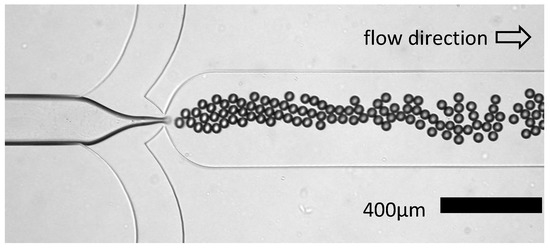
Figure 2.
Droplets generated in the two-phase microfluidic system encapsulate yeast cells.
3. Results
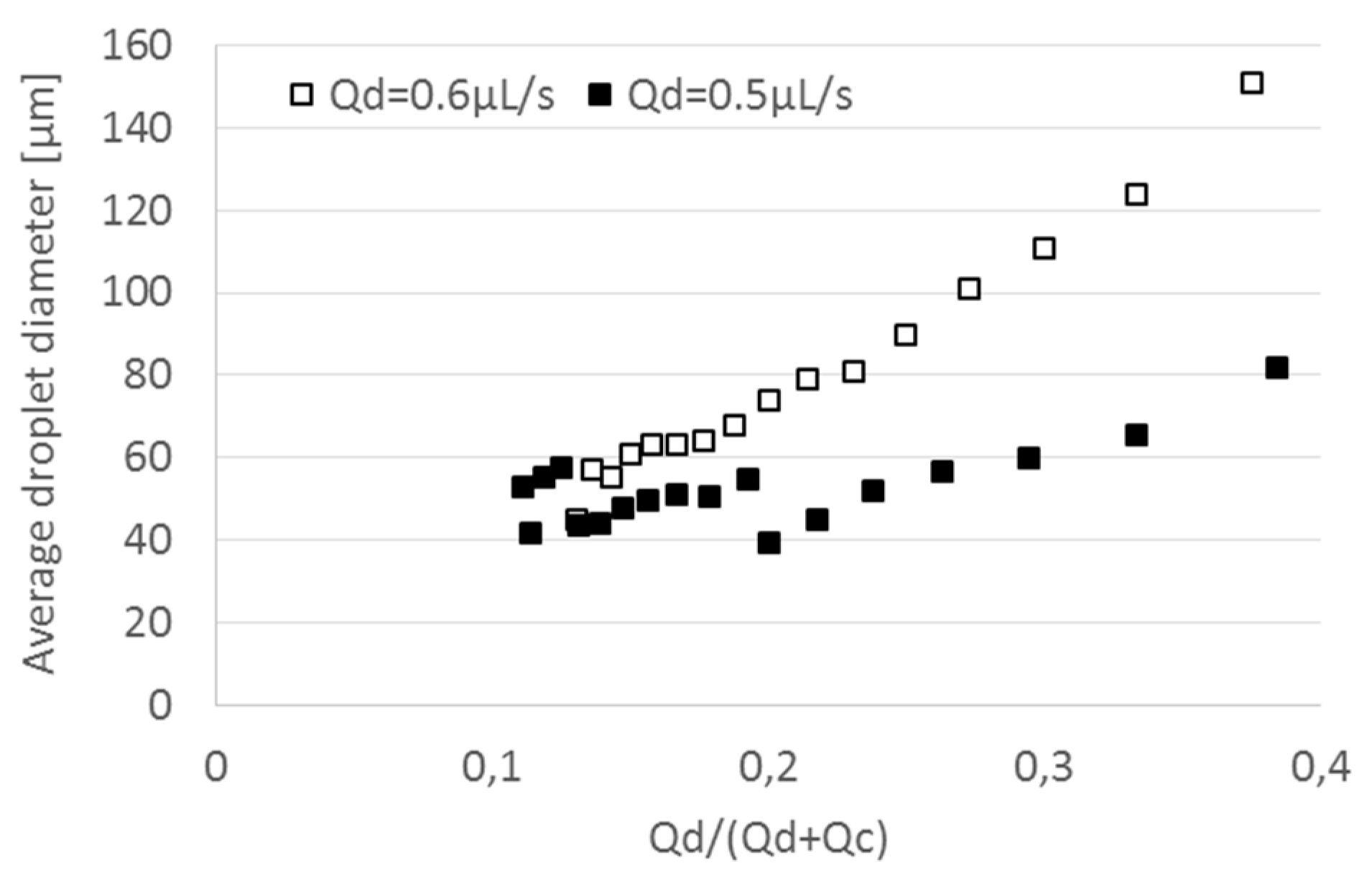
Droplet size dependency on geometrical and flow parameters has been investigated experimentally with special focus on the influence of flow rates and their ratios (Figure 3).
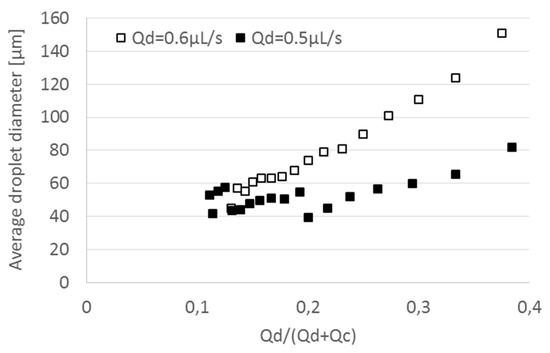
Figure 3.
Measured average droplet diameters as the function of the flow rate ratio of continuous (Qc) and disperse phases (Qd) in case of different flow rates of the disperse phase.
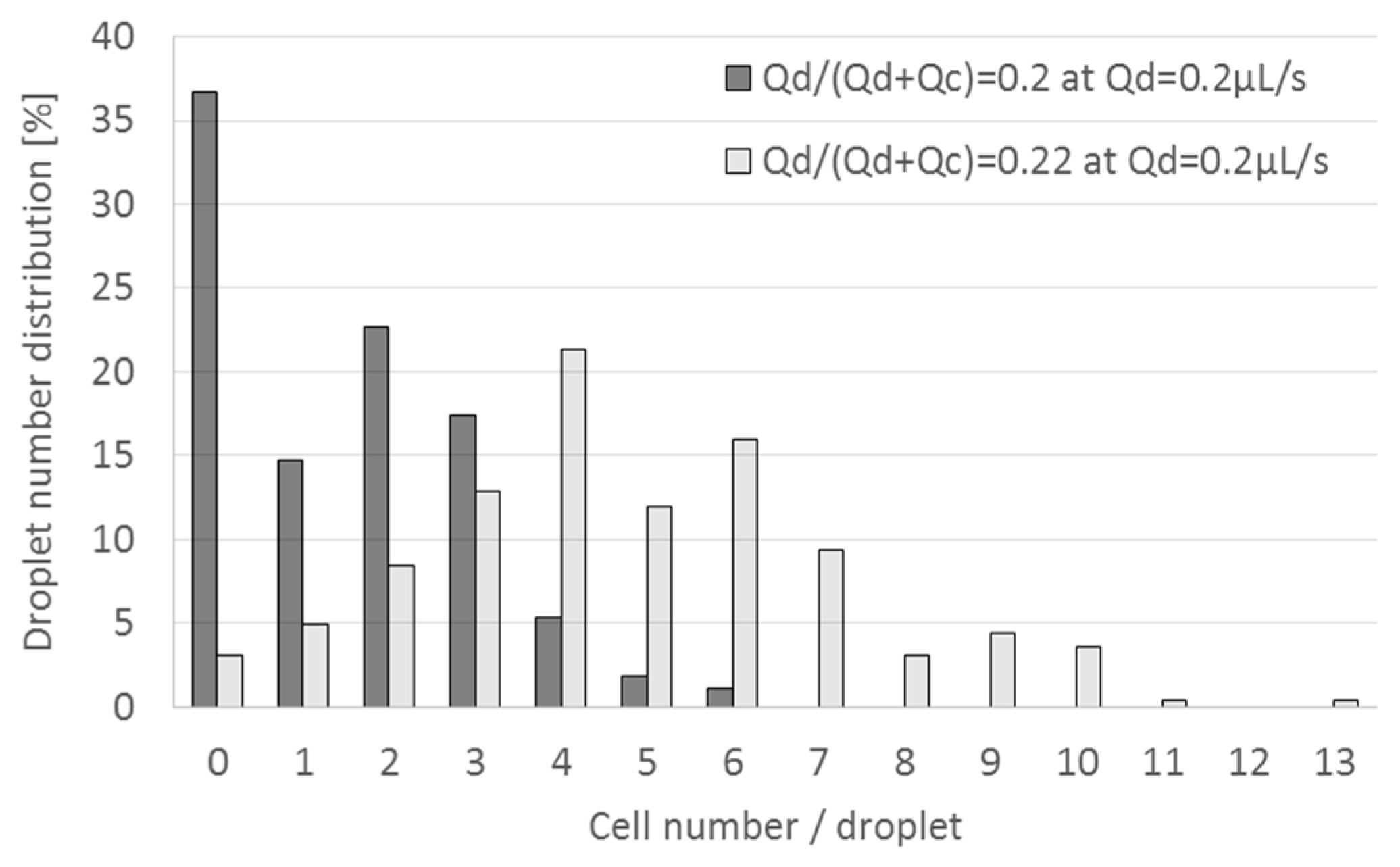
Yeast cells were encapsulated in water droplets and distribution of their number in a single containment was also recorded (Figure 4) and direct dependency on the flow rate ratios with multiple maximum was observed according to the size distribution of the yeast cells.
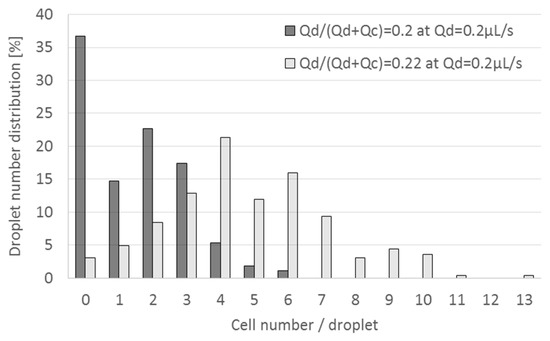
Figure 4.
Distribution of the experimentally analysed cell number encapsulated in one droplet in case of different flow rate ratios (droplet sizes).
Numerical modelling is a powerful, cost-effective and fast tool in microfluidic chip development for analysis and optimisation the devices by description of flow behaviour by Finite Element Method (FEM).
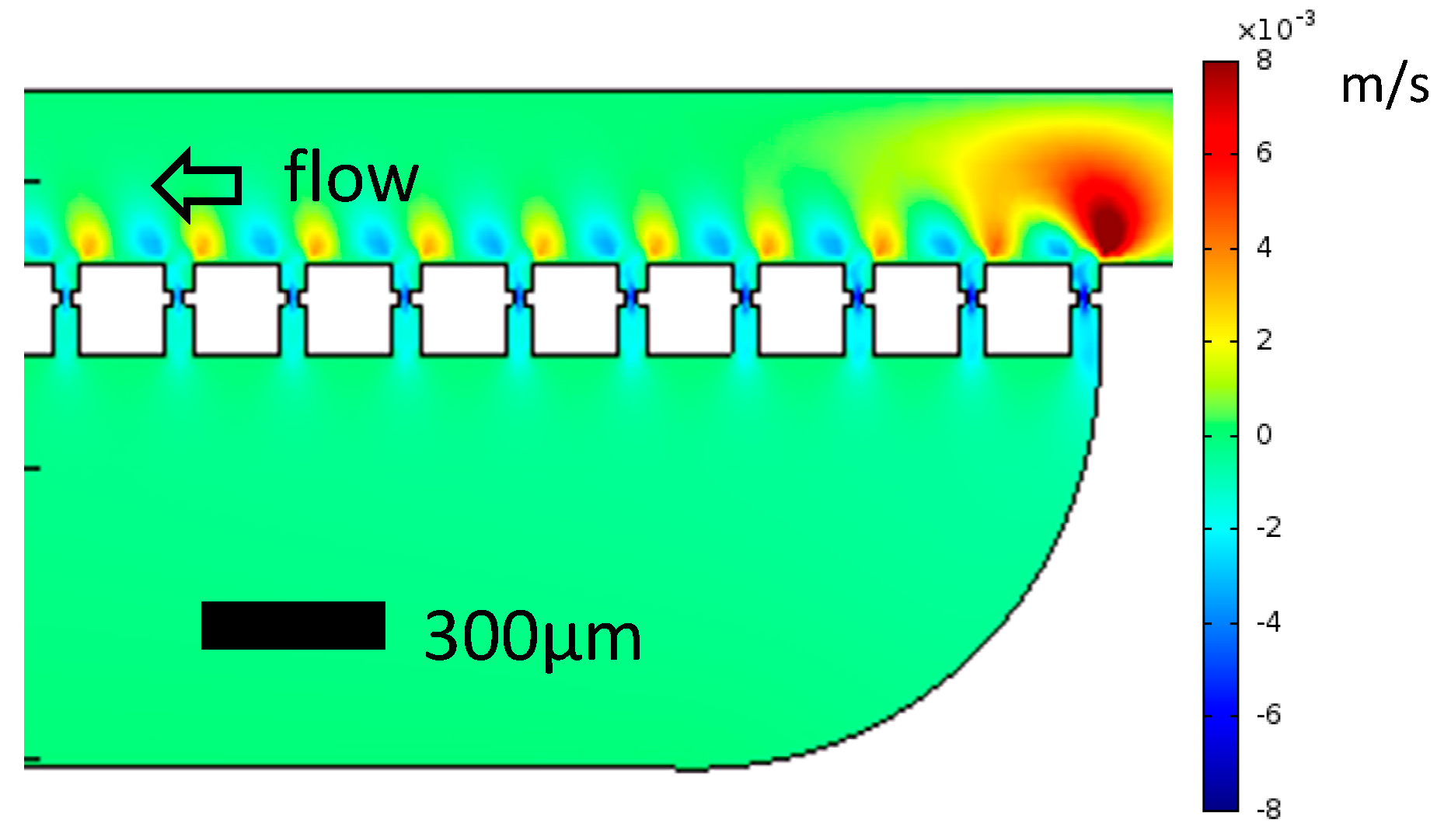
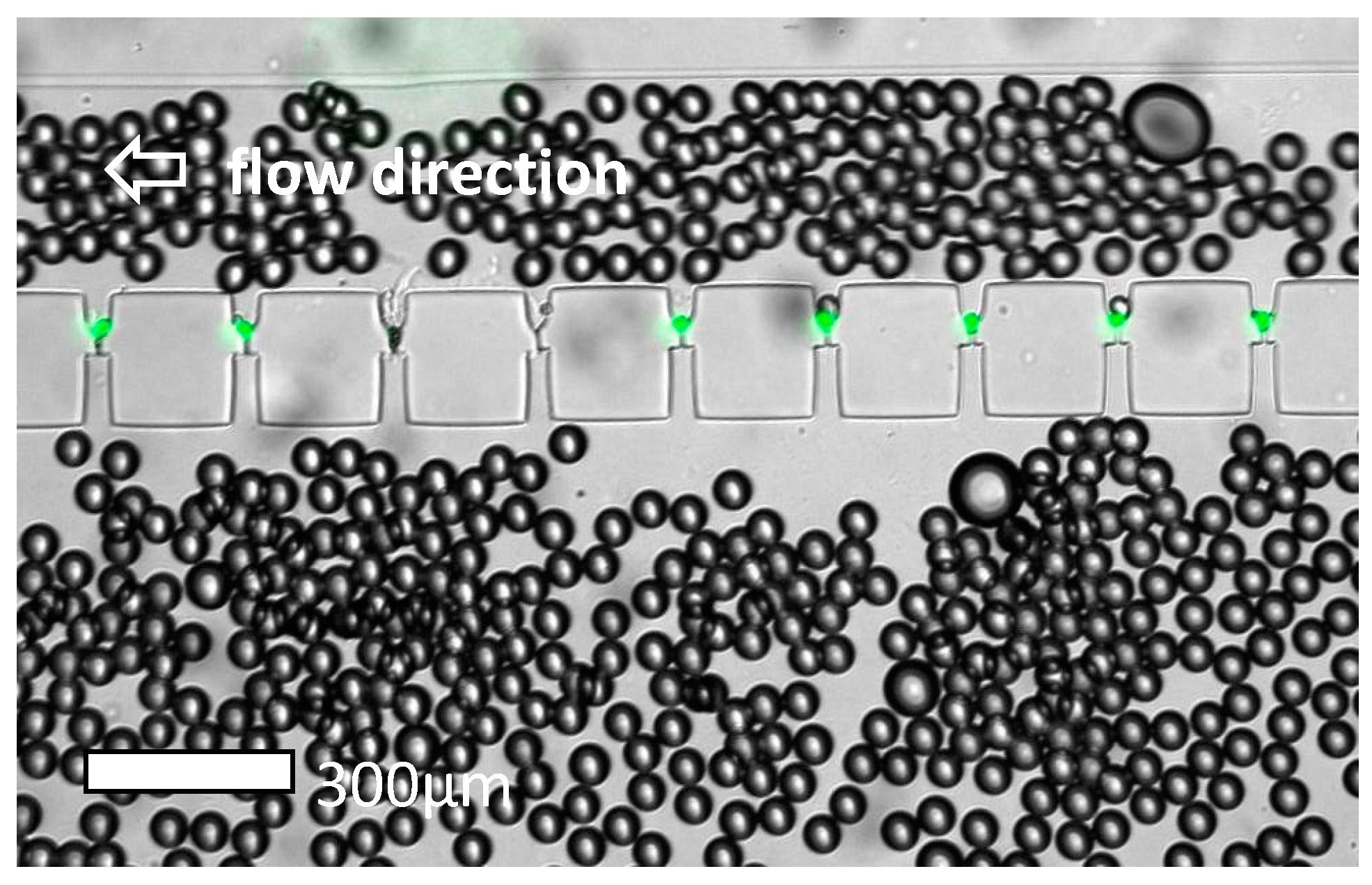
Computational model was built in the simulation code COMSOL Multiphysics and the hydrodynamic environment of the trapping zone and droplet trajectories were calculated. Flow velocity field (Figure 5) and decreasing flow rates in the perpendicular perforations demonstrate decreasing trapping efficiency of the cavities in the direction of the main flow. The proposed effect was verified by encapsulation and trapping fluorescent particles (Spherotech, 10 µm diameter): the trapping probability was experienced to be highest near the inlet of the trapping zone (Figure 6).
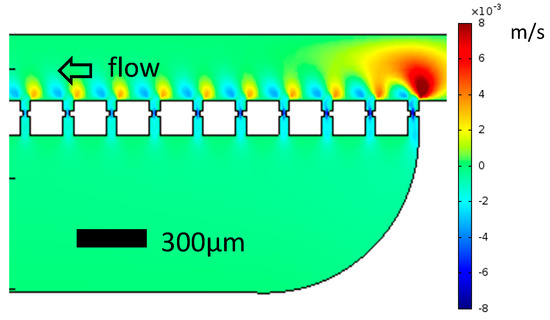
Figure 5.
Distribution of the flow velocity component perpendicular to the indicated main flow direction demonstrate the hydrodynamic trapping capability of the microfluidic structure.
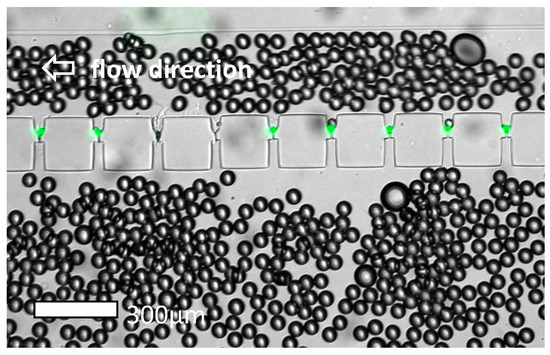
Figure 6.
Fluorescent beads encapsulated in generated droplets and trapped in the perforated cavities of the model microfluidic system.
4. Conclusions
Applicability of two-phase encapsulating and trapping microfluidic system was demonstrated and will be studied electrically also.
Acknowledgments
This work was supported by the Hungarian Academy of Sciences. The authors gratefully acknowledge the high-quality technical work of Gabriella Bíró, Magda Erős, Margit Payer, Péter Földesy and Attila Nagy regarding microfabrication and back-end processes.
Conflicts of Interest
The authors declare no conflict of interest. The founding sponsors had no role in the design of the study; in the collection, analyses, or interpretation of data; in the writing of the manuscript, and in the decision to publish the results.
Reference
- Wingki, L.; Walker, L.M.; Anna, S.L. Role of Geometry and Fluid Properties in Droplet and Thread Formation Processes in Planar Flow Focusing. Phys. Fluids 2009, 21, 032103. [Google Scholar]
© 2017 by the authors. Licensee MDPI, Basel, Switzerland. This article is an open access article distributed under the terms and conditions of the Creative Commons Attribution (CC BY) license (https://creativecommons.org/licenses/by/4.0/).