


Abstract
Results are presented regarding the development of recycled paper based impedance biosensors with screen printed interdigitated electrode structures (IDES). The sensors show a response to increasing salt concentrations in the range 30–100 mM NaCl. To prove the feasibility of using recycled paper, biofunctionalization with a glucose sensitive enzyme mixture was performed by inkjet printing. The quantification of the glucose sensitive colour change reaction in paper was investigated and a trend is found in the range of 6–90 mg/dL. Subsequently, measurements with a wireless electronic readout system were performed on an electrochemical assay showing a decrease of the normalized sensor response dependent from the glucose concentration in the range 0–80 mg/dL.
1. Introduction
The decentralization of the health care system demands non-invasive point-of-care rapid tests that enable molecular diagnostics outside of laboratories. At present, they are mostly available in the form of test strips using color indicators. The reading of these test strips is strongly influenced by the subjective visual perception and the results are, therefore, only qualitative. In order to provide disposable point-of-care systems with quantitative results, we aim to realize electrochemical single-use biosensors, which (i) are based on recycled paper to enable environment-friendly production, (ii) detect quantitatively glucose and ketone bodies to permit the diagnosis of e.g., ketoacidosis [1,2], (iii) contactless communicate the measured values.
2. Materials and Methods
2.1. Materials
The glucose oxidase, the horse radish peroxidase, as well es the the glucose were pruchased form sigma aldrich. The recyled paper was provieded by the Lenzing Papier GmbH and constists of 65% recycled paper and 35% of cellulose.
2.2. Screen Printed Paper-Based IDES
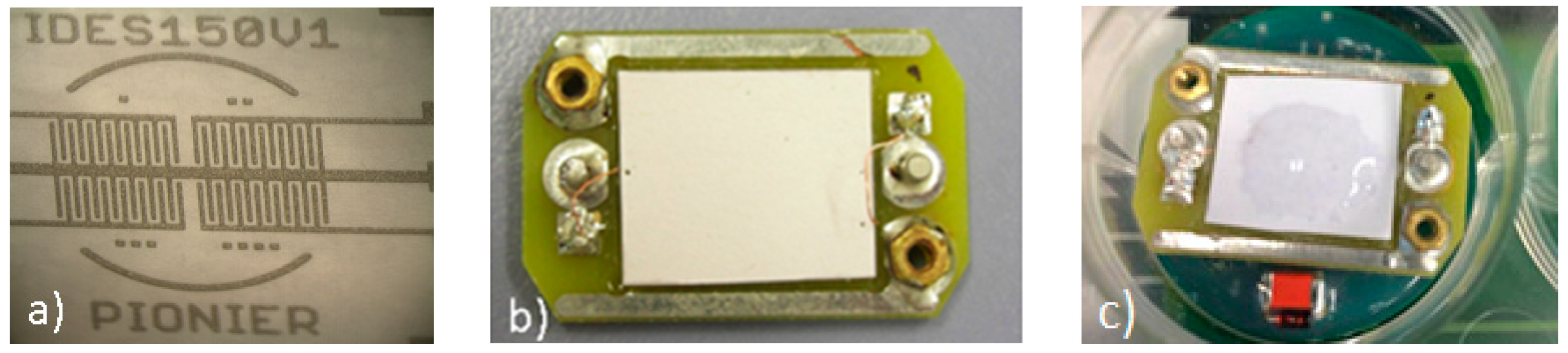
IDES sensors on paper have been realized by screen printing of silver (see Figure 1a). In order to investigate the influence of the IDES dimensions on the sensor response, various sensors with different finger widths and corresponding gap widths (150 µm, 200 µm and 250 µm) have been fabricated. Our sensor concept is based on pipetting the sample solution on the backside of the sensor and measuring the change of impedance in the paper volume. For this reason the sensors are mounted top-side-down on a testing carrier (Figure 1b) and, afterwards, different NaCl concentrations (30–100 mM) are pipetted in the middle of the paper (see Figure 1c).
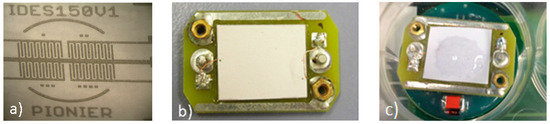
Figure 1.
(a) Screen printed IDES (finger width = 150 µm, gap width = 150 µm); (b) Sensor carrier with top-side-down mounted sensor; (c) Sample solution is applied on the paper sensor.
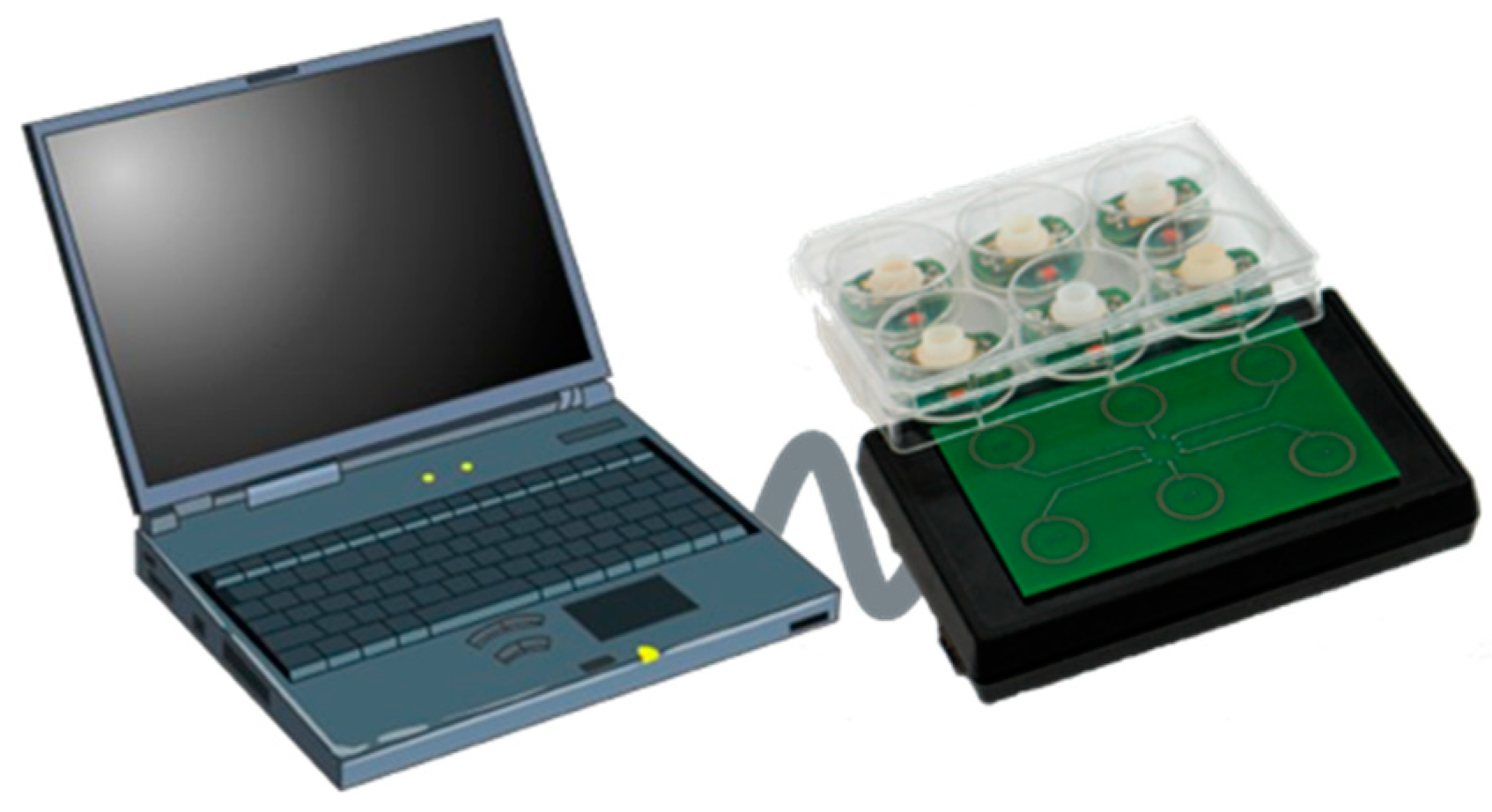
Up to six testing carriers are set on a standard well titer plate equipped with NFC tags, which are wirelessly connected to an electronic readout system sending the measurement values to the computer for data processing (see Figure 2).
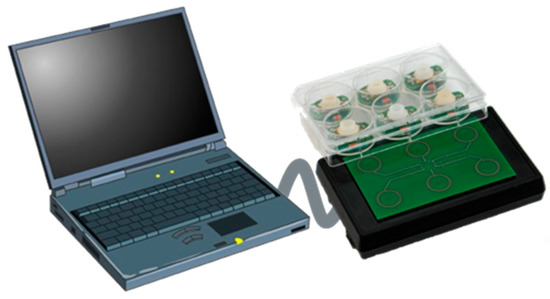
Figure 2.
Wireless electronic readout system carrying a standard 6 well titer plate equipped with 6 NFC tags [3] to perform the impedance measurement of the sensors.
2.3. Glucose Detection in Recycled Paper-Based Sensors
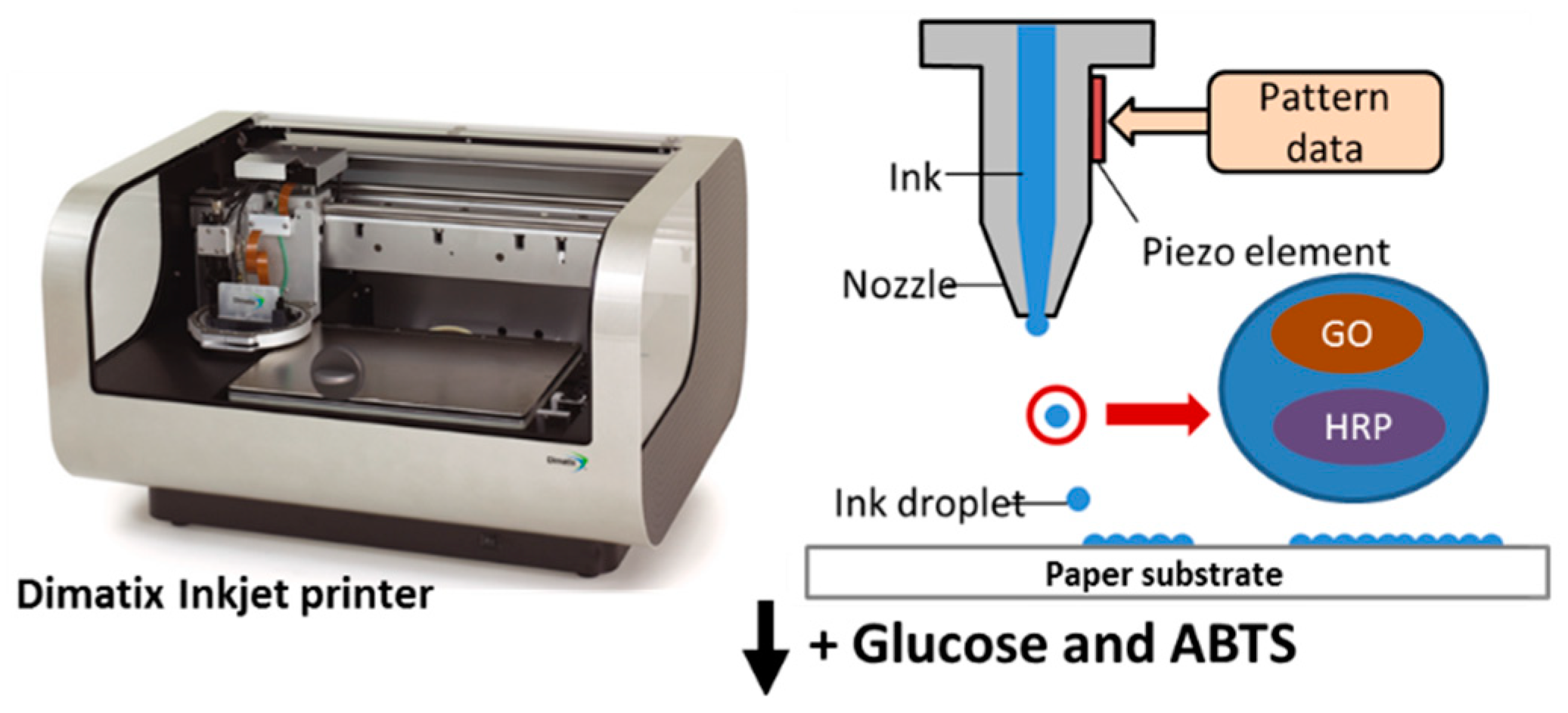
For the selective detection of glucose in recycled paper, enzymatic assays were investigated. First, a glucose assay was tested based on glucose oxidase (GO) and horseradish peroxidase (HRP). The enzymes were inkjet printed on the paper (65% recycling material), and after drying and storage (overnight at 4 °C) different glucose concentrations were added in combination with the HRP substrate 2,2′-azino-bis(3-ethylbenzothiazoline-6-sulphonic acid) (ABTS) in order to visualize the reaction (Figure 3).
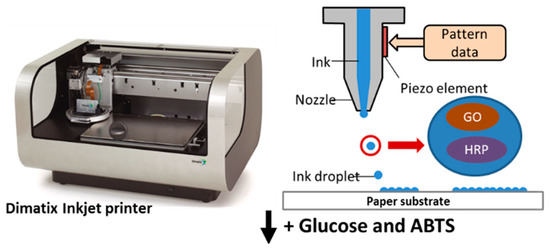
Figure 3.
Inkjet printing of enzymatic assay.
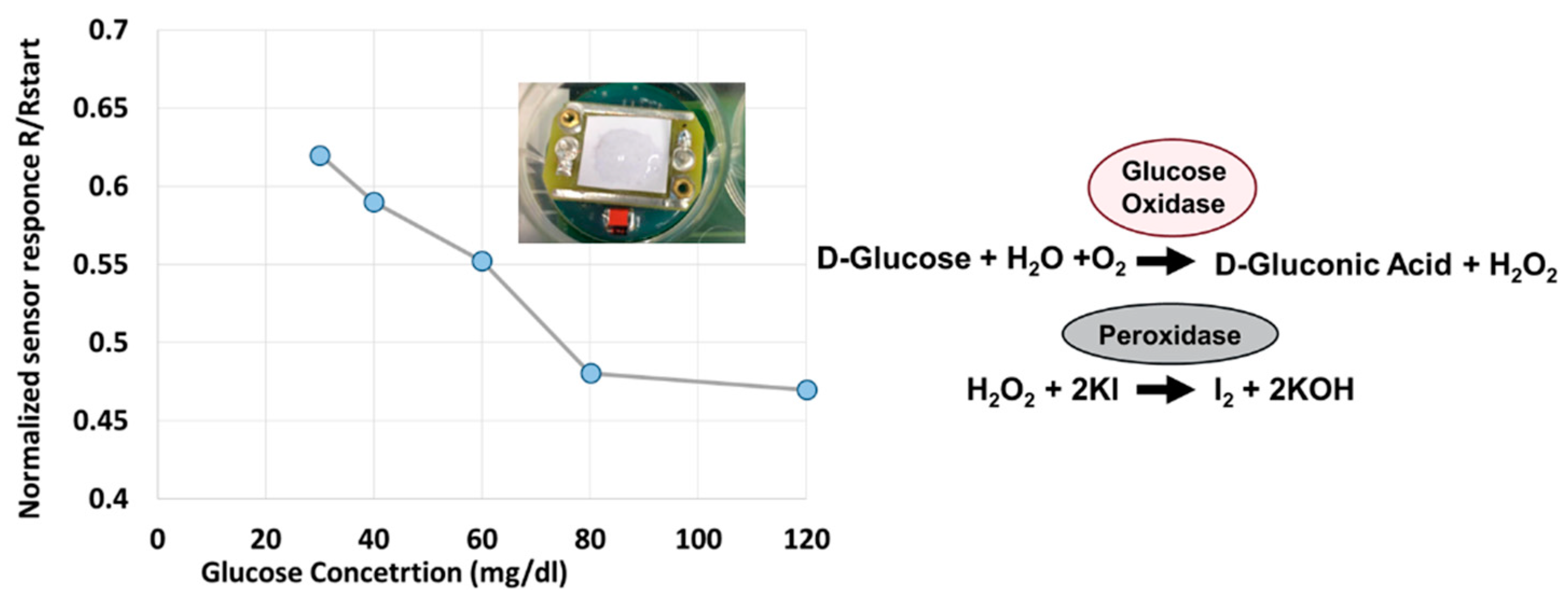
For the electrochemical assay, a potassium iodide (KI) based enzymatic assay with GO and HRP was investigated (see Figure 6), which is the most common assay in paper [4]. Firstly, the enzyme mixture and the KI were added to the measurement solution on the top of different sensors. Then, glucose concentrations in the range of 30–120 mg/dL were added.
3. Results
3.1. Screen Printed Paper-Based IDES
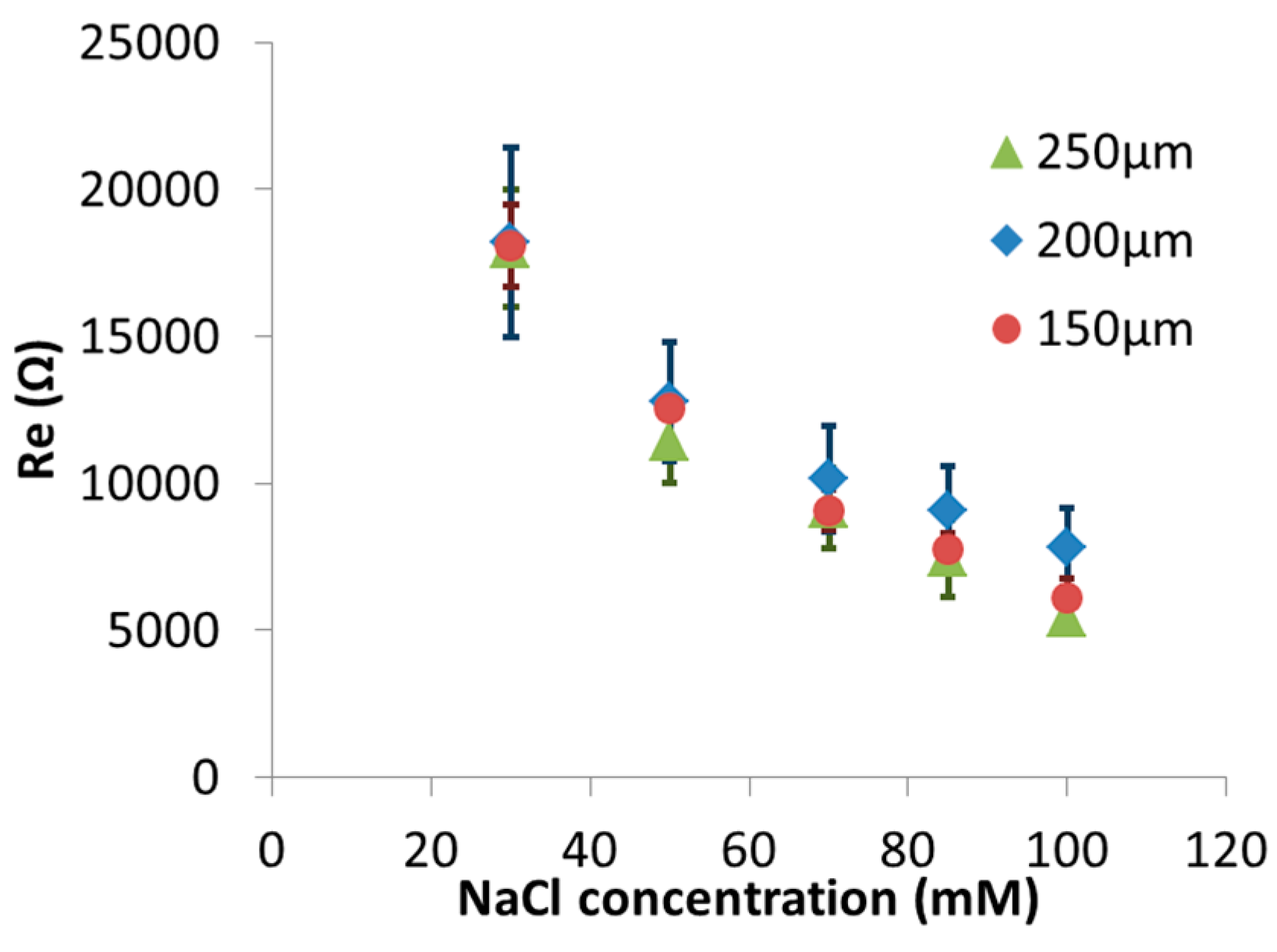
As shown in Figure 4, the real part of the impedance of the IDES sensors with different finger and gap widths is plotted versus the NaCl concentration in the sample solution. The electrical resistance decreases as a function of the increasing NaCl concentration for all the sensor dimensions in the same manner.
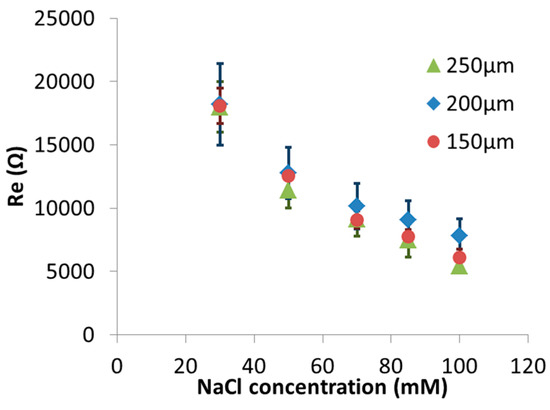
Figure 4.
Electrical resistance of IDES sensors as a function of different NaCl concentrations and different dimensions (finger and gap widths: 150 µm, 200 µm or 250 µm).
3.2. Glucose Detection in Recycled Paper-Based Sensors
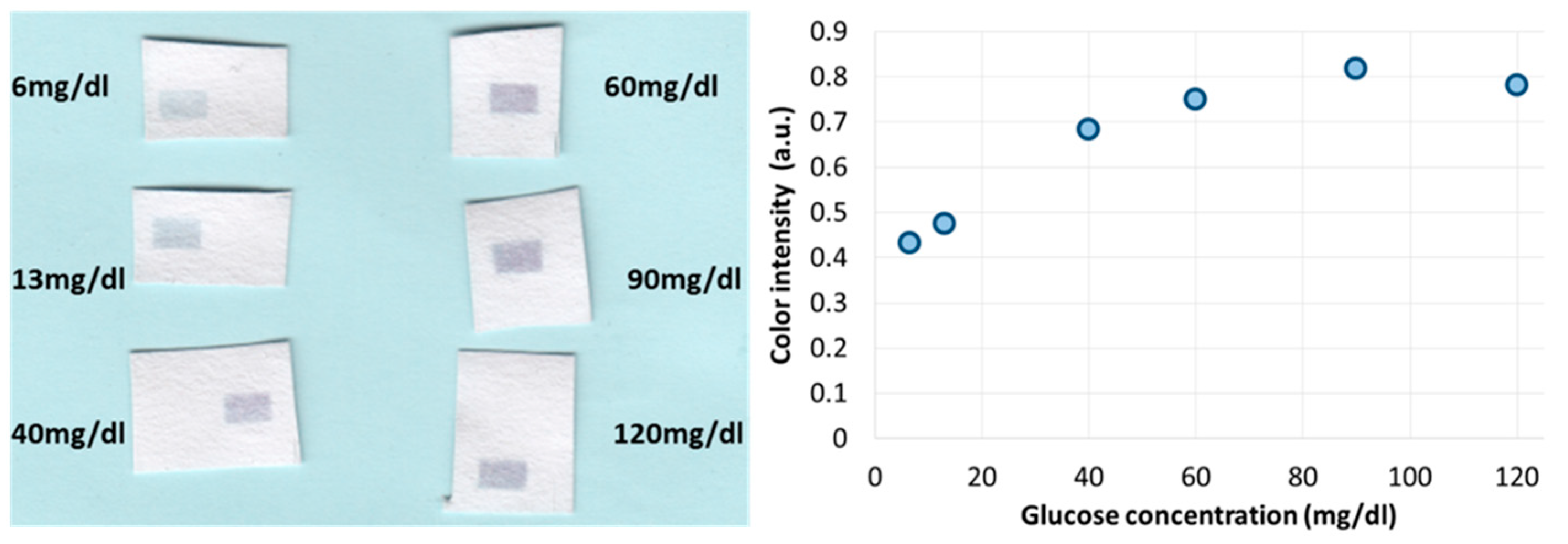
The glucose enzymatic reaction in recycled paper was visible for different glucose concentrations. In particular, with the image processing program “imageJ” from NIH the color intensity of the spots can be extracted, and a quantification of the reaction was found in the range of 6–90 mg/dL (Figure 5).
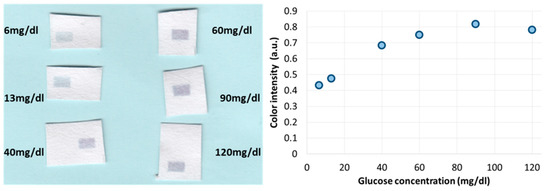
Figure 5.
Visualization of the enzymatic reaction in recycled paper and its quantification.
Regarding the electrochemical assay, the sensor response, defined as the resistance R normalized to the start resistance Rstart, is plotted versus the glucose concentration in Figure 6.
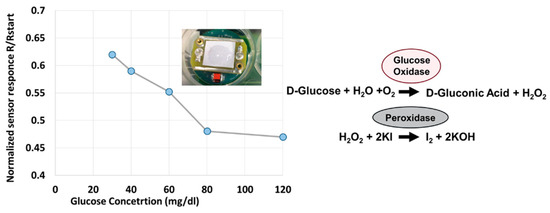
Figure 6.
Electrochemical sensor response to glucose reaction.
The normalized sensor response R/Rstart indicates that the sensor can detect glucose concentrations up to 80 mg/dL.
4. Conclusions and Outlook
This preliminary results indicate, that the by adjusting the assay parameters and bringing together the sensing and inkjet printing approach, a sensitive glucose detection on recycled paper based IDES sensors with wireless readout can be performed. As further steps in the PIONIER project [5] the integration with a printed antenna (instead of the discrete NFC tags) and an unhoused readout microchip from Infineon are planned to realize a fully disposable sensor system communicating directly the results (e.g., to a smartphone).
Acknowledgments
This work has been performed within the Austrian national project “PIONIER—Paper as ecologically sustainable and innovative substrate for sensors and electronics” (No. 848587), which is funded in the frame of the “Produktion der Zukunft” program—7th call by the FFG—Austrian Research Promotion Agency.
Conflicts of Interest
The authors declare no conflict of interest. The founding sponsors had no role in the design of the study; in the collection, analyses, or interpretation of data; in the writing of the manuscript, and in the decision to publish the results.
References
- Laffel, L. Ketone bodies: A review of physiology, pathophysiology and application of monitoring to diabetes. Diabetes Metab. Res. Rev. 1999, 15, 412–426. [Google Scholar] [CrossRef]
- Galan, A.; Hernandez, J.M.; Jimenez, O. Measurement of blood acetoacetate and β-hydroxybutyrate in an automatic analyser. J. Autom. Meth. Manag. Chem. 2001, 23, 69–76. [Google Scholar] [CrossRef] [PubMed]
- Wissenwasser, J.; Vellekoop, M.J.; Kapferer, W.; Lepperdinger, G.; Heer, R. Multifrequency impedance measurement technique for wireless characterization of microbiological cell cultures. Rev. Sci. Instrum. 2011, 82, 115111–115117. [Google Scholar] [CrossRef] [PubMed]
- Schilling, K.M.; Lepore, A.L.; Kurian, J.A.; Martinez, A.W. Fully Enclosed Microfluidic Paper-Based Analytical Devices. Anal. Chem. 2012, 84, 1579–1585. [Google Scholar] [CrossRef] [PubMed]
- PIONIER Project Web Page. Available online: http://www.projekt-pionier.com (accessed on 21 June 2017).
Publisher’s Note: MDPI stays neutral with regard to jurisdictional claims in published maps and institutional affiliations. |
© 2017 by the authors. Licensee MDPI, Basel, Switzerland. This article is an open access article distributed under the terms and conditions of the Creative Commons Attribution (CC BY) license (https://creativecommons.org/licenses/by/4.0/).