


Abstract
The AEC industries as well as the heritage sector are facing a number of issues that relate to the management of building digital data. Two of the most prominent ones are the interoperability of data and data longevity. In order to better understand the extent of these issues for the general AEC industry and heritage buildings sectors, an online survey was designed to help quantify them and reveal the opinions of professionals and academics in the field. The online survey highlighted a clear latency in BIM adoption in the heritage sector as only 51% of the heritage participants use BIM in their projects compared to 63% of AEC participants. The reasons for this were further explored in the participants’ comments, as most of the reasons revolved around the issues of BIM data interoperability and longevity, considering the complex and interdisciplinary nature of heritage projects. The survey responses highlighted that data longevity is a crucial challenge for the heritage sector in particular as the need for future re-accessibility of digital data is clear in the results, showing that more than 82% of the heritage participants need to re-access their data in the future. The results also showed the prevalence of BIM interoperability issues and highlighted that the heritage sector is more prone to interoperability issues compared to the general AEC industry as 67% of heritage BIM participants and 50% of AEC BIM participant have faced some issues of BIM interoperability. In total, 72% of the standardised BIM participants agreed that standardised BIM formats could be a promising solution to mitigate the interoperability challenges, while only 57% thought that standardised BIM formats are reliable in their current status. Moreover, the online survey explored the variation in the needs of different disciplinary groups including rates of BIM adoption, use of standardised BIM formats, and needs for access to different heritage buildings data categories. Participants also presented their views on what would be an ideal medium for long-term storage of heritage buildings digital documentation data for future access, with some views being sceptical concerning BIM in its current status. This paper presents the findings of this extensive online survey.
1. Introduction
On the digital documentation of heritage buildings and the integration of BIM (Building Information Modelling) into the heritage buildings sector, many challenges could arise. Among the main ones are data longevity and accurate data interoperability which can compromise the flexibility of digital data, and more prominently BIM data, to be a medium of communication between different stakeholders. Issues of data longevity and interoperability exist in all the AEC field, but the nature and characteristics of the heritage buildings sector suggests that it could be more prone to such issues than other AEC sectors. Therefore, it is important that these challenges are explored and documented further and their effects on the whole AEC industries and the heritage sector are quantified and compared.
For these reasons and for building a better understanding about the usage of digital data and BIM adoption in the heritage buildings sector, the authors designed and conducted an online questionnaire aiming to explore potential problems of digital data storage and re-accessibility, explore potential problems of BIM data interoperability, investigate problems related to digital documentation of heritage buildings, as well as potential benefits of BIM in the digital documentation of heritage buildings.
The next section will present a background and literature review about the topic, followed by a detailed methodology in Section 3, then Section 4 will present the results of the online survey and their quantitative and qualitative analysis, finally a discussion about the results will take place in Section 5.
2. Background and Related Work
One of the aims of the development of BIM was to create a new medium that can interpret and manage a variety of data types that were previously limited by their respective data formats. BIM introduced a solution for integration, interpretation, and management of such diverse data and consequently the integration of various disciplinary processes within the same platform.
The heritage buildings sector can greatly benefit from BIM applications. H-BIM (heritage building information modelling) emerged to facilitate the management of the conservation, renovation, retrofitting, and management of heritage buildings [1].
H-BIM can represent many advantages for the historic buildings, which can be summarised mainly in the integrity of design and visualization, cost estimation, conflict detection, full planning implementation and improved stakeholder collaboration [2]. It can also help in the documentation phase in automatic measurement, identification, and modelling of damaged or non-existent architectural elements [3]. So, it can be a representation of the historic building changes over time. H-BIM can also represent a contribution towards energy analysis, economic analysis up to multi-thematic analysis within sustainability [4].
H-BIM inherits all BIM characteristics as it can combine multi-dimensional visualisation with comprehensive, parametric databases and allows the integration of management of graphical and informational data flows as well as facilitating the collaboration among project partners to develop strategies of design, construction, and facility management [5]. This helps to transform individual executors into teams and decentralise tools into complex solutions, which leads to individual tasks being implemented as complex processes; perform life cycle operations of a construction project more effectively, faster and with lower cost [6].
While these characteristics are shared between new-build BIM and heritage buildings’ H-BIM, the prominent difference lays in the initial phases of documenting the existing and valuable fabric of the heritage building, which is usually coupled with irregular geometry, non-homogeneous materials, variable morphology, undocumented changes, damage, and various stages of construction [7]. These challenges put more weight on the surveying, documentation, modelling, and visualisation phase in the process of H-BIM. These challenges lead to the development of H-BIM as a novel approach aiming to integrate the heritage buildings sector with its diverse stakeholders into BIM environment.
Building data should be accessible throughout the lifecycle of the building from design to construction to operation. A vital question is how these data could be interpreted in the future as the challenge of the longevity of data is an important consideration in data management. Longevity is considered as one of the main obstacles slowing the widespread adoption of BIM [8]. A variety of factors can affect data longevity. However, the most prominent factors are linked to the fast-developing nature of the software market resulting in the continuous emergence of new software and consequently new proprietary formats that in some cases lead to the obsolescence of older software. This can inevitably lead to the loss of significant data created with outdated software. Moreover, even with the ongoing development of newer versions of the same software, there can still be issues with a loss of support for data created with older versions of the same software and the loss of accessibility to older data.
Challenges of data longevity could be greater to the heritage sector, compared to new buildings, as—alongside the preservation of the building itself—the digital data of the building should also be preserved and accessed for longer periods to act as a record of the building and its alterations over its lifespan [9]. This is in contrast with new buildings that do not usually need a detailed historic record to be kept. In reality, the data of the heritage building should ideally outlive the building itself, to serve as an accurate representation and documentation of the building in case of any loss or damage to the building. This, coupled with the short lifespan and high development rate of digital software, means that current documentation stored on current data formats are unlikely to be readily usable in future developed software, which can undermine the ability of digital software data to be the medium for long term storage of heritage buildings documentation data. Therefore, the issues of data longevity and software obsolescence could represent much more prominent challenges in the heritage sector than any other sector within the AEC industries. Few studies discussed the issue of data longevity in the heritage sector, which represents a real challenge for the protection and storage of heritage buildings data.
Interoperability is basically defined in ISO/IEC 2382:2015 as “the capability of two or more functional units to process data cooperatively” [10]. The BIM Interoperability Expert Group (BIEG) use a more stringent definition as “the ability of two or more systems to exchange information and to use the information that has been exchanged” [11]. While the UK Government and Industry Interoperability Group (GIIG) expanded this definition to be “the ability of two or more systems to exchange information securely and to use the information that has been exchanged. This exchange must not require additional processing and must not be legally or technically restricted to specific software solutions” [12]. BIM interoperability refers to BIM applications’ capabilities to share, exchange, gather, and process the same data via a common set of exchange formats, by using the same file formats and the same protocols [13,14]. BIM interoperability enables model sharing and linking data between different operators, and BIM applications ensure data consistency [15]. Interoperability limitations between different platforms has been identified as the main obstacle to adopting BIM by the market since 2010 [13] and it is still reported as such in more recent studies [14,16]. ISO 19650 is an international standard of good practice. It defines BIM information management principles and requirements within a broader context of digital transformation in the disciplines and sectors of the built environment, which aims to improve interoperability [17].
In the software market, BIM developers work in silo to produce a variety of software that work in different ways and use proprietary file formats. This created a major challenge when different stakeholders need to communicate across different BIM software, and consequently it undermines the interoperability and integration between different project teams and their diverse data. Although, some developers, aiming for market dominance, provide wide packages of services of the same brand that are meant to work interoperably without the need for other platforms, other developers have instead aimed to consolidate specialised uses with relative niches of users and to synergise with other complementary tools for specialised uses. However, in reality, a project usually consists of many teams using different platforms that could not communicate seamlessly. This challenge led to a need for standardisation and transformation from a model with an internal data structure to a universal one that has to be adapted in another environment [15]. Therefore, standardised open-source formats were developed to act as a universal format that can be exchanged and interpreted on various platforms. BIM standardised formats can be used throughout the whole pipeline, from the acquisition/creation of the 3D model and the related metadata to the processing and operation, until its storage in digital repositories [18]. One of the main initiatives toward standardised BIM formats is BuildingSMART, which is an international organisation aiming to facilitate the development and adoption of open standards for infrastructure and buildings [19].
Among the main standardised BIM formats are:
- IFC
The Industry Foundation Classes (IFC) format, an open specification data format developed by the International Alliance for Interoperability (IAI) and currently promoted by BuildingSMART International. It is an open, international standard (ISO 16739-1:2018), meant to be vendor-neutral, and usable across a wide range of hardware devices, software platforms, and interfaces for many different use cases [20]. It can facilitate the interoperability between various software to share the information of the model which can link operators in construction and engineering, such as in simulations and calculations [21]. It uses four layers (resources, core, interoperability, and domain) to describe the geometry information, the material properties, and the relationships in a BIM model. However, he IFC format does not capture how information is created and shared by practitioners so some specific information will be missed in the exchange process [22]. Moreover, BIM software developers typically export to the IFC format in distinct ways, adding an extra layer of complexity to the interoperability between software.
- COBie
COBie (construction operations building information exchange) defines expectations for the exchange of information throughout the lifecycle of a Facility. The use of COBie ensures that information can be prepared and used without the need for knowledge of the sending and receiving applications or databases. It ensures that the information exchange can be reviewed and validated for compliance, continuity, and completeness [23]. COBie information can be exchanged by using different open standard format such as IFC, ifcXML, and SpreadsheetML. The spreadsheet version of COBie is now widely accepted and can be exchanged with different commercially available software worldwide [24]. COBie holds information about the spatial locations and the equipment and components that make up the Facility. To make these manageable during the Facility lifecycle, spatial locations are allocated to intermediate addresses or locations and into other spatial groupings, and equipment, and components are assigned their common specification and grouped by their functional purposes.
- ifcXML
Extensible markup language (XML) provides enhanced readability and benefits from a broad range of software tools. ifcXML is based on the ISO standard for representation of STEP data in XML format ISO 1030-28 [25], that specifies the mapping of EXPRESS language definitions to the XML schema and the associated serialisation of instance data files [26].
- gbXML
The green building XML (gbXML) is a schema that facilitates the exchange of data between BIM and building performance simulation (BPS) tools to enable interoperability between disparate building design and engineering analysis software tools [27]. gbXML was initiated in 2000 by a company called Green Building Studio for inclusion in aecXML, after 2009 gbXML become a stand-alone entity [28]. However, the gbXML format is not mature enough and has been limited to being used in simple design solutions because of its inability to read complex geometries [22,29].
- aecXML
aecXML is one of the most popular and the biggest XML dialect for AEC industry, developed since 1999 by IAI (International Alliance of Interoperability). Its syntax is worked out by 7 working groups: Catalogues Working Group; Design/Specification/Scheduling/Costing Working Group; Facility Management Operations and Maintenance Working Group; Procurement Working Group; Project Management Working Group; Project News Working Group and Plant Working Group [30].
- CityGML
CityGML is published by the Open Geospatial Consortium (OGC) since 2007, aiming to represent three-dimensional urban objects and permits a multi-scale management of the information useful for the representation of architectural heritage multi-faceted, multi-temporal, complex knowledge [31]. The CityGML format is compliant with the ISO/TC211 standard about the geographic and spatial information management and foresee the use of the OGC Geographic Mark-up Language (GML) [32].
- BCF
BIM Collaboration Format (BCF) is an XML format that enables users to share fragments of BIM data, with attached comments and requests for changes, without the requirement of sharing the entire BIM model [8]. BCF allows different BIM applications to communicate model-based issues with each other by leveraging IFC data that have been previously shared among project collaborators. BCF was created for facilitating open communications and improving IFC-based processes to more readily identify and exchange model-based issues between BIM software tools, bypassing proprietary formats and workflows [33].
- OpenMAT
Due to the lack of interoperability between BIM and acoustic simulation tools, data are usually retrieved from a BIM model and used in acoustical simulation software such as EASE, Odean, and CATT-Acoustics [34]. However, interoperability issues between the BIM software and acoustical analysis software limit the applications in practice. One possible solution to this problem can be performing acoustical simulations locally in the BIM software, though, the interoperability between different programs is practically non-existent since they rely on internally developed database formats [35]. OpenMAT database project was initiated as a support for detailed description of materials and to provide acoustic professionals with an exchangeable database usable in acoustic simulation software [36]. OpenMAT can store both numerical data and meta-information of the material in an open Extensible Markup Language (XML) format. The available data are absorption coefficients, scattering coefficients, the price of material, URL, a photo of materials texture, etc. Moreover, OpenMAT has both C++ and Python library for external coding [35].
Stakeholders involved in heritage projects can represent a more diverse disciplinary spectrum than typical new built projects which are usually limited to typical teams of architects, engineers, contractors, and facility managers. Stakeholders involved in heritage projects can include, in addition to the above, more disciplines and specialities such as archaeologists, historians, surveyors, conservators, various levels of government bodies, museum curators, public dissemination professionals, as well as many specialised contractors. Every discipline and team involved can potentially use their own specialised tools and software. Another layer of complication lays in the fact that heritage projects are starting at an intermediate point in the asset’s life cycle, which can be much more complex than the relatively straightforward cradle-to-grave model that describes new-build construction [37]. This makes heritage projects usually unpredictable due to insufficient or inaccurate older drawings, undocumented changes to the building, in addition to the risks and/or restrictions to perform invasive survey methods to study the structure and materials of the building. This could lead to mid-project changes in the project plan and introduction of new speciality teams to deal with the unpredicted problems or changes.
The issues of data interoperability have been highlighted in literature [8,11,12,13,14,15,16,17,18,22,34], however, the literature is lacking data concerning the heritage buildings sector specifically. On the other hand, data longevity and data storage issues, especially in relation to heritage buildings sector, is seldom discussed in literature by their own, while the topic is usually discussed within other aspects [8,14,18,38]. Moreover, there is not enough recent data on the subjective opinions of users within the heritage and wider AEC industries concerning such issues. Therefore, in order to explore the current challenges and limitations related to data longevity, data interoperability and BIM standardisation, as well as quantifying their effects on the digital documentation of heritage buildings, the authors designed and conducted an online survey aiming to explore these issues within the heritage building sector and the wider AEC industries.
3. Methodology
An online survey was designed to explore potential problems of digital data storage, data re-accessibility, and potential challenges of BIM data interoperability in the heritage sector and the wider AEC industries, with the aims of: (1) To explore potential problems of digital data storage and re-accessibility, (2) To explore potential problems of BIM data interoperability, (3) To investigate problems related to digital documentation of heritage buildings, (4) To investigate potential benefits of BIM in the digital documentation of heritage buildings.
For the realisation of these aims a set of objectives were identified: (1) To assess the needs of the general AEC industry and of the heritage buildings sector for long term storage. (2) To explore issues of interoperability of BIM data. (3) To explore the extent of standardised BIM formats usage. (4) To compare BIM usage between heritage buildings sector practitioners and other practitioners in the AEC industry. (5) To evaluate the need for interdisciplinarity and interoperability between different disciplines involved in the digital documentation of heritage buildings. (6) To assess the needs of different disciplines to access different data types. (7) To assess the extent of BIM usage for all disciplines within the heritage buildings sector. (8) To measure the extent of BIM as a tool for digital documentation of heritage buildings that can facilitate the data management through the different processes related to the heritage building.
A total of 44 questions were designed to answer these objectives in both quantitative and qualitative approaches. The online questionnaire was divided into three sections (Figure 1). The first section titled “Participant information” aimed to categorise the participants into appropriate categories: first categorisation is to identify participants working in heritage buildings from other participants within the AEC industries, in order to isolate the heritage sector participants and study responses that are specific to the area, and to compare their responses with other AEC participants that are not working in heritage related projects (titled in the study “AEC participants”). The second categorisation is to identify participants working with BIM and participants not working with BIM (Figure 2). Additionally, within this section a question about work/research interests was aiming to associate participants with one or more of eight different groups: History/Archaeology, Geometry/Survey/Modelling/Visualisation, Education/Public dissemination, Design, Conservation, Engineering/Sustainability, Construction, and Management, in order to assess the variations in needs and challenges for each group.
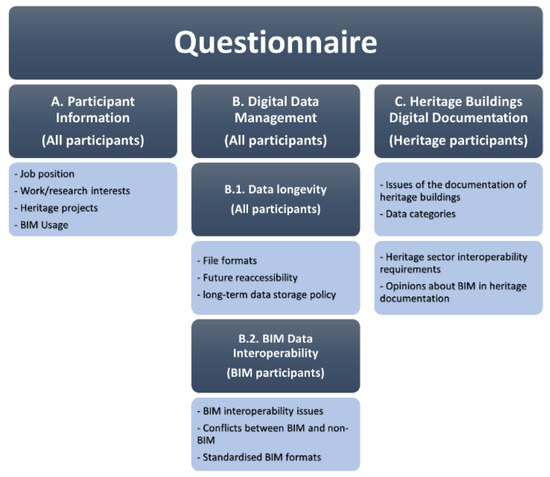
Figure 1.
Structure of the questionnaire.
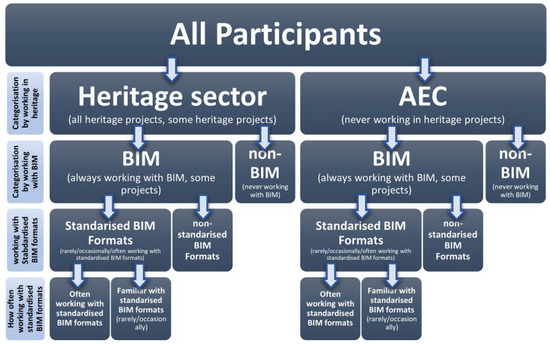
Figure 2.
Categorisation of the questionnaire participants.
The second section of the questionnaire titled “Digital data management” is divided into two parts: first part titled “Data longevity”, is asking questions about data formats, data storage, and data re-accessibility issues. The second part titled “BIM data interoperability”, is relevant only to BIM participants (Figure 1). Within this part a third categorisation of participants takes place based on working with standardised BIM formats (Figure 2).
The third section “Heritage Buildings Digital Documentation” is only relevant to participants identified as heritage sector participants. This section is aiming to explore the views of heritage participants towards interoperability issues and the use of BIM in the documentation of heritage buildings, as well as exploring the different data categories and the relations of different groups to them (Figure 1).
The questionnaire was published online on the Microsoft Forms platform and invitations for participation were sent by email to organisations, companies, and individual experts of a relevant field (i.e., architecture, archaeology, architectural history, construction, building service engineering, sustainability, heritage conservation, heritage management, 3D modelling, BIM, visualisation, and facility management) targeting individuals from both academic and professional backgrounds. Furthermore, invitations to the questionnaire were published online on LinkedIn and relevant Facebook groups. Participation was not geographically restricted, as the issue of data longevity and interoperability is global. Some organisations published the survey invitation through their members’ newsletters and/or online members’ groups such as ICOMOS-UK (International Council on Monuments and Sites), IHBC (Institute of Historic Buildings Conservation), CIBSE (Chartered Institution of Building Services Engineers), and CIPA Heritage documentation.
Received responses were analysed using Microsoft Excel software for quantitative data analysis and QSR NVIVO software for qualitative data analysis. The results of the online survey will be presented in the next section followed by a discussion of the findings.
4. Results
4.1. Questionnaire Responses
The questionnaire received 115 responses from a wide range of disciplines. Two responses were identical repetitions from the same participant, so one of them was excluded. One response was not relevant to the questionnaire as the participant was not from the AEC or heritage industries, so it was excluded. Therefore, the final number of responses until the writing of this paper was 113 responses. In order to aid with communication of the results and considering the sample size was 113 participants, it was decided to present data in the text as rounded percentages (i.e., 25%, 67%).
27% of the responses were from academic participants while 73% were from professionals. In total, 58% of the participants acknowledged they are fully or partially working in heritage projects and were identified in the study as “Heritage sector participants”. The remaining 42% of the participants responded they are not involved in any heritage related projects and are identified in the study as “AEC participants” (Figure 3). In a following question about using BIM in their projects, 56% responded that they use BIM in all or some of their projects in contrast to 44% who said they never use BIM (Figure 4). There is clear difference in BIM usage between heritage participants (51%) (Figure 5a) and AEC participants (63%) (Figure 5b). Figure 6 represents the distribution of the participants across AEC/heritage and BIM/non-BIM categorisation.
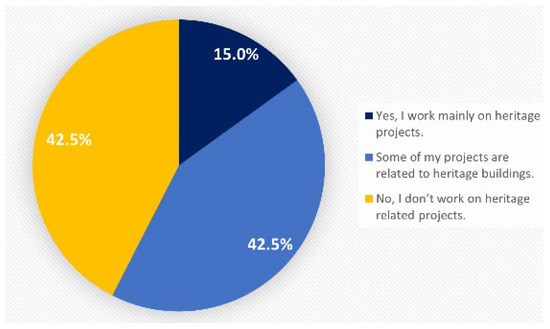
Figure 3.
Responses of participants on whether they work in heritage related projects.
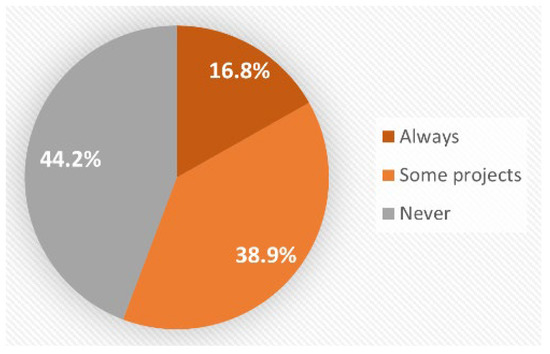
Figure 4.
Responses of participants on whether they use BIM in their projects.
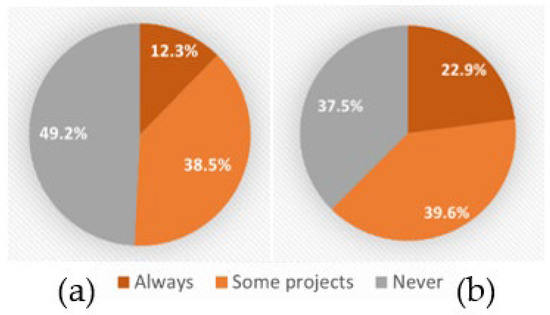
Figure 5.
Responses of heritage buildings sector participants (a), and AEC sector participants (b) on whether they use BIM in their projects.
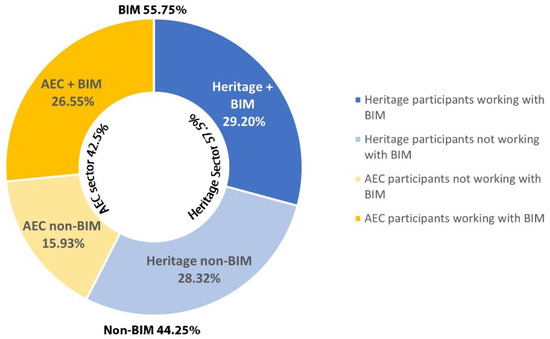
Figure 6.
Distribution of participants by heritage/AEC and the usage or not of BIM.
For the sake of clarity and consistency, all following graphs will be colour-coded to facilitate reading them. In all graphs highlighting a comparison between AEC and heritage sectors, yellow will be used for AEC participants and dark blue for heritage participants; for yes/no questions, shades of orange will be used for total or partial confirmation, and grey will be used for rejection; in questions about percentage or how often, shades of blue will be used while grey will be used for none/never; in opinion questions, shades of blue will be used for agreement, grey for neutral, and shades of red for disagreement. The exception for these colour-codes is in Section 4.4.2 which will follow the data category colour-codes (Table 1).

Table 1.
The colour-codes used in the graphs across the paper.
The participants were asked to identify their research/work interests and they could choose as many options as relevant from a list containing 19 interests as well as an “other” option where they could add non-listed choices. In the analysis phase the responses were grouped into eight interest groups combining disciplines with close scopes to study the differences between responses from different disciplines (Figure 7). Although separate disciplines should ideally be studied separately, such as Architecture historians and Archaeologists who involve different expertise, skills, and mindsets, for the scope of this research and to simplify reading and analysing the results, the authors tried to combine disciplines that have close scopes to deal only with eight groups of disciplinary interests that represent their respective disciplines needs. Table 2 presents the research/work interests listed in the questionnaire as well as the other responses added by the participants, and their grouping into eight interest groups based on similarity in scopes.
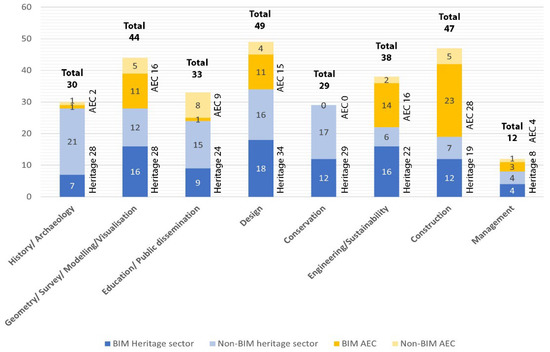
Figure 7.
Interest groups distributed by sector and BIM usage.
Table 2.
Groups of research/work interests and number of participants associated with them.
The first group is history/archaeology, which includes 30 participants, comprised the disciplines of archaeology, historic documentation, listing of heritage buildings, culture and heritage, and historical research, which all revolve around the history of the building. The second group is geometry/survey/modelling/visualisation. It includes 44 participants, 28 from the heritage sector and 16 from general AEC. This group is related to all disciplines working on the geometry of the building and its handling in the digital medium including survey, geometry capture, 3D modelling, scan to BIM, visualisation, AR-VR-MR, computing, and building inspection. The third group is education/public dissemination which has 33 participants, 24 from the heritage sector and 9 from AEC. This group includes disciplines related to communicating information to a wider audience, including museums, education, and public dissemination. The fourth group is design including architectural design, landscape, and interior design. A total of 49 participants are associated with this group, 34 from heritage sector and 15 from AEC. The fifth group is conservation, including 29 participants. The sixth group is engineering/sustainability, combing all disciplines that are related to engineering design and building performance in all its aspects. This group has 38 participants, of which 22 are from heritage sector and 16 from AEC. The seventh group is construction which although could be related to engineering, but its nature is more related to the execution of the project’s works rather than the design mindset. This group has 47 participants, 19 from the heritage sector and 28 from AEC. The eighth group is management which deals with the ongoing management of the building. This group has 12 participants, 8 from heritage sector and 4 from AEC (Table 2, Figure 7).
The results of the questionnaire showed some variations in BIM usage between different interest groups. History/archaeology group and education/public dissemination group were the least in BIM usage (27% and 30%, respectively) compared to 41% of conservation group, 58% of management group, 59% of design group, 61% of geometry/survey/modelling/visualisation group, 75% of construction group, and 79% of engineering/sustainability group (Figure 7).
When considering the number of groups associated with each participant, a clear deviation can be identified between heritage sector participants and AEC participants. As shown in Figure 8 heritage participants tend to be associated with more interest groups than AEC participants, for example 52% of AEC participants choose only one interest group compared to only 25% of heritage participants. Additionally, 92% of AEC participants choose three or less interest groups while only 8% choose more than three groups, on the other side 63% of heritage sector participants choose three or less interest groups and 37% were associated with more than three groups. This result could clearly highlight the complexity and interdisciplinarity associated with the heritage sector.
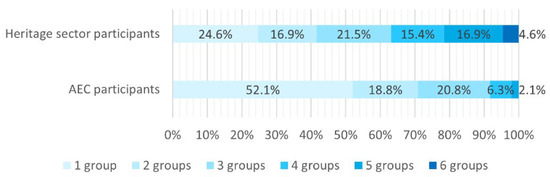
Figure 8.
Number of interest groups associated per participant.
4.2. Data Longevity Issues
The second section of the questionnaire titled “Digital data management” is divided into two parts the first part is “Data longevity” which is trying to investigate challenges of data re-accessibility and data storage.
4.2.1. Data Re-Accessibility Needs
A set of questions were included to identify the needs of future data re-accessibility after project completion. The responses showed that 76% of the participants need to re-access their projects in the future. The need for future re-accessibility was higher in the heritage sector (82%) than the AEC industries (69%) (Figure 9a). A follow-up question asked the participants who stated that they need to access their projects in the future about the percentage of their projects they require to re-access in the future. The results showed that 42% of heritage participants requiring future re-accessibility need to re-access more than half of their projects, compared to 39% of their AEC counterparts (Figure 9b).
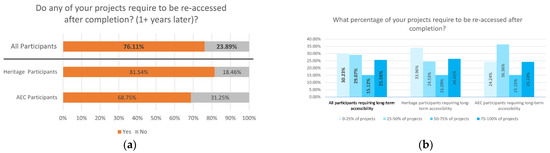
Figure 9.
Need for future re–accessibility of digital data (a), and the percentage of projects that need future re–accessibility (b).
A similar question directed only to BIM participants concerning their BIM data re-accessibility needs showed that 67% of the heritage sector BIM participants need to re-access their BIM projects in the future compared to 60% of the AEC BIM participants (Figure 10a). While the question about the percentage of BIM projects in need for future re-accessibility showed that only 27% of the heritage BIM participants that required future re-accessibility need to re-access more than half of their project, compared to 44% of their AEC counterparts (Figure 10b). Which may suggest that heritage participants were less enthusiastic to use BIM formats as a long-term data record.
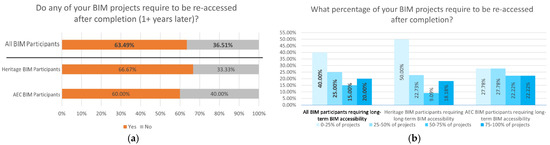
Figure 10.
Need for future re–accessibility of BIM data (a), and the percentage of projects that need future re–accessibility for BIM participants (b).
Another set of questions aimed to explore potential issues of re-accessibility of older data. The responses showed that 62% of non-BIM participants and 41% of BIM participants have encountered some problems in accessing older non-BIM data, giving an overall average of 50% for all participants in accessing older non-BIM data (Figure 11a).
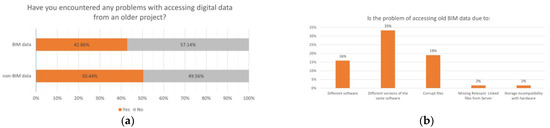
Figure 11.
Issues of re-accessibility of older data (a) and reasons for BIM re-accessibility problems (b).
Concerning accessing older BIM data, 43% of BIM participants reported encountering such problems (Figure 11a). The reasons for BIM data re-accessibility problems varied, 33% of BIM participants reported encountering issues due to the use of different versions of the same software, 19% had problems with corrupt files, 16% had issues due to using different software, one participant said that they had problem with missing linked files from server, and another participant stated that they had issues with storage incompatibility with hardware (Figure 11b).
4.2.2. Data Storage
Participants were asked if they have any established policy for the long-term storage of their digital data, whether it is an organisation policy or some personal preferred procedure. The results showed that 64% of all the participants follow some policy for data storage. For 38% this policy is an organisation policy, and the remaining 26% follow their own personal preference. This leaves 36% of all the participants that do not follow any set policy for data storage (Figure 12). Following this question, BIM participants were asked if they have a specified policy for storing BIM data, where 44% of the responses indicated following a policy for storing BIM data, including 23% that follow their organisation BIM storage policy, and 21% following their own preference (Figure 12).
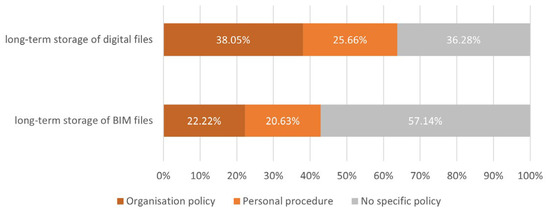
Figure 12.
Policy for long term storage of digital data and specific policy for BIM data.
A follow up question asked the participants who indicated following a long-term storage policy to briefly describe their storage policies. Table 3 represents the frequency of occurrence of ideas/points/topics in the participants’ comments, however some comments may mention more than one idea/point/topic. Therefore, the column “Number of references in participants’ comments” represents how many comments mentioned this idea/point/topic. This presentation will be the same for all following qualitative responses.
Table 3.
Policies of long-term storage of digital data mentioned by participants categorised by organisation policy/personal procedure.
The responses showed that some practices are familiar within organisation policies, including archiving on external drives, DVD storage, combining both local storage and off-site storage, and arching on servers. On the other hand, cloud-based storage, internal storage, and flash drives are more associated with participants who do not have any organisation policy but follow their personal procedure. Another question was aiming to specific BIM data storage showed similar results (Table 3).
4.2.3. Data Longevity Comments
At the end of data longevity section in the online survey, participants could add their own comments concerning long-term data storage and digital data longevity. The answers received were related to two areas: firstly, risks and challenges concerning data longevity, secondly, solutions and suggestions concerning long-term data storage.
The comments about data longevity challenges varied from concerns about data size, storage expenses, the short lifespan of software updates, data format obsolescence, outdated storage technologies, lack of identified storage policy, lack of defined storage responsibility between stakeholders, problems of archiving and locating the data. Some comments were specific to BIM data storage which include: low BIM adoption, reluctancy of some stakeholders to release BIM models, improper workmanship or BIM administration, immaturity of BIM to be adopted as a long-term data storage (Table 4).
Table 4.
Comments of the participants concerning digital data longevity.
The comments related to solutions and suggestions concerning long-term data storage included: storage requirement agreement at the beginning of the project, BIM details agreement at start, assigning an information manager from the FM team to be in charge of keeping access to the data, regular update and conversion of the data to the latest accessible format, handover of the BIM maintenance responsibility, stored data should follow FAIR protocol (Findable, Accessible, Interoperable, Reusable). Some participants stressed on the benefits of cloud-based storage, some advised of storing data in link SQL, some insisted on storing native file formats, while some participants argued that paper is still the most efficient data storage due to the inevitable obsolescence of data formats and digital storages medias (Table 4).
4.3. Data Interoperability
The second part of section B of the questionnaire is aiming to explore issues related to BIM interoperability, BIM formats, and standardised BIM formats. The following is a presentation of the received responses.
4.3.1. Data Interoperability Issues
BIM participants were asked if they have encountered any interoperability issues between different BIM software, 67% of heritage BIM participants and 50% of AEC BIM participants confirmed that they have encountered interoperability issues (Figure 13a). The following question is about potential conflicts between BIM and other formats were 52% of heritage BIM participants and 27% of AEC BIM participants stated they have encountered such problems (Figure 13b). For the nature of the conflicts mentioned by the participants many issues were risen, however the most prominent issue was in importing CAD files into BIM software (Table 5).
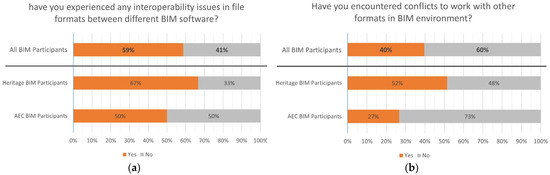
Figure 13.
Interoperability issues between different BIM software (a) and between BIM and non-BIM formats (b).
Table 5.
Conflicts between BIM and other formats.
4.3.2. Data Formats
A question about BIM software the participants use showed that Autodesk Revit is by far the most used software. It is used by 70% of heritage BIM participants and 83% of AEC BIM participants (Figure 14a). For the most used BIM formats rvt is the most used (79% of heritage BIM participants and 90% of AEC BIM participants), followed by ifc (55% and 40%, respectively) (Figure 14b). These results suggest that heritage participants are less dependent on proprietary BIM formats and using more of standardised BIM formats than their AEC counterparts.
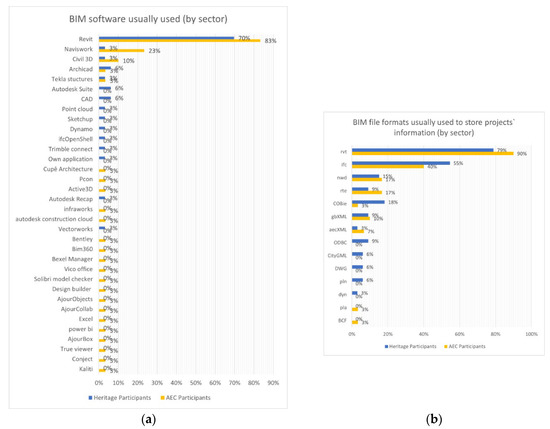
Figure 14.
BIM software (a), 1 and BIM file formats (b) used by the participants.
4.3.3. Standardised BIM Formats
Standardised BIM formats can be considered as potential solution for BIM interoperability issues and the limitations of the proprietary formats. The questionnaire included some questions about the use of standardised BIM formats. Based on the answers BIM participants were further categorised into three groups: participants often working with standardised BIM formats, participants familiar with standardised BIM formats (rarely or occasionally working with standardised BIM formats) and non-standardised BIM formats participants (Figure 2).
The responses showed that 70% of the BIM participants have used standardised BIM formats in some capacity, while 33% stated they are often using them. The numbers suggest that heritage sector is more leaning towards standardised BIM formats as 76% have used standardised BIM compared to 63% of AEC BIM participants, and for participants often working with standardised BIM formats the numbers are 36% of heritage BIM participants to 30% of AEC BIM participants (Figure 15).
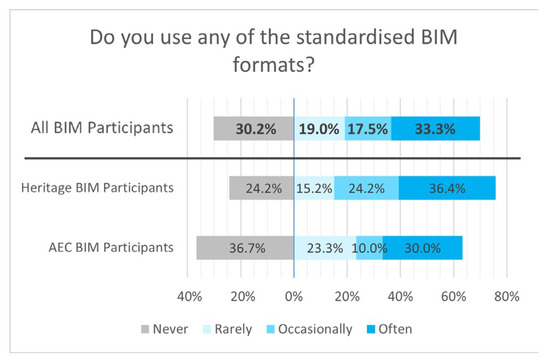
Figure 15.
The use of standardised BIM categorised by sector.
The analysis of standardised BIM formats usage by interest group showed that geometry/survey/modelling/visualisation group is the most group using standardised BIM formats as 78% are using them followed by management 71%, education/public dissemination 70%, conservation 67%, history/archaeology 63%, design 62%, and the least groups were engineering/sustainability and construction groups 57%, 54%, respectively (Figure 16).
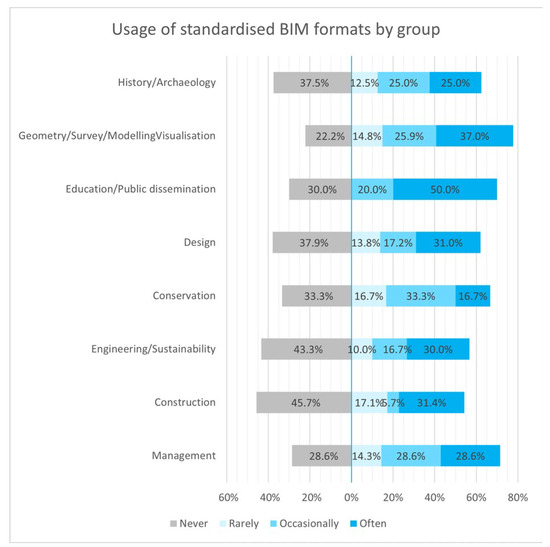
Figure 16.
The use of standardised BIM categorised by group.
To put things into perspective Figure 17 depicts the percentages of BIM usage and standardised BIM formats usage within the different disciplinary groups. The engineering/sustainability and construction groups were the highest in BIM adoption (79%, 74%, respectively), whereas the history/archaeology and education/public dissemination were the least using BIM (27%, 30%, respectively). For the overall percentage of standardised BIM usage, geometry/survey/modelling/visualisation was the highest (48%) followed by engineering/sustainability (45%), management (42%), construction (40%), design (37%), and conservation (28%), while the least groups using standardised BIM format were history/archaeology (17%), and education/public dissemination (21%) (Figure 17).
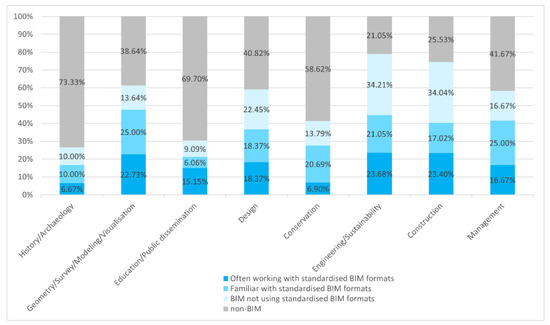
Figure 17.
BIM and standardised BIM usage within the disciplinary groups.
Participants who stated that they use standardised BIM formats were asked about how often they use some of the standardised BIM formats. The answers revealed that the most used standardised BIM format was IFC which was reported to be used by 91% of participants who used standardised BIM formats, while it was often used by 39% of them (Figure 18). It was the highest standardised format used by every group, while 57% of education/public dissemination group, 39% of design group, 35% of engineering/sustainability groups, 33% of geometry/survey/modelling/visualisation group, 32% of construction group, 25% of conservation group, and 20% of history/archaeology and management groups often rely on it (Figure 19).
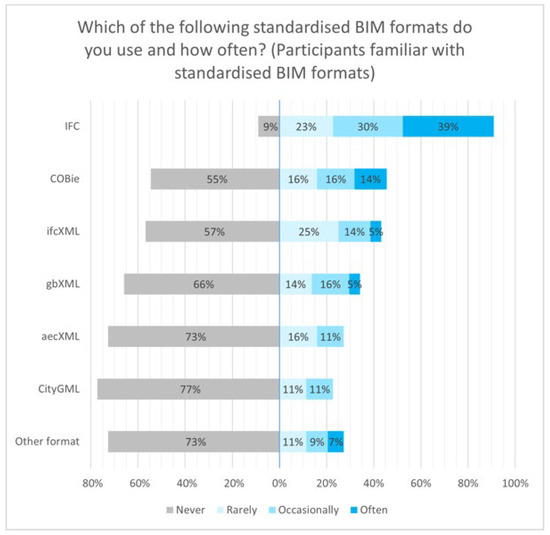
Figure 18.
The most used standardised BIM formats.
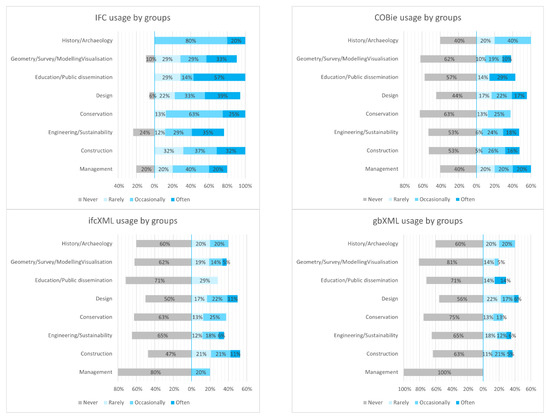
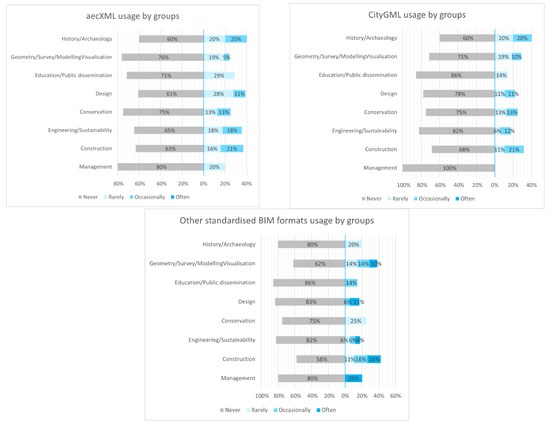
Figure 19.
The most used standardised BIM formats by group.
COBie format comes next as 45% of participants who use standardised BIM formats and often used by 14% of them (Figure 18). It is often used by standardised BIM users of education/public dissemination group (29%), management group (20%), design and engineering/sustainability groups (18%), construction group (16%), and geometry/survey/modelling/visualisation group (10%) (Figure 19).
ifcXML was used by 43% of participants who use standardised BIM and often used by 5% of them (Figure 18). It was most relevant to design, construction, engineering/sustainability, and geometry/survey/modelling/visualisation groups as 12%, 11%, 6%, and 5% of them, respectively, often use it (Figure 19).
gbXML is used by 34% and often used by 5% (Figure 18), while it was most relevant to engineering/sustainability, construction, and design groups (Figure 19). other formats added by the participants are BCF, rcp, xml, SQL, and NWD.
Two questions were aiming to explore the participants’ opinions towards standardised BIM formats, the first is aimed to participants often working with standardised BIM formats, it showed that 57% believed that standardised BIM formats currently solve interoperability problems while 43% disagreed (Figure 20). The second question was for all BIM participants about their opinions concerning the potentials of standardised BIM formats, the overall responses showed 64% agreement with the statement and 3% disagreement, the percentage of agreeing participants was higher within participants who are familiar or often working with standardised BIM formats (70%, 72%, respectively) (Figure 21). Within the interest groups the geometry/survey/modelling/visualisation group was the most approving group (74% agreement), followed by the construction group (69% agreement), engineering/sustainability (60% agreement/3% disagreement), design (59% agreement/3% disagreement), management (57% agreement), conservation (41% agreement/8% disagreement), history/archaeology (38% agreement/13% disagreement), and education/public dissemination (30% agreement/20% disagreement) (Figure 22).
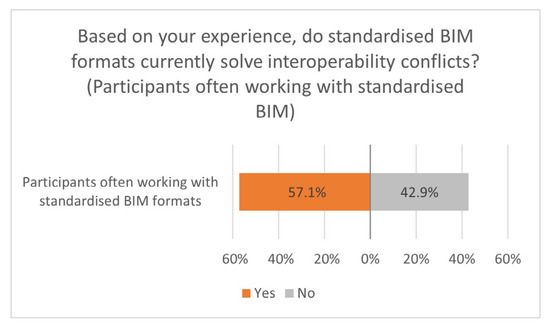
Figure 20.
The views of the participants often working with standardised BIM formats about the efficiency of standardised BIM formats in solving BIM interoperability issues.
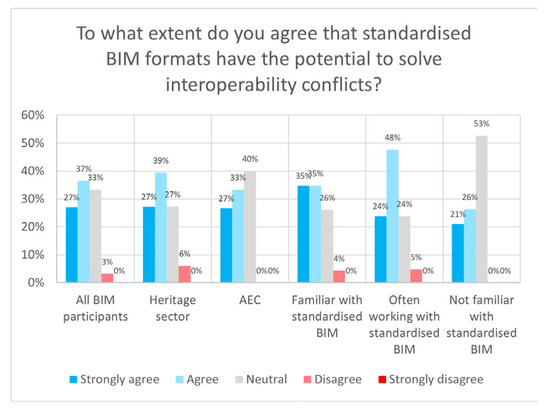
Figure 21.
Opinions of the participants towards standardised BIM formats.
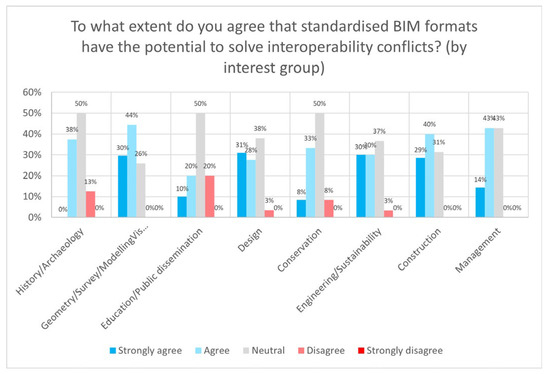
Figure 22.
Opinions of the participants towards standardised BIM formats by interest groups.
4.3.4. Interoperability Comments
At the end of data interoperability section, BIM participants were asked to present their comments concerning data interoperability. The most stated issue was the loss of data fidelity due to translation between BIM and non-BIM software. Another common statement is that the complexity of BIM makes it unlikely to be the common global standard in its current format. Some participants stressed on the latency in BIM adoption, especially in the heritage sector, and the need to introduce it to more users. Some participants argued that BIM is not user friendly enough to be a medium of data communication between different stakeholders. A trend in the comments was addressing the deficiencies of the standardised BIM formats, while one participant suggested that it would be more effective if all software developers adopted a single format that could be shared within any platform (Table 6).
Table 6.
Participants’ comments concerning data interoperability.
4.4. Heritage Data
The third section of the questionnaire was related to the management of digital data of heritage buildings. This was researched from different sides: assessment of the needs for data interoperability, the variations of data categories needed for different disciplinary groups, The challenges of digital documentation of heritage buildings, and the role of BIM in the management of the digital documentation of heritage buildings. Following is a presentation of the results of the online survey.
4.4.1. Heritage Data Interoperability Needs
A set of questions for the heritage participants was aiming to assess the needs for data interoperability in heritage buildings sector. The first question is asking the heritage participants about their needs to collaborate with different disciplines, where 95% approved, including 69% that stated that they often need such collaboration. The second question is about the need for digital data exchange where 94% of the heritage participants confirmed and 62% often needed data exchange. The third question was specific for BIM data exchange where 85% of heritage BIM participants approved but only 36% said that they often need BIM data exchange (Figure 23).
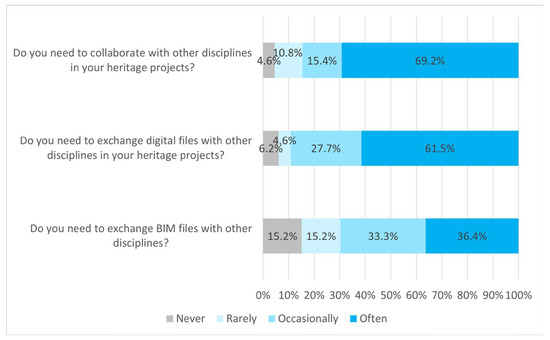
Figure 23.
Responses of the heritage sector participants concerning their needs for collaboration with other disciplines, exchange of digital data and exchange of BIM data.
The breakdown of these questions by the disciplinary groups showed that 100% of conservation, construction, management, and education/public dissemination groups’ participants are in need to collaborate with other disciplines and need to exchange digital data within their projects. While the need to exchange BIM data is more relevant to design and engineering/sustainability groups (Figure 24).
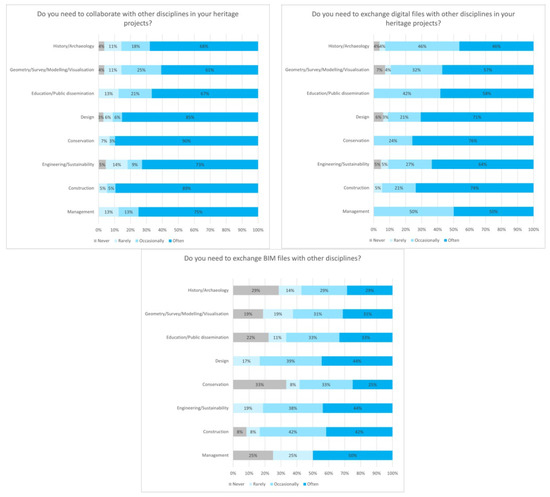
Figure 24.
Responses of the disciplinary groups of heritage sector participants concerning their needs for collaboration with other disciplines, exchange of digital data and exchange of BIM data.
4.4.2. Data Categories
Digital data concerning heritage buildings can be categorised into four distinctive categories: History/archaeology data, Geometric data, Pathologic data, and Performance data (Figure 25) [9]. One of the objectives of this online surveys was to study the variation in needs of the different disciplines for each data category. Graphs from Figure 25, Figure 26, Figure 27, Figure 28, Figure 29, Figure 30, Figure 31 and Figure 32 are colour coded by heritage data category to facilitate the graphs’ reading and interpretation: history/archaeology data is coded with shades of blue, geometric data is coded with shades of orange, pathologic data is coded with shades of yellow, and performance data is coded with shades of green.
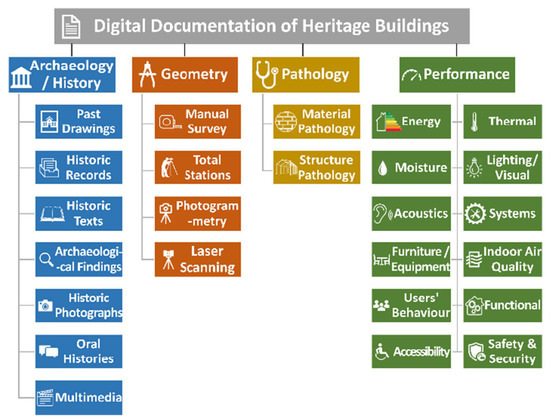
Figure 25.
Data categories related to the documentation of heritage buildings [9].
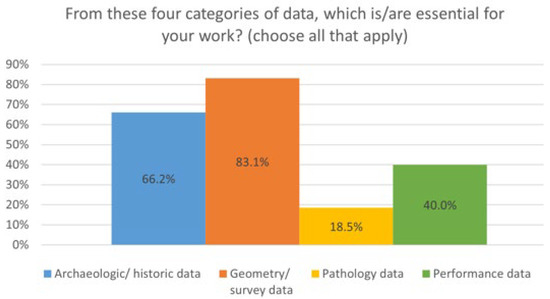
Figure 26.
Responses of all the heritage sector participants for data categories they consider essential for their work.
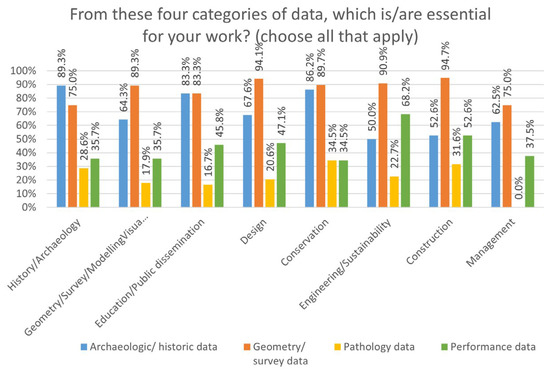
Figure 27.
Responses of different interest groups for data categories they consider essential for their work.
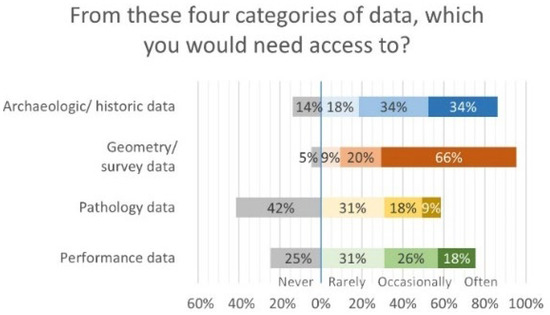
Figure 28.
Responses of all heritage sector participants for data categories they need access to.
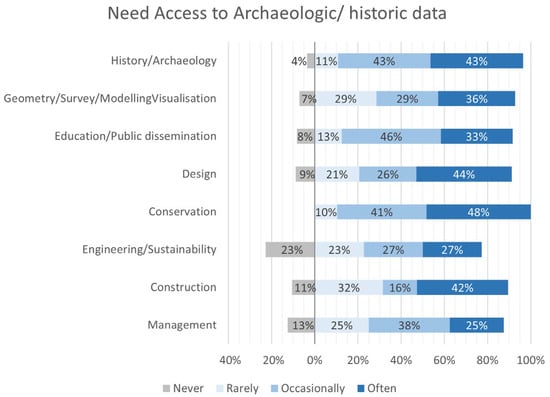
Figure 29.
Access needed for archaeologic/historic data by the different groups.
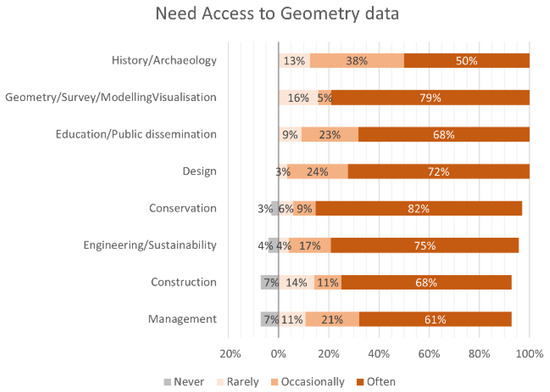
Figure 30.
Access needed for geometric data by the different groups.
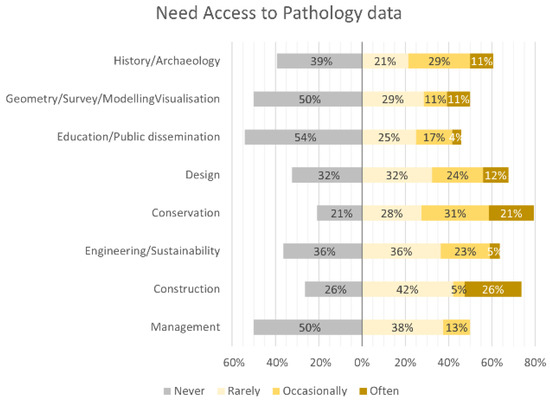
Figure 31.
Access needed for pathologic data by the different groups.
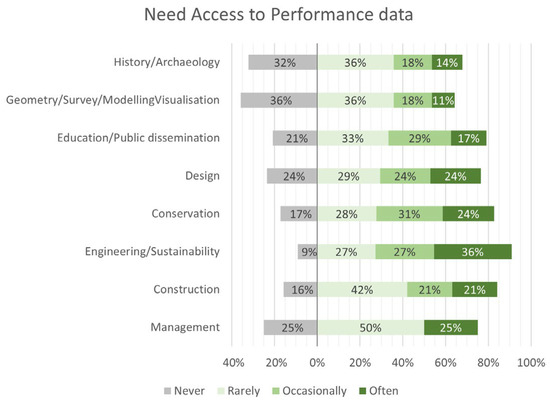
Figure 32.
Access needed for performance data by the different groups.
A question in the online survey was asking heritage sector participants about data categories they consider essential for their work, 83% of the responses considered geometric data as one of their essential data, followed by historic/archaeologic data for 66%, performance data for 40% and pathologic data for only 19% of the participants (Figure 26). The breakdown of the responses of this question based on the different interest groups shows that the geometric data category is the highest needed data for every group except for the history/archaeology group, where the need for historic/archaeologic data was higher. The historic/archaeologic data was the second needed data for geometry/survey/modelling/visualisation group, education/public dissemination group, design group, conservation group, and management groups. The pathologic data was needed for every group except the management group. The performance data was most needed for engineering/sustainability, construction, education/public dissemination, design, and management groups (Figure 27).
For more details, a following question was asking participants to indicate in which capacity they need access to the different data categories using a scale of: never, rarely, occasionally, or often. The responses represented similar overall results with geometric data by far the most needed access to by any capacity (95%) and the most often needed (66%). Followed by the historic/archaeologic data with overall needs of 86% and often needed 34%, then the performance data 75% and 18%, respectively, and finally the pathologic data overall needed by 58% of the participants and often needed by 9% (Figure 28).
This can be more emphasised in the breakdown of the responses concerning each data category by the different groups. The historic/archaeological data category was more relevant to the conservation group, history/archaeology group, design group, and construction group (Figure 29). Geometric data was clearly highly relevant to all groups with at least 61% of the participants of each group often needed access to it (Figure 30). Pathologic data was most relevant to conservation and construction groups, followed by design, history/archaeology, and geometry/survey/modelling/visualisation groups (Figure 31). While the performance data was most relevant to engineering/sustainability, construction, conservation, design, and management groups (Figure 32).
4.4.3. Heritage Documentation
Heritage participants were asked if they were involved in the documentation phase of heritage buildings where 77% agreed (Figure 33). Then, those who were involved in the documentation phase were asked to present their views about the challenges associated with the digital documentation of heritage buildings, the responses were very diverse and extensive (Table 7). By analysing the discussed topics, they could be grouped into four groups: pre-documentation, the documentation process, data management, and post-documentation.
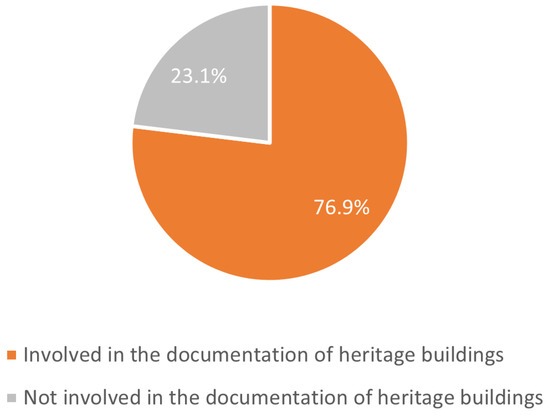
Figure 33.
Involvement in the phase of documentation of heritage buildings.
Table 7.
Participation opinions concerning the challenges of digital heritage documentation.
The pre-documentation challenges included: (1) building the vision behind the documentation that will lead to determination of the project requirements and standards, and determination of the LOD (Level of Details) required. (2) Other aspects include challenges of accessibility to data needed for the historic research and the disparity of data sources. (3) Additionally, mentioned the challenge of inaccurate as-built and older drawings. (4) Finally, some responses highlighted the challenge of access to building and that could be some limitation to access all areas of the building to perform the documentation.
The challenges of documentation process include: (1) limitation to budget, time, or available technology. (2) The challenge of accuracy of documentation, and the details and complexity level of the building, as well as the size of the point cloud produced. (3) Challenges of some hard to capture and document aspects such as documenting the intangible values of the building, documenting the building’s condition, and the challenge of performing a structural survey and documenting historic construction methods and materials.
The data management comments were mainly revolving around: (1) data interoperability, lack of consistency of BIM platforms, and the need to migrate data to standard BIM formats. (2) Additionally, some comments mentioned the challenges of data size, the archive management, and the need to create information banks.
Finally, the post-documentation comments discussed two main challenges: (1) Challenges of data longevity and the potential obsolescence of file formats. Some participants also highlighted the need for a paper-based documentation as a backup. (2) Challenges of data accessibility to clients and users, while some participants argued that data about heritage buildings documentation should also be accessible to researchers and the general public.
4.4.4. Heritage BIM
Heritage participants were asked to express their views concerning four statements about the role of BIM in the documentation of heritage buildings. The first statement is that BIM can facilitate the digital documentation of heritage buildings, which was accepted by 75% of the participants and refused by 5%. The second statement that BIM can facilitate interoperability in the digital documentation of heritage buildings, was accepted by 65% and refuted by 3% of the participants. The third statement is that BIM can facilitate interpretation/analysis/simulation of heritage buildings documentation, which was approved by 75% and rejected by 2%. The final statement is that BIM can be the medium for long-term digital records for heritage buildings documentation, was accepted by only 57% and refuted by 14% of the participants (Figure 34).
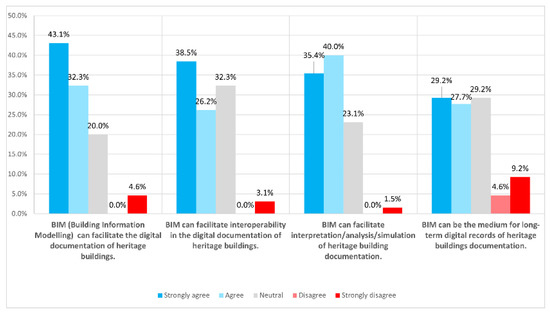
Figure 34.
Heritage participants views about the role of BIM in digital documentation of heritage buildings.
4.4.5. Heritage Documentation Data Comments
At the end of the third section participants were asked to express their views concerning the ideal medium for long-term storage of heritage buildings documentation. The responses represented a wide variety of viewpoints which can be summarised in the following topics (Table 8).
Table 8.
Comments of the participants about the ideal medium for long-term storage of documentation data.
Three participants argued that every heritage building is different and hence the needs of every case should be considered individually.
Some comments were related to how long the documentation should be preserved, one participant stated it should be valid for 1 year+, another participant favoured 10 years+, and two other participants argued that heritage buildings documentation should ideally survive for 50 years+.
A viewpoint favoured that the stored documentation should be as simple as possible, four participants suggested that heritage buildings documentation should be kept in document formats such as pdf or paper prints. One participant stated that paper documentation is still more reliable on the long run than digital documentation. Another participant stressed on the concept of simplicity and minimalism in heritage buildings documentation to the point that a short paper memo could be more useful than a not-used digital model.
Another view debated that a mixed-type documentation is more efficient, such as storing the native file formats in addition to a more reliable or easy to use format such as document formats or a web-based accessible models.
A total of eighteen comments mentioned that a heritage building documentation should be in a digital form. Five participants said it should be stored in cloud-based storage. For the form of documentation five participants stated it should be a 3D model, one participant suggested GIS as a tool for storing heritage buildings information.
BIM was mentioned by five participants as a medium for long-term digital documentation of heritage buildings, while one comment was sceptical that BIM, even though it has the potentials, is not efficient enough in its current status. One participant even suggested that BIM complex models should have the ability to be accessed by non-BIM users to widen its accessibility within different stakeholders.
Three participants preferred to define their idea about the ideal medium for long-term documentation of heritage buildings without naming a specific solution, such as: “A platform able to store a model and data from multiple formats with the ability of real time simulation.”, “A platform that is user friendly and accessible to everyone.”, “Linked data models, that reference specific models for different kinds of information.”.
Another topic discussed in the comments is the update of data, while a viewpoint is to develop a tool that automatically updates file formats according to their software updates, a participant suggested that the facility management team should be responsible on keeping the data updated.
A trend in the comments is concerned about the accessibility of data. Tow comments stated that after a period of time documentation data should be stored by a secured and reliable public body for public accessibility and future research. Another two participants stressed that documentation data should be in form of open-source standard data. Another participant suggested that documentation data could be incorporated in a Metaverse world.
5. Discussion
Data longevity and interoperability issues could be more challenging for the heritage buildings sector than any other sector within the AEC industries, this is because of the nature of heritage projects that usually requires much wider interdisciplinary involvement, in addition to the value of the heritage building data that could be on its own an asset to be preserved. However, more research is needed to help better understand these differences.
No available earlier research taking the approach of quantitative and qualitative survey were found. Therefore, the authors designed this online survey to try to examine this hypothesis and explore aspects of differentiation between the heritage sector and other AEC sectors. The online questionnaire aimed to explore three areas: firstly, the data longevity and data storage challenges, secondly the BIM interoperability issues and challenges including assessing the efficiency of standardised BIM solutions, and thirdly to explore challenges of the digital documentation of heritage buildings by analysing the needs for different data categories and the needs for data collaboration, as well as exploring the stance of heritage participants towards BIM. A total of 113 valid responses were received leading to interesting results. Participants were categorised into heritage sector participants and AEC participants, this is followed by a second categorisation into BIM participants and non-BIM participants, while BIM participants were further categorised into not working with standardised BIM formats, familiar with standardised BIM formats, and often working with standardised BIM formats. In terms of research/work interests, participants were associated with one or more of eight groups of disciplinary interests: history/archaeology, geometry/survey/modelling, education/public dissemination, design, conservation, engineering/sustainability, construction, and management. It was noted that heritage sector participants tend to be associated with more interest groups than their AEC counterparts, as 37% of heritage participants were associated with more than three groups compared to only 8% of AEC participants, which highlights the complexity and interdisciplinary nature of the heritage sector.
The objectives of the online questionnaire were: (1) To assess the needs of the general AEC industry and of the heritage buildings sector for long-term storage. (2) To explore issues of interoperability of BIM data. (3) To explore the extent of standardised BIM formats usage. (4) To compare BIM usage between heritage buildings sector practitioners and other practitioners in the AEC industry. (5) To evaluate the need for interdisciplinarity and interoperability between different disciplines involved in the digital documentation of heritage buildings. (6) To assess the needs of different disciplines to access different data types. (7) To assess the extent of BIM usage for all disciplines within the heritage buildings sector. (8) To measure the extent of BIM as a tool for digital documentation of heritage buildings that can facilitate the data management through the different processes related to the heritage building.
5.1. Data Longevity and Data Storage
One of the objectives of the online questionnaire is to assess the data longevity needs for the heritage buildings sector and evaluate its urgency in comparison to the wider AEC industry. The responses showed higher needs of the heritage sector participants for future re-accessibility of digital data as 82% stated that they need to re-access their projects after completion compared to 69% of AEC participants. However, BIM future re-accessibility needs were less obvious (67% of heritage BIM participants and 60% of AEC BIM participants). This may suggest that although 51% of heritage participants are working with BIM, BIM could be still not the medium used for the whole lifecycle of the heritage project and not the medium usually used for long-term data record.
The questionnaire results suggest that BIM data longevity is a serious issue as 43% of BIM participants have already encountered some problems in accessing older BIM data. In total, 33% of BIM participants reported facing re-accessibility problems due to the use of different versions of the same software which suggests that the fast-developing software market could actually be a restriction for BIM data longevity. A total of 19% of BIM participants reported corrupt files as a reason for not being able to access older data, which highlights the challenges of robust data storage solutions. In total, 16% of BIM participants reported having problems accessing older data because they are using different software than the ones used in creating the data, which highlights the interoperability issues and the need for universal data formats that are not restricted to a specific platform and could be interpreted in various software solutions.
Data storage procedures were investigated within the online survey. A total of 38% of all the participants stated that their organisations are following some sort of established policy for long-term storage of data. A further 26% were following their own personal preferred procedures. This leaves a 36% of all the participants who reported having no policy for long-term data storage, which is a very high percentage considering the value of digital building data, especially for heritage buildings.
The main policies highlighted in the participants responses included archiving on external drives, cloud-based storage, off-site storage, storing both original files and pdf prints, and one participant suggested that data should be stored in the concerned building itself rather than the company doing the work.
Many concerns have been highlighted in the participants comments about data longevity challenges including: data size, storage expenses, the short lifespan of software updates, data format obsolescence, outdated storage technologies, lack of identified storage policy, lack of defined storage responsibility between stakeholders, problems of archiving and locating the data. Some comments were specific to BIM data storage including: low BIM adoption, reluctancy of some stakeholders to release BIM models, improper workmanship or BIM administration, immaturity of BIM to be adopted as a long-term data storage. Some participants presented solutions and suggestions concerning long-term data storage included: storage requirement agreement at the beginning of the project, BIM details agreement at start, assigning an information manager from the facility management team to be in charge of keeping access to the data, regular update and conversion of the data to the latest accessible format, stored data should follow FAIR protocol (Findable, Accessible, Interoperable, Reusable). Some participants stressed on the benefits of cloud-based storage, some advised of storing data in link SQL, some insisted on storing native file formats, while some participants argued that paper is still the most efficient data storage medium due to the inevitable obsolescence of both data formats and digital storages medias.
5.2. BIM Adoption
Among the objectives of the research is to compare BIM usage between heritage buildings sector practitioners and other practitioners in the AEC industry. The results revealed that heritage sector is still behind the AEC industry in adopting BIM as 51% of the heritage participants use BIM including only 12% who are always relying on it, compared to 63% of AEC participants using BIM including 23% always using it. This could also be highlighted in many comments of heritage sector participants in the qualitative questions. This latency in BIM adoption in the heritage sector could be a result of many factors including more complexity in heritage projects, more interdisciplinary interaction in the heritage sector, and the limitations of H-BIM.
In response to the research objective aiming to assess the extent of BIM usage for all disciplines within the heritage buildings sector, the results showed a wide variation in BIM adoption between different disciplinary groups from 27% to 79% BIM usage. History/archaeology and education/public dissemination groups were the lowest in BIM usage, followed by conservation, management, design, and geometry/survey/modelling/visualisation groups, while construction and engineering/sustainability groups were the highest in BIM adoption. However, for the use of standardised BIM formats geometry/survey/modelling/visualisation was the highest this could be due to the complexity of the geometry capture procedure, especially in the heritage sector, and the fact that geometry data is usually the base for other disciplines to work upon.
5.3. BIM Interoperability
An objective of the online survey was to explore issues of interoperability of BIM data. The questionnaire results showed that the heritage sector is more prone to interoperability issues between BIM and other data formats than the general AEC industries, as 52% of heritage BIM participants reported interoperability issues compared to only 27% of AEC BIM participants reporting such issues. Concerning the conflicts between BIM and non-BIM data, the main issue mentioned by the participants was related to importing CAD formats into BIM software. Furthermore, 67% of heritage BIM participants reported interoperability issues between different BIM software, versus 50% reported by AEC BIM participants, highlighting the increased issues faced by heritage participants.
The qualitative comments of the participants showed that the most alarming issue concerning BIM data interoperability is the loss of data fidelity due to translation between BIM and non-BIM software. Another common statement is that the complexity of BIM makes it unlikely to be the common global standard in its current format. Additionally, some participants mentioned the latency in BIM adoption, especially in the heritage sector, and the need to introduce it to more users. Some participants addressed the deficiencies of the standardised BIM formats, while one participant suggested that it would be more effective if all software developers adopted a single format that could be shared within any platform.
5.4. BIM Standardised Formats
Recent standardised BIM formats that can be interpreted within different BIM software could be a solution to mitigate BIM interoperability issues and facilitate collaboration between various stakeholders. Exploring the extent of standardised BIM formats usage was among the objectives of the questionnaire. The survey results suggest that 76% of heritage BIM participants and 63% of AEC BIM participants have used standardised BIM formats in some capacity.
91% of the participants who use standardised BIM formats reported using IFC including 39% reporting frequent usage. Other standardised BIM formats such as COBie, ifcXML, gbXML, and BCF followed in terms of usage with significantly less percentage of usage. For the disciplinary groups’ breakdown, IFC was most relevant to history/archaeology, conservation, construction, and education/public dissemination groups. While COBie was most relevant to management group, ifcXML most used by construction and design groups, and gbXML was associated with design, construction, and engineering/sustainability groups.
The views of participants towards standardised BIM formats were overall positive as 72% of participants that are often working with standardised BIM formats agreed that standardised BIM formats have the potential to solve BIM interoperability conflicts, while only 57% said that they are currently successful in solving BIM interoperability conflicts.
5.5. Heritage Sector Digital Data Usage
The fifth objective of the research was to evaluate the need for interdisciplinarity and interoperability between different disciplines involved in the digital documentation of heritage buildings. The survey results confirm that interdisciplinary interaction is a crucial factor in the heritage buildings sector, as 95% of the heritage sector participants acknowledged that they require some level of collaboration with other disciplines in their heritage projects, including 69% that often rely on this collaboration. While there are some differences between different disciplinary groups in interdisciplinary requirement, between 61% and 90% often require interdisciplinary collaboration, the highest percentages were in the conservation, construction, design, and management groups.
Data interoperability in heritage sector is similarly emphasised in the results of the questionnaire as 94% of the heritage participants are in need of digital data exchange with other disciplines in some of their projects, this includes 62% who stated that they often need such digital data exchange. The highest groups that often require data exchange were construction, conservation, and design groups.
In terms of BIM data exchange, 85% of heritage BIM participants acknowledged that they would need to exchange BIM data in some of their projects while only 36% addressed BIM data exchange as often required. This discrepancy between the digital data exchange requirements and the BIM data exchange requirements can be understood as a result of latency of BIM adoption in the heritage sector that some teams in the project could be using BIM but they need to exchange information in non-BIM formats with other project teams that are depending on pre-BIM digital workflow. The latency of BIM adoption in the heritage sector can also be observed in the comparison of BIM adoption in the questionnaire responses between the heritage sector and AEC, as only 51% of the heritage participants are using BIM in some capacity compared to 63% of the AEC participants.
Heritage participants showed their approval of 75% that BIM can facilitate the digital documentation of heritage buildings. 65% approved that BIM can facilitate interoperability in the digital documentation of heritage buildings. 75% approved that BIM can facilitate interpretation/analysis/simulation of heritage buildings documentation. The statement that BIM can be the medium for long-term digital records for heritage buildings documentation, received the least approval percentage as only 57% of the participants agreed while 14% disagreed, which suggests less overall confidence compared to the other statements.
Digital data related to heritage buildings can be categorised into four categories: history/archaeology data, geometry data, pathology data, and performance data. The need for different data categories can vary between the various disciplines involved in heritage projects [9]. One of the objectives of this online survey was to investigate these differences. The questionnaire results suggest that the geometry data category is by far the most essential data by almost all the interest groups and the most data they needed access to. The archaeologic/historic data category was essential for the history/archaeology, education/public dissemination, conservation, and design groups. The pathology data was most essential for the conservation, construction, and history/archaeology groups. Performance data was essential for the engineering/sustainability, construction, design, education/public dissemination, and management groups.
5.6. Digital Documentation of Heritage Buildings
77% of the heritage participants acknowledged they are involved in the process of digital documentation of heritage buildings. They have shared their views concerning the challenges facing the digital documentation process, where their comments were related to four areas: pre-documentation, documentation process, data management, and post documentation.
The pre-documentation challenges were concerned with the vision behind the documentation, determination of the project requirements and standards. Other concerns were related to the disparity of data sources and data accessibility problems. The challenge of inaccurate as-built and older drawings was also mentioned. Finally, some responses highlighted the challenges of physically accessing buildings and all their areas.
The reported challenges of the documentation process included limitations to the availability of budget, time, and technology. The challenge of accuracy of documentation, the details and complexity level of the building, as well as the size of the point cloud produced. Challenges of some hard to capture and document aspects such as documenting the intangible values of the building, documenting the building condition, and the challenge of performing a structural survey and documenting historic construction methods and materials were also reported.
The data management comments were mainly revolving around data interoperability, lack of consistency of BIM platforms, and the need to migrate data to standard BIM formats. Additionally, some comments mentioned the challenges of data size, the archive management, and the need to create information banks.
Finally, the post-documentation comments discussed two main challenges. Firstly, the challenges of data longevity and the potential obsolescence of file formats. Secondly, the challenges of data accessibility to clients, and users, while one participant argued that data about heritage buildings documentation should also be accessible to researchers, and to the general public.
Heritage participants views concerning the ideal medium for long-term storage of heritage buildings digital documentation for future access varied and branched into various trends. Some views argued that every heritage building is different and hence the needs of every case should be considered individually. Some arguments were based on the duration the stored data should ideally survive, which was suggested up to 50 years+.
Some participants argued that the stored documentation should be as simple as possible, some suggested that heritage buildings documentation should be kept in document formats such as pdf or paper prints. Another view debated that a mixed-type documentation is more efficient, such as storing the native file formats in addition to a more reliable or easy to use format such as document formats or a web-based accessible models.
On the other hand, many participants stated that a heritage building documentation should be in a digital form. Several said it should be stored in a cloud-based storage. For the form of documentation some participant stated it should be a 3D model, other view suggested GIS as a tool for storing heritage buildings information. BIM was mentioned by many participants as an ideal medium for long-term digital documentation of heritage buildings, while some views were sceptical that BIM, even though it has the potentials, is not efficient enough in its current status. Some participants even suggested that BIM complex models should have the ability to be accessed by non-BIM users to widen its accessibility within different stakeholders.
Some participants preferred to define their idea about the ideal medium for long-term documentation of heritage buildings without naming a specific solution, such as: “A platform able to store a model and data from multiple formats with the ability of real time simulation.”, “A platform that is user friendly and accessible to everyone.”, “Linked data models, that reference specific models for different kinds of information.”.
Another topic discussed in the comments is the update of data, either by a tool that automatically updates file formats according to their software updates, or an obligation for the facility management team to be responsible on keeping the data updated.
Accessibility of data was also discussed in the comments. Some views stated that after a period of time heritage buildings documentation data should be stored by a secured and reliable public body for public accessibility and future research. Other participants stressed that documentation data should be in form of open-source standard data. Another view suggested that documentation data could be incorporated in a Metaverse world.
6. Conclusions
The results of the online survey highlighted the importance of data longevity, especially for the heritage sector, and the need for universal open file formats that could be easily interpreted between all software platforms and structured in such a way that they could be readable in future software versions. The results also make it clear that the heritage sector is in more need for reliable software interoperability. However, as limited research efforts are concerned with these issues specifically within the heritage buildings sector, more research is needed to address the interoperability challenges of BIM environments to help enhance their ability for the integration of the diverse sources of data and the involvement of the various stakeholders that are crucial for the protection and survival of the built heritage. More research is also needed for long-term building digital storage solutions that can be re-accessed in the future, as well as a concentrated effort by software developers to account for this need in their software and allow for cross compatibility between different versions of the same software, as well as different software.
Author Contributions
Conceptualization, A.K. and S.S.; methodology, A.K. and S.S.; online survey design, A.K. and S.S.; online survey review, S.S.; questionnaire dissemination, A.K. and S.S.; analysis, A.K.; writing—original draft preparation, A.K.; writing—review and editing, S.S.; visualization, A.K.; supervision, S.S. All authors have read and agreed to the published version of the manuscript.
Funding
This research was funded by the University of Greenwich, Vice Chancellor Scholarship (VCS-ACH-01-18).
Institutional Review Board Statement
The study was conducted in accordance with the Declaration of Helsinki, and approved by the Ethics Committee of the University of Greenwich, Faculty of Liberal Arts & Sciences (FLAS_248_DES, 04/05/2021).
Informed Consent Statement
Informed consent was obtained from all subjects involved in the study.
Conflicts of Interest
The authors declare no conflict of interest.
References
- Sampaio, A.Z.; Pinto, A.M.; Gomes, A.M.; Sanchez-Lite, A. Generation of an HBIM Library Regarding a Palace of the 19th Century in Lisbon. Appl. Sci. 2021, 11, 7020. [Google Scholar] [CrossRef]
- Volk, R.; Stengel, J.; Schultmann, F. Building Information Modeling (BIM) for Existing Buildings-Literature Review and Future Needs. Autom. Constr. 2017, 38, 109–127. [Google Scholar] [CrossRef]
- Koller, D.; Frischer, B.; Humphreys, G. Research Challenges for Digital Archives of 3D Cultural Heritage Models. J. Comput. Cult. Herit. 2009, 2, 1–17. [Google Scholar] [CrossRef]
- Habibi, S. The Promise of BIM for Improving Building Performance. Energy Build. 2017, 153, 525–548. [Google Scholar] [CrossRef]
- Fai, S.; Graham, K.; Duckworth, T.; Wood, N.; Attar, R. Building Information Modelling and Heritage Documentation. In Proceedings of the 23rd International Symposium, International Scientific Committee for Documentation of Cultural Heritage (CIPA), Prague, Czech Republic, 12–16 September 2011. [Google Scholar]
- Logothetis, S.; Delinasiou, A.; Stylianidis, E. Building Information Modelling for Cultural Heritage: A Review. ISPRS Ann. Photogramm. Remote Sens. Spat. Inf. Sci. 2015, 2, 177–183. [Google Scholar] [CrossRef]
- Barazzetti, L.; Banfi, F. Mixed Reality and Gamification for Cultural Heritage; Springer: Cham, Switzerland, 2017. [Google Scholar] [CrossRef]
- Beach, T.; Petri, I.; Rezgui, Y.; Rana, O. Management of Collaborative BIM Data by Federating Distributed BIM Models. J. Comput. Civ. Eng. 2017, 31, 04017009. [Google Scholar] [CrossRef]
- Khalil, A.; Stravoravdis, S.; Backes, D. Categorisation of Building Data in the Digital Documentation of Heritage Buildings. Appl. Geomat. 2020, 13, 29–54. [Google Scholar] [CrossRef]
- ISO/IEC 2382:2015(En), Information Technology-Vocabulary. 2015. Available online: https://www.iso.org/obp/ui/#iso:std:iso-iec:2382:ed-1:v1:en. (accessed on 3 June 2022).
- BIM Interoperability Expert Group (BIEG). BIM Interoperability Expert Group (BIEG) Report. no. March 2020. Available online: https://www.cdbb.cam.ac.uk/AboutCDBB/WorkingGroups/bim-interoperability-expert-group/building-information-modelling-bim (accessed on 15 September 2022).
- GIIG. The Giig Glossary Government & Industry. 2021. Available online: https://www.cpni.gov.uk/information-interoperability (accessed on 15 September 2022).
- Grilo, A.; Jardim-Goncalves, R. Value Proposition on Interoperability of BIM and Collaborative Working Environments. Autom. Constr. 2010, 19, 522–530. [Google Scholar] [CrossRef]
- Shehzad, H.M.F.; Ibrahim, R.B.; Yusof, A.F.; Khaidzir, K.A.M.; Iqbal, M.; Razzaq, S. The Role of Interoperability Dimensions in Building Information Modelling. Comput. Ind. 2021, 129, 103444. [Google Scholar] [CrossRef]
- Tommasi, C.; Achille, C. Interoperability Matter: Levels Of Data Sharing, Starting From A 3d Information Modelling. 2017. Available online: https://doi.org/doi:10.5194/isprs-archives-XLII-2-W3-623-2017 (accessed on 15 September 2022).
- Figueiredo Muller, M.; Garbers, A.; Esmanioto, F.; Huber, N.; Loures, E.R.; Canciglieri, O., Jr. Data Interoperability Assessment Though IFC for BIM in Structural Design-a Five-Year Gap Analysis. J. Civ. Eng. Manag. 2017, 23, 943–954. [Google Scholar] [CrossRef]
- British Standard Institution (BSI). Information Management According to BS EN ISO 19650-Guidance Part 1: Concepts. UK BIM Alliance 2020, 1–42. [Google Scholar]
- Felicetti, A.; Lorenzini, M. Metadata and Tools for Integration and Preservation of Cultural Heritage 3D Information. Geoinformatics FCE CTU 2011, 6, 118–124. [Google Scholar] [CrossRef]
- BuildingSMART. BuildingSMART-The International Home of BIM. Available online: https://www.buildingsmart.org/ (accessed on 10 December 2021).
- IFC Formats-BuildingSMART Technical. Available online: https://technical.buildingsmart.org/standards/ifc/ifc-formats/ (accessed on 20 July 2021).
- Nieto, J.E.; García, D.A.; Moyano Campos, J.J. Implementation and Management of Structural Deformations into Historic Building Information Models. Int. J. Archit. Herit. 2019, 14, 1–14. [Google Scholar] [CrossRef]
- Arayici, Y.; Fernando, T.; Munoz, V.; Bassanino, M. Interoperability Specification Development for Integrated BIM Use in Performance Based Design. Autom. Constr. 2018, 85, 167–181. [Google Scholar] [CrossRef]
- BSI. BS 1192-4: 2014 Collaborative Production of Information Part 4: Fulfilling Employer’ s Information Exchange Requirements Using COBie-Code of Practice. Br. Stand. Inst. BSI 2014, 1–50. [Google Scholar]
- Hungu, C. Utilization of BIM from Early Design Stage to Facilitate Efficient FM Operations. Chalmers Reprocenter 2013, 98, 1–71. [Google Scholar]
- ISO-ISO 10303-28:2007-Industrial Automation Systems and Integration-Product Data Representation and Exchange-Part 28: Implementation Methods: XML Representations of EXPRESS Schemas and Data, Using XML Schemas. Available online: https://www.iso.org/standard/40646.html (accessed on 15 September 2022).
- Costa, G.; Madrazo, L. Connecting Building Component Catalogues with BIM Models Using Semantic Technologies: An Application for Precast Concrete Components. Autom. Constr. 2015, 57, 239–248. [Google Scholar] [CrossRef]
- Jeong, W.S.; Kim, K.H. A Performance Evaluation of the BIM-Based Object-Oriented Physical Modeling Technique for Building Thermal Simulations: A Comparative Case Study. Sustainability 2016, 8, 648. [Google Scholar] [CrossRef]
- About GbXML Green Building XML Schema. Available online: https://www.gbxml.org/About_GreenBuildingXML_gbXML (accessed on 8 December 2021).
- Wang, C.; Cho, Y.K. Performance Evaluation of Automatically Generated BIM from Laser Scanner Data for Sustainability Analyses. Procedia Eng. 2015, 118, 918–925. [Google Scholar] [CrossRef]
- Szewczyk, J. The Limitations of Architectural XML-Powered Databases. In Proceedings of the 7th International Conference on Computer Aided Architectural Design Research in Asia, Cyberjaya, Malaysia, 18–20 April 2002; pp. 65–72. [Google Scholar]
- Noardo, F. Architectural Heritage Semantic 3D Documentation in Multi-Scale Standard Maps. J. Cult. Herit. 2018, 32, 156–165. [Google Scholar] [CrossRef]
- CityGML|OGC. Available online: https://www.ogc.org/standards/citygml (accessed on 20 July 2021).
- BuildingSMART. BIM Collaboration Format (BCF)-BuildingSMART International. Available online: https://www.buildingsmart.org/standards/bsi-standards/bim-collaboration-format-bcf/ (accessed on 10 December 2021).
- Kim, S.; Coffeen, R.C.; Sanguinetti, P. Interoperability Building Information Modeling and Acoustical Analysis Software-A Demonstration of a Performing Arts Hall Design Process Building Information Modeling (BIM) and the Consultant: Managing Roles and Risk in an Evolving Design and Construction Process. Citation Proc. Mtgs. Acoust. 2013, 19, 15095. [Google Scholar] [CrossRef]
- Erfani, K.; Mahabadipour, S.; Nik-Bakht, M.; Li, J. BIM-Based Simulation for Analysis of Reverberation Time. IBPSA Build. Simul. 2019, 16, 63–67. [Google Scholar] [CrossRef]
- Schröder, D.; Pohl, A.; Drechsler, S.; Svensson, U.P.; Vorländer, M.; Stephenson, U.M. OpenMat-Management of Acoustic Material (Meta-)Properties Using an Open Source Database Format. Proc. AIA-DAGA 2013, 2013, 576–579. [Google Scholar]
- Historic England. BIM for Heritage Developing a Historic Building Information Model. (Swindon, 2017). Available online: https://historicengland.org.uk/advice/technical-advice/recording-heritage/ (accessed on 15 September 2022).
- Quattrini, R.; Pierdicca, R.; Morbidoni, C. Knowledge-Based Data Enrichment for HBIM: Exploring High-Quality Models Using the Semantic-Web. J. Cult. Herit. 2017, 28, 129–139. [Google Scholar] [CrossRef]
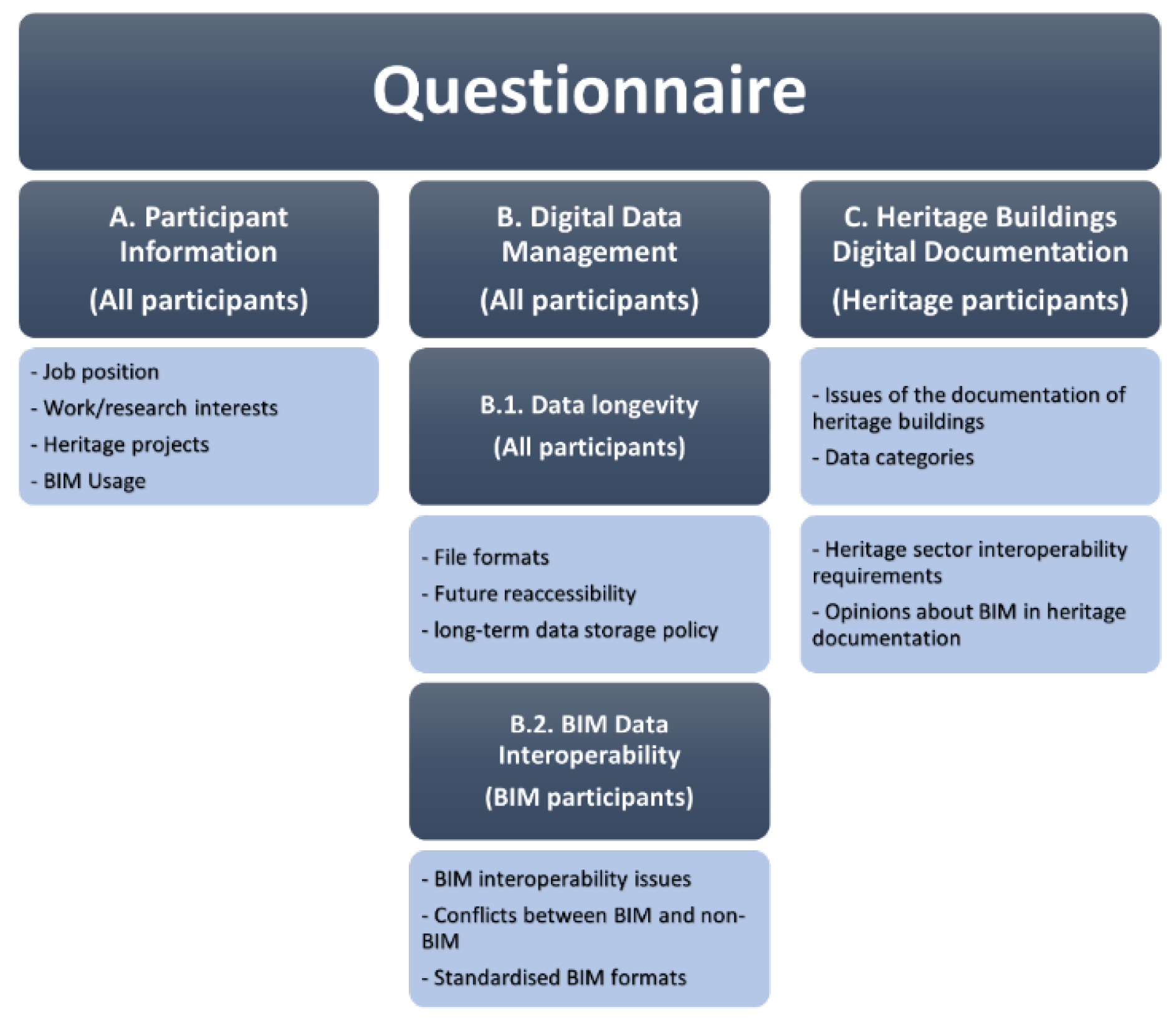
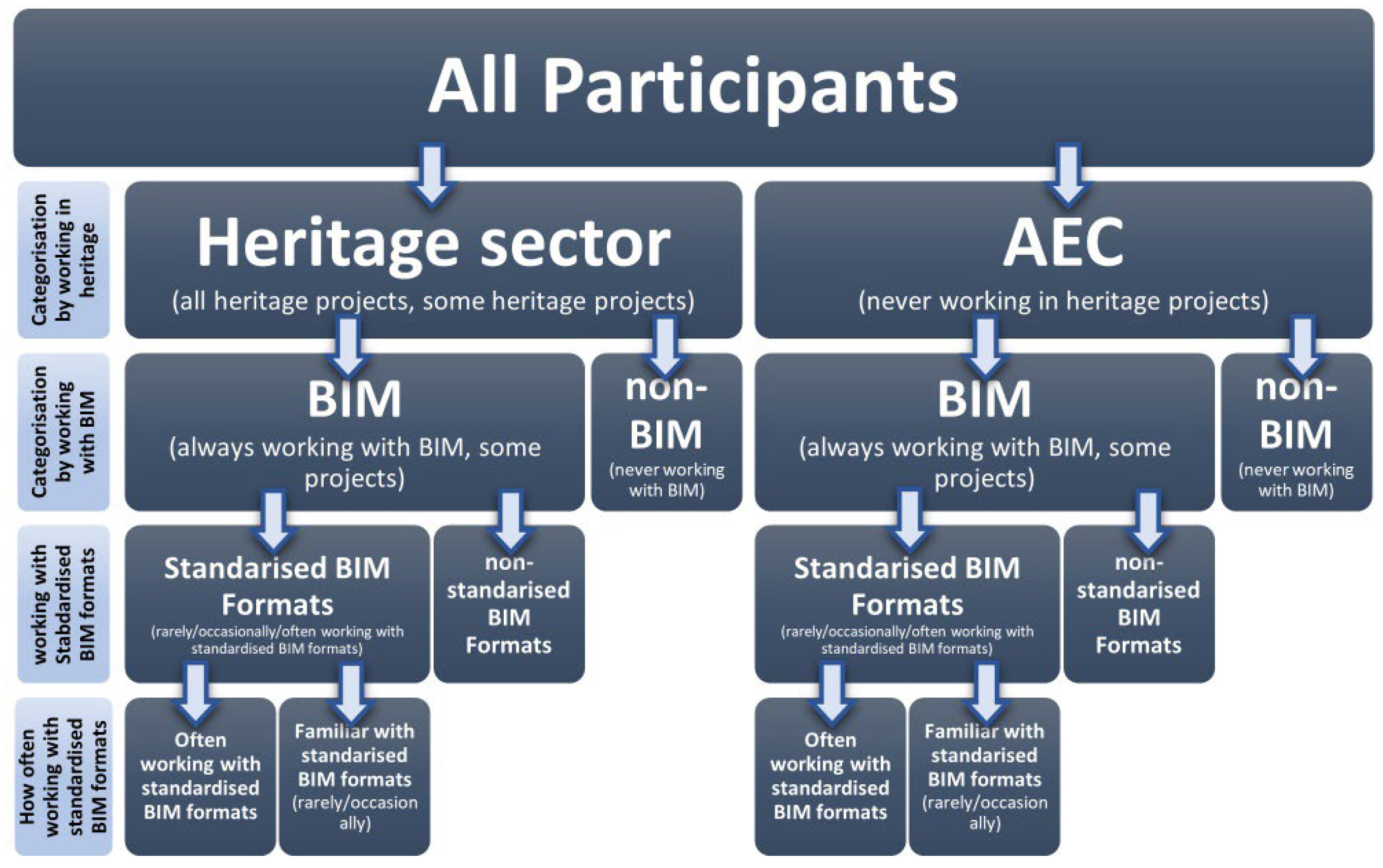
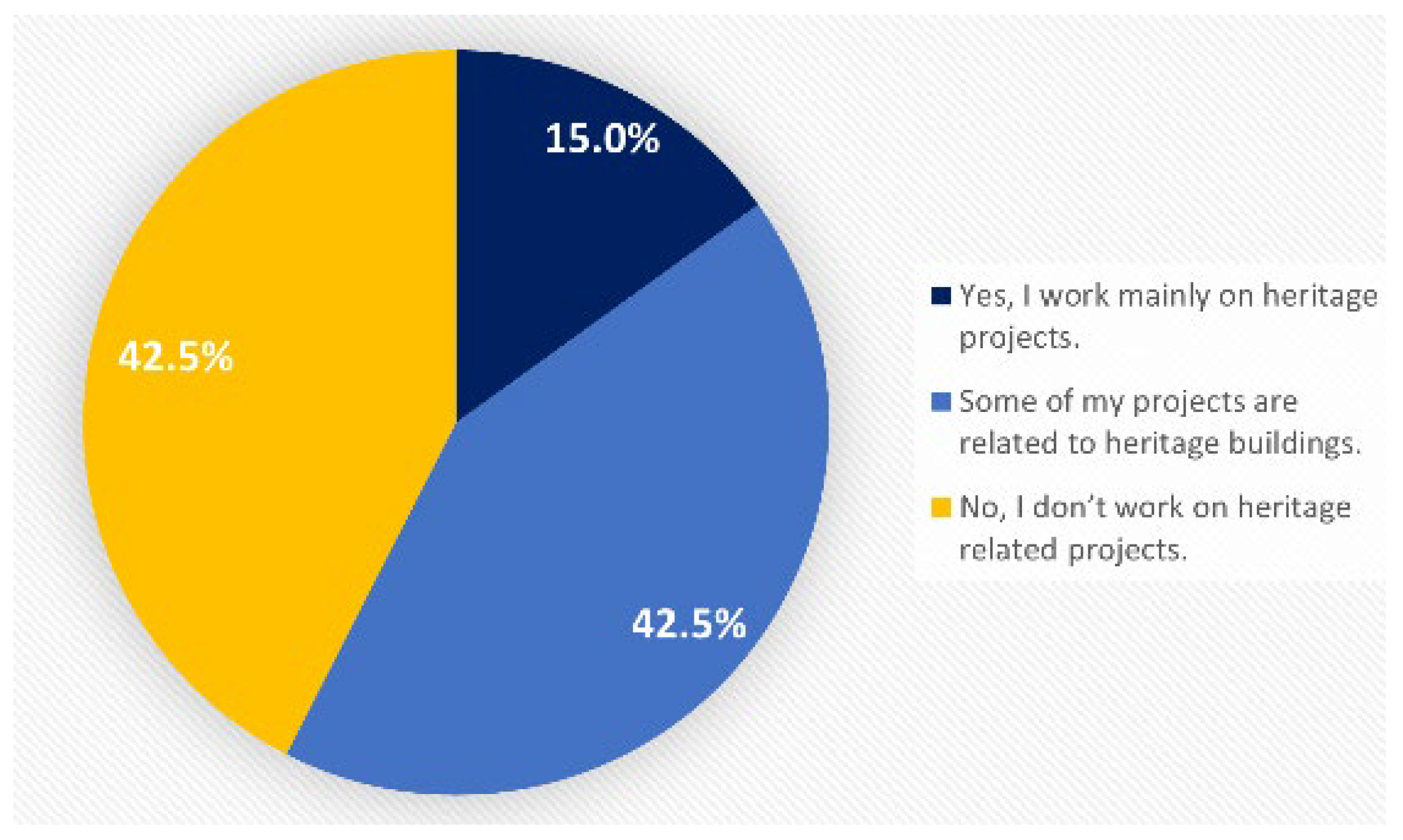
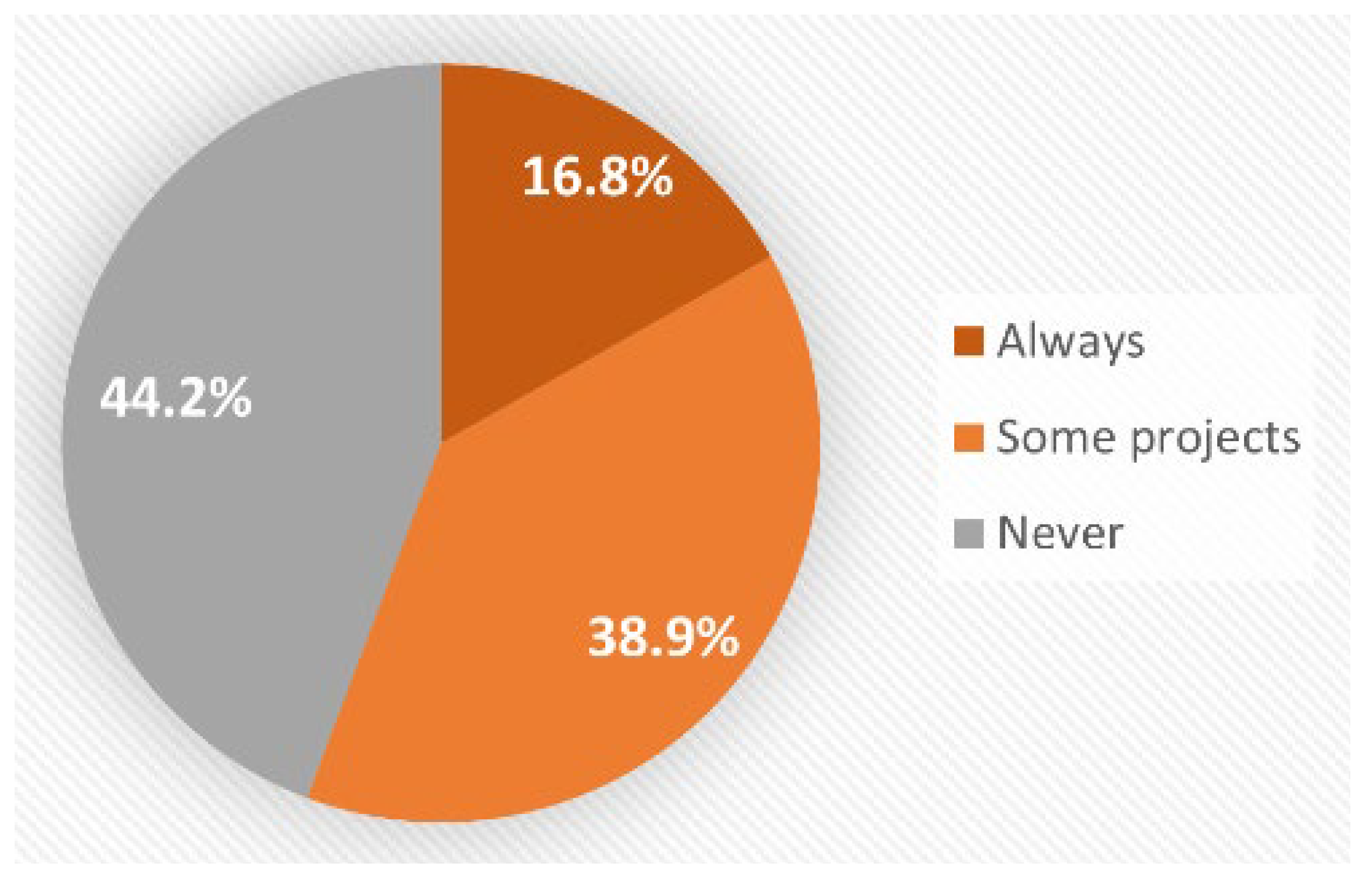
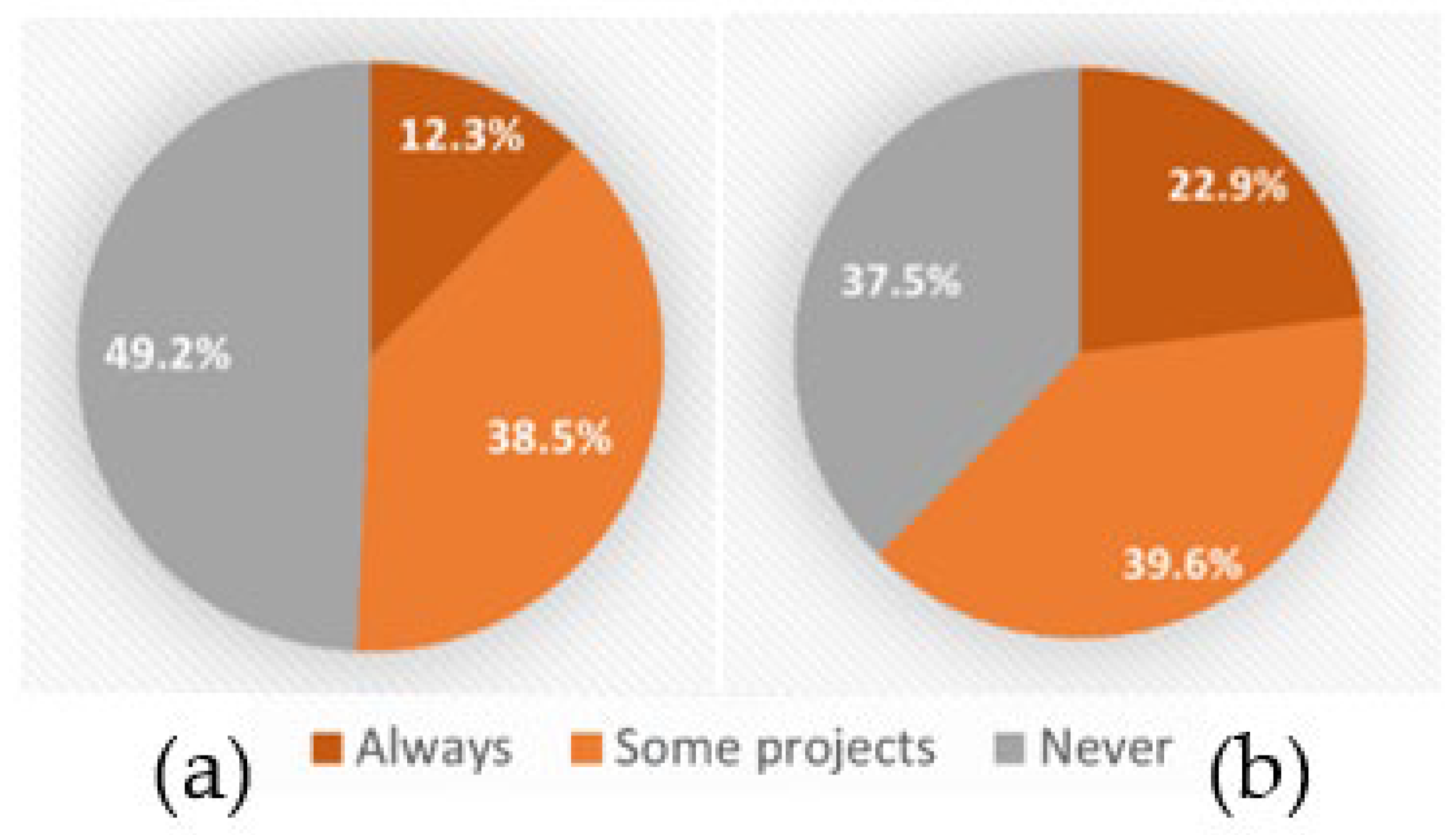
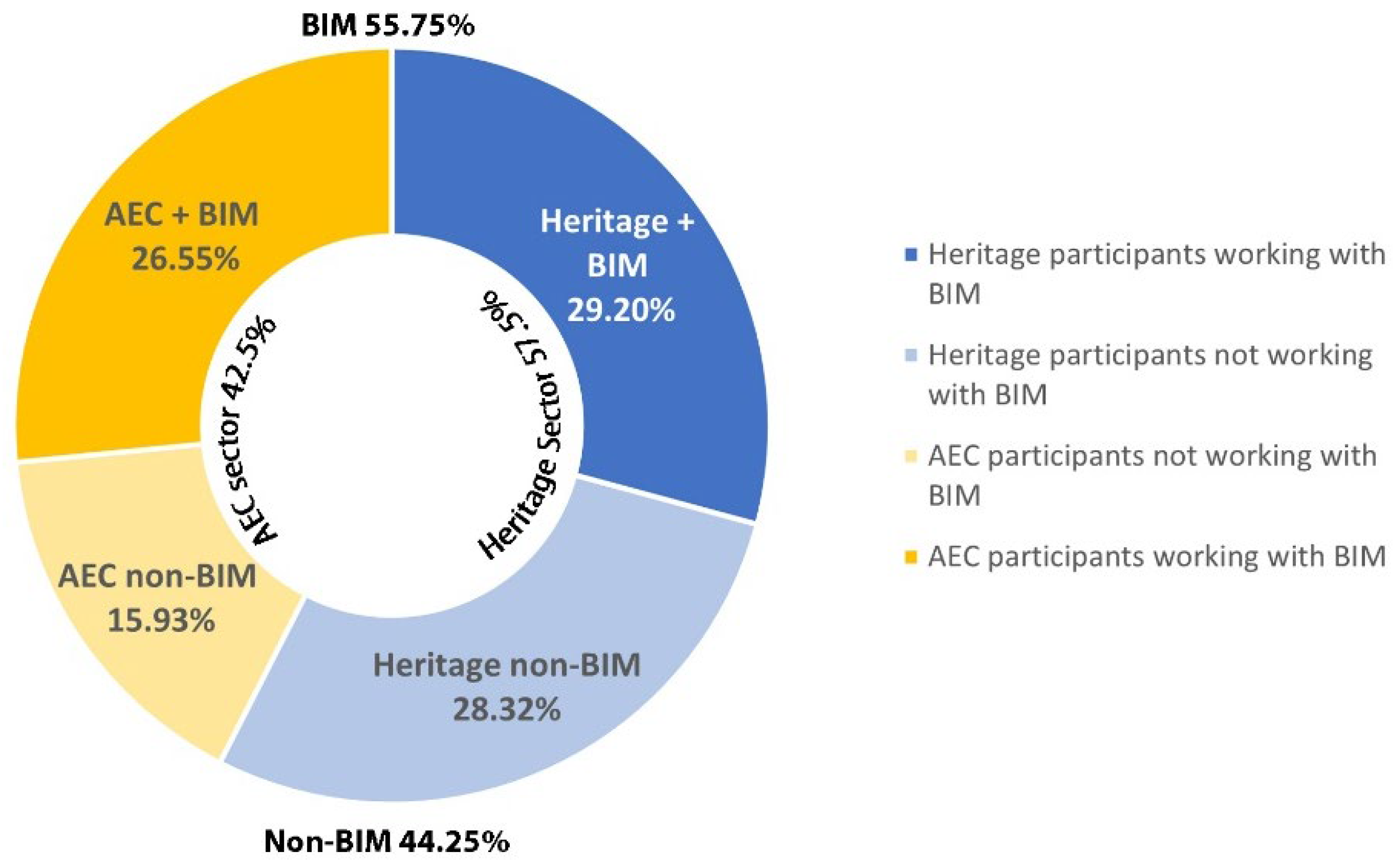
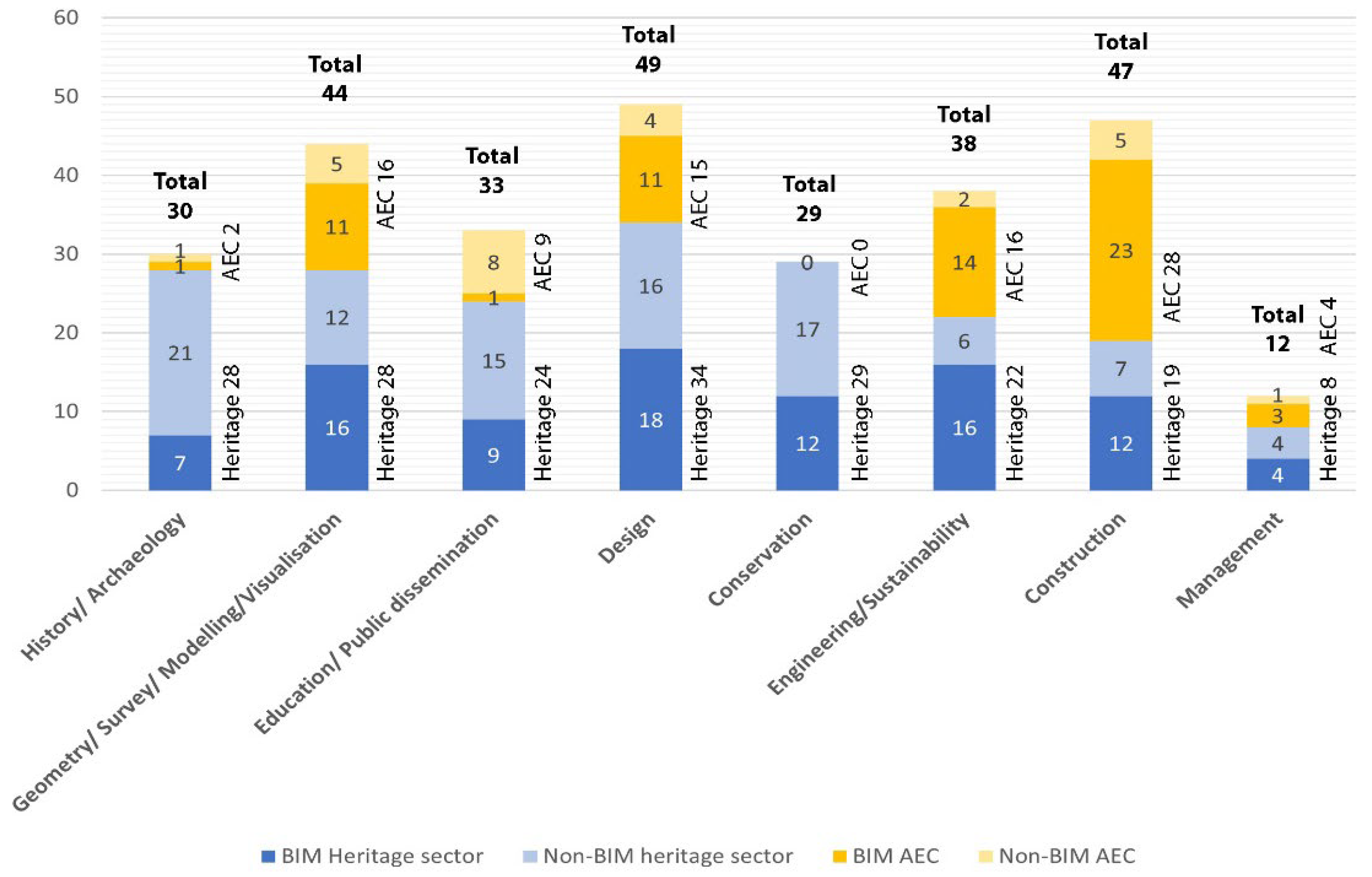
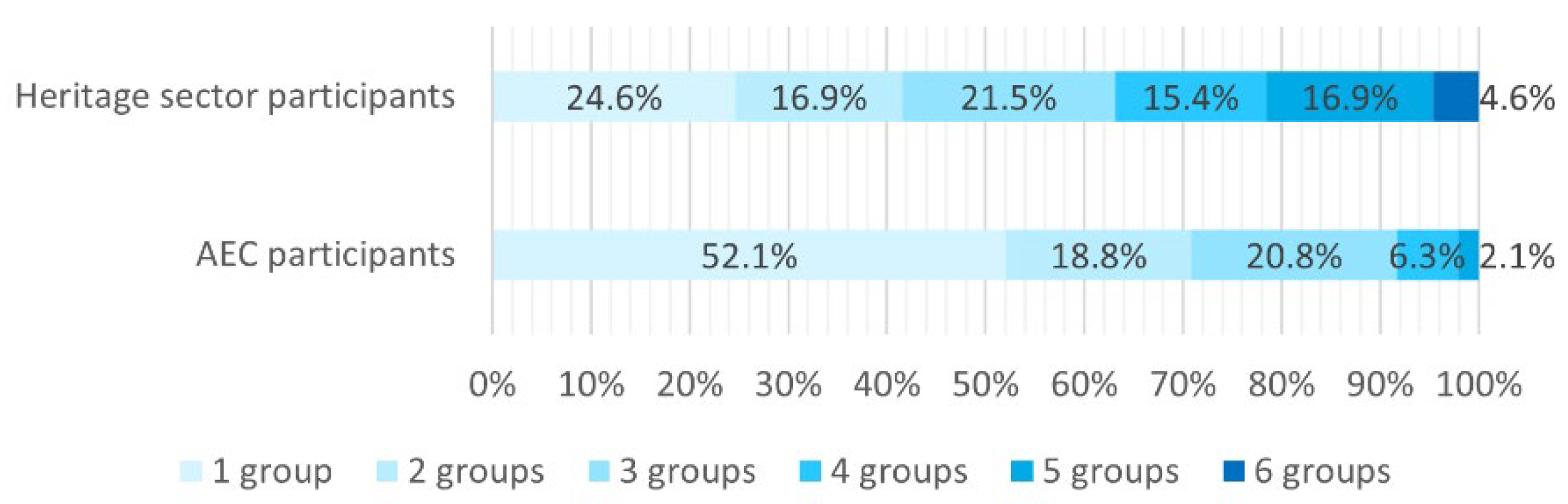
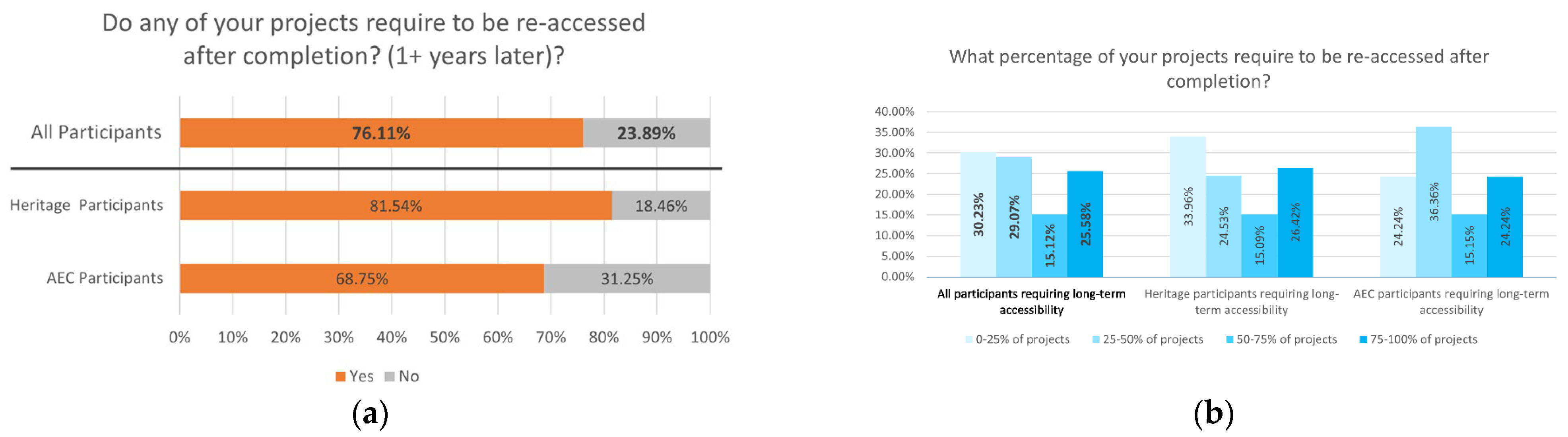
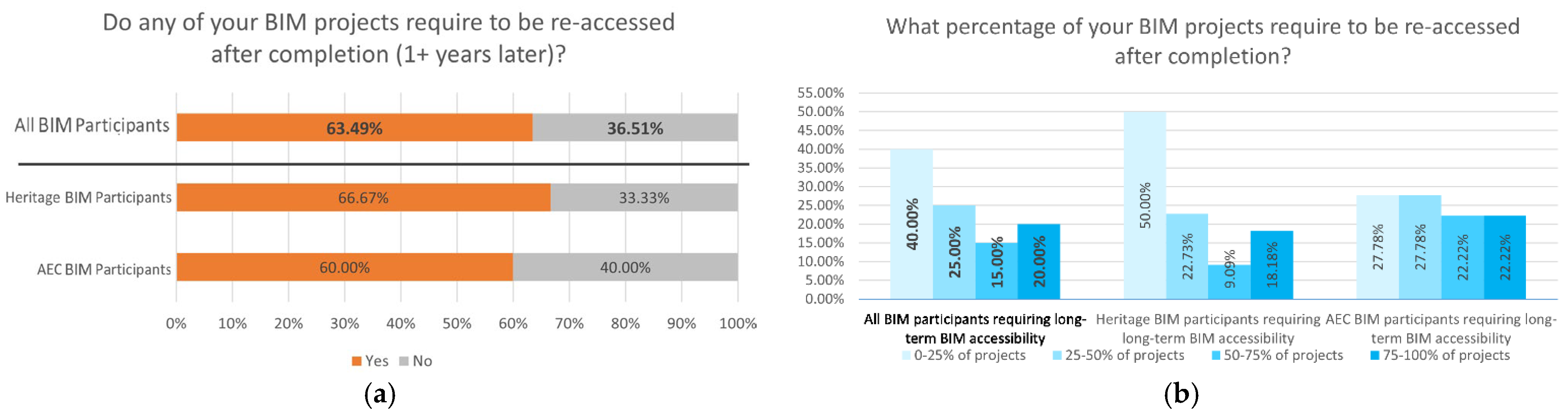
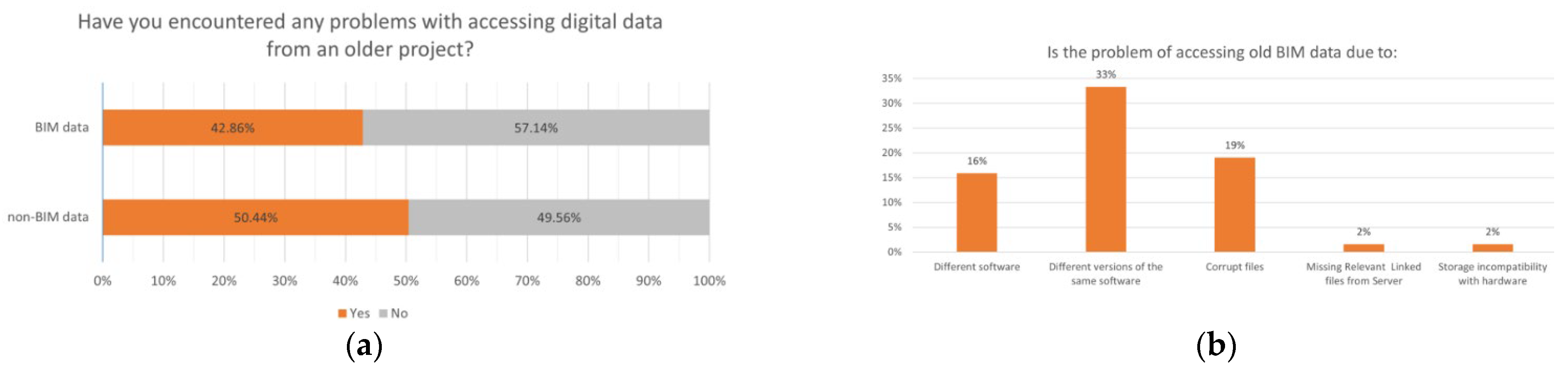
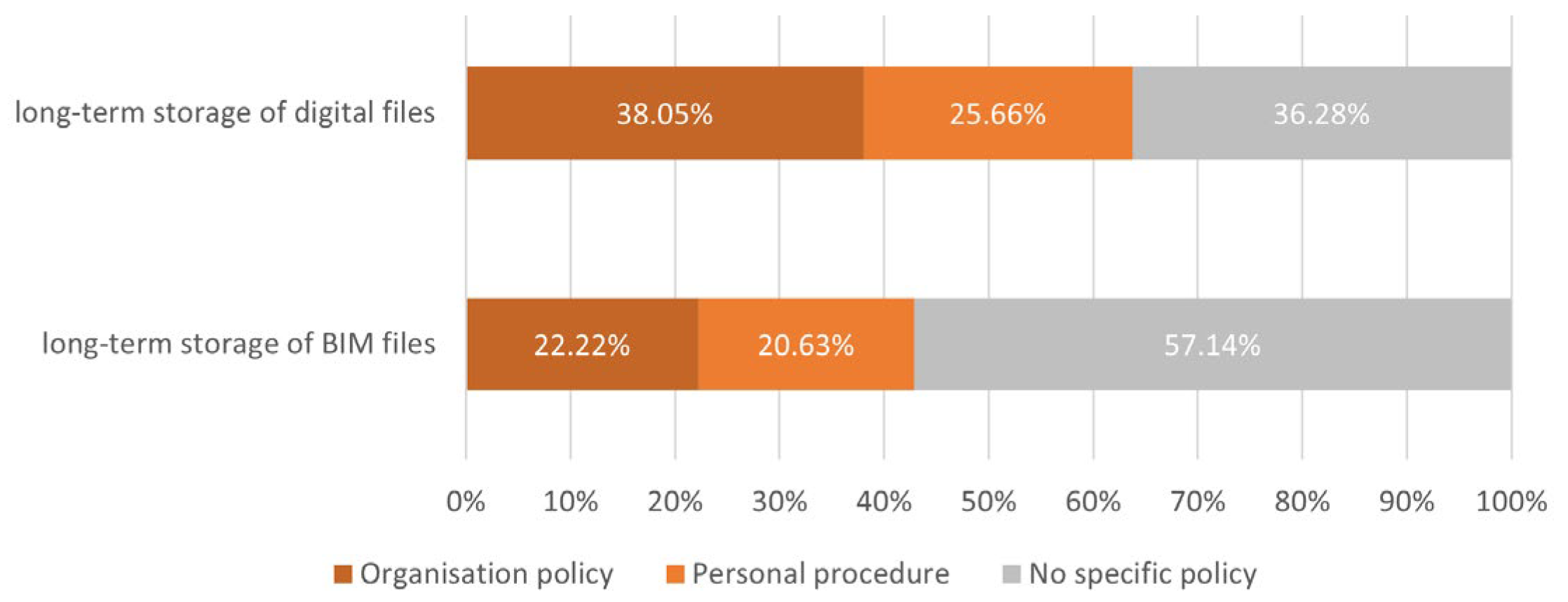
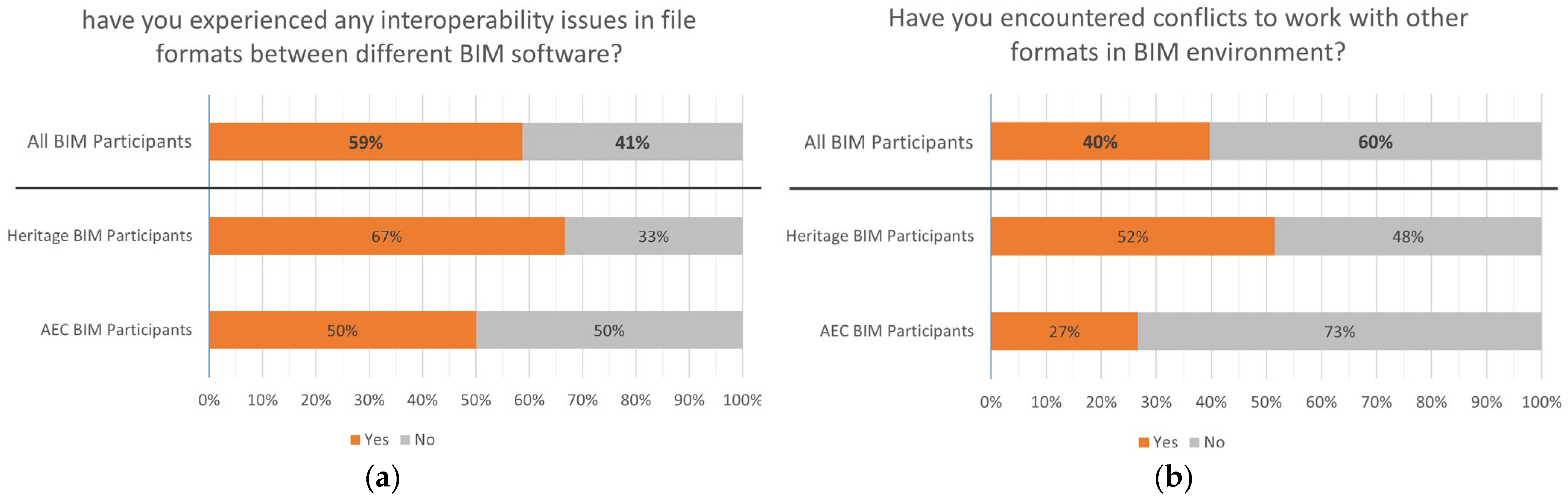
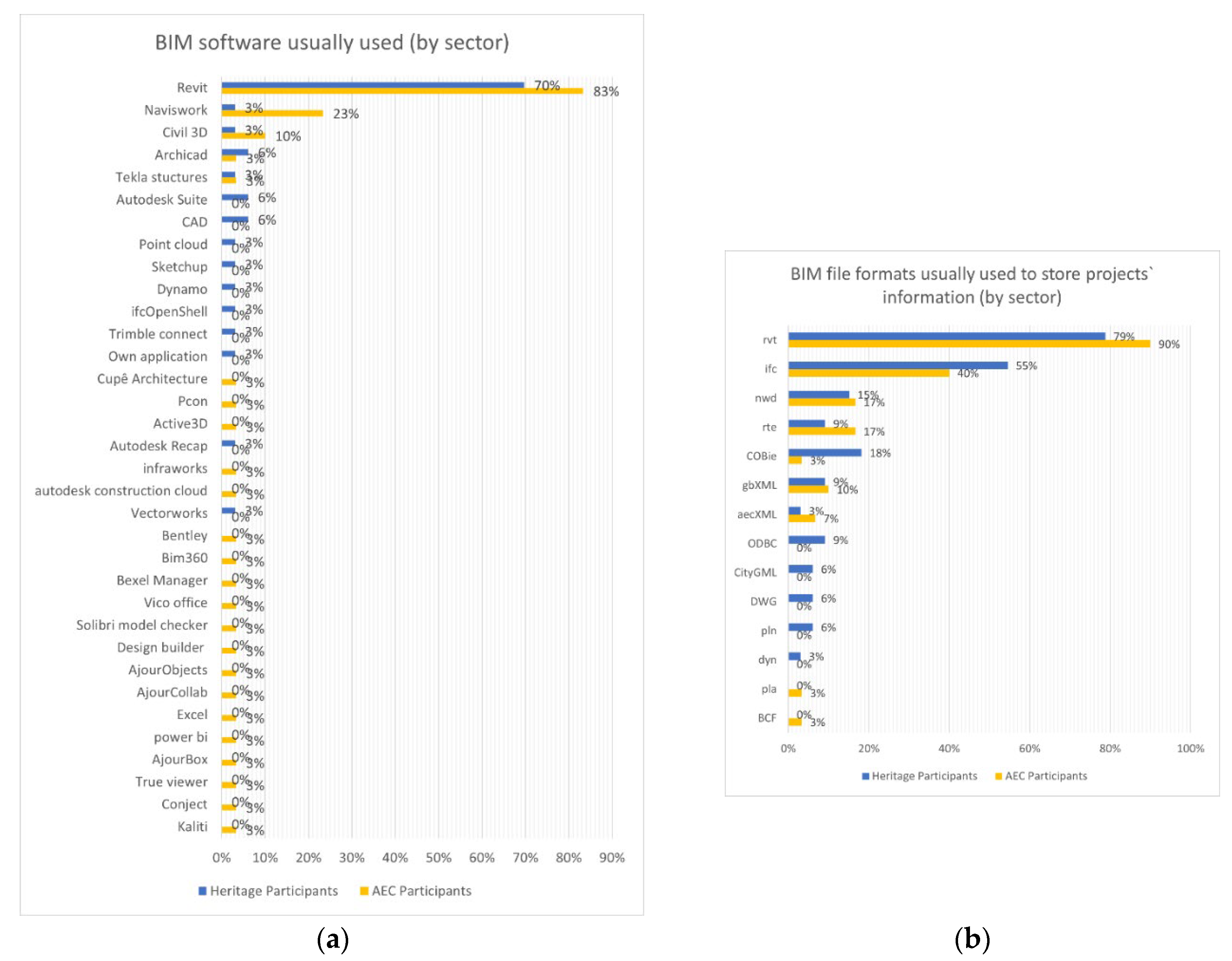
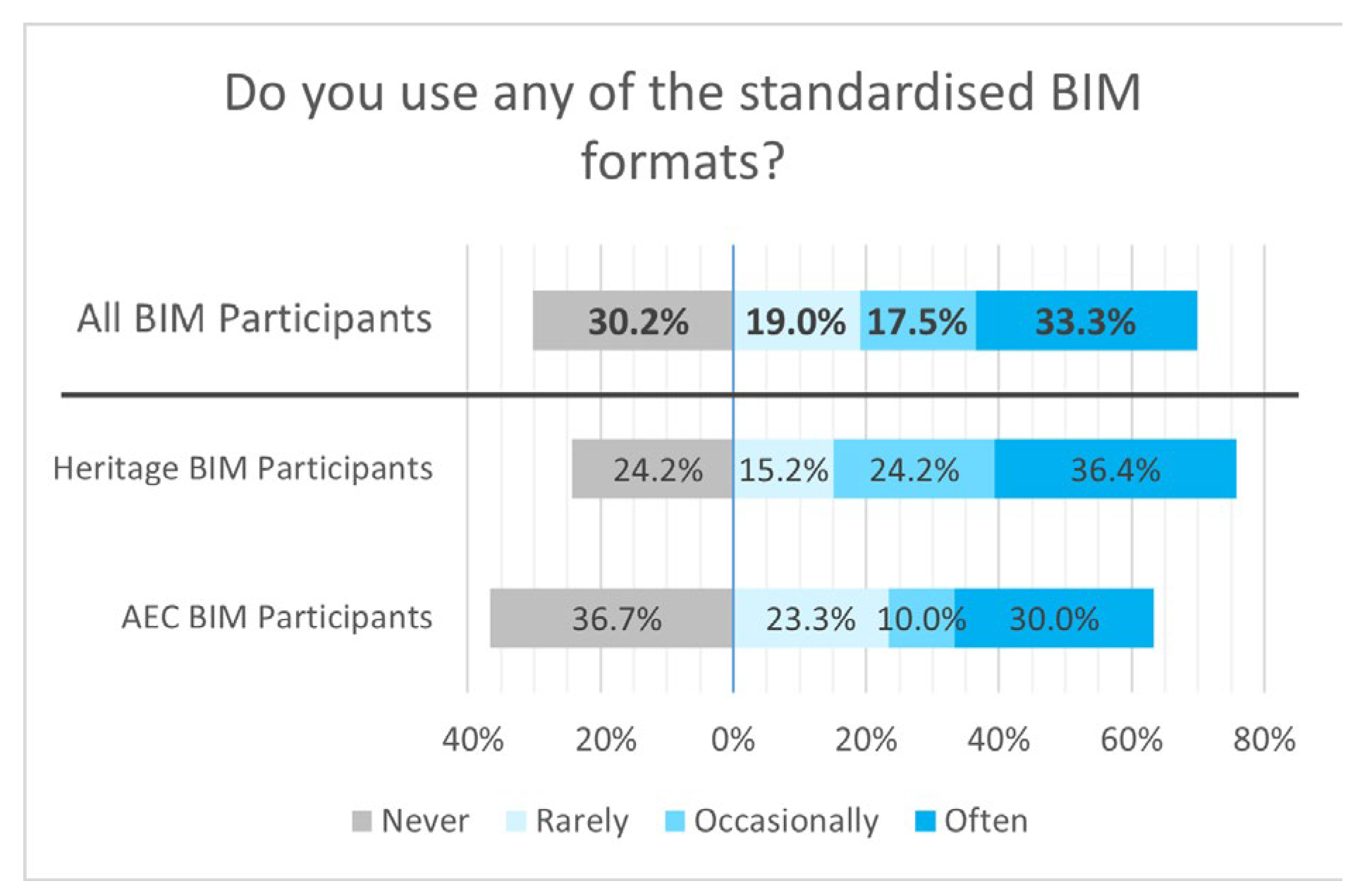
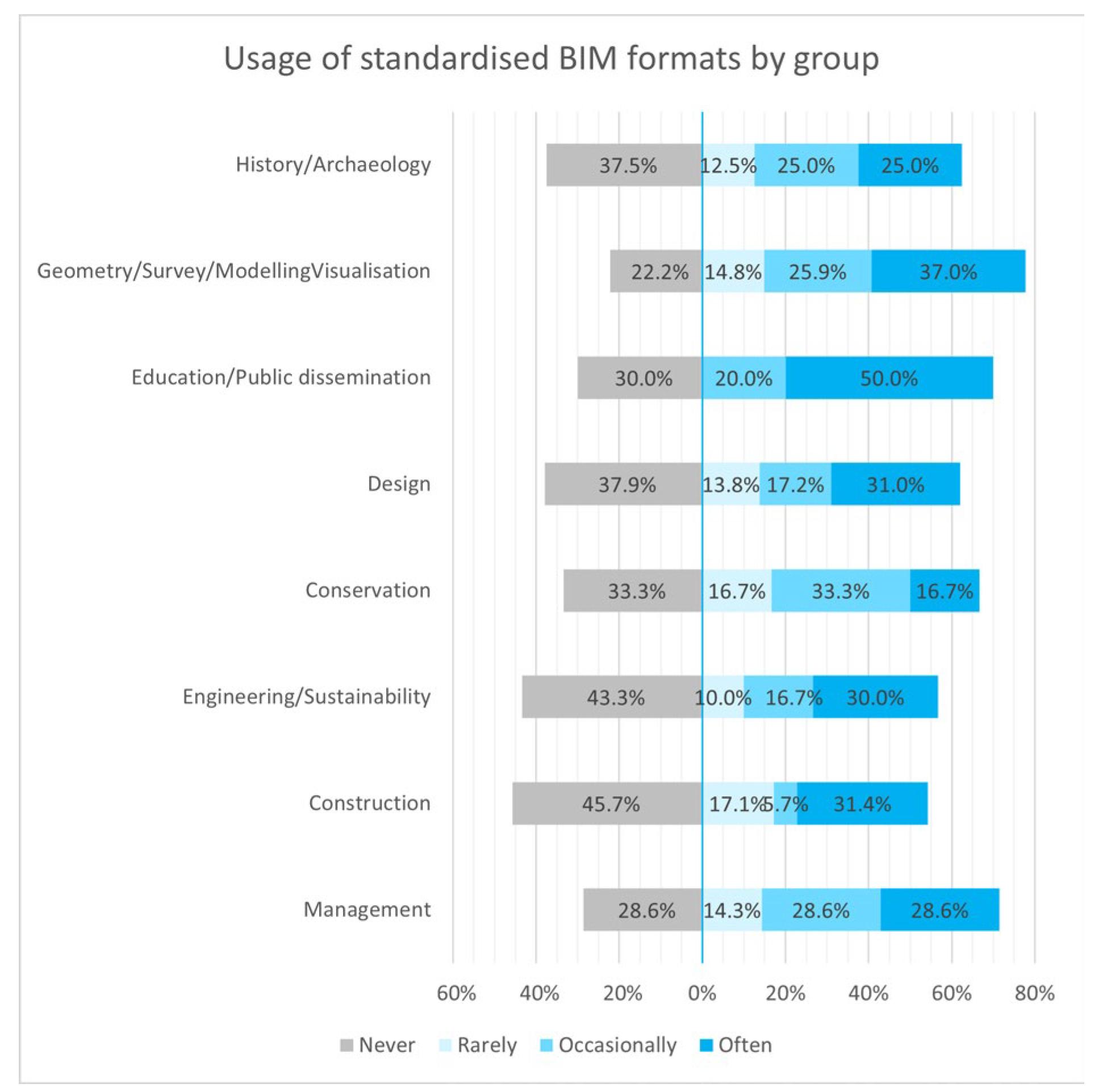
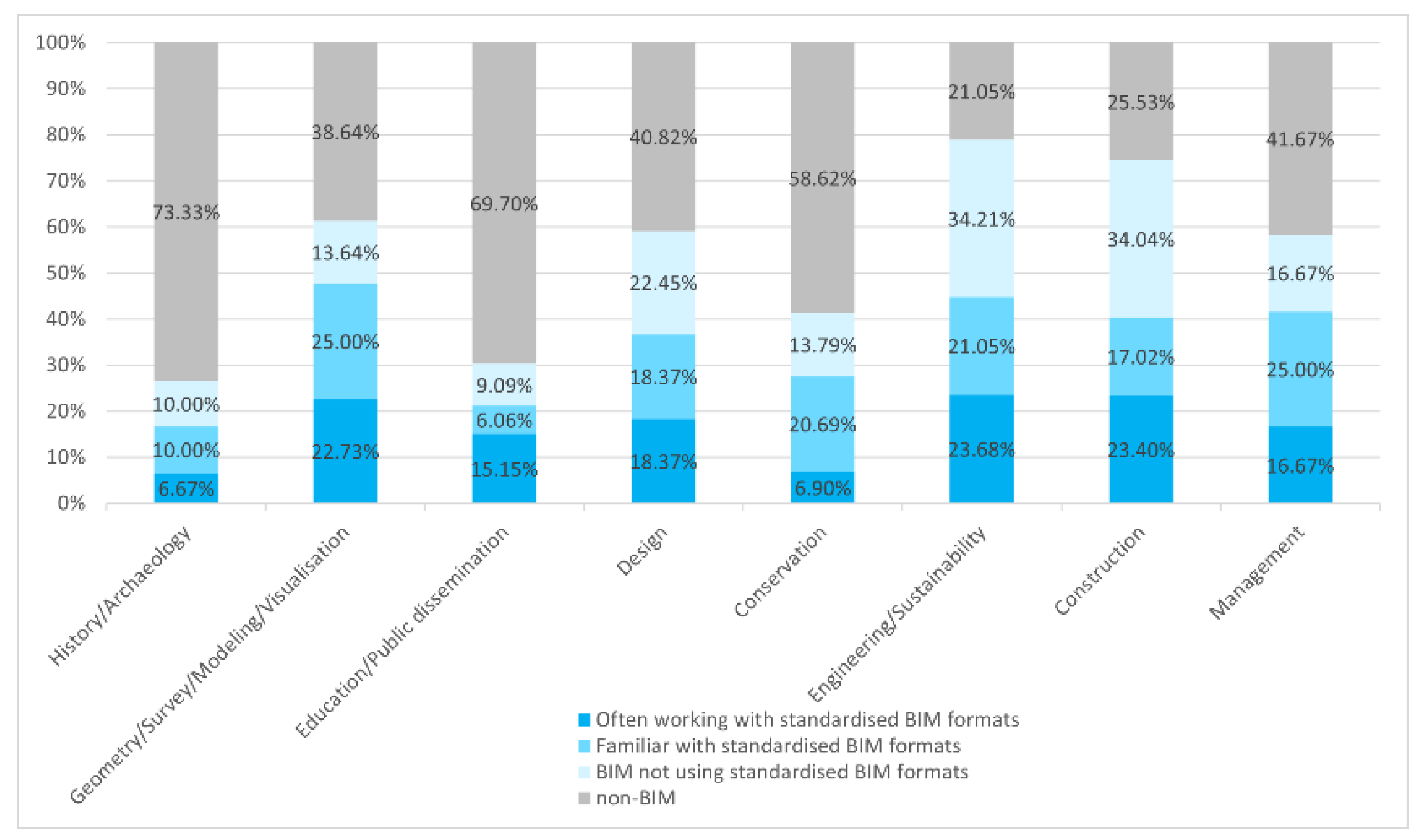
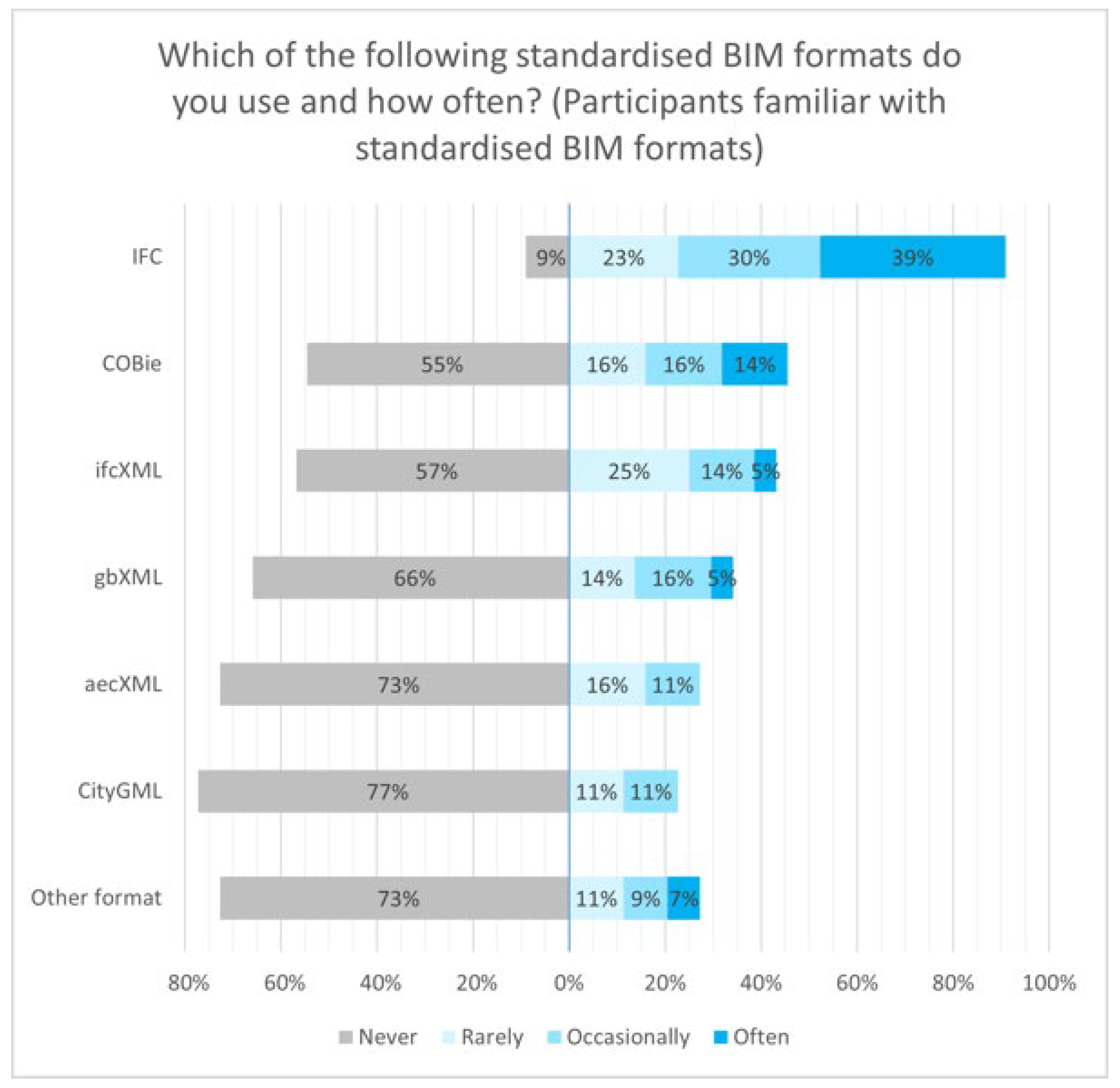
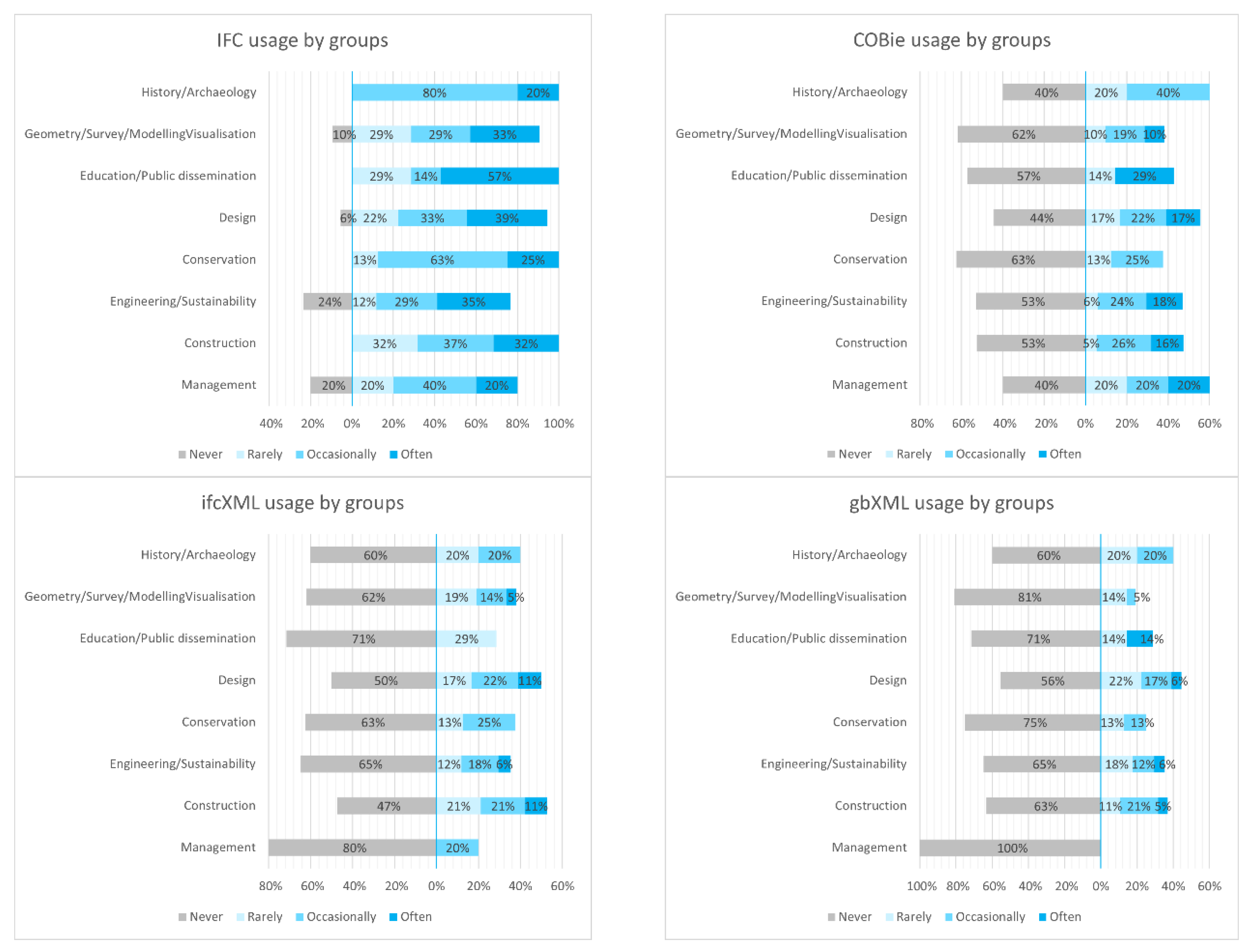
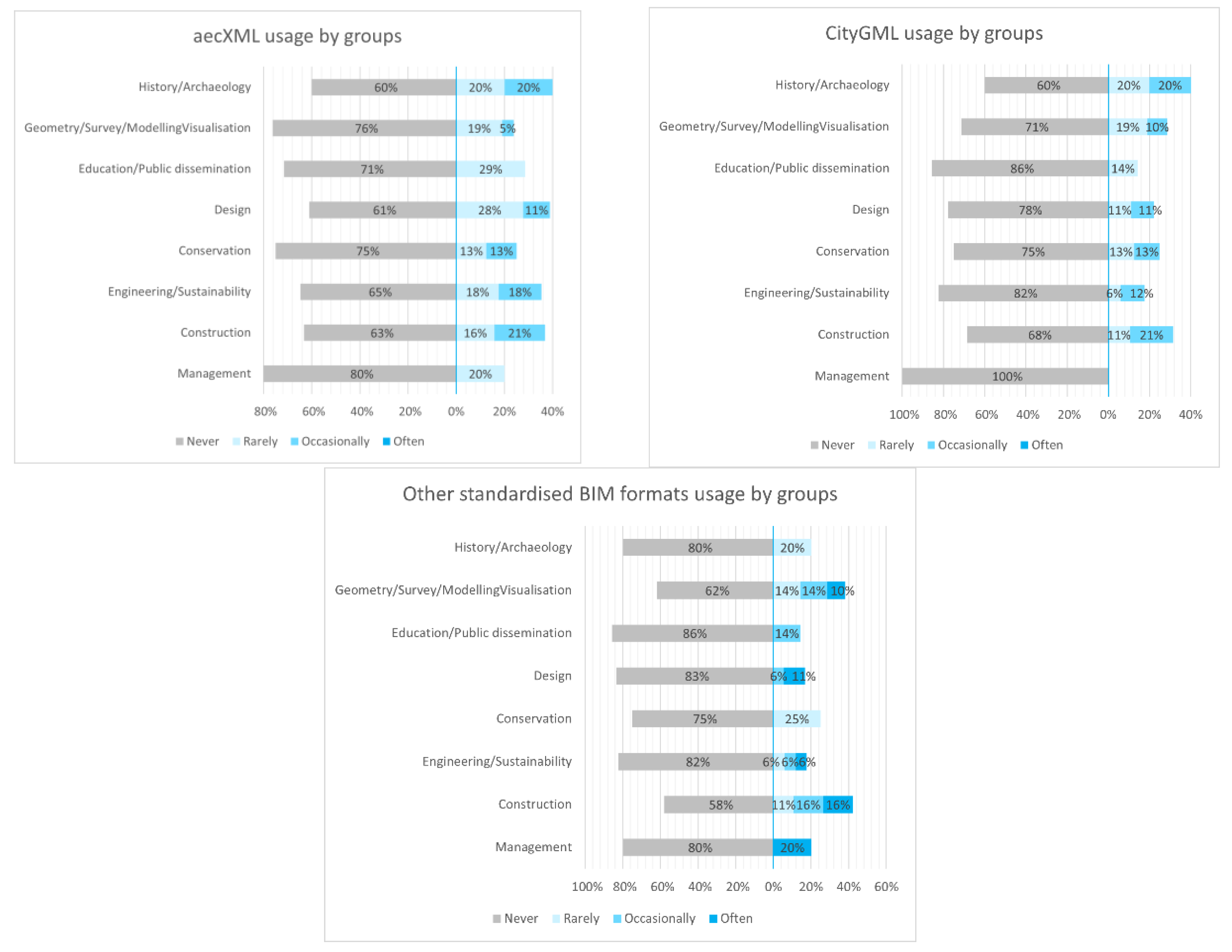
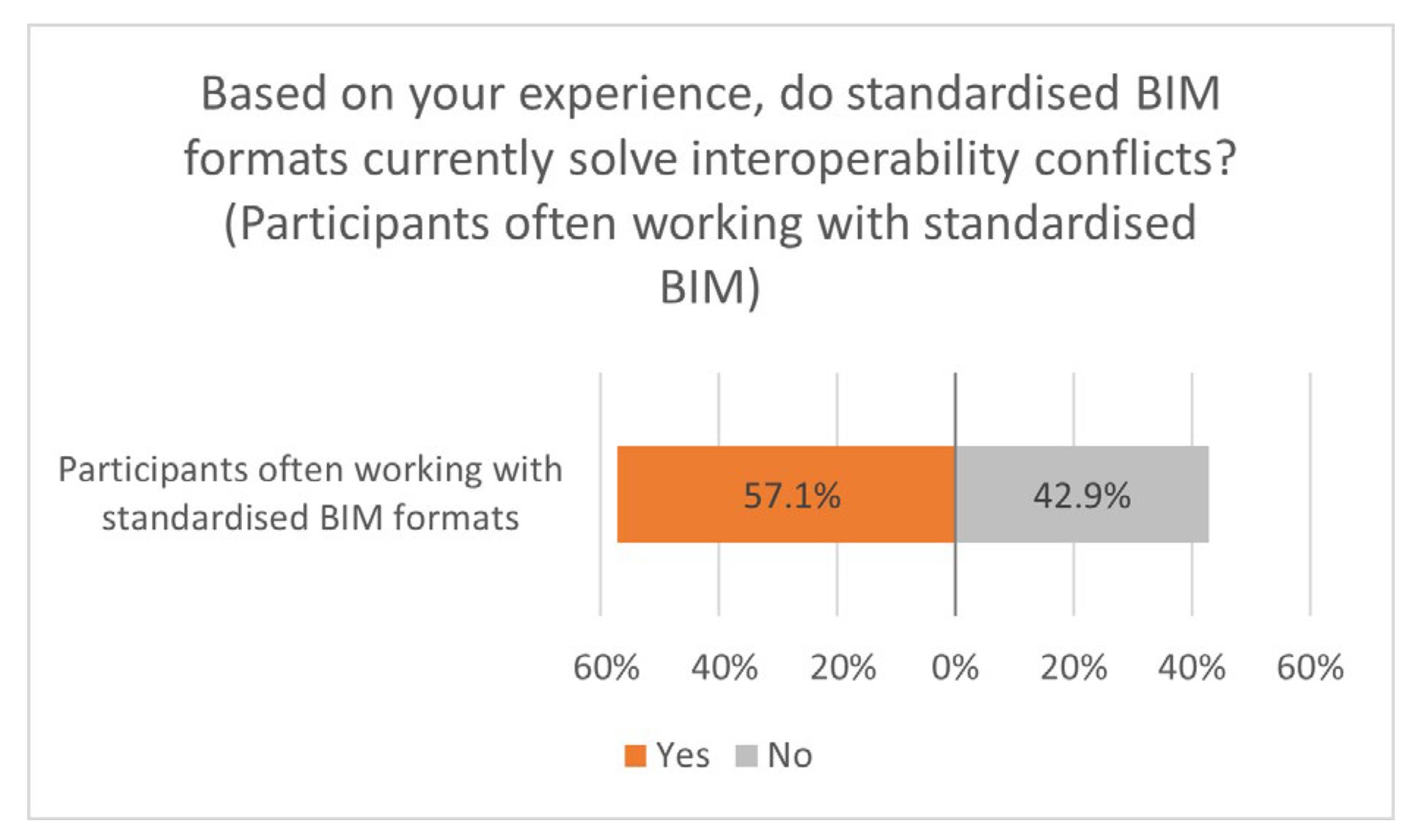
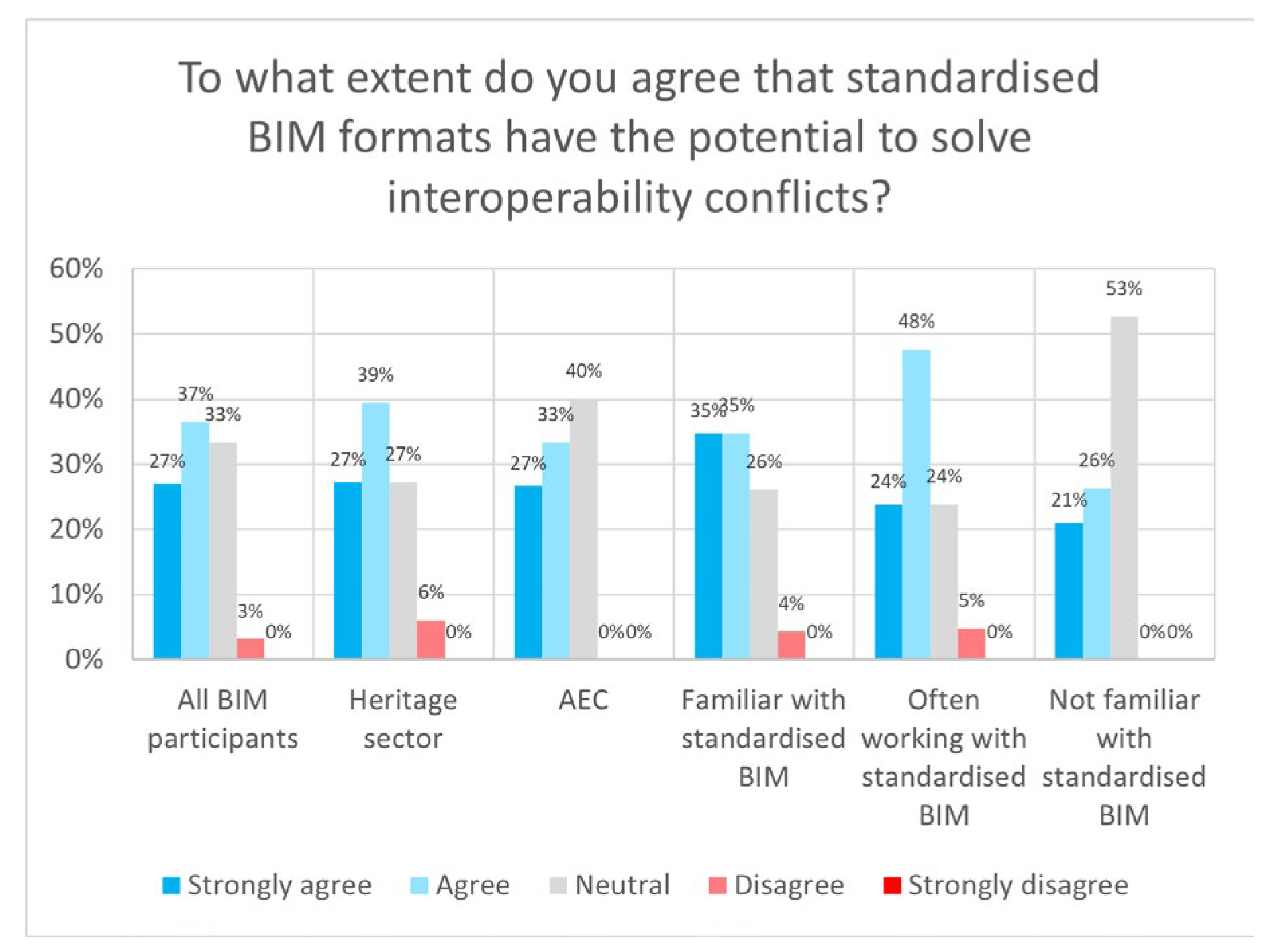
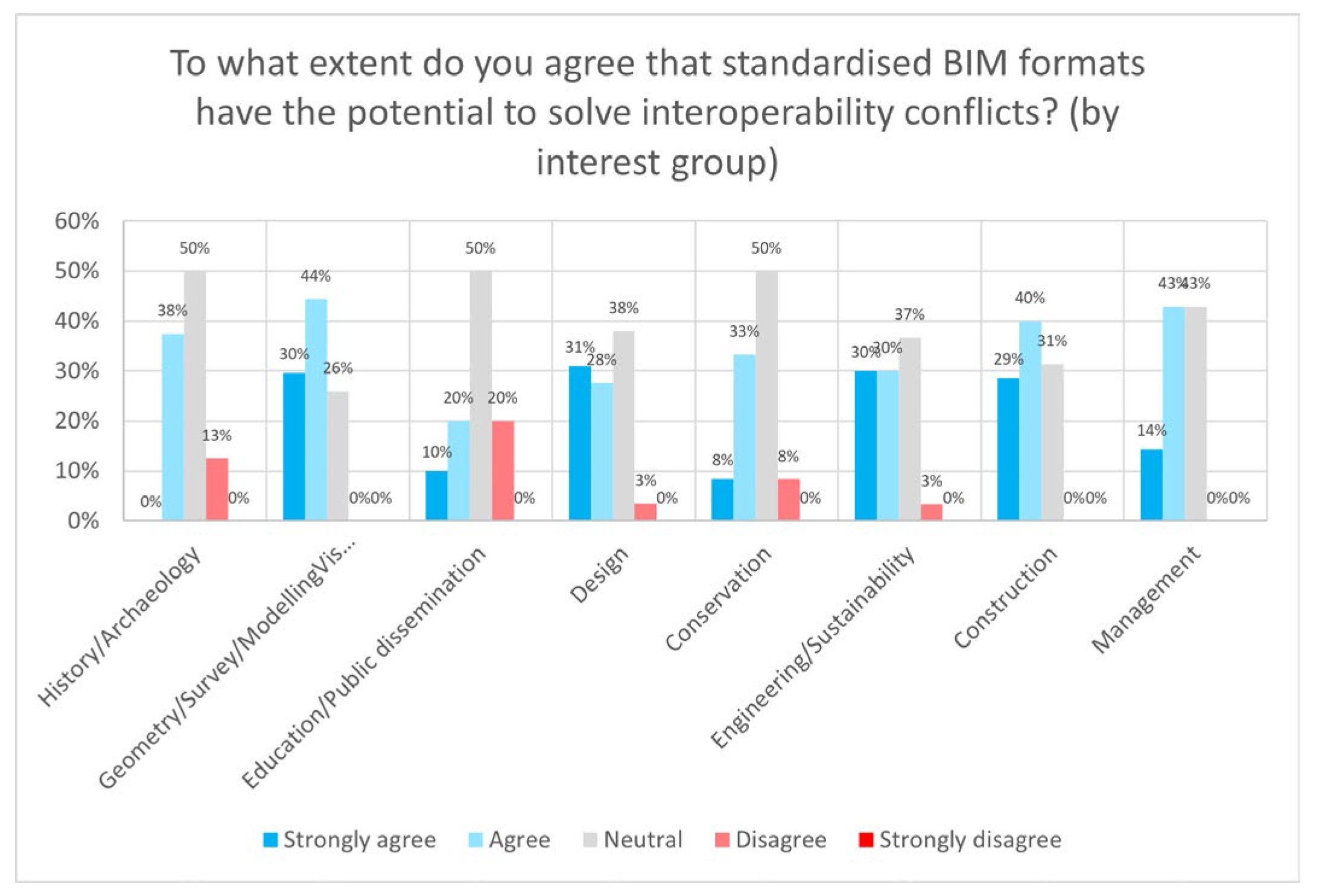
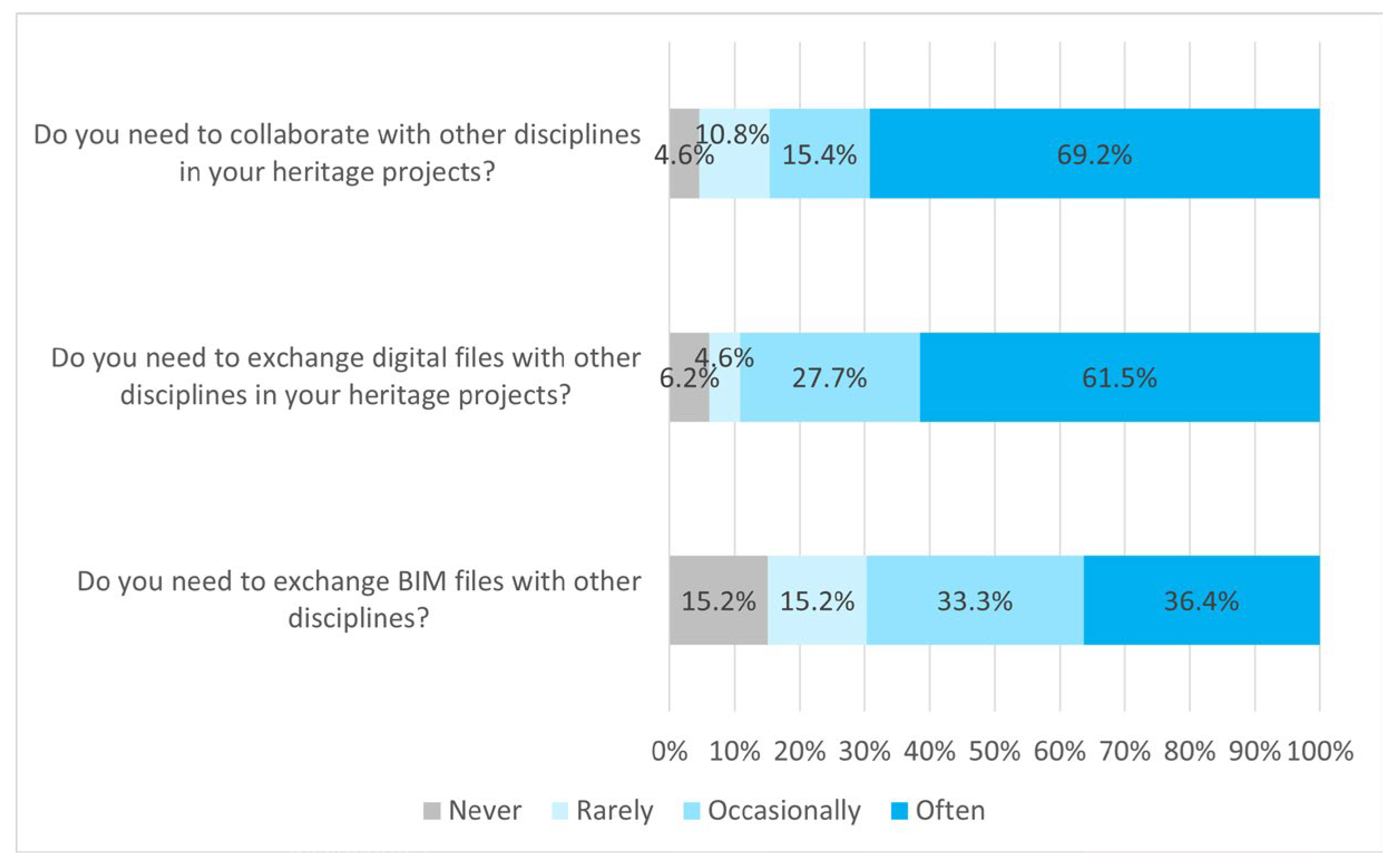
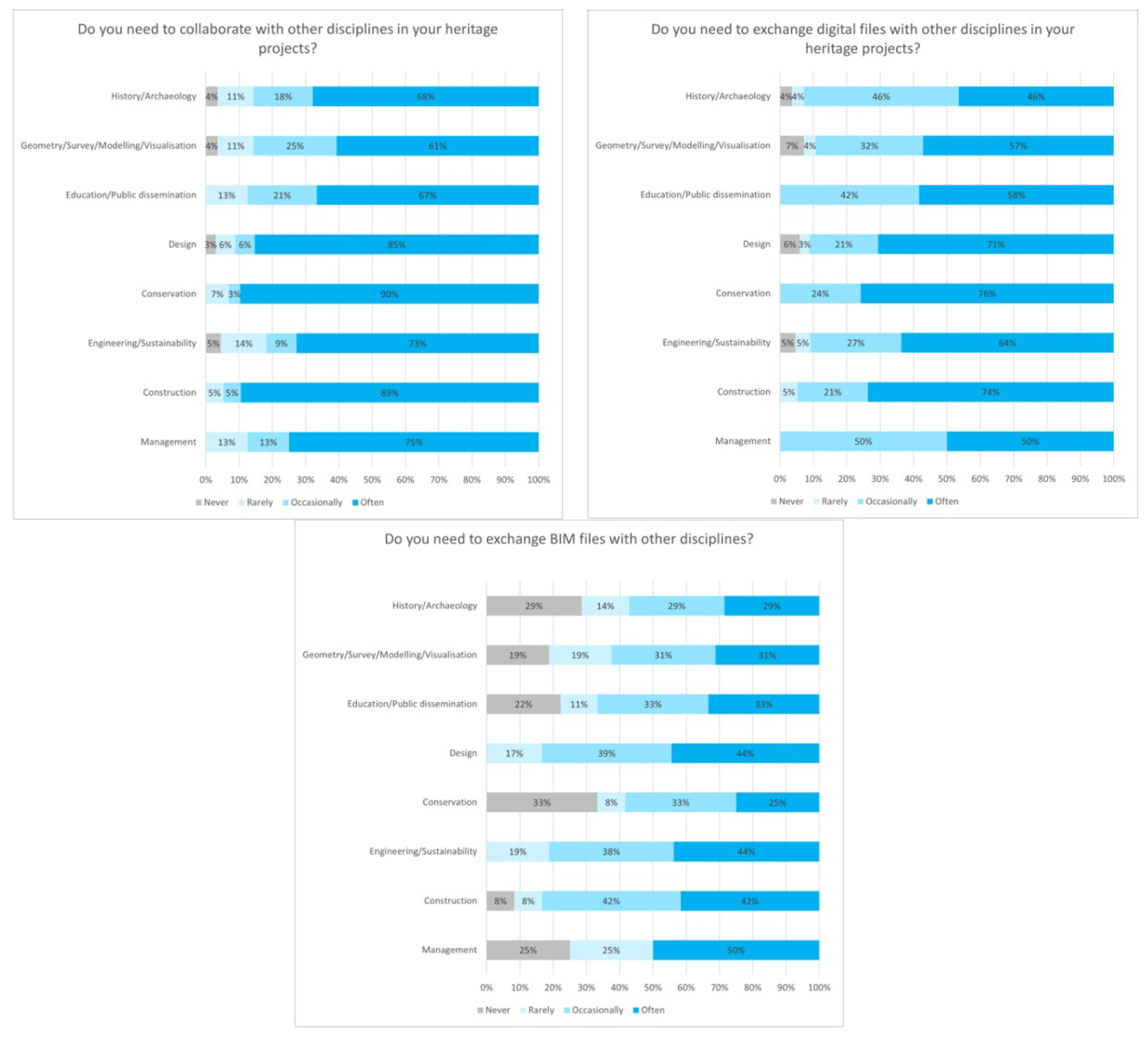
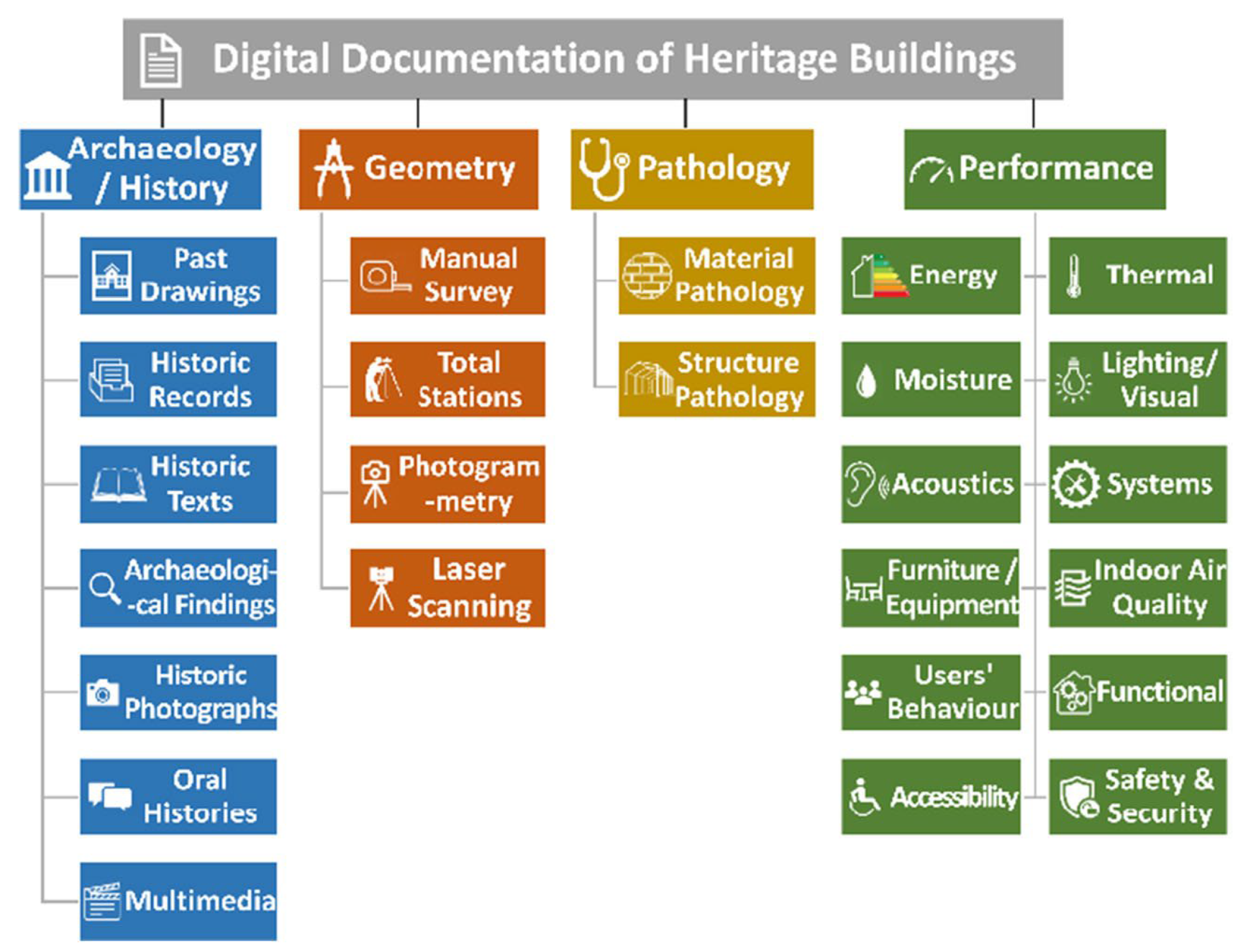
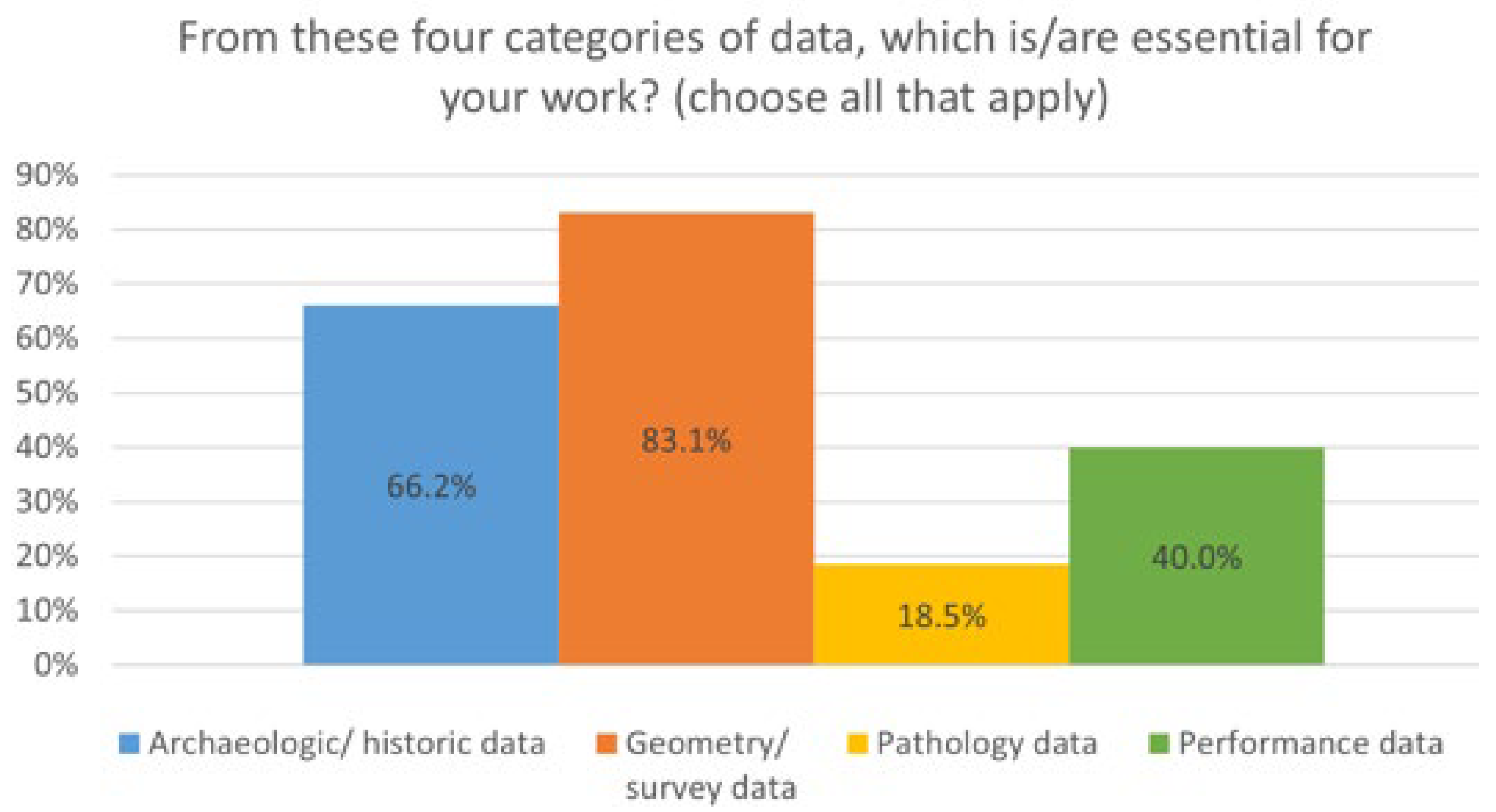
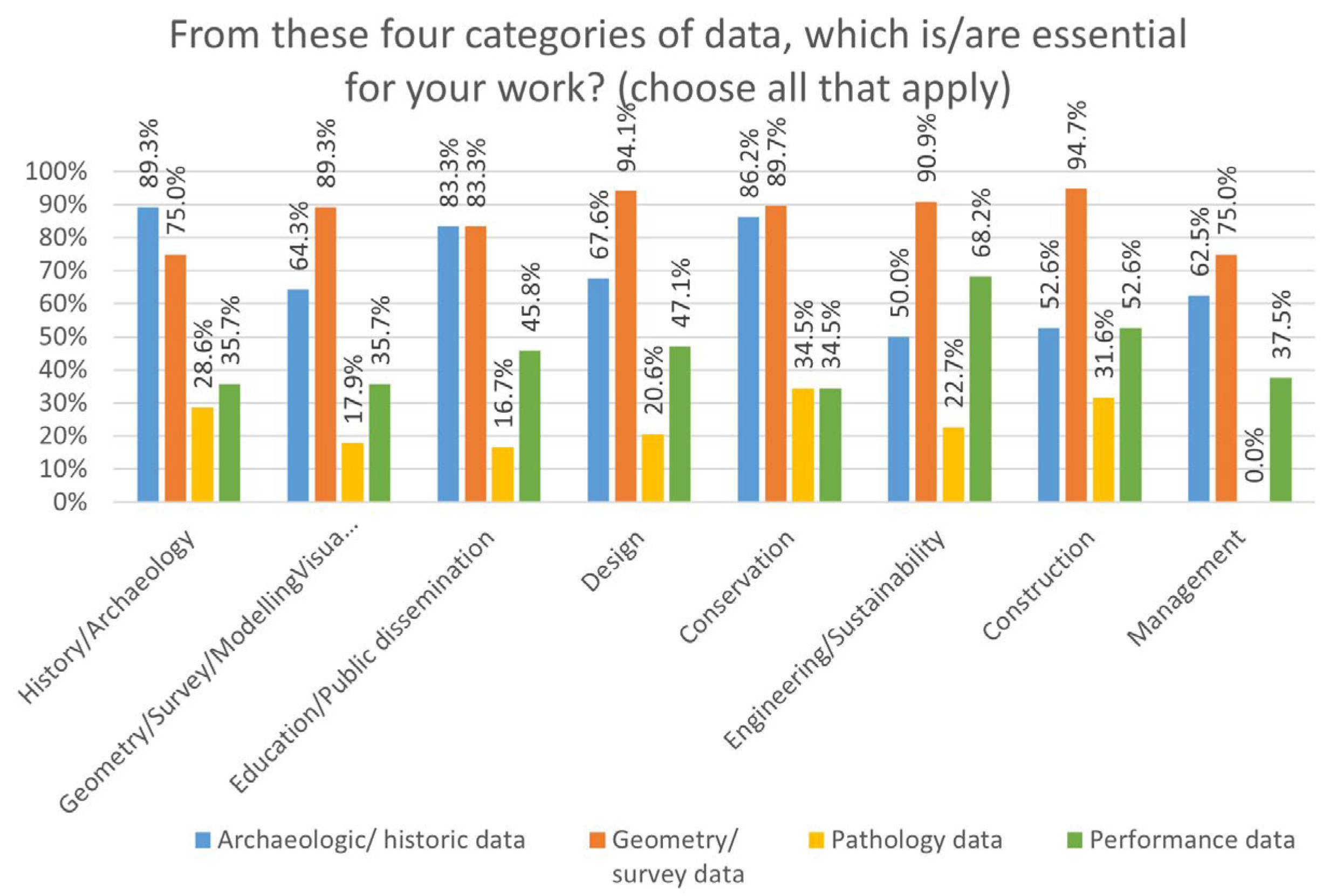
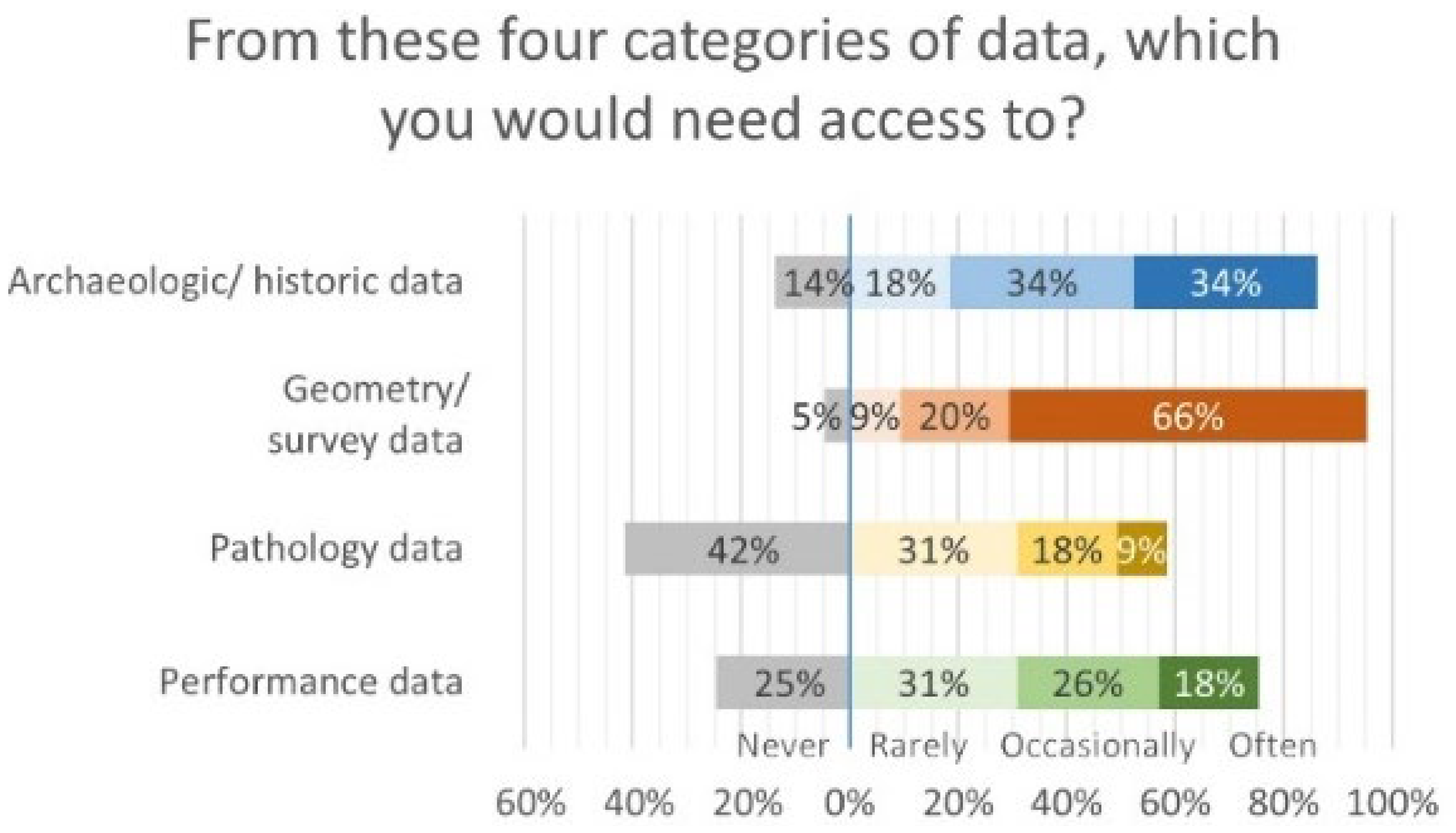
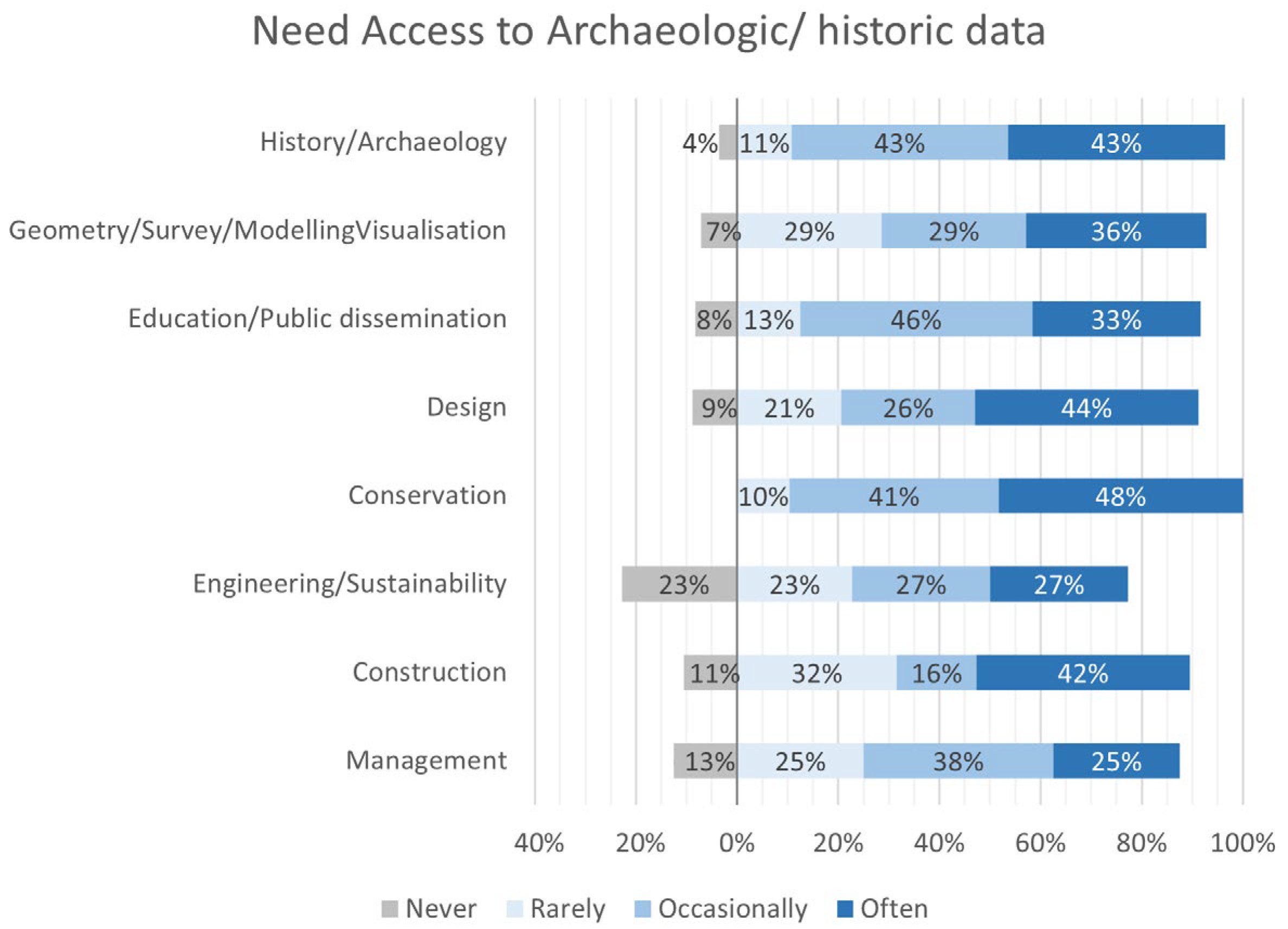
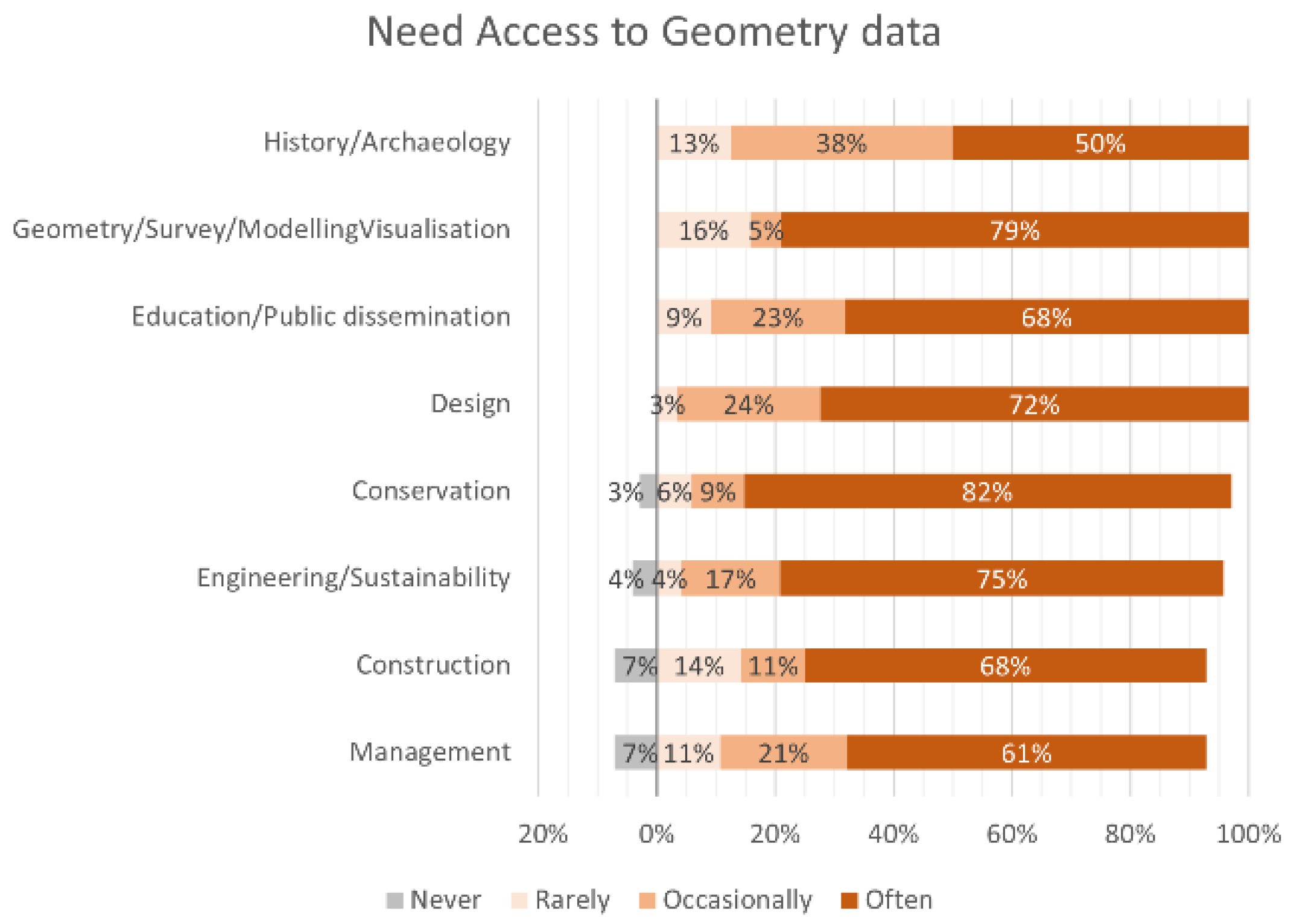
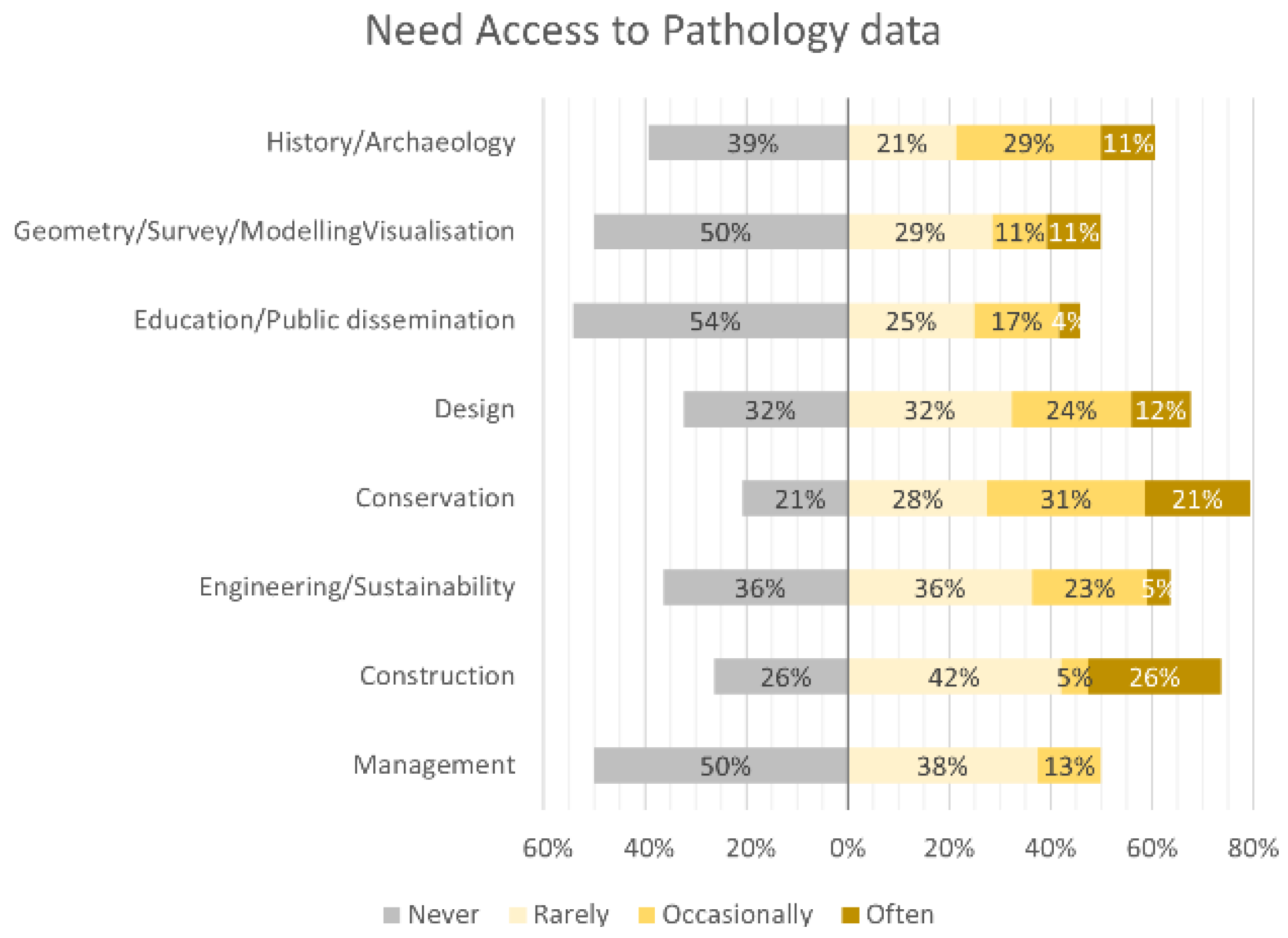
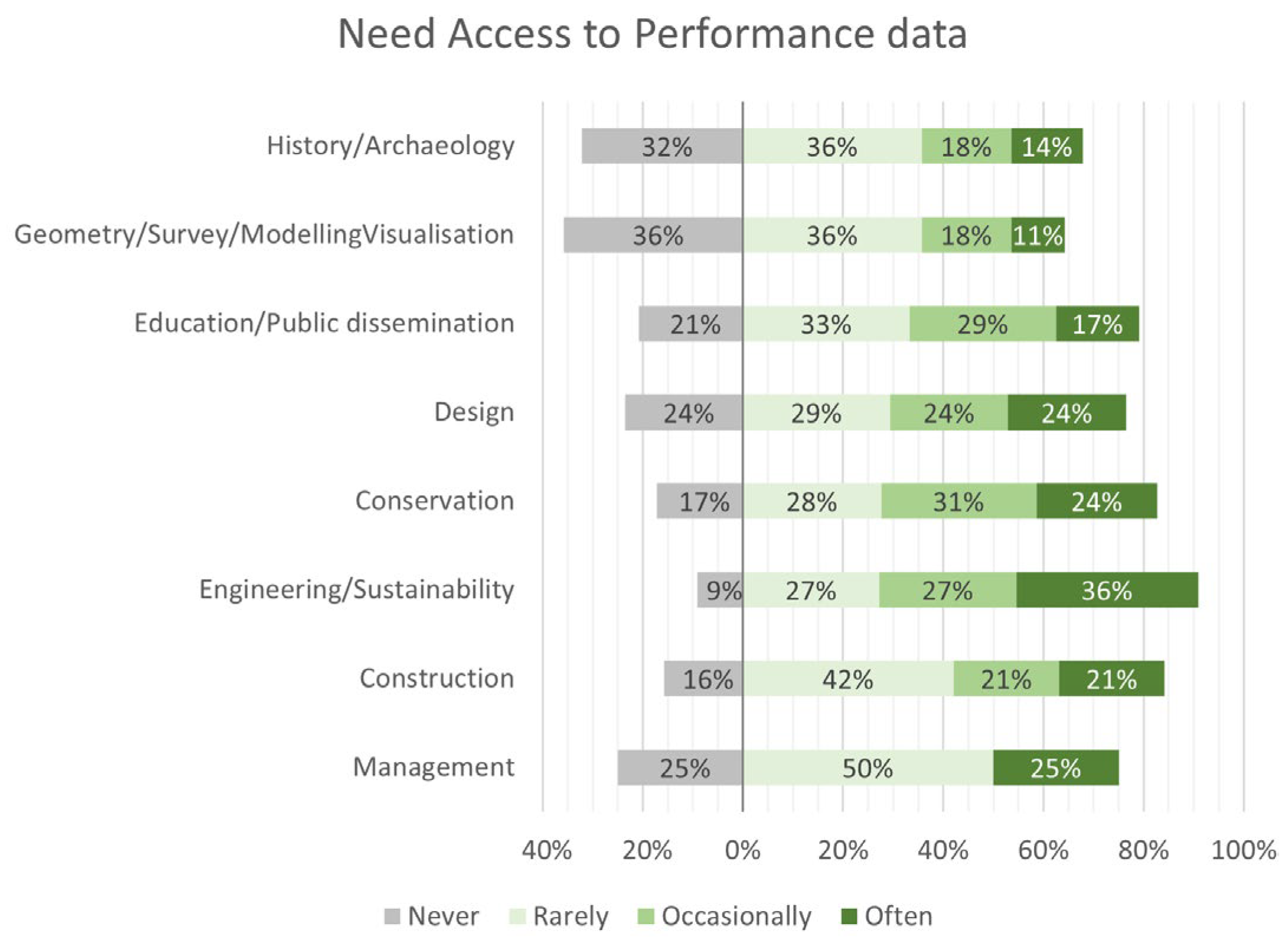
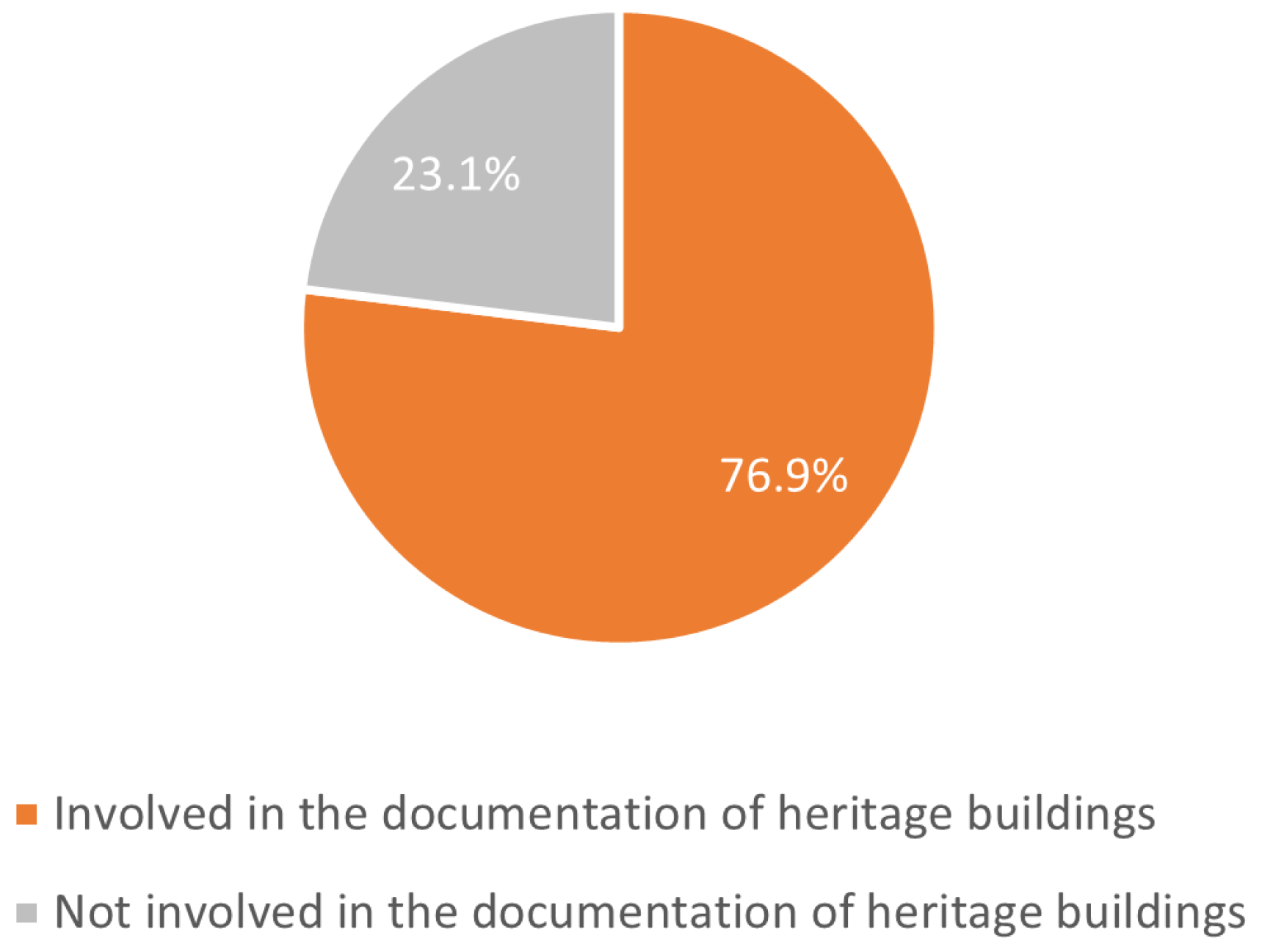
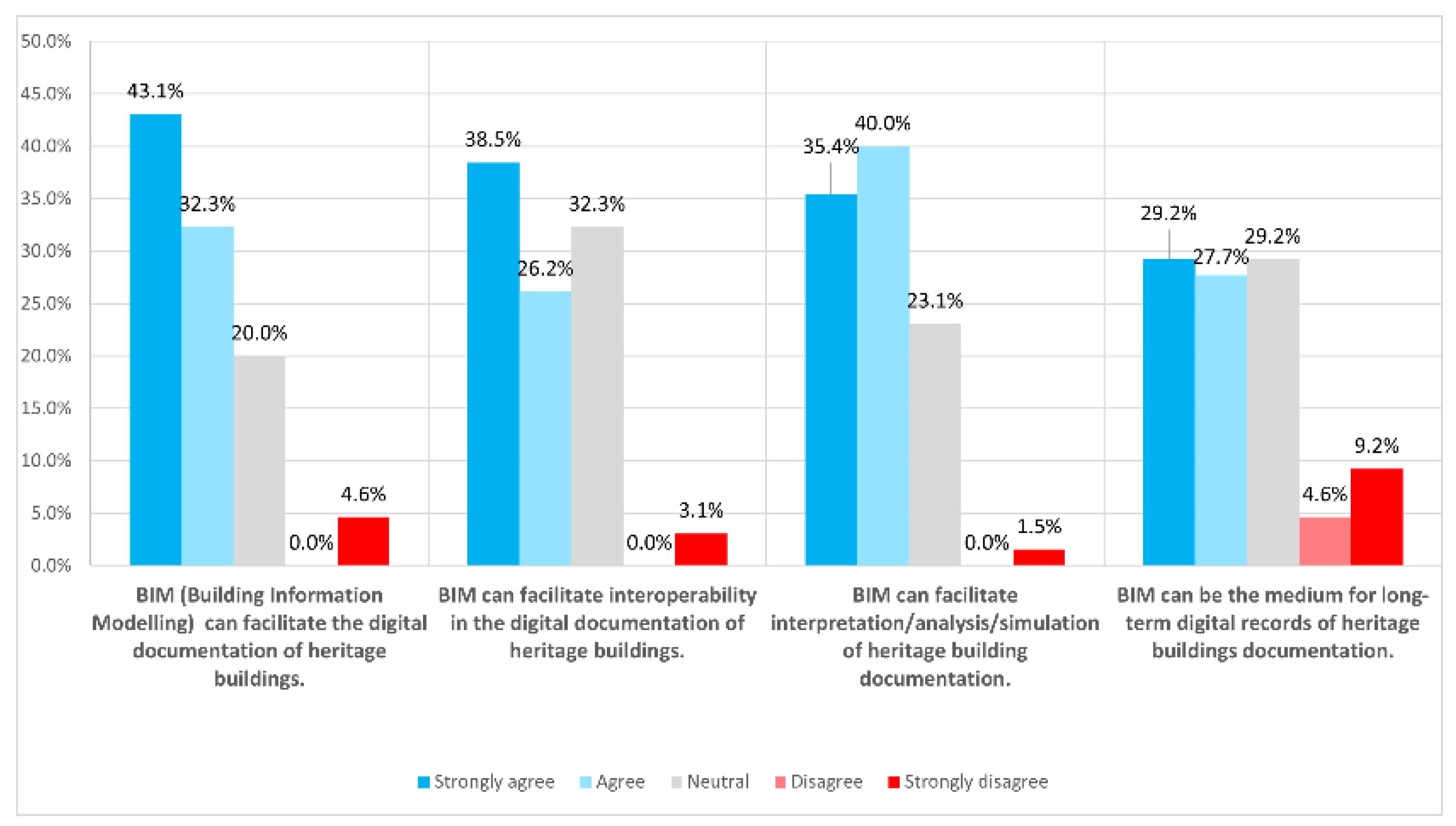
Publisher’s Note: MDPI stays neutral with regard to jurisdictional claims in published maps and institutional affiliations. |
© 2022 by the authors. Licensee MDPI, Basel, Switzerland. This article is an open access article distributed under the terms and conditions of the Creative Commons Attribution (CC BY) license (https://creativecommons.org/licenses/by/4.0/).