3.1. Results of PCCT Analysis of the Three Sculptures
The process of interpreting the obtained PCCT tomograms involved correlating the virtual reconstructions with the original objects to verify the results and identify correlations between the internal structure and external morphological features.
3.1.1. Sculpture No. 1
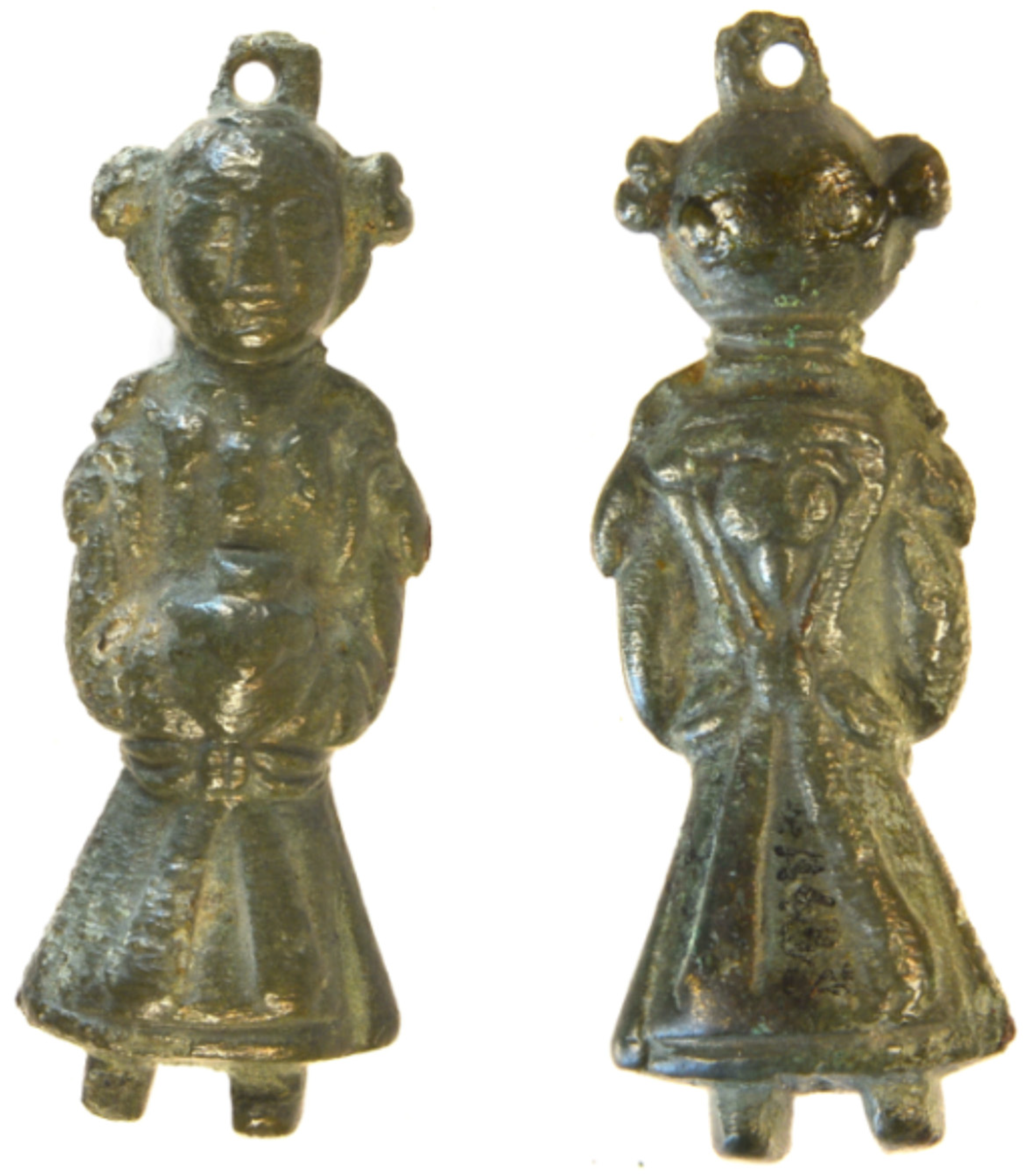
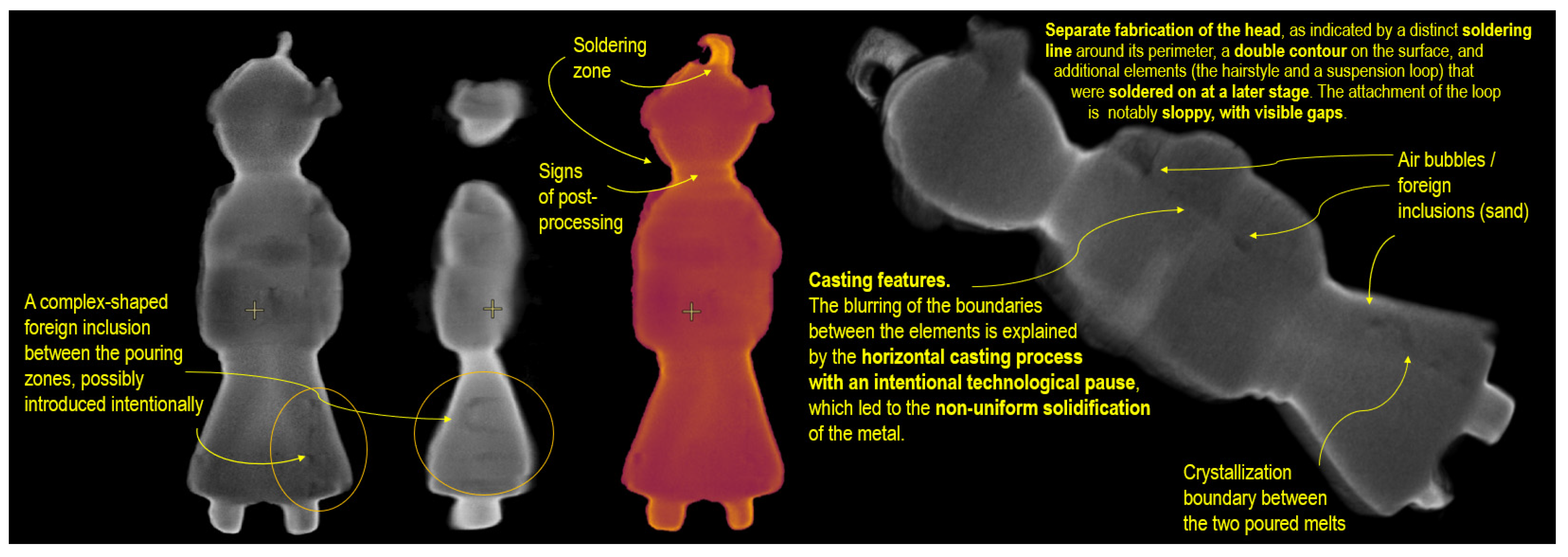
Internal Structure and Defects. The first research object represents the most technologically complex among the three studied sculptures (
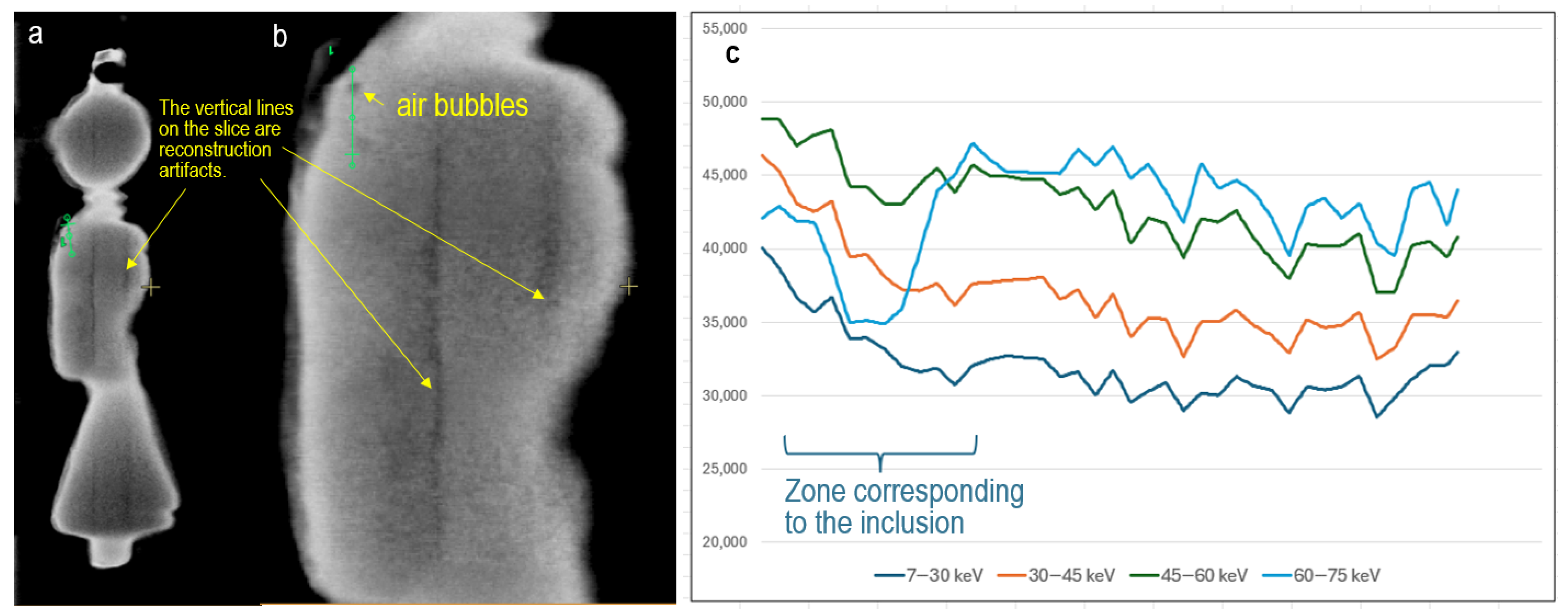
Figure 6). PCCT analysis revealed pronounced material heterogeneity, with the presence of multiple cavities of varying sizes and areas of the object exhibiting uneven X-ray density. The internal structure is characterized by the presence of air bubbles distributed unevenly throughout the volume of the sculpture, indicating insufficient degassing of the melt during casting or the entrapment of gas during mold filling.
Of particular interest are inclusions with X-ray density differing from the metallic matrix. Based on their characteristics, these can be interpreted as foreign non-metallic particles.
The use of PCCT made it possible to distinguish air bubbles, characterized by a complete absence of X-ray absorption, from inclusions with low but finite density, whose absorption spectrum differs from the base material by a sharp decrease in the attenuation coefficient at high X-ray photon energies, indicating their likely nature as particles of molding material—sand or clay—used in the manufacture of the casting mold (
Figure 7).
The presence of such inclusions indicates that during the casting process, the inner surface of the mold partially deteriorated, allowing individual particles to enter the melt. This is a characteristic sign of the use of disposable clay or sand molds, which was typical for small-scale bronze casting in various pre-modern societies, including the medieval period in East Asia [
33].
The distribution of defects throughout the sculpture’s volume is uneven: the highest concentration of porosity and inclusions is observed in the upper part of the torso and in the transition area from the torso to the head. This may be related to the specifics of how the mold was filled with the melt and its subsequent solidification.
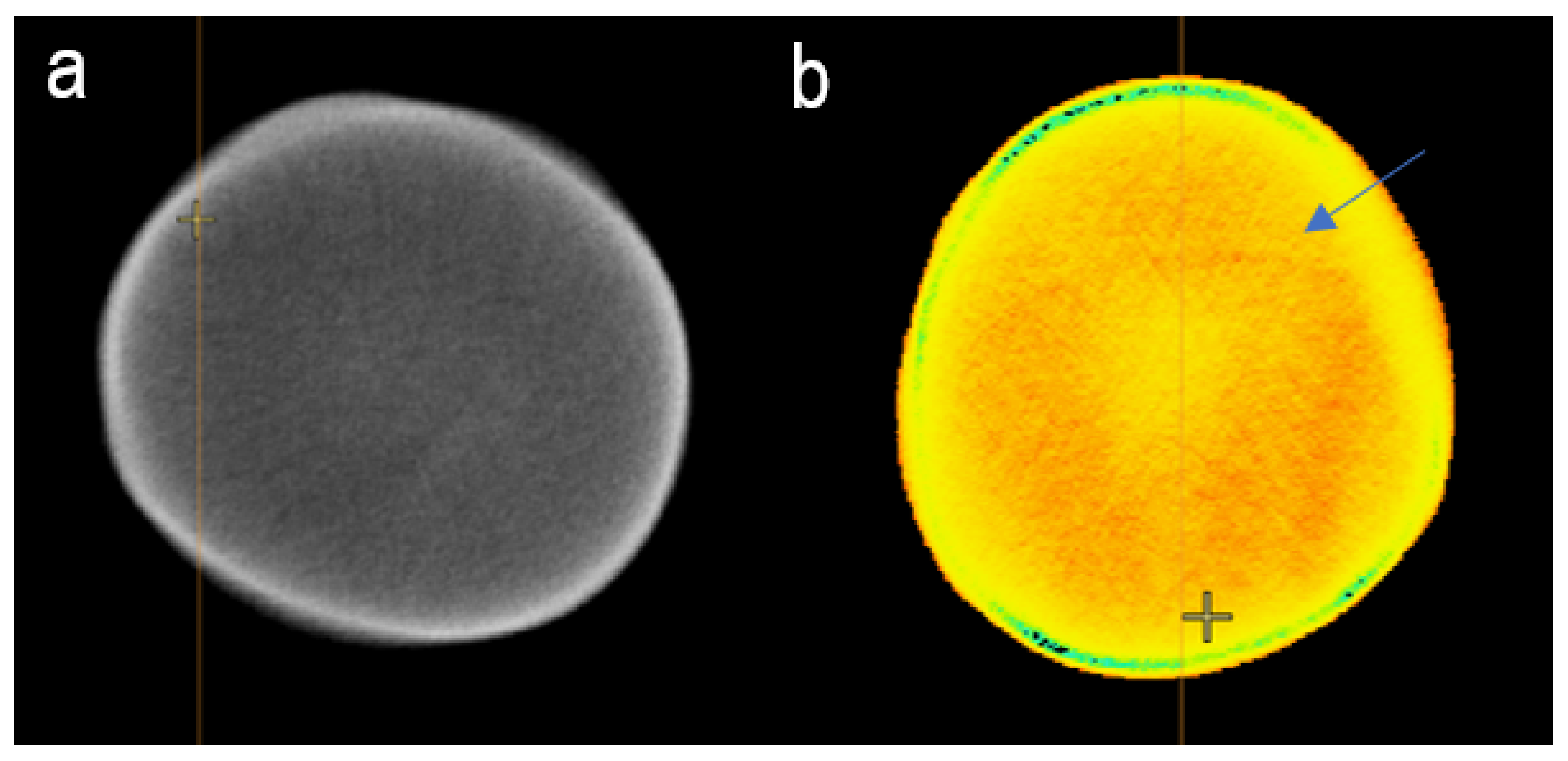
Casting Features and Indications of Process Interruption. One of the most significant features identified by the PCCT of the first sculpture is the indistinct boundaries between different sections of the object, which is attributed to the specificities of the casting technology. A detailed analysis of the reconstructions established that casting occurred with the mold in a horizontal position, as evidenced by the pattern of defect distribution and the orientation of air inclusions.
An important observation is the presence of a clearly defined density boundary running vertically through the central part of the figurine, dividing it into left and right halves. The nature of this boundary, manifesting as a gradual transition of a low-density zone between two areas of higher density, indicates an interruption in the pouring process followed by its resumption.
The mechanism for the formation of such a structure can be reconstructed as follows. The casting mold was positioned horizontally, likely with the left side facing down. Initially, approximately half of the mold’s volume was filled, after which the pouring process was interrupted for an undetermined reason (possibly due to an insufficient volume of prepared melt, technical issues with the crucible or ladle, or other factors). During the pause, the surface of the already poured metal began to crystallize, forming a thin crust of solid alloy. When pouring resumed, the new portion of the melt partially remelted this crust, but complete homogenization of the two metal portions did not occur, leading to the formation of a low-density zone at their interface.
This interpretation is supported by visual observations of the sculpture’s surface: the left half of the figurine has a relatively smooth surface with clearly legible relief, well-defined details of clothing and anatomical elements, while the right half is characterized by a lumpy texture with multiple surface defects, blurred relief, and poorly executed details. Such a difference in surface quality is typical for situations where the first portion of the melt has partially solidified before the second portion arrives, leading to the formation of a defective structure in the latter part of the casting.
In the lower part of the figurine, near the pouring layer boundary, an inclusion with a complex S-shape is also identified (shown in
Figure 6). It is located in the same plane as the layer boundary and exhibits a lower X-ray density than the base material. This inclusion was only visualized on energy-integrating reconstructions, making analysis of its absorption spectra impossible. However, based on a combination of features (location, shape, X-ray density), it can be hypothesized that this inclusion represents a metallic structure (wire) made of an alloy similar to the base material but with a reduced content of “heavy” metals (Sn, Pb). It is assumed that this inclusion was intentionally introduced during casting to improve contact between the pouring layers. Additional research, such as neutron tomography, is required to clarify the nature of this inclusion.
Structural Elements and Post-Casting Processing. PCCT analysis revealed that Sculpture No. 1 is a composite object, whose individual elements were manufactured separately and subsequently joined during post-casting processing. The most obvious evidence of this construction is the figurine’s head, which was determined to have been fabricated independently.
A double line is detected across the entire surface of the head—an artifact that can be interpreted as a seam from the mold used for the separate manufacture of this element. Such a double line forms when a part is cast in a composite mold consisting of two halves, the joining line of which leaves a characteristic mark on the casting’s surface.
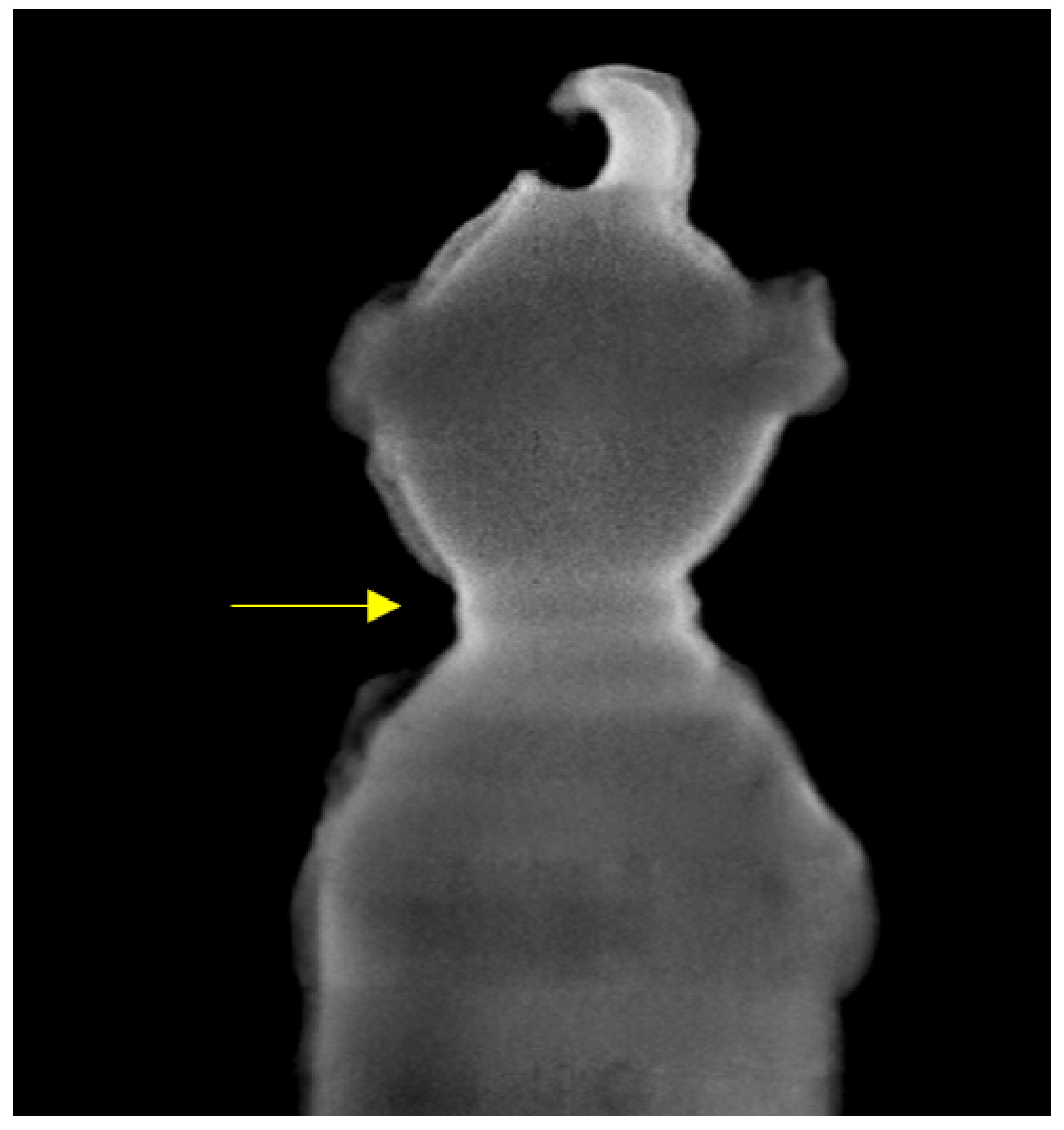
Additional hairstyle elements located on the head were also attached after the main casting process. The PCCT data show that these elements have a different internal structure compared to the main volume of the head and are characterized by zones of altered density at the boundary with the main part, which is typical for soldered joints (
Figure 8).
The nature of the joint indicates poor workmanship: the loop shows a poor fit to the head’s surface, with significant gaps visible between the loop and the head. PCCT data reveal these gaps are filled with a material of lower X-ray density compared to the base alloy. This observation, combined with the statistically significant difference in the elemental composition (particularly the elevated lead content) of the loop (
Table 1, points A1, A2) compared to the head, allows this material to be identified as solder or its corrosion products. Visually and based on the ECT images, it is evident that the attachment was made unprofessionally, possibly in haste or using suboptimal technical methods (
Figure 9).
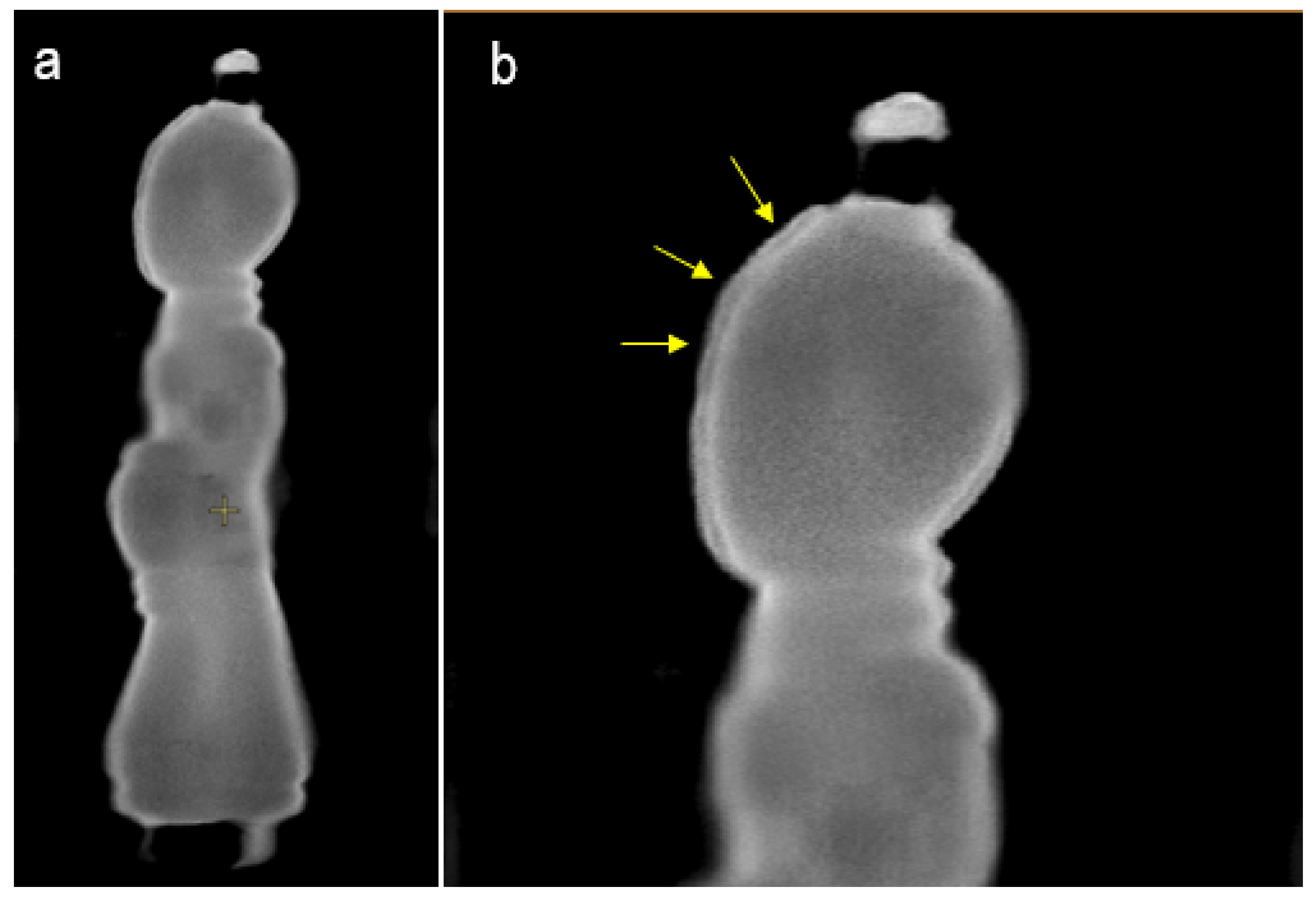
A separate question concerns the collar of the figurine’s garment, which in the PCCT reconstructions shows a substantially higher X-ray density compared to the surrounding areas. This could point to one of several scenarios. The first scenario suggests post-processing of this area using an additional material—possibly the application of a decorative coating made from an alloy with a higher content of heavy elements, or inlay work. The second scenario relates to the possibility of mechanical working of this area (chasing, engraving), which could have led to compaction of the surface metal layer. However, it should be noted that the final interpretation of this observation is complicated by the high X-ray density of the figurine’s material and the specific geometry of the neck area (circular thinning), which can lead to reconstruction artifacts in the form of a false increase in the calculated attenuation coefficients (
Figure 10).
This issue requires further investigation using optical and electron microscopy of a surface cross-section, which is not permissible as it would lead to the destruction of the sample.
3.1.2. Sculpture No. 2
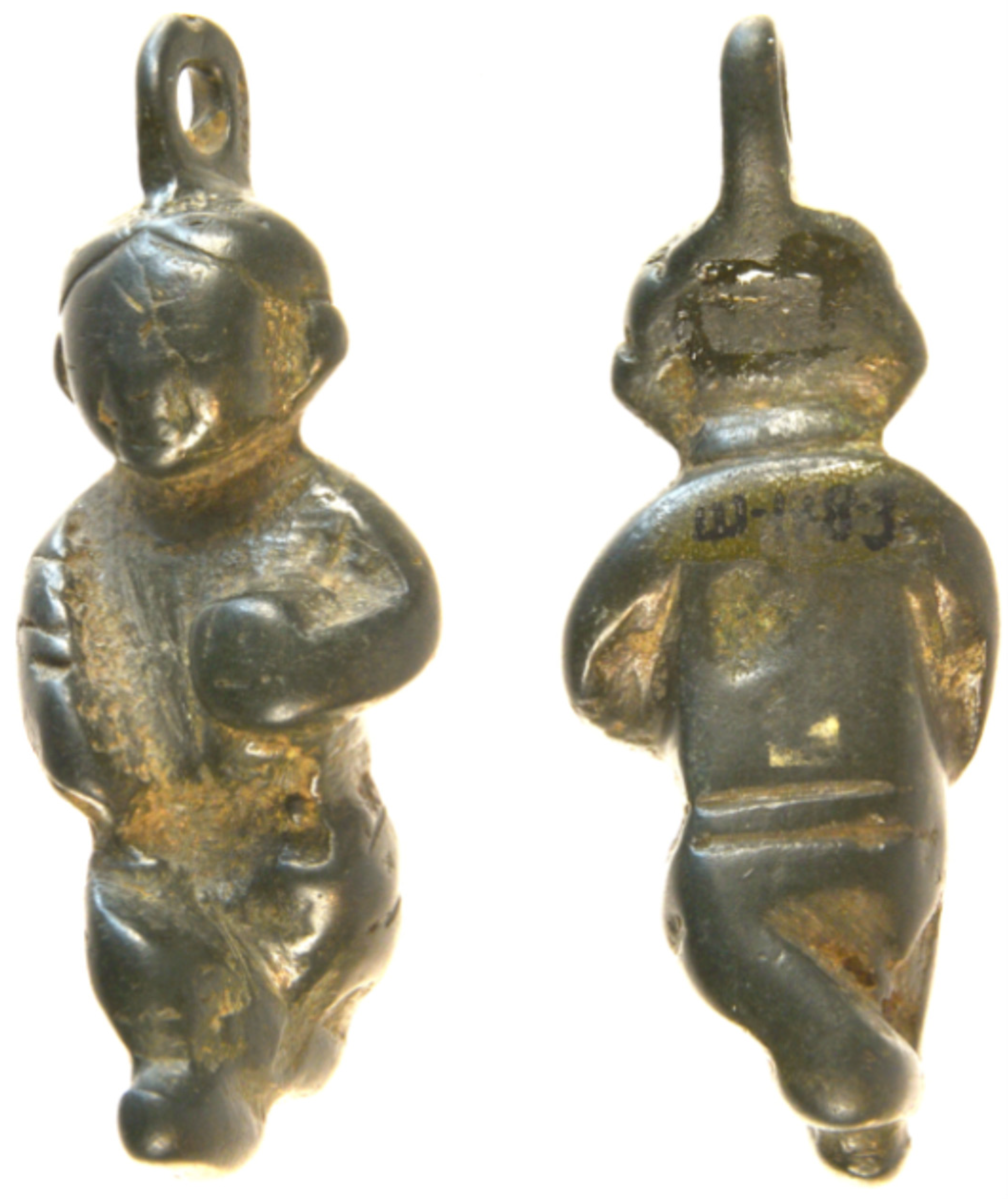
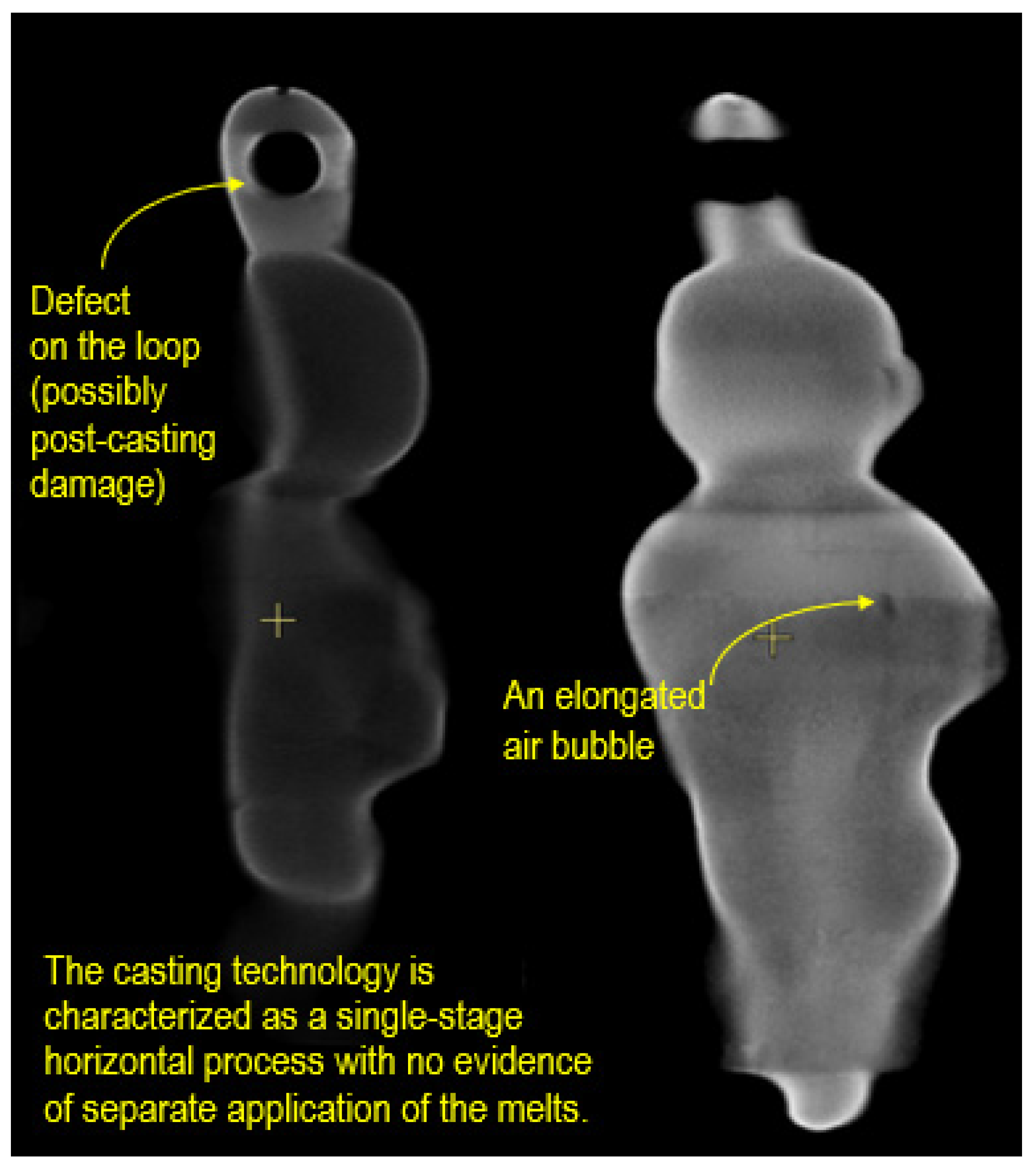
Structural Characteristics. The second research object (
Figure 11) demonstrates a fundamentally different technological approach to manufacture.
The object represents a uniform and solid casting, whose internal structure shows no signs of assembly from separate elements or the joining of different parts. A homogeneous X-ray density is observed throughout the volume of the sculpture, without sharp boundaries or zones with anomalous characteristics, indicating a single-pour process of filling the mold with melt, without technological pauses or interruptions. The item was apparently cast horizontally on one of its sides, as suggested by the distribution pattern of minor defects, which tend to concentrate in the upper part of the casting. At the same time, no clear boundary between different portions of metal, similar to that observed in the first sculpture, is visualized.
The overall level of porosity in the second sculpture is significantly lower than in the first, indicating more thorough melt preparation, possibly including holding at temperature for degassing, or the use of a more advanced mold-filling technique that minimized gas entrapment. Non-metallic inclusions, if present, are significantly fewer in number and smaller in size, suggesting better quality of the casting mold or more meticulous preparation.
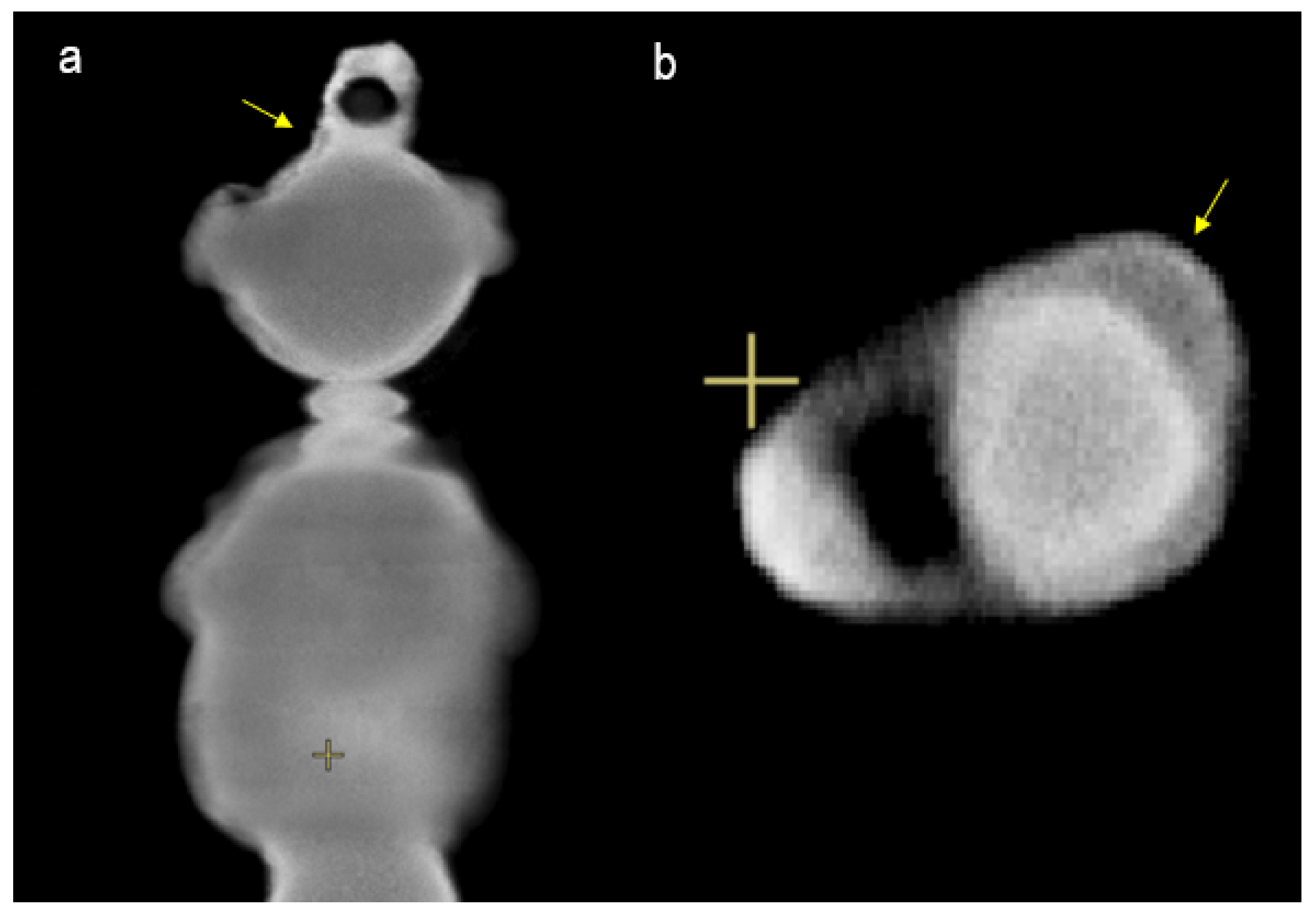
Manufacturing and Use-Related Defects. The most significant manufacturing defect is an elongated air bubble discovered inside the sculpture’s right arm (
Figure 11). The bubble has a characteristic elongated shape oriented along the axis of the arm, measuring approximately 3–4 mm in length and about 0.5–0.8 mm in width. The morphology of this defect is not typical for ordinary gas bubbles formed by the release of gases dissolved in the melt during crystallization, which usually have a near-spherical shape. The elongated form and specific localization of this inclusion allow it to be interpreted as a shrinkage defect.
The mechanism for the formation of such a defect is related to the decrease in metal volume during crystallization (for typical bronzes, shrinkage is 3–5% by volume). If the casting configuration creates isolated volumes of melt that solidify last and lack effective feeding of liquid metal from other parts of the mold, shrinkage cavities form within them. The thin, elongated shape of the arm creates precisely such conditions, leading to the formation of this characteristic linear defect. It is important to note that such a defect is an inevitable consequence of the part’s geometry and does not indicate low-quality workmanship by the artisan, but rather reflects the limitations of the casting technology of that time.
A second identified defect is localized in the area of the suspension loop on the head of the figurine. The loop exhibits a deformation of its hole, which in its nature differs from manufacturing defects and should be classified as use-related damage. The hole of the loop, which initially probably had a round or oval shape, has become stretched and deformed in one direction. Such deformation is characteristic of damage resulting from prolonged wearing of the item on a cord or strap: under the weight of the figurine and the constant tilting during wear, the relatively soft bronze metal of the loop gradually stretches, leading to a change in the hole’s shape.
Based on the PCCT data, it is difficult to determine how the hole in the loop was initially made—whether it was cast along with the loop, or whether the loop was cast solid and the hole was formed after casting by drilling or piercing. This question requires further investigation with higher spatial resolution, possibly using microfocus X-ray tomography or direct microscopic examination of the hole’s internal surface, which might retain traces of the tool used to form it.
3.1.3. Sculpture No. 3: Morphologically Complex Composition
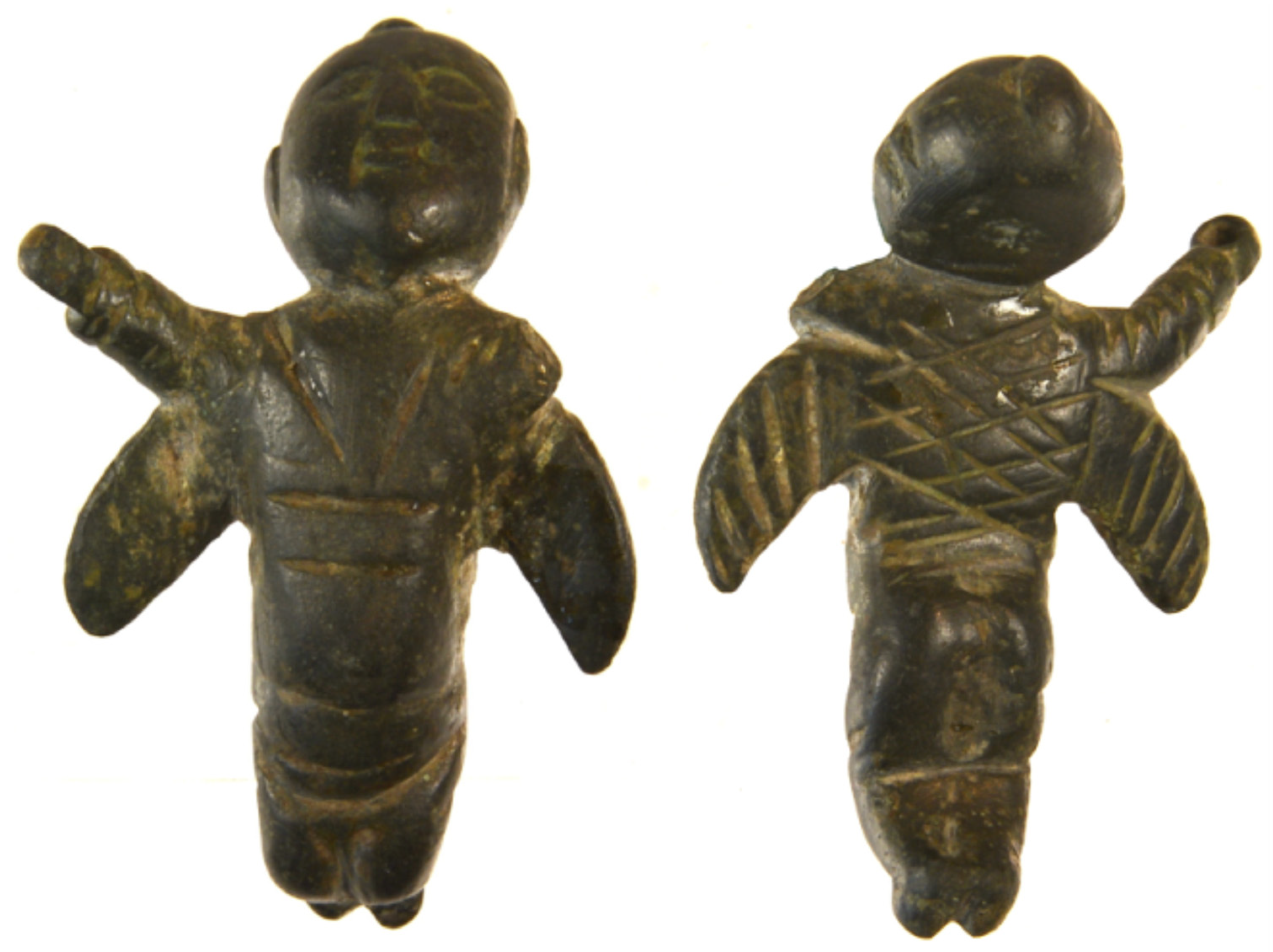
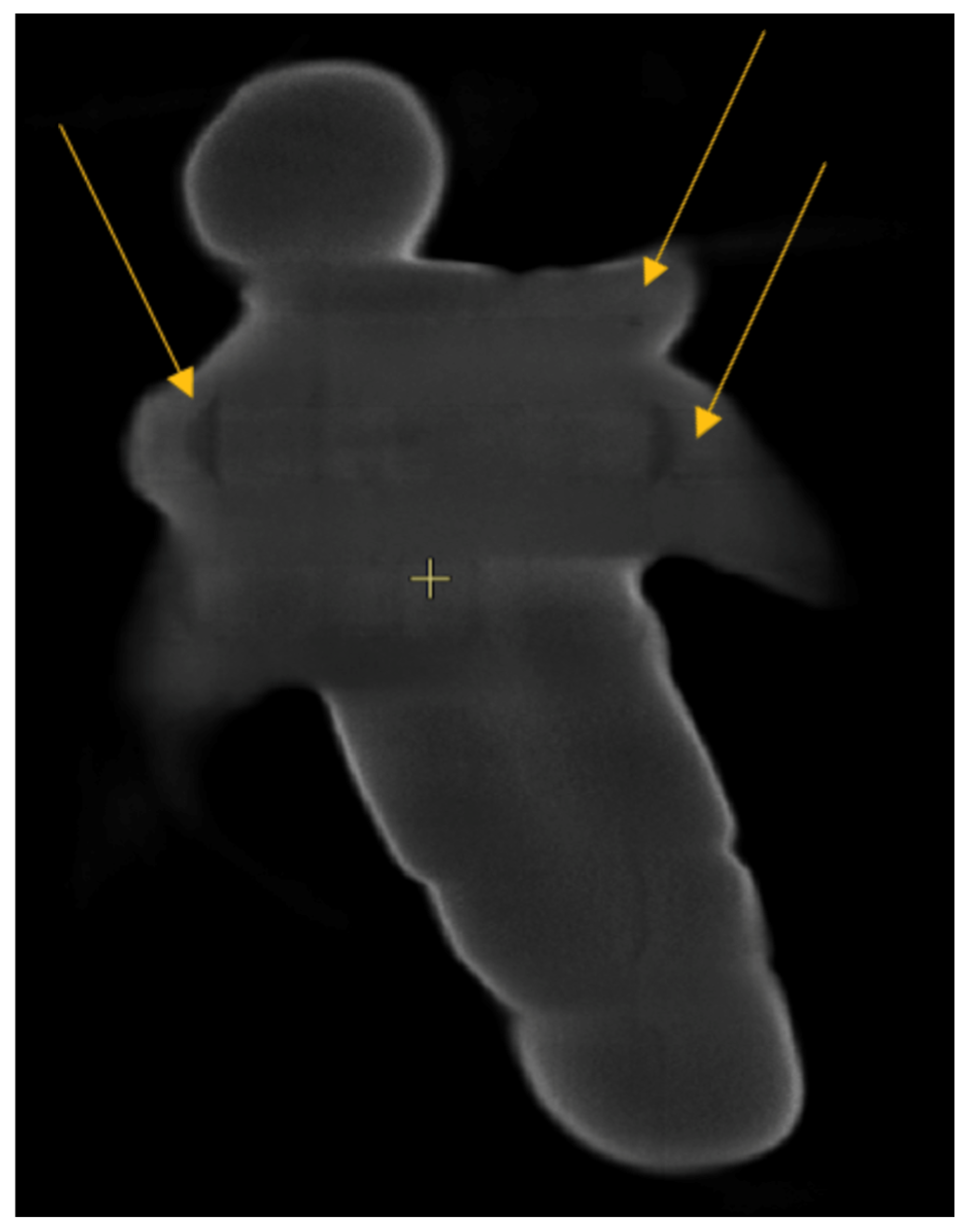
Internal Structure. The third object, due to its greatest morphological complexity and the presence of protruding elements, required more time and specialized algorithms for correcting the PCCT study compared to the other sculptures (
Figure 12).
The PCCT results demonstrate that the sculpture is a single-cast object with high density and homogeneity of its internal structure. The object itself is characterized as a dense, solid pour without significant internal cavities or inclusions. The X-ray density is distributed uniformly throughout the volume of the object, except for several specific zones which will be discussed below.
The level of internal porosity is minimal and does not exceed values typical for high-quality ancient bronze castings. Individual small gas bubbles less than 0.5 mm in size are visualized sporadically; their distribution shows no specific pattern and does not concentrate in certain areas, indicating good degassing of the melt and efficient filling of the mold (
Figure 13).
Zones of Reduced Density and Their Interpretation. In the transition area where the wings meet the body of the figurine, symmetrically located zones with reduced X-ray density are detected. These zones have a characteristic localization—at the junction of the wing with the torso. The extent of each zone is approximately 2–3 mm; they are symmetrical relative to the figurine’s longitudinal axis and have similar morphology.
The reduction in X-ray density in these zones is approximately 10–15% relative to the density of the surrounding metal, which is significant and cannot be explained by measurement noise or reconstruction artifacts. The boundaries of the low-density zones are relatively diffuse, without a sharp transition, which distinguishes them from boundaries characteristic of joining separately made parts by hard soldering.
An alternative interpretation links these zones not to post-processing, but to specific features of the casting process itself. When filling a complex mold with thin protruding elements, a situation can arise where different parts of the mold are filled with melt with a slight time delay. The wings, being thin, flat projections, might have been filled last with already partially cooled metal. In this case, an area with a slightly altered microstructure could form at the junction of the metal flows that filled the main body and the wings, which manifests as a zone of reduced density in the tomograms. It is important to note that in this scenario, the object remains a single casting, and the observed zones are not the junctions of separate parts but rather artifacts of the complex mold-filling process.
Crucial for distinguishing between these two scenarios is the absence, in the tomograms, of evidence suggesting the wings were initially cast separately. No separate casting shells characteristic of independently manufactured parts are visualized, nor are there traces of mechanical processing on the wing ends, which would have been necessary to prepare them for subsequent soldering. These observations favor the interpretation of the second scenario—single casting with a complex mold-filling process.
An interesting feature of the third sculpture is the presence of a through-hole in the preserved right hand of the figurine. The hole has a rounded shape, approximately 1.5–2 mm in diameter, and passes through the entire thickness of the arm. Based on its morphology and location, this hole could have been used for suspending the object. However, a detailed tomographic analysis of the hole’s internal surface and the surrounding areas did not reveal traces of wear or deformation, which would be inevitable if the figurine had been worn for a prolonged period on a cord threaded through this hole. The absence of such traces suggests that the object was not used as a pendant. Similar figurines with holes in their hands are found among Jurchen-period artifacts discovered in China. However, these also do not show clear evidence of the holes being used for suspension and lack the suspension loops on the head characteristic of ancestor spirits. This suggests that sculptures of this type might have had a different functional purpose or mode of display compared to standard depictions of ancestor spirits.
3.2. Results of Elemental Analysis by EDS
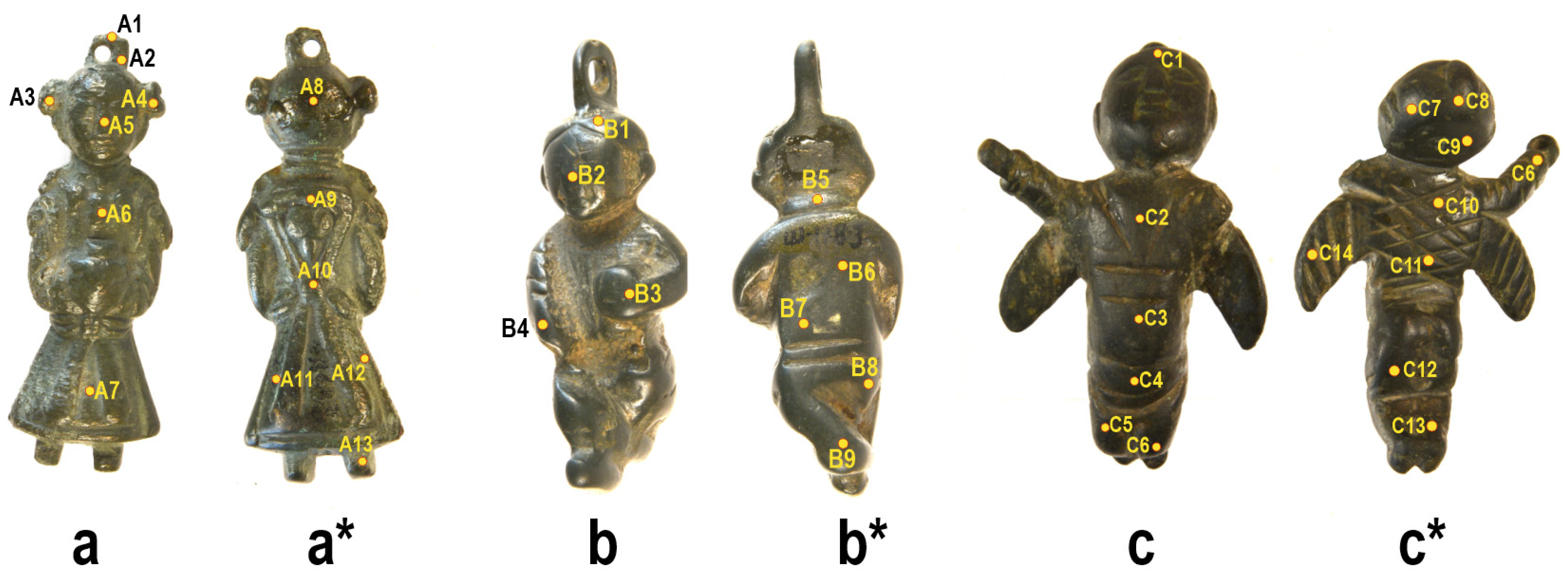
The results of the elemental composition analysis of surface areas at the local points marked in
Figure 14 are presented in
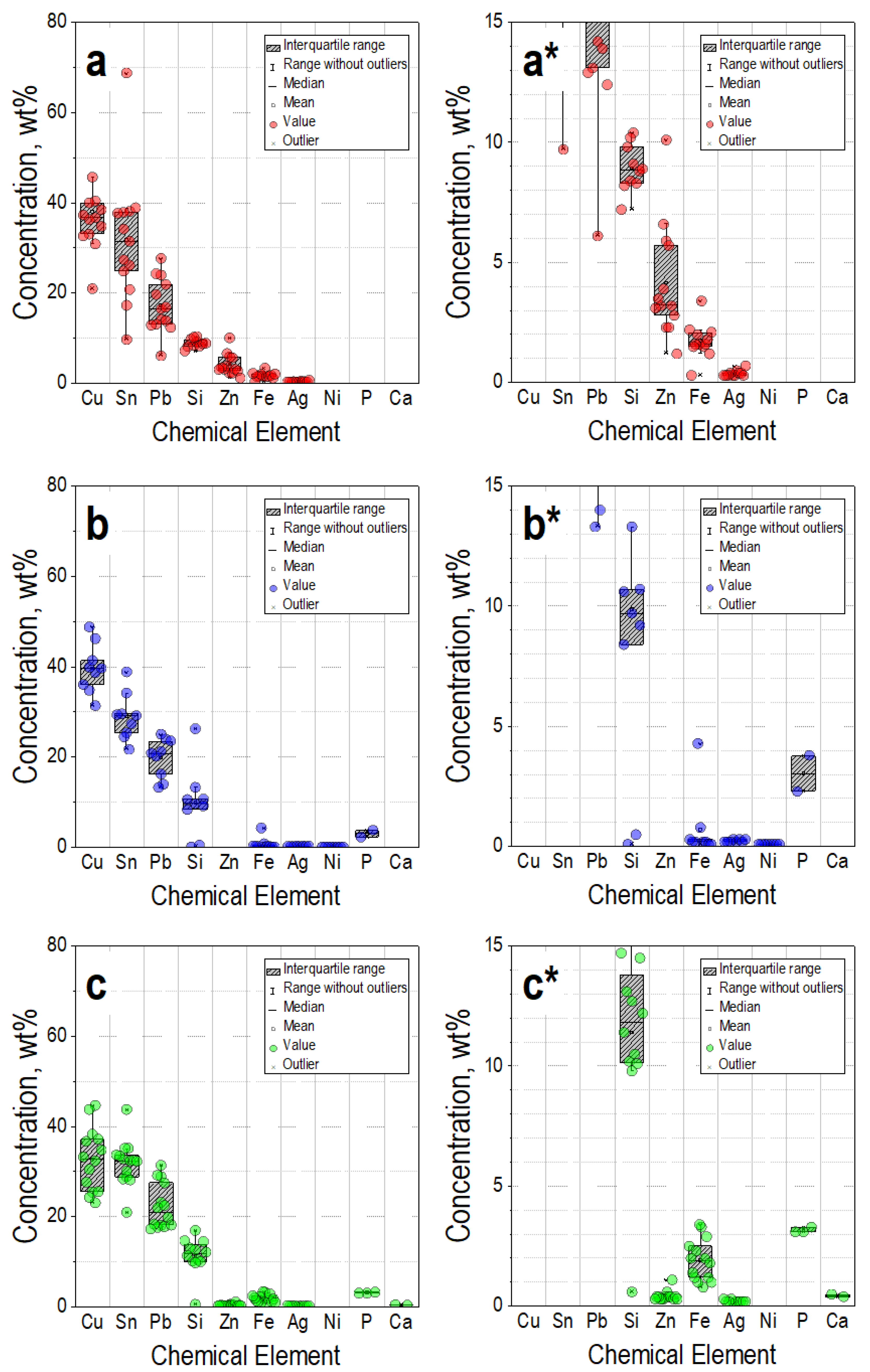
Table 1. To simplify the analysis process, these results are visualized as box-and-whisker plots in
Figure 15.
Qualitative analysis of the obtained spectra confirmed that all three investigated objects belong to the Cu-Sn-Pb (copper-tin-lead) alloy system, representing tin-lead bronze. This is one of the most common types of alloys in Far Eastern archaeological contexts, appearing in the region from approximately the 7th century AD and continuing in active use throughout the existence of the Jin Empire in Primorsky Krai and the Eastern Xia state in the Amur region.
All obtained spectra show the presence of significant amounts of silicon (Si), iron (Fe), and in some cases also aluminum (Al), calcium (Ca), phosphorus (P), and other elements that are not typical alloying components of ancient bronzes. As noted in the methodology section, the presence of these elements is in most cases associated with residual corrosion products on the analyzed surface, soil particles, or other surface contaminants. In the quantitative interpretation of the alloy composition, these elements were considered impurities. Primary attention was paid to the content and ratio of the three main bronze components—copper, tin, and lead.
3.2.1. Sculpture No. 1: Heterogeneity of Elemental Composition
Analysis of the elemental composition of the first sculpture revealed pronounced heterogeneity, which correlates well with the internal structural features identified by PCCT and confirms the hypothesis of a complex, multi-stage manufacturing process for this artifact.
Analysis of the Suspension Loop and Fastening Elements. The results from two points located on the suspension loop demonstrated a substantial difference in the elemental composition of this part compared to the main body of the sculpture. This confirms the PCCT finding that it was manufactured separately and attached subsequently.
At the first point on the loop (Spectrum No. 1), high copper content (45.68%), significant lead content (27.74%), and relatively low tin content (17.33%) were observed. Additionally, the presence of zinc (5.89%) and iron (3.36%) was recorded. The second point on the loop (Spectrum No. 2) shows a somewhat different composition: copper 36.51%, tin 31.53%, lead 14.24%, along with a high silicon content (9.10%), likely due to the local presence of corrosion products or residual molding material on the surface.
The average composition of the loop (excluding the anomalously high silicon value in the second point) is characterized by approximately 41% copper, 24% tin, and 21% lead. In comparison, the main body of the sculpture demonstrates significantly different ratios of these elements (discussed in detail below), confirming the use of different alloys for manufacturing the loop and the main part of the object.
The comparison of tin content is particularly indicative: in the loop, it averages 17–32% (depending on the measurement point), whereas in the main body, the tin content varies in the range of 20–39%, with a predominance of higher values. The lead content in the loop (14–28%) also differs from its content in most points on the main body. Such differences cannot be explained solely by the influence of corrosion or surface contamination and indicate real differences in metallurgical composition.
Differences Between the Left and Right Halves. The most significant differences in elemental composition were found when comparing the left and right halves of the sculpture.
Measurement point No. 11, located on the left side of the figurine in the area of the shoulder or upper arm, demonstrated the following composition: copper 67.52%, tin 9.67%, lead 12.44%, zinc 10.09%. This composition sharply differs from that typical for bronzes of this period and is characterized by an anomalously high copper content with very low tin content. For comparison, measurement point No. 12, located symmetrically on the right side of the figurine relative to point No. 11, showed a completely different composition: copper 32.71%, tin 37.72%, lead 16.86%. The tin content here is almost four times higher than on the left side, while the copper content is, conversely, two times lower. These results align well with the assumption of a technological pause during the casting process. An alternative explanation could be related to processes occurring within the melt itself during the pause. It is known that in ternary Cu-Sn-Pb alloys, liquation—gravitational segregation of components with different densities—can occur. Lead, having the highest density among the bronze components, tends to sink, while lighter components concentrate in the upper parts of the melt. If the technological pause was sufficiently long and the melt temperature was not high enough for effective stirring, such liquation could have resulted in the second portion of metal poured into the mold having a composition enriched in copper due to the settling of lead and partial crystallization of the tin-based eutectic.
Additional confirmation for the interrupted casting interpretation comes from the analysis of the surface appearance in these areas. The left half of the figurine has a smooth, high-quality surface with clear relief, while the right half is characterized by numerous surface defects. This difference can be explained by the fact that the left half, poured first, crystallized under favorable conditions with direct contact between the melt and the mold, whereas the right half formed under conditions involving the partially solidified metal of the first portion, leading to the formation of a defective structure.
Analysis of several other points on the torso confirms the overall picture of lateral heterogeneity. Points on the front and reverse sides of the torso (Spectra Nos. 6, 7, 9, 10) show intermediate values for copper (34–40%), tin (21–27%), and lead (19–24%) content. This may reflect the mixing of two different metal portions in the central part of the object or a gradient distribution of components due to diffusion processes.
Composition of the Leg Area. The result from point No. 13, located in the area of the figurine’s legs, deserves special attention. The recorded composition is unique and has no analogues among all other investigated points: copper 20.98%, tin 68.79%, lead 6.12%. The tin content here is anomalously high—nearly 69%, which is more than double the typical values for ancient tin bronzes and approaches the composition of intermetallic compounds in the Cu-Sn system.
Such a high tin content cannot be explained by random variations within a single alloy and indicates that this structural element was made from a fundamentally different material. Tomographic data also demonstrate a difference in X-ray density in the leg area, which correlates with the difference in elemental composition. The high tin content provides higher X-ray density (tin has an atomic number of 50, significantly higher than copper’s atomic number of 29), which is manifested in the tomograms.
Interpretation of this observation suggests that the sculpture’s legs were manufactured separately from the main body.
The composition of the head area (Spectra Nos. 3, 4, 5, 8) demonstrates a relatively homogeneous composition with copper content of 30–37%, tin 34–39%, and lead 13–17%. This composition differs from both the loop and the left side of the torso but is close to the composition of the right side of the torso. This may indicate that the head was made from the same alloy used for the second portion poured into the torso, or that the head was attached to the torso at a stage when the second half of the torso had already been formed.
3.2.2. Sculpture No. 2: Relative Homogeneity of Composition
The sculpture is cast from a tin-lead bronze (Cu 36–42%, Sn 29–39%, Pb 20–25%), where the high lead content provided excellent casting properties due to increased fluidity and better mold filling.
Point No. 2, located on the face of the figurine, showed significantly lower copper (31.43%) and tin (21.67%) content alongside high silicon content (26.28%). Given that the face is one of the most protruding parts of the sculpture, the high silicon content here is likely related to more intensive corrosion processes and the formation of silicate-containing corrosion products on the surface. This explanation is also supported by the elevated iron content (4.30%) at this point, which may be associated with the incorporation of iron-containing minerals from the soil into the corrosion layer.
Two points on the back of the figurine (Spectra Nos. 6 and 7) demonstrate an interesting feature—the presence of phosphorus in concentrations of 3.84% and 2.34%, respectively. The localization of phosphorus specifically in the back area might indicate that this part of the sculpture was filled with melt to which a phosphorus-containing deoxidizer had been added, whereas this was not done for other parts. Alternatively, the uneven distribution of phosphorus could be related to liquation processes in the melt—phosphorus, which forms specific intermetallic phases with copper, can redistribute during crystallization, concentrating in certain areas of the casting.
The small amounts of iron (Fe), silver (Ag), and nickel (Ni), recorded in all points at concentrations from hundredths to several tenths of a percent, represent typical impurities in ancient bronzes, associated with the characteristics of the original ores and smelting technology. These elements are usually not added intentionally but are present as natural impurities in copper and tin ores and transfer into the alloy during metallurgical operations.
3.2.3. Sculpture No. 3: Variability in Component Distribution
The object is made of tin-lead bronze, whose composition generally corresponds to the typical metallurgical traditions of this period (copper from 23.08% to 44.73%, tin from 21.00% to 43.76%, lead from 17.34% to 31.39%).
Point No. 1, located on the head, showed the composition: copper 38.32%, tin 28.89%, lead 28.92%, iron 3.29%. The high and almost equal content of tin and lead, with moderate copper content, characterizes this as a balanced casting bronze. Point No. 7, located on the ear, demonstrates a substantially different composition: copper 43.82%, tin 21.00%, lead 17.75%, silicon 13.12%. The higher copper content with reduced tin and lead may reflect local liquation processes or specific solidification conditions in this thin, protruding detail.
Two points on the abdomen (Spectra Nos. 3 and 4) show significant differences between them, despite being located on the same morphological element. Point No. 3 showed: copper 44.73%, tin 35.19%, lead 18.11%, while point No. 4 showed: copper 36.60%, tin 28.40%, lead 17.71%, silicon 12.70%. The difference in copper content is over 8%, which is substantial and cannot be fully explained by analytical errors or the influence of corrosion.
Of particular interest is the composition of the left wing (Spectrum No. 14): copper 25.58%, tin 43.76%, lead 27.53%. This is the only point in the entire sample of three sculptures where the tin content exceeds 43%, approaching the composition of high-tin bronzes. Such a composition provides increased hardness and a specific silvery surface color characteristic of high-tin alloys. It is interesting to correlate this observation with the results of the tomographic study, which revealed zones of reduced X-ray density at the junction of the wings with the body.
Both legs of the sculpture (right—Spectrum No. 5, left—Spectrum No. 6, and their reverse sides—Spectra No. 12 and 13) demonstrate a relatively homogeneous composition with some variations, likely related to different degrees of surface corrosion at the analyzed points. The average composition for this area is: copper 25–32%, tin 32–33%, lead 22–31%. The relatively low copper content with high tin content characterizes this as a tin-rich lead bronze.
Points on the back (Spectra Nos. 10 and 11) showed compositions: No. 10—copper 34.83%, tin 33.51%, lead 19.93%; No. 11—copper 33.29%, tin 32.50%, lead 17.34%, silicon 14.51%. The closeness of these values indicates relative homogeneity of composition in this area. The elevated silicon content in point No. 11, as in similar cases on other sculptures, is likely related to surface corrosion processes.
3.3. Results of X-Ray Fluorescence Analysis of the Collection (20 Items)
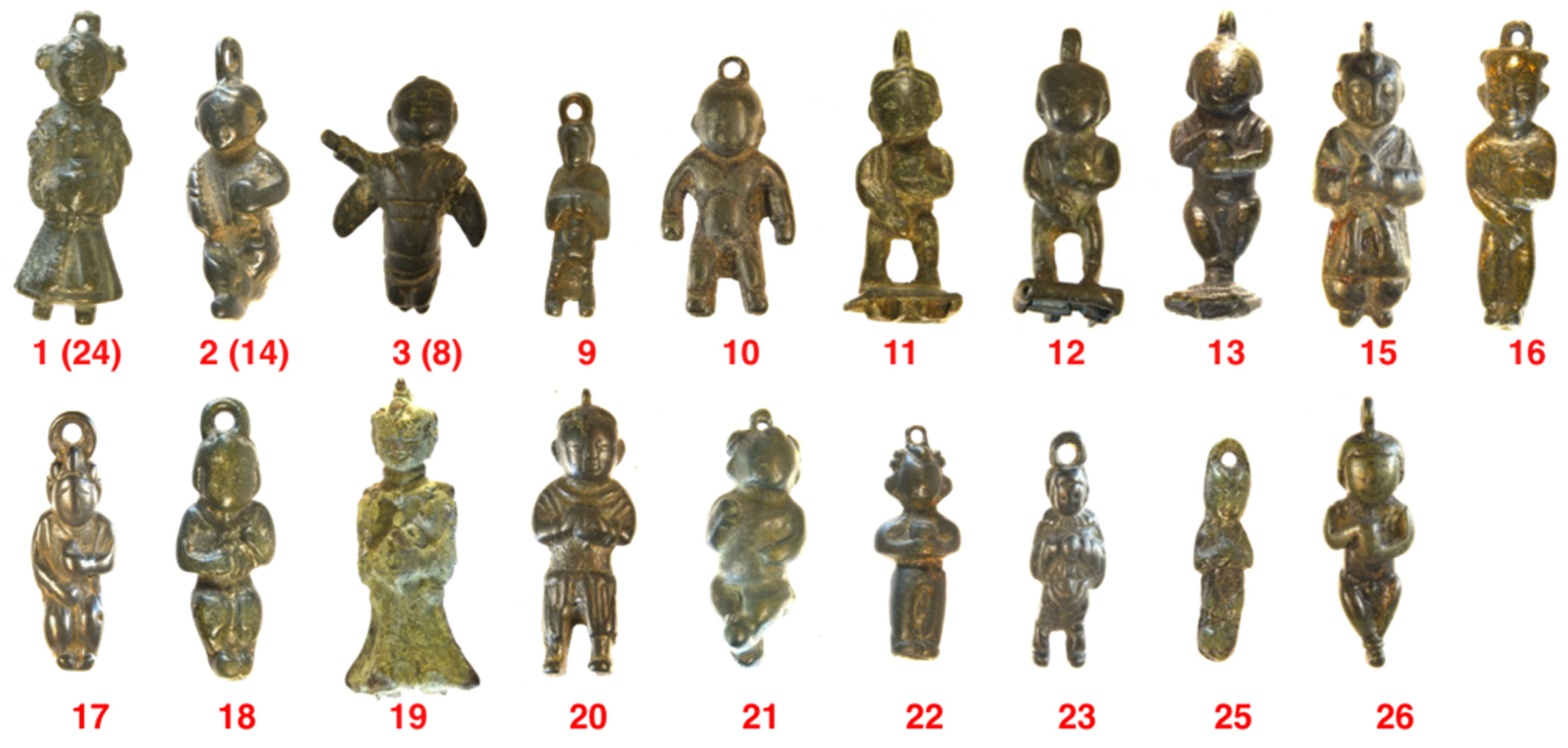
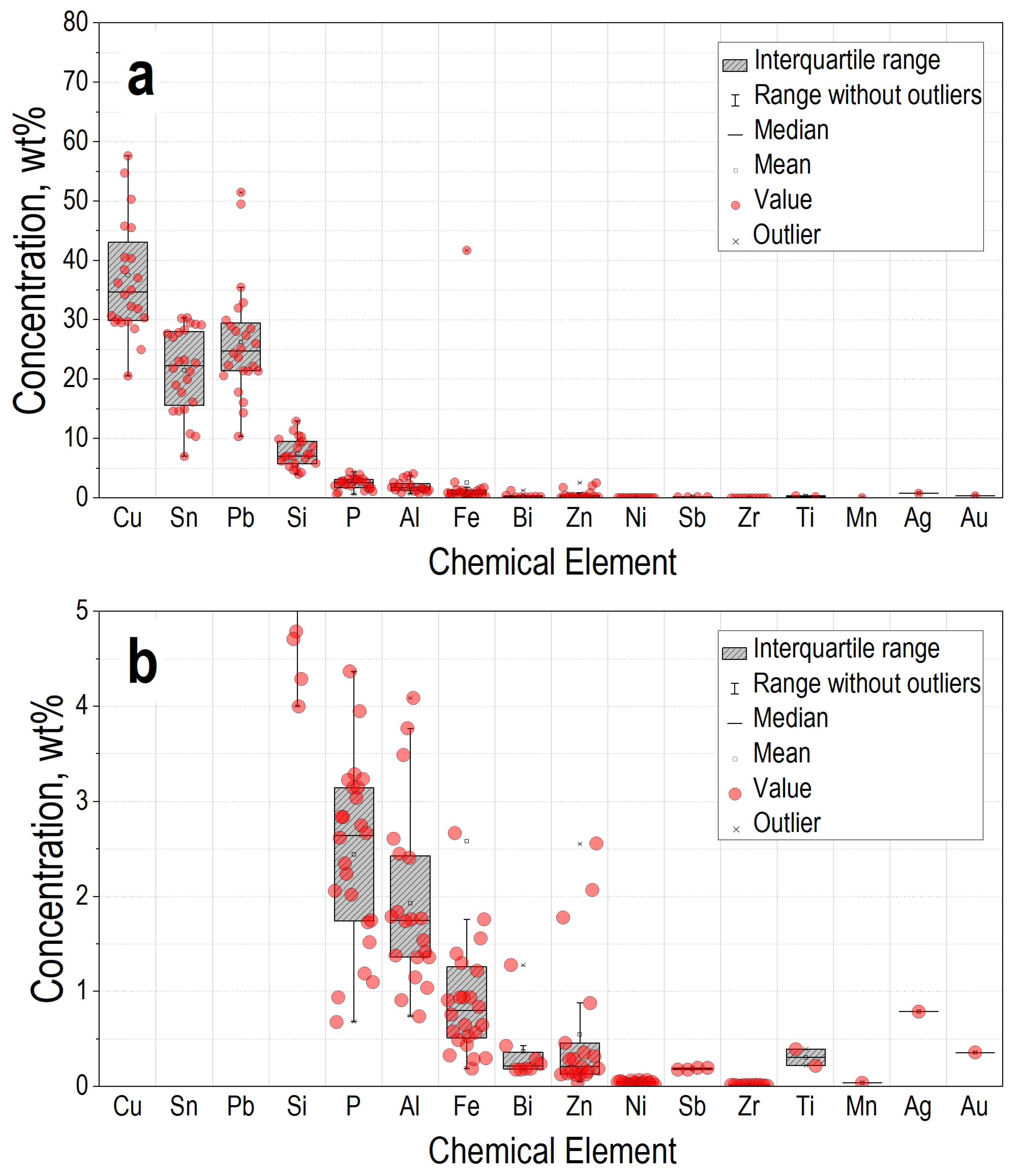
The study of an expanded sample of 20 bronze sculptures using pXRF provided a generalized overview of the variability in metallurgical recipes used by the Jin Empire for manufacturing such items (
Table 2,
Figure 16). It should be emphasized that pXRF, applied to analyze the surface of artifacts with a macroscopic irradiation area (3–5 mm), provides semi-quantitative results significantly influenced by the surface condition, the presence of patina, and corrosion products. Therefore, the obtained data should be considered primarily as a qualitative characterization of compositional variability, rather than as precise quantitative measurements.
3.3.1. General Characterization of the Elemental Composition
All studied sculptures were made from ternary Cu-Sn-Pb alloys. The copper content in the sample varies from 20.57% to 66.43% (median ~33%, mean ~36.5%), demonstrating a wide range of recipes. The tin content ranges from 7.02% to 30.35% (median ~23%, mean ~22%), with the majority of specimens concentrated in the 15–30% range. The lead content varies from 10.36% to 51.51% (median ~24%, mean ~25.5%), showing the greatest variability among the major components.
The box-and-whisker plot (
Figure 16) clearly demonstrates that copper is the predominant component in most samples, with statistical outliers present both towards very low values (around 20–25%) and high values (above 55–60%). The distribution of tin is relatively more compact with fewer outliers. The lead content shows a broad distribution with several outliers in the extremely high value range (~50%), indicating the existence of a specific group of high-lead alloys.
Silicon was detected in practically all samples within the range of 4–12.9%, primarily associated with surface corrosion products and soil residues. Phosphorus is present in concentrations of 0.68–4.37% (median ~2.5%), and its distribution is relatively uniform, which may indicate either natural impurities in the ores or intentional addition as a deoxidizer in some specimens. Aluminum was detected in concentrations up to 4.09%, also predominantly linked to surface contamination.
Among the minor elements (
Figure 16), Fe is present in concentrations of 0.19–2.67% (excluding the anomalous sample No. 22 with 41.7% content, which is clearly related to surface contamination). Zinc was recorded in most samples in concentrations from trace amounts up to 2.56%, which is characteristic of natural impurities in copper ores. Bi, Sb, Zr, and Ti are present in trace amounts (<0.5%). Silver (Ag) was detected in only one sample (No. 19) at a concentration of 0.79%, and gold (Au) in the same sample at 0.36%, which may indicate the use of reminted coin metal or copper from a unique deposit.
3.3.2. Typological Alloy Groups
Based on the distribution of the main components (Cu, Sn, Pb) within the sample, four primary typological alloy groups can be distinguished.
Group 1. Classic Balanced Lead–Tin Bronzes (Samples Nos. 12, 16, 17, 20, 23, 26). These are characterized by a copper content of 30–58%, tin 16–23%, and lead 16–28%. This group forms the core of the sample and represents typical casting bronzes with an optimal balance of mechanical and technological properties. Samples in this group demonstrate relatively low impurity levels and align well with known regional metallurgical traditions.
Group 2. High-Lead Bronzes (Samples Nos. 9, 10, 11, 13, 25). The lead content in this group significantly exceeds typical values, reaching 25–52%. Sample No. 13 represents an extreme case with a lead content of approximately 50% (center: 49.51%, legs: 51.51%), approaching the composition of a lead-bronze eutectoid. Such high lead concentrations drastically reduce mechanical strength but provide excellent fluidity and ease of casting. Samples Nos. 9, 10, and 11 demonstrate an interesting feature: analysis of different points (center and legs) on a single object reveals compositional variability, which may indicate alloy heterogeneity or differing surface conditions in these areas.
Group 3. High-Tin Bronzes (Samples Nos. 14, 18, 21, 24). These are characterized by a tin content of approximately 27–30%, which is comparable to or exceeds typical values. Sample No. 18 demonstrates a unique balance with nearly equal content of copper (28.52–30.74%), tin (27.07–30.25%), and lead (28.52–29.94%). Such a composition provides specific properties–increased hardness, a characteristic color, and good fluidity. Analysis of two points on sample No. 18 (center and head) shows relative compositional homogeneity.
Group 4. Low-Tin Alloys (Samples Nos. 19, 22). These are characterized by a tin deficit with content < 11%. Sample No. 19 (copper 66.43%, tin 10.38%) represents a high-copper alloy with minimal alloying. Sample No. 22 demonstrates an extremely low tin content (7.02%) alongside an anomalously high iron content (41.7%), which clearly indicates severe surface contamination and makes this result largely unsuitable for metallurgical interpretation.
3.3.3. Specific Compositions and Local Heterogeneity
For several samples (Nos. 9, 10, 11, 12, 13, 18), analysis was conducted at two different points—in the central part of the figurine and in the area of the legs or head. The results revealed significant local compositional variability, exceeding the analytical error of the method.
Sample No. 9 shows differences: center (Cu 32.28%, Sn 28.30%, Pb 25.16%) and legs (Cu 40.36%, Sn 27.89%, Pb 21.45%). The most noticeable change is an 8% increase in copper content in the leg area.
Sample No. 11 shows even more significant differences: center (Cu 30.04%, Sn 23.02%, Pb 35.51%) and legs (Cu 35.05%, Sn 14.96%, Pb 32.90%). The tin content in the leg area is nearly 8% lower than in the center, accompanied by an increase in copper content.
Sample No. 13, with its high lead content, demonstrates: center (Pb 49.51%, Sn 21.33%) and legs (Pb 51.51%, Sn 10.82%). In the leg area, the lead content is even higher, while the tin content is nearly halved.
This local heterogeneity can be explained by several factors: (1) varying surface conditions and thickness of the corrosion layer at different points; (2) real metal heterogeneity due to liquation processes during crystallization; (3) the use of different alloys for individual elements in the case of composite objects. Given the semi-quantitative nature of the pXRF method and its high sensitivity to surface condition, the first explanation appears most likely for the majority of cases.
3.3.4. Generalized Characterization of Metallurgical Traditions
The box-and-whisker plots (
Figure 16) clearly show the presence of numerous outliers, reflecting specific recipes or production conditions.
The predominance of classic balanced bronzes in the sample indicates an established metallurgical tradition with a good understanding of the relationship between alloy composition and properties. Simultaneously, the presence of high-lead, high-tin, and low-tin alloys testifies to a flexible production capability, able to adapt to varying conditions of raw material availability and functional requirements.
The wide range of lead content (from ~10% to 52%) likely reflects different production strategies: from a focus on mechanical strength (low lead content) to a priority on technological efficiency and ease of casting (high lead content).
The detection of trace noble metals (Ag, Au) in sample No. 19, although an isolated case, is of interest as possible evidence for the use of remelted metal or copper from specific deposits. This finding may hold significance for reconstructing economic connections and raw material sources.




 ,
,