


Highlights
What are the main findings?
- V2X-supported coordinated maneuvers, Cooperative Adaptive Cruise Control (CACC), and ML-driven approaches significantly enhance road safety, traffic stability, and communication efficiency.
- Critical challenges persist in maintaining reliable communication under dense traffic, strengthening cybersecurity defenses, and fostering human-centric user acceptance.
What are the implications of the main findings?
- The study provides a comprehensive PRISMA-based reference framework to guide future research and development in V2X-enabled Intelligent Transportation Systems (ITS).
- The synthesis supports the practical deployment of connected vehicles by highlighting the necessity of integrated, secure, and scalable communication architectures.
Abstract
Vehicle-to-Everything (V2X) technologies have become a key enabling technology in modern Intelligent Transportation Systems (ITS), supporting cooperative awareness, real-time data exchange, and coordinated decision-making among vehicles, infrastructure, and vulnerable road users. This paper presents a systematic survey of recent advancements in V2X-enabled ITS, with emphasis on safety enhancement, collision avoidance, and traffic efficiency optimization. Relevant studies were retrieved from the Scopus and Google Scholar databases, covering the period from 2020 to 2026, in accordance with the PRISMA 2020 guidelines. To ensure the robustness of synthesized claims, a formal 5-point methodological quality appraisal was applied to the 176 fully accessible included studies, explicitly categorizing them by their evidence maturity (e.g., software simulation vs. real-world field test). To resolve the structural overlap inherent in modern vehicular networks, this survey proposes a novel four-layer cyber–physical taxonomy. The literature is systematically categorized into: (1) Communication and Security Infrastructure, (2) Perception and Human Interaction, (3) Algorithmic and Decision-Making, and (4) Macroscopic Applications. The findings indicate that while V2X-supported coordinated maneuvers and Cooperative Adaptive Cruise Control significantly improve road safety and traffic stability, their success is strictly bounded by underlying latency constraints and human behavioral compliance. Furthermore, ML-driven approaches enhance predictive accuracy, communication efficiency, and security mechanisms within V2X systems. Despite notable progress, challenges remain in maintaining reliable communication under dense traffic conditions, strengthening cybersecurity defenses, ensuring system scalability, and fostering user acceptance. By synthesizing recent research advances and identifying open issues, this paper provides a comprehensive reference framework to guide future research and support the practical deployment of safe and reliable V2X-enabled transportation systems.
1. Introduction
The rapid advancement of Intelligent Transportation Systems (ITS) and connected vehicle technologies has started a new era of vehicular communication and automation, attracting significant attention from both academia and industry [1]. Vehicle-to-Everything (V2X) communication, which includes vehicle-to-vehicle (V2V), vehicle-to-infrastructure (V2I), vehicle-to-pedestrian (V2P), and vehicle-to-network (V2N) interactions, plays a central role in improving road safety, traffic efficiency, and driving experience [2]. By enabling real-time data exchange among vehicles, infrastructure and other road users, V2X communication forms the cornerstone of modern ITS, supporting applications ranging from collision avoidance [3] and traffic management [1] to autonomous driving [4] and eco-driving strategies [5].
Collision avoidance constitutes a primary research focus in V2X-enabled ITS, as traffic accidents remain a major global safety and socioeconomic concern [3]. V2X-based collision avoidance systems enable coordinated maneuvers by allowing vehicles to exchange intent and state information in real time, thereby supporting proactive accident prevention [1,6]. Furthermore, the integration of Machine Learning (ML) algorithms enhances predictive accuracy and adaptive response capabilities, enabling dynamic hazard detection and mitigation [7].
Beyond safety enhancement, traffic efficiency and flow optimization constitute another critical dimension of V2X-enabled ITS, particularly in the context of increasing urbanization and vehicle density, which intensify congestion and travel delays [8,9]. V2X communication facilitates traffic flow stabilization through applications such as adaptive traffic signal control [8], Cooperative Adaptive Cruise Control (CACC) [10], and intelligent merging strategies [11]. These applications depend on reliable, low-latency communication links, highlighting the importance of robust V2X technologies, including Dedicated Short-Range Communications (DSRC) [12], Cellular V2X (C-V2X) [13], and hybrid communication architectures [14].
Communication reliability, performance, security, and privacy are fundamental concerns in V2X-enabled ITS [15,16]. The open and dynamic nature of vehicular networks exposes them to a variety of cyber threats, highlighting the need for advanced security mechanisms and trust models [17,18]. Ensuring robust communication under varying traffic densities and mobility conditions is critical for safety-critical applications [12,19]. Additionally, privacy-preserving techniques must be implemented to protect user data without compromising the operational effectiveness of V2X systems [20].
Human factors and driver behavior are critical determinants of the effectiveness of V2X technologies [21,22]. Understanding how drivers interact with these systems is essential for designing user-centric applications that enhance safety while minimizing distraction or confusion [23,24]. Research has demonstrated that V2X warnings can improve driver response times and situational awareness, yet widespread adoption relies on fostering user trust and acceptance [21,23]. Accordingly, incorporating human-centric design principles is imperative to ensure that V2X applications are both effective and widely adopted [25].
Perception and sensing systems constitute the core of autonomous driving and Advanced Driver Assistance Systems (ADAS) [4,26]. While onboard sensors such as LiDAR, radar, and cameras provide detailed local observations, their performance is inherently constrained by range and Line-of-Sight (LOS) limitations. Integrating V2X communication extends this perception horizon by enabling vehicles to access information beyond their immediate sensing field, thereby improving obstacle detection and response reliability [27,28]. Moreover, collective perception supported by multi-source data fusion allows vehicles and infrastructure to share contextual information, enhancing situational awareness and contributing to safer interactions with Vulnerable Road Users (VRUs), including pedestrians and cyclists [29,30].
Beyond enhancing vehicle-level perception, the integration of V2X communication within ITS enables coordinated traffic management and broader environmental optimization [31,32]. By facilitating continuous data exchange among vehicles and infrastructure, V2X supports applications such as intelligent intersection management [33], cooperative driving [34], and eco-driving strategies [35]. These coordinated mechanisms improve traffic efficiency by reducing unnecessary stops, smoothing traffic flow, and enabling adaptive speed control. As a result, they contribute to lower fuel consumption and emissions, aligning transportation systems with broader sustainability objectives [5,36].
As V2X-enabled transportation systems grow in scale and complexity, data-driven approaches become essential for real-time adaptation and optimization [1,37]. Reinforcement learning (RL) has emerged as an effective framework for sequential decision-making in dynamic traffic environments, supporting applications such as traffic signal control, radio resource allocation, and cooperative maneuvering [38]. Federated Learning (FL) complements this paradigm by enabling distributed model training across vehicular networks without centralized data aggregation, thereby preserving user privacy and reducing communication overhead [39]. In parallel, predictive modeling techniques facilitate proactive functionalities including collision risk estimation, traffic stability analysis, and anomaly detection, strengthening both safety and network resilience [7,16].
With advanced intelligence from ML and V2X-enabled systems, path planning and trajectory optimization become critical for safe and efficient navigation in connected and autonomous vehicles (AVs) [11]. Hierarchical planning frameworks that leverage V2X communication enable scalable and computationally efficient solutions, dynamically adapting to real-time traffic conditions and interactions with other vehicles [40]. By integrating ML models with V2X data, collision prediction and avoidance strategies allow vehicles to anticipate potential hazards and respond proactively, enhancing road safety [6].
While prior studies have explored individual aspects of V2X communication, a comprehensive survey examining its impacts across the full spectrum of ITS domains—including safety, operational efficiency, human factors, and environmental sustainability—remains scarce. As detailed in Table 1, recent surveys tend to adopt a highly compartmentalized perspective. For instance, recent literature heavily investigates the intersection of V2X with cybersecurity defenses and misbehavior detection [41], focuses strictly on the chronological phases of network data transfer [42], or evaluates AI primarily as a low-level network optimization tool while explicitly excluding higher-level transportation use cases [43]. Furthermore, highly specialized reviews often isolate technical components like physical-layer standards [44] or restrict their scope to limited application areas such as future 6G network orchestration [45]. While valuable, these surveys consistently omit the critical human-in-the-loop elements (such as driver behavior, trust, and VRU acceptance) and lack a reproducible, systematic methodology like PRISMA.
Table 1.
Comparison of Recent V2X Surveys Against Our Proposed Contribution.
This survey explicitly bridges the gap between hardware/protocol innovations and their practical, human-centric implications for ITS deployment. By organizing the literature into a multidisciplinary PRISMA-based framework, this work goes beyond summarizing communication technologies; it critically analyzes the trade-offs between ML integrations, collective perception limits, and cooperative driving strategies. In particular, this survey addresses the following key areas:
- -
- Layer 1: V2X Communication and Security Infrastructure: Evaluates the physical-layer trade-offs between DSRC and C-V2X, hybrid network orchestration, and the dynamic misbehavior detection systems required to mitigate cyber–physical threats.
- -
- Layer 2: Perception and Human Interaction: Examines the integration of multi-modal sensor fusion, edge-assisted collective perception, Vulnerable Road User (VRU) awareness, and the critical cognitive boundaries of human-machine interfaces.
- -
- Layer 3: Algorithmic and Decision-Making: Analyzes the deployment of RL, FL, and predictive stochastic models to optimize resource allocation, forecast hazard trajectories, and execute precise kinematic control.
- -
- Layer 4: Macroscopic Applications and ITS Integration: Assesses the system-level outcomes of cooperative driving, including adaptive signal control, digital twin synchronization, and macroscopic eco-driving strategies.
Scope and Technological Foundations of V2X
To contextualize the advancements reviewed in this paper, it is critical to clearly define the scope of V2X communications and the underlying standards that govern them. V2X is an overarching framework encompassing four primary communication modes, each serving distinct ITS objectives:
- -
- Vehicle-to-Vehicle (V2V): Enables direct, localized data exchange (e.g., speed, heading, braking status) between vehicles, forming the backbone of latency-critical safety applications like CACC. However, under congested urban conditions, V2V networks frequently suffer from channel saturation, packet collisions, and severe Line-of-Sight (LOS) signal shadowing from heavy vehicles, which actively threatens the string stability of mixed-traffic platoons [12,46].
- -
- Vehicle-to-Infrastructure (V2I): Connects vehicles to Roadside Units (RSUs) and traffic control systems, facilitating macroscopic flow optimization and adaptive signal control. The primary engineering bottleneck for V2I is economic and computational scalability; achieving ubiquitous coverage requires massive infrastructural investment, and processing real-time trajectories for hundreds of uncoordinated, human-driven vehicles creates severe data-fusion bottlenecks at the edge [13,27].
- -
- Vehicle-to-Pedestrian (V2P): Focuses on VRU protection by broadcasting awareness messages between vehicles and pedestrian smart devices. In dense urban canyons, V2P deployment is significantly hindered by GPS multipath errors, rendering standard localization inadequate for collision avoidance [47,48]. Furthermore, continuous V2P broadcasting risks saturating the local RF spectrum and draining pedestrian device batteries [49].
- -
- Vehicle-to-Network (V2N): Connects vehicles to broader cellular networks and cloud infrastructure for long-range routing and system-wide traffic analytics. Because V2N relies on third-party cellular coverage, it is highly vulnerable to unpredictable latency spikes and network dropouts during peak urban congestion, making it less suitable for reliably executing split-second, safety-critical autonomous maneuvers [50,51].
The deployment of these V2X applications is currently driven by two competing yet increasingly complementary technological standards. The IEEE 802.11p standard (often marketed as DSRC in the US and ITS-G5 in Europe) is a mature, Wi-Fi-based technology designed for ad-hoc, short-range communication without reliance on centralized cellular networks. It provides highly reliable, low-latency performance for localized safety protocols. Conversely, the 3GPP C-V2X standard, evolving from LTE-V2X to 5G New Radio (5G-NR), leverages both direct sidelink communications (PC5) and cellular network infrastructure (Uu). C-V2X offers significant advantages in bandwidth, range, and integration with Multi-Access Edge Computing (MEC), making it the preferred foundation for data-heavy applications such as collective perception, sensor data fusion, and autonomous trajectory planning.
Understanding the operational trade-offs between the localized reliability of IEEE 802.11p and the high-capacity, scalable architecture of 3GPP C-V2X is essential for analyzing the performance of modern ITS frameworks discussed throughout this paper.
The remainder of this paper is organized as follows. Section 2 presents the PRISMA-based search strategy and data synthesis methodology. Section 3 establishes Layer 1, detailing physical-layer communication protocols and cyber–physical security frameworks. Section 4 explores Layer 2, focusing on sensor fusion, collective perception, and human behavioral adaptation. Section 5 examines Layer 3, analyzing the machine learning algorithms driving resource optimization and trajectory forecasting. Section 6 evaluates Layer 4, synthesizing the macroscopic impacts on cooperative traffic flow and environmental sustainability. Finally, Section 7 provides concluding remarks and outlines critical future research directions.
To assist readers in understanding the technical terms and abbreviations used throughout this survey, a list of key abbreviations is provided in Table 2.
Table 2.
List of Abbreviations.
2. Methodology
This systematic survey aims to evaluate the impact of V2X technologies on transportation systems, particularly in terms of safety, traffic efficiency, and collision avoidance. Our work follows the Preferred Reporting Items for Systematic Reviews and Meta-Analyses (PRISMA) 2020 guidelines [52] to ensure a rigorous and transparent literature search and study selection process.
2.1. Search Strategy
The literature search was conducted using two primary databases: Scopus and Google Scholar, chosen for their comprehensive coverage of peer-reviewed journals, conference proceedings, and relevant technical reports in the fields of transportation engineering, vehicular communications, and ITS. To ensure methodological reproducibility, the final search was executed in June 2026, covering the publication period from January 2020 to June 2026, capturing the most recent advancements in V2X technologies.
The search strategy was designed to identify studies that focus on V2X technologies and their impact on transportation systems. Keywords were selected based on their relevance to the research objectives and combined using Boolean operators to refine the search results. The search string used in Scopus was (“V2X” OR “Vehicle-to-Everything” OR “DSRC” OR “C-V2X” OR “Cellular Vehicle to Everything”) AND (“collision avoidance” OR “road safety” OR “traffic efficiency” OR “safety outcomes” OR “accident prevention” OR “congestion reduction” OR “traffic flow” OR “driver behavior” OR “pedestrian safety” OR “human factors” OR “infrastructure impact”) AND (“Impact” OR “Assessment” OR “Evaluation” OR “Effectiveness”). This search strategy was intentionally designed as an outcome-based umbrella query. Specific technological mechanisms (e.g., “Machine Learning”, “Blockchain”, or “5G”) were deliberately excluded from the root Boolean string. Including these highly specific algorithmic terms would have artificially narrowed the scope and incorrectly excluded foundational analytical or physics-based studies that achieve the same ITS outcomes without utilizing AI or cellular networks. Including terms such as “Impact,” “Assessment,” “Evaluation”, and “Effectiveness” ensured that the search focused on studies evaluating the practical outcomes of V2X technologies on transportation systems. Using this search string in Scopus yielded 664 results. To refine the results and focus on contemporary research, filters were applied to include only studies published in English between 2020 and 2026, reducing the number of results to 456 articles (as of June 2026).
In Google Scholar, the initial search using the same string resulted in an excessive number of results due to its broad indexing scope. To align the search with Scopus criteria and improve relevance, an advanced search was performed with the same string where specified keywords occur in the title of the article, between 2020 and 2026. This title-only restriction was necessary to maintain a high signal-to-noise ratio and prevent the inclusion of tangentially related gray literature. This refined search on Google Scholar resulted in 86 relevant articles.
2.2. Selection Criteria and Screening Process
The selection of studies was guided by predefined inclusion and exclusion criteria to ensure that the work remained focused and relevant to the research objectives. The inclusion criteria required studies to:
- -
- Discuss V2X technologies directly.
- -
- Address applications related to traffic safety, collision avoidance, road safety, and traffic efficiency.
- -
- Provide measurable impacts through technical assessments, case studies, simulations, or real-world evaluations.
- -
- Explore V2X’s impact on drivers, pedestrians, vehicles, or transportation infrastructure.
- -
- Be published in English between 2020 and 2026.
Studies were excluded if they: focused exclusively on non-V2X/unrelated wireless technologies; described technological development without evaluating transportation impacts; focused solely on physical-layer technical specifications without practical ITS implications; or applied V2X to unrelated sectors (e.g., agriculture).
Following deduplication, 513 unique articles underwent primary screening based on title and abstract. To minimize selection bias, two reviewers operated independently during this phase. Any minor discrepancies were resolved through consensus, while unresolved disagreements were adjudicated through consultation with a third senior reviewer (the corresponding author) to provide final guidance. This initial screening excluded 276 articles. Of the 237 reports sought for retrieval, 11 could not be accessed, leaving 226 articles for full-text eligibility assessment. Following the full-text review, 61 studies were excluded for failing to meet the rigorous evaluation criteria, resulting in a core dataset of 165 eligible studies from the primary databases.
2.3. Additional Studies via Backward Snowballing
To ensure comprehensive coverage and capture foundational literature that may have bypassed the primary Boolean string, a backward snowballing procedure (reference tracing) was executed. The reference lists of the 165 fully eligible, full-text articles were manually reviewed. This procedure successfully identified 14 additional, highly relevant studies, bringing the total identified dataset to 179 studies. However, because the full text for 3 of these studies could not be accessed, they were excluded from the formal data extraction phase. Therefore, the final synthesized dataset, which underwent full-text data extraction and methodological quality appraisal, consists of exactly 176 studies. (Note: While the manuscript bibliography contains 181 total references, 176 represent the formally synthesized V2X corpus. The remaining 5 citations comprise methodological guidelines, such as PRISMA 2020 and the OSF protocol registration, and foundational background literature introduced in Section 1, which are inherently excluded from the systematic data extraction count).
2.4. Data Extraction and Methodological Quality Assessment
To ensure that each synthesized claim reflects data that can be directly verified in the source manuscripts or their supplementary materials, a data extraction and appraisal protocol was developed. Data extraction was performed using a standardized Evaluation Matrix capturing specific experimental dimensions for each study. This matrix documented the technological focus (e.g., DSRC vs. C-V2X), evidence maturity (e.g., analytical modeling, software simulation, real-world field test), detailed scenario configuration, sample size or number of simulation runs, the explicit baseline or comparator used, and the reporting of variance, uncertainty, or statistical significance for the primary ITS outcomes. These attributes correspond to Column B through G in “Evaluation Matrix” sheet in the supplementary Excel file provided.
Because this survey encompasses a heterogeneous mix of engineering methodologies, standard clinical “Risk of Bias” tools were not applicable. Instead, methodological quality was objectively appraised using a custom 5-point Methodological Quality Rubric. Each study was evaluated on five binary criteria (Yes = 1, No = 0): (1) clearly defined objectives, (2) transparently reported mathematical or simulation parameters, (3) the utilization of an explicit baseline or comparator, (4) clarity of evidence maturity, and (5) the inclusion of statistical validation or variance reporting. These criteria correspond to Column H through L in “Evaluation Matrix” sheet in the supplementary Excel file provided. Quality assessment coding rules are provided under “Rubric & Guidelines” sheet in the same provided supplementary Excel file. To respect the methodological differences across the corpus, these criteria were dynamically adapted to the study type. For instance, software simulations were evaluated on their reporting of realistic network congestion parameters, whereas real-world deployments were assessed on empirical data scaling and environmental controls. A minimum quality threshold was established, wherein studies scoring out of 5 were classified as providing high-to-moderate confidence evidence.
To validate the robustness of this extraction framework, a pilot study was conducted on a randomly selected subset of 15 papers. Two reviewers independently applied the extraction and scoring rubric to this subset. The Inter-Rater Reliability (IRR) was calculated using a quadratically weighted Cohen’s Kappa score for the Total Quality Score, yielding , which indicates substantial agreement, alongside an exact agreement rate of 73.33%. Minor discrepancies during the pilot phase were resolved through consensus before the finalized criteria were applied to the full dataset.
To quantitatively synthesize the thematic intersections within the literature, a programmatic evidence-mapping methodology was executed across the PRISMA dataset. While 179 total studies are reviewed in this manuscript, the programmatic lexical analysis was executed across a dataset of papers. This excludes three non-Scopus indexed technical reports and book chapters that lack the standard title/abstract/keyword metadata formatting required for programmatic string matching. A custom Python (3.12.4) script utilizing the pandas library performed Boolean cross-tabulation on the collected text of these 176 studies. The lexical taxonomies used for this filtering (e.g., intervention and outcome keywords) were derived a priori from the thematic coding of the initial full-text screening process. To ensure methodological reproducibility, the full keyword arrays are disclosed in Appendix A, and the programmatic synthesis script has been deposited in the Open Science Framework (OSF) repository alongside the protocol registration [53].
2.5. Limitations
While efforts were made to ensure a thorough and unbiased review, certain limitations exist:
- -
- Limiting the search to English-language articles published from 2020 to 2026 may have excluded relevant studies published in other languages or prior to 2020.
- -
- The necessity to limit the Google Scholar search to article titles to manage result volumes may have led to the omission of relevant studies not containing the keywords in their titles.
- -
- Despite the comprehensive search strategy, some relevant studies might have been missed due to variations in terminology or indexing when retrieving papers from Google Scholar and Scopus.
2.6. Compliance with PRISMA Guidelines
The review process adhered to the PRISMA 2020 guidelines [52], ensuring transparency and reproducibility in the selection and evaluation of studies. A PRISMA flow diagram illustrating the study selection process is provided in Figure 1. Furthermore, the protocol for this systematic review was retrospectively registered on the Open Science Framework (OSF) [53].
Figure 1.
PRISMA 2020 flow diagram illustrating the study selection process.
2.7. Ethical Considerations
As this study is a systematic survey of the existing literature, it did not involve human participants or animal subjects and therefore did not require ethical approval.
In conclusion, the systematic approach outlined in this section ensured a comprehensive and focused survey of the current state of V2X technologies and their impact on transportation systems. The methodology facilitated the identification of key themes and advancements, providing a solid foundation for the subsequent sections of this paper.
3. Layer 1: V2X Communication and Security Infrastructure
Following the methodological framework established in Section 2, this section presents the first layer of the proposed cyber–physical taxonomy: the V2X communication and security infrastructure. The efficacy of higher-level ITS depends on the underlying network’s capacity to facilitate data exchange among vehicles (V2V), infrastructure (V2I), pedestrians (V2P), and cellular networks (V2N) under varying kinematic conditions. This layer examines the performance of physical-layer protocols alongside the cyber–physical security mechanisms required to mitigate adversarial disruptions. Figure 2 presents the Systematic Evidence Map quantifying the literature across these communication protocols and security architectures.
Figure 2.
Systematic Evidence Map illustrating the global distribution of studies evaluating V2X physical-layer protocols and security architectures against network performance and threat mitigation outcomes. Cell background colors indicate the frequency of studies as shown in the legend; number font colors vary solely for readability against the background.
3.1. Physical and MAC Layer Protocol Performance
The performance profile of a V2X communication protocol dictates its operational use case. This subsection examines the physical and Medium Access Control (MAC) layer trade-offs inherent in DSRC and C-V2X systems.
3.1.1. DSRC and IEEE 802.11p
DSRC, built upon the IEEE 802.11p standard, relies on an ad-hoc architecture with minimal infrastructure dependence. Comparative analyses of VANET protocols (such as DSRC, LTE, and Wi-Fi) [54] and specific evaluations of C-V2X against ITS-G5 [55] reveal a physical trade-off between latency and range. In low-density scenarios, DSRC supports safety-critical message delivery, achieving latencies of 4–5 ms [12]. However, a limitation of DSRC is its Carrier Sense Multiple Access (CSMA) mechanism, which scales poorly under network saturation. Empirical evaluations indicate that in high-density conditions, channel contention causes the Packet Delivery Ratio (PDR) to drop, sometimes falling below 50%, which reduces reliability for coordinated maneuvers [12]. At the physical layer, DSRC is susceptible to LOS obstructions; the presence of large vehicles (shadowing) induces signal attenuation of 10–15 dB, reducing effective communication ranges and increasing packet collisions [46].
To address these Quality of Service (QoS) limitations, standardization efforts introduced IEEE 802.11bd. Analytical modeling indicates that by implementing channel bonding and Enhanced Distributed Channel Access (EDCA)-based traffic prioritization, 802.11 bd increases uplink data rates and stabilizes latency while maintaining backward compatibility with older 802.11p hardware [56]. To manage high-density bottlenecks, ITS architectures increasingly incorporate 5G New Radio (5G-NR) frameworks, which bypass CSMA constraints to offer latencies under 2 ms and improved reliability in congested urban environments [57,58].
3.1.2. Cellular Vehicle-to-Everything (C-V2X)
While C-V2X (encompassing LTE-V2X and 5G-NR) addresses the density limitations of DSRC, it introduces resource allocation and scheduling challenges. Unlike DSRC’s ad-hoc contention, C-V2X relies on structured MAC-layer scheduling. At the NR-V2X sidelink Mode 2 layer, an engineering trade-off exists between communication stability and information timeliness (Age of Information (AoI)). Network simulations show that dynamic scheduling can outperform Semi-Persistent Scheduling (SPS) under periodic traffic, provided the network conditions are variable [59]. To optimize Mode 2 under unpredictable, aperiodic data loads, proposed selective re-evaluation mechanisms prevent unnecessary resource reselection, reducing latency and improving link reliability [60].
Despite these scheduling optimizations, C-V2X remains susceptible to kinematic stress. Evaluations of LTE-V2X reveal vulnerabilities to high-speed Doppler shifts and topology changes. Field measurements indicate that when vehicles travel at 120 km/h, the PDR degrades from approximately 80% in low-density platoons (30 vehicles) to below 40% in high-density formations (100 vehicles), necessitating dynamic power adjustment protocols to maintain link budgets [19]. However, co-simulations demonstrate that as Connected and Automated Vehicle (CAV) penetration increases, C-V2X yields measurable latency reductions and fewer traffic conflicts compared to legacy DSRC [61]. Furthermore, pervasive V2X connectivity has been shown in simulated heavy traffic conditions to increase average network vehicle speeds by up to 40% [62]. The cellular architecture also enables integration with MEC. By utilizing Deep Q-Networks (DQN) to optimize server association and task offloading ratios, simulation results show that MEC-assisted C-V2X can process safety algorithms with lower system delays than localized, onboard computing [63].
3.1.3. Hybrid Communication Systems and Network Orchestration
Because no single communication standard fully satisfies all bandwidth, latency, and LOS requirements, modern ITS architectures often utilize heterogeneous, hybrid networks. At the physical layer, combining RF with alternative spectrums can reduce the occurrence of communication blind spots. For example, hybrid VLC/RF systems deployed at intersections utilize VLC for high LOS data rates, while reverting to RF for broader, NLOS coverage [14]. Similarly, integrating millimeter-wave (mmWave) frequencies supports the high throughput requirements of cooperative perception; however, its sensitivity to physical obstacles requires beamforming and resource management to mitigate sudden signal propagation losses [64].
Beyond hardware hybridization, orchestrating these multi-channel networks supports macroscopic traffic efficiency. Researchers have deployed Bluetooth Low Energy (BLE) beacons to complement edge-based V2I safety monitoring, providing localized redundancy for passing vehicles [65,66]. By utilizing these hybrid frameworks, higher-level applications can execute cooperative strategies with reduced vulnerability to network outages. For instance, simulations of Connected Energy-Efficient Dynamic Routing (C-EEDR) applications indicate fuel consumption reductions of up to 16.6% [67]. Furthermore, by employing Stackelberg game-theoretic models over these networks, authorities can optimize route-information update frequencies for mixed CAV/RV traffic [68,69]. At the intersection level, localized DSRC messages are utilized to dynamically actuate traffic signals [70], while integrating Multi-Agent Reinforcement Learning (MARL) optimizes emergency prioritization in real time [71]. Expanding this approach, bi-level dynamic frameworks leverage C-V2X to perform joint emergency route planning and signal preemption simultaneously [72]. The effectiveness of these routing systems is dependent on cross-layer optimization aiming to ensure that latency constraints for Cooperative Awareness Messages (CAM) are consistently met [73,74,75].
3.2. Cyber–Physical Security Threats and Vulnerabilities
As V2X communications become integral to ITS, the open nature of the wireless medium exposes vehicular networks to cyber–physical vulnerabilities. Unlike traditional IT networks, cyber attacks on V2X systems directly impact physical road safety, compromising the integrity of automated safety applications [76]. The attack surface of V2X communications spans from physical-layer disruptions to application-layer semantic manipulations.
At the physical and MAC layers, protocols like DSRC are vulnerable to localized Denial of Service (DoS) and jamming attacks. Empirical field studies demonstrate that a single compromised RSU transmitting high-frequency interference can degrade local network reliability, driving packet loss rates from a baseline of 19% to over 50% [15].
Beyond jamming, protocol vulnerabilities facilitate application-layer threats. Vulnerability analyses of ETSI ITS specifications identify weaknesses in CAM/DENM message handling and pseudonym mechanisms. These gaps facilitate Man-in-the-Middle (MITM) interceptions, identity-based spoofing, Sybil attacks, and grayhole behaviors. When evaluated via Eclipse SUMO attack simulations, these vulnerabilities were shown to mislead AVs regarding their immediate environment [77]. Furthermore, False Data Injection attacks—where adversaries broadcast falsified kinematics or hazard alerts—can trigger automated emergency braking, inducing unnecessary evasive maneuvers that increase collision risks [15].
3.3. Anomaly Detection and Trust Management
To counter these threats, V2X security engineering has shifted from static cryptographic boundaries to dynamic defense architectures. These mitigation strategies can be categorized into data-centric anomaly detection, decentralized trust management, and cyber–physical fault tolerance.
Data-Centric Misbehavior Detection: Traditional encryption cannot prevent authenticated “insider” nodes from broadcasting malicious data. Consequently, Misbehavior Detection Systems (MBDS) utilize ML to evaluate the physical plausibility of the data. Frameworks employing supervised learning (e.g., SVM and KNN) combined with kinematic plausibility checks have demonstrated an increase in detection precision by 5% and recall by 2% over legacy systems in simulation models [16]. To identify coordinated attacks (such as multi-field manipulation), researchers have deployed ensemble models utilizing Wasserstein Generative Adversarial Networks (WGAN). Simulation evaluations of systems like VEHIGAN, which synthesize adversarial training samples to detect unseen attack patterns, report a True Positive Rate (TPR) of 0.89 while reducing False Positive Rates (FPR) by 92% [17].
Decentralized Trust and Privacy-Preserving Frameworks: Establishing continuous trust without violating user privacy is a challenge, particularly for smartphone-equipped VRUs. To secure V2P communications without exposing personal identifiable information, Public Key Infrastructure (PKI)-based frameworks generate ephemeral pseudonyms (Canonical IDs) that authenticate VRUs via Mobile Network Operators (MNOs) [20]. To track node reputations without a centralized server, blockchain architectures have been proposed as an alternative solution. For instance, the BTV2P framework delegates the computational task of trust management to RSUs acting as blockchain nodes. This approach creates an immutable, decentralized ledger of entity behavior, isolating malicious actors to maintain the operational integrity of the network [18]. Furthermore, to protect the infrastructure from Distributed Denial of Service (DDoS) attacks, Distributed Deep Learning defenses utilizing FL allow vehicles and RSUs to collaboratively train detection models without sharing raw, privacy-sensitive data [78].
Cyber-Physical Fault Tolerance and Performance Impact: Acknowledging that no network defense is perfect, control-theory approaches bridge the gap between cyber-security and vehicle kinematics. Fault-tolerant control algorithms have been proposed to maintain CAV safety during active C-V2X DoS attacks. Stability analyses of these models indicate that dynamic safety-compensation control can suppress the kinematic fluctuations induced by network dropouts, allowing the vehicle to maintain safe longitudinal trajectories until communication is restored [79].
Implementing these security protocols introduces an engineering trade-off: encryption, consensus algorithms, and ML evaluations increase computational overhead and network latency. In latency-critical safety applications, cryptographic delays can reduce safety margins. However, system orchestration can bound these overheads. At the protocol level, simulations of enhanced slot scheduling mechanisms (such as the AS-DTMAC protocol) demonstrate the ability to maintain sub-millisecond latencies for emergency messages in high-density traffic, offsetting the cryptographic overhead [80]. At the architectural level, delegating cryptographic computations to edge infrastructure—such as RSUs handling blockchain consensus in the BTV2P framework—prevents resource-constrained CAVs and pedestrian smartphones from becoming computational bottlenecks [18].
In summary, securing V2X communications requires a balance between threat mitigation, privacy preservation through anonymization, and the latency demands of physical vehicle dynamics. By integrating misbehavior detection, edge-assisted trust, and fault-tolerant kinematic control, ITS architectures aim to maintain resilient operations in adversarial environments. Table 3 summarizes the key studies driving these foundational communication and security advancements.
Table 3.
Summary of Key Studies on V2X Communication and Security Infrastructure.
4. Layer 2: Perception and Human Interaction
Building upon the communication infrastructure established in Layer 1, this section addresses the second layer of the ITS taxonomy: data understanding. The effectiveness of V2X technology relies on how accurately the physical environment is perceived by sensor systems and how effectively that data is processed by the human driver. Traditional autonomous driving relies on onboard sensors (e.g., cameras, radar, and LiDAR), which are constrained by LineLOS) physics. V2X mitigates these limitations by enabling collective perception networks. However, the success of these enhanced perception systems remains bounded by human cognitive processing, physiological comfort, and behavioral adaptation. This layer examines the integration of sensor fusion, collective perception, and human-machine interaction. Figure 3 presents the Systematic Evidence Map intersecting these sensor suites and interface interventions against perception accuracy and behavioral compliance.
Figure 3.
Systematic Evidence Map intersecting V2X-enabled sensor suites and human-machine interface interventions against perception accuracy and behavioral compliance outcomes. Cell background colors indicate the frequency of studies as shown in the legend; number font colors vary solely for readability against the background.
4.1. Sensor Technologies and Collective Perception
The integration of V2X communications with sensor suites shifts ITS from reactive detection to predictive situational awareness. Traditional autonomous driving relies on onboard sensors (e.g., cameras, radar, and LiDAR), which are constrained by LOS physics. V2X mitigates these limitations by enabling collective perception networks, extending situational awareness beyond individual sensor suites [81]. To achieve Non-Line-of-Sight (NLOS) awareness, recent architectures rely on data fusion. By fusing in-vehicle LiDAR and camera data with V2I communications, vehicles can detect obstructed obstacles before visual contact is established [82]. To manage computational burdens, processing is increasingly offloaded to the network edge. Integrating MEC with V2X allows infrastructure to calculate multi-vehicle collision trajectories. Simulation models demonstrate that this edge-assisted approach reduces algorithmic response times for vehicle platoons [83], and when deployed via C-V2X at intersections, it has shown the capacity to reduce trajectory prediction errors by up to 87.5% compared to isolated computing methods [3].
Beyond trajectory prediction, V2X can extend physical visibility. On roads with limited overtaking visibility, C-V2X architectures facilitate “see-through” capabilities by streaming video from a leading vehicle’s camera to an overtaking vehicle. Tests show these systems can maintain manageable end-to-end latencies (e.g., 362.5 ms) despite high bandwidth requirements [28]. Situational awareness is further expanded via Roadside Collective Perception Systems (CPS)—integrating cameras and radar at junctions to broadcast proxy Basic Safety Messages (BSMs) with misdetection rates reported as low as 3.45% [27]. V2X networks have also been coupled with drone-based aerial sensing for broader spatial monitoring [84]. To utilize this external data, frameworks like AutowareV2X use dual-channel (Wi-Fi and 4G) mechanisms to ingest Collective Perception Messages (CPMs) into the driving logic, achieving latencies of ∼30 ms in experimental setups [4].
However, acquiring and fusing this environmental data introduces network bottlenecks. The collective perception pipeline begins by generating high-fidelity models at the network edge using stationary sensors, such as overhead fisheye cameras [85]. Visual 3D detection frameworks (e.g., Height3D) process optical data to predict object heights, improving Bird’s Eye View (BEV) extraction on benchmarks like DAIR-V2X-I [86]. Training these models utilizes multimodal datasets (e.g., G-MIND) that fuse RGB, Far-Infrared (FIR), and LiDAR/RADAR [87]. Client-server Deep Neural Network (DNN) architectures then translate this data into global GPS coordinates [88].
To transmit this data without saturating the channel, resource-aware cooperative algorithms dynamically optimize CPM generation rules [89]. Simulation studies indicate that dynamically generated CPMs can reduce channel load, increasing the PDR from 62% to 91% in modeled high-density scenarios [90]. Co-simulation of Cooperative Collision Avoidance (CoCA) systems confirms that optimizing LTE-V2X transmission parameters is necessary to maintain global occupancy maps without inducing network delays [91]. Receiving vehicles must then fuse this data securely. Potential energy models integrate boundary, vehicle, and velocity potentials to quantify group safety risks [92], while multi-level trust assessments utilize Subjective Logic to filter out tampered object reports from the internal fusion matrix [93,94].
When successfully fused, collective perception data allows for semantic reasoning. The integration of Large Language Models (LLMs) and generative reasoning (e.g., AccidentGPT) enables the system to contextually analyze traffic scenes, combining multi-object detection with trajectory prediction for proactive accident analysis [2]. In simulated NLOS scenarios, cooperative systems utilizing this fused data demonstrate improved collision detection over standalone camera architectures [30]. To support the massive payloads generated by these systems, network architectures increasingly rely on hybrid communication. Integrating Visible Light Communication (VLC) with traditional RF using Cooperative Non-Orthogonal Multiple Access (C-NOMA) protocols allows vehicles to use light waves for LOS data transfer while maintaining RF for NLOS conditions [95]. In simulated intersection scenarios, this hybrid framework reduced communication outage rates by 20% [14].
Finally, integrating V2X upgrades isolated ADAS into Cooperative ADAS (C-ADAS). Architectures fusing Deep Learning (DL)-based perception with incoming CPMs synthesize a surround view, allowing vehicles with legacy sensor suites to achieve enhanced awareness. Field evaluations report that these cooperative architectures can deliver alerts with an average latency of 26 ms [26]. Furthermore, fusing V2X telemetry with high-definition digital road models allows Highly Automated Vehicles (HAVs) to anticipate complex urban layouts. Testing on public roads in urban environments (e.g., Moscow) demonstrated a reduction in HAV control failures when utilizing this cooperative situational awareness [96].
4.2. Human-Machine Interfaces and Cognitive Load
A primary objective of V2X technology is to provide drivers with earlier warnings, enabling controlled deceleration rather than reactive braking [97]. Driving-simulator experiments evaluating infrastructure-based warnings at junctions, such as roundabouts, indicate that shifting the alert window earlier alters driver kinematics. These earlier warnings facilitate smoother braking responses and reduce abrupt decelerations during merging interactions [98]. This kinematic smoothing also applies to NLOS hazards. Field studies demonstrate that V2X warnings accelerate braking responses to obscured threats without inducing evasive swerving; this behavioral baseline is maintained even when drivers receive false-positive warnings [22].
However, optimizing vehicle kinematics for traffic flow can conflict with human physiological comfort. A trade-off emerges when comparing standard Adaptive Cruise Control (ACC) with V2X-enabled CACC. Field data from the CARMA testing program indicates that while CACC achieves greater string stability and tighter inter-vehicle time gaps, it requires rapid micro-adjustments to the throttle and brakes. This results in higher “jerk” levels (the rate of change of acceleration) inside the cabin, which can negatively impact passenger comfort and trust, indicating a need for control algorithms that balance mathematical efficiency with ride-quality thresholds [99].
The efficacy of V2X technologies is also influenced by long-term user acceptance. Analysis of large-scale C-ITS pilot deployments (e.g., the Daejeon–Sejong project) suggests that exposure to V2X connectivity can alter driving behavior. Telemetry data from these deployments showed reductions in average speeds, speeding violation rates, and hard-braking events, indicating that user acceptance of V2X integration can contribute to a more predictable traffic flow [23].
Establishing this trust requires addressing cognitive overload. In urban environments, presenting raw V2X alerts via traditional dashboard displays can cause distraction. To mitigate this, Human-Machine Interface (HMI) design has explored spatially integrated solutions such as Augmented Reality (AR). By projecting V2X data—including virtual traffic lights and collision warnings—into the driver’s line of sight, AR interfaces aim to reduce the cognitive workload. User studies report that these visual aids achieve high usability ratings and increase the driver’s perceived sense of safety [24]. Furthermore, frameworks combining AI-driven biometric monitoring (e.g., drowsiness and distraction detection) with V2X protocols allow the system to modulate intervention strategies based on the human operator’s cognitive state [25].
4.3. Vulnerable Road User (VRU) Protection
Because pedestrians and cyclists lack the physical profile required for reliable radar detection, protecting Vulnerable Road Users (VRUs) requires specific perception architectures. Analytical models utilizing 5G C-V2X indicate that establishing high VRU Awareness Probability (VAP) in urban settings is challenging using only vehicle-mounted cameras due to physical occlusions, as quantified by models mapping specific obstructions against traffic densities [29,100].
Consequently, research focuses on infrastructure-assisted and direct V2P architectures. Deploying LiDAR and millimeter-wave (MMW) radar on RSUs rather than outfitting every vehicle can yield over 90% Crash Avoidance Effectiveness (CAE) in modeled scenarios [101]. To operationalize this, frameworks like SmartDENM utilize roadside machine-vision to detect pedestrians and broadcast alerts, which has been field-validated to trigger Autonomous Emergency Braking (AEB) via 5G V2X [102,103]. Recent C-ITS architectures expand this to bicyclists by fusing self-localization with roadside perception over hybrid links [104]. By utilizing these roadside sensors to broadcast CAMs and CPMs, vehicles can detect pedestrians up to 50 m away in obstructed intersections [105]. In roundabout scenarios, integrating VRU Awareness Messages (VAM) allows vehicles to recognize pedestrians at distances exceeding 200 m [106]. However, broadcasting continuous VRU data poses network congestion risks. Field tests of LTE-V2X highlight the challenges of optimizing VAMs without saturating the network [49]. Systematically combining CPMs with VAMs reduces detection delays and channel overload [107], and in dense intersections, RSU-enabled CPM relaying mitigates V2X network congestion while maintaining NLOS detection [108]. Furthermore, tests of Software-Defined Radio (SDR)-based LTE systems with elevated roadside antennas report a 95% PDR with 67 ms latency for these alerts [109].
Alternatively, VRUs can act as connected nodes. By equipping pedestrians with C-V2X-enabled smartphones integrating Global Navigation Satellite Systems (GNSS), systems achieve direct V2P communication exceeding 200 m, with latencies of 14–27 ms, improving alert timings on blind curves [110]. Because standard GPS may lack the precision required for urban collision avoidance [47], V2P systems also utilize the physical RF properties of the V2X signal. Calculating the Phase Difference of Arrival (PDoA) of wireless signals has been shown to reduce pedestrian positioning errors to a Root Mean Square Error (RMSE) of 0.454 m [48].
Bridging these hardware detections with driver behavioral compliance is critical. In field experiments utilizing C-V2X at unsignalized mid-block crosswalks, drivers receiving alerts were 2.44 times more likely to stop for pedestrians during the day and 1.79 times more likely at night. In these studies, 88.9% of participants reported heightened situational awareness, indicating that V2X alerts can effectively influence driver behavior to improve VRU safety [21].
4.4. Perception Asymmetry in Mixed Traffic Environments
The transition toward fully autonomous networks involves a mixed-traffic phase where Connected Vehicles (CVs) coexist with unconnected, human-driven Regular Vehicles (RVs). This creates a perception and behavioral asymmetry, as cooperative algorithms receive high-fidelity telemetry from CVs while relying on external sensors to estimate the kinematics of RVs.
Human drivers exhibit psychological biases toward vehicle heterogeneity, which complicates this asymmetry. Extended car-following models operating in V2X environments reveal that human drivers adopt more erratic speed profiles when following Heavy Vehicles (HVs) or unfamiliar New Energy Vehicles (NEVs). Simulations show that this hesitation degrades platoon stability, leading to localized increases in fuel consumption and emissions [111]. Therefore, V2X systems must dynamically adapt to the behavioral variations of mixed-vehicle platooning.
Unpredictable maneuvers by non-connected RVs, such as aggressive cut-ins, can disrupt string stability and cause cascading emergency braking. To manage these disruptions, distributed cooperative control frameworks model human anomalies in real time. These V2X-enabled systems utilize real-time data to classify the driving style and aggressiveness of an invading human driver. By adjusting the platoon’s gap-acceptance and following strategies based on this classification, the system can absorb the physical disruption, maintaining platoon safety and fuel economy in simulated scenarios [112].
Proactive maneuvers, such as overtaking in mixed traffic, require assessing the trajectories of uncoordinated vehicles. To navigate this, researchers have deployed Deep Reinforcement Learning (DRL) algorithms to predict the future trajectories of surrounding human drivers and calculate dynamic TTC metrics across multiple lanes. By forecasting these stochastic movements, DRL models suppress aborted lane changes, restricting connected vehicles to execute overtaking maneuvers only when mathematical safety thresholds are met [11]. Table 4 summarizes the key studies addressing these integrated perception and human-interaction challenges.
Table 4.
Summary of Key Studies on Perception and Human Interaction.
5. Layer 3: Algorithmic and Decision-Making
Building upon the perception and human interaction frameworks established in Layer 2, this section addresses the third layer of the ITS taxonomy: data processing and decision-making. The volume of telemetry generated by a V2X network creates a dynamic, non-linear environment that often exceeds the capacity of traditional, deterministic control algorithms. To manage this complexity, ML—particularly RL, DL, and FL—is utilized to optimize resource allocation, forecast hazard trajectories, and execute precise kinematic maneuvers. This layer examines the integration of these algorithmic architectures into the vehicle’s path planning and network management systems. Figure 4 illustrates the Systematic Evidence Map linking these ML algorithmic families to their target data processing outcomes.
Figure 4.
Systematic Evidence Map linking algorithmic families (e.g., RL, FL, Deep Learning) to target data processing outcomes, illustrating the reliance on ML for kinematic forecasting and resource optimization. Cell background colors indicate the frequency of studies as shown in the legend; number font colors vary solely for readability against the background.
5.1. Network Resource Optimization and Distributed Learning
Before optimizing physical traffic kinematics, algorithms must manage the underlying communication channels. In high-density vehicular environments, standard MAC-layer protocols may fail to meet the QoS requirements for safety-critical broadcasts. To address bandwidth saturation, decentralized Deep RL frameworks can be deployed to treat V2V links as autonomous agents. Network simulations indicate that dynamically allocating radio resources using multi-agent RL algorithms can increase V2I link capacity by 26.16% while maintaining latency compliance [38,113].
Network routing is also optimized using algorithmic approaches. Dissemination schemes utilizing Multi-Agent Hierarchical Attention (MAHA) RL integrated with Graph Attention Networks (GAT) allow networks to dynamically adjust routing topologies. In simulated high-density traffic scenarios, this approach achieved beacon reception rates of up to 91% [114]. When localized congestion occurs, ML models can coordinate UAV-assisted resource allocation and cellular relays to support message delivery [115,116]. By deploying ML to prioritize and route safety-critical payloads, hybrid and Infrastructure-to-Pedestrian (I2P) frameworks aim to maintain intersection monitoring and pedestrian alerting even under degraded channel conditions [34,75,109,117,118,119].
However, a limitation in training these V2X ML models is data dependency: developing accurate collision avoidance algorithms requires large datasets of driving behavior, but broadcasting raw kinematic data presents privacy constraints. To address this, ITS architectures utilize FL. FL enables distributed, collaborative model training directly on the edge. Rather than transmitting location data to a centralized server, vehicles train local neural networks onboard and share only the updated model weights via hybrid cellular and IEEE 802.11p radios. Simulations of V2X-based FL mechanisms for cooperative collision avoidance indicate that this decentralized approach preserves data privacy while yielding higher cumulative safety rewards and reducing accident rates compared to centralized ML setups [39].
5.2. Predictive Modeling and Collision Forecasting
Beyond dynamic network management, V2X architectures utilize supervised and deep learning algorithms for time-series prediction, supporting the transition of ITS from reactive measures to proactive hazard forecasting. At the macroscopic level, predicting traffic flow stability involves modeling continuous kinematic waves. While traditional Eulerian models focus on localized headway and velocity adjustments [120], advanced frameworks utilize Lagrangian continuum models. By extending Lighthill–Whitham–Richards (LWR) formulations with ML-driven time delays, these vehicle-centric approaches model real-time congestion propagation. This enables the ITS to suppress string instability within the spatial distribution of mixed traffic platoons [121,122].
At the microscopic level, predictive modeling extends reachability-based collision avoidance with probabilistic obstacle-motion forecasting. By coupling collision-risk distributions with Model Predictive Control (MPC) tracking, vehicles can navigate dynamic scenarios more efficiently [123]. Deep learning is particularly relevant for predicting the non-linear trajectories of VRUs. Recurrent neural networks, specifically stacked unidirectional Long Short-Term Memory (LSTM) models, are deployed to predict motorcycle and pedestrian trajectories at urban intersections [124,125,126]. By processing V2X telemetry (speed, heading, and position), LSTM models in simulation have demonstrated prediction accuracies up to 96% with processing times of 110 microseconds. This provides safety systems with early warnings exceeding 4 s, though empirical testing indicates that accuracy degrades as the prediction horizon extends [7,127]. When these predictive models are integrated with Hierarchical Finite State Machines (HFSM) and TOPSIS-GRA algorithms over 5G-V2X infrastructure, obstacle detection accuracy reached 98% in testing environments [128]. In rural environments, analytical models show that V2X systems utilizing these predictions can reduce longitudinal jerk and speed variance on geometric curves, mitigating the risk of run-off-road collisions [129].
Evaluating these Intersection Collision Avoidance (ICA) systems requires stochastic and probabilistic modeling due to environmental unpredictability. To evaluate the spatial limits of C-V2X communications, stochastic geometry—specifically the Poisson Line Process (PLP)—is used to model the distribution of vehicles and RSUs. These evaluations reveal that in dense urban environments, communication outage probabilities increase significantly when the Signal-to-Interference-plus-Noise Ratio (SINR) threshold drops below −20 dB. Increasing RSU transmission power (e.g., to 43 dBm) mitigates this, but denser networks induce more vehicle interactions, presenting a trade-off between network capacity and warning efficacy [130].
The functional reliability of an ICA system also depends on its cyber–physical execution. By decomposing ICA reliability into Hardware, Software, Maneuver, and V2X Communication nodes using Reliability Block Diagrams (RBDs) and 1,000,000-trial Monte Carlo simulations, studies indicate that centralized V2I architectures achieve high reliability scores (e.g., 0.9966). This statistical modeling suggests that while hardware/network failures account for 55.4% of system misses, minor communication latencies have a negligible effect on the Post-Encroachment Time (PET) [131,132]. Furthermore, supervised ML is utilized to predict semantic network risks. Frameworks integrating the AoI with ML-driven self-risk assessments (e.g., the TAoI framework) enable vehicles to calculate collision probabilities based on the staleness of their V2X data, with simulations showing up to a 40% reduction in collision risk by adjusting kinematics during communication lags [133,134].
5.3. Hierarchical Planning and Kinematic Control
Once predictive models forecast potential hazards, algorithmic intelligence must be translated into precise, microscopic vehicle controls governing steering and acceleration. At the infrastructure level, Reinforcement Learning can manage traffic flow dynamically. Adaptive Traffic Signal Control (ATSC) models utilizing Speed Transition Matrices (STM) and Q-learning algorithms have demonstrated an 8.53% reduction in vehicle delays in simulated environments [37]. For non-signalized intersections, multi-agent Deep RL scheduling frameworks learn trajectory coordination to optimize throughput [1].
To prevent latency in physical actuation, modern architectures rely on hierarchical path planning to decompose computational loads. Advanced V2X frameworks offload macroscopic “global” planning to RSUs, allowing the CAV to compute only local micro-adjustments using a real-time driving risk index. In modeled scenarios, this cooperative framework decreased onboard computational time by 23% and reduced collision occurrences by 13% [40].
In mixed-traffic environments, local trajectory adjustments require assessing the stochastic behavior of Human-Driven Vehicles (HDVs). For maneuvers such as overtaking, planning algorithms utilize a non-binary Feasibility Index (FI). By feeding Time-to-Collision (TTC) and lane-density metrics into DRL models, vehicles can jointly optimize lane-changing trajectories and speed adjustments, suppressing aborted lane changes [11]. Modeling indicates that optimally routed CAV trajectories can physically dampen the unpredictable dynamics of human drivers; at a 25% market penetration rate, CAVs reduced total traffic conflicts by 94.1% in simulation baselines [135].
Kinematic control is equally critical for multi-vehicle chain collision avoidance. Highway detection architectures calculate the required braking distance () for trailing vehicles based on real-time speed and road adhesion coefficients. Utilizing a low-latency UDP protocol, this multi-tiered alerting framework demonstrated the capacity to prevent chain collisions in field evaluations by adjusting speeds before a visual LOS is established [6]. At intersections, advanced AEB architectures fuse V2V and V2I telemetry to calculate TTC while factoring in road friction, demonstrating consistent physical braking buffers (e.g., 2.18–5.35 m) across varying surface conditions [136].
Applying these controls to tightly coupled platoons requires optimizing information flow. In CACC scenarios, multi-look-ahead topologies enable platoons to utilize Stochastic Model Predictive Control (SMPC) to anticipate braking waves. This redundant information flow reduces emergency braking events by 30% under simulated network degradation [10,137,138,139,140].
Finally, macroscopic coordination is supported by Digital Twin frameworks that fuse V2X telemetry with multi-agent game theory models to broadcast dynamic safety boundaries, yielding measured TTC improvements of 18% [141]. Within these frameworks, distributed Kuramoto self-synchronization strategies treat vehicles as interconnected phase oscillators. Co-simulations of this synchronization align acceleration phases, resulting in a 57% reduction in network delays and up to a 45% reduction in fuel consumption [36]. The success of these synchronized maneuvers relies on ultra-precise localization, such as PDoA calculations [48], and decentralized trust management frameworks to protect the trajectory data pipeline [18]. Table 5 summarizes the key algorithmic and decision-making studies discussed in this section.
Table 5.
Summary of Key Studies on Algorithmic and Decision-Making Layers.
6. Layer 4: Macroscopic Applications and ITS Integration
Building upon the algorithmic decision-making frameworks established in Layer 3, this final section addresses the execution layer of the ITS taxonomy. When isolated V2X algorithms are integrated into city-wide architectures, they facilitate macroscopic applications such as cooperative driving, dynamic traffic management, and environmental optimization. This layer examines how the underlying communication, perception, and planning layers culminate in system-level impacts on traffic efficiency, infrastructure management, and collision avoidance. Figure 5 provides the Systematic Evidence Map evaluating the macroscopic integration of these system-level execution strategies.
Figure 5.
Systematic Evidence Map evaluating the macroscopic integration of V2X technologies, mapping system-level execution strategies against traffic efficiency, string stability, and environmental sustainability. Cell background colors indicate the frequency of studies as shown in the legend; number font colors vary solely for readability against the background.
6.1. Cooperative Traffic Flow and Platoon Management
A limitation of human-driven traffic is string instability, where localized braking amplifies into macroscopic congestion waves. To mitigate this, the modeling of microscopic traffic flow has evolved significantly, transitioning from traditional Full Velocity Difference (FVD) models to V2X-enabled spatial and temporal algorithms. Legacy FVD models are constrained by visual Line-of-Sight (LOS), relying solely on the immediate leading vehicle. The first evolutionary leap introduced spatial foresight via Generalized Preceding Vehicle (GPV) models. By utilizing V2V broadcasts to monitor the kinematic states of multiple preceding vehicles simultaneously, GPV models drastically reduce the cascading effect of sudden braking. Simulations suggest that integrating GPV data improves accuracy in replicating traffic dynamics by 40.5% compared to baseline FVD models [142], and can theoretically increase maximum traffic volume by up to 88.73% [143]. Operationally, GPV models are most highly applicable to continuous, high-speed highway corridors where anticipating distant braking waves is critical to preventing chain collisions.
Following this spatial expansion, the next evolutionary leap involved temporal optimization through Advanced Reaction Time (ART) and Optimal Velocity Deviation (OVD) models. Because V2X data transmission outpaces human perception, control systems can initiate deceleration before a visual cue even exists. Integrating early reaction times into car-following algorithms has been shown to reduce traffic recovery time by 11.9% following a disturbance [144], while calculating equilibrium optimal flux deviation allows controllers to proactively suppress congestion waves [69]. When ART and OVD are combined, simulations of cooperative car-following models exhibit vastly improved string stability under high-density conditions [145]. Unlike highway-centric GPV models, ART and OVD formulations are highly applicable to complex arterial roads and signalized intersections, where frequent stop-and-go dynamics and sudden lane-change disturbances require immediate temporal intervention to prevent localized bottlenecks.
At the system level, V2X shifts traffic management toward cooperative driving [146]. Implementing altruistic behavioral policies via DRL allows vehicles to optimize for macroscopic flow over individual gains, yielding average network speed improvements of 20.14% in modeled scenarios [9]. In highway simulations, maneuver coordination utilizing “politeness factors” negotiated right-of-way to reduce overall network travel times by up to 30% [34,147]. To manage heterogeneous traffic where connected and human-driven vehicles coexist, real-time spatial clustering algorithms (such as DBSCAN) can identify platoons and assign Platoon-Dynamic Speed Limits (P-DSL) to optimize throughput [125]. Advanced co-simulation frameworks coupling pedestrian mobility models with network simulators enable the rigorous evaluation of these cooperative algorithms under realistic communication constraints [148].
Executing these cooperative strategies in high-density platoons requires strict kinematic control [149]. To mitigate communication delays that threaten string stability, researchers employ delay-aware longitudinal speed algorithms utilizing Lyapunov-based stability [150] and delayed feedback control [151]. At the network layer, joint optimizations utilizing uplink Rate-Splitting Multiple Access (RSMA) combined with distributed MPC have been shown to reduce V2V latency, improving platoon safety compared to legacy baselines [152]. Furthermore, dynamic relay selection and power control are utilized to maintain the continuous communication flow required for macro-level platoon stability [138]. To support this high-speed collaborative control, edge-assisted C-V2X frameworks share safety-critical data with average latencies under 100 ms [153], while graph-based cooperative localization algorithms reduce spatial drifts and GPS positioning errors [154].
6.2. Intersection Control and Merging Strategies
Coordinating vehicles at intersections presents a trade-off between maximizing throughput and minimizing computational overhead. Centralized architectures manage intersections as intelligent nodes, utilizing multi-agent DRL to optimize speed guidance and signal phases [1,155]. While simulations of centralized algorithms like the Fastest Crossing Time Point (FCTP) show increased throughput [1], they depend on low-latency communication. Conversely, decentralized synchronization strategies model vehicles as Kuramoto oscillators sharing phase angles, reducing dependence on centralized control [36]. For mixed-traffic environments, hybrid priority-based models utilizing strict reservation levels can yield a 17.77% throughput improvement in simulations while maintaining collision-free trajectories [140]. Integrating adaptive control barrier functions with fuzzy logic-based speed guidance further compensates for V2X delays, achieving throughput gains (up to 36%) even when communication links degrade [156,157].
For signalized corridors, multi-intersection coordination algorithms (such as MICA-V) leverage V2X data to dynamically adjust signal phases, maximizing the “green waveband.” This macroscopic approach has been modeled to reduce aggregate vehicle stop times by 45.63% and increase average speeds by 17.27% [8]. To manage physical conflicts at these junctions, architectures like the Intersection Traffic Safety Framework (ITSF) fuse V2I communications with predictive ML to identify collision trajectories and trigger V2I alerts, preventing right-angle crashes [158]. GLOSA systems complement this by broadcasting signal data to approaching vehicles [159]. Microscopic traffic simulations confirm that GLOSA-enabled proactive speed adjustments reduce intersection stopping frequencies by approximately 20% and travel times by 15% [159,160]. For asymmetric prioritization, Transit Signal Priority (TSP) frameworks integrate queue-length prediction with dynamic programming to grant priority to transit vehicles while mathematically bounding delays for cross-traffic [161,162,163,164].
Merging at highway on-ramps is managed through dynamic trajectory optimization. V2X-enabled systems forecast gaps in mainline traffic to adjust merging paths, reducing disruptive lane changes by 13.74% and travel delays by 8.9% in modeled scenarios [147]. This coordination is applicable to heavy-duty vehicles integrating into mainline platoons [165], and involves personalized speed guidance curves to improve driver compliance [11,166]. Decentralized Cooperative Maneuver Coordination (CMC) protocols, such as Priority Maneuver (PriMa), prioritize right-of-way based on kinematic urgency. Co-simulation frameworks coupling SUMO and Artery report that CMC protocols reduce merging time loss from 35.51 s to 3.59 s [167,168]. Standardized evaluations indicate that these V2X protocols resolve merging conflicts within strict safety thresholds even under channel loads inducing 30% packet loss [167,169].
6.3. Macroscopic Safety and Infrastructure Validation
Roadworks and environmental anomalies introduce spatial bottlenecks that require V2X coordination. Microsimulation studies indicate that broadcasting C-ITS messages during temporary lane closures can improve throughput and reduce delays, given a sufficient penetration rate of connected vehicles [170]. By allowing infrastructure to broadcast real-time kinematic data about unconnected RVs to the connected fleet, C-V2X frameworks can maintain stringent traffic stability even at low penetration rates [171]. However, the efficacy of work-zone collision avoidance is sensitive to network conditions. Evaluations of lane-change safety report that while V2V communication generally improves TTC metrics, degraded communication links—characterized by high packet loss—can neutralize these safety gains during late-merge maneuvers [172]. To maintain safety under unpredictable conditions, C-ITS architectures can broadcast real-time weather and road observation data via ITS-G5 [173]. Furthermore, infrastructure optimization incorporates low-latency incident detection. Edge-based acoustic sensor units utilizing passive sound-source localization deployed at crossroads have demonstrated real-time accident localization within a <200 ms response-time in field tests [174].
Transitioning these applications to urban deployment requires rigorous validation. Integrated co-simulation platforms couple mobility simulators (e.g., SUMO) with wireless network simulators (e.g., OMNeT++) and robotic controllers (e.g., Webots) to model physical traffic dynamics and RF packet loss simultaneously. In these constrained simulations, cooperative algorithms successfully suppressed traffic oscillations and yielded fuel savings of up to 18% [31,32]. To capture urban signal propagation without full-scale vehicle risks, validation relies on Hardware-in-the-Loop (HIL) and scaled testbeds. By injecting simulated intersection data into physical IEEE 802.11p radio modules, HIL evaluations empirically measure how NLOS blockages degrade collision warnings [175,176]. Deploying ETSI ITS-compliant scaled robotic fleets allows measurement of hardware processing latency, verifying detection-to-action delays of 58.4 ms [177]. Alternatively, augmented scenario-based frameworks utilize C-V2X to overlay virtual hazard data onto physical test tracks, allowing full-sized AVs to react to complex edge cases in controlled environments [178].
Validating macroscopic resilience also requires urban field testing. Field measurements optimizing RSU placement demonstrated that reliable communication can be maintained up to a 796-m radius [13]. Resilience testing contrasting infrastructure-supported architectures against ad-hoc V2V systems during simulated network outages emphasizes the need for adaptable communication strategies that fall back to ad-hoc routing when centralized infrastructure fails [50,51].
6.4. Environmental Sustainability and Eco-Driving
The environmental impact of urban traffic is influenced by driving inefficiencies such as harsh acceleration and prolonged idling. Integrating V2X data into powertrain management shifts ITS toward proactive Eco-Driving. To address the conflict between collision avoidance and energy efficiency, parallel control systems couple collision avoidance algorithms with emission reduction models. By optimizing these competing objectives, V2X-enabled systems achieved a 15% reduction in vehicular emissions compared to non-cooperative driving behaviors in modeled scenarios [5].
At signalized intersections, trajectory planning utilizes multi-objective optimization algorithms (such as NSGA-II). Applied to connected electric buses, V2X-enabled trajectory smoothing mitigates unnecessary stops and harsh accelerations based on upcoming signal phases. In simulations, this approach yielded a 21.11% reduction in energy consumption [35]. At the macroscopic level, V2X integration drives sustainability by suppressing stop-and-go traffic waves. Cooperative car-following models that incorporate historical evolution information into the control loop can mathematically optimize memory durations and share them across the V2X network. This preemptively stabilizes traffic flow, reducing the network’s aggregate carbon footprint [179].
In conclusion, integrating V2X communications expands the operational scope of Intelligent Transportation Systems. By evolving intersection control into dynamic negotiations [1], supporting high-density platooning [10], and deploying algorithmic Eco-Driving strategies [35], V2X architectures facilitate system-level improvements in capacity, safety, and environmental sustainability. Table 6 summarizes the key studies executing these macroscopic applications.
Table 6.
Summary of Key Studies on Macroscopic Applications and ITS Integration.
7. Conclusions and Future Research Directions
In this comprehensive survey, we systematically analyzed 179 recent studies (published between 2020 and 2026) through the lens of a novel four-layer cyber–physical taxonomy. By explicitly classifying the evidence maturity of each study (e.g., distinguishing deterministic software simulations from empirical real-world deployments), this review charts the rigorous evolution of V2X communications and its integration into macroscopic ITS.
The literature conclusively demonstrates that V2X is transitioning the automotive industry from isolated, reactive safety systems (traditional ADAS) to proactive, cooperative autonomy. By mathematically coupling vehicular kinematics with infrastructure telemetry, V2X effectively neutralizes physical LOS bottlenecks, enabling predictive collision avoidance [3,6], the stabilization of high-speed platoons [10,11], and the fluid synchronization of mixed-traffic intersections [2,8]. Furthermore, the sheer volume of spatial and behavioral data generated by these connected networks has necessitated a paradigm shift in control theory. The integration of ML, specifically DRL for dynamic resource allocation [1,37] and FL for privacy-preserving cooperative training [39], has emerged as the mandatory algorithmic engine required to orchestrate these highly stochastic environments.
For national and local decision-makers, the synthesis of this literature underscores that V2X technology has matured beyond theoretical testing and is now a foundational prerequisite for future public safety and urban mobility. The evidence indicates that isolated vehicle improvements are no longer sufficient; realizing the dramatic reductions in intersection collisions and traffic-induced carbon emissions requires immediate, coordinated investments in RSUs. Furthermore, local governments and transport authorities must prioritize the establishment of standardized, cross-border regulatory frameworks to support the safe, legal deployment of these cooperative networks on public roadways.
Open Challenges and Future Research Directions
Despite these profound architectural advancements, scaling V2X from localized testbeds to ubiquitous, city-wide deployment exposes several critical socio-technical and hardware bottlenecks. To fully realize the zero-collision, zero-emission vision of ITS, future interdisciplinary research must aggressively target the following domains across the four established layers:
- -
- Layer 1 (URLLC and Zero-Trust Security): Guaranteeing sub-100 ms latency for safety-critical payloads remains a severe challenge in dense urban corridors. Future research must optimize dynamic spectrum sharing and hybrid communication architectures (e.g., fusing 5G-NR/6G with VLC) to prevent catastrophic channel saturation [14,134]. Simultaneously, traditional cryptographic defenses must transition toward Zero-Trust protocols, heavily leveraging ML for real-time kinematic misbehavior detection [16] and deploying lightweight, blockchain-based decentralized ledgers to ensure the absolute integrity of V2P and V2I telemetry [15,17,18].
- -
- Layer 2 (Human-Centric Cooperative Autonomy): The efficacy of a cooperative network is inherently limited by the stochastic nature of the human drivers interacting with it. Future ITS designs must bridge the gap between engineering and psychology. This requires developing AR interfaces that minimize cognitive load, alongside mathematically modeling human trust, acceptance, and reaction times during the prolonged transition phase of mixed-autonomy traffic [21,22,24].
- -
- Layer 3 (Edge-Native AI and HIL Validation): The computational burden of processing multimodal collective perception data cannot reside solely on the ego-vehicle. Future research must focus on orchestrating AI tasks across MEC nodes. Furthermore, validating these distributed architectures requires shifting from pure software simulations to large-scale, real-world HIL robotic testbeds to accurately quantify physical processing delays [13,128,177].
- -
- Layer 4 (Macroscopic Decarbonization and Policy Standardization): Beyond safety, V2X is a critical tool for urban sustainability. Future models must explicitly quantify the carbon reductions achieved through cooperative eco-driving and intersection flow smoothing [5,35,36]. However, realizing these benefits requires aggressive, cross-border policy standardization to ensure algorithmic interoperability and legal liability frameworks are harmonized globally [181].
Ultimately, V2X communication is the digital nervous system of the future smart city. The journey toward fully realizing its benefits is highly complex, demanding unprecedented collaboration across telecommunications, automotive engineering, AI development, and urban policy. By systematically confronting the challenges of network scalability, cyber–physical security, and human-machine interaction, the global research community can successfully transform the theoretical promise of connected transportation into a universally deployed, life-saving reality.
Author Contributions
Conceptualization, R.Z.; methodology, R.Z.; validation, R.Z., M.S.H. and A.A.; formal analysis, R.Z.; investigation, R.Z.; resources, R.Z., M.S.H. and A.A.; writing—original draft preparation, R.Z.; writing—review and editing, M.S.H. and A.A.; supervision, M.S.H. and A.A.; project administration, M.S.H.; funding acquisition, M.S.H. and A.A. All authors have read and agreed to the published version of the manuscript.
Funding
This work was supported by the American University of Sharjah (AUS) through Faculty Research Grants Nos. FRG22-C-E18 and FRG23-C-E17, as well as the AUS Open Access Program.
Data Availability Statement
The programmatic synthesis scripts and the supplementary dataset, which includes the complete metadata and explicit listing of the 176 formally analyzed V2X studies, are openly available in the Open Science Framework (OSF) repository at https://osf.io/38hrt/files/osfstorage (accessed on 9 August 2026).
Acknowledgments
During the preparation of this manuscript, the authors used ChatGPT v5.1 (OpenAI) for the purposes of text editing, specifically grammar, spelling, punctuation, and formatting. The authors have reviewed and edited the output and take full responsibility for the content of this publication.
Conflicts of Interest
The authors declare no conflicts of interest. The funders had no role in the design of the study; in the collection, analyses, or interpretation of data; in the writing of the manuscript; or in the decision to publish the results.
Appendix A. Lexical Taxonomy for Systematic Evidence Maps
To ensure full methodological reproducibility of the programmatic Boolean cross-tabulation discussed in Section 2.3, this appendix details the exact lexical taxonomies utilized to generate the four Systematic Evidence Maps (Figure 2, Figure 3, Figure 4 and Figure 5). The literature corpus (N = 176) was parsed using a custom Python script. A study was counted in a matrix cell if its concatenated text (Title, Abstract, and Keywords) contained at least one term from the corresponding Intervention array AND at least one term from the corresponding Outcome array.
Appendix A.1. Layer 1: Communication and Security Infrastructure
- Interventions (Y-Axis):
- -
- DSRC/IEEE 802.11p: [’dsrc’, ’802.11p’, ’802.11bd’, ’its-g5’]
- -
- C-V2X (LTE/5G-NR): [’c-v2x’, ’lte’, ’5g’, ’cellular’, ’5g-nr’]
- -
- Hybrid/Edge Networks: [’hybrid’, ’vlc’, ’noma’, ’mec’, ’edge computing’]
- -
- Misbehavior Detection: [’misbehavior’, ’anomaly’, ’wgan’, ’false data’, ’machine learning’, ’svm’]
- -
- Blockchain/Trust: [’blockchain’, ’trust’, ’btv2p’, ’ledger’, ’decentralized’]
- Outcomes (X-Axis):
- -
- Latency/Delay: [’latency’, ’delay’, ’time-critical’, ’millisecond’]
- -
- Packet Delivery (PDR): [’pdr’, ’packet delivery’, ’packet loss’, ’outage’]
- -
- Network Capacity: [’capacity’, ’throughput’, ’bandwidth’, ’congestion’]
- -
- Threat Mitigation: [’threat’, ’attack’, ’mitigation’, ’jamming’, ’spoofing’]
- -
- Privacy Preservation: [’privacy’, ’anonym’, ’pseudonym’, ’ephemeral’]
Appendix A.2. Layer 2: Perception and Human Interaction
- Interventions (Y-Axis):
- -
- Sensor Fusion: [’sensor fusion’, ’fusion’, ’lidar’, ’camera’, ’radar’]
- -
- Edge-Aided Perception: [’edge-aided’, ’collective perception’, ’cpm’, ’infrastructure-assisted’]
- -
- AR/HMI Interfaces: [’augmented reality’, ’ar’, ’hmi’, ’human-machine’]
- -
- VRU Awareness: [’vru’, ’vulnerable road user’, ’vam’, ’pdoa’, ’smartphone’]
- -
- Biometric Monitoring: [’biometric’, ’cognitive’, ’drowsiness’, ’distraction’]
- Outcomes (X-Axis):
- -
- NLOS Detection: [’nlos’, ’non-line-of-sight’, ’blind spot’, ’occlusion’]
- -
- Detection Latency: [’latency’, ’response time’, ’processing time’]
- -
- Driver Reaction Time: [’reaction time’, ’driver response’, ’awareness’]
- -
- User Comfort/Trust: [’comfort’, ’jerk’, ’user acceptance’, ’trust’]
- -
- Behavioral Compliance: [’stopping rate’, ’compliance’, ’behavioral adaptation’]
Appendix A.3. Layer 3: Algorithmic and Decision-Making
- Interventions (Y-Axis):
- -
- Reinforcement Learning: [’reinforcement learning’, ’rl’, ’drl’, ’marl’, ’q-learning’]
- -
- Federated Learning: [’federated learning’, ’fl’, ’decentralized training’]
- -
- Deep/Supervised Learning: [’deep learning’, ’lstm’, ’dnn’, ’svm’, ’neural network’]
- -
- Stochastic Modeling: [’stochastic’, ’probabilistic’, ’monte carlo’, ’poisson’]
- -
- Hierarchical Planning: [’hierarchical’, ’path planning’, ’trajectory decomposition’]
- Outcomes (X-Axis):
- -
- Resource Allocation: [’resource allocation’, ’spectrum’, ’channel selection’, ’routing’]
- -
- Collision Forecasting: [’forecasting’, ’prediction’, ’collision prediction’, ’risk assessment’]
- -
- Kinematic Control: [’kinematic’, ’acceleration’, ’steering’, ’braking distance’]
- -
- Data Privacy: [’privacy’, ’sensitive data’, ’anonymization’]
- -
- Compute Efficiency: [’computational efficiency’, ’computational burden’, ’overhead’]
Appendix A.4. Layer 4: Macroscopic Applications and ITS Integration
- Interventions (Y-Axis):
- -
- Cooperative Car-Following: [’car-following’, ’gpv’, ’art’, ’ovd’, ’platoon’, ’cacc’]
- -
- Adaptive Signal Control: [’signal control’, ’glosa’, ’green wave’, ’tsp’]
- -
- Digital Twin Synchronization: [’digital twin’, ’kuramoto’, ’synchronization’, ’phase oscillator’]
- -
- Maneuver Coordination: [’maneuver coordination’, ’merging’, ’prima’, ’cut-in’, ’overtaking’]
- -
- Eco-Driving Models: [’eco-driving’, ’nsga-ii’, ’emission reduction’, ’energy efficiency’]
- Outcomes (X-Axis):
- -
- Throughput/Volume: [’throughput’, ’traffic volume’, ’capacity’, ’network speed’]
- -
- String Stability: [’string stability’, ’oscillations’, ’stop-and-go’, ’shockwave’]
- -
- Delay Reduction: [’delay reduction’, ’travel time’, ’waiting time’, ’intersection delay’]
- -
- Emissions/Fuel Savings: [’emission’, ’fuel consumption’, ’co2’, ’carbon footprint’]
- -
- Network Resilience: [’resilience’, ’incident management’, ’roadworks’, ’outage’]
References
- Xu, Y.; Zhou, H.; Ma, T.; Zhao, J.; Qian, B.; Shen, X. Leveraging Multiagent Learning for Automated Vehicles Scheduling at Nonsignalized Intersections. IEEE Internet Things J. 2021, 8, 11427–11439. [Google Scholar] [CrossRef] [Scilit]
- Wang, L.; Ren, Y.; Jiang, H.; Cai, P.; Fu, D.; Wang, T.; Cui, Z.; Yu, H.; Wang, X.; Zhou, H.; et al. AccidentGPT: AV2X Environmental Perception Multi-modal Large Model for Accident Analysis and Prevention. In Proceedings of the 2024 IEEE Intelligent Vehicles Symposium (IV), Jeju, Republic of Korea, 2–5 June 2024; pp. 472–477. [Google Scholar] [CrossRef] [Scilit]
- Wang, R.; He, F.; Gan, B. Anti-Collision Warning Algorithm of Vehicle Intersection Based on V2X. In Proceedings of the 7th International Conference on Cyber Security and Information Engineering (ICCSIE2022), New York, NY, USA, 23–25 September 2022; pp. 24–29. [Google Scholar] [CrossRef] [Scilit]
- Asabe, Y.; Javanmardi, E.; Nakazato, J.; Tsukada, M.; Esaki, H. AutowareV2X: ReliableV2X Communication and Collective Perception for Autonomous Driving. In Proceedings of the 2023 IEEE 97th Vehicular Technology Conference (VTC2023-Spring), Florence, Italy, 20–23 June 2023; pp. 1–7. [Google Scholar] [CrossRef] [Scilit]
- Li, K.; Zhang, R.; Wang, H.; Yu, F. Multi-intelligent connected vehicle longitudinal collision avoidance control and exhaust emission evaluation based on parallel theory. Process Saf. Environ. Prot. 2021, 150, 259–268. [Google Scholar] [CrossRef] [Scilit]
- Galinski, M.; Juraško, J.; Trúchly, P.; Šoltés, L. Chain Collision Avoidance Using Vehicle-to-Everything (V2X) Communication. In Proceedings of the 2023 21st International Conference on Emerging eLearning Technologies and Applications (ICETA), Stary Smokovec, Slovakia, 26–27 October 2023; pp. 147–152. [Google Scholar] [CrossRef] [Scilit]
- Ribeiro, B.; Nicolau, M.J.; Santos, A. Using Machine Learning on V2X Communications Data for VRU Collision Prediction. Sensors 2023, 23, 1260. [Google Scholar] [CrossRef] [Scilit] [PubMed]
- Shi, Y.; Li, J.; Han, Q.; Lv, L. A Coordination Algorithm for Signalized Multi-Intersection to Maximize Green Wave Band inV2X Network. IEEE Access 2020, 8, 213706–213717. [Google Scholar] [CrossRef] [Scilit]
- Yue, W.; Wu, X.; Li, C.; Cheng, N.; Duan, P.; Han, Z. Navigating the Impact of Connected and Automated Vehicles on Mixed Traffic Efficiency: A Driving Behavior Perspective. IEEE Internet Things J. 2024, 11, 37770–37784. [Google Scholar] [CrossRef] [Scilit]
- Razzaghpour, M.; Mosharafian, S.; Raftari, A.; Velni, J.M.; Fallah, Y.P. Impact of Information Flow Topology on Safety of Tightly-coupled Connected and Automated Vehicle Platoons Utilizing Stochastic Control. In Proceedings of the 2022 European Control Conference (ECC), London, UK, 12–15 July 2022; pp. 27–33. [Google Scholar] [CrossRef] [Scilit]
- Zhao, L.; Qian, H.; Hawbani, A.; Al-Dubai, A.Y.; Tan, Z.; Yu, K.; Zomaya, A.Y. Overtaking Feasibility Prediction for Mixed Connected and Connectionless Vehicles. IEEE Trans. Intell. Transp. Syst. 2024, 25, 15065–15080. [Google Scholar] [CrossRef] [Scilit]
- Lazar, R.G.; Militaru, A.V.; Caruntu, C.F. Impact of Data Packet Loss for DSRC Vehicular Safety Communication in Connected Vehicle Platoons. In Proceedings of the 2023 IEEE 28th International Conference on Emerging Technologies and Factory Automation (ETFA), Sinaia, Romania, 12–15 September 2023; pp. 1–4. [Google Scholar] [CrossRef] [Scilit]
- Li, P.; Wu, K.; Cheng, Y.; Parker, S.T.; Noyce, D.A. How Does C-V2X Perform in Urban Environments? Results from Real-World Experiments on Urban Arterials. IEEE Trans. Intell. Veh. 2024, 9, 2520–2530. [Google Scholar] [CrossRef] [Scilit]
- Singh, G.; Srivastava, A.; Bohara, V.A.; Liu, Z.; Noor-A-Rahim, M.; Ghatak, G. Heterogeneous Visible Light and Radio Communication for Improving Safety Message Dissemination at Road Intersection. IEEE Trans. Intell. Transp. Syst. 2022, 23, 17607–17619. [Google Scholar] [CrossRef] [Scilit]
- Le, T.; Elsayed-Aly, I.; Jin, W.; Ryu, S.; Verrier, G.; Rahat, T.A.; Park, B.B.; Tian, Y. Evaluating the Dedicated Short-range Communication for Connected Vehicles against Network Security Attacks. In Proceedings of the 6th International Conference on Vehicle Technology and Intelligent Transport Systems (VEHITS), Setúbal, Portugal, 2–4 May 2020; pp. 37–44. [Google Scholar] [CrossRef] [Scilit]
- Sharma, P.; Liu, H. A Machine-Learning-Based Data-Centric Misbehavior Detection Model for Internet of Vehicles. IEEE Internet Things J. 2021, 8, 4991–4999. [Google Scholar] [CrossRef] [Scilit]
- Shahriar, M.D.H.; Ansari, M.R.; Monteuuis, J.P.; Haque, M.D.S.; Chen, C.; Petit, J.; Hou, Y.T.; Lou, W. VehiGAN: Generative Adversarial Networks for Adversarially Robust V2X Misbehavior Detection Systems. ACM Trans. Cyber-Phys. Syst. 2025, 9, 30:1–30:26. [Google Scholar] [CrossRef] [Scilit]
- Chelghoum, M.; Bendiab, G.; Benmohammed, M.; Shiaeles, S.; Bellini, E. BTV2P: Blockchain-based Trust Model for Secure Vehicles and Pedestrians Networks. In Proceedings of the 2023 IEEE International Conference on Cyber Security and Resilience (CSR), Venice, Italy, 31 July–August 2023; pp. 148–153. [Google Scholar] [CrossRef] [Scilit]
- Halim, H.A.; Shariff, A.R.M.; Fadilah, S.I.; Karim, F. Performance Evaluation of Safe Avoidance Time and Safety Message Dissemination for Vehicle to Vehicle (V2V) Communication in LTE C-V2X. Int. J. Adv. Comput. Sci. Appl. 2022, 13. [Google Scholar] [CrossRef] [Scilit]
- Yoshizawa, T.; Braeken, A.; Preneel, B. Toward Viable Security Solution for VRUs in V2X Communication. In Proceedings of the 2024 IEEE Vehicular Networking Conference (VNC), Kobe, Japan, 29–31 May 2024; pp. 33–40. [Google Scholar] [CrossRef] [Scilit]
- Angulo, A.V.; Smith, B.L. Evaluation of driver performance with a prototype cyber physical mid-block crossing advanced warning system. J. Saf. Res. 2021, 79, 237–245. [Google Scholar] [CrossRef] [Scilit] [PubMed]
- Bauder, M.; Paula, D.; Pfeilschifter, C.; Petermeier, F.; Kubjatko, T.; Riener, A.; Schweiger, H.G. Influences of Vehicle Communication on Human Driving Reactions: A Simulator Study on Reaction Times and Behavior for Forensic Accident Analysis. Sensors 2024, 24, 4481. [Google Scholar] [CrossRef] [Scilit] [PubMed]
- Kang, J.; Tak, S.; Park, S. Analyzing the Impact of C-ITS Services on Driving Behavior: A Case Study of the Daejeon–Sejong C-ITS Pilot Project in South Korea. Sustainability 2023, 15, 2655. [Google Scholar] [CrossRef] [Scilit]
- Clérigo, A.; Schrapel, M.; Teixeira, P.; Rito, P.; Sargento, S.; Vinel, A. SafeARCross: Augmented Reality Collision Warnings and Virtual Traffic Lights for Pedestrian Safety. In Proceedings of the 16th International Conference on Automotive User Interfaces and Interactive Vehicular Applications (AutomotiveUI ’24), Stanford, CA, USA, 22–25 September 2024; Association for Computing Machinery (ACM): New York, NY, USA, 2024; pp. 63–73. [Google Scholar] [CrossRef] [Scilit]
- Raslan, W.; Sherbiny, Z.A.E.; Mohamed, M.S.; Eid, N.E.N.S.; Elmasry, M.A.Y.; Mawla, A.E.A.; Shabana, A.M.; Soliman, E.H.; Elshamy, H.A.; Hassan, K.M.; et al. Smart Vehicle Safety: AI-Driven Driver Assistance and V2X Communications. In Proceedings of the 2024 International Telecommunications Conference (ITC-Egypt), Cairo, Egypt, 22–25 July 2024; pp. 787–792. [Google Scholar] [CrossRef] [Scilit]
- Delgado, G.; Garcia, M.; Íñiguez de Gordoa, J.A.; Nieto, M.; Velez, G.; Pérez-Benito, C.; Pujol, D.; Miranda, A.; Aguilar, I.; Jevtić, A. Enhancing Connected Cooperative ADAS: Deep Learning Perception in Embedded Systems Using Fisheye Cameras. In Robotics, Computer Vision, and Intelligent Systems. ROBOVIS 2024; Filipe, J., Röning, J., Eds.; Springer: Cham, Switzerland, 2024; Volume 2077, pp. 79–93. [Google Scholar] [CrossRef] [Scilit]
- Zhang, R.; Zou, Z.; Liu, H.X. Design, Implementation, and Evaluation of a Roadside Cooperative Perception System. Transp. Res. Rec. J. Transp. Res. Board 2022, 2676, 273–284. [Google Scholar] [CrossRef] [Scilit]
- Magalhães, P.; d’Orey, P.M.; Andrade, M.T.; Castro, F. Video-assisted Overtaking System Enabled by C-V2X Mode 4 Communications. In Proceedings of the 2020 16th International Conference on Wireless and Mobile Computing, Networking and Communications (WiMob), Virtually, 12–14 October 2020; pp. 382–387. [Google Scholar] [CrossRef] [Scilit]
- Yáñez, A.; Céspedes, S.; Azurdia-Meza, C. Know Your Vulnerable Neighbors: Awareness Model for 5G C-V2X Communications Mode 2. In Proceedings of the DIVANet ’23: Int’l ACM Symposium on Design and Analysis of Intelligent Vehicular Networks and Applications, Montreal, QC, Canada, 30 October–3 November 2023; ACM: New York, NY, USA, 2023; pp. 17–21. [Google Scholar] [CrossRef] [Scilit]
- Bachmann, M.; Morold, M.; Engel, S.; Götz, J.; David, K. Camera vs. Cooperative VRU Collision Avoidance. In Proceedings of the 2020 IEEE 91st Vehicular Technology Conference (VTC2020-Spring), Antwerp, Belgium, 25–28 May 2020; pp. 1–5. [Google Scholar] [CrossRef] [Scilit]
- Lizenberg, V.; Alkurdi, M.R.; Eberle, U.; Köster, F. Intelligent Co-Simulation Framework for Cooperative Driving Functions. In Proceedings of the 2021 IEEE 17th International Conference on Intelligent Computer Communication and Processing (ICCP), Cluj-Napoca, Romania, 28–30 October 2021; pp. 109–115. [Google Scholar] [CrossRef] [Scilit]
- Jia, D.; Sun, J.; Sharma, A.; Zheng, Z.; Liu, B. Integrated simulation platform for conventional, connected and automated driving: A design from cyber–physical systems perspective. Transp. Res. Part C Emerg. Technol. 2021, 124, 102984. [Google Scholar] [CrossRef] [Scilit]
- Xu, Y.; Zhou, H.; Qian, B.; Wu, H.; Ma, T.; Shen, X.S. V2X Enabled Non-Signalized Intersections Management: A Function Approximation Approach. In Proceedings of the GLOBECOM 2020-2020 IEEE Global Communications Conference, Taiwan, China, 7–11 December 2020; pp. 1–5. [Google Scholar] [CrossRef] [Scilit]
- Molina-Masegosa, R.; Avedisov, S.S.; Sepulcre, M.; Farid, Y.Z.; Gozalvez, J.; Altintas, O. Insights into the Design of V2X-based Maneuver Coordination for Connected Automated Driving. In Proceedings of the 2022 IEEE 96th Vehicular Technology Conference (VTC2022-Fall), Beijing, China, 26–29 September 2022; pp. 1–5. [Google Scholar] [CrossRef] [Scilit]
- Zhang, Y.; Fu, R.; Guo, Y.; Yuan, W. Eco-driving strategy for connected electric buses at the signalized intersection with a station. Transp. Res. Part D Transp. Environ. 2024, 128, 104076. [Google Scholar] [CrossRef] [Scilit]
- Rodriguez, M.; Fathy, H.K. Distributed Kuramoto Self-Synchronization of Vehicle Speed Trajectories in Traffic Networks. IEEE Trans. Intell. Transp. Syst. 2022, 23, 6786–6796. [Google Scholar] [CrossRef] [Scilit]
- Majstorović, Ž.; Miletić, M.; Ivanjko, E.; Carić, T. Reinforcement Learning-Based Traffic Signal Control Using Speed Transition Matrix for State Estimation. In Proceedings of the 2024 International Symposium ELMAR, Zadar, Croatia, 16–18 September 2024; pp. 161–164. [Google Scholar] [CrossRef] [Scilit]
- Bhadauria, S.; Shabbir, Z.; Roth-Mandutz, E.; Fischer, G. QoS based Deep Reinforcement Learning for V2X Resource Allocation. In Proceedings of the 2020 IEEE International Black Sea Conference on Communications and Networking (BlackSeaCom), Odessa, Ukraine, 26–29 May 2020; pp. 1–6. [Google Scholar] [CrossRef] [Scilit]
- Magdum, S.S.; Franklin, A.; Tamma, B.R. A Cooperative Federated Learning Mechanism for Collision Avoidance using Cellular and 802.11p based Radios Opportunistically. In Proceedings of the 2021 IEEE International Conference on Advanced Networks and Telecommunications Systems (ANTS), Hyderabad, India, 13–16 December 2021; pp. 284–289. [Google Scholar] [CrossRef] [Scilit]
- Li, J.; Chen, C.; Gao, F.; Yang, B.; Guan, X. V2X Communication Assisted Hierarchical Path Planning for Connected and Automated Vehicles. In Proceedings of the 2023 China Automation Congress (CAC), Chongqing, China, 17–19 November 2023; pp. 257–262. [Google Scholar] [CrossRef] [Scilit]
- Sedar, R.; Kalalas, C.; Vázquez-Gallego, F.; Alonso, L.; Alonso-Zarate, J. A Comprehensive Survey of V2X Cybersecurity Mechanisms and Future Research Paths. IEEE Open J. Commun. Soc. 2023, 4, 325–391. [Google Scholar] [CrossRef] [Scilit]
- Zhang, X.; Li, J.; Zhou, J.; Zhang, S.; Wang, J.; Yuan, Y.; Liu, J.; Li, J. Vehicle-to-Everything Communication in Intelligent Connected Vehicles: A Survey and Taxonomy. Automot. Innov. 2025, 8, 13–45. [Google Scholar] [CrossRef] [Scilit]
- Christopoulou, M.; Barmpounakis, S.; Koumaras, H.; Kaloxylos, A. Artificial Intelligence and Machine Learning as key enablers for V2X communications: A comprehensive survey. Veh. Commun. 2023, 39, 100569. [Google Scholar] [CrossRef] [Scilit]
- Kiela, K.; Barzdenas, V.; Jurgo, M.; Macaitis, V.; Rafanavicius, J.; Vasjanov, A.; Kladovscikov, L.; Navickas, R. Review of V2X-IoT standards and frameworks for ITS applications. Appl. Sci. 2020, 10, 4314. [Google Scholar] [CrossRef] [Scilit]
- Gallego-Madrid, J.; Sanchez-Iborra, R.; Ortiz, J.; Santa, J. The role of vehicular applications in the design of future 6G infrastructures. ICT Express 2023, 9, 556–570. [Google Scholar] [CrossRef] [Scilit]
- Nguyen, H.; Xiaoli, X.; Noor-A-Rahim, M.; Guan, Y.L.; Pesch, D.; Li, H.; Filippi, A. Impact of Big Vehicle Shadowing on Vehicle-to-Vehicle Communications. IEEE Trans. Veh. Technol. 2020, 69, 6902–6915. [Google Scholar] [CrossRef] [Scilit]
- Bachmann, M.; Morold, M.; David, K. On the Required Movement Recognition Accuracy in Cooperative VRU Collision Avoidance Systems. IEEE Trans. Intell. Transp. Syst. 2021, 22, 1708–1717. [Google Scholar] [CrossRef] [Scilit]
- Tang, S.; Obana, S. Exploiting Phase Difference of Arrival ofV2X Signals for Pedestrian Positioning: Key Methods and Simulation Evaluation. IEEE Access 2023, 11, 88040–88048. [Google Scholar] [CrossRef] [Scilit]
- Lusvarghi, L.; Grazia, C.A.; Klapez, M.; Casoni, M.; Merani, M.L. Awareness Messages by Vulnerable Road Users and Vehicles: Field Tests via LTE-V2X. IEEE Trans. Intell. Veh. 2023, 8, 4418–4433. [Google Scholar] [CrossRef] [Scilit]
- Thunberg, J.; Bischoff, D.; Schiegg, F.A.; Meuser, T.; Vinel, A. UnreliableV2X Communication in Cooperative Driving: Safety Times for Emergency Braking. IEEE Access 2021, 9, 148024–148036. [Google Scholar] [CrossRef] [Scilit]
- Sukhu, J.B.; Yang, H.; Abdulsattar, H.; Razavi, S. Assessment of the Impact of Network Infrastructure Failure on Infrastructure-supported vs. Infrastructure-LessV2X Systems. In Proceedings of the 2023 IEEE 26th International Conference on Intelligent Transportation Systems (ITSC), Bilbao, Spain, 24–28 September 2023; pp. 2030–2037. [Google Scholar] [CrossRef] [Scilit]
- PRISMA Framework. 2023. Available online: http://www.prisma-statement.org/ (accessed on 25 August 2026).
- Zaino, R.; Hassan, M.S.; Abdelfatah, A. Recent Advances in V2X-Enabled Intelligent Transportation Systems: A PRISMA-Based Survey. OSF Preregistration 2026. [Google Scholar] [CrossRef]
- Chauhan, M.; Astya, R.; Rakesh, N. Assessment of Wireless Technologies in VANET for Time Responsive Applications. In Proceedings of the 2023 Global Conference on Information Technologies and Communications (GCITC), Bengaluru, India, 1–3 December 2023; pp. 1–6. [Google Scholar] [CrossRef] [Scilit]
- Maglogiannis, V.; Naudts, D.; Hadiwardoyo, S.; van den Akker, D.; Marquez-Barja, J.; Moerman, I. Experimental V2X Evaluation for C-V2X and ITS-G5 Technologies in a Real-Life Highway Environment. IEEE Trans. Netw. Serv. Manag. 2022, 19, 1521–1538. [Google Scholar] [CrossRef] [Scilit]
- Abdolahi, F.; Misic, J.; Misic, V.B. Implementing the Uplink Access in IEEE 802.11bd. IEEE Trans. Veh. Technol. 2025, 74, 1643–1656. [Google Scholar] [CrossRef] [Scilit]
- Mannoni, V.; Denis, B. Evaluation of 5GNR-based Cooperative Collision Avoidance (CoCA). In Proceedings of the 2023 IEEE 97th Vehicular Technology Conference (VTC2023-Spring), Florence, Italy, 20–23 June 2023; pp. 1–6. [Google Scholar] [CrossRef] [Scilit]
- Elbery, A.; Sorour, S.; Hassanein, H.; Sediq, A.B.; Abou-zeid, H. To DSRC or 5G? A Safety Analysis for Connected and Autonomous Vehicles. In Proceedings of the 2021 IEEE Global Communications Conference (GLOBECOM), Madrid, Spain, 7–11 December 2021; pp. 1–6. [Google Scholar] [CrossRef] [Scilit]
- Rolich, A.; Yildiz, M.; Turcanu, I.; Vinel, A.; Baiocchi, A. Rethinking Persistent Scheduling in 5G New Radio Vehicle-to-Everything Sidelink Communications. IEEE Access 2025, 13, 164065–164083. [Google Scholar] [CrossRef] [Scilit]
- Molina-Galan, A.; Gozalvez, J.; Coll-Perales, B. A Selective Re-Evaluation Mechanism for 5G NR V2X Mode 2 Communications. IEEE Trans. Veh. Technol. 2025, 74, 3125–3137. [Google Scholar] [CrossRef] [Scilit]
- Wang, J.; Topilin, I.; Feofilova, A.; Shao, M.; Wang, Y. Cooperative Intelligent Transport Systems: The Impact of C-V2X Communication Technologies on Road Safety and Traffic Efficiency. Sensors 2025, 25, 2132. [Google Scholar] [CrossRef] [Scilit] [PubMed]
- Xu, Z.; Sun, F. A Simulation Study onV2X for Road Traffic Management. In Proceedings of the 2022 10th International Conference on Information Systems and Computing Technology (ISCTech), Guilin, China, 28–30 December 2022; pp. 43–47. [Google Scholar] [CrossRef]
- Li, X.; Pu, Y.; Yan, C.; Duan, W.; Zhang, X. Computation offloading and association in MEC-assisted V2X network for delay minimization and collision avoidance via deep Q-network. Discov. Comput. 2025, 28, 302. [Google Scholar] [CrossRef] [Scilit]
- Mollah, M.B.; Wang, H.; Karim, M.A.; Fang, H. mmWave Enabled Connected Autonomous Vehicles: A Use Case With V2V Cooperative Perception. IEEE Netw. 2024, 38, 485–492. [Google Scholar] [CrossRef] [Scilit]
- Manasreh, D.; Swaleh, S.; Nazzal, M.D. Evaluation of BLE beacon technology for time critical I2V communication to support CAV deployment on urban roadways. Internet Things 2023, 24, 100932. [Google Scholar] [CrossRef] [Scilit]
- Chang, C.; Zhang, J.; Zhang, K.; Zheng, Y.; Shi, M.; Hu, J.; Li, S.; Li, L. CAV Driving Safety Monitoring and Warning viaV2X-Based Edge Computing System. Front. Eng. Manag. 2024, 11, 107–127. [Google Scholar] [CrossRef] [Scilit]
- Rakha, H.A.; Ahn, K.; Du, J.; Farag, M. Quantifying the Impact of Cellular Vehicle-to-Everything (C-V2X) on Transportation System Efficiency, Energy and Environment; Tech Report UMEC-051; Urban Mobility & Equity Center, Virginia Polytechnic Institute and State University, Virginia Tech Transportation Institute: Blacksburg, VA, USA, 2023. [Google Scholar]
- Qian, Y.; Zhang, J.; Chen, D. A game-theoretical analysis of route information cooperative update for road networks with mixed vehicles. Appl. Math. Model. 2025, 143, 115997. [Google Scholar] [CrossRef] [Scilit]
- Li, X.; Peng, G. The impact of equilibrium optimal flux deviation on traffic dynamics in lattice hydrodynamic model underV2X environment. EPL (Europhys. Lett.) 2022, 139, 33005. [Google Scholar] [CrossRef] [Scilit]
- Tonguz, O.K.; Zhang, R. Harnessing Vehicular Broadcast Communications: DSRC-Actuated Traffic Control. IEEE Trans. Intell. Transp. Syst. 2020, 21, 509–520. [Google Scholar] [CrossRef] [Scilit]
- Liu, B.; Peng, W.; Liu, J.; Han, W.; Wang, E. EVPRT: A MARL-Based Approach for Efficient Passage of Emergency Vehicles in Urban Vehicular Networks. In Proceedings of the GLOBECOM 2023-2023 IEEE Global Communications Conference, Kuala Lumpur, Malaysia, 4–8 December 2023; pp. 4357–4362. [Google Scholar] [CrossRef] [Scilit]
- Dai, Y.; Hu, L.; Zhou, S.; Liu, Y.; Yang, A. A bi-level dynamic emergency route planning system considering signal preemption control using CV technology. PLoS ONE 2025, 20, e0323209. [Google Scholar] [CrossRef] [Scilit] [PubMed]
- Charpentier, V.; Slamnik-Krijestorac, N.; Marquez-Barja, J. Latency-aware C-ITS application for improving the road safety with CAM messages on the Smart Highway testbed. In Proceedings of the IEEE INFOCOM 2022-IEEE Conference on Computer Communications Workshops (INFOCOM WKSHPS), Virtual, 2–5 May 2022; pp. 1–6. [Google Scholar] [CrossRef] [Scilit]
- Wang, R.; Zhang, X.; Xu, Z.; Zhao, X.; Li, X. Research on Performance and Function Testing ofV2X in a Closed Test Field. J. Adv. Transp. 2021, 2021, 9970978. [Google Scholar] [CrossRef] [Scilit]
- Asabe, Y.; Javanmardi, E.; Nakazato, J.; Tsukada, M.; Esaki, H. Enhancing Reliability in Infrastructure-Based Collective Perception: A Dual-Channel Hybrid Delivery Approach With Real-Time Monitoring. IEEE Open J. Veh. Technol. 2024, 5, 1124–1138. [Google Scholar] [CrossRef] [Scilit]
- Khan, R.R.; Hanif, A.; Ahmed, Q. Assessment of Cooperative Navigation Algorithms for CAVs in Threat Scenarios. SAE Int. J. Connect. Autom. Veh. 2026, 9, 101–128. [Google Scholar] [CrossRef] [Scilit]
- Gesteira-Miñarro, R.; Yoshizawa, T.; Palacios, R.; López, G. Highway to Hack—Security gaps in ETSI ITS standards. Comput. Stand. Interfaces 2026, 97, 104133. [Google Scholar] [CrossRef] [Scilit]
- Gayathri, T.; Uma Maheswari, S.; Sathya, S.P.A.; Murthy, T.S.; Patro, P. Machine Learning-Enhanced DDoS Attack Detection and Mitigation in VANET Infrastructure. Trans. Emerg. Telecommun. Technol. 2025, 36, e70262. [Google Scholar] [CrossRef] [Scilit]
- Tan, H.; Sun, Y.; Xia, D.; Peng, G. Jamming transition in intelligent driver model integrating fault-tolerant control to counteract cyber-attacks within cellular vehicle-to-everything environments. Chaos Solitons Fractals 2025, 201, 117147. [Google Scholar] [CrossRef] [Scilit]
- Boukhalfa, F.; Hadded, M.; Muhlethaler, P.; Shagdar, O. Performance Evaluation of an Active Signaling Based Time-Slot Scheduling Scheme for Connected Vehicles. Ann. Telecommun. 2021, 76, 363–374. [Google Scholar] [CrossRef] [Scilit]
- Sarlak, A.; Amin, R.; Razi, A. Extended visibility of autonomous vehicles via optimized cooperative perception under imperfect communication. Transp. Res. Part C Emerg. Technol. 2025, 180, 105350. [Google Scholar] [CrossRef] [Scilit]
- Lee, H.; Yang, J.; Moessner, K. Implementation of a Collision Avoidance System To Assist Safe Driving Based on Data Fusion in Vehicular Networks. In Proceedings of the 2020 International Conference on Information and Communication Technology Convergence (ICTC), Jeju, Republic of Korea, 21–23 October 2020; pp. 795–800. [Google Scholar] [CrossRef] [Scilit]
- Pereira, J.; Kurunathan, H.; Filho, E.; Santos, P.M. Edge-AidedV2X Collision Avoidance with Platoons: Towards a Hybrid Evaluation Toolset. In Proceedings of the 2023 53rd Annual IEEE/IFIP International Conference on Dependable Systems and Networks Workshops (DSN-W), Porto, Portugal, 27–30 June 2023; pp. 68–71. [Google Scholar] [CrossRef] [Scilit]
- Bhat, S.M.; Venkitaraman, A. HybridV2X and Drone-based System for Road Condition Monitoring. In Proceedings of the 2024 3rd International Conference on Applied Artificial Intelligence and Computing (ICAAIC), Salem, India, 5–7 June 2024; pp. 1047–1052. [Google Scholar] [CrossRef] [Scilit]
- Adl, M.; Guo, X.; Mohammad-Alikhani, A.; Abdi, B.; Ahmed, R.; Emadi, A. Roadside Fisheye Vision for Cooperative Perception in V2I-Assisted Automated Driving. IEEE Open J. Intell. Transp. Syst. 2025, 6, 1221–1234. [Google Scholar] [CrossRef] [Scilit]
- Zhang, Z.; Sun, C.; Wang, B.; Guo, B.; Wen, D.; Zhu, T.; Ning, Q. Height3D: A Roadside Visual Framework Based on Height Prediction in Real 3-D Space. IEEE Trans. Intell. Transp. Syst. 2025, 26, 10909–10917. [Google Scholar] [CrossRef] [Scilit]
- Molloy, D.; George, R.; Brophy, T.; Deegan, B.; Mullins, D.; Ward, E.; Horgan, J.; Eising, C.; Denny, P.; Jones, E.; et al. G-MIND: Galway Multimodal Infrastructure Node Dataset for Intelligent Transportation Systems. IEEE Open J. Veh. Technol. 2026, 7, 491–509. [Google Scholar] [CrossRef] [Scilit]
- Park, J.; Kavathekar, V.; Bhuduri, S.; Amin, M.H.; Devaraj, S.S. A Co-Operative Perception System for Collision Avoidance Using C-V2X and Client–Server-Based Object Detection. Sensors 2025, 25, 5544. [Google Scholar] [CrossRef] [Scilit] [PubMed]
- Ye, Z.; Li, H.; Chen, S.; Yu, H. Self-Optimized Computational Resource Allocation for Enhanced Perception in Intersection Blind Spots. J. Adv. Transp. 2026, 2026, 8886937. [Google Scholar] [CrossRef] [Scilit]
- Mouawad, N.; Mannoni, V. Collective Perception Messages: New Low Complexity Fusion andV2X Connectivity Analysis. In Proceedings of the 2021 IEEE 94th Vehicular Technology Conference (VTC2021-Fall), Norman, OK, USA, 27–30 September 2021; pp. 1–5. [Google Scholar] [CrossRef] [Scilit]
- Mouawad, N.; Mannoni, V.; Denis, B.; da Silva, A.P. Impact of LTE-V2X Connectivity on Global Occupancy Maps in a Cooperative Collision Avoidance (CoCA) System. In Proceedings of the 2021 IEEE 93rd Vehicular Technology Conference (VTC2021-Spring), Helsinki, Finland, 25–28 April 2021; pp. 1–5. [Google Scholar] [CrossRef] [Scilit]
- Wu, B.; Ma, Z.; Zhu, X.; Zhou, X. Evaluation Method for Vehicle Group Safety Based on Potential Field Theory at Signalized Intersection; Technical Report 2022-01-7085; SAE International: Warrendale, PA, USA, 2022. [Google Scholar] [CrossRef] [Scilit]
- Zhang, J.; Jemaa, I.B.; Nashashibi, F. Trust Management Framework for Misbehavior Detection in Collective Perception Services. In Proceedings of the 2022 17th International Conference on Control, Automation, Robotics and Vision (ICARCV), Singapore, 11–13 December 2022; pp. 596–603. [Google Scholar] [CrossRef] [Scilit]
- Delooz, Q.; Willecke, A.; Garlichs, K.; Hagau, A.C.; Wolf, L.; Vinel, A.; Festag, A. Analysis and Evaluation of Information Redundancy Mitigation forV2X Collective Perception. IEEE Access 2022, 10, 47076–47093. [Google Scholar] [CrossRef] [Scilit]
- Singh, G.; Gupta, D.; Bohara, V.A.; Srivastava, A.; Liu, Z. Exploring cooperative NOMA assisted hybrid visible light and radio frequency for enhanced vehicular message dissemination at road intersections. Phys. Commun. 2022, 55, 101899. [Google Scholar] [CrossRef] [Scilit]
- Vorobyev, A.I.; Pletnev, M.G.; Koveshnikov, A.A.; Vorobyeva, T.V.; Morozov, D.Y. Providing Additional Situational Awareness with the Use of V2X Technology to Improve the Reliability of Highly Automated Vehicles. In Proceedings of the 2021 Systems of Signals Generating and Processing in the Field of on Board Communications, Moscow, Russia, 16–18 March 2021; pp. 1–4. [Google Scholar] [CrossRef] [Scilit]
- Ping, K.; Yin, Y.; Yuan, L.; Liang, Y.; Fu, F.; Jin, S.; Xu, C. Impact of HMI on Driver Behavior and Safety in Rural Work Zones: A Naturalistic Driving Approach. J. Transp. Eng. Part A Syst. 2025, 151, 04025111. [Google Scholar] [CrossRef] [Scilit]
- Zhang, C.; Tian, C.; Han, T.; Li, H.; Feng, Y.; Chen, Y.; Proctor, R.W.; Zhang, J. Evaluation of an Infrastructure-Based Warning System: A Case Study on Roundabout Driving Behaviors. IEEE Trans. Intell. Transp. Syst. 2025, 26, 6056–6069. [Google Scholar] [CrossRef] [Scilit]
- Eilbert, A.; Chouinard, A.M.; Tiernan, T.; Smith, S.B. Performance Comparisons of Cooperative and Adaptive Cruise Control Testing; Technical Report Paper #781164; John A. Volpe National Transportation Systems Center (U.S.): Cambridge, MA, USA, 2020. [Google Scholar]
- Yáñez, A.; Salas, F.; Azurdia-Meza, C.A.; Sandoval, J.I.; Céspedes, S. Enhancing Urban Road Safety: A 5G NR Model for Vulnerable Road Users Awareness. IEEE Access 2025, 13, 99170–99182. [Google Scholar] [CrossRef] [Scilit]
- Tan, H.; Zhao, F.; Zhang, W.; Liu, Z. An Evaluation of the Safety Effectiveness and Cost of Autonomous Vehicles Based on Multivariable Coupling. Sensors 2023, 23, 1321. [Google Scholar] [CrossRef] [Scilit] [PubMed]
- Dadashev, A.; Török, Á. SmartDENM—A System for Enhancing Pedestrian Safety Through Machine Vision and V2X Communication. Electronics 2025, 14, 1026. [Google Scholar] [CrossRef] [Scilit]
- Viterbo, R.; Campolo, F.; Cerutti, M.; Shanker Awasthi, S.; Arrigoni, S.; Brambilla, M.; Nicoli, M. A 5G Roadside Infrastructure Assisting Connected and Automated Vehicles in Vulnerable Road User Protection. IEEE Open J. Intell. Transp. Syst. 2025, 6, 346–362. [Google Scholar] [CrossRef] [Scilit]
- Wies, H.; Steinmaßl, M.; Wagner, A.; Frühwirth, E.; Bissinger, F.; Paier, A.; Rehrl, K.; Kölbl, R.; Oberweger, F.F.; Zankl, C. Cooperative collision risk detection for C-ITS-equipped bicycles and connected automated vehicles. J. Locat. Based Serv. 2025, 19, 195–215. [Google Scholar] [CrossRef] [Scilit]
- Freitas, R.; Nicolau, M.J.; Costa, A. Detection and positioning of vulnerable road users in vehicular networks. In Proceedings of the 2024 International Wireless Communications and Mobile Computing (IWCMC), Ayia Napa, Cyprus, 27–31 May 2024; pp. 0842–0848. [Google Scholar] [CrossRef] [Scilit]
- Hejazi, H.; Bokor, L. Modeling and evaluation of cooperative Vulnerable Road User protection schemes in realistic C-ITS environments. Comput. Netw. 2024, 246, 110396. [Google Scholar] [CrossRef] [Scilit]
- Lobo, S.; Festag, A.; Facchi, C. Enhancing the Safety of Vulnerable Road Users: Messaging Protocols forV2X Communication. In Proceedings of the 2022 IEEE 96th Vehicular Technology Conference (VTC2022-Fall), Beijing, China, 26–29 September 2022; pp. 1–7. [Google Scholar] [CrossRef] [Scilit]
- Wolff, V. Enhancing Vulnerable Road User Awareness of Intelligent Transport Systems Through Relay and Aggregation of Collective Perception Messages with Road Side Units. In Proceedings of the 9th International Conference on Vehicle Technology and Intelligent Transport Systems-Volume 1: VEHITS. INSTICC, SciTePress, Prague, Czech Republic, 26–28 April 2023; pp. 337–343. [Google Scholar] [CrossRef] [Scilit]
- Khaleghian, S.; Harris, A.; Fadul, M.; Reising, D.; Sartipi, M. Software Defined Radio-Based Long-Term Evolution for Infrastructure-Based Vulnerable Road Users Safety: A Field Demonstration. Transp. Res. Rec. 2025, 2679, 2083–2116. [Google Scholar] [CrossRef] [Scilit]
- Zhang, C.; Wei, J.; Qu, S.; Huang, C.; Dai, J.; Fu, P.; Wang, Z.; Li, X. Implementation of a V2P-Based VRU Warning System With C-V2X Technology. IEEE Access 2023, 11, 69903–69915. [Google Scholar] [CrossRef] [Scilit]
- Han, J.; Wang, X.; Shi, H.; Wang, B.; Wang, G.; Chen, L.; Wang, Q. Research on the Impacts of Vehicle Type on Car-Following Behavior, Fuel Consumption and Exhaust Emission in theV2X Environment. Sustainability 2022, 14, 15231. [Google Scholar] [CrossRef] [Scilit]
- Wang, B.; Su, R.; Huang, L.; Lu, Y.; Zhao, N. Distributed Cooperative Control and Optimization of Connected Automated Vehicles Platoon Against Cut-In Behaviors of Social Drivers. IEEE Trans. Autom. Control 2024, 69, 7785–7792. [Google Scholar] [CrossRef] [Scilit]
- Bhadauria, S.; Ravichandran, L.; Roth-Mandutz, E.; Fischer, G. QoS based Multi-Agent vs. Single-Agent Deep Reinforcement Learning forV2X Resource Allocation. In Proceedings of the 2021 IEEE Symposium On Future Telecommunication Technologies (SOFTT), Bandung, Indonesia, 6–7 December 2021; pp. 39–45. [Google Scholar] [CrossRef] [Scilit]
- Liu, B.; Han, W.; Wang, E.; Ma, X.; Xiong, S.; Qiao, C.; Wang, J. An Efficient Message Dissemination Scheme for Cooperative Drivings via Multi-Agent Hierarchical Attention Reinforcement Learning. In Proceedings of the 2021 IEEE 41st International Conference on Distributed Computing Systems (ICDCS), Virtual, 7–10 July 2021; pp. 326–336. [Google Scholar] [CrossRef] [Scilit]
- Kimura, T. Performance Analysis of Cellular-Relay Vehicle-to-Vehicle Communications. IEEE Trans. Veh. Technol. 2021, 70, 3396–3411. [Google Scholar] [CrossRef] [Scilit]
- Conserva, F.; Linsalata, F.; Mizmizi, M.; Magarini, M.; Spagnolini, U.; Verdone, R.; Buratti, C. A Thorough Analysis of Radio Resource Assignment for UAV-Enhanced Vehicular Sidelink Communications. In Proceedings of the ICC 2024-IEEE International Conference on Communications, Denver, CO, USA, 9–13 June 2024; pp. 4341–4346. [Google Scholar] [CrossRef] [Scilit]
- Castillo, G.A.G.; Bonetto, E.; Brevi, D.; Scappatura, F.; Sheikh, A.; Scopigno, R. Latency assessment of an ITS safety application prototype for protecting crossing pedestrians. In Proceedings of the 2020 IEEE 91st Vehicular Technology Conference (VTC2020-Spring), Antwerp, Belgium, 25–28 May 2020; pp. 1–5. [Google Scholar] [CrossRef] [Scilit]
- Zainudin, H.; Koufos, K.; Lee, G.; Jiang, L.; Dianati, M. Impact analysis of cooperative perception on the performance of automated driving in unsignalized roundabouts. Front. Robot. AI 2023, 10, 1164950. [Google Scholar] [CrossRef] [Scilit] [PubMed]
- Wu, C.T.; Wang, S.H.; Tu, C.H. A Simulation Framework for Prototyping Intelligent Vehicle-to-Infrastructure Applications: A Case Study on RSU-Based Intersection Movement Assist for Connected Autonomous Vehicles. IEEE Access 2024, 12, 82584–82598. [Google Scholar] [CrossRef] [Scilit]
- Yadav, S.; Redhu, P. Impact of driving prediction on headway and velocity in car-following model underV2X environment. Phys. A Stat. Mech. Its Appl. 2024, 635, 129493. [Google Scholar] [CrossRef] [Scilit]
- Gan, J.; Ma, H.; Li, L.; Qu, X.; Ran, B. Linear Stability of Heterogeneous Traffic Flow IncorporatingV2X Communication and Intra-Platoon Spatial Distribution. IEEE Internet Things J. 2024, 11, 41033–41048. [Google Scholar] [CrossRef] [Scilit]
- Molnár, T.G.; Upadhyay, D.; Hopka, M.; Van Nieuwstadt, M.; Orosz, G. Delayed Lagrangian continuum models for on-board traffic prediction. Transp. Res. Part C Emerg. Technol. 2021, 123, 102991. [Google Scholar] [CrossRef] [Scilit]
- Xu, J.; Yang, S.; Sun, B.; Gong, T.; Feng, X.; Cao, Y. RPD-Based Collision-Free Path Planning for Autonomous Vehicles. IEEE Trans. Intell. Transp. Syst. 2025, 27, 2293–2305. [Google Scholar] [CrossRef] [Scilit]
- Jang, H.C.; Hsu, Y.C. Collaborative Vehicle Collision Warning Based on Consensus Protocol. In Proceedings of the 2023 International Conference on Cyber-Enabled Distributed Computing and Knowledge Discovery (CyberC), Suzhou, China, 2–4 November 2023; pp. 361–370. [Google Scholar] [CrossRef] [Scilit]
- Mittal, A. Dynamic Speed Limit for Self-Identifying Platoons of Mixed Vehicular Traffic on Freeways under Connected Environment; Technical Report 2024-01-1996; Department of Civil Engineering, IIT Bombay: Mumbai, India, 2024. [Google Scholar] [CrossRef] [Scilit]
- Fan, B.; Su, Z.; Chen, Y.; Wu, Y.; Xu, C.; Quek, T.Q.S. Ubiquitous Control Over Heterogeneous Vehicles: A Digital Twin Empowered Edge AI Approach. IEEE Wirel. Commun. 2023, 30, 166–173. [Google Scholar] [CrossRef] [Scilit]
- Ribeiro, B.; Santos, A.; Nicolau, M.J. Evaluation of a Collision Prediction System for VRUs UsingV2X and Machine Learning: Intersection Collision Avoidance for Motorcycles. In Proceedings of the 2023 IEEE Symposium on Computers and Communications (ISCC), Gammarth, Tunisia, 9–12 July 2023; pp. 950–955. [Google Scholar] [CrossRef] [Scilit]
- Fu, S.; Fu, H. Modeling and TOPSIS-GRA Algorithm for Autonomous Driving Decision-Making Under 5G-V2X Infrastructure. Comput. Mater. Contin. 2023, 75, 1051–1071. [Google Scholar] [CrossRef] [Scilit]
- Cazares, J.G.; Damnjanovic, I. Evaluating Safety Benefits of Vehicle-to-Everything Sensor Sharing on Rural Highways Using the Microscopic Simulation Model. Transp. Res. Rec. J. Transp. Res. Board 2022, 2677, 173–180. [Google Scholar] [CrossRef] [Scilit]
- Wu, Q.; Zhou, S.; Pan, C.; Tan, G.; Zhang, Z.; Zhan, J. Performance Analysis of Cooperative Intersection Collision Avoidance with C-V2X Communications. In Proceedings of the 2020 IEEE 20th International Conference on Communication Technology (ICCT), Nanning, China, 28–31 October 2020; pp. 757–762. [Google Scholar] [CrossRef] [Scilit]
- Wu, Z.; Zeng, X.; Yang, H. System-Level Reliability Analysis of Cooperative Driving with V2X Communication for Intersection Collision Avoidance. Transp. Res. Rec. J. Transp. Res. Board 2020, 2674, 696–709. [Google Scholar] [CrossRef] [Scilit]
- Knowles Flanagan, S.; Tang, Z.; He, J.; Yusoff, I. Investigating and Modeling of Cooperative Vehicle-to-Vehicle Safety Stopping Distance. Future Internet 2021, 13, 68. [Google Scholar] [CrossRef] [Scilit]
- Choudhury, B.; Shah, V.K.; Dayal, A.; Reed, J.H. Joint Age of Information and Self Risk Assessment for Safer 802.11p based V2V Networks. In Proceedings of the IEEE INFOCOM 2021-IEEE Conference on Computer Communications, Vancouver, BC, Canada, 10–13 May 2021; pp. 1–10. [Google Scholar] [CrossRef] [Scilit]
- Wang, Z.; Bai, Y.; Zha, J.; Wang, J.; Wang, X. Connected vehicle driving safety enhancement via dynamic communication channel selection. Mechatronics 2021, 74, 102512. [Google Scholar] [CrossRef] [Scilit]
- Miqdady, T.; de Oña, R.; Casas, J.; de Oña, J. Studying Traffic Safety During the Transition Period Between Manual Driving and Autonomous Driving: A Simulation-Based Approach. IEEE Trans. Intell. Transp. Syst. 2023, 24, 6690–6710. [Google Scholar] [CrossRef] [Scilit]
- Lai, F.; Yang, H.; Huang, C. Automatic Emergency Collision Avoidance of Straight-Crossing Intelligent Vehicle at a 90-Degree Intersection Based on Vehicle-to-Everything Technology. SAE Int. J. Transp. Saf. 2023, 11, 331–343. [Google Scholar] [CrossRef] [Scilit]
- Senkus, B.; Soyturk, M. Performance Evaluation ofV2X Communication for Connected Autonomous Vehicles in Platooning. In Proceedings of the IECON 2022–48th Annual Conference of the IEEE Industrial Electronics Society, Brussels, Belgium, 17–20 October 2022; pp. 1–6. [Google Scholar] [CrossRef] [Scilit]
- Wen, Q.; Hu, B.J. Joint Optimal Relay Selection and Power Control for Reliable Broadcast Communication in Platoon. In Proceedings of the 2020 IEEE 92nd Vehicular Technology Conference (VTC2020-Fall), Victoria, Canada, 4–7 October 2020; pp. 1–6. [Google Scholar] [CrossRef] [Scilit]
- Jiménez, F.; Mañas, S.; Aroca, J. Maneuvers optimization usingV2X communications: Merging and car following scenarios. Transp. Res. Procedia 2023, 72, 3190–3197. [Google Scholar] [CrossRef] [Scilit]
- Zhong, W.; Li, K.; Shi, J.; Yu, J.; Luo, Y. Reservation-Prioritization-Based Mixed-Traffic Cooperative Control at Unsignalized Intersections. IEEE Trans. Intell. Veh. 2024, 9, 4917–4930. [Google Scholar] [CrossRef] [Scilit]
- Chen, X.; Min, X.; Li, N.; Cao, W.; Xiao, S.; Du, G.; Zhang, P. Dynamic safety measurement-control technology for intelligent connected vehicles based on digital twin system. Vibroengineering Procedia 2021, 37, 78–85. [Google Scholar] [CrossRef] [Scilit]
- Han, J.; Zhang, J.; Wang, X.; Liu, Y.; Wang, Q.; Zhong, F. An Extended Car-Following Model Considering Generalized Preceding Vehicles inV2X Environment. Future Internet 2020, 12, 216. [Google Scholar] [CrossRef] [Scilit]
- Wang, X.; Han, J.; Bai, C.; Shi, H.; Zhang, J.; Wang, G. Research on the Impacts of Generalized Preceding Vehicle Information on Traffic Flow inV2X Environment. Future Internet 2021, 13, 88. [Google Scholar] [CrossRef] [Scilit]
- Xu, W.; Li, N.; Liang, W.; Liu, H. Dissipation Characteristics of Vehicle Queue inV2X Environment Based on Improved Car-Following Model. Math. Probl. Eng. 2022, 2022, 8281919. [Google Scholar] [CrossRef] [Scilit]
- Yadav, S.; Siwach, V.; Redhu, P. Impact of Driver’s Advanced Reaction Time in Car-Following Model with Optimal Velocity Deviation UnderV2X Environment. EPL (Europhys. Lett.) 2023, 143, 52004. [Google Scholar] [CrossRef] [Scilit]
- Alupoaei, S.I.; Caruntu, C.F. Optimizing Urban Traffic Efficiency and Safety via V2X: A Simulation Study Using the MOSAIC Platform. Sensors 2025, 25, 5418. [Google Scholar] [CrossRef] [Scilit] [PubMed]
- Xia, S.; Min, H.; Wu, X.; Fang, Y.; Wang, W.; Xu, Z.; Zhao, X. On-ramp Merging Strategy Integrating Dynamic Lane-changing Decision and Quasi-uniform B-spline Trajectory Optimization. IEEE Trans. Veh. Technol. 2024, 73, 18333–18347. [Google Scholar] [CrossRef] [Scilit]
- Schuhbäck, S.; Mayr, C.M.; Ott, J.; Wischhof, L. CrowNet: Open Source Modeling and Simulation of Pedestrian-2-X and Crowd Networks. IEEE Access 2025, 13, 115196–115216. [Google Scholar] [CrossRef] [Scilit]
- Qi, L.; Zhang, J.; Jiao, X. Predecessor speed prediction-based predictive cruise control of connected autonomous vehicle in platoon with multiple-human-driven-vehicles. Control Eng. Pract. 2025, 158, 106286. [Google Scholar] [CrossRef] [Scilit]
- Wen, J.; Wang, S.; Dai, M.; Lyu, N. A New Longitudinal Speed Control Method for Connected and Automated Vehicle Platooning Under the Influence of Communication Delay. IEEE Trans. Veh. Technol. 2025, 26, 599–616. [Google Scholar] [CrossRef] [Scilit]
- Feng, W.; Wang, B. Stability analysis and delayed feedback control for platoon of connected automated vehicles with V2X and V2V infrastructure. Phys. A Stat. Mech. Its Appl. 2025, 658, 130258. [Google Scholar] [CrossRef] [Scilit]
- Liu, G.; Hu, J.; Ma, Z.; Fan, P.; Yu, F.R. Joint Optimization of Communication Latency and Platoon Control Based on Uplink RSMA for Future V2X Networks. IEEE Trans. Veh. Technol. 2025, 74, 13458–13470. [Google Scholar] [CrossRef] [Scilit]
- He, Y.; Wu, B.; Dong, Z.; Wan, J.; Shi, W. Towards C-V2X Enabled Collaborative Autonomous Driving. IEEE Trans. Veh. Technol. 2023, 72, 15450–15462. [Google Scholar] [CrossRef] [Scilit]
- Piperigkos, N.; Lalos, A.S.; Berberidis, K. Graph based Cooperative Localization for Connected and Semi-Autonomous Vehicles. In Proceedings of the 2020 IEEE 25th International Workshop on Computer Aided Modeling and Design of Communication Links and Networks (CAMAD), Virtual, 14–16 September 2020; pp. 1–6. [Google Scholar] [CrossRef] [Scilit]
- Li, A.; Hu, X.; Li, W. Research on cooperative control of vehicle speed and traffic signal based on V2X environment. Proc. Inst. Mech. Eng. Part D J. Automob. Eng. 2026, 240, 205–218. [Google Scholar] [CrossRef] [Scilit]
- Song, J.; Svinin, M.; Wakamiya, N. Control for Autonomous Intersection Management Based on Adaptive Control Barrier Function. Appl. Sci. 2025, 15, 2315. [Google Scholar] [CrossRef] [Scilit]
- Liu, X.; Yan, M.; Dai, R.; Gao, M. Fuzzy logic-based speed guidance strategy for mixed platoons at intersections with communication delay compensation and driver reaction time modeling. Sci. Rep. 2026, 16, 2260. [Google Scholar] [CrossRef] [Scilit] [PubMed]
- Shahriar, M.S.; Kale, A.K.; Chang, K. Enhancing Intersection Traffic Safety Utilizing V2I Communications: Design and Evaluation of Machine Learning Based Framework. IEEE Access 2023, 11, 106024–106036. [Google Scholar] [CrossRef] [Scilit]
- Chochliouros, I.P.; Spiliopoulou, A.S.; Kostopoulos, A.; Agapiou, G.; Lazaridis, P.; Zaharis, Z.D.; Chen, T.; Dardamanis, A.; Kourtis, M.A.; Agapiou, M.; et al. C-V2X Communications for the Support of a Green Light Optimized Speed Advisory (GLOSA) Use Case. J. Telecommun. Inf. Technol. 2021, 2, 93–106. [Google Scholar] [CrossRef] [Scilit]
- Suzuki, H.; Marumo, Y. Green Light Optimum Speed Advisory (GLOSA) System with Signal Timing Variations-Traffic Simulator Study. In Proceedings of the Human Systems Engineering and Design II (IHSED 2019); Ahram, T., Karwowski, W., Pickl, S., Taiar, R., Eds.; Advances in Intelligent Systems and Computing; Springer: Cham, Switzerland, 2019; Volume 1026, pp. 584–590. [Google Scholar] [CrossRef] [Scilit]
- Huang, H.K.; Hsu, Y.T. Coordinated Transit Signal Priority Control with Queue Length Prediction in V2X Environments. Transp. Lett. 2025, 18, 392–413. [Google Scholar] [CrossRef] [Scilit]
- Xiong, L.; Shi, G.; Li, Z.; Leng, B. Integrated Optimization of Transit Signal Priority and Trajectory Planning for Autonomous Buses to Catch Green Light. In Proceedings of the 2022 6th CAA International Conference on Vehicular Control and Intelligence (CVCI), Nanjing, China, 28–30 October 2022; pp. 1–6. [Google Scholar] [CrossRef] [Scilit]
- Abolfathi, S.; Saffarzadeh, M.; Mirzahossein, H.; Hosseinian, S.M. Signalized intersection delay analysis using transit signal priority (TSP) and dedicated short-range communication (DSRC) system for bus rapid transit (BRT). Innov. Infrastruct. Solut. 2022, 7, 293. [Google Scholar] [CrossRef] [Scilit]
- Luo, M.; Mi, J.; Zhang, Y.; He, S.; Lu, H.; Peng, L. A Multi-phase Adjustment Strategy for Transit Priority Signal Control in V2I Environment. In Proceedings of the 2021 6th International Conference on Transportation Information and Safety (ICTIS), Wuhan, China, 22–24 October 2021; pp. 839–847. [Google Scholar] [CrossRef] [Scilit]
- Zhan, H.; Huang, Y.; Wang, M.; Han, J.; Quan, H.; Su, G. Truck Platooning Merging Control Method in Merge Areas Based on the IDM Model and V2X Communication. J. Circuits Syst. Comput. 2025, 34, 2550061:1–2550061:21. [Google Scholar] [CrossRef] [Scilit]
- Li, H.; Xiao, T.; Li, Y.; Feng, Y. Development and safety evaluation of an adaptive personalized speed guidance system for on-ramp merging in highway service areas. Transp. Res. Part A Policy Pract. 2024, 190, 104296. [Google Scholar] [CrossRef] [Scilit]
- Maksimovski, D.; Facchi, C. DecentralizedV2X Priority Maneuver Coordination: Evaluation in Small Scale Scenarios. In Proceedings of the 2023 IEEE International Automated Vehicle Validation Conference (IAVVC), Austin, TX, USA, 16–18 October 2023; pp. 1–8. [Google Scholar] [CrossRef] [Scilit]
- Maksimovski, D.; Facchi, C. Negotiation Patterns for V2X Cooperative Driving: How complex Maneuver Coordination can be? In Proceedings of the 2023 IEEE 98th Vehicular Technology Conference (VTC2023-Fall), Hong Kong, China, 10–13 October 2023; pp. 1–7. [Google Scholar] [CrossRef] [Scilit]
- Maksimovski, D.; Facchi, C.; Festag, A. A Framework of Use Cases, Scenarios, and Metrics for Evaluation ofV2X Maneuver Coordination. In Proceedings of the 2024 IEEE Vehicular Networking Conference (VNC), Kobe, Japan, 29–31 May 2024; pp. 1–8. [Google Scholar] [CrossRef] [Scilit]
- Agriesti, S.A.M.; Studer, L.; Marchionni, G.; Gandini, P.; Qu, X. Roadworks Warning—Closure of a Lane, the Impact of C-ITS Messages. Infrastructures 2020, 5, 27. [Google Scholar] [CrossRef] [Scilit]
- Chen, R.; Sun, S.; Liu, Y.; Hu, X.; Hui, Y.; Cheng, N. Proactive Effects of C-V2X-Based Vehicle-Infrastructure Cooperation on the Stability of Heterogeneous Traffic Flow. IEEE Internet Things J. 2024, 11, 9184–9197. [Google Scholar] [CrossRef] [Scilit]
- Nour, M.; Zaki, M.H.; Abdel-Aty, M. Assessing the Impact of Vehicle-to-Vehicle Communication on Lane Change Safety in Work Zones. IEEE Open J. Intell. Transp. Syst. 2025, 6, 832–847. [Google Scholar] [CrossRef] [Scilit]
- Tahir, M.N.; Katz, M.; Saud, M.S. Implementation of a cooperative intelligent transport system utilizing weather and road observation data. In Autonomous and Connected Heavy Vehicle Technology; Krishnamurthi, R., Kumar, A., Gill, S.S., Eds.; Intelligent Data-Centric Systems; Academic Press: Cambridge, MA, USA, 2022; pp. 263–284. [Google Scholar] [CrossRef] [Scilit]
- Furletov, Y.; Aptinova, D.; Mededov, M.; Keller, A.; Shadrin, S.S.; Makarova, D.A. Development and Field Testing of an Acoustic Sensor Unit for Smart Crossroads as Part of V2X Infrastructure. Smart Cities 2026, 9, 17. [Google Scholar] [CrossRef] [Scilit]
- Bazzi, A.; Blazek, T.; Menarini, M.; Masini, B.M.; Zanella, A.; Mecklenbräuker, C.; Ghiaasi, G. A Hardware-in-the-Loop Evaluation of the Impact of the V2X Channel on the Traffic-Safety Versus Efficiency Trade-offs. In Proceedings of the 2020 14th European Conference on Antennas and Propagation (EuCAP), Copenhagen, Denmark, 15–20 March 2020; pp. 1–5. [Google Scholar] [CrossRef] [Scilit]
- Ortega, P.A.; Céspedes, S.; Montejo-Sánchez, S. Increasing Safety at Vehicular Intersections with a Controlled Retransmission of Beacons. In Proceedings of the 2020 IEEE Colombian Conference on Communications and Computing (COLCOM), Cali, Colombia, 7–8 August 2020; pp. 1–6. [Google Scholar] [CrossRef] [Scilit]
- Pinheiro, J.M.; Filho, E.V.; Santos, P.M.; Almeida, L. An ETSI ITS-enabled Robotic Scale Testbed for Network-Aided Safety-Critical Scenarios. In Proceedings of the 2023 53rd Annual IEEE/IFIP International Conference on Dependable Systems and Networks Workshops (DSN-W), Porto, Portugal, 27–30 June 2023; pp. 52–59. [Google Scholar] [CrossRef] [Scilit]
- Kim, T.H.; Seong, J.H.; Kim, S.Y.; Yun, H.S.; Kim, B.S.; Yun, K.S. Poster: Scenario-Based Functional Evaluation of Autonomous Vehicle Using C-V2X and Data Overlap. In Proceedings of the 2024 IEEE Vehicular Networking Conference (VNC), Kobe, Japan, 29–31 May 2024; pp. 235–236. [Google Scholar] [CrossRef] [Scilit]
- Peng, G.; Jia, T.; Zhao, H.; Tan, H. Integrating the historical evolution information integral effect in car-following model under theV2X environment. Phys. A Stat. Mech. Its Appl. 2023, 627, 129125. [Google Scholar] [CrossRef] [Scilit]
- Xu, Y.; Zhou, H.; Chen, J.; Qian, B.; Zhuang, W.; Shen, S.X. V2X Empowered Non-Signalized Intersection Management in the AI Era: Opportunities and Solutions. IEEE Commun. Stand. Mag. 2020, 4, 18–25. [Google Scholar] [CrossRef] [Scilit]
- Asaju, B.J. Standardization and Regulation of V2X Cybersecurity: Analyzing the Current Landscape, Identifying Gaps, and Proposing Frameworks for Harmonization. Adv. Deep Learn. Tech. 2024, 4, 33–48. [Google Scholar]
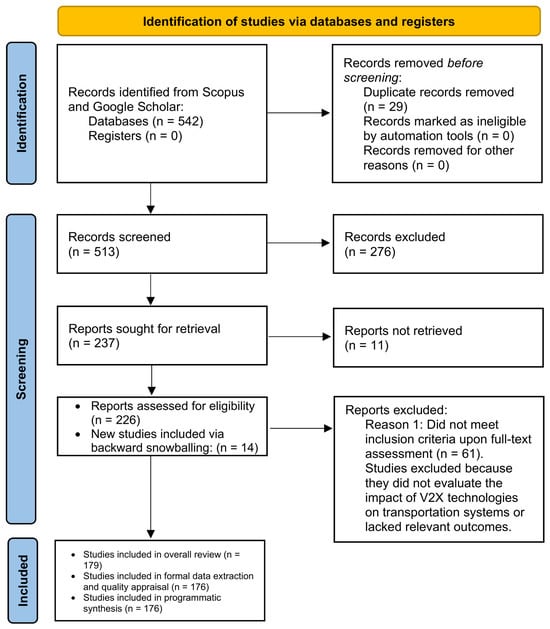
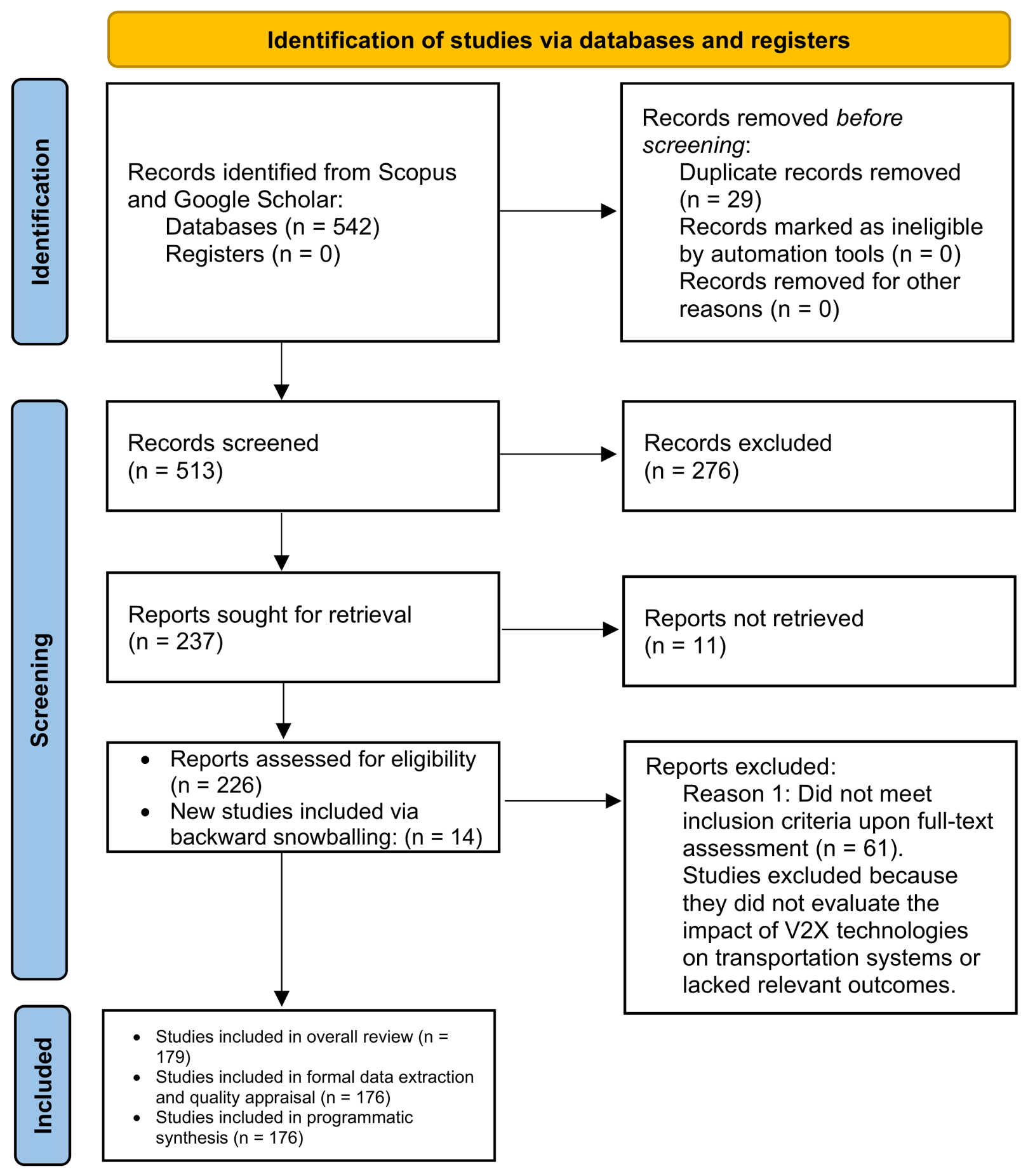
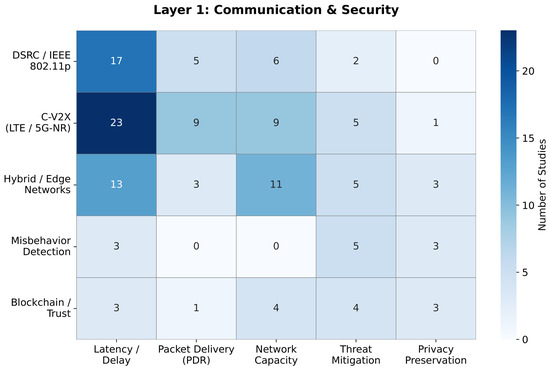
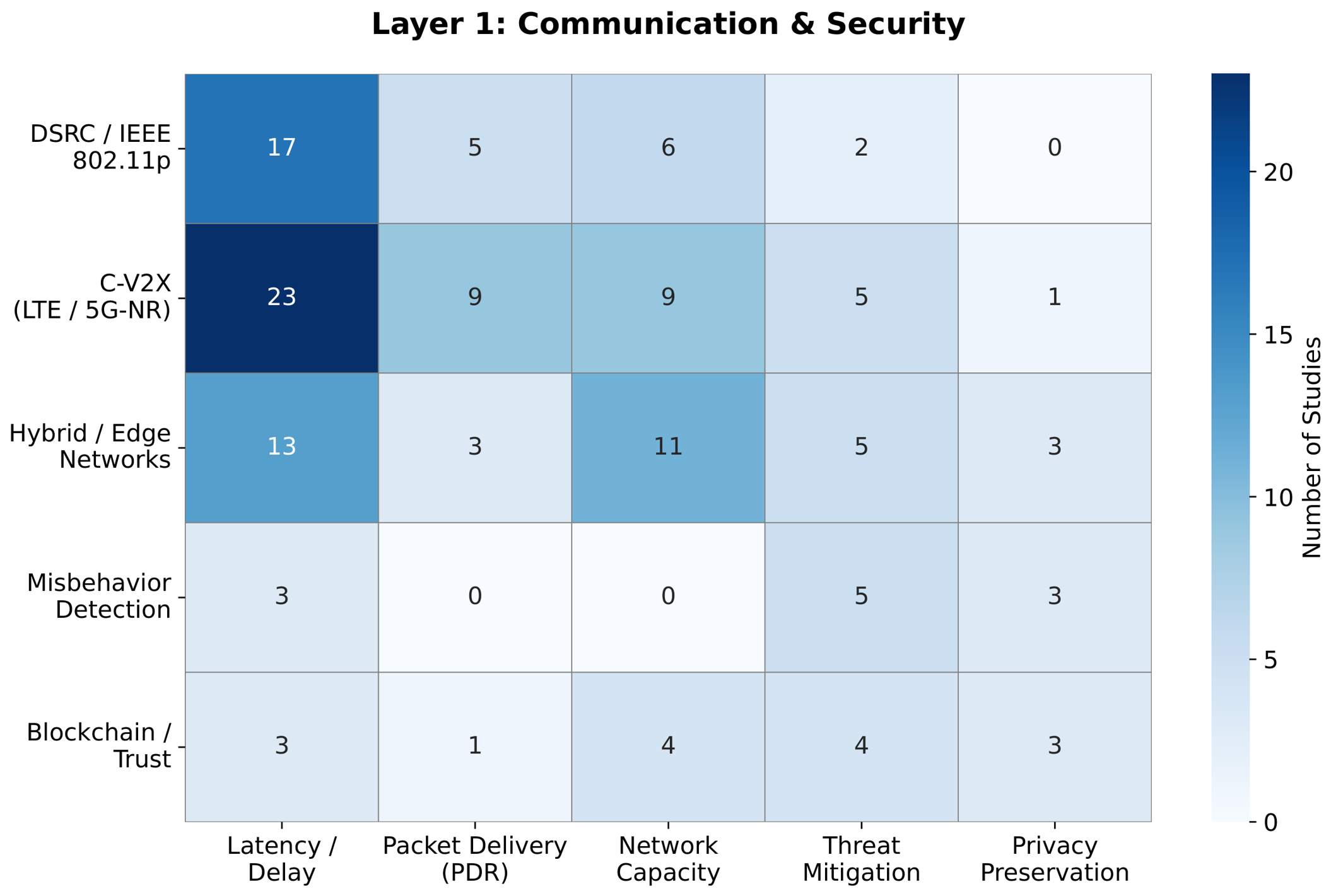
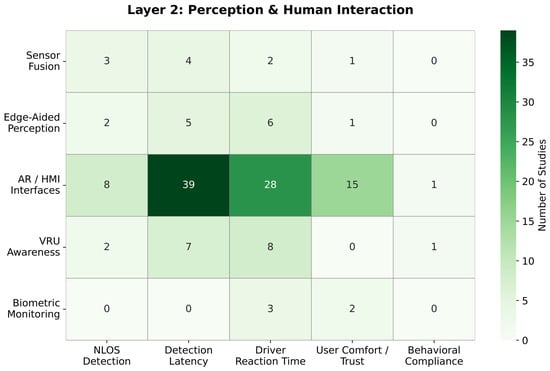
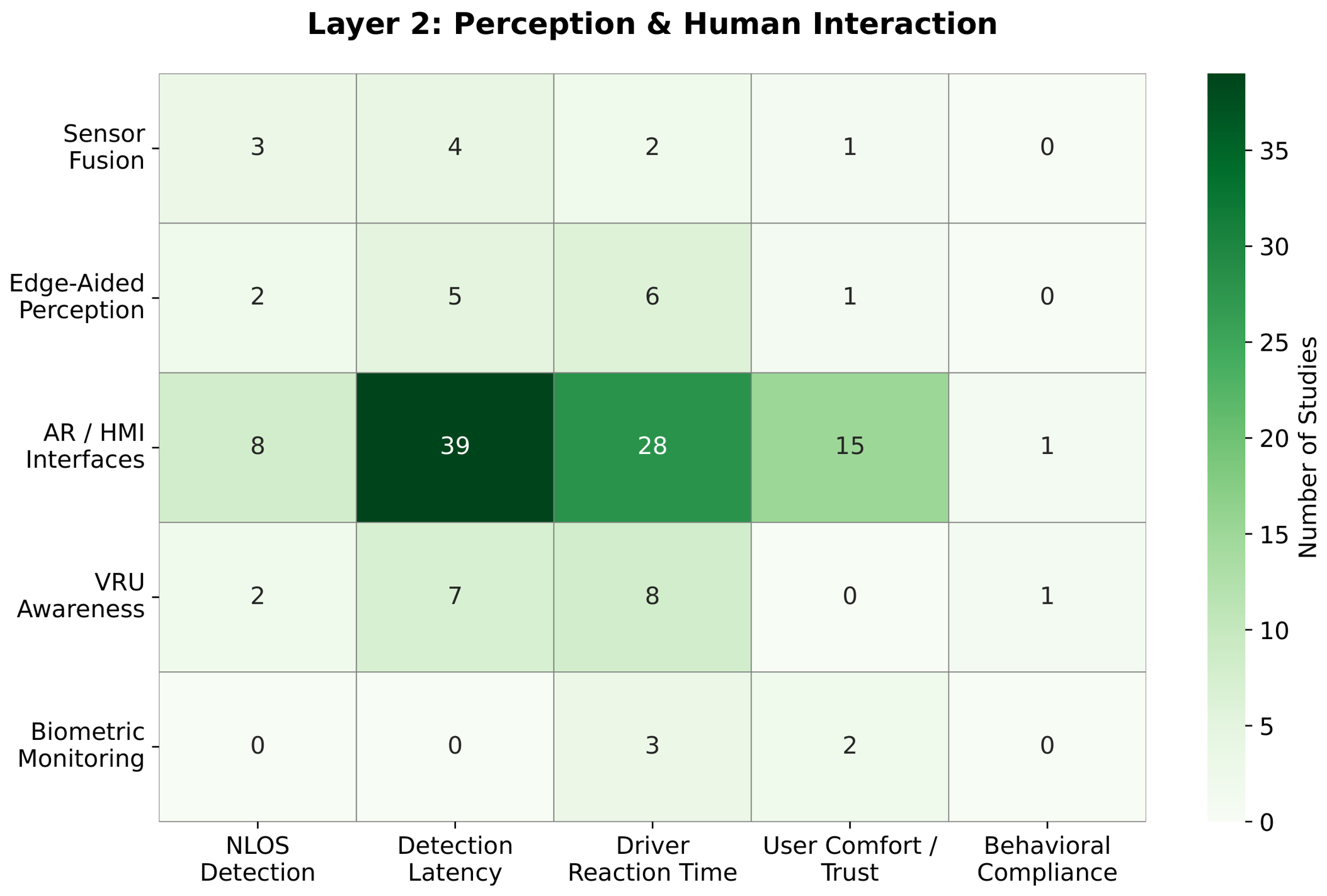
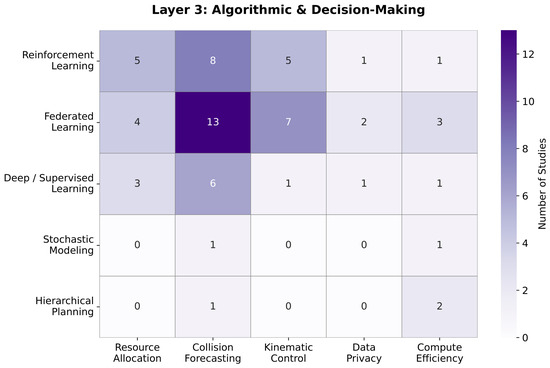
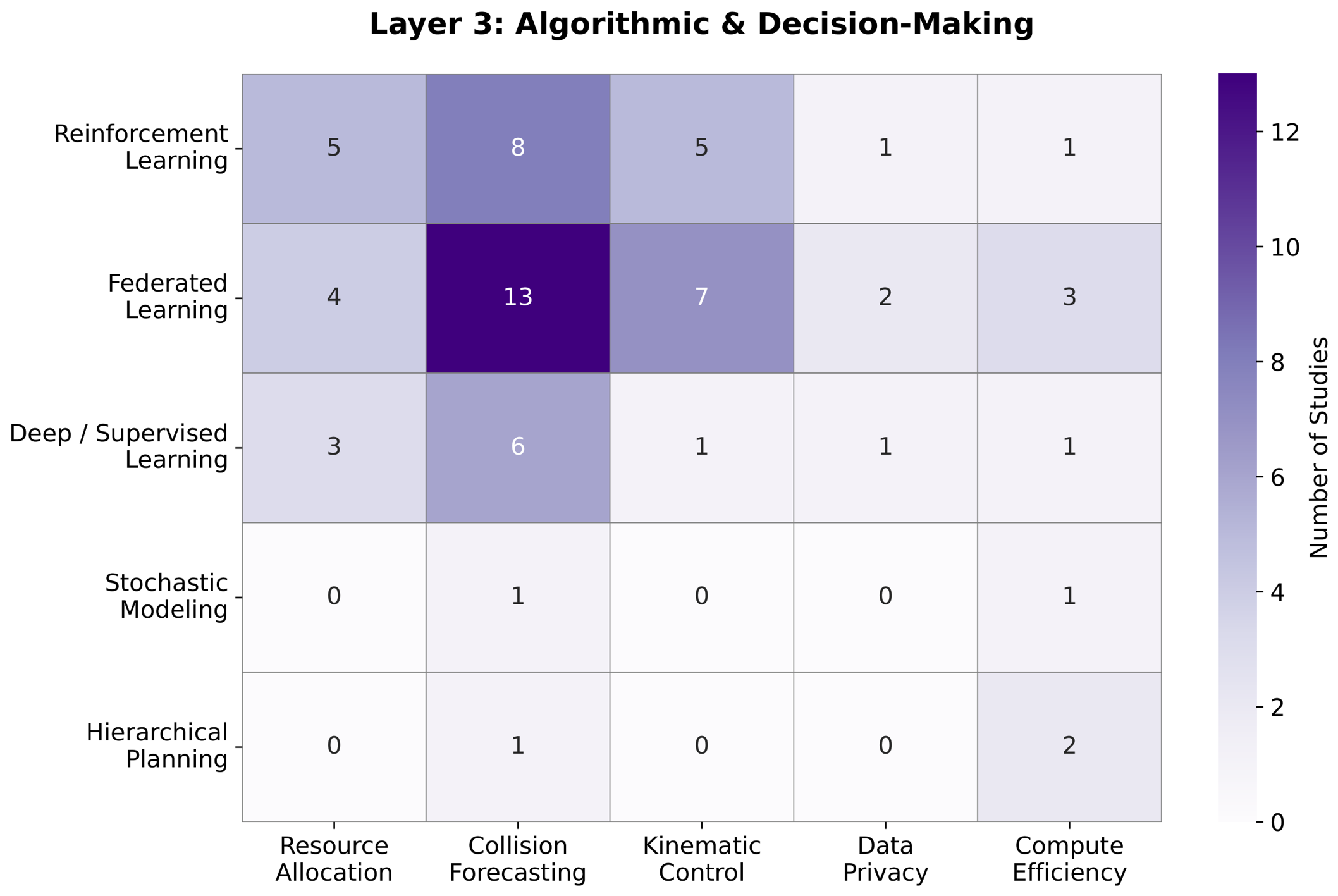
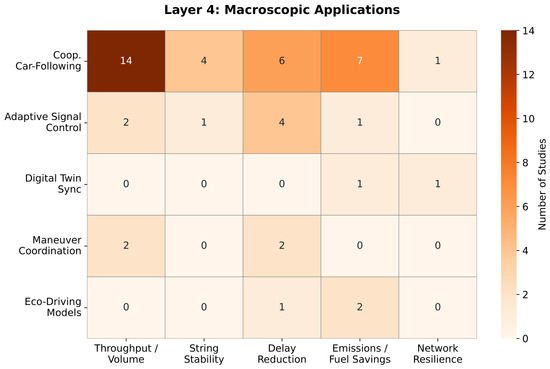
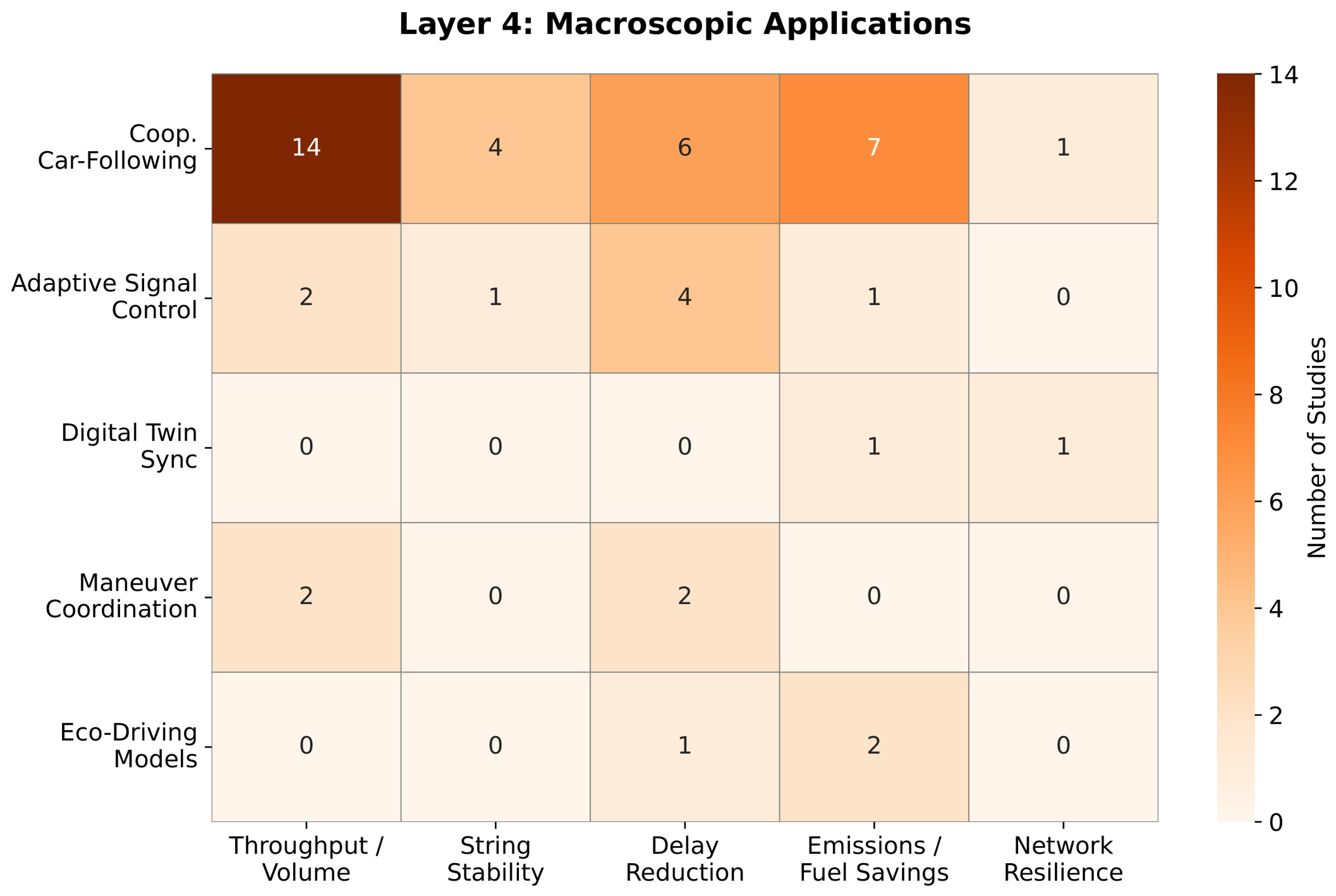

Disclaimer/Publisher’s Note: The statements, opinions and data contained in all publications are solely those of the individual author(s) and contributor(s) and not of MDPI and/or the editor(s). MDPI and/or the editor(s) disclaim responsibility for any injury to people or property resulting from any ideas, methods, instructions or products referred to in the content. |
© 2026 by the authors. Licensee MDPI, Basel, Switzerland. This article is an open access article distributed under the terms and conditions of the Creative Commons Attribution (CC BY) license.