


Abstract
Hydrotreated vegetable oil (HVO) offers a renewable paraffinic alternative to conventional diesel, but its implementation requires assessment of fuel performance, component compatibility, and lubricant condition. This study combined laboratory investigations of non-additivated model blends with application-oriented testing of commercial, fully additivated B7 (diesel fuel containing 7 vol% fatty acid methyl ester) and HVO fuels and an industrial rail field trial. Model fuels containing conventional diesel, FAME (fatty acid methyl ester), and HVO exhibited nearly identical kinematic viscosities, whereas increasing HVO content improved low-temperature filterability, particularly at −20 °C. In accelerated oxidation tests, commercial HVO and B7 showed comparable oxidation induction times; however, HVO exhibited a substantially longer total oxidation time, lower chemical oxidation, and reduced deposit formation. Fresh HVO produced lower wear than fresh B7, while lifetime-aged fuels showed broadly comparable wear. Elastomer responses were material-dependent, with HVO generally causing lower mass uptake and less swelling. Two used-oil samples obtained after HVO passenger rail operation showed no indication of accelerated lubricant degradation or increased wear compared with B7 reference data. Overall, the results support HVO as a technically viable drop-in fuel for the investigated rail application, while highlighting the importance of fuel-specific compatibility and condition-monitoring assessments.
1. Introduction
Decarbonization of the transportation sector requires solutions for applications in which direct electrification is difficult to implement, including non-electrified railway lines and existing heavy-duty vehicle fleets. Renewable drop-in fuels can provide a near-term pathway for reducing life-cycle greenhouse-gas emissions while maintaining existing engines and fuel infrastructure. Hydrotreated vegetable oil (HVO), also referred to as renewable or paraffinic diesel, is therefore increasingly considered as an alternative to conventional diesel fuel.
HVO is produced by catalytic hydrotreatment of lipid-based feedstocks, including vegetable oils, used cooking oils, animal fats, and other renewable lipid streams. Hydrogenation and deoxygenation convert the oxygenated feedstock into predominantly paraffinic hydrocarbons, while subsequent hydroisomerization can improve low-temperature properties [1,2]. In contrast to fatty acid methyl ester (FAME) biodiesel, HVO consists almost entirely of hydrocarbons and contains virtually no oxygen or aromatic compounds. Its paraffinic composition results in a high cetane number, low soot-forming tendency, and favorable combustion characteristics. However, HVO also exhibits lower density and volumetric energy content than conventional diesel, while its low-temperature behavior, energy density, and lubricity depend strongly on the detailed molecular composition and additive formulation [2,3,4].
Conventional automotive diesel fuel containing up to 7% (v/v) FAME is specified by DIN EN 590/ÖNORM EN 590 (DIN: Deutsches Institut für Normung; EN: European Standard), whereas paraffinic diesel fuels produced by synthesis or hydrotreatment are covered by DIN EN 15940/ÖNORM EN15940 [5,6]. These standards define relevant fuel-quality requirements and test methods but do not replace engine- or application-specific compatibility assessments. In particular, compliance with DIN EN 15940 does not imply identical fuel behavior to conventional diesel with respect to tribology, material compatibility, or lubricant interaction.
The environmental benefit of HVO is not an intrinsic property of the fuel itself but depends strongly on feedstock origin and production pathway. Waste- and residue-based feedstocks can provide substantially greater life-cycle greenhouse-gas savings than purpose-grown vegetable oils, while hydrogen source, process energy, transport, and allocation methodology also influence the resulting carbon intensity [7]. Depending on feedstock, production pathway, and system boundaries, life-cycle greenhouse-gas emission reductions of approximately 60–95% compared with conventional diesel have been reported [8]. The regulatory treatment of HVO in Europe similarly depends on feedstock origin and sustainability certification under the Renewable Energy Directive (RED III) [9]. The European HVO market has developed considerably in recent years, with increasing commercial availability and production capacity [10]. HVO should therefore be considered as a family of fuels with potentially different environmental and technical characteristics rather than as a single uniform fuel.
HVO has been extensively investigated in compression-ignition engines and has generally demonstrated comparable engine performance to conventional diesel without fundamental hardware modifications or new OEM approvals. Its high cetane number promotes short ignition delay, while its low aromatic content and paraffinic composition generally reduce particulate and soot formation [2,4,11]. Heavy-duty engine investigations have demonstrated the potential of HVO as a drop-in fuel without fundamental changes to the engine hardware or baseline calibration. In a modern Euro 6 diesel engine, HVO operation resulted in substantially reduced soot emissions, while the effects on NOx depended on the operating conditions and calibration strategy [12]. Investigations using in-use heavy-duty diesel vehicles likewise reported differences in exhaust aerosol formation when operating on HVO compared with conventional diesel [13]. Fleet studies have further demonstrated successful long-term operation of HVO in heavy-duty vehicles and buses [14,15]. These findings support the technical feasibility of HVO as a drop-in fuel, but do not fully address the compatibility of the fuel with the components and lubricants of existing fuel systems.
In particular, the different chemical composition of HVO affects several properties relevant to long-term operation.
The molecular composition of HVO depends on feedstock and processing conditions, particularly the degree of hydroisomerization. For example, detailed compositional analysis of a commercial HVO reported approximately 10 wt% n-paraffins and 90 wt% iso-paraffins, predominantly within the C14–C18 range [3]. These values are product-specific and should not be regarded as representative of all HVO fuels. The relative abundance and carbon-number distribution of n- and iso-paraffins are particularly relevant to low-temperature behavior, as linear paraffins have a greater tendency to crystallize upon cooling.
Hydrotreatment removes polar compounds that can contribute to fuel lubricity, making the tribological performance of HVO more dependent on fuel composition and additive formulation [2,4]. Recent tribological investigations have demonstrated that the lubricity and scuffing behavior of HVO and HVO/diesel blends depend on blend composition, highlighting the importance of fuel-specific assessment [16]. Fuel composition may further influence oxidation behavior and deposit formation, particularly during prolonged exposure or accelerated aging.
The compatibility of HVO with fuel-system materials is another relevant consideration. Because HVO contains substantially fewer polar and aromatic compounds than conventional diesel or FAME-containing fuels, its interaction with elastomeric sealing materials can differ. Akhlaghi et al. reported degradation of carbon-black-filled acrylonitrile butadiene rubber exposed to alternative fuels, including hydrotreated vegetable oil, demonstrating that polymer response depends on both fuel chemistry and elastomer formulation [17]. More recent immersion studies investigated HVO compatibility with several elastomeric sealing materials and showed that changes in mass and mechanical properties depend on the specific polymer and exposure conditions [18]. Such effects are particularly relevant for long-term operation because changes in swelling, mass, or mechanical properties may influence dimensional stability and sealing performance.
Compared with road-vehicle applications, evidence for HVO in railway operation remains considerably more limited. Manufacturer testing has reported successful operation of HVO100 (commercial fuel consisting of 100% HVO) in approved mtu Series 1600 and 4000 rail engines without fundamental hardware modifications [19]. However, available rail studies have focused mainly on engine performance, emissions, fuel consumption, and operational feasibility. Detailed information on fuel aging, tribological behavior, elastomer compatibility, and lubricant condition under real operating conditions remains comparatively scarce.
Compared with the extensive literature on engine performance and emissions, considerably less attention has been paid to the combined assessment of fuel chemistry, component compatibility, tribological behavior, and lubricant condition during real-world HVO operation. Laboratory studies, as mentioned above, provide information on fuel properties, oxidation, lubricity, or material compatibility, whereas field studies primarily report engine performance and emissions. Changes from B7 to HVO may influence the fuel–material–lubricant system through altered fuel lubricity, combustion-derived deposits, fuel dilution, oxidation, additive depletion, and wear-metal accumulation. These effects are additionally influenced by engine design, duty cycle, lubricant formulation, and service conditions. Consequently, used-oil analysis is required to determine whether differences observed in laboratory fuel testing translate into measurable changes during field operation.
The present study therefore evaluates HVO across several levels of application relevance. First, non-additivated model blends containing conventional diesel, FAME, and HVO were investigated to isolate the effects of fuel composition on viscosity and low-temperature filterability. Second, commercial, fully additivated B7 and HVO fuels were compared with respect to accelerated oxidation behavior, chemical aging, deposit formation, friction and wear, and compatibility with representative fuel-system sealing materials. Finally, HVO was evaluated during regular passenger-rail operation, and used-engine-oil samples obtained from the field trial were compared with reference data from B7 operation. By combining controlled laboratory investigations with application-oriented material and tribological testing and real-world lubricant-condition data, this study aims to provide a more comprehensive assessment of HVO as a drop-in fuel for rail applications.
2. Materials and Methods
2.1. Initial Investigations with Non-Additivated Model Fuel Blends
Initial investigations were conducted using a set of non-additivated model fuels representing conventional diesel, hydrotreated vegetable oil (HVO), and fatty acid methyl ester (FAME)-containing formulations. The fuel matrix comprised a hydrocarbon distillate without biogenic components, designated B0; a 50 vol% HVO blend in B0, designated H50; neat HVO, designated H100; and a B7 formulation containing 7 vol% winter-grade FAME in B0 (all obtained from OMV Downstream GmbH, Schwechat, Austria). The objective of this test series was to determine the influence of fuel composition on viscosity and low-temperature filterability and thereby establish the baseline behavior of the model fuels before evaluating the effects of additives. The non-additivated model fuels were specifically formulated for the comparative investigation of composition-related effects on filterability at low temperatures and were not intended to represent fully formulated commercial fuels according to EN 590 or EN 15940. Consequently, fuel characterization focused on the properties directly relevant to the objectives of these initial investigations, while a complete specification analysis, including parameters such as cetane number, water and sulfur content, was not performed.
2.1.1. Viscosity Measurements
Kinematic viscosity and density were determined in accordance with ASTM (ASTM International) D7042 [20] using an Anton Paar SVM 3000 Stabinger rotational viscometer (Anton Paar, Graz, Austria). The instrument determines dynamic viscosity from the equilibrium rotational speed of a freely floating measuring rotor within a sample-filled tube rotating at constant speed. Density is measured simultaneously using an integrated oscillating U-tube. Measurements were performed over a temperature range from −10 to 45 °C, and the kinematic viscosity was calculated from the measured dynamic viscosity and density.
2.1.2. Low-Temperature Filterability
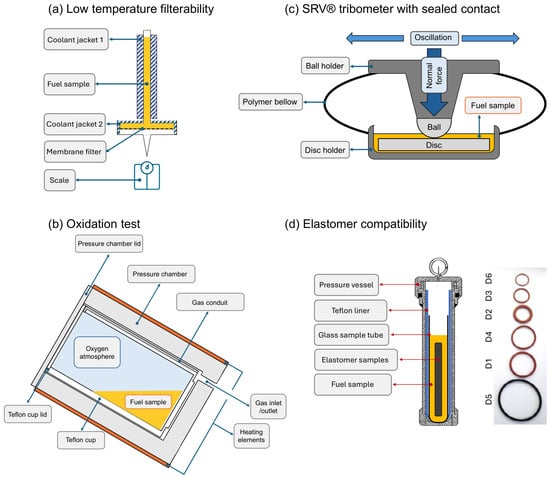
Low-temperature filterability was evaluated using an in-house filtration setup based on ISO (International Organization for Standardization) 13357-2 [21]. For each measurement, 100 mL of fuel was filtered through a membrane with a nominal pore size of 0.45 µm. The sample reservoir and membrane-filter section were temperature-controlled using separate cooling jackets, allowing measurements to be conducted between room temperature and −20 °C. A constant overpressure of 15 kPa was applied using dry nitrogen of grade 5.0 (Air Liquide Austria, Schwechat, Austria). The quantity of fuel passing through the membrane was recorded gravimetrically as a function of time. Each experiment was terminated when either 95 mass% of the initial sample had been filtered or a maximum filtration time of 45 min had been reached. Filterability was evaluated from the proportion of the initial sample mass that passed through the membrane within the specified test period. Figure 1a depicts the schematics of the applied filterability setup. ISO 13357-2 was selected as the basis for the filtration experiments as it provides defined filtration conditions suitable for comparing the filter-blocking behavior of different fuel formulations under identical conditions. The applied procedure was therefore intended as a comparative laboratory method to evaluate the non-additivated model fuels at defined temperatures and does not represent a standardized determination of cloud point (CP) or cold filter plugging point (CFPP), which were not determined for the model fuels.
Figure 1.
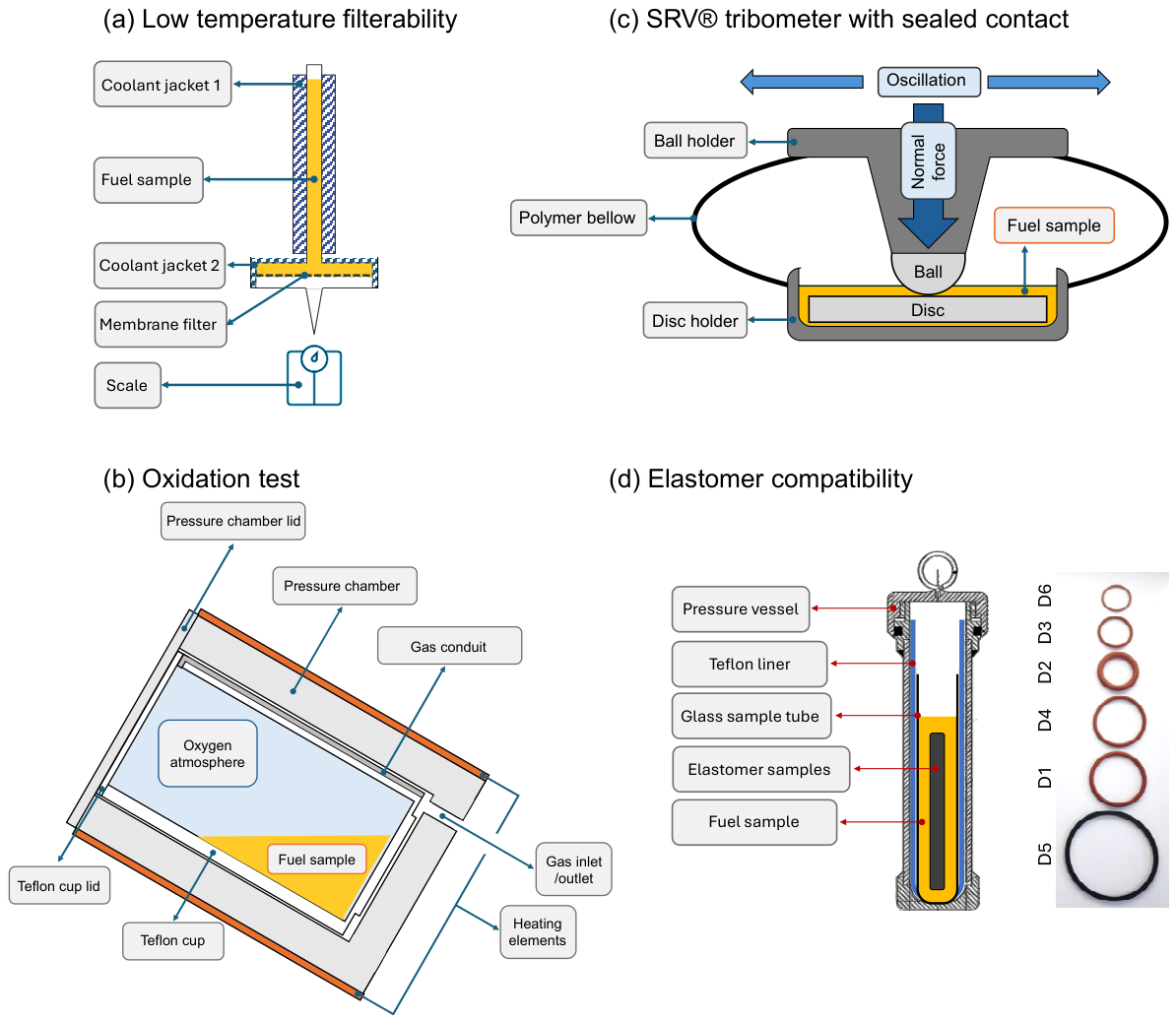
Applied methods. (a) Low temperature filterability. (b) Oxidation test cell. (c) SRV® (oscillation, friction, and wear) tribometer with sealed contact. (d) Elastomer compatibility immersion test and tested O-rings.
2.2. Stability and Performance Assessment with Fully Additivated Fuel Blends
Following the initial investigations with non-additivated model blends, two commercial, fully additivated fuels were selected for the application-oriented stability and performance assessment (purchased via OMV Downstream GmbH, Schwechat, Austria). The candidate fuels comprised commercially available, fully additivated fuels: a conventional B7 diesel fuel complying with EN 590 [5] specification, and a neat HVO fuel complying with EN 15940 [6]. The individual specification parameters were not independently re-determined within the scope of this study.
In contrast to the model fuels described in Section 2.1, these fuels contained their complete commercial additive packages and represented formulations intended for practical use. The two fuels were compared with respect to their oxidation stability, tribological performance, and compatibility with selected elastomer materials. This test series was designed to identify potential differences between the established B7 reference fuel and the fully additivated HVO candidate before the latter was introduced into the industrial rail field trial.
2.2.1. Oxidation Stability Tests
The oxidation stability of the fully additivated B7 and HVO fuels was assessed using a pressurized oxidation test based on ASTM D2272 [22], using a TANNAS QUANTUM Oxidation Tester (Tannas Co. & King Refrigeration Inc., Midland, MI, USA). The reaction cell and experimental parameters were modified to enable differentiation between diesel fuel samples based on their oxidation behavior. The original magnetic cup assembly and sample beaker were replaced with a polytetrafluoroethylene (PTFE) sample holder designed to fit inside the pressure chamber while minimizing the available dead volume. Sample agitation was maintained using the instrument’s original drive mechanism and magnetic coupling.
A weighed fuel sample was transferred into the PTFE sample holder and placed inside the pressure chamber. After sealing, the chamber was purged three times with the reaction gas to remove residual air, followed by pressurization with oxygen (Air Liquide Austria, Schwechat, Austria) to 2 bar above atmospheric pressure (2 bar gauge). The pressure was monitored for 15 min at room temperature to verify the integrity of the chamber seal. Subsequently, the system was rapidly heated to the reaction temperature of 130 °C. This was selected as prior experiments showed the best differentiability of diesel fuel samples at this temperature. Pressure and temperature were continuously monitored and recorded at a sampling interval of 1 s throughout the experiment. Oxygen consumption associated with fuel oxidation resulted in a progressive decrease in chamber pressure.
Two parameters were derived from the recorded pressure profiles: The oxidation induction time (OIT) was defined as the time required for the pressure to decrease by 10% from the stabilized initial value. The total oxidation time (TOT) was defined as the time from the beginning of the test until the pressure reached its final stable level. The oxidation testers and the applied method are regularly evaluated with n-dodecane regarding repeatability. Based on 30 observations with n-dodecane, OIT has a mean of 209.3 min with a standard deviation of 10.1%, and TOT has a mean of 577.4 min with a standard deviation of 6.4%.
The pressure profiles and corresponding OIT and TOT values of the 30 reference oxidation tests with n-dodecane are provided in Figure S3 of the Supplementary Materials.
Three full-lifetime tests were conducted for each fuel. In these experiments, the samples were exposed to the oxidation conditions continuously through the induction period and subsequent pressure-decay phase until the chamber pressure reached a final stable level, representing the endpoint of the respective lifetime test. The resulting pressure profiles were used to determine both the oxidation induction time (OIT) and the total oxidation time (TOT). In addition, one reference-time test was performed with HVO under identical test conditions. In contrast to the lifetime tests, this experiment was deliberately terminated after an exposure time corresponding to the mean lifetime duration determined for B7, irrespective of whether the HVO sample had reached its final oxidation state. This reference-time experiment therefore provided an HVO sample aged for the same absolute duration as B7 and enabled a time-matched comparison of the subsequent chemical, tribological, and elastomer-compatibility results. Figure 1b shows the schematics of the oxidation test cell.
2.2.2. Chemical Fuel Analysis
The chemical condition of the fuels was characterized by Fourier-transform infrared spectroscopy (FT-IR), total acid number determination, and water-content analysis. Before chemical analysis, the aged fuel samples were homogenized in an ultrasonic bath at 40 °C for 10 min, followed by vigorous manual shaking.
FT-IR measurements were performed using a Tensor II spectrometer (Bruker, Ettlingen, Germany). Spectra were evaluated using OPUS software, version 8.7.31 (Bruker). The spectra were recorded over a wavenumber range of 500–4000 cm−1 at a spectral resolution of approximately 1.5 cm−1. A dual-channel sample holder was employed, and 32 background scans and 32 sample scans were collected for each measurement. Samples were analyzed using a ZnSe transmission cell with an optical path length of 100 µm. Fuel oxidation was evaluated from the absorption band at 1720 cm−1 according to an in-house evaluation method [23].
The total acid number was determined by potentiometric titration in accordance with ASTM D664 [24] using a Basic Titrino 794 automated titrator equipped with a 778 Sample Processor (both Metrohm AG, Herisau, Switzerland). Two independent determinations per sample were performed.
Water content was determined by indirect Karl Fischer titration in accordance with DIN 51777-2 [25] using a KF Coulometer 756 coupled to an Oven Sample Processor 774 (both Metrohm AG, Herisau, Switzerland). Two independent determinations per sample were performed.
2.2.3. Tribometrical Characterization and Wear Analysis
The friction and wear behavior of the fresh and aged B7 and HVO fuels was investigated using an SRV®4 tribometer (Optimol Instruments Prüftechnik GmbH, Munich, Germany) in a reciprocating ball-on-disk configuration. The contact was enclosed using an in-house-developed polymer-bellows sealing system designed to retain volatile fuel components within the tribological test cell during the experiment. The standard 100Cr6 steel ball and disk (supplied by Optimol) were used as contacting specimens, and each test was conducted with 15 mL of fuel. The applied normal load was 20 N, with an oscillation frequency of 25 Hz and a stroke length of 2 mm. Tests were performed at 30 °C for a total duration of 75 min. The coefficient of friction was recorded continuously throughout the experiment, and the resulting friction behavior of the fuels was subsequently compared. Two independent determinations per sample were performed. A schematic depiction of the sealed contact is shown in Figure 1c.
Wear was quantified using a Leica DCM 8 dual-core confocal and interferometric microscope (Leica Mikrosysteme GmbH, Vienna, Austria). Photographic documentation of the specimens in the as-tested condition was performed before cleaning. Wear measurements were conducted after removal of residual fuel, deposits, and tribofilms. Prior to topographical wear analysis, the specimens were cleaned sequentially with toluene and petroleum spirit to remove residual fuel and oily contaminants. They were subsequently immersed in a 0.05 mol L−1 EDTA (ethylenediaminetetraacetic acid) solution for 60 s to remove adherent deposits and tribofilms from the surfaces.
The instrument provided an approximate lateral resolution of 150 nm and a vertical resolution of 2 nm. Following the tribological experiments, the surface topography of the wear track was recorded, and the wear volume was calculated by comparing the measured post-test topography with the corresponding reference surface acquired before testing, following the surface-comparison approach described by [26].
2.2.4. Elastomer Compatibility
The compatibility of the fresh and aged fuels with representative sealing materials was evaluated using an immersion procedure adapted from DIN 53521 [27]. Actual sealing components from the investigated fuel system were used rather than standardized elastomer test specimens. The test matrix included an injector O-ring (D1), an injector-tube O-ring (D2), two O-ring variants from the low-pressure fuel line (D3 and D4), a fuel-filter flat gasket (D5), and an injector round gasket (D6).
The sealing components were exposed to both fresh and aged fuel samples in closed pressure vessels equipped with PTFE liners and internal glass sample containers. For each experiment, two sealing sets were tested. Two specimens of each O-ring type were immersed in approximately 50 g of the respective fuel. The samples were stored at 100 °C for two weeks. Figure 1d shows the schematics of the immersion tests as well as the analyzed O-ring kit. The sealing components were characterized before and after immersion. Shore A hardness was measured using a handheld durometer, while specimen mass was determined using a laboratory balance. Density was measured using a pycnometer, and the corresponding specimen volume was calculated from the measured mass and density. Elastomer compatibility was evaluated from the resulting changes in Shore A hardness, mass, and calculated volume relative to the respective initial values.
2.3. Field Test and Used Engine Oil Analysis
Following the laboratory stability and performance assessment, the fully additivated HVO fuel was evaluated in an industrial rail field test. Used engine oil samples were collected during operation with HVO. For comparison, reference data from operation with the conventionally used B7 fuel were obtained from the ongoing oil condition monitoring program.
2.3.1. Field Test
The field investigation was conducted using a commercially available SAE (Society of Automotive Engineers) 10W-40 engine oil formulated for heavy-duty diesel engines. The fresh lubricant had a total acid number (TAN) of 3.0 mgKOH/g and a total base number (TBN) of 12.8 mgKOH/g. Its elemental composition comprised approximately 500 ppm B, 5000 ppm Ca, 70 ppm Mo, 1100 ppm P, 3800 ppm S, and 1600 ppm Zn.
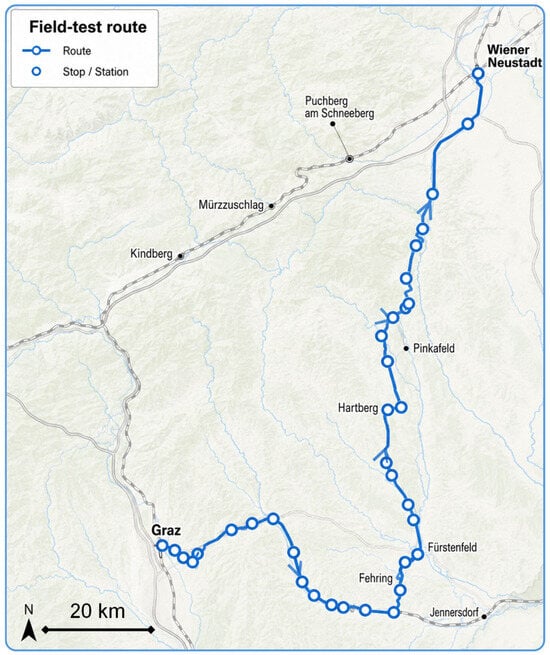
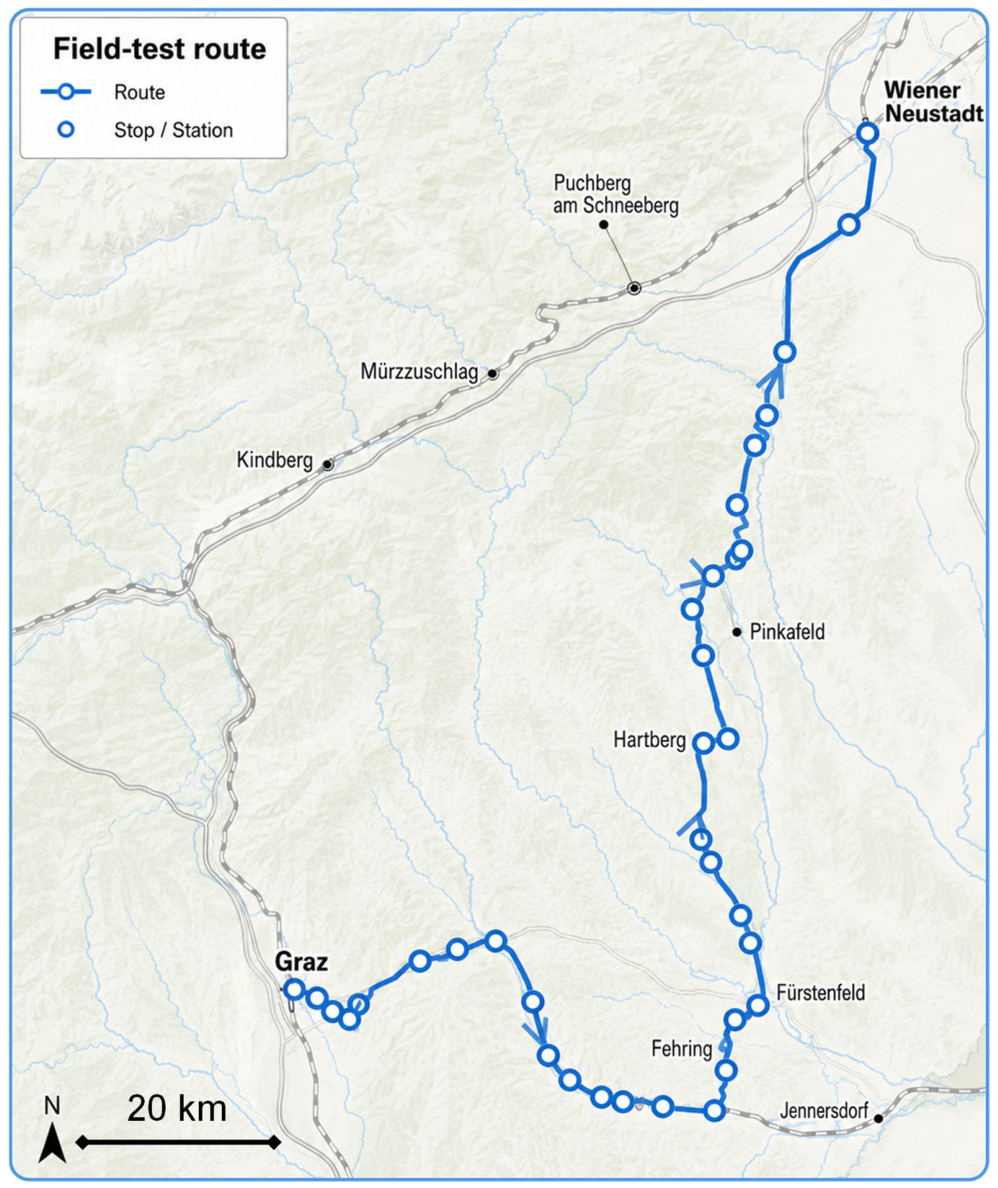
The HVO field test was performed in a diesel railcar operated under regular passenger-service conditions. The vehicle was fueled with HVO complying with EN 15940 [6] and operated on the routes Graz–Fehring and Fehring–Wiener Neustadt, corresponding to route lengths of approximately 62 and 133 km, respectively (Figure 2). The investigated vehicle remained in normal daily service throughout the test period. Two used-oil samples were obtained at the end of the respective lubricant service intervals.
Figure 2.
Approximate route of the HVO field test.
For comparison, reference oil condition data from routine operation with B7 fuel complying with EN 590 [5] were obtained from the rail operator’s ongoing monitoring program. These data originated from diesel locomotives used in regular passenger and freight operation in Austria and Eastern Europe. Because the HVO field test and the B7 reference dataset involved different vehicle types and operating profiles, the comparison was considered descriptive rather than directly paired.
2.3.2. Used Oil Analysis
The used oil samples obtained during the HVO field test and the corresponding B7 reference data were characterized by inductively coupled plasma optical emission spectroscopy (ICP-OES), FT-IR spectroscopy, TAN determination, and TBN determination.
FT-IR measurements were performed using the same instrument, sample cell, spectral range, resolution, and acquisition parameters described in Section 2.2.2. The spectra were evaluated with respect to lubricant degradation, fuel dilution, additive condition, and soot contamination.
Oxidation was evaluated from the absorption at 1720 cm−1 using the in-house evaluation method [23] described for the fuel analyses. Nitration was determined at 1630 cm−1 using a local baseline in accordance with DIN 51453 [28]. FAME contamination was evaluated from the carbonyl absorption at 1747 cm−1 relative to a global spectral baseline. Soot loading was determined in accordance with the direct-trending approach of ASTM E2412 [29]. Following subtraction of the corresponding fresh-oil reference spectrum, the broadband absorbance associated with soot was evaluated around 2000 cm−1. No additional baseline correction was applied to the spectrum used for soot quantification because the soot particles produce a broadband increase in absorbance across the infrared spectrum. The condition of the zinc dialkyldithiophosphate additive was additionally assessed by FT-IR spectroscopy by in-house evaluation method [23] in the wavenumber range 1020–920 cm−1.
TAN was determined by potentiometric titration in accordance with ASTM D664 [24] using the procedure and instrumentation described in Section 2.2.2. The total base number was determined in accordance with ISO 3771 [30] using a Basic Titrino 794 automated titrator equipped with a 778 Sample Processor (both Metrohm AG, Herisau, Switzerland).
Elemental analysis was performed by ICP-OES according to an in-house method [23] following microwave-assisted digestion of the oil samples using concentrated nitric acid, 30% hydrogen peroxide, and water. All reagents were obtained from Carl Roth GmbH (Karlsruhe, Germany). Sample digestion was conducted using a Multiwave Pro microwave sample-preparation platform (Anton Paar GmbH, Graz, Austria). Following digestion, the samples were analyzed in an aqueous matrix using a 5800 VDV ICP-OES spectrometer (Agilent Technologies, Santa Clara, CA, USA) operated with ICP Expert software, version 7.6.0. Argon plasma of grade 5.0 was used, and the instrument was operated in axial or radial viewing mode depending on the analyzed element and concentration range.
3. Results and Discussion
Parts of the laboratory dataset presented in the following sections were previously included in a German-language bachelor’s thesis entitled “Oxidationsstabilität und tribologische Eigenschaften von Dieselkraftstoff aus erneuerbaren Quellen für Diesellokomotiven (Oxidation Stability and Tribological Properties of Diesel Fuel from Renewable Sources for Diesel Engines in Locomotives)” [31]. The previously reported data comprise the B7 and HVO lifetime oxidation tests, the associated chemical fuel analyses, tribological characterization, and elastomer-compatibility investigations. The present study substantially extends this work by including additional HVO reference time experiments, low-temperature viscosity and filterability investigations using non-additivated model blends, as well as an industrial rail field trial and subsequent used oil analysis.
3.1. Low-Temperature Viscosity and Filterability
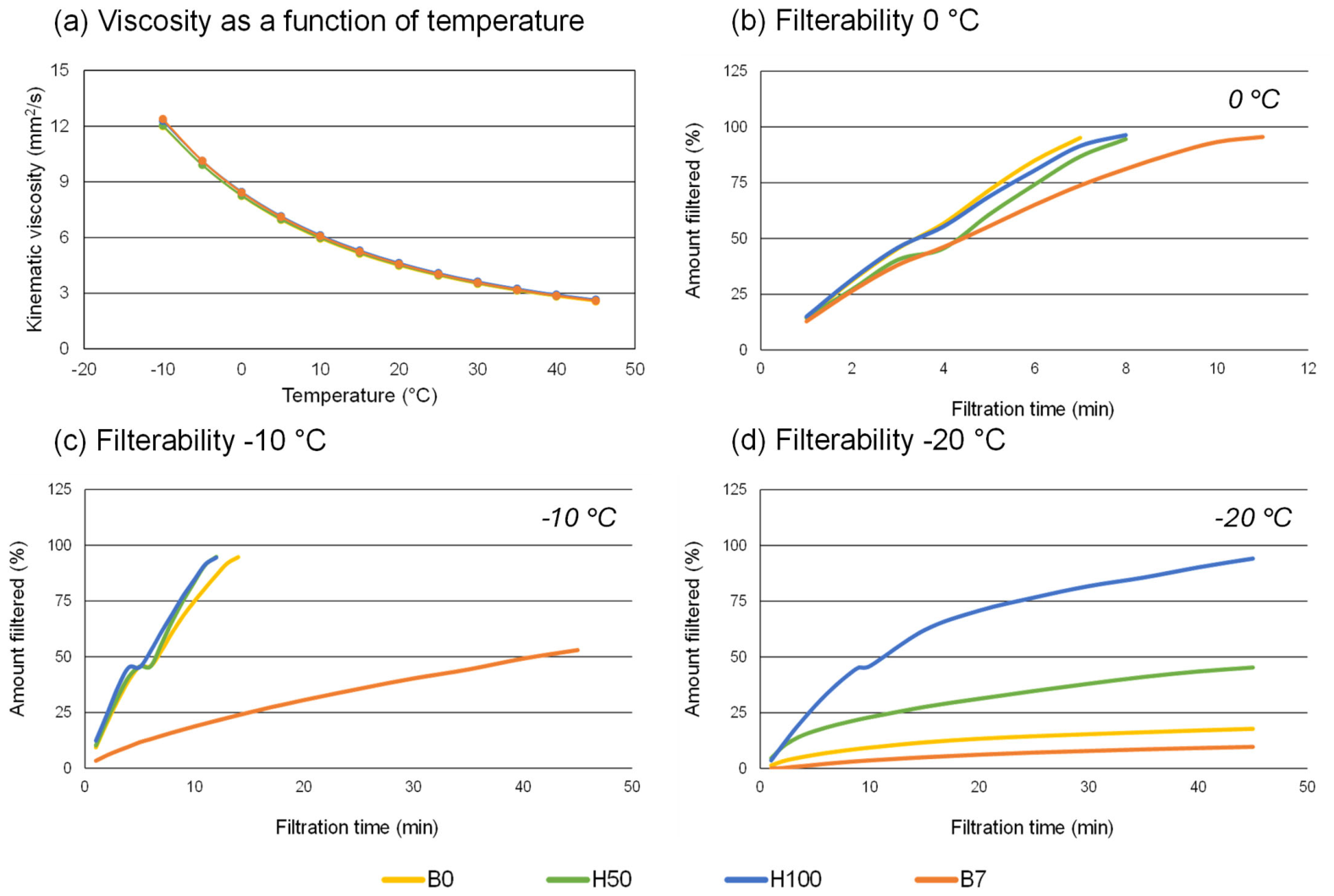
The kinematic viscosity profiles of B0, H50, H100, and B7 were virtually identical over the investigated temperature range from −10 to 45 °C (Figure 3a). All fuels exhibited the expected decrease in viscosity with increasing temperature, while no meaningful composition-dependent differences were apparent. The observed differences in low-temperature filterability therefore cannot be attributed to substantial variations in bulk kinematic viscosity.
Figure 3.
Low-temperature results of model blends. (a) Kinematic viscosity as a function of temperature. (b) Filterability at 0 °C. (c) Filterability at −10 °C. (d) Filterability at −20 °C.
At 0 °C, all four model fuels showed good filterability and reached approximately 95 m % filtration within the test period (Figure 3b). B0, H50, and H100 exhibited comparable filtration behavior, reaching the termination criterion after approximately 8 min. B7 filtered somewhat more slowly and required approximately 11 min to reach a similar filtered proportion. Hence, the presence of 7 vol% winter-grade FAME had only a moderate effect at this temperature.
More pronounced differences were observed at −10 °C (Figure 3c). B0, H50, and H100 still reached approximately 95 m % filtration, with the HVO-containing fuels reaching this level slightly earlier than B0. In contrast, B7 exhibited substantial filter blocking and only approximately 50 m % of the sample passed through the membrane within the maximum test duration of 45 min. Because B7 differed from B0 by the addition of 7 vol % winter-grade FAME, this result indicates that the FAME-containing formulation had markedly poorer low-temperature filterability under the applied test conditions. This observation is consistent with the general expectations.
At −20 °C, filterability deteriorated strongly for all fuels except H100 (Figure 3d). H100 approached the 95 m % termination criterion within 45 min, retaining comparatively good filterability at the lowest investigated temperature. H50 reached approximately 45 m %, representing a substantial improvement relative to B0, for which less than approximately 20 m % was filtered. B7 showed the strongest filter-blocking tendency with less than approximately 10 m % passing through the membrane during the test period.
Overall, the results indicate that increasing HVO content improved low-temperature filterability, particularly at −20 °C. B7 formulation exhibited strongly reduced filterability at −10 and −20 °C. Data supports this conclusion specifically for the investigated B0, winter-grade FAME, and HVO components; it does not demonstrate that necessarily all FAME-containing fuels will show the same behavior.
3.2. Oxidation Stability and Chemical Fuel Analysis Results
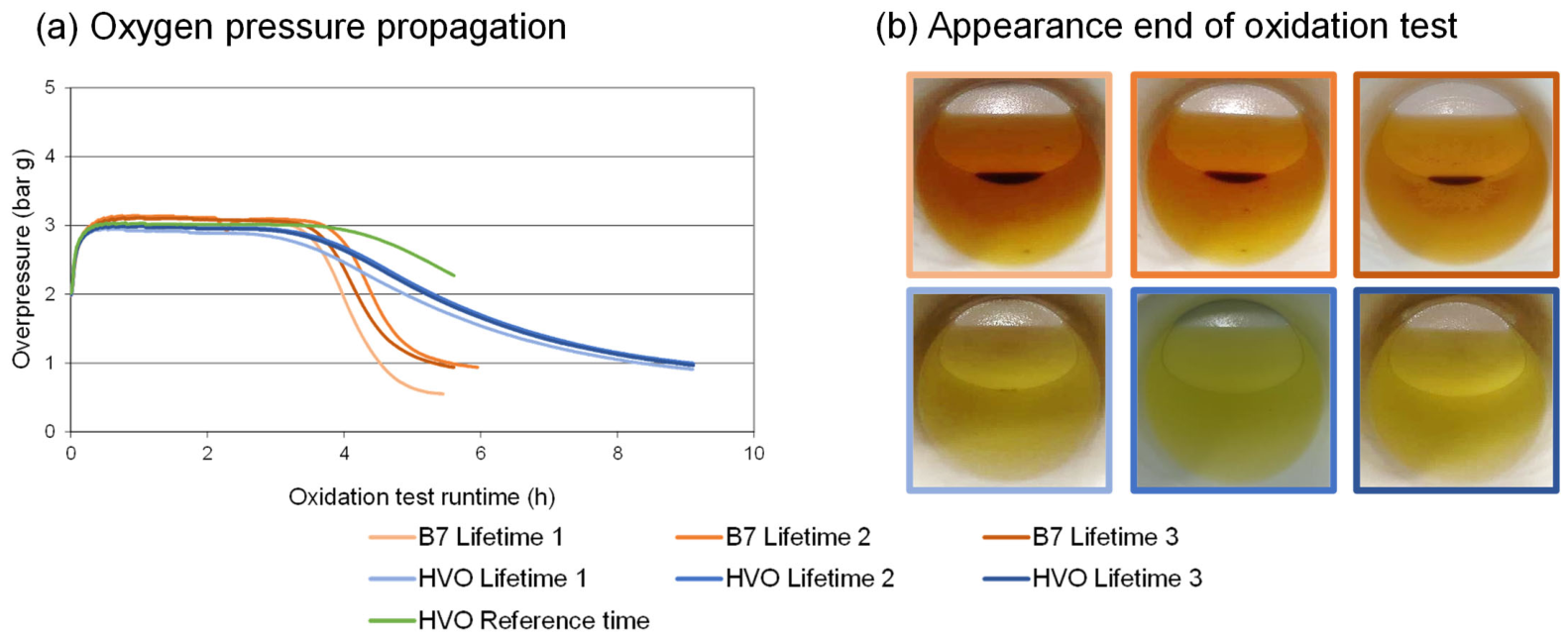
The pressure curves obtained from the three lifetime tests showed good overall repeatability for both fuels (Figure 4a). For each fuel, the replicate curves closely overlapped during the initial pressure-stabilization and induction periods. Some variation became apparent after the onset of rapid oxygen consumption, particularly for B7, where one replicate exhibited a slightly earlier pressure decrease and a lower final pressure. Nevertheless, the overall shape and timing of the pressure decline were consistent within each fuel group.
Figure 4.
Oxidation tests. (a) Pressure propagation. (b) Appearance at the end of the oxidation tests.
The additional HVO reference time test, which was terminated after a duration corresponding to the mean lifetime of B7, followed the same pressure trajectory as the HVO lifetime tests up to the point of termination. This confirms that the HVO oxidation behavior was reproducible not only among the three lifetime determinations but also in the independently conducted reference time experiment.
Photographic documentation of the samples after the oxidation tests revealed a pronounced difference in deposit formation (Figure 4b). The B7 samples contained clearly visible dark deposits at the bottom of the test vessels. In contrast, no comparable deposit formation was visually apparent in the HVO samples, which remained substantially cleaner after oxidation. These observations indicate a markedly lower deposit-forming tendency of the fully additivated HVO fuel under the applied accelerated oxidation conditions.
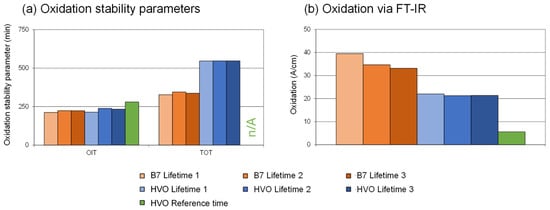
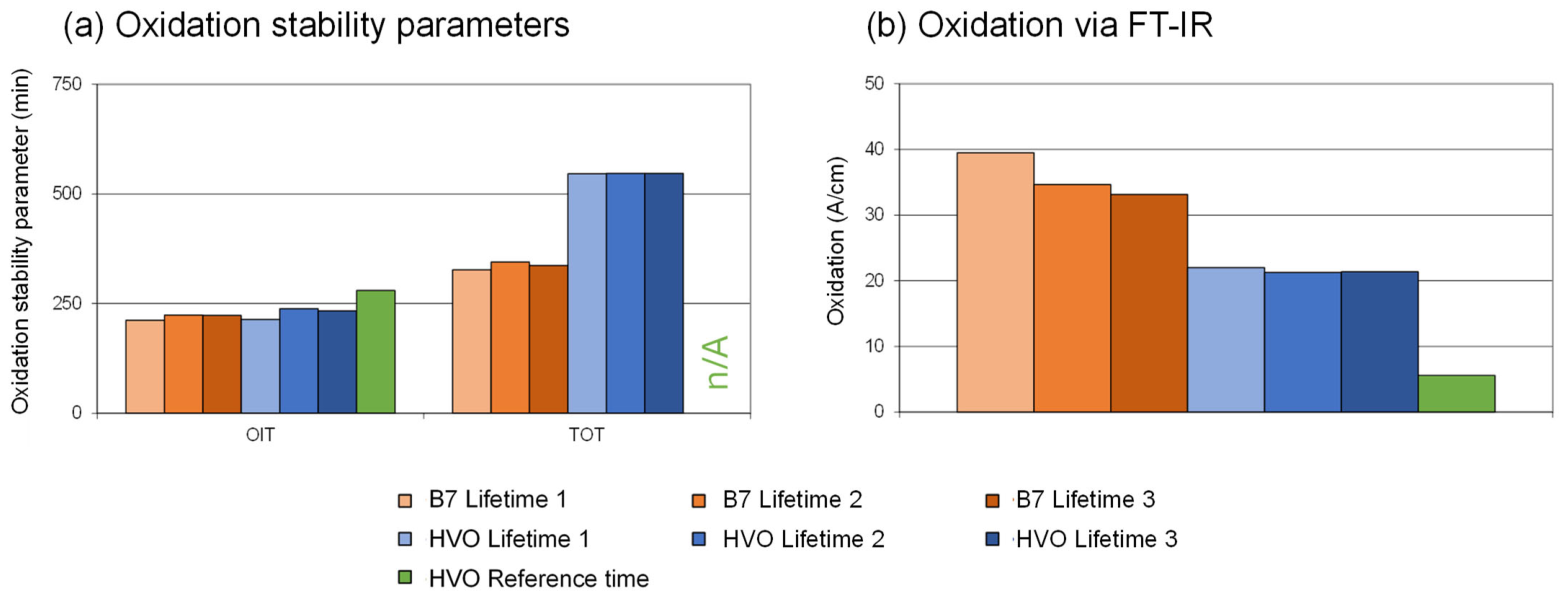
The oxidation induction times of B7 and HVO were broadly comparable, indicating that both fuels exhibited similar resistance to the initial onset of oxidation under the applied test conditions (Figure 5a). In contrast, the total oxidation time of HVO was substantially higher than that of B7. While the B7 lifetime tests reached their final stabilized pressure after approximately 325–350 min, the corresponding HVO tests required approximately 550 min. This indicates that, once oxidation had commenced, oxygen consumption and the progression towards the final oxidation state occurred more slowly in HVO. However, it has to be mentioned that there is no detailed information about the exact additivation of the B7 and HVO blends available and fuel storage times or service life cannot be directly derived from the measured OIT and TOT values.
Figure 5.
Oxidation test results. (a) Oxidation induction time and total oxidation time. (b) Oxidation via FT-IR.
The FT-IR results further supported this observation (Figure 5b). The B7 lifetime samples exhibited oxidation values of approximately 33–40 A/cm, whereas the HVO lifetime samples showed consistently lower values of approximately 21–22 A/cm. The HVO reference time sample, which was removed after a test duration corresponding to the mean B7 lifetime, exhibited only a comparatively small increase in oxidation (approximately 6 A/cm). At this point, the pressure profile indicated that HVO had only recently entered the main oxidation phase.
The FT-IR absorption spectra of the fresh and aged fuel samples and the difference spectra of the aged fuel samples are provided in Figures S1 and S2, respectively, of the Supplementary Materials.
In total, findings regarding the comparable OIT values, substantially longer TOT, lower FT-IR oxidation levels, and reduced visible deposit formation demonstrate that the fully additivated HVO fuel exhibited better overall oxidation stability than B7 under the investigated accelerated test conditions. More specifically, the principal advantage of HVO was not a markedly delayed onset of oxidation, but a slower and less severe oxidation progression after the induction period.
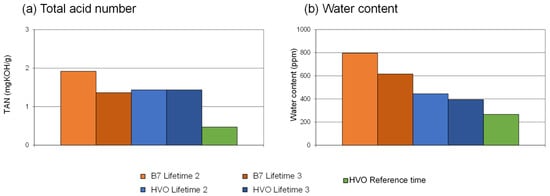
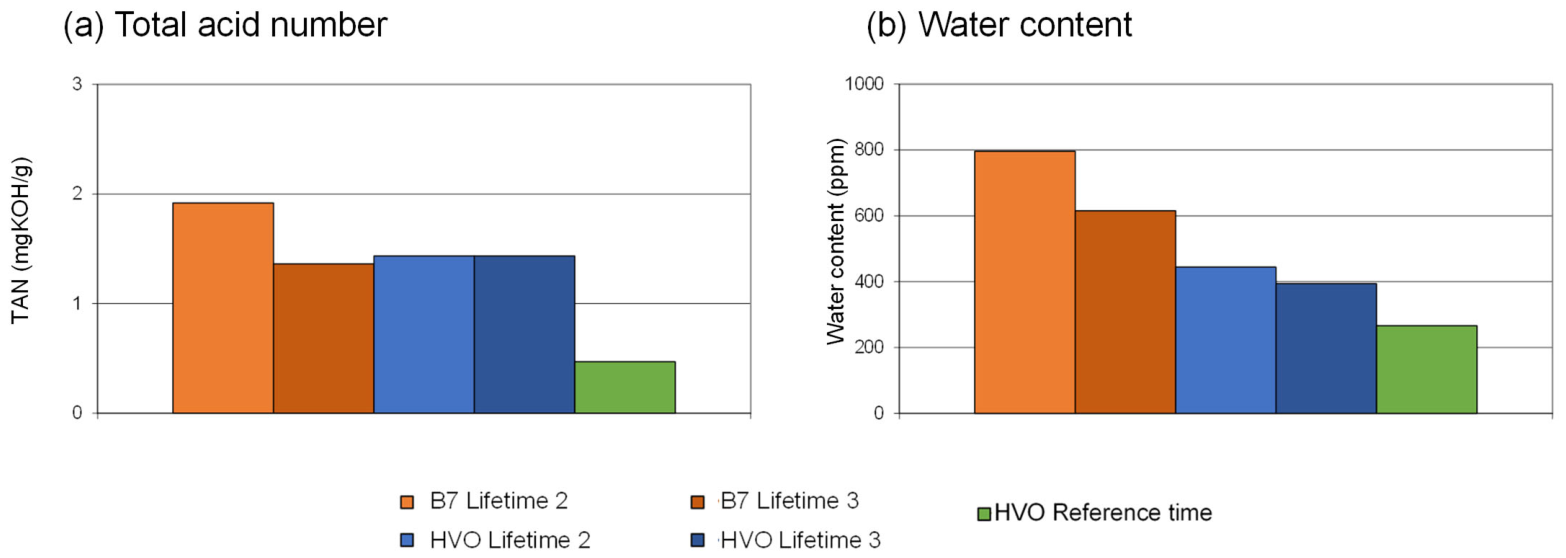
The TAN and water content of the aged fuels are shown in Figure 6. The HVO lifetime samples exhibited slightly lower TAN and water-content values than the corresponding B7 lifetime samples. This trend is consistent with the lower oxidation severity observed by FT-IR, as acidic species are formed during fuel oxidation. The fresh B7 and HVO fuels contained approximately 50 ppm and <10 ppm water, respectively. Following the oxidation tests, both fuels exhibited a substantial increase in water content. However, the absolute water content and the increase relative to the corresponding fresh fuel were lower for the HVO lifetime samples than for B7. This trend is consistent with the lower oxidation severity indicated by FT-IR and TAN, as water may be formed as a secondary product during oxidative degradation.
Figure 6.
Chemical analysis results. (a) Total acid number. (b) Water content.
The HVO reference time sample showed substantially lower TAN and water content than the fully aged samples, as HVO fuel had only recently entered the main oxidation phase at the time of sampling in this experiment. The comparatively low values therefore agree with the pressure and FT-IR results.
A greater variation between the B7 lifetime samples was observed for both TAN and water content. The pronounced deposit formation in the B7 samples complicated complete homogenization and may have affected the representativeness of the aliquots taken for analysis, despite intensive sample conditioning before subsampling.
3.3. Tribometrical Characterization of the Fresh and Aged Fuels
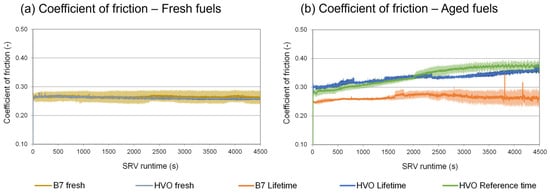
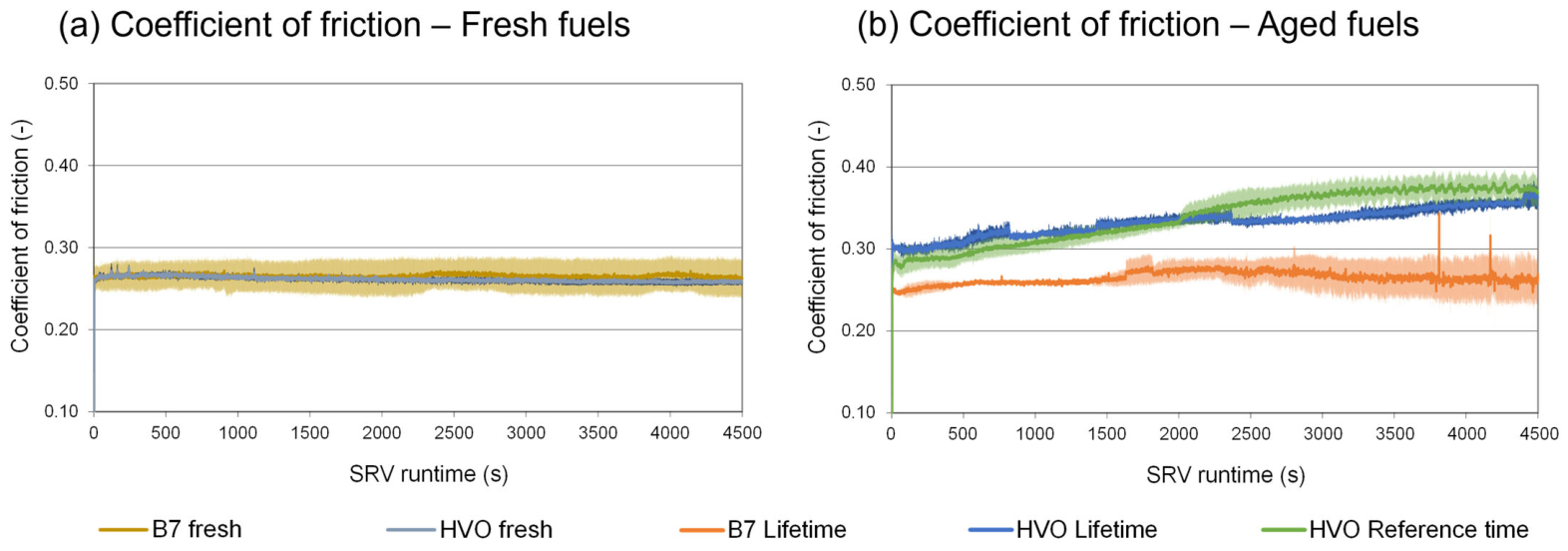
The fresh B7 and HVO fuels exhibited very similar friction behavior throughout the SRV tests (Figure 7a). For both fuels, the coefficient of friction remained approximately within the range of 0.25–0.28 and showed no pronounced increase over the 75 min test duration. The overlapping mean curves and minimum–maximum ranges indicate that no relevant difference in friction performance could be identified between the two fresh fuels under the applied conditions.
Figure 7.
Coefficient of friction of the fuel samples. (a) Fresh fuels. (b) Aged fuels. Lines correspond to mean values; shaded areas depict the minimum-maximum range.
Fuel aging affected the two formulations differently (Figure 7b). The aged B7 fuel maintained a comparatively low coefficient of friction, generally between approximately 0.25 and 0.28. In contrast, both aged HVO samples showed a progressive increase in friction during the test, both increasing from approximately 0.3 in the beginning to 0.4 towards the end of the experiment. Thus, although the fresh fuels exhibited comparable friction behavior, the aged HVO samples produced consistently higher and more strongly increasing friction than the aged B7 sample.
The similar behavior of the HVO lifetime and reference time samples indicates that the increase in friction was already present after the shorter aging period and was not solely associated with the more advanced oxidation state of the lifetime-aged HVO. The higher friction of these samples does not necessarily contradict their wear behavior, as friction and wear represent different aspects of the tribological response and do not necessarily correlate directly. While fresh HVO exhibited distinctly lower wear than fresh B7, the wear ranges of lifetime-aged HVO and B7 overlapped and should therefore be considered broadly comparable. Aging thus affects friction and wear differently. One possible contribution to the increased friction of aged HVO is a change in the interaction of the fuel formulation and its additives with the steel surfaces, potentially affecting the formation or effectiveness of friction- and wear-modifying surface films. Differences in deposit formation may also contribute, as substantially more deposits were observed on the specimens tested with lifetime-aged B7 than with aged HVO. However, since the chemical composition and structure of the surface films were not analyzed, the present results do not allow the observed friction and wear behavior to be attributed to a specific additive-response or tribofilm-formation mechanism.
The results indicate friction performance of the HVO formulation became less favorable after aging. This may be related to changes in fuel chemistry, additive response, or surface-film formation during aging and subsequent tribological contact; however, the present data do not allow these contributions to be distinguished, yet. For this purpose, surface analysis to obtain information regarding the built tribofilms would be necessary as a next step.
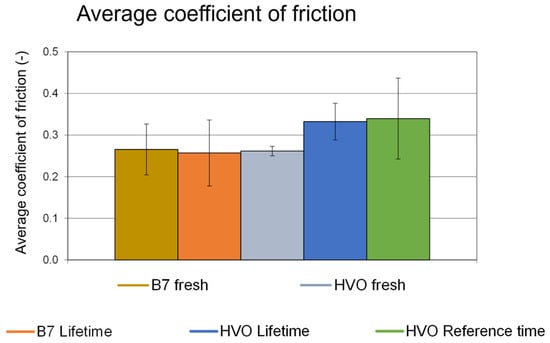
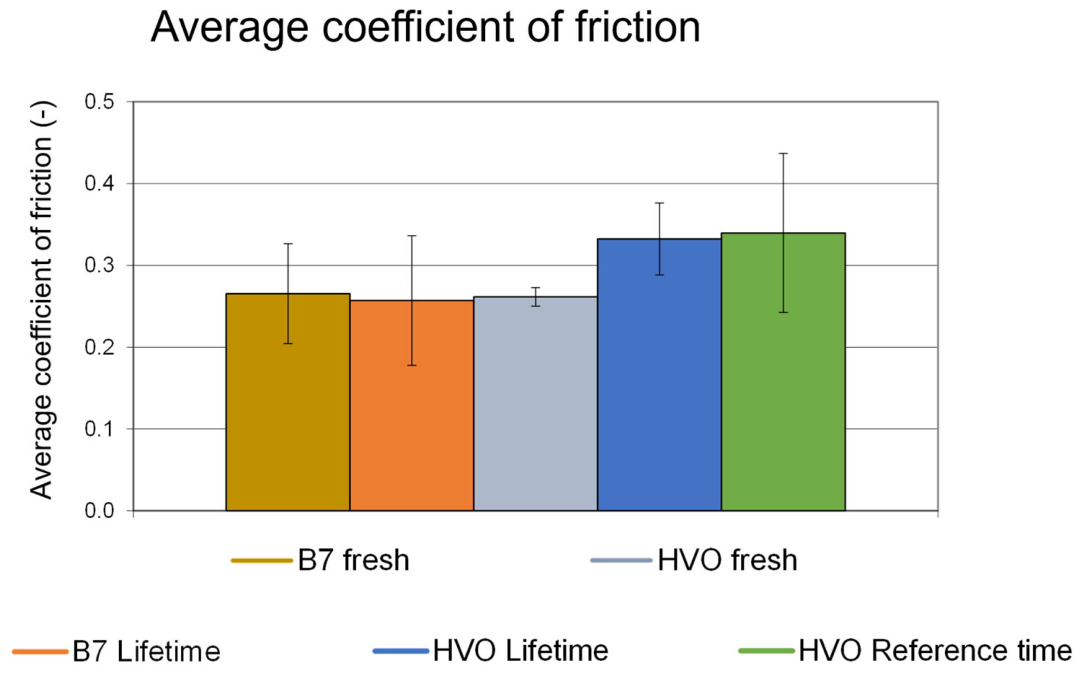
The average coefficients of friction calculated over the interval from 200 to 4200 s are shown in Figure 8. The fresh B7 and HVO fuels exhibited comparable average friction coefficients of approximately 0.26. Aging had only a minor effect on the average coefficient of friction of B7, whereas higher mean values of approximately 0.33–0.34 were obtained for the HVO lifetime and reference time samples. However, the variability ranges overlapped, and the observed differences should therefore be interpreted as descriptive trends rather than conclusive differences in tribological performance.
Figure 8.
Average coefficient of friction calculated over the interval from 200 to 4200 s using both independent determinations. Error bars represent ±3 standard deviations of the time-resolved coefficient-of-friction values within the evaluated interval.
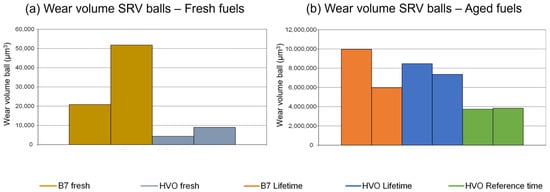
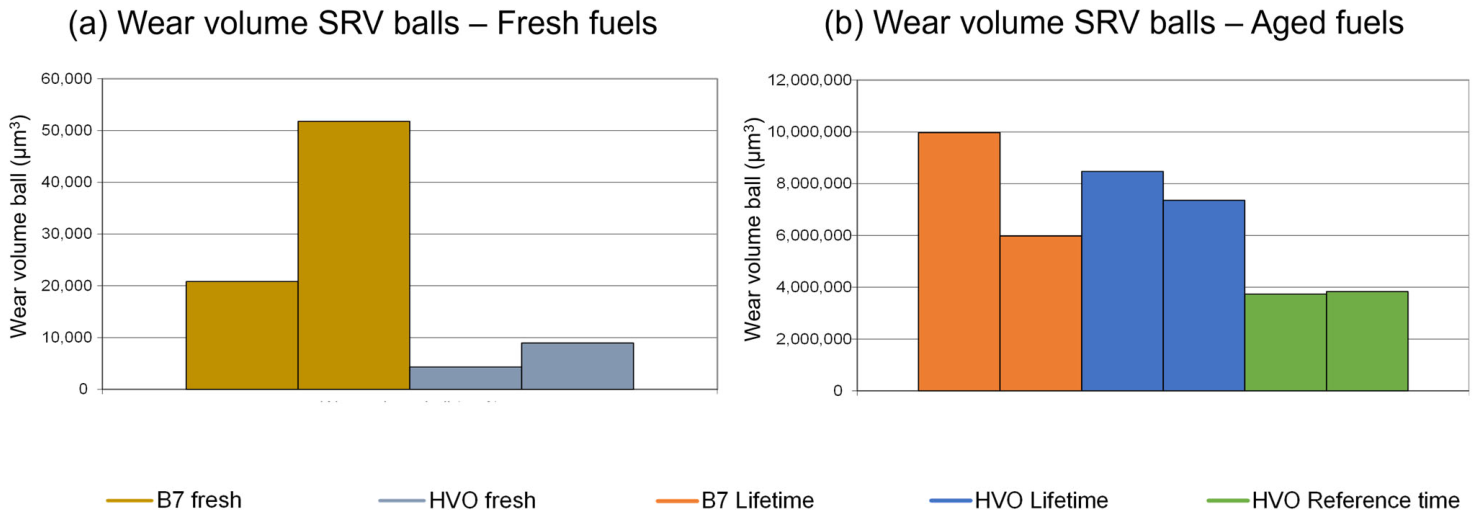
The wear volumes measured on the SRV balls are shown in Figure 9. For the fresh fuels, both HVO determinations produced substantially lower wear volumes than the corresponding B7 determinations. The ball wear volumes obtained with fresh HVO were approximately –, compared with approximately – for fresh B7. Because the two fresh fuels exhibited comparable coefficients of friction, these results indicate more favorable antiwear performance of the fresh HVO formulation under the applied test conditions.
Figure 9.
Wear volume on the SRV® balls. (a) Fresh fuels. (b) Aged fuels.
Aging resulted in a pronounced increase in wear for all investigated fuels, with ball wear volumes increasing by more than two orders of magnitude relative to the fresh samples. The B7 lifetime samples produced wear volumes of approximately and , while the HVO lifetime samples yielded approximately and . As the ranges overlapped, lifetime-aged B7 and HVO should be regarded as exhibiting broadly comparable wear performance.
In contrast, the HVO reference time sample produced consistently lower wear volumes of approximately –. Due to the comparable aging duration to the average B7 lifetime test, this sample represents the most direct time-based comparison with B7. At this common aging duration, HVO retained more favorable antiwear performance.
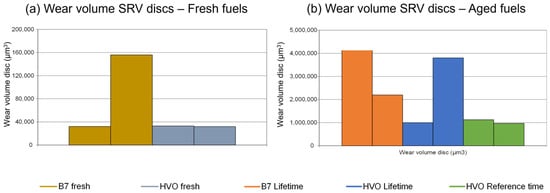
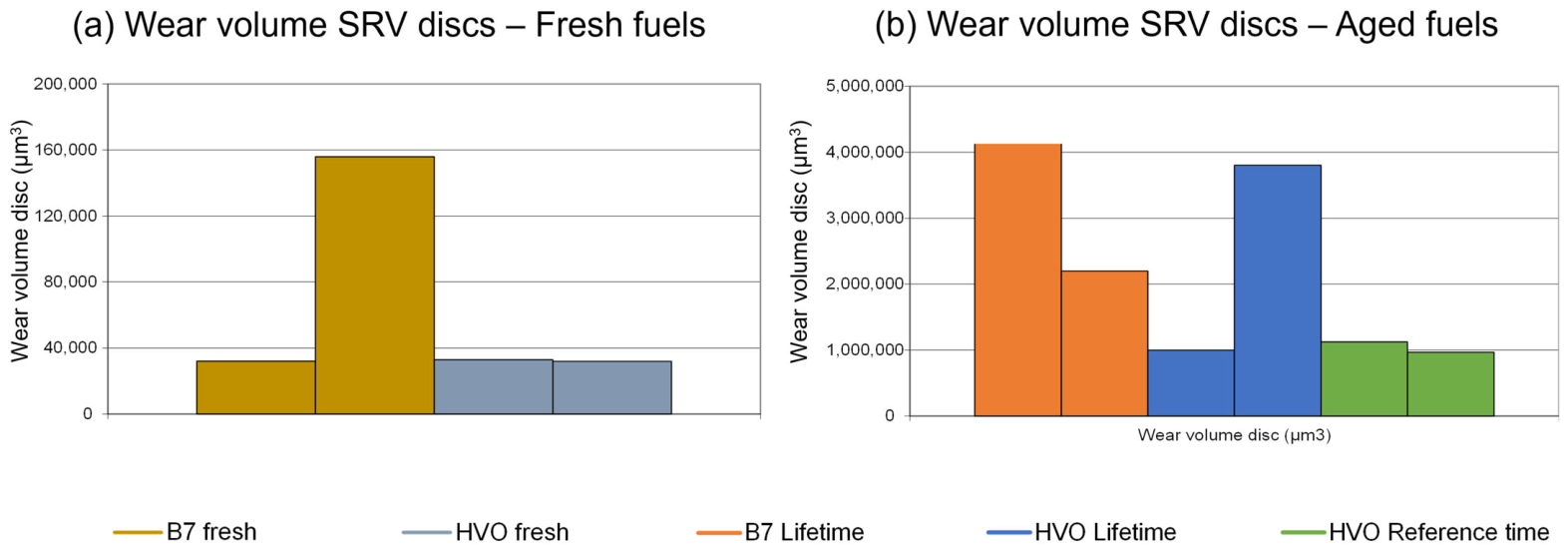
The wear volumes determined on the SRV disks showed the same overall trends as those measured on the balls (Figure 10). For the fresh fuels, both HVO determinations resulted in similarly low disk wear volumes, whereas one of the B7 determinations exhibited substantially greater wear. After aging, the lifetime-aged B7 and HVO samples again showed overlapping wear ranges and should therefore be regarded as broadly comparable. In contrast, both disks tested with the HVO reference time sample exhibited consistently lower wear than those tested with lifetime-aged B7. The agreement between the ball and disk measurements supports the conclusion that fresh HVO provided favorable wear protection and retained lower wear at a common aging duration corresponding to the B7 lifetime, while fully lifetime-aged HVO and B7 showed comparable overall wear behavior.
Figure 10.
Wear volume on the SRV® disks. (a) Fresh fuels. (b) Aged fuels.
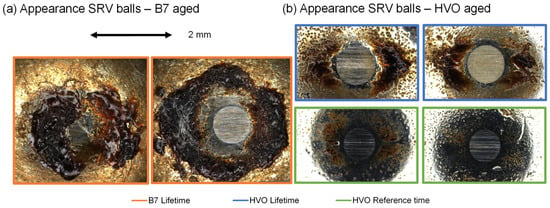
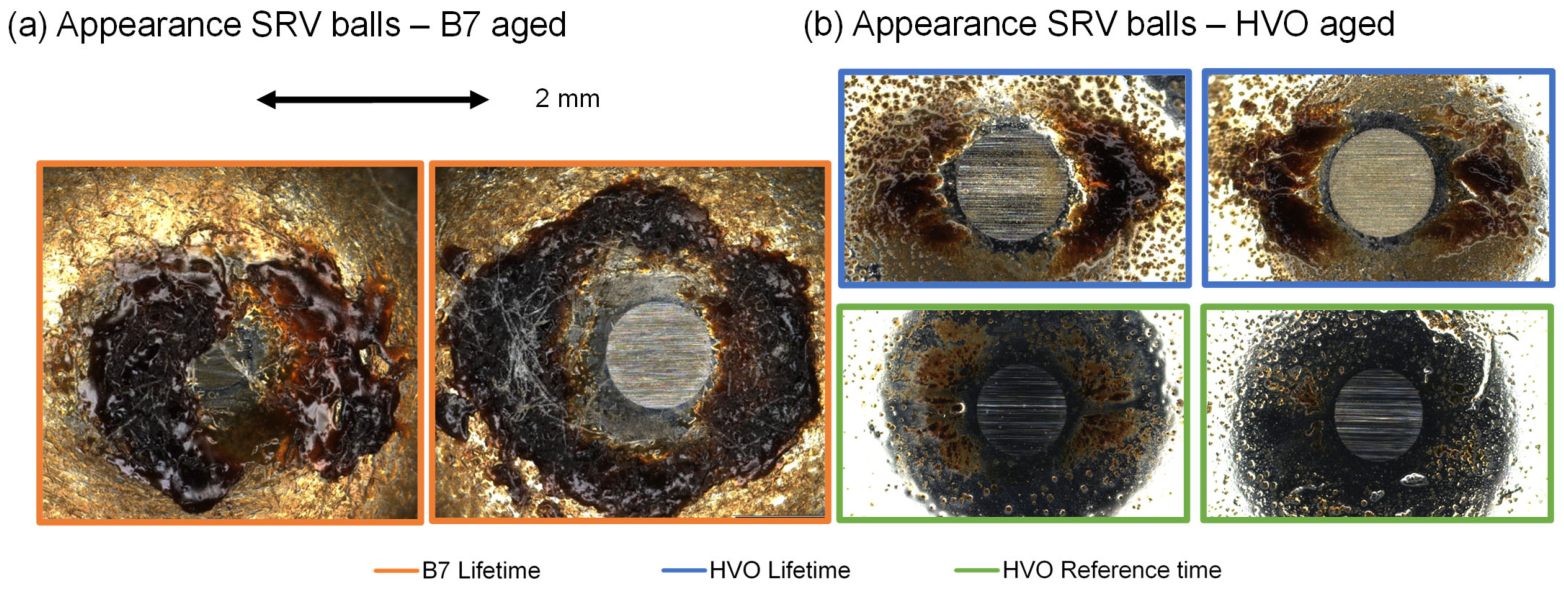
In addition to the measured wear volumes, pronounced differences were observed in the appearance of the SRV balls after testing (Figure 11). The balls tested with lifetime-aged B7 exhibited extensive dark deposits surrounding the wear scar. Deposit formation was less pronounced for the lifetime-aged HVO samples and was lowest for the HVO reference time sample. The metallic wear scars themselves remained visible in all cases, while the surrounding surface was covered to different extents by adherent oxidation-derived residues.
Figure 11.
Appearance of the SRV balls at the end of the test. (a) B7 aged fuel. (b) HVO-aged fuels. All images are displayed at the same scale.
This observation is consistent with the accelerated oxidation-test results, in which B7 showed more intensive deposit formation than HVO. The SRV results therefore provide additional evidence that, under the applied aging and tribological test conditions, the HVO formulation exhibited a lower tendency to form deposits. The low deposit coverage observed for the HVO reference time sample is also consistent with its lower oxidation severity at a test duration corresponding to the B7 lifetime.
3.4. Elastomer Compatibility Tests
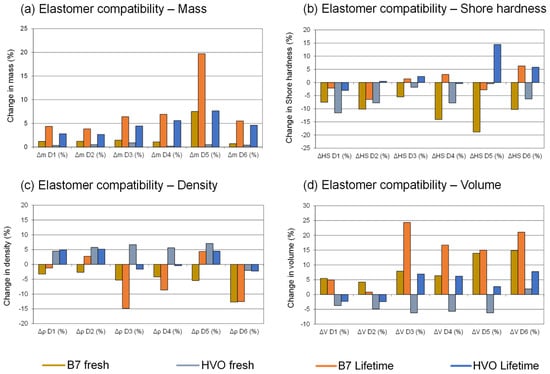
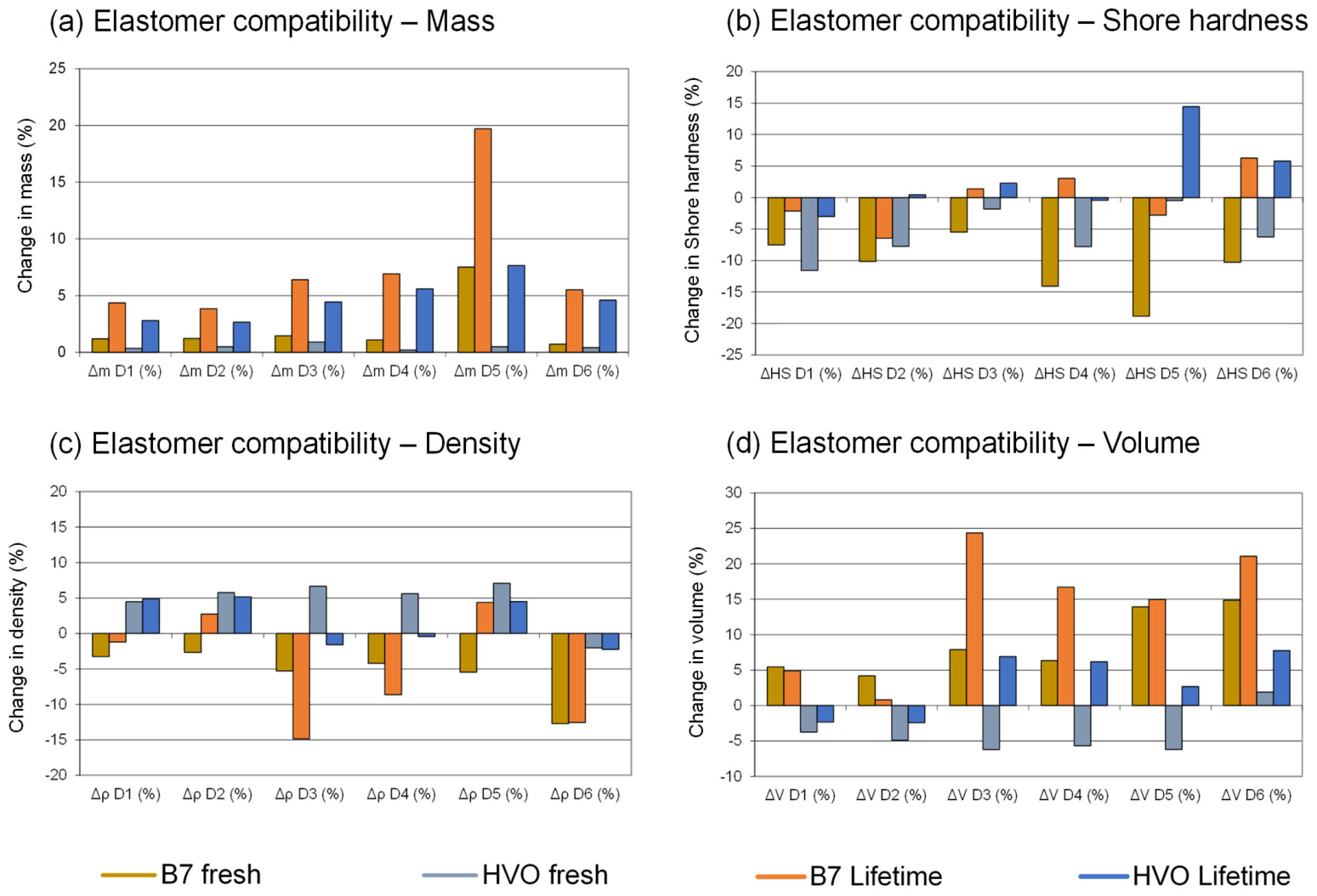
Exposure to the fresh fuels produced material-dependent changes in all investigated sealing components (Figure 12).
Figure 12.
Elastomer compatibility results. (a) Changes in mass. (b) Changes in shore hardness. (c) Changes in density. (d) Changes in volume.
Mass uptake was generally limited for most components, although the fuel-filter flat gasket (D5) showed a distinctly greater increase, particularly after exposure to B7. Exposure to the fresh fuels produced material-dependent changes in all investigated sealing components (Figure 12). Mass uptake was generally limited for most components, although the fuel-filter flat gasket (D5) showed a distinctly greater increase, particularly after exposure to B7. The mass increases were generally lower with fresh HVO than with fresh B7, indicating reduced fuel uptake. Both fresh fuels caused a decrease in Shore A hardness and therefore a softening of the sealing materials. Except for the injector O-ring (D1), the magnitude of softening was generally smaller after exposure to HVO. Fresh B7 additionally caused a decrease in density and a corresponding increase in calculated volume for all investigated components, indicating swelling. In contrast, fresh HVO generally increased density and reduced the calculated volume, corresponding to slight shrinkage; the injector round gasket (D6) represented the main exception to this overall trend. Importantly, the lower mass uptake observed with HVO should be distinguished from this actual decrease in calculated volume, as reduced fuel uptake does not necessarily imply shrinkage. Prior studies on carbon-black-filled acrylonitrile butadiene rubber exposed to HVO also observed shrinkage, which was attributed to the dominant migration of plasticizer from the rubber over the hindered diffusion of HVO molecules into NBR (acrylonitrile-butadiene rubber) [17]. Both swelling and shrinkage may affect the dimensional stability of sealing components and could therefore influence sealing performance. However, the present experiments assessed changes in mass, hardness, density, and calculated volume and did not include functional sealing or leakage tests. Consequently, the observed dimensional changes cannot be directly related to actual leakage behavior.”
Exposure to the aged fuels generally resulted in greater mass uptake than exposure to the corresponding fresh fuels. This effect was most pronounced for the fuel-filter flat gasket (D5) in aged B7, for which the mass increased by approximately 20%. The hardness changes also shifted toward less negative or positive values, indicating reduced softening or, for several components, hardening after exposure to the aged fuels. The response nevertheless remained strongly material-dependent, with the fuel-filter flat gasket (D5) showing a particularly pronounced hardness increase after exposure to aged HVO. Aging also altered density and volume responses. For B7, increased swelling was particularly apparent for the two low-pressure fuel-line O-rings (D3 and D4) and the injector round gasket (D6). The aged HVO fuel generally changed the response from the slight shrinkage observed with fresh HVO toward modest swelling, particularly for the larger sealing components.
Overall, HVO generally produced lower mass uptake and less pronounced swelling than B7 under the investigated conditions. However, the results do not indicate universally superior compatibility, as fresh HVO caused slight shrinkage in several materials and aged HVO produced substantial hardening of the fuel-filter flat gasket. The compatibility response was therefore governed by both the fuel condition and the individual sealing material, demonstrating the importance of evaluating actual fuel-system components rather than inferring compatibility from a single generic elastomer.
3.5. Results of Field Test and Used Engine Oil Analysis
During routine operation, vehicle operators reported several subjective observations regarding HVO use. In particular, the engine was perceived as quieter and having a more even run during accompanied passenger-service runs. Less frequent transmission shifting was also noted on the route section. However, the underlying cause of the altered shifting behavior could not be determined, as it may reflect either differences in engine torque characteristics or the transmission control strategy. No consistent conclusion could be drawn regarding overall power delivery. As these observations were not obtained through a structured survey or supported by dedicated acoustic, vibration, power, or drivetrain measurements, they should be regarded as anecdotal operational feedback rather than quantitative evidence.
Two used-oil samples were obtained from the HVO field test, both corresponding to 100% of the respective lubricant service interval under operation with HVO as fuel. To preserve the confidentiality of the absolute maintenance intervals, oil operating time was normalized to the prescribed service interval and is reported as a percentage. The HVO results were compared with reference data from the ongoing B7 oil condition monitoring program (operation under B7 used as fuel). Because only two HVO samples were available and the B7 data originated from routine field monitoring rather than a directly paired trial, the comparison was evaluated descriptively.
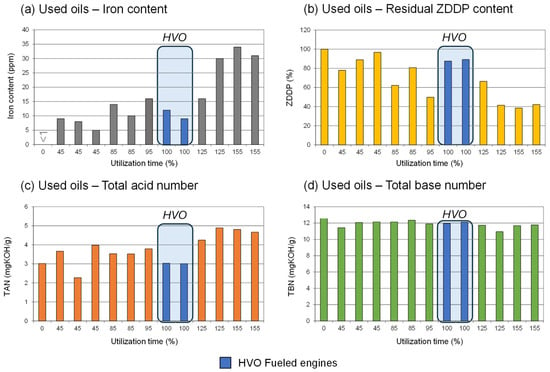
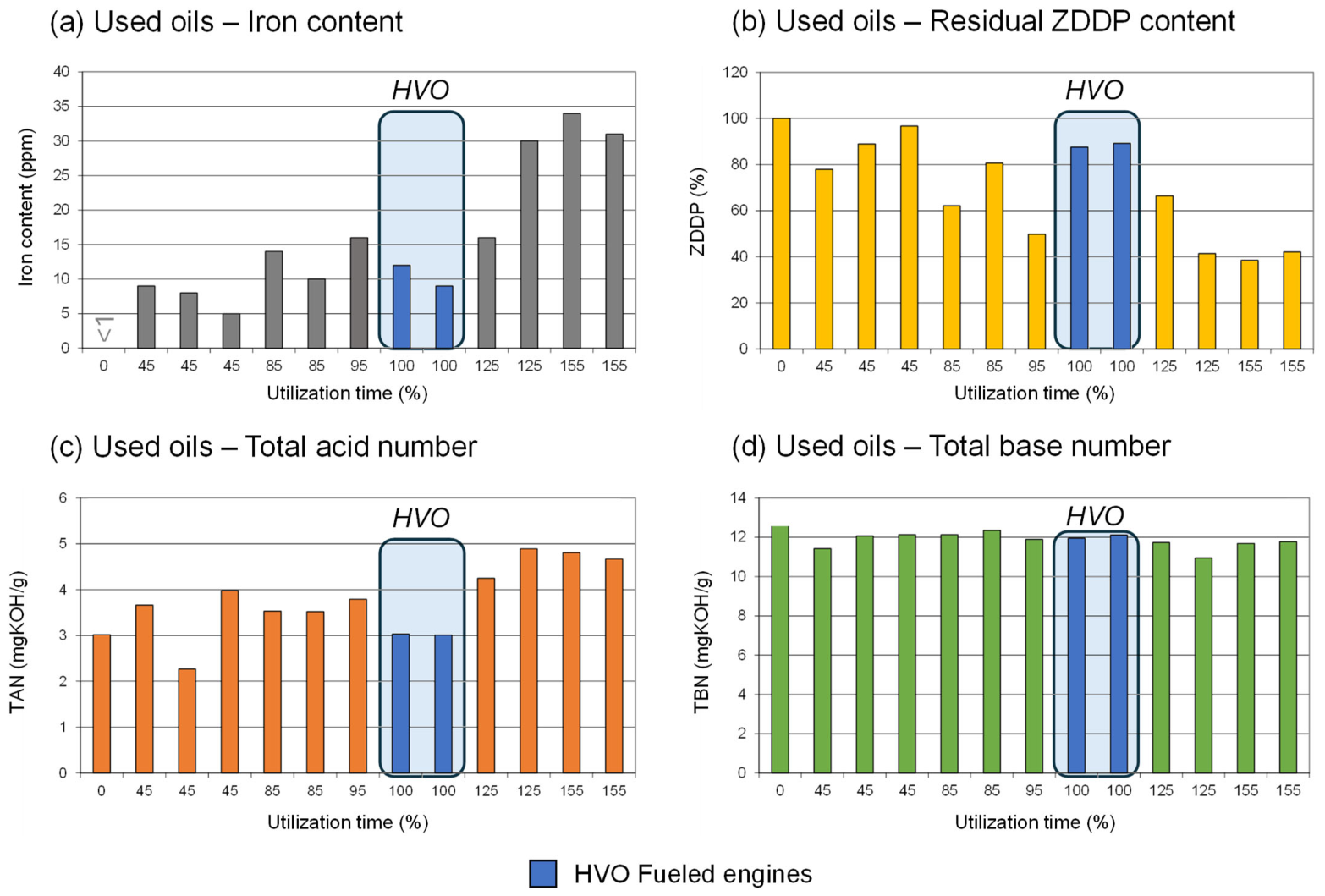
Overall, the HVO-used oils showed a condition comparable to that of the B7 reference oils, with no indication of accelerated lubricant degradation or increased engine wear. Iron concentrations (Figure 13a) in the two HVO samples were slightly lower than those observed in B7 oils close to the end of the service interval. The HVO samples also retained a higher proportion of the initial ZDDP (zinc dialkyldithiophosphate) AW (Figure 13b) and exhibited slightly lower TAN (Figure 13c). In contrast, TBN remained relatively stable throughout the B7 reference dataset and was similarly preserved in the HVO samples (Figure 13d).
Figure 13.
Used oil analysis results. (a) Iron content via ICP-OES. (b) Residual ZDDP content via FT-IR. (c) TAN—Total acid number. (d) TBN—Total base number.
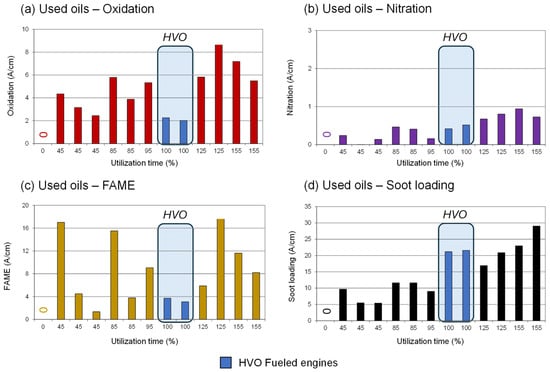
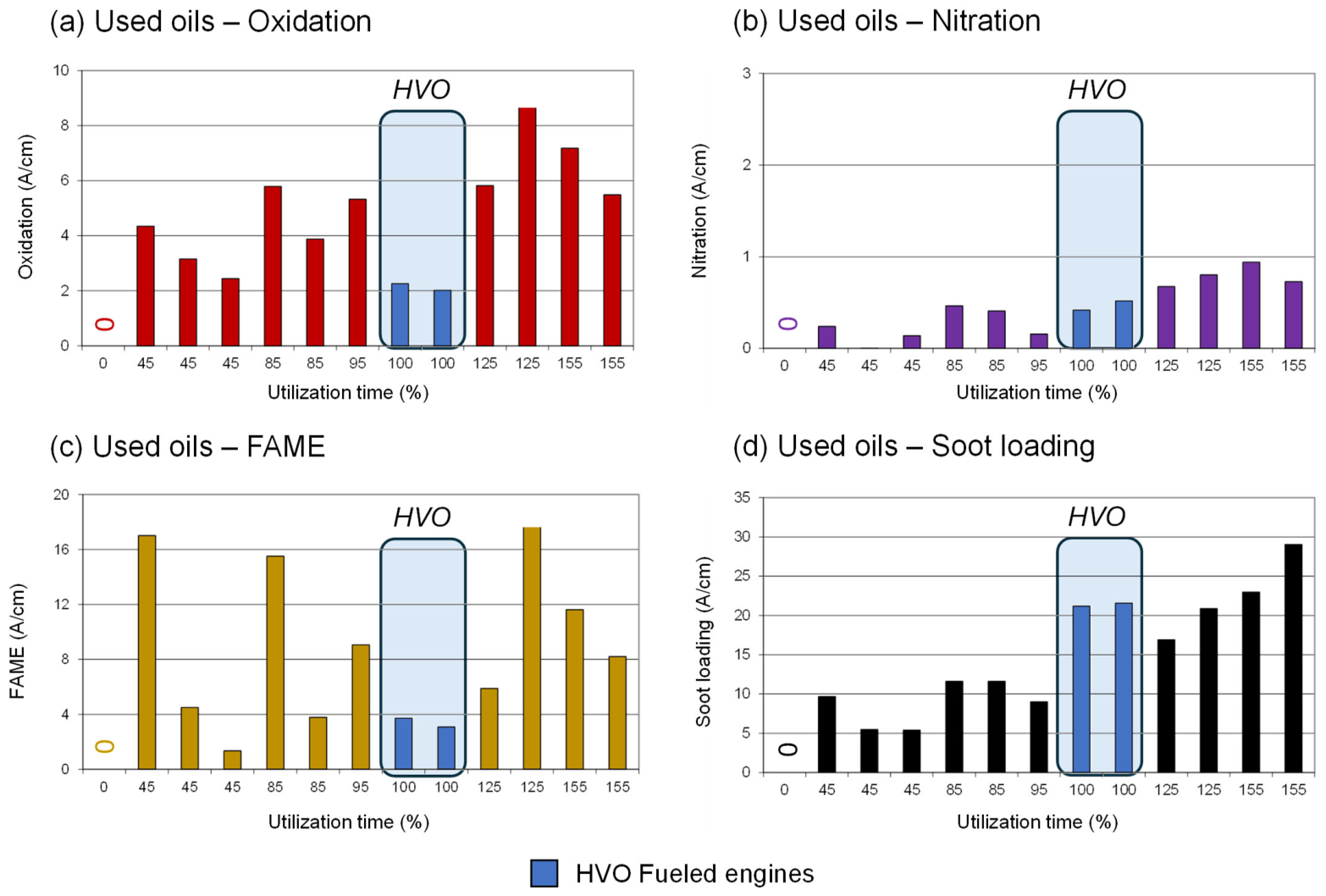
The FT-IR parameters provided additional information on lubricant degradation and fuel-related contamination during field operation. Oxidation was lower in both HVO used-oil samples than in the B7 reference oils collected near the end of their prescribed service interval (Figure 14a), supporting the previously observed trend toward slightly lower TAN and greater residual ZDDP content during HVO operation. However, it has to be mentioned that oxidation evaluation might show spectral interference with FAME [32] which could elevate the oxidation value measured in the B7 reference used oils to some degree. Nitration remained low for both fuels, as generally expected for diesel-engine oils [33], and no relevant difference between B7 and HVO was apparent (Figure 14b). As HVO100 contains no FAME, no progressive FAME accumulation was expected; correspondingly, the HVO samples exhibited only low values of the FT-IR FAME parameter compared with the majority of B7 samples (Figure 14c). These residual values should not necessarily be interpreted as actual FAME contamination, as minor spectral interference or baseline effects may contribute to the signal. Soot loading was slightly higher in the two HVO samples than in the B7 reference samples closest to the end of the regular service interval (Figure 14d), although the values remained within the range observed for B7 oils operated beyond that interval. Importantly, the soot detected in the used engine oil represents combustion-derived particulate matter and must be distinguished from the fuel oxidation deposits observed in the accelerated laboratory aging experiments. Consequently, the lower deposit formation observed for HVO during laboratory fuel aging cannot be directly related to the soot levels measured in the field-test engine oils. Given the limited number of HVO samples, this should be reported as a descriptive trend rather than evidence of systematically increased soot formation. Overall, the additional FT-IR results revealed no clear indication of changes in oil degradation during HVO operation, while the comparatively elevated soot values warrant consideration in future monitoring.
Figure 14.
Used oil analysis results. (a) Oxidation via FT-IR. (b) Nitration via FT-IR. (c) FAME via FT-IR. (d) Soot loading via FT-IR.
These trends suggest HVO operation did not adversely affect lubricant condition over the investigated service interval. Due to the limited number of HVO samples and the variability inherent to field data, the results serve as an indication of comparable performance rather than evidence of a statistically demonstrated benefit. Likewise, the laboratory investigations should be interpreted as comparative assessments rather than direct simulations of rail operating conditions. The simplified SRV contact, static accelerated oxidation test, and accelerated elastomer immersion provide controlled comparisons between the fuels but do not fully reproduce in-service fuel-system and sealing conditions. The field results therefore complement the laboratory findings but do not establish a direct correlation between laboratory and in-service performance.
4. Conclusions
The non-additivated model fuels showed virtually identical kinematic-viscosity profiles over the investigated temperature range, indicating that the differences in low-temperature filterability were not primarily related to bulk viscosity. While all fuels exhibited good filterability at 0 °C, increasing HVO content progressively reduced filter-blocking tendency at lower temperatures. In contrast, the FAME-containing B7 formulation showed pronounced filter blocking at −10 °C and particularly at −20 °C. These results demonstrate a clear beneficial effect of increasing HVO content on the low-temperature filterability of the investigated model fuels. As the model fuels did not contain commercial performance-additive packages, these findings should be interpreted as baseline formulation effects rather than as direct predictions of fully formulated fuel behavior.
The oxidation tests and chemical analyses consistently indicated more favorable aging behavior of the fully additivated HVO fuel under the applied accelerated conditions. Although the oxidation induction times of B7 and HVO were broadly comparable, HVO exhibited a slower progression of oxidation, reflected by lower oxidation values, slightly lower TAN, and a smaller increase in water content. The substantially lower deposit formation observed for HVO further supports this finding. Thus, the main advantage of HVO under the investigated aging conditions was not a markedly delayed onset of oxidation, but a less severe progression of fuel degradation and deposit formation.
Fresh HVO exhibited clearly lower wear than fresh B7, while the difference became less pronounced after aging, with lifetime-aged HVO and B7 showing broadly comparable wear volumes. The substantially lower deposit formation observed on the SRV balls after HVO aging is consistent with the results of the oxidation tests and suggests a potential relationship between fuel aging, deposit formation, and tribological performance.
Elastomer compatibility was strongly dependent on both the sealing material and the fuel condition. Compared with B7, HVO generally resulted in lower mass uptake and less pronounced swelling, although slight shrinkage occurred for several components with fresh HVO. Fuel aging modified the material response and increased swelling or hardening for selected materials, most notably the fuel-filter flat gasket. These findings indicate broadly favorable but material-specific compatibility of HVO and highlight the need for application-specific evaluation of sealing materials.
The used-oil analyses obtained during the HVO field test revealed no indication of adversely accelerated lubricant degradation or increased engine wear compared with the B7 reference data. HVO operation was associated with lower oxidation and TAN values, slightly lower iron concentrations, and greater residual ZDDP content, while TBN and nitration remained broadly comparable. No relevant FAME accumulation was observed during HVO operation. Although soot loading showed a tendency toward higher values, it remained within the range observed for B7 oils at extended utilization. The limited number of HVO field samples, however, prevents statistically robust conclusions regarding long-term lubricant and engine behavior.
Overall, HVO exhibited several advantages under the investigated conditions, particularly improved low-temperature filterability in the non-additivated model blends, more favorable oxidation behavior, lower deposit formation, and favorable wear performance in the fresh state. Most other investigated parameters were comparable to B7 or showed slightly favorable trends, while the field-test used-oil data revealed no indication of accelerated lubricant degradation or increased engine wear. Taken together, these results indicate that HVO provides favorable fuel, tribological, material-compatibility, and lubricant-related characteristics for the investigated diesel-powered rail application. The findings therefore support the technical feasibility of HVO as an alternative fuel for this application, provided that fuel approval and compatibility with the specific fuel-system and sealing materials are confirmed. The potential to continue using existing vehicles and fuel-system infrastructure without major modifications further increases the practical relevance of HVO as a near-term pathway for reducing the environmental impact of established diesel-powered systems. Combined with the potential for substantially lower life-cycle greenhouse-gas emissions, which are claimed between 60 and 95% when considering the entire product life cycle compared to fossil diesel [34] and when HVO is produced from suitable low-carbon feedstocks, this offers a practical route to near-term environmental benefits.
Further investigations should focus on validating these findings under more application-representative conditions. In particular, the low-temperature and oxidation behavior should be assessed using fully formulated commercial HVO and B7 fuels, as additive packages may substantially influence fuel stability and filterability. Longer-term field operation involving a larger number of vehicles and oil samples would be required to statistically substantiate the trends observed in the present study. In addition, extended elastomer testing under combined thermal, chemical, and mechanical aging conditions would help to clarify the long-term compatibility of HVO with application-relevant sealing materials. Future work should also investigate the relationship between fuel aging, deposit formation, and component wear in greater detail, thereby linking laboratory-scale fuel properties with actual engine and fuel-system performance. Such investigations would provide a stronger basis for defining application-specific fuel requirements and supporting the broader implementation of HVO in existing diesel-powered rail applications.
Supplementary Materials
The following supporting information can be downloaded at: https://www.mdpi.com/article/10.3390/fuels7040084/s1, Figure S1: FT-IR absorption spectra of the fresh and aged fuel samples; Figure S2: FT-IR difference spectra of the aged fuel samples; Figure S3: 30 reference oxidation tests with n-dodecane. (a) Pressure propagation. (b) Calculated OIT and TOT (±1 standard deviation shown).
Author Contributions
Conceptualization, M.F., C.S., P.G. and D.M.; methodology, A.A., V.L., P.G. and D.M.; validation, A.A., V.L. and C.S.; formal analysis, B.A., A.A., V.L. and C.S.; investigation, M.F., A.A., C.S., P.G. and D.M.; resources, M.F., P.G. and D.M.; data curation, A.A. and B.A.; writing—original draft preparation, A.A. and M.F.; writing—review and editing, P.G. and D.M.; visualization, A.A.; supervision, M.F.; project administration, C.S.; funding acquisition, M.F. All authors have read and agreed to the published version of the manuscript.
Funding
The presented results were realized as part of the COMET Centre InTribology (FFG no. 906860), a project of the “Excellence Centre for Tribology” (AC2T research GmbH). InTribology is funded within the COMET—Competence Centres for Excellent Technologies Programme by the federal ministries BMIMI and BMWET as well as the federal states of Niederösterreich and Vorarlberg based on financial support from the project partners involved. COMET is managed by The Austrian Research Promotion Agency (FFG).
Data Availability Statement
The data presented in this study are available from the corresponding author upon reasonable request. Access to certain field-test and operational data is subject to confidentiality restrictions and approval by the industrial partners.
Acknowledgments
During the preparation of this manuscript, the author(s) used ChatGPT (OpenAI, GPT-5.5, July 2026 version) for assistance with English language editing and for selected literature search support. The authors have reviewed and edited the output and take full responsibility for the content of this publication.
Conflicts of Interest
The authors Marcella Frauscher, Adam Agocs, Christoph Schneidhofer, Vladislav Lolua and Bianca Aigner are employed by AC2T research GmbH. The authors Peter Gruber and Dominic Mayerhofer are employed by ÖBB-Technische Services-GmbH.
Abbreviations
| ASTM | ASTM International |
| B0 | hydrocarbon diesel base fuel containing no biogenic component |
| B7 | diesel fuel containing 7 vol% fatty acid methyl ester |
| DIN | Deutsches Institut für Normung |
| EDTA | ethylenediaminetetraacetic acid |
| EN | European Standard |
| EU | European Union |
| FAME | fatty acid methyl ester |
| FT-IR | Fourier-transform infrared spectroscopy |
| GHG | greenhouse gas |
| H50 | model blend containing 50 vol% HVO in B0 |
| H100 | non-additivated model fuel consisting of 100% HVO |
| HVO | hydrotreated vegetable oil |
| HVO100 | commercial fuel consisting of 100% HVO |
| ICP-OES | inductively coupled plasma optical emission spectroscopy |
| ISO | International Organization for Standardization |
| NBR | acrylonitrile-butadiene rubber |
| OIT | oxidation induction time |
| PTFE | polytetrafluoroethylene |
| RED III | revised Renewable Energy Directive, Directive (EU) 2023/2413 |
| SAE | Society of Automotive Engineers |
| SRV | oscillation, friction, and wear |
| TAN/TBN | total acid number/total base number |
| TOT | total oxidation time |
| ZDDP | zinc dialkyldithiophosphate |
References
- Huber, G.W.; O’Connor, P.; Corma, A. Processing Biomass in Conventional Oil Refineries: Production of High Quality Diesel by Hydrotreating Vegetable Oils in Heavy Vacuum Oil Mixtures. Appl. Catal. A Gen. 2007, 329, 120–129. [Google Scholar] [CrossRef] [Scilit]
- Lapuerta, M.; Villajos, M.; Agudelo, J.R.; Boehman, A.L. Key Properties and Blending Strategies of Hydrotreated Vegetable Oil as Biofuel for Diesel Engines. Fuel Process. Technol. 2011, 92, 2406–2411. [Google Scholar] [CrossRef] [Scilit]
- Bays, J.T.; Gieleciak, R.; Viola, M.B.; Lewis, R.P.; Cort, J.R.; Campbell, K.B.; Coffey, G.W.; Linehan, J.C.; Kusinski, M. Detailed Compositional Comparison of Hydrogenated Vegetable Oil with Several Diesel Fuels and Their Effects on Engine-Out Emissions. SAE Int. J. Fuels Lubr. 2022, 16, 193–220. [Google Scholar] [CrossRef] [Scilit]
- Szeto, W.; Leung, D.Y.C. Is Hydrotreated Vegetable Oil a Superior Substitute for Fossil Diesel? A Comprehensive Review on Physicochemical Properties, Engine Performance and Emissions. Fuel 2022, 327, 125065. [Google Scholar] [CrossRef] [Scilit]
- DIN EN 590:2022; Automotive Fuels-Diesel-Requirements and Test Methods. European Committee for Standardization: Brussels, Belgium, 2022.
- DIN EN 15940:2023; Automotive Fuels-Paraffinic Diesel Fuel from Synthesis or Hydrotreatment-Requirements and Test Methods. European Committee for Standardization: Brussels, Belgium, 2023.
- European Comission. JEC Well-To-Wheels Report v5: Well-to-Wheels Analysis of Future Automotive Fuels and Powertrains in the European; European Comission: Luxembourg, 2020. [Google Scholar]
- Bonalumi, D.; Tabrizi, M.K.; Famiglietti, J.; Bua, L.; Gioco, G. The Carbon Footprint of Hydrotreated Vegetable Oil (HVO) Production and Consumption Based on Primary Data. J. Clean. Prod. 2026, 558, 148058. [Google Scholar] [CrossRef] [Scilit]
- European Parliament and of the Council. Directive (EU) 2023/2413 of the European Parliament and of the Council of 18 October 2023 Amending Directive (EU) 2018/2001, Regulation (EU) 2018/1999 and Directive 98/70/EC as Regards the Promotion of Energy from Renewable Sources, and Repealing Council Directive (EU) 2015/652. Off. J. Eur. Union 2023, L 2023/2413, 31.10.2023. Available online: https://eur-lex.europa.eu/eli/dir/2023/2413/oj/eng (accessed on 15 October 2026).
- European Comission. Clean Energy Technology Observatory: Advanced Biofuelsin the European Union; European Comission: Luxembourg, 2024. [Google Scholar]
- Aatola, H.; Larmi, M.; Sarjovaara, T. Hydrotreated Vegetable Oil (HVO) as a Renewable Diesel Fuel: Trade-Off Between NOx, Particulate Emission, and Fuel Consumption of a Heavy Duty Engine Seppo Mikkonen Neste Oil; Helsinki University of Technology: Espoo, Finland, 2008. [Google Scholar]
- d’Ambrosio, S.; Mancarella, A.; Manelli, A. Utilization of Hydrotreated Vegetable Oil (HVO) in a Euro 6 Dual-Loop EGR Diesel Engine: Behavior as a Drop-In Fuel and Potentialities along Calibration Parameter Sweeps. Energies 2022, 15, 7202. [Google Scholar] [CrossRef] [Scilit]
- Ghadimi, S.; Zhu, H.; Durbin, T.D.; Cocker, D.R.; Karavalakis, G. The Impact of Hydrogenated Vegetable Oil (HVO) on the Formation of Secondary Organic Aerosol (SOA) from in-Use Heavy-Duty Diesel Vehicles. Sci. Total Environ. 2022, 822, 153583. [Google Scholar] [CrossRef] [Scilit] [PubMed]
- Erkkilä, K.; Nylund, N.-O.; Hulkkonen, T.; Tilli, A.; Mikkonen, S.; Saikkonen, P.; Amberla, A. Emission Performance of Paraffinic HVO Diesel Fuel in Heavy Duty Vehicles Reijo Mäkinen Helsinki Region Transport; SAE Institute: Amsterdam, The Netherlands, 2011. [Google Scholar]
- Makinen, R.; Nylund, N.-O.; Erkkilälng, K.; Saikkonen, P.; Amberla, A. Bus Fleet Operation on Renewable Paraffinic Diesel Fuel; SAE Institute: Amsterdam, The Netherlands, 2011. [Google Scholar]
- Kuszewski, H.; Jaworski, A.; Szpica, D. Comparative Study of the Lubricity of Hydrotreated Vegetable Oil, Diesel, and Their Blends Using Four-Ball Testing: Focus on Scuffing Load. Energies 2025, 18, 3141. [Google Scholar] [CrossRef] [Scilit]
- Akhlaghi, S.; Pourrahimi, A.M.; Hedenqvist, M.S.; Sjöstedt, C.; Bellander, M.; Gedde, U.W. Degradation of Carbon-Black-Filled Acrylonitrile Butadiene Rubber in Alternative Fuels: Transesterified and Hydrotreated Vegetable Oils. Polym. Degrad. Stab. 2016, 123, 69–79. [Google Scholar] [CrossRef] [Scilit]
- Müller, M.; Mishra, R.K.; Šleger, V.; Pexa, M.; Čedík, J. Elastomer-Based Sealing O-Rings and Their Compatibility with Methanol, Ethanol, and Hydrotreated Vegetable Oil for Fueling Internal Combustion Engines. Materials 2024, 17, 430. [Google Scholar] [CrossRef] [Scilit] [PubMed]
- Mors, S.; Nase, S.; Zitzler, G. Testing of HVO in Mtu Engines for Rail Applications. Available online: https://www.mtu-solutions.com/eu/en/technical-articles/2024/testing-of-hvo-in-mtu-engines-for-rail-applications.html (accessed on 31 July 2026).
- ASTM D7042; Standard Test Method for Dynamic Viscosity and Density of Liquids by Stabinger Viscometer (and the Calculation of Kinematic Viscosity. ASTM International: West Conshohocken, PA, USA, 2021.
- ISO 13357-2:2025; Petroleum Products-Determination of the Filterability of Lubricating Oils Part 2: Procedure for Dry Oils. International Organization for Standardization: Geneva, Switzerland, 2025.
- ASTM D 2272; Standard Test Method for Oxidation Stability of Steam Turbine Oils by Rotating Pressure Vessel. ASTM International: West Conshohocken, PA, USA, 2009.
- Dörr, N.; Agocs, A.; Besser, C.; Ristić, A.; Frauscher, M. Engine Oils in the Field: A Comprehensive Chemical Assessment of Engine Oil Degradation in a Passenger Car. Tribol. Lett. 2019, 67, 68. [Google Scholar] [CrossRef] [Scilit]
- ASTM D664; Standard Test Method for Acid Number of Petroleum Products by Potentiometric Titration. ASTM International: West Conshohocken, PA, USA, 2024.
- DIN 51777-2; Testing of Mineral Oil Hydrocarbons and Solvents; Determination of Water Content According to Karl Fischer; Indirect Method. DIN (Deutsches Institut für Normung): Berlin, Germany, 1974.
- Vorlaufer, G.; Ilincic, S.; Franek, F.; Pauschitz, A. Wear Quantification by Comparison of Surface Topography Data. In Encyclopedia of Tribology; Wang, Q.J., Chung, Y.W., Eds.; Springer: New York, NY, USA, 2013; pp. 4087–4093. [Google Scholar]
- DIN 53521; Determination of the Behaviour of Rubber and Elastomers When Exposed to Fluids and Vapours. DIN (Deutsches Institut für Normung): Berlin, Germany, 1987.
- DIN 51453; Testing of Lubricants—Determination of Oxidation and Nitration of Used Motor Oils—Infrared Spectrometric Method. DIN (Deutsches Institut für Normung): Berlin, Germany, 2024.
- ASTM E 2412; Standard Practice for Condition Monitoring of Used Lubricants By Trend Analysis Using Fourier Transform Infrared (FT-IR) Spectrometry. ASTM International: West Conshohocken, PA, USA, 2018.
- ISO 3771; Petroleum Products—Determination of Base Number—Perchloric Acid Potentiometric Titration Method. International Organization for Standardization: Geneva, Switzerland, 2011.
- Lolua, V. Oxidationsstabilität und Tribologische Eigenschaften von Dieselkraftstoff aus Erneuerbaren Quellen für Diesellokomotiven (Oxidation Stability and Tribological Properties of Diesel Fuel from Renewable Sources for Diesel Engines in Locomotives). Bachelor’s Thesis, Vienna University of Technology, Vienna, Austria, 2025. [Google Scholar]
- Agocs, A. Lubricant Degradation in Internal Combustion Engines and Correlation with Artificial Ageing. Master’s Thesis, Vienna University of Technology, Vienna, Austria, 2026. [Google Scholar]
- Agocs, A.; Nagy, A.L.; Tabakov, Z.; Perger, J.; Rohde-Brandenburger, J.; Schandl, M.; Besser, C.; Dörr, N. Comprehensive Assessment of Oil Degradation Patterns in Petrol and Diesel Engines Observed in a Field Test with Passenger Cars—Conventional Oil Analysis and Fuel Dilution. Tribol. Int. 2021, 161, 107079. [Google Scholar] [CrossRef] [Scilit]
- Gomes, D.M.; Neto, R.C.; Baptista, P.; Ramos, C.P.; Correia, C.B.; Rocha, R. A Review of Advanced Techniques in Hydrotreated Vegetable Oils Production and Life Cycle Analysis. Biomass Bioenergy 2025, 194, 107689. [Google Scholar] [CrossRef] [Scilit]
Disclaimer/Publisher’s Note: The statements, opinions and data contained in all publications are solely those of the individual author(s) and contributor(s) and not of MDPI and/or the editor(s). MDPI and/or the editor(s) disclaim responsibility for any injury to people or property resulting from any ideas, methods, instructions or products referred to in the content. |
© 2026 by the authors. Licensee MDPI, Basel, Switzerland. This article is an open access article distributed under the terms and conditions of the Creative Commons Attribution (CC BY) license.