


Abstract
S-alkyl derivatives of thiobarbituric acid easily react with arylmethylene malononitriles in the presence of base to give new 7-amino-4-oxo-4,5-dihydro-3H-pyrano[2,3-d]pyrimidine-6-carbonitriles. The structure of products and the mechanism of formation are discussed.
1. Introduction
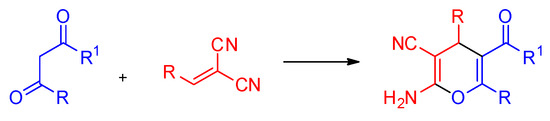
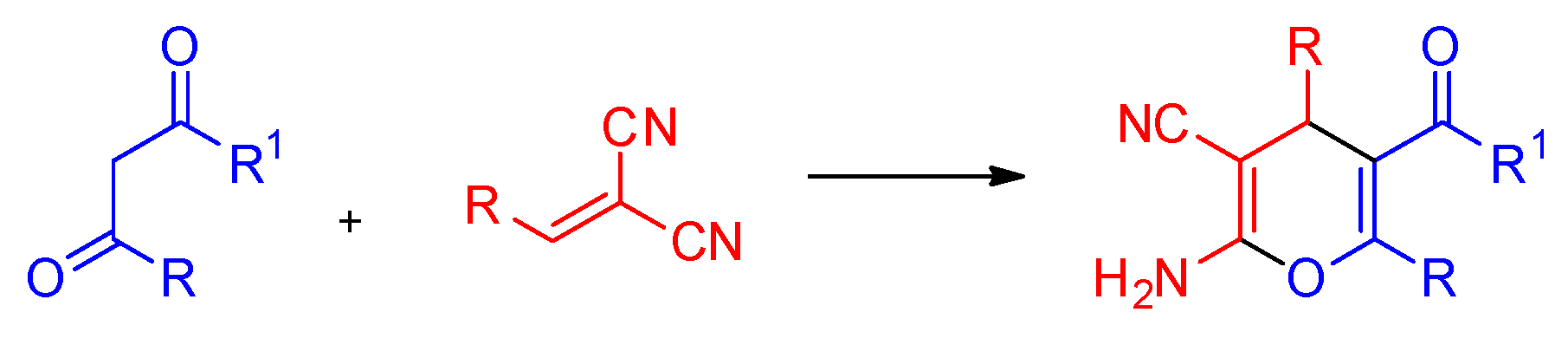
2-Amino-4H-Pyran-3-carbonitriles and related chromenes are of practical interest due to their wide range of biological activity and complexing capability [1,2,3]. One of the most useful methods to prepare these compounds is the reaction of 1,3-dicarbonyl compounds with arylmethylene malononitriles (Scheme 1).
Scheme 1.
General approach to 2-amino-4H-pyrans.
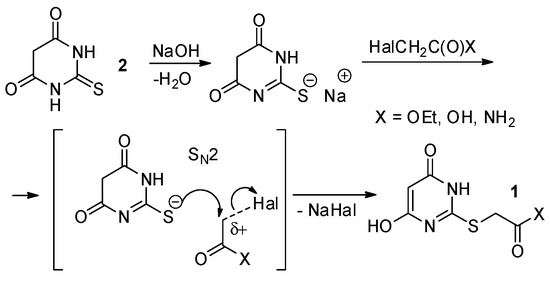
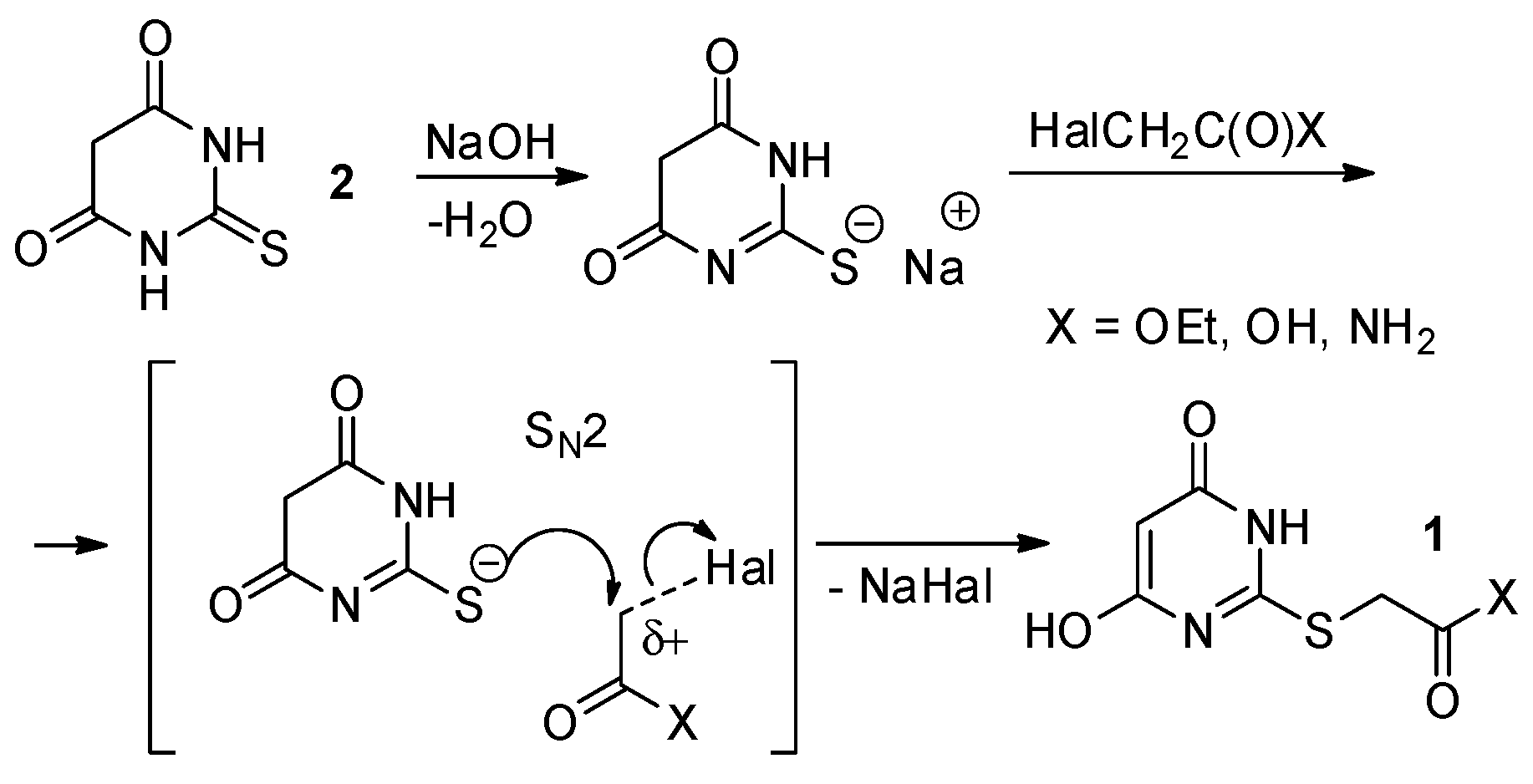
Easily accessible S-alkyl derivatives of thiobarbitic acids 1 [4] have not been used in the reaction prior to our studies. Compounds 1 can be easily prepared by treating thiobarbitic acid 2 with 2-haloacetic acid derivatives in an aqueous dioxane or aqueous alcohol solution in the presence of bases (Na2CO3, NaOH) (Scheme 2).
Scheme 2.
The preparation of compounds 1.
2. Results and Discussion
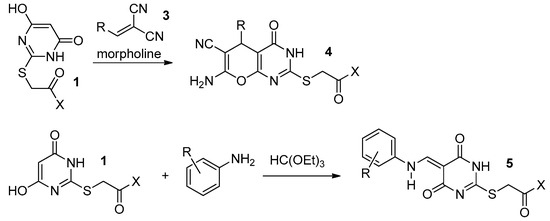
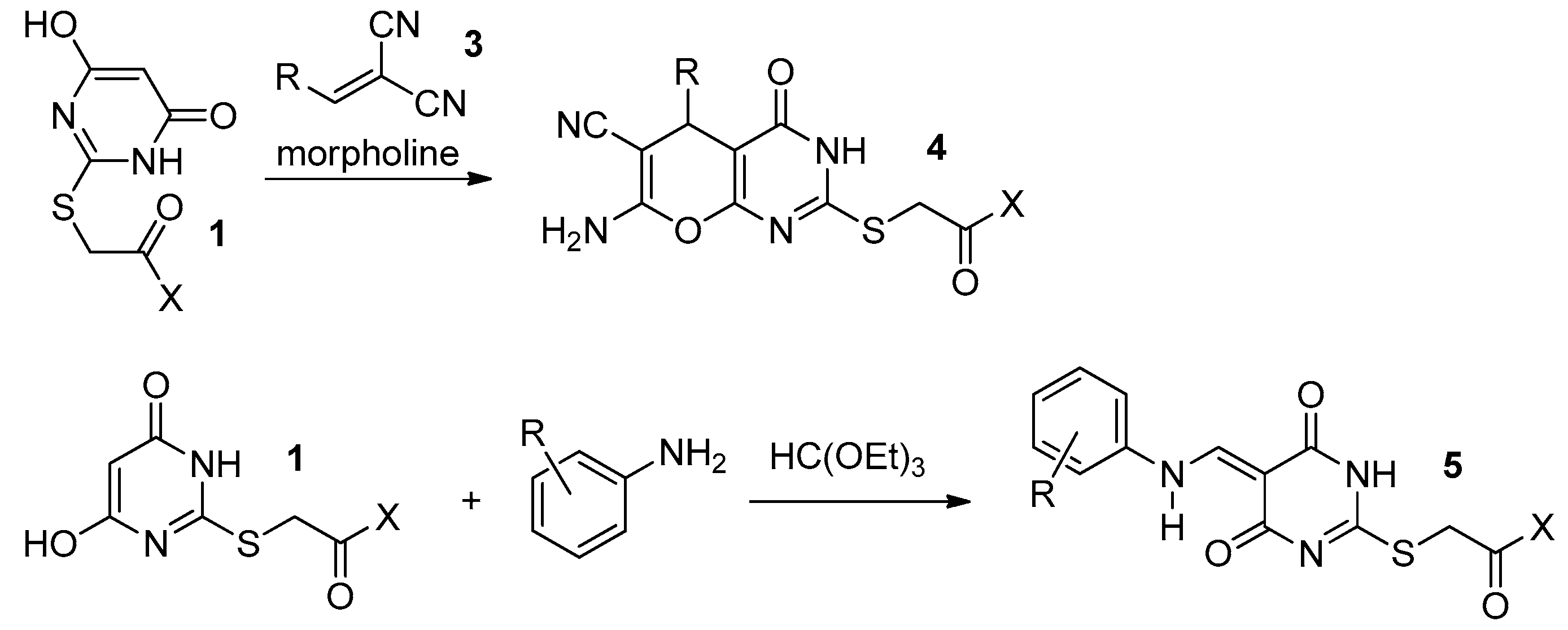
When active methylene pyrimidines 1 react with dinitriles 3 in boiling EtOH in the presence of catalytic amounts of base, previously undescribed 7-amino-4-oxo-4,5-dihydro-3H-pyrano[2,3-d]pyrimidine-6-carbonitriles 4 were isolated. The latter can be also prepared by multicomponent approach, using aldehydes, malononitrile and pyrimidines 1 as the starting reagents. This approach allows one to use aliphatic aldehydes since corresponding alkylidene malononitriles are hardly available. However, in this case the yields of target products 4 are low, probably due to the side reactions of aldol condensation with aliphatic aldehydes occurred in the presence of base. Compounds 1 are capable to react with anilines and triethyl orthoformate to form compounds 5 that were not described in the literature previously (Scheme 3).
Scheme 3.
The preparation of compounds 4 and 5.
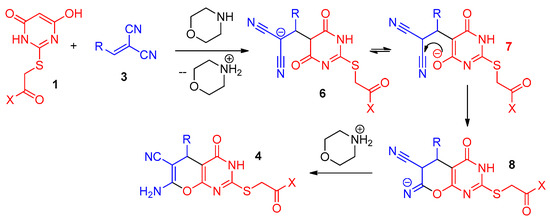
The mechanism of the reaction is shown in the Scheme 4. On the first stage, thiobarbitic acid derivatives 1 undergo a Michael reaction with activated alkenes 3 in boiling ethanol in the presence of morpholine to form non-isolable Michael adducts 6. The resulting Michael adducts under reaction conditions are easily isomerized to give anions 7. The latter undergo heterocyclization, leading to the formation of pyran six-membered ring. Finally, intermediate 8 after protonation afforded the target products 4.
Scheme 4.
The plausible mechanism for the formation of bicyclic core of 4.
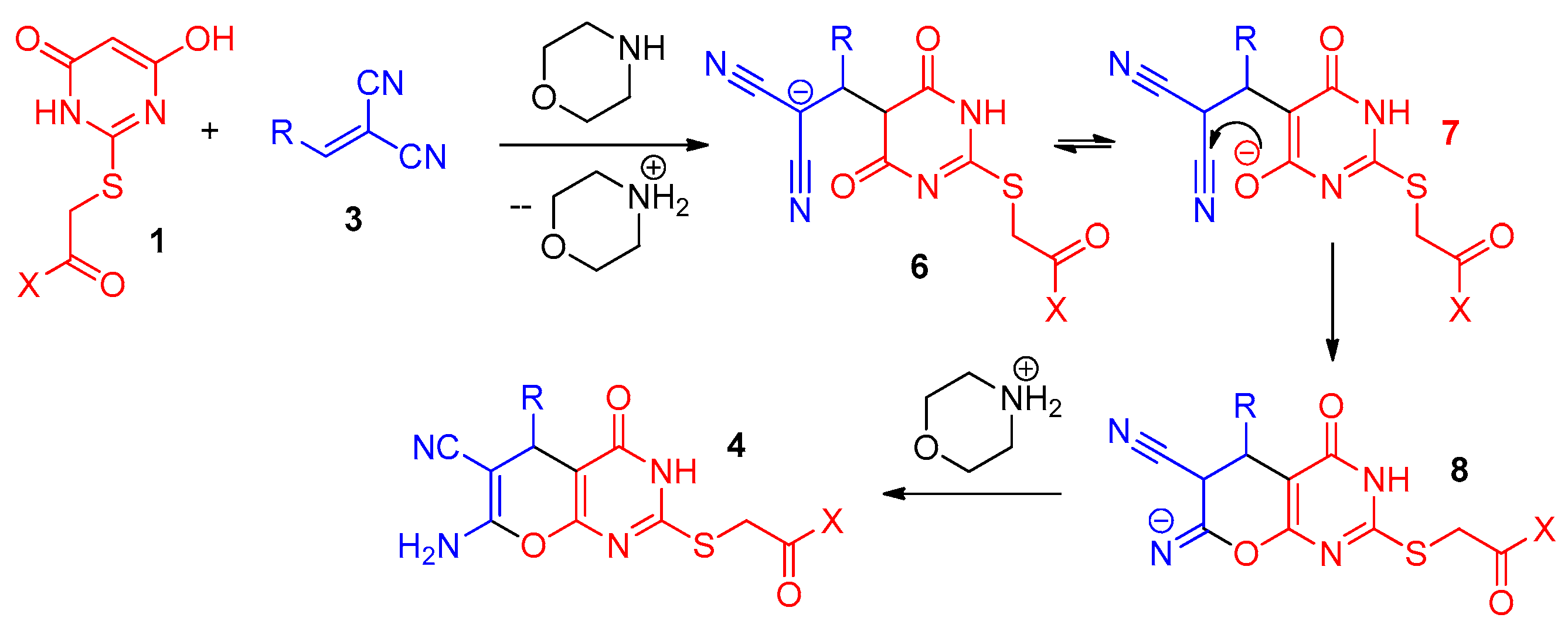
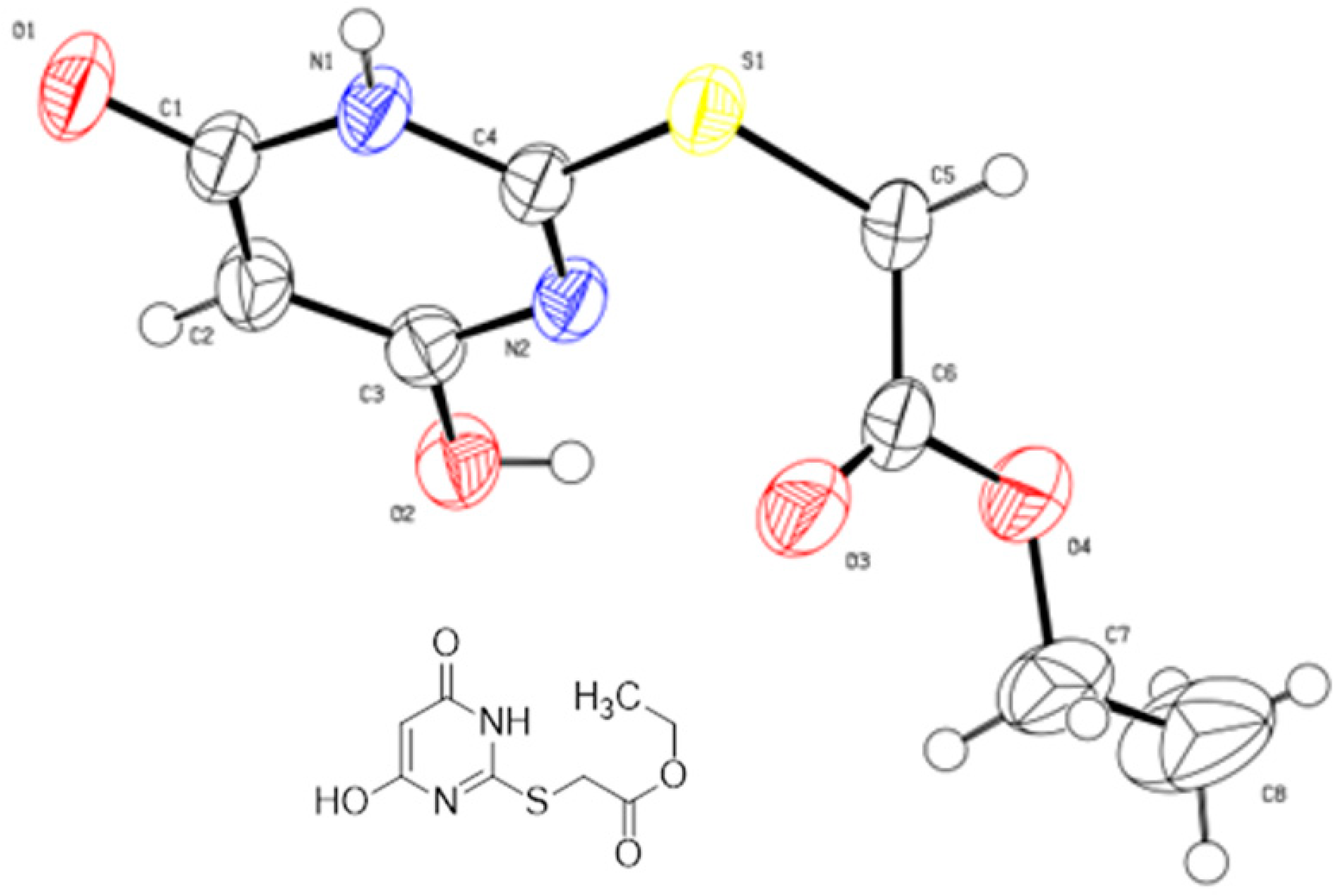
Figure 1.
The structure of compound 1 (X = OEt).
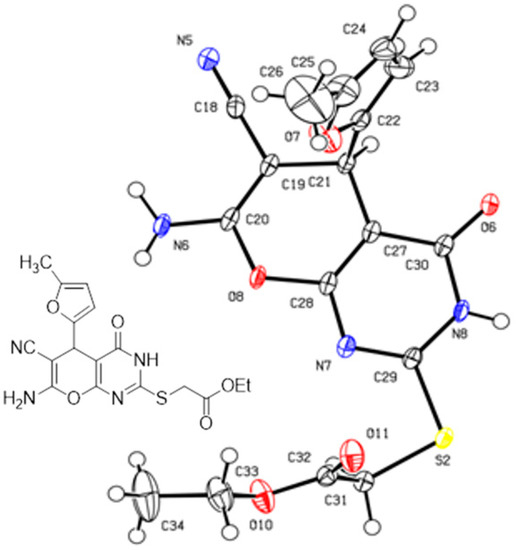
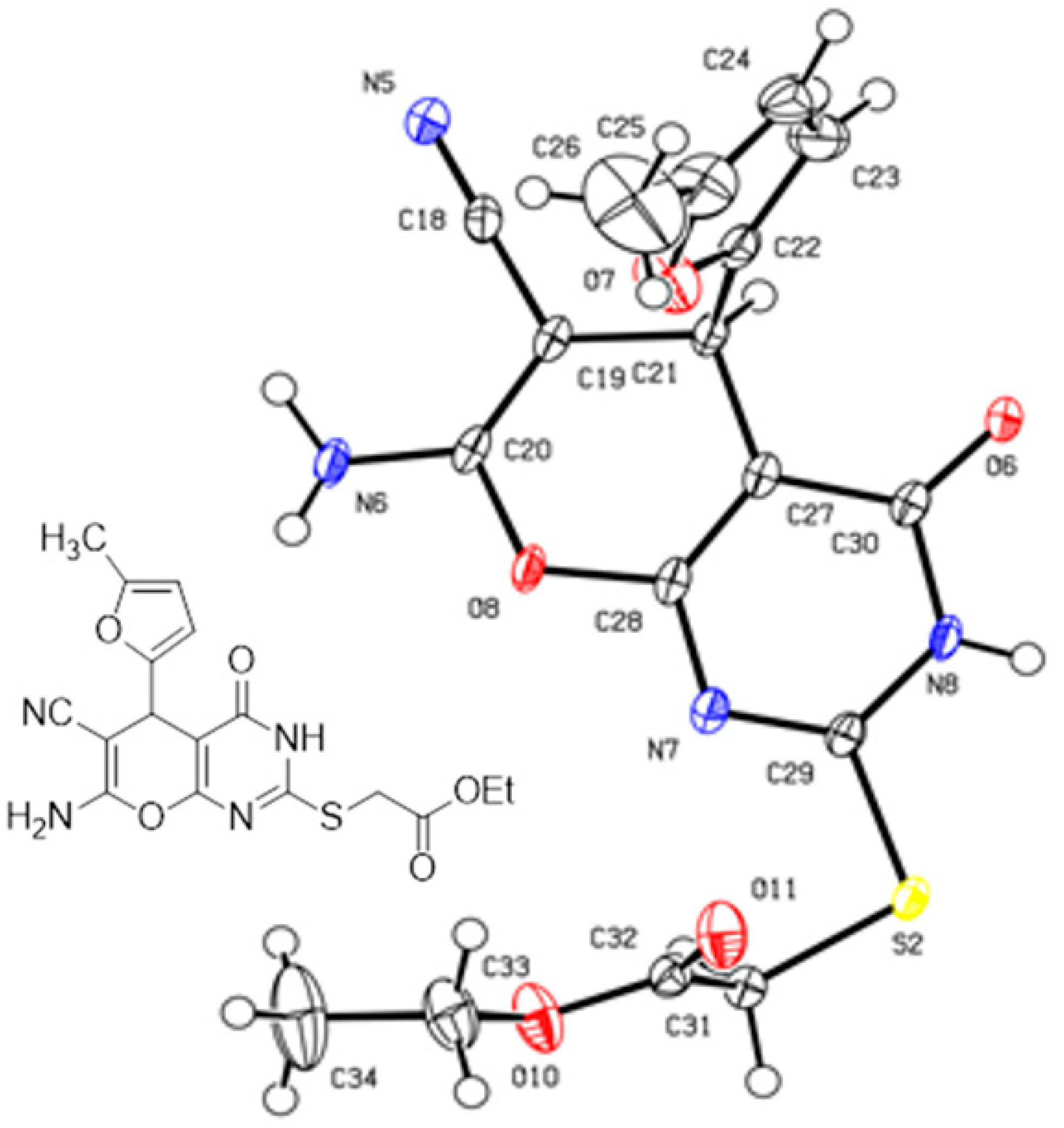
Figure 2.
The structure of compound 4 (X = OEt, R = 5-methylfur-2-yl).
3. Experimental
2-[(4-Hydroxy-6-oxo-1H-pyrimidin-2-yl)sulfanyl]acetamide (1, X = NH2)
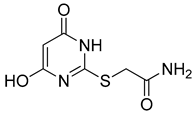
The compound was prepared according to a modified method reported in [5] as follows: 2.88 g (0.02 mol) of thiobarbituric acid 2, 0.8 g (0.02 mol) of sodium hydroxide and 30 mL of water were mixed together. The resulting cloudy orange solution was filtered through a paper filter. Then, 1.88 g (0.02 mol) of α-chloroacetamide was added to the clear filtrate. The solution was vigorously stirred for 30 min at a constant temperature of 50 °C and left to stand for three days. The precipitate formed was filtered off and washed with water and dried to constant weight. The resulting product 1 is a pale pink powder. The substance is insoluble in water, EtOH, AcOH, ethyl acetate, and well soluble in DMF when heated. The yield was 62%.
2-[(4-Hydroxy-6-oxo-1H-pyrimidin-2-yl)sulfanyl]acetic acid (1, X = OH)
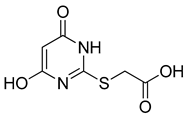
The compound was prepared according to a modified method reported in [5] as follows: 0.96 g (0.024 mol) of sodium hydroxide and 3.46 g (0.024 mol) of thiobarbituric acid 2 were dissolved in 100 mL of water. The resulted solution had a pH value of 8. Furthermore, 0.96 g (0.024 mol) of sodium hydroxide was dissolved in 100 mL of water, then 2.27 g (0.024 mol) of monochloroacetic acid was added. To the prepared aqueous solution of sodium chloroacetate, sodium thiobarbiturate solution was added dropwise through a paper filter. The reaction mixture was stirred for 15 min at a constant temperature of 50 °C, and left overnight. Then, diluted hydrochloric acid (10 mL of HCl + 20 mL of dist. H2O) was added dropwise to the reaction mixture to adjust pH to 2. The precipitate was filtered off and dried to constant weight. The product was a colorless fine crystalline powder. The compound is poorly soluble in water and EtOH, but well soluble in DMF upon heating. The yield was 30%.
2-[(7-Amino-5-(4-chlorophenyl)-6-cyano-4-oxo-4,5-dihydro-3H-pyrano[2,3-d]pyrimidin-2-yl)thio]acetamide (4, R = 4-ClC6H4, X = NH2)
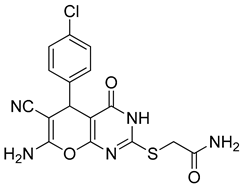
A round-bottom flask was charged with 15 mL of EtOH, 0.28 g (0.002 mol) of 4-chlorobenzaldehyde, 0.13 g (0.002 mol) of malononitrile and one drop of base (triethylamine or morpholine). The mixture was stirred until completion of the reaction and the formation of a white precipitate of dinitrile 3. To the resulting suspension 2-[(4-hydroxy-6-oxo-1H-pyrimidin-2-yl)sulfanyl]acetamide 1 (0.2 g, 0.001 mol) and 3 drops of morpholine were added. The reaction mixture was heated under reflux until the reaction was completed (control by TLC, precipitation). The formed precipitate was filtered off and dried to a constant weight. The product 4 is light yellow powder. The substance is insoluble in water and EtOH, but well soluble in DMF when heated. The yield was 23%.
Author Contributions
Conceptualization, V.V.D.; methodology, V.V.D. and D.T.T.; analysis, N.A.A. and I.V.A.; synthesis, D.T.T. and D.D.G.; writing—original draft preparation, V.V.D.; writing—review and editing, V.V.D.; supervision, V.V.D.; funding acquisition, V.V.D. All authors have read and agreed to the published version of the manuscript.
Funding
The research was carried out with the financial support of the Kuban Science Foundation, scientific project No. MFI-20.1-26/20.
Institutional Review Board Statement
Not applicable.
Informed Consent Statement
Not applicable.
Data Availability Statement
Not applicable.
Conflicts of Interest
The authors declare no conflict of interest.
References
- Shestopalov, A.M.; Emelyanova, Y.M. Synthesis and Biological Activity of Substituted 2-amino-4H-Pyrans/Selected Methods of Synthesis and Modification of Heterocycles; Springer Nature: Basingstoke, UK, 2003; Volume 2. [Google Scholar]
- Litvinov, Y.M.; Shestopalov, A.M. Synthesis, structure, chemical reactivity and practical significance of 2-amino-4H-pyrans. Adv. Heterocycl. Chem. 2011, 103, 175–260. [Google Scholar]
- Sharanin, Y.A.; Goncharenko, M.P.; Litvinov, V.P. Reactions of carbonyl compounds with α, β-unsaturated nitriles as a convenient pathway to carbo-and heterocycles. Russ. Chem. Rev. 1998, 67, 393–422. [Google Scholar] [CrossRef] [Scilit]
- Moskvin, A.V.; Reznikova, N.R.; Ivin, B.A. Condensation of hydroxypyrimidines with carbonyl compounds. I. Barbituric acids. Russ. J. Org. Chem. 2002, 4, 487–498. [Google Scholar]
- Fedorova, E.V.; Meshcheryakov, M.P.; Ganina, M.B.; Moskvin, A.V.; Ivin, B.A. Azoles and Azines: CXIX. Alkylation of 5,5′-(4-nitrobenzylidene)bis(2-thiobarbituric) acid and 5-(4-nitrophenyl)-2,8-dithioxo-5,7,8,9-tetrahydro-2H-pyrano[2,3-d:6,5- d’]dipyrimidine-4,6(1H,3H)-dione with haloacetic acids and their esters. Russ. J. Gen. Chem. 2004, 74, 128–133. [Google Scholar] [CrossRef] [Scilit]
Publisher‡s Note: MDPI stays neutral with regard to jurisdictional claims in published maps and institutional affiliations. |
© 2021 by the authors. Licensee MDPI, Basel, Switzerland. This article is an open access article distributed under the terms and conditions of the Creative Commons Attribution (CC BY) license (https://creativecommons.org/licenses/by/4.0/).