


Abstract
SMK XYZ is a private school under Yayasan Pembina Pendidikan Doa Bangsa (YPPDB) which was established in 2011. The school has several expertise programs, including Software Engineering, Institutional Accounting and Finance, and Motorcycle Business Engineering. Assessing the success of a school is an important thing that greatly affects the development of students in the learning process to achieve their goals. Assessment of teachers’ work should be performed using appropriate and efficient methods. To improve teacher performance, the development of an agenda monitoring and assessment system based on the Simple Additive Weighting (SAW) method can be an effective alternative. This system is designed to assist school management in monitoring teacher activities objectively and measurably, as well as providing clear assessments based on certain criteria such as attendance, tardiness, student evaluation results, and innovation in learning. The SAW method is used to calculate the final score of teacher performance by summing up the weighted values of each normalized criterion. In this case study, the system helps decision makers to recognize the strengths and weaknesses of each teacher, so that related recommendations for competency development can be given. The implementation of this system demonstrates increased responsibility in appraisal and motivates teachers to improve their performance according to set standards.
1. Introduction
SMK XYZ is a private school under the Yayasan Pembina Pendidikan Doa Bangsa (YPPDB) that was established in 2011. The school has several skill programs, including Software Engineering, Institutional Accounting and Finance, and Motorcycle Business Engineering. Assessing the success of a school is an important thing that greatly affects the development of students in the learning process to achieve their goals. Assessment of teachers’ work should be performed using appropriate and efficient methods.
A Decision Support System (DSS) is a computer-based system used to assist decision-making in complex and unstructured situations. SPK is designed to support, not replace, decisions made by humans. According to Turban et al. (2011), SPK integrates data, analysis models, and support tools to assist decision makers in solving certain problems [1].
Teacher performance evaluation is the process of assessing a teacher’s ability, competence and performance in carrying out their duties and responsibilities. According to Permendikbud No. 16/2007, teacher performance is assessed based on four main competencies: pedagogical, professional, social, and personality [2].
Teacher performance evaluation aims to improve the quality of education by identifying teachers’ strengths and weaknesses and providing a basis for professional development [2]. In the context of education, CBMS can be used for various purposes, such as teacher performance evaluation, selection of learning methods, and management of school resources. The application of CBMS can increase objectivity and accuracy in the decision-making process. To improve teacher performance, the development of an agenda monitoring and assessment system based on the Simple Additive Weighting (SAW) method can be an effective alternative. This system is designed to assist school management in monitoring teacher activities objectively and measurably, as well as providing clear assessments based on certain criteria such as attendance, tardiness, student evaluation results, and innovation in learning. The SAW method is used to calculate the final score of teacher performance by summing the weighted values of each multi-criteria [3] that have been normalized. According to Saputra [4], the application of the SAW method in assessing teacher performance produces recommendations that assist school management in making strategic decisions, such as giving awards or determining training needs. The SAW method is an effective tool in supporting decision-making, especially in evaluating teacher performance. The application of SAW-based SPK at SMK XYZ is expected to improve the efficiency, accuracy, and objectivity of the assessment process, thus supporting the development of quality education. In this case study, the system helps decision makers to recognize the strengths and weaknesses of each teacher, so that related recommendations for competency development can be given. The implementation of this system demonstrates increased responsibility in appraisal and motivates teachers to improve their performance in accordance with established standards. The purpose of this research is to change the assessment data that is carried out manually into a computerized form that can monitor the progress of performance and assessment and provide recommendations for the best teacher using the SAW method.
2. Materials and Methods
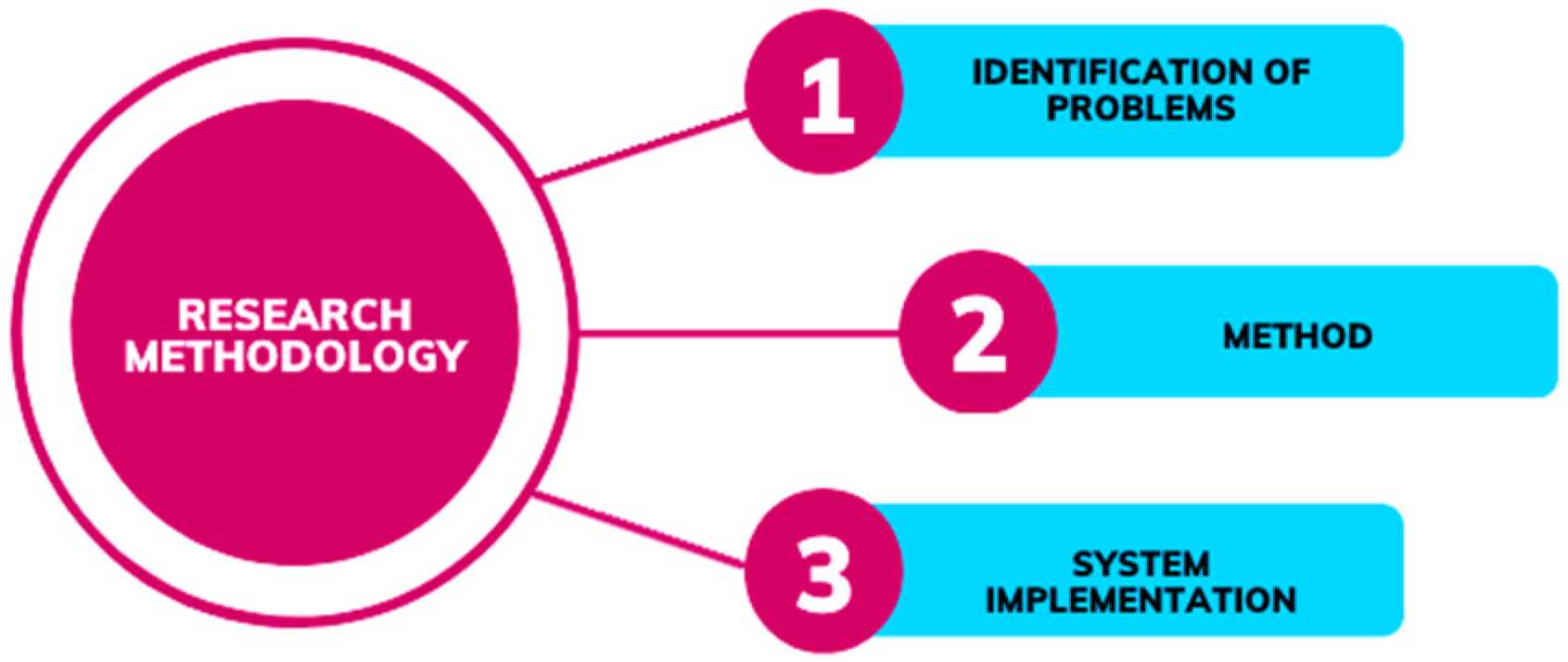
The research methodology used for the Decision Support System to Assess Teacher Performance Using the Simple Additive Weighting (SAW) Method at SMK XYZ follows a structured process. The stages include identifying and determining problems, preparing methods, collecting and analyzing data, implementing the system, and applying the SAW method to produce results. The research stages are outlined in Figure 1.
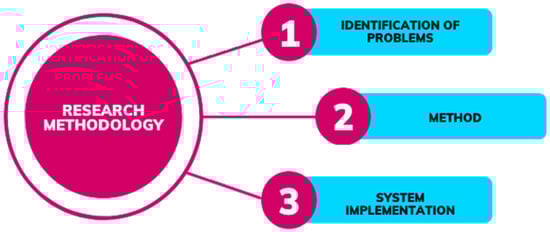
Figure 1.
Research stages.
2.1. Problem Identification
Problem identification is carried out at one of the private vocational schools in the Sukabumi Regency, which still uses manual methods for assessing teacher performance. Steps are needed to design, develop, and evaluate an effective Decision Support System using the Simple Additive Weighting (SAW) method. The application of the SAW method in selecting the best teacher and focusing on determining the weight of criteria such as attendance, administration, target achievement, problem solving, and discipline is as follows [5].
2.2. Simple Additive Weighting (SAW) Method
The method used in Simple Additive Weighting (SAW) has the following stages:
2.2.1. Data Collection
Presents methods that can be used to collect data, process it, and draw reliable conclusions [6] by taking from the case study location, SMK XYZ, the following attributes:
- Teacher Data
In teacher data, researchers take assumptions as simulation data in the calculation of the Simple Additive Weighting (SAW) method.
- Attendance Data
A collection of attendance data, part of the institution’s activity report, a component of the institution that contains attendance information, arranged and organized in such a way that it is easy to find and by interested parties when needed [7]. All activities that require information about their participants must exist, as well as the learning process. Absenteeism is often a tedious task for attendance supervisors and is part of the daily tasks that scholars must perform [8]. One of the uses of this student absence information is to calculate the likelihood of students taking tests, and another use of this attendance data is for the organizers of teaching and learning activities to measure student satisfaction with the subject and set future standards for better delivery.
- Work Program Data
According to Hans Hochholzer in E Hetzer [9], a program is a collection of real, systematic, and integrated activities carried out by one or several government agencies in cooperation with the private sector and the community in order to achieve the goals and means set. A program is prepared based on the objectives or targets to be achieved. The program planning arrangement is referred to as a work program. According to Santosa in Soesanto [10], a work program is a system of activity plans that is directed, integrated, and systematized for a predetermined time span by an organization. The work program is a guide for the organization in carrying out organizational routines. Work programs are also used as a means to realize organizational goals. In addition, one of the definitions of work programs is real programs that are possible to implement to achieve the mission of the company or organization, in line with the above views. E Hetzer [9] argues that a work program is an activity that describes in advance the part of the work to be carried out, along with instructions on how to carry it out. This activity of describing in advance also usually concerns the period of completion, the use of materials and equipment needed, the division of authority, and other responsibilities and clarity deemed necessary. According to E Hetzer, [9].
- Main Activities
In the main activity data, researchers take assumptions as simulation data on the calculation criteria for the Simple Additive Weighting (SAW) method.
2.2.2. Determination of Assessment Criteria
An objective and systematic assessment method is needed to avoid bias and provide valid results, namely by using the Simple Additive Weighting method, which is one of the methods in SPK used to solve multi-criteria problems.
2.2.3. Criteria Weight
The Simple Additive Weighting (SAW) method is known as the weighted sum approach, where each criterion is given a certain weight according to its level of importance. The final value is obtained by summing up the results of the multiplication between the weight of the criteria and the alternative value for each criterion. Criteria weights are given according to the priority of the assessment. The system must receive input weights for each of the Cognitive Domain Aspect (ARK) criteria.
2.2.4. Normalization and Ranking Process of Final Assessment
According to Fishburn [11], the SAW method has advantages in the ease in implementation, transparency, and the ability to handle both quantitative and qualitative data. The main steps in the SAW method include:
- Normalizing the decision matrix.
- Multiplying the normalized value by the weight of the criteria.
- Summing the values for each alternative.
- Determining the best alternative based on the highest value.
In the context of teacher performance evaluation, SAW can be used to assess various teacher performance criteria such as attendance, discipline, agenda completion, and participation. The final result is calculated based on the normalized weights and scores, following the process of normalizing and ranking the final assessment:
Calculations
Normalize X matrix into R Matrix based on the equation in SAW method, namely:
Description of each criterion:
: Normalized performance rating value.
: The value of the attribute that it belongs to.
: The largest value of each criterion.
: The smallest value of each criterion.
Benefit: If the largest value is the best.
Cost: If the smallest value is the best.
2.3. System Implementation
The system implementation used uses a website platform, which in the process uses waterfall development, which includes Requirement Analysis, System Design, Implementation, Testing, Deployment, and Maintenance [12]. The system that was built proves that the method can provide consistent results in accordance with predetermined criteria during the process of assessing teacher performance.
3. Results and Discussion
The following are the steps in the discussion of the Simple Additive Weighting (SAW) method along with the implementation results in the form of systems, characteristics, and elements, as well as the role of information systems [13]:
3.1. Simple Additive Weighting (SAW) Method
In the initial stage of the Simple Additive Weighting (SAW) Method, several data assumptions were made, including teacher data as shown in Table 1, attendance data as shown in Table 2, work program data as shown in Table 3, and main activity data as shown in Table 4, which are used to evaluate teacher performance.

Table 1.
Teacher data.
Table 2.
Attendance data.
Table 3.
Work program data.
Table 4.
Main activity data.
3.1.1. Determination of Assessment Criteria
Furthermore, after obtaining data as input, the next stage is determining the assessment criteria. The following assessment criteria are used in the SAW calculations, as shown in Table 5.
Table 5.
Determination of Assessment Criteria.
3.1.2. Criteria Weight
At this stage, the assessment criteria that have been determined will be given a value in the form of criteria weights, as shown in Table 6.
Table 6.
Criteria weight.
3.1.3. Normalization and Ranking Process of Final Assessment
The last stage of SAW calculation lies in the normalization process to determine the final assessment. The calculations on normalization and ranking results in the final assessment process are as follows:
- GR001
GR001.1 = 1.7
GR001.2 = = 1.9
GR001.3 = = 2.1
GR001.4 = 2.22
- GR002
GR002.1 = 1.6
GR002.2 = 2.4
GR002.3 = 2.3
GR002.4 = 2.6
- GR003
GR003.1 = 2
GR003.2 = 2.5
GR003.3 = 1.72
GR003.4 = 2.4
- GR004
GR004.1 = 2.3
GR004.2 = 1.6
GR004.3 = 1.85
GR004.4 = 2.25
- GR005
GR005.1 = 1.92
GR005.2 = 1.82
GR005.3 = 1.7
GR005.4 = 1.8
- GR006
GR006.1 = 1.8
GR006.2 = 2.1
GR006.3 = 1.9
GR006.4 = 2.2
- GR007
GR007.1 = 1.91
GR007.2 = 1.83
GR007.3 = 2.5
GR007.4 = 2.7
- GR008
GR008.1 = 1.5
GR008.2 = 2.2
GR008.3 = 2.4
GR008.4 = 1.83
- GR009
GR009.1 =2.2
GR009.2 = 1.8
GR009.3 = 2
GR009.4 = 2.1
- GR010
GR010.1 = 1.9
GR010.2 = 2
GR010.3 = 1.8
GR010.4 = 1.9
The results of the normalization calculations are presented in tabular form, specifically in the table showing the average value of the statement of criteria. The data for the average value of the criteria statements can be seen in Table 7, while the normalization process is outlined in Table 8.
Table 7.
Average Value of Statement of Criteria.
Table 8.
Normalization Process.
After the process is complete, the final stage is to examine the rankings in the teacher performance assessment data. The rankings can be seen in Table 9, while the detailed criteria ranking results are presented in Table 10.
Table 9.
Ranking.
Table 10.
Criteria ranking results.
3.2. System Implementation
After the SAW calculation, the next stage is the implementation of the calculation results into the development system. At the implementation stage of the Decision Support System for Assessing Teacher Performance Using the Simple Additive Weighting (SAW) Method at SMK XYZ, a web-based system has been successfully developed. The following are the results of the implementation in the form of systems, characteristics, and elements, as well as the role of information systems [13]:
3.2.1. Database Design
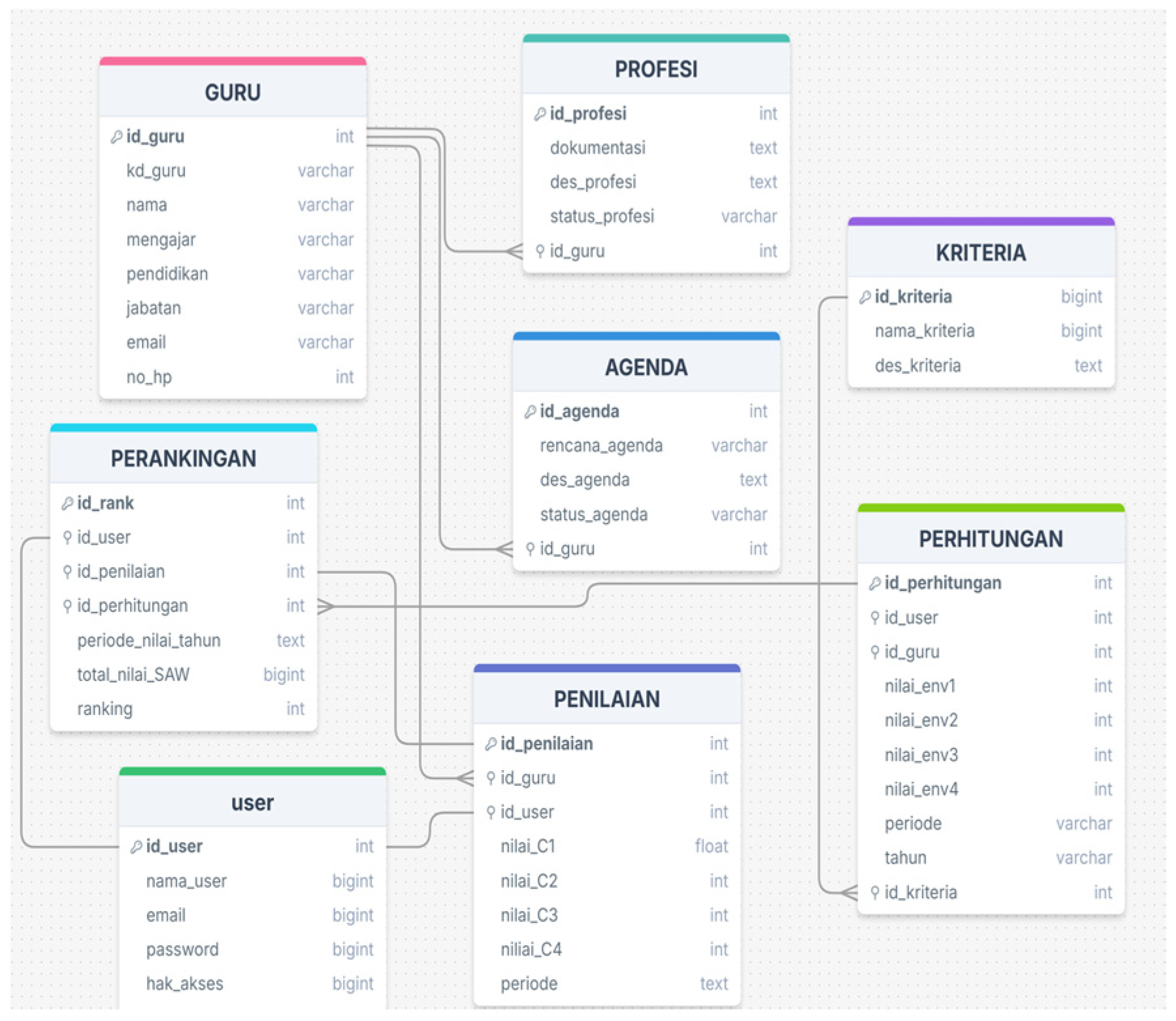
Database design at this stage of the research is the process of designing the structure and organization of the database to support the efficient storage, management, and retrieval of data. A good database design ensures that data can be accessed, manipulated, and managed in an optimal way, while minimizing redundancy (repetition of data) and maintaining data integrity. The database design created by the researcher is shown in Figure 2.
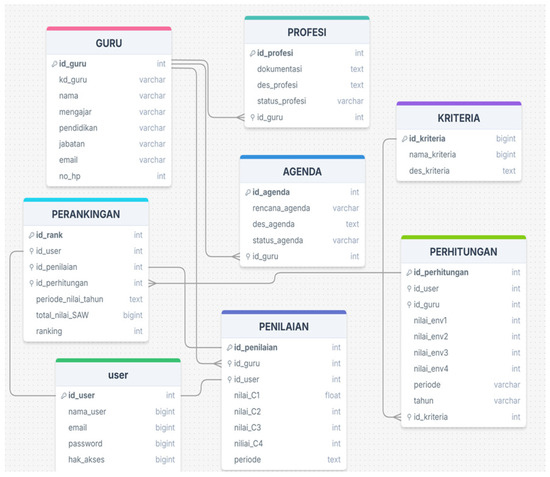
Figure 2.
Database design.
3.2.2. Menu Display
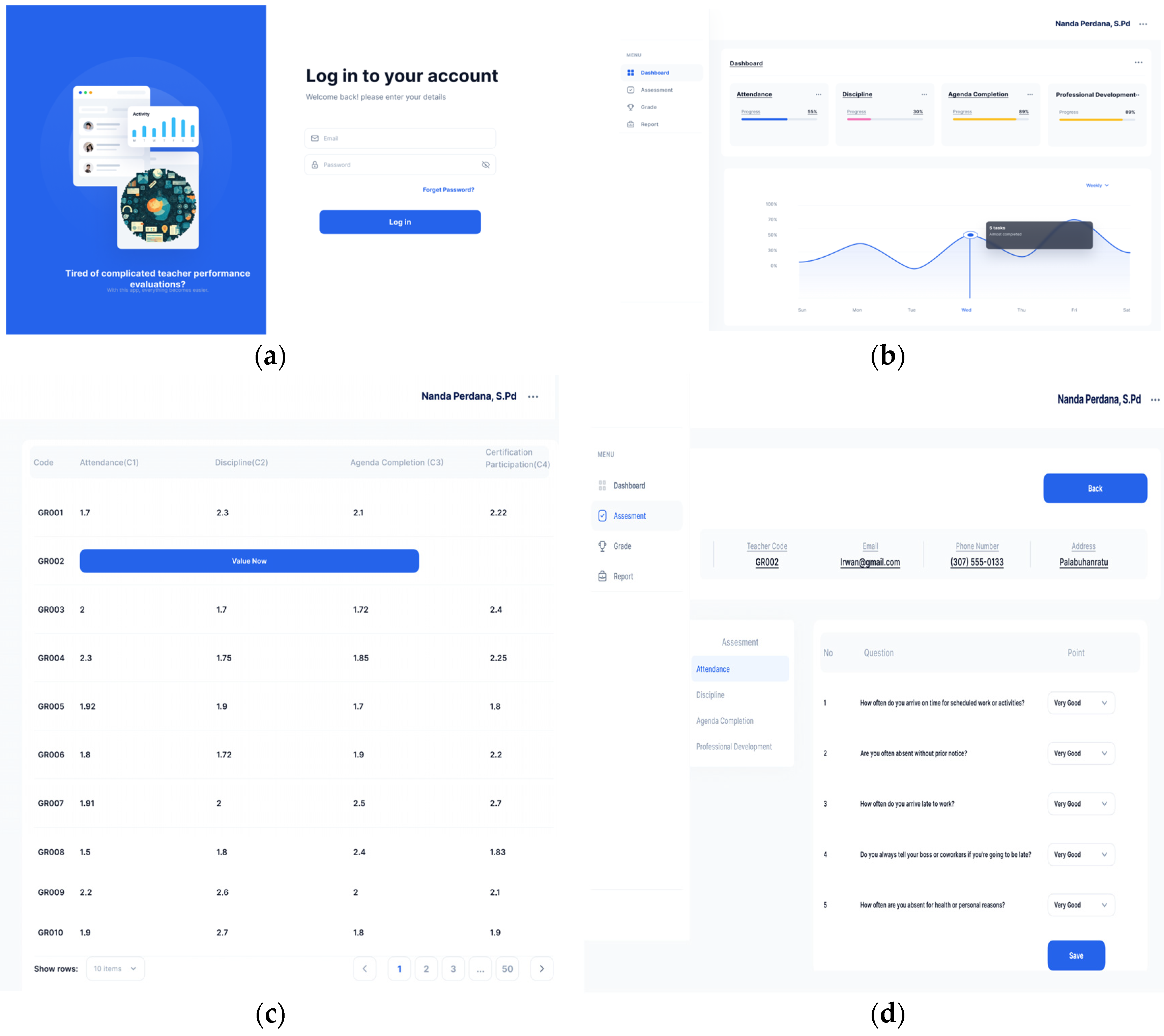
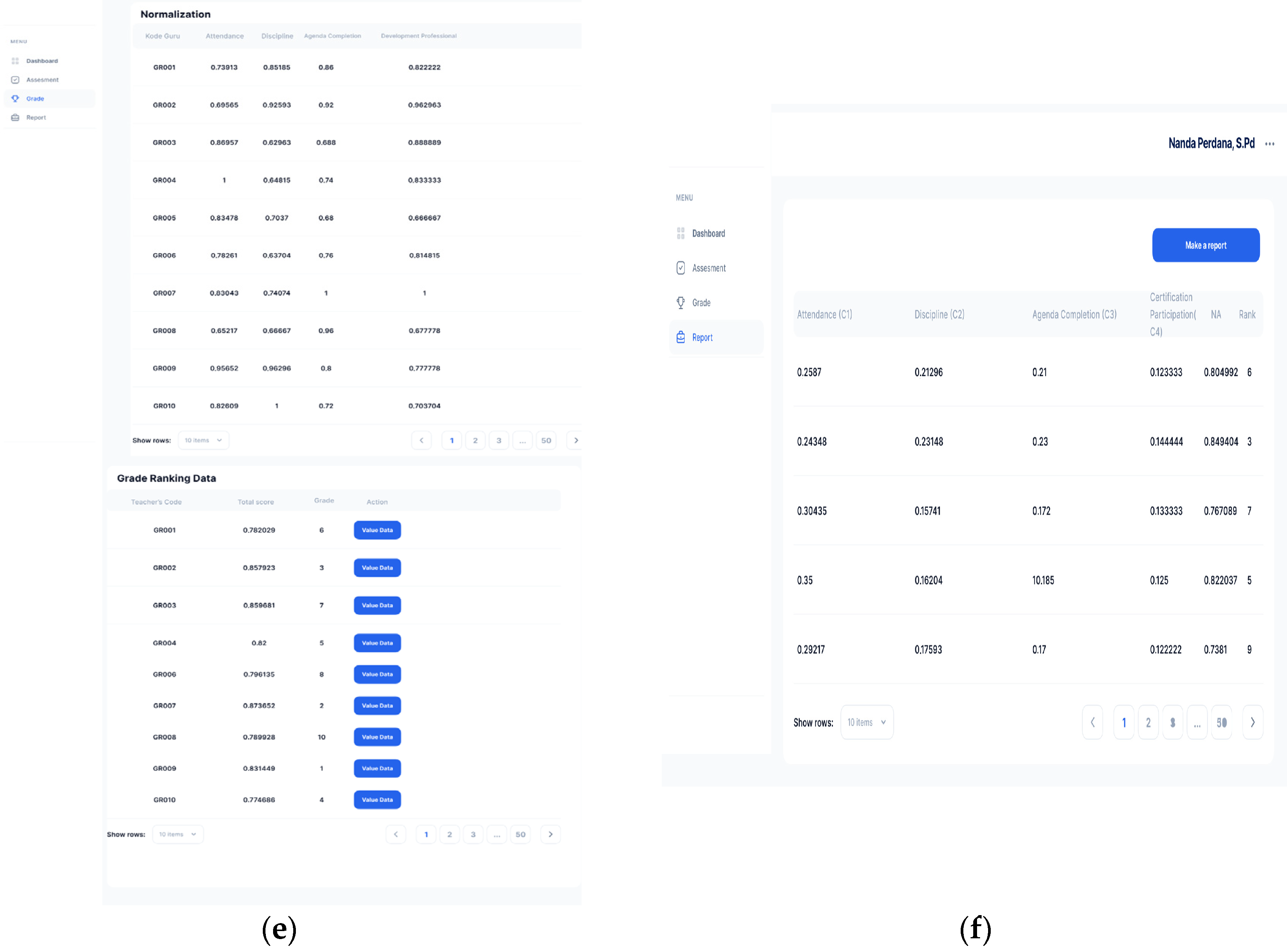
This menu page is designed with a focus on user-friendliness and professionalism. This view of the application’s main dashboard is designed to monitor teacher performance in real-time. Users can view activity progress, evaluate performance indicators (attendance, discipline, agenda completion, and professional development), and use navigation to explore other features such as ratings, rankings, and reports. This application is very helpful to provide a complete picture and simplify teacher performance management at SMK XYZ. The following views of the application are shown in Figure 3.
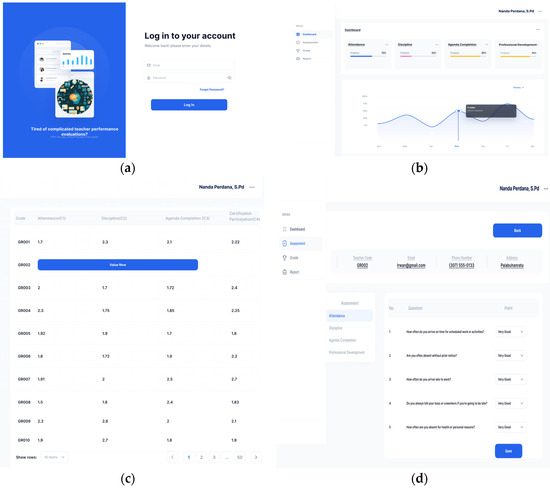
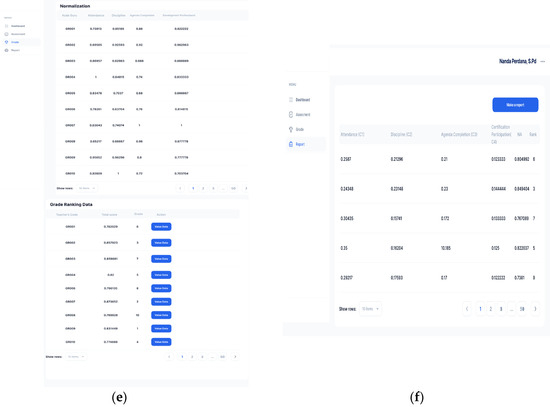
Figure 3.
(a) Login page, (b) Dashboard page, (c) Assessment dashboard page, (d) Attendance assessment page, (e) Rank page, and (f) Report page.
4. Discussion
Authors should discuss the results and how they can be interpreted from the perspective of previous studies and of the working hypotheses. The findings and their implications should be discussed in the broadest context possible. Future research directions may also be highlighted.
5. Conclusions
The main conclusion of this research is that this ranking shows that the Decision Support System base method provides an objective ranking based on the weights and values of each criterion. With these results, GR009 can be considered as the best performing candidate in the context of this evaluation. GR009 managed to excel in all the criteria assessed (C1 to C3), thus obtaining the highest score and being ranked first. The difference in scores between first and second place was significant (Simple Additive Weighting (SAW) 0.10839704), demonstrating the consistent superiority of GR009 over the other participants.
Author Contributions
Conceptualization, A.F. and A.S.; methodology, A.S. and R.N.S.; software, A.S. and A.I.W.; validation, A.F., A.S. and R.N.S.; formal analysis, R.N.S. and A.I.W.; investigation, A.S. and R.N.S.; resources, A.F.; data curation, A.I.W.; writing—original draft preparation, A.S., R.N.S. and A.I.W.; writing—review and editing, A.F.; visualization, A.S. and A.I.W.; supervision, A.F.; project administration, A.F.; funding acquisition, A.F. All authors have read and agreed to the published version of the manuscript.
Funding
This research received no external funding.
Institutional Review Board Statement
Not applicable.
Informed Consent Statement
Not applicable.
Data Availability Statement
The data presented in this study are available on request from the corresponding author. The data are not publicly available due to privacy and confidentiality restrictions.
Conflicts of Interest
The authors declare no conflict of interest.
References
- Turban, E.; Sharda, R.; Delen, D. Decision Support and Business Intelligence Systems, 9th ed.; Pearson Education: Upper Saddle River, NJ, USA, 2011. [Google Scholar]
- Kementerian Pendidikan Nasional Republik Indonesia. Peraturan Menteri Pendidikan Nasional No. 16 Tahun 2007 Tentang Standar Kualifikasi Akademik dan Kompetensi Guru; Kementerian Pendidikan Nasional: Jakarta, Indonesia, 2007. [Google Scholar]
- Kusumadewi, S.; Hartati, S.; Harjoko, A.; Wardoyo, R. Fuzzy Multi-Attribute Decision Making (Fuzzy MADM); Graha Ilmu: Yogyakarta, Indonesia, 2006. [Google Scholar]
- Saputra, R.; Anggraini, W.; Wijaya, T. Implementation of SAW method for decision support system for selection of outstanding teachers. J. Inf. Technol. Comput. Sci. 2020, 7, 45–53. [Google Scholar]
- Sulistyani, W.; Hasanah, H.; Widyaningsih, P. Decision support system for selection of best employee performance with simple additive weighting method. Digit. Transform. Technol. 2023, 1, 1–8. [Google Scholar]
- Sugiyono. Quantitative, Qualitative, and R&D Research Methods; Alfabeta: Bandung, Indonesia, 2020. [Google Scholar]
- Malah, A.; Yulianto, M.; Putra, F. Education Management: Theory and Practice; Educational Publisher: Jakarta, Indonesia, 2022. [Google Scholar]
- Mulia, S. Effective Learning Strategies in the Education System; Education Science Publisher: Jakarta, Indonesia, 2020. [Google Scholar]
- Hetzer, E. Program and Project Management; Pustaka Grafika: Jakarta, Indonesia, 2012. [Google Scholar]
- Soesanto, H. Company and Organization Management; Bumi Aksara: Jakarta, Indonesia, 2011. [Google Scholar]
- Fishburn, P.C. Additive utilities with incomplete product sets: Applications to priorities and assignments. Oper. Res. Soc. Am. 1967, 15, 537–548. [Google Scholar] [CrossRef]
- GeeksforGeeks. Waterfall Model—Software Engineering. Available online: https://www.geeksforgeeks.org/waterfall-model/ (accessed on 2 September 2025).
- Kadir, A.; Triwahyuni, T. Introduction to Information Systems; Andi Offset: Yogyakarta, Indonesia, 2020. [Google Scholar]
Disclaimer/Publisher’s Note: The statements, opinions and data contained in all publications are solely those of the individual author(s) and contributor(s) and not of MDPI and/or the editor(s). MDPI and/or the editor(s) disclaim responsibility for any injury to people or property resulting from any ideas, methods, instructions or products referred to in the content. |
© 2025 by the authors. Licensee MDPI, Basel, Switzerland. This article is an open access article distributed under the terms and conditions of the Creative Commons Attribution (CC BY) license (https://creativecommons.org/licenses/by/4.0/).