


Abstract
The emergence of multi-access edge computing (MEC) has brought about significant advancements in application design and deployment by providing computing resources at the network’s edge. MEC provides computing resources on the fringes of the network, allowing for near-real-time data processing and fast responses to user requests. In this context, scheduling plays a crucial role in offloading decisions in multi-access edge computing. The motivations for scheduling are to improve the quality of the experience, reduce latency, and increase performance. In this paper, we explore the various scheduling techniques available for MEC systems, including static scheduling, dynamic scheduling, heuristics, meta-heuristics and hybrid scheduling. We analyze the advantages and disadvantages of each technique and discuss how they can be used to optimize the performance of MEC applications. We also present a case study of an MEC system and demonstrate how the various scheduling techniques can be used to maximize its performance. Finally, we address both the challenges and prospects of MEC scheduling and suggest directions for future research.
1. Introduction
An edge-to-center trend may be seen in the current state of traditional cloud computing. Multi-access edge computing (MEC) has emerged as a pivotal paradigm to meet the escalating demand for low-latency, high-throughput services in contemporary computing landscapes. As computing resources move closer to end-users and devices, the need for efficient task scheduling becomes paramount. The exploration of multi-task scheduling in multi-access edge computing (MEC) is motivated by the increasing demand for efficient resource utilization in modern computing environments. Multi-task scheduling involves allocating resources to multiple tasks with varying resource requirements and priorities. In this literature review, we will discuss several research papers that address multi-task scheduling in MEC. We will discuss various scheduling algorithms, including heuristic, optimization, and machine-learning-based approaches. This paper also addresses the difficulties and potential advantages in this field [1]. It considers the balance between energy consumption and task completion time and is shown to outperform heuristic algorithms [2]. The multi-objective optimization approach considers both task completion time and energy consumption. The approach employs dynamic voltage and frequency scaling to reduce energy consumption and is shown to outperform other scheduling algorithms [3]. A deep reinforcement learning-based approach was introduced for multi-task scheduling in MEC. The approach learns to make optimal scheduling decisions by observing the network environment and is shown to outperform other scheduling algorithms [4]. Due to its plethora of resources, cloud computing is ideally suited to overcome such obstacles and provide a smooth platform [5,6].
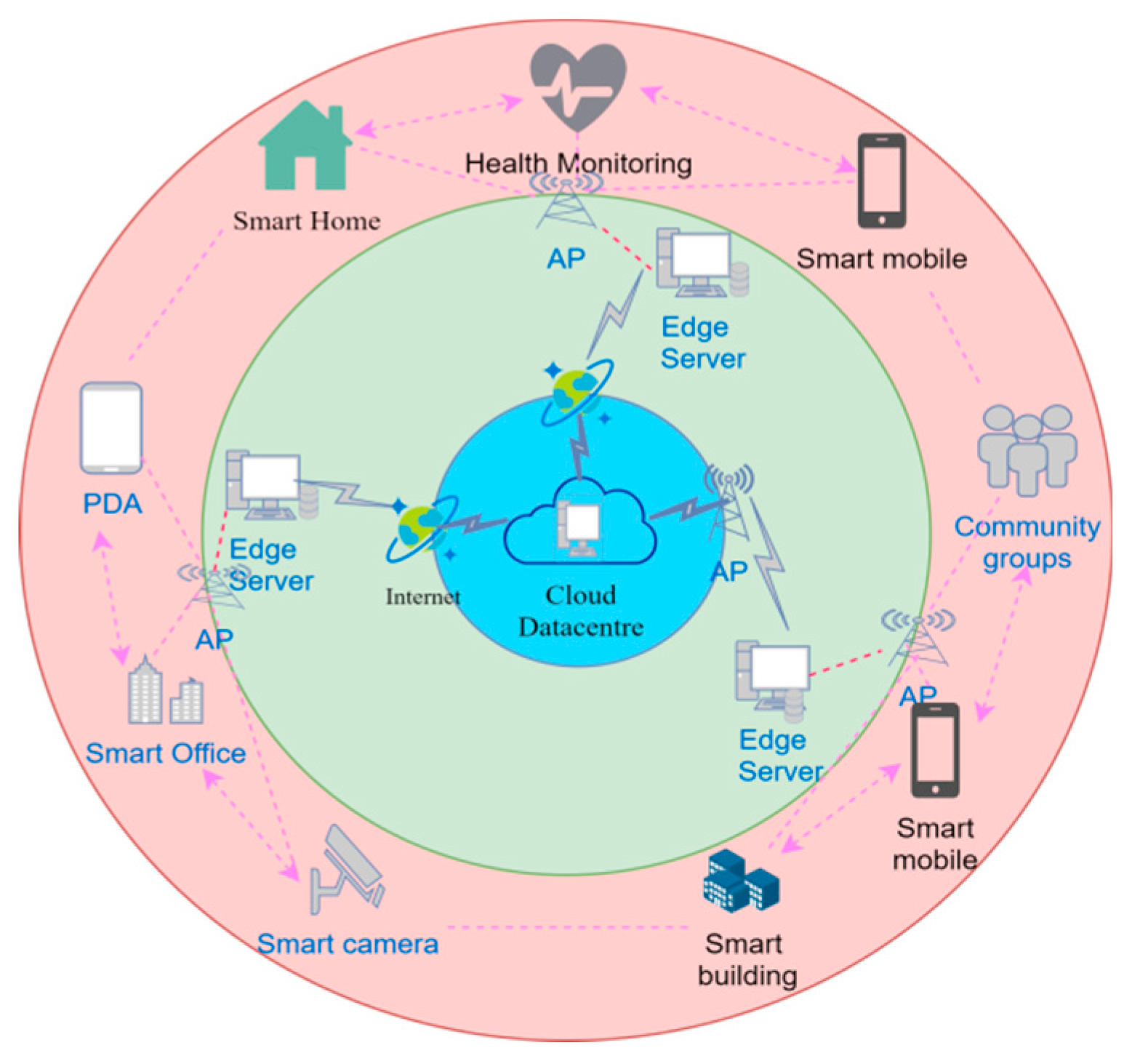
The planning of tasks should be assigned either in the cloud or at the edge, and scheduling is crucial to the effectiveness of this edge cloud collaboration. Figure 1, below, depicts the edge cloud’s architecture. The three tiers are the device tier, edge tier, and cloud tier. When local resources are inadequate, each connected device in the device layer first computes its work locally before transmitting it to the cloud. The process of allocating resources to the specific user who requests service is known as scheduling. It is still challenging to decide whether to schedule a certain job in the edge cloud at the edge or in the cloud to optimize resource utilization. The following are the study’s main contributions:
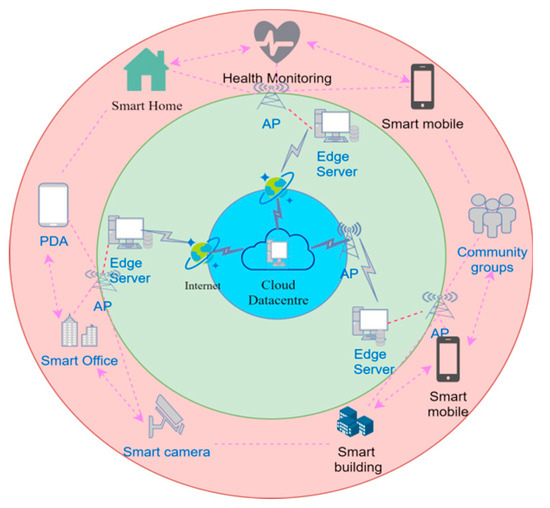
Figure 1.
The edge cloud computing scenario.
- Offer a thorough analysis of scheduling tasks in edge-cloud computing.
- Develop a clear taxonomy to categorize and classify the different multitask scheduling strategies in MEC.
- Investigate and contrast the present task scheduling techniques.
- Explore forthcoming research issues and emerging concerns in multitask scheduling for MEC.
The remaining sections are arranged as follows: Section 2 discusses the related work of various studies. Section 3 specifies the details of issues and challenges in edge cloud systems. Section 4 outlines the various limitations and QoS criteria that go along with the task scheduling categorization methods used in edge computing. The summary of scheduling algorithms with QoS parameters is provided in Section 5. Section 6 is the analysis, and is the critical study of this paper. Future directions are described in Section 7, which follows. Finally, Section 8 provides a conclusion.
2. Related Work
Task offloading and scheduling techniques are a key strategy for overcoming the edge device processing, storage and power resource limitations in an IoT network based on edge computing. To speed up job processing, conserve energy and shorten reaction times, the edge device can offload some or all of the computing activities to an edge computing server. The crucial aspect of scheduling in edge cloud is still in its embryonic stage and requires extensive research. In this section, we will explore several survey studies relevant to scheduling in edge cloud environments, which can provide valuable insights for our survey. Wang et al. [7] have presented an edge cloud perspective in which task scheduling techniques consider factors such as task types, user mobility, cooperativeness and multi-objective functions, including response time, energy consumption and load balancing.
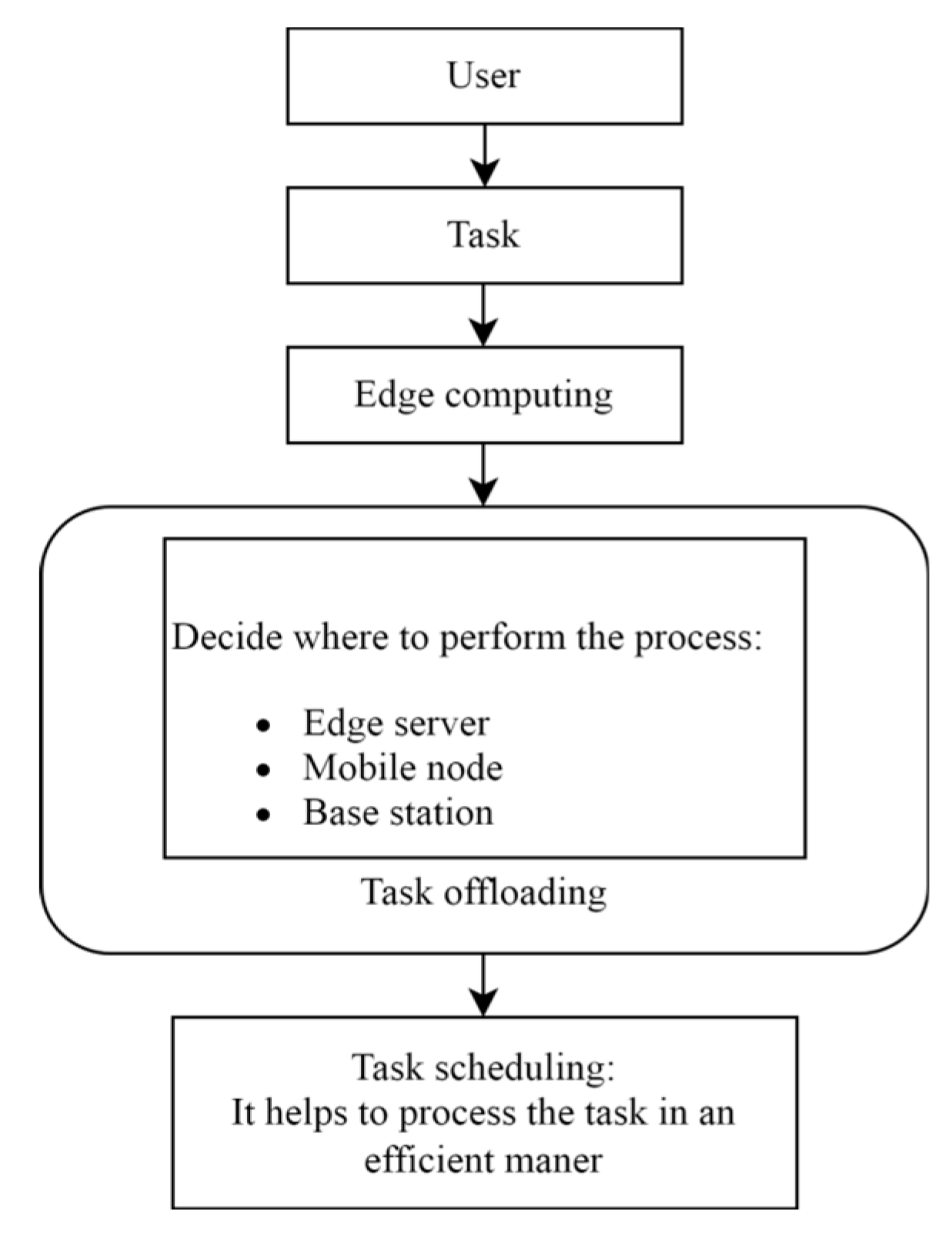
In Figure 2, the task flow process in edge computing is illustrated.
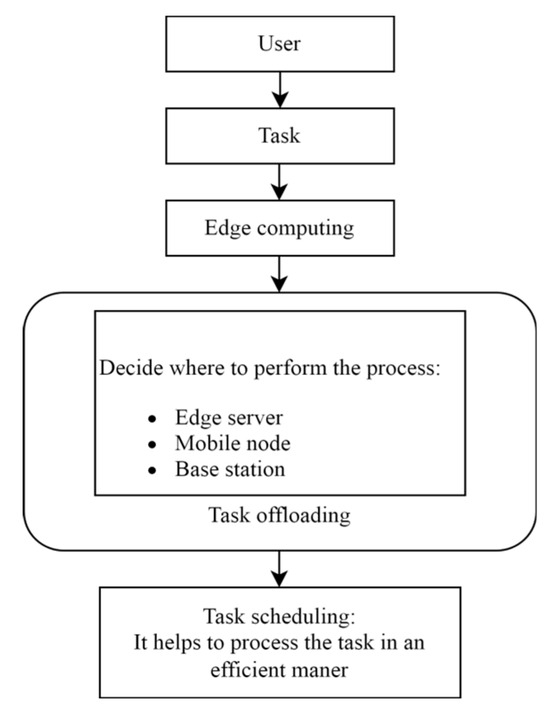
Figure 2.
Task flow process in edge computing.
Requests made by users are known as jobs. A job encompasses a set of tasks that can include inputting data into the system, processing it, utilizing specific infrastructure, storing data in designated data centers or delivering results to end users.
3. Multi-Task Scheduling in MEC: Issues and Challenges
Scheduling problems in edge cloud have been gaining significant attention in recent years. This problem deals with allocating resources in edge cloud computing environments, where the resources are scattered across a distributed control plane. One key challenge in edge cloud scheduling is ensuring efficient resource utilization while providing low-latency services. Various approaches have been proposed to address the scheduling problems in edge cloud systems. These include heuristic algorithms, meta-heuristic algorithms and hybrid algorithms. Heterogeneous and Dynamic Edge Environments: The MEC environment consists of heterogeneous edge devices with varying computing capabilities and resource availability. Moreover, the dynamic nature of edge networks poses challenges for efficient multi-task scheduling [8]. Real-Time and Latency Requirements: Many MEC applications have stringent latency requirements, especially for real-time and latency-sensitive tasks such as augmented reality (AR) and autonomous driving. Scheduling multiple tasks while meeting these real-time constraints is a significant challenge [9]. Energy Efficiency and Battery Life: Energy consumption is a critical concern in MEC, as edge devices are often resource-constrained and powered by batteries. Balancing task execution time and energy consumption poses a significant challenge when aiming to achieve energy-efficient multi-task scheduling [10]. Mobility and Task Migration: Edge devices in MEC are often mobile, and tasks may need to be migrated between different edge servers as devices move. Mobility-aware predictive schemes based on genetic algorithms can significantly reduce the offloading failure rate of high-mobility users [11].
These challenges and issues highlight the complexities involved in multi-task scheduling in mobile edge computing. Researchers are actively addressing these challenges to develop efficient scheduling algorithms, optimization techniques, and frameworks that can enhance task allocation and resource management in MEC environments.
4. Analysis of Scheduling Methods in Edge Cloud: Task Scheduling Techniques in Edge Computing
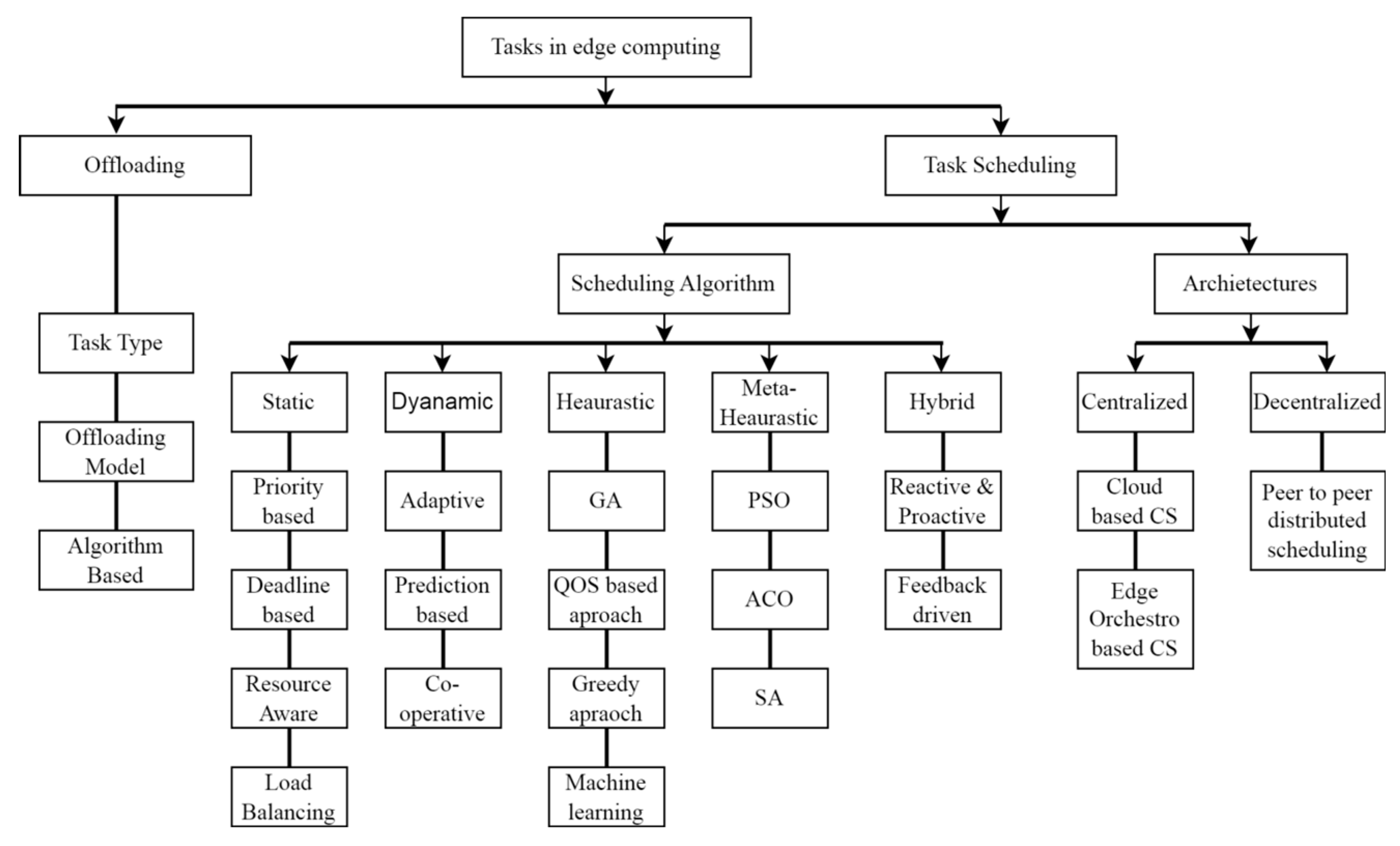
In the context of edge computing, task scheduling involves the allocation of computational tasks to the accessible edge devices within a network. The objective is to maximize resource utilization, minimize task execution time and improve the overall performance of the system. Figure 3 discusses the taxonomy of task-scheduling techniques used in edge computing. Data-Proximity-Aware Task Scheduling: Data-proximity-aware scheduling algorithms in edge computing optimize task placement based on physical location and network topology, ensuring efficient processing near data sources to minimize latency and reduce bandwidth usage [12]. Heuristic algorithm: This aims to allocate tasks to the optimal sBS (small Base Station) in a mobile edge computing environment. The algorithm considers task details, user mobility and network constraints as a constraint satisfaction problem. The algorithm proceeds by sending a message from users to the central MEN controller, which allocates each task to an sBS where the delay is the shortest. During the allocation procedure, the system also takes user mobility prediction into account [13]. Genetic algorithm: Addressing the challenges faced by traditional cloud computing in providing storage and task computing services in the power grid. The genetic algorithm has a beneficial effect on energy consumption and load balancing and reduces latency. It uses genetic operations like crossover and mutation to find near-optimal solutions for resource allocation and task scheduling [14].
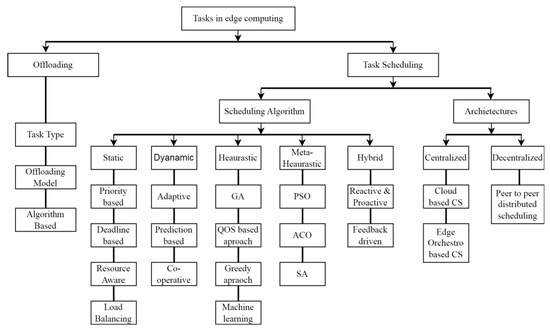
Figure 3.
Task scheduling techniques in edge computing.
Greedy Algorithm: The greedy algorithm is used to select the best action at each time slot based on the current state of the system without considering the impact of this decision on future states. While this approach may not always lead to the globally optimal solution, it can be an effective way to make decisions in real-time systems where the state of the system is constantly changing [15]. Centralizing and Decentralized Algorithm: In centralized algorithms, a central entity is responsible for making decisions and coordinating the actions of all nodes in the network. The purpose of decentralizing the algorithm is to reduce the computational and communication overhead associated with centralized algorithms with the help of distributed decision-making and coordination tasks among the nodes in the network [16]. Simulated Annealing: Its ability to escape local optima and explore the solution space makes it particularly useful in complex and dynamic edge computing environments where traditional optimization approaches may struggle to find optimal solutions [17].
5. Summary of Scheduling Algorithm with QoS Parameters
In Table 1, we mention various scheduling algorithms and QoS parameters and their constraints.

Table 1.
Reviews and remarks.
6. Task Scheduling: An In-Depth Analysis
The findings emphasize the importance of effective scheduling in maximizing the performance and responsiveness of MEC systems, ultimately paving the way for further advancements in this dynamic field. A proficient analysis elucidates the importance of load balancing with energy awareness in optimizing the allocation of resources and improving system performance within mobile edge computing (MEC) environments. Additionally, the paper addresses the challenges and prospects of MEC scheduling and suggests directions for future research.
7. Future Directions
In the realm of multi-access edge computing (MEC), several promising future research directions are emerging. Dynamic task offloading and migration algorithms are a critical field for research because they can adjust in real time to changing network circumstances and resource availability. Advanced machine learning techniques can be harnessed to enhance scheduling decisions by predicting resource demands and user preferences. With the proliferation of diverse edge devices, future research aims to develop scheduling algorithms that can efficiently harness resources across a wide spectrum of devices, including IoT sensors with proper security.
8. Conclusions
The emergence of multi-access edge computing (MEC) has revolutionized the way applications are designed and deployed. However, efficient scheduling techniques are essential to effectively manage distributed computing resources in MEC systems. This paper has explored various scheduling techniques, including static, dynamic and hybrid scheduling, and has analyzed their advantages and disadvantages. By conducting a case study, the paper exemplifies the utilization of these scheduling techniques to enhance the performance of multi-access edge computing (MEC) applications. Additionally, the paper has highlighted the challenges and opportunities in MEC scheduling and has suggested future research directions.
Author Contributions
Conceptualization, J.A. and B.K.; methodology, J.A. and B.K.; investigation, J.A. and B.K.; writing—original draft preparation, J.A. and B.K.; writing—review and editing, J.A. and B.K. All authors have read and agreed to the published version of the manuscript.
Funding
This research received no external funding.
Institutional Review Board Statement
Not applicable.
Informed Consent Statement
Not applicable.
Data Availability Statement
Data are contained within the article.
Conflicts of Interest
Authors declare no conflicts of interest.
References
- Islam, A.; Debnath, A.; Ghose, M.; Chakraborty, S. A survey on task offloading in multi-access edge computing. J. Syst. Archit. 2021, 118, 102225. [Google Scholar] [CrossRef]
- Lin, B.; Lin, X.; Zhang, S.; Wang, H.; Bi, S. Computation task scheduling and offloading optimization for collaborative mobile edge computing. In Proceedings of the 2020 IEEE 26th International Conference on Parallel and Distributed Systems (ICPADS), Hong Kong, China, 2–4 December 2020; IEEE: Piscataway, NJ, USA, 2020; pp. 728–734. [Google Scholar]
- Ajmal, M.S.; Iqbal, Z.; Khan, F.Z.; Bilal, M.; Mehmood, R.M. Cost-based energy efficient scheduling technique for dynamic voltage and frequency scaling system in cloud computing. Sustain. Energy Technol. Assess. 2021, 45, 101210. [Google Scholar]
- Sheng, S.; Chen, P.; Chen, Z.; Wu, L.; Yao, Y. Deep reinforcement learning-based task scheduling in IoT edge computing. Sensors 2021, 21, 1666. [Google Scholar] [CrossRef] [PubMed]
- Boukerche, A.; Guan, S.; Grande, R.E.D. Sustainable offloading in mobile cloud computing: Algorithmic design and implementation. ACM Comput. Surv. (CSUR) 2019, 52, 1–37. [Google Scholar] [CrossRef]
- Qi, Q.; Wang, J.; Ma, Z.; Sun, H.; Cao, Y.; Zhang, L.; Liao, J. Knowledge-driven service offloading decision for vehicular edge computing: A deep reinforcement learning approach. IEEE Trans. Veh. Technol. 2019, 68, 4192–4203. [Google Scholar] [CrossRef]
- Wang, J.; Pan, J.; Esposito, F.; Calyam, P.; Yang, Z.; Mohapatra, P. Edge cloud offloading algorithms: Issues, methods, and perspectives. ACM Comput. Surv. (CSUR) 2019, 52, 1–23. [Google Scholar] [CrossRef]
- Li, N.; Yan, J.; Zhang, Z.; Martinez, J.F.; Yuan, X. Game theory based joint task offloading and resource allocation algorithm for mobile edge computing. In Proceedings of the 2020 16th International Conference on Mobility, Sensing and Networking (MSN), Tokyo, Japan, 17–19 December 2020; IEEE: Piscataway, NJ, USA, 2020; pp. 791–796. [Google Scholar]
- Liu, S.; Yu, Y.; Guo, L.; Yeoh, P.L.; Vucetic, B.; Li, Y. Adaptive delay-energy balanced partial offloading strategy in Mobile Edge Computing networks. Digit. Commun. Netw. 2022, 9, 1310–1318. [Google Scholar] [CrossRef]
- Fu, Y.; Yang, X.; Yang, P.; Wong, A.K.; Shi, Z.; Wang, H.; Quek, T.Q. Energy-efficient offloading and resource allocation for mobile edge computing enabled mission-critical internet-of-things systems. EURASIP J. Wirel. Commun. Netw. 2021, 2021, 26. [Google Scholar] [CrossRef]
- Li, H.; Sun, Y.; Zhang, Y.; Jin, B.; Wang, Z.; Wu, W.; Fang, C. Mobility-aware Predictive Computation Offloading and Task Scheduling for Mobile Edge Computing Networks. In Proceedings of the 2021 7th International Conference on Computer and Communications (ICCC), Chengdu, China, 10–13 December 2021; IEEE: Piscataway, NJ, USA, 2021; pp. 1349–1354. [Google Scholar]
- Sahni, Y.; Cao, J.; Yang, L. Data-aware task allocation for achieving low latency in collaborative edge computing. IEEE Internet Things J. 2018, 6, 3512–3524. [Google Scholar] [CrossRef]
- Maray, M.; Shuja, J. Computation offloading in mobile cloud computing and mobile edge computing: Survey, taxonomy, and open issues. Mob. Inf. Syst. 2022, 2022, 1121822. [Google Scholar] [CrossRef]
- Nan, Z.; Wenjing, L.; Zhu, L.; Zhi, L.; Yumin, L.; Nahar, N. A New Task Scheduling Scheme Based on Genetic Algorithm for Edge Computing. Comput. Mater. Contin. 2022, 71, 843–854. [Google Scholar]
- Sun, Z.; Nakhai, M.R. An online learning algorithm for distributed task offloading in multi-access edge computing. IEEE Trans. Signal Process. 2020, 68, 3090–3102. [Google Scholar] [CrossRef]
- Dong, P.; Ning, Z.; Obaidat, M.S.; Jiang, X.; Guo, Y.; Hu, X.; Hu, B.; Sadoun, B. Edge computing-based healthcare systems: Enabling decentralized health monitoring in Internet of medical Things. IEEE Netw. 2020, 34, 254–261. [Google Scholar] [CrossRef]
- Bi, J.; Yuan, H.; Duanmu, S.; Zhou, M.; Abusorrah, A. Energy-optimized partial computation offloading in mobile-edge computing with genetic simulated-annealing-based particle swarm optimization. IEEE Internet Things J. 2020, 8, 3774–3785. [Google Scholar] [CrossRef]
- Gupta, P.; Chouhan, A.V.; Wajeed, M.A.; Tiwari, S.; Bist, A.S.; Puri, S.C. Prediction of health monitoring with deep learning using edge computing. Meas. Sens. 2023, 25, 100604. [Google Scholar] [CrossRef]
- Liu, J.; Liu, X. Energy-efficient allocation for multiple tasks in mobile edge computing. J. Cloud Comput. 2022, 11, 71. [Google Scholar] [CrossRef]
- Zhang, Y.; Tang, B.; Luo, J.; Zhang, J. Deadline-aware dynamic task scheduling in edge–cloud collaborative computing. Electronics 2022, 11, 2464. [Google Scholar] [CrossRef]
- Zhang, B.; Li, Y.; Zhang, S.; Zhang, Y.; Zhu, B. An adaptive task migration scheduling approach for edge-cloud collaborative inference. Wirel. Commun. Mob. Comput. 2022, 2022, 8804530. [Google Scholar] [CrossRef]
- Abohamama, A.; El-Ghamry, A.; Hamouda, E. Real-time task scheduling algorithm for IoT-based applications in the cloud–fog environment. J. Netw. Syst. Manag. 2022, 30, 54. [Google Scholar] [CrossRef]
- Kumaran, K.; Sasikala, E. Learning based latency minimization techniques in mobile edge computing (MEC) systems: A Comprehensive Survey. In Proceedings of the 2021 International Conference on System, Computation, Automation and Networking (ICSCAN), Puducherry, India, 30–31 July 2021; IEEE: Piscataway, NJ, USA, 2021; pp. 1–6. [Google Scholar]
- Han, S.; Ma, D.; Kang, C.; Huang, W.; Lin, C.; Tian, C. Optimization of Mobile Edge Computing Offloading Model for Distributed Wireless Sensor Devices. J. Sens. 2022, 2022, 9047737. [Google Scholar] [CrossRef]
- Li, T.; Yang, F.; Zhang, D.; Zhai, L. Computation scheduling of multi-access edge networks based on the artificial fish swarm algorithm. IEEE Access 2021, 9, 74674–74683. [Google Scholar] [CrossRef]
- Deng, Y.; Chen, Z.; Chen, X.; Fang, Y. Throughput maximization for multiedge multiuser edge computing systems. IEEE Internet Things J. 2021, 9, 68–79. [Google Scholar] [CrossRef]
- Olokodana, I.L.; Mohanty, S.P.; Kougianos, E. Ordinary-kriging based real-time seizure detection in an edge computing paradigm. In Proceedings of the 2020 IEEE International Conference on Consumer Electronics (ICCE), Las Vegas, NV, USA, 4–6 January 2020; IEEE: Piscataway, NJ, USA, 2020; pp. 1–6. [Google Scholar]
- Yang, T.; Chai, R.; Zhang, L. Latency optimization-based joint task offloading and scheduling for multi-user MEC system. In Proceedings of the 2020 29th Wireless and Optical Communications Conference (WOCC), Newark, NJ, USA, 1–2 May 2020; IEEE: Piscataway, NJ, USA, 2020; pp. 1–6. [Google Scholar]
- Talaat, F.M.; Saraya, M.S.; Saleh, A.I.; Ali, H.A.; Ali, S.H. A load balancing and optimization strategy (LBOS) using reinforcement learning in fog computing environment. J. Ambient. Intell. Humaniz. Comput. 2020, 11, 4951–4966. [Google Scholar] [CrossRef]
- Alameddine, H.A.; Sharafeddine, S.; Sebbah, S.; Ayoubi, S.; Assi, C. Dynamic task offloading and scheduling for low-latency IoT services in multi-access edge computing. IEEE J. Sel. Areas Commun. 2019, 37, 668–682. [Google Scholar] [CrossRef]
- Guo, H.; Liu, J.; Zhang, J. Computation offloading for multi-access mobile edge computing in ultra-dense networks. IEEE Commun. Mag. 2018, 56, 14–19. [Google Scholar] [CrossRef]
Disclaimer/Publisher’s Note: The statements, opinions and data contained in all publications are solely those of the individual author(s) and contributor(s) and not of MDPI and/or the editor(s). MDPI and/or the editor(s) disclaim responsibility for any injury to people or property resulting from any ideas, methods, instructions or products referred to in the content. |
© 2024 by the authors. Licensee MDPI, Basel, Switzerland. This article is an open access article distributed under the terms and conditions of the Creative Commons Attribution (CC BY) license (https://creativecommons.org/licenses/by/4.0/).