


Abstract
Urbanization and intensified human activity have significantly impacted city climates, amplifying the urban heat island effect and increasing thermal stress on residents. This study focuses on the design of a pocket park in the Municipality of Kallithea as a targeted bioclimatic intervention. Through the integration of on-site microclimate measurements, GIS mapping, and 2D design tools, the research evaluates key bioclimatic indicators to inform climate-responsive design strategies. Proposed solutions include the use of cool materials, reflective surfaces, permeable pavements, and water features to enhance natural ventilation and mitigate surface temperatures. The project demonstrates how small-scale green infrastructure can improve thermal comfort in dense urban areas while supporting sustainability goals. By highlighting the potential of localized interventions, the study contributes to the broader discourse on urban resilience and the role of bioclimatic planning in creating healthier, more livable cities.
1. Introduction
In the broader context of climate change, cities and their residents are affected the most. Urban environments have become vulnerable to extreme heats and people particularly suffer from thermal discomfort due to Urban Heat Island (UHI) effect. The intensity of the Urban Heat Island (UHI) effect depends on several factors, such as urban development, population density, lack of vegetation, land use patterns, the local microclimate, and regional meteorological conditions. These parameters are reflected in the temperature differences observed between urban and rural areas [1]. Indicatively, Founda et al. [2], reported that the interaction between heatwaves and the Urban Heat Island (UHI) effect over Athens amplified nighttime UHI intensity by approximately 3 °C during extreme heat event.
The increasing severity of heatwaves and the intensifying Urban Heat Island (UHI) effect are also widely acknowledged, underlining the urgent need for adaptive measures [3]. European Union and United Nations have launched many frameworks and initiatives aiming to help cities and communities to adapt and create livable urban areas. European Commission with European Green Deal [4] and EU Green Infrastructure Strategy [5], promote the Blue-Green Infrastructure (BGI) on urban environments as solutions to UHI and urban flooding. In addition, the United Nations Sustainable Development Goals (SDGs) [6], particularly SDG 11 and SDG 13, have highlighted the significant role of sustainable cities.
In the built environment, green infrastructure offers relief from thermal stress, with vegetation enhancing evapotranspiration, providing shade, and reducing surface temperatures, thereby mitigating UHI intensity. Moreover, the integration of water features such as ponds, lakes, and fountains contributes to the creation of microclimatic cooling zones, improving the overall urban bioclimate. Building on this framework, this paper explores the design of a pocket park within the urban fabric of the Municipality of Kallithea, Attica. It aims to highlight the thermal benefits as well as some of the economic aspects of this project.
2. Materials and Methods
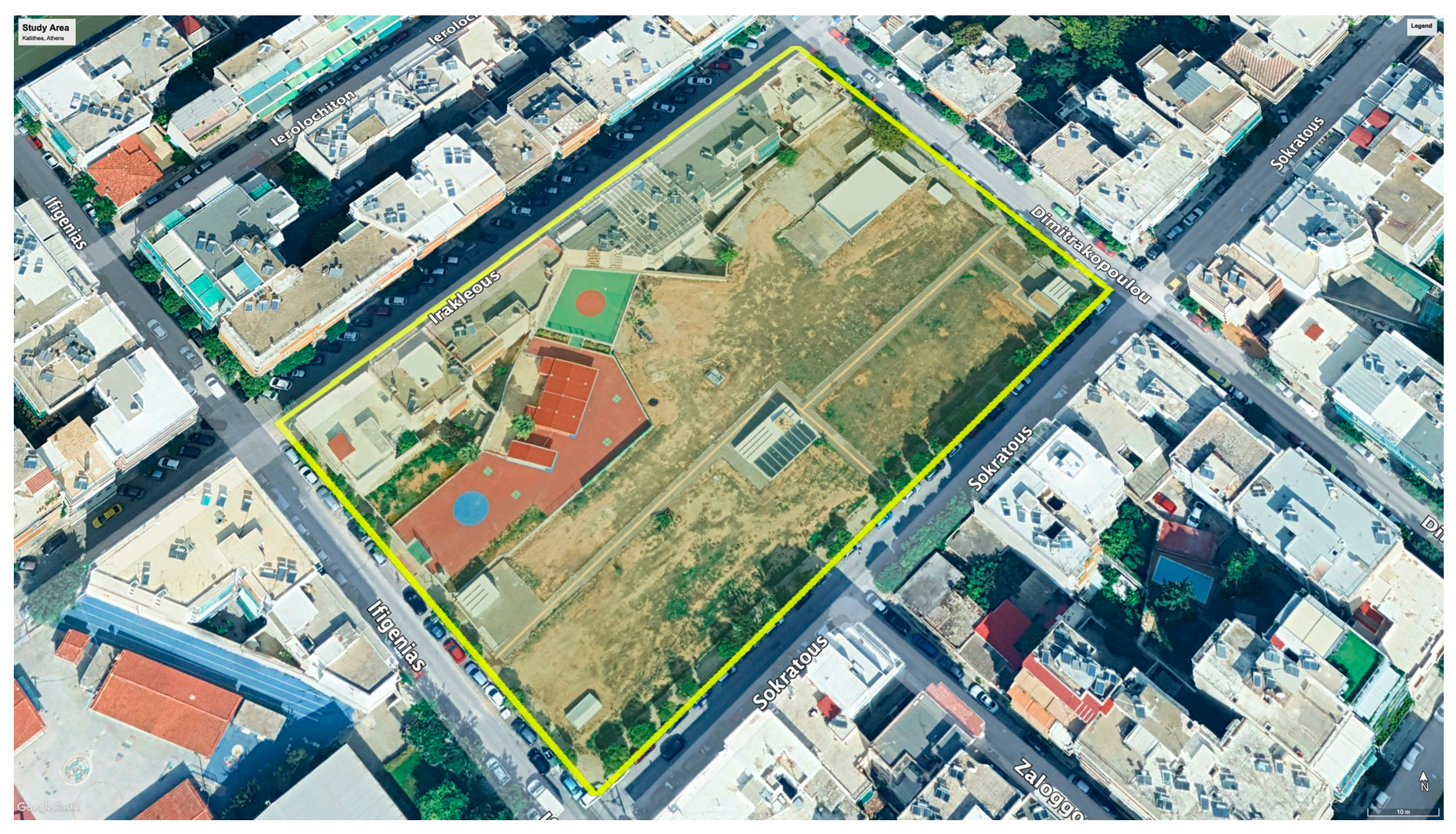
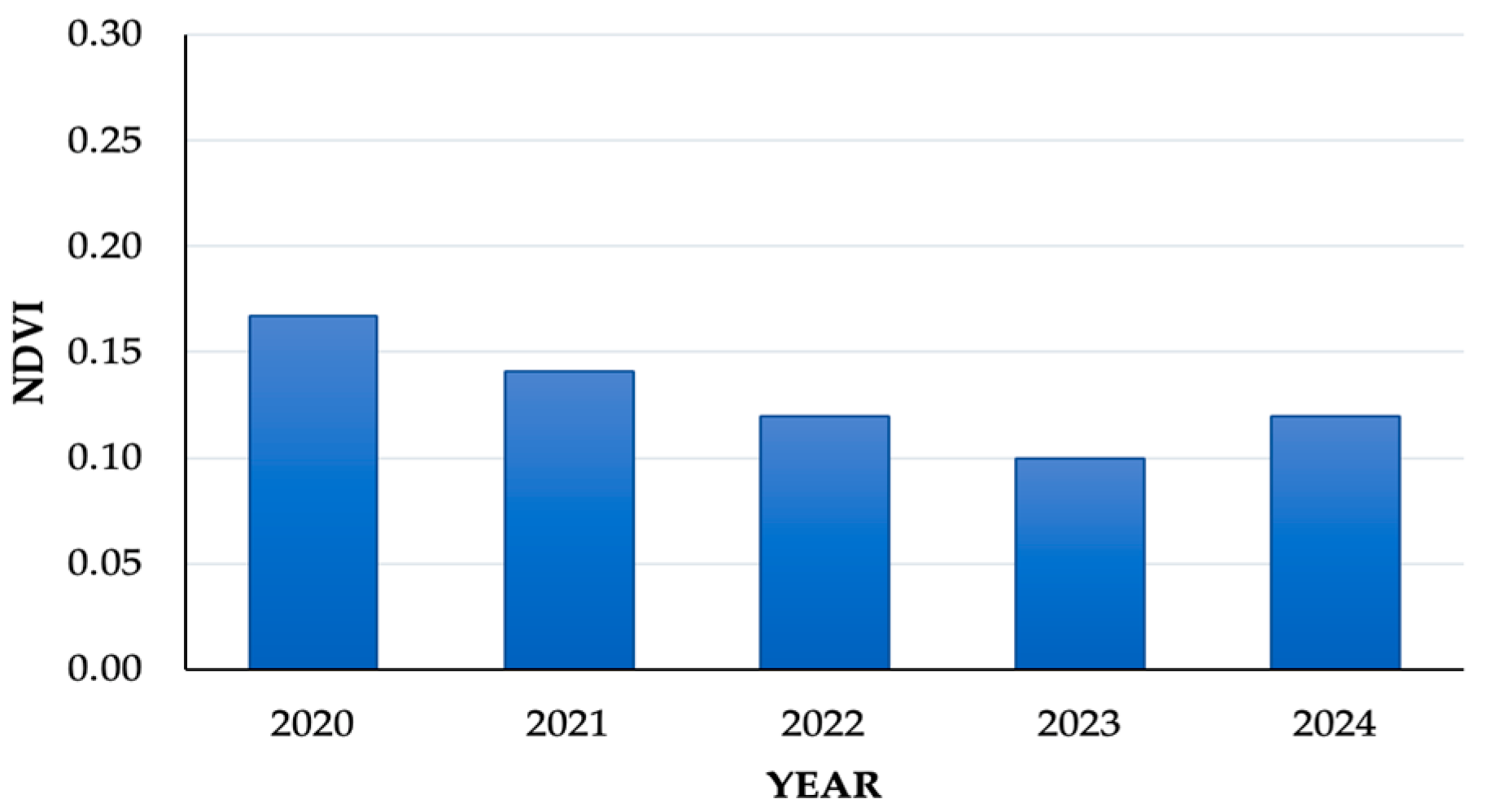
The selected site, located at 23–25 Dimitrakopoulou Street in Kallithea and bordered by Sokratous, Ifigeneias, and Irakleous streets (Figure 1), is an urban void within a densely built environment. Lacking vegetation, shading, and public amenities, and experiencing high surface temperatures, the area is well-suited for a small-scale bioclimatic intervention. NDVI data from 2020 to 2024 show consistently low summer values (0.10–0.15), reflecting limited urban greenery and supporting the need for targeted green infrastructure in Kallithea (Figure 2).
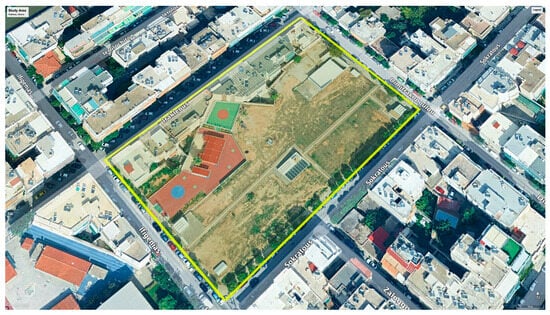
Figure 1.
The study area in Kallithea region. Basemap: Google Earth.
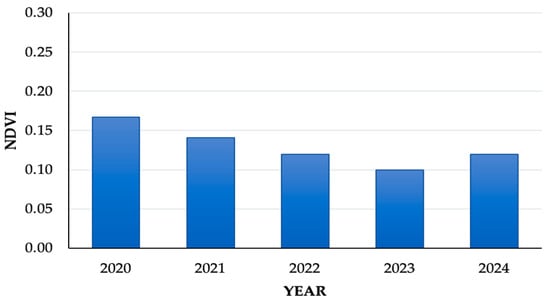
Figure 2.
Mean Summer NDVI in Kallithea from 2020 to 2024. Data source: European Space Agency (ESA) Sentinel-2 satellite imagery, accessed via Google Earth Engine.
Numerous studies highlight the value of monitoring bioclimatic indicators and land use using GIS tools, thermal sensors, and satellite imagery to support decision-making in urban development projects [7,8]. This integrated approach enables both remote and on-site analysis. In this study, on-site measurements were conducted using a Kestrel 5400 Heat Stress Tracker (Kestrel Instruments, Boothwyn, PA, USA), handheld GPS device (Garmin Ltd., Olathe, KS, USA), and portable surface temperature sensors (Kestrel Instruments, Boothwyn, PA, USA). Data were collected during afternoon and late evening hours to capture real-life microclimatic conditions, particularly during times when people are most likely to use outdoor spaces. Key bioclimatic indicators measured include air temperature (°C), wet bulb temperature (°C), globe temperature (°C), relative humidity (%), dew point (°C), NA WBGT (No Air or No Activity Wet Bulb Globe Temperature, °C), and wind chill (°C). All collected data were integrated into a GIS platform and visualized using Google Earth. These findings informed the bioclimatic design strategy of the proposed pocket park.
Following the completion of field measurements, data were processed and interpreted to identify areas experiencing elevated levels of human thermal stress. The analysis focused on microclimatic parameters directly related to thermal comfort and overall well-being, taking into account the specific environmental conditions of the site. During midday hours, air temperatures ranged from 34.7 °C to a peak of 36.5 °C, indicating intense thermal stress—particularly in areas lacking ventilation and shading. Wet-bulb temperatures, reflecting the body’s ability to dissipate heat through evaporation, also showed elevated values, suggesting a heightened risk of discomfort. Globe temperature readings, which account for solar radiation, further intensified the perceived heat load. High relative humidity levels reduced evaporative cooling efficiency, compounding the discomfort. Although primarily relevant in colder conditions, the wind chill index was included as a comparative parameter for nighttime analysis. Characteristic values for each parameter across different time periods are presented in Table 1 and Table 2.

Table 1.
Recorded parameter values during the midday monitoring period (15:08:38 PM to 15:30:18 PM, local time).
Table 2.
Recorded parameter values during the nighttime monitoring period (21:10:52 PM to 21:21:36 PM, local time).
3. Results
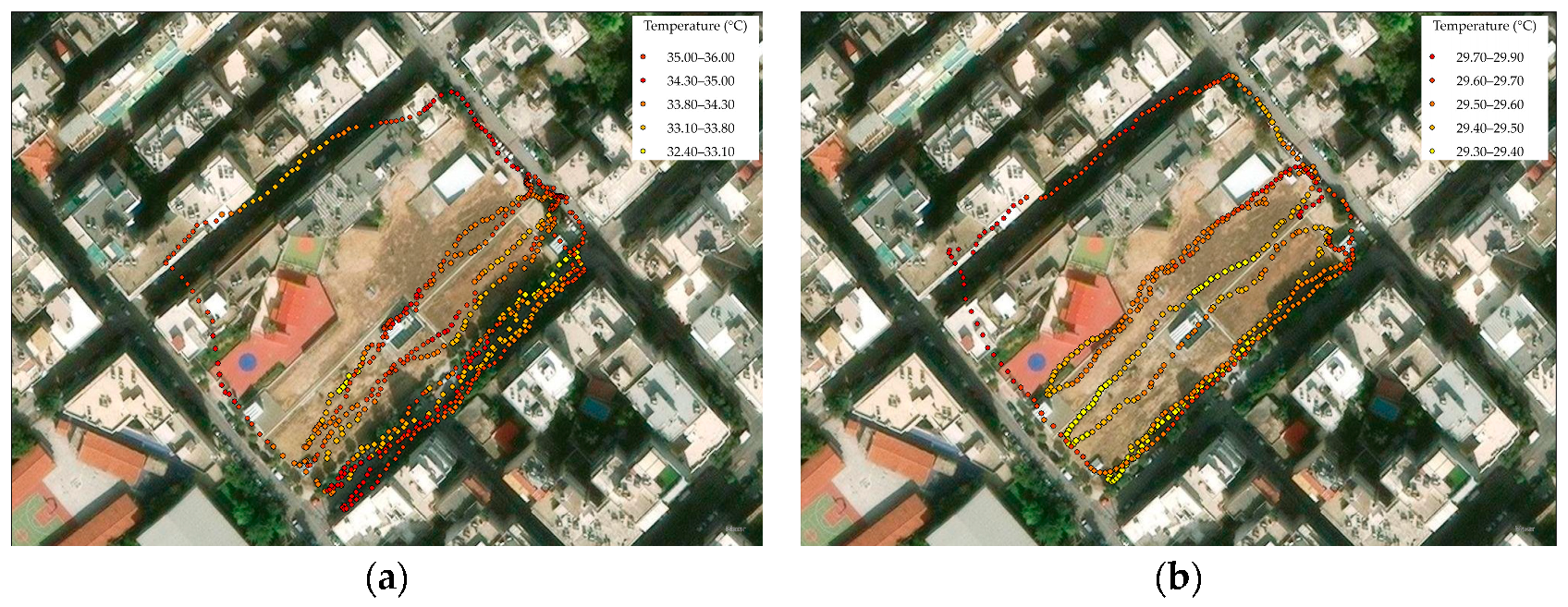
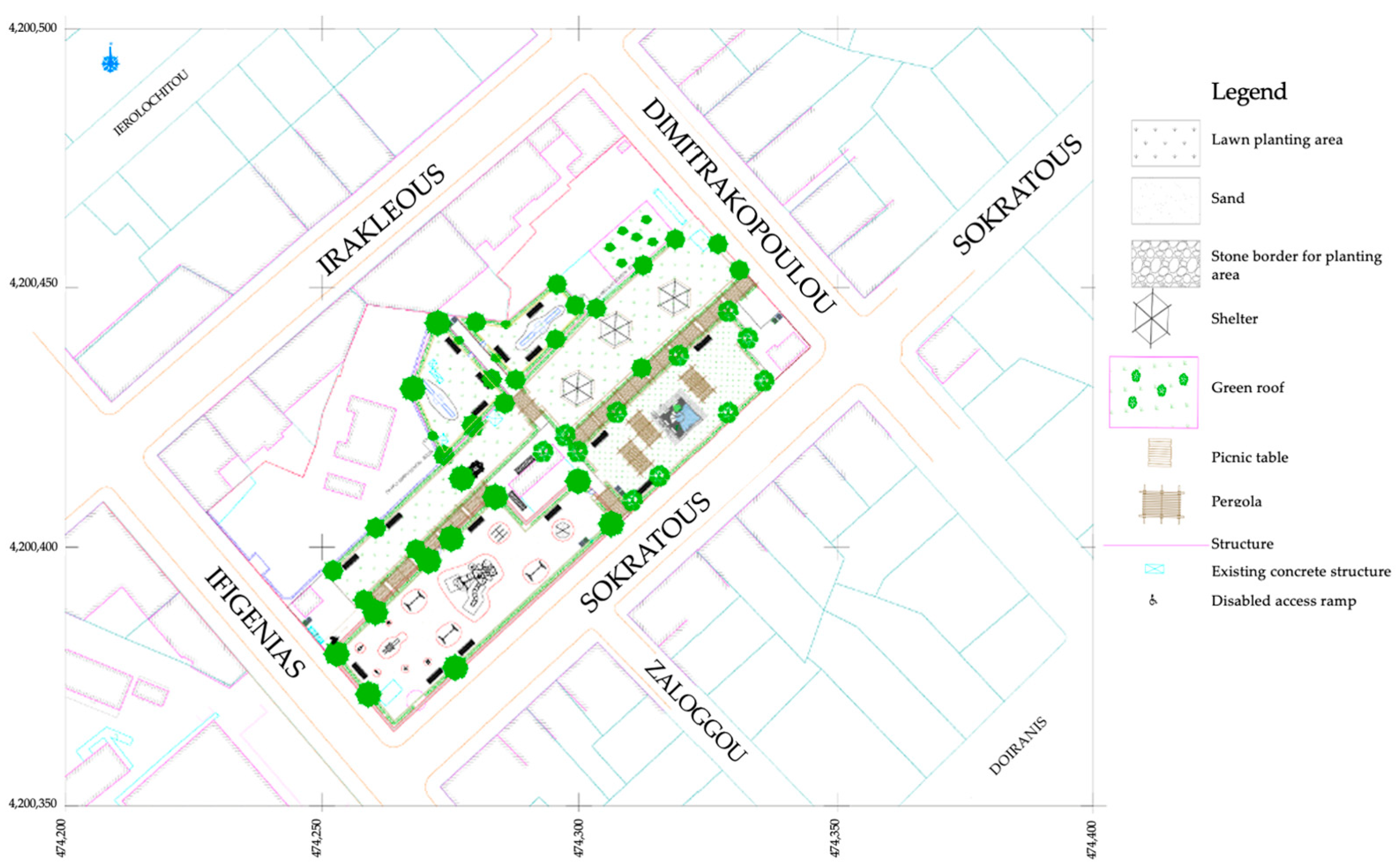
Following analysis, the data—recorded at two-second intervals—were processed to calculate averages, standard deviations, and correlations between key bioclimatic indicators. Figure 3 illustrates temperature variations in the study area during both the midday and evening recording periods, highlighting zones of elevated heat exposure. An indicative layout of the proposed pocket park redevelopment is shown in Figure 4, illustrating the spatial configuration of vegetation, seating, and shading elements within the designated site in the Municipality of Kallithea. Additionally, an indicative cost estimate is provided in Table 3, based on the proposed design elements and materials.
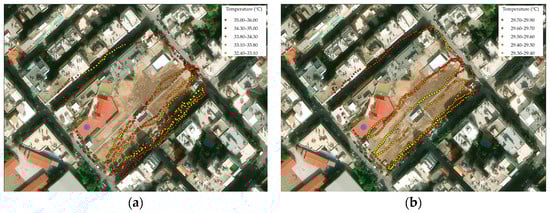
Figure 3.
Temperature variation in the study area during (a) midday; (b) evening.
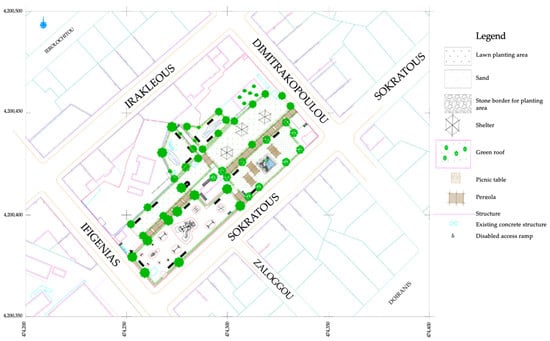
Figure 4.
Proposed pocket park within the area of interest.
Table 3.
Estimated Total Cost per Zone.
Cost estimations are adapted from international sources, e.g., [9], and adjusted for local conditions after detailed research on construction expenses in €/m2, €/m, or per unit. Actual expenses may vary depending on the contractor, local market fluctuations, and specific site requirements. This table serves as a reference framework for budgeting and planning similar small-scale bioclimatic interventions in urban settings.
4. Discussion and Conclusions
The proposed pocket park in the Municipality of Kallithea demonstrates effective bioclimatic urban design and serves as a replicable model for small-scale green infrastructure. It addresses critical environmental and social challenges in dense urban areas, offering long-term benefits that support urban resilience.
Environmentally, the inclusion of vegetation, permeable materials, and water-efficient systems helps regulate the microclimate and reduce the urban heat island effect. These strategies respond directly to the high thermal stress and low vegetation observed during site analysis. Socially, the park provides much-needed public space that promotes recreation, social interaction, and inclusivity for people of all ages and abilities. Economically, the use of recycled, low-maintenance materials and renewable energy technologies, such as solar panels, reduces operational costs and enhances sustainability. Cultural and educational elements—like murals, sculptures, and digital displays—reinforce local identity and promote environmental awareness, transforming the space into both a community hub and a learning environment. Overall, the pocket park offers a practical and scalable approach to mitigating urban heat and enhancing quality of life, with potential to inspire similar interventions in other high-density urban settings.
Author Contributions
Conceptualization, T.S., E.F. and G.H.; methodology, E.F. and C.-C.P.; software, C.-C.P.; validation, T.S. and P.T.N.; formal analysis, C.-C.P., T.S. and M.S.; investigation, C.-C.P. and M.S.; resources, P.T.N.; data curation, C.-C.P.; writing—original draft preparation, T.S.; writing—review and editing, E.F.; visualization, C.-C.P.; supervision, E.F. and G.H. All authors have read and agreed to the published version of the manuscript.
Funding
This research received no external funding.
Institutional Review Board Statement
Not applicable.
Informed Consent Statement
Not applicable.
Data Availability Statement
Available upon request.
Conflicts of Interest
The authors declare no conflicts of interest.
References
- Oke, T.R. Boundary Layer Climates, 2nd ed.; Methuen: London, UK; New York, NY, USA, 1987; pp. 1–435. [Google Scholar]
- Founda, D.; Pierros, F.; Petrakis, M.; Zerefos, C. Interdecadal variations and trends of the urban heat island in Athens (Greece) and its response to heat waves. Atmos. Res. 2015, 161–162, 1–13. [Google Scholar] [CrossRef]
- Iodice, S.; Arbau, L.C.; Maistrali, A.; Marando, F.; Melchiorri, M.; Proietti, P.; Sulis, P.; Tainguy, O.; Vandecasteele, I. EU Cities and Heat Extremes; European Commission: Luxembourg, 2024. [Google Scholar]
- European Commission. The European Green Deal (COM/2019/640 Final); European Commission: Brussels, Belgium, 2019; Available online: https://eur-lex.europa.eu/legal-content/EN/TXT/?uri=CELEX:52019DC0640 (accessed on 24 September 2025).
- European Commission. Green Infrastructure (GI)—Enhancing Europe’s Natural Capital; EC: Brussels, Belgium, 2013; Available online: https://ec.europa.eu/environment/nature/ecosystems/strategy/index_en.htm (accessed on 24 September 2025).
- United Nations. Transforming Our World: The 2030 Agenda for Sustainable Development; United Nations: New York, NY, USA, 2015; Available online: https://sdgs.un.org/2030agenda (accessed on 24 September 2025).
- Zittis, G.; Almazroui, M.; Alpert, P.; Ciais, P.; Cramer, W.; Dahdal, Y.; Fnais, M.; Francis, D.; Hadjinicolaou, P.; Howari, F.; et al. Climate change and weather extremes in the Eastern Mediterranean and Middle East. Rev. Geophys. 2022, 60, e2021RG000762. [Google Scholar] [CrossRef]
- Stavrianos, N.M.; Agathangelidis, I.; Cartalis, C.; Giannaros, C. Exploring the impact of Local Climate Zones to the efficacy of cooling materials at the urban scale. In Proceedings of the EGU General Assembly 2024, Vienna, Austria, 14–19 April 2024. [Google Scholar] [CrossRef]
- Naumann, S.; Davis, M.; Kaphengst, T.; Pieterse, M.; Rayment, M. Design, Implementation and Cost Elements of Green Infrastructure Projects; Final Report; European Commission: Brussels, Belgium, 2011; p. 138. [Google Scholar]
Disclaimer/Publisher’s Note: The statements, opinions and data contained in all publications are solely those of the individual author(s) and contributor(s) and not of MDPI and/or the editor(s). MDPI and/or the editor(s) disclaim responsibility for any injury to people or property resulting from any ideas, methods, instructions or products referred to in the content. |
© 2025 by the authors. Licensee MDPI, Basel, Switzerland. This article is an open access article distributed under the terms and conditions of the Creative Commons Attribution (CC BY) license (https://creativecommons.org/licenses/by/4.0/).