



- 2.5Impact Factor
- 5.5CiteScore
- 17 daysTime to First Decision
Nutraceuticals, Functional Foods and Health Effects
This special issue belongs to the section “Food Science and Technology“.
Special Issue Information
Dear Colleagues,
The relationship between disease, lifestyle and diet has been established through various studies, leading to increasing demand for functional foods among consumers globally. Functional foods (natural, processed or conventional) contain known/unknown bioactive compounds, in defined, effective, and non-toxic amounts, that provide a clinically proven and documented health benefit for the prevention, management, or treatment of viral and chronic diseases. Nutraceuticals, on the other hand, are foods that provide the body with medical or health benefits, including nutrients for the prevention and treatment of a disease.
Chronic non-communicable diseases (NCDs) and viral infections are the most common causes of premature death and morbidity around the world. These diseases also have a huge impact on health-care costs, productivity, and growth (Otunola and Martiryosan 2021). Examples are mental, eye and gut health, inflammation, ageing and beauty, cancer, gastrointestinal disorders, diabetes, obesity and cardiovascular diseases, among others.
Considerable interest has been expressed by manufacturers, consumers and health professionals in functional foods and nutraceuticals for obvious reasons, including the fact that the efficacy of synthetic drugs is limited by adverse side reactions (Singh et al., 2018). Although currently a small scientific field, functional foods and nutraceutical science is rapidly growing, as studies show that functional food products can help manage chronic disease and promote overall wellness.
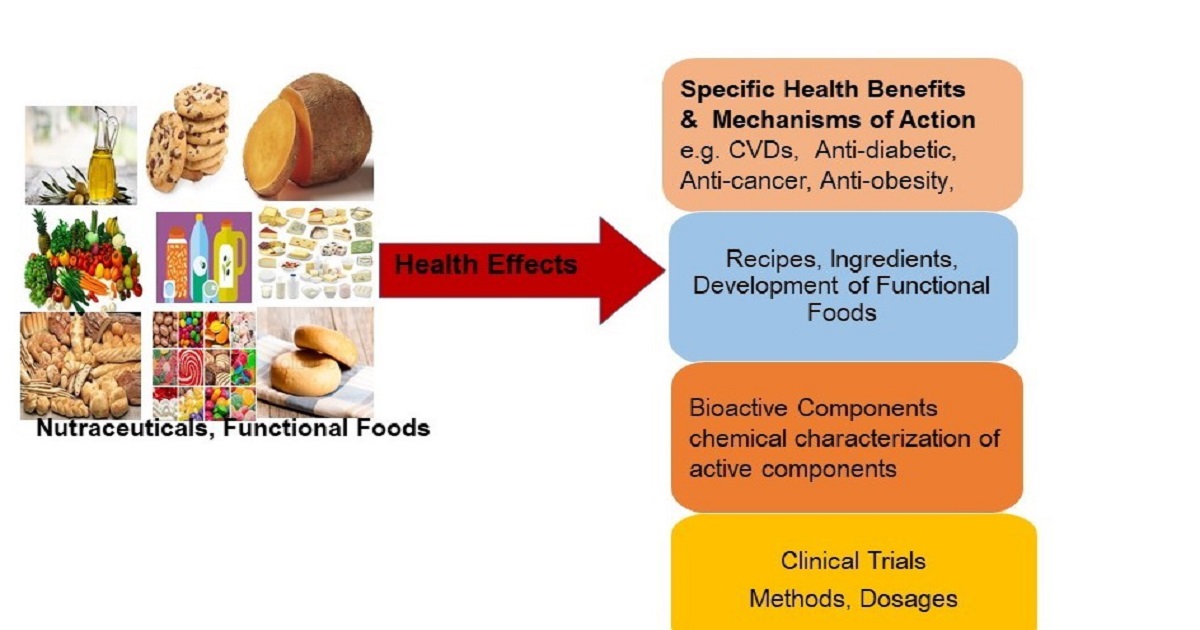
Therefore, this Special Issue is aimed at exploring the health benefits of functional foods and nutraceuticals for the prevention, care and management of chronic conditions. The focus would be on recipes, ingredients, methods, dosages, identification, development of functional foods, chemical characterization of active components, specific health benefits as well as the mechanisms of action. Myths and controversial results relevant to the topic would also be welcome. This will help validate and confirm the health potentials and bioactivity of functional foods and give scientific backing to the various claims for efficacy.
Dr. Gloria Aderonke Otunola
Prof. Dr. Omorogieva Ojo
Guest Editors
Manuscript Submission Information
Manuscripts should be submitted online at www.mdpi.com by registering and logging in to this website. Once you are registered, click here to go to the submission form. Manuscripts can be submitted until the deadline. All submissions that pass pre-check are peer-reviewed. Accepted papers will be published continuously in the journal (as soon as accepted) and will be listed together on the special issue website. Research articles, review articles as well as short communications are invited. For planned papers, a title and short abstract (about 250 words) can be sent to the Editorial Office for assessment.
Submitted manuscripts should not have been published previously, nor be under consideration for publication elsewhere (except conference proceedings papers). All manuscripts are thoroughly refereed through a single-blind peer-review process. A guide for authors and other relevant information for submission of manuscripts is available on the Instructions for Authors page. Applied Sciences is an international peer-reviewed open access semimonthly journal published by MDPI.
Please visit the Instructions for Authors page before submitting a manuscript. The Article Processing Charge (APC) for publication in this open access journal is 2400 CHF (Swiss Francs). Submitted papers should be well formatted and use good English. Authors may use MDPI's English editing service prior to publication or during author revisions.
Keywords
- functional foods
- nutraceuticals
- supplements
- nutrients
- viral infections
- chronic diseases
- mental health
- gut microbiome
- pro-/pre-biotics
- bioactive
- biomarkers
- cancer
- diabetes
- obesity
Benefits of Publishing in a Special Issue
- Ease of navigation: Grouping papers by topic helps scholars navigate broad scope journals more efficiently.
- Greater discoverability: Special Issues support the reach and impact of scientific research. Articles in Special Issues are more discoverable and cited more frequently.
- Expansion of research network: Special Issues facilitate connections among authors, fostering scientific collaborations.
- External promotion: Articles in Special Issues are often promoted through the journal's social media, increasing their visibility.
- Reprint: MDPI Books provides the opportunity to republish successful Special Issues in book format, both online and in print.
Published Papers


Appl. Sci. - ISSN 2076-3417