Skip Content
You are currently on the new version of our website. Access the old version .

Beverages

Beverages is an international, peer-reviewed, open access journal on beverage research and development published monthly online by MDPI.

All Articles (970)

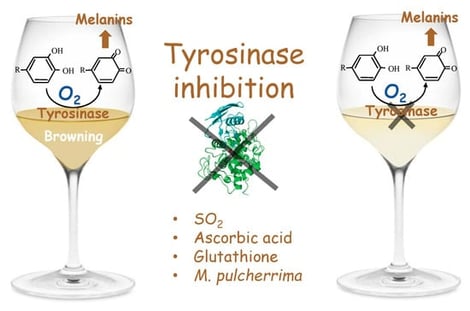
Study of Possible Alternatives to Sulphur Dioxide for Inhibiting Tyrosinase and Protecting Grape Must from Browning

  • Aitor García-Roldán,
  • Antoni Canalda-Sabaté and
  • Joan Miquel Canals
  • + 6 authors

Winemakers have to deal with enzymatic browning caused by a grape polyphenol oxidase called tyrosinase. Due to the problems related to sulphur dioxide and its use in winemaking, oenologists need alternative and effective treatments for inhibiting enzymatic browning. This research studies ascorbic acid, glutathione (pure and in the form of a specific inactivated dry yeast rich in glutathione), and bioprotection by a selected strain of Metschnikowia pulcherrima as alternatives to SO2 for preventing enzymatic browning, following a methodology developed in previous works. All the studied treatments resulted in a significant reduction in enzymatic browning. More specifically, all treatments significantly reduced the Vmax of the apparent tyrosinase activity, indicating their potential to protect against enzymatic browning and thus allowing for a reduction in the doses of SO2 added to the wine.

6 February 2026
Influence of the different treatments on tyrosinase activity. All data are expressed as the average of three replicates ± standard deviation. AA: ascorbic acid; GSH: glutathione; IDY-GSH: inactivated dry yeasts rich in glutathione.

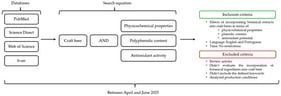
Background: The incorporation of botanical ingredients into craft beer has emerged as a promising strategy to enhance nutritional value and expand its sensory diversity. Thus, this review aims to discuss the impact of adding botanical extracts on the physicochemical properties, phenolic content, and antioxidant potential of craft beers. Methods: A narrative review was conducted using PubMed, Science Direct, Web of Science, and b-on databases, with the keywords ‘craft beer’, ‘physicochemical properties’, ‘polyphenolic content’, and ‘antioxidant activity’. Results: The incorporation of botanical ingredients into beers modified the physicochemical parameters, total phenolic content (TPC), and antioxidant activity. These effects varied according to the type of matrix, concentration, timing of addition, beer style, and brewing conditions. Overall, an increase in beer TPC and antioxidant activity was observed. However, higher TPC can present technological challenges, as phenolic–protein interaction may lead to turbidity. Conversely, enhanced antioxidant potential contributes to oxidative stability and extends the shelf-life of beer. Conclusions: Future studies should validate the current results, explore new bioactive matrices, and evaluate variables that ensure the functional quality of beer. Practical applications under real production conditions should also be prioritized to guarantee effective functional benefits without compromising the stability and sensory acceptance of craft beer.

6 February 2026

Summary scheme of the research strategy.

Assessing White Hibiscus Calyces as a Potential Ingredient for Kombucha

  • Enid Adiegwu,
  • Renata Carneiro and
  • Sean O’Keefe
  • + 2 authors

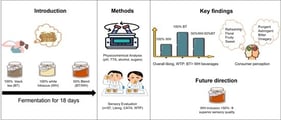
Kombucha’s growing popularity worldwide has been accompanied by a growing consumer interest in exploring new flavors and adopting healthier diets. In this preliminary consumer-driven study, we investigated the application of white hibiscus (WH) calyces in the development of novel kombucha beverages. Kombuchas were made from 100% black tea (BT), 100% WH, and 50% BT/WH blend infusions, then their pH, total titratable acidity (TTA), ethanol content, sucrose, glucose, and fructose concentrations were measured. Untrained sensory participants (N = 97) rated the kombuchas using a 9-point hedonic scale, described them using a check-all-that-apply list of attributes, and answered a willingness-to-pay (WTP) question. Tea infusion and fermentation time had a significant effect on pH, TTA, ethanol, sucrose, fructose, and glucose content (p < 0.05). High residual sugar levels observed in the WH kombucha indicated sluggish fermentation. Kombuchas differed significantly in overall-liking, color, aroma, flavor, and mouthfeel liking, and WTP (p < 0.05). Overall, BT kombucha was preferred over the WH kombuchas (100% and blend). Sensory attributes “refreshing”, “floral”, “hibiscus”, “fruity”, and “sweet” were positive drivers of acceptability, while “pungent” and “astringent” were negative drivers. Results suggest that blends containing less than 50% WH may provide more appealing sensory attributes to consumers, and that further study is needed.

6 February 2026

Most frequently consumed non-alcoholic beverages (N = 97).

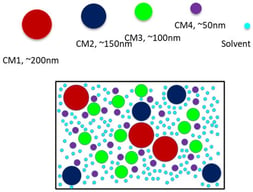
Handling dispersion of casein powders in water is widely encountered in the milk industry. However, in silico prediction of the apparent viscosity of these colloidal dispersions is not an easy task, especially when these micellar casein suspensions are highly concentrated, as in hyper-protein milk beverages, which are experiencing exponential market growth. In this work, Coarse-Grained (CG) models using Lennard-Jones potentials to model interactions were built for simulating rheological properties of colloidal micellar casein dispersions (native and demineralized). In a first approach, a polydisperse explicit CG model was developed. For this polydisperse CG model, the representation chain was composed of four large smooth spheres of different sizes mimicking the real distribution of casein colloids. The CG simulation results were validated by comparison with experimental rheological data for native colloidal casein dispersions. Both in-house experimental results and available data found in the literature were used for this purpose, covering a wide range of casein concentrations ([10 g/L–200 g/L], [8–20%] corresponding to casein concentration, colloid volume fraction and solid/liquid volume fraction, respectively). In a second approach, a simplified model using a monodisperse CG model was developed. This simplified model only included one type of soft sphere and was found to preserve the accuracy of the rheological prediction. Finally, a monodisperse CG model was set up to predict the behavior of demineralized micellar casein dispersions, for which a decrease in the average size of the micelle size distribution is observed when demineralization occurs. For all models, the comparison between the predicted and experimental rheological behavior is fully satisfactory, proving that the CG models proposed for casein-based micellar dispersions are physically well founded and that the proposed simplified representation chain, based on micelle size observation, makes sense.

6 February 2026

Simplified representation chain (polydisperse CG representations) for mimicking suspensions of native phosphocasein micelles at various colloidal concentrations. Solvent particles are treated implicitly.

News & Conferences

Issues

Open for Submission

Editor's Choice

Reprints of Collections

Advances in Analysis of Flavors and Fragrances
Reprint

Advances in Analysis of Flavors and Fragrances

Chemistry, Properties and Applications in Food Quality Improvement
Editors: Ana Leahu, Maria Soledad Prats Moya, Cristina Ghinea
Emerging Trends in Beverage Processing
Reprint

Emerging Trends in Beverage Processing

Editors: Antonio Morata

Get Alerted

Add your email address to receive forthcoming issues of this journal.

XFacebookLinkedIn
Beverages - ISSN 2306-5710