

Journal Menu
► ▼ Journal Menu-
- Biomolecules Home
- Aims & Scope
- Editorial Board
- Reviewer Board
- Topical Advisory Panel
- Instructions for Authors
- Special Issues
- Topics
- Sections & Collections
- Article Processing Charge
- Indexing & Archiving
- Editor’s Choice Articles
- Most Cited & Viewed
- Journal Statistics
- Journal History
- Journal Awards
- Conferences
- Editorial Office
Journal Browser
► ▼ Journal BrowserNeed Help?
Announcements
4 March 2026
MDPI’s 2025 Best Paper Awards—Award-Winning Papers Announced
MDPI is honored to announce the recipients of the 2025 Best Paper Awards, celebrating exceptional research for its scientific merit and broad impact. After a rigorous evaluation process conducted by Academic Editors, this year’s awards showcase papers that stand out for their innovation, relevance, and high-quality presentation.
Out of a highly competitive pool, 396 winning papers have been recognized for their exceptional contributions. We congratulate these authors for pushing the boundaries of their respective disciplines.
At MDPI, we are dedicated to broadening the reach of innovative science. To learn more about the award-winning papers and explore research projects in your field of study, please visit the following links:
- Biology and Life Sciences;
- Business and Economics;
- Chemistry and Materials Sciences;
- Computer Sciences and Mathematics;
- Engineering;
- Environmental and Earth Sciences;
- Medicine and Pharmacology;
- Social Sciences, Arts and Humanities;
- Physical Sciences;
- Public Health and Healthcare.
About MDPI Awards:
To reward the global research community and enhance academic dialogue, MDPI journals regularly host award programs across diverse scientific disciplines. These awards, serving as a source of inspiration and recognition, help raise the influence of talented individuals who have been credited with outstanding achievements and whose work drives the advancement of their fields.
Explore the Best Paper Awards open for participation, please click here.
27 April 2026
Meet Us at the 62nd Annual Meeting of the European Association for the Study of Diabetes (EASD 2026), 28 September–2 October 2026, Milan, Italy

Conference: The 62nd Annual Meeting of the European Association for the Study of Diabetes (EASD 2026)
Organization: European Association for the Study of Diabetes
Date: 28 September–2 October 2026
Place: Allianz MiCo—Milan Convention Centre, Milan, Italy
Booth Number: L.03
The 62nd Annual Meeting of the European Association for the Study of Diabetes (EASD) is set to take place from 28 September to 2 October 2026 at the Allianz MiCo - Milan Convention Centre in Milan, Italy. This global diabetes conference will convene thousands of delegates from all across the globe to explore the latest advancements in diabetes research, treatment, and care.
The scientific programme will feature hundreds of presentations, including keynote lectures, symposia, and oral sessions, offering insights into cutting-edge developments in both basic and clinical diabetes research. Attendees will have the opportunity to engage with leading experts, fostering collaboration and knowledge exchange across the international diabetes community.
The Organization of this conference, the European Association for the Study of Diabetes e.V. (EASD), is a membership-based academic non-profit organization. It was founded in 1965 and is based in Düsseldorf, Germany. The aims of EASD are to encourage and support research in the field of diabetes, the rapid diffusion of acquired knowledge and to facilitate its application.
The following open access journals will be represented:
- Biomedicines;
- Diabetology;
- JCM;
- Medicina;
- Endocrines;
- IJERPH;
- Antioxidants;
- Biomolecules;
- Epidemiologia;
- JMAHP;
- Nutrients;
- Trends in Public Health.
If you are attending the 62nd EASD Annual Meeting, we invite you to visit us at our booth #L.03. Our representatives will be available to discuss publishing opportunities, the benefits of open access, and answer any questions that you may have.
Join us in Milan to discover what is next in diabetes science and care! For more information about the conference, please visit its official website at https://www.easd.org/annual-meeting/easd-2026/.
24 April 2026
Prof. Dr. William Gerwick Appointed Chair of the 2026 Tu Youyou Award Committee
We are honored to announce that Prof. Dr. William Gerwick will serve as the Chair of the 2026 Tu Youyou Award Committee.
A world-renowned authority in marine natural products chemistry and pharmacology, Professor Gerwick is a Distinguished Professor at both the Scripps Institution of Oceanography and the Skaggs School of Pharmacy and Pharmaceutical Sciences at the University of California San Diego (UCSD). His pioneering work at the intersection of ocean sciences and drug discovery makes him a fitting leader for an award centered on transformative medicinal breakthroughs.
Under Professor Gerwick’s stewardship, the 2026 Tu Youyou Award Committee will focus on recognizing innovative and impactful research in natural products chemistry and medicinal chemistry, particularly work with the potential to drive meaningful advances in both scientific understanding and human health.
To provide further insight into his perspectives, we include below an interview with Professor Gerwick, in which he reflects on his scientific journey, his views on the field, and his vision for the Tu Youyou Award.
A Conversation with the Chair

1. Could you please introduce yourself and your research journey?
My research focuses on the natural products of marine algae and cyanobacteria, their application in medicine, their biosynthesis using genomic approaches, and innovative methods in the structure elucidation of natural products.
I received my BS degree from the University of California at Davis, my PhD from the University of California at San Diego, and conducted postdoctoral work at the University of Connecticut. After a couple of years in a junior faculty position at the Department of Chemistry at the University of Puerto Rico, I spent 21 years as Professor of Pharmacy at Oregon State University. In 2005, I returned to my PhD institution at the Scripps Institution of Oceanography and the Skaggs School of Pharmacy and Pharmaceutical Sciences at UC San Diego, where I am currently a Distinguished Professor of Oceanography and Pharmaceutical Sciences.
Throughout my career, I have been dedicated to advancing the field through both leadership and mentorship. I have served as president of the American Society of Pharmacognosy, chaired and co-chaired several major research conferences, and served as an associate editor for the Journal of Natural Products. I am a Fellow of the American Association for the Advancement of Science (AAAS) and of the American Society of Pharmacognosy. I have trained over 100 doctoral and postdoctoral students, and my research group has published nearly 500 papers and more than 25 patents on topics in the natural product sciences and medicinal chemistry.
2. What motivated you to accept the role of Chair of the 2026 Tu Youyou Award Committee?
Of course, I am a huge supporter of all awards that are given in recognition of excellent scientific research, and especially so in the natural products sciences and medicinal chemistry. However, this award is truly special in that it recognizes scientific excellence as well as impact, and is given in the name of an individual, Tu Youyou, who clearly had many challenges along the path to reach the pinnacle of her success. Not only was she the first Chinese person to win a Nobel prize in this area, but she was also the first Chinese woman to receive a Nobel prize, and this was achieved without graduate education in China or elsewhere. It’s a true testament to what can be achieved by hard work, determination, and vision. To read the history of her extraordinary approach to discovering novel antimalarial compounds from Traditional Chinese Medicine is truly inspirational. It is, therefore, the inspiration provided by the extraordinary life and career of Tu Youyou that motivated me to accept the Chair of the Award Committee for 2026.
3. How do you view the role of natural products chemistry and medicinal chemistry in today’s scientific landscape, and what major advances over the past decade have shaped this field?
A quite remarkable integration of fields is currently transforming natural products science and medicinal chemistry. In natural products, we are seeing integration of different omics methods, from metabolites to proteins to nucleic acids. Sophisticated biological and pharmacological approaches are driving the discovery of exquisitely potent and selective natural products. Advances are being made to integrate molecular-level recognition of natural products with chemical ecological studies, and sophisticated methods of structure determination using Artificial Intelligence or pioneering new tools such as microED are being applied with increasing frequency. High-level synthetic methodologies, such as protecting group-free synthetic routes, are enhancing medicinal chemistry, accelerating the identification of lead molecules with attractive pharmaceutical properties at an increasing pace.
4. How do you consider the balance between fundamental discovery (e.g., new molecules or mechanisms) and practical impact (e.g., therapeutic applications)?
Many individuals are excellent scientists and mentors, and have essential roles in developing our culture that values science and the scientific method. It should also be pointed out that not all scientific discoveries are going to have a broad societal impact, but they are nevertheless critical to the overall body and structure of science. But it is a truly remarkable individual who makes a key scientific discovery, recognizes its potential value to society in general, and then has the skills and determination to bring it forward as a useful product. That was the type of person the Tu Youyou is, and that is the type of person who is honored by the prize in her name.
5. What do you see as the key challenges or opportunities currently facing the field?
We are on the crux of an amazing revolution in many of the sciences, including natural products and medicinal chemistry; the purposeful application of Artificial Intelligence to solving many of the difficulties involved in the search for new pharmaceuticals from Nature. AI is transforming how we select organisms for study, what pharmaceutical targets to go after, rapidly resolving the chemical structures of new compounds, identifying efficient routes to their chemical synthesis, understanding their molecular mechanisms of action, and finally, designing their clinical application. The role of people in these pursuits is changing. Increasingly, the human role will be providing overall vision: what can we do? What should we do? And it is important to remember that AI is providing hypotheses, not truth. Scientists with expert domain knowledge will be critical for discerning the correctness of hypotheses put forth by AI. Altogether, advances in technology, expanding knowledge, and the appropriate use of AI methods are preparing society to be able to address emerging diseases, such as pandemics, as well as conditions that are not effectively treated by currently existing therapeutics.
6. How do you expect the Tu Youyou Award to contribute to the advancement of natural product chemistry, medicinal chemistry, and human health over the coming years?
The Tu Youyou Award is potentially transformative for the broad fields of natural products science and medicinal chemistry as it brings a significantly increased level of visibility to these topics and their contributions to human health. It will be crucial to have excellent communication to news agencies, social media and other communication outlets so that the general public is informed and educated on the high impact of these natural product/medicinal chemistry contributions. This will bring increased funding, attract promising students, and generally enrich the interface of these fields with the health sector.
7. What message would you like to convey to the research community and the public during this open nomination phase?
This prize gives broad societal visibility to the role that natural products have had in shaping a majority of our current medicines, as well as understanding the life forms with whom we share the planet. Further, it recognizes a woman scientist working under sub-optimal conditions who could persevere and make discoveries of global impact. The prize and what it represents, therefore, inspires current and future generations to engage in the study of Nature and its relationship to Human Health, to overcome adversity, and to aspire to making one’s life impactful.
About the Tu Youyou Award
Established in 2016, the Tu Youyou Award seeks to honor those who excel in the fields of natural products chemistry and medicinal chemistry. This award offers a total prize of CHF 100,000, which will be equally divided among the winners if there is more than one, with each recipient receiving an award medal and a certificate.
The 2026 Tu Youyou Award is open for nominations until 31 October 2026. We encourage all eligible candidates to participate in this prestigious recognition, as this award not only honors individual achievement but also encourages further scientific exchange, exploration and discovery in critical areas of medicine.
If you are interested in participating, please visit the Tu Youyou Award website for more information on the nomination requirements.
20 April 2026
Biomolecules | Highly Cited Papers in 2025–2026 in the “Biological Factors” Section

As all of the articles published in our journal are open access, you have free and unlimited access to the full text. We welcome you to read our most highly cited papers published in 2025 and 2026, which are listed below:
1. “Integrin and Its Associated Proteins as a Mediator for Mechano-Signal Transduction”
by Kazuo Katoh
Biomolecules 2025, 15(2), 166; https://doi.org/10.3390/biom15020166
Full text available online: https://www.mdpi.com/2218-273X/15/2/166
2. “From Polydeoxyribonucleotides (PDRNs) to Polynucleotides (PNs): Bridging the Gap Between Scientific Definitions, Molecular Insights, and Clinical Applications of Multifunctional Biomolecules”
by Cíntia Marques, Alexandre Porcello, Marco Cerrano, Farid Hadjab, Michèle Chemali, Kelly Lourenço, Basste Hadjab, Wassim Raffoul, Lee Ann Applegate and Alexis E. Laurent
Biomolecules 2025, 15(1), 148; https://doi.org/10.3390/biom15010148
Full text available online: https://www.mdpi.com/2218-273X/15/1/148
3. “Integrins in Cardiovascular Health and Disease: Molecular Mechanisms and Therapeutic Opportunities”
by Karolina Ławkowska, Klaudia Bonowicz, Dominika Jerka, Yidong Bai and Maciej Gagat
Biomolecules 2025, 15(2), 233; https://doi.org/10.3390/biom15020233
Full text available online: https://www.mdpi.com/2218-273X/15/2/233
4. “CD99: A Key Regulator in Immune Response and Tumor Microenvironment”
by Maria Cristina Manara, Valentina Fiori, Angelo Sparti and Katia Scotlandi
Biomolecules 2025, 15(5), 632; https://doi.org/10.3390/biom15050632
Full text available online: https://www.mdpi.com/2218-273X/15/5/632
5. “Adventitious Root Formation in Cuttings: Insights from Arabidopsis and Prospects for Woody Plants”
by Peipei Liu, Shili Zhang, Xinying Wang, Yuxuan Du, Qizhouhong He, Yingying Zhang, Lisha Shen, Hongfei Hu, Guifang Zhang and Xiaojuan Li
Biomolecules 2025, 15(8), 1089; https://doi.org/10.3390/biom15081089
Full text available online: https://www.mdpi.com/2218-273X/15/8/1089
6. “Physiological Mechanisms and Core Genes in Response to Saline-Alkali Stress in Foxtail Millet (Setaria italica L.)”
by Huimin Wang, Yun Li, Yanan Yang, Yanrui Xu, Xiaoying Fan, Zhenqing Guo, Yucui Han and Xiaohu Lin
Biomolecules 2025, 15(6), 859; https://doi.org/10.3390/biom15060859
Full text available online: https://www.mdpi.com/2218-273X/15/6/859
7. “Topical Delivery of Ceramide by Oil-in-Water Nanoemulsion to Retain Epidermal Moisture Content in Dermatitis”
by Yu Zhou, Lichun Wu, Yi Zhang, Jia Hu, Jannatul Fardous, Yasuhiro Ikegami and Hiroyuki Ijima
Biomolecules 2025, 15(5), 608; https://doi.org/10.3390/biom15050608
Full text available online: https://www.mdpi.com/2218-273X/15/5/608
8. “The Role of Non-Human Sialic Acid Neu5Gc-Containing Glycoconjugates in Human Tumors: A Review of Clinical and Experimental Evidence”
by Rancés Blanco and Juan P. Muñoz
Biomolecules 2025, 15(2), 253; https://doi.org/10.3390/biom15020253
Full text available online: https://www.mdpi.com/2218-273X/15/2/253
9. “Regulation of Matrix Metalloproteinases by Wine-Derived Compounds: Implications for Cancer Therapy”
by Md. Towhedul Islam, Ha Vy Thi Vo and Hyuck Jin Lee
Biomolecules 2025, 15(6), 781; https://doi.org/10.3390/biom15060781
Full text available online: https://www.mdpi.com/2218-273X/15/6/781
10. “Bilirubin Metabolism and Thyroid Cancer: Insights from ALBI and PALBI Indices”
by Jong Won Shin, Jae Woong Sull, Nguyen Thien Minh and Sun Ha Jee
Biomolecules 2025, 15(7), 1042; https://doi.org/10.3390/biom15071042
Full text available online: https://www.mdpi.com/2218-273X/15/7/1042
11. “Age Trajectories of O2 Saturation and Levels of Serum Bicarbonate or End-Tidal CO2 Across the Life Course of Women and Men: Insights from EHR and PSG Data”
by Leping Li, Min Shi, David M. Umbach and Zheng Fan
Biomolecules 2025, 15(6), 884; https://doi.org/10.3390/biom15060884
Full text available online: https://www.mdpi.com/2218-273X/15/6/884
12. “The Quantification of Vitamin D in Humans: A Promising, Non-Invasive and Cost-Effective Method to Measure 25-Hydroxyvitamin D”
by Giulia Squillacioti, Samar El Sherbiny, Veronica Lettico, Federica Ghelli, Marco Panizzolo, Giacomo Scaioli, Manuela Martella, Selene Limoncelli, Giulio Mengozzi and Roberto Bono
Biomolecules 2025, 15(4), 560; https://doi.org/10.3390/biom15040560
Full text available online: https://www.mdpi.com/2218-273X/15/4/560
13. “The Impact of Glucagon-like Peptide-1 Receptor Agonists on Erectile Function: Friend or Foe?”
by Dimitris Kounatidis, Natalia G. Vallianou, Eleni Rebelos, Kalliopi Vallianou, Evanthia Diakoumopoulou, Konstantinos Makrilakis and Nikolaos Tentolouris
Biomolecules 2025, 15(9), 1284; https://doi.org/10.3390/biom15091284
Full text available online: https://www.mdpi.com/2218-273X/15/9/1284
14. “Mucopolysaccharidoses—What Clinicians Need to Know: A Clinical, Biochemical, and Molecular Overview”
by Patryk Lipiński, Agnieszka Różdżyńska-Świątkowska, Karolina Wiśniewska, Joanna Rusecka, Agnieszka Ługowska, Zbigniew Żuber, Aleksandra Jezela-Stanek, Zuzanna Cyske, Lidia Gaffke, Karolina Pierzynowska et al.
Biomolecules 2025, 15(10), 1448; https://doi.org/10.3390/biom15101448
Full text available online: https://www.mdpi.com/2218-273X/15/10/1448
15. “Elevation of Plasma IL-15 and RANTES as Potential Biomarkers of Healing in Chronic Venous Ulcerations: A Pilot Study”
by Amanda Beneat, Vikki Rueda, Hardik Patel, Zarina Brune, Barbara Sherry, Andrew Shih, Sally Kaplan, Amit Rao, Annette Lee, Asha Varghese et al.
Biomolecules 2025, 15(3), 395; https://doi.org/10.3390/biom15030395
Full text available online: https://www.mdpi.com/2218-273X/15/3/395
20 April 2026
Biomolecules | Highly Cited Papers in 2025–2026 in the “Cellular Biochemistry” Section

As all of the articles published in our journal are open access, you have free and unlimited access to the full text. We welcome you to read our most highly cited papers published in 2025 and 2026, which are listed below:
1. “HBV cccDNA: The Molecular Reservoir of Hepatitis B Persistence and Challenges to Achieve Viral Eradication”
by André Boonstra and Gulce Sari
Biomolecules 2025, 15(1), 62; https://doi.org/10.3390/biom15010062
Full text available online: https://www.mdpi.com/2218-273X/15/1/62
2. “G-Protein-Coupled Receptor (GPCR) Signaling and Pharmacology in Metabolism: Physiology, Mechanisms, and Therapeutic Potential”
by Yun Yeong Cho, Soyeon Kim, Pankyung Kim, Min Jeong Jo, Song-E Park, Yiju Choi, Su Myung Jung and Hye Jin Kang
Biomolecules 2025, 15(2), 291; https://doi.org/10.3390/biom15020291
Full text available online: https://www.mdpi.com/2218-273X/15/2/291
3. “Role of Tumor Microenvironment in Prostate Cancer Immunometabolism”
by Yutao Wang, Yiming Chen and Jianfeng Wang
Biomolecules 2025, 15(6), 826; https://doi.org/10.3390/biom15060826
Full text available online: https://www.mdpi.com/2218-273X/15/6/826
4. “Quercetin: Molecular Insights into Its Biological Roles”
by Hye Joon Boo, Danbi Yoon, Yujeong Choi, Younghyun Kim, Jeong Seok Cha and Jiho Yoo
Biomolecules 2025, 15(3), 313; https://doi.org/10.3390/biom15030313
Full text available online: https://www.mdpi.com/2218-273X/15/3/313
5. “Carnitine O-Acetyltransferase as a Central Player in Lipid and Branched-Chain Amino Acid Metabolism, Epigenetics, Cell Plasticity, and Organelle Function”
by Mariateresa Volpicella, Maria Noemi Sgobba, Luna Laera, Anna Lucia Francavilla, Danila Imperia De Luca, Lorenzo Guerra, Ciro Leonardo Pierri and Anna De Grassi
Biomolecules 2025, 15(2), 216; https://doi.org/10.3390/biom15020216
Full text available online: https://www.mdpi.com/2218-273X/15/2/216
6. “Natural Compounds Regulate Macrophage Polarization and Alleviate Inflammation Against ALI/ARDS”
by Zhenhuan Yin, Ruizhe Song, Tong Yu, Yunmei Fu, Yan Ding and Hongguang Nie
Biomolecules 2025, 15(2), 192; https://doi.org/10.3390/biom15020192
Full text available online: https://www.mdpi.com/2218-273X/15/2/192
7. “Early-Stage Luminal B-like Breast Cancer Exhibits a More Immunosuppressive Tumor Microenvironment than Luminal A-like Breast Cancer”
by Tânia Moura, Olga Caramelo, Isabel Silva, Sandra Silva, Manuela Gonçalo, Maria Antónia Portilha, João N. Moreira, Ana M. Gil, Paula Laranjeira and Artur Paiva
Biomolecules 2025, 15(1), 78; https://doi.org/10.3390/biom15010078
Full text available online: https://www.mdpi.com/2218-273X/15/1/78
8. “NLRP3 Inflammasome in Stress-Related Neuropsychiatric Disorders: Mechanisms of Neuron–Microglia–Astrocyte Crosstalk, HPA Axis Dysregulation, and Therapeutic Perspective”
by Izabela Woźny-Rasała and Ewa Alicja Ogłodek
Biomolecules 2025, 15(9), 1344; https://doi.org/10.3390/biom15091344
Full text available online: https://www.mdpi.com/2218-273X/15/9/1344
9. “The Link Between Endoplasmic Reticulum Stress and Lysosomal Dysfunction Under Oxidative Stress in Cancer Cells”
by Mariapia Vietri, Maria Rosaria Miranda, Giuseppina Amodio, Tania Ciaglia, Alessia Bertamino, Pietro Campiglia, Paolo Remondelli, Vincenzo Vestuto and Ornella Moltedo
Biomolecules 2025, 15(7), 930; https://doi.org/10.3390/biom15070930
Full text available online: https://www.mdpi.com/2218-273X/15/7/930
10. “The Role of Astrocytes in the Molecular Pathophysiology of Schizophrenia: Between Neurodevelopment and Neurodegeneration”
by Licia Vellucci, Benedetta Mazza, Annarita Barone, Anita Nasti, Giuseppe De Simone, Felice Iasevoli and Andrea de Bartolomeis
Biomolecules 2025, 15(5), 615; https://doi.org/10.3390/biom15050615
Full text available online: https://www.mdpi.com/2218-273X/15/5/615
11. “Modulating PAK1: Accessory Proteins as Promising Therapeutic Targets”
by Amin Mirzaiebadizi, Rana Shafabakhsh and Mohammad Reza Ahmadian
Biomolecules 2025, 15(2), 242; https://doi.org/10.3390/biom15020242
Full text available online: https://www.mdpi.com/2218-273X/15/2/242
12. “Biocontrol Mechanism of Bacillus thuringiensis GBAC46 Against Diseases and Pests Caused by Fusarium verticillioides and Spodoptera frugiperda”
by Zhao Liang, Qurban Ali, Huijun Wu, Qin Gu, Xin Liu, Houjun Sun and Xuewen Gao
Biomolecules 2025, 15(4), 519; https://doi.org/10.3390/biom15040519
Full text available online: https://www.mdpi.com/2218-273X/15/4/519
13. “Molecular and Computational Studies Reveal That Per- and Polyfluoroalkyl Substances Can Impair Protamine–DNA Interaction, Potentially Inducing DNA Damage”
by Federica Musella, Maria Grazia Guarnieri, Simona Amore, Luigi Montano, Francesco Bertola, Salvatore Micali, Francesco Paolo Busardò, Carmen Di Giovanni, Gennaro Lettieri and Marina Piscopo
Biomolecules 2025, 15(9), 1279; https://doi.org/10.3390/biom15091279
Full text available online: https://www.mdpi.com/2218-273X/15/9/1279
14. “State of the Art in the Standardization of Stromal Vascular Fraction Processing”
by Martina Cremona, Matteo Gallazzi, Giulio Rusconi, Luca Mariotta, Mauro Gola and Gianni Soldati
Biomolecules 2025, 15(2), 199; https://doi.org/10.3390/biom15020199
Full text available online: https://www.mdpi.com/2218-273X/15/2/199
15. “Not Just an Alternative Energy Source: Diverse Biological Functions of Ketone Bodies and Relevance of HMGCS2 to Health and Disease”
by Varshini V. Suresh, Sathish Sivaprakasam, Yangzom D. Bhutia, Puttur D. Prasad, Muthusamy Thangaraju and Vadivel Ganapathy
Biomolecules 2025, 15(4), 580; https://doi.org/10.3390/biom15040580
Full text available online: https://www.mdpi.com/2218-273X/15/4/580
20 April 2026
Biomolecules | Highly Cited Papers in 2025–2026 in the “Chemical Biology” Section

As all of the articles published in our journal are open access, you have free and unlimited access to the full text. We welcome you to read our most highly cited papers published in 2025 and 2026, which are listed below:
1. “Neuroprotective Properties of Clove (Syzygium aromaticum): State of the Art and Future Pharmaceutical Applications for Alzheimer’s Disease”
by Tatevik Sargsyan, Hayarpi M. Simonyan, Lala Stepanyan, Avetis Tsaturyan, Caterina Vicidomini, Raffaele Pastore, Germano Guerra and Giovanni N. Roviello
Biomolecules 2025, 15(3), 452; https://doi.org/10.3390/biom15030452
Full text available online: https://www.mdpi.com/2218-273X/15/3/452
2. “Postbiotics as Mitochondrial Modulators in Inflammatory Bowel Disease: Mechanistic Insights and Therapeutic Potential”
by Santosh Kumar Prajapati, Dhananjay Yadav, Shweta Katiyar, Shalini Jain and Hariom Yadav
Biomolecules 2025, 15(7), 954; https://doi.org/10.3390/biom15070954
Full text available online: https://www.mdpi.com/2218-273X/15/7/954
3. “The Association Among Bipolar Disorder, Mitochondrial Dysfunction, and Reactive Oxygen Species”
by Yuki Kageyama, Shohei Okura, Ayaka Sukigara, Ayaka Matsunaga, Kunio Maekubo, Takafumi Oue, Koki Ishihara, Yasuhiko Deguchi and Koki Inoue
Biomolecules 2025, 15(3), 383; https://doi.org/10.3390/biom15030383
Full text available online: https://www.mdpi.com/2218-273X/15/3/383
4. “Metallothionein and Other Factors Influencing Cadmium-Induced Kidney Dysfunction: Review and Commentary”
by Gunnar F. Nordberg and Monica Nordberg
Biomolecules 2025, 15(8), 1083; https://doi.org/10.3390/biom15081083
Full text available online: https://www.mdpi.com/2218-273X/15/8/1083
5. “Mitochondrial Reactive Oxygen Species: A Unifying Mechanism in Long COVID and Spike Protein-Associated Injury: A Narrative Review”
by Eunseuk Lee, Adaobi Amelia Ozigbo, Joseph Varon, Mathew Halma, Madison Laezzo, Song Peng Ang and Jose Iglesias
Biomolecules 2025, 15(9), 1339; https://doi.org/10.3390/biom15091339
Full text available online: https://www.mdpi.com/2218-273X/15/9/1339
6. “Deciphering the Role of Adrenergic Receptors in Alzheimer’s Disease: Paving the Way for Innovative Therapies”
by Androulla N. Miliotou, Andria Kotsoni and Lefteris C. Zacharia
Biomolecules 2025, 15(1), 128; https://doi.org/10.3390/biom15010128
Full text available online: https://www.mdpi.com/2218-273X/15/1/128
7. “Renal Implications of Dysregulated Protein Homeostasis: Insights into Ubiquitin–Proteasome and Autophagy Systems”
by Charlotte Delrue and Marijn M. Speeckaert
Biomolecules 2025, 15(3), 349; https://doi.org/10.3390/biom15030349
Full text available online: https://www.mdpi.com/2218-273X/15/3/349
8. “Galectin-3: Integrator of Signaling via Hexosamine Flux”
by Mana Mohan Mukherjee, Devin Biesbrock and John Allan Hanover
Biomolecules 2025, 15(7), 1028; https://doi.org/10.3390/biom15071028
Full text available online: https://www.mdpi.com/2218-273X/15/7/1028
9. “Zinc Therapy in Mild Cognitive Impairment: Cognitive Stabilization in Pharmacodynamically Responsive Patients in the ZINCAiD Trial”
by Rosanna Squitti, Alberto Benussi, Silvia Fostinelli, Andrea Geviti, Jasmine Rivolta, Mariacarla Ventriglia, Alessandra Micera, Mauro Rongioletti, Roberta Ghidoni, Matteo Santilli et al.
Biomolecules 2025, 15(9), 1268; https://doi.org/10.3390/biom15091268
Full text available online: https://www.mdpi.com/2218-273X/15/9/1268
10. “Discovery of Drugs Targeting Mutant p53 and Progress in Nano-Enabled Therapeutic Strategy for p53-Mutated Cancers”
by Na Zhang, Zhiyuan Jing, Jie Song, Qiyue Liang, Yuxue Xu, Zhaowei Xu, Longping Wen and Pengfei Wei
Biomolecules 2025, 15(6), 763; https://doi.org/10.3390/biom15060763
Full text available online: https://www.mdpi.com/2218-273X/15/6/763
11. “Antioxidative Function of Zinc and Its Protection Against the Onset and Progression of Kidney Disease Due to Cadmium”
by Soisungwan Satarug
Biomolecules 2025, 15(2), 183; https://doi.org/10.3390/biom15020183
Full text available online: https://www.mdpi.com/2218-273X/15/2/183
12. “HPMA Copolymers: A Versatile Platform for Targeted Peptide Drug Delivery”
by Ya Li, Liangda Xing, Mingliang Zhu, Xian Li, Fangfang Wei, Wenyan Sun and Yinnong Jia
Biomolecules 2025, 15(4), 596; https://doi.org/10.3390/biom15040596
Full text available online: https://www.mdpi.com/2218-273X/15/4/596
13. “Lipopolymers as the Basis of Non-Viral Delivery of Therapeutic siRNA Nanoparticles in a Leukemia (MOLM-13) Model”
by Panadda Yotsomnuk, Amarnath Praphakar Rajendran, Daniel Nisakar Meenakshi Sundaram, Luis Carlos Morales, Cezary Kucharski, Mohammad Nasrullah, Wanwisa Skolpap, Xiaoyan Jiang, Spencer B. Gibson, Joseph Brandwein et al.
Biomolecules 2025, 15(1), 115; https://doi.org/10.3390/biom15010115
Full text available online: https://www.mdpi.com/2218-273X/15/1/115
14. “Mechanism of Action of Zinc Oxide Nanoparticles as an Antibacterial Agent Against Streptococcus mutans”
by Raphaelle Emram, Ronit Vogt Sionov, Vitaly Gutkin, Asaf Wilensky, Doron Steinberg and Rawi Assad
Biomolecules 2025, 15(12), 1660; https://doi.org/10.3390/biom15121660
Full text available online: https://www.mdpi.com/2218-273X/15/12/1660
15. “Galectin-12 in the Regulation of Sebocyte Proliferation, Lipid Metabolism, and Immune Responses”
by Ching-Han Tsao, Wei-Chen Hsieh, Feng-Jen Lin, Fu-Tong Liu and Ri-Yao Yang
Biomolecules 2025, 15(6), 837; https://doi.org/10.3390/biom15060837
Full text available online: https://www.mdpi.com/2218-273X/15/6/837
17 April 2026
Biomolecules Webinar | AI-Driven Drug Discovery: Opportunities and Challenges in Molecular Research, 6 May 2026

Welcome message from the Chair:
It is my great pleasure to present our webinar, “AI-Driven Drug Discovery: Opportunities and Challenges in Molecular Research”. In recent years, artificial intelligence has rapidly transformed the landscape of molecular science, opening new avenues for understanding complex biological systems and accelerating the discovery of novel therapeutics. Today’s talks will showcase cutting-edge computational approaches, with a particular focus on protein dynamics and the exploration of conformational landscapes. I am delighted to host our distinguished speakers and to engage in what I am sure will be a stimulating and insightful discussion. I would also like to thank all participants for joining us, and I look forward to an interactive session, which will include a Q&A at the end.
Date: May 6, 2026 4:30 p.m. CEST, 10:30 a.m. EDT, 10:30 p.m. CST Asia
Webinar ID: 848 4141 4967
Register now for free!

Program:
|
Speaker/Presentation |
Time in EDT |
Time in CEST |
|
Carmen Di Giovanni |
10:30–10:40 a.m. |
4:30–4:40 p.m. |
|
Thomas R. Caulfield |
10:40–11:00 a.m. |
4:40–5:00 p.m. |
|
Sarfaraz K. Niazi |
11:00–11:20 a.m. |
5:00–5:20 p.m. |
|
Q&A Session |
11:20–11:40 a.m. |
5:20–5:40 p.m. |
|
Carmen Di Giovanni |
11:40 a.m.–12:00 p.m. |
5:40–6:00 p.m. |
After registering, you will receive a confirmation email containing information on how to join the webinar. Registrations with email addresses from academic institutions will be prioritized.
Unable to attend? Register anyway and we will let you know when the recording is available to watch.
Webinar Chair and Keynote Speakers:
- Dr. Carmen Di Giovanni, Department of Pharmacy, University of Naples Federico II, Via Domenico Montesano 49, 80131 Naples, Italy;
- Dr. Thomas R. Caulfield, Department of Neuroscience, Division of QHS Computational Biology, Mayo Clinic, Jacksonville, FL 32224, USA;
- Dr. Sarfaraz K. Niazi, College of Pharmacy, University of Illinois, Chicago, IL 60612, USA.
16 April 2026
MDPI’s Newly Launched Journals in the First Quarter of 2026
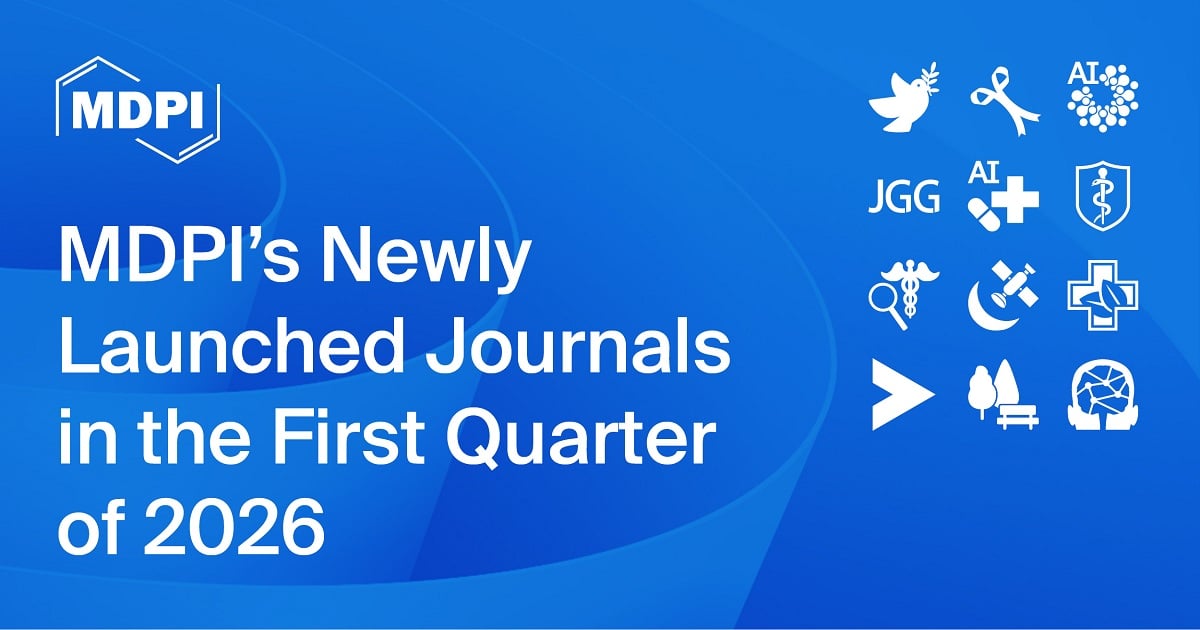
Our portfolio of journals available for publishing up-to-date research in immediate open access format has been further expanded. In the first quarter of 2026, nine new journals released their inaugural issues and three transferred journals released their first issue as part of MDPI, covering the subjects of clinical medicine, chemistry, computer science & mathematics, engineering, environment & ecology, and social sciences & psychology.
We extend our gratitude to the Editors-in-Chief, Associate Editors, and Editorial Board Members who will shape the future course of these brand-new journals. Each journal is dedicated to upholding strong editorial standards through a thorough peer review process, ensuring impactful open access scholarship.
Please feel free to browse and discover more about the new journals below.
|
New Journals |
Founding Editor(s)-in-Chief |
Journal Topics (Selected) |
|
|
Prof. Dr. Matt Oehlschlaeger, |
AI-based chemical data analysis, prediction, and discovery; AI-enabled chemical reaction prediction, synthesis planning, and retrosynthesis; AI in bioorganic chemistry and chemical biology; digital twins and simulation of chemical processes; AI-powered chemical education and pedagogy | |
|
|
Prof. Dr. Guang Jia, |
occupational hazards and exposure science; occupational health effects and susceptibility; occupational risk assessment and management; occupational health intervention, promotion, and policy | |
|
|
Prof. Dr. Alessandro Miani, |
environmental exposures and health; the built environment and public health; One Health approach; environmental justice and health equity; environmental policies and interventions | |
|
|
Prof. Dr. Miriam H. A. Bopp, |
neuroimaging technology and tool; multimodal neuroimaging integration and analysis; |
|
|
Prof. Dr. Raul A. Urrutia, |
personalized translational and clinical oncology research that contribute to a deeper understanding of cancer diagnoses, prognoses, prevention, and treatment specifically for individual patients | |
|
|
Prof. Dr. Pierre Boulanger, |
AI in disease detection, diagnosis, prediction, and treatment; medical informatics; AI in genomics and precision medicine; AI in drug discovery and development; |
|
|
Prof. Dr. Zhaokui Wang, |
astrodynamics; spacecraft technology; satellite technology; space transportation; space vehicle design, propulsion, and avionics; space energy, power and propulsion | |
|
|
Prof. Dr. Richard J Hauer, |
park design, planning, and evaluation; park and art; park, industrialization, urbanization, and civilization; park and education; park and smart society; park role in SDGs; park services for humans | |
|
|
Prof. Dr. Stacey L. Connaughton, |
conflict resolution; peacebuilding; peacemaking; mediation, reconciliation, and transitional justice; sustaining peace | |


|
Transferred Journals |
Editor(s)-in-Chief |
Journal Topics (Selected) |
|
|
Prof. Dr. Gianluigi Vendemiale, |
physiology and pathology of aging; biogerontology; epidemiology; clinical geriatrics; pharmacology; geriatric nursing | |
|
|
Prof. Dr. Michele Maffia, |
cellular and developmental biology; physiology, pathophysiology and endocrinology; diagnostic tools, therapies and public health | |
|
|
Dr. Warren S. Joseph, |
foot and ankle medicine; podiatric medicine | |


We would like to thank everyone who has supported the development of open access publishing. If you would like to create a new journal, you are welcome to send an application here or contact the New Journal Committee (newjournal-committee@mdpi.com).
2 April 2026
2026 Tu Youyou Award—Open for Nominations

We are delighted to announce that nominations are now open for the 2026 Tu Youyou Award. Named after Nobel Laureate Tu Youyou, whose discovery of artemisinin has saved millions of lives, this award recognizes researchers whose work advances the fields of natural products chemistry and medicinal chemistry, while also contributing to human health.
Prize
– CHF 100,000;
– A medal;
– A certificate.
The monetary prize will be shared equally should there be multiple recipients.
Who May Be Nominated?
– Scientists with outstanding achievements and contributions in the fields of natural products chemistry and medicinal chemistry.
Nominees must be individuals; team or group nominations are not permitted. Nominations are valid only for the current award cycle.
Who May Submit a Nomination?
– The director of the nominee’s host research institution or recognized scientists within the field.
Self-nominations will not be considered.
Nomination Materials
– A biographical sketch;
– A detailed description of the nominee’s contributions;
– 5–10 representative academic publications;
– A list of academic honors, awards, and funded projects;
– A nomination letter signed by two nominators.
How to Submit?
Submit nominations online via the following link: https://tuyouyouprize.org/nomination
Important Dates
– Nomination Deadline: 31 October 2026
– Winner Announcement: March 2027
For further information, please visit the Tu Youyou Award website (https://tuyouyouprize.org/). For any inquiries, please contact the Tu Youyou Award Team at tuyouyouaward@mdpi.com.
1 April 2026
Prof. Dr. Shinji Sakai Appointed Section Editor-in-Chief of Section “Bio-Engineered Materials” in Biomolecules
We are pleased to announce that Prof. Dr. Shinji Sakai has been appointed Section Editor-in-Chief of the Section “Bio-Engineered Materials” in Biomolecules (ISSN: 2218-273X).
The “Bio-Engineered Materials” Section of the open access journal Biomolecules publishes both high-impact review articles and exceptional original research contributions encompassing biomaterials science and applications. The interdisciplinary Section combines the fields of chemistry, biology, engineering, and physics, with a focus on manuscripts at the interface of biological and biomedical sciences and engineered materials.
Prof. Dr. Shinji Sakai is a professor at the University of Osaka, Japan. His research focuses on the design of bioengineered materials, including enzymatically crosslinked hydrogels, nanofiber-reinforced bioinks, and 3D bioprinting systems for biomedical and food applications. He has also developed unique cell culture platforms, such as the Cell Dome, for long-term three-dimensional cell analysis under controlled microenvironments.
The following is a short Q&A with Prof. Dr. Shinji Sakai, who shared with us his vision for the journal, as well as his perspective on the field and on open access publishing:
1. What appealed to you about the journal that made you want to become its Section Editor-in-Chief?
What attracted me to Biomolecules is its clear focus on connecting molecular-level design with biological function. My own research has been centered on how molecular interactions—such as enzymatic crosslinking or polymer modification—translate into functional systems like hydrogels, cell culture platforms, and bioprinted constructs. I also appreciate that the journal does not confine itself to a single discipline. Work in this field inevitably sits at the boundary between chemistry, biology, and engineering, and Biomolecules provides a place where such studies can be evaluated in an integrated way. The open access format is another important point, as it allows the work to reach researchers across different fields more easily.
2. What is your vision for this Section?
I would like this Section to highlight studies where materials are designed with a clear biological purpose, rather than being treated simply as supporting scaffolds. In many cases, materials are still discussed mainly in terms of their physical properties, but what ultimately matters is how they influence cells, tissues, or biological systems. From my perspective, areas such as enzyme-mediated material systems, nanofiber-reinforced structures, and 3D bioprinting are particularly important, because they directly connect material design with function. I am also interested in expanding the scope to include applications beyond conventional biomedical topics, for example, in food-related systems or fermentation-based materials. Overall, I would like the Section to become a place where studies that genuinely link design and function can be brought together.
3. What does the future of this field of research look like?
The field is gradually moving away from static materials toward systems that interact more actively with biological environments. Instead of simply providing a structure, materials are increasingly expected to influence cellular behavior, local environments, and system-level responses. In addition, fabrication technologies such as 3D bioprinting are enabling much higher precision in controlling spatial structures, which will further expand what materials can do. At the same time, I think we will see more work that connects this field to areas like sustainable production or food systems, not only medicine. So, rather than becoming more specialized, the field is likely to broaden while still requiring careful design at the molecular level.
4. Do you have any suggestions for young researchers in this field?
I think it is important to have a solid base in one area, but also to be willing to step outside of it. Work in bioengineered materials rarely fits neatly into a single discipline, and progress often comes from combining ideas from different fields. Another point is that it is easy to stop at proof-of-concept, but that is usually not enough. Thinking about reproducibility, stability, and whether something can actually be used in practice makes a big difference. Finally, being able to critically look at your own work is essential. Careful self-review before sharing results with others is something that becomes increasingly important as your research progresses.
5. What do you think of the development of open access in the publishing field?
Open access has clearly improved the accessibility of research, especially for interdisciplinary areas where people from different backgrounds need to access the same information. It also helps work reach a broader audience more quickly. At the same time, accessibility alone is not sufficient. Maintaining the quality of published work is just as important, and that depends on careful peer review and editorial judgment. I think the balance between these two aspects will remain important as open access continues to develop.
We warmly welcome Prof. Dr. Shinji Sakai as the Section Editor-in-Chief for “Bio-Engineered Materials”, and we look forward to his leading Biomolecules to achieve many more milestones.
