

Journal Menu
► ▼ Journal Menu-
- Current Oncology Home
- Aims & Scope
- Editorial Board
- Reviewer Board
- Topical Advisory Panel
- Instructions for Authors
- Special Issues
- Topics
- Sections & Collections
- Article Processing Charge
- Indexing & Archiving
- Editor’s Choice Articles
- Most Cited & Viewed
- Journal Statistics
- Journal History
- Journal Awards
- Society Collaborations
- Conferences
- Editorial Office
Journal Browser
► ▼ Journal Browser-
arrow_forward_ios
Forthcoming issue
arrow_forward_ios Current issue - Volumes not published by MDPI
Need Help?
Announcements
14 May 2026
Meet Us at the ncRNA2026: From Molecular Mechanisms to Clinical Impact, 24–26 June 2026, Leuven, Belgium
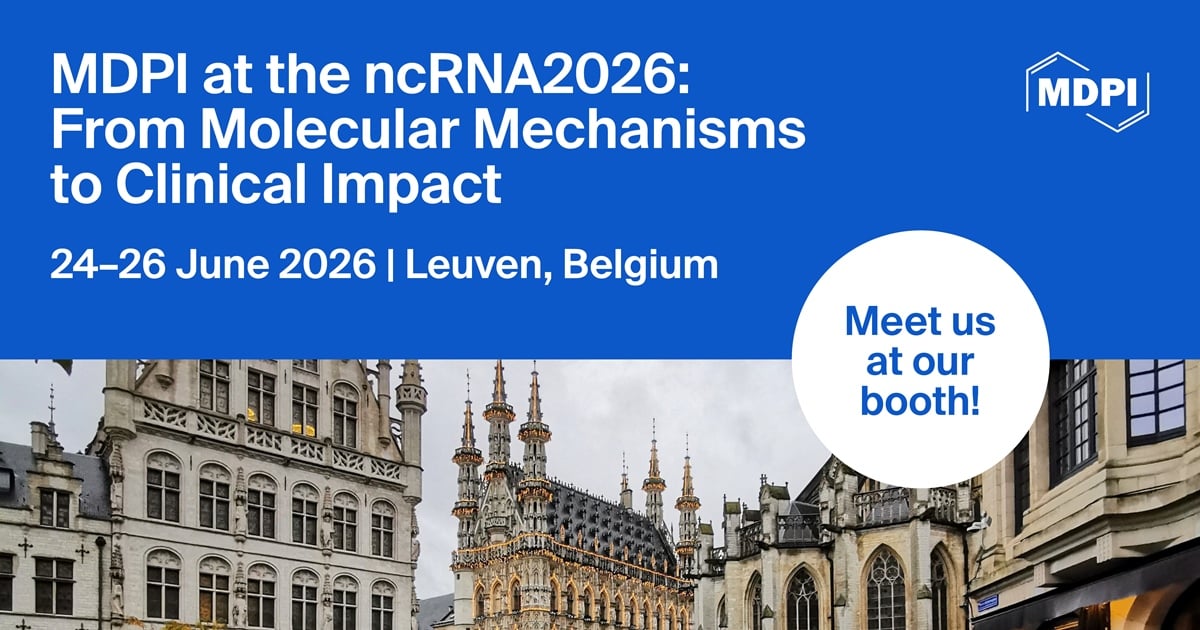
MDPI will be attending the international conference “ncRNA2026: From Molecular Mechanisms to Clinical Impact” in Leuven, Belgium, which will take place from 24 to 26 June 2026. In recent years, non-coding RNA studies have revolutionized our understanding of gene regulation, cellular networks, and disease mechanisms. ncRNA2026 will showcase the latest breakthroughs in ncRNA biology and technology through a program dedicated entirely to this field—from molecular mechanisms and clinical applications to data science and translational insights. The conference will feature distinguished international invited speakers, complemented by a strong selection of oral and poster presentations from submitted abstracts.
The following MDPI journals will be represented:
- Non-Coding RNA;
- Applied Biosciences;
- BioMed;
- BioMedInformatics;
- Biomolecules;
- Cells;
- Current Issues in Molecular Biology (CIMB);
- Current Oncology;
- Diagnostics;
- Epigenomes;
- International Journal of Molecular Sciences (IJMS);
- Targets.
If you are attending the conference, please feel free to visit our booth. Our delegates look forward to meeting you in person and answering any questions that you may have. For more information about the conference, please visit the following link: https://sciforum.net/event/ncRNA2026.
6 May 2026
Head and Neck Cancer Awareness Month, April 2026
As part of its continued efforts to support impactful cancer research and foster scientific dialogue, MDPI is spotlighting head and neck cancer in this edition. Encompassing a diverse group of malignancies affecting the oral cavity, pharynx, and larynx, head and neck cancers collectively account for over 900,000 new cases and more than 400,000 deaths globally each year.
In recent years, shifting epidemiological patterns, particularly the rise of HPV-associated cancers, have introduced new challenges and opportunities in both research and clinical practice. These developments call for deeper insights into disease mechanisms, as well as more precise approaches to diagnosis, treatment, and patient stratification.
By bringing together cutting-edge research, focused Special Issues, and an expert-led webinar, MDPI journals aim to continue to facilitate knowledge exchange and highlight emerging advances in the field. These efforts play an important role in advancing innovation, improving early detection and therapeutic strategies, and ultimately enhancing outcomes for patients worldwide.

 |
 |
 |
 |
 |
 |
 |
 |


|
Keynote speakers |
||
 |
 |
 |
|
Dr. Kousik Kumar Kesh, |
Prof. Dr. Richard Yuxiong Su, |
Dr. Jennifer Anderson, |
 |
 |
 |
|
Dr. Jay J. Liao, |
Prof. Dr. Wendell G. Yarbrough, |
Dr. Joshua D. Smith, |
Register for this webinar for free here!

“Enhancing Patient Outcomes in Head and Neck Cancer Radiotherapy: Integration of Electronic Patient-Reported Outcomes and Artificial Intelligence-Driven Oncology Care Using Large Language Models”
by ChihYing Liao, ChinNan Chu, TingChun Lin, TzuYao Chou and MengHsiun Tsai
Cancers 2025, 17(14), 2345; https://doi.org/10.3390/cancers17142345
“Advancing Head and Neck Cancer Therapies: From Conventional Treatments to Emerging Strategies”
by Aleksandra Mordzińska-Rak, Ilona Telejko, Grzegorz Adamczuk, Tomasz Trombik, Andrzej Stepulak and Ewa Błaszczak
Biomedicines 2025, 13(5), 1046; https://doi.org/10.3390/biomedicines13051046
“The Role of Dysphagia on Head and Neck Cancer Patients’ Quality of Life, Functional Disabilities and Psychological Distress: Outcomes of Cancer Rehabilitation from an Observational Single-Center Study”
by Špela Matko, Christina Knauseder, David Riedl, Vincent Grote, Michael J. Fischer, Samuel Moritz Vorbach, Karin Pfaller-Frank, Wilhelm Frank and Thomas Licht
Curr. Oncol. 2025, 32(4), 220; https://doi.org/10.3390/curroncol32040220
“PDLIM3 Regulates Migration and Invasion of Head and Neck Squamous Cell Carcinoma via YAP–Mediated Epithelial–Mesenchymal Transition”
by Fan Yang, Ying Zhou, You Zhang, Weideng Wei, Fei Huang, Dan Yang, Yixin Zhang, Ruiyang Zhang, Xiaoqiang Xia, Qianming Chen et al.
Int. J. Mol. Sci. 2025, 26(7), 3147; https://doi.org/10.3390/ijms26073147
“Inflammatory Biomarkers and Oral Health Disorders as Predictors of Head and Neck Cancer: A Retrospective Longitudinal Study”
by Amr Sayed Ghanem, Kitti Sipos, Ágnes Tóth and Attila Csaba Nagy
Int. J. Mol. Sci. 2025, 26(5), 2279; https://doi.org/10.3390/ijms26052279
“Trends in Incidence and Mortality of Head and Neck Cancer Subsites Among Elderly Patients: A Population-Based Analysis”
by Małgorzata Wierzbicka, Wioletta Pietruszewska, Adam Maciejczyk and Jarosław Markowski
Cancers 2025, 17(3), 548; https://doi.org/10.3390/cancers17030548
“Recurrent and Metastatic Head and Neck Cancer: Mechanisms of Treatment Failure, Treatment Paradigms, and New Horizons”
by William T. Barham, Marshall Patrick Stagg, Rula Mualla, Michael DiLeo and Sagar Kansara
Cancers 2025, 17(1), 144; https://doi.org/10.3390/cancers17010144
“Identification of Biomarkers for Diagnosis and Prognosis of Head and Neck Cancer: Bioinformatics Approach”
by Alexandra Fernandes and Rui Vitorino
Targets 2024, 2(4), 470-480; https://doi.org/10.3390/targets2040026
“Clinical Evidence of Methods and Timing of Proper Follow-Up for Head and Neck Cancers”
by Riccardo Gili, Simone Caprioli, Paola Lovino Camerino, Gianluca Sacco, Tommaso Ruelle, Daria Maria Filippini, Silvia Pamparino, Stefania Vecchio, Filippo Marchi, Lucia Del Mastro et al.
Onco 2024, 4(4), 275-286; https://doi.org/10.3390/onco4040020
“Artificial Intelligence in Head and Neck Cancer: Innovations, Applications, and Future Directions”
by Tuan D. Pham, Muy-Teck Teh, Domniki Chatzopoulou, Simon Holmes and Paul Coulthard
Curr. Oncol. 2024, 31(9), 5255-5290; https://doi.org/10.3390/curroncol31090389

|
“The Advances in Proton Therapy in Head-and-Neck Cancers” |
“Decoding and Remodeling the Suppressive Tumor Immune Microenvironment in Head and Neck Cancer” |
 |
 |
|
“The Role of Targeted Therapy in Head and Neck Cancers” |
“Molecular Targets for HPV-Related Head and Neck Cancer” |
 |
 |
|
“Head and Neck Cancer: From Mechanisms to Therapeutic Approaches—Advances and Challenges” |
“Targeting Head and Neck Cancer: From Tumor Microenvironment to Therapy Resistance” |
 |
 |

 |
 |
 |
6 May 2026
Current Oncology | Interview with the Author of Editor’s Choice Article—Dr. Gwynivere Davies![]()

We had the pleasure of speaking with Dr. Gwynivere Davies, who is the first author and corresponding author of the Editor’s Choice Article published in Current Oncology (ISSN: 1718-7729). Here, she will share insights into their academic journey, research focus, and the motivation behind her recent work.
“Survival Outcomes for US and Canadian Patients Diagnosed with Hodgkin Lymphoma before and after Brentuximab Vedotin Approval for Relapsed/Refractory Disease: A Retrospective Cohort Study”
by Gwynivere A. Davies, John E. Orav and Kristen D. Brantley
Curr. Oncol. 2024, 31(7), 3885-3894; https://doi.org/10.3390/curroncol31070287
Available online: https://www.mdpi.com/1718-7729/31/7/287
Dr. Gwynivere Davies obtained her BHSc (honors) and MD from the University of Calgary, Canada. She completed Internal Medicine and Hematology training followed by a Lymphoma Fellowship in 2017. From 2017 to 2020, Dr. Davies practiced general hematology with a focus on malignancies in northern Ontario where the witnessed health inequities in this underserviced area prompted her to complete a Master’s of Public Health in Epidemiology from the Harvard T.H. Chan School of Public Health in 2020. The topic of her thesis is highlighted in the above article, examining differential outcomes related to the drug approval process in Canada, among other covariates. She decided to focus her practice academically on lymphoid malignancies at McMaster University starting in 2020, where she has become the Division Head for Malignant Hematology (circa 2024) and the Lymphoma Fellowship Director. She has led numerous ICES database and health education studies, in addition to acting as local PI for multiple studies examining bispecific antibodies and immunotherapies for frontline and relapsed disease.
The following is an interview with Dr. Davies:
1. Could you please briefly introduce the main research content of the published paper?
Our population-based study assessed whether delays in Canadian public funding of novel therapies affect survival in Hodgkin lymphoma, using Brentuximab vedotin as an example. Although BV was approved by the FDA in 2011, it was not publicly funded in Canada until 2014. Comparing outcomes before and after U.S. approval (2007–2010 vs. 2011–2014) in 12,003 U.S. and 4,210 Canadian patients within the SEER and Canadian Cancer Registries, survival improved significantly in the U.S. and similarly, though not significantly, in Canada.
Key findings:
- U.S. patients had better survival improvement over time (aHR 0.87, 95% CI 0.77–0.98);
- Canadian patients had a similar but non-significant improvement (aHR 0.84, 95% CI 0.69–1.03);
- In the U.S., uninsured and Medicaid patients had worse survival than privately insured and Canadian patients.
These findings suggest that while Canadian funding delays may affect timely access, disparities within the U.S. insurance system may have a greater impact on outcomes.
2. Could you tell us a little bit about your current research?
My current research primarily focuses on incorporating novel therapies including bispecific antibodies into the frontline and relapsed/refractory setting for patients with lymphoma. In addition, my colleagues and I have utilized population level data to look at treatment-related morbidity and outcomes for patients with indolent B-cell non-Hodgkin lymphoma identified within the Ontario Cancer Registry, most recently comparing secondary primary malignancy in patients receiving frontline bendamustine–rituximab vs. historical comparators.
3. How do you evaluate research trends in this field, and what advice would you give to early-career researchers who are interested in this research area?
While many meetings shifted to virtual during the pandemic and now offer hybrid options, making access to emerging evidence easier, there remains significant value in attending select conferences in person. Panel discussions, networking, and direct engagement with experts often highlight gaps in the evidence base and generate new research hypotheses—along with the future directions sections of key articles. Many of these meetings are multidisciplinary, which is critical for developing novel research ideas, particularly as studies increasingly incorporate NGS, MRD testing, and advanced imaging. For early-career researchers, I would emphasize the importance of reading editorials, listening to podcasts, and networking, as these are all essential to developing novel ides.
4. Why did you choose Current Oncology as a platform for publishing your work, and how was your experience? Would you consider publishing your future research in Current Oncology?
Current Oncology is well-known to me from the work of colleagues and frequently publishes articles addressing therapy and challenges within the Canadian landscape. My experience was smooth with valued feedback allowing for improvement of our final article, and I would definitely consider Current Oncology for future scholarly articles.
5. How do you think the open access way of publishing impacts authors?
It is important to recognize that many researchers, especially those not specifically attached to academic institutions or those in low- and middle-income countries, have limited access to journal articles, thus comprehensive literature review, gap analysis, etc., is hindered. Open access publishing allows for significantly improved access to existing literature to allow for evidence informed care and scholarship.
6. In your opinion, which research topics will be of particular interest to the research community in the coming years?
It is always interesting to look at differences in access and the resultant effects on patient outcomes with newly available drug therapies. The progress in malignant hematology has been immense and there are so many more options for our patients, even compared to a decade ago when I started independent practice, but the rising costs for treatment are threatening to overwhelm our universal healthcare system. While some progress has been made, there continue to be substantial delays in review, stakeholder engagement and funding within Canada, unfortunately. I think it will be important to look at impacts of quality-improvement initiatives on capacity and access, such as with subcutaneous delivery of immunotherapy or outpatient CAR-T delivery, along with selection method and impacts of programs like FAST within Ontario, an accelerated drug approval pilot program, to see if we can close the gap with other OECD countries against whom Canada often performs poorly.
6 May 2026
Current Oncology | Interview with the Author of Editor’s Choice Article—Dr. Emanuele Cencini

We had the pleasure of speaking with Dr. Emanuele Cencini, the first and corresponding author of an Editor’s Choice Article in Current Oncology (ISSN: 1718-7729). Here, he shares insights into his academic journey, research focus, and the motivation behind his recent work.
“Tumor-Associated Macrophages in Multiple Myeloma: Key Role in Disease Biology and Potential Therapeutic Implications”
by Emanuele Cencini, Anna Sicuranza, Sara Ciofini, Alberto Fabbri, Monica Bocchia and Alessandro Gozzetti
Curr. Oncol. 2023, 30(7), 6111-6133; https://doi.org/10.3390/curroncol30070455
Available online: https://www.mdpi.com/1718-7729/30/7/455
Dr. Emanuele Cencini’s biography:
Dr. Emanuele Cencini graduated from the University of Siena on June 23, 2008, with a degree in medicine and surgery with a grade of 110/110 cum laude (first qualifying session). Thesis: “Identification of prognostic parameters predictive of therapeutic response in hairy cell leukemia after treatment with 2-Chlorodeoxyadenosine” (supervisor: Prof. F. Lauria). June 2014: Passed the final exam for the Specialization School in Hematology at the University of Florence on June 27, 2014, with a grade of 70/70 cum laude. Thesis: “Determination of the prognostic role of macrophage infiltration in Hodgkin’s lymphoma at diagnosis and correlation with PET re-evaluation after two cycles of treatment” (supervisor: Prof. Monica Bocchia, co-supervisor: Dr. Alberto Fabbri). April 2018: Obtained a PhD in genetics, oncology, and clinical medicine (Genomec). Coordinator: Professor Alessandra Renieri, tutor: prof. Monica Bocchia. Thesis: “Study of gene polymorphisms as predictors of treatment efficacy and toxicity in patients with indolent non-hodgkin lymphomas and mantle cell lymphoma receiving bendamustine and rituximab”. May 2019: National Scientific Qualification (ASN) as Associate Professor. Member of the “Fondazione Italiana Linfomi (FIL)”. Author of 107 indexed publications on PubMed (h-index 21) and more than 150 abstracts for National and International meetings (more than 30 as first-author). Collaboration with ERN-EuroBloodNet for lymphoid malignancies, delegate for Hematology Unit, University of Siena. Professor at the Hematology School at the University of Siena. Principal investigator and sub-investigator in many National and international clinical trials. Lead and PI of 5 studies within Rete Toscana Linfomi. Lead and PI of 5 studies within “Rete Toscana Linfomi (RTL)”.
The following is an interview with Dr. Emanuele Cencini:
1. Could you please briefly introduce the main research content of the published paper?
Multiple myeloma (MM) is characterized by multiple relapse and despite the introduction of novel therapies, including proteasome inhibitors (bortezomib, carfilzomib), monoclonal antibodies (daratumumab, isatuximab, elotuzumab), bispecific antibodies (talquetamab. Teclistamab, elranatamab) and immunomodulatory drugs (thalidomide, lenalidomide, pomalidomide) the disease becomes ultimately drug-resistant. The tumor microenvironment (TME) within the bone marrow niche includes T-cytotoxic, T-helper, reactive B-lymphoid cells and macrophages, with a complex cross-talk between these cells and the MM cells. Tumor-associated macrophages (TAM) have an important role in the MM pathogenesis, since they could promote plasma cells proliferation and angiogenesis. Macrophages can release pro-inflammatory cytokines, promote the recruitment of leukocytes to the site of inflammation and give a contribution to the tissue reparation and phagocytosis of foreign antigens, such as neoplastic antigens. After phagocytosis, macrophages perform an antigen-presenting cell (APC) function, by the exposure on their surface of tumor antigen together with class II major histocompatibility complex (MHC II), thus permitting its recognition by T-lymphocytes. However, an elevated macrophage number, as frequently reported in hematologic malignancies, could also contribute to tumor progression by multiple mechanisms, including angiogenesis, the reduction in CD8 T-cell proliferation, the recruitment of T-regulatory cells (T-regs) and the inhibition of apoptosis. The so-called TAM, as “bad guys”, are characterized by a complex interaction with malignant cells. TAM are identifiable by the CD68 marker but are further characterized by remarkable plasticity and were divided in the current classification into M1 (classically activated) and M2 (alternatively activated). The M1 TAM subtype could provoke a Th-1 immune response and play an antitumor effect, while M2 TAM have a low antigen-presenting capacity and could promote tumor progression by inducing immunosuppression and angiogenesis. Many studies demonstrated a correlation between TAM, disease progression, drug-resistance and reduced survival in lymphoproliferative neoplasms, including MM. MM plasma cells in vitro could favor an M2 TAM polarization. Moreover, a possible correlation between the pro-tumor effect of M2 TAM and a reduced sensitivity to proteasome inhibitors and immunomodulatory drugs was hypothesized. Several clinical studies confirmed CD68/CD163 double-positive M2 TAM were associated with increased microvessel density, chemoresistance and reduced survival, independently of the MM stage. In this review, we have provided an overview of the biology and clinical relevance of TAM in MM, as well as a comprehensive evaluation of a potential TAM-targeted immunotherapy.
2. Could you tell us a little bit about yourself and your current research?
I am a hematologist involved in clinical management and research for patients with lymphoproliferative disorder. Since 2013, I supported Dr. Alberto Fabbri in the management of patients with Hodgkin’s lymphoma and non-Hodgkin’s lymphoma. We manage about 200 newly diagnosed patients per year. Moreover, I have collaborated with Prof. Alessandro Gozzetti on some studies about drug resistance in MM. I have collaborated with Professor Cosima Tatiana Baldari's research group within the Hematology Unit, headed by Professor Monica Bocchia, on the molecular aspects of B-cell survival regulation. I am the first author of five full-length papers on clinical trials conducted within the Rete Toscana Linfomi (RTL) network, of which I am a member of the scientific board. I am the first author of a subanalysis of the FIL Elderly Project study published in the journal Hematological Oncology.
3. How do you evaluate research trends in this field, and what advice would you give to early-career researchers who are interested in this research area?
Treatment of lymphoid malignancies, including NHL and MM, has changed dramatically in recent years with the introduction of CAR-T cell therapy and bispecific antibodies. The current challenge is no longer only which drug to use first, but how to design optimal treatment sequencing, especially for relapsed/refractory cases.
In addition, the importance of real-world data is increasing. Many patients encountered in daily practice differ from those enrolled in clinical trials and real-world data should be carefully considered for clinical decision-making.
For early-career researchers, hematology represents an example of patient management from bench to bedside. Clinical and scientific/translational aspects intersect and are both essential to providing each patient with the best treatment strategy.
4. Why did you choose the Current Oncology journal as a platform for publishing your work, and how was your experience?
Me and my colleagues chose Current Oncology because this journal has a relevant impact factor, is PubMed indexed and is very interested to real-world studies and reviews about lymphoid malignancies, including NHL,m HL and MM. The journal publishes many clinically relevant studies, and we think that it was an appropriate choice for our present and future research. The submission was easy and the peer-review process was rapid. In addition, the reviewers’ comments were helpful in improving the quality of the manuscript. I was involved as a co-author in another published manuscript about cutaneous lymphomas and I am the corresponding author of a recently submitted manuscript focused on new prognostic factors for diffuse large B-cell lymphoma.
5. How do you think open access way of publishing impacts authors?
Open access publishing could increase the visibility of our paper and allows us to reach a wider audience without barriers. It is particularly relevant for real-world analysis in hematology, since published results can significantly influence clinical practice and could represent the backbone for future studies.
Open access could increase paper visibility and favor collaboration between experts in the field.
6. In your opinion, which research topics will be of particular interest to the research community in the coming years?
Macrophages play a crucial role in the interactions between antineoplastic therapy and the immune system. Immunotherapy, chemotherapy, and radiotherapy have been shown to modulate TAM function. In addition, TAM can also contribute to tumor resistance to chemo- and radiotherapy by promoting tumor cell survival and proliferation. Understanding the interactions between macrophages and various cancer therapies is crucial for developing more effective treatment strategies for lymphoproliferative disorders. The study of tumor microenvironment before CAR-T cell therapy could represent an interesting research field for patients with NHL and MM. Finally, CAR-Ms, that represent human primary macrophages armed with transduced chimeric antigen receptors (CARs) could be an important weapon for heavily pre-treated cases, according to their abilities, such as phagocytosis of selective antigen-expressing tumor cells and production of pro-inflammatory factors.
6 May 2026
MDPI INSIGHTS: The CEO's Letter #34 - MDPI US Office, Coatings 2026, Media and Partnerships, Recapping Poland Summit & Serbia Salon

Welcome to the MDPI Insights: The CEO's Letter.
In these monthly letters, I will showcase two key aspects of our work at MDPI: our commitment to empowering researchers and our determination to facilitating open scientific exchange.
Opening Thoughts

MDPI Opens First US Office in Philadelphia
I am delighted to highlight an important milestone in MDPI’s continued global development: the recent opening of our first office in the United States, located in Philadelphia.
This marks a significant step in building our engagement with one of the world’s most important research communities. The new office will serve as a hub for supporting scholars across the US, creating closer connections and more localized support.
As highlighted in recent coverage by our press release in InPublishing, this expansion reflects MDPI’s broader commitment to growing our international presence while remaining focused on the needs of the research community.
A Key Market for Research and Collaboration
The United States continues to play a central role in global research. To date, MDPI has published more than 237,000 articles affiliated with US institutions, and we collaborate with nearly 12,000 Editorial Board Members across the country. These relationships are fundamental to our mission of supporting Open Access and advancing scientific communication.
The opening of this office is not just about geography; it is about proximity to the communities we serve. It allows us to better understand the evolving needs of researchers while continuing to build collaboration and trust within the academic ecosystem.
The Team Behind this Milestone

This milestone reflects the efforts of teams across MDPI. I extend a special thank-you to Bob Vrooman (Head of Business Development, MDPI), who is leading this expansion, as well as to our colleagues in Toronto and across our North American teams for their continued support.
Bob shared: “MDPI is already a trusted partner of the North American research community, due in no small part to our dedicated team in Canada. Launching our first US office in Philadelphia is a great first step towards expanding MDPI’s market share and recognition in the US. I’m thrilled to be a part of this new phase in MDPI’s journey.”
As we continue to grow, our focus remains on supporting researchers globally and advancing Open Access with integrity.
Impactful Research

Coatings 2026: Highlights from Our Latest MDPI Conference (20-22 April)
I am pleased to share the successful completion of MDPI conference Coatings 2026, which took place last week in Athens from 20 to 22 April 2026. This conference brought together a diverse international community of researchers, industry experts, and partners, highlighting MDPI’s role not only as a publisher but also as a platform for scientific exchange and collaboration.
Conference Highlights
Coatings 2026 in numbers:
- The event attracted approximately 140 participants from 25 countries
- 143 submissions and a strong scientific program of talks and posters
- 2 keynote speakers and a wide range of invited contributions
- 7 sponsors and 11 media partners supporting the event
|
|
|
|
|
|


Scientific Programme
The program centered on “Safe and Sustainable by Design,” reflecting the growing importance of sustainability, regulatory frameworks, and technological innovation in materials science. Topics ranged from advanced coating technologies and additive manufacturing to AI-driven simulations and strategies to phase out potentially harmful substances in industrial processes.
Importantly, the conference brought together both academic and industrial perspectives, creating a space for dialogue on how research can translate into real-world impact. This is important as industries navigate environmental challenges, evolving regulations, and the need for more sustainable and circular approaches to production.
Thank You!
I would like to thank the entire conference team for their work in organizing this successful event. As we continue to grow, conferences like this play an important role in building our connection with global research communities, supporting interdisciplinary collaboration, and positioning MDPI at the intersection of science, technology, and societal impact.
 Members from Exelisis and MDPI EU Conference & Social Media team at the Coatings 2026 Conference in Athens, Greece.
Inside MDPI

Recent Media Coverage and Partnerships
Over the past two months, news from MDPI has enjoyed strong visibility across international publishing and academic media, reflecting our continued expansion and the increasing relevance of our work within the research community.
Below are some highlights covering partnerships, institutional agreements, and milestones that continue to shape our position in publishing – some of which are featured in leading industry platforms such as InPublishing, which is highly selective and reflects the growing recognition of MDPI’s growth within the publishing ecosystem.
Key Press Releases & Coverage (March–April 2026)
-
MDPI × Sikt (Norway): Partnership Renewal
We renewed our national Open Access agreement with Sikt, a key consortium partnership, continuing to support researchers across Norway through this partnership. The renewal was covered by several international publishing trade outlets.
Covered by: Research Information, STM Publishing News, ALPSP, Europe Says
-
MDPI × Jisc (UK): New Two-Year Open Access Agreement
A new two-year agreement with Jisc significantly expands MDPI’s footprint across UK academic institutions. Coverage appeared across major publishing industry titles in the UK and internationally.
Covered by: InPublishing, Research Information, STM Publishing News, ALPSP
-
MDPI Opens First US Office
The opening of our first US office marks an important milestone in our North American expansion to build engagement with one of the world’s leading research communities.
Coverage by: EurekAlert!, InPublishing, EdTech Innovation Hub, STM Publishing News, ALPSP
-
MDPI × SIGG: Italian Society of Gerontology and Geriatrics
We established a new partnership with the Italian Society of Gerontology and Geriatrics (SIGG), adding to our growing portfolio of society collaborations.
Coverage by: EurekAlert!, STM Publishing News, ALPSP
-
MDPI × Fast Track Health: New Journal Launch
The launch of a new journal in partnership with Fast Track Health reflects our continued expansion into emerging areas of health innovation.
Coverage by: EurekAlert!, Scienmag, STM Publishing News, ALPSP
-
MDPI 2025 Annual Report
Our 2025 Annual Report was also widely covered across international media, highlighting a 12% increase in submissions and continued investment in research integrity, infrastructure, and partnerships.
Coverage by: EurekAlert!, Research Information, STM Publishing News, ALPSP, Choice 360
Coverage also spanned multiple regions including Poland, Romania and South Korea, reflecting our ongoing efforts to communicate more effectively with regional research communities.
Looking Ahead
This coverage shows that MDPI is growing and building on its position through partnerships, visibility, and engagement across regions. As we continue to expand, our focus remains on supporting researchers globally, building on our institutional collaborations, and advancing Open Access with integrity.
Thank you to all teams involved in delivering these initiatives, and to our External Affairs team for ensuring our work is effectively communicated across the global publishing landscape!
Coming Together for Science

Recapping MDPI Poland Summit 2026 in Krakow (23 April)
On 23 April 2206, we hosted the first MDPI Poland Summit 2026 in Kraków, bringing together an engaged group of editors, researchers, and academic leaders from the country.
The Poland Summit welcomed some 45 participants, including Editors-in-Chief, Associate Editors, and Editorial Board Members, many with strong academic track records and international recognition.
Our engagements were open and constructive, focusing on MDPI’s positioning and reputation in Poland, alongside community interest in supporting our development, with active participation across our sessions, including Q&A and panel discussions.
|
|
|
|


MDPI Poland Summit Programme
From research integrity and peer review quality to AI in publishing and the future of academic communication, the agenda featured important topics currently shaping our industry.
During the day, MDPI colleagues shared a series of presentations covering:
- MDPI’s performance, growth, and impact in Poland: Stefan Tochev (CEO)
- Engagement with Academic Community: Dr. Marta Colomer (Public Affairs Lead)
- Research Integrity and Publication Ethics: Anna Pena (Research Integrity Manager)
- MDPI Editorial Process and Peer-Review Quality Metrics: Dr. Liliane Auwerter (Conference Organizer)
- AI in the Publishing Industry – Challenges, Innovation and MDPI’s vision: Dr. Enric Sayas (AI Product Owner)
- Panel Session: The Future of Academic Publishing, moderated by Dr. Marta Colomer
|
|
|
|
|
|
|
|


Poland as a Key Market for Open Access
The summit also highlighted the importance of Poland within the global research landscape.
In 2025:
- 75% of publications in Poland were made in Open Access
- 71% of those in Gold Open Access
- and over 344,000 publications produced in the last five years
MDPI plays a significant role in the Polish publishing ecosystem:
- #1 Open Access publisher in Poland
- 17% share of Open Access publications in 2025
- More than 12,500 publications from Polish institutions in 2025
- More than 91,000 publications overall since 1996
Looking Ahead
Events like the Poland Summit are an important part of how we evolve as an organization. They allow us to share the latest developments of MDPI and listen directly to our researchers and editors to better understand the market and align our development with the needs of the local community.
As MDPI continues to grow, this type of engagement will remain essential in ensuring that we are not only scaling globally, but doing so in a way that is aligned, trusted, and collaborative.

With Igor Matic (Office Manager, Krakow, Poland, MDPI) at the MDPI Poland Summit in Krakow.
Closing Thoughts

Recapping MDPI Serbia Salon 2026 in Belgrade (22 April)
On 22 April 2026, we hosted the MDPI Serbia Salon 2026 in Belgrade. The Salon welcomed over 50 participants, including more than 40 invited scholars from leading Serbian institutions, alongside colleagues from MDPI. The event also marked two important milestones: 30 years of MDPI and 10 years of our presence in Serbia, making it a celebration and an opportunity for reflection.

A Platform for Exchange
The Salon was designed not just as a series of presentations, but as a place for dialogue. Throughout the day, discussions focused on important topics around publishing today: research integrity and editorial standards, journal indexing and visibility, the evolving role of artificial intelligence, and funding and support for Open Access publishing.
|
|
|
|
|
|
|
|


Program Overview
- Opening the Salon MDPI Serbia 2026 – Serbia results and direction: Emir Ramadani (Operations Manager)
- Update on MDPI’s performance and growth: Stefan Tochev (CEO)
- Collaboration with MDPI – A personal perspective: Prof. Dr Srećko Stopić (Editorial Board Member)
- Linking Scientific Quality and Visibility: The role of indexing in publishing
- Research integrity and editorial ethics: Ana Stanković (Research Integrity Specialist)
- Artificial Intelligence in Scientific Publishing – Challenges, innovations and vision of MDPI: Dr Miloš Čučulović (Head of Technology Innovation)
It was encouraging to see the high level of engagement and discussion with the local academic community.
|
|
|
|
|
|
|
|


Publishing in Serbia
With 10 years of MDPI in Serbia (since 2016) and over 620 colleagues across 10 departments spread across offices in Belgrade and Novi Sad, MDPI continues to invest in the long-term development of the research community in Serbia and beyond.
Some high-level indicators illustrate both the strength of the local research ecosystem and MDPI’s role within it:
- 12,910 total publications in Serbia in 2025, of which 8,708 (67%) were Open Access (of which, in turn, 75% were Gold OA)
- A total of more than 55,000 publications (2021–2025), with 68% published Open Access
- 2,122 MDPI publications from Serbian institutions in 2025
- 25% of all Open Access publications in Serbia are published with MDPI
- More than 11,000 MDPI publications from Serbian institutions since 1996
- More than 75 Editorial Board Members from Serbia, including Editors-in-Chief and Associate Editors.
These figures reflect the growth of OA publishing in Serbia and the strong collaboration between MDPI and Serbia's research community.
Top 5 Publishers in Serbia (MDPI #1 with steady growth)

Looking Ahead
Research integrity and artificial intelligence will remain central topics for the industry. At the same time, clear communication of editorial processes will be essential in building trust and transparency.
Workshops and direct engagement remain among the most effective ways to strengthen these connections. As Open Access funding models continue to evolve, new opportunities for collaboration are emerging across institutions, publishers, and the broader research community.
Thank You!
The excellent feedback from participants shows the value of creating spaces where ideas can be exchanged openly and constructively. Sincere thanks to everyone who contributed to the success of this event: our speakers, participants, and especially the MDPI Serbia team for their great organization and support.

Chief Executive Officer
MDPI AG
6 May 2026
Interview with the Winner of the Current Oncology Outstanding Reviewer Award—Prof. Seamus O’Reilly

We had the pleasure of speaking with Prof. Seamus O’Reilly, the winner of the Current Oncology Outstanding Reviewer award in 2025. In this interview, he shares his experiences with peer review, his research interests, and his academic journey.
The following is our interview with Prof. Seamus O’Reilly:
1. Could you briefly introduce yourself to our readers?
I am a medical oncologist at Cork University Hospital/University College Cork Cancer Centre with a subspecialist interest in breast cancer. I am Clinical Lead at Cancer Trials Ireland which is Ireland’s national cancer clinical trials organisation. Until recently I was a member of the Executive Board of the Breast International Group which orchestrates clinical trials among 50 groups on 5 continents. My research interests include clinical trials, oncology practice including dental oncology and the palliative care oncology interface, and sustainability integration into cancer care. I have been an active participant in the peer-review community for many years, and I consider it one of the most important contributions an academic clinician can make to their field.
2. What motivates you to serve as a reviewer for Current Oncology, and what do you find most rewarding about the peer-review process?
Peer review in academic publishing is an important gatekeeper for scientific integrity. This integrity is a pivotal pillar of trust, particularly patient trust, upon which all clinical research is based. Being a peer reviewer contributes to this ecosystem and supports the critical infrastructure of trust without which we cannot innovate and improve patient outcomes. Current Oncology peer review exposes me to a range of oncology related developments from clinical trials to psychooncology—such interdisciplinary exposure broadens my perspectives, assists with ongoing research projects and identifies new ones. It exposes me to a range of scientific rigor and innovation in study design and research methodology.
3. When reviewing manuscripts, what aspects do you typically focus on (e.g., originality, methodological rigour, logical structure, ethical compliance, etc.)?
I pay close attention to methodological rigour first—if the study design or statistical analysis is flawed, the conclusions cannot be trusted regardless of how well the paper is written. Beyond that, I look at originality: does this work add meaningfully to what is already known? I also consider logical structure and clarity of argument, the appropriateness of the conclusions relative to the data presented, and ethical compliance, particularly around patient consent and data reporting standards. I try always to read a manuscript with the question in mind: would I trust this evidence when making a clinical decision?
4. For young scholars who are just beginning to participate in peer review, what specific advice would you offer?
Start by reading the journal’s reviewer guidelines carefully—each publication has its own standards and scope. When you read the manuscript, try to separate your personal opinions about the topic from an objective assessment of the work itself. Criticism is easier than craftsmanship and the work that you’re reading often reflects years or more of involvement and investment by the research team so be constructive in your comments rather than critical. Your goal is to help the authors produce the best possible version of their paper. It is also worth reviewing the peer review comments of other reviewers when you receive them at the end of the review process. Finally, never agree to review a paper if you have a conflict of interest, even a minor one—the integrity of the process depends on it.
5. Based on your experience reviewing manuscripts, what suggestions do you have for authors to make their manuscripts more readable and engaging?
There is no substitute for clarity. Authors should state their research question explicitly in the introduction and ensure that every section of the paper flows logically from it. Abstracts are often the first — and sometimes only—part that readers engage with, so they deserve particular care. Most papers are not completely deep read by readers, so the abstract is the most significant part of the paper. Graphics matter—a graphic abstract will facilitate amplification of the paper by the authors and readers, and also by funders. It also helps with social media dissemination of your work.
Equally tables and figures should be self-explanatory, with clear legends. Avoid unnecessary jargon and resist the temptation to over-interpret results: let the data speak, and be candid about limitations. A well-written discussion that honestly situates findings within the existing literature is far more persuasive than one that overclaims. Spend time curating a broad reference list which readers can use to read beyond the paper; such references can also assist with introduction and discussion sections in the paper. Always horizon scan the literature before you submit to ensure your list is up to date.
6. How do you see the role of reviewers evolving with advancements in artificial intelligence and automated tools in research publishing?
AI tools will undoubtedly take on more of the administrative and screening functions in the review process—checking for statistical errors, plagiarism, and formatting compliance. This is broadly welcome, as it frees reviewers to focus on the higher-order judgements that require genuine clinical and scientific expertise. English is the language of science but 95% of the world’s population are not-native English speakers—I always admire the standard of English in the papers I read from this global majority. I have noted that over time grammar and text nuances have improved in standard and suspect this relates to AI tools which can assist greatly in this area.
I do not think AI will replace the nuanced, experience-informed assessment that a skilled human reviewer brings. If anything, the value of expert peer review may increase as the volume of submissions grows and automated pre-screening becomes standard. While studies have shown that authors who use AI are more productive, they are also less likely to be involved in the interdisciplinary research that leads to innovation. What will be important is that journals and authors are transparent about how these tools are used.
7. How has your experience been with Current Oncology as a reviewer? What kind of support would you like to see from the journal?
My experience with Current Oncology has been very positive. The editorial team is responsive and professional, and the submission and review platform is straightforward to use. In terms of support, the use of publication templates which means that the manuscript you peer review reflects what will ultimately be in print is helpful for both authors and reviewers and speeds up the acceptance to publication time frame.
I think all journals could benefit from providing structured feedback templates that help reviewers cover the key domains consistently, as well as more systematic acknowledgement of reviewer contributions—not necessarily through payment, but through recognition that is meaningful to academic careers such as ORCID acknowledgments which are visible to grant agencies and to institutions. Peer review is an important part of the hidden curriculum in clinical research—establishment of early career traineeships should be an integral part of all scientific journals.
Open access magnifies and democratises the impact of a publication. I find paywalls are hugely frustrating—they limit the impact of published work at multiple levels such as in the clinic, in research project development, and in educational activities. However, publication charges required for open access are a significant expense in low- and middle-income countries and for emerging investigators in high income ones. Some journals have gradated charges depending on the corresponding author’s base and I feel that model should be the rule rather than the exception. I also strongly feel that peer reviewers’ work should be acknowledged by journals in the form of publication charge contributions. The current peer review model was developed in an era when there were much fewer submissions and journals and probably a greater ethos of volunteerism. Reviewer acknowledgement reflects these changes and would facilitate more timely peer review which would benefit everyone.
28 April 2026
Current Oncology | Interview with the Author of the Cover Article—Dr. Shannon Salvador

We had the pleasure of speaking with Dr. Shannon Salvador, who is the corresponding author of the cover article published in Volume 32, Issue 11 of Current Oncology (ISSN: 1718-7729). Here, she will share insights into her academic journey, research focus, and the motivation behind her recent work.
“HPV Testing, Self-Collection, and Vaccination: A Comprehensive Approach to Cervical Cancer Prevention”
by Shannon Salvador on behalf of an Advisory Committee of Federal and Provincial Experts in Support of Reducing Cervical Cancer Incidence and Advancing Equitable Healthcare for All
Curr. Oncol. 2025, 32(11), 594; https://doi.org/10.3390/curroncol32110594
Available online: https://www.mdpi.com/1718-7729/32/11/594
Dr. Shannon Salvador is a gynecologic oncologist working at the Jewish General Hospital in Montreal, QC. She completed her medical training at the University of British Columbia with residency in obstetrics and gynecology and subspecialty training in gynecologic oncology. She also earned an MSc in epidemiology and clinical research from Stanford University. Currently serving as the President of the Society of Gynecologic Oncology of Canada (GOC), Dr. Salvador’s work is deeply rooted in implementation science and health equity. Her expertise centers on utilizing technology and evidence-based medicine to dismantle barriers for under-screened individuals, ensuring that life-saving screening is accessible to all populations.
The following is an interview with Dr. Salvador:
1. Could you please briefly introduce the main research content of the published paper?
This paper provides a comprehensive, evidence-based roadmap aimed at reversing the rising incidence of human papillomavirus (HPV)-related cancers, with a primary focus on achieving the elimination of cervical cancer. Despite cervical cancer being almost entirely preventable, it remains the fastest-growing cancer in Canada, highlighting a significant gap between our clinical capabilities and current healthcare delivery.
Our report outlines a multi-level strategy focused on four critical pillars:
- Optimizing Vaccination: Addressing suboptimal national coverage—currently at approximately 64%—by advocating for the 90% target through expanded funding, public education, and the adoption of evidence-based single-dose schedules for youth;
- Transitioning to Primary HPV Screening: Moving the standard of care from cytology-based Pap smears to primary HPV DNA testing, which offers superior sensitivity for detecting precancerous lesions;
- Implementing Self-Collection: Validating and integrating self-sampling as a tool to dismantle systemic barriers—such as geographic isolation, clinical trauma, or lack of primary care access—that disproportionately affect under-screened and marginalized populations;
- Strengthening Data Systems: Emphasizing the requirement for robust, population-based registries to monitor vaccination uptake, identify under-screened individuals, and ensure a seamless pathway for follow-up and care.
Ultimately, the paper argues that elimination is only achievable through a coordinated, system-wide approach that integrates clinical innovation with equitable access.
2. Could you tell us a little bit about your current research?
My current research is rooted in implementation science, with a specific focus on optimizing outreach strategies for marginalized and geographically isolated populations. We are drawing significant insights from successful international models, such as Australia’s experience, where large portions of the population live outside major urban centers.
Like Canada, these regions face logistical barriers to traditional clinic-based screening. My work investigates the most effective methods for integrating HPV self-collection as a primary tool to dismantle these barriers, ensuring that individuals can access high-sensitivity screening regardless of their proximity to a major medical hub. A major component of this research involves evaluating the infrastructure required for robust, population-based databases. These registries are essential for longitudinal patient tracking, ensuring that individuals who screen positive are seamlessly connected to follow-up care and that our prevention efforts are measurable and sustainable across diverse demographics.
3. How do you evaluate research trends in this field, and what advice would you give to early career researchers who are interested in this research area?
We are currently seeing a paradigm shift from purely clinical research to implementation science and health equity as the primary drivers of progress. The trend is moving toward “precision public health”—using high-sensitivity tools like HPV DNA testing and self-collection kits to reach specifically those who have historically been left behind. We are also seeing a much stronger emphasis on the economic modeling of prevention, proving that the upfront cost of elimination strategies is far outweighed by the long-term health system savings.
For early career researchers in policy change and advocacy, my advice is to embrace radical collaboration. Policy change is not achieved in a vacuum; it requires working across multidisciplinary teams—oncologists, nurses, pharmacists, and community leaders—as well as bridging the gap between research and advocacy groups.
4. Why did you choose Current Oncology as a platform for publishing your work, and how was your experience? Would you consider publishing your future research in Current Oncology?
We chose Current Oncology because this article was part of a dedicated Special Issue: “Action and Impact: Prevention and Screening Strategies Contributing to the Elimination of Cervical Cancer”. This provided a unique opportunity for our paper to be presented within a collection of research specifically focused on the elimination of cervical cancer, with a significant highlight on the unique challenges and opportunities within the Canadian system.
The journal’s broad readership was a key factor, as it allowed our research to reach a multidisciplinary audience—including surgical and medical oncologists, primary care providers, and oncology nurses—who are all essential to a successful national prevention strategy. Finally, the speed of the peer-review and publication process was outstanding. The rapid turnaround meant the paper was available almost immediately to support urgent advocacy efforts and inform policy discussions when the evidence was most needed. Given this high level of professional collaboration and the tangible impact of the publication, I would certainly consider Current Oncology for my future research.
5. How do you think the open access way of publishing impacts authors?
For researchers focused on health equity and implementation science, the open access model is transformative. It removes financial barriers for community stakeholders—patient partners, advocacy groups, and health workers—who are essential to the elimination effort. Since our research emphasizes community-led solutions like HPV self-collection, the data must be accessible to those outside of traditional academia. Open access empowers community leaders and patient advocates to read the evidence directly and use it as a tool for self-advocacy. By democratizing science, we accelerate the transition from the research page to real-world engagement, ensuring that those most impacted by healthcare inequities have the facts needed to drive change from the ground up.
6. In your opinion, which research topics will be of particular interest to the research community in the coming years?
I believe AI and digital health will fundamentally transform cancer screening from a passive process into an active, predictive system. In the coming years, I expect the research community to focus on utilizing artificial intelligence to optimize registries by identifying high-risk individuals and predicting where targeted interventions are most needed. This includes streamlining the delivery and tracking of HPV self-collection kits through digital platforms, which is vital for the significant portion of under-screened individuals who currently lack primary care providers and need a direct link to the health system. Furthermore, digital databases will allow for real-time monitoring of vaccination rates and clinical outcomes, facilitating more agile, evidence-based policy-making to ensure our elimination strategies remain effective. Ultimately, the goal is to ensure these technological advancements are implemented equitably so that progress in digital health translates directly into reaching our global cervical cancer elimination targets.
28 April 2026
Current Oncology | Interview with an Author of a Cover Article—Dr. Gang Wang

We had the pleasure of speaking with Dr. Gang Wang, who is the corresponding author of the cover article published in Volume 33, Issue 1 of Current Oncology (ISSN: 1718-7729). Here, he will share insights into his academic journey, research focus, and the motivation behind his recent work.
“Machine Learning in Biomarker-Driven Precision Oncology: Automated Immunohistochemistry Scoring and Emerging Directions in Genitourinary Cancers”
by Matthew Yap, Ioana-Maria Mihai and Gang Wang
Curr. Oncol. 2026, 33(1), 31; https://doi.org/10.3390/curroncol33010031
Available online: https://www.mdpi.com/1718-7729/33/1/31
Dr. Gang Wang is a clinical pathologist at BC Cancer and a Clinical Professor at the Department of Pathology and Laboratory Medicine at the University of British Columbia. His clinical and research work focuses on genitourinary malignancies, with an emphasis on biomarker development and precision oncology.
Dr. Wang’s research program centers on identifying and validating tissue-based biomarkers that predict disease progression and treatment response, particularly in bladder, prostate, and renal cancers. His work increasingly integrates digital pathology and artificial intelligence to enable quantitative, reproducible biomarker assessment and to support personalized treatment strategies. He has led and collaborated on multiple funded projects, including AI-driven approaches for biomarker discovery and prediction of therapy response.
The following is an interview with Dr. Wang:
1. Could you please briefly introduce the main research content of the published paper?
This review really focuses on a very practical problem in pathology—how we can make biomarker assessment more consistent and quantitative. Immunohistochemistry is something we rely on every day in clinical practice, but it does have well-known limitations, especially around variability between observers and across laboratories.
In the paper, we look at how machine learning, particularly within digital pathology, can help address these issues by enabling automated and reproducible scoring of biomarkers on whole-slide images. We first discuss areas where this is already quite mature—such as ER/PR, HER2, PD-L1, and Ki-67—and then shift toward emerging applications in genitourinary cancers.
A big part of the message is that while the technology is clearly promising and increasingly robust, there’s still a gap between technical capability and clinical implementation. Bridging that gap—through validation, standardization, and workflow integration—is really the next step.
2. Could you tell us a little bit about your current research?
My work is broadly in precision oncology, with a particular focus on genitourinary cancers. I’m very interested in how we can better use the data we already generate—whether it’s pathology slides, imaging, or clinical information—to improve prediction of treatment response and outcomes.
A large part of my research involves digital pathology and AI, especially around quantitative biomarker assessment. At the same time, I’ve been increasingly working on integrating different data types—for example, combining pathology with imaging or clinical data—to build more comprehensive, clinically relevant models.
Because I’m also actively involved in clinical service and departmental leadership; I tend to approach research with a strong emphasis on translation. The goal is not just to develop models, but to make sure they can actually be used in practice and improve patient care.
3. How do you evaluate research trends in this field, and what advice would you give to early career researchers who are interested in this research area?
The field has evolved quite a bit over the past few years. Earlier work was often focused on developing algorithms and demonstrating performance, but now there’s a clear shift toward clinical applicability—things like reproducibility, external validation, and integration into real workflows.
There’s also a growing recognition that no single data type is sufficient. The future is really in multimodal approaches—bringing together pathology, imaging, and molecular data to better reflect the biology of the disease.
For early career researchers, I think one of the most important things is to stay grounded in clinically meaningful questions. It’s easy to get drawn into technical aspects, but the most impactful work usually comes from addressing real clinical needs. Building strong collaborations is also essential because this is inherently a multidisciplinary field. And finally, paying attention to data quality and validation is critical—those are often the hardest parts, but also the most important.
4. Why did you choose Current Oncology as a platform for publishing your work, and how was your experience? Would you consider publishing your future research in Current Oncology?
We chose Current Oncology mainly because of its clinical focus and broad audience. Our work sits at the intersection of pathology, oncology, and AI, so it was important to publish somewhere that reaches clinicians as well as researchers.
The experience was very positive. The review process was efficient, and the feedback was constructive. Overall, it felt like a supportive environment for this type of translational work. I would certainly consider publishing there again, especially for projects that have a strong clinical component.
5. How do you think open access way of publishing impacts authors?
I think open access has had a very positive impact overall. It allows research to be accessed much more widely, which is particularly important in fields like oncology where findings can have direct clinical implications.
From an author’s perspective, it definitely helps with visibility and dissemination. At the same time, there are practical considerations around publication costs, which can be a barrier for some groups. So while the model is very beneficial in terms of access, there’s still work to be done to make it equitable.
6. In your opinion, which research topics will be of particular interest to the research community in the coming years?
I think we’ll continue to see strong interest in multimodal approaches that combine different types of data to better understand disease biology and predict outcomes. Digital pathology and computational analysis of tissue will remain a major area, especially as we move toward more quantitative and standardized assessments.
Another important direction is the tumor microenvironment and spatial biology—understanding not just what biomarkers are present, but how they are organized and interact within tissue.
But perhaps, most importantly, there will be increasing focus on implementation—how to take these tools and actually use them in clinical practice. That includes validation, regulation, and workflow integration. In the end, the real impact will come from tools that can reliably support clinical decision-making and improve patient outcomes.
27 April 2026
MDPI World Cancer Day Webinar | April—Head and Neck Cancer Awareness Month, 30 April 2026

To commemorate World Cancer Day 2026, MDPI is pleased to introduce the “World Cancer Day 2026 Webinar Series”. Reflecting the global theme “United by Unique”, this series highlights how every story, discovery, and voice contributes to strengthening the global fight against cancer.
In our April session, we welcome leading voices in head and neck cancer research to share impactful insights, raise awareness, and highlight recent advances in prevention, diagnosis, and treatment.
Through this series, we aim to empower the global community with knowledge, inspire collaboration, and support ongoing efforts to address cancer worldwide. Together, we honor every patient’s journey, recognize every researcher’s contribution, and reinforce the power of collective action in the fight against cancer.
Date: 30 April 2026
Time: 17:00 CEST | 11:00 EDT | 23:00 CST Asia
Webinar ID: 824 5069 5488
Webinar Secretariat: journal.webinar@mdpi.com
Website: https://sciforum.net/event/WCD2026-3
Register now for free!

| Speaker | Presentation | Time (CEST) | Time (EDT) |
| Introduction | 17:00–17:10 | 11:00–11:10 | |
| Dr. Kousik Kesh | TBC | 17:10–17:30 | 11:10–11:30 |
| Q&A Session | 17:30–17:35 | 11:30–11:35 | |
| Prof. Dr. Richard Su | Artificial Intelligence in Oral Cancer Risk Prediction | 17:35–17:55 | 11:35–11:55 |
| Q&A Session | 17:55–18:00 | 11:55–12:00 | |
| Dr. Jennifer Anderson | Liposomal Doxorubicin Potentiates Anti-Tumor Immune Response in Head and Neck Squamous Cell Carcinoma | 18:00–18:20 | 12:00–12:20 |
| Q&A Session | 18:20–18:25 | 12:20–12:25 | |
| Dr. Jay Liao | Particle Beam Radiation Therapy for Head and Neck Cancer: Current Experience at The University of Washington / Fred Hutchinson Cancer Center | 18:25–18:45 | 12:25–12:45 |
| Q&A Session | 18:45–18:50 | 12:45–12:50 | |
| Dr. Wendell Yarbrough | TBC | 18:50–19:10 | 12:50–13:10 |
| Q&A Session | 19:10–19:15 | 13:10–13:15 | |
| Dr. Joshua D Smith | Mechanisms of Tobacco-Mediated Immunosuppression in Patients with HPV+ Oropharynx Cancer Who Smoke | 19:15–19:35 | 13:15–13:35 |
| Q&A Session | 19:35–19:40 | 13:35–13:40 | |
| Joint Q&A Session | 19:40–19:55 | 13:40–13:55 | |
| Closing of Webinar | 19:55–20:00 | 13:55–14:00 |
After registering, you will receive a confirmation email on how to join the webinar. Registrations with academic institutional email addresses will be prioritized.
Unable to attend? Register anyway, and we will let you know when the recording is available for viewing.
Webinar Keynote Speakers:
- Dr. Kousik Kumar Kesh, Department of Pathology, St. Louis University, USA;
- Dr. Richard Yuxiong Su, Division of Oral and Maxillofacial Surgery, The University of Hong Kong, Hong Kong S.A.R, China;
- Dr. Jennifer Anderson, MD Anderson Cancer Center, University of Texas, USA;
- Dr. Jay J. Liao, Fred Hutchinson Cancer Center, Department of Radiation Oncology, University of Washington Medical Center, USA;
- Dr. Wendell G. Yarbrough, Department of Otolaryngology (Head and Neck Surgery), School of Medicine, University of North Carolina, USA;
- Dr. Joshua D. Smith, Department of Otolaryngology (Head and Neck Surgery), University of Pittsburgh Medical Center, USA.
27 April 2026
Meet Us at the 60th Annual Scientific Meeting of the European Society for Clinical Investigation 2026 (ESCI), 3–5 June 2026, Lisbon, Portugal
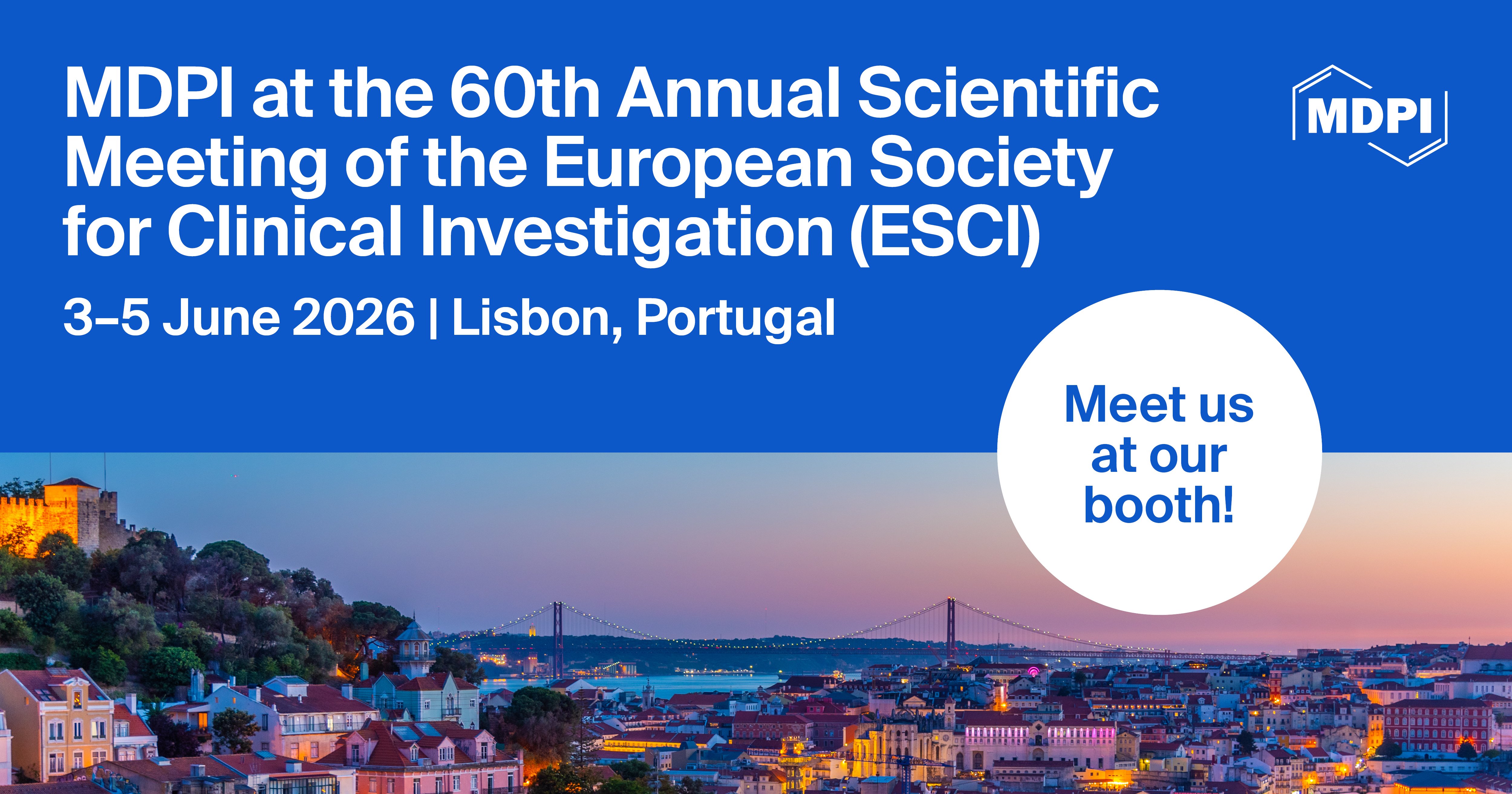
Conference: 60th Annual Scientific Meeting of the European Society for Clinical Investigation (ESCI)
Date: 3–5 June 2026
Location: Lisbon, Portugal
MDPI will participate as an exhibitor at the 60th Annual Scientific Meeting of the European Society for Clinical Investigation. We welcome researchers and professionals to visit our booth and engage with our team.
The 60th Annual Scientific Meeting (ASM) of the European Society for Clinical Investigation (ESCI) will be held from 3 to 5 June 2026. It can bring together 500–600 scientists, medical professionals, and innovation leaders from across Europe and beyond to explore the theme “Research in Action: Building Healthier Futures”. The scientific program will feature a rich blend of disciplines—spanning cardiovascular science, endocrinology, obesity, metabolism and MASLD, mitochondrial biology, oncology and immunology, rheumatology, and neurosciences. This year, we will shine a spotlight on life transitions in women, unravelling health and disease journeys from pregnancy to menopause. The program will also highlight today’s most transformative biomedical breakthroughs, from AI-enabled diagnostics to gene editing and precision therapies.
The following open access journals will be represented:
- Reports;
- Medicina;
- Diagnostics;
- JPM;
- BioMed;
- Complications;
- Pharmacy;
- NeuroSci;
- JCRM;
- Current Oncology;
- JCM;
- Physiologia;
- Proteomes;
- Diseases.
If you are planning to attend the above event, please feel free to start a conversation with us. Our delegates look forward to meeting you in person and answering any questions that you may have. For more information, please visit https://barcelo.eventsair.com/QuickEventWebsitePortal/esci-2026/web.
