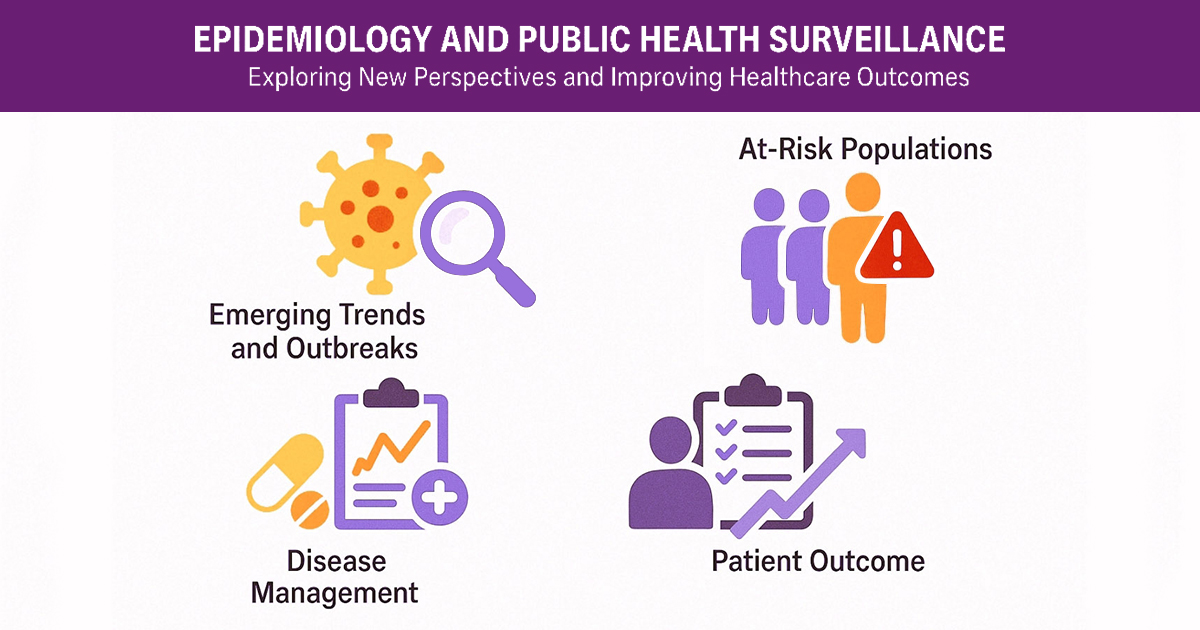




Epidemiology and Public Health Surveillance: Exploring New Perspectives and Improving Healthcare Outcomes

A special issue of Healthcare (ISSN 2227-9032). This special issue belongs to the section "Healthcare in Epidemics and Pandemics".

Deadline for manuscript submissions: 7 October 2026 | Viewed by 9642

Special Issue Editor


E-Mail Website
Guest Editor
Faculty of Medicine, University of Novi Sad, 21000 Novi Sad, Serbia
Interests: epidemiology; public health; prevention; immunization; seroprevalence; surveillance; cancer; health policy

Special Issue Information

Dear Colleagues,

Understanding the epidemiology of common diseases is essential for disease prevention, early detection, and providing timely treatment. Epidemiological principles and methods are indispensable in the current era of evidence-based medicine. The healthcare applications of epidemiological research and the translation of epidemiological findings into public health practices is of particular interest today. Modern epidemiology, due to its interdisciplinary nature, uses a large amount of data—from molecular and clinical to environmental and digital information—to identify and target risk factors in populations and to reduce the occurrence of diseases with appropriate prevention strategies.  

We are pleased to invite authors to present their contribution(s) to the Special Issue “Epidemiology and Public Health Surveillance: Exploring New Perspectives and Improving Healthcare Outcomes”. Taking into account the multidisciplinary approach of the Healthcare journal, in this Special Issue, we wish to cover a broad area of research—from theoretical concepts to the practical and applied methods of epidemiology on emerging trends and outbreaks, as well as identifying at-risk populations and research on improving disease management and patient outcome.  

Our objective is to respond to the needs of the scientific community for robust research and the critical appraisal of the qualitative and quantitative evidence on the trends, etiology, prevention and prognosis of diseases in the age of sustainable research.  

In this Special Issue, we welcome the submission of high-quality original research articles, systematic reviews, meta-analyses, and study protocols on clinical trials, focusing on important topics in the epidemiology of communicable and noncommunicable diseases as well as on the healthcare applications of epidemiological research, the policy impact of epidemiological findings, and on the exploration of different surveillance practices. We would like to collect great achievements in epidemiology and provide a holistic and global overview of population health, risk factors, successful prevention strategies, and control measures.

We invite researchers to further explore the influence of risk factors and their contribution to the identification of disease occurrence in populations worldwide and to submit their results. In particular, we wish to stimulate the examination of epidemiological data from different countries and/or regions with the goal of finding common patterns in disease occurrence. The evaluation of the prevention programs and strategies across different settings is also welcome. 

In this Special Issue, we would like to address the role of epidemiology in the new age—exploring new ways of using technology in the context of the public health surveillance, of improving healthcare practice, patient outcome, and beyond. In addition, research that explores a complex interplay of cultural, sociological, and economic factors that influence prevalence and incidence are particularly welcome.

We would also like to place additional focus on epidemiological research in high-risk, underserved, marginalized, and vulnerable populations, like persons with disabilities; migrants and refugees; elderly and frail individuals; ethnic, racial, and sexual minorities, etc. These systematically disadvantaged populations often face different challenges when accessing public health and healthcare services and, with respect to the general population, often experience disproportionally higher rates of disease occurrence, especially infectious diseases.

Effective surveillance should provide effective disease control, and strengthening public health surveillance should be a priority in the management of population health. Thus, we wish to encourage submissions that explore sustainability and the functioning of the public health surveillance, with particular focus on the tracking and monitoring of the emerging outbreaks, trends and patterns in risk factors, and agents and disease occurrence, as well as offering timely control solutions.  

Finally, this Special Issue provides a platform to disseminate current epidemiological research that can assist in the evidence-based decision making with the final aim to optimize public health efforts and to improve population’s health. Multidisciplinary work and work resulting from international collaborations are particularly welcome. We look forward to receiving your valuable scientific contributions.

Dr. Vladimir Vuković
Guest Editor

Manuscript Submission Information

Manuscripts should be submitted online at www.mdpi.com by registering and logging in to this website. Once you are registered, click here to go to the submission form. Manuscripts can be submitted until the deadline. All submissions that pass pre-check are peer-reviewed. Accepted papers will be published continuously in the journal (as soon as accepted) and will be listed together on the special issue website. Research articles, review articles as well as short communications are invited. For planned papers, a title and short abstract (about 250 words) can be sent to the Editorial Office for assessment.

Submitted manuscripts should not have been published previously, nor be under consideration for publication elsewhere (except conference proceedings papers). All manuscripts are thoroughly refereed through a single-blind peer-review process. A guide for authors and other relevant information for submission of manuscripts is available on the Instructions for Authors page. Healthcare is an international peer-reviewed open access semimonthly journal published by MDPI.

Please visit the Instructions for Authors page before submitting a manuscript. The Article Processing Charge (APC) for publication in this open access journal is 2700 CHF (Swiss Francs). Submitted papers should be well formatted and use good English. Authors may use MDPI's English editing service prior to publication or during author revisions.

Keywords

  • epidemiology
  • infectious diseases
  • noncommunicable diseases
  • public health
  • surveillance
  • risk factors
  • disease etiology
  • disease control
  • prevention strategy
  • policy impact

Benefits of Publishing in a Special Issue

  • Ease of navigation: Grouping papers by topic helps scholars navigate broad scope journals more efficiently.
  • Greater discoverability: Special Issues support the reach and impact of scientific research. Articles in Special Issues are more discoverable and cited more frequently.
  • Expansion of research network: Special Issues facilitate connections among authors, fostering scientific collaborations.
  • External promotion: Articles in Special Issues are often promoted through the journal's social media, increasing their visibility.
  • Reprint: MDPI Books provides the opportunity to republish successful Special Issues in book format, both online and in print.

Further information on MDPI's Special Issue policies can be found here.

Published Papers (5 papers)

Order results
Result details
Select all
Export citation of selected articles as:

Research

22 pages, 1767 KB  
Article
Trends in Unintentional Drowning Mortality Among U.S. Adults Aged ≥25 Years, 1999–2024: A U.S. Surveillance Analysis
by Akef Obeidat, Mohammad Dawar Zahid, Eshal Atif, Sadia Qazi, Anushah Faheem Ilyas, Fnu Urooba, Mazhar Ali, Vishan Das, Muhammad Rai Hassan Ashraf and Muhammad Atif Mazhar
Healthcare 2026, 14(7), 920; https://doi.org/10.3390/healthcare14070920 - 1 Apr 2026
Viewed by 866
Abstract
Background/Objectives: Drowning is a leading preventable cause of unintentional injury death, yet U.S. prevention efforts have largely focused on children. Despite international declines in pediatric drowning mortality, adult trends remain poorly characterized. We examined long-term trends and disparities in unintentional drowning mortality among [...] Read more.
Background/Objectives: Drowning is a leading preventable cause of unintentional injury death, yet U.S. prevention efforts have largely focused on children. Despite international declines in pediatric drowning mortality, adult trends remain poorly characterized. We examined long-term trends and disparities in unintentional drowning mortality among U.S. adults aged ≥25 years from 1999 to 2024. Methods: Using CDC WONDER Multiple Cause of Death data, drowning deaths were identified using ICD-10 codes W65–W74, V90, and V92. Age-adjusted mortality rates (AAMRs) per 100,000 were computed by direct standardization to the 2000 U.S. standard population. Joinpoint regression estimated the annual percent change (APC) and average annual percent change (AAPC). Three sensitivity analyses assessed transport-related code exclusion, pandemic-era restriction, and multiple cause-of-death coding. Results: During 1999–2024, 101,743 unintentional drowning deaths occurred among U.S. adults aged ≥25 years (76,554 males; 25,201 females), with 58.09% in natural water or outdoor settings. The overall AAMR showed a non-significant increase (AAPC: 0.55%, p = 0.054); however, joinpoint analysis identified stable rates through 2013 followed by a significant sustained increase (APC: 1.32%, 95% CI: 0.32–2.32, p = 0.012). The male-to-female rate ratio narrowed significantly from 4.00 (1999) to 3.32 (2024) (ratio of rate ratios: 0.83, p = 0.0006), driven by a sustained female increase (AAPC: 1.27%, p < 0.001). Adults aged 65–85+ showed the steepest rise (AAPC: 1.15%, p < 0.001). Non-Hispanic AI/AN adults had the highest rates (3.47–5.44 per 100,000), and non-metropolitan areas consistently exceeded metropolitan rates. Conclusions: A significant upward trajectory has persisted since 2013, with marked disparities by age, sex, race/ethnicity, and geography. Adult-focused, equity-driven prevention strategies aligned with USNWSAP implementation are needed to address this underrecognized burden. Full article
Show Figures

Graphical abstract

13 pages, 1067 KB  
Article
Effect of Colchicine Use and Usual Care Alone on the Rate of Progression to Chronic Kidney Disease and Mortality in Patients with Heat-Related Injury
by Min-Feng Tseng, Chi-Hsiang Chung, Wu-Chien Chien, Shang-Jyh Hwang, Yi-Shiou Chiou and Chia-Chao Wu
Healthcare 2026, 14(6), 744; https://doi.org/10.3390/healthcare14060744 - 16 Mar 2026
Viewed by 496
Abstract
Background: Heat-related injury (HRI) induces systemic inflammation and is associated with acute kidney injury and subsequent progression to chronic kidney disease (CKD). Currently, no established pharmacological intervention exists to prevent long-term renal deterioration following HRI. This study aimed to evaluate the association between [...] Read more.
Background: Heat-related injury (HRI) induces systemic inflammation and is associated with acute kidney injury and subsequent progression to chronic kidney disease (CKD). Currently, no established pharmacological intervention exists to prevent long-term renal deterioration following HRI. This study aimed to evaluate the association between colchicine use and long-term renal outcomes in patients with HRI. Methods: We conducted a nationwide retrospective cohort study using data from the Taiwanese National Health Insurance Research Database. Adult patients diagnosed with HRI between 2000 and 2015 were identified. Colchicine users were defined as patients who received colchicine within 7 days after the index HRI event and were compared with propensity score-matched nonusers. The primary outcomes included CKD progression, initiation of hemodialysis, CKD-related mortality, and all-cause mortality. Results: A total of 4961 eligible patients with HRI were included in the analysis. During a median follow-up of 9.65 years, colchicine use was associated with a significantly lower risk of CKD progression, initiation of hemodialysis, and CKD-related mortality compared with nonuse. No significant association was observed between colchicine use and all-cause mortality. Conclusions: Colchicine use following HRI was associated with favorable long-term renal outcomes, including reduced risks of CKD progression and dialysis. Although causal inference cannot be established due to the observational design, these findings suggest a potential renoprotective association of colchicine in patients with HRI. Full article
Show Figures

Figure 1

12 pages, 250 KB  
Article
Nodule Characteristics, Clinical Risk Factors, and Radiologist Experience as Predictors of Positive Baseline LDCT Screening Results
by Jelena Djekic Malbasa, Tomi Kovacevic, Marija Vukoja, Daliborka Bursać, Darijo Bokan, Vladimir Stojšić and Bojan Zaric
Healthcare 2025, 13(21), 2734; https://doi.org/10.3390/healthcare13212734 - 29 Oct 2025
Cited by 1 | Viewed by 797
Abstract
Background/Objectives: Early detection of lung cancer through low-dose computed tomography (LDCT) significantly improves patient outcomes. Identifying predictors of positive baseline LDCT findings can optimize screening programs and cost-effectiveness, particularly in regional settings. Methods: We conducted a retrospective analysis of baseline LDCT screenings performed [...] Read more.
Background/Objectives: Early detection of lung cancer through low-dose computed tomography (LDCT) significantly improves patient outcomes. Identifying predictors of positive baseline LDCT findings can optimize screening programs and cost-effectiveness, particularly in regional settings. Methods: We conducted a retrospective analysis of baseline LDCT screenings performed in 2024 at three sites in Vojvodina, Serbia. Eligible participants were adults aged 50–74 years with a significant smoking history. Lung nodules were evaluated using the Lung-RADS system. Sociodemographic, clinical, and nodule-related variables, as well as radiologist experience (>10 vs. <10 years), were assessed. Multivariable logistic regression identified independent predictors of positive LDCT outcomes (Lung-RADS 3, 4A, 4B, 4X). Results: Overall, 17.6% (613/3479) of participants had positive baseline LDCT findings. Multivariable analysis showed that nodule type (semi-solid: OR = 4.01, 95% CI: 1.46–11.01; solid: OR = 8.86, 95% CI: 4.53–17.32), nodule morphology (smooth: OR = 0.42, 95% CI: 0.22–0.81; perifissural: OR = 0.16, 95% CI: 0.08–0.33; endobronchial: OR = 47.99, 95% CI: 12.35–186.58), nodule diameter (OR = 1.83 per mm, 95% CI: 1.71–1.96), presence of COPD (OR = 1.95, 95% CI: 1.23–3.08), age (OR = 1.02 per year, 95% CI: 1.00–1.04), and radiologist <10 years working experience (OR = 1.47, 95% CI: 1.23–3.08) were independent predictors of positivity. Conclusions: Baseline LDCT positivity is influenced by nodule characteristics, patient sociodemographic and clinical factors, and radiologist experience. These findings can inform targeted screening strategies in high-risk populations. Full article
26 pages, 1075 KB  
Article
Early Activation of a Multilevel Prostate Cancer Screening Model: Pilot Phase Results and Strategic Perspectives in Lombardy Region
by Elena Azzolini, Danilo Cereda, Sara Piccinelli, Michela Viscardi and Silvia Deandrea
Healthcare 2025, 13(16), 2041; https://doi.org/10.3390/healthcare13162041 - 18 Aug 2025
Cited by 1 | Viewed by 2868
Abstract
Background/Objectives: Prostate cancer is the most frequently diagnosed cancer among men in Italy, yet no national population-based screening program exists. In response to new European Council recommendations, the Lombardy Region launched a pilot in November 2024 to assess the feasibility of a [...] Read more.
Background/Objectives: Prostate cancer is the most frequently diagnosed cancer among men in Italy, yet no national population-based screening program exists. In response to new European Council recommendations, the Lombardy Region launched a pilot in November 2024 to assess the feasibility of a digitally enabled, risk-adapted screening model. Methods: Men turning 50 were invited to voluntarily self-enroll through the regional electronic health record (FSE). A digital questionnaire assessed eligibility and family history (FH); eligible individuals (97,849 men without a PSA test in the past two years in the regional database) were offered free PSA testing. Risk stratification guided follow-up: men with PSA >3 ng/mL or a positive FH were referred to urology; others were assigned 2- or 5-year recall based on PSA level. Results: By June 2025, 8558 men had enrolled (8.7% uptake), 6072 were eligible; 644 (10.6%) reported a positive FH. Among those tested, 58.4% had PSA < 1 ng/mL and were FH-negative, 25.8% had PSA > 1 and <3 ng/mL and were FH-negative, and 15.9% met referral criteria. Digital triage was efficient and ensured care continuity without burdening specialists. Participation varied by local health authority (ATS), depending on implementation context. Preliminary data show a 25.9% reduction in urology consultations and a 35% reduction in MRI use compared to standard care, with no biopsy rate increase. Conclusions: The pilot demonstrates the technical feasibility, safety, low administrative burden, and potential sustainability of digital, risk-stratified prostate cancer screening. While participation was low without active invitations, early results support expansion with improved outreach. Lombardy’s experience offers a scalable, EU-aligned model for broader implementation across Italy and other health systems seeking to balance early detection with resource efficiency. Full article
Show Figures

Figure 1

14 pages, 578 KB  
Article
The Impact of a Public Awareness Campaign on Perceptions of Lung Cancer Risk Factors and Screening Guidelines
by Rayan A. Qutob, Lama Abdullah Alkhwildi, Amal Abdullah Alghtani, Tamadher Misfer Alsalouli, Arwa Saif Alarifi, Mohammed Salem M. Alshehri, Hessah Abdulrahman Almojel, Abdullah Alaryni, Eysa Alsolamy, Yousef Alammari, Abdulrahman Alanazi, Abdullah Alghamdi, Mohammad A. Alhajery, Khalid I. AlHussaini and Mosaad Almegren
Healthcare 2025, 13(13), 1555; https://doi.org/10.3390/healthcare13131555 - 30 Jun 2025
Viewed by 2647
Abstract
Introduction: Lung cancer (LC) is the leading cause of cancer mortality and is responsible for 1.8 million deaths annually. The early identification of risk factors, particularly smoking, is essential in improving outcomes. Public health campaigns play a crucial role in raising awareness, but [...] Read more.
Introduction: Lung cancer (LC) is the leading cause of cancer mortality and is responsible for 1.8 million deaths annually. The early identification of risk factors, particularly smoking, is essential in improving outcomes. Public health campaigns play a crucial role in raising awareness, but misinformation and resource limitations hinder their effectiveness. This study evaluates the impact of a public awareness campaign on Saudi citizens’ understanding of lung cancer (LC) risks and screening. Methods: An interventional study was conducted in Riyadh, Saudi Arabia, using pre- and post-campaign self-administered surveys. A total of 1,426 participants aged 18 or older were surveyed either before or after the campaign. A matching approach was used to control for confounding variables. Each participant may receive a maximum total score of 14 for their knowledge of lung cancer and a maximum total score of 10 for their awareness of lung cancer screening. Results: A total of 713 participants were surveyed pre-campaign, and 859 post-campaign). After matching, 308 participants remained for the analysis, with no significant demographic differences between those who were surveyed before and after the campaign. Post-campaign, awareness was significantly improved, which is reflected in an increase in accurate responses to key statements. The median knowledge scores increased from 11.0 to 23.0, indicating a substantial increase in understanding. Conclusions: The campaign effectively enhanced the awareness of LC risk factors and screening. However, new misconceptions regarding universal screening emerged, emphasizing the need for clear messaging. Future initiatives should address socioeconomic and gender disparities, promote collaborative decision-making, and implement long-term educational strategies. These findings align with previous research and highlight areas for improvement in public health outreach. Full article
Show Figures

Figure 1

Back to TopTop