Skip to Content

Magnetism

Magnetism is an international, peer-reviewed, open access journal on science and technology for all original researches on magnetism and related fields, published quarterly online by MDPI. The UK Magnetics Society (UKMagSoc) is affiliated with Magnetism and their members receive discounts on the article processing charges.

Get Alerted

Add your email address to receive forthcoming issues of this journal.

All Articles (145)

  • Article
  • Open Access

The growing demand for reliable and sustainable renewable energy systems has increased interest in advanced electrical machines for wind energy conversion. Among these, the multiphase switched reluctance generator (SRG) offers advantages such as simple construction, low cost, high reliability, and inherent fault-tolerant capability. This paper presents the modeling and performance analysis of a four-phase switched reluctance generator under normal and fault conditions for wind energy applications. A MATLAB/Simulink model of the SRG integrated with a variable-speed wind turbine is developed to evaluate key performance parameters, including voltage, current, torque, speed, and flux characteristics. To investigate fault tolerance, phase exclusion faults are introduced and the generator performance is analyzed under degraded operating conditions. The simulation results show that the multiphase SRG continues operation even after the loss of one phase, although with increased torque ripple and current stress in the remaining phases. The implemented excitation and converter control strategies maintain system stability and acceptable performance under the investigated operating-speed conditions and phase-exclusion fault. The present work considers representative operating-speed conditions rather than a continuously varying wind-speed profile. The results demonstrate that multiphase SRGs provide reliable and robust operation for wind energy conversion systems. These characteristics make SRGs a potential option for wind-energy conversion applications.

Magnetism

22 September 2026
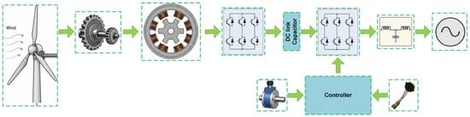
Block-level architecture of the SRG-based wind energy conversion system, including the wind turbine, gearbox, sensing units, power converter, DC-link, inverter, and grid interface.
  • Article
  • Open Access

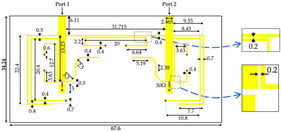
In this paper, a sharp band-pass filter (BPF) with enhanced pass-band and stop-band specifications is presented. The filter can be utilized for 5G mid-band applications along with LTE42 (3.4–3.6 GHz) and LTE43 (3.6–3.8 GHz) to comply with the standards of different countries. The initial design of the filter consists of a high impedance transmission line connecting the filter’s two ports, which are terminated by 50 Ω resistors. Although this design results in reasonable pass-band characteristics, its stop-band and transition-band characteristics are relatively weak. Due to this shortcoming, the stop-band and transition-band characteristics of the filter are improved by locating sharp transmission zeros within the stop-band to determine the filter bandwidth and to significantly increase the stop-band attenuation. These modifications are achieved by inserting a pair of shunt short- and open-circuit stubs, a pair of short-circuited U-shaped parasitic elements, and a central short-circuited U-shaped element. The filter is mathematically analyzed and modeled, and the design steps are also demonstrated. The simulation and measured results are compatible, and the measurements show an insertion loss of 0.35 dB, stop-band attenuation larger than 20 dB, sharp transmission zeros, and a transition-band value within 10% of the center frequency.

Magnetism

12 September 2026

Geometry of the proposed filter (all dimensions are in mm).
  • Review
  • Open Access

Soft Magnetic Materials at the Cutting Edge: Powering Tomorrow’s Technologies

  • Rong-Kun Zheng,
  • Yanyan Song and
  • Zhengqiang Pan
  • + 3 authors

Soft magnetic materials determine the efficiency, size, thermal burden, and reliability of transformers, inductors, electrical machines, electromagnetic interference (EMI) components, and magnetic sensors. This review differs from property-by-property surveys by using a condition-aware, application-driven framework: magnetic performance is compared only together with frequency, peak magnetic flux density, temperature, waveform, direct current (DC) bias, geometry, and processing route. After a concise treatment of coercivity, permeability, saturation polarization, magnetostriction, and loss mechanisms, the major material families are quantitatively compared in terms of magnetic performance, processing, cost, and industrial maturity. The review then maps these families onto grid transformers, high-speed electrical machines, wide-bandgap power converters, integrated magnetics, wireless power transfer, aerospace electrical systems, and radiofrequency components. Particular attention is given to the trade-offs among saturation polarization, permeability, core loss, mechanical strength, thermal stability, manufacturability, and sustainability. Recent advances in strong and ductile soft magnets, wide-temperature ferrites, vortex and easy-plane composites, mixed-powder soft magnetic composites, nanocrystalline flake-ribbon cores, and additive manufacturing are assessed by technology maturity. A prioritized roadmap identifies near-term needs for standardized condition-specific data and manufacturing control, medium-term opportunities in magnetic–thermal co-design and digital twins, and longer-term prospects for adaptive, self-healing, and GHz magnetic architectures. The resulting framework is intended to support both material development and defensible industrial material selection.

Magnetism

26 August 2026

Schematic polarization J(H) and magnetic flux density B(H) loops. (a) HcJ is the reverse field at which polarization J is zero; Js and Jr are saturation and remanent polarization. (b) HcB is the reverse field at which magnetic flux density B is zero; Br is remanent magnetic flux density. Because B = J + μ0H, Br = Jr at H = 0 when both are expressed in tesla, and HcB and HcJ are usually close for very soft materials measured in closed magnetic circuits. The distinction remains useful because HcJ is a material-centered polarization metric, whereas HcB is read directly from the device-relevant B–H loop. Orange and blue curves indicate descending and ascending branches, respectively.
  • Article
  • Open Access

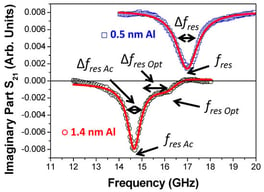
The static and dynamic magnetic responses of symmetric Fe/Al/Fe trilayers were investigated as a function of the thickness of the nonmagnetic spacer layer thickness, with tAl ranging from 0 to 2 nm. Samples showed ferromagnetic coupling between Fe layers for all values of tAl, despite presenting characteristics of low-quality thin films, including high roughness and low-saturation magnetic moments. However, it was demonstrated that inclusion of a thin nonmagnetic Al spacer is an effective method to reduce the effective apparent damping parameter (αapp) of the dominant acoustic mode of the multilayered system. Specifically, αapp was reduced from 0.030 to 0.013 when the Al spacer thickness exceeded the characteristic roughness of the layers (tAl ≥ 1.4 nm). This reduction coincided with the appearance of distinct acoustic and optical resonance modes, indicating a transition from a direct exchange-coupled regime dominated by pinholes to a regime dominated by dipolar coupling. This suggests that decoupling the ferromagnetic layers is a viable strategy for developing low-damping Fe-based materials, even in systems with significant structural imperfections.

Magnetism

17 August 2026

Examples of the imaginary part of the S21 parameter for 10 nm Fe/tAl/10 nm Fe trilayer with tAl = 0.5 (□) and 1.4 nm (○) of Al. The red lines are fits of the imaginary part of the S21 parameter for each sample. The graph of the sample with 0.5 nm Al has been shifted vertically (+0.008) to facilitate a better visualization of the figure. In the sample with 1.4 nm, two peaks are observed that have been associated with the acoustic and optical modes.

Highly Accessed Articles

News & Conferences

Latest Issues

Open for Submission

Journal Sections

Mathematical Modelling and Physical Applications of Magnetic Systems
Reprint

Mathematical Modelling and Physical Applications of Magnetic Systems

Editors: Roberto Zivieri, Giancarlo Consolo, Israa Medlej
XFacebookLinkedIn
Magnetism - ISSN 2673-8724