Communication

Sacrificial Layer Technique for Releasing Metallized Multilayer SU-8 Devices

1
Department of Chemistry and Materials Science, School of Chemical Engineering, Aalto University, 02150 Espoo, Finland
2
Division of Pharmaceutical Chemistry and Technology, Faculty of Pharmacy, University of Helsinki, 00014 Helsinki, Finland
*
Author to whom correspondence should be addressed.
Micromachines 2018, 9(12), 673; https://doi.org/10.3390/mi9120673
Submission received: 15 November 2018 / Revised: 7 December 2018 / Accepted: 10 December 2018 / Published: 19 December 2018
(This article belongs to the Special Issue SU-8 for Microfluidics and Lab-on-a-chip)

Abstract

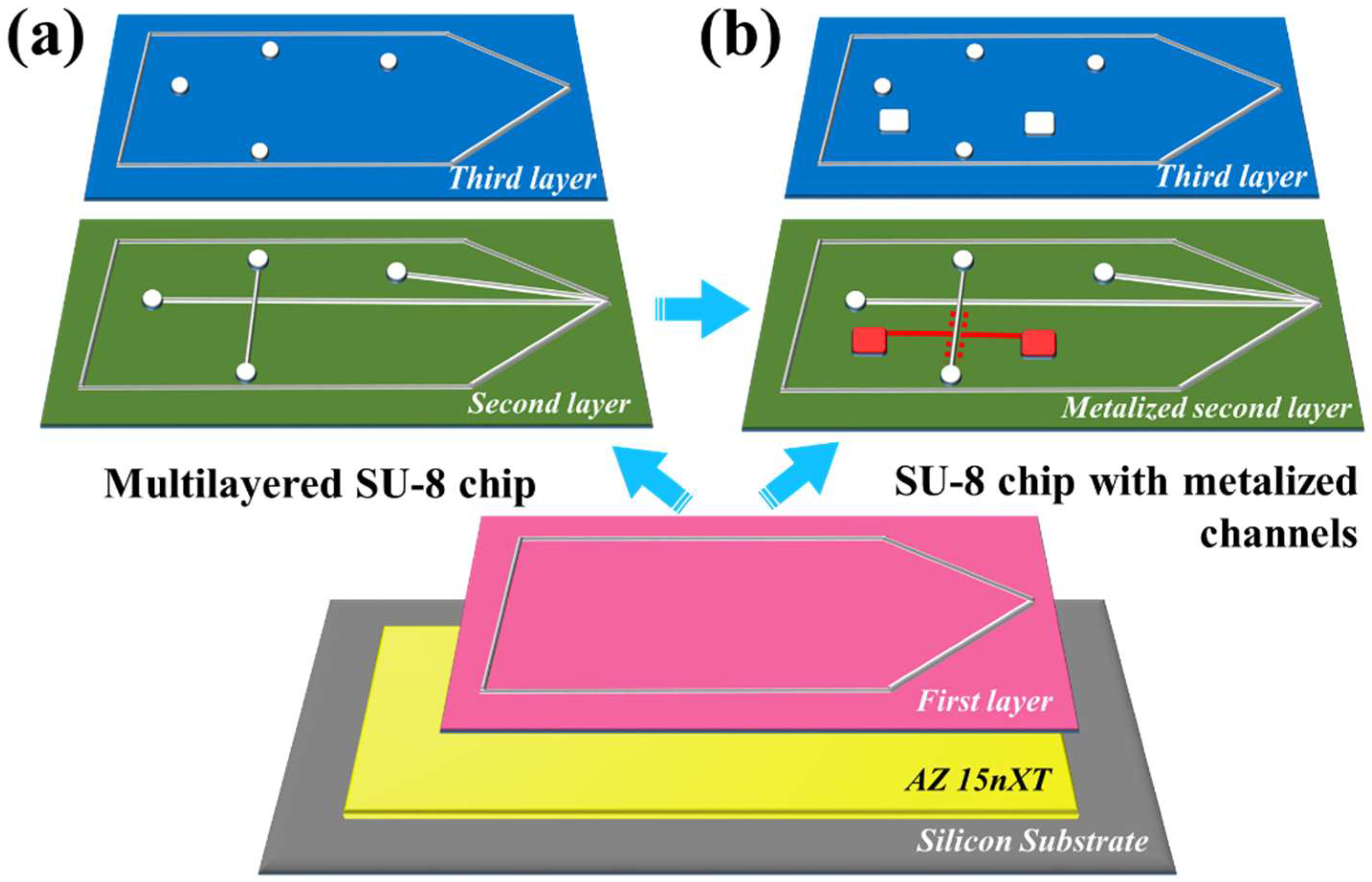
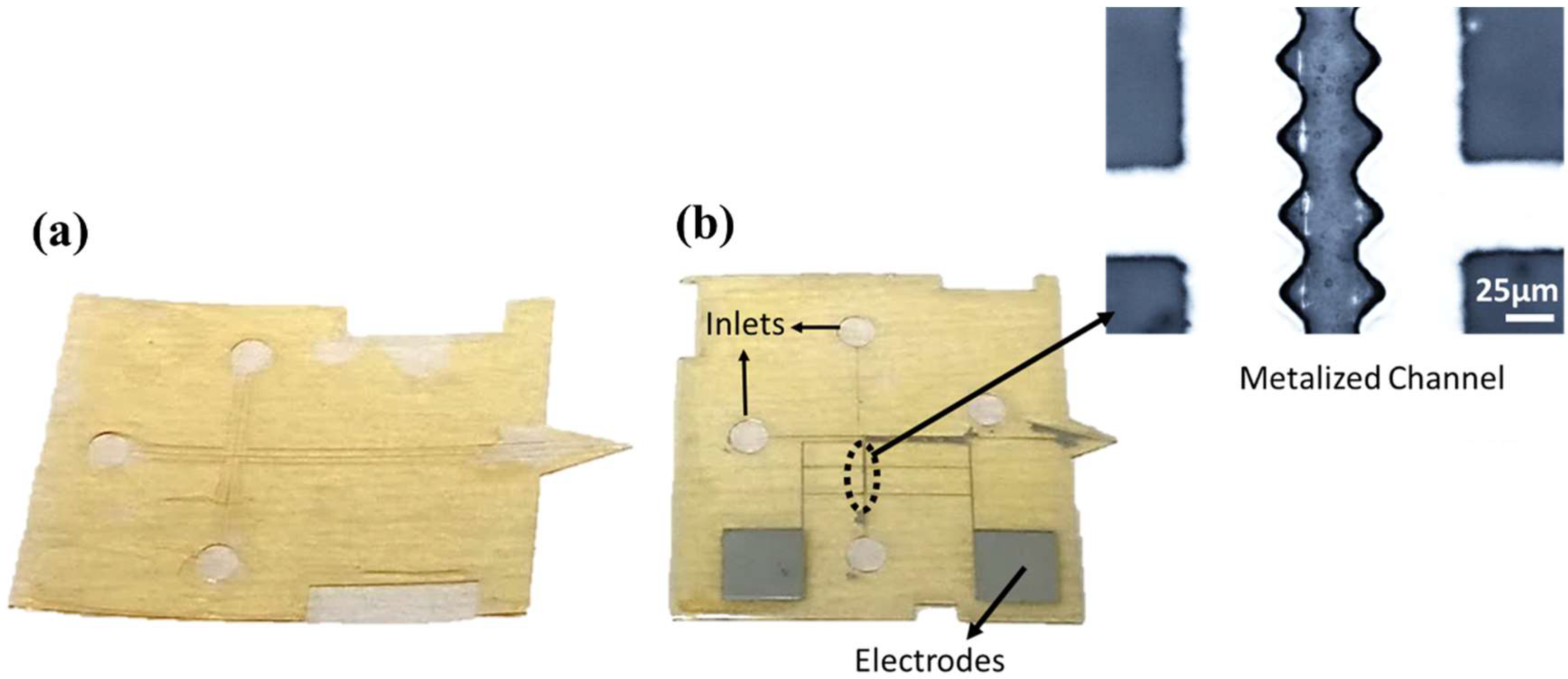
The low fabrication cost of SU-8-based devices has opened the fields of point-of-care devices (POC), µTAS and Lab-on-Chip technologies, which call for cheap and disposable devices. Often this translates to free-standing, suspended devices and a reusable carrier wafer. This necessitates a sacrificial layer to release the devices from the substrates. Both inorganic (metals and oxides) and organic materials (polymers) have been used as sacrificial materials, but they fall short for fabrication and releasing multilayer SU-8 devices. We propose photoresist AZ 15nXT (MicroChemicals GmbH, Ulm, Germany) to be used as a sacrificial layer. AZ 15nXT is stable during SU-8 processing, making it suitable for fabricating free-standing multilayer devices. We show two methods for cross-linking AZ 15nXT for stable sacrificial layers and three routes for sacrificial release of the multilayer SU-8 devices. We demonstrate the capability of our release processes by fabrication of a three-layer free-standing microfluidic electrospray ionization (ESI) chip and a free-standing multilayer device with electrodes in a microchannel.
Keywords: SU-8; multi layered chips; AZ 15nXT; sacrificial release; microchips; microfabrication; microfluidics; free standing SU-8; multi layered chips; AZ 15nXT; sacrificial release; microchips; microfabrication; microfluidics; free standing