





Skip to Content

Behavioral Sciences

Behavioral Sciences is an international, peer-reviewed, open access journal on psychology, neuroscience, cognitive science, behavioral biology and behavioral genetics, published monthly online by MDPI.

Indexed in PubMed | Quartile Ranking JCR - Q2 (Psychology, Multidisciplinary)
Get Alerted

Add your email address to receive forthcoming issues of this journal.

All Articles (5,808)
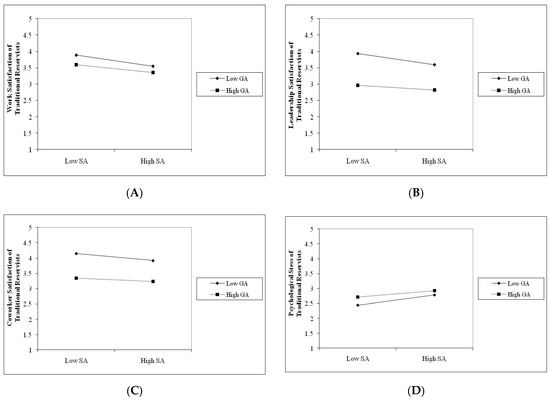
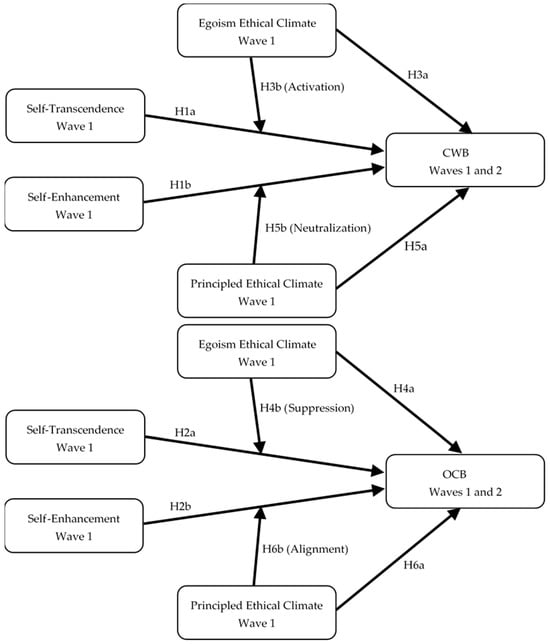
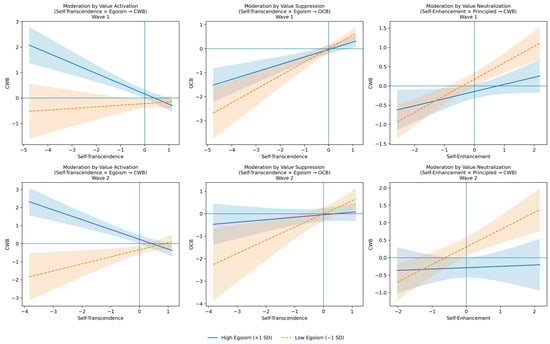
This study analyzes the relationship between personal values and (un)ethical behavior in organizations, and the moderating role of perceived ethical climate. We integrate Schwartz’s theory of personal values with the Victor and Cullen model of ethical climate, following the recent reformulation proposed by Weber and Opoku-Dakwa, thereby offering a novel perspective not previously explored in empirical research. Relying on the Person–Organization Fit model, we test whether perceived ethical climate (specifically Egoism and Principled dimensions) moderates the relationship between personal values (Self-Transcendence and Self-Enhancement) and (un)ethical behavior, operationalized by Counterproductive Work Behavior (CWB) and Organizational Citizenship Behavior (OCB). To this end, we conducted a semi-longitudinal study involving a heterogeneous sample of workers from different organizations (Wave 1: N = 212; Wave 2: N = 84). The analyses supported that personal values and ethical climate are associated with (un)ethical behavior. Furthermore, significant interaction effects between ethical climate and personal values predicting CWB and OCB were found. This study contributes to a better understanding and management of ethical behavior, providing a theoretical contribution and plausible practical guidelines from a person-in-context approach. Limitations and challenges of this work are discussed.

8 March 2026

Hypothetical conceptual model. The diagram illustrates the direct effects of ST and SE on CW and OCB, and the moderating effects of egoism and principled climate on these relationships. Direct effects of ethical climates on CWB and OCB are represented too.

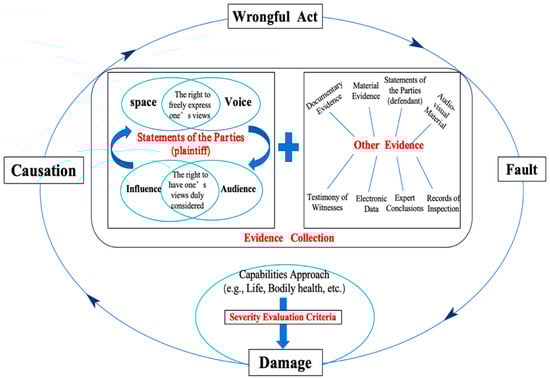
Compensation for mental distress in preschool children is a crucial mechanism for protecting their personality rights, yet current judicial practice in China relies heavily on judicial discretion and lacks child-sensitive standards for determining severity. Following the enactment of the Preschool Education Law of the People’s Republic of China in 2025, the principle of the Best Interests of the Child has placed new behavioral and developmental requirements on decision-making, particularly regarding the recognition of children’s expressive limitations and psychological vulnerability. Drawing on representative judicial cases, this research identifies inconsistencies in current adjudication—primarily between factual presumption and medical proof—and highlights their failure to reflect preschoolers’ developmental characteristics. To address this gap, we construct a child-centered liability determination framework integrating the Lundy model of child participation and Nussbaum’s Capabilities Approach. This framework provides a structured method for incorporating children’s voices into proceedings and offers multidimensional criteria for assessing capability impairment as an indicator of mental distress severity. These findings suggest that the framework can help reduce excessive discretion, strengthen developmental sensitivity, and promote more consistent and equitable adjudication. Beyond the Chinese context, this research offers an analytical lens for advancing international discussions on child-centered mental distress assessment and children’s rights protection.

8 March 2026

Play is a critical developmental domain linked to social communication, cognitive growth, and later peer relationships; however, young autistic children often demonstrate delays in their play skills, especially higher level play skills (i.e., symbolic play). Although play-based, parent-mediated interventions show promise in improving parent strategies for engaging their children in play, we know less about how these strategies translate to child play improvement outside of the therapeutic sessions. The current study examined the home activities of 97 caregiver–child dyads following their participation in parent-mediated Joint Attention Symbolic Play Engagement Regulation (JASPER), among families in low socioeconomic circumstances. Naturalistic home observations identified the types of daily activities in which the dyads engaged, including play. Within play contexts, children whose caregivers received JASPER demonstrated a greater change from functional to symbolic play compared to those in a parent education control condition. Additionally, child-level, but not family-level, characteristics predicted greater gains in symbolic play. The results provide insight into the ecological validity of parent-mediated, play-based interventions delivered in home settings and highlight factors associated with variability in play outcomes. These findings have implications for tailoring parent-mediated interventions to better support equitable and sustainable developmental gains for autistic children.

8 March 2026

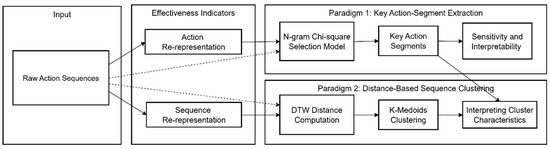
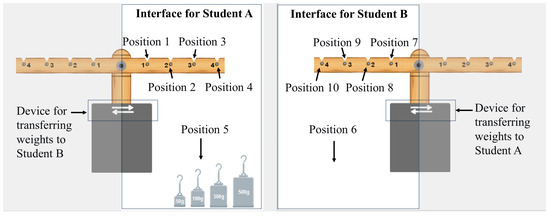
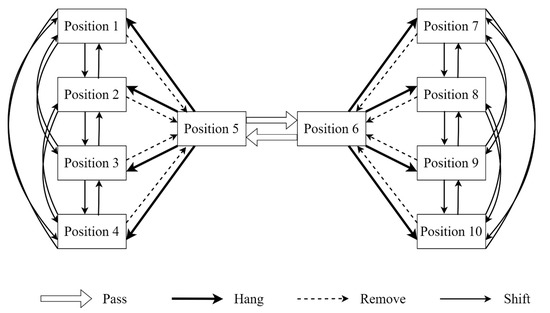
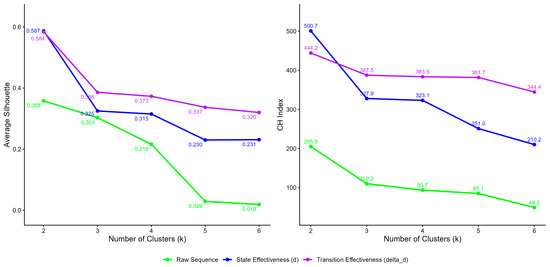
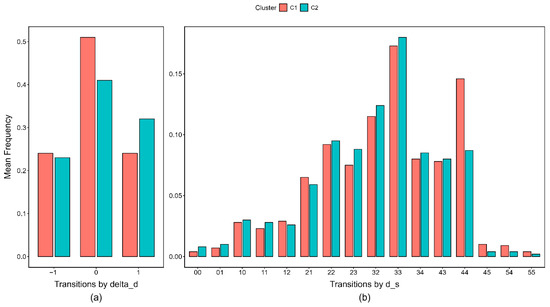
Data-driven approaches have emerged as powerful tools for analyzing process data. This study focuses on two data-driven methods: n-gram chi-square feature selection for extracting key action segments and K-medoids clustering combined with Dynamic Time Warping (DTW) distance for identifying behavioral patterns. To address the limitations that arise when applying these methods to complex tasks where ambiguous raw actions often hinder interpretation, this study introduces distance-based effectiveness indicators to enhance both data-driven methods for analyzing actions in the context of complex problem-solving. The research examines how representing action sequences through state effectiveness (ds) and transition effectiveness (Δdss) indicators outperforms the use of raw actions alone within the complex collaborative problem-solving Balance Beam task. Results consistently demonstrated that effectiveness indicators significantly improved the sensitivity of n-gram feature selection, the performance of clustering, and the interpretability of both n-grams and resulting clusters. Specifically, state effectiveness representations (dsds) yielded the best outcomes. These findings advocate for the integration of effectiveness indicators into data-driven process analytics to more effectively capture and explain behavioral patterns of problem-solving.

6 March 2026

News & Conferences

Issues

Open for Submission

Editor's Choice

Reprints of Collections

Understanding Other Intentions
Reprint

Understanding Other Intentions

Merging Evidence on Theory of Mind across Various Research Areas
Editors: Ester Navarro
Physical Activity for Psychological and Cognitive Development
Reprint

Physical Activity for Psychological and Cognitive Development

Editors: Josune Rodríguez-Negro, Víctor Arufe-Giráldez
XFacebookLinkedIn
Behav. Sci. - ISSN 2076-328X